
Showing 2 items matching "molucca group"
-
 Returned Nurses RSL Sub-branch
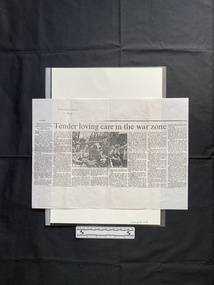
Newspaper - Photocopy of newspaper clipping, [The Newcastle Herald], Tender loving care in the war zone, [21 Feb 1987]
... ...Molucca Group...WWII World War Two WW2 Korea Alternative Publishing Co-operative Adelaide Alexandria Tobruk Crete Merewether Beach Red Cross BBC World Service Big Ben Red Cross Radio Syria 7th Australian Division Casa Nova Monastery Terra Santa Monastery Rouna Falls Laloki River Loribaiwa Church of the Nativity Bethlehem Westmead Hospital New South Wales South Australia Molucca Group MacArthur Philippines Japanese Emperor Potsdam agreement Nagasaki American America POWs Prisoners of war 'THE NEWCASTLE HERALD / 21 FEB 1987' [photocopied ink, top left] A photocopy of a large newspaper clipping consisting of a title, eight columns of text and a black and white photo of a group of women sitting outside Tender loving care in the war zone Newspaper Photocopy of newspaper clipping [The Newcastle Herald] Stephen Leeder ...Book review of "A special kind of service" by Joan Crouch. The book is about a wartime field hospital, the 2/9th Australian General Hospital (AGH). It was a portable group of about 300 nurses, doctors and support servicemen. The 2/9th AGH started it's life by heading by sea for the Middle East, where it was to care for ill and injured troops. It operate with a minimum of 600 bed, with 4000 at times of stress. Sister Joan Crouch has collected dairies, correspondence, official records, recollections and photos from people who served with the 2/9th for her book, told chronologically. The book begins with the first passage as a unit, via India, to the Middle East. They established the 2/9th AGH near the Arab village of Amiriya, where sand storms penetrated everything, including the operating theatre, but the staff were able to go sightseeing at the Pyramids. Next they moved to a monastery in Nazareth, where it snowed over Christmas 1941. The 2/9th AGH was recalled after Pearl Harbour to assist in South-East Asia, but Singapore fell so they came back to Northfield, Australia for a few months. They were then moved to a site 30km out of Port Moresby, called Seventeen-Mile. There they bore the brunt of casualties from the Kokoda Trail, with December 1942 seeing them looking after 4000 with a staff of twenty-nine doctors, 112 sisters and about 300 others. The 'walking wounded' were known to help nurse the bedridden. In September 1943 the first group of the Australian Army Medical Womens Service (AAMWS) arrived to assist the 2/9th AGH. March 1944 ended the service of the 2/9th AGH in what is now Papua New Guinea and they briefly returned to Tamworth, Australia, before closing temporarily for a few months. March1945, the 2/9th AGH were sent to assist in the Borneo campaign at Morotai, where they saw out the war. Joan Crouch worked as a nurse with 2/9th AGH, during World War II, continued afterwards in the Army Nursing Service (ANS) and was later involved in the Korean War, working in Japan and Seoul. A photocopy of a large newspaper clipping consisting of a title, eight columns of text and a black and white photo of a group of women sitting outside'THE NEWCASTLE HERALD / 21 FEB 1987' [photocopied ink, top left]wwii, world war two, ww2, korea, alternative publishing co-operative, adelaide, alexandria, tobruk, crete, merewether beach, red cross, bbc world service, big ben, red cross radio, syria, 7th australian division, casa nova monastery, terra santa monastery, rouna falls, laloki river, loribaiwa, church of the nativity, bethlehem, westmead hospital, new south wales, south australia, molucca group, macarthur, philippines, japanese emperor, potsdam agreement, nagasaki, american, america, pows, prisoners of war -
 The Beechworth Burke Museum
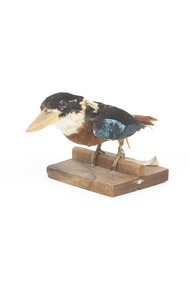
Animal specimen - Rufous-bellied Kookaburra (female), Trustees of the Australian Museum, 1860-1880
... Moluccas Islands, Papua New Guinea, Melanesia and Queensland in Australia. This is unlike other species of Kookaburra which commonly prefer to reside in locations of open country. Another aspect which makes this bird unique to other Kookaburra is its tendency to live in pairs and not in family groups which is typical of other Kookaburras. ...Moluccas Islands, Papua New Guinea, Melanesia and Queensland in Australia. This is unlike other species of Kookaburra which commonly prefer to reside in locations of open country. Another aspect which makes this bird unique to other Kookaburra is its tendency to live in pairs and not in family groups which is typical of other Kookaburras. ...The Rufous-bellied Kookaburra is a large member of the Kingfisher family. It commonly resides in the dense rainforests of lowland New Guinea, Saibai Island, Indonesia, Biak, Maluku/Moluccas Islands, Papua New Guinea, Melanesia and Queensland in Australia. This is unlike other species of Kookaburra which commonly prefer to reside in locations of open country. Another aspect which makes this bird unique to other Kookaburra is its tendency to live in pairs and not in family groups which is typical of other Kookaburras. In the case of the Rufous-bellied Kookaburra, both parents incubate and care for the eggs/chicks. This Kookaburra feeds on small mammals, birds, reptiles and insects. The Rufous-bellied Kookaburra was originally named the Gaudichaud's Kookaburra after the French botanist Charles Gaudichaud-Beaupré. This species of Kookaburra is among the most colorful varieties of the Kookaburra alongside the Spangled Kookaburra. This specimen is part of a collection of almost 200 animal specimens that were originally acquired as skins from various institutions across Australia, including the Australian Museum in Sydney and the National Museum of Victoria (known as Museums Victoria since 1983), as well as individuals such as amateur anthropologist Reynell Eveleigh Johns between 1860-1880. These skins were then mounted by members of the Burke Museum Committee and put-on display in the formal space of the Museum’s original exhibition hall where they continue to be on display. This display of taxidermy mounts initially served to instruct visitors to the Burke Museum of the natural world around them, today it serves as an insight into the collecting habits of the 19th century.This specimen is part of a significant and rare taxidermy mount collection in the Burke Museum. This collection is scientifically and culturally important for reminding us of how science continues to shape our understanding of the modern world. They demonstrate a capacity to hold evidence of how Australia’s fauna history existed in the past and are potentially important for future environmental research. This collection continues to be on display in the Museum and has become a key part to interpreting the collecting habits of the 19th century. The Rufous-bellied Kookaburra is a large Kingfisher with a black coloured cap on the head, white collar around the neck, blue feathers on the wings and rump and a rufous belly. The female Kookaburra has a brown/rufous coloured tail, as is the case for this particular specimen which identifies it as female. This bird has a large white bill and pale coloured legs. The head is a large square shape and the body is stocky.Label: National Museum Victoria / 159a /taxidermy mount, taxidermy, animalia, burke museum, beechworth, australian museum, skin, reynell eveleigh johns, bird, australian birds, kingfisher, kookaburra, rufous-bellied kookaburra
