
Showing 6 items matching "mourning ceremony"
-
 City of Stonnington
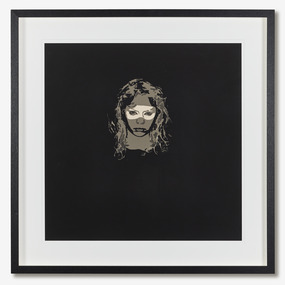
Maree Clarke, Malika, 2012
... ...Mourning Ceremony...Stonnington contemporary art collection First Peoples First Nations Indigenous Aboriginal Torres Strait Islander Mourning Ceremony Maree Clarke Cultural heritage Malika Maree Clarke ...Maree Clarke is a multi-disciplinary artist from Mildura in northwest Victoria, living and working in Melbourne. Her continuing desire to affirm and reconnect with her cultural heritage makes her a pivotal figure in the reclamation of southeast Australian Aboriginal art practices, reviving elements of Aboriginal culture that were lost over the period of colonisation. The 'Men and Women in Mourning' series explores the traditional ceremonies of grief and mourning practices from Calrke's Country. It originates from her fascination with Kopi, a gypsum cap worn to express an individual’s mourning of a loved one or significant member of the clan. A Kopi can weigh up to 7kg and the length of time they are worn depends on the person’s closeness to the deceased. When the mourning period was over the Kopi would be placed on the person’s grave. stonnington contemporary art collection, first peoples, first nations, indigenous, aboriginal torres strait islander, mourning ceremony, maree clarke, cultural heritage -
 City of Stonnington
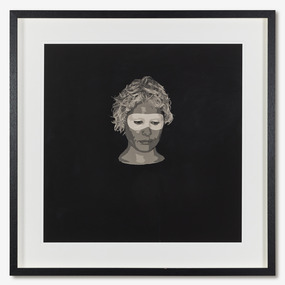
Maree Clarke, Megan, 2012
... ...Mourning Ceremony...Stonnington contemporary art collection First Peoples First Nations Indigenous Aboriginal Torres Strait Islander Mourning Ceremony Maree Clarke Cultural heritage Megan Maree Clarke ...Maree Clarke is a multi-disciplinary artist from Mildura in northwest Victoria, living and working in Melbourne. Her continuing desire to affirm and reconnect with her cultural heritage makes her a pivotal figure in the reclamation of southeast Australian Aboriginal art practices, reviving elements of Aboriginal culture that were lost over the period of colonisation. The 'Men and Women in Mourning' series explores the traditional ceremonies of grief and mourning practices from Calrke's Country. It originates from her fascination with Kopi, a gypsum cap worn to express an individual’s mourning of a loved one or significant member of the clan. A Kopi can weigh up to 7kg and the length of time they are worn depends on the person’s closeness to the deceased. When the mourning period was over the Kopi would be placed on the person’s grave.stonnington contemporary art collection, first peoples, first nations, indigenous, aboriginal torres strait islander, mourning ceremony, maree clarke, cultural heritage -
 City of Stonnington
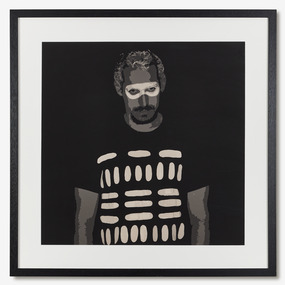
Maree Clarke, Reuben Berg, 2012
... ...Mourning Ceremony...Stonnington contemporary art collection First Peoples First Nations Indigenous Aboriginal Torres Strait Islander Mourning Ceremony Maree Clarke Cultural heritage Reuben Berg Maree Clarke ...Maree Clarke is a multi-disciplinary artist from Mildura in northwest Victoria, living and working in Melbourne. Her continuing desire to affirm and reconnect with her cultural heritage makes her a pivotal figure in the reclamation of southeast Australian Aboriginal art practices, reviving elements of Aboriginal culture that were lost over the period of colonisation. The 'Men and Women in Mourning' series explores the traditional ceremonies of grief and mourning practices from Calrke's Country. It originates from her fascination with Kopi, a gypsum cap worn to express an individual’s mourning of a loved one or significant member of the clan. A Kopi can weigh up to 7kg and the length of time they are worn depends on the person’s closeness to the deceased. When the mourning period was over the Kopi would be placed on the person’s grave.stonnington contemporary art collection, first peoples, first nations, indigenous, aboriginal torres strait islander, mourning ceremony, maree clarke, cultural heritage -
 City of Stonnington
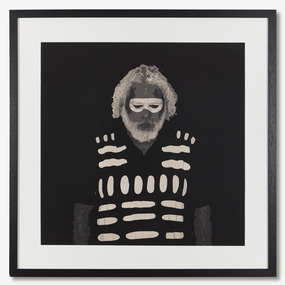
Maree Clarke, Carl Clarke, 2012
... ...Mourning Ceremony...Stonnington contemporary art collection First Peoples First Nations Indigenous Aboriginal Torres Strait Islander Mourning Ceremony Maree Clarke Cultural heritage Carl Clarke Maree Clarke ...Maree Clarke is a multi-disciplinary artist from Mildura in northwest Victoria, living and working in Melbourne. Her continuing desire to affirm and reconnect with her cultural heritage makes her a pivotal figure in the reclamation of southeast Australian Aboriginal art practices, reviving elements of Aboriginal culture that were lost over the period of colonisation. The 'Men and Women in Mourning' series explores the traditional ceremonies of grief and mourning practices from Calrke's Country. It originates from her fascination with Kopi, a gypsum cap worn to express an individual’s mourning of a loved one or significant member of the clan. A Kopi can weigh up to 7kg and the length of time they are worn depends on the person’s closeness to the deceased. When the mourning period was over the Kopi would be placed on the person’s grave.stonnington contemporary art collection, first peoples, first nations, indigenous, aboriginal torres strait islander, mourning ceremony, maree clarke, cultural heritage -
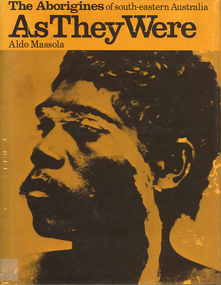 Victorian Aboriginal Corporation for Languages
Book, Aldo Massola, The Aborigines of south-eastern Australia : as they were, 1971
... ceremonies; p.94-133; Shelters, fire making, cooking, construction of canoes, wooden implements, use of reeds, animal skins &? sinews, shells; stone tools, cylindro conical stones, scrapers, knives &? microliths; hunting weapons, spear, other methods pits, nets; fishing methods &? spears, traps; food sharing, womens responsibilities for collecting, digging stick, cooking methods, insect foods, plant foods, water resources; manufacture &? use of spears, spear throwers, shields, clubs, boomerangs; inter- &? intratribal fighting; p.134-147; Death, disposal of body - eating of the dead, burial, cremation, platform exposure, dendroglyphs (N.S.W.), Aboriginal burial grounds (Darling &? Murray Rivers), mourning...ceremonies; p.94-133; Shelters, fire making, cooking, construction of canoes, wooden implements, use of reeds, animal skins &? sinews, shells; stone tools, cylindro conical stones, scrapers, knives &? microliths; hunting weapons, spear, other methods pits, nets; fishing methods &? spears, traps; food sharing, womens responsibilities for collecting, digging stick, cooking methods, insect foods, plant foods, water resources; manufacture &? use of spears, spear throwers, shields, clubs, boomerangs; inter- &? intratribal fighting; p.134-147; Death, disposal of body - eating of the dead, burial, cremation, platform exposure, dendroglyphs (N.S.W.), Aboriginal burial grounds (Darling &? Murray Rivers), mourning ...Contents: p.1-3; Origins, arrival in Australia; p.4-9; How they lived - camp sites, dating (including carbon dating); p.10-27; Physical appearance, skin colour, hair, clothing, body ornaments, cicatrization; exchange system, distribution of food, marriage &? sexual relations; the tribe - structure, relationship to land, territory, gives map showing locations of tribes, New South Wales, Victoria &? eastern South Australia, leadership, government, division of labour, status of women, estimated population at white settlement, density of population (Victoria); p.28-31; Language - names &? naming, reproduces Wembawemba vocabulary, notes use of secret languages, gives 12 rules for pronounciation; p.32-53; Religion, spirit beliefs, totemism, moieties, phratries, marriage rules; mythology, gives eaglehawk &? crow myth from Lake Victoria &? other myths illustrating origins of fire &? natural rock formations, mythical beasts (Bunyip, Mindie), stellar beliefs; magic, medicine men, powers, native remedies for sickness, describes ceremony held in Melbourne, 1847 to avert evil, sorcery, pointing bone, love magic, rain makers; messengers, appearance, etiquette, message sticks; p.54-71; Rock art, motifs, colours, decorative art, engraving of utensils, rock engravings, manufacture &? use of pigments, engraving techniques; trade system, objects bartered, meeting places for trade (Victoria), map shows possible routes (south east Australia); corroborees, purpose, body ornaments &? decorations, musical instruments; p.72-93; Ceremonial life, marriage, punishment for infidelity, birth, childhood, games &? amusements, initiation, etiquette of visiting tribes, details of ceremony, womens role, earth figures &? ground designs, bull roarers, female puberty ceremonies; p.94-133; Shelters, fire making, cooking, construction of canoes, wooden implements, use of reeds, animal skins &? sinews, shells; stone tools, cylindro conical stones, scrapers, knives &? microliths; hunting weapons, spear, other methods pits, nets; fishing methods &? spears, traps; food sharing, womens responsibilities for collecting, digging stick, cooking methods, insect foods, plant foods, water resources; manufacture &? use of spears, spear throwers, shields, clubs, boomerangs; inter- &? intratribal fighting; p.134-147; Death, disposal of body - eating of the dead, burial, cremation, platform exposure, dendroglyphs (N.S.W.), Aboriginal burial grounds (Darling &? Murray Rivers), mourning, widowhood, kopi caps (N.S.W.), causes of death, inquest ceremonies, revenge expedition, after death beliefs; p.148-157; The end of the tribes white settlement &? its impact on Aboriginal life, friction between natives &? settlers, establishment of Protectorates; copiously illustrated throughout.maps, b&w illustrations, b&w photographswemba wemba, murray river, darling river, lake victoria -
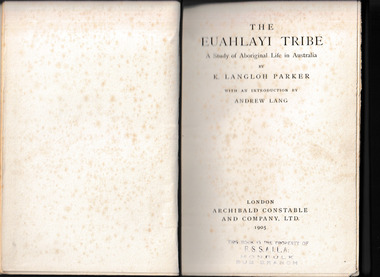 Mrs Aeneas Gunn Memorial Library
Book, K. Langloh Parker, The Euahlayi tribe : a study of Aboriginal life in Australia, 1905
... Aboriginal Australians - Social life and customs Aboriginal Australians - Religion Belief in Supreme Being; male and female descent; relationship terms (with mention of Vic., N.T. tribes); list of totems; totemic food taboos; medicine men; witch woman and native remedies; bonepointing; belief in spirits; conception beliefs; childhood customs; betrothal; firemaking; bullroarers; message sticks; initiation ceremonies & corroborees; mourning & funeral; legends & cosmology; hunting finding food & cooking; clothing & body painting; weapons; recreations; childhood songs & song about Byamee (texts with translations) Glossary, index, p.156. ...Belief in Supreme Being; male and female descent; relationship terms (with mention of Vic., N.T. tribes); list of totems; totemic food taboos; medicine men; witch woman and native remedies; bonepointing; belief in spirits; conception beliefs; childhood customs; betrothal; firemaking; bullroarers; message sticks; initiation ceremonies & corroborees; mourning & funeral; legends & cosmology; hunting finding food & cooking; clothing & body painting; weapons; recreations; childhood songs & song about Byamee (texts with translations)Glossary, index, p.156.Belief in Supreme Being; male and female descent; relationship terms (with mention of Vic., N.T. tribes); list of totems; totemic food taboos; medicine men; witch woman and native remedies; bonepointing; belief in spirits; conception beliefs; childhood customs; betrothal; firemaking; bullroarers; message sticks; initiation ceremonies & corroborees; mourning & funeral; legends & cosmology; hunting finding food & cooking; clothing & body painting; weapons; recreations; childhood songs & song about Byamee (texts with translations)aboriginal australians - social life and customs, aboriginal australians - religion
