
Showing 162 items matching "mrs cotton"
-
 Port Melbourne Historical & Preservation Society
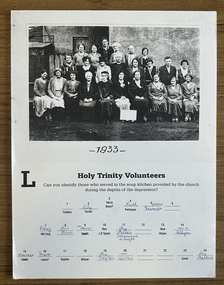
Photograph - Soup kitchen volunteers, Holy Trinity Anglican Church, Port Melbourne, 1933
... ...Mrs COTTON..., BOYDEN, WILSON, Mrs TAYLOR, Mrs COTTON, ?, ?, SMITH, Mrs MATHERS..., BOYDEN, WILSON, Mrs TAYLOR, Mrs COTTON, ?, ?, SMITH, Mrs MATHERS Photograph Soup kitchen volunteers, Holy Trinity Anglican Church, Port Melbourne ...Original has been kept by the family since 1933 and was loaned to us August 1998 for copying.Colour lasercopy from black and white mounted original loaned by Ken TURNER, of 1933 photo of Holy Trinity volunteers (ladies and two men) who ran the soup kitchen in the hall. Ken's mum, Lily, second from left in back row. Taken beside the vicarage. Hand lettered, partly legible sign at their feet indicates they are 'Helpers - Holy Trinity, Port Melbourne'. Mrs MILLER, to the right of Rev J K TAYLOR was a Tobacconist in Bay Street. Back row L-R: FOOKES, Lily TURNER, Harry BONE?, Ruth PARKINSON, Sarah EDWARDS, ? Second row L-R: Daisy WHITING, Mrs BONE, M M PREST, Rev J K TAYLOR, Mrs MILLER, ?, Nick HILLYER, Mrs N HILLYER Front row L-R: BAMFORD, Irene LEWIS?, BOYDEN, WILSON, Mrs TAYLOR, Mrs COTTON, ?, ?, SMITH, Mrs MATHERSfookes, lily turner, harry bone?, ruth parkinson, sarah edwards, religion - anglican (holy trinity), depression, daisy whiting, mrs bone, m m prest, mrs miller, nick hillyer, mrs n hillyer, j k taylor, bamford, boyden, wilson, mrs taylor, mrs cotton, smith, mrs mathers, irene lewis -
 National Wool Museum
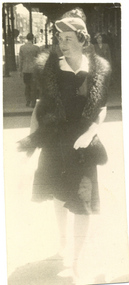
Photograph, Doris Fairnie
... Mrs Cotton/ nee/ Doris Fairnie...Textile Mills - staff Textile Mills - history Textile Mills Returned Soldiers and Sailors Mill Textile Mills - staff Textile Mills - history Textile Mills Mrs Cotton/ nee/ Doris Fairnie Doris Fairnie Photograph ...Mrs Cotton/ nee/ Doris Fairnietextile mills - staff textile mills - history textile mills, returned soldiers and sailors mill, textile mills - staff, textile mills - history, textile mills -
 Stawell Historical Society Inc
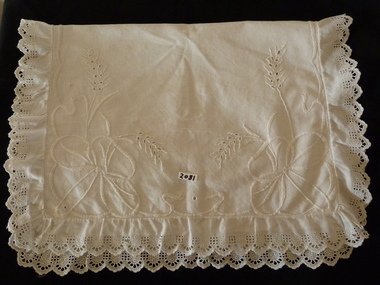
Textile - Costume and Accessories, c1920
... White Broderie Cotton Embroidery. Mrs Ruth Henderson...White Broderie Cotton Embroidery. Mrs Ruth Henderson Textile Costume and Accessories ...White Broderie Cotton Pillow. Sham Broderie Anglaise Edging. White Broderie Cotton Embroidery. Mrs Ruth Hendersonstawell clothing material -
 Blacksmith's Cottage and Forge
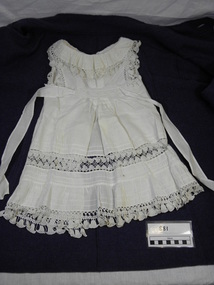
Pinafore, 1900 (estimated)
... cotton...bacchus marsh...brown family...1905...mrs... bacchus marsh brown family 1905 mrs beeching fagg family pinafore infants clothes rituals fagg costumes family heirloom christening ellen brown This is a white cotton infant's christening pinafore, round neck with a flounce, sleeveless with a sash attached at the front and tied at the back. ...This handmade pinafore was worn by the donor, Ellen Brown, at her christening in 1905. It was made by Ellen's grandmother, Mrs Beeching, for the first daughter born in the Fagg family. The pinafore was a treasured family heirloom, and was not worn again. It is a rare example of a modest, homemade christening costume. Most costumes were gowns, but this humble pinafore still shows loving attention to detail.The connection between milestone moments and the wearing of a particular garment carries great significance. The christening gown represents the rites of passage: great importance is placed on the clothing, as well as the ceremony.This is a white cotton infant's christening pinafore, round neck with a flounce, sleeveless with a sash attached at the front and tied at the back. There are lace inserts and lace at the hemline. Tucks are machined as embellishments and a tie at the back of the neck.lace, celebrations, handmade, white, brown, ceremony, textile, cotton, bacchus marsh, brown family, 1905, mrs beeching, fagg family, pinafore, infants clothes, rituals, fagg, costumes, family heirloom, christening, ellen brown -
 Federation University Historical Collection
Letter, Letters written by Richard Squire to his son Tom Squire 1937
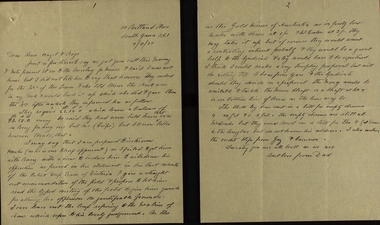
... Mrs Trenery...Bre...Max...June...Mary...Len...Barry...Hunter...Herman...Martin...Aunt Annie...Bella...Pitfield Coy...McNaughtons...Donaldson...Dereel...Hogan...The Bay Leads...Avoca Field...Ballarat Alluvials...Neil Cameron...Haddon Field...Courier...Tom Cotton...Special Supply Store Geological Branch Shell Coy Lawaluk Almanac McBinny Bingley's Paddock Cargaire Valley and Lead Stand and Deliver Demands Sheehan's Smeaton Hotel John Charleson Aleck Charleson Ted Brown Billy Jordan Mr Banks Ballarat Main Lead Binney Goon Illabrook Mrs Trenery Bre Max June Mary Len Barry Hunter Herman Martin Aunt Annie Bella Pitfield Coy McNaughtons Donaldson Dereel Hogan The Bay Leads Avoca Field Ballarat Alluvials Neil Cameron Haddon Field Courier Tom Cotton Llewellen Stanley Hunter Mr Leonard Tom Mitchell School of Mines Bryant A.C. ...In 1905 Richard Squire was manager of the West Berry Consols at Allendale, and developed an improved system of mine ventilation, which was supported in "The Age."[4] He was successful in combating and remedying the gas and ventilation troubles of the Deep Mines of Creswick and Allendale Districts after all had failed. MINE MANAGERS’ ASSOCIATION. Ballarat Branch. ... Mr R. B. Squire, manager of the West Berry Consols, at Allendale, submitted a paper detailing what he had done tor the betterment of ventilation in the alluvial mines of Smeaton and Mary borough districts- Members gave Mr Squire every credit for the results that he claimed to have effected; the adoption of his ideas had testified to their value to mine-owners. It was painted out, however, that for want of a thorough debate of the subject with experienced men the author had unwittingly included some general statements that required modifying in some points and extending in others, in justice to other workers among the earlier and the present day managers of mines. It was decided to invite the author to meet a sub-committee on this subject!A variety of Letters written by Richard Squire to his son Tom Squire about the goings on at Mt Mercer Mine 1937richard squire, tom squire, hazel squire, jack squire, jim squire, ned, mt mercer, plant, skids, pump, poppet, carburetor, shaft, balance weight, pulleys, syndicate, suction, lease, reports, estimates, flat fields, reef, trucks, pipeclay, sandstone, suction pipe, valves, honeycomb rock, yarrowee, ballarat, reef combs, cheques, yellow slate, leigh river, dyke, quartz, ballarat deep leads, ballarat deep leads extension, bore, reads, bedrock, cemented sand, g m of a, gold mines of australia, liz the car, geoff squire, lode, cameron and sutherland, hayes timber, alan squire, ethel, ross creek field, ross creek gold mining co., frank herman, lillas, jack hayes, eyres brothers, g.gay & co, buninyong, glenfine, the star mine of avoca fields, talbot alluvials, guildford plateau, a.b.c. special supply store, geological branch, shell coy, lawaluk, almanac, mcbinny, bingley's paddock, cargaire valley and lead, stand and deliver demands, sheehan's, smeaton hotel, john charleson, aleck charleson, ted brown, billy jordan, mr banks, ballarat main lead, binney, goon, illabrook, mrs trenery, bre, max, june, mary, len, barry, hunter, herman, martin, aunt annie, bella, pitfield coy, mcnaughtons, donaldson, dereel, hogan, the bay leads, avoca field, ballarat alluvials, neil cameron, haddon field, courier, tom cotton, llewellen, stanley hunter, mr leonard, tom mitchell, school of mines, bryant, a.c. connely, dodson, constable mcmullins, adam ronaldson, bewick mining & co., reginald murray, r.c. selwyn, craig's hotel, broken hill syndicate, morrison's lead, wilkinson, j. hayes, mr nichol, burglary, baragwanath, wilkinson ross, creswick, seville, mr. ross, o'connor, c. mcgrath, alfred mica smith, henderson ross, angus kelly, a. r. dodson, duke of wellington plant, the moorabool lead, williams, paralysis, woodlock, squire, whipp, joe williams, peacock, moran, buchanan, hoare, bree kutchel, kohinoor band and alluvian, star of the east, bonshaw, epidemic, polio, mining -
 Federation University Historical Collection
Book, Ballarat School of Mines Council Minute Book, 1949-1956, 16/11/1949 - 04/10/1956
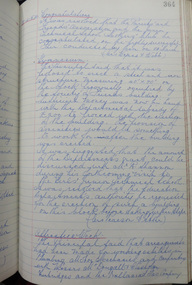
... cotton...d. duggan...hans fumberger...v.c. jones...j.r. lyall...e.g. savage...geoffrey f. stevens...albert watts...k.c. webb...william baragwanath...ronald g. barylyn...c.m. king...w. murton...f. ritchie...j. turnbull...j.r. allsop...david morris...w.j. paterson...john peyton...william sadler...mrs...Cotton, 1952 D. Duggan, 1952 Hans Fumberger, 1952, p260, 287 V.C. Jones, 1952, p248 J.R. Lyall, 1952, p206 E.G. Savage, 1952, p228 Geoffrey F. Stevens, 1952 Albert Watts, 1952, p260 K.C. Webb, 1952, p248 Neon Signs, 1953, p310 William Baragwanath, 1953, p324 Ronald G. Barlyn, 1953, p314 C.M. King, 1953, p272 W. Murton, 1953, p340 F. Ritchie, 1953, p303 J. Turnbull, 1953, p274 J.R. Allsop, 1954 David Morris, 1954, p350 W.J. Paterson, 1954, p424 John Peyton, 1954, p348 William Sadler, 1954, p352 Mrs...Cotton, 1952 D. Duggan, 1952 Hans Fumberger, 1952, p260, 287 V.C. Jones, 1952, p248 J.R. Lyall, 1952, p206 E.G. Savage, 1952, p228 Geoffrey F. Stevens, 1952 Albert Watts, 1952, p260 K.C. Webb, 1952, p248 Neon Signs, 1953, p310 William Baragwanath, 1953, p324 Ronald G. Barlyn, 1953, p314 C.M. King, 1953, p272 W. Murton, 1953, p340 F. Ritchie, 1953, p303 J. Turnbull, 1953, p274 J.R. Allsop, 1954 David Morris, 1954, p350 W.J. Paterson, 1954, p424 John Peyton, 1954, p348 William Sadler, 1954, p352 Mrs ...The Ballarat School of Mines was the first technical school in Australasia..1) Hard green covered book with part leather binding. Finance Committee, Council and one Christian Education (or chaplaincy) on sub-committee minutes Dr James Stewart, 1950, pp. 64, 138, 160 G. Baragwanath, carpenter, 1950 G.W. Barrell, 1950, p. 24 V. Belikov, 1950, p. 35 G.W. Cornell, 1950, pp. 37, 44, 78 R.M. Cutter, 1950 H. Edwards, 1950, pp. 14, 15 Arthur Gouday, 1950, p. 29 J.E. Hewitt, 1950, p. 119 D. Kellock, 1950, p. 117 H.H. Kerr, 1950, p. 74 L. Lederman, 1950, obituary, pp. 19, 28 A,W, Lynch, 1950, p. 24 D. Mullins (plumbing), 1950, pp 44, 78 A.M. Praetz, 1950, p. 95 Kevin White, 1950, p. 75 S.E. Williams, 1950 C.M. Chisholm, 1951 N.F. Dewsnap, 1951 F.A. Farr, 1951 R.P. Flower, 1951, p173 L. Garner, 1951, p128 Douglas R. Mills, 1951, p182 F.G. Proctor, 1951 A.J. Andreartha, 1952 B. Bryan, 1952 D. Cotton, 1952 D. Duggan, 1952 Hans Fumberger, 1952, p260, 287 V.C. Jones, 1952, p248 J.R. Lyall, 1952, p206 E.G. Savage, 1952, p228 Geoffrey F. Stevens, 1952 Albert Watts, 1952, p260 K.C. Webb, 1952, p248 Neon Signs, 1953, p310 William Baragwanath, 1953, p324 Ronald G. Barlyn, 1953, p314 C.M. King, 1953, p272 W. Murton, 1953, p340 F. Ritchie, 1953, p303 J. Turnbull, 1953, p274 J.R. Allsop, 1954 David Morris, 1954, p350 W.J. Paterson, 1954, p424 John Peyton, 1954, p348 William Sadler, 1954, p352 Mrs Connors, 1955 Corbould, 1955, p497, 503, 514, 521, 550 A. Causland, 1955, p507 W.W. Leggatt, 1955, p504 B.D. Ngip, 1955, p462 L.K. O'Down, 1955, p460 R. Rowlands, 1955, p508 J.A. Strange, 1955, p501 L. Wilson, 1955, p459 Harry Brew, 1956, p516 H.L. Coburn, 1956, p571 I.R. Gordon, 1956, p541 B.M. Hearn, 1956, p 550 John Miles, 1956, p571 H.A. Patterson, 1956, p553 Ballarat School of Mines Proposed Gymnasium (Corbould Recreation Hall) 364, 403, 445, 452, 458, 523, 531, 540 Ballarat School of Mines Museum, 1950, p38, 105, 112; Aboriginal Relics, P566 poliomyelitis, 1952 Ballarat School of Mines Agrostology, 1952, p242, 312, 360, 362, 370 Ballarat School of Mines Neon Sign, 1953 Ballarat School of Mines Basketball site, 1953 Hickman Street, Ballarat, Deviation near White Flat, 1954 Ballarat School of Mines Bicycle sheds, 1954 Ballarat Technical School, Norman Street, Ballarat, 1954 Ballarat North Technical School, 1956, p521 Ballarat School of Mines Christian Education, 1956, p569 Blacksmithing, 1956, p523 Ballarat School of Mines Museum Future, 1956, p526, 535, 536, 542, 561, 568 Ballarat School of Mines War Museum, 1956, p516, 542 Fossils, 1955, p462 123 grant Street purchase, 1956, p546 model Farm Smith gift, 1956, p561 Shearing, 1955, p504 Repatriation Students, 1856, p 555 .2) Typed and handwritten documents in plastic envelope at back of book on sundry topics.ballarat school of mines, ballarat school of mines council minutes, ballarat school of mines finance committee, ballarat school of mines christian education, chaplaincy, dr james stewart, g. baragwanath, g.w. barrell, v. belikov, g.w. cornell, r.m. cutter, h. edwards, arthur gouday, j.e. hewitt, d. kellock, h.h. kerr, l. lederman, d. mullins, a.m. praetz, kevin white, s.e. williams, c.m. chisholm, n.f. dewsnap, f.a. farr, r.p. flower, l. garner, douglas r. mills, f.g. proctor, a.j. andreartha, b. bryan, d. cotton, d. duggan, hans fumberger, v.c. jones, j.r. lyall, e.g. savage, geoffrey f. stevens, albert watts, k.c. webb, william baragwanath, ronald g. barylyn, c.m. king, w. murton, f. ritchie, j. turnbull, j.r. allsop, david morris, w.j. paterson, john peyton, william sadler, mrs connors, corbould, a. causland, w.w. leggatt, b.d. ngip, l.k. o'down, r. rowlands, j.a. strange, l. wilson, harry brew, h.l. coburn, i.r. gordon, b.m. hearn, john miles, h.a. patterson, ballarat school of mines gymnasium, corbould recreation hall, polio, poliomyelitis, a.j. andrewartha, pandemic, a.w. lynch, 123 grant street ballarat -
 Federation University Historical Collection
Booklet, J.A. Hoskin & Son, Ballarat School of Mines Students' Magazine, 1951. Gold Centenary Number, 1951
... cotton...j. bethune...f. andrewartha...p. ditchfield...n. andrews...f. benjamin...s. deans...w. j. patterson...glenice lodington...esme atkins...rosemary hullick...heather browning...valerie jolly...eileen walsh...beverley robinson...b. bryan...jack ballinger...h. trudinger...l. garner...don stevens...kevin treloar...cliff restarick...jim brokenshire...john jopling...barbara wilson...margery troon...e. j. tippett...r. w. richards...w. kingston...joan cameron...lloyd veal...john mckenzie...crom. bray...pat maloney...betty dulfer...margaret martin...bill llewellyn...jacquiline bilston...alf mckenzie...grace laurie...john spittle...mina gallie...mrs...School Council, Members of Staff, Editorial, Principal's Page, Magazine Committee, News and Notes, Literary Society, Prominent Personalities, The Centenary and Jubilee Celebrations, Prize Presentation, Boys Sport, Cricket, Annual Sports, Football, Baseball, Tennis, Science School, A Day in Colombo, The Apprentices, The Art School, Ballarat's Achievement, The Girls Association, Dressmakers, Commercial Notes, Foundation Pupils of Ballarat Girls Junior Technical School, Junior School, Retirements ballarat school of mines magazine heather harris c. g. fairbank d. cotton j. bethune f. andrewartha p. ditchfield n. andrews f. benjamin s. deans w. j. patterson glenice lodington esme atkins rosemary hullick heather browning valerie jolly eileen walsh beverley robinson b. bryan jack ballinger h. trudinger l. garner don stevens kevin treloar cliff restarick jim brokenshire john jopling barbara wilson margery troon e. j. tippett r. w. richards w. kingston joan cameron lloyd veal john mckenzie crom. bray pat maloney betty dulfer margaret martin bill llewellyn jacquiline bilston alf mckenzie grace laurie john spittle mina gallie mrs willis brown donald eltringham mrs d. eltringham geoff mounter mrs g. mounter alan wilson ian mclachlan doug dean mrs d. dean bill meinhardt norman dalton b. taylor j. tinney r. ingleton a. kinnane g. hindson j. peyton j. sawyer j. watts a. fareco e. bartrop m. frawley l. matthews j. blackburn b. flavel b. schreenan b. smith d. stevens j. ballinger c. livitsanos a. johnson r. archer j. brokenshire g. heyes j. carmichael c. restarick m. phillips m. gillin don stewart a. faneco m. stevens w. maddox w. tooth r. simpson jim john ruth buckland ron simpson max phillips l. m. pedrazzi ballarat lake wendouree don whitefield dorothy robertson glen gazzard alison philp audrey dunn judith bryan valerie blee valerie hughes carol seddon brenda beaumont elizabeth kinnane noel batch pat lavery glenys perry ann wright margaret henderson margaret winberg faida lewis diane o'beirne lynette klein gloria white dorothy j. searle isobel tyrell l. j. blomeley adelaide hocking joyce wilson j. edwards lynette robson lois snibson janice rogers joy mills lynn gilbert dawn searle valerie mills bonnie cody dawn peacock margaret paine carole sneddon valma vincent raylee bennetts kay buchanan loris gilbert dawn lang margaret thompson lorraine horwood yvonne rowlands janette sandwith dawn parkes doreen new marion marshall p. sullivan k. r. hall n. brogden k. duncan b. baldock j. bastin r. furlong n. spiers d. quillian n. sutherland a. mills l. norman w. saggers m. hodder r. hewitt d. jones p. reid b. warrillon g. edwards j. bentley m. hall n. quick b. mann f. dolan g. gilbert e. mackie w. davies d. roberts n. purdue r. austin r. dunstone g. king r. hill i. nunn g. hawkes w. cowan c. grose c. garnham j. white d. snowden b. darrington m. drabsch t. wilson r. osborne a. mcpherson n. dixon g. anderson r. stevenson b. musgrove m. roberts d. dow a. hepworth j. copeman g. pike j. collier c. petrie l. pitcher r. sharpe j. gilmer k. hall j. boak j. hudson k. mccoll Green soft covered magazine with gold font. ...School Council, Members of Staff, Editorial, Principal's Page, Magazine Committee, News and Notes, Literary Society, Prominent Personalities, The Centenary and Jubilee Celebrations, Prize Presentation, Boys Sport, Cricket, Annual Sports, Football, Baseball, Tennis, Science School, A Day in Colombo, The Apprentices, The Art School, Ballarat's Achievement, The Girls Association, Dressmakers, Commercial Notes, Foundation Pupils of Ballarat Girls Junior Technical School, Junior School, Retirements Green soft covered magazine with gold font.ballarat school of mines, magazine, heather harris, c. g. fairbank, d. cotton, j. bethune, f. andrewartha, p. ditchfield, n. andrews, f. benjamin, s. deans, w. j. patterson, glenice lodington, esme atkins, rosemary hullick, heather browning, valerie jolly, eileen walsh, beverley robinson, b. bryan, jack ballinger, h. trudinger, l. garner, don stevens, kevin treloar, cliff restarick, jim brokenshire, john jopling, barbara wilson, margery troon, e. j. tippett, r. w. richards, w. kingston, joan cameron, lloyd veal, john mckenzie, crom. bray, pat maloney, betty dulfer, margaret martin, bill llewellyn, jacquiline bilston, alf mckenzie, grace laurie, john spittle, mina gallie, mrs willis brown, donald eltringham, mrs d. eltringham, geoff mounter, mrs g. mounter, alan wilson, ian mclachlan, doug dean, mrs d. dean, bill meinhardt, norman dalton, b. taylor, j. tinney, r. ingleton, a. kinnane, g. hindson, j. peyton, j. sawyer, j. watts, a. fareco, e. bartrop, m. frawley, l. matthews, j. blackburn, b. flavel, b. schreenan, b. smith, d. stevens, j. ballinger, c. livitsanos, a. johnson, r. archer, j. brokenshire, g. heyes, j. carmichael, c. restarick, m. phillips, m. gillin, don stewart, a. faneco, m. stevens, w. maddox, w. tooth, r. simpson, jim john, ruth buckland, ron simpson, max phillips, l. m. pedrazzi, ballarat, lake wendouree, don whitefield, dorothy robertson, glen gazzard, alison philp, audrey dunn, judith bryan, valerie blee, valerie hughes, carol seddon, brenda beaumont, elizabeth kinnane, noel batch, pat lavery, glenys perry, ann wright, margaret henderson, margaret winberg, faida lewis, diane o'beirne, lynette klein, gloria white, dorothy j. searle, isobel tyrell, l. j. blomeley, adelaide hocking, joyce wilson, j. edwards, lynette robson, lois snibson, janice rogers, joy mills, lynn gilbert, dawn searle, valerie mills, bonnie cody, dawn peacock, margaret paine, carole sneddon, valma vincent, raylee bennetts, kay buchanan, loris gilbert, dawn lang, margaret thompson, lorraine horwood, yvonne rowlands, janette sandwith, dawn parkes, doreen new, marion marshall, p. sullivan, k. r. hall, n. brogden, k. duncan, b. baldock, j. bastin, r. furlong, n. spiers, d. quillian, n. sutherland, a. mills, l. norman, w. saggers, m. hodder, r. hewitt, d. jones, p. reid, b. warrillon, g. edwards, j. bentley, m. hall, n. quick, b. mann, f. dolan, g. gilbert, e. mackie, w. davies, d. roberts, n. purdue, r. austin, r. dunstone, g. king, r. hill, i. nunn, g. hawkes, w. cowan, c. grose, c. garnham, j. white, d. snowden, b. darrington, m. drabsch, t. wilson, r. osborne, a. mcpherson, n. dixon, g. anderson, r. stevenson, b. musgrove, m. roberts, d. dow, a. hepworth, j. copeman, g. pike, j. collier, c. petrie, l. pitcher, r. sharpe, j. gilmer, k. hall, j. boak, j. hudson, k. mccoll -
 Flagstaff Hill Maritime Museum and Village
Clothing - Riding Habit, jacket, Early 20th Century
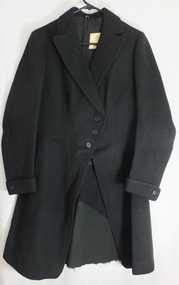
... Mrs Edward Manifold. Knee length English woolen jacket black in colour, seamed and fitted to the female client's figure, fastening from the waist with three bone buttons to rather high lapels. The sleeves are long with closely fitted cuffs and one button and lined with cream satin. The jacket is fitted to the waist and flared to below the hips with a 35 cm vent to the back. Lower back to the jacket is reinforced with removable fabric and the jacket is lined with black twill cotton...Mrs Edward Manifold. Knee length English woolen jacket black in colour, seamed and fitted to the female client's figure, fastening from the waist with three bone buttons to rather high lapels. The sleeves are long with closely fitted cuffs and one button and lined with cream satin. The jacket is fitted to the waist and flared to below the hips with a 35 cm vent to the back. Lower back to the jacket is reinforced with removable fabric and the jacket is lined with black twill cotton ...The Manifolds were a significant pioneering pastoral family in Western Victoria. The donated riding jacket originally belonged to Mrs Edward Manifold, formally Beatrice Mary Synnot Anderson. Beatrice was Edward Manifold’s cousin once removed whom he married in 1900. Edward, the son of John Manifold, was born on 15 November 1868 and educated at Geelong and Melbourne Grammar schools and at Trinity Hall, Cambridge (B.A., 1891). He chose the Danedite portion of land at Purrumbete, and on the death of his bachelor brother Thomas Peter (1863-1895), after a hunting accident, he took over his allocation, Wiridgil. He also owned Boortkoi, near Hexham and on these properties, he ran merino sheep, a Lincoln stud which dated back to 1870, and Shorthorn cattle. 3000 acres were also leased to dairy farmers. Edward was a member of Hampden Shire Council in 1909-31 and three times president at Camperdown. The town was largely bordered by Manifold land and partly dependent upon the local pastoral dynasties, which benefited the local area from the families’ various business interests. Though an offer to build public baths to commemorate the Queen Victoria Jubilee in 1897 was not proceeded with, the town acquired a hospital, a reserve on Mount Leura, a clock tower and a cricket pavilion, as well as notable donations from the Manifolds to St Paul's Church and the grammar school. Edward was a keen polo player and racing man. He was also a successful owner of steeplechasers and a committeeman of the Victoria Racing Club for many years. He was also a member of many Western District racing clubs. On the 16 July 1900, Edward had married his sixteen-year-old cousin Beatrice Mary Synnot Anderson by whom he had three sons Thomas Peter, Andrew and Robert Edward Manifold. Edwards's estate at his death was valued for probate at nearly £500,000. Edward died following an operation on 14 February 1931 at a private hospital in Yarra Vale Melbourne. Beatrice passed away in 1954, aged 79 in Ballarat where she was born in 1874. Contextual historic Family background: The Manifold brothers Thomas (1809-1875), John (1811-1877) and Peter (1817-1885) were the fourth, fifth and sixth sons of William Manifold and Mary, nee Barnes, of Courthouse Farm, Bromborough, Cheshire, England. The family had decided to emigrate to Van Diemen's Land. Thomas was sent ahead, arriving in Hobart Town on 23rd January 1828 with £1500 and a letter of recommendation from the Colonial Office. Thomas acquired 1280 acres on the west bank of the Tamar River. John and Peter, with their parents and three sisters, arrived on 8th July 1831. Land grants by then had finished but William brought ninety acres next to his son Thomas’ land and on the combined properties the family built Kelso House. The Manifolds’ properties were comparatively poor and when news of the Port Phillip District, in Victoria reached Thomas, he lost no time in coming to see for himself in February 1836. He was impressed with what he saw and hurried back to Tasmania to buy lambs and ewes. With one of his brothers, on July 9th he landed his stores at Point Henry and proceeded to occupy both sides of the Moorabool River. Thomas, at the end of the year, returned to Tasmania and left Peter and John to run the new property. Thomas, however, returned to Victoria for several visits and on one of these visits he, along with his brothers, examined the country near Ballarat. In December 1838 they managed to penetrate the Stony Rises, and Peter and John reached Lake Purrumbete and the Mount Leura country. During this time, on 4th July 1838, Thomas married Jane Elizabeth, eldest daughter of Captain Walter Synnot, formerly of Ballinate, County Armagh, Ireland, and then of Van Diemen's Land. Thomas joined his brothers, and they occupied the Purrumbete run in January 1839. On the journey to Purrumbete they could not take their stock and drays through the Stony Rises, so went north of Lake Corangamite, to the neck of land between it and Lake Gnarpurt. By April the move from Moorabool area was complete. As yet they had no hut and were working day and night, but their delight in their new run was unbounded. John wrote to his mother: “We are at last got to the land we wished for it is a beautiful place, and cannot be surpassed by any I have ever seen”. The three brothers occupied Purrumbete together, breeding both sheep and cattle until Thomas went to Grassmere run on the Merri River near Warrnambool in 1844. John and Peter soon gave up breeding sheep but retained the well-known '3M' brand for the cattle. These were Shorthorns, derived from four bulls originally imported by the Boldon brothers and later improved by further importations, and were renowned for size and quality. By the time of the gold rush in 1851, John and Peter were breeding over 1000 head a year, as well as fattening stores. The diggings at this time had disorganised Grassmere by drawing away Thomas's men, and his wife decided to take her two sons and two daughters to Europe for their education. Thomas gave up the property next year, went to England to join his family, and eventually brought the family back to live in Melbourne. At Purrumbete things were different. The brothers, John and Peter, preferred black stockmen to white, so the discovery of gold upset them very little while providing the very market they required. John was on his second visit to England when the rush started, and Peter went in his turn soon after John returned. On 2 September 1856 John married Marion Thomson, at Cormiston, Van Diemen's Land. They had four daughters and five sons, from three of whom, William Thomson, James Chester and Edward, the later generations of the family descend. Through the years the brothers had to contend with the scab, fluke and footrot, depression, rabbits, bush fires and pleuro-pneumonia. In 1861 they appointed as manager Henry Manifold Matson, their nephew, who had already been with them for five years. Thomas died in Melbourne on 7 November 1875, John at Purrumbete on 3 January 1877 and Peter at Purrumbete on 31 July 1885. Devout members of the Church of England, John and Peter, during their lives, gave generously towards building St Paul's Church, Camperdown, and guaranteed part of the vicar's stipend. Peter was a member of the Hampden and Heytesbury Roads Board from 1859 and carried on into the Hampden Shire Council when it was formed in 1864. However, it was not for public works that they were known, but for their personal example. In a new land where speculators and adventurers were all too common, the Manifold brothers were among those who intended it to be their home and their children's home. Industrious, unpretentious and hospitable, they were respected in their community as men of the highest integrity. This riding habit is a characteristic example of the type and style of riding clothes that well-dressed ladies wore in the 1920s. It highlights the changes that were beginning in society for women. Prior to 1918 ladies still had to ride side-saddle with skirts over Jodhpurs. Society of the time regarded women riding astride as unseemly and just not done. This riding habit is particularly significant on a number of levels, it shows the beginnings of change in society's attitudes through women's fashion after the First World War. A change that was to bring a start to a more liberating societal attitude towards women after the successful establishment of the Representation of People Act 1918 that gave women the right to vote. This garments provenance is linked to one of Victoria's important pioneering families the Manifolds, one of the first families that came from Van Diemen's land to settle the Western District of Victoria in 1844. Originally the garment belonged to the wife of the great-grandson of pioneer William Manifold, Edward Manifold who married Beatrice May Synnot Anderson, Edwards Cousin in 1900. The garment was made by the Mayfair tailors J. Busvine & Co. in the early to mid-1920s (estimate) who at the turn of the century were tailors to the Courts of Europe. Their clothing is highly collectible today and examples can be found in a number of significant museum collections around the world, notably the Metropolitan Museum of Art in New York and the FIDM in Los Angeles. A riding jacket, part of a three-piece, side saddle riding habit tailored for Mrs Edward Manifold. Knee length English woolen jacket black in colour, seamed and fitted to the female client's figure, fastening from the waist with three bone buttons to rather high lapels. The sleeves are long with closely fitted cuffs and one button and lined with cream satin. The jacket is fitted to the waist and flared to below the hips with a 35 cm vent to the back. Lower back to the jacket is reinforced with removable fabric and the jacket is lined with black twill cotton, there is a cream satin label, with makers' emblem Busvine. Circa 1920s Label to Jacket Embroidered in gold with a Royal logo on a Cream Satin label “By Special /Appointment” “To Her Majesty/The Queen”, “Busvine / Ltd / London 4 Brook St. W. / No” “hand written in purple ink 315 / Mrs Edward Manifold”flagstaff hill, warrnambool, shipwrecked coast, flagstaff hill maritime museum, maritime museum, side saddle riding habit, mrs edward manifold, edward manifold, busvines, shipwreck coast, flagstaff hill maritime village, great ocean road -
 Flagstaff Hill Maritime Museum and Village
Clothing - Riding Habit, Skirt, 1920s
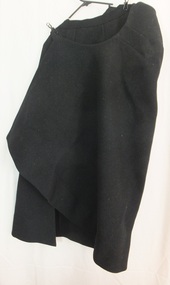
... Mrs Edward Manifold. This side saddle skirt is made from black woolen material fixing at the waist with two metal hooks and three buttons to the front opening. One internal concealed pocket lining to the top part of the apron made of cotton the seat is shaped for side saddle riding and the skirt wraps around the body the longer side draped over the leg that is in the stirrup. ...Mrs Edward Manifold. This side saddle skirt is made from black woolen material fixing at the waist with two metal hooks and three buttons to the front opening. One internal concealed pocket lining to the top part of the apron made of cotton the seat is shaped for side saddle riding and the skirt wraps around the body the longer side draped over the leg that is in the stirrup. ...The Manifolds were a significant pioneering pastoral family in Western Victoria. The donated riding skirt originally belonged to Mrs Edward Manifold, formally Beatrice Mary Synnot Anderson. Beatrice was Edward Manifold’s cousin once removed whom he married in 1900. Edward, the son of John Manifold, was born on 15 November 1868 and educated at Geelong and Melbourne Grammar schools and at Trinity Hall, Cambridge (B.A., 1891). He chose the Danedite portion of land at Purrumbete, and on the death of his bachelor brother Thomas Peter (1863-1895), after a hunting accident, he took over his allocation, Wiridgil. He also owned Boortkoi, near Hexham and on these properties, he ran merino sheep, a Lincoln stud which dated back to 1870, and Shorthorn cattle. 3000 acres were also leased to dairy farmers. Edward was a member of Hampden Shire Council in 1909-31 and three times president at Camperdown. The town was largely bordered by Manifold land and partly dependent upon the local pastoral dynasties, which benefited the local area from the families’ various business interests. Though an offer to build public baths to commemorate the Queen Victoria Jubilee in 1897 was not proceeded with, the town acquired a hospital, a reserve on Mount Leura, a clock tower and a cricket pavilion, as well as notable donations from the Manifolds to St Paul's Church and the grammar school. Edward was a keen polo player and racing man. He was also a successful owner of steeplechasers and a committeeman of the Victoria Racing Club for many years. He was also a member of many Western District racing clubs. On the 16 July 1900, Edward had married his sixteen-year-old cousin Beatrice Mary Synnot Anderson by whom he had three sons Thomas Peter, Andrew and Robert Edward Manifold. Edwards's estate at his death was valued for probate at nearly £500,000. Edward died following an operation on 14 February 1931 at a private hospital in Yarra Vale Melbourne. Beatrice passed away in 1954, aged 79 in Ballarat where she was born in 1874. Contextual historic Family background: The Manifold brothers Thomas (1809-1875), John (1811-1877) and Peter (1817-1885) were the fourth, fifth and sixth sons of William Manifold and Mary, nee Barnes, of Courthouse Farm, Bromborough, Cheshire, England. The family had decided to emigrate to Van Diemen's Land. Thomas was sent ahead, arriving in Hobart Town on 23rd January 1828 with £1500 and a letter of recommendation from the Colonial Office. Thomas acquired 1280 acres on the west bank of the Tamar River. John and Peter, with their parents and three sisters, arrived on 8th July 1831. Land grants by then had finished but William brought ninety acres next to his son Thomas’ land and on the combined properties the family built Kelso House. The Manifolds’ properties were comparatively poor and when news of the Port Phillip District, in Victoria reached Thomas, he lost no time in coming to see for himself in February 1836. He was impressed with what he saw and hurried back to Tasmania to buy lambs and ewes. With one of his brothers, on July 9th he landed his stores at Point Henry and proceeded to occupy both sides of the Moorabool River. Thomas, at the end of the year, returned to Tasmania and left Peter and John to run the new property. Thomas, however, returned to Victoria for several visits and on one of these visits he, along with his brothers, examined the country near Ballarat. In December 1838 they managed to penetrate the Stony Rises, and Peter and John reached Lake Purrumbete and the Mount Leura country. During this time, on 4th July 1838, Thomas married Jane Elizabeth, eldest daughter of Captain Walter Synnot, formerly of Ballinate, County Armagh, Ireland, and then of Van Diemen's Land. Thomas joined his brothers, and they occupied the Purrumbete run in January 1839. On the journey to Purrumbete they could not take their stock and drays through the Stony Rises, so went north of Lake Corangamite, to the neck of land between it and Lake Gnarpurt. By April the move from Moorabool area was complete. As yet they had no hut and were working day and night, but their delight in their new run was unbounded. John wrote to his mother: “We are at last got to the land we wished for it is a beautiful place, and cannot be surpassed by any I have ever seen”. The three brothers occupied Purrumbete together, breeding both sheep and cattle until Thomas went to Grassmere run on the Merri River near Warrnambool in 1844. John and Peter soon gave up breeding sheep but retained the well-known '3M' brand for the cattle. These were Shorthorns, derived from four bulls originally imported by the Boldon brothers and later improved by further importations, and were renowned for size and quality. By the time of the gold rush in 1851, John and Peter were breeding over 1000 head a year, as well as fattening stores. The diggings at this time had disorganised Grassmere by drawing away Thomas's men, and his wife decided to take her two sons and two daughters to Europe for their education. Thomas gave up the property next year, went to England to join his family, and eventually brought the family back to live in Melbourne. At Purrumbete things were different. The brothers, John and Peter, preferred black stockmen to white, so the discovery of gold upset them very little while providing the very market they required. John was on his second visit to England when the rush started, and Peter went in his turn soon after John returned. On 2 September 1856 John married Marion Thomson, at Cormiston, Van Diemen's Land. They had four daughters and five sons, from three of whom, William Thomson, James Chester and Edward, the later generations of the family descend. Through the years the brothers had to contend with the scab, fluke and footrot, depression, rabbits, bush fires and pleuro-pneumonia. In 1861 they appointed as manager Henry Manifold Matson, their nephew, who had already been with them for five years. Thomas died in Melbourne on 7 November 1875, John at Purrumbete on 3 January 1877 and Peter at Purrumbete on 31 July 1885. Devout members of the Church of England, John and Peter, during their lives, gave generously towards building St Paul's Church, Camperdown, and guaranteed part of the vicar's stipend. Peter was a member of the Hampden and Heytesbury Roads Board from 1859 and carried on into the Hampden Shire Council when it was formed in 1864. However, it was not for public works that they were known, but for their personal example. In a new land where speculators and adventurers were all too common, the Manifold brothers were among those who intended it to be their home and their children's home. Industrious, unpretentious and hospitable, they were respected in their community as men of the highest integrity. This riding habit is a characteristic example of the type and style of riding clothes that well-dressed ladies wore in the 1920s. It highlights the changes that were beginning in society for women. Prior to 1918 ladies still had to ride side-saddle with skirts over Jodhpurs. Society of the time regarded women riding astride as unseemly and just not done. This riding habit is particularly significant on a number of levels, it shows the beginnings of change in society's attitudes through women's fashion after the First World War. A change that was to bring a start to a more liberating societal attitude towards women after the successful establishment of the Representation of People Act 1918 that gave women the right to vote. This garments provenance is linked to one of Victoria's important pioneering families the Manifolds, one of the first families that came from Van Diemen's land to settle the Western District of Victoria in 1844. Originally the garment belonged to the wife of the great-grandson of pioneer William Manifold, Edward Manifold who married Beatrice May Synnot Anderson, Edwards Cousin in 1900. The garment was made by the Mayfair tailors J. Busvine & Co. in the early to mid-1920s (estimate) who at the turn of the century were tailors to the Courts of Europe. Their clothing is highly collectible today and examples can be found in a number of significant museum collections around the world, notably the Metropolitan Museum of Art in New York and the FIDM in Los Angeles. Safety skirt/apron, part of a three-piece, side saddle riding habit tailored for Mrs Edward Manifold. This side saddle skirt is made from black woolen material fixing at the waist with two metal hooks and three buttons to the front opening. One internal concealed pocket lining to the top part of the apron made of cotton the seat is shaped for side saddle riding and the skirt wraps around the body the longer side draped over the leg that is in the stirrup. flagstaff hill, warrnambool, shipwrecked coast, flagstaff hill maritime museum, maritime museum, side saddle riding habit, side saddle safety skirt, side saddle apron, mrs edward manifold, beatrice manifold, female riding habit 1920s, shipwreck coast, flagstaff hill maritime village, great ocean road -
 City of Moorabbin Historical Society (Operating the Box Cottage Museum)
Clothing - Clothing, boys blouse, c1908
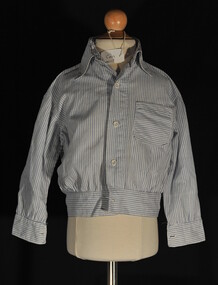
... cotton with blue pinstripes. Breast pockets and banded waist. C 1910. Some fraying to collar and cuffs. Small tear to body. Clothing Clothing, boys blouse Mrs ...This cotton, boy's blouse is an example of the dressmaking skills of the women of the families of the pioneer settlers and market gardeners of the Moorabbin Shire c1900The Maggs family were early settlers in Moorabbin Shire. The pioneer settlers and market gardeners of Moorabbin Shire had to be self reliant and made their own clothing and utensils. This is one of many items that exhibit the skill and craftsmanship of the women in these familiesThis is a 2 year old boy's long-sleeved blouse. White cotton with blue pinstripes. Breast pockets and banded waist. C 1910. Some fraying to collar and cuffs. Small tear to body.clothing, brighton, moorabbin, pioneers, bentleigh, dendy henry, market gardeners, dressmakers, early settlers, maggs geoff, garments, craftwork -
 City of Moorabbin Historical Society (Operating the Box Cottage Museum)
Clothing - Clothing, lady's nightgown, c1920
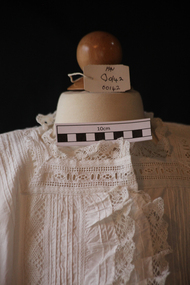
... Mrs Alice Maude Haynes, nee Slew, (1890 – 1978), a member of a Moorabbin Shire early settler family. Early settlers and market gardeners established their families in Moorabbin Shire and this item shows the skill and craftsmanship of the women of these families clothing moorabbin dressmaking cheltenham market gardeners early settlers craftwork slew alice haynes alice A long cotton lady's nightgown with pin-tucking, lace and embroidery. ...This lady’s long, decorative nightgown was worn c1920 by Mrs Alice Maude Haynes, nee Slew, (1890 – 1978), a member of a Moorabbin Shire early settler family.Early settlers and market gardeners established their families in Moorabbin Shire and this item shows the skill and craftsmanship of the women of these families A long cotton lady's nightgown with pin-tucking, lace and embroidery.clothing, moorabbin, dressmaking, cheltenham, market gardeners, early settlers, craftwork, slew alice, haynes alice -
 City of Moorabbin Historical Society (Operating the Box Cottage Museum)
Clothing - Clothing, lady's 1/2 slip cotton cutwork, c1900
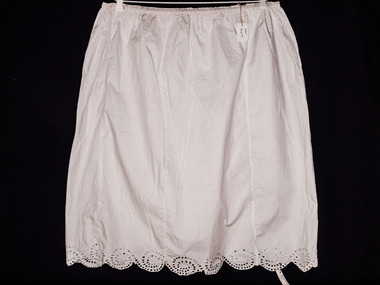
... Clothing Clothing, lady's 1/2 slip cotton cutwork Family of Mrs j Marshall ...This lady’s hand sewn cotton 1/2 petticoat with cut work is an example of the dressmaking and needlework skills of the women of the early settlers families in Moorabbin Shire in the early 20th C Early settlers and market gardeners established their families in Moorabbin Shire c1900 and this item shows the skill and craftsmanship of the women of these families Lady's white cotton 1/2 slip with cutwork front, hand sewn scalloped hem.clothing, haberdashery, crochet, doilies, brighton, moorabbin, pioneers, dressmaking, market gardeners, early settlers, craftwork, bentleigh, lacework, moorabbin shire, marshall d, dairy farms, fruit orchards -
 Glenelg Shire Council Cultural Collection
Clothing - Ladies Night Bonnet, 1830-1860
... Belonged to Marianna Trangmar, b.1820/1821 - later Mrs George Crouch. Ladies night bonnet. Crown made of fine cotton, edged with lace. ...Belonged to Marianna Trangmar, b.1820/1821 - later Mrs George Crouch.Ladies night bonnet. Crown made of fine cotton, edged with lace. Ruffles of embroidered cotton and lace. Ties cotton edged with lace. Worn by Marianna Trangmar/Crouch. -
Glenelg Shire Council Cultural Collection
Clothing - Jabot, n.d
... Belonged toMarianna Trangmar, b.1820/1821 - later Mrs George Crouch. Cotton and lace jabot - for decorating women's clothing. ...Belonged toMarianna Trangmar, b.1820/1821 - later Mrs George Crouch.Cotton and lace jabot - for decorating women's clothing. Outer section lace, inner section embroidered fine cotton. Worn by Marianna Trangmar/Crouch. -
Glenelg Shire Council Cultural Collection
Costume - Baby's Bonnet, c. 1820
... Belonged to Marianna Trangmar, b.1820/1821 - later Mrs George Crouch. Baby's bonnet. Crown made of lace. Best fine cotton, embroidered, eyelets. ...Belonged to Marianna Trangmar, b.1820/1821 - later Mrs George Crouch.Baby's bonnet. Crown made of lace. Best fine cotton, embroidered, eyelets. Lace border round face. String to tighten. Worn by Marianna Trangmar. -
Glenelg Shire Council Cultural Collection
Domestic object - Patchwork Quilt, MRS OLIVE WILLIAMSON'S GRANDMOTHER, 19TH CENTURY PATCHWORK QUILT, n.d
... Large patchwork cotton quilt with numerous swatches of fabric (predominantly rose and white in colour), with hand-stitching. 19TH CENTURY PATCHWORK QUILT Domestic object Patchwork Quilt MRS OLIVE WILLIAMSON'S GRANDMOTHER ...On loan to, and, displayed at the Steam Packet Inn from mid 1980s.Large patchwork cotton quilt with numerous swatches of fabric (predominantly rose and white in colour), with hand-stitching. -
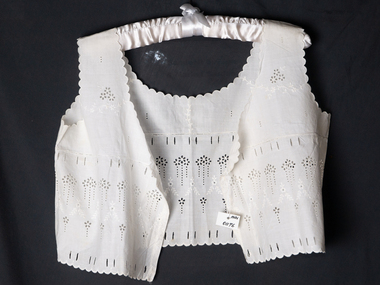 City of Moorabbin Historical Society (Operating the Box Cottage Museum)
Clothing, white cotton lace blouse, c1960
... Manufactured lace became affordable and plentiful so it was used by home dressmakers like Gladys Reed in City of Moorabbin c1960 clothing, manufactured lace, dressmaking, blouses, theatrical props, craftwork, sequins, beading, early settlers, moorabbin shire, mechanics institute cheltenham, ormond choral society, postworld war 11 settlers, housing estates moorabbin 1950, bentleigh, ormond, moorabbin, cheltenham, drama societies, musical society cheltenham, clark judy, reed gladys, reed george A white cotton lace, sleeveless blouse c 1960 with opening front fastened by hooks and eyes Clothing, white cotton lace blouse Mrs Gladys Reed ...Gladys Reed was a member of the Ormond Choral Society c 1950. who performed plays and musicals the City of Moorabbin and she was an accomplished dressmaker and made this blouse for her daughter Judy.Manufactured lace became affordable and plentiful so it was used by home dressmakers like Gladys Reed in City of Moorabbin c1960A white cotton lace, sleeveless blouse c 1960 with opening front fastened by hooks and eyes clothing, manufactured lace, dressmaking, blouses, theatrical props, craftwork, sequins, beading, early settlers, moorabbin shire, mechanics institute cheltenham, ormond choral society, postworld war 11 settlers, housing estates moorabbin 1950, bentleigh, ormond, moorabbin, cheltenham, drama societies, musical society cheltenham, clark judy, reed gladys, reed george -
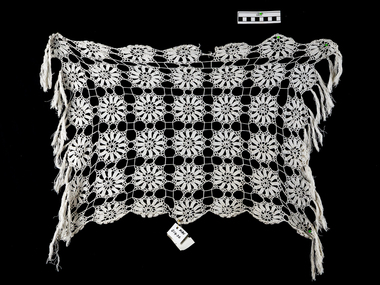 City of Moorabbin Historical Society (Operating the Box Cottage Museum)
Haberdashery, Antimacassar cotton crochet, c1900
... This white cotton Antimacassar has a hand crocheted lace pattern of flowers and a fringe of cotton strands tied to form tassels and was made by a woman from an early settler family in Moorabbin Shire c1900 The women of the early settler families made the clothing, haberdashery and napery for their families as the market gardens and farms were established in Moorabbin Shire c1900 clothing, haberdashery, crochet brighton, moorabbin, pioneers, dressmaking, market gardeners, early settlers, craftwork , bentleigh, lacework, moorabbin shire , dairy farms, fruit orchards A hand crocheted white cotton antimacassar with tassel fringe Haberdashery, Antimacassar cotton crochet Family of Mrs Ward ...This white cotton Antimacassar has a hand crocheted lace pattern of flowers and a fringe of cotton strands tied to form tassels and was made by a woman from an early settler family in Moorabbin Shire c1900 The women of the early settler families made the clothing, haberdashery and napery for their families as the market gardens and farms were established in Moorabbin Shire c1900 A hand crocheted white cotton antimacassar with tassel fringe clothing, haberdashery, crochet brighton, moorabbin, pioneers, dressmaking, market gardeners, early settlers, craftwork , bentleigh, lacework, moorabbin shire , dairy farms, fruit orchards -
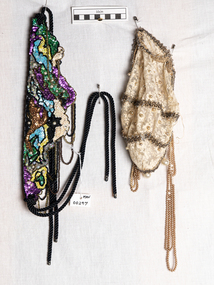 City of Moorabbin Historical Society (Operating the Box Cottage Museum)
Clothing - Theatrical prop, waistband beaded eveningwear, c1950
... Gladys Reed was a member of the Ormond Choral Society c 1950. and this beaded sequined clothing prop was used in the plays and musicals when performed in the the City of Moorabbin clothing, theatrical props, craftwork, sequins, beading, early settlers, moorabbin shire, mechanics institute cheltenham, ormond choral society, postworld war 11 settlers, housing estates moorabbin 1950, bentleigh, ormond, moorabbin, cheltenham, drama societies, musical society cheltenham, clark judy, reed gladys, reed george A Theatrical prop, evening wear as a taffeta waistband with beading, multi coloured sequins, and corded cotton waist ties.c1950 Shown with Theatrical prop white beaded lace hat MAV 00295 Clothing Theatrical prop, waistband beaded eveningwear Mrs Gladys Reed &Ormond Choral Society ...This beaded sequined waist band for evening wear was a clothing prop used in the plays and musicals performed in the the City of Moorabbin. Gladys Reed was a member of the Ormond Choral Society c 1950. Gladys Reed was a member of the Ormond Choral Society c 1950. and this beaded sequined clothing prop was used in the plays and musicals when performed in the the City of Moorabbin A Theatrical prop, evening wear as a taffeta waistband with beading, multi coloured sequins, and corded cotton waist ties.c1950 Shown with Theatrical prop white beaded lace hat MAV 00295clothing, theatrical props, craftwork, sequins, beading, early settlers, moorabbin shire, mechanics institute cheltenham, ormond choral society, postworld war 11 settlers, housing estates moorabbin 1950, bentleigh, ormond, moorabbin, cheltenham, drama societies, musical society cheltenham, clark judy, reed gladys, reed george -
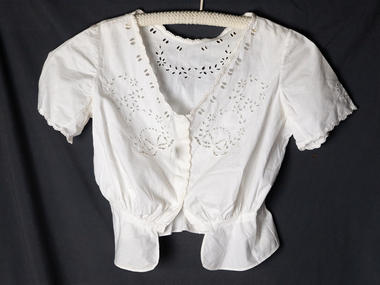 City of Moorabbin Historical Society (Operating the Box Cottage Museum)
Clothing - Lady's blouse,fitted, cutwork c1950, c1950
... This fitted cotton blouse with cutwork was made and worn by Mrs Gladys Reed c 1950 whilst a resident of the City of Moorabbin c 1950...This fitted cotton blouse with cutwork was made and worn by Mrs Gladys Reed c 1950 whilst a resident of the City of Moorabbin c 1950 Mrs Gladys Reed, a member of the Ormond Choral Society c 1950 and was an accomplished dressmaker and craftworker. ...This fitted cotton blouse with cutwork was made and worn by Mrs Gladys Reed c 1950 whilst a resident of the City of Moorabbin c 1950Mrs Gladys Reed, a member of the Ormond Choral Society c 1950 and was an accomplished dressmaker and craftworker. Theatrical Societies were part of the community recreation for settlers in post World War 11 City of Moorabbin A white cotton fitted lady's blouse with short sleeves, cutwork bodice and flared waist.clothing, dressmaking, cutwork, needlework, ormond theatrical society, mckinnon, bentleigh, moorabbin, reed gladys, clark judy clothing, actors, early settlers, post world war 11 estates, knitting, crochetwork, -
 Glenelg Shire Council Cultural Collection
Flag - Flag - Pre-Federation Ensign Flag, c. 1880
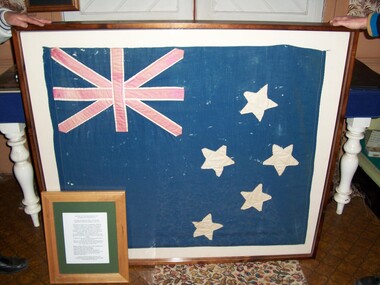
... Mrs Mitchell is referring to. In 2005, Casterton and District Historical Society Inc. donated the flag to the Glenelg Shire Council Cultural Collection for the citizens of Casterton. flag ensign pre-federation Five 5-pointed stars forming the constellation of the Southern Cross on a field of royal blue. Four strips of red cloth edged in white form a Union Jack design in the upper left corner. Mounted on white cotton ...The flag was donated by Mrs A. M. Mitchell Craigwood Convalescent Hospital Como WA "This flag was made by my Grandmother, Elizabeth Nicholls nee Tallack. It was used as a decoration to welcome Lord Hopeton (Hopetown) to Sandford sometime previous to 1883, when he was still a Viscount. I can't remember his name. No doubt Mr H.K. Kahan is no doubt quite correct in these dates and could find no record of the earlier visit. My mother Phillippa was a young girl at the time and sang at the concert in his honor "Will ye no come back again". It must have been before 1883 because in that year at the age of 18 she married. After the concert he asked that the young lady and her mother be presented. Next day he came to afternoon tea. A great honor in those days". Phillippa Tallack Nicholls was born 1865, Sandford, and married in 1883 to Patrick Maguire. (Digger Pioneer Index 1836 to 1888). There was a Royal Visit in 1881 by the Duke of Clarence and the Duke of York and their party to the district and this appears to be the visit that Mrs Mitchell is referring to. In 2005, Casterton and District Historical Society Inc. donated the flag to the Glenelg Shire Council Cultural Collection for the citizens of Casterton.Five 5-pointed stars forming the constellation of the Southern Cross on a field of royal blue. Four strips of red cloth edged in white form a Union Jack design in the upper left corner. Mounted on white cotton backing, under perspex in timber frame.flag, ensign, pre-federation -
 Glenelg Shire Council Cultural Collection
Banner - Banner - Women's Christian Temperance Union, c. 1900
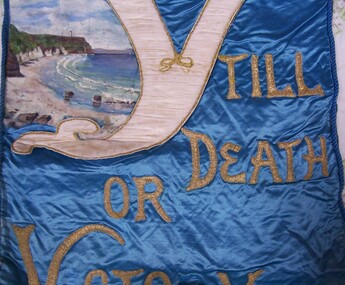
... Mrs. George), 59 Henty Street, Portland. Front: Portland WCTU. Till Death or Victory. Blue satin front. Blue cotton ...Florence Dellar (Mrs. George), 59 Henty Street, Portland.Blue satin front. Blue cotton backing. Blue cord down edges and across top. Hand painted scene of Whalers Bluff. White satin lettering edged with gold thread. Gold thread lettering. Metal rod with pointed finials with cord hanger. Brown fringe on base.Front: Portland WCTU. Till Death or Victory. -
 Glenelg Shire Council Cultural Collection
Headwear - Child's Bonnet, Mrs. Annie Finnigan (Mrs. John), 1905
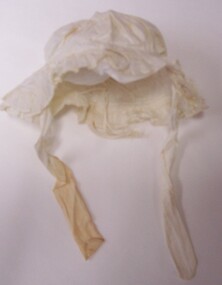
... Made for son of Portland Lighthouse Keeper, Matthew Edward Mabbitt. childs clothing child bonnet headwear hat Portland Lighthouse Child's bonnet made in fine cream cotton fabric. 2 gathered frills at front. 2 rows of fine thread threaded through head piece to pull up for gathering. Fabric gathered into circular insert at back. 2 hemmed ties. Headwear Child's Bonnet Mrs ...Made for son of Portland Lighthouse Keeper, Matthew Edward Mabbitt.Child's bonnet made in fine cream cotton fabric. 2 gathered frills at front. 2 rows of fine thread threaded through head piece to pull up for gathering. Fabric gathered into circular insert at back. 2 hemmed ties.childs clothing, child, bonnet, headwear, hat, portland lighthouse -
Glenelg Shire Council Cultural Collection
Headwear - Bonnet, c. 1930
... Belonged to Mrs Jane Rose, Portland (Mother of donor) and worn during the 1934 centenary celebrations in Portland celebrations 1934 centenary bonnet clothing hat headwear Cotton bonnet, white fabric with all over indigo design, bonnet has frill and tucks, worn during the 1934 centenary celebrations. ...Belonged to Mrs Jane Rose, Portland (Mother of donor) and worn during the 1934 centenary celebrations in PortlandCotton bonnet, white fabric with all over indigo design, bonnet has frill and tucks, worn during the 1934 centenary celebrations.celebrations, 1934, centenary, bonnet, clothing, hat, headwear -
Glenelg Shire Council Cultural Collection
Costume - Costume - Nightdress, c. 1930
... Belonged to Mrs June Rose (Mother of donor) White cotton nightdress, with pink hand-done embroidery & cuthole work on the bodice and sleeves, and insert of commercially made lace at waistline. ...Belonged to Mrs June Rose (Mother of donor)White cotton nightdress, with pink hand-done embroidery & cuthole work on the bodice and sleeves, and insert of commercially made lace at waistline. Press stud fastening at waist. -
Glenelg Shire Council Cultural Collection
Clothing - Clothing - Ladies Tennis Culottes, c. 1930
... Belonged to Mrs Jane Rose, Portland (mother of donor) Relates to local pastimes White cotton ladies tennis culottes Clothing Clothing - Ladies Tennis Culottes ...Belonged to Mrs Jane Rose, Portland (mother of donor) Relates to local pastimesWhite cotton ladies tennis culottes -
 Orbost & District Historical Society
woman's lace collar, c. 1900
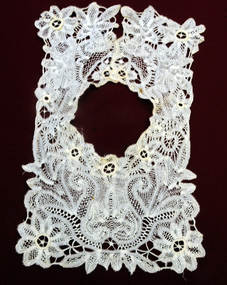
... Mrs John Draffin was the wife of a Shire President of Orbost Shire Council. She is reported to have made this lace herself. The design might have been copied from a book of laces. Associated with the wife of an early resident of Orbost who was Shire President. tape-lace lace-collar women's-clothing A large white cotton lace collar, roughly rectangular in shape, made from tape lace and with decorative infills. ...Mrs John Draffin was the wife of a Shire President of Orbost Shire Council. She is reported to have made this lace herself. The design might have been copied from a book of laces.Associated with the wife of an early resident of Orbost who was Shire President. A large white cotton lace collar, roughly rectangular in shape, made from tape lace and with decorative infills. This collar is very pretty and beautifully made. tape-lace lace-collar women's-clothing -
 Orbost & District Historical Society
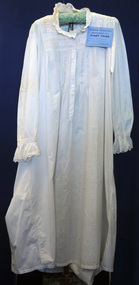
night dress, Cowell, Alice, c. 1913
... Mrs Jim Richardson, nee Cowell) and has been donated by her daughter Esma Richardson. This item is an example of the needlework skills of women in the early 20th century. night-dress bombala-exhibition female-clothing The certificate from the Bombala Exhibition Society indicates that Alice Cowell won first prize in the 1913 show for having made this night-dress. A full length white cotton ...This garment was made by Edith (?) Cowell (Mrs Jim Richardson, nee Cowell) and has been donated by her daughter Esma Richardson.This item is an example of the needlework skills of women in the early 20th century.A full length white cotton night-dress with long sleeves. It has lace around the shoulders and across the chest, broderie anglais collar and cuffs. A ribbon is threaded through the lace at the neckline and cuffs. The bodice also has small pleats or pin-tucks at the front and clear buttons. Pinned to the left shoulder is a blue certificate indicating from the Bombala Exhibition Society of 1913.The certificate from the Bombala Exhibition Society indicates that Alice Cowell won first prize in the 1913 show for having made this night-dress.night-dress bombala-exhibition female-clothing -
 Orbost & District Historical Society
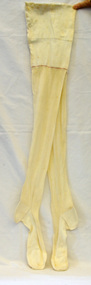
silk stockings, c. 1920s
... Wedding stockings, c. 1920, worn by Mrs C Reynolds. silk-stockings female-underwear costumes-1920s wedding-stockings A pair of cream silk stockings. The toes and tops are reinforced with cotton thread. silk stockings ...Wedding stockings, c. 1920, worn by Mrs C Reynolds. A pair of cream silk stockings. The toes and tops are reinforced with cotton thread. silk-stockings female-underwear costumes-1920s wedding-stockings -
 Orbost & District Historical Society
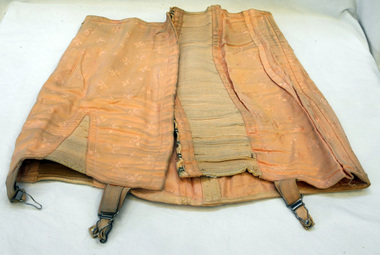
corset, c. 1920s-1940s
... Owned and worn by Mrs Marjorie McKeown (nee Ford) who lived in the Orbost area. women's-underware foundation-wear female-costume Size 28 Liberty Corset Factory Howard Street North Melbourne A lady's corset made from apricot coloured cotton with small flowers embroidered on the fabric. ...Owned and worn by Mrs Marjorie McKeown (nee Ford) who lived in the Orbost area.A lady's corset made from apricot coloured cotton with small flowers embroidered on the fabric. It has suspender straps with clips attached to the bottom of the corset. Stays, possibly whalebone, are sewn vertically into the fabric. Size 28 Liberty Corset Factory Howard Street North Melbournewomen's-underware foundation-wear female-costume
