
Showing 17 items matching "mt lyell - railways"
-
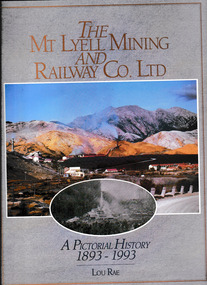 Victorian Railway History Library
Book, Lou Rae, The Mt Lyell Mining and Railway Co Ltd : a pictorial history 1893-1993, 1993
... The Mt Lyell Mining and Railway Co Ltd : a pictorial history 1893-1993 ...Mt Lyell - History...Mt Lyell - Railways...Mt Lyell - History Mt Lyell - Railways Detailed centenary photographic history of the The Mt Lyell Mining and Railway Co Ltd Ill, map. p.94. ...Detailed centenary photographic history of the The Mt Lyell Mining and Railway Co LtdIll, map. p.94.non-fictionDetailed centenary photographic history of the The Mt Lyell Mining and Railway Co Ltd mt lyell - history, mt lyell - railways -
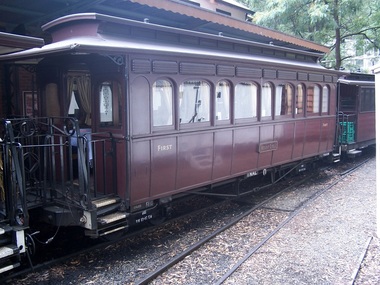 Puffing Billy Railway
1 NAL (Mount Lyell), 1st. class saloon car, 1901–1902
... Location Note NAL 1 Lancaster Railway Carriage and Wagon Co Saloon 1901 Mt Lyell Railway Named Mt Lyell NAL 2 Lancaster Railway Carriage and Wagon Co Saloon 1901 Mt Lyell Railway Named Rinadeena NAL 3 Lancaster Railway Carriage and Wagon Co Saloon 1901 Mt Lyell Railway Named Teepookana NAL 4 Lancaster Railway Carriage and Wagon Co Saloon 1901 Mt Lyell Railway Named Dubbil Barril...Location Note NAL 1 Lancaster Railway Carriage and Wagon Co Saloon 1901 Mt Lyell Railway Named Mt Lyell NAL 2 Lancaster Railway Carriage and Wagon Co Saloon 1901 Mt Lyell Railway Named Rinadeena NAL 3 Lancaster Railway Carriage and Wagon Co Saloon 1901 Mt Lyell Railway Named Teepookana NAL 4 Lancaster Railway Carriage and Wagon Co Saloon 1901 Mt Lyell Railway Named Dubbil Barril Historic - Industrial Narrow Gauge railway - Mt. ...1 NAL - Mt. Lyell - (Mt. Lyell) O 5; 1 NBL - 1st. class saloon car (20) In Active Service Puffing billy railway NAL FIRST-CLASS SALOON CAR. Four saloon end-platform cars originally built during 1901–1902 by the Lancaster Railway Carriage and Wagon Company Ltd. for the 3'6" gauge Mt. Lyell Mining & Railway Company in Tasmania and classed O. Converted for use as second-class cars on the 2'6" gauge Puffing Billy Railway during 1965–1966, these cars were reclassified NBL and numbered 1–4. The L recognises their Mt. Lyell origin, No. 1 was kept for use as the Railway's VIP car and was reconditioned to a higher standard. No. 2 was similarly upgraded in 1985 for use on special occasions. In 1989 No. 3 was similarly reconditioned with No. 4 receiving similar treatment in 1995. These cars were re-classified NAL in recognition of their new first-class nature. The Mt Lyell Railway was closed in 1963 and subsequently dismantled, but fortunately several of the locomotives and carriages passed into preservation. This original Mt Lyell Railway passenger carriage was donated to the Puffing Billy Preservation Society by the Mount Lyell Mining & Railway Company in the 1960s and was converted to 2' 6" gauge. It has since given many years of service on the Puffing Billy Railway. TASMANIAN CARRIAGES & GUARDS VANS No. Builder Type Year built Ex. Location Note NAL 1 Lancaster Railway Carriage and Wagon Co Saloon 1901 Mt Lyell Railway Named Mt Lyell NAL 2 Lancaster Railway Carriage and Wagon Co Saloon 1901 Mt Lyell Railway Named Rinadeena NAL 3 Lancaster Railway Carriage and Wagon Co Saloon 1901 Mt Lyell Railway Named Teepookana NAL 4 Lancaster Railway Carriage and Wagon Co Saloon 1901 Mt Lyell Railway Named Dubbil BarrilHistoric - Industrial Narrow Gauge railway - Mt. Lyell Mining & Railway Company in Tasmania - 1st Class Saloon Carriage 1st. class saloon car made of Timber and Steel1 NAL - Mt. Lyell -
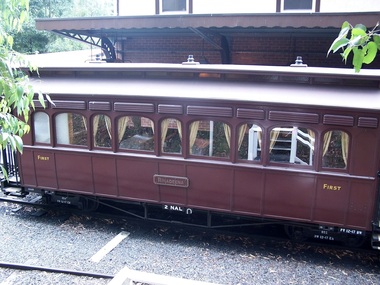 Puffing Billy Railway
Equipment - Railway carriage (pbr Rinadeena No.2nal) ( Mt. Lyell Mining & Railway Company No.02), 1901–1902
... Railway carriage (pbr Rinadeena No.2nal) ( Mt. Lyell Mining & Railway Company No.02)...railway carriages...first class saloon...narrow gauge...rinadeena...mt lyell... Lyell Railway Named Mt Lyell NAL 2 Lancaster Railway Carriage and Wagon Co Saloon 1901 Mt Lyell Railway Named Rinadeena NAL 3 Lancaster Railway Carriage and Wagon Co Saloon 1901 Mt Lyell Railway Named Teepookana NAL 4 Lancaster Railway Carriage and Wagon Co Saloon 1901 Mt Lyell Railway Named Dubbil Barril...Mt. Lyell) O 2; 2 NBL - 1st. class saloon car (20) NAL FIRST-CLASS SALOON CAR. Four saloon end-platform cars originally built during 1901–1902 by the Lancaster Railway Carriage and Wagon Company Ltd. for the 3'6" gauge Mt. ...2 NAL - Rinadeena - (Mt. Lyell) O 2; 2 NBL - 1st. class saloon car (20) NAL FIRST-CLASS SALOON CAR. Four saloon end-platform cars originally built during 1901–1902 by the Lancaster Railway Carriage and Wagon Company Ltd. for the 3'6" gauge Mt. Lyell Mining & Railway Company in Tasmania and classed O. Converted for use as second-class cars on the 2'6" gauge Puffing Billy Railway during 1965–1966, these cars were reclassified NBL and numbered 1–4. The L recognises their Mt. Lyell origin, No. 1 was kept for use as the Railway's VIP car and was reconditioned to a higher standard. No. 2 was similarly upgraded in 1985 for use on special occasions. In 1989 No. 3 was similarly reconditioned with No. 4 receiving similar treatment in 1995. These cars were re-classified NAL in recognition of their new first-class nature. The Mt Lyell Railway was closed in 1963 and subsequently dismantled, but fortunately several of the locomotives and carriages passed into preservation. Purchased by the Puffing Billy Preservation Society from the Mount Lyell Mining & Railway Company in the 1960's and converted to 2' 6" gauge. It has since given many years of service on the Puffing Billy Railway. TASMANIAN CARRIAGES & GUARDS VANS No. Builder Type Year built Ex. Location Note NAL 1 Lancaster Railway Carriage and Wagon Co Saloon 1901 Mt Lyell Railway Named Mt Lyell NAL 2 Lancaster Railway Carriage and Wagon Co Saloon 1901 Mt Lyell Railway Named Rinadeena NAL 3 Lancaster Railway Carriage and Wagon Co Saloon 1901 Mt Lyell Railway Named Teepookana NAL 4 Lancaster Railway Carriage and Wagon Co Saloon 1901 Mt Lyell Railway Named Dubbil BarrilThe Rinadeena is a stunning example of a classic narrow gauge 1st Class Saloon Carriage, used as a luxury edition to train travel in the late 1800s and the 2NAL within Puffing Billy's collection was purchased by the Puffing Billy Preservation Society in the 1960s, where it underwent restoration to become part of the railway's historic transport collection.A timber and iron saloon car - painted in crimson with a name plate 'Rinadeena' attached to the centre of the carriage and the words '2 NAL' painted in white directly below. The word 'FIRST' is painted in gold at both ends of the carriage. The car has nine windows on either side of the carriage and a wrought iron ballastrade upon entry at eiether end of the carriage as well as iron steps to ascend. Inside the carriage are 10 bench seats made of wood and leather and ten tables for dining. The windows are adorned with cream cloth fabric and above each bench are wrought iron luggae racks. The ceiling is covered in cloth and features two suspended ornate glass and metal light fixtures. A wooden door with two glass panels can be found at both ends of the carriage.2 NAL - Rinadeenarailway carriages, first class saloon, narrow gauge, rinadeena, mt lyell, transport, travel, leisure, luxury -
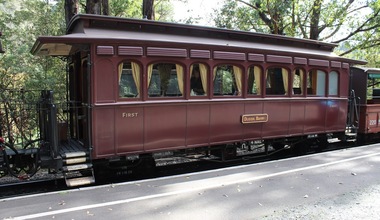 Puffing Billy Railway
4 NAL (Dubbil Barril), 1st. class saloon car, 1901–1902
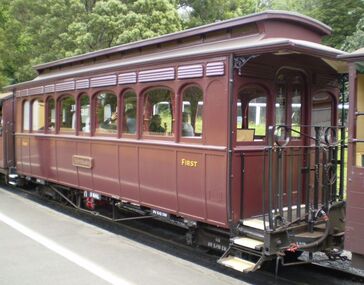
... Mt. Lyell) O 6; 4 NBL - 1st. class saloon car (28) NAL FIRST-CLASS SALOON CAR. Four saloon end-platform cars originally built during 1901–1902 by the Lancaster Railway Carriage and Wagon Company Ltd. for the 3'6" gauge Mt. ...Mt. Lyell) O 6; 4 NBL - 1st. class saloon car (28) NAL FIRST-CLASS SALOON CAR. Four saloon end-platform cars originally built during 1901–1902 by the Lancaster Railway Carriage and Wagon Company Ltd. for the 3'6" gauge Mt. ...4 NAL - Dubbil Barril - (Mt. Lyell) O 6; 4 NBL - 1st. class saloon car (28) NAL FIRST-CLASS SALOON CAR. Four saloon end-platform cars originally built during 1901–1902 by the Lancaster Railway Carriage and Wagon Company Ltd. for the 3'6" gauge Mt. Lyell Mining & Railway Company in Tasmania and classed O. Converted for use as second-class cars on the 2'6" gauge Puffing Billy Railway during 1965–1966, these cars were reclassified NBL and numbered 1–4. The L recognises their Mt. Lyell origin, No. 1 was kept for use as the Railway's VIP car and was reconditioned to a higher standard. No. 2 was similarly upgraded in 1985 for use on special occasions. In 1989 No. 3 was similarly reconditioned with No. 4 receiving similar treatment in 1995. These cars were re-classified NAL in recognition of their new first-class nature. The Mt Lyell Railway was closed in 1963 and subsequently dismantled, but fortunately several of the locomotives and carriages passed into preservation. Purchased by the Puffing Billy Presevation Society from the Mount Lyell Mining & Railway Company in the 1960s and converted to 2' 6" gauge. It has since given many years of service on the Puffing Billy Railway. TASMANIAN CARRIAGES & GUARDS VANS No. Builder Type Year built Ex. Location Note NAL 1 Lancaster Railway Carriage and Wagon Co Saloon 1901 Mt Lyell Railway Named Mt Lyell NAL 2 Lancaster Railway Carriage and Wagon Co Saloon 1901 Mt Lyell Railway Named Rinadeena NAL 3 Lancaster Railway Carriage and Wagon Co Saloon 1901 Mt Lyell Railway Named Teepookana NAL 4 Lancaster Railway Carriage and Wagon Co Saloon 1901 Mt Lyell Railway Named Dubbil Barril Lancaster Railway Carriage and Wagon Co The Lancaster Company was formed in 1863 and owned extensive works on the outskirts of Lancaster where it produced railway rolling stock of all descriptions, tram cars, wheels and axles, etc and had a reputation for work of a very high-class character. In 1902 Metropolitan Amalgamated Railway Carriage and Wagon Co was registered on 18 April and incorporated as a limited company to amalgamate 6 companies including Lancaster Railway Carriage and Wagon Co These works were closed in 1908 when the business was transferred to Ashbury.Historic - Industrial Narrow Gauge railway - Mt. Lyell Mining & Railway Company in Tasmania - 1st Class Saloon Carriage1st. class saloon car made of Timber and steel4 NAL - Dubbil Barrilpuffing billy railway, narrow gauge -
 Puffing Billy Railway
3 NAL (Teepookana), 1st. class saloon car, 1901–1902
... Mt. Lyell) O 3; 3 NBL - 1st. class saloon car (20) NAL FIRST-CLASS SALOON CAR. Four saloon end-platform cars originally built during 1901–1902 by the Lancaster Railway Carriage and Wagon Company Ltd. for the 3'6" gauge Mt. ...Mt. Lyell) O 3; 3 NBL - 1st. class saloon car (20) NAL FIRST-CLASS SALOON CAR. Four saloon end-platform cars originally built during 1901–1902 by the Lancaster Railway Carriage and Wagon Company Ltd. for the 3'6" gauge Mt. ...3 NAL - Teepookana - (Mt. Lyell) O 3; 3 NBL - 1st. class saloon car (20) NAL FIRST-CLASS SALOON CAR. Four saloon end-platform cars originally built during 1901–1902 by the Lancaster Railway Carriage and Wagon Company Ltd. for the 3'6" gauge Mt. Lyell Mining & Railway Company in Tasmania and classed O. Converted for use as second-class cars on the 2'6" gauge Puffing Billy Railway during 1965–1966, these cars were reclassified NBL and numbered 1–4. The L recognises their Mt. Lyell origin, No. 1 was kept for use as the Railway's VIP car and was reconditioned to a higher standard. No. 2 was similarly upgraded in 1985 for use on special occasions. In 1989 No. 3 was similarly reconditioned with No. 4 receiving similar treatment in 1995. These cars were re-classified NAL in recognition of their new first-class nature. The Mt Lyell Railway was closed in 1963 and subsequently dismantled, but fortunately several of the locomotives and carriages passed into preservation. Purchased by Puffing Billy Preservation Society from the Mount Lyell Mining & Railway Company in the 1960s, it was converted to 2' 6" gauge. It has since given many years of service on the Puffing Billy Railway. TASMANIAN CARRIAGES & GUARDS VANS No. Builder Type Year built Ex. Location Note NAL 1 Lancaster Railway Carriage and Wagon Co Saloon 1901 Mt Lyell Railway Named Mt Lyell NAL 2 Lancaster Railway Carriage and Wagon Co Saloon 1901 Mt Lyell Railway Named Rinadeena NAL 3 Lancaster Railway Carriage and Wagon Co Saloon 1901 Mt Lyell Railway Named Teepookana NAL 4 Lancaster Railway Carriage and Wagon Co Saloon 1901 Mt Lyell Railway Named Dubbil Barril Lancaster Railway Carriage and Wagon Co The Lancaster Company was formed in 1863 and owned extensive works on the outskirts of Lancaster where it produced railway rolling stock of all descriptions, tram cars, wheels and axles, etc and had a reputation for work of a very high-class character. In 1902 Metropolitan Amalgamated Railway Carriage and Wagon Co was registered on 18 April and incorporated as a limited company to amalgamate 6 companies including Lancaster Railway Carriage and Wagon Co These works were closed in 1908 when the business was transferred to Ashbury 1st Saloon Carriage Owner Mount Lyell Mining and Railway Company, Queenstown, TAS Builder Lancaster Railway Carriage and Wagon Company Ltd, England Build date 1901 - 1902 Car length 31 ft 4 in (9.55 m) Car weight 11 t (11.18 ton) Gauge Original Narrow: 1,067 mm (3 ft 6 in) Rebuilt Narrow: 762 mm (2 ft 6 in) Configuration Bogie Capacity 1 -3: 20 Passengers 4: 28 Passengers Number in class 4 Numbers Mt. Lyell: O 2 - O 3, O 5, O 6 Puffing Billy: NBL 1 - NBL 4, NAL 1 - NAL 4, Mt. Lyell, Teepookana, Rinadeena, Dubbil Barril First run 1901 No. Name Location In Service Withdrawn Condition Livery NAL 1 Mt Lyell, NBL 1 Puffing Billy Reclassed from O 5. Recoded to NAL 1. Operational NAL 2 Teepookana, NBL 2 Puffing Billy Converted from O 2. Upgraded - 1985. Recoded to NAL 2. Operational NAL 3 Rinadeena, NBL 3 Puffing Billy Converted from O 3. Upgraded - 1989. Converted to NAL 3. Operational NAL 4 Dubbil Barril, NBL 4 Puffing Billy Converted from O 6. Upgraded - 1995. Converted to NAL 4. Operational Historic - Industrial Narrow Gauge railway - Mt. Lyell Mining & Railway Company in Tasmania - 1st Class Saloon Carriage1st. class saloon car made of Timber and steel3 NAL - Teepookanapuffing billy railway -
 Federation University Historical Collection
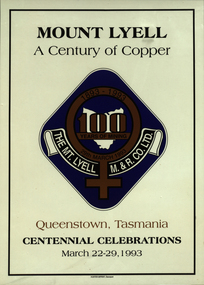
Poster, Mt Lyell Mining and Railway Co Ltd Centennial Celebration, 1993
... Mt Lyell Mining and Railway Co Ltd Centennial Celebration...Laminated poster advertising the Mt Lyell Mining and Railway Company Limited Centennial Celebrations taking place in Queenstown 26th to 29th March 1993 'Mt Lyell A Century in Copper'....Mt Lyell Mining and Railway Co Ltd Centennial Celebration Poster ...Laminated poster advertising the Mt Lyell Mining and Railway Company Limited Centennial Celebrations taking place in Queenstown 26th to 29th March 1993 'Mt Lyell A Century in Copper'.mt lyell, mining, centennial, copper 100 year -
 Federation University Historical Collection
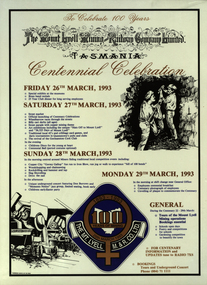
Poster, Mt Lyell Mining and Railway Company Centennial Celebration, 1993
... Mt Lyell Mining and Railway Company Centennial Celebration...Laminated poster advertising events associated with the Mt Lyell Mining and Railway Company Limited Centennial Celebrations taking place from Friday 26th March to Monday 29th March 1993....Mt Lyell Mining and Railway Company Centennial Celebration Poster ...Laminated poster advertising events associated with the Mt Lyell Mining and Railway Company Limited Centennial Celebrations taking place from Friday 26th March to Monday 29th March 1993.mt lyell, mining, centennial, -
 The Beechworth Burke Museum
Geological specimen - Chalcopyrite
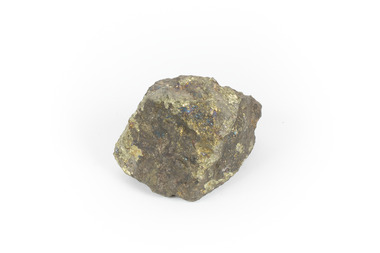
... Between 1893-1994, the Mt Lyell Mining and Railway Company were responsible for operations. ...Between 1893-1994, the Mt Lyell Mining and Railway Company were responsible for operations. ...This specimen originated from Mount Lyell on the west coast of Tasmania, where a large group of open cut and underground copper-silver-gold mines began operating in 1883. Between 1893-1994, the Mt Lyell Mining and Railway Company were responsible for operations. The Mt Lyell copper-gold mines produce some excellent crystallised specimens of chalcopyrite and other minerals. The deposits are generally considered to be of Cambrian volcanic origin, but there are indications of Devonian granitic influence on the ores, plus local remobilisation during Devonian deformation. Over 120 million tonnes of ore was produced from several workings, including the main Prince Lyell mine and the North Lyell mine, which was also of great importance. The Mount Lyell mines have a long history of human and environmental disasters, including the 1912 North Lyell fire that killed 42 miners, and two separate incidents in 2013 in which three people lost their lives. The environmental impacts from this complex of mines are extensive, with waste tailings and heavy metal contamination flowing directly into the King and Queen River catchments. In 1954, the eminent Australian historian, Geoffrey Blainey, published 'The Peaks of Lyell' which delves into the history of the 1912 North Mount Lyell Disaster.Chalcopyrite does not contain the most copper in its structure relative to other minerals, but it is the most important copper ore since it can be found in many localities and occurs in a variety of ore types. The brassy-yellow colours in Chalcopyrite mean it is often confused with pyrites and gold, leading to use of the term, "fool's gold." Chalcopyrite has been the primary ore of copper since smelting began five thousand years ago. This specimen is part of a larger collection of geological and mineral specimens collected from around Australia (and some parts of the world) and donated to the Burke Museum between 1868-1880. A large percentage of these specimens were collected in Victoria as part of the Geological Survey of Victoria that begun in 1852 (in response to the Gold Rush) to study and map the geology of Victoria. Collecting geological specimens was an important part of mapping and understanding the scientific makeup of the earth. Many of these specimens were sent to research and collecting organisations across Australia, including the Burke Museum, to educate and encourage further study.This hand sized solid mineral specimen has shades of brass-yellow with spots of iridescent green-black tarnish. Chalcopyrite is a copper iron sulphide mineral and a major ore of copper common in sulphide veins and disseminated in igneous rocks. Chalcopyrite has a hardness of 3.5-4 on the Mohs Scale. It is a member of the tetragonal crystal system and has metallic lustre and opaque transparency.burke museum, beechworth, indigo shire, beechworth museum, geology, geological specimen, chalcopyrite, copper pyrites, copper mining, tasmanian geology, mount lyell, mount lyell mines, fools gold, mohs scale, crystals, minerals, historical geological collection, victorian geological survey, a.r.c selwyn, gold rush, van diemans land -
 Flagstaff Hill Maritime Museum and Village
Document - Certificate of Approval, Load Line, 25-02-1970
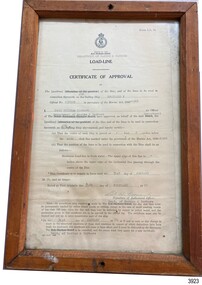
... After a variety of services, in late 1970 Reginald M was sold to the Mt. Lyell Mining and Railway Company and was used by them as a barge to carry explosives. ...After a variety of services, in late 1970 Reginald M was sold to the Mt. Lyell Mining and Railway Company and was used by them as a barge to carry explosives. ...This Certificate, Load-Line, gave approval for the vessel Reginald M to load cargo up to a certain line, marked by a disc attached to the ship and inspected by the South Australian Harbors Board. The vessel had a long and varied life of service. This Certificate relates to early 1970, before the ship was sold to the Lyall Mining and Rail Company. The Load Line on the Reginald M was carved on the ship, inside the hull and not removeable. The REGINALD M - The vessel “Reginald M” was a two-masted coastal ketch, owned and built by Mr. Jack (John) Murch of Birkenhead, Port of Adelaide, South Australia. Its construction took approximately 6 months and it was launched at Largs Bay in 1922. The Reginald M’s purpose was to serve the coastal trade of South Australia, to carry cargo cheaply and efficiently. It is believed that the keel was in fact hewn from two telegraph poles! Its builder frequented all the salvage yards for materials and fittings. Reginald M had a very shallow draft and a flat bottom that enabled it to come close to shore and to sit high and dry at low tide or to be beached on sand. The flat bottom was also to make the ship able to skim over reefs. Wagons could load and unload direct from her side. Her cargo included Guano, Barley, Wool, Horses, Cattle, Timber, Explosives, Potatoes, Shell Grit and Gypsum. After a variety of services, in late 1970 Reginald M was sold to the Mt. Lyell Mining and Railway Company and was used by them as a barge to carry explosives. In 1972 the Navy League of Strahan, Tasmania, purchased her for use by the Strahan Sea Cadet Unit to use at Macquarie Harbour and renamed her T.S. Macquarie. However this plan for use of Reginald M did not come to pass. In 1974 Mr. Andrew Rennie, of East Brighton, Melbourne, bought her for a similar purpose. , paying $5,000 and donating a ‘Cadet of the Year” trophy to the Sea Cadets. He sailed her from Strahan to Melbourne, planning to use her for pleasure sailing. Also in 1975 Reginald M was sold to Melbourne Ferry Company at auction. Later in 1975 the Reginald M was bought by Flagstaff Maritime Museum for $20,000 . She has been restored and is now one of the exhibits in the Village lagoon or lake. It was restored in 2006 using funds from a $4,000 government grant.This Certificate is significant because of its association with the last working days of REGINALD M. REGNIALD M was a coastal trading ketch from South Australia built in 1922. It was one of very few sailing coastal trading vessels still existing until 2016, and its flat bottom, single chine shape illustrated a very simple but robust method of construction, compared to other round bilged examples of trading vessels. The vessel is listed on the Australian Register of Historic Vessels (ARHV Number: HV000562.)Certificate, rectangular, behind glass in wooden frame. Certificate is an official printed form, some information is over-typed, other information is hand written and signed. Frame has a central hole in top and bottom. The Certificate relates to Load Level of the vessel Reginald M and refers to the exact placement of a disc within the vessel that indicates the maximum load in fresh water. . Issued to the vessel 'Reginald M', Official Number 137228. . Issued by the Sough Australian Harbors Board . Valid from 25-02-1970 to 31-01-1974. . Signed by Neil Cormack, 25th February 1970Certificate of Approval - Load Line for sailing vessel Reginald M, Official Number 137228. Logo of the South Australian Harbors Board. Issued by Department of Marine & Harbors, Port Adelaide, 25th February 1970. In force until 31st January 1974. Signed by Neil William Cormack, authorised officer for Department of Marine & Harbors. Typed onto form: "AUX [SAILING SIP]" "REGINALD M" "137228" "1968" " Neil William Cormack" "Department of Marine & Harbors" "1 [foot] 3 [inches below the] main [deck]" "31st JANUARY 74" "25th FEBRUARY 70" Signature: "Neil W Cormack"flagstaff hill, warrnambool, maritime village, maritime museum, flagstaff hill maritime museum & village, shipwreck coast, great ocean road, coastal trader, reginald m, ketch, john murch, ch murch, reg webb, carribie station, mt lyell copper company, melbourne ferry company, certificate of approval, load line, 137228, load line disc, 25-02-1970, neil w cormack, neil william cormack, south australian harbors board, department of marine and harbors, harbours -
 Flagstaff Hill Maritime Museum and Village
Equipment - Ship's Wheel, 1922
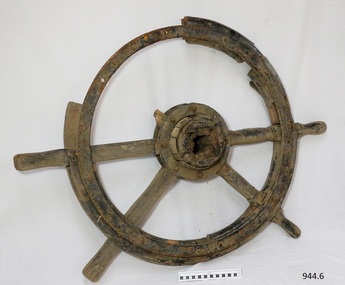
... In late 1970, the Mt. Lyell Mining and Railway Company bought the vessel to use as a barge to carry explosives. ...In late 1970, the Mt. Lyell Mining and Railway Company bought the vessel to use as a barge to carry explosives. ...This ship's wheel was hand-made from wood and metal using a recycled cart wheel. It originally belonged to the "Reginald M", a coastal trading ketch. ‘REGINALD M’ 1922 to 1975- The vessel “Reginald M” was a two-masted coastal ketch, owned and built by Mr Jack (John) Murch of Birkenhead, Port of Adelaide, South Australia. Its construction took approximately 6 months, and it launched at Largs Bay in 1922. The Reginald M’s purpose was to serve the coastal trade of South Australia, to carry cargo cheaply and efficiently. Some have said that the keel was, in fact, hewn from two telegraph poles! Its builder frequented all the salvage yards for materials and fittings. Reginald M had a very shallow draft and a flat bottom that enabled it to come close to shore and to sit high and dry at low tide or to be beached on sand. The flat bottom was also to make the ship able to skim over reefs. Wagons could load and unload direct from their sides. Its cargo included Guano, Barley, Wool, Horses, Cattle, Timber, Explosives, Potatoes, Shell Gritt and Gypsum. On April 9th 1931Reginald M weathered a large storm in St Vincent Gulf, SA. The vessel suffered great damage; the mast snapped, and the crew laboured for four hours to free it by chopping off the mast and rigging. The crew patched it up and slowly returned to Port Adelaide with only a portion of the insured cargo being damaged. The crew members at the time were owner Mr John H Murch of Wells Street, Largs Bay; Skipper Mr R Murch, John’s brother; Murray, son of Captain Murch; and Seaman John Smith. Reg Webb purchased Carribie Station, at Marion in the Warooka District, south of Adelaide, in 1921. He cleared the land and farmed sheep and grain. In 1923, he shipped his own wool and grain from Marion Bay, having first carted 300 bags of the barley grain, 12 bags at a time, along the unmade track to the jetty. A photograph donated to Flagstaff Hill, dating about 1929 - 1942, shows two men on the Reginald M, holding between them their fishing catch of a large hammer shark. The photograph is stamped “GRENFELL STUDIO PORT LINCOLN PRINT” and titled “hammer shark caught on Reginald Emm”. The donor’s family lived on the Your Peninsula and dispatched their grain from a chute at Gleeson’s Landing to the awaiting transport vessel. Reg knew the Murch Brothers from Port Adelaide. The brothers had been using their ketch, Reginald M, to ship Guano from the Islands, led by Captain Richard Murch. Reg approached them in 1934 about shipping grain from Marion Bay. The brothers visited the bay and thought it was an ideal place. They showed Reg where to stack his grain, and they measured up the cliffs. When Reg was ready, they brought down and installed a ninety-foot wooden chute. The bags of grain were individually pushed down the chute, landing in a waiting small boat, then rowed to Reginald M with 14 bags at a time. After 10 hours, Reginald M would have a load of 1300 bags of grain to ship to waiting ports. At one time, a wild storm destroyed the chute, so they built a stronger replacement chute. Reginald M engaged in the shipping of grain from there until 1938. In 1940, Able Seaman Allan H Lucas served on the Reginald M between September and December, being engaged and discharged from Port Adelaide. The ship’s Master, W S Murch, signed his Certificate of Discharge. It seems that at the Reginald M was used, at one time, as a Customs vessel, as one photograph in Flagstaff Hill’s collection shows “H.M.C. No. 3, Pt Adelaide” on the bow. In 1969, the last freight left Marion Bay on the ketch Reginald M carrying grain, wool, and explosives. In late 1970, the Mt. Lyell Mining and Railway Company bought the vessel to use as a barge to carry explosives. In 1972, the Navy League of Strahan, Tasmania, purchased it for use by the Strahan Sea Cadet Unit to use at Macquarie Harbour and renamed it T.S. Macquarie. However, this plan for the use of Reginald M did not happen. In 1974, Mr Andrew Rennie, of East Brighton, Melbourne, bought it for a similar purpose, paying $5,000 and donating a ‘Cadet of the Year’ trophy to the Sea Cadets. He sailed it from Strahan to Melbourne, planning to use it for pleasure sailing. Also, in 1975, Reginald M was bought by the Melbourne Ferry Company at auction. Later in 1975, Flagstaff Hill Maritime Museum bought the Reginald M for $20,000. It became a popular exhibit in the Village’s lake. In 2006, using funds from a $4,000 government grant, the restoration of the vessel continued. Flagstaff Hill Maritime Village’s Collection holds other artefacts associated with Reginald M. They include - Photographs of the Reginald M, including one photograph of it in Outer Harbour, S.A., dated 1947, with Skipper- R.F. Dale and Owner- John Murch. Another shows it docked at Port Adelaide, with the lettering H.M.C. No. 3 Pt ADEL (standing for His /Her Majesty’s Customs). There is a black and white photo of it at a wharf and another showing a person on board. - a lifebuoy, made of cork, with the inscription of “Pt Adelaide” on it. - Helm section, removed and replaced during restoration. - a bullet found in pieces of timber when Reginald M was restored in 1979 Reginald M was a much-loved exhibit at the Maritime Village, where many visitors enjoyed boarding and exploring a real ship with a long history. Sadly, the Reginald M was decommissioned in late 2016, due to the continuing prohibitive cost of maintenance and the risk to public safety. Components from the Reginald M are held in Flagstaff Hill's collection as a reminder of the Reginald M’s history. This ship's wheel is significant because of its association with the REGINALD M. REGNIALD M was a coastal trading ketch from South Australia built in 1922. It is one of very few sailing coastal trading vessels still extant, and its flat bottom, single chine shape illustrates a very simple but robust method of construction, compared to other round bilged examples of trading vessels. She is now listed on the Australian Register of Historic Vessels (ARHV Number: HV000562.)Ship’s wheel, also called a Helm, eight spoke design. Centre of wheel is handmade of wood and has iron rings around each side. The spokes are fitted into this wooden hub. The outer wheel has an iron ring on one side and sections of a wooden ring on the other. There are both original and modern bolt and screw fastenings. The wheel has remnants of black paint. This ship’s wheel was originally fitted to the ketch REGINALD M and removed during its restoration. flagstaff hill, warrnambool, shipwrecked-coast, flagstaff-hill, flagstaff-hill-maritime-museum, maritime-museum, shipwreck-coast, flagstaff-hill-maritime-village, ship's wheel, hand made ship's wheel, coastal trader, reginald m, ketch, john murch, ch murch, reg webb, carribie station, mt lyell copper company, queenstown navy league, andrew rennie, melbourne ferry company, r.f. dale -
 Flagstaff Hill Maritime Museum and Village
Photograph, 1945
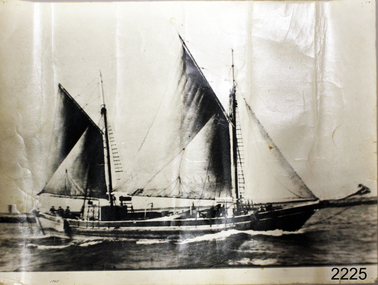
... In late 1970, the Mt. Lyell Mining and Railway Company bought the vessel to use as a barge to carry explosives. ...In late 1970, the Mt. Lyell Mining and Railway Company bought the vessel to use as a barge to carry explosives. ...The donor was a seamen at Port Adelaide, where this photogrpah of the ketch, Reginald M, was taken in 1945. ‘REGINALD M’ 1922 to 1975- The vessel “Reginald M” was a two-masted coastal ketch, owned and built by Mr Jack (John) Murch of Birkenhead, Port of Adelaide, South Australia. Its construction took approximately 6 months, and it launched at Largs Bay in 1922. The Reginald M’s purpose was to serve the coastal trade of South Australia, to carry cargo cheaply and efficiently. Some have said that the keel was, in fact, hewn from two telegraph poles! Its builder frequented all the salvage yards for materials and fittings. Reginald M had a very shallow draft and a flat bottom that enabled it to come close to shore and to sit high and dry at low tide or to be beached on sand. The flat bottom was also to make the ship able to skim over reefs. Wagons could load and unload directly from their sides. Its cargo included Guano, Barley, Wool, Horses, Cattle, Timber, Explosives, Potatoes, Shell Gritt, and Gypsum. On April 9th 1931, Reginald M weathered a large storm in St Vincent Gulf, SA. The vessel suffered great damage; the mast snapped, and the crew laboured for four hours to free it by chopping off the mast and rigging. The crew patched it up and slowly returned to Port Adelaide with only a portion of the insured cargo being damaged. The crew members at the time were the owner, Mr John H Murch of Wells Street, Largs Bay; Skipper Mr R Murch, John’s brother; Murray, son of Captain Murch; and Seaman John Smith. Reg Webb purchased Carribie Station, at Marion in the Warooka District, south of Adelaide, in 1921. He cleared the land and farmed sheep and grain. In 1923, he shipped his own wool and grain from Marion Bay, having first carted 300 bags of the barley grain, 12 bags at a time, along the unmade track to the jetty. A photograph donated to Flagstaff Hill, dating about 1929 - 1942, shows two men on the Reginald M, holding between them their fishing catch of a large hammer shark. The photograph is stamped “GRENFELL STUDIO PORT LINCOLN PRINT” and titled “hammer shark caught on Reginald Emm”. The donor’s family lived on the Your Peninsula and dispatched their grain from a chute at Gleeson’s Landing to the awaiting transport vessel. Reg knew the Murch Brothers from Port Adelaide. The brothers had been using their ketch, Reginald M, to ship Guano from the Islands, led by Captain Richard Murch. Reg approached them in 1934 about shipping grain from Marion Bay. The brothers visited the bay and thought it was an ideal place. They showed Reg where to stack his grain, and they measured up the cliffs. When Reg was ready, they brought down and installed a ninety-foot wooden chute. The bags of grain were individually pushed down the chute, landing in a waiting small boat, then rowed to Reginald M with 14 bags at a time. After 10 hours, Reginald M would have a load of 1300 bags of grain to ship to waiting ports. At one time, a wild storm destroyed the chute, so they built a stronger replacement chute. Reginald M engaged in the shipping of grain from there until 1938. In 1940, Able Seaman Allan H Lucas served on the Reginald M between September and December, being engaged and discharged from Port Adelaide. The ship’s Master, W S Murch, signed his Certificate of Discharge. It seems that at the Reginald M was used, at one time, as a Customs vessel, as one photograph in Flagstaff Hill’s collection shows “H.M.C. No. 3, Pt Adelaide” on the bow. In 1969, the last freight left Marion Bay on the ketch Reginald M carrying grain, wool, and explosives. In late 1970, the Mt. Lyell Mining and Railway Company bought the vessel to use as a barge to carry explosives. In 1972, the Navy League of Strahan, Tasmania, purchased it for use by the Strahan Sea Cadet Unit to use at Macquarie Harbour and renamed it T.S. Macquarie. However, this plan for the use of Reginald M did not happen. In 1974, Mr Andrew Rennie, of East Brighton, Melbourne, bought it for a similar purpose, paying $5,000 and donating a ‘Cadet of the Year’ trophy to the Sea Cadets. He sailed it from Strahan to Melbourne, planning to use it for pleasure sailing. Also, in 1975, Reginald M was bought by the Melbourne Ferry Company at auction. Later in 1975, Flagstaff Hill Maritime Museum bought the Reginald M for $20,000. It became a popular exhibit in the Village’s lake. In 2006, using funds from a $4,000 government grant, the restoration of the vessel continued. Flagstaff Hill Maritime Village’s Collection holds other artefacts associated with Reginald M. They include - Photographs of the Reginald M, including one photograph of it in Outer Harbour, S.A., dated 1947, with Skipper- R.F. Dale and Owner- John Murch. Another shows it docked at Port Adelaide, with the lettering H.M.C. No. 3 Pt ADEL (standing for His /Her Majesty’s Customs). There is a black and white photo of it at a wharf and another showing a person on board. - a lifebuoy, made of cork, with the inscription of “Pt Adelaide” on it. - Helm section, removed and replaced during restoration. - a bullet found in pieces of timber when Reginald M was restored in 1979 Reginald M was a much-loved exhibit at the Maritime Village, where many visitors enjoyed boarding and exploring a real ship with a long history. Sadly, the Reginald M was decommissioned in late 2016, due to the continuing prohibitive cost of maintenance and the risk to public safety. Components from the Reginald M are held in Flagstaff Hill's collection as a reminder of the Reginald M’s history. The photograph represents a time when the Reginald M was in use at the Port of Adelaide. It shows the configuration of the sails at that time. The vessel was active as a coastal trader from Adelaide and along the south east coast of Australia.Photograph: sepia, rectangular image of the two-masted ketch, Reginald M, in Port River, Adelaide, South Australia. A figure is on the bowsprit, and other figures are on the masts and on deck. Photographed at Port River, Adelaide.flagstaff hill, flagstaff hill maritime museum and village, warrnambool, maritime museum, maritime village, great ocean road, shipwreck coast, ships, port river sa, adelaide, reginald m, 2-masted, sailing ship, ketch, port adelaide, 1945 -
 Flagstaff Hill Maritime Museum and Village
Memorabilia - Bullet & Timber, Early 20th century
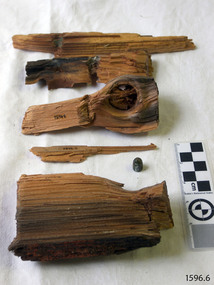
... In late 1970, the Mt. Lyell Mining and Railway Company bought the vessel to use as a barge to carry explosives. ...In late 1970, the Mt. Lyell Mining and Railway Company bought the vessel to use as a barge to carry explosives. ...The Reginald M was an early purchase of Flagstaff Hill Maritime Museum and Village, soon after it opened in 1975. It was restored and then used as an exhibit in the maritime Village. The reason for the bullet being within the pieces of timber is unknown. The Reginald M's history does not suggest a time when weapons were used. However, the vessel's construction included used materials from different sources; perhaps the bullet was within these materials, which later became part of the Reginald M. ‘REGINALD M’ 1922 to 1975- The vessel “Reginald M” was a two-masted coastal ketch, owned and built by Mr Jack (John) Murch of Birkenhead, Port of Adelaide, South Australia. Its construction took approximately 6 months, and it launched at Largs Bay in 1922. The Reginald M’s purpose was to serve the coastal trade of South Australia, to carry cargo cheaply and efficiently. Some have said that the keel was, in fact, hewn from two telegraph poles! Its builder frequented all the salvage yards for materials and fittings. Reginald M had a very shallow draft and a flat bottom that enabled it to come close to shore and to sit high and dry at low tide or to be beached on sand. The flat bottom was also to make the ship able to skim over reefs. Wagons could load and unload directly from their sides. Its cargo included Guano, Barley, Wool, Horses, Cattle, Timber, Explosives, Potatoes, Shell Grit, and Gypsum. On April 9th 1931, Reginald M weathered a large storm in St Vincent Gulf, SA. The vessel suffered great damage; the mast snapped, and the crew laboured for four hours to free it by chopping off the mast and rigging. The crew patched it up and slowly returned to Port Adelaide with only a portion of the insured cargo being damaged. The crew members at the time were the owner, Mr John H Murch of Wells Street, Largs Bay; Skipper Mr R Murch, John’s brother; Murray, son of Captain Murch; and Seaman John Smith. Reg Webb purchased Carribie Station, at Marion in the Warooka District, south of Adelaide, in 1921. He cleared the land and farmed sheep and grain. In 1923, he shipped his own wool and grain from Marion Bay, having first carted 300 bags of the barley grain, 12 bags at a time, along the unmade track to the jetty. A photograph donated to Flagstaff Hill, dating about 1929 - 1942, shows two men on the Reginald M, holding between them their fishing catch of a large hammer shark. The photograph is stamped “GRENFELL STUDIO PORT LINCOLN PRINT” and titled “hammer shark caught on Reginald Emm”. The donor’s family lived on the Your Peninsula and dispatched their grain from a chute at Gleeson’s Landing to the awaiting transport vessel. Reg knew the Murch Brothers from Port Adelaide. The brothers had been using their ketch, Reginald M, to ship Guano from the Islands, led by Captain Richard Murch. Reg approached them in 1934 about shipping grain from Marion Bay. The brothers visited the bay and thought it was an ideal place. They showed Reg where to stack his grain, and they measured up the cliffs. When Reg was ready, they brought down and installed a ninety-foot wooden chute. The bags of grain were individually pushed down the chute, landing in a waiting small boat, then rowed to Reginald M with 14 bags at a time. After 10 hours, Reginald M would have a load of 1300 bags of grain to ship to waiting ports. At one time, a wild storm destroyed the chute, so they built a stronger replacement chute. Reginald M engaged in the shipping of grain from there until 1938. In 1940, Able Seaman Allan H Lucas served on the Reginald M between September and December, being engaged and discharged from Port Adelaide. The ship’s Master, W S Murch, signed his Certificate of Discharge. It seems that at the Reginald M was used, at one time, as a Customs vessel, as one photograph in Flagstaff Hill’s collection shows “H.M.C. No. 3, Pt Adelaide” on the bow. In 1969, the last freight left Marion Bay on the ketch Reginald M carrying grain, wool, and explosives. In late 1970, the Mt. Lyell Mining and Railway Company bought the vessel to use as a barge to carry explosives. In 1972, the Navy League of Strahan, Tasmania, purchased it for use by the Strahan Sea Cadet Unit to use at Macquarie Harbour and renamed it T.S. Macquarie. However, this plan for the use of Reginald M did not happen. In 1974, Mr Andrew Rennie, of East Brighton, Melbourne, bought it for a similar purpose, paying $5,000 and donating a ‘Cadet of the Year’ trophy to the Sea Cadets. He sailed it from Strahan to Melbourne, planning to use it for pleasure sailing. Also, in 1975, Reginald M was bought by the Melbourne Ferry Company at auction. Later in 1975, Flagstaff Hill Maritime Museum bought the Reginald M for $20,000. It became a popular exhibit in the Village’s lake. In 2006, using funds from a $4,000 government grant, the restoration of the vessel continued. Flagstaff Hill Maritime Village’s Collection holds other artefacts associated with Reginald M. They include - Photographs of the Reginald M, including one photograph of it in Outer Harbour, S.A., dated 1947, with Skipper- R.F. Dale and Owner- John Murch. Another shows it docked at Port Adelaide, with the lettering H.M.C. No. 3 Pt ADEL (standing for His /Her Majesty’s Customs). There is a black and white photo of it at a wharf and another showing a person on board. - a lifebuoy, made of cork, with the inscription of “Pt Adelaide” on it. - Helm section, removed and replaced during restoration. - a bullet found in pieces of timber when Reginald M was restored in 1979 Reginald M was a much-loved exhibit at the Maritime Village, where many visitors enjoyed boarding and exploring a real ship with a long history. Sadly, the Reginald M was decommissioned in late 2016, due to the continuing prohibitive cost of maintenance and the risk to public safety. Components from the Reginald M are held in Flagstaff Hill's collection as a reminder of the Reginald M’s history. The timber is an example of the materials used to build the Reginald M in 1922. The ship was built from recycled items where possible. The bullet represents a time in the history of the vessel that is currently unknown.Wood from the vessel, Reginald M, and a bullet found within its timbers on June 22nd, 1979, during its restoration. flagstaff hill, flagstaff hill maritime museum and village, warrnambool, maritime museum, maritime village, great ocean road, shipwreck coast, reginald m, ketch, coastal trader, timber, wood, bullet, murch, john murch, 1922 -
 Flagstaff Hill Maritime Museum and Village
Domestic object - Wood Stove, circa 1880-1920
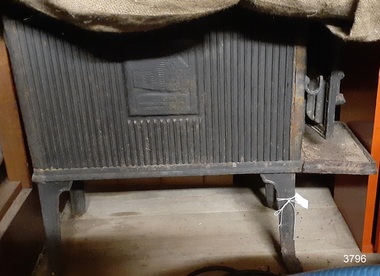
... In late 1970 the Mt. Lyell Mining and Railway Company bought the vessel to use as a barge to carry explosives. ...In late 1970 the Mt. Lyell Mining and Railway Company bought the vessel to use as a barge to carry explosives. ...Stoves of this design are used for heating domestic places and were available in many designs and shapes. They commonly used wood as fuel. They were used for both heating and cooking. This stove was part of the original furnishings of the 1922 vessel 'Reginald M', a South Australian coastal trader. The two-masted coastal ketch was built from material and fittings obtained from salvage yards by Mr Jack (John) Murch of Birkenhead, Port of Adelaide, South Australia. Its construction took approximately six months. It was launched at Largs Bay in 1922. ‘REGINALD M’ 1922 to 1975- The vessel “Reginald M” was a two-masted coastal ketch, owned and built by Mr. Jack (John) Murch of Birkenhead, Port of Adelaide, South Australia. Its construction took approximately 6 months, and it launched at Largs Bay in 1922. The Reginald M’s purpose was to serve the coastal trade of South Australia, to carry cargo cheaply and efficiently. Some have said that the keel was in fact hewn from two telegraph poles! Its builder frequented all the salvage yards for materials and fittings. Reginald M had a very shallow draft and a flat bottom that enabled it to come close to shore and to sit high and dry at low tide or to be beached on sand. The flat bottom was also to make the ship able to skim over reefs. Wagons could load and unload direct from its side. Her cargo included Guano, Barley, Wool, Horses, Cattle, Timber, Explosives, Potatoes, Shell Gritt and Gypsum. On April 9th 1931Reginald M weathered a large storm in St Vincent Gulf, SA. The vessel suffered great damage; mast snapped and the crew laboured for four hours to free it by chopping off the past and rigging. The crew patched iit up and slowly returned to Port Adelaide with only a portion of the insured cargo being damaged. Her crew members at the time were owner Mr John H Murch of Wells Street Largs Bay, Skipper Mr R Murch – John’s brother, Murray – son of Captain Murch and Seaman John Smith. Reg Webb purchased Carribie Station, at Marion in the Warooka District, south of Adelaide, in 1921. He cleared the land and farmed sheep and grain. In 1923 he shipped his own wool and grain from Marion Bay, having first carted 300 bags of the barley grain, 12 bags at a time, along the unmade track to the jetty. A photograph donated to Flagstaff Hill, dating about 1929 - 1942, shows two men on the Reginald M, holding between them their fishing catch of a large hammer shark. The photograph is stamped “GRENFELL STUDIO PORT LINCOLN PRINT” and titled “hammer shark caught on Reginald Emm”. The donor’s family lived on the Your Peninsular and despatched their grain from a chute at Gleeson’s Landing to the awaiting transport vessel. Reg knew the Murch Brothers from Port Adelaide. The brothers had been using their ketch Reginald M to ship Guano from the Islands, led by Captain Richard Murch. Reg approached them in 1934 about shipping grain from Marion Bay. The brothers visited the bay and thought it was an ideal place. They showed Reg where to stack his grain, and they measured up the cliffs. When Reg was ready, they brought down and installed a ninety-foot wooden chute. The bags of grain individually pushed down the chute, landing in a waiting small boat then rowed to Reginald M, 14 bags at a time. After 10 hours Reginald M would have a load of 1300 bags of grain to ship to waiting ports. At one time a wild storm destroyed the chute, so they built a stronger replacement chute. Reginald M engaged in the shipping of grain from there until 1938. In 1940 Able Seaman Allan H Lucas served on Reginald M between September and December, being engaged and discharged from Port of Adelaide. The ship’s Master, W S Murch, signed his Certificate of Discharge. It seems that at the Reginald M was used at one time as a Customs vessel, as one photograph in Flagstaff Hill’s collection shows “H.M.C. No. 3, Pt Adelaide” on the bow. In 1969 the last freight left Marion Bay on the ketch Reginald M carrying grain, wool, and explosives. In late 1970 the Mt. Lyell Mining and Railway Company bought the vessel to use as a barge to carry explosives. In 1972 the Navy League of Strahan, Tasmania, purchased it for use by the Strahan Sea Cadet Unit to use at Macquarie Harbour and renamed iit T.S. Macquarie. However, this plan for use of Reginald M did not happen. In 1974 Mr. Andrew Rennie, of East Brighton, Melbourne, bought it for a similar purpose, paying $5,000 and donating a ‘Cadet of the Year” trophy to the Sea Cadets. He sailed it from Strahan to Melbourne, planning to use it for pleasure sailing. Also, in 1975 Reginald M was bought by the Melbourne Ferry Company auction. Later in 1975 Flagstaff Hill Maritime Museum bought the Reginald M for $20,000. It became a popular exhibit in the Village’s lake. In 2006, using funds from a $4,000 government grant, restoration continued the vessel. Flagstaff Hill Maritime Village’s Collection holds other artefacts associated with Reginald M. They include - Photographs of the Reginald M, including one photograph of iit in Outer Harbour, S.A. dated 1947, with Skipper- R.F. Dale and Owner- John Murch. Another shows it docked at Port Adelaide, with the lettering H.M.C. No. 3 Pt ADEL (standing for His/Her Majesty’s Customs). There is a black and white photo of it at a wharf and another showing a person on board. - a lifebuoy, made of cork, with the inscription of “Pt Adelaide” on it. - Helm section, removed and replaced during restoration. - a bullet found in pieces of timber when Reginald M was restored in 1979 Reginald M was a much-loved exhibit at the Maritime Village, where many visitors enjoyed boarding and exploring a real ship with a long history. Sadly, in late 2016, the Reginald M was decommissioned due to the continuing prohibitive cost of maintenance and the risk to public safety. Components from the Reginald M are preserved as part of Flagstaff Hill's collection. The stove is significant as it represents the heating and cooking appliances used in the late 19th and early 20th centuries, both on board vessels as well as for domestic purposes. The stove has additional significance for its association with the vessel "Reginald M", a coastal trading ketch from South Australia built in 1922 at Largs Bay. It is one of the very few sailing coastal trading vessels built in Australia, with its flat bottom, single chine shape designed for navigating shallow water. Stove: a cast-iron, rectangular, four-legged stove with a hinged front door. This stove was part of the original furnishings of the vessel 'Reginald M', built in Adelaide in 1922. Inscription on the side. Image of a log cabin with an illegible inscription below it.flagstaff hil, warrnambool, flagstaff hill maritime museum, maritime museum, shipwreck coast, flagstaff hill maritime village, coastal trader, trading vessel, vessel reginald m, ketch, john murch ship builder, reg webb, carribie station, mt lyell copper company, queenstown navy league, andrew rennie, melbourne ferry company, r.f. dale, port adelaide vessel reginald m, macquarie training vessel, grenfell studio port lincoln, stove, domestic heating, domestic cooking, heater, cooking unit, wood fired stove, wood stove, wood-burning stove -
 Flagstaff Hill Maritime Museum and Village
Machine - Steering Gear, Carron Ironworks foundry, before 1922
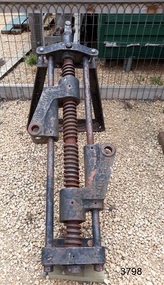
... In late 1970 she was sold to the Mt. Lyell Mining and Railway Company and was used by them as a barge to carry explosives. ...In late 1970 she was sold to the Mt. Lyell Mining and Railway Company and was used by them as a barge to carry explosives. ...The ship's steering gear was used for steering and navigation of a vessel - it was a very important part of the ship's equipment. This steering gear was part of the original vessel 'Reginald M', which became part of the exhibitions at Flagstaff Hill Maritime Village. The steering gear was manufactured by the Carron Company. ABOUT THE CARRON COMPANY The Carron Company established its ironworks on the banks of the River Carron in Stirlingshire, Scotland, in 1759, and became an incorporated company in 1773. One of the notable items produced by the company was the Carronade, a short-barrelled naval cannon, being produced until the 1850s. The company was the largest ironworks in Europe during the 19th century. It supplied ammunition and armaments, steamboat engines, pig iron, cast iron goods such as balustrades fire grates and bath tugs, pillar boxes and telephone boxes, and even cast iron rings for underground tunnels. In 1982 it became insolvent and was taken over by the Franke Corporation, using the brand Carron Phoenix. ABOUT THE 'REGINALD M' The Reginald M’s purpose was to serve the coastal trade of South Australia, to carry cargo cheaply and efficiently. It is believed that the keel was in fact hewn from two telegraph poles! Its builder frequented all the salvage yards for materials and fittings. The vessel “Reginald M” was a two-masted coastal ketch, owned and built by Mr. Jack (John) Murch of Birkenhead, Port of Adelaide, South Australia. Its construction took approximately 6 months and it was launched at Largs Bay in 1922. Reginald M had a very shallow draft and a flat bottom that enabled it to come close to shore and to sit high and dry at low tide or to be beached on sand. The flat bottom was also to make the ship able to skim over reefs. Wagons could load and unload direct from her side. Her cargo included Guano, Barley, Wool, Horses, Cattle, Timber, Explosives, Potatoes, Shell Grit and Gypsum. On April 9th 1931Reginald M weathered a large storm in St Vincent Gulf, SA. The vessel suffered much damage; mast snapped and the crew laboured for four hours to free her by chopping off the past and rigging. The crew patched her up and slowly returned to Port Adelaide with only a portion of the insured cargo being damaged. Her crew members at the time were owner Mr John H Murch of Wells Street Largs Bay, Skipper Mr R Murch – John’s brother, Murray – son of Captain Murch and Seaman John Smith. Reg Webb purchased Carribie Station, at Marion in the Warooka District, south of Adelaide, in 1921. He cleared the land and farmed sheep and grain. In 1923 he shipped his own wool and grain from Marion Bay, having first carted 300 bags of the barley grain, 12 bags at a time, along the unmade track to the jetty. A photograph donated to Flagstaff Hill, dating about 1929 - 1942, shows two men on the Reginald M, holding between them their fishing catch of a large hammer shark. The photograph is stamped “GRENFELL STUDIO PORT LINCOLN PRINT” and titled “hammer shark caught on Reginald Emm”. The donor’s family lived on the Your Peninsular and despatched their grain from a chute at Gleeson’s Landing to the awaiting transport vessel. Reg knew the Murch Brothers from Port Adelaide. The brothers had been using their ketch REGINALD M to ship Guano from the Islands, led by Captain Richard Murch. Reg approached them in 1934 about shipping grain from Marion Bay. The brothers visited the bay and thought it was an ideal place. They showed Reg where to stack his grain and they measured up the cliffs. When Reg was ready, they brought down and installed a ninety foot wooden chute. The bags of grain were then individually sent down the chute, landing in a waiting small boat then rowed to REGINALD M, 14 bags at a time. After 10 hours REGINALD M would be fully loaded with 1300 bags of grain and shipped to waiting ports. At one time a wild storm destroyed the chute but it was rebuilt and strengthened. REGINALD M was involved in shipping the grain from there until 1938. In 1940 Able Seaman Allan H Lucas served on Reginald M between September and December, being engaged and discharged from Port of Adelaide. His Certificate of Discharge was signed by ship’s Master W S Murch. It seems that at some stage Reginald M was used as a Customs vessel, as one photograph in Flagstaff Hill’s collection shows “H.M.C. No. 3, Pt Adelaide” on the bow. In 1969 the last freight left Marion Bay on the ketch REGINALD M carrying grain, wool and explosives. In late 1970 she was sold to the Mt. Lyell Mining and Railway Company and was used by them as a barge to carry explosives. In 1972 the Navy League of Strahan, Tasmania, purchased her for use by the Strahan Sea Cadet Unit to use at Macquarie Harbour and renamed her T.S. Macquarie. However this plan for use of Reginald M did not come to pass. In 1974 Mr. Andrew Rennie, of East Brighton, Melbourne, bought her for a similar purpose. , paying $5,000 and donating a ‘Cadet of the Year” trophy to the Sea Cadets. He sailed her from Strahan to Melbourne, planning to use her for pleasure sailing. Also in 1975 Reginald M was sold to Melbourne Ferry Company at auction. Later in 1975 the Reginald M was bought by Flagstaff Maritime Museum for $20,000 . She has been restored and is now one of the exhibits in the Village lagoon or lake. It was restored in 2006 using funds from a $4,000 government grant. Flagstaff Hill Maritime Village’s Collection holds several other artefacts associated with Reginald M. They include photographs of the Reginald M, including one photograph of her in Outer Harbour, S.A. dated 1947, with Skipper- R.F. Dale and Owner- John Murch. Another shows her docked at Port Adelaide, with the lettering H.M.C. No. 3 Pt ADEL (standing for His/Her Majesty’s Customs). There is a black and white photo of her at a wharf and another showing a person on board.The steering gear is significant through its association with the Carron Company, the largest ironworks in Europe in the 19th century, and the manufacture of the short barrel, lightweight naval gun - the Carronade. The steering gear is significant for its association with the vessel REGINALD M is a coastal trading ketch from South Australia built in 1922. It is one of very few sailing coastal trading vessels still extant, and its flat bottom, single chine shape illustrates a very simple but robust method of construction, compared to other round bilged examples of trading vessels. She is now listed on the Australian Register of Historic Vessels (ARHV Number: HV000562.) Ship's steering gear that was part of the original vessel 'Reginald M', which was constructed in 1922. Inscription on both sides. Made by the Carron Company, UK."CARRON COMPANY"flagstaff hil, warrnambool, shipwrecked coast, flagstaff hill maritime museum, maritime museum, shipwreck coast, flagstaff hill maritime village, coastal trader, trading vessel, vessel reginald m, ketch, john murch ship builder, reg webb, carribie station, mt lyell copper company, queenstown navy league, andrew rennie, melbourne ferry company, r.f. dale, port adelaide vessel reginald m, macquarie training vessel, grenfell studio port lincoln, ship steering gear, metal steering gear, ship's gear, ship's navigation, carron company -
 Federation University Historical Collection
Letter - Correspondence, Inwards correspondence to the Ballarat School of Mines, 1908, 07/01908
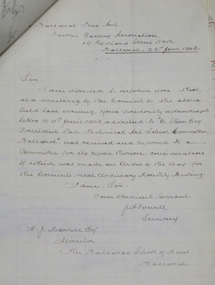
... lyell mining and railway coy ltd...victorian railways...telegraph...land surveying...j. brittain...g. fitzgerald...hamilton...cochran and co...wynne-grant antimony reduction company...mt...It is a predecessor institution of Federation University Australia. ballarat school of mines frederick martell ballarat fine art gallery j.a. powell art gallery of ballarat gallery association charles j. morris ballarat fine art public gallery association telegram c.h. clark l. ditchburn alumni examinations w.g. taylor london bank of australia limited bealiba thomas r. lyle jessie chalmers signor steffani arundel orchard w.f. coltman e.e. hobson j.t. mooney queanbeyan p.e. marmion willaim m. robertson assay e.e. brook lloyd copper mines h.b. silberberg & co. education department melbourne c. james w. west haddon warragul bakers reef gold mning company letterhead victorian portland cement works d. mitchell electric lighting and traction co. australia ltd austral otis engineering comapny ltd melbourne glass bottle works company cuming, smith & co. pty ltd excursions metropolitan gas company jaques bros manufacturing engineers victoria iron works a. victor leggo co leggo's metallurgical works melbourne hydraulic power company limited mount lyell mining and railway coy ltd victorian railways telegraph land surveying j. brittain g. fitzgerald hamilton cochran and co wynne-grant antimony reduction company mt egerton and gordons mining co e. hogan e.c. connell a.d. galoway metallurgy h.b. silberberg Specific Gravity Balance and Weights Union Bank of Australia (Ballarat) Bullarto Bush Inn, Bullarto W. ...The Ballarat School of Mines was the first school of Mines in Australasia, and was established in 1870. It is a predecessor institution of Federation University Australia.Correspondence to the Ballarat School of Mines for the month of July 1908. Letter 162 Ballarat Fine Art Public Gallery Association 19 Lydiard Street North Ballarat, 26th June 1908 Sir, I am directed to inform you that at a meeting of the Council of the above held last evening, your previously acknowledged letter of 11th June 1908, addressted to "E. [Stoer?] Esq, President Late Technical Art School Committee", was received and referred to a committee for its report thereon, cousi directions of which was made are the Order of the Day for the Councils next Ordinary Monthly Meeting. I am, Sir, Your Obedient Servant, J.A. Powell Secretary F.J. Martell Esq Director The Ballarat School of Mines Ballarat ballarat school of mines, frederick martell, ballarat fine art gallery, j.a. powell, art gallery of ballarat, gallery association, charles j. morris, ballarat fine art public gallery association, telegram, c.h. clark, l. ditchburn, alumni, examinations, w.g. taylor, london bank of australia limited, bealiba, thomas r. lyle, jessie chalmers, signor steffani, arundel orchard, w.f. coltman, e.e. hobson, j.t. mooney, queanbeyan, p.e. marmion, willaim m. robertson, assay, e.e. brook, lloyd copper mines, h.b. silberberg & co., education department melbourne, c. james, w. west, haddon, warragul, bakers reef gold mning company, letterhead, victorian portland cement works, d. mitchell, electric lighting and traction co. australia ltd, austral otis engineering comapny ltd, melbourne glass bottle works company, cuming, smith & co. pty ltd, excursions, metropolitan gas company, jaques bros manufacturing engineers, victoria iron works, a. victor leggo co, leggo's metallurgical works, melbourne hydraulic power company limited, mount lyell mining and railway coy ltd, victorian railways, telegraph, land surveying, j. brittain, g. fitzgerald, hamilton, cochran and co, wynne-grant antimony reduction company, mt egerton and gordons mining co, e. hogan, e.c. connell, a.d. galoway, metallurgy, h.b. silberberg, specific gravity balance and weights, union bank of australia (ballarat), bullarto, bush inn, bullarto, w. harrington, prospective student, book donaton from smithsonian institution, e. la t. armstrong, department of mines and forests, melbourne, snake valley, r. hall-jones, c. calaby, clementston, thomas ramsay, w.d. thompson, longmans, green and co, selwyn chase, missionary exhibition, aboriginal court of the missionary exhibition, examination results, leslie coulter, hnery j. saw, thomas ramsay, virgil tucker, leslie c. blick, thomas r. williams, oliver w. williams, thomas r. williams, leo m. seward, david w. bonar, louis w.g. buchner, leo m. seward, albert j. robin, james a. chambers, james d. brokenshire, william kingston, edgar c. hurdsfield, virgil tucker, oliver w. williams, william g. sides, herbert hawkesworth, colin c. corrie, henry j. saw, thomas h. trengrove, thomas r. prigdeon, harold b. herbert, viola p. jackson, lionel s. davies, stanley w. tompkins, arthur m. lilburne -
 Puffing Billy Railway
Emerald Tourist Railway Board 1977 - 2017 40 Years - Locomotive Head Board, 2017
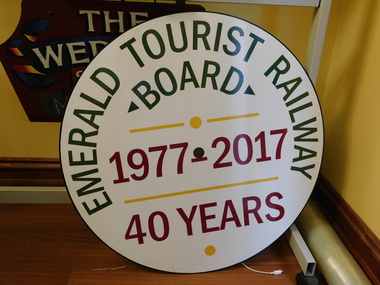
... Photo & Info : Robert Smith : Past 2 Present A gleaming NA locomotive 14A had the honour of hauling the first E.T.R.B. train while 7A had the last train by the Victorian Railways, both on the 1st October 1977. 7A left Belgrave at 11.10am for Lakeside and 14A left Belgrave at 2.10pm.This train also to Lakeside included the ex Mt Lyell carriage NBL1 for the conveyance of the official party. ...Photo & Info : Robert Smith : Past 2 Present A gleaming NA locomotive 14A had the honour of hauling the first E.T.R.B. train while 7A had the last train by the Victorian Railways, both on the 1st October 1977. 7A left Belgrave at 11.10am for Lakeside and 14A left Belgrave at 2.10pm.This train also to Lakeside included the ex Mt Lyell carriage NBL1 for the conveyance of the official party. ...Locomotive Head Board - Emerald Tourist Railway Board 1977 - 2017 40 Years Historic - Puffing Billy Railway Locomotive Head Board used in the Celebration of Emerald Tourist Railway Board 1977 - 2017 40 Years EMERALD TOURIST RAILWAY BOARD 1st October 1977 - 1st October 2017 Today marks the 40th anniversary of when the Emerald Tourist Railway Board took over the ownership of Puffing Billy from the Victorian Railways. Since then Puffing Billy has gone from strength to strength with the last few years seeing a huge increase in passenger numbers. A major investment over the next ten years will see a number of infrastructure projects being completed. A new (restored) locomotive and extra carriages will come into play and hopefully soon, the reopening of Puffing Billy's museum at Menzies Creek. Puffing Billy has been around since 1900. With a minor hiccup in the 1950s and the rebuilding of the railway from Belgrave from the late 1950s to the early 1960s and onwards, the preserved heritage steam railway will hopefully continue to operate for many generations to come. This photo was taken early this morning. The required loco's for the day were still being prepared and all shunting movements had been completed. The first of many passengers were just starting to arrive. Photo & Info : Robert Smith : Past 2 Present A gleaming NA locomotive 14A had the honour of hauling the first E.T.R.B. train while 7A had the last train by the Victorian Railways, both on the 1st October 1977. 7A left Belgrave at 11.10am for Lakeside and 14A left Belgrave at 2.10pm.This train also to Lakeside included the ex Mt Lyell carriage NBL1 for the conveyance of the official party. Both loco's are still operating today. Photo: John E. Thompson (NG #67) Historic - Puffing Billy Railway Locomotive Head Board used in the Celebration of Emerald Tourist Railway Board 1977 - 2017 40 YearsLocomotive Head Board - Emerald Tourist Railway Board 1977 - 2017 40 Years Circular steel sheet with vinyl stickers.Emerald Tourist Railway Board 1977 - 2017 40 Yearspuffing billy, head board, emerald tourist railway board, emerald, 40 years -
 Victorian Railway History Library
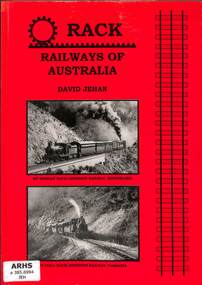
Book, Jehan, David, Rack Railways of Australia, 1997
... Rack railways - Australia - history Railroad tracks -- Australia -- History A history of the rack railways in Australia from Mt Morgan to Mt Lyell to industrial mining railways. ill, maps, p.112. ...A history of the rack railways in Australia from Mt Morgan to Mt Lyell to industrial mining railways.ill, maps, p.112.non-fictionA history of the rack railways in Australia from Mt Morgan to Mt Lyell to industrial mining railways.rack railways - australia - history, railroad tracks -- australia -- history
