
Showing 148 items matching "n. woods"
-
 Federation University Historical Collection
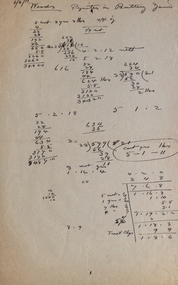
Document, Two documents relating to suplies at the School of Mines Ballarat
... ...N. Woods...Two pages .1 Small handwritten note to Mr Martell from N. Woods .2 Page of handwritten figures ...Mr Martell was the director of the School of Mines Ballarat, which is a predecessor of Federation University Mr Martell N. Woods Pyrites in Battery Pyrite Battery School of Mines Ballarat Two pages .1 Small handwritten note to Mr Martell from N. ...Mr Martell was the director of the School of Mines Ballarat, which is a predecessor of Federation UniversityTwo pages .1 Small handwritten note to Mr Martell from N. Woods .2 Page of handwritten figures mr martell, n. woods, pyrites in battery, pyrite, battery, school of mines ballarat -
 Glen Eira Historical Society
Letter - MURRUMBEENA FOOTBALL CLUB
... ... Woods N....Fidler R. Collins B. Woods N. Johnston E. Hastie N. Anderson B. Gardner G. ...This file contains 2 items: 1/A letter to Caulf Historical Society, requesting any history of Murrumbeena Football Club, from R. Gould. Reply from T.J. Hart advising that no information on the club is held by the society. 2/A fifty page book on the history of Murrumbeena Football Club, from foundation in 1927 to 1976. Includes 7 team photocopied photographs and one of the pavilion after completion in 1922, book written by R. Gould.gould ross, murrumbeena football club, football, football clubs, ‘dick’s horse paddock’, butchers, murrumbeena, great dandenong road, murrumbeena road, n.r. cooper, market gardens, orchards, carnegie rovers, oakleigh juniors, oakleigh district junior, football association, committees of management, murrumbeena junior football club, dick r., armstrong j., silverman dr. i., phillips r. cr., mudge les, truman v., bristow l., richardson , truman t., robertson, carnegie rovers, bentleigh, oakleigh juniors, ted pelling’s horse stables, stables, kangaroo road, moore george, armstrong fred, tinsley roy, naylor reg, ward bill, hunter mr., cox mr., scivenor mr., marian mr., wilde mr., townley mr., mudge mr., hay mr , ferguson mr., wilde wal, pelling e., watkins e., giles mr., young mr., paterson mr., reid mr., ross mr., walker mr., lyre mr., cannon mr., ronaldson tom, pearson , hall , collaghan jack, dennis, wlash, cannon, rickets, ferguson, wotes, hay, washbrooke, wilde , phillipson, welch, brown, cox, sharp, thomas, palmer, harris e., dick a., caulfield-dandenong, junior football association, metropolitan amateurs, pavilions, caulfield city council, murrumbeena amateurs, miss football queen, ralph miss, welch vic, emmins ‘titch’ g., bone r., havell, ellis r. (bob), pew t., stock a., riley wal, harris ‘codger’ roy, biddington j., nicholson a., bernes a.c., healey g., riley w., summerfield d., lee e., harris j., bass j., denning j., phillips c., king f., weatheral n.w., stewart s., rolfe h., dalgleish s., malone l., simpson e., kain a., rennie w., sloan a., painter e., bernes c., biddington g., parker c., willmott n., murrumbeena cricket club, corbett, murrumbeena districts, holden ‘rusty’, crundy, dean, taylor, bourke, moore, stewart, hause, clarke, gear, page, rowe bill, mathers alf, awards, farrell r., oakley r., escott l., callaghan t., mathers r., andrew j., halfpenny j., howland w., m -
 Melbourne Legacy
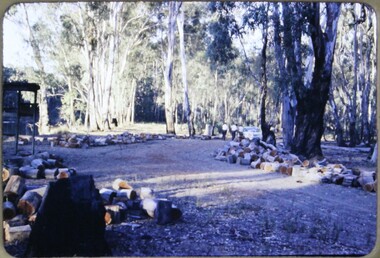
Slide, Operation Firewood - Ready for pick up, 1960s
... Colour slide of cut wood lying n a forest ready to be collected. It was during Operation Firewood. ...Colour slide of cut wood lying n a forest ready to be collected. It was during Operation Firewood. ...Colour slide of cut wood lying n a forest ready to be collected. It was during Operation Firewood. Legatees would organise collection of wood from the country and distribute it to widows in metropolitan Melbourne. Other slides show the cutting and loading of wood and delivery to widows in metropolitan Melbourne. Was with many other slides taken in the 1950s and 1960s. The slides have been photographed to make digital images and moved to archive quality sleeves. In many cases the original images were not well focussed and the digital image the best available.A record of Legacy helping widows by sourcing, supplying and delivering firewood. When open fires were the main source of heating, a load of firewood and help moving it, would have been very important to the widows.Colour slide of cut wood in a forest during Operation Firewood in brown Anscochrome cardboard mount.Printed on front in red ink 'Anscochrome / View from this side / Made in Australia'. Hand written on front 'Ready for pick up' in blue pen. Printed on reverse in red ink 'Processed by Verycolor photo labs. Melbourne, Victoria'.operation firewood, trees, forest, wood -
 Tennis Australia
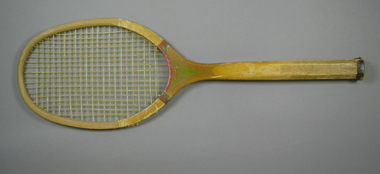
Racquet, Circa 1929
... /SA[N] FRANCISCO, U.S.A. Materials: Wood, Gut, String, Leather, Cloth tape, Metal, Ink, Glue, Lacquer, Paint.../SA[N] FRANCISCO, U.S.A. Materials: Wood, Gut, String, Leather, Cloth tape, Metal, Ink, Glue, Lacquer, Paint Racquet ...A wooden racquet with cloth tape supports and whipping, and a grooved handle. Inscription across green and red throat on obverse: CALIFORNIA/MODEL/F. Trademark, in red and black, on throat on reverse features company monogram 'CBP/CO' with the inscription: CALIFORNIA/ATHLETIC GOODS. Decal inscription along right side of handle: M[ANU]F[ACT]URED BY/CALIFO[R]NIA BY-PRODUCTS CO./SA[N] FRANCISCO, U.S.A. Materials: Wood, Gut, String, Leather, Cloth tape, Metal, Ink, Glue, Lacquer, Painttennis -
 Federation University Historical Collection
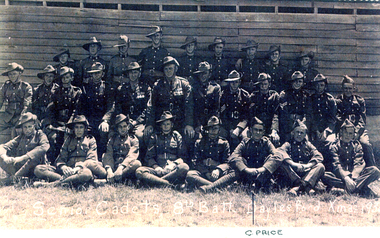
Photograph, Colin Campbell Price and the 8th Battalion Senior Cadets at Daylesford
... Roberts, J. Lamb, N. Hallas, A. Woods, H. Gid=bson, G. Coker-Godson, M. ...Roberts, J. Lamb, N. Hallas, A. Woods, H. Gid=bson, G. Coker-Godson, M. ...Five images relating to Colin Campbell Price and military Service. .1) Colin Campbell Price .2) 8th Battalion Senior Cadets at Daylesford, 193? .3) HMAS Albatross 808 Squadron in front of an aeroplane and hanger. .4) Darwin mess mates of Colin Price .5) Twenty uniformed men in 1948 - Fleet Arm - HMS Condor - C4 Conversion Course. Back Row L-R: K. Roberts, J. Lamb, N. Hallas, A. Woods, H. Gid=bson, G. Coker-Godson, M. Green, K. Nicholls, M. Gardener. Centre Row L -R: D. Eastgate, B. Gilroy, R.Smith, G. Foale, J. Sergeant, A. Sara, R. Higgins. Front Row L-R: Colin Price, E. Barker, S. Cox, S. Paul -
 Flagstaff Hill Maritime Museum and Village
Block
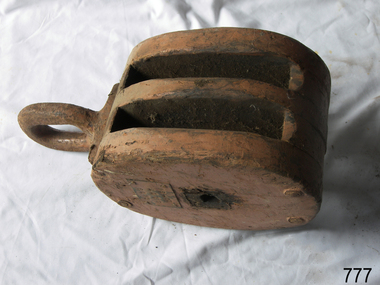
... 2 sheave wood block with eye plate on side D N 79. Missing both sheaves painted rust brown...Flagstaff Hill Warrnambool Shipwrecked-coast Flagstaff-Hill Flagstaff-Hill-Maritime-Museum Maritime-Museum Shipwreck-coast Flagstaff-Hill-Maritime-Village 2 sheave wood block with eye plate on side D N 79. Missing both sheaves painted rust brown Block ...2 sheave wood block with eye plate on side D N 79. Missing both sheaves painted rust brownflagstaff hill, warrnambool, shipwrecked-coast, flagstaff-hill, flagstaff-hill-maritime-museum, maritime-museum, shipwreck-coast, flagstaff-hill-maritime-village -
 Flagstaff Hill Maritime Museum and Village
Tool - Plane, A. Mathieson and Son, 20th century
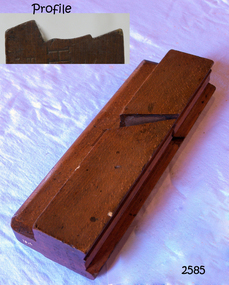
... Flagstaff Hill Maritime Museum Maritime Village Warrnambool Great Ocean Road wood working tool plane moulding plane hand tool Stamped; "5/8" "No 101" "E DUNSTAN" "2" ["G N" within "W"] "HIT" "E DUNSTAN" Stamped: "A MATHIESON & SON / GLASGOW & EDINBURGH" with symbol [star above crescent] Has E Dunstan HIT stamped on one end. ...Plane Moulding type, maker Mathieson & Son Glasgow. Number 404 plane. Size 5/8 inch. No wedge or blade. Stamped inscriptions.Stamped; "5/8" "No 101" "E DUNSTAN" "2" ["G N" within "W"] "HIT" "E DUNSTAN" Stamped: "A MATHIESON & SON / GLASGOW & EDINBURGH" with symbol [star above crescent] Has E Dunstan HIT stamped on one end. flagstaff hill, maritime museum, maritime village, warrnambool, great ocean road, wood working tool, plane, moulding plane, hand tool -
 Flagstaff Hill Maritime Museum and Village
Tool - Plane
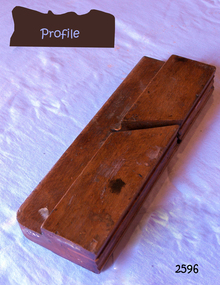
... flagstaff hill flagstaff hill warrnambool shipwreck-coast flagstaff hill maritime mus Flagstaff Hill Maritime Museum Flagstaff Hill Maritime Museum and Village plane wood working tool hand tool moulding plane Grecian Orgee Quirk plane Quirk Ogees Rabone Bros & Co. Stamped "RABONE BROS & CO.", and ["G N" within a large "W"] Plane Moulding Grecian Ogee with bevel. ...Plane Moulding Grecian Ogee with bevel. Also called Quirk or Quir Ogees. Made by Rabone Bros & Co. Size 1/2 inch. Stamped "RABONE BROS & CO.", and ["G N" within a large "W"]flagstaff hill, flagstaff hill, warrnambool, shipwreck-coast, flagstaff hill maritime mus, flagstaff hill maritime museum, flagstaff hill maritime museum and village, plane, wood working tool, hand tool, moulding plane, grecian orgee, quirk plane, quirk ogees, rabone bros & co. -
 Federation University Historical Collection
Photograph, Ballarat School of Mines Magazine Committee, 1919, c1919
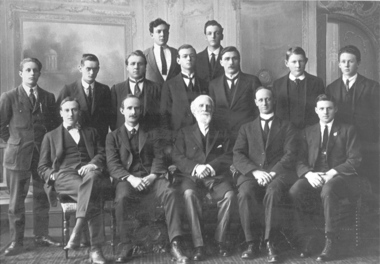
... Wood; Noel Brelaz; H. Jolly: Albert E. Williams; Richard W. Richards, N. Green; H. ...Wood; Noel Brelaz; H. Jolly: Albert E. Williams; Richard W. Richards, N. Green; H. ...The Ballarat School of Mines is a predecessor institution of Federation University Australia. A group of fourteen men, the Ballarat School of Mines Students' Magazine Committee, 1919. Standing back left to right: Allan Bernaldo, S. Hoskin Centre left to right: J. Wood; Noel Brelaz; H. Jolly: Albert E. Williams; Richard W. Richards, N. Green; H. Maddison Front left to right: Harold Herbert; Maurice Copland; Alfred Mica Smith; McConnon; D. McGrathballarat school of mines, harold herbert, maurice copland, copland, alfred mica smith, brelaz, a.e. williams, dick richards, bernaldo, hoskin, noel brelaz, allan bernaldo -
 Federation University Historical Collection
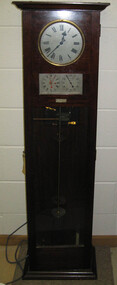
Object, Synchronome Co. Ltd, Synchronome Frequency Checking Master Clock No. 2191, c1930
... Bakelite electrical plug: makers mark Lower cabinet, RH side panel, pressed tin plate: "AC" (upside down) Brass speed adjustment, outer right RH side: "S" and "F" Ivory and wood pendulum beat ruler: >Ruler, with 0 in centre and numbers 1-5 in ascending order from centre on left and right. > "Synchronome Patent." Steel plate, back panel, inside case, right hand side: >N...Bakelite electrical plug: makers mark Lower cabinet, RH side panel, pressed tin plate: "AC" (upside down) Brass speed adjustment, outer right RH side: "S" and "F" Ivory and wood pendulum beat ruler: >Ruler, with 0 in centre and numbers 1-5 in ascending order from centre on left and right. > "Synchronome Patent." Steel plate, back panel, inside case, right hand side: >N ...Information from Norman F. Dalton: Ballarat had a reticulated DC supply in the early part of last century and in 1905 had sufficient generating capacity to enable the trams to be changed from horse drawn to DC electricity. The use of electricity increased with the main power station located on Wendouree Parade, near Webster Street, under the ownership of The Electric Supply Company of Victoria. AC generating plant was installed in 1925 and conversion to AC proceeded. In 1934 the company was taken over by the State Electricity Commission Victoria (SECV) and more AC generation was installed and the changeover of customers was accelerated. This is around the time that the Synchronome Frequency Checking Mast Clock was installed at the Wendouree Parade Power Station. The SECV Annual Report of 1921 states: ::Section 11 of the act directed the COmmission to enquire into the question of securing the adoption of such standards of plant and equipment of a system, frequency and pressure for the generation and distribution of electricity as will admit of the efficient interconnection of undertakings throughout the State. In 1934 when the SECV took over the Ballarat operations the question of linking with the State grid had been a planned operation for some years but due to financial considerations had hindered it and in fact would continue to do so for a further 10 years. So while the need for close frequency control for interconnection was hardly an issue, the need to keep electric clocks correct was important, particularly as this item was a frequent sales point to cover the inconvenience and sometimes expense of converting from DC to AC. The clock is a very accurate pendulum clock with provision for varying effective length during operation for precise time regulation. There are two normal time dials and one is controlled by the pendulum and the other is operated by the system frequency. When the clock was in use it was installed by the MEter and Tests Laboratory and the time was checked daily by radio time signals. The two dials were repeated in the operators control panel in the Power Station. A maximum deviation between the two dials was set in the operating instructions (eg 5 seconds) and the operator would correct this when necessary by remote manual alteration of the turbine governor set point. The clock was used to drive and regulate a system of "slave" clocks which were used to display the time in various locations around the power station. A slave clock is a simple clock which is driven by a small electric motor, its accuracy is regulated by the master clock every 30 seconds to ensure that it and all the other slave clocks in the station are on exactly the right time; slave clocks were placed in various locations, from common rooms to workshops. A master clock could potentially run thousands of slave clocks at one plant. The clock also contains a rectifier. A rectifier is a device that is used to convert AC power to more stable DC current.Two clocks in a timber case. Both are electric, one is powered by the main pendulum mechanism, the other is a self contained electric clock. The main mechanism is of the gravity arm and roller type, which sends an impulse to the slave clocks every 30 seconds. The This Synchronome Frequency Checking Master Clock was used at the Ballarat Power Station. Below the main section of the case is a smaller cabinet containing a rectifier to provide consistent DC power for the clock. The rectifier was made by the Victorian company Hilco, which was located in Burwood. There is a high chance this is not the original rectifier from this clock as there appears to be brackets to hold a larger device in the space the rectifier occupies.Front below main clock face on front of case: "Patented Sychronome Brisbane" Lower left-hand clock face: "Frequency time" Lower right-hand clock face: "Standard Seconds" Synchronous electric clock mechanism on door (Frequency time clock): >200/250 V. 50~ >"Synchronomains" Made in England >Direction indicator for clock starting switch >"To start move lever in direction of arrow and release" >"Patent applied for" Mechanism for "standard seconds" clock: >"English Made" >"Patented" >Serial number "321" >0 above right-hand pillar on front-plate Mechanism for "standard seconds" clock: >"English Made" >"Patented" >Serial number "321" >0 above right-hand pillar on front-plate Mechanism for main clock face: >"English Made" >"Patented" >Serial number "8751" >0 above right-hand pillar on front-plate Inside case, back panel, top enamel plate: >Seconds Battery + Pos. > Battery Common or - Neg. >1/2 min dials Inside case, back panel, bottom enamel plate: external seconds dial Inside case, right hand side, electrical knobs: two switches, both "A.C. mains" Pendulum rod, below suspension spring: Serial number (?) 0000005 Rectifier in bottom cabinet: >"Hilco Rectifier" >"A.C. Volts 230/240" >"Model 1060/S" >"A.C. Amperes" >"Serial No. 1060/S >"Phases 1" >"D.C. Volts 6" >"C.P.S. 50" >"D.C. Amperes 1" >"Made in Australia by Hilco Transformers McIntyre St., Burwood, Victoria." Bakelite electrical plug: makers mark Lower cabinet, RH side panel, pressed tin plate: "AC" (upside down) Brass speed adjustment, outer right RH side: "S" and "F" Ivory and wood pendulum beat ruler: >Ruler, with 0 in centre and numbers 1-5 in ascending order from centre on left and right. > "Synchronome Patent." Steel plate, back panel, inside case, right hand side: >N R A" (descending) >"2191" serial number/part number Face of main clock: "Synchronome Electric" synchronome frequency checking master clock, electricity, state electricity commission, wendouree parade power station, secv, clock, time, pendulum, electric supply company of victoria, norman f. dalton, ballarat power station, rectifier, slave clock -
Federation University Historical Collection
Magazine - Booklet, S. L. Vale, Printer, Ballarat School of Mines Students' Magazine, 1927, 1927
... Holland Cycles, Ballarat Radio Co, Drew & Wood, Isaac Abraham, Stansfield and Smith, C.P.A. Taylor, Thornton Studios, Wattle Tea Rooms, Black Cat Tea Rooms. Images include: John N...Holland Cycles, Ballarat Radio Co, Drew & Wood, Isaac Abraham, Stansfield and Smith, C.P.A. Taylor, Thornton Studios, Wattle Tea Rooms, Black Cat Tea Rooms. Images include: John N ...Editorial, Fumes from the lab, A trip to Geelong, Arts & Crafts gossip, The Duke and Duchess visit the school, Echoes of the past, A brief description of the rubber industry, Sport, The Junior Techs, A Brief Description of the Rubber Industry, The Troubles of a Wireman, Herald ShieldGreen soft covered magazine. Articles include J.N Rowell, Procession, Rare Metals, Excursion to Geelong, The Duke and Duchess Visit the School, A glimpse of Rabaul. Advertisements include: Maclurkin Motors (Morris) T.J. Haymes, C. Marks & Co., Ballarat Gas Company, Fred. A. Reed (Tobacconist), Wallace Butter Factory, Richards & Co. Studio, Neptune Radio Co, Golden City Vulcanising Co., H. Wardle and Son, J.A. Holland Cycles, Ballarat Radio Co, Drew & Wood, Isaac Abraham, Stansfield and Smith, C.P.A. Taylor, Thornton Studios, Wattle Tea Rooms, Black Cat Tea Rooms. Images include: John N. Rowell, Ballarat School of Mines Procession, sketcj of the Ballarat School of Mines Gardens by Graham Hopwood)Signed on first page by " Harold Jolly".ballarat school of mines, magazine, j. n. rowell, w. g. mchutchison, colin hunt, f. waistcoates, f. v. middleton, c. a. schache, ernest h. schache., rowell, mchutchison, c.a. schache, erenst schache, harold jolly, j.r. pound, n. nicholls, rabaul, new guinea, mica smith scholarship, past students' association, port arthur, mount lyell, queenstown, paper-making, rubber industry, wireman, ernest schache, e. van beek, australian football, thompson shield, graham hopwood, a. t. morrison, e. van beck, g. dimsey, g. inglis, l. hillman, j. nuir, j. johnson, b. saunders, dr. j. r. pound, h. jolly, a. proctor, j. walters, h. wardle and son, john rowell, j.n. rowell, w.g. mchutchison, colin hunt, f. waistcoates, f.v. middleton, ernest h. schache -
Federation University Historical Collection
Magazine, Tulloch & King, SMB Magazine Coronation Number 1937, 1937
... Wood Cut - By Gladys Bilney Lino Cut - By Ernest Gribble Two ardent J.T.S. Fisherman - Lino Cut - By Max Coward Ian - By Gladys Bilney Little Eva - By Dorothy Woolcock There's Mau-reen Mac Than Meets The Eye - By Dorothy Woolcock Lino Page - By N. ...Wood Cut - By Gladys Bilney Lino Cut - By Ernest Gribble Two ardent J.T.S. Fisherman - Lino Cut - By Max Coward Ian - By Gladys Bilney Little Eva - By Dorothy Woolcock There's Mau-reen Mac Than Meets The Eye - By Dorothy Woolcock Lino Page - By N. ...School Council, Members of Staff, Magazine Committee, List of Full Course Students 1938, Full Course Commercial Students, Editorial, Personal Column, Obituary - Roy S. Hall - F. J. Martell, S.M.B Old Boys' Association, The Literary Society, Centenary Jottings, Fumes from the Lab, Broken Hill, News from Papua, Sidelights on the B.H.P. Cadet Training Scheme, Arts & Crafts Gossip, Sport, Commercial Notes, The Junior Techs, Junior Technical SportingCream covered magazine with large crown on the cover. Artwork Lino Cut - By Iris Leviston Lino Cut - By Ian Moscript Lino Cut - By Bov McHutchison Assistant and Professor p.3 - By Dorothy Woolcock Fanny - By Gladys Bilney Boy and Girl with Ball p.6 - By Bob McHutchison Lino Cut - By B. Martin Tiny - By Dorothy Woolcock A Glimpse of Fairyland Wendouree - By Thelma Morton Lino Cut - By Gordon Yorke Marty - By Dorothy Woolcock Ned - By Sylvia Wyres Lino cut - By Jeff Wilkinson Yorke - Rooning 3 something Terrible - By Dorothy Woolcock D'ysay Ingots? - By Verma Lynch Lizard - By Dorothy Woolcock Wood Cut - By Gladys Bilney Lino Cut - By Ernest Gribble Two ardent J.T.S. Fisherman - Lino Cut - By Max Coward Ian - By Gladys Bilney Little Eva - By Dorothy Woolcock There's Mau-reen Mac Than Meets The Eye - By Dorothy Woolcock Lino Page - By N. Crouch, R Hocking, D. Hatfield, J.Leach Short Waves Set - By Verma Lynch John - By Dorothy Woolcock Porky - By Dorothy Woolcock Rosa - By Gladys Bilney Lino Cut - By Max Coward Teddy - By Dorothy Woolcock Dinny - By Gladys Bilney Gay Little Devil - By P.N Jonah - By Gladys Bilney Pittsy - By Verma Lynch Holly - By Ernest Gribble Evelyn - By Dorothy Woolcock A Robbers Nightmare - By A. Janetski Lino Cut - By N. Roberts Lino Cut - By J.Pittard Lino Cut - By A. Janetski Signed on front cover by Mrs Darby school of mines magazine, smb magazine, gladys bilney, ela brimacombe, betty brown, lucy clogan, tom coburn, joy dean, marian dolan, winifred dolan, ernest gribble, gilda gude, percy hollioake, ray jackson, gladys james, bena lamb, iris leviston, verma lynch, maureen mcrae, bob mchutchison, thelma morton, estelle morris, ian moscript, alan nye, erna prout, hazel robinson, peggy ronaldson, norma ross, adam scott, una semmler, jack snowball, bessie sargent, norma tatlock, patsy walsh, jeff wilkinson, dorothy woolcock, sylvia wyres, gordon yorke, nancy young -
 Ballarat Clarendon College
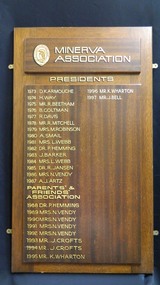
Honour board, Minerva Association Presidents
... Minerva-association parents'-and-friends-association fund-raising d-karmouche h-way r-beetham b-coltman r-davis r-mitchell m-robinson a-smail l-webb p-hemming j-barker l-webb r-jansen n-vendy a-j-artz j-crofts k-wharton j-bell presidents Solid wood with two relief boards. ...In 1972 Men's Auxilliary was disbanded and replaced with a new committee to be called The Minerva Association. Promoted in Ring-a-roo April 1972 the new association was 1) to further the welfare of College, 2) to encourage social contact between all members of the school community and 3) to promote major fund raising projects which may be beyond the means of the separate auxiliaries or the Old Collegians' Association. The Ladies' Auxiliary and the Old Collegians Association continued to exist. In 1988 the Minerva Association changed its name to the Ballarat and Clarendon College Parents' and Friends' Association. (see Ring-a-roo March 1988). The honour board emphasizes the degree to which the school was grateful for the voluntary work expended on behalf of the school by parents and friends of its community.Solid wood with two relief boards. Upper board is inscribed with Minerva crest and title. Lower board is inscribed in gold lettering with names of Presidents of the Minerva Association 1973 - 1987 and Parents' and Friends' Association 1988 - 1997minerva-association, parents'-and-friends-association, fund-raising, d-karmouche, h-way, r-beetham, b-coltman, r-davis, r-mitchell, m-robinson, a-smail, l-webb, p-hemming, j-barker, l-webb, r-jansen, n-vendy, a-j-artz, j-crofts, k-wharton, j-bell, presidents -
 Federation University Historical Collection
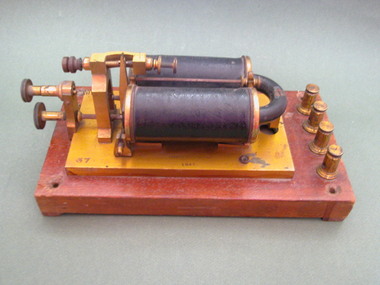
Instrument - Scientific Instument, Telegraph Relayer, c1870-1893
... N. Chester, two brothers who successfully partnered in New York City. Charles (1826-1880) founded the firm and provided the expert telegraphy knowledge while John (1820-1871) kept the books and managed the business operations.(http://americanhistory.si.edu/collections/search/object/nmah_706518, accessed 25/01/2018) scientific instrument telegraph relayer telegraphy relay device telegraphy Electromagnetic relay device used in telegraphy. The working parts mounted on a brass plate, attached to a wood ...Probably acquired for use in Telegraphy courses run at the Ballarat SChool of Mines between 1875 and 1893. Telegraph relays amplified electrical signals in a telegraph line. Telegraph messages traveled as a series of electrical pulses through a wire from a transmitter to a receiver. Short pulses made a dot, slightly longer pulses a dash. The pulses faded in strength as they traveled through the wire, to the point where the incoming signal was too weak to directly operate a receiving sounder or register. A relay detected a weak signal and used a battery to strengthen the signal so that the receiver would operate. This relay was made by the firm of Charles T. and John N. Chester, two brothers who successfully partnered in New York City. Charles (1826-1880) founded the firm and provided the expert telegraphy knowledge while John (1820-1871) kept the books and managed the business operations.(http://americanhistory.si.edu/collections/search/object/nmah_706518, accessed 25/01/2018)Electromagnetic relay device used in telegraphy. The working parts mounted on a brass plate, attached to a wood base. Equipped with four terminal posts. Adjustable contactor mechanism. This electromagnetic Relay Device was used in Telegraphy at the Ballarat School of Mines. After a special meeting of the Ballarat SChool of Mines Council in 1874, a decision was made to offer instruction in Telegraphy, a subject not directly related to mining. Telegraphy was taught by W.P. Bechervaise, postmaster at Ballarat. On 07 October 1874 the Ballarat Courier correspondent reprted on Telegraphic training: "... these classes ... are a snare and a delusion, as there is scarcely the remotest chance of obtaining employment when the examination has been passed."scientific instrument, telegraph relayer, telegraphy relay device, telegraphy -
Federation University Historical Collection
Document - Technical School Reports, Ballarat School of Mines and Ballarat Junior Technical School Term Reports on Apprentices, 1949-1963
... wood...john g. schepis...b. antonio...j. colligam...l. goldsmith...d. gilbin...r. skinner...w. vagg...p.w. stoddart...a.g. yarwood...d. england...w. loo...p.j. reidy...g.d. sleep...p. frempton...d.g> kelso...m.m.l. boersma...geoffrey hayes...a. blackburn...w. liddicoat...r.s. pike...a. bamford...v. mason...r. adriaans...j. gullock...j.p. dellaca...j. rinaldi...j. minehan...n...apprentice ballarat junior technical school victorian railway apprentices blacksmiths coppersmithing car painter electrical fitting boilermaker springmaker engineering electrical wiring panel beating plumbing and gasfitting printing composing carpentry and joinery apprenticeship commission of victoria d. baddelry s. bridges r. vincent j. burrow w. prowse w. twaites r.e. crump bruce linklater l.l. wood john g. schepis b. antonio j. colligam l. goldsmith d. gilbin r. skinner w. vagg p.w. stoddart a.g. yarwood d. england w. loo p.j. reidy g.d. sleep p. frempton d.g> kelso m.m.l. boersma geoffrey hayes a. blackburn w. liddicoat r.s. pike a. bamford v. mason r. adriaans j. gullock j.p. dellaca j. rinaldi j. minehan n. spicer keith mcilvena chris van gaans william warren instrument maker ivan f. crowley r. eastman c. maccann r.s. young kevin bell g. carroll g. waldron l.w. wilson r. morrison s. ellis r.h. holmes b. hubbard r. quick k. roberrts j. blood k. peacock w. mott r.f. rea j. colligan n. d'angri s. fumberger john gallagher donald tozer james skilbeck a.j. mong Numerous reports for students at the Ballarat Junior Technical School . ...Numerous reports for students at the Ballarat Junior Technical School . Lists many students, and results in a range of subjects and techniques.apprentice, ballarat junior technical school, victorian railway apprentices, blacksmiths, coppersmithing, car painter, electrical fitting, boilermaker, springmaker, engineering, electrical wiring, panel beating, plumbing and gasfitting, printing, composing, carpentry and joinery, apprenticeship commission of victoria, d. baddelry, s. bridges, r. vincent, j. burrow, w. prowse, w. twaites, r.e. crump, bruce linklater, l.l. wood, john g. schepis, b. antonio, j. colligam, l. goldsmith, d. gilbin, r. skinner, w. vagg, p.w. stoddart, a.g. yarwood, d. england, w. loo, p.j. reidy, g.d. sleep, p. frempton, d.g> kelso, m.m.l. boersma, geoffrey hayes, a. blackburn, w. liddicoat, r.s. pike, a. bamford, v. mason, r. adriaans, j. gullock, j.p. dellaca, j. rinaldi, j. minehan, n. spicer, keith mcilvena, chris van gaans, william warren, instrument maker, ivan f. crowley, r. eastman, c. maccann, r.s. young, kevin bell, g. carroll, g. waldron, l.w. wilson, r. morrison, s. ellis, r.h. holmes, b. hubbard, r. quick, k. roberrts, j. blood, k. peacock, w. mott, r.f. rea, j. colligan, n. d'angri, s. fumberger, john gallagher, donald tozer, james skilbeck, a.j. mong -
 Flagstaff Hill Maritime Museum and Village
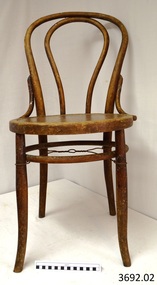
Furniture - Chair, early 29th century
... N inside circle, under Crown" Chair, bentwood, pair of two. Backrest has full length inverted U inside frame. Support rail and wire reinforcing between legs. 3692.01 seat has floral pattern pressed into wood 3692.02 seat is plain (replacement seat). ...The Bentwood chair has been called ‘the world’s most popular chair’. The original Bentwood chair, was designed by German-Austrian cabinet maker and Master Joiner, Michael Thonet (b.1796 - d.1871) and introduced to the market in 1859. Thonet started his business in his home town of Boppard as an independent cabinet maker in 1819. In the 1830’s he began trying to make furniture from glued (laminated) and bent wooden slats. Over the next few years his attempts to patent this process failed in Germany, Great Britain, France, and Russia. He then began using lightweight, strong wood and bending it into elegant, comfortable furniture. The Bentwood technology took Thonet years to perfect. In simple terms, the wooden rods or lengths were wet by soaking or steaming, bent into shape and then held in place until they hardened into the moulded curved shape or pattern. The wood usually chosen for the bentwood chairs was maple or beech. Thonet had revolutionised an older process by industrialising the process. The dowels of wood were cut and prepared as components of furniture, treated by the ‘bentwood’ process, then ready immediately for assembling with very little extra workmanship needed. Thonet held 2 patents for this process, the second one ended on 10th July 1869 and was non-renewable. At the Trade Fair at Koblenz of 1841 Prince Klemens Wenzel von Mettemich was very impressed with Thonet’s furniture, especially the chairs. In 1842 Thonet sold his Boppard business and emigrated to Vienna, and began working, along with his sons, on the interior decoration of the Palais Leichtenstein, for the Carl Leistler establishment. In 1849 he began his own business again, the Gebruder Thonet to include his sons (translated “Brothers Thonet”). He produced the “No. 1” Bentwood chair. He received a bronze medal for his Vienna bentwood chairs at the World Fair in London in 1851, and a silver medal in Paris in 1855. In 1856 he opened a new factory in Koritchan (Moravia), where there were extensive woods of beech trees available for his enterprise. In the next years, five more Eastern European production sites were established in Bystritz (1862), Nagy-Ugrócz (1866), Wsetin (1867), Hallenkau(1867) and Nowo-Radomsk(1880). Thonet’s 1859 No. 14 “chair of chairs” (or “Konsumstuhl Nr. 14” – coffee shop chair no. 14) was the most famous of all of Thonet’s Bentwood chairs. In 1867 he received a gold medal at the Paris World Fair. This new style of furniture making became very popular. Up until 1830 50 million of these chairs had been produced. By the 1870’s Thonet owned offices in almost 20 countries, with sales locations across Europe, in Chicago and New York. In 1889 he set Thonet set up a head office in Frankenberg, Hesse. Bentwood models designed in the mid to late 19th century featured hand-caned or laminated wood seats and were usually stamped with the country of origin. The Bentwood elements were the backrest, seat rim and legs. Typically the seat was covered with ‘bucket’ leather. After the Patent ran out in 1869, companies such as Jacob & Josef Kohn began the production of bentwood furniture.The popularity of the Bentwood chair that was introduced by Michael Thonet in the 1850s is due to its versatility and timeless quality. Its style, whether varnished or painted, suits any room in the house. The lightweight chairs are also popular for café and restaurant seating, as well as for public gatherings. They can be easily moved around and grouped in a variety of ways to suit any occasion.Chair, bentwood, pair of two. Backrest has full length inverted U inside frame. Support rail and wire reinforcing between legs. 3692.01 seat has floral pattern pressed into wood 3692.02 seat is plain (replacement seat). Made by Harnison & Co.3692.01 chair's marks; Label ""HARNISON & CO./ NEUSOL / BUDAPEST" and "WIENER NOBEL" and "(symbol) N inside circle, under Crown" flagstaff hill, warrnambool, shipwrecked coast, flagstaff hill maritime museum, maritime museum, shipwreck coast, flagstaff hill maritime village, great ocean road, domestic furniture, dining furniture, bentwood chair, harnison & co., neusol, budapest, wiener nobel -
 Flagstaff Hill Maritime Museum and Village
Equipment - Foundry Patterns set, Briggs Brass Foundry, 1912-1972
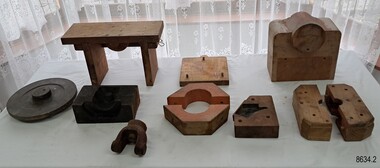
... N or a square B) Wooden rectangular crate with removable wooden lid. Inside is a set of wooden patterns of various shapes and sizes for making sand moulds in a metal foundry. The crate is made from thick wooden planks nailed together. The extended wooden struts on the long sides form a frame to hold the wooden lid. A pair of metal handles is at each short end of the crate, fixed with strong metal bolts. Between each pair of handles is an inscription stamped into the wood ...The wooden pattern forms part of a larger collection; some of them were secured within a durable wooden crate. The cast pattern was an essential tool at Briggs Brass Foundry, specifically designed for creating sand casts. Sand casting is a time-honoured technique, with a history exceeding 2,000 years. The handcrafted nature of this process produces brass and copper alloy items particularly suitable for maritime applications. Typical products include bells, boat hooks, cowls, propellers, handles, lids, rowlocks, hooks, letters, bolts, rail holders, brackets, deck plates, flanges, rudder guides, portholes and covers. The distinctive bronze mixture used at Briggs’ Foundry is copper based. It is composed of local ingots of copper, tin, zinc and lead, blended in precisely measured quantities. The resulting alloy is non-ferrous, known for its exceptional durability and longevity. HISTORY OF BRIGGS MARINE: The Briggs Brass Foundry, trading as Briggs & Son Foundry, was established in 1912 by Herbert Harrison Briggs (1863-1931) with his son George Edward Briggs. In 1922, the youngest son, Cyril Falkiner McKinnon Briggs, joined the foundry. After Herbert died in 1931, his sons George and Cyril ran the foundry. The business became known as Briggs Marine Foundry, the “non-ferrous founders” and “bell specialists”. The foundry products were made using the traditional sand-casting method, which is now over two thousand years old and is becoming a dying art. The foundry operated at 70 Wellington St, Collingwood, and specialised in casting ship bells and other marine equipment and fittings. It also made decorative items such as miniature ship propellers. The great-granddaughter of Herbert Briggs inherited a Briggs brass bell, similar to one at Flagstaff Hill Maritime Village. In 1965, Cyril was the only remaining family member involved in Briggs Marine Products. The firm relocated to Chesterville Rd, Moorabbin and Cyril went into partnership with Frank Lee. In the same year, the firm exhibited its products at the 1965 Boat Show. When Cyril passed away in 1967, Frank took over the business with two new partners. After Frank Lee died in 1971, the foundry was run by his son and daughter-in-law, Les and Eva Lee. Briggs Marine still exists today, but the Briggs family is no longer involved. Briggs Foundry had a community-minded retail branch in Warrnambool, selling cast boat fittings and equipment to fishermen and others in the regional marine industry. The branch closed in 1972. In Flagstaff Hill’s formative years, 1972-1975, many Briggs Marine brassware products were generously donated from its Melbourne foundry, along with casting patterns, tools, machinery and a cupboard. EXHIBITION and LEGACY: The donated items were displayed in a simulated Brass Foundry within the Village, where visitors could view them and gain insight into the foundering and metalwork trades that supported maritime industries, including shipwrights and boatbuilders. The castings produced at the foundry were also vital for farmers, manufacturers and other local industries. This exhibit was part of a broader showcase of working crafts, trades and services typical of a Maritime town. The display was available to the public from the completion of the building in 1986 until 1994, when the space was repurposed. It is believed that Briggs Marine’s family members gave personal assistance in setting up the displays in the original village shops, particularly the ‘Brass Foundry’ building. A notable feature of the Village Brass Foundry was the historic Cornish chimney, presented as a working model. This chimney visually demonstrated the process of smelting metal in furnaces and pouring it into sand moulds. Constructed from specially curved bricks, the chimney now stands at about two-thirds of its original height, having been relocated from the Grassmere Cheese factory. The hand-cast sand patterns hold considerable significance due to their association with Briggs Brass Founders, a firm established in the early 20th century and widely recognised for its expertise in producing, repairing, and restoring ship bells and marine equipment. Known for their specialisation in non-ferrous metal casting, Briggs Brass Founders supplied high-quality fittings and equipment for maritime use. The company extended its operations by opening a branch in Warrnambool, where it actively supported the local community. The foundry’s ability to cast essential products was important to local and regional industries, like fishing, farming, manufacturing and commercial businesses. Through its presence, its reputation was reinforced as both a skilled manufacturer and a community-minded enterprise. The foundry is notably associated with the Schomberg Bell at Flagstaff Hill, having restored this small, historic bell to its original condition. The Schomberg Bell is a fine example from a luxury migrant vessel dating back to the mid-19th century, reflecting the craftsmanship and heritage preserved by Briggs Brass Foundry. Wooden rectangular crate with removable wooden lid. Inside is a set of wooden patterns of various shapes and sizes for making sand moulds in a metal foundry. The crate is made from thick wooden planks nailed together. The extended wooden struts on the long sides form a frame to hold the wooden lid. A pair of metal handles is at each short end of the crate, fixed with strong metal bolts. Between each pair of handles is an inscription stamped into the wood. The underside of the crate has red paint splashes. There are insect holes in the wood, but no active infestation. The patterns were made and used at Briggs Brass Foundry in Melbourne.Stamped: "H.33 / II" (H may be N or a square B)flagstaff hill maritime museum and village, great ocean road, shipwreck coast, pattern, mould, foundry, brass foundry, metal foundry, crate, box, wooden container, briggs, traditional method, trade, sand cast, cast, brass alloy, copper alloy, marine equipment, marine tools, marine fittings, briggs' bronze, copper tin zinc lead, non-corrosive, briggs family, brassware, metalware, foundering, metalwork, maritime, casting, cornish chimney, curved bricks, grassmere cheese factory, 1912, herbert harrison briggs, h h briggs, george edward briggs, briggs & son foundry, collingwood, cyril falkiner mckinnon briggs, cyril briggs, h h briggs & sons foundry, bell founders, schomberg bell, alliance casting & engineering solutions, collingwood foundry, ship chandlers, marine products, flagstaff hill, warrnambool, maritime museum, maritime village, briggs & son brass foundry, briggs marine, moorabbin, briggs brass foundry, briggs marine foundry, briggs marine products, frank lee, les lee, eva lee, briggs marine warrnambool, non-ferrous founders, bell specialists, ship bell specialists, founders, metalworking, traditional sand casting, casting pattern, foundry pattern -
 Flagstaff Hill Maritime Museum and Village
Tool - Moulding wood Plane, Mid to Late 19th Century
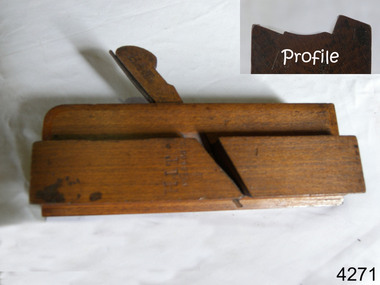
... Tools that were themselves hand made shows the craftsmanship used during this time not only to make a tool such as the subject item but also the craftsmanship needed to produce a decorative finish that was needed to be made for any timber item. flagstaff hill warrnambool shipwrecked-coast flagstaff-hill flagstaff-hill-maritime-museum maritime-museum shipwreck-coast flagstaff-hill-maritime-village plane moulding moulding plane plane j heath moseley J Moseley & Son maker also stamped (Previous Owners) HIT & E Dunstan, RA Dixon with an N inside a W Wood Moulding Plane Tool Moulding wood Plane J Moseley & Son ...A moulding plane is a specialised plane used for making the complex shapes found in wooden mouldings that are used to decorate furniture or other wooden objects. Traditionally, moulding planes were blocks of wear-resistant hardwood, often beech or maple, which were worked to the shape of the intended moulding. The blade or iron was likewise formed to the intended moulding profile and secured in the body of the plane with a wooden wedge. A traditional cabinetmakers shop might have many, perhaps hundreds, of moulding planes for the full range of work to be performed. Large crown mouldings required planes of six or more inches in width, which demanded great strength to push and often had additional peg handles on the sides, allowing the craftsman's apprentice or other workers to pull the plane ahead of the master who guided it. John Moseley & Son: Records indicate that before 1834, the firm is listed at number 16 New Street, London and according to an 1862 advertisement the shop had been established in New Street since 1730, The Sun insurance records from the time show that John Moseley was the possessor of a horse mill in the yard of his premises, which means that some kind of manufacturing was taking place, as the mill would have provided power to run a saw or perhaps a grinding wheel so the probability is that he did not just sell tools, he made them as well. John Moseley died in 1828 and his will he names his four sons: John, Thomas, William and Richard. To complicate matters he also had brothers with the same first names; brothers Richard (of Piccadilly) and William (of Peckham Rye) are named as two of the executors. Brother Thomas is not mentioned in this will, but became a minister and was one of the executors of brother Richard’s estate when he died in 1856. From John’s will, we also learn that, although the shop was in New Street, he resided in Lympstone, Devon. The family must have had a house in that county for quite some time as both sons Richard and William are baptised in Devon, although John and Thomas were baptised in London. In the 1841 and 1851 census records, we just find William in New Street, but in 1861 both William and Richard are listed there as toolmakers. That Richard was staying overnight at New Street was probably just accidental as in 1851 and 1871, we find him with his wife Jane and children in Clapham and Lambeth respectively. In 1851 Richard is listed as “assistant clerk cutlery warehouse” and in 1871 as “retired plane maker and cutler”. Although the actual place of work is not stated, one may assume he worked in the family business. 1862 is a year full of changes for the firm. In that year, William had a new property built at 27 Bedford Street. In the catalogue for the 1862 International Exhibition, 54 Broad Street (later 54-55 Broad Street) is listed for the first time, which may very well coincide with the split of the business into a retail and a wholesale branch. Around the same time, they must have moved from New Street to 17 & 18 King Street because their manufacturing premises had been pulled down to form the New Street from Cranbourne Street to King Street. In January 1865, William died and Richard continued the business. In 1867, the partnership he had with his son Walker and Thomas Elis Hooker, is dissolved. Richard continued tool making at King Street and Bedford Street. Richard retired somewhere between 1867 and 1871, but the business continued. The business is taken over by W M Marples & Sons and tools continued to be made in London until 1904 when manufacturing relocated to Sheffield. A vintage tool made by a well documented company, this item was made commercially for firms and individuals that worked in wood and needed a tool that could produce a ornamental finish to timber. The tool was used before routers and spindle moulders came into use after World War ll, a time when to produce a decorative moulding for a piece of furniture, door trims etc or other items had to be accomplished using hand tools and in particular one of these types of planes. These profiled planes came in various shapes and sizes to achieve a decorative finish. A significant tool from the mid to late 19th century that today is quite rare and sought after by collectors. It gives us a snapshot of how furniture and other decorative finishes were created on timber by the use of hand tools. Tools that were themselves hand made shows the craftsmanship used during this time not only to make a tool such as the subject item but also the craftsmanship needed to produce a decorative finish that was needed to be made for any timber item. Wood Moulding Plane J Moseley & Son maker also stamped (Previous Owners) HIT & E Dunstan, RA Dixon with an N inside a W flagstaff hill, warrnambool, shipwrecked-coast, flagstaff-hill, flagstaff-hill-maritime-museum, maritime-museum, shipwreck-coast, flagstaff-hill-maritime-village, plane moulding, moulding plane, plane, j heath, moseley -
 City of Moorabbin Historical Society (Operating the Box Cottage Museum)
Functional object - Manufactured Objects, Perambulator, c1914
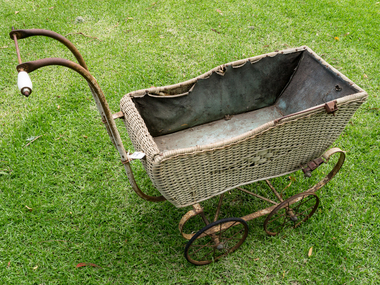
... The youngest Dorothy, who remembered sitting in this pram and later using it to carry papers, wood, vegetable etc., lived on the property in Jasper Road until her passing in 2016. ( Ronald Alexander Higgins, descendant , Helen Stanley CMHS 2017) The family of Dorothy Higgins 1928-2016, were early settlers in Moorabbin Shire establishing a dairy farm c 1873 in East Brighton ( now Bentleigh) dairy farms higgins james joseph simmonds ruth higgins dorothy poultry farms jasper road bentleigh City of Moorabbin Historical Society 1961 sheehy t.a. newsletters ashley r neville f blackman n moorabbin city council moorabbin roads board toll gates pioneers moorabin cheltenham bentleigh highett Wicker Perambulator, baby carriage, c. 1914, with a lined, painted wicker body, iron spring scrolled frame with leather straps and 4 steel wheels with rubber tyres. ...JAMES JOSEPH HIGGINS, was born in Dublin in 1821 and, at age twenty, emigrated via Liverpool in 1841 with his wife Ellen and baby daughter Margarete, on board the 'Intrinsic'. They lived in Little Lonsdale Street, Melbourne, for some years, where their son James John Clarke Higgins was born in 1850. JAMES JOHN CLARKE HIGGINS moved to Brighton East when he married Ruth Simmonds in 1873. The couple lived on Jasper Rd near the corner of Centre Rd for the rest of their lives, and produced eight children HERBERT JOHN HIGGINS was the sixth child born in 1886, to James John Clarke Higgins and Ruth Simmonds, and grew up in Centre Rd, Brighton East, now Bentleigh. He was renting and working a property on Jasper Rd from the time he was married in 1913 to Victoria Matilda Long, daughter of Charles John Long and Annie Matilda Allnutt. Herbert John bought his property on Jasper Rd in 1921. [Metropolitan Board of works plan 3220, Municipality of Moorabbin, shows that in 1928, Higgins Rd was planned (and probably built soon after). Herbert was a dairyman and market gardener. He bred and milked cows and sold milk, cream, butter and eggs to the locals. He supplied hay/corn to be made into chaff to J L Smith’s produce store. He also leased land from other farmers in the area and helped work their land. c1950 he sold the property in lots, some privately, others to the Municipality. Some lots became part of Hodgson Reserve, Higgins Road, Bentleigh, and another lot, the Bentleigh Bowling Club. Herbert and Victoria, known as Queenie, had five children between 1914 and 1928. The youngest Dorothy, who remembered sitting in this pram and later using it to carry papers, wood, vegetable etc., lived on the property in Jasper Road until her passing in 2016. ( Ronald Alexander Higgins, descendant , Helen Stanley CMHS 2017) The family of Dorothy Higgins 1928-2016, were early settlers in Moorabbin Shire establishing a dairy farm c 1873 in East Brighton ( now Bentleigh)Wicker Perambulator, baby carriage, c. 1914, with a lined, painted wicker body, iron spring scrolled frame with leather straps and 4 steel wheels with rubber tyres. The push handle is broken and hood is missing. dairy farms, higgins james joseph, simmonds ruth, higgins dorothy, poultry farms, jasper road bentleigh, city of moorabbin historical society 1961, sheehy t.a., newsletters, ashley r, neville f, blackman n, moorabbin city council, moorabbin roads board toll gates, pioneers moorabin cheltenham, bentleigh, highett -
 Phillip Island and District Historical Society Inc.
Photograph, 1960's
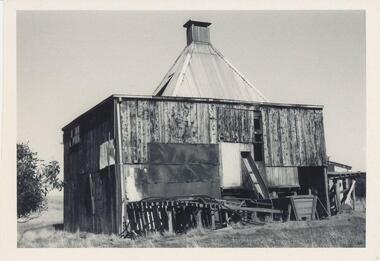
... April, 1973. local history photography photographs agriculture buildings historic chicory kiln rhyll phillip island U Stoppa A Neely N & J Archibald Chicory Kiln. Rhyll. Mr. U. Stoppa. Poured cement, Iron and Wood outside. built about 1940. ...Donated by N. M. & J. D. Archibald. April, 1973.Chicory Kiln. Rhyll. Mr. U. Stoppa. Poured cement, Iron and Wood outside. built about 1940. Mr. Alex Neely & family on property. Chicory Kiln Album.local history, photography, photographs, agriculture buildings, historic, chicory kiln, rhyll, phillip island, u stoppa, a neely, n & j archibald -
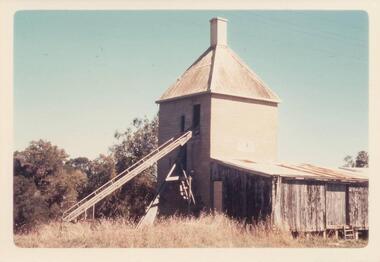 Phillip Island and District Historical Society Inc.
Photograph, 1960's
... N & J Archibald Colour Photograph. Chicory Kiln. Ventnor - Nobbies Road - Mr. E. Booth. Built for Alan Jenner about 1940 by Jack Jenner. concrete with wood and fibro. ...Donated by N. M. & J. D. Archibald. April 1973Colour Photograph. Chicory Kiln. Ventnor - Nobbies Road - Mr. E. Booth. Built for Alan Jenner about 1940 by Jack Jenner. concrete with wood and fibro. Fibro roof and chimney. Chicory Kiln Album.local history, photography, photographs, agriculture buildings, historic, chicory kiln, ventnor, phillip island, mr e booth, alan jenner, jack jenner, n & j archibald -
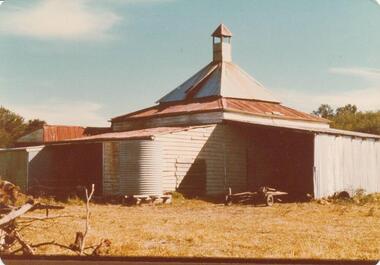 Phillip Island and District Historical Society Inc.
Photograph, 1960's
... wood...j jenner...n...N. M. & J. D. Archibald. April, 1973 local history photography photographs agriculture buildings historic chicory kiln cowes phillip island e c wood j jenner n & j archibald Colour Photograph. ...Donated by N. M. & J. D. Archibald. April, 1973Colour Photograph. Chicory Kiln. Cowes. Mr. E. C. Wood, Settlement Road, East. Built of mud 18" thick about 1880 by J. Jenner. Oldest Kiln in operation as at 1973. Chicory Kiln Albumlocal history, photography, photographs, agriculture buildings, historic, chicory kiln, cowes, phillip island, e c wood, j jenner, n & j archibald -
 Phillip Island and District Historical Society Inc.
Photograph, 1960's
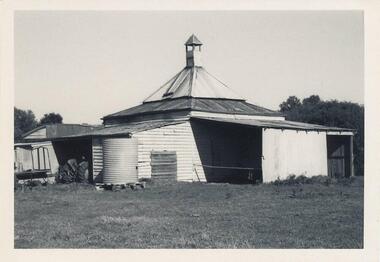
... Wood...J Jenner...N...N. M. & J. D. Archibald. April, 1973 local history photography photographs agriculture buildings historic chicory kiln cowes phillip island E C Wood J Jenner N & J Archibald Black & White Photograph. ...Donated by N. M. & J. D. Archibald. April, 1973Black & White Photograph. Chicory Kiln. Cowes - Mr. E. C. Wood, Settlement Road East. Built of mud 18" thick about 1880, by J. Jenner. Oldest Kiln still in operation as at April 1973. Chicory Kiln Album.local history, photography, photographs, agriculture buildings, historic, chicory kiln, cowes, phillip island, e c wood, j jenner, n & j archibald -
 Phillip Island and District Historical Society Inc.
Photograph, 1960's
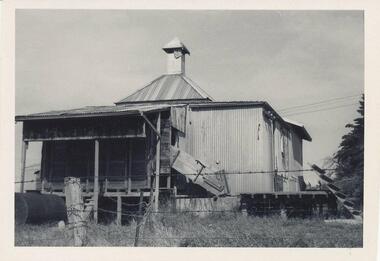
... N & J Archibald Black & White Photograph. Chicory Kiln. Ventnor - Mr. J. Hobbs. Still in operation (1973) converted to oil. Built by Cyril Clarke about 1930. Iron & Wood ...Donated by N. M. & J. D. Archibald. April, 1973Black & White Photograph. Chicory Kiln. Ventnor - Mr. J. Hobbs. Still in operation (1973) converted to oil. Built by Cyril Clarke about 1930. Iron & Wood structure. Chicory Kiln Album.local history, photography, photographs, agriculture buildings, historic, chicory kiln, ventnor, phillip island, j hobbs, cyril clarke, n & j archibald -
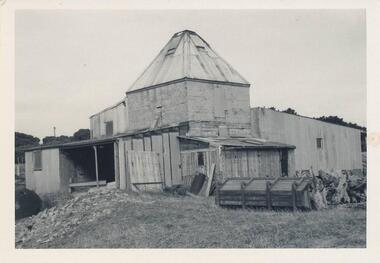 Phillip Island and District Historical Society Inc.
Photograph, 1960's
... April 1973 local history photography photographs agriculture buildings historic chicory kiln cowes phillip island G Stoppa N & J Archibald Black & White Photograph. Chicory Kiln. Cowes, Main Road - Mr. G. Stoppa. Cement blocks with Iron, Wood & Fibro. ...Donated by N. M. & J. D. Archibald. April 1973Black & White Photograph. Chicory Kiln. Cowes, Main Road - Mr. G. Stoppa. Cement blocks with Iron, Wood & Fibro. Built late 1940's or 50's. Chicory Kiln Album.local history, photography, photographs, agriculture buildings, historic, chicory kiln, cowes, phillip island, g stoppa, n & j archibald -
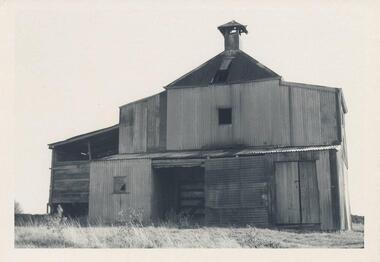 Phillip Island and District Historical Society Inc.
Photograph, 1960's
... Mr. N. Cleeland. Mud with iron & wood outer structure....Mr. N. Cleeland. Mud with iron & wood outer structure. Photograph ...Donated by N. M. & J. D. Archibald. April, 1973Black & White Photograph. Cowes, Thompson Avenue. Mr. N. Cleeland. Mud with iron & wood outer structure.local history, photography, photographs, agriculture buildings, historic, chicory kiln, n cleeland, jimmy roberts, n & j archibald -
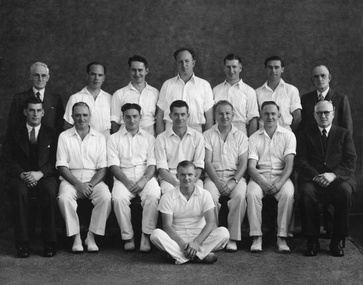 Murrumbeena Cricket Club
Photograph, 1946-47 A Team Premiership, c. 1947
... Wood...C Williams...Arthur Schrape...Jack Ridgeway...Jack Gilbert...Ted Wolsley...Chris Rundell...Jack McAlister...Bert Rushen...Ken Watson...T Jeff Riley...N...Murrumbeena Murrumbeena Cricket Club Cricket Cricket Clubs Cricketers Jim Watson Jack Corran Ernie Watson Alf Wood C Williams Arthur Schrape Jack Ridgeway Jack Gilbert Ted Wolsley Chris Rundell Jack McAlister Bert Rushen Ken Watson T Jeff Riley N White Photograph of 1946-47 A Team premiership 1946-47 A Team Premiership Photograph Photograph ...Photograph of 1946-47 A Team premiershipmurrumbeena, murrumbeena cricket club, cricket, cricket clubs, cricketers, jim watson, jack corran, ernie watson, alf wood, c williams, arthur schrape, jack ridgeway, jack gilbert, ted wolsley, chris rundell, jack mcalister, bert rushen, ken watson, t jeff riley, n white -
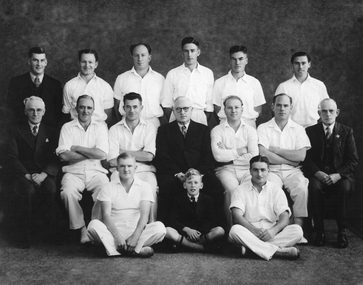 Murrumbeena Cricket Club
Photograph, 1947-48 A Team Premiership, c. 1948
... Wood...Jim Francis...Jack Shiell...Arthur Schrape...Jim Watson...Ted Wolsley...Jack McAlister...T Jeff Riley...Bert Rushen...Jack Corran...Jack Ridgeway...N...Murrumbeena Murrumbeena Cricket Club Cricket Cricket Clubs Cricketers Jack Gilbert W Slade Alf Wood Jim Francis Jack Shiell Arthur Schrape Jim Watson Ted Wolsley Jack McAlister T Jeff Riley Bert Rushen Jack Corran Jack Ridgeway N White Brian McAlister Chris Rundell Photograph of 1947-48 A Team premiership 1947-48 A Team Premiership Photograph Photograph ...Photograph of 1947-48 A Team premiershipmurrumbeena, murrumbeena cricket club, cricket, cricket clubs, cricketers, jack gilbert, w slade, alf wood, jim francis, jack shiell, arthur schrape, jim watson, ted wolsley, jack mcalister, t jeff riley, bert rushen, jack corran, jack ridgeway, n white, brian mcalister, chris rundell -
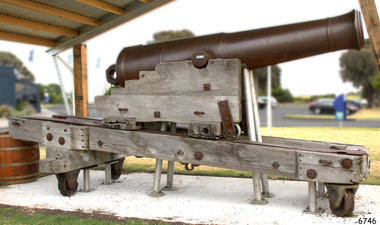 Flagstaff Hill Maritime Museum and Village
Weapon - Cannon, 1861
... N / C" The rear of left-hand slide " "OD” “JW” “No 33” Side chock – “JW” twice. Warrnambool Garrison Cannon. 68pdr smoothbore, muzzle-loading, cast-iron cannon. Manufactured in Low Moor, 1861, No. 10310. Mounted on the wooden carriage with wrought iron traversing slide and wrought iron runners and fittings. The cannon's Cascabel is cast with a loop. The wooden slide Compressor Mechanism, or Recoil Mechanism, is extremely rare. This mechanism comprises two equal-sized sections of wood ...The artillery piece of the cannon was cast at the Low Moor foundry in England in 1861. It is a 68 pound muzzle loading cannon, capable of firing a 68 pound weight projectile. The arrow on the top of the barrel is the symbol of government ownership. It is probably one of the artillery pieces purchased by the Victorian government in response to the 1863 report by Captain Scratchley, which recommended 19 such artillery pieces be bought for the defence of Hobsons Bay, (Williamstown, Melbourne) (Billets p.12). It was possibly brought to Warrnambool in the late 1860s or the 1870s, to be used for training purposes by volunteers and local militia. The wrought iron runners were probably added to the slides at a later date. This model of carriage had been manufactured since 1855, and the traversing slide since 1860. The traversing slide of the wooden carriage absorbs the recoil when the gun is then returns to the gun to its original position for loading and re-firing. The properties of the timber (regarded as being Burmese teak) have helped to preserve these carriages in Australia. This particular carriage and traversing slide would have been manufactured about the same time as the gun (in 1861) in the Royal Carriage Department of the Royal Gun Factory in Woolwich, England. The gun would then have been assembled on the traversing slide of the carriage, then despatched as a unit. The wooden slide compressor mechanism that belongs to the cannon was used to limit the recoil when the cannon was fired. It is now stored separately for purposes of preservation. It is extremely rare, as it is the only one surviving in this group of South Western Victorian cannons.This 68 pdr cannon, mounted with its original wooden carriage, is part of the South Western Victoria collection of surviving 19th Century artillery pieces, item number W/F/02. It is rated as EXTREMELY RARE on a State, National and World level. The 68 pound smooth bore cannon of this period are not particularly rare either in Australia or overseas; its significance lies in its Victorian provenance and as an element in a major collection of 19th century cannon. The number of surviving carriages with traversing slides in this group in South Western Victoria is unique in Australia and probably in the World. Out of 10 such platforms surviving in Australia, the South Western Victorian group has half. Several survive around the world but probably not in such a large group. The wooden sliding compressor mechanism belonging to this cannon is extremely rare, and the only one in this South Western Victorian group of Guns and Cannons. As a whole, this cannon has undergone very little restoration or modification, giving it a high level of integrity.Warrnambool Garrison Cannon. 68pdr smoothbore, muzzle-loading, cast-iron cannon. Manufactured in Low Moor, 1861, No. 10310. Mounted on the wooden carriage with wrought iron traversing slide and wrought iron runners and fittings. The cannon's Cascabel is cast with a loop. The wooden slide Compressor Mechanism, or Recoil Mechanism, is extremely rare. This mechanism comprises two equal-sized sections of wood, one on each side of the centre, joined by metal rods. In the centre of this wooden platform, with openings, top and bottom is a 15cm diameter metal cylinder with two cusps on the edge of the top (this wood has split over time). Two parallel sides each have two 1cm thick metal "L' plates attached 15cm long and 8.5cm wide. With the unit is ‘ L’ bracket, curved bracket and bolt head.Cannon trunnion "LOW MOOR / 10310 / 1861" Top of the barrel "7045, (symbol of an arrow pointing up), 95 – 3 – 14, 1861, 209" Cascabel "CV / N / C" The rear of left-hand slide " "OD” “JW” “No 33” Side chock – “JW” twice. flagstaff hill, warrnambool, shipwrecked-coast, flagstaff-hill, flagstaff-hill-maritime-museum, maritime-museum, shipwreck-coast, flagstaff-hill-maritime-village, muzzle loading cannon, 68 pound cannon, low moor foundry, royal gun factory, warrnambool militia, warrnambool garrison volunteers, warrnambool fortifications, wooden sliding compression mechanism, carriage and traversing slide, 19th century cannon, traversing platform, garrison sliding carriage, 68 pounder -
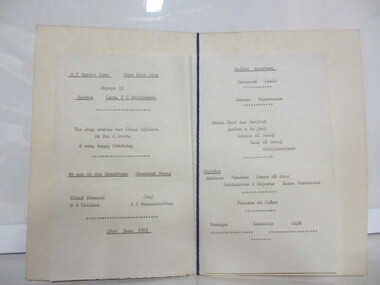 Seaworks Maritime Museum
Menu
... J C Mackintosh/ The ship wishes our Chief Officer/ Mr Jan C Woods/ A very happy birthday/ At sea in the Carribean Homeward Bound/ Chief Steward M A Collier/ Chef R N Wescott Toms/ 21st June 1964/ Buffert Luncheon/ Consomme Froid/ Salmon Mayonnaise/ Dince Roti aux Norfork/ Jambon a la York/ Langue de Beouf/ Salmisaucisse/ Salades/ Laitues Tomates Pomme de tere/ Betteraves & Oignons Russe Macedoine/ Fraises et Crème/ Fromage Biscuits Café"...J C Mackintosh/ The ship wishes our Chief Officer/ Mr Jan C Woods/ A very happy birthday/ At sea in the Carribean Homeward Bound/ Chief Steward M A Collier/ Chef R N Wescott Toms/ 21st June 1964/ Buffert Luncheon/ Consomme Froid/ Salmon Mayonnaise/ Dince Roti aux Norfork/ Jambon a la York/ Langue de Beouf/ Salmisaucisse/ Salades/ Laitues Tomates Pomme de tere/ Betteraves & Oignons Russe Macedoine/ Fraises et Crème/ Fromage Biscuits Café" Paper menu, printed with black text, with blue string and red flag design on front Menu ...Paper menu, printed with black text, with blue string and red flag design on front "MV Napier Star Blue Star Line/ Voyage 33/ Master Capt. J C Mackintosh/ The ship wishes our Chief Officer/ Mr Jan C Woods/ A very happy birthday/ At sea in the Carribean Homeward Bound/ Chief Steward M A Collier/ Chef R N Wescott Toms/ 21st June 1964/ Buffert Luncheon/ Consomme Froid/ Salmon Mayonnaise/ Dince Roti aux Norfork/ Jambon a la York/ Langue de Beouf/ Salmisaucisse/ Salades/ Laitues Tomates Pomme de tere/ Betteraves & Oignons Russe Macedoine/ Fraises et Crème/ Fromage Biscuits Café"
