
Showing 13 items matching "naidoc week"
-
 Sunshine and District Historical Society Incorporated
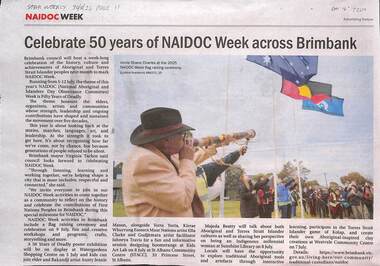
Article - Brimbank City Council NAIDOC Week 2026, Star Weekly, 30th June 2026
... Brimbank City Council NAIDOC Week 2026...The City of Brimbank Council hosts annual NAIDOC Week celebrations honour the history, culture, and achievements of Aboriginal and Torres Strait Islander peoples. ...7209.01 - Brimbank City Council 2026 NAIDOC Week - Celebrate 50 Years NAIDOC Week Across Brimbank - Star Weekly 30th June 2026 Page 10.jpg 7209.02 - Brimbank City Council 2026 NAIDOC Week - Celebrate 50 Years NAIDOC Week Across Brimbank - Star Weekly 30th June 2026 Page 10.jpg 7209.03 - Brimbank City Council 2026 NAIDOC Week - Celebrate 50 Years NAIDOC Week Across Brimbank - Star Weekly 23rd June 2026 Page 7.jpg 7209.04 - Brimbank City Council 2026 NAIDOC Week - Celebrating NAIDOC Weel - Star Weekly 14th July 2026.jpg...Aboriginal First Nation NAIDOC Uncle Shane Charles Virgina Tachos Aunty Jean Mason Pirritu 7209.01 - Brimbank City Council 2026 NAIDOC Week - Celebrate 50 Years NAIDOC Week Across Brimbank - Star Weekly 30th June 2026 Page 10.jpg 7209.02 - Brimbank City Council 2026 NAIDOC Week - Celebrate 50 Years NAIDOC Week Across Brimbank - Star Weekly 30th June 2026 Page 10.jpg 7209.03 - Brimbank City Council 2026 NAIDOC Week - Celebrate 50 Years NAIDOC Week Across Brimbank - Star Weekly 23rd June 2026 Page 7.jpg 7209.04 - Brimbank City Council 2026 NAIDOC Week - Celebrating NAIDOC Weel - Star Weekly 14th July 2026.jpg Collection of newspaper articles Article Brimbank City Council NAIDOC Week 2026 Star Weekly ...The City of Brimbank Council hosts annual NAIDOC Week celebrations honour the history, culture, and achievements of Aboriginal and Torres Strait Islander peoples. These events form a major part of Brimbank’s commitment to recognising Traditional Custodians and strengthening community understanding. The 2026 National Theme was "Fifty Years of Deadly".Australia's NAIDOC Week exists to celebrate, recognise, and honour the history, culture, and achievements of Aboriginal and Torres Strait Islander peoples. It is one of the most important national observances for First Nations recognition. The main purpose of Australia's NAIDOC Week is to: - Celebrate First Nations culture and achievements - Educate all Australians - Promote unity and participation. - Recognise excellence through awards. - Support First Nations artists. - Honour a long history of activism and cultural pride. NAIDOC is both a celebration and a call to continue the work of recognition, justice, and cultural strength.7209.01 - Brimbank City Council 2026 NAIDOC Week - Celebrate 50 Years NAIDOC Week Across Brimbank - Star Weekly 30th June 2026 Page 10.jpg 7209.02 - Brimbank City Council 2026 NAIDOC Week - Celebrate 50 Years NAIDOC Week Across Brimbank - Star Weekly 30th June 2026 Page 10.jpg 7209.03 - Brimbank City Council 2026 NAIDOC Week - Celebrate 50 Years NAIDOC Week Across Brimbank - Star Weekly 23rd June 2026 Page 7.jpg 7209.04 - Brimbank City Council 2026 NAIDOC Week - Celebrating NAIDOC Weel - Star Weekly 14th July 2026.jpgaboriginal, first nation, naidoc, uncle shane charles, virgina tachos, aunty jean mason, pirritu -
 Sunshine and District Historical Society Incorporated
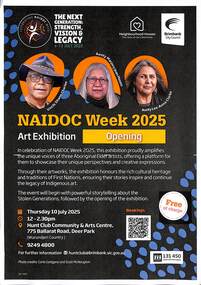
Mixed media - Brimbank City Council NAIDOC Week 2025, Brimbank City Council
... Brimbank City Council NAIDOC Week 2025...The City of Brimbank Council hosts annual NAIDOC Week celebrations honour the history, culture, and achievements of Aboriginal and Torres Strait Islander peoples. ...4781.01 - Brimbank City Council NAIDOC Week - 2025 Poster.jpg Uncle Shane Charles, Aunty Marjory Jean Mason & Aunty Lee-Anne Clarke 4781.02 - Brimbank City Council 2025 NAIDOC Week - Elders Share Artistic Talent.jpg Uncle Shane Charles, Aunty Marjory Jean Mason & Aunty Lee-Anne Clarke 4781.03 - Brimbank City Council 2025 NAIDOC Week - Celebrating NAIDOC Week.jpg Cr. ...The City of Brimbank Council hosts annual NAIDOC Week celebrations honour the history, culture, and achievements of Aboriginal and Torres Strait Islander peoples. ...The City of Brimbank Council hosts annual NAIDOC Week celebrations honour the history, culture, and achievements of Aboriginal and Torres Strait Islander peoples. These events form a major part of Brimbank’s commitment to recognising Traditional Custodians and strengthening community understanding. The 2025 National Theme was "The Next Generation: Strength, Vision & Legacy".Australia's NAIDOC Week exists to celebrate, recognise, and honour the history, culture, and achievements of Aboriginal and Torres Strait Islander peoples. It is one of the most important national observances for First Nations recognition. The main purpose of Australia's NAIDOC Week is to: - Celebrate First Nations culture and achievements - Educate all Australians - Promote unity and participation. - Recognise excellence through awards. - Support First Nations artists. - Honour a long history of activism and cultural pride. NAIDOC is both a celebration and a call to continue the work of recognition, justice, and cultural strength.4781.01 - Brimbank City Council NAIDOC Week - 2025 Poster.jpg Uncle Shane Charles, Aunty Marjory Jean Mason & Aunty Lee-Anne Clarke 4781.02 - Brimbank City Council 2025 NAIDOC Week - Elders Share Artistic Talent.jpg Uncle Shane Charles, Aunty Marjory Jean Mason & Aunty Lee-Anne Clarke 4781.03 - Brimbank City Council 2025 NAIDOC Week - Celebrating NAIDOC Week.jpg Cr. Victoria Borg, Cr. Kathleen Nikolic, Cr. Virginia Tachos, Cr. Kim Thien Truong, Cr. Daniel Kruk, Mayor Cr. Thuy Dang, Aunty Lee-Anne Clarke, Uncle Shane Charles, Dr. Helen Bodycomb, Fraser MP Dr. Daniel Mulino & Rose Bruhn. 4781.04 - Brimbank City Council 2025 NAIDOC Week - The Hunt Club Gallery.jpg 4781.05 - Brimbank City Council 2025 NAIDOC Week - The Hunt Club Gallery.jpg 4781.06 - Brimbank City Council 2025 NAIDOC Week - The Hunt Club Gallery.jpg 4781.07 - Brimbank City Council 2025 NAIDOC Week - The Hunt Club Gallery.jpg aboriginal, first nation, naidoc, aunty jean mason, uncle shane charles, aunty lee-anne clarke, the hunt club and community arts centre, ballarat road, deer park -
 Victorian Aboriginal Corporation for Languages
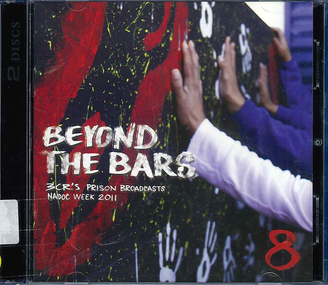
Audio CD, Radio 3CR, Beyond the bars 8 : 3CR's prison broadcasts : NAIDOC week 2011, 2011
... Beyond the bars 8 : 3CR's prison broadcasts : NAIDOC week 2011...The Beyond the Bars 8 broadcasts took place in NAIDOC week 2011. Includes interviews, songs, poems, messages from Indigenous inmates at Port Phillip Prison, Fulham Correctional Centre, Barwon Prison, Marngoneet Correctional Centre and the Dame Phyllis Frost Centre. ...Beyond the bars 8 : 3CR's prison broadcasts : NAIDOC week 2011 Audio CD Radio 3CR Inmates of Port Phillip Prison Dame Phyllis Frost Centre Barwon Prison Fulham Correctional Centre and Marngoneet Correctional Centre ...The CD is the 8th in a series of prison broadcast productions. The Beyond the Bars 8 broadcasts took place in NAIDOC week 2011. Includes interviews, songs, poems, messages from Indigenous inmates at Port Phillip Prison, Fulham Correctional Centre, Barwon Prison, Marngoneet Correctional Centre and the Dame Phyllis Frost Centre. Program Coordinator Meg Butler; production assistance Elanor McInerney; project coordination support Juliet Fox.CDsocial justice, victorian prisons, naidoc, broadcasting, radio, 3cr, rehabilitation, dame phyllis frost centre, port phillip prison, fulham correctional centre, barwon prison, marngoneet correctional centre -
 Victorian Aboriginal Corporation for Languages
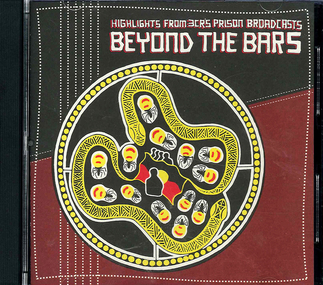
Audio CD, Radio 3CR, Beyond the bars : highlights from 3CR's prison broadcasts : NAIDOC Week 2004, 2004
... Beyond the bars : highlights from 3CR's prison broadcasts : NAIDOC Week 2004...These broadcasts took place during NAIDOC Week 2004. The session includes interviews, songs, poems and messages from Indigenous inmates at Port Phillip Prison and the Dame Phyllis Frost Centre, Deer Park. ...Beyond the bars : highlights from 3CR's prison broadcasts : NAIDOC Week 2004 Audio CD Radio 3CR Inmates of Port Phillip Prison and Dame Phyllis Frost Centre ...The Beyond the Bars broadcasts are the culmination of 3CR's out + blak on air project. The project was produced with the support from the City of Melbourne, the Victorian Aboriginal Justice Agreement and the City of Yarra. This CD is an hour-long radio program of highlights from two live prison broadcasts. These broadcasts took place during NAIDOC Week 2004. The session includes interviews, songs, poems and messages from Indigenous inmates at Port Phillip Prison and the Dame Phyllis Frost Centre, Deer Park. The broadcasts were presented by 3CR broadcasters Lisa Bellear, Eleisha Jones, Gilla McGuinness, Johnny McGuinness, Ross Morgan, Lester Green, and Kutcha Edwards. Technical assistance by Greg Segal and Lotti Stein. Program coordination by Juliet Fox. Project coordination by Bree McKilligan.CDsocial justice, victorian prisons, naidoc, broadcasting, radio, 3cr, rehabilitation, dame phyllis frost centre, port phillip prison -
 Victorian Aboriginal Corporation for Languages
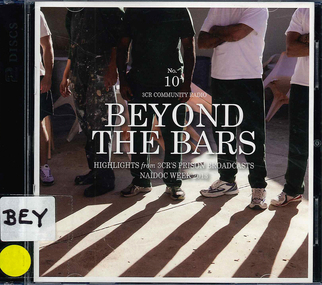
Audio CD, Radio 3CR, Beyond the bars 10 : highlights from 3CR's prison broadcasts : NAIDOC Week 2013, 2013
... Beyond the bars 10 : highlights from 3CR's prison broadcasts : NAIDOC Week 2013...Beyond the bars 10 : highlights from 3CR's prison broadcasts : NAIDOC Week 2013 Audio CD Radio 3CR Inmates of Port Phillip Prison Dame Phyllis Frost Centre Barwon Prison Fulham Correctional Centre Loddon Prison and Marngoneet Correctional Centre ...This CD is the tenth in a series of prison broadcast productions delivered by 3CR. It includes interviews, songs, poems and messages from Indigenous inmates at Port Phillip Prison, Fulham Correctional Centre, Barwon Prison, Marngoneet Correctional Centre, Loddon Prison and the Dame Phyllis Frost Centre.CDsocial justice, victorian prisons, naidoc, broadcasting, radio, 3cr, rehabilitation, dame phyllis frost centre, port phillip prison, fulham correctional centre, barwon prison, loddon prison, marngoneet correctional centre -
 Victorian Aboriginal Corporation for Languages
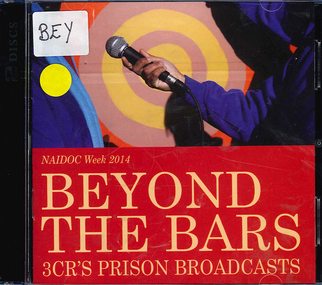
Audio CD, Radio 3CR, Beyond the bars : highlights from 3CR's prison broadcasts : NAIDOC Week 2014, 2014
... Beyond the bars : highlights from 3CR's prison broadcasts : NAIDOC Week 2014...Meg Butler (technical producer) Beyond the bars : highlights from 3CR's prison broadcasts : NAIDOC Week 2014 Audio CD Radio 3CR Inmates of Port Phillip Prison Dame Phyllis Frost Centre Barwon Prison Fulham Correctional Centre Loddon Prison and Marngoneet Correctional Centre ...Part of a series of prison broadcast productions delivered by 3CR. Includes interviews, songs, poems and messages from Indigenous inmates, and also features Kutcha Edwards. Meg Butler (technical producer)2 CD setwurundjeri, kulin, social justice, prison system, rehabilitation, dame phyllis frost centre, port phillip prison, fulham correctional centre, barwon prison, loddon prison, marngoneet correctional centre -
 Federation University Historical Collection
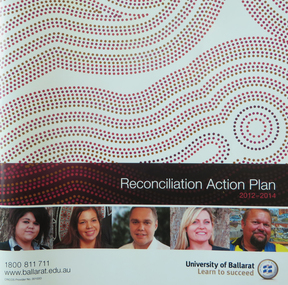
Booklet, University of Ballarat Reconciliation Action Plan, 2012-2014, 2012
... ...naidoc week...This reconciliation Action Plan was published while Bonnie Chew was Manager of the Aboriginal Education Centre. reconciliation action plan aborigines aboriginal education unit ben atkinson reconciliation university of ballarat bonnie chew bonnie fagan shanaya sheridan national apology national sorry day committee naidoc week reconciliation week national close the gap day barry golding barbara webb aboriginal education centre Soft covered booklet documenting the University of Ballarat Reconciliation Action Plan. ...This reconciliation Action Plan was published while Bonnie Chew was Manager of the Aboriginal Education Centre.Soft covered booklet documenting the University of Ballarat Reconciliation Action Plan. Photographs include Bonnie Chew, Ben Atkinson, Shanaya Sheridan, Barry Golding, Barbara Webb, Lee Snibsonreconciliation action plan, aborigines, aboriginal education unit, ben atkinson, reconciliation, university of ballarat, bonnie chew, bonnie fagan, shanaya sheridan, national apology, national sorry day committee, naidoc week, reconciliation week, national close the gap day, barry golding, barbara webb, aboriginal education centre -
 Phillip Island and District Historical Society Inc.
Album, Island Historical articles 2013-2020
... ...Naidoc week...Local interest articles from The Advertiser and South Gippsland Sentinel Times collected by Graeme Clausen Historical The Advertiser Historical Society Shipwrecks Berninneet World War 1 John Jansson Meg & Alec Davis Summerland Golf Course hector goodall Naidoc week tapestry Rudi Coels ferries Cherry McFee wooden boat festival Christine Grayden 150th celebrations Captain John Cleeland Large black landscape cardboard album with newspaper articles on white pages in plastic mounts. 2 screw studs on left side. ...Local interest articles from The Advertiser and South Gippsland Sentinel Times collected by Graeme Clausen HistoricalLarge black landscape cardboard album with newspaper articles on white pages in plastic mounts. 2 screw studs on left side. the advertiser, historical society, shipwrecks, berninneet, world war 1, john jansson, meg & alec davis, summerland golf course, hector goodall, naidoc week, tapestry, rudi coels, ferries, cherry mcfee, wooden boat festival, christine grayden, 150th celebrations, captain john cleeland -
 Lakes Entrance Historical Society
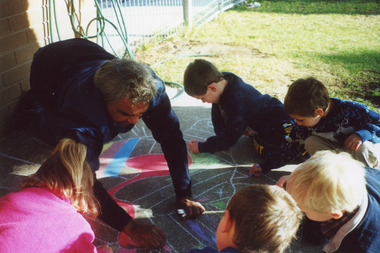
Photograph - NAIDOC, Lakes Post Newspaper, 1999
... Colour photograph Showing Uncle Les Cooper leading a group of pre school children through a chalk drawing experience for NAIDOC week, Lakes Entrance Victoria...Education activities Colour photograph Showing Uncle Les Cooper leading a group of pre school children through a chalk drawing experience for NAIDOC week, Lakes Entrance Victoria Photograph NAIDOC Lakes Post Newspaper ...Colour photograph Showing Uncle Les Cooper leading a group of pre school children through a chalk drawing experience for NAIDOC week, Lakes Entrance Victoriaeducation, activities -
 Bendigo Historical Society Inc.
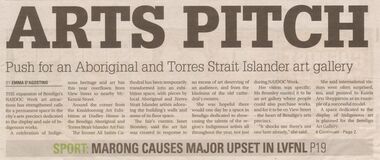
Newspaper - Arts Pitch Story, July 08, 2019
... The expansion of Bendigo's NAIDOC Week art attractions has strengthened calls for a permant space in the city's arts precinct dedicated to the display of indigenous works....The expansion of Bendigo's NAIDOC Week art attractions has strengthened calls for a permant space in the city's arts precinct dedicated to the display of indigenous works. bendigo NAIDOC indigenous arts Bendigo Advertiser article: ' Arts Pitch' Push for an Aboriginal and Torres Strait Islander Art Gallery. ...The expansion of Bendigo's NAIDOC Week art attractions has strengthened calls for a permant space in the city's arts precinct dedicated to the display of indigenous works.Bendigo Advertiser article: ' Arts Pitch' Push for an Aboriginal and Torres Strait Islander Art Gallery.bendigo, naidoc, indigenous arts -
 Uniting Church Archives - Synod of Victoria
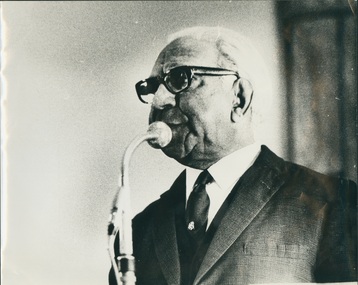
B&W photo of another photo or newspaper photograph of Pastor Sir Douglas Nicholls, Undated
... By 1955 this service had moved to July and later evolved into National Aborigines and Islanders Day Observance Committee (NAIDOC) week. Ordained a Churches of Christ pastor in 1945, Nicholls conducted a vigorous ministry from a chapel in Gore Street, Fitzroy. ...By 1955 this service had moved to July and later evolved into National Aborigines and Islanders Day Observance Committee (NAIDOC) week. Ordained a Churches of Christ pastor in 1945, Nicholls conducted a vigorous ministry from a chapel in Gore Street, Fitzroy. ...Sir Douglas Ralph Nicholls (1906-1988), footballer, pastor, activist and governor, was born on 9 December 1906 at Cummeragunja Aboriginal mission, New South Wales, fifth child of Herbert Nicholls, seasonal worker, and his wife Florence, née Atkinson. Doug grew up at Cummeragunja, on the Murray River near Barmah, in its golden years of Aboriginal autonomy. Thomas Shadrach James gave him and other Yorta Yorta children a sound primary education, reinforcing the pride and self-assurance gained from their parents. As Doug grew, so too did the powers of the State’s Aboriginal Protection Board. Doug’s elder sister Hilda was removed about 1915. When Doug reached 14, he was moved off under the Aborigines Protection Act (1909) to find work. He took a job with dredging teams constructing levees on the Murray. Like other youths in the region Nicholls played Australian rules football, emulating kinsmen who had won local premierships since the 1890s. Doug and his brother Herbert (‘Dowie’) played with Tongala in the mid-1920s. Melbourne football beckoned, Doug trying out unsuccessfully for Carlton in 1927. He signed with the Northcote Victorian Football Association team, despite his nervousness about his Aboriginality, and was given a job with Northcote City Council. ‘Dowie’ joined him for a season. Doug was short at 5 ft 2 ins (158 cm), but muscular and lightning fast. He competed regularly during a boom in professional running, winning many heat and place prizes. In 1929 he won the Nyah and Warracknabeal gifts, earning a sash and £100 in each, together with a case of cutlery in the latter. Using his speed on the wing for Northcote, he produced great spring and agility from his compact body. The Sporting Globe reported in 1929 that ‘he flashes through packs of big men, whisks around small men . . . and attempts marks at the back of any six-footer’. In front-on clashes he was flattened only to rise again. The sole Aborigine in the VFA, he was known affectionately as the ‘flying Abo’ but called worse by his opponents’ barrackers. He competed for five seasons, being named ‘best and fairest’ twice, appearing in three association grand finals and winning in 1929. Keen to earn more than a seasonal wage, in 1931 Nicholls accepted a three-year contract with Jimmy Sharman’s travelling boxing show. The bouts matched opposites, local against tent boxer, white against black, and sometimes men of different sizes. He faced stiff competition from those who wanted to best the noted Melbourne black footballer, the crowd adding racial abuse. A far better footballer than boxer, he copped some punishment. Fighting in the Melbourne Stadium in December 1931, he was described by Truth as ‘slow and awkward’, but packing a ‘good wallop’. In 1932 Sharman, who treated his boxers fairly, released Nicholls to join the Fitzroy Victorian Football League team, which agreed to employ him as its groundsman. He played fifty-four games for Fitzroy over six seasons until knee trouble forced him out in 1937. Winning cups in 1934 and 1935, he played alongside Haydn Bunton and Wilfred (‘Chicken’) Smallhorn. Grand finals eluded him but he represented Victoria twice. Following his mother’s death, Nicholls revisited the Church of Christ chapel in Northcote, where they had worshipped together. On 17 July 1932 he experienced a conversion. He was soon baptised and witnessed openly, leading his fellow footballers to occasional church parades. Nicholls exhibited leadership qualities. William Cooper, founder of the Australian Aborigines’ League and Nicholls’ Yorta Yorta kinsman and fellow Christian, encouraged the young footballer. In February 1935 Cooper, Nicholls and others lobbied Thomas Paterson, the Commonwealth minister for the interior, over the need for Federal control of Aboriginal affairs. Nicholls attended the Day of Mourning protest for Aborigines held in Sydney on 26 January 1938, declaring: ‘after 150 years our people are still influenced and bossed by white people. I know we can proudly hold our own with others if given the chance’. When Cooper retired in November 1940 Nicholls became secretary of the AAL. On 2 June 1941 Nicholls enlisted in the Citizen Military Forces. He trained at Seymour and Bonegilla before being posted to the 29th Battalion. As Major Frank Corr’s batman, he was popular with other soldiers who tolerated his preaching and Bible reading. His army service was brief, however, and he was discharged in Melbourne on compassionate grounds on 22 January 1942. His biographer claimed that the Fitzroy police requested his return to mediate in the racial tensions developing between servicemen and the mostly respectable Aboriginal families living in crowded and dilapidated Fitzroy housing; Aboriginal people maintain that they requested his release. Nicholls began welfare work and religious services from an Aboriginal home in Gertrude Street, Fitzroy. In April 1942, ‘Dowie’ died of road accident trauma, leaving his wife, Gladys, née Bux, and three children. On 26 December 1942 at Moama Methodist Church, New South Wales, Nicholls married her, a caring gesture which developed into a loving partnership. In January 1943 he initiated ‘Aboriginal Sunday’, featuring a gum leaf orchestra and choir. By 1955 this service had moved to July and later evolved into National Aborigines and Islanders Day Observance Committee (NAIDOC) week. Ordained a Churches of Christ pastor in 1945, Nicholls conducted a vigorous ministry from a chapel in Gore Street, Fitzroy. His work survived on donations, a small honorarium, and his employment as team coach (1947) and curator at the Northcote Football Ground. In the 1950s Gladys established grocery and opportunity shops to earn income and provide services. Their house soon overflowed with people in need or visitors to Melbourne. Nicholls also hosted inspiring African American visitors such as the pianist Winifred Attwell and the singer Harry Belafonte. His ministry extended to Aboriginal country communities. Gladys taught Sunday school, undertook endless fund-raising and welfare work beside her husband, and became his greatest supporter and financial manager. They formed an Aboriginal Girls’ Hostel in 1956, for which they acted as house parents, and bought holiday units for Aborigines at Queenscliff. Persistently advocating Aboriginal rights, Nicholls protested about the impact of the Woomera rocket range on the people of the Warburton Ranges, co-ordinated the production of a concert, Out of the Dark, scripted by Jean Campbell, to rectify the omission of Aborigines from Victoria’s Commonwealth jubilee celebrations, and criticised the Victorian Aboriginal Protection Board. In 1957 when the board was transformed into the Aborigines’ Welfare Board, he and Harold Blair were appointed as Aboriginal representatives. Maintaining the stance of a political moderate, he did not bear grudges and sought to build bridges between black and white. He co-operated with any group that aided the cause, including the Council of Aboriginal Rights, whose executive were members of the Communist Party of Australia. This association attracted the attention of the Australian Security Intelligence Organization, which in 1957 began to keep a file on Nicholls. In May 1957 Nicholls formed the Victorian Aborigines Advancement League with Doris Blackburn and Gordon Bryant, a Federal parliamentarian. As its paid field officer and spokesman, Nicholls contested assimilation policies and used film to raise awareness of issues. When the Welfare Board attempted to close Lake Tyers reserve, Gippsland, he resigned in disgust and led a protest march on parliament in May 1963. The AAL also petitioned the United Nations on land rights in June, perhaps the first indigenous body to do so. He argued for new premises at 58 Cunningham Street, Northcote, opened in 1966 as the ‘Doug Nicholls Centre’. In 1958 Nicholls was a foundation member of the Federal Council for Aboriginal Advancement (Federal Council for the Advancement of Aboriginal and Torres Strait Islanders after 1964), which he served as national field officer (1961) and Victorian secretary (1962-63). While an innovator in tactics, he was alarmed by the influence of confrontational ‘black power’ politics in the AAL and resigned as a director amid turmoil on this issue in 1969, claiming the concept was a ‘bitter word’, not needed in Australia. Similar tensions in FCAATSI led him to join with Kath Walker (Oodgeroo Noonuccal) in establishing the short-lived National Tribal Council as an alternative forum. As the AAL leadership moderated their stance, he returned as president (1969-74) of the new all-Aboriginal organisation. He was also a keen patron of the National Aboriginal Sports Foundation, founded in 1969. Many honours were conferred on Nicholls: he was appointed MBE (1957) and OBE (1968) and knighted (1972). In 1962 he was named Victorian ‘Father of the Year’ and the State’s second Aboriginal justice of the peace. Crowned Melbourne’s 1973 King of Moomba, he was declared Bapu Mamus (a Torres Strait term for ‘headman’) by the NTC. On 1 December 1976 Sir Douglas was appointed Governor of South Australia, but his health deteriorated within weeks, making it difficult for him to perform his official duties. In March 1977 he hosted Queen Elizabeth during her royal tour and was appointed KCVO. He relinquished his governorship on 30 April 1977 following a stroke. Ill health continued to dog him during retirement, but he played his Nelson Eddy records, enjoyed his expanding family, and when able, ministered to the Aboriginal Church at the League’s premises. Sir Douglas Nicholls died on 4 June 1988 at Mooroopna, predeceased (1981) by his wife and survived by his five children. He was given a state funeral and buried in tribal ground at Cummeragunja cemetery. Among the many tributes to him are an oval at Northcote, handed to the AAL in 1982, a Canberra suburb gazetted in 1991, and a fellowship for Indigenous leadership established in 2003, all in his name, and a statue of Sir Doug and Lady Nicholls by Louis Laumen, unveiled in 2007 in Parliament Gardens, Melbourne. Sir Douglas Nicholls is shown speaking at a microphone; head and shoulders; dressed in a suit.Pastor Douglas Nicholls -
 Sunshine and District Historical Society Incorporated
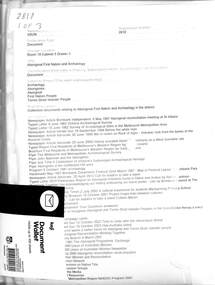
Archive - Aboriginal First Nation and Archaelogy
... Newspaper Article Brimbank Independent 6 May 1997 Aboriginal reconciliation meeting at St Albans|Typed Letter 8 June 1982 Victoria Archaelogical Survey|Typed Letter 10 June 1982 Survey of Archaelogical Sites in the Melbourne Metropolitan Area|Newspaper Article Herald Sun 18 September 1994 Before the white man|Newspaper Article Advocate 30 June 1999 We re rockin on Rock of Ages - Volcanic rock from the banks of the Kororoit Creek|Newspaper Article Advocate 20 June 2000 History revealed Aboriginal artefacts on a West Sunshine site|Typed Report First Residents of Melbourne's Western Region by Gary Presland|Brochure First Residents of Melbourne's Western Region by Gary Presland|Flyer The Melbourne and Metropolitan Archaeological Survey|Flyer John Bateman and the Aborigines|Flyer and Time A Celebration of Victoria's Submerged Archaelogical Heritage|Flyer Aborigines in the Gellibrand Hill area|Program 9 Octoberr 1981 Archaelogy|Handmade Map 1997 Brimbank Dreamtime Festival 22nd March 1997 - Map of Festival Layout at Brimbank Park|Newspaper Article Advocate 20 April 2013 Call for leaders to take a stand|Typed Letter 2010 Preliminary Report on Aboriginal Artefacts found in Albion and Ardeer by Robert Jackson|Brimbank Together Yes Acknowledging our history embracing our future poster - Use by Brimbank Council at The Hunt Club Community Centre|Newspaper Article Weekly Times 2 July 2002 A cultural experience for students Maribyrnong Primary School|Newspaper Article Living Museum 10 October 2001 Project forges links between cultures|The Advocate 20th April - Call for leaders to take a stand Colleen Marion|Booklet The Voice to Parliament|Booklet The Voice to Parliament Your Questions answered|Brochure Yes23 It's time to recognise Aboriginal and Torres Strait Islander Peoples in the Consititution throug a voice information sheets|Your official referendum booklet|Flyer How to vote yes campaign cards|Newspaper Article Herald Sun 15 October 2023 Time to Unite after the referendum defeat|Newspaper Article Herald Sun 16 October 2023 How Australia Voted|Brochure Brimbank council wants a better future for Aboriginal and Torres Strait Islander people|Brochure council for Aboriginal Reconciliation Working Together|Email La Trobe University Branch 4 March 2001|Typed Letter 13 March 1991 The Aboriginal Programme Exchange|Typed Letter 20 April 2000 Union of Australian Women|Typed Letter August 2000 Union of Australian Women Newsletter|Magazine Dissent Spring 2000 Aborigines reconciliation racial prejudice|Brochure Talking Together Women and Reconciliation|Brochure A National Action Network|Brochure High Court Decision on Native Title|Brochure Running Discussion Groups|Brochure Dealing with the Media|Brochure Contacts and Resources|Program The Western Metropolitan Region NAIDOC Program 2007|Newspaper Article The Age 25 May 1991 The Jawoyns troubled dreaming|Newsletter AEQUA Equal Employment Opportunity Newsletter 12 August 1981 Aboriginal employment in the APS on the up|Photocopy of Photograph Off Opie Road near Brachnell Place|Brochure Brimbank News Issue 10 2023 Be Bold Festival 7 October 2023|Typed Notes Uluru Statement from the Heart|Newspaper Article The Age 18 January 2001 William Barak|Newspaper Article The Star 17th October 2006 Special day for youth Karen Jackson|Newspaper Article Lalor Star March 1980 Aboriginal Treaty|Typed Letter Womens International Leagure for Peace and Freedom November 1979|Newspaper Article The Age 17 April 1997 Rednecks using Wik debate to grab new rights|Flyer Support Workers Claims for Stolen Wages and Return the Stolen wages for Workers and their families and Support Wage Justice Return the Stolen Wages|Handwritten Letter from Leo Prestia 27 January|List of Aboriginal Organisatons February 2004|Newspaper Article A Saturday Reflection|Postcard Pitchi Richi Sanctuary Alice Springs|Postcard Pitchi Richi Sanctuary Alice Spring|Invitation The Mayor and Councillors of Moreland City Council Connections Land and people|Notes Address Selina Aborignes|Booklet Recognition The Way forward An Issues paper from the Ausralian Catholic Social Justice Council|Newspaper Article The Age 21 January 1980 Signs of ancient man found in threatened valley|Form Australians for Native title reconciliation|Booklet Vic Uni News June 1997 Jindi woraback joining together|Newspaper Article The Age 17 April 1997 Black network hears Wik plan|Booklet Australian Institute for a Just Sustainable Peaceful Future Native Title Implications for Land management April 1997 Discussion Paper Number 11|Typed Notes Parliament of Australia Department of the Parliamentary Library current Information Digest Education and Welfare 14 January 1973 Aborigines Government Policy|Koori music and the Multicultural choir 13 July|Typed Notes 4 February 2004|Flyer State of Shock A new film by David Bradbury|Newspaper Article 21 October 1997 The Age Metro Arts and Life Heritage voting for a Trust you can trust6|Typed Letter from Parliament of Australia The Senate Hon Margaret Reynolds 15 September 1997 Native title Amendment bill 1997|Typed notes What are the International implications of Australias proposed legislative response to the Wik decision 16 May 1997|Newspaper Article The Age 11 October 1980 CRA and the Aborigines|Newspaper Article The Age 27 October 1980 Lost languages of the Aborigine|Program Western Metropolitan Region NAIDOC Committee 6 October 2004|Typed Notes How the English Language is used to put Aborigines down Deny us rights or Is Employed as a Political Tool Against Us|Flyer Australias for Reconciliation Study Circle The Footscray Community Arts Centre|Newspaper Article Weekly Times 4 December 2001 Smoking marks opening|Flyer Save The Racial Discrimination Act The Law for All of Us|Flyer Freedom fund for 1988 Dont Celebrate 1988 White Australia Has a Black History|Typed Notes 4 May 1997 Area Meeting on Aboriginal Reconciliation 20 May 1997 Why Reconciliation|Newspaper Article Sunday Press 17 July 1988 Hes black hes white and hes Browned off|Handwritten list Morning Tea with Yolande Klempprier 5 December 1979|Typed Notes Interim Consultative Committee Western Region Community Legal Centre|Brochure Aboriginal Myths and Legends from the Goldfields to the South West of Western Australia|Brochure Messagestick Conserve or Destroy May 1980 Voume 5 No 1|Brochure Aboringinal Women's Task Force "We need to know what you think"|Newspaper Article The Age 27th February 1980 Aboriginal skeleton found by workmen Barries Rd Melton|Newspaper Article 18th September 1985 Only maternal instricts have saved Aboriginal race from destruction says Hollows|Newspaper Article Star Weekly 26th March 2024 New Indigenous name for Sydenham Park "Yaluk barring Park"|Newspaper Article Star Weekly 30th July 2024 - New name for park|Newspaper Artilce 9th January 2024 Abandoning January 26 - Brimbank Council will no longer hold citizenship ceremonies on January 26|Newspaper Article Star Weekly 14th July 2026 Page 14 - Celebrating NAIDOC Week|Newspaper Article Star Weekly 14th July 2026 Page 3 - Brimbank Council votes to not join native title proceedings...Aborigine Aboriginal First Nation Newspaper Article Brimbank Independent 6 May 1997 Aboriginal reconciliation meeting at St Albans|Typed Letter 8 June 1982 Victoria Archaelogical Survey|Typed Letter 10 June 1982 Survey of Archaelogical Sites in the Melbourne Metropolitan Area|Newspaper Article Herald Sun 18 September 1994 Before the white man|Newspaper Article Advocate 30 June 1999 We re rockin on Rock of Ages - Volcanic rock from the banks of the Kororoit Creek|Newspaper Article Advocate 20 June 2000 History revealed Aboriginal artefacts on a West Sunshine site|Typed Report First Residents of Melbourne's Western Region by Gary Presland|Brochure First Residents of Melbourne's Western Region by Gary Presland|Flyer The Melbourne and Metropolitan Archaeological Survey|Flyer John Bateman and the Aborigines|Flyer and Time A Celebration of Victoria's Submerged Archaelogical Heritage|Flyer Aborigines in the Gellibrand Hill area|Program 9 Octoberr 1981 Archaelogy|Handmade Map 1997 Brimbank Dreamtime Festival 22nd March 1997 - Map of Festival Layout at Brimbank Park|Newspaper Article Advocate 20 April 2013 Call for leaders to take a stand|Typed Letter 2010 Preliminary Report on Aboriginal Artefacts found in Albion and Ardeer by Robert Jackson|Brimbank Together Yes Acknowledging our history embracing our future poster - Use by Brimbank Council at The Hunt Club Community Centre|Newspaper Article Weekly Times 2 July 2002 A cultural experience for students Maribyrnong Primary School|Newspaper Article Living Museum 10 October 2001 Project forges links between cultures|The Advocate 20th April - Call for leaders to take a stand Colleen Marion|Booklet The Voice to Parliament|Booklet The Voice to Parliament Your Questions answered|Brochure Yes23 It's time to recognise Aboriginal and Torres Strait Islander Peoples in the Consititution throug a voice information sheets|Your official referendum booklet|Flyer How to vote yes campaign cards|Newspaper Article Herald Sun 15 October 2023 Time to Unite after the referendum defeat|Newspaper Article Herald Sun 16 October 2023 How Australia Voted|Brochure Brimbank council wants a better future for Aboriginal and Torres Strait Islander people|Brochure council for Aboriginal Reconciliation Working Together|Email La Trobe University Branch 4 March 2001|Typed Letter 13 March 1991 The Aboriginal Programme Exchange|Typed Letter 20 April 2000 Union of Australian Women|Typed Letter August 2000 Union of Australian Women Newsletter|Magazine Dissent Spring 2000 Aborigines reconciliation racial prejudice|Brochure Talking Together Women and Reconciliation|Brochure A National Action Network|Brochure High Court Decision on Native Title|Brochure Running Discussion Groups|Brochure Dealing with the Media|Brochure Contacts and Resources|Program The Western Metropolitan Region NAIDOC Program 2007|Newspaper Article The Age 25 May 1991 The Jawoyns troubled dreaming|Newsletter AEQUA Equal Employment Opportunity Newsletter 12 August 1981 Aboriginal employment in the APS on the up|Photocopy of Photograph Off Opie Road near Brachnell Place|Brochure Brimbank News Issue 10 2023 Be Bold Festival 7 October 2023|Typed Notes Uluru Statement from the Heart|Newspaper Article The Age 18 January 2001 William Barak|Newspaper Article The Star 17th October 2006 Special day for youth Karen Jackson|Newspaper Article Lalor Star March 1980 Aboriginal Treaty|Typed Letter Womens International Leagure for Peace and Freedom November 1979|Newspaper Article The Age 17 April 1997 Rednecks using Wik debate to grab new rights|Flyer Support Workers Claims for Stolen Wages and Return the Stolen wages for Workers and their families and Support Wage Justice Return the Stolen Wages|Handwritten Letter from Leo Prestia 27 January|List of Aboriginal Organisatons February 2004|Newspaper Article A Saturday Reflection|Postcard Pitchi Richi Sanctuary Alice Springs|Postcard Pitchi Richi Sanctuary Alice Spring|Invitation The Mayor and Councillors of Moreland City Council Connections Land and people|Notes Address Selina Aborignes|Booklet Recognition The Way forward An Issues paper from the Ausralian Catholic Social Justice Council|Newspaper Article The Age 21 January 1980 Signs of ancient man found in threatened valley|Form Australians for Native title reconciliation|Booklet Vic Uni News June 1997 Jindi woraback joining together|Newspaper Article The Age 17 April 1997 Black network hears Wik plan|Booklet Australian Institute for a Just Sustainable Peaceful Future Native Title Implications for Land management April 1997 Discussion Paper Number 11|Typed Notes Parliament of Australia Department of the Parliamentary Library current Information Digest Education and Welfare 14 January 1973 Aborigines Government Policy|Koori music and the Multicultural choir 13 July|Typed Notes 4 February 2004|Flyer State of Shock A new film by David Bradbury|Newspaper Article 21 October 1997 The Age Metro Arts and Life Heritage voting for a Trust you can trust6|Typed Letter from Parliament of Australia The Senate Hon Margaret Reynolds 15 September 1997 Native title Amendment bill 1997|Typed notes What are the International implications of Australias proposed legislative response to the Wik decision 16 May 1997|Newspaper Article The Age 11 October 1980 CRA and the Aborigines|Newspaper Article The Age 27 October 1980 Lost languages of the Aborigine|Program Western Metropolitan Region NAIDOC Committee 6 October 2004|Typed Notes How the English Language is used to put Aborigines down Deny us rights or Is Employed as a Political Tool Against Us|Flyer Australias for Reconciliation Study Circle The Footscray Community Arts Centre|Newspaper Article Weekly Times 4 December 2001 Smoking marks opening|Flyer Save The Racial Discrimination Act The Law for All of Us|Flyer Freedom fund for 1988 Dont Celebrate 1988 White Australia Has a Black History|Typed Notes 4 May 1997 Area Meeting on Aboriginal Reconciliation 20 May 1997 Why Reconciliation|Newspaper Article Sunday Press 17 July 1988 Hes black hes white and hes Browned off|Handwritten list Morning Tea with Yolande Klempprier 5 December 1979|Typed Notes Interim Consultative Committee Western Region Community Legal Centre|Brochure Aboriginal Myths and Legends from the Goldfields to the South West of Western Australia|Brochure Messagestick Conserve or Destroy May 1980 Voume 5 No 1|Brochure Aboringinal Women's Task Force "We need to know what you think"|Newspaper Article The Age 27th February 1980 Aboriginal skeleton found by workmen Barries Rd Melton|Newspaper Article 18th September 1985 Only maternal instricts have saved Aboriginal race from destruction says Hollows|Newspaper Article Star Weekly 26th March 2024 New Indigenous name for Sydenham Park "Yaluk barring Park"|Newspaper Article Star Weekly 30th July 2024 - New name for park|Newspaper Artilce 9th January 2024 Abandoning January 26 - Brimbank Council will no longer hold citizenship ceremonies on January 26|Newspaper Article Star Weekly 14th July 2026 Page 14 - Celebrating NAIDOC Week|Newspaper Article Star Weekly 14th July 2026 Page 3 - Brimbank Council votes to not join native title proceedings Collection documents relating to Aboriginal First Nation and Archaelogy in the district Archive Aboriginal First Nation and Archaelogy ...Newspaper Article Brimbank Independent 6 May 1997 Aboriginal reconciliation meeting at St Albans|Typed Letter 8 June 1982 Victoria Archaelogical Survey|Typed Letter 10 June 1982 Survey of Archaelogical Sites in the Melbourne Metropolitan Area|Newspaper Article Herald Sun 18 September 1994 Before the white man|Newspaper Article Advocate 30 June 1999 We re rockin on Rock of Ages - Volcanic rock from the banks of the Kororoit Creek|Newspaper Article Advocate 20 June 2000 History revealed Aboriginal artefacts on a West Sunshine site|Typed Report First Residents of Melbourne's Western Region by Gary Presland|Brochure First Residents of Melbourne's Western Region by Gary Presland|Flyer The Melbourne and Metropolitan Archaeological Survey|Flyer John Bateman and the Aborigines|Flyer and Time A Celebration of Victoria's Submerged Archaelogical Heritage|Flyer Aborigines in the Gellibrand Hill area|Program 9 Octoberr 1981 Archaelogy|Handmade Map 1997 Brimbank Dreamtime Festival 22nd March 1997 - Map of Festival Layout at Brimbank Park|Newspaper Article Advocate 20 April 2013 Call for leaders to take a stand|Typed Letter 2010 Preliminary Report on Aboriginal Artefacts found in Albion and Ardeer by Robert Jackson|Brimbank Together Yes Acknowledging our history embracing our future poster - Use by Brimbank Council at The Hunt Club Community Centre|Newspaper Article Weekly Times 2 July 2002 A cultural experience for students Maribyrnong Primary School|Newspaper Article Living Museum 10 October 2001 Project forges links between cultures|The Advocate 20th April - Call for leaders to take a stand Colleen Marion|Booklet The Voice to Parliament|Booklet The Voice to Parliament Your Questions answered|Brochure Yes23 It's time to recognise Aboriginal and Torres Strait Islander Peoples in the Consititution throug a voice information sheets|Your official referendum booklet|Flyer How to vote yes campaign cards|Newspaper Article Herald Sun 15 October 2023 Time to Unite after the referendum defeat|Newspaper Article Herald Sun 16 October 2023 How Australia Voted|Brochure Brimbank council wants a better future for Aboriginal and Torres Strait Islander people|Brochure council for Aboriginal Reconciliation Working Together|Email La Trobe University Branch 4 March 2001|Typed Letter 13 March 1991 The Aboriginal Programme Exchange|Typed Letter 20 April 2000 Union of Australian Women|Typed Letter August 2000 Union of Australian Women Newsletter|Magazine Dissent Spring 2000 Aborigines reconciliation racial prejudice|Brochure Talking Together Women and Reconciliation|Brochure A National Action Network|Brochure High Court Decision on Native Title|Brochure Running Discussion Groups|Brochure Dealing with the Media|Brochure Contacts and Resources|Program The Western Metropolitan Region NAIDOC Program 2007|Newspaper Article The Age 25 May 1991 The Jawoyns troubled dreaming|Newsletter AEQUA Equal Employment Opportunity Newsletter 12 August 1981 Aboriginal employment in the APS on the up|Photocopy of Photograph Off Opie Road near Brachnell Place|Brochure Brimbank News Issue 10 2023 Be Bold Festival 7 October 2023|Typed Notes Uluru Statement from the Heart|Newspaper Article The Age 18 January 2001 William Barak|Newspaper Article The Star 17th October 2006 Special day for youth Karen Jackson|Newspaper Article Lalor Star March 1980 Aboriginal Treaty|Typed Letter Womens International Leagure for Peace and Freedom November 1979|Newspaper Article The Age 17 April 1997 Rednecks using Wik debate to grab new rights|Flyer Support Workers Claims for Stolen Wages and Return the Stolen wages for Workers and their families and Support Wage Justice Return the Stolen Wages|Handwritten Letter from Leo Prestia 27 January|List of Aboriginal Organisatons February 2004|Newspaper Article A Saturday Reflection|Postcard Pitchi Richi Sanctuary Alice Springs|Postcard Pitchi Richi Sanctuary Alice Spring|Invitation The Mayor and Councillors of Moreland City Council Connections Land and people|Notes Address Selina Aborignes|Booklet Recognition The Way forward An Issues paper from the Ausralian Catholic Social Justice Council|Newspaper Article The Age 21 January 1980 Signs of ancient man found in threatened valley|Form Australians for Native title reconciliation|Booklet Vic Uni News June 1997 Jindi woraback joining together|Newspaper Article The Age 17 April 1997 Black network hears Wik plan|Booklet Australian Institute for a Just Sustainable Peaceful Future Native Title Implications for Land management April 1997 Discussion Paper Number 11|Typed Notes Parliament of Australia Department of the Parliamentary Library current Information Digest Education and Welfare 14 January 1973 Aborigines Government Policy|Koori music and the Multicultural choir 13 July|Typed Notes 4 February 2004|Flyer State of Shock A new film by David Bradbury|Newspaper Article 21 October 1997 The Age Metro Arts and Life Heritage voting for a Trust you can trust6|Typed Letter from Parliament of Australia The Senate Hon Margaret Reynolds 15 September 1997 Native title Amendment bill 1997|Typed notes What are the International implications of Australias proposed legislative response to the Wik decision 16 May 1997|Newspaper Article The Age 11 October 1980 CRA and the Aborigines|Newspaper Article The Age 27 October 1980 Lost languages of the Aborigine|Program Western Metropolitan Region NAIDOC Committee 6 October 2004|Typed Notes How the English Language is used to put Aborigines down Deny us rights or Is Employed as a Political Tool Against Us|Flyer Australias for Reconciliation Study Circle The Footscray Community Arts Centre|Newspaper Article Weekly Times 4 December 2001 Smoking marks opening|Flyer Save The Racial Discrimination Act The Law for All of Us|Flyer Freedom fund for 1988 Dont Celebrate 1988 White Australia Has a Black History|Typed Notes 4 May 1997 Area Meeting on Aboriginal Reconciliation 20 May 1997 Why Reconciliation|Newspaper Article Sunday Press 17 July 1988 Hes black hes white and hes Browned off|Handwritten list Morning Tea with Yolande Klempprier 5 December 1979|Typed Notes Interim Consultative Committee Western Region Community Legal Centre|Brochure Aboriginal Myths and Legends from the Goldfields to the South West of Western Australia|Brochure Messagestick Conserve or Destroy May 1980 Voume 5 No 1|Brochure Aboringinal Women's Task Force "We need to know what you think"|Newspaper Article The Age 27th February 1980 Aboriginal skeleton found by workmen Barries Rd Melton|Newspaper Article 18th September 1985 Only maternal instricts have saved Aboriginal race from destruction says Hollows|Newspaper Article Star Weekly 26th March 2024 New Indigenous name for Sydenham Park "Yaluk barring Park"|Newspaper Article Star Weekly 30th July 2024 - New name for park|Newspaper Artilce 9th January 2024 Abandoning January 26 - Brimbank Council will no longer hold citizenship ceremonies on January 26|Newspaper Article Star Weekly 14th July 2026 Page 14 - Celebrating NAIDOC Week|Newspaper Article Star Weekly 14th July 2026 Page 3 - Brimbank Council votes to not join native title proceedingsaborigine, aboriginal, first nation -
 Federation University Historical Collection
Document - Newsletter, Federation University Aboriginal Education Centre Newsletter, 2017, 2017
... week...indigenous university games...helen bartlett...uncle bryon powell...peter lovett...alsion mcrae...paige roy...jasmine graham...ashlee rodgers...rhianna milliken...shanaya sheridan...emma milliken...ellen milera...aime...katrina beer...wurreker awards...martin perkins...einne milliken...nicola ingram...naidoc...boon wurrung wurundjeri wadawurrung wotjobaluk jaadwa jadawadjali wergaia djab wurrung clinton pryor national reconciliation week indigenous university games helen bartlett uncle bryon powell peter lovett alsion mcrae paige roy jasmine graham ashlee rodgers rhianna milliken shanaya sheridan emma milliken ellen milera aime katrina beer wurreker awards martin perkins einne milliken nicola ingram naidoc vic naidoc senior football and netball carnivale national indigenous uni games hoops against violence grampians indigenous family violence regional action group kaos koorie academy of success nati frinj festival ronald edwards justin stankovic jennifer graham nicholas johnson aboriginal education centre Aborigine Aboriginal Newsletter from the Federation University Aboriginal Education Centre. ...Newsletter from the Federation University Aboriginal Education Centre.boon wurrung, wurundjeri, wadawurrung, wotjobaluk, jaadwa, jadawadjali, wergaia, djab wurrung, clinton pryor, national reconciliation week, indigenous university games, helen bartlett, uncle bryon powell, peter lovett, alsion mcrae, paige roy, jasmine graham, ashlee rodgers, rhianna milliken, shanaya sheridan, emma milliken, ellen milera, aime, katrina beer, wurreker awards, martin perkins, einne milliken, nicola ingram, naidoc, vic naidoc senior football and netball carnivale, national indigenous uni games, hoops against violence, grampians indigenous family violence regional action group, kaos, koorie academy of success, nati frinj festival, ronald edwards, justin stankovic, jennifer graham, nicholas johnson, aboriginal education centre, aborigine, aboriginal
