
Showing 8 items matching "natural environment- port phillip bay."
-
 Port Melbourne Historical & Preservation Society
Document, Dugga's Wooden Boat Heaven 2025 calendar, 2025
... ...Natural environment- Port Phillip Bay....Leonard George 'Dugga' BEAZLEY Recreation - sailing Natural environment- Port Phillip Bay. The spiral bound calendar, "Dugga's Wooden Boat Heaven" for 1925 features wooden sailing craft manned by Dugga or members of the BEAZLEY family. ...The spiral bound calendar, "Dugga's Wooden Boat Heaven" for 1925 features wooden sailing craft manned by Dugga or members of the BEAZLEY family. The cover has sunset photograph of Dugga fishing on Port Phillip Bay.leonard george 'dugga' beazley, recreation - sailing, natural environment- port phillip bay. -
Port Melbourne Historical & Preservation Society
Booklet, Open Space 2000. Bay to ranges, Caring for Port Phillip Bay. Now and into the future, 2000
... Natural Environment...Maritime...Port Phillip Bay...Natural Environment Maritime Port Phillip Bay "Caring for Port Phillip Bay. ..."Caring for Port Phillip Bay. Now and into the future" Booklet with blue and white cover and coloured map of Port Phillip Bay and surrounding area.natural environment, maritime, port phillip bay -
 Eltham District Historical Society Inc
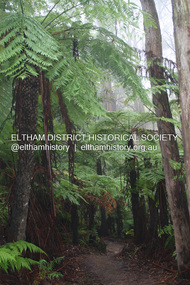
Photograph - Digital Photograph, Alan King, Kinglake National Park, 27 March 2008
... natural environment. Each year many thousands of people use the park’s extensive network of walking tracks amongst the protected plant and animal life as well as camping, cycling and horse riding. The park, along the slopes of the Great Dividing Range, has lookouts revealing magnificent views of the Melbourne skyline, Port Phillip Bay, the Yarra Valley and the You Yangs. ...natural environment. Each year many thousands of people use the park’s extensive network of walking tracks amongst the protected plant and animal life as well as camping, cycling and horse riding. The park, along the slopes of the Great Dividing Range, has lookouts revealing magnificent views of the Melbourne skyline, Port Phillip Bay, the Yarra Valley and the You Yangs. ...Fern gullies around Jehosaphat Gully Covered under National Estate. Published: Nillumbik Now and Then / Marguerite Marshall 2008; photographs Alan King with Marguerite Marshall.; p125 The magnificent Kinglake National Park, fringing Nillumbik’s north, is the largest national park close to Melbourne. Thanks to the vision and hard work of a band of local people, the park was created from what was rapidly becoming degraded land. Seeing a threat to Kinglake’s indigenous flora and fauna, several prominent local people campaigned for a national park, which was established in 1928.1 Since then, the park has grown through donations and acquisitions of land, from around 13,800 acres of land (5585ha) to 22,360 hectares. The Sugarloaf and Everard Blocks – of almost 8000 hectares – stand in Nillumbik and the park extends into Mitchell and Murrundindi Shires and the City of Whittlesea. Mt Everard commemorates William Hugh Everard, State member for Evelyn when the park was established. Before 1928, European settlers had degraded the Kinglake area, which was named after the celebrated English author and lawyer, Alexander William Kinglake. Remains of gold shafts and diggings in the park are reminders of Kinglake’s first settlers, who hoped to strike it rich at the gold diggings. But like other gold fields in this shire, they proved not very lucrative and soon timber cutting replaced mining in importance. However, before long, the accessible timber supply ran out, so in the 1920s agriculture took over – particularly potatoes and berry fruits – which involved large-scale clearing.2 The park’s instigator was retired Melbourne University Professor of Music, William Laver.3 As chair of the Kinglake Progress Association he began negotiations to have crown lands on the southern scarp of the Great Dividing Range reserved as a national park. Even before the park was proclaimed, from 1927, KPA members cut tracks to the major scenic points. Professor Laver was one of several people who gave land for the park, donating around 50 acres (20ha), including the Jehosaphat Gully.4 Laver chaired the park’s first Committee of Management, which raised money to employ a ranger and provide facilities, including tracks and roads for fire protection vehicles, toilets and shelters. The committee charged fees for firewood collection, some grazing of livestock, and visitor entrance, and obtained small State Government and Eltham Shire grants. In 1957 the State Government provided revenue for national parks. Then, in 1975, the State Government took over the management and the Committee of Management became an advisory committee, which disbanded in 1978. Originally, the park covered crown land in the Shires of Eltham and Whittlesea; then Wombelano Falls in Yea and other areas were added. In 1970 the park extended into the Shires of Eltham, Healesville, Whittlesea and Yea.5 Bush fires have been an ongoing problem. In 1939 hundreds of eucalypts and acacias had to be sown around the Jehosaphat Gully to rejuvenate the forest. To manage bushfires, the Committee of Management, then the State Government, worked closely with the Forestry Commission, shire councils and local fire brigades. Early national parks focussed on recreation. But by the 1980s, conservation, education and scientific research became more important, playing a vital role in preserving representative samples of the natural environment. Each year many thousands of people use the park’s extensive network of walking tracks amongst the protected plant and animal life as well as camping, cycling and horse riding. The park, along the slopes of the Great Dividing Range, has lookouts revealing magnificent views of the Melbourne skyline, Port Phillip Bay, the Yarra Valley and the You Yangs. Vegetation in the Masons Falls area includes messmate forest, Austral grass-trees, ferns and Hazel Pomaderris. In spring, orchids, lilies, everlasting daisies, correas, grevillea and heath appear. Around Jehosaphat Gully are wet and dry forest, fern gullies and banksia. Animal life includes wallabies, kangaroos, koalas, echidnas, possums, gliders and bandicoots. Male lyrebirds can be heard mimicking in the Jehosaphat Gully, particularly in the Everard Block in winter.This collection of almost 130 photos about places and people within the Shire of Nillumbik, an urban and rural municipality in Melbourne's north, contributes to an understanding of the history of the Shire. Published in 2008 immediately prior to the Black Saturday bushfires of February 7, 2009, it documents sites that were impacted, and in some cases destroyed by the fires. It includes photographs taken especially for the publication, creating a unique time capsule representing the Shire in the early 21st century. It remains the most recent comprehenesive publication devoted to the Shire's history connecting local residents to the past. nillumbik now and then (marshall-king) collection, kinglake national park, jehosaphat gully -
Port Melbourne Historical & Preservation Society
Booklet, State Government of Victoria, Making the Most of the Bay, 1990
... State Government Victoria Natural Environment - Conservation Making the Most of the Bay - Plan for the protection and development of Port Phillip and Corio Bays, November 1990. ...Making the Most of the Bay - Plan for the protection and development of Port Phillip and Corio Bays, November 1990. An A4 booklet considering environment, land use and settlement, recreation and tourism, coastal and marine industries. Detailed recommedations for specific areas and foreward by Ministers Steve Crabb and Andrew McCutcheon (ref. item 1414, draft version)state government victoria, natural environment - conservation -
Port Melbourne Historical & Preservation Society
Book, Graham Patterson, "Coastal guide to nature and History Port Phillip Bay", 2013
... natural environment - beaches and foreshore...natural environment...conservation...piers and wharves - railway pier...piers and wharves - station pier...piers and wharves - princes pier...coastal...port phillip bay...natural environment - beaches and foreshore natural environment conservation piers and wharves - railway pier piers and wharves - station pier piers and wharves - princes pier coastal port phillip bay centenary bridge beacons robert harper & co ltd liardet family "Coastal guide to nature and History Port Phillip Bay" Book with coloured photograph of rock and coastline on cover. ..."Coastal guide to nature and History Port Phillip Bay" Book with coloured photograph of rock and coastline on cover.natural environment - beaches and foreshore, natural environment, conservation, piers and wharves - railway pier, piers and wharves - station pier, piers and wharves - princes pier, coastal, port phillip bay, centenary bridge, beacons, robert harper & co ltd, liardet family -
Port Melbourne Historical & Preservation Society
Poster - Map showing ancesttral family estates of Melbourne's first people pre European Settlement, Marcus Lee Design, This once as it was - the ancestral family estates of Melbourne's first people, 2016
... Indigenous Australians Natural Environment Arweet DERRMUT Point Ormond St Kilda Yuro Yuroke Bunjil Burrarung River Queensbridge Falls This once as it was - the ancestral family estates of Melbourne's first people. Colour map with text. Pre European settlement. Based on Colonial survey maps of Port Phillip Bay ...This once as it was - the ancestral family estates of Melbourne's first people. Colour map with text. Pre European settlement. Based on Colonial survey maps of Port Phillip Bay region. 1837 and 1864indigenous australians, natural environment, arweet derrmut, point ormond, st kilda, yuro yuroke, bunjil, burrarung river, queensbridge falls -
Port Melbourne Historical & Preservation Society
Book, Making the Most of the Bay, Apr 1989
... State Government Victoria Natural Environment Town Planning 'Making the Most of the Bay'- a draft plan for the protection and development of Port Phillip and Corio Bays, 1989. ...'Making the Most of the Bay'- a draft plan for the protection and development of Port Phillip and Corio Bays, 1989. A draft plan to guide decision making. Introduction by Tom Roper, Minister for Planning and Development. (Refer item 1048, final version)state government victoria, natural environment, town planning -
Port Melbourne Historical & Preservation Society
Film - Video Recording - Digital, Tim Allen, What Lies Beneath Port Phillip Bay, 27 Apr 2021
... Port Phillip Bay...Natural Environment - Beaches and Foreshore...Port Phillip Bay Natural Environment - Beaches and Foreshore Tim ALLEN Digital video recording of PMHPS meeting held on 27 April 2021. ...Digital video recording of PMHPS meeting held on 27 April 2021. We all know Port Phillip Bay – or we think we do. It’s the beach on our back doorstep and our outdoor playground. But the Bay’s natural history, and its underwater values are largely unknown to most. And the Port Phillip Bay of today is very changed from the Bay at the time of white settlement. So, what of its future? Tim ALLEN's talk delves beneath the Bay’s surface veneer, to uncover stories of lost sharks and oyster beds, scallop wars, sewerage, and shipping; a visual potted history of key points in time.port phillip bay, natural environment - beaches and foreshore, tim allen
