
Showing 193 items matching "nature of the air"
-
 Moorabbin Air Museum
Book - Meteorology, Meteorology for Glider Pilots
... ...Nature of the air...Meteorology Pressure & wind Nature of the air Introducing the clouds Frost/fog & smoke Warm & cold fronts Jet streams & pressure changes Depressions Anticyclones Charting the weather Airflow at low levels Sea breezes The tephigram Convection Shower/Thunder & lightning Thermal soaring Lee waves Wave soaring The altimeter Overview of meteorology for glider pilots, circa 1961 Meteorology for Glider Pilots Book Meteorology ...Overview of meteorology for glider pilots, circa 1961non-fictionOverview of meteorology for glider pilots, circa 1961pressure & wind, nature of the air, introducing the clouds, frost/fog & smoke, warm & cold fronts, jet streams & pressure changes, depressions, anticyclones, charting the weather, airflow at low levels, sea breezes, the tephigram, convection, shower/thunder & lightning, thermal soaring, lee waves, wave soaring, the altimeter -
 Marysville & District Historical Society
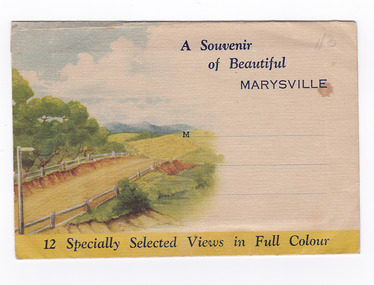
Postcard (item) - Colour photographs, Nucolorvue Productions, A Souvenir of Beautiful Marysville-12 Specially Selected Views in Full Colour, 1950's
... A Souvenir of Beautiful MARYSVILLE 12 Specially Selected Views in Full Colour Marysville, Victoria, Australia Marysville, 60 miles from Melbourne, is one of nature's/ lovely beauty spots. The invigorating mountain air helps the/ visitor to enjoy the many delightful walks amongst the tall/ timber, or through the fern glades. ...These photographs were produced by Nucolorvue Productions in Mentone, Victoria. nicholl's lookout (image 1) eildon weir (image 2) road to lake mountain (image 3) foot of steavenson falls (image 4) steavenson falls (image 5) bush scene near marysville (image 6) bush track marysville (image 7) bridge and chalet and crossways marysville (image 8) log cabin at marysville (image 9) black spur (image 10) taggerty river (image 11) highest known hardwood tree (image 12) marysville victoria nucolorvue productions postcard souvenir A Souvenir of Beautiful MARYSVILLE 12 Specially Selected Views in Full Colour Marysville, Victoria, Australia Marysville, 60 miles from Melbourne, is one of nature's/ lovely beauty spots. The invigorating mountain air helps the/ visitor to enjoy the many delightful walks amongst the tall/ timber, or through the fern glades. ...An envelope of 12 colour photographs of attractions in and around Marysville in Victoria.An envelope of 12 colour photographs of attractions in and around Marysville in Victoria. These photographs were produced by Nucolorvue Productions in Mentone, Victoria.A Souvenir of Beautiful MARYSVILLE 12 Specially Selected Views in Full Colour Marysville, Victoria, Australia Marysville, 60 miles from Melbourne, is one of nature's/ lovely beauty spots. The invigorating mountain air helps the/ visitor to enjoy the many delightful walks amongst the tall/ timber, or through the fern glades. Apart from many excellent walking trips, Marysville district/ offers ample scope for car trips to the nearby Cumberland Forest,/ Buxton, Narbethong, or the Taggerty Valley. Skiers find Lake Mountain an attraction in the winter, whilst/ the hiker finds ample for his needs in the numerous mountain/ areas. Huge Eucalypt trees, revealing their ramrod straightness up/ to 300 feet in height, are a fitting background to the many/ beautiful creeks and waterfalls. PUBLISHED BY NUCOLORVUE PRODUCTIONS, MENTONE, VICTORIA.nicholl's lookout (image 1), eildon weir (image 2), road to lake mountain (image 3), foot of steavenson falls (image 4), steavenson falls (image 5), bush scene near marysville (image 6), bush track marysville (image 7), bridge and chalet and crossways marysville (image 8), log cabin at marysville (image 9), black spur (image 10), taggerty river (image 11), highest known hardwood tree (image 12), marysville, victoria, nucolorvue productions, postcard, souvenir -
 Marysville & District Historical Society
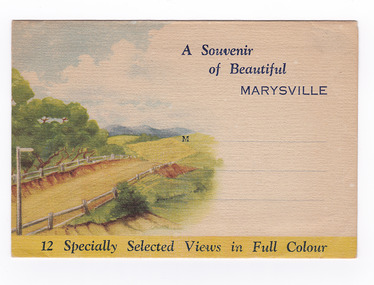
Postcard (item) - Colour photographs, Nucolorvue Productions, A Souvenir of Beautiful Marysville-12 Specially Selected Views in Full Colour, Unknown
... A Souvenir of Beautiful MARYSVILLE 12 Specially Selected Views in Full Colour Marysville, Victoria, Australia Marysville, 60 miles from Melbourne, is one of nature's/ lovely beauty spots. The invigorating mountain air helps the/ visitor to enjoy the many delightful walks amongst the tall/ timber, or through the fern glades. ...These photographs were produced by Nucolorvue Productions in Mentone, Victoria. nicholl's lookout (image 1) eildon weir (image 2) road to lake mountain (image 3) foot of steavenson falls (image 4) steavenson falls (image 5) bush scene near marysville (image 6) bush track marysville (image 7) bridge and chalet and crossways marysville (image 8) log cabin at marysville (image 9) black spur (image 10) taggerty river (image 11) highest known hardwood tree (image 12) marysville victoria nucolorvue productions postcard souvenir A Souvenir of Beautiful MARYSVILLE 12 Specially Selected Views in Full Colour Marysville, Victoria, Australia Marysville, 60 miles from Melbourne, is one of nature's/ lovely beauty spots. The invigorating mountain air helps the/ visitor to enjoy the many delightful walks amongst the tall/ timber, or through the fern glades. ...An envelope of 12 colour photographs of attractions in and around Marysville in Victoria.An envelope of 12 colour photographs of attractions in and around Marysville in Victoria. These photographs were produced by Nucolorvue Productions in Mentone, Victoria.A Souvenir of Beautiful MARYSVILLE 12 Specially Selected Views in Full Colour Marysville, Victoria, Australia Marysville, 60 miles from Melbourne, is one of nature's/ lovely beauty spots. The invigorating mountain air helps the/ visitor to enjoy the many delightful walks amongst the tall/ timber, or through the fern glades. Apart from many excellent walking trips, Marysville district/ offers ample scope for car trips to the nearby Cumberland Forest,/ Buxton, Narbethong, or the Taggerty Valley. Skiers find Lake Mountain an attraction in the winter, whilst/ the hiker finds ample for his needs in the numerous mountain/ areas. Huge Eucalypt trees, revealing their ramrod straightness up/ to 300 feet in height, are a fitting background to the many/ beautiful creeks and waterfalls. PUBLISHED BY NUCOLORVUE PRODUCTIONS, MENTONE, VICTORIA.nicholl's lookout (image 1), eildon weir (image 2), road to lake mountain (image 3), foot of steavenson falls (image 4), steavenson falls (image 5), bush scene near marysville (image 6), bush track marysville (image 7), bridge and chalet and crossways marysville (image 8), log cabin at marysville (image 9), black spur (image 10), taggerty river (image 11), highest known hardwood tree (image 12), marysville, victoria, nucolorvue productions, postcard, souvenir -
 Marysville & District Historical Society
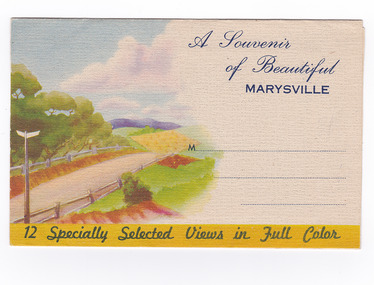
Postcard (item) - Colour photographs, Nucolorvue Productions, A Souvenir of Beautiful Marysville-12 Specially Selected Views in Full Colour, Unknown
... A Souvenir of Beautiful MARYSVILLE 12 Specially Selected Views in Full Colour Marysville, Victoria, Australia Marysville, 60 miles from Melbourne, is one of nature's/ lovely beauty spots. The invigorating mountain air helps the/ visitor to enjoy the many delightful walks amongst the tall/ timber, or through the fern glades. ...These photographs were produced by Nucolorvue Productions in Mentone, Victoria. nicholl's lookout (image 1) eildon weir (image 2) road to lake mountain (image 3) foot of steavenson falls (image 4) steavenson falls (image 5) bush scene near marysville (image 6) bush track marysville (image 7) bridge and chalet and crossways marysville (image 8) log cabin at marysville (image 9) black spur (image 10) taggerty river (image 11) highest known hardwood tree (image 12) marysville victoria nucolorvue productions postcard souvenir A Souvenir of Beautiful MARYSVILLE 12 Specially Selected Views in Full Colour Marysville, Victoria, Australia Marysville, 60 miles from Melbourne, is one of nature's/ lovely beauty spots. The invigorating mountain air helps the/ visitor to enjoy the many delightful walks amongst the tall/ timber, or through the fern glades. ...An envelope of 12 colour photographs of attractions in and around Marysville in Victoria.An envelope of 12 colour photographs of attractions in and around Marysville in Victoria. These photographs were produced by Nucolorvue Productions in Mentone, Victoria.A Souvenir of Beautiful MARYSVILLE 12 Specially Selected Views in Full Colour Marysville, Victoria, Australia Marysville, 60 miles from Melbourne, is one of nature's/ lovely beauty spots. The invigorating mountain air helps the/ visitor to enjoy the many delightful walks amongst the tall/ timber, or through the fern glades. Apart from many excellent walking trips, Marysville district/ offers ample scope for car trips to the nearby Cumberland Forest,/ Buxton, Narbethong, or the Taggerty Valley. Skiers find Lake Mountain an attraction in the winter, whilst/ the hiker finds ample for his needs in the numerous mountain/ areas. Huge Eucalypt trees, revealing their ramrod straightness up/ to 300 feet in height, are a fitting background to the many/ beautiful creeks and waterfalls. PUBLISHED BY NUCOLORVUE PRODUCTIONS, MENTONE, VICTORIA.nicholl's lookout (image 1), eildon weir (image 2), road to lake mountain (image 3), foot of steavenson falls (image 4), steavenson falls (image 5), bush scene near marysville (image 6), bush track marysville (image 7), bridge and chalet and crossways marysville (image 8), log cabin at marysville (image 9), black spur (image 10), taggerty river (image 11), highest known hardwood tree (image 12), marysville, victoria, nucolorvue productions, postcard, souvenir -
 Marysville & District Historical Society
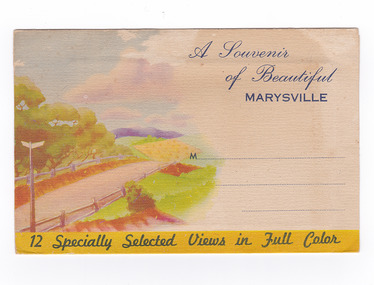
Postcard (item) - Colour photographs, Nucolorvue Productions, A Souvenir of Beautiful Marysville-12 Specially Selected Views in Full Colour, Unknown
... A Souvenir of Beautiful MARYSVILLE 12 Specially Selected Views in Full Colour Marysville, Victoria, Australia Marysville, 60 miles from Melbourne, is one of nature's/ lovely beauty spots. The invigorating mountain air helps the/ visitor to enjoy the many delightful walks amongst the tall/ timber, or through the fern glades. ...These photographs were produced by Nucolorvue Productions in Mentone, Victoria. nicholl's lookout (image 1) eildon weir (image 2) road to lake mountain (image 3) foot of steavenson falls (image 4) steavenson falls (image 5) bush scene near marysville (image 6) bush track marysville (image 7) bridge and chalet and crossways marysville (image 8) log cabin at marysville (image 9) black spur (image 10) taggerty river (image 11) highest known hardwood tree (image 12) marysville victoria nucolorvue productions postcard souvenir A Souvenir of Beautiful MARYSVILLE 12 Specially Selected Views in Full Colour Marysville, Victoria, Australia Marysville, 60 miles from Melbourne, is one of nature's/ lovely beauty spots. The invigorating mountain air helps the/ visitor to enjoy the many delightful walks amongst the tall/ timber, or through the fern glades. ...An envelope of 12 colour photographs of attractions in and around Marysville in Victoria.An envelope of 12 colour photographs of attractions in and around Marysville in Victoria. These photographs were produced by Nucolorvue Productions in Mentone, Victoria.A Souvenir of Beautiful MARYSVILLE 12 Specially Selected Views in Full Colour Marysville, Victoria, Australia Marysville, 60 miles from Melbourne, is one of nature's/ lovely beauty spots. The invigorating mountain air helps the/ visitor to enjoy the many delightful walks amongst the tall/ timber, or through the fern glades. Apart from many excellent walking trips, Marysville district/ offers ample scope for car trips to the nearby Cumberland Forest,/ Buxton, Narbethong, or the Taggerty Valley. Skiers find Lake Mountain an attraction in the winter, whilst/ the hiker finds ample for his needs in the numerous mountain/ areas. Huge Eucalypt trees, revealing their ramrod straightness up/ to 300 feet in height, are a fitting background to the many/ beautiful creeks and waterfalls. PUBLISHED BY NUCOLORVUE PRODUCTIONS, MENTONE, VICTORIA.nicholl's lookout (image 1), eildon weir (image 2), road to lake mountain (image 3), foot of steavenson falls (image 4), steavenson falls (image 5), bush scene near marysville (image 6), bush track marysville (image 7), bridge and chalet and crossways marysville (image 8), log cabin at marysville (image 9), black spur (image 10), taggerty river (image 11), highest known hardwood tree (image 12), marysville, victoria, nucolorvue productions, postcard, souvenir -
 Lara RSL Sub Branch
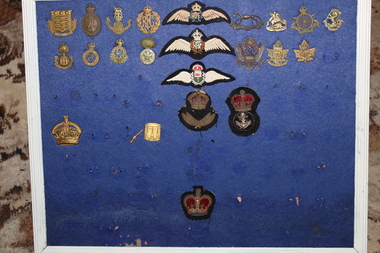
framed embroaded Patches & Brass military Medals, Blue material background Framed Patches & Medals
... Some are rare in nature 6 cloth patches raised and embossed 18 Military brass metal Cap Badges vary in type and country and conflict. none - no labels Blue material - background, White timber frame surround with 18 metal military cap badges and 6 military cloth patches., Row 1 British Army Cap Badge - Royal Army Ordnance Corps. F1 Household Life guards, Cap Badge, Center G.R. below V. Oval with motto on outside Banner. Royal Lancashire Cap Badge.World War 1 R.F.C. - Royal Flying Corps Cap Badge. surrounded by Laurel Wreath with Crown on top. Circ. 1895 Royal Australian Air ...Some are rare in natureBlue material - background, White timber frame surround with 18 metal military cap badges and 6 military cloth patches., Row 1 British Army Cap Badge - Royal Army Ordnance Corps. F1 Household Life guards, Cap Badge, Center G.R. below V. Oval with motto on outside Banner. Royal Lancashire Cap Badge.World War 1 R.F.C. - Royal Flying Corps Cap Badge. surrounded by Laurel Wreath with Crown on top. Circ. 1895 Royal Australian Air Force pilot's wings. The brevet has white cotton embroidered wings, a king's crown, and the letters 'R.A.A.F.' within a pale blue embroidered laurel wreath. Horse Badge - Small Brass - British Army Military. Saint George slaying he dragon - Small Brass Badge. Army Cyclist Corps - World War 1 Cap Badge. Duke of Wellington's Regimental Cap Badge. Row 2 Royal Inniskilling Fusiliers Corps 1895 = Shoulder Title - Officer's. Royal Horse Guards Brass Army Cap Badge. Brass Badge - Queen; Mary's Own - 18th Hussars. Vintage Royal Welsh Fusiliers Cap Badge. R.A. F. Service Dress Wings with King's Crown. American Eagle Brass - Army Officers Cap Badge. 45th Overseas Battalion - Canada Expeditionary Forces. 48th Battlion, Victoria, Canada - British Columbia Brass Cap Badge. World War 1. Row 3. Center World War 11 - Rhodesian Air Force Cloth Pilots wings . row 4 Center - Embossed Woven Crown with metal gold thread woven feathers under. Right - Embossed Woven Crown with Brass Gold Anchor below.- Navy Petty Officer Cap Badge. Row 5. Large Metal Gold color Crown - British Army Warrant Officers Badge. Small Brass Single Rifle with ACT on the Butt of the rifle. Brass Badge - Drummers Proficiency., Last Row - center Embossed woven Crown Red Felt on Blue Back.none - no labels6 cloth patches raised and embossed, 18 military brass metal cap badges vary in type and country and conflict. -
 Bendigo Military Museum
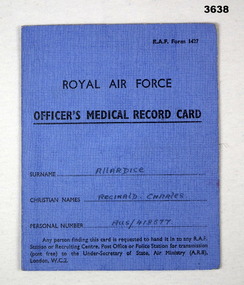
Work on paper - CARD, MEDICAL RECORD, Last entry 15.2.1945
... Officers medical record card RAF form I 417, blue folded Royal Air Force re RC ALLARDICE No Aus/418577. Inside written in blue pen details re nature and number of vaccinations....Refer Cat No 3627.5 for his service history. vaccinations medical officer On front “ALLARDICE REGINALD CHARLES AUS/418577” Officers medical record card RAF form I 417, blue folded Royal Air Force re RC ALLARDICE No Aus/418577. Inside written in blue pen details re nature and number of vaccinations. ...Item relates to Reginald Charles ALLARDICE NO 418577 RAAF. Refer Cat No 3627.5 for his service history.Officers medical record card RAF form I 417, blue folded Royal Air Force re RC ALLARDICE No Aus/418577. Inside written in blue pen details re nature and number of vaccinations.On front “ALLARDICE REGINALD CHARLES AUS/418577”vaccinations, medical, officer -
 Monbulk RSL Sub Branch
Book, Penguin, Green armour, 1992
... nature and man against man... Green Armour is the courageous story of fighting men in the swamps and jungles of New Guinea and the Solomon Islands. From the earliest days of forlorn hopes to the large-scale, well-organised attacks by land, sea, and air this terrifying first-hand account is distilled from the bloody, despairing experiences of the Australian and American forces in the early days of the Second World War. p.287. ...A story of the jungle and the sea, of man against nature and man against man... Green Armour is the courageous story of fighting men in the swamps and jungles of New Guinea and the Solomon Islands. From the earliest days of forlorn hopes to the large-scale, well-organised attacks by land, sea, and air this terrifying first-hand account is distilled from the bloody, despairing experiences of the Australian and American forces in the early days of the Second World War.p.287.non-fictionA story of the jungle and the sea, of man against nature and man against man... Green Armour is the courageous story of fighting men in the swamps and jungles of New Guinea and the Solomon Islands. From the earliest days of forlorn hopes to the large-scale, well-organised attacks by land, sea, and air this terrifying first-hand account is distilled from the bloody, despairing experiences of the Australian and American forces in the early days of the Second World War.world war 1939 – 1945 – campaigns – kokoda, world war 1939 – 1945 – campaigns – solomon islands -
 Bendigo Historical Society Inc.
Book - GOLDEN SQUARE LAUREL STREET P.S. COLLECTION: NATURE NOTES
... Nature. Book also includes the loose printed notes pasted to orange card titled Air, Evaporation and Smells and Growing Chrysalis. ...Nature. Book also includes the loose printed notes pasted to orange card titled Air, Evaporation and Smells and Growing Chrysalis. ...Shiny black covered exercise book with hand written notes and ink illustrations, titled Nature Notes. Initials in the front J.C. 9/10/40. Written index in the front. Items mentioned are: The Dahlia, The peach, The Pear, The Cosmos, The Bathurst Burr, Autumn Leaves, Jonquil, Roots, The Wattle, Orange, An Insect, Mantis, Magpie, Mosquito, Termites, Jackass, Spider, Earth-worm, Violet, Cape-weed, Iceland Poppy, Beaks of Birds, Feet of Birds, The Snail, The Rose, Emperor Gum Moth, The Bee and the Chrysanthemum. From Page 101 on Observations in Nature. Book also includes the loose printed notes pasted to orange card titled Air, Evaporation and Smells and Growing Chrysalis. Some Nature Notes in the form of a diary at the back of the book.education, primary, golden square laurel st p.s., golden square laurel street p.s. collection - nature notes, observations in nature -
 Chiltern Athenaeum Trust
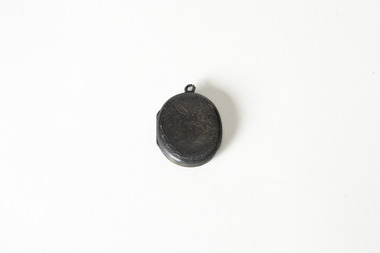
Accessory - Locket
... The tangibility and personal nature of hair made it a common keepsake, especially in cases of high mortality or where family members were separated by oceans without the possibility of air travel. ...The tangibility and personal nature of hair made it a common keepsake, especially in cases of high mortality or where family members were separated by oceans without the possibility of air travel. ...This locket is from the museum's collection of objects relating to Wilfred Clarence Busse. Busse was born in Chiltern in 1898, completed his secondary education as Wesley College in the early twentieth century, and went on to study law at the University of Melbourne. As a lawyer, he spent time in the room of Supreme Court Judge Bernard Cussen (1859-1933). Judge Cussen was popular, known for being just and precise and for completing through statutory consolidation in his spare time. As well as working as a lawyer, Busse wrote historical fiction inspired by his life in Chiltern, these included The Blue Beyond; A Romance of the Early Days in South Eastern Australia" and "The Golden Plague: A Romance of the Early Fifties," which won the T.E.Role gold medal for the best historical novel in 1930 and went on to become a best seller. He was a member of the Chiltern Athenaeum until his death in 1960. The placing of hair in lockets was a common 19th and early 20th century, with Queen Victoria wearing a locket containing a piece of Albert’s hair after his death in 1861. Wearing a loved one’s hair or giving a lock of your hair to someone for wearing, could be a gesture of love and friendship, or of mourning. The tangibility and personal nature of hair made it a common keepsake, especially in cases of high mortality or where family members were separated by oceans without the possibility of air travel. The intention and origin of this locket is currently unknown, but it is likely it was a keepsake of love or mourning, either way, a emotional object. This object artistically significant as an example of late 19th/early 20th century jewellery, and social and spiritual sigifiicance as locket containing a piece of hair, which, regardless of exact intention, imbues it with a strong emotional aura. A small dark metal locket with a decorative leaf pattern on the exterior. The locket contains a small amount of reddish hair, supposedly from a loved one or family member of the original owner, and a degraded image that may have ocne represented a person. busse, w.c. busse, wilfred clarence busse, chiltern, chiltern athenaeum, "the blue beyond, a romance of the early days in south eastern australia”, "the golden plague: a romance of the early fifties.", "the golden plague”, wesley college, university of melbourne, sir leo finn bernard cussen, supreme court of victoria, locket, hair locket, hair jewellery, jewellery -
 Ballarat Tramway Museum
Print, Geoff Grant, 19/06/1955 12:00:00 AM
... Photo shows nature of track construction at this portion of the future East Brunswick, Blyth St. line, an air compressor and the wood/metal barriers to protect roadworks in use at the time. ...Photo shows nature of track construction at this portion of the future East Brunswick, Blyth St. line, an air compressor and the wood/metal barriers to protect roadworks in use at the time. ...Negative No. N326 and black and white print made by a laser printer (stored in folder ) of view looking along the new track in Nicholson St. Fitzroy, with W6 988 in background by the Exhibition Crossover. Photo shows nature of track construction at this portion of the future East Brunswick, Blyth St. line, an air compressor and the wood/metal barriers to protect roadworks in use at the time. Buildings along the east side of Nicholson St. in background, cable winding house at Gertrude St. can just be seen. Date of photo 19/6/1955. Negative scanned hi res and imaged updated 21/5/2020.trams, tramways, melbourne, nicholson st., east brunswick, track construction., tram w6 988 -
Ballarat Tramway Museum
Administrative Record - Meeting Minutes, State Electricity Commission of Victoria (SECV), "Tramway Maintenance Minutes of Conference - May 1 and May 2, 1952", 1952
... Topics covered - tyres and wheel centres, truck maintenance, suspension bearings, bearing metal (white metal), motor armatures, carbon brushes, air receivers, overhead equipment, tracks, car renovation - painting, gold lining, roof, floor treatment and covering, trolley wheels, purchase requisitions, spare parts, supplies, brake shoes, timber, castings, tramway drawings, patterns and a summary of action. Also includes notes on tramway statistics, employee's duties, one man operation, track drains, interchange of ideas and experiences and discussions of a general nature...Topics covered - tyres and wheel centres, truck maintenance, suspension bearings, bearing metal (white metal), motor armatures, carbon brushes, air receivers, overhead equipment, tracks, car renovation - painting, gold lining, roof, floor treatment and covering, trolley wheels, purchase requisitions, spare parts, supplies, brake shoes, timber, castings, tramway drawings, patterns and a summary of action. Also includes notes on tramway statistics, employee's duties, one man operation, track drains, interchange of ideas and experiences and discussions of a general nature ...Document titled "Tramway Maintenance Minutes of Conference - May 1 and May 2", attended by SEC Head Office Officers, representatives from Bendigo and Geelong. Topics covered - tyres and wheel centres, truck maintenance, suspension bearings, bearing metal (white metal), motor armatures, carbon brushes, air receivers, overhead equipment, tracks, car renovation - painting, gold lining, roof, floor treatment and covering, trolley wheels, purchase requisitions, spare parts, supplies, brake shoes, timber, castings, tramway drawings, patterns and a summary of action. Also includes notes on tramway statistics, employee's duties, one man operation, track drains, interchange of ideas and experiences and discussions of a general nature and notes on scrapping trams in badly damaged condition. Each item where relevant looks back at the actions from the previous conference. Has a list of attendees.Yields information and demonstrates SEC Meeting minutes about discussions between the three Provincial operators about tramcars and operations.Minutes - 53 duplicated foolscap sheets pinned with a folding clip in top left hand corner.trams, tramways, minutes, sec, geelong, ballarat, bendigo, tramcar equipment, maintenance, trackwork, overhead, painting, trolley wheels, brakes, motors, one man trams, scrapped trams, employees, rules -
 Nillumbik Shire Council
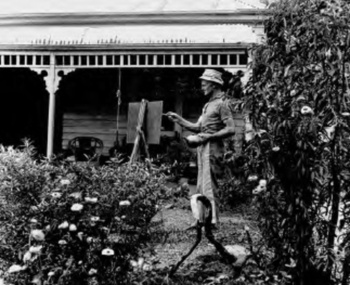
Photograph: Sue FORD (b.1943-d.2009), Sue Ford, Neil Douglas Research 1964, Photographed 1964; printed 2015
... nature and the beauty and fragility of the bush are constant themes that often run parallel in his ceramic works and paintings. Sue Ford and Neil Douglas were artists of national significance who both lived in the local Nillumbik area in the mid to late twentieth century. They were part of a community of artists integral in forging a dynamic artistic spirit, heavily inspired by the region's landscape and its people. ford, douglas, silver gelatin photograph, bend of isles, research, kangaroo ground, garden, environment N/A Black and white silver gelatin photographic print of Neil Douglas plein-air painting in his rose garden at Research. ...Sue Ford (1943-2009) was an important practitioner in the wave of 1970's Australian feminist photographers. Ford regularly took intimate and candid pictures of artist friends, such as 'Neil Douglas Research 1964', documenting a time in Eltham when Montsalvat and Dunmoochin played an important part in the early attraction of artists to the Nillumbik area. Artist, conservationist and activist Neil Douglas (1911-2003) is best known for his garden at the Bend of Islands, Kangaroo Ground where he formed a co-operative for like-minded people who wished to live in harmony with the bush and wildlife. His love of nature and the beauty and fragility of the bush are constant themes that often run parallel in his ceramic works and paintings.Sue Ford and Neil Douglas were artists of national significance who both lived in the local Nillumbik area in the mid to late twentieth century. They were part of a community of artists integral in forging a dynamic artistic spirit, heavily inspired by the region's landscape and its people. Black and white silver gelatin photographic print of Neil Douglas plein-air painting in his rose garden at Research. Ed.1/3N/Aford, douglas, silver gelatin photograph, bend of isles, research, kangaroo ground, garden, environment -
 Sunshine and District Historical Society Incorporated
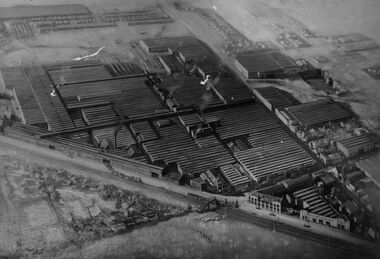
Photograph - Aerial view of HV McKay Massey Harris Factory, 1942
... Aerial view of HV McKay Massey Harris Factory building administration office and Sunshine including Sunshine Gardens and gardeners residence This photograph shows many other points of historical nature Top Left 1 Storage shed stacks of timber air drying 2 Old clock tower and new factory office block 3 Main or head office block opposite clock tower Then along Devonshire Road Adjacent to Head Office new drawing office on 1st floor over new workshop for experimental department These two later amalgamated and formed what became known as The Engineering Department Right Centre 4 on both sides of Devonshire Road 5 State Savings Bank before rebuilding 6 Blair Athol guesthouse with National Bank on ground floor opposite State Savings Bank 7 Along Hampshire away from Blair Athol some houses then McKays laboratory Duplicates department Service Street Morgue Steel Storage and Pickling Annex and Roberts Quarry and some houses in background top right Top Left to Right 8 In front of timber stacks Stony Creek winds through factory site to dam fire fighting before running under Hampshire Road in front of Annexe and Quarry across Service Street Creek was diverted through a channel and tunnel not shown Also Railway lines to Bendigo and Mildura show McKays railway engine hauling trucks from factory...McKay Massey Harris Sunshine Devonshire Road Aerial view of HV McKay Massey Harris Factory building administration office and Sunshine including Sunshine Gardens and gardeners residence This photograph shows many other points of historical nature Top Left 1 Storage shed stacks of timber air drying 2 Old clock tower and new factory office block 3 Main or head office block opposite clock tower Then along Devonshire Road Adjacent to Head Office new drawing office on 1st floor over new workshop for experimental department These two later amalgamated and formed what became known as The Engineering Department Right Centre 4 on both sides of Devonshire Road 5 State Savings Bank before rebuilding 6 Blair Athol guesthouse with National Bank on ground floor opposite State Savings Bank 7 Along Hampshire away from Blair Athol some houses then McKays laboratory Duplicates department Service Street Morgue Steel Storage and Pickling Annex and Roberts Quarry and some houses in background top right Top Left to Right 8 In front of timber stacks Stony Creek winds through factory site to dam fire fighting before running under Hampshire Road in front of Annexe and Quarry across Service Street Creek was diverted through a channel and tunnel not shown Also Railway lines to Bendigo and Mildura show McKays railway engine hauling trucks from factory Aerial view of HV McKay Massey Harris Factory Photograph Aerial view of HV McKay Massey Harris Factory ...Aerial view of HV McKay Massey Harris Factory building administration office and Sunshine including Sunshine Gardens and gardeners residence This photograph shows many other points of historical nature Top Left 1 Storage shed stacks of timber air drying 2 Old clock tower and new factory office block 3 Main or head office block opposite clock tower Then along Devonshire Road Adjacent to Head Office new drawing office on 1st floor over new workshop for experimental department These two later amalgamated and formed what became known as The Engineering Department Right Centre 4 on both sides of Devonshire Road 5 State Savings Bank before rebuilding 6 Blair Athol guesthouse with National Bank on ground floor opposite State Savings Bank 7 Along Hampshire away from Blair Athol some houses then McKays laboratory Duplicates department Service Street Morgue Steel Storage and Pickling Annex and Roberts Quarry and some houses in background top right Top Left to Right 8 In front of timber stacks Stony Creek winds through factory site to dam fire fighting before running under Hampshire Road in front of Annexe and Quarry across Service Street Creek was diverted through a channel and tunnel not shown Also Railway lines to Bendigo and Mildura show McKays railway engine hauling trucks from factoryh.v. mckay massey harris, sunshine, devonshire road -
 Hume City Civic Collection
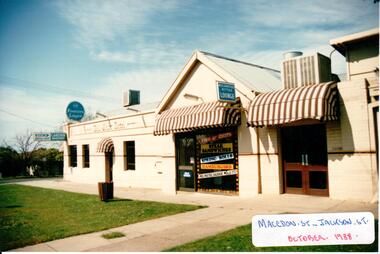
Photograph, 1/10/1988
... A footpath and grassed nature strip is outside the building. 3 blue and white brewery signs are along the side of the building and 2 air conditioning units are on the roof....A footpath and grassed nature strip is outside the building. 3 blue and white brewery signs are along the side of the building and 2 air conditioning units are on the roof. ...The Ball Court Hotel was built in the late 1870's by John Cahill. It remained with the Cahill family until World War 2. The Lupson family were the hoteliers for 20 years after WW2 and in 1973 the McPhersons rebuilt the interior and added air conditioning to the building. The Ball Court Hotel is the only surviving hotel from Sunbury's early settlement.A coloured photograph of the side view along Macedon Street of the Ball Court Hotel showing the public bar in the original building, the Take-away area and the bistro. There are three windows and a door in the original building. The take-away section has a shop front facade and the bistro entrance has two double glass doors. All doorways are covered with a cantilever brown and white canvas awning. A footpath and grassed nature strip is outside the building. 3 blue and white brewery signs are along the side of the building and 2 air conditioning units are on the roof.In Gothic lettering 'BALL COURT HOTEL'hotels, cahill, john, mcpherson, mr and mrs, lupson, fred, ball court hotel, george evans collection -
 Ararat Gallery TAMA
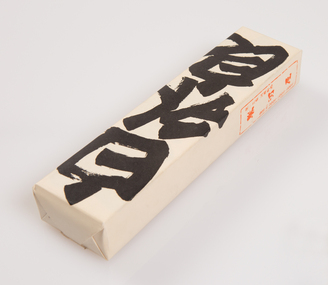
Shiro Uiro, c. 1900s
... air that greatly moves the modern viewer. They are whispered evidence of the Japanese ability to create beauty from the simplest products of nature. ...air that greatly moves the modern viewer. They are whispered evidence of the Japanese ability to create beauty from the simplest products of nature. ...‘The Art of the Japanese Package’ was an exhibition that toured to 10 Australian and 11 New Zealand public galleries in 1979 and 1980. The touring exhibition comprised 221 objects of traditional Japanese packaging which extended from ceramics, wood and paper to woven fibre containers. At the conclusion of the tour, The Japan Foundation and the Crafts Board of the Australia Council donated the vast majority of the exhibition to the Ararat Gallery for its permanent collection. Combining the natural qualities of bamboo, paper and straw with delicate craftsmanship, these unique objects express Japanese aesthetics as applied through fibre crafts. In Japan, the qualities and traits of natural materials are exploited rather than hidden. The texture of straw, the septa of bamboo are not concealed but lovingly incorporated into the whole. In 1979 Hideyuki Oka, curator of ‘The Art of the Japanese Package’ wrote: “In no way self-conscious or assertive, these wrappings have an artless and obedient air that greatly moves the modern viewer. They are whispered evidence of the Japanese ability to create beauty from the simplest products of nature. They also teach us that wisdom and feeling are especially important in packaging because these qualities, or the lack of them, are almost immediately apparent. What is the use of a package if it shows no feeling?” The descriptions of the featured objects were written by Hideyuki Oka, curator of ‘The Art of the Japanese Package’, 1979.Gift of the Japan-Australia Foundation and the Crafts Board of the Australia Council, 1981Another Kyoto confection, a kind of sweetened rice paste, is simply but strikingly wrapped in a package marked with its name (uiro) in vigorously written characters. Simplicity could hardly be carried further, but, as seen in this ensemble of three separate packages, the effect is altogether engaging. - Professor Hideyuki Oka, curator.japanese art, japanese packaging, tsutsumi, gift giving -
 Ararat Gallery TAMA
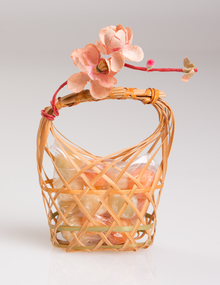
Sekku no Iwaimono, c. 1900s
... air that greatly moves the modern viewer. They are whispered evidence of the Japanese ability to create beauty from the simplest products of nature. ...air that greatly moves the modern viewer. They are whispered evidence of the Japanese ability to create beauty from the simplest products of nature. ...‘The Art of the Japanese Package’ was an exhibition that toured to 10 Australian and 11 New Zealand public galleries in 1979 and 1980. The touring exhibition comprised 221 objects of traditional Japanese packaging which extended from ceramics, wood and paper to woven fibre containers. At the conclusion of the tour, The Japan Foundation and the Crafts Board of the Australia Council donated the vast majority of the exhibition to the Ararat Gallery for its permanent collection. Combining the natural qualities of bamboo, paper and straw with delicate craftsmanship, these unique objects express Japanese aesthetics as applied through fibre crafts. In Japan, the qualities and traits of natural materials are exploited rather than hidden. The texture of straw, the septa of bamboo are not concealed but lovingly incorporated into the whole. In 1979 Hideyuki Oka, curator of ‘The Art of the Japanese Package’ wrote: “In no way self-conscious or assertive, these wrappings have an artless and obedient air that greatly moves the modern viewer. They are whispered evidence of the Japanese ability to create beauty from the simplest products of nature. They also teach us that wisdom and feeling are especially important in packaging because these qualities, or the lack of them, are almost immediately apparent. What is the use of a package if it shows no feeling?” The descriptions of the featured objects were written by Hideyuki Oka, curator of ‘The Art of the Japanese Package’, 1979.Gift of the Japan-Australia Foundation and the Crafts Board of the Australia Council, 1981japanese art, japanese packaging, tsutsumi, gift giving -
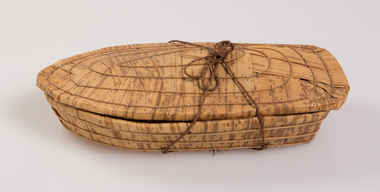 Ararat Gallery TAMA
Container for pastries, c. 1900s
... air that greatly moves the modern viewer. They are whispered evidence of the Japanese ability to create beauty from the simplest products of nature. ...air that greatly moves the modern viewer. They are whispered evidence of the Japanese ability to create beauty from the simplest products of nature. ...‘The Art of the Japanese Package’ was an exhibition that toured to 10 Australian and 11 New Zealand public galleries in 1979 and 1980. The touring exhibition comprised 221 objects of traditional Japanese packaging which extended from ceramics, wood and paper to woven fibre containers. At the conclusion of the tour, The Japan Foundation and the Crafts Board of the Australia Council donated the vast majority of the exhibition to the Ararat Gallery for its permanent collection. Combining the natural qualities of bamboo, paper and straw with delicate craftsmanship, these unique objects express Japanese aesthetics as applied through fibre crafts. In Japan, the qualities and traits of natural materials are exploited rather than hidden. The texture of straw, the septa of bamboo are not concealed but lovingly incorporated into the whole. In 1979 Hideyuki Oka, curator of ‘The Art of the Japanese Package’ wrote: “In no way self-conscious or assertive, these wrappings have an artless and obedient air that greatly moves the modern viewer. They are whispered evidence of the Japanese ability to create beauty from the simplest products of nature. They also teach us that wisdom and feeling are especially important in packaging because these qualities, or the lack of them, are almost immediately apparent. What is the use of a package if it shows no feeling?” The descriptions of the featured objects were written by Hideyuki Oka, curator of ‘The Art of the Japanese Package’, 1979.Gift of the Japan-Australia Foundation and the Crafts Board of the Australia Council, 1981japanese art, japanese packaging, tsutsumi, gift giving -
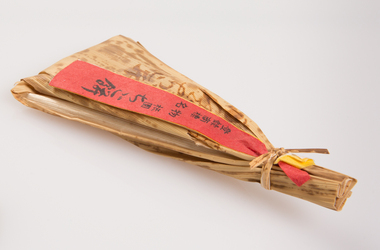 Ararat Gallery TAMA
Gion Chigo Mochi, c. 1900s
... air that greatly moves the modern viewer. They are whispered evidence of the Japanese ability to create beauty from the simplest products of nature. ...air that greatly moves the modern viewer. They are whispered evidence of the Japanese ability to create beauty from the simplest products of nature. ...‘The Art of the Japanese Package’ was an exhibition that toured to 10 Australian and 11 New Zealand public galleries in 1979 and 1980. The touring exhibition comprised 221 objects of traditional Japanese packaging which extended from ceramics, wood and paper to woven fibre containers. At the conclusion of the tour, The Japan Foundation and the Crafts Board of the Australia Council donated the vast majority of the exhibition to the Ararat Gallery for its permanent collection. Combining the natural qualities of bamboo, paper and straw with delicate craftsmanship, these unique objects express Japanese aesthetics as applied through fibre crafts. In Japan, the qualities and traits of natural materials are exploited rather than hidden. The texture of straw, the septa of bamboo are not concealed but lovingly incorporated into the whole. In 1979 Hideyuki Oka, curator of ‘The Art of the Japanese Package’ wrote: “In no way self-conscious or assertive, these wrappings have an artless and obedient air that greatly moves the modern viewer. They are whispered evidence of the Japanese ability to create beauty from the simplest products of nature. They also teach us that wisdom and feeling are especially important in packaging because these qualities, or the lack of them, are almost immediately apparent. What is the use of a package if it shows no feeling?” The descriptions of the featured objects were written by Hideyuki Oka, curator of ‘The Art of the Japanese Package’, 1979. Gift of the Japan-Australia Foundation and the Crafts Board of the Australia Council, 1981An elegant wooden box, fashioned in the style of boxes used for gifts to the emperor some eight or nine centuries ago, is filled with a Kyoto confection called Gion Chigo Mochi. The Gion is one of Kyoto's entertainment districts, chigo are children dressed in ceremonial Buddhist costume for one of the city's numerous festivals, and mochi are cakes of steamed and pounded rice. The name of the confection derives from the style of the bamboo-sheath wrapping, which suggests the figure of a chigo. - Professor Hideyuki Oka, curator.japanese art, japanese packaging, tsutsumi, gift giving -
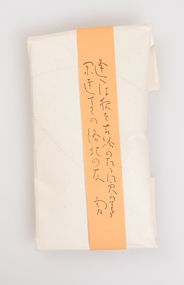 Ararat Gallery TAMA
Evening Moon confection, c. 1900s
... air that greatly moves the modern viewer. They are whispered evidence of the Japanese ability to create beauty from the simplest products of nature. ...air that greatly moves the modern viewer. They are whispered evidence of the Japanese ability to create beauty from the simplest products of nature. ...‘The Art of the Japanese Package’ was an exhibition that toured to 10 Australian and 11 New Zealand public galleries in 1979 and 1980. The touring exhibition comprised 221 objects of traditional Japanese packaging which extended from ceramics, wood and paper to woven fibre containers. At the conclusion of the tour, The Japan Foundation and the Crafts Board of the Australia Council donated the vast majority of the exhibition to the Ararat Gallery for its permanent collection. Combining the natural qualities of bamboo, paper and straw with delicate craftsmanship, these unique objects express Japanese aesthetics as applied through fibre crafts. In Japan, the qualities and traits of natural materials are exploited rather than hidden. The texture of straw, the septa of bamboo are not concealed but lovingly incorporated into the whole. In 1979 Hideyuki Oka, curator of ‘The Art of the Japanese Package’ wrote: “In no way self-conscious or assertive, these wrappings have an artless and obedient air that greatly moves the modern viewer. They are whispered evidence of the Japanese ability to create beauty from the simplest products of nature. They also teach us that wisdom and feeling are especially important in packaging because these qualities, or the lack of them, are almost immediately apparent. What is the use of a package if it shows no feeling?” The descriptions of the featured objects were written by Hideyuki Oka, curator of ‘The Art of the Japanese Package’, 1979.Gift of the Japan-Australia Foundation and the Crafts Board of the Australia Council, 1981japanese art, japanese packaging, tsutsumi, gift giving -
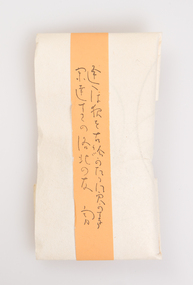 Ararat Gallery TAMA
Evening Moon confection, c. 1900s
... air that greatly moves the modern viewer. They are whispered evidence of the Japanese ability to create beauty from the simplest products of nature. ...air that greatly moves the modern viewer. They are whispered evidence of the Japanese ability to create beauty from the simplest products of nature. ...‘The Art of the Japanese Package’ was an exhibition that toured to 10 Australian and 11 New Zealand public galleries in 1979 and 1980. The touring exhibition comprised 221 objects of traditional Japanese packaging which extended from ceramics, wood and paper to woven fibre containers. At the conclusion of the tour, The Japan Foundation and the Crafts Board of the Australia Council donated the vast majority of the exhibition to the Ararat Gallery for its permanent collection. Combining the natural qualities of bamboo, paper and straw with delicate craftsmanship, these unique objects express Japanese aesthetics as applied through fibre crafts. In Japan, the qualities and traits of natural materials are exploited rather than hidden. The texture of straw, the septa of bamboo are not concealed but lovingly incorporated into the whole. In 1979 Hideyuki Oka, curator of ‘The Art of the Japanese Package’ wrote: “In no way self-conscious or assertive, these wrappings have an artless and obedient air that greatly moves the modern viewer. They are whispered evidence of the Japanese ability to create beauty from the simplest products of nature. They also teach us that wisdom and feeling are especially important in packaging because these qualities, or the lack of them, are almost immediately apparent. What is the use of a package if it shows no feeling?” The descriptions of the featured objects were written by Hideyuki Oka, curator of ‘The Art of the Japanese Package’, 1979.Gift of the Japan-Australia Foundation and the Crafts Board of the Australia Council, 1981japanese art, japanese packaging, tsutsumi, gift giving -
 Ararat Gallery TAMA
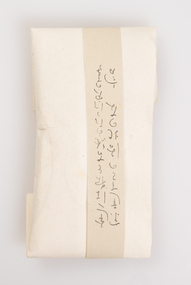
Evening Moon confection, c. 1900s
... air that greatly moves the modern viewer. They are whispered evidence of the Japanese ability to create beauty from the simplest products of nature. ...air that greatly moves the modern viewer. They are whispered evidence of the Japanese ability to create beauty from the simplest products of nature. ...‘The Art of the Japanese Package’ was an exhibition that toured to 10 Australian and 11 New Zealand public galleries in 1979 and 1980. The touring exhibition comprised 221 objects of traditional Japanese packaging which extended from ceramics, wood and paper to woven fibre containers. At the conclusion of the tour, The Japan Foundation and the Crafts Board of the Australia Council donated the vast majority of the exhibition to the Ararat Gallery for its permanent collection. Combining the natural qualities of bamboo, paper and straw with delicate craftsmanship, these unique objects express Japanese aesthetics as applied through fibre crafts. In Japan, the qualities and traits of natural materials are exploited rather than hidden. The texture of straw, the septa of bamboo are not concealed but lovingly incorporated into the whole. In 1979 Hideyuki Oka, curator of ‘The Art of the Japanese Package’ wrote: “In no way self-conscious or assertive, these wrappings have an artless and obedient air that greatly moves the modern viewer. They are whispered evidence of the Japanese ability to create beauty from the simplest products of nature. They also teach us that wisdom and feeling are especially important in packaging because these qualities, or the lack of them, are almost immediately apparent. What is the use of a package if it shows no feeling?” The descriptions of the featured objects were written by Hideyuki Oka, curator of ‘The Art of the Japanese Package’, 1979.Gift of the Japan-Australia Foundation and the Crafts Board of the Australia Council, 1981japanese art, japanese packaging, tsutsumi, gift giving -
 Ararat Gallery TAMA
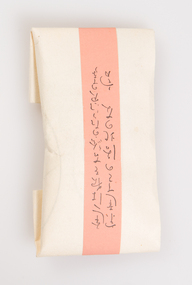
Evening Moon confection, c. 1900s
... air that greatly moves the modern viewer. They are whispered evidence of the Japanese ability to create beauty from the simplest products of nature. ...air that greatly moves the modern viewer. They are whispered evidence of the Japanese ability to create beauty from the simplest products of nature. ...‘The Art of the Japanese Package’ was an exhibition that toured to 10 Australian and 11 New Zealand public galleries in 1979 and 1980. The touring exhibition comprised 221 objects of traditional Japanese packaging which extended from ceramics, wood and paper to woven fibre containers. At the conclusion of the tour, The Japan Foundation and the Crafts Board of the Australia Council donated the vast majority of the exhibition to the Ararat Gallery for its permanent collection. Combining the natural qualities of bamboo, paper and straw with delicate craftsmanship, these unique objects express Japanese aesthetics as applied through fibre crafts. In Japan, the qualities and traits of natural materials are exploited rather than hidden. The texture of straw, the septa of bamboo are not concealed but lovingly incorporated into the whole. In 1979 Hideyuki Oka, curator of ‘The Art of the Japanese Package’ wrote: “In no way self-conscious or assertive, these wrappings have an artless and obedient air that greatly moves the modern viewer. They are whispered evidence of the Japanese ability to create beauty from the simplest products of nature. They also teach us that wisdom and feeling are especially important in packaging because these qualities, or the lack of them, are almost immediately apparent. What is the use of a package if it shows no feeling?” The descriptions of the featured objects were written by Hideyuki Oka, curator of ‘The Art of the Japanese Package’, 1979.Gift of the Japan-Australia Foundation and the Crafts Board of the Australia Council, 1981japanese art, japanese packaging, tsutsumi, gift giving -
 Ararat Gallery TAMA
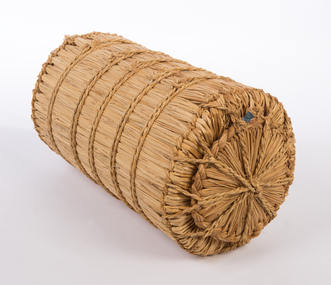
Rice bag, c. 1900s
... air that greatly moves the modern viewer. They are whispered evidence of the Japanese ability to create beauty from the simplest products of nature. ...air that greatly moves the modern viewer. They are whispered evidence of the Japanese ability to create beauty from the simplest products of nature. ...‘The Art of the Japanese Package’ was an exhibition that toured to 10 Australian and 11 New Zealand public galleries in 1979 and 1980. The touring exhibition comprised 221 objects of traditional Japanese packaging which extended from ceramics, wood and paper to woven fibre containers. At the conclusion of the tour, The Japan Foundation and the Crafts Board of the Australia Council donated the vast majority of the exhibition to the Ararat Gallery for its permanent collection. Combining the natural qualities of bamboo, paper and straw with delicate craftsmanship, these unique objects express Japanese aesthetics as applied through fibre crafts. In Japan, the qualities and traits of natural materials are exploited rather than hidden. The texture of straw, the septa of bamboo are not concealed but lovingly incorporated into the whole. In 1979 Hideyuki Oka, curator of ‘The Art of the Japanese Package’ wrote: “In no way self-conscious or assertive, these wrappings have an artless and obedient air that greatly moves the modern viewer. They are whispered evidence of the Japanese ability to create beauty from the simplest products of nature. They also teach us that wisdom and feeling are especially important in packaging because these qualities, or the lack of them, are almost immediately apparent. What is the use of a package if it shows no feeling?” The descriptions of the featured objects were written by Hideyuki Oka, curator of ‘The Art of the Japanese Package’, 1979.Gift of the Japan-Australia Foundation and the Crafts Board of the Australia Council, 1981japanese art, japanese packaging, tsutsumi, gift giving -
 Ararat Gallery TAMA
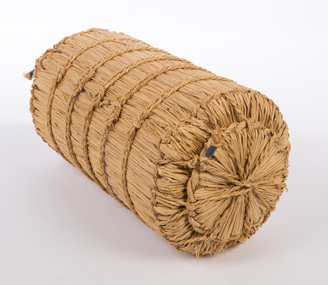
Rice bag, c. 1900s
... air that greatly moves the modern viewer. They are whispered evidence of the Japanese ability to create beauty from the simplest products of nature. ...air that greatly moves the modern viewer. They are whispered evidence of the Japanese ability to create beauty from the simplest products of nature. ...‘The Art of the Japanese Package’ was an exhibition that toured to 10 Australian and 11 New Zealand public galleries in 1979 and 1980. The touring exhibition comprised 221 objects of traditional Japanese packaging which extended from ceramics, wood and paper to woven fibre containers. At the conclusion of the tour, The Japan Foundation and the Crafts Board of the Australia Council donated the vast majority of the exhibition to the Ararat Gallery for its permanent collection. Combining the natural qualities of bamboo, paper and straw with delicate craftsmanship, these unique objects express Japanese aesthetics as applied through fibre crafts. In Japan, the qualities and traits of natural materials are exploited rather than hidden. The texture of straw, the septa of bamboo are not concealed but lovingly incorporated into the whole. In 1979 Hideyuki Oka, curator of ‘The Art of the Japanese Package’ wrote: “In no way self-conscious or assertive, these wrappings have an artless and obedient air that greatly moves the modern viewer. They are whispered evidence of the Japanese ability to create beauty from the simplest products of nature. They also teach us that wisdom and feeling are especially important in packaging because these qualities, or the lack of them, are almost immediately apparent. What is the use of a package if it shows no feeling?” The descriptions of the featured objects were written by Hideyuki Oka, curator of ‘The Art of the Japanese Package’, 1979.Gift of the Japan-Australia Foundation and the Crafts Board of the Australia Council, 1981japanese art, japanese packaging, tsutsumi, gift giving -
 Ararat Gallery TAMA
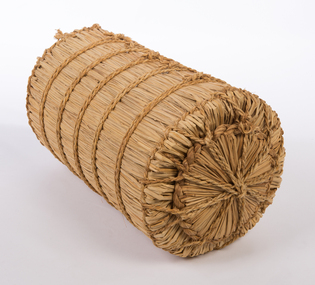
Rice bag, c. 1900s
... air that greatly moves the modern viewer. They are whispered evidence of the Japanese ability to create beauty from the simplest products of nature. ...air that greatly moves the modern viewer. They are whispered evidence of the Japanese ability to create beauty from the simplest products of nature. ...‘The Art of the Japanese Package’ was an exhibition that toured to 10 Australian and 11 New Zealand public galleries in 1979 and 1980. The touring exhibition comprised 221 objects of traditional Japanese packaging which extended from ceramics, wood and paper to woven fibre containers. At the conclusion of the tour, The Japan Foundation and the Crafts Board of the Australia Council donated the vast majority of the exhibition to the Ararat Gallery for its permanent collection. Combining the natural qualities of bamboo, paper and straw with delicate craftsmanship, these unique objects express Japanese aesthetics as applied through fibre crafts. In Japan, the qualities and traits of natural materials are exploited rather than hidden. The texture of straw, the septa of bamboo are not concealed but lovingly incorporated into the whole. In 1979 Hideyuki Oka, curator of ‘The Art of the Japanese Package’ wrote: “In no way self-conscious or assertive, these wrappings have an artless and obedient air that greatly moves the modern viewer. They are whispered evidence of the Japanese ability to create beauty from the simplest products of nature. They also teach us that wisdom and feeling are especially important in packaging because these qualities, or the lack of them, are almost immediately apparent. What is the use of a package if it shows no feeling?” The descriptions of the featured objects were written by Hideyuki Oka, curator of ‘The Art of the Japanese Package’, 1979.Gift of the Japan-Australia Foundation and the Crafts Board of the Australia Council, 1981japanese art, japanese packaging, tsutsumi, gift giving -
 Ararat Gallery TAMA
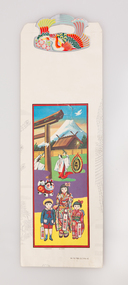
Gift bag, c. 1900s
... air that greatly moves the modern viewer. They are whispered evidence of the Japanese ability to create beauty from the simplest products of nature. ...air that greatly moves the modern viewer. They are whispered evidence of the Japanese ability to create beauty from the simplest products of nature. ...‘The Art of the Japanese Package’ was an exhibition that toured to 10 Australian and 11 New Zealand public galleries in 1979 and 1980. The touring exhibition comprised 221 objects of traditional Japanese packaging which extended from ceramics, wood and paper to woven fibre containers. At the conclusion of the tour, The Japan Foundation and the Crafts Board of the Australia Council donated the vast majority of the exhibition to the Ararat Gallery for its permanent collection. Combining the natural qualities of bamboo, paper and straw with delicate craftsmanship, these unique objects express Japanese aesthetics as applied through fibre crafts. In Japan, the qualities and traits of natural materials are exploited rather than hidden. The texture of straw, the septa of bamboo are not concealed but lovingly incorporated into the whole. In 1979 Hideyuki Oka, curator of ‘The Art of the Japanese Package’ wrote: “In no way self-conscious or assertive, these wrappings have an artless and obedient air that greatly moves the modern viewer. They are whispered evidence of the Japanese ability to create beauty from the simplest products of nature. They also teach us that wisdom and feeling are especially important in packaging because these qualities, or the lack of them, are almost immediately apparent. What is the use of a package if it shows no feeling?” The descriptions of the featured objects were written by Hideyuki Oka, curator of ‘The Art of the Japanese Package’, 1979.Gift of the Japan-Australia Foundation and the Crafts Board of the Australia Council, 1981japanese art, japanese packaging, tsutsumi, gift giving -
 Ararat Gallery TAMA
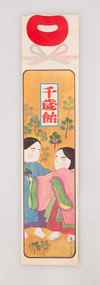
Gift bag, c. 1900s
... air that greatly moves the modern viewer. They are whispered evidence of the Japanese ability to create beauty from the simplest products of nature. ...air that greatly moves the modern viewer. They are whispered evidence of the Japanese ability to create beauty from the simplest products of nature. ...‘The Art of the Japanese Package’ was an exhibition that toured to 10 Australian and 11 New Zealand public galleries in 1979 and 1980. The touring exhibition comprised 221 objects of traditional Japanese packaging which extended from ceramics, wood and paper to woven fibre containers. At the conclusion of the tour, The Japan Foundation and the Crafts Board of the Australia Council donated the vast majority of the exhibition to the Ararat Gallery for its permanent collection. Combining the natural qualities of bamboo, paper and straw with delicate craftsmanship, these unique objects express Japanese aesthetics as applied through fibre crafts. In Japan, the qualities and traits of natural materials are exploited rather than hidden. The texture of straw, the septa of bamboo are not concealed but lovingly incorporated into the whole. In 1979 Hideyuki Oka, curator of ‘The Art of the Japanese Package’ wrote: “In no way self-conscious or assertive, these wrappings have an artless and obedient air that greatly moves the modern viewer. They are whispered evidence of the Japanese ability to create beauty from the simplest products of nature. They also teach us that wisdom and feeling are especially important in packaging because these qualities, or the lack of them, are almost immediately apparent. What is the use of a package if it shows no feeling?” The descriptions of the featured objects were written by Hideyuki Oka, curator of ‘The Art of the Japanese Package’, 1979.Gift of the Japan-Australia Foundation and the Crafts Board of the Australia Council, 1981japanese art, japanese packaging, tsutsumi, gift giving -
 Ararat Gallery TAMA
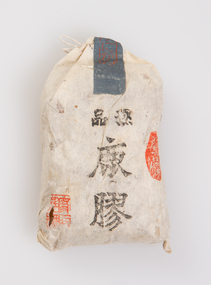
Bag, c. 1900s
... air that greatly moves the modern viewer. They are whispered evidence of the Japanese ability to create beauty from the simplest products of nature. ...air that greatly moves the modern viewer. They are whispered evidence of the Japanese ability to create beauty from the simplest products of nature. ...‘The Art of the Japanese Package’ was an exhibition that toured to 10 Australian and 11 New Zealand public galleries in 1979 and 1980. The touring exhibition comprised 221 objects of traditional Japanese packaging which extended from ceramics, wood and paper to woven fibre containers. At the conclusion of the tour, The Japan Foundation and the Crafts Board of the Australia Council donated the vast majority of the exhibition to the Ararat Gallery for its permanent collection. Combining the natural qualities of bamboo, paper and straw with delicate craftsmanship, these unique objects express Japanese aesthetics as applied through fibre crafts. In Japan, the qualities and traits of natural materials are exploited rather than hidden. The texture of straw, the septa of bamboo are not concealed but lovingly incorporated into the whole. In 1979 Hideyuki Oka, curator of ‘The Art of the Japanese Package’ wrote: “In no way self-conscious or assertive, these wrappings have an artless and obedient air that greatly moves the modern viewer. They are whispered evidence of the Japanese ability to create beauty from the simplest products of nature. They also teach us that wisdom and feeling are especially important in packaging because these qualities, or the lack of them, are almost immediately apparent. What is the use of a package if it shows no feeling?” The descriptions of the featured objects were written by Hideyuki Oka, curator of ‘The Art of the Japanese Package’, 1979.Gift of the Japan-Australia Foundation and the Crafts Board of the Australia Council, 1981japanese art, japanese packaging, tsutsumi, gift giving -
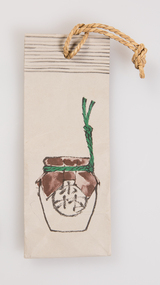 Ararat Gallery TAMA
Bag, c. 1900s
... air that greatly moves the modern viewer. They are whispered evidence of the Japanese ability to create beauty from the simplest products of nature. ...air that greatly moves the modern viewer. They are whispered evidence of the Japanese ability to create beauty from the simplest products of nature. ...‘The Art of the Japanese Package’ was an exhibition that toured to 10 Australian and 11 New Zealand public galleries in 1979 and 1980. The touring exhibition comprised 221 objects of traditional Japanese packaging which extended from ceramics, wood and paper to woven fibre containers. At the conclusion of the tour, The Japan Foundation and the Crafts Board of the Australia Council donated the vast majority of the exhibition to the Ararat Gallery for its permanent collection. Combining the natural qualities of bamboo, paper and straw with delicate craftsmanship, these unique objects express Japanese aesthetics as applied through fibre crafts. In Japan, the qualities and traits of natural materials are exploited rather than hidden. The texture of straw, the septa of bamboo are not concealed but lovingly incorporated into the whole. In 1979 Hideyuki Oka, curator of ‘The Art of the Japanese Package’ wrote: “In no way self-conscious or assertive, these wrappings have an artless and obedient air that greatly moves the modern viewer. They are whispered evidence of the Japanese ability to create beauty from the simplest products of nature. They also teach us that wisdom and feeling are especially important in packaging because these qualities, or the lack of them, are almost immediately apparent. What is the use of a package if it shows no feeling?” The descriptions of the featured objects were written by Hideyuki Oka, curator of ‘The Art of the Japanese Package’, 1979. Gift of the Japan-Australia Foundation and the Crafts Board of the Australia Council, 1981japanese art, japanese packaging, tsutsumi, gift giving
