
Showing 155 items matching "new arrival"
-
 Bendigo Historical Society Inc.
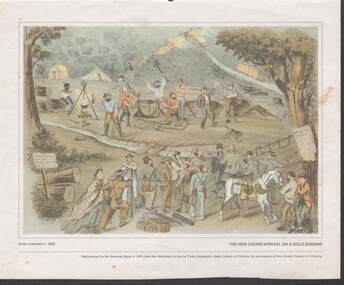
Painting - CAROL HOLSWORTH COLLECTION: 1970 NATIONAL BANK PAINTING 'THE NEW CHUMS ARRIVAL ON A GOLD DIGGING'
... CAROL HOLSWORTH COLLECTION: 1970 NATIONAL BANK PAINTING 'THE NEW CHUMS ARRIVAL ON A GOLD DIGGING'...1970 NATIONAL BANK PAINTING REPRODUCTION The New Chums Arrival on a Gold Digging .Artist unknown c. 1855 Below the picture title the words - Reproduced by the National Bank in 1970 from the lithograph in the La Trobe Collection , State Library of Victoria , by permission of the Library Council of Victoria .Bottom left corner shows a rough sign nailed to an upright post saying The Star Concert Hall Gus Hatton To night.The painting is divided lengthways by a stream with a two plank crossing apparently to show the differences between the seasoned miners above the stream and the new chums below the stream .The above centre of the picture is a windlass surrounded by men - an Aboriginal sitting by a fire , two men with bottles in hand depicting the proliferation of drink .The New Chums below the stream show men and a woman all wearing smart hats and clothes , some carrying unneeded items such as Umbrellas...PAINTING Watercolour gold diggers 1970 NATIONAL BANK PAINTING REPRODUCTION The New Chums Arrival on a Gold Digging .Artist unknown c. 1855 Below the picture title the words - Reproduced by the National Bank in 1970 from the lithograph in the La Trobe Collection , State Library of Victoria , by permission of the Library Council of Victoria .Bottom left corner shows a rough sign nailed to an upright post saying The Star Concert Hall Gus Hatton To night.The painting is divided lengthways by a stream with a two plank crossing apparently to show the differences between the seasoned miners above the stream and the new chums below the stream .The above centre of the picture is a windlass surrounded by men - an Aboriginal sitting by a fire , two men with bottles in hand depicting the proliferation of drink .The New Chums below the stream show men and a woman all wearing smart hats and clothes , some carrying unneeded items such as Umbrellas Painting CAROL HOLSWORTH COLLECTION: 1970 NATIONAL BANK PAINTING 'THE NEW CHUMS ARRIVAL ON A GOLD DIGGING' ...1970 NATIONAL BANK PAINTING REPRODUCTION The New Chums Arrival on a Gold Digging .Artist unknown c. 1855 Below the picture title the words - Reproduced by the National Bank in 1970 from the lithograph in the La Trobe Collection , State Library of Victoria , by permission of the Library Council of Victoria .Bottom left corner shows a rough sign nailed to an upright post saying The Star Concert Hall Gus Hatton To night.The painting is divided lengthways by a stream with a two plank crossing apparently to show the differences between the seasoned miners above the stream and the new chums below the stream .The above centre of the picture is a windlass surrounded by men - an Aboriginal sitting by a fire , two men with bottles in hand depicting the proliferation of drink .The New Chums below the stream show men and a woman all wearing smart hats and clothes , some carrying unneeded items such as Umbrellas painting, watercolour, gold diggers -
 Federation University Historical Collection
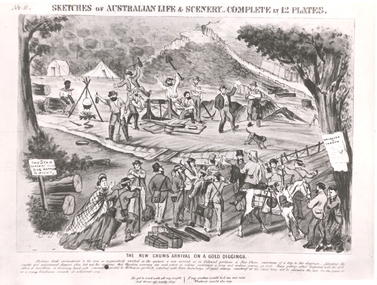
Photograph - Black and White Photograph, The New Chums' Arrival on a Gold Diggings
... The New Chums' Arrival on a Gold Diggings...gold diggings diggers The New Chums' Arrival on a Gold Diggings Photograph Black and White Photograph ...gold diggings, diggers -
 Marysville & District Historical Society
THE TRIANGLE NEWS-VOL 5 NO 23-JULY 25 1980
... ...new arrival...marysville victoria australia marysville & district community care centre s australian boys' choir welcomes marysville student happy birthday meeting community care centre medical clinics in hospital new arrival think it over senior citizens photographer uniting church indoor bowls mountain views home improvements centre baby sitting wanted goods for buxton op shop junior youth club narbethong ball shire of healesville service directory marysville golf club debutante ball nutri-metics buxton red cross news situation vacant for sale hoover r.s.l. news greetings & thanks anglican church services-christ church marysville marysville primary school THE TRIANGLE NEWS-VOL 5 NO 23-JULY 25 1980 ...marysville, victoria, australia, marysville & district community care centre, s, australian boys' choir welcomes marysville student, happy birthday, meeting community care centre, medical clinics, in hospital, new arrival, think it over, senior citizens, photographer, uniting church, indoor bowls, mountain views home improvements centre, baby sitting, wanted goods for buxton op shop, junior youth club, narbethong ball, shire of healesville service directory, marysville golf club debutante ball, nutri-metics, buxton red cross news, situation vacant, for sale hoover, r.s.l. news, greetings & thanks, anglican church services-christ church marysville, marysville primary school -
 National Vietnam Veterans Museum (NVVM)
Slide - Sims Image Collection
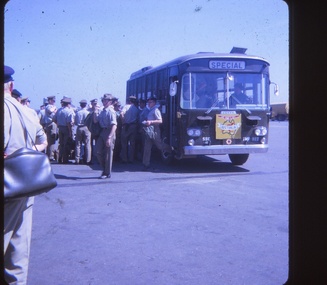
... New arrivals at Saigon airport 1969: Australian soldiers in full uniform board a bus on a tarmac....Peter Stanley Sims 44304 Slides Royal Australian Army Medical Corps Vietnam War Sims Saigon 1969 arrivals airport New arrivals at Saigon airport 1969: Australian soldiers in full uniform board a bus on a tarmac. ...A collection of 253 images on slides taken while on deployment in Vietnam, by Corporal Peter Stanley Sims (44304) who served in the Royal Australian Army Medical Corps, 1969 - 1970. New arrivals at Saigon airport 1969: Australian soldiers in full uniform board a bus on a tarmac. peter stanley sims, 44304, slides, royal australian army medical corps, vietnam war, sims, saigon, 1969, arrivals, airport -
 National Vietnam Veterans Museum (NVVM)
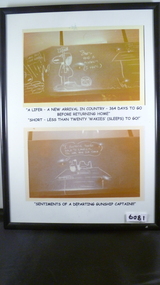
Photograph, Snoopy Cartoon, C1968 - 1973
... 'A Lifer- A new arrival in the country - 364 Days to go before returning home ' 'Short - Less than Twenty 'Wakies '(sleeps ) to go! ...Caricatures and Cartoons Photograph 'A Lifer- A new arrival in the country - 364 Days to go before returning home ' 'Short - Less than Twenty 'Wakies '(sleeps ) to go! ...Two colour photos in a black frame of Snoopy, the dog. Both appear to be chalk artwork onto unknown surface. 'A Lifer- A new arrival in the country - 364 Days to go before returning home ' 'Short - Less than Twenty 'Wakies '(sleeps ) to go! " Sentiments of a Departing Gunship Captain" caricatures and cartoons, photograph -
 National Vietnam Veterans Museum (NVVM)
Slide - Sims Image Collection
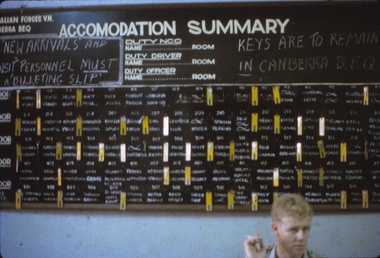
... Canberra BEQ (Bachelor and enlisted men's quarters) accommodation board with names of new arrivals and visiting personnel with keys to allocated rooms, Cholon, Vietnam 1969. ...Peter Stanley Sims 44304 Slides Royal Australian Army Medical Corps Vietnam War Sims Cho Lon Cholon Canberra BEQ Bachelors and Enlisted Men's Quarters Arrivals Board accommodation Canberra BEQ (Bachelor and enlisted men's quarters) accommodation board with names of new arrivals and visiting personnel with keys to allocated rooms, Cholon, Vietnam 1969. ...From a collection of 253 images on slides taken while on deployment in Vietnam, by Corporal Peter Stanley Sims (44304), who served in the Royal Australian Army Medical Corps, 1969 - 1970. Canberra BEQ (Bachelor and enlisted men's quarters) accommodation board with names of new arrivals and visiting personnel with keys to allocated rooms, Cholon, Vietnam 1969. Corporal Peter Stanley Sims room 207. peter stanley sims, 44304, slides, royal australian army medical corps, vietnam war, sims, cho lon, cholon, canberra beq, bachelors and enlisted men's quarters, arrivals board, accommodation -
 National Vietnam Veterans Museum (NVVM)
Photograph, Gibbons, Denis, 365 And A Wakey
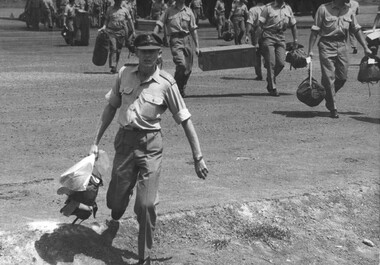
... A black and white photograph of "Nobody has 365 and a wakey" so was the chant of the Old Timers at 1st ATF Base, Nui Dat as new arrivals about to commence their tour of duty. ...Photograph 1st ATF Base Nui Dat C-130 Hercules Gibbons Collection Catalogue New Arrivals Denis Gibbons A black and white photograph of "Nobody has 365 and a wakey" so was the chant of the Old Timers at 1st ATF Base, Nui Dat as new arrivals about to commence their tour of duty. ...Denis Gibbons (1937 – 2011) Trained with the Australian Army, before travelling to Vietnam in January 1966, Denis stayed with the 1st Australian Task Force in Nui Dat working as a photographer. For almost five years Gibbons toured with nine Australian infantry battalions, posting compelling war images from within many combat zones before being flown out in late November 1970 after sustaining injuries. The images held within the National Vietnam Veterans Museum make up the Gibbons Collection. A black and white photograph of "Nobody has 365 and a wakey" so was the chant of the Old Timers at 1st ATF Base, Nui Dat as new arrivals about to commence their tour of duty. These replacments were delivered by a US C130 aircraft photograph, 1st atf base, nui dat, c-130 hercules, gibbons collection catalogue, new arrivals, denis gibbons -
 Ringwood and District Historical Society
Newspaper, Ringwood Secondary College - Four senior students are appointed as prefects. - The Post - Tuesday, February 17, 1998 Page 13
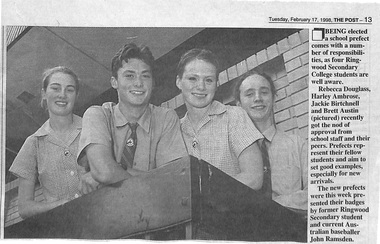
... Prefects represent their fellow students and aim to set good examples, especially for new arrivals....Prefects represent their fellow students and aim to set good examples, especially for new arrivals. Clipping glued to A4 sheet of paper Ringwood Secondary College - Four senior students are appointed as prefects. - The Post - Tuesday, February 17, 1998 Page 13 Newspaper ...Clipping glued to A4 sheet of paper Rebecca Douglass, Harley Ambrose, Jackie Birtchnell and Brett Austin recently got the nod of approval from school staff and their peers. Prefects represent their fellow students and aim to set good examples, especially for new arrivals. -
 National Vietnam Veterans Museum (NVVM)
Photograph, Gibbons, Denis, Three Hundred And Sixty Five And A Wakey
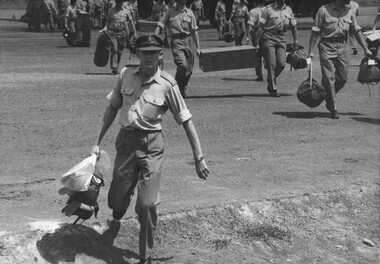
... A black and white photograph of - "Nobody has three hundred and sixty five and a wakey" so was the chant of the Old Timers at 1st Australian Task Field Base, Nui Dat as new arrivals about to commence their tour of duty "in country". ...Photograph 1st ATF Base Nui Dat C-130 Hercules Gibbons Collection Catalogue 1st Australian Task Force Denis Gibbons A black and white photograph of - "Nobody has three hundred and sixty five and a wakey" so was the chant of the Old Timers at 1st Australian Task Field Base, Nui Dat as new arrivals about to commence their tour of duty "in country". ...Denis Gibbons (1937 – 2011) Trained with the Australian Army, before travelling to Vietnam in January 1966, Denis stayed with the 1st Australian Task Force in Nui Dat working as a photographer. For almost five years Gibbons toured with nine Australian infantry battalions, posting compelling war images from within many combat zones before being flown out in late November 1970 after sustaining injuries. The images held within the National Vietnam Veterans Museum make up the Gibbons Collection. A black and white photograph of - "Nobody has three hundred and sixty five and a wakey" so was the chant of the Old Timers at 1st Australian Task Field Base, Nui Dat as new arrivals about to commence their tour of duty "in country". These replacments were delivered by a US C130 aircraft photograph, 1st atf base, nui dat, c-130 hercules, gibbons collection catalogue, 1st australian task force, denis gibbons -
 Flagstaff Hill Maritime Museum and Village
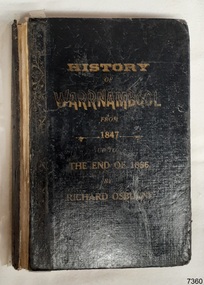
Book - Historical, Warrnambool, Richard Osburne, The History of Warrnambool, 1887
... TO OLD COLONISTS AND YOUNG AUSTRALIANS, OR NEW ARRIVALS, THIS HISTORY OF THE RISE AND PROGRESS OF THE CAPITAL OF WESTERN VICTORIA, IS DEDICATED AS INTERESTING AND USEFUL, BY "THE FATHER OF THE WARRNAMBOOL PRESS" RICHARD OSBURNE."...The book was dedicated to the early colonists as well as to the new arrivals by the writer, Richard Osburne, who entitles himself as "The father of the Warrnambool Press". ...This copy of the book is personally signed and dated by the Curator of the first Warrnambool Museum, which was also the Warrnambool Public Library. This copy also has many hand written notes in the margins. This little book is one of only 1000 books published of the original Queen's Jubilee Edition. It spans fifty years of the history of Warrnambool from the time that the first Government Land Sales commenced. It also deliberately coincides with the 1887 celebrations of Queen Victoria's Jubilee Year of her ascension to the British Throne. The book is an invaluable reference for researchers of local Warrnambool history and has been used as a textbook and reference book for local students. After the closure of the Warrnambool Museum, the book was held by the Warrnambool City Council until, in 1974, it was transferred to the newly established Flagstaff Hill Maritime Museum and Village. The author, Richard Osburne, (1825-1895) was born in Australia. He moved to Warrnambool in 1847 as the first local Journalist. In 1851 he founded the Warrnambool Examiner newspaper which he operated until the end of 1880. Osburne was much involved in civic and community affairs of the town, and he set himself the task of recording the history of the city's early pioneers. In the introductory pages of the book the author refers to himself as "The Father of the Warrnambool Press". Only 1,000 copies of this edition of the book were printed. In September 1980 a facsimile edition was printed with the addition of illustrations from the period, an index and relevant annotations by local historian T.A. Wicking (Tom Wicking). This later book was named the Premier Town Edition, due to Warrnambool being awarded the title of Premier Town in Victoria in 1979-82 by the Premier of Victoria; it also received the inaugural award in 1959 and a later award in 1988-91. This book has strong significance for being signed in 1887 by Joseph Archibald, the Curator of the first museum and library in Warrnambool, the Warrnambool Museum. It is also significant for the annotations added to many of the pages, perhaps for the Facsimile edition that followed many years later. This book is rare. It is one of only 1000 copies printed, and one of three in the Collection of Flagstaff Hill Maritime Museum and Village. The book was dedicated to the early colonists as well as to the new arrivals by the writer, Richard Osburne, who entitles himself as "The father of the Warrnambool Press". The content of the book is invaluable as a reference for Warrnambool and District's local history in its early colonial and pioneering days. It provides the information that helps in an understanding the foundation that the city was built on, connecting the people of today to the pioneers of the past. The History of Warrnambool: Capital of the Western Ports of Victoria, From1847 up to the end of 1886 (when the first Government Land Sales took place) Author: Richard Osburne, "Proprietor of the Warrnambool Examiner from 1851 to the close of 1880" Publisher: The Chronicle Printing and Publishing Company Limited Date: 1887 (MDCCCLXXXVII) (Roman numerals are covered in tape) Edition: Original: Queen's Jubilee Edition Black fabric covered hardcover book with embossed gold titles on spine and front cover. Inscriptions include stamps and handwriting. It once belonged to the Warrnambool Public Museum and is signed by the first Curator, Joseph Archibald, in 1887. The first fly page has a message to the readers, as shown in the Inscriptions of this record. Many of the pages in this book have handwritten notes in the margins and within the text and some of the lines are crossed out. Handwritten: "Warrnambool Museum" Signed: "J Archibald / 1887" Stamped: "WARRNAMBOOL PUBLIC MUSEUM" Printed on fly page: "PRICE, FIVE SHILLINGS" First fly page: "THE QUEEN'S JUBILEE EDITION. TO OLD COLONISTS AND YOUNG AUSTRALIANS, OR NEW ARRIVALS, THIS HISTORY OF THE RISE AND PROGRESS OF THE CAPITAL OF WESTERN VICTORIA, IS DEDICATED AS INTERESTING AND USEFUL, BY "THE FATHER OF THE WARRNAMBOOL PRESS" RICHARD OSBURNE." warrnambool, shipwreck coast, flagstaff hill, maritime museum, maritime village, the history of warrnambool, richard osburne, osturne's history of warrnambool, queen's jubilee edition, 1847-1887, warrnambool history, the chronicle printing and publishing company, capital of the western ports of victoria, first government land sales, warrnambool examiner, five shillings, warrnambool's first reporter, warrnambool public library, 1887, 1979, premier town, premier edition, queen's jubliee, queen victoria's jubilee, western ports of victoria, 1847, government land sales, chronicle publishing and printing co., 1000 copies, t a wicking, old colonists, young australians, new arrivals, rise and progress, capital of western victoria, interesting and useful, the father of the warrnambool press -
 Surrey Hills Historical Society Collection
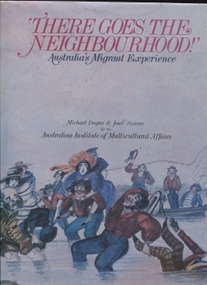
Book, Michael Dugan et al, There goes the Neighbourhood, 1984
... It also looks at the new arrivals - those accepted and those rejected - from the points of view of people already established in the country....It also looks at the new arrivals - those accepted and those rejected - from the points of view of people already established in the country. ...The book presents a rich picture of a nation in the making. It is a portrait of Australia's development during the 19th and 20th centuries seen through the eyes of people arriving to make their homes here. It also looks at the new arrivals - those accepted and those rejected - from the points of view of people already established in the country. The book has a place in this collection by virtue of Michael Dugan having been a local resident. 34 cm H; 200 p; includes chronology, List of sources and texts for each chapter Title page: signed by one of the authors: Michael Dugan social interaction--australia--history, australia - social life and customs, australia - social conditions, australia - emigration and immigration - history, minorities - australia - history, (mr) michael dugan, (mr) josef szware -
 Bendigo Military Museum
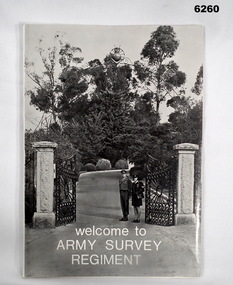
Booklet - Welcome to the Army Survey Regiment, Army Survey Regiment, Circa late 1970's
... An information booklet provided to new arrivals at the Army Svy Regt. It contains information on daily routine, unit facilities and services, accommodation options, sports policy, Regimental Appointments, recreational facilities and places of interest around Bendigo. ...An information booklet provided to new arrivals at the Army Svy Regt. It contains information on daily routine, unit facilities and services, accommodation options, sports policy, Regimental Appointments, recreational facilities and places of interest around Bendigo. ...An information booklet provided to new arrivals at the Army Svy Regt. It contains information on daily routine, unit facilities and services, accommodation options, sports policy, Regimental Appointments, recreational facilities and places of interest around Bendigo. Cover photo of the gate entrance to the Army Survey Regiment on the cover. WO1 Ken and Cpl Heather Slater stand at the gate. A4 soft covered booklet, paper pages held together with "ARNOS" an Fastener royal australian survey corps, rasvy, fortuna, army survey regiment, army svy regt, asr -
 Mont De Lancey
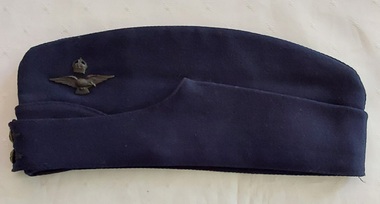
Uniform - Officer's Forage Cap, 1940's
... In bomber and fighter squadrons, a well-worn, battered forage cap became an informal badge of honor, distinguishing seasoned veterans from new arrivals ("sprogs")....In bomber and fighter squadrons, a well-worn, battered forage cap became an informal badge of honor, distinguishing seasoned veterans from new arrivals ("sprogs"). WW11 uniform WW11 badge WW11 WW11RAAF WW11 cap Forage cap Sewn inside the cap on a white piece of cotton is stamped: 'V330 1944 Made in Australia Size 71/8 A-(arrow)F' A sewn name tag 'Sumner' is stitched too. ...The blue forage cap (frequently referred to as a side cap, wedge cap, or garrison cap) during World War II was a practical, foldable soft cap widely adopted by air forces and naval units, most notably by the Royal Australian Air Force (RAAF) and Commonwealth aircrews. In bomber and fighter squadrons, a well-worn, battered forage cap became an informal badge of honor, distinguishing seasoned veterans from new arrivals ("sprogs"). A navy blue cotton WW11 Officer's Forage Cap with shaped folded sides. It has a fastening at the front with two small brass buttons with wings and a crown insignia attached. There is a brass badge with an albatross/eagle and a king's crown above. Inside is a black cotton lining with a blue velvet band at the top. There is a white cotton piece of cloth with the cap details stitched inside. The clips to hold the badge on the outside can be seen inside on the lining. Sewn inside the cap on a white piece of cotton is stamped: 'V330 1944 Made in Australia Size 71/8 A-(arrow)F' A sewn name tag 'Sumner' is stitched too. ww11 uniform, ww11 badge, ww11, ww11raaf, ww11 cap, forage cap -
Eltham District Historical Society Inc
Document - Folder, O'Malley, Stephen
... Eltham resident, Stephen O'Malley, as Melbourne Fire Brigade's multicultural liaison officer, teaches new arrivals to Australia about fire safety and emergency services in Australia. ...Eltham resident, Stephen O'Malley, as Melbourne Fire Brigade's multicultural liaison officer, teaches new arrivals to Australia about fire safety and emergency services in Australia. ...Eltham resident, Stephen O'Malley, as Melbourne Fire Brigade's multicultural liaison officer, teaches new arrivals to Australia about fire safety and emergency services in Australia. He was awarded an Australian Fire Service Medal in the 2010 Australia Day Awards. Contents Newspaper article: "A great honour for firefighter Stephen O'Malley", Diamond Valley Leader, 27 January 2010, Stephen O'Malley awarded an Australian Fire Service Medal in 2010 Australia Day Awards. Newspaper clippings, A4 photocopies, etc stephen o'malley, metropolitan fire brigade -
 Mont De Lancey
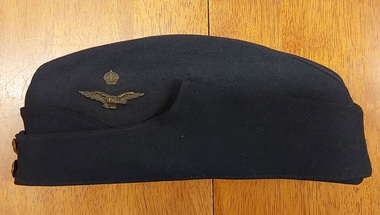
Uniform - Officer's Forage Cap, 1940's
... In bomber and fighter squadrons, a well-worn, battered forage cap became an informal badge of honor, distinguishing seasoned veterans from new arrivals ("sprogs"). It was worn by Ralph Proctor....In bomber and fighter squadrons, a well-worn, battered forage cap became an informal badge of honor, distinguishing seasoned veterans from new arrivals ("sprogs"). It was worn by Ralph Proctor. ...The blue forage cap (frequently referred to as a side cap, wedge cap, or garrison cap) during World War II was a practical, foldable soft cap widely adopted by air forces and naval units, most notably by the Royal Australian Air Force (RAAF) and Commonwealth aircrews. In bomber and fighter squadrons, a well-worn, battered forage cap became an informal badge of honor, distinguishing seasoned veterans from new arrivals ("sprogs"). It was worn by Ralph Proctor. A navy blue woollen WW11 Officer's Forage Cap with shaped folded sides. It has a fastening at the front with two small brass buttons with wings and a crown insignia attached. There is attached a brass badge with an albatross/eagle and a king's crown above. Inside is a brown lining with a brown velvet band at the top. A large safety pin on the lining holds the crown closed from the outside. The clips to hold the badges on the outside can be seen inside on the lining. It was issued in 1943. Inside the cap is stamped: 'MV(faded unknown letter)D 58' ww11 uniform, ww11 badge, ww11, ww11raaf, ww11 cap, forage cap -
 Flagstaff Hill Maritime Museum and Village
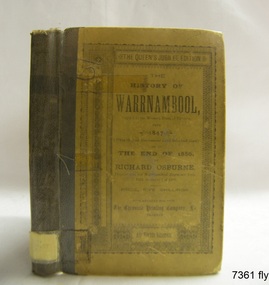
Book - Historical, Warrnambool, Richard Osburne, The History of Warrnambool, 1887
... TO OLD COLONISTS AND YOUNG AUSTRALIANS, OR NEW ARRIVALS, THIS HISTORY OF THE RISE AND PROGRESS OF THE CAPITAL OF WESTERN VICTORIA, IS DEDICATED AS INTERESTING AND USEFUL, BY "THE FATHER OF THE WARRNAMBOOL PRESS" RICHARD OSBURNE." ...The book was dedicated to the early colonists as well as to the new arrivals by the writer, Richard Osburne, who entitles himself as "The father of the Warrnambool Press". ...This little book is one of only 1000 books published of the original Queen's Jubilee Edition. It spans fifty years of the history of Warrnambool from the time that the first Government Land Sales commenced. It also deliberately coincides with the 1887 celebrations of Queen Victoria's Jubilee Year of her ascension to the British Throne. The book is an invaluable reference for researchers of local Warrnambool history and has been used as a text book and reference book for local students. The book had two owners before it became part of the Warrnambool Public Library, and when the library closed down, the book was held by the Warrnambool City Council until, in 1974, it was transferred to the newly established Flagstaff Hill Maritime Museum and Village. The author, Richard Osburne, (1825-1895) was born in Australia. He moved to Warrnambool in 1847 as the first local Journalist. In 1851 he founded the Warrnambool Examiner newspaper which he operated until the end of 1880. Osburne was much involved in civic and community affairs of the town, and he set himself the task of recording the history of the city's early pioneers. In the introductory pages of the book the author refers to himself as "The Father of the Warrnambool Press". Only 1,000 copies of this edition of the book were printed. In September 1980 a facsimile edition was printed with the addition of illustrations from the period, an index and relevant annotations by local historian T.A. Wicking (Tom Wicking). This later book was named the Premier Town Edition, due to Warrnambool being awarded the title of Premier Town in Victoria in 1979-82 by the Premier of Victoria; it also received the inaugural award in 1959 and a later award in 1988-91. This book is rare. It is one of only 1000 copies printed, and one of three in the Collection of Flagstaff Hill Maritime Museum and Village. The book was dedicated to the early colonists as well as to the new arrivals by the writer, Richard Osburne, who entitles himself as "The father of the Warrnambool Press". The content of the book is invaluable as a reference for Warrnambool and District's local history in its early colonial and pioneering days. It provides the information that helps in an understanding the foundation that the city was built on, connecting the people of today to the pioneers of the past. The inscriptions of two previous owners of the book, at least one of whom was a local resident, gives additional significance to this copy. The History of Warrnambool: Capital of the Western Ports of Victoria From1847 (when the first Government Land Sales took place) up to the end of 1886, By Richard Osburne, Proprietor of the Warrnambool Examiner from 1851 to the close of 1880. Author: Richard Osburne Publisher: Prahran: The Chronicle Printing & Publishing Company Limited Date: 1887 (MDCCCLXXXVII) Edition: Original: Queen's Jubilee Edition Small book with hard cover and reinforced spine. Dust jacket front has been pasted over front hard cover. The hardcovers are covered with clear adhesive plastic covering. Inscriptions include a typed label on the spine, a stamp at base of the fly page, on the loose page inside front cover, on inside back cover, and two hand written names on the second fly page; Jackson Giblett and G. M. Potter. The first fly page has a message to the readers, as shown in the Inscriptions of this record. Label on spine "R.A. 994.57 OSB" Inscriptions on second fly page: "Jackson Giblett / 1886" and "G.M. Potter, 70 Japan Street" Printed on fly page: "PRICE, FIVE SHILLINGS" Stamp of front end paper: WARRNAMBOOL / PUBLIC LIBRARY", "000336" and in a rectangular border " - - - - - - / WARRNAMBOOL / PUBLIC LIBRARY" First fly page: "THE QUEEN'S JUBILEE EDITION. TO OLD COLONISTS AND YOUNG AUSTRALIANS, OR NEW ARRIVALS, THIS HISTORY OF THE RISE AND PROGRESS OF THE CAPITAL OF WESTERN VICTORIA, IS DEDICATED AS INTERESTING AND USEFUL, BY "THE FATHER OF THE WARRNAMBOOL PRESS" RICHARD OSBURNE." Stamp inside back cover: "WARRNAMBOOL LIBRARY/ Liebig Street / Warrnambool 3280 / (055) 6- 2258" warrnambool, shipwreck coast, flagstaff hill, maritime museum, maritime village, the history of warrnambool, richard osburne, osturne's history of warrnambool, queen's jubilee edition, 1847-1887, warrnambool history, the chronicle printing and publishing company, capital of the western ports of victoria, first government land sales, warrnambool examiner, five shillings, warrnambool's first reporter, warrnambool public library, 1887, 1979, premier town, premier edition, queen's jubliee, queen victoria's jubilee, western ports of victoria, 1847, government land sales, chronicle publishing and printing co., g m potter, 1000 copies, t a wicking, jackson giblett, 1886, japan street, old colonists, young australians, new arrivals, rise and progress, capital of western victoria, interesting and useful, the father of the warrnambool press -
 Bendigo Historical Society Inc.
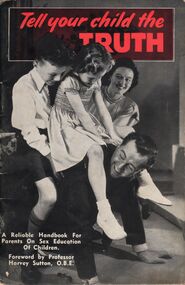
Book - AILEEN AND JOHN ELLISON COLLECTION: BOOKLET - TELL YOUR CHILD THE TRUTH
... Part 3: The primary school years - Explaining father's part, preparing the family for the new arrival, a period of dormancy, problems of this stage. ...Part 3: The primary school years - Explaining father's part, preparing the family for the new arrival, a period of dormancy, problems of this stage. ...Small booklet (44 pages) "Tell your child the truth" A reliable handbook for parents on sex education of children. Foreword by Professor Harvey Sutton O.B.E. The booklet was published by the father and son welfare movement of Australia in January, 1959. This is the fourth edition. Contents: Foreword - Introduction - Part 1: Sex education and the parent - the need for sex education, sex education what does it mean? Part 2: The nursery years - The home atmosphere, early interest, the first questions. Part 3: The primary school years - Explaining father's part, preparing the family for the new arrival, a period of dormancy, problems of this stage. Part 4: Puberty and adolescence - Puberty and its changes, the changing feelings of youth, masturbation, some moral and social factors. Conclusion - Glossary - Reliable graded books. books, school, sex education -
Glenelg Shire Council Cultural Collection
Document - Letter, Patience Whitmore, 1853
... From an ABC article about and exhibition containing the letter from Patience Whitmore: The hardships and tragedies often faced by new arrivals are also detailed in this exhibition, especially in a letter written by Patience Whitmore who arrived in 1853... ...From an ABC article about and exhibition containing the letter from Patience Whitmore: The hardships and tragedies often faced by new arrivals are also detailed in this exhibition, especially in a letter written by Patience Whitmore who arrived in 1853... ...From an ABC article about and exhibition containing the letter from Patience Whitmore: The hardships and tragedies often faced by new arrivals are also detailed in this exhibition, especially in a letter written by Patience Whitmore who arrived in 1853... Widowed before she left Britain, she made the trip to Australia with her second husband and children, although two of those children and her second husband died on the way out. She married for a third time after arriving, and that husband also passed away fairly early on, with Patience following not long after. The remaining children were sent off to an orphanage. Even though that sounds like a terrible life, apparently, compared with the life she might've had back in Britain, Patience considered herself to be very lucky, which gives you some insight into what life in Britain must've been like at the time. Letter written by Patience Whitmore in 1853. emigration, 1853, patience whitmore, letter -
 Buninyong & District Historical Society
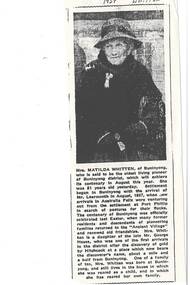
Article - Photocopy of newspaper cutting, Mrs. Matilda Whitten (House), Melbourne "Age" Thurs. 17 Jun, 1937 p17, Mrs. Matilda Whitten
... Learmonth in August, 1837, when new arrivals in Australia Felix were venturing out from the settlement at Port Phillip In search of pastures for their flocks. ...Learmonth in August, 1837, when new arrivals in Australia Felix were venturing out from the settlement at Port Phillip In search of pastures for their flocks. ...social, people Colour photo, Sts. Peter and Paul's Church, Buninyong Mrs. MATILDA WHITTEN. of Buninyong. who Is sald to be the oldest living pioneer ot Buninyong district, which will achleve its centenary in August this year. She was 81 years old yesterday. Settlement began In Buninyong with the arrival of Mr. Learmonth in August, 1837, when new arrivals in Australia Felix were venturing out from the settlement at Port Phillip In search of pastures for their flocks. The centenary of Buninyong was officially celebrated last Easter, when many former residents and descendants of pioneering families returned to the "Ancient Village" and renewed old friendships. Mrs. Whit- ten is a daughter of the late Mr. George House, who was one of the first arrivals In the district after the discovery of gold by Hitchcock at a place which now bears the discoverer's name, about a mile and a half from Buninyong. One of a family of ten, Mrs. Whltten was born at Bunln- yong, and still lives in the house in which she was reared as a child, and In which she has reared her own family. matilda whitten, matilda house -
 Sunshine and District Historical Society Incorporated
Photograph - Dutch Club Sunshine 1989 Photographs, C. McGee, 5th March 1989
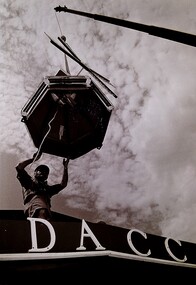
... Activities included Dutch‑language evenings, card nights, Sinterklaas celebrations, folk dancing, shared meals, and community support for new arrivals. The club served as an important cultural anchor for Dutch families employed in local industries such as HV McKay, ICI Deer Park, and the rail workshops. ...Activities included Dutch‑language evenings, card nights, Sinterklaas celebrations, folk dancing, shared meals, and community support for new arrivals. The club served as an important cultural anchor for Dutch families employed in local industries such as HV McKay, ICI Deer Park, and the rail workshops. ...These photographs, taken by The Advocate in 1989, are of Bob Sibson, from the Dutch Club Sunshine fitting a windmill to the top of a building. The Sunshine Dutch Club was a social and cultural organisation formed by Dutch migrants who settled in Sunshine, St Albans, and Deer Park during the post‑war period. The club did not operate from a dedicated building; instead, it met in rented halls, RSL rooms, and church spaces throughout Sunshine. Activities included Dutch‑language evenings, card nights, Sinterklaas celebrations, folk dancing, shared meals, and community support for new arrivals. The club served as an important cultural anchor for Dutch families employed in local industries such as HV McKay, ICI Deer Park, and the rail workshops. Windmills are central to Dutch heritage due to their role in shaping the country’s physical and economic development. They enabled large‑scale land reclamation, allowing communities to create polders and transform wetlands into productive farmland. Windmills also supported early industry, contributing to economic growth and technological innovation. Beyond their practical functions, windmills hold cultural importance as symbols of resilience, engineering ingenuity, and the Dutch relationship with water. The Sunshine Dutch Club is significant for its role in supporting Dutch migrant identity and community cohesion in Melbourne’s western suburbs. It provided a space for cultural continuity, language maintenance, and intergenerational connection during a period of rapid suburban growth and demographic change. Although informal and unincorporated, the club contributed to Sunshine’s multicultural heritage and reflects the broader pattern of migrant community organisations that shaped social life in the region. Its activities preserve memory of Dutch settlement and cultural expression in Sunshine from the 1950s to the 1980s. 7476.01 - Dutch Club Sunshine 1989 Photographs (Advocate 837).JPG Bob Sibson 7476.02 - Dutch Club Sunshine 1989 Photographs (Advocate 837).JPG Bob Sibson 7476.03 - Dutch Club Sunshine 1989 Photographs (Advocate 837).JPG Bob Sibson 7476.04 - Dutch Club Sunshine 1989 Photographs (Advocate 837).JPG Bob Sibson 7476.05 - Dutch Club Sunshine 1989 Photographs (Advocate 837).JPG Bob Sibson dutch club sunshine -
 Federation University Art Collection
Photograph, Frank Golding, 'Three-quarter Time' - by Frank Golding, 2001
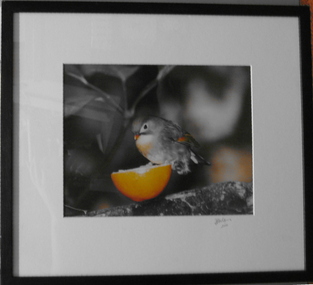
... Frank Golding was employed as Principal at three schools including a multi-site English language centre for refugees and other new arrivals. Later he taught in and managed curriculum and equity programs in education departments and universities. ...Frank Golding was employed as Principal at three schools including a multi-site English language centre for refugees and other new arrivals. Later he taught in and managed curriculum and equity programs in education departments and universities. ...Frank Patrick Golding (1938 - ) This item is part of the Federation University Art Collection. The Art Collection features over 1000 works and was listed as a 'Ballarat Treasure' in 2007. Frank Golding is an author, researcher, historian, consultant: Honorary Senior Research Fellow at Federation University in Victoria, Australia. His formal qualifications are TPTC (Ballarat), BA (Melb), BEd (Melb), Dip MT (UNE), MA (Hons) (London). He has taught English and History in several schools. Frank Golding was employed as Principal at three schools including a multi-site English language centre for refugees and other new arrivals. Later he taught in and managed curriculum and equity programs in education departments and universities. Finally he is the author of 12 published books including a memoir, An Orphan’s Escape: Memories of a Lost Childhood (Lothian, 2005) which describes his childhood as a Ward of the State of Victoria in the ‘care’ of three foster mothers and three institutions. Golding lived in the Ballarat Orphanage from 1943 to 1953. It is his childhood experiences that underpin Golding's active involvement in ‘care’ leaver issues as an advocate and lobbyist. Golding is a Life Member of CLAN (Care Leavers of Australasia Network) the peak body of Care Leavers for Care leavers run by Care Leavers. Image of bird on 1/2 orange citrus fruit - a play on childhood memory of oranges at 3/4 time Signature on label on back art, artwork, frank golding, bird, federation college, photography, colour photography, alumni -
 Sunshine and District Historical Society Incorporated
Archive - Sunshine West High School Thistle Club
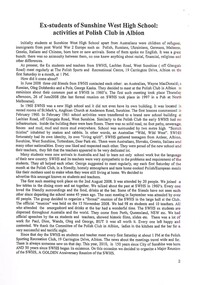
... Initially, the student population comprised approximately 50 percent of children from refugee backgrounds (post-World War 2 Europe), such as people of Polish, Russian, Ukrainian, German, Maltese, Greek, Italian and Chinese descent, both born in Australia or new arrivals. Many of them could not speak English. ...Initially, the student population comprised approximately 50 percent of children from refugee backgrounds (post-World War 2 Europe), such as people of Polish, Russian, Ukrainian, German, Maltese, Greek, Italian and Chinese descent, both born in Australia or new arrivals. Many of them could not speak English. ...With the rapid growth of primary school enrolments in the 1950s (baby boomers), the need for an additional high school in Sunshine was identified. Planning got underway to build a new school but, in the meantime, the Education Department secured alternative premises at St Mark’s in Anderson Road. At the start of 1960, 85 pupils enrolled at the school. There were four full-time teachers; one part-time teacher; a Headmaster; and a secretary. Initially, the student population comprised approximately 50 percent of children from refugee backgrounds (post-World War 2 Europe), such as people of Polish, Russian, Ukrainian, German, Maltese, Greek, Italian and Chinese descent, both born in Australia or new arrivals. Many of them could not speak English. In April 2008, three old friends (students of Australian, Russian and Polish descent) decided to meet at the Polish Club in Ardeer to reminisce about their time as students of Sunshine West High School during the 1960s. Following the successful get-together, the three men agreed to meet regularly on the first Saturday of the month at the same venue. By August 2008, the meeting had attracted 20 people, and by September 2008, 40 people were in attendance. An official reunion was held in November 2008, attended by 98 ex-students and 10teachers. And so, the Thistle Club was born. The Club has become a valuable resource for the school and individuals who have stayed connected to their alumni network. The Thistle Club has been active over the last 18-years with ex-students and teachers meeting monthly at 12 noon at the Polish Sporting Recreation Club in Albion. Membership to the Club is open to alumni from the six decades the school has been in existence. It is considered a valuable social network, with former students also assisting the welfare office with funding for disadvantaged students and the provision of an annual scholarship. 5889.01 - Sunshine West High School Thistle Club - Ex Students Of Sunshine West High School Activities At Polish Club 5889.02 - Sunshine West High School Thistle Club - Establishment Of Their Alumni The Thistle Club Sunshine (Extract from Sunshine & District Historical Society Newsletter No 64 March 2023 Page 5) sunshine west high school, lachlan road, sunshine west, thistle club -
 Flagstaff Hill Maritime Museum and Village
Book - Religious Book, Oxford University Press, The Holy Bible, 1859
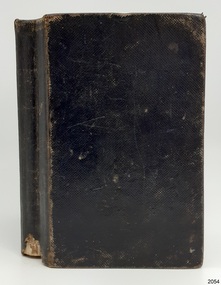
... The immigrants on board the British Trident were mostly new arrivals to Australia. Like Henry, they planned to make Australia their new home. ...The immigrants on board the British Trident were mostly new arrivals to Australia. Like Henry, they planned to make Australia their new home. ...Young Henry Pitts sailed from Liverpool, England, in about October 1860, on a ship called the 'British Trident'. About three months later, on January 7th 1861, he arrived in Sydney, Australia. While he travelled from one side of the world to the other, Henry attended lessons on the ship with his onboard teacher, Joseph Benton. On the day before the ship arrived at Sydney, Henry was given a Holy Bible by his teacher. The small black book had a hardcover and many printed pages of very thin paper. Henry must have felt special when he read his teacher’s beautifully written message that said the gift was a ‘mark of respect’ towards Henry. Maybe Mr Benton taught Henry to write with a pen and ink because Henry wrote his name several times inside the front of the book and again below his teacher’s message. Henry may have even learned to read from a Bible, which many passengers included in their luggage. The immigrants on board the British Trident were mostly new arrivals to Australia. Like Henry, they planned to make Australia their new home. Many also hoped to find work in this new country. Some passengers had family and friends waiting for them, people who deposited money towards their trip. Henry’s relative, Charles Pitts, had helped him pay for the ship’s passage, and William Oberthan paid money towards Joseph Benton’s fare. He may have planned for Joseph to work as a teacher in Australia. The Single Females were allowed to leave the ship the day after it docked at Sydney, but the Families and Single Men, including Henry and Joseph, had to stay onboard until Thursday. This Holy Bible is significant for its age, as it was published in 1859. The inscriptions within this small Bible are significant as they show that during a ship's voyage passengers had the opportunity to teach and to learn. They also show a relationship of encouragement had been built between the teacher and pupil. The Holy Bible containing the Old and New Testaments: Translated out of the original tongues: and with the former translations diligently compared and revised by His Majesty's Special Command. approved to be read in churches. Publisher and printed at the Oxford University Press, Sold by E. Gardner and Son, at the Oxford Bible Warehouse, Paternoster Row, London; and by J. and C. Mozley, Derby. Date: 1859 (in Roman Numerals) Handwritten black ink inscriptions are inside the front and back covers. The book once belonged to Henry Pitts and was presented to him by Joseph Benton in 1861. Front left side: " H Pitts H Pitts / - - - - - - of this Book / C - - - - - - - - -K " Front right side: "Given / to / Henry Pitts / As / A Mark of Respect / From / His Teacher on Board / the / British Trident / January 6th 1861 / Joseph Benton" "Henry" Back left: (indecipherable character) warrnambool, flagstaff hill maritime museum, holy bible, henry pitts, joseph benton, immigrant ship, 1861, single male, single female, charles pitts, william oberthan, british trident, hyde partk -
 Ballarat Heritage Services
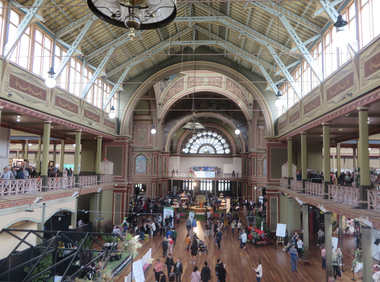
Photograph - Photograph -Colour, Clare Gervasoni, Interior of the Melbourne Exhibition Building, 2019, 31/03/2019
... The centre provided temporary accomodation for thousands of new arrivals from Britain. On 01 July 2004 the Royal Exhibition Building and Carlton Gardens were inscribed on the World Heritage List. ...The centre provided temporary accomodation for thousands of new arrivals from Britain. On 01 July 2004 the Royal Exhibition Building and Carlton Gardens were inscribed on the World Heritage List. ...A competition was announced to design a suitable building for the proposed Melbourne International Exhibition in December 1877. Eighteen entries were received. The winner of 300 pounds was Joseph Reed of the architectual firm Reed and Barnes. The foundation stone was laid by Governor Sir George Bowen on 19 February 1879. Prominent Melbounre builder David Mitchell, father of Dame Nellie Melba, won the tender to construct the main building. Exhibitors were able to move in by May 1880. On 01 October 1880 the Melbourne International Exhibition opened, when over 6000 people entered the main hall to see the Governor, the Marquess of Normanby open the show. Thirty three nations participated and ofver 32,000 exhibits were displayed. At the close of the exhibition on 30 April 1881 over 1.3 million people had visited the exhibition. In 1881 Victoria's population was just over 250,000. The management of the Exhibition Building and eight hectares of the Carlton Gardens was handed to the Exhibition Trustees by the Melbourne International Exhibition Commissioners on 01 OCtober 1881. The Trustees maintained the building for 'future public exhibitions and ... general public instruction and recreation' until 1996 when management of the building was transferred to Museum Victoria. In 1901 when the Australian colonies federated there was no capital and no federal parliament building. The Federal Parliament moved into the Victorian State Parliament building, and the State Parliament moved into the Western Annexe of the Exhibition Building for 26 years. After World War One, on 04 February 1919, the exhibition Building was turned into a hospital to treat Melbournians struck down with the Spanis 'Flu'. Initially housing 500 beds, the hospital grew to accomodate 2000 patients. Femals were located between the concert platform in the western nave and the done; male patients occupied the spaces beyond. The basement was used a a morgue. With the departure of the State Parliament in 1927 the western annexe became home to the Country Roads Board. In 1932 it was joined by the MOtor Registration Branch, and the Transport Regulation Board in 1934. They co-existedin cramped offices until the 1960s. In 1949 the oval at the rear of the ExhibitionBuilding was leased to the Commonealth Government for the establishment of the Migrant Reception Centre. When it closed in 1961-62, the centre comrised 29 bungalows over 1.4 hectare. The centre provided temporary accomodation for thousands of new arrivals from Britain. On 01 July 2004 the Royal Exhibition Building and Carlton Gardens were inscribed on the World Heritage List. It is the only 19th century Great Hall to survive largely intact, still in its original landscape setting, and still used as a palace of industry. The Melbourne International Flower and Garden Show is a flower show held annually since 1995 in early April each year, in Melbourne, Australia. It is located in the World Heritage Site of Carlton Gardens and the Royal Exhibition Building.[1] It is the largest horticultural event in the southern hemisphere, attracting over 100,000 visitors. It is rated among the top five flower and garden shows in the world. (Wikipedia) Colour photograph of the interior of the Melbourne Exhibition Buildings during the 2019 Melbourne Flower and Garden Show. melbourne international flower and garden show, carlton gardens, melbourne exhibition building, royal exhibition buildings -
 Ballarat Heritage Services
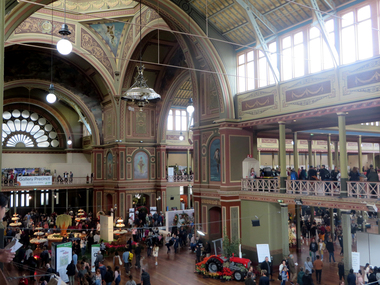
Photograph -Colour, Clare Gervasoni, Interior of the Melbourne Exhibition Building, 2019, 31/03/2019
... The centre provided temporary accomodation for thousands of new arrivals from Britain. On 01 July 2004 the Royal Exhibition Building and Carlton Gardens were inscribed on the World Heritage List. ...The centre provided temporary accomodation for thousands of new arrivals from Britain. On 01 July 2004 the Royal Exhibition Building and Carlton Gardens were inscribed on the World Heritage List. ...A competition was announced to design a suitable building for the proposed Melbourne International Exhibition in December 1877. Eighteen entries were received. The winner of 300 pounds was Joseph Reed of the architectual firm Reed and Barnes. The foundation stone was laid by Governor Sir George Bowen on 19 February 1879. Prominent Melbounre builder David Mitchell, father of Dame Nellie Melba, won the tender to construct the main building. Exhibitors were able to move in by May 1880. On 01 October 1880 the Melbourne International Exhibition opened, when over 6000 people entered the main hall to see the Governor, the Marquess of Normanby open the show. Thirty three nations participated and ofver 32,000 exhibits were displayed. At the close of the exhibition on 30 April 1881 over 1.3 million people had visited the exhibition. In 1881 Victoria's population was just over 250,000. The management of the Exhibition Building and eight hectares of the Carlton Gardens was handed to the Exhibition Trustees by the Melbourne International Exhibition Commissioners on 01 OCtober 1881. The Trustees maintained the building for 'future public exhibitions and ... general public instruction and recreation' until 1996 when management of the building was transferred to Museum Victoria. In 1901 when the Australian colonies federated there was no capital and no federal parliament building. The Federal Parliament moved into the Victorian State Parliament building, and the State Parliament moved into the Western Annexe of the Exhibition Building for 26 years. After World War One, on 04 February 1919, the exhibition Building was turned into a hospital to treat Melbournians struck down with the Spanis 'Flu'. Initially housing 500 beds, the hospital grew to accomodate 2000 patients. Femals were located between the concert platform in the western nave and the done; male patients occupied the spaces beyond. The basement was used a a morgue. With the departure of the State Parliament in 1927 the western annexe became home to the Country Roads Board. In 1932 it was joined by the MOtor Registration Branch, and the Transport Regulation Board in 1934. They co-existedin cramped offices until the 1960s. In 1949 the oval at the rear of the ExhibitionBuilding was leased to the Commonealth Government for the establishment of the Migrant Reception Centre. When it closed in 1961-62, the centre comrised 29 bungalows over 1.4 hectare. The centre provided temporary accomodation for thousands of new arrivals from Britain. On 01 July 2004 the Royal Exhibition Building and Carlton Gardens were inscribed on the World Heritage List. It is the only 19th century Great Hall to survive largely intact, still in its original landscape setting, and still used as a palace of industry. The Melbourne International Flower and Garden Show is a flower show held annually since 1995 in early April each year, in Melbourne, Australia. It is located in the World Heritage Site of Carlton Gardens and the Royal Exhibition Building.[1] It is the largest horticultural event in the southern hemisphere, attracting over 100,000 visitors. It is rated among the top five flower and garden shows in the world. (Wikipedia) Colour photograph of the interior of the Melbourne Exhibition Buildings during the 2019 Melbourne Flower and Garden Show. Four mottoes are painted under teh windows of the dome: Dei Grecia (By the grace of God), Carpe diem (Make the most of the day), Aude sapere (Dare to be wise) and Benigno numine (With benighn power) melbourne international flower and garden show, carlton gardens, melbourne exhibition building, royal exhibition buildings -
 Ballarat Heritage Services
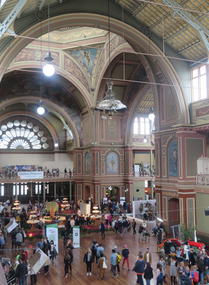
Photograph - Photograph -Colour, Clare Gervasoni, Interior of the Melbourne Exhibition Building, 2019, 31/03/2019
... The centre provided temporary accomodation for thousands of new arrivals from Britain. On 01 July 2004 the Royal Exhibition Building and Carlton Gardens were inscribed on the World Heritage List. ...The centre provided temporary accomodation for thousands of new arrivals from Britain. On 01 July 2004 the Royal Exhibition Building and Carlton Gardens were inscribed on the World Heritage List. ...A competition was announced to design a suitable building for the proposed Melbourne International Exhibition in December 1877. Eighteen entries were received. The winner of 300 pounds was Joseph Reed of the architectual firm Reed and Barnes. The foundation stone was laid by Governor Sir George Bowen on 19 February 1879. Prominent Melbounre builder David Mitchell, father of Dame Nellie Melba, won the tender to construct the main building. Exhibitors were able to move in by May 1880. On 01 October 1880 the Melbourne International Exhibition opened, when over 6000 people entered the main hall to see the Governor, the Marquess of Normanby open the show. Thirty three nations participated and ofver 32,000 exhibits were displayed. At the close of the exhibition on 30 April 1881 over 1.3 million people had visited the exhibition. In 1881 Victoria's population was just over 250,000. The management of the Exhibition Building and eight hectares of the Carlton Gardens was handed to the Exhibition Trustees by the Melbourne International Exhibition Commissioners on 01 OCtober 1881. The Trustees maintained the building for 'future public exhibitions and ... general public instruction and recreation' until 1996 when management of the building was transferred to Museum Victoria. In 1901 when the Australian colonies federated there was no capital and no federal parliament building. The Federal Parliament moved into the Victorian State Parliament building, and the State Parliament moved into the Western Annexe of the Exhibition Building for 26 years. After World War One, on 04 February 1919, the exhibition Building was turned into a hospital to treat Melbournians struck down with the Spanis 'Flu'. Initially housing 500 beds, the hospital grew to accomodate 2000 patients. Femals were located between the concert platform in the western nave and the done; male patients occupied the spaces beyond. The basement was used a a morgue. With the departure of the State Parliament in 1927 the western annexe became home to the Country Roads Board. In 1932 it was joined by the MOtor Registration Branch, and the Transport Regulation Board in 1934. They co-existedin cramped offices until the 1960s. In 1949 the oval at the rear of the ExhibitionBuilding was leased to the Commonealth Government for the establishment of the Migrant Reception Centre. When it closed in 1961-62, the centre comrised 29 bungalows over 1.4 hectare. The centre provided temporary accomodation for thousands of new arrivals from Britain. On 01 July 2004 the Royal Exhibition Building and Carlton Gardens were inscribed on the World Heritage List. It is the only 19th century Great Hall to survive largely intact, still in its original landscape setting, and still used as a palace of industry. The Melbourne International Flower and Garden Show is a flower show held annually since 1995 in early April each year, in Melbourne, Australia. It is located in the World Heritage Site of Carlton Gardens and the Royal Exhibition Building.[1] It is the largest horticultural event in the southern hemisphere, attracting over 100,000 visitors. It is rated among the top five flower and garden shows in the world. (Wikipedia) Colour photograph of the interior of the Melbourne Exhibition Buildings during the 2019 Melbourne Flower and Garden Show. Four mottoes are painted under teh windows of the dome: Dei Grecia (By the grace of God), Carpe diem (Make the most of the day), Aude sapere (Dare to be wise) and Benigno numine (With benighn power) melbourne international flower and garden show, carlton gardens, melbourne exhibition building, royal exhibition buildings -
 Wodonga & District Historical Society Inc
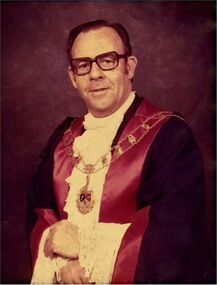
Photograph - Les Stone, Last Shire President and first Mayor of the Rural City of Wodonga
... Les established a strong network in the local migrant community, helping many new arrivals at Bonegilla Migrant Reception Centre with language issues and settling them into their new environment. ...Les established a strong network in the local migrant community, helping many new arrivals at Bonegilla Migrant Reception Centre with language issues and settling them into their new environment. ...Les Stone was the last Shire President of Wodonga and first Mayor of the Rural City of Wodonga. Born in Collingwood, Victoria on 24th August 1919, he was the first of his family to obtain a post-secondary education. He became a Christian Brother but left the ministry after 10 years and became a trained primary school teacher. Les held various teaching appointments in and around country Victoria and Wodonga, the last as Principal of Wodonga West Primary School. It was in Wodonga that Les and his wife Pam settled with their family. Their contribution to the Wodonga community and local government was outstanding. Les established a strong network in the local migrant community, helping many new arrivals at Bonegilla Migrant Reception Centre with language issues and settling them into their new environment. He worked in support of all underprivileged people in the community. In 1967 Les was elected as a Councillor for the West Riding of Wodonga Council. The following year he was elected Deputy Shire President. He was the last Shire President of Wodonga and in 1971 became the inaugural Mayor of the Rural City of Wodonga. The City of Wodonga was proclaimed on 14th March 1973 and Les was re-elected as Mayor. He chose to serve one full term as Mayor having previously served two terms as Shire President. Les Stone passed away at the Mercy Hospital Albury on 28th December 1974 at 54 years of age. He left behind an enduring legacy which included the proactive encouragement of industry to Wodonga. He also championed the selection of Wodonga as a Growth Centre. A champion and defender of local government, Les served as Chairman of the North East Region of Municipalities which comprised 13 Councils including Wodonga and Wangaratta. He also played a critical role on the Albury Wodonga Development Corporation for five years in the early period of the Whitlam decentralization scheme. Les Stone’s life of giving wasn’t just about local government and teaching. He was an old-fashioned community activist who gave far more than he took from the community. Les worked tirelessly for numerous organizations including the Royal Children’s Hospital, Royal Melbourne Hospital (he was made a Life Governor of both), the Wodonga Good Neighbour Council, and Knights of the Southern Cross, Rotary, the St. Vincent de Paul Society and St. Augustine’s Parish Council. However it is in local government that he remains best remembered. He was an active and vocal councillor and gave over 16 years of service to the people of Wodonga - his election and re-election was never once opposed. Les Stone was interned in the Lawn Cemetery in Wodonga. He was aged 54 years. The naming and dedication of the Les Stone Park in West Wodonga is an important acknowledgement of Les Stone’s life. The inscription reads: '’Leslie Edwin Stone JP was the first Mayor of Wodonga from 1972 to 1974 and a former Shire President (1972). A school teacher and principal by profession Les had a long history of involvement with the migrant community and Catholic Church. He was an acknowledged champion of decentralisation’’. These photos are significant because they document the service of an important civic leader in Wodonga. A collection of coloured images related to Les Stone, Mayor of Wodonga les stone, wodonga civic leaders, wodonga council -
 Ballarat Tramway Museum
Photograph - Photograph of a Framed group of Photographs, George Netherway, TRACK RE-LAYING 1937, 1930's late
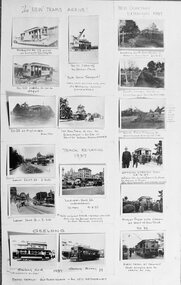
... Photograph of framed set of 17 No. 60mm x 38mm black and white photographs (see 588 - 604) showing arrival of new trams ex Melbourne in 1930, construction of Lydiard St North track relaying in Ballarat during 1937, opening of Lydiard St. extension in 1937 and two Geelong trams in 1937. ...North New Trams Photograph of framed set of 17 No. 60mm x 38mm black and white photographs (see 588 - 604) showing arrival of new trams ex Melbourne in 1930, construction of Lydiard St North track relaying in Ballarat during 1937, opening of Lydiard St. extension in 1937 and two Geelong trams in 1937. ...Photograph of framed set of 17 No. 60mm x 38mm black and white photographs (see 588 - 604) showing arrival of new trams ex Melbourne in 1930, construction of Lydiard St North track relaying in Ballarat during 1937, opening of Lydiard St. extension in 1937 and two Geelong trams in 1937. Mounted on a white cardboard based with captions written under photos in brown ink, red ink underline contained within a brown stained wooden frame with glass front and cardboard backing sheet, held with small nails. For photo of opening of Lydiard St. Nth extension, has a piece of tape over date, corrected from 28-9-37 to 30-8-37. Also in pencil on rear of frame. For details of individual photographs see prints of photos items 588 - 604. Photos taken with a Kodak Vest Pocket camera. See Kings, Ballarat Tramways trams, tramways, ballarat, geelong, lydiard st. north, new trams -
 Ballarat Tramway Museum
Photograph - Framed Photographs, George Netherway, 1930's late
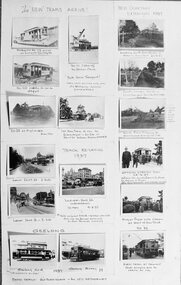
... Framed set of 17 No. 60mm x 38mm black and white photographs (see 588 - 604) showing arrival of new trams ex Melbourne in 1930, construction of Lydiard St North track relaying in Ballarat during 1937, opening of Lydiard St. extension in 1937 and two Geelong trams in 1937. ...New Trams In pencil on rear "Lydiard St. Nth from Aug. 30/37" Framed set of 17 No. 60mm x 38mm black and white photographs (see 588 - 604) showing arrival of new trams ex Melbourne in 1930, construction of Lydiard St North track relaying in Ballarat during 1937, opening of Lydiard St. extension in 1937 and two Geelong trams in 1937. ...Framed set of 17 No. 60mm x 38mm black and white photographs (see 588 - 604) showing arrival of new trams ex Melbourne in 1930, construction of Lydiard St North track relaying in Ballarat during 1937, opening of Lydiard St. extension in 1937 and two Geelong trams in 1937. Mounted on a white cardboard based with captions written under photos in brown ink, red ink underline contained within a brown stained wooden frame with glass front and cardboard backing sheet, held with small nails. Also see Item No. 587A, AS Box 56 - 5" x 8" photo of same. For photo of opening of Lydiard St. Nth extension, has a piece of tape over date, corrected from 28-9-37 to 30-8-37. Also in pencil on rear of frame. For details of individual photographs see prints of photos items 588 - 604. Photos taken with a Kodak Vest Pocket camera. See Kings, Ballarat Tramways In pencil on rear "Lydiard St. Nth from Aug. 30/37" trams, tramways, ballarat, geelong, lydiard st. north, new trams -
 Royal Brighton Yacht Club
Life Ring, Vega Trophy (Mounted Wooden Life Ring)
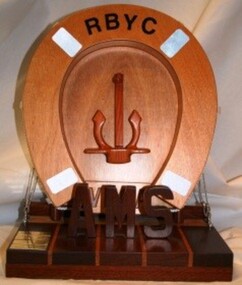
... The military demanded first pick of all foodstuffs and kept meticulous records of all livestock forcing farmers even to show newborn calves and piglets to them, then claiming the new arrivals for their dinner tables. However there are many stories of farmers outwitting their masters when twin calves or suchlike arrived! ...The military demanded first pick of all foodstuffs and kept meticulous records of all livestock forcing farmers even to show newborn calves and piglets to them, then claiming the new arrivals for their dinner tables. However there are many stories of farmers outwitting their masters when twin calves or suchlike arrived! ...Vega Trophy (Mounted Wooden Life Ring) Donor: Graham Noel During World War II when the Germans occupied the Channel Islands the local people went through very severe food rationing and were on the verge of starvation. Near the end of the war, the Swedish ship Vega was allowed by the Germans to deliver several shipments of food to the civilian population, easing the critical shortages of food on the islands. Further background detail can be found below. Graham Noel was born on the Islands and lived there during this harsh period. The trophy is awarded to the winner of the Combined Division AMS Aggregate Series. First Winner: Under Capricorn, P. Bedlington 2005/06 Vega – Further historical background Early in the Second World War Jersey was declared “unarmed” and the German military took over, taking quite a few lives in the process, through strafing the main harbour and a few other places which they needlessly considered threatening. A considerable number of locals evacuated to England before the Germans arrived, but more than 60% of the population remained and endured 5 years of very strict and difficult conditions. Not only was the population unable to contact relatives in the UK or elsewhere, but very quickly they found themselves subject to harsh curfews, strictly rationed foodstuffs, no fuel for vehicles, radios confiscated, and homes and hotels commandeered by the military. The military demanded first pick of all foodstuffs and kept meticulous records of all livestock forcing farmers even to show newborn calves and piglets to them, then claiming the new arrivals for their dinner tables. However there are many stories of farmers outwitting their masters when twin calves or suchlike arrived! Lawbreakers were quickly dealt with, mostly with lengthy prison terms in Jersey, but the more serious crimes were punished by being sent to some horrible French prisons, or even some of the notorious German concentration camps. All local Jews were dispatched to concentration camps, and even English born families were similarly shipped through France and on to Germany. Sadly, a considerable number of those deported did not make it back safely to Jersey. In June 1944 the locals were delighted to hear that the Allies had invaded Normandy and very soon they could hear the battles as the Allies worked their way along the French coast. Little did they know they would still have to wait another 11 months for freedom, having to put up with a very demanding German occupation force which was still determined to obey Hitler’s order to “Defend the Channel Islands to the death”. Now that France was in Allied Hands the local military commanders were unable to supplement their food supplies from France and even harsher demands were made on the local population to ensure that all branches of their still very substantial military force were reasonably well fed. As well as the military, Jersey farmers had to provide food for the Allied POWs and the many “forced labourers”, mainly of Russian, Polish and Italian backgrounds who had been directed to the island to build all the concrete bunkers. This included an underground hospital, all this complying with Hitler’s orders to ensure that the Channel Islands would never again be part of Britain. Many requests by the Jersey authorities for Red Cross assistance were rejected, but finally in December 1944 they agreed and on 30th December the Red Cross vessel “Vega” (Swedish Registry) arrived and delivered parcels to the civilian population. These parcels contained a variety of foodstuffs supplied mainly by Canadian authorities, desperately needed medical supplies, flour, oils and soaps, as well as tobacco from New Zealand. Vega made a further 3 or 4 trips and most certainly eased the desperate situation being faced by the locals. In fact, it resulted in the locals having slightly better food supplies than the military and many local farmers tell stories of having to protect their stock from marauding soldiers. Understandably Churchill was reluctant to send in an invading force to retake the Channel Islands, but by May 1945 it was clear that the Third Reich was finished and on May 9th the German Military surrendered, without a fight, to a large British landing force. On a slightly lighter note … in January 1945 Jersey stonemasons were seen in the main town square repairing flagstones … the Germans had never noticed that the name “Vega” had been formed in those flagstones! As a side note Vega is the name of the brightest star in the universe. Furthermore, throughout the occupation, despite German law that demanded confiscation of all radio sets, punishable by long prison terms or deportation to Germany, there were still many sets being listened to. The locals had a well refined news system for the dissemination of news of what was happening in the outside world. vega, graham noel, ams, combined division, aggregate
