
Showing 6 items matching "nobelius siding"
-
 Narre Warren and District Family History Group
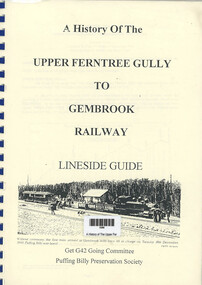
Book, Peter Medlin, A History of the Upper Ferntree Gully to Gembrook Railway, 1998
... ...Nobelius Siding...Lakeside and Paradise Valley stations Nobelius Siding Lineside Guide showing where all the lines were put in Puffing Billy railway line A History of the Upper Ferntree Gully to Gembrook Railway Book Peter Medlin Get G42 Going Committee Puffing Billy Preservation Society ...Lineside Guide showing where all the lines were put in Puffing Billy railway linenon-fictionLineside Guide showing where all the lines were put in Puffing Billy railway linelakeside and paradise valley stations, nobelius siding -
 Emerald Museum & Nobelius Heritage Park
Machine - Typewriter, Remington
... Early Remington typewriterMetal|Steel Was imported by Nobelius late 1880, used daily for invoices and receipts and compiling the names of trees for the annual catalogue. located in the nursery offices in the packing shed located at Nobelius Siding Remington Type 2 model Made in 1884, still in working order...Emerald Victoria Australia office equipment Chartres Proprietary Limited Sole Importer Remington Standard Typewriter Early Remington typewriterMetal|Steel Was imported by Nobelius late 1880, used daily for invoices and receipts and compiling the names of trees for the annual catalogue. located in the nursery offices in the packing shed located at Nobelius Siding Remington Type 2 model Made in 1884, still in working order Machine Typewriter Remington ...Early Remington typewriterMetal|Steel Was imported by Nobelius late 1880, used daily for invoices and receipts and compiling the names of trees for the annual catalogue. located in the nursery offices in the packing shed located at Nobelius Siding Remington Type 2 model Made in 1884, still in working orderChartres Proprietary Limited Sole Importer Remington Standard Typewriteremerald, victoria, australia, office equipment -
Emerald Museum & Nobelius Heritage Park
Photograph - Packing Shed, Gembrook Nurseries, Unknown maker, 1900-1920
... Railway developments in 1900 included the creation of a siding and Packing Shed, known as Nobelius Station, which is featured in this photograph. ...Railway developments in 1900 included the creation of a siding and Packing Shed, known as Nobelius Station, which is featured in this photograph. ...The Gembrook Nurseries, informally known as the Nobelius Nurseries after the founder Carl Axel Nobelius, began with the purchase of sixty-three acres in 1886 and boomed in the 1890s due to opportunities provided by employment-promoting schemes to develop public parks and gardens and street shade by local and State Governments around Australia. Trees were sold to more than forty councils and Government organisations in the 1890s, including the Department of Agriculture, Lands Department and Victorian Railways. The need to transport nursery products by train via Ferntree Gully rather than by bullock dray to Narre Warren was a factor in the successful petition to develop what is now known as the Puffing Billy Railway. Railway developments in 1900 included the creation of a siding and Packing Shed, known as Nobelius Station, which is featured in this photograph. The Packing Shed was able to handle 250,000 cases of fruit each year. Gembrook Nurseries had an indirect influence on the development of other farms and industries in the region. As a wholesale nursery with high sales volumes it was an important employer of local people. Peak season for employees was during the cooler months, during most farmers' off-season. This provided local farmers with a source of income while their own farms were becoming established.The photograph is significant because it depicts personnel and infrastructure associated with the Gembrook or Nobelius Nurseries, a business which was instrumental to the development of Emerald as a settlement in the 19th and 20th Centuries and also influenced the development of public and private gardens and the farming of several species in Australia and internationally. The Nobelius Nursery is listed on the Victorian Heritage Register.Black and white rectangular photograph printed on print media paper. The image is captioned 'Lunch Hour at the Packing Shed, Gembrook Nurseries.' It depicts thirty-one men (including one adolescent) and one woman posing for a group photograph behind approximately five large product bales resting in a rectangular metal rail cargo carriage. One of the men has a bandage across one eye. The people depicted are wearing clothing indicating the image may have been taken in the early 20th century. The Packing Shed building (built in 1900) and several stacked wooden storage crates are visible behind the group.Obverse: 59 NOR (?) 10 (?) + / LUNCH HOUR AT THE PACKING SHED, GEMBROOK NURSERIES. /1900s, gembrook nurseries, nobelius nurseries, carl axel nobelius, packing shed, railway, puffing billy railway, nursery employees, farming, agriculture, government initiatives -
Emerald Museum & Nobelius Heritage Park
Photograph - Nobelius Nursery Packing Shed, Unknown photographer, 1970s
... Railway developments in 1900 included the creation of a siding and Packing Shed, known as Nobelius Station, which is featured in this photograph. ...Railway developments in 1900 included the creation of a siding and Packing Shed, known as Nobelius Station, which is featured in this photograph. ...The Gembrook Nurseries, informally known as the Nobelius Nurseries after the founder Carl Axel Nobelius, began with the purchase of sixty-three acres in 1886 and boomed in the 1890s due to opportunities provided by employment-promoting schemes to develop public parks and gardens and street shade by local and State Governments around Australia. Trees were sold to more than forty councils and Government organisations in the 1890s, including the Department of Agriculture, Lands Department and Victorian Railways. The need to transport nursery products by train via Ferntree Gully rather than by bullock dray to Narre Warren was a factor in the successful petition to develop what is now known as the Puffing Billy Railway. Railway developments in 1900 included the creation of a siding and Packing Shed, known as Nobelius Station, which is featured in this photograph. The Packing Shed was able to handle 250,000 cases of fruit each year at the height of the nurseries' activities. The image shows the Packing Shed with boarded-up windows, suggesting it was taken prior to the purchase of the facility for use in the Puffing Billy Railway service. Gembrook Nurseries had an indirect influence on the development of other farms and industries in the region. As a wholesale nursery with high sales volumes it was an important employer of local people. Peak season for employees was during the cooler months, during most farmers' off-season. This provided local farmers with a source of income while their own farms were becoming established.The photograph is significant because it depicts infrastructure associated with the Gembrook or Nobelius Nurseries, a business which was instrumental to the development of Emerald as a settlement in the 19th and 20th Centuries and also influenced the development of public and private gardens and the farming of several species in Australia and internationally. The Nobelius Nursery is listed on the Victorian Heritage Register. The image appears to show the Packing Shed building prior to its restoration as a tourist facility.Black and white rectangular photograph printed on print media paper. The image depicts the Gembrook Nurseries Packing Shed building with boarded up windows.Obverse: NOBELIUS NURSERIES / . WEEKEND TRADING . /1970s, gembrook nurseries, puffing billy railway, carl axel nobelius, packing shed, railway stations, farming, agriculture -
Emerald Museum & Nobelius Heritage Park
Photograph - Nobelius Packing Shed, Unknown photographer
... Railway developments in 1900 included the creation of a siding and Packing Shed, known as Nobelius Station, which is featured in this photograph. ...Railway developments in 1900 included the creation of a siding and Packing Shed, known as Nobelius Station, which is featured in this photograph. ...The Gembrook Nurseries, informally known as the Nobelius Nurseries after the founder Carl Axel Nobelius, began with the purchase of sixty-three acres in 1886 and boomed in the 1890s due to opportunities provided by employment-promoting schemes to develop public parks and gardens and street shade by local and State Governments around Australia. Trees were sold to more than forty councils and Government organisations in the 1890s, including the Department of Agriculture, Lands Department and Victorian Railways. The need to transport nursery products by train via Ferntree Gully rather than by bullock dray to Narre Warren was a factor in the successful petition to develop what is now known as the Puffing Billy Railway. Railway developments in 1900 included the creation of a siding and Packing Shed, known as Nobelius Station, which is featured in this photograph. The Packing Shed was able to handle 250,000 cases of fruit each year at the height of the nurseries' activities. The image shows the Packing Shed prior to the purchase of the facility for use in the Puffing Billy Railway service. Gembrook Nurseries had an indirect influence on the development of other farms and industries in the region. As a wholesale nursery with high sales volumes it was an important employer of local people. Peak season for employees was during the cooler months, during most farmers' off-season. This provided local farmers with a source of income while their own farms were becoming established.The photograph is significant because it depicts infrastructure associated with the Gembrook or Nobelius Nurseries, a business which was instrumental to the development of Emerald as a settlement in the 19th and 20th Centuries and also influenced the development of public and private gardens and the farming of several species in Australia and internationally. The Nobelius Nursery is listed on the Victorian Heritage Register. The image appears to show the Packing Shed building prior to its restoration as a tourist facility.Black and white rectangular photograph printed on print media paper. The image depicts the Gembrook Nurseries Packing Shed building. The building is made from weatherboard and features a brick chimney. There is also a tall tree standing next to the chimney.Obverse: IUS NURSERIES / TRADING ... /gembrook nurseries, puffing billy railway, carl axel nobelius, packing shed, railway stations, farming, agriculture -
Emerald Museum & Nobelius Heritage Park
Photograph - Nobelius Packing Shed, Unknown photographer, 2000s
... Railway developments in 1900 included the creation of a siding and Packing Shed, known as Nobelius Station, which is featured in this photograph. ...Railway developments in 1900 included the creation of a siding and Packing Shed, known as Nobelius Station, which is featured in this photograph. ...The Gembrook Nurseries, informally known as the Nobelius Nurseries after the founder Carl Axel Nobelius, began with the purchase of sixty-three acres in 1886 and boomed in the 1890s due to opportunities provided by employment-promoting schemes to develop public parks and gardens and street shade by local and State Governments around Australia. Trees were sold to more than forty councils and Government organisations in the 1890s, including the Department of Agriculture, Lands Department and Victorian Railways. The need to transport nursery products by train via Ferntree Gully rather than by bullock dray to Narre Warren was a factor in the successful petition to develop what is now known as the Puffing Billy Railway. Railway developments in 1900 included the creation of a siding and Packing Shed, known as Nobelius Station, which is featured in this photograph. The Packing Shed was able to handle 250,000 cases of fruit each year at the height of the nurseries' activities. The image shows the Packing Shed with boarded-up windows, suggesting it was taken prior to the purchase of the facility for use in the Puffing Billy Railway service. Gembrook Nurseries had an indirect influence on the development of other farms and industries in the region. As a wholesale nursery with high sales volumes it was an important employer of local people. Peak season for employees was during the cooler months, during most farmers' off-season. This provided local farmers with a source of income while their own farms were becoming established.The photograph is significant because it depicts infrastructure associated with the Gembrook or Nobelius Nurseries, a business which was instrumental to the development of Emerald as a settlement in the 19th and 20th Centuries and also influenced the development of public and private gardens and the farming of several species in Australia and internationally. The Nobelius Nursery is listed on the Victorian Heritage Register.A coloured rectangular photograph of the Nobelius Nurseries Packing Shed. The photograph was taken in the grounds looking up towards the packing shed. There are various trees and vegetation throughout the grounds and surrounding the packing shed. The Nobelius Nurseries Packing Shed was used to sort and pack trees to be sent overseas during the 1900s-1940s.No inscriptions/marksnobelius nursery, packing shed, 2000s, puffing billy railway, nobelius heritage park
