
Showing 6 items matching "notorious crimes"
-
 Bendigo Historical Society Inc.
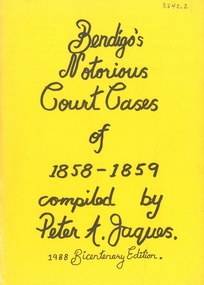
Book - BENDIGO'S NOTORIOUS COURT CASES 1858-1859
... ...Notorious crimes...Court cases Notorious crimes Peter A Jacques 39 page soft cover booklet 'Bendigo's Notorious Court Cases 1858 to 1859. ...39 page soft cover booklet 'Bendigo's Notorious Court Cases 1858 to 1859. Compiled by Peter A Jaques. 1988 Bicentenary Edition Inscribed by the author to Ray Wallace 10/8/87 inside front cover Includes some B&W sketches.Peter A Jacquescourt cases, notorious crimes -
 Victoria Police Museum
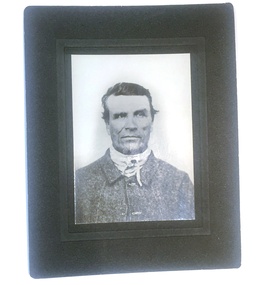
Photograph, Criminal Photograph James Duncan
... The robbery of the barque 'Nelson' is one of the most notorious crimes of the 1850s. Duncan, along with James Morgan, John James, Stephen Fox and John Roberts , robbed the ship of over cash and gold nuggets at gun point while she was anchored at Hobsons Bay, off Melbourne. ...The robbery of the barque 'Nelson' is one of the most notorious crimes of the 1850s. Duncan, along with James Morgan, John James, Stephen Fox and John Roberts , robbed the ship of over cash and gold nuggets at gun point while she was anchored at Hobsons Bay, off Melbourne. ...James Duncan was tried for his involvement in the Nelson Robbery in 1852. The robbery of the barque 'Nelson' is one of the most notorious crimes of the 1850s. Duncan, along with James Morgan, John James, Stephen Fox and John Roberts , robbed the ship of over cash and gold nuggets at gun point while she was anchored at Hobsons Bay, off Melbourne. One of the victims of the robbery identified Duncan to police by his voice. Duncan was sentenced by the notorious Justice Redmond Barry to 15 years hard labour on the roads. Black and white photograph mounted on card.duncan, morgan, james, fox, roberts, nelson, nelson robbery, gold rush, redmond barry -
 Bendigo Historical Society Inc.
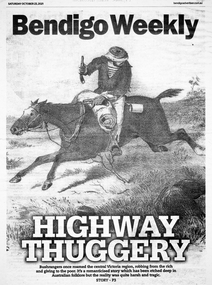
Newspaper - Bendigo Advertiser story Sat Oct 23 2021 entitled "Cop-killer caught out", Sat Oct 23 2021
... This document recounts the story of Gipsy Smith (real name William Turner), a notorious bushranger in 19th-century Australia, focusing on his involvement in violent crimes and his eventual capture. ...This document recounts the story of Gipsy Smith (real name William Turner), a notorious bushranger in 19th-century Australia, focusing on his involvement in violent crimes and his eventual capture. ...This document recounts the story of Gipsy Smith (real name William Turner), a notorious bushranger in 19th-century Australia, focusing on his involvement in violent crimes and his eventual capture. Gipsy Smith was involved in a shootout in central Victoria in 1856 that resulted in the death of Sergeant John McNally and the wounding of Constable John Moore. Smith and his accomplice escaped after the incident, which caused public outrage due to McNally's popularity. Smith was part of a group of bushrangers who terrorized travelers, merchants, and goldfields communities with armed robberies and audacious hold-ups. Notable incidents included tying up and robbing multiple victims, and high-speed horse chases with police. Bushrangers like Smith were sometimes romanticized as rebellious figures, but the document emphasizes the real violence and fear they caused. Smith, originally William Turner, was a former convict from Tasmania who became a bushranger after escaping to Victoria during the gold rush. He was known for his bravado, often displaying weapons openly among gold diggers. Smith was eventually recognized and arrested in Maryborough after the murder, narrowly avoiding a murder conviction due to a technicality with his arrest warrant. He was sentenced to 15 years of hard labor for manslaughter. After serving his sentence, Smith was trusted with responsible work, such as driving cattle and managing a farm, suggesting a degree of rehabilitation. The story is part of a historical series highlighting notable events in the region’s past.Bendigo Advertiser story Sat Oct 23 2021 entitled "Cop-killer caught out" This item contains the following documents 3486.51a Bendigo Advertiser Page 1 Title Page - "Highway Thuggery" 3486.51b Bendigo Advertiser Page 3 article "Cop-killer caught out" the story of Gypsy Smith Bushrangerbendigo, gipsy smith bushranger -
 Bendigo Historical Society Inc.
Newspaper - Bendigo Advertiser Article - "Council granted slave trader a healthy bonus", Sat Aug 20 2022
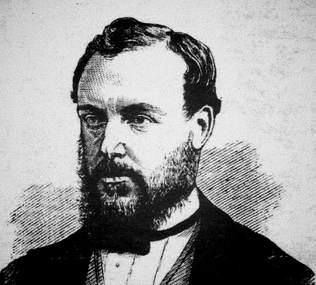
... crimes and may have sought to minimize their own roles. Murray was Irish-born, educated at Trinity College Dublin, and established as a Melbourne doctor before turning to risky ventures in the South Seas, drawn by the promise of wealth and adventure. The South Pacific at the time attracted many fugitives and outcasts seeking fortune or escape from the law. Despite his violent past, Murray returned to Victoria and maintained a respectable public image, with few aware of his connection to the notorious...crimes and may have sought to minimize their own roles. Murray was Irish-born, educated at Trinity College Dublin, and established as a Melbourne doctor before turning to risky ventures in the South Seas, drawn by the promise of wealth and adventure. The South Pacific at the time attracted many fugitives and outcasts seeking fortune or escape from the law. Despite his violent past, Murray returned to Victoria and maintained a respectable public image, with few aware of his connection to the notorious ...This document examines the controversial legacy of Dr. James Patrick Murray, focusing on his involvement in maritime violence and his surprising recognition by the Bendigo Council. Bendigo Council awarded Dr. Murray a bonus and a glowing reference 150 years ago, despite his alleged involvement in mass murder at sea. He received a £50 bonus (over $10,000 today) for his work during a public health crisis. Murray captained the brig Carl, which was involved in forcibly transporting islanders to work on Fiji's cotton plantations. Accounts describe extreme violence: when enslaved islanders resisted, Murray and his crew fired into the hold, drilled holes to shoot more easily, and disposed of bodies at sea—allegedly killing 70 people. Survivors were delivered to Fiji, and the crew received a large finder's fee. Murray was described as charming and confident, but also as cruel, treacherous, and deceitful by contemporary sources. He betrayed his own crew by testifying against them in exchange for immunity from prosecution. Some accounts of Murray's actions may be exaggerated or self-serving, as witnesses were also implicated in the crimes and may have sought to minimize their own roles. Murray was Irish-born, educated at Trinity College Dublin, and established as a Melbourne doctor before turning to risky ventures in the South Seas, drawn by the promise of wealth and adventure. The South Pacific at the time attracted many fugitives and outcasts seeking fortune or escape from the law. Despite his violent past, Murray returned to Victoria and maintained a respectable public image, with few aware of his connection to the notorious events in Fiji. In 1872, Bendigo faced a deadly smallpox outbreak.Dr. Murray was appointed with full authority to manage the crisis and was credited with successfully containing the outbreak, earning public gratitude and official praise. Shortly after his public health success, Murray was implicated in the slave trading of South Sea islanders, specifically through his involvement with the ship Carl. Court testimony revealed brutal methods used to capture islanders, including trickery and force. The scandal shocked the public, with widespread condemnation and questions about how Murray had been appointed to a position of trust. Victorian authorities and the press criticized Murray and those who had supported or employed him. Despite the revelations, the Bendigo council felt obligated to honor their promise of a bonus for his work during the outbreak, citing the importance of keeping their word. Murray did not return to Bendigo after the scandal broke, though he sent letters expressing gratitude and claiming to have reformed. His claims of redemption were met with skepticism and derision by the press. The ship Carl was seized, and several crew members were convicted and sentenced for their roles in the slave trading operation. Murray disappeared from public view, with reports suggesting he fled to England, leaving his family behind.Bendigo Advertiser Article - "Council granted slave trader a healthy bonus" Sat Aug 20 2022, story by Tom O'Callaghan and images courtesy of TROVE 3486.55a Black and white etching of James Patrick Murray 3486.55b Part of the article from the Bendigo Advertiser 3486.55c Black and white etching of the seizing of a slave trader's ship 3486.55d Part of the article from the Bendigo Advertiserbendigo, james patrick murray -
 Bendigo Historical Society Inc.
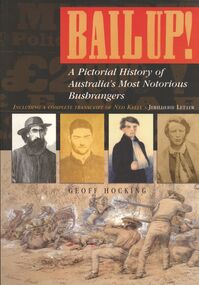
Book - BAIL UP
... HISTORY Australian bushrangers Australia-history-crime-bushrangers Geoff Hocking Bail Up! A pictorial history of Australia's most notorious Bushrangers, including a complete transcript of Ned Kell's Jerilderie letter, 192 pages with black and white & coloured illustrations and photographs. ...Bail Up! A pictorial history of Australia's most notorious Bushrangers, including a complete transcript of Ned Kell's Jerilderie letter, 192 pages with black and white & coloured illustrations and photographs.Geoff Hockinghistory, australian, bushrangers, australia-history-crime-bushrangers -
 Royal Brighton Yacht Club
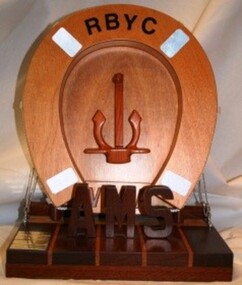
Life Ring, Vega Trophy (Mounted Wooden Life Ring)
... Lawbreakers were quickly dealt with, mostly with lengthy prison terms in Jersey, but the more serious crimes were punished by being sent to some horrible French prisons, or even some of the notorious German concentration camps. ...Lawbreakers were quickly dealt with, mostly with lengthy prison terms in Jersey, but the more serious crimes were punished by being sent to some horrible French prisons, or even some of the notorious German concentration camps. ...Vega Trophy (Mounted Wooden Life Ring) Donor: Graham Noel During World War II when the Germans occupied the Channel Islands the local people went through very severe food rationing and were on the verge of starvation. Near the end of the war, the Swedish ship Vega was allowed by the Germans to deliver several shipments of food to the civilian population, easing the critical shortages of food on the islands. Further background detail can be found below. Graham Noel was born on the Islands and lived there during this harsh period. The trophy is awarded to the winner of the Combined Division AMS Aggregate Series. First Winner: Under Capricorn, P. Bedlington 2005/06 Vega – Further historical background Early in the Second World War Jersey was declared “unarmed” and the German military took over, taking quite a few lives in the process, through strafing the main harbour and a few other places which they needlessly considered threatening. A considerable number of locals evacuated to England before the Germans arrived, but more than 60% of the population remained and endured 5 years of very strict and difficult conditions. Not only was the population unable to contact relatives in the UK or elsewhere, but very quickly they found themselves subject to harsh curfews, strictly rationed foodstuffs, no fuel for vehicles, radios confiscated, and homes and hotels commandeered by the military. The military demanded first pick of all foodstuffs and kept meticulous records of all livestock forcing farmers even to show newborn calves and piglets to them, then claiming the new arrivals for their dinner tables. However there are many stories of farmers outwitting their masters when twin calves or suchlike arrived! Lawbreakers were quickly dealt with, mostly with lengthy prison terms in Jersey, but the more serious crimes were punished by being sent to some horrible French prisons, or even some of the notorious German concentration camps. All local Jews were dispatched to concentration camps, and even English born families were similarly shipped through France and on to Germany. Sadly, a considerable number of those deported did not make it back safely to Jersey. In June 1944 the locals were delighted to hear that the Allies had invaded Normandy and very soon they could hear the battles as the Allies worked their way along the French coast. Little did they know they would still have to wait another 11 months for freedom, having to put up with a very demanding German occupation force which was still determined to obey Hitler’s order to “Defend the Channel Islands to the death”. Now that France was in Allied Hands the local military commanders were unable to supplement their food supplies from France and even harsher demands were made on the local population to ensure that all branches of their still very substantial military force were reasonably well fed. As well as the military, Jersey farmers had to provide food for the Allied POWs and the many “forced labourers”, mainly of Russian, Polish and Italian backgrounds who had been directed to the island to build all the concrete bunkers. This included an underground hospital, all this complying with Hitler’s orders to ensure that the Channel Islands would never again be part of Britain. Many requests by the Jersey authorities for Red Cross assistance were rejected, but finally in December 1944 they agreed and on 30th December the Red Cross vessel “Vega” (Swedish Registry) arrived and delivered parcels to the civilian population. These parcels contained a variety of foodstuffs supplied mainly by Canadian authorities, desperately needed medical supplies, flour, oils and soaps, as well as tobacco from New Zealand. Vega made a further 3 or 4 trips and most certainly eased the desperate situation being faced by the locals. In fact, it resulted in the locals having slightly better food supplies than the military and many local farmers tell stories of having to protect their stock from marauding soldiers. Understandably Churchill was reluctant to send in an invading force to retake the Channel Islands, but by May 1945 it was clear that the Third Reich was finished and on May 9th the German Military surrendered, without a fight, to a large British landing force. On a slightly lighter note … in January 1945 Jersey stonemasons were seen in the main town square repairing flagstones … the Germans had never noticed that the name “Vega” had been formed in those flagstones! As a side note Vega is the name of the brightest star in the universe. Furthermore, throughout the occupation, despite German law that demanded confiscation of all radio sets, punishable by long prison terms or deportation to Germany, there were still many sets being listened to. The locals had a well refined news system for the dissemination of news of what was happening in the outside world. vega, graham noel, ams, combined division, aggregate
