
Showing 47 items matching "nurses clothing"
-
 Alfred Hospital Nurses League - Nursing History Collection
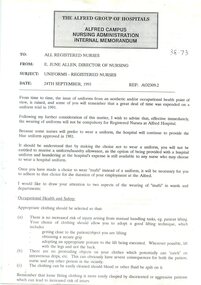
Document - Internal memorandum, E June Allen, Uniforms for Registered Nurses, Alfred Hospital, 1993, 19930924
... ...Nurses clothing...nurses will no longer be compulsory at the Alfred Hospital effective immendiately (24th September, 1993). This followed on from a uniform trial and survey held in 1991. Choice of non-uniform should take into consideration occupational health and safety, and infection control. Guidence was also provided re clothing...ALfred Hospital nurses uniform Nurses Uniform Nurses clothing Previous catalogue number handwritten [black ink] at top right of first page. ...Memorandum stating that the wearing of uniforms by registered nurses will no longer be compulsory at the Alfred Hospital effective immendiately (24th September, 1993). This followed on from a uniform trial and survey held in 1991. Choice of non-uniform should take into consideration occupational health and safety, and infection control. Guidence was also provided re clothing choices. It was also noted that Identification badges should be worn above the waist, so staff could be easily distiguished. Unoforms would still be provided and laundered by the Alfred Hospital for those who chose to continue wering them.The memorandum was signed by E June Alllen, Director of NursingProvides information of when the wearing of uniforms by registed nurses at the Alfred Hospital was no longer compulsorary.Single sheet of white paper with black print on both sidesPrevious catalogue number handwritten [black ink] at top right of first page. The memorandum is signed on the second page by E June Allenalfred hospital nurses uniform, nurses uniform, nurses clothing -
 Alfred Hospital Nurses League - Nursing History Collection
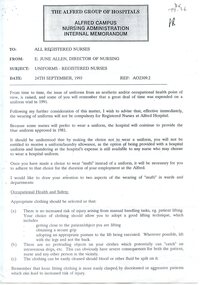
Document - Internal memorandum, E June Allen, Uniforms for Registered Nurses, Alfred Hospital, 1993, 19930924
... ...Nurses clothing...nurses will no longer be compulsory at the Alfred Hospital effective immendiately (24th September, 1993). This followed on from a uniform trial and survey held in 1991. Choice of non-uniform should take into consideration occupational health and safety, and infection control. Guidence was also provided re clothing...ALfred Hospital nurses uniform Nurses Uniform Nurses clothing Previous catalogue number handwritten [black ink] at top right of first page. ...Memorandum stating that the wearing of uniforms by registered nurses will no longer be compulsory at the Alfred Hospital effective immendiately (24th September, 1993). This followed on from a uniform trial and survey held in 1991. Choice of non-uniform should take into consideration occupational health and safety, and infection control. Guidence was also provided re clothing choices. It was also noted that Identification badges should be worn above the waist, so staff could be easily distiguished. Unoforms would still be provided and laundered by the Alfred Hospital for those who chose to continue wering them.The memorandum was signed by E June Alllen, Director of NursingProvides information of when the wearing of uniforms by registed nurses at the Alfred Hospital was no longer compulsorary.Two sheets of white paper with black print Previous catalogue number handwritten [black ink] at top right of first page. The memorandum is signed on the second page by E June Allenalfred hospital nurses uniform, nurses uniform, nurses clothing -
 Warrnambool and District Historical Society Inc.
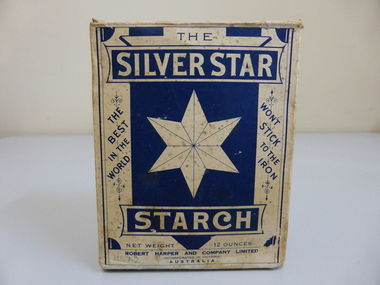
Domestic object - Household, Box Silver Star Starch, Probably 1940s-1950s
... nurses’ uniforms, household linen, tablecloths, doyleys etc. This item is of some interest, both for display and as a good example of housekeeping methods of the past (up to about the 1970s). However, the starching of clothing ...Robert Harper and Co. Ltd. was an Australian company involved with sugar refining and starch and oatmeal production. Silver Star Starch was a well-known product and starch was used extensively in most households, mainly for shirt collars, aprons, nurses’ uniforms, household linen, tablecloths, doyleys etc. This item is of some interest, both for display and as a good example of housekeeping methods of the past (up to about the 1970s). However, the starching of clothing does continue today, mainly for special purposes – theatre costumes, clerical and ceremonial garb etc. The item can be specifically used by the Warrnambool and District Historical Society in any display connected to the 1896-7 Warrnambool Industrial and Art Exhibition as this exhibition had, as one of its competitions, the Silver Star Starch Ironing Competition (see pages 96-7, book, ‘The Great Warrnambool Exhibition’, by E. O’Callaghan, Collett, Bain and Gaspars, 2002)A box that contained 12 ounces of Silver Star starch for domestic use, mainly for ironing clothes. The box, a product of Robert Harper and Company Limited, Victoria, Australia, has several advertising captions – ‘Won’t Stick to the Iron’, ‘The Best in the World’. ‘Requires no Boiling’, and has directions for use. The front of the box has an illustration of two women from Victorian times using the product,warrnambool, silver star starch, robert harper & co ltd -
 Kiewa Valley Historical Society
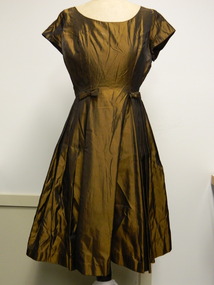
Dress - Brown Taffata, c1960's
... nurse at the Tawonga and District hospital. They had three children: Linda, Robyn and Boyd. Ian worked at the Mt Beauty Post Office. 'after 5' dress; ladies' clothing ...This dress was typical of those worn on special occasions usually after 5 pm: eg. dinner dances, balls, weddings. There were many such functions at Mt Beauty and the Kiewa Valley eg. the Hospital BallThis dress was worn by Margaret Mc Kendrick (nee Vyner) who lived in Tawonga when growing up. She married Ian McKendrick and they lived in Mt Beauty. She worked as a nurse at the Tawonga and District hospital. They had three children: Linda, Robyn and Boyd. Ian worked at the Mt Beauty Post Office.Metallic brown taffatta cocktail dress with scooped neck front and back. Princess line in one piece with pleated side panels and back from the waist. Bows either side of the A line at front and three bows from the waistline to the bottom of the zip at the back. Capped sleeves. Skirt lined with stiffening.Label: Styled by Camille Lee of Melbourne'after 5' dress; ladies' clothing; margaret mckendrick; tawonga -
 Kiewa Valley Historical Society
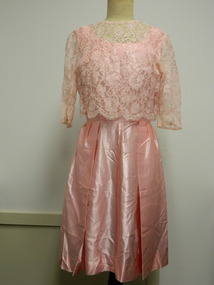
Dress - Pink Satin, c1960's
... nurse at the Tawonga & District hospital. Ian worked at the Mt Beauty Post Office. They had 3 children. 'after 5' dress; ladies clothing; Margaret McKendrick; Tawonga Pink satin ladies cocktail 'after 5' dress. ...This dress was typical of those worn on special 'after 5 pm' occasions eg. dinner dances, weddings, balls. There were many such functions at Mt Beauty and in the Kiewa Valley eg. the Hospital BallThis dress was worn (and possibly made) by Margaret Mc Kendrick (nee Vyner) who lived in Tawonga when growing up. She married Ian Mc Kendrick and they lived in Mt Beauty. She worked as a nurse at the Tawonga & District hospital. Ian worked at the Mt Beauty Post Office. They had 3 children.Pink satin ladies cocktail 'after 5' dress. Sleeveless fitted bodice. Pleated skirt with straight front and back panels. Zip at back is full length. It's jacket has a matching lace, long sleeved, scalloped edge, with 5 covered buttons at the back and 6 press studs.'after 5' dress; ladies clothing; margaret mckendrick; tawonga -
 Kiewa Valley Historical Society
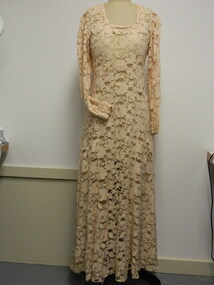
Dress - Pale Apricot Guipure Lace, c1960's
... nurse at the Tawonga & District hospital. Ian worked at the Mt Beauty Post Office. They had 3 children. 'after 5' dress; Margaret McKendrick; Tawonga; ladies' clothing Long sleeved fitted pale apricot guipure lace full length dress fitted at the waist line. ...This dress was typical of those worn on 'after 5' special occasions to: dinner dances, weddings, balls. There were many such functions at Mt Beauty and the Kiewa Valley eg. the Hospital BallThis dress was worn (and possibly made) by Margaret McKendrick (nee Vyner) who lived in Tawonga when growing up. She married Ian McKendrick and they lived in Mt Beauty. She worked as a nurse at the Tawonga & District hospital. Ian worked at the Mt Beauty Post Office. They had 3 children.Long sleeved fitted pale apricot guipure lace full length dress fitted at the waist line. Gored skirt. Scooped neckline at the front. High neckline at the back. The back has a 28 cm long opening fastened by hooks and eyes. Unlined.'after 5' dress; margaret mckendrick; tawonga; ladies' clothing -
 Kiewa Valley Historical Society
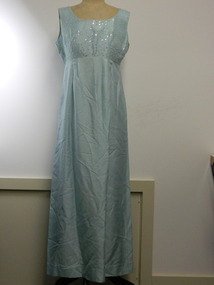
Dress - Aqua Silk, c 1960's
... nurse at the Tawonga & District hospital. Ian worked at the Mt Beauty Post Office. They had 3 children. 'after 5' dress; Margaret McKendrick; Tawonga; ladies' clothing Aqua silk long (full length) sleeveless dress. ...This dress was typical of those worn on 'after 5' special occasions to: dinner dances, weddings, balls. There were many such functions at Mt Beauty and the Kiewa Valley eg. the Hospital Ball.This dress was worn (and possibly made) by Margaret Mc Kendrick (nee Vyner) who lived in Tawonga when growing up. She married Ian Mc Kendrick and they lived in Mt Beauty. She worked as a nurse at the Tawonga & District hospital. Ian worked at the Mt Beauty Post Office. They had 3 children.Aqua silk long (full length) sleeveless dress. Sequined with beads individually hand sewn. Princess line. Zip full length at the back. A couple of pleats at the front and back. 'A' line skirt. Accompanied by a guipure lace short jacket with three quarter sleeves, lined with the same silk as the dress. Scalloped at the bottom of the jacket. Covered button at the top of the back with a loop.'after 5' dress; margaret mckendrick; tawonga; ladies' clothing -
 Bendigo Military Museum
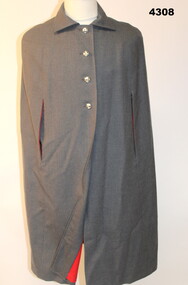
Uniform - NURSES CAPE, Australian Government Clothing Factory, 1986
... Uniform NURSES CAPE Australian Government Clothing Factory ...Worn by Captain Linda Elliott Regt No F236731 A.A.N.C as part of her Nurses uniform. Australian Army Nursing Corp.Grey woollen long length cape , with red cotton lining. Four silver buttons embossed with crown and lantern.Inside R side of the cape. Handwritten on label: “Capt ELLIOTT. “ / Printed label: “AGCF / 1986./ Size 14” Handwritten: “F236731”cape, military, nurse -
 Bendigo Military Museum
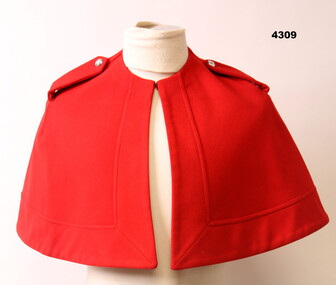
Uniform - NURSES CAPE, CGCF (Commonwealth Government Clothing Factory), 1971
... Refer Cat No 4308 Uniform NURSES CAPE CGCF (Commonwealth Government Clothing Factory) ...Cape worn by CAPT. L. ELLIOTT as part of her nurses uniform.Red woollen material, elbow length cape, with two metal (silver coloured) buttons to hold the shoulder epaulettes. Silver buttons imprinted with crown and lantern. Cotton label back lower edge of garment. Refer Cat No 4308Printed on cotton label in black ink and handwritten in blue ballpoint pen. “C. G. C. F. / VICTORIA / 1971 / (upwards arrow) / Ball SIZE - OS / 8410.66.013.0771 / ARMY / No F236731 / NAME ELLIOTT”’cape, military, nurse -
 Shepparton RSL Sub Branch
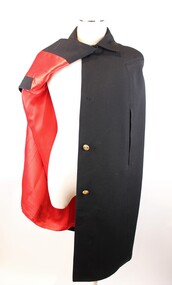
Uniform, Cape, C. 1950s
... Clothing Factory”. Interior sewn in label reads “33643/Kilfoyle/Cloak F Bara/[indiscernible characters]”. Buttons read “[Queen Elizabeth crown over the Navy anchor]/AUSTRALIA” and on interior “STOKES/MELB” Black thigh-length nurses cape with red satin lining. ...This cape may have belonged to RAN Telegraphist Norma Ashton Kilfoyle, however the date of her service is not consistent with the style of the article (which has buttons which suggest this cape was issued post 1952 during the reign of Queen Elizabeth II). It is possible, though not confirmed, that this cape was worn by Norma Kilfoyle in a later role after the Second World War.Black thigh-length nurses cape with red satin lining. Fastened along centre with four gold buttons and one press stud at chin (second button from the top is missing). Two slits at waist height on both left and right allow arms through from the interior to the front. Embroidered manufacturer’s label on interior at base of neck, below which there is an ink inscription. Sewn in fabric swatch on interior right.Handwritten inscription reads “KILFOYLE”. Manufacturer’s label reads “[Australian coat of arms]/A Quality Garment/BY/Australian Government Clothing Factory”. Interior sewn in label reads “33643/Kilfoyle/Cloak F Bara/[indiscernible characters]”. Buttons read “[Queen Elizabeth crown over the Navy anchor]/AUSTRALIA” and on interior “STOKES/MELB”cape, second world war, world war two, world war ii, navy, royal australian navy, ran, women, telegraph, communications -
 Bendigo Historical Society Inc.
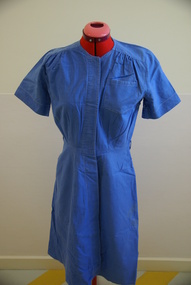
Clothing - AILEEN AND JOHN ELLISON COLLECTION: NURSE'S UNIFORM; BLUE COTTON DRESS, 1960's
... nurse's blue cotton dress- uniform. Bodice gathers at yoke seam. 11 cm X 11 cm pocket on left breast. Concealed opening from neckline to hemline, has nine buttonholes - presumably buttons were exchanged between uniform dresses. One buttonhole at back neckline, and two buttonholes on the cuff of each sleeve, would also suggest a removable collar and cuffs. Two darts on either side of bodice. An inverted pleat from yoke to waistline at centre back. Seven gored skirt. Worn by Merryn Ellison. Clothing ...Round neck, short sleeves, yoke back and front, nurse's blue cotton dress- uniform. Bodice gathers at yoke seam. 11 cm X 11 cm pocket on left breast. Concealed opening from neckline to hemline, has nine buttonholes - presumably buttons were exchanged between uniform dresses. One buttonhole at back neckline, and two buttonholes on the cuff of each sleeve, would also suggest a removable collar and cuffs. Two darts on either side of bodice. An inverted pleat from yoke to waistline at centre back. Seven gored skirt. Worn by Merryn Ellison.Name tag sewn to back neckline ; Merryn Ellison.costume, female, nurse's blue uniform -
 Bendigo Historical Society Inc.
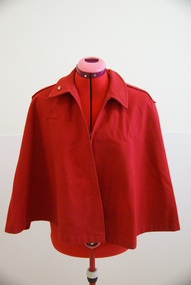
Clothing - AILEEN AND JOHN ELLISON COLLECTION:NURSE'S RED CAPE, 1960's
... Nurse's red , pure wool flannel cape. Peaked collar. Stitched down, peaked tab at each shoulder line. Circular in shape, with one centre back seam. Worn by Merryn Ellison. Clothing ...Nurse's red , pure wool flannel cape. Peaked collar. Stitched down, peaked tab at each shoulder line. Circular in shape, with one centre back seam. Worn by Merryn Ellison.Tape inside cape with name' Merryn Ellison.costume, female, nurse's red cape -
 Bendigo Historical Society Inc.
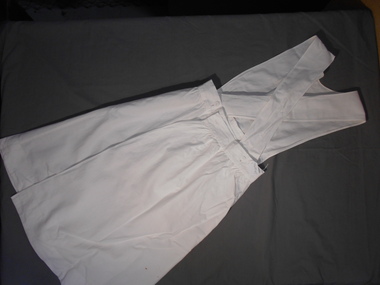
Clothing - AILEEN AND JOHN ELLISON COLLECTION: WHITE COTTON NURSE'S APRON, 1960's
... nurse's apron. Bodiec joins a 5 cm wide band and 60 cms long skirt. Skirt is plain in the front, with gathers at the back. Front of the bodice extends in wide 8 cms wide straps, which cross over at the back, and fasten with a button and buttonhole to the back waistband. The skirt of the apron extends right around the body, and overlaps, and fastens with two buttons and buttonholes 14 cms overlap. Worn by Merryn Ellison. Clothing ...White cotton nurse's apron. Bodiec joins a 5 cm wide band and 60 cms long skirt. Skirt is plain in the front, with gathers at the back. Front of the bodice extends in wide 8 cms wide straps, which cross over at the back, and fasten with a button and buttonhole to the back waistband. The skirt of the apron extends right around the body, and overlaps, and fastens with two buttons and buttonholes 14 cms overlap. Worn by Merryn Ellison.Tape stitched inside apron, embroidered with the name: Merryn Ellison.costume, female, nurse's white cotton apron -
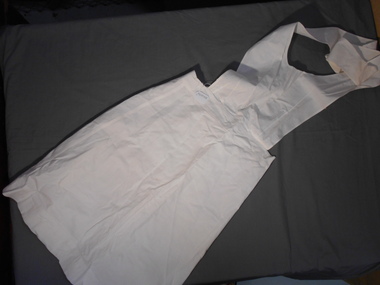 Bendigo Historical Society Inc.
Clothing - AILEEN AND JOHN ELLISON COLLECTION: WHITE COTTON NURSE'S APRON, 1960's
... nurse's apron, heavily starched. Three piece skirt, lightly gathered at back, adjoins a 4.5 cm waistband, and bib front which has broad shoulder straps 8.5 cms wide which cross at the back, and button to the waistband, leaving a 10 cm long rounded tab finished end. No buttons evident, which probably suggests removable buttons, fastened with safety pins, or "hair clip" type fasteners. A 3.5 cms tuck has been sewn around the hemline.Two buttonholes in shoulder strap tab end. Three button holes in back waistband. Worn by Merryn Ellison. Clothing ...White cotton, nurse's apron, heavily starched. Three piece skirt, lightly gathered at back, adjoins a 4.5 cm waistband, and bib front which has broad shoulder straps 8.5 cms wide which cross at the back, and button to the waistband, leaving a 10 cm long rounded tab finished end. No buttons evident, which probably suggests removable buttons, fastened with safety pins, or "hair clip" type fasteners. A 3.5 cms tuck has been sewn around the hemline.Two buttonholes in shoulder strap tab end. Three button holes in back waistband. Worn by Merryn Ellison.costume, female, white cotton nurse's apron -
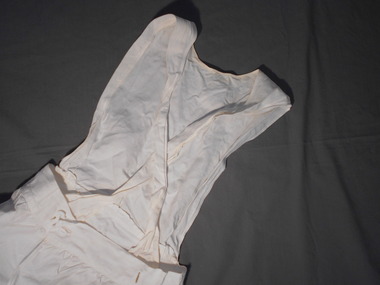 Bendigo Historical Society Inc.
Clothing - WHITE COTTON NURSE'S APRON, 1960's
... nurse's apron. Three piece skirt, gathered at the back, and joining a 5 cm wide waist band. Bib front extends into broad shoulder straps 8 cm wide, at shoulder, tapering to 7 cm wide rounded tab ends, which cross at the back, and button to the waist band. Two plastic buttons- 1.5 cm diameter, one on the tab strap, and one on the waist band, are both damaged-possibly due to harsh laundry conditions. Back waist band has a 14 cm overlap. Clothing ...White cotton nurse's apron. Three piece skirt, gathered at the back, and joining a 5 cm wide waist band. Bib front extends into broad shoulder straps 8 cm wide, at shoulder, tapering to 7 cm wide rounded tab ends, which cross at the back, and button to the waist band. Two plastic buttons- 1.5 cm diameter, one on the tab strap, and one on the waist band, are both damaged-possibly due to harsh laundry conditions. Back waist band has a 14 cm overlap.White cotton tape sewn inside waistband marked: Merryn Ellison.costume, female, white cotton nurse's apron -
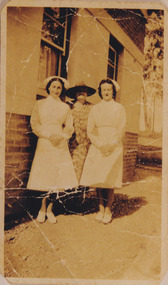 The Beechworth Burke Museum
Audio - Oral History, Jennifer Williams, Mrs Sheila Parkinson, 3 January 2000
... When Sheila first began her nurse training, Mayday Hills suffered from a lack of resources and rudimentary facilities and patients frequently suffered from the cold due to poor heating and inadequate clothing and bedding. ...Mrs Sheila Parkinson was born in Wagga in 1916 and came to Beechworth as a young woman around 1938. Sheila trained as a psychiatric nurse at Mayday Hills hospital prior to the second World War. At that time, unmarried women were accommodated and received nursing training on-site. Shiela was obliged to cease professional training and employment when she married in 1941, which disrupted completion of her final nursing examinations. Following post-war changes to the law that allowed married women to work, Sheila returned to Mayday Hills. Sheila's husband, Don, returned to Beechworth after four years abroad as a serviceman in the Australian Air Force. Beechworth's institutions were a major source of local employment throughout the twentieth century. As well as providing limited employment opportunities to young women like Shiela, post-war European migrants from Bonegilla Migrant camp found at Mayday Hills, encouraging European migrant settlement in the district. Mayday Hills was renamed several times since its establishment in 1867. At the peak of operations, it comprised sixty-seven buildings housing over twelve hundred patients patients and five hundred staff. The hospital officially closed in 1998. Today, the decommissioned two-storey Italianate style main building stands on eleven hectares of botanical gardens under National Trust protection. The site remains a popular cultural heritage destination for visitors. This oral history recording was part of a project conducted by Jennifer Williams in the year 2000 to capture the everyday life and struggles in Beechworth during the twentieth century. This project involved recording seventy oral histories on cassette tapes of local Beechworth residents which were then published in a book titled: Listen to what they say: voices of twentieth century Beechworth. The cassette tapes were digitised in July 2021 with funds made available by the Friends of the Burke.Employed as a psychiatric nurse at one of Beechworth's large welfare institutions, Mayday Hills, Mrs Sheila Parkinson recalls the conditions faced by staff and patients at the hospital, which cared for chronically ill people from the Ovens region and patients from the Yarra Bend Asylum, Melbourne, which closed in 1925. When Sheila first began her nurse training, Mayday Hills suffered from a lack of resources and rudimentary facilities and patients frequently suffered from the cold due to poor heating and inadequate clothing and bedding. However, as the twentieth century progressed, Sheila recalls how conditions and treatments improved as a result of increased government funding of services and advances in psychiatry and pharmaceutical medicine. Mrs Sheila Parkinson's oral history recording is historically and socially significant for its witness to life in Beechworth in the pre- and post-WWII period. Sheila's story enriches our understanding of processes of modernisation with regard to psychiatric and welfare services, while the course of Sheila's professional training and employment brings attention to systemic and socio-economic barriers faced by women, as well as the valuable contribution women and migrants make in the delivery of care and ancillary services. This oral history account is socially and historically significant as it is a part of a broader collection of interviews conducted by Jennifer Williams which were published in the book 'Listen to what they say: voices of twentieth-century Beechworth.' While the township of Beechworth is known for its history as a gold rush town, these accounts provide a unique insight into the day-to-day life of the town's residents during the twentieth century, many of which would have been lost if they had not been preserved.This is a digital copy of a recording that was originally captured on a cassette tape. The cassette tape is black with a horizontal white strip and is currently stored in a clear flat plastic rectangular container. It holds up 40 minutes of recordings on each side.Mrs Sheila Parkinson /twentieth century beechworth, mayday hills, psychiatric care, benevolent asylums, nursing, wwii, psychiatric treatment, country women, psychiatric hostpital, beechworth's institutions, local employment, government institutions, listen to what they say, oral history, burke museum, sheila parkinson, beechworth lunatic asylum, beechworth mental hospital, beechworth hospital for the insane, the kerferd clinic, bonegilla migrant camp, working women, white australia policy -
 The Beechworth Burke Museum
Photograph
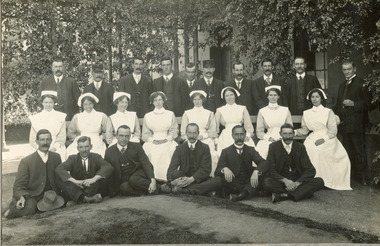
... Six men sit in front of the group (Mr Imhose stands fourth from the left in front row), upon the ground and behind them, in bright white clothing, sit eight female nurses upon a long bench (one of these nurses is identified on the rear as Miss A.J. ...Six men sit in front of the group (Mr Imhose stands fourth from the left in front row), upon the ground and behind them, in bright white clothing, sit eight female nurses upon a long bench (one of these nurses is identified on the rear as Miss A.J. ...Photographed in the early 1900s, this black and white photograph depicts 25 members of the Mayday Hills Hospital Staff. Six men sit in front of the group (Mr Imhose stands fourth from the left in front row), upon the ground and behind them, in bright white clothing, sit eight female nurses upon a long bench (one of these nurses is identified on the rear as Miss A.J. Ross). Behind these women stand 10 men. The men are all wearing dark clothing and several have 'Kepi' style hats. The staff photograph was captured by Frazer and Vallance Photographers Melbourne. This image was originally combined with 1997.2491 but these images have since been torn apart and catalogued separately. Beechworth's Mayday Hills was chosen as the site of Victoria's newest asylum, at the time, due to the landscape and altitude. The hilltop atmosphere and the native fauna, it was argued, would assist in the cure of the patients kept at the hospital (Wood 1985, 122). The positioning of the hospital had a beneficial effect on the rural town. A pamphlet published by James Ingram and Son (1849) reveal that famous landmarks in Beechworth which included the Post Office, Gaol, Courthouse and Asylum "demonstrate the appreciation of Beechworth by the Government not only as as important district center, but also as a site unrivaled as a sanitarium". There were other locations in contention at the time, but ultimately Beechworth was chosen (Craig 2000, 33). Prior to the creation of the Asylum in Beechworth, those charged with having mental illnesses or, as it was termed, "insanity" were unable to be properly cared for in the Gaol (which is where they were often sent). John Buckley Castieau wrote, in 1861 for the Ovens and Murray Advertiser, that the Gaol was unable to properly care for those classified then as "insane" but that they would endeavor to treat them above the other inmates (which he notes is not always the case in other establishments). Castieau wrote this in favour of supporting the building of the Mayday Hills Hospital in Beechworth. It was stated that at the time the Mayday Hills Hospital was built, there were 83 prisoners kept in the Gaol who were to be rehoused to the Hospital on the grounds of "insanity". The classification as someone as "insane", in this period of time is a reflection on the inability to cure and understand illnesses of the mind during the mid to late 1800s. Opening on the 24th of October 1867, the Mayday Hills Hospital was originally named the "Ovens Lunatic Asylum", a title which is very much a product of its time. Whilst controversial, changes to the name is part of the history of the Hospital and can provide much insight into the understanding of mental illness throughout history and the use/disuse of this term provides information into the reception/changing opinions of mental illness in society. The Hospital would later become known as the "Mayday Hills Asylum" and/or "Mayday Hills Hospital" with the latter being the most commonly used title. An article in the Ovens and Murray Advertiser notes that on the 7th of March 1865, the foundation stone of the Hospital was laid (it would officially open in 1867) and that it was such a moment of accomplishment and joy for Beechworth that a letter to the editor even suggested that there should be a holiday dedicated to the day the foundation stone as laid. This reveals an extent to which the townspeople of early Beechworth valued the construction of the Hospital in their town. It provided the town with a sense of prestige and honour.At first glance, the remains of the Mayday Hills Hospital in Beechworth, Victoria, inspire tragedy, trauma and beauty. The buildings themselves, with their Italianate style Renaissance architecture designed by J.J. Clark (Craig 2000, 49 & Smith 2016, 203) reflect a bygone period of European and Australian history. The gardens provide a sense of tranquility and beauty. The experience of those within these walls remains a valuable area of study to provide a more complete understanding. This particular hospital is considered the fourth of its like and one of three identified as the largest of their kind. The Mayday Hills Hospital is a sister to the Kew and Ararat Asylums in Melbourne which are both located in relative proximity. Understanding the role of the Mayday Hills Hospital in Beechworth history is integral to understanding the development of the goldfields town, but also for providing important information as to the history of caring for, and the reception of, mental illnesses in Australian and wider European history. Mayday Hills provides a case study which can be researched through oral history, an analysis of the grounds/buildings and through images like this postcard which portray the structure in a highly deliberate manner. Images like this depict the strong façade of the Hospital and provide a glimpse into the tranquility of the gardens. This has been done deliberately to provide a sense of comfort and healing about the building to those looking from the outside. Further research into the importance of the Hospital in Beechworth and it's connection to the town will be supported through images like these kept in the Mayday Hills photo album in the collection of the Burke Museum.Black and white rectangular photograph printed on photographic paper mounted on cardHandwriting reads: "Mental Hospital / Beechworth / Miss A. J. Ross / about 82 in 1944".mental asylum, beechworth, mayday hills, mayday hills hospital, victoria, mental health, history of mental illness, treatment of metal illness, asylum, hospital for mentally unwell, miss a.j. ross, nurse, staff, doctors -
 The Beechworth Burke Museum
Photograph
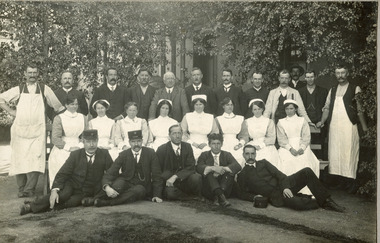
... Five men sit in front of the group, upon the ground and behind them, in bright white clothing, sit eight female nurses upon a long bench (one of these nurses is identified on the rear as Miss A.J. ...Five men sit in front of the group, upon the ground and behind them, in bright white clothing, sit eight female nurses upon a long bench (one of these nurses is identified on the rear as Miss A.J. ...Photographed in the early 1900s, this black and white photograph depicts 25 members of the Mayday Hills Hospital Staff. Five men sit in front of the group, upon the ground and behind them, in bright white clothing, sit eight female nurses upon a long bench (one of these nurses is identified on the rear as Miss A.J. Ross). Behind these women stand 12 men. The men are all wearing dark clothing and several have 'Kepi' style hats. The staff photograph was captured by Frazer and Vallance Photographers Melbourne. This image was originally combined with 1997.2490 but these images have since been torn apart and catalogued separately. Beechworth's Mayday Hills was chosen as the site of Victoria's newest asylum, at the time, due to the landscape and altitude. The hilltop atmosphere and the native fauna, it was argued, would assist in the cure of the patients kept at the hospital (Wood 1985, 122). The positioning of the hospital had a beneficial effect on the rural town. A pamphlet published by James Ingram and Son (1849) reveal that famous landmarks in Beechworth which included the Post Office, Gaol, Courthouse and Asylum "demonstrate the appreciation of Beechworth by the Government not only as as important district center, but also as a site unrivaled as a sanitarium". There were other locations in contention at the time, but ultimately Beechworth was chosen (Craig 2000, 33). Prior to the creation of the Asylum in Beechworth, those charged with having mental illnesses or, as it was termed, "insanity" were unable to be properly cared for in the Gaol (which is where they were often sent). John Buckley Castieau wrote, in 1861 for the Ovens and Murray Advertiser, that the Gaol was unable to properly care for those classified then as "insane" but that they would endeavor to treat them above the other inmates (which he notes is not always the case in other establishments). Castieau wrote this in favour of supporting the building of the Mayday Hills Hospital in Beechworth. It was stated that at the time the Mayday Hills Hospital was built, there were 83 prisoners kept in the Gaol who were to be rehoused to the Hospital on the grounds of "insanity". The classification as someone as "insane", in this period of time is a reflection on the inability to cure and understand illnesses of the mind during the mid to late 1800s. Opening on the 24th of October 1867, the Mayday Hills Hospital was originally named the "Ovens Lunatic Asylum", a title which is very much a product of its time. Whilst controversial, changes to the name is part of the history of the Hospital and can provide much insight into the understanding of mental illness throughout history and the use/disuse of this term provides information into the reception/changing opinions of mental illness in society. The Hospital would later become known as the "Mayday Hills Asylum" and/or "Mayday Hills Hospital" with the latter being the most commonly used title. An article in the Ovens and Murray Advertiser notes that on the 7th of March 1865, the foundation stone of the Hospital was laid (it would officially open in 1867) and that it was such a moment of accomplishment and joy for Beechworth that a letter to the editor even suggested that there should be a holiday dedicated to the day the foundation stone as laid. This reveals an extent to which the townspeople of early Beechworth valued the construction of the Hospital in their town. It provided the town with a sense of prestige and honour.At first glance, the remains of the Mayday Hills Hospital in Beechworth, Victoria, inspire tragedy, trauma and beauty. The buildings themselves, with their Italianate style Renaissance architecture designed by J.J. Clark (Craig 2000, 49 & Smith 2016, 203) reflect a bygone period of European and Australian history. The gardens provide a sense of tranquility and beauty. The experience of those within these walls remains a valuable area of study to provide a more complete understanding. This particular hospital is considered the fourth of its like and one of three identified as the largest of their kind. The Mayday Hills Hospital is a sister to the Kew and Ararat Asylums in Melbourne which are both located in relative proximity. Understanding the role of the Mayday Hills Hospital in Beechworth history is integral to understanding the development of the goldfields town, but also for providing important information as to the history of caring for, and the reception of, mental illnesses in Australian and wider European history. Mayday Hills provides a case study which can be researched through oral history, an analysis of the grounds/buildings and through images like this postcard which portray the structure in a highly deliberate manner. Images like this depict the strong façade of the Hospital and provide a glimpse into the tranquility of the gardens. This has been done deliberately to provide a sense of comfort and healing about the building to those looking from the outside. Further research into the importance of the Hospital in Beechworth and it's connection to the town will be supported through images like these kept in the Mayday Hills photo album in the collection of the Burke Museum.Black and white rectangular photograph printed on photographic paper mounted on cardFrazer & Vallance Photographers Melbournemental asylum, beechworth -
 Flagstaff Hill Maritime Museum and Village
Thermometer
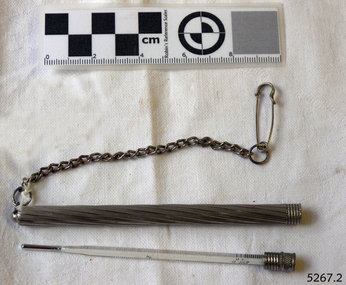
... Silver nurse Mercury thermometer with chain and pin for attaching to clothing. Overall length 10" Length thermometer case 4½" Thermometer labelled "J Hicks 89X610 Hatton Garden London" ...Flagstaff Hill Maritime Museum and Village 89 Merri Street Warrnambool great-ocean-road flagstaff hill warrnambool shipwrecked-coast flagstaff-hill flagstaff-hill-maritime-museum maritime-museum shipwreck-coast flagstaff-hill-maritime-village thermometer Silver nurse Mercury thermometer with chain and pin for attaching to clothing. Overall length 10" Length thermometer case 4½" Thermometer labelled "J Hicks 89X610 Hatton Garden London" Thermometer ...Silver nurse Mercury thermometer with chain and pin for attaching to clothing. Overall length 10" Length thermometer case 4½" Thermometer labelled "J Hicks 89X610 Hatton Garden London" flagstaff hill, warrnambool, shipwrecked-coast, flagstaff-hill, flagstaff-hill-maritime-museum, maritime-museum, shipwreck-coast, flagstaff-hill-maritime-village, thermometer -
 Glenelg Shire Council Cultural Collection
Painting, Ludmilla Meilerts, Still Life, 1970
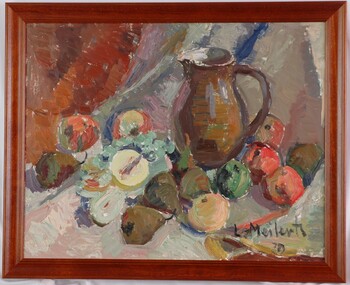
... She worked as a nurse's aid and in a clothing factory to fund the further development of her artistic career achieving considerable early success with her colourful work encompassing portraiture, florals and city and landscapes. ...She worked as a nurse's aid and in a clothing factory to fund the further development of her artistic career achieving considerable early success with her colourful work encompassing portraiture, florals and city and landscapes. ...Ludmilla Meilerts, Oil On Board, Botanical Gardens, Circa 1970 Ludmilla Meilerts (1908 - 1997), Botanical Gardens, Melbourne, an impressive work painted with bold brushstrokes and a vivid colourful palette which typifies the artists work. Born in Riga,Latvia in 1908 - After displaying an early talent for art she studied at The Latvian Academy Of Fine Arts graduating in 1940. Later that year she married Otto Meilerts, an Economist, and they moved to Stuttgart, Germany to avoid living under Soviet occupation and then emigrated to Australia in 1948 settling in Melbourne. She worked as a nurse's aid and in a clothing factory to fund the further development of her artistic career achieving considerable early success with her colourful work encompassing portraiture, florals and city and landscapes. She particularly like painting dockland scenes. She was a member of The Victorian Artists Society (VAS) and The Melbourne Society Of Woman Painters And Sculptors. Major prizes include The Dunlop Prize in 1952, Gosford Art prize 1971, Camberwell 1973, VAS Purstitz Gold Medal 1982. She is represented in The State Galleries of Victoria, NSW, Tasmania and Western Australia as well as several regional Galleries. Still life of fruit and a jog. Painted in thick impasto paint, creating a very textured surface. Fruit is depicted in green, brown, apricot, pink and red. Background is abstract. Upper left background is brown, upper centre and right background is in shades of grey, blue and green, with some white. Brown wooden frame.Front: L Meilerts 70 (lower right, black paint)still life, female artists, women, women artists -
 Embroiderers Guild, Victoria
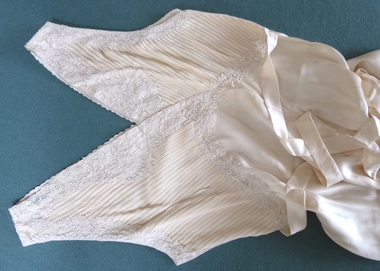
Clothing - Chinese Silk Night Dress, 1948
... In early 1946, with the occupation of Japan, Australian nurses were posted to the hospital on the island of Iwo Jima to care for the Australian component of the occupation force and in February of 1949, now stationed at Kure, near Hiroshima, they became part of the British Commonwealth General Hospital. (Australian Rural and Regional News Jan 10 2022) Embroidery Night dress Cream silk night dress is mostly handmade with pintucks and lace finely buttonholed along the bodice edges. The hem has a buttonhole stitched scalloped edge. Clothing ...Bought by the donor in 1948 in Japan PX shop . She was nursing with the Australian Nursing Service (1945-1949) on the island of Iwo Jima and then in Kure. In early 1946, with the occupation of Japan, Australian nurses were posted to the hospital on the island of Iwo Jima to care for the Australian component of the occupation force and in February of 1949, now stationed at Kure, near Hiroshima, they became part of the British Commonwealth General Hospital. (Australian Rural and Regional News Jan 10 2022)Cream silk night dress is mostly handmade with pintucks and lace finely buttonholed along the bodice edges. The hem has a buttonhole stitched scalloped edge.embroidery, night dress -
 Returned Nurses RSL Sub-branch
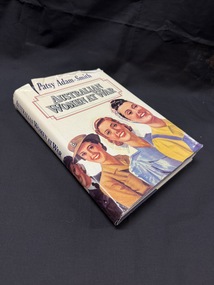
Book - Illustrated hardback book, Patsy Adam-Smith, Australian women at war, 1984
... NURSES' CLUB / AND R.S.L. SUB BRANCH / GIFT OF LILIAN RAE.' [Handwritten lower edge of page opposite title page] Hardback book with torn dust jacket. Dust jacket has colour illustrations of women wearing various clothing or uniforms associated with wartime. ...Australian women at war is a history of how women have responded to war, from 1900, when the first nurses sailed to the Boer War, to 1945 and its aftermath. ... Patsy Adam-Smith enlisted as a VAD and served in orthopaedic hospitals in northern Australia. She knew thr comradeship and the heartbreak of war, and has spoken to enlisted and civilian women: the AWAS, WAAAF, WRANS, VADs, the nursing services, the Red Cross and all the women who worked, laughed, worried and prayed while Australia was at war. (excerpts from inside dustjacket)Hardback book with torn dust jacket. Dust jacket has colour illustrations of women wearing various clothing or uniforms associated with wartime.non-fictionAustralian women at war is a history of how women have responded to war, from 1900, when the first nurses sailed to the Boer War, to 1945 and its aftermath. ... Patsy Adam-Smith enlisted as a VAD and served in orthopaedic hospitals in northern Australia. She knew thr comradeship and the heartbreak of war, and has spoken to enlisted and civilian women: the AWAS, WAAAF, WRANS, VADs, the nursing services, the Red Cross and all the women who worked, laughed, worried and prayed while Australia was at war. (excerpts from inside dustjacket)australian nurses, patsy adam-smith, boer war, world war one, wwi, ww1, world war two, wwii, ww2, women in war -
 Returned Nurses RSL Sub-branch
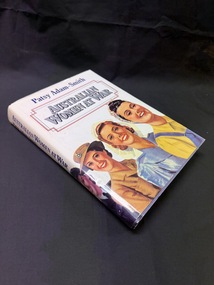
Book - Illustrated hardback book, Patsy Adam-Smith, Australian women at war, 1984
... nurses sailed to the Boer War, to 1945 and its aftermath. ... Patsy Adam-Smith enlisted as a VAD and served in orthopaedic hospitals in northern Australia. She knew thr comradeship and the heartbreak of war, and has spoken to enlisted and civilian women: the AWAS, WAAAF, WRANS, VADs, the nursing services, the Red Cross and all the women who worked, laughed, worried and prayed while Australia was at war. (excerpts from inside dustjacket) 'FROM THE LIBRARY OF / Dorothy MJ Venosta' [Bookplate on reverse of first page] Hardback book with dust jacket. Dust jacket has colour illustrations of women wearing various clothing ...Australian women at war is a history of how women have responded to war, from 1900, when the first nurses sailed to the Boer War, to 1945 and its aftermath. ... Patsy Adam-Smith enlisted as a VAD and served in orthopaedic hospitals in northern Australia. She knew thr comradeship and the heartbreak of war, and has spoken to enlisted and civilian women: the AWAS, WAAAF, WRANS, VADs, the nursing services, the Red Cross and all the women who worked, laughed, worried and prayed while Australia was at war. (excerpts from inside dustjacket)Hardback book with dust jacket. Dust jacket has colour illustrations of women wearing various clothing or uniforms associated with wartime.non-fictionAustralian women at war is a history of how women have responded to war, from 1900, when the first nurses sailed to the Boer War, to 1945 and its aftermath. ... Patsy Adam-Smith enlisted as a VAD and served in orthopaedic hospitals in northern Australia. She knew thr comradeship and the heartbreak of war, and has spoken to enlisted and civilian women: the AWAS, WAAAF, WRANS, VADs, the nursing services, the Red Cross and all the women who worked, laughed, worried and prayed while Australia was at war. (excerpts from inside dustjacket)australian nurses, patsy adam-smith, boer war, world war one, wwi, ww1, world war two, wwii, ww2, women in war -
 National Vietnam Veterans Museum (NVVM)
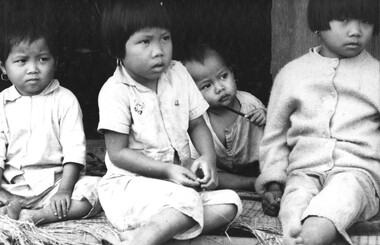
Photograph, Gibbons, Denis, Catholic Orphanage
... The Diggers and the nurses, in particular, did an outstanding job of maintaining the health and well being of the orphans. The hospital staff conducted regular medcaps and provided food and clothing sent from relatives and friends back home in Australia. ...The Diggers and the nurses, in particular, did an outstanding job of maintaining the health and well being of the orphans. The hospital staff conducted regular medcaps and provided food and clothing sent from relatives and friends back home in Australia. ...Denis Gibbons (1937 – 2011) Trained with the Australian Army, before travelling to Vietnam in January 1966, Denis stayed with the 1st Australian Task Force in Nui Dat working as a photographer. For almost five years Gibbons toured with nine Australian infantry battalions, posting compelling war images from within many combat zones before being flown out in late November 1970 after sustaining injuries. The images held within the National Vietnam Veterans Museum make up the Gibbons Collection A black and white photograph of Children at the Catholic Orphanage, Vung Tau which was supported by the Medical Staff of the 1st Australian Field Hospital (1AFH), vung Tau. The Diggers and the nurses, in particular, did an outstanding job of maintaining the health and well being of the orphans. The hospital staff conducted regular medcaps and provided food and clothing sent from relatives and friends back home in Australia. From time to time the orphaned children were taken for a day at Back Beach behind the 1AFH area. The children ranged in age from new born babes to teenagers. Quite a number, who were fathered by "round eyed" servicemen, were abandoned at birth, by Vietnames Bar girsl, particularly those with "dark" skin.photograph, 1st australian field hospital, vung tau, orphanage, gibbons collection catalogue, catholic orphanage, back beach, vietnamese children, vietnames bar girls, diggers, nurses, denis gibbons -
 Alfred Hospital Nurses League - Nursing History Collection
Textile - c1900 petticoat, Clothing, donated 26 Febuary 1997
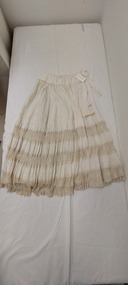
... nurses Uncertain. Ink inscription 333.01 worn by Mrs Pownall C1900 Hand made half petticoat. Cream cotton lawn fabric. 3 hand knitted cotton lace insert panels, machine pin tucking panels between lace. Satin ribbon panel. Tie gathered waistband. Tear in side. Clothing ...Worn by mother of a Miss Pownall who taught science at MCEGGS. Unsure of connection to Alfred Hospital nursesUncertain.Hand made half petticoat. Cream cotton lawn fabric. 3 hand knitted cotton lace insert panels, machine pin tucking panels between lace. Satin ribbon panel. Tie gathered waistband. Tear in side. Ink inscription 333.01 worn by Mrs Pownall C1900 -
 Surrey Hills Historical Society Collection
Photograph, Alice Eleanor Jackson
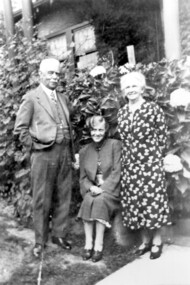
... ...clothing and dress...nurse...nursed elderly and dying people in the Surrey Hills area. She had had a tricycle made especially for her as she could not ride a bicycle. She would always ride in the centre of the road in case the trike tipped over. She left her estate to the hospital. jeweller watchmaker russell street surrey hills clothing ...Alice Louisa (Louise) Jackson was one of 12 children of George James Jackson and his wife Alice Eleanor (nee Taylor); both of whom were jewellers. One of her brothers, George Hall Jackson, served in WW1. The family lived at 'Handsworth', 7 Russell Street, Surrey Hills. Alice was born 25/9/1892 and died 25/8/1983. She was buried in Box Hill Cemetery - CE-*-2010. REF: Personal communication (email) Ruth Theodoridis, her niece, 30/5/2018: Alice trained at the Austin Hospital prior to WW2. She worked there after graduating and became the charge sister of the ward for terminally ill patients, many of whom were TB patients. After she retired from the Austin she nursed elderly and dying people in the Surrey Hills area. She had had a tricycle made especially for her as she could not ride a bicycle. She would always ride in the centre of the road in case the trike tipped over. She left her estate to the hospital. A black and white photograph of a young lady, identified as Alice Eleanor Jackson, seated between an older couple in front of a house.jeweller, watchmaker, russell street, surrey hills, clothing and dress, nurse, george james jackson, mrs alice eleanor jackson, miss alice louisa jackson -
 Surrey Hills Historical Society Collection
Photograph, Annie Barton and Jocelyn Cerini, 1928, c1928
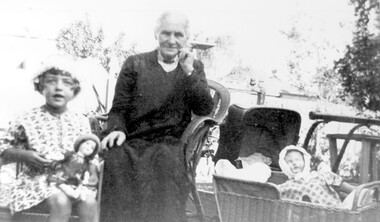
... nurses: Ida Grace Barton (b 1877) did not marry. She trained at the Homeopathic Hospital (later Prince Henry's Hospital), graduating in 1909. Annie Barton (b 1883, Geelong) trained at the Melbourne Hospital. She was Matron AANS during WW1 in charge of the Base Hospital (Military) in St Kilda Road. She married Dr John Hodgson Nattrass. She died in 1965 at Caulfield. John and Ann Eliza Barton are buried in Box Hill Cemetery - C0044. clothing ...The photo was taken in 1928 and the young child is definately Jocelyn Francesca Cerini, elder daughter of Natale Cerini and his wife Ethel (MS: Swan). The Cerini family lived at 215 Union Road. Most likely that the photo was taken in the back garden of 215 Union Road which backs onto 11 and 13 Barton Street. Thus the houses in the background are the two houses occupied by Barton family members - No 11 and 13 Barton Street, Surrey Hills. The photo card index compiled by Jocelyn Hall (nee Cerini) identifies the elderly lady as Miss Annie Barton, sister of Rev John Barton, second minister of Wyclif Congregational Church. She was a nurse. However the age of Jocelyn (born 1922) makes it more likely that this is Mrs Annie Eliza Barton (nee Duncan), wife of the Rev John Barton and mother of James Duncan Barton, John Saxon Barton, Ida Grace Barton, Albert Edward Barton, Annie Barton and Harold Arthur Barton. Annie Eliza (Duncan) Barton was born in 1845 and died on 16 Jan 1933, which is consistent with the age of the lady pictured. By the time this photo was taken her husband, the Rev John Barton (1844-1919) had died. He was minister of the Wyclif Church in 1896 and continued in that role until 1907. After a further appointment John Barton retired and continued to worship at Wyclif, residing at 13 Barton Street. On Federation in 1901 the street name changed - it was originally Kent Street. John Barton was born in 1845 in Ainsdale, Lancashire, son of James Barton and Ann Rimmer and grew up in Formby - the name later given to No 13 Barton Street. His family appear to have remained in the UK. He married Ann Eliza Duncan in 1872 in Queensland. Of the 2 daughters who were nurses: Ida Grace Barton (b 1877) did not marry. She trained at the Homeopathic Hospital (later Prince Henry's Hospital), graduating in 1909. Annie Barton (b 1883, Geelong) trained at the Melbourne Hospital. She was Matron AANS during WW1 in charge of the Base Hospital (Military) in St Kilda Road. She married Dr John Hodgson Nattrass. She died in 1965 at Caulfield. John and Ann Eliza Barton are buried in Box Hill Cemetery - C0044.A black & white photo of an elderly lady seated in a cane chair in an outdoor setting. To one side is a young girl also seated in a chair and holding a doll; to the other side is a doll's pram containing another doll. The background is indistinct but appear to be houses.clothing and dress, 1928, miss jocelyn francesca cerini, mrs jocelyn hall, annie eliza duncan, annie eliza barton, box hill cemetery, rev john barton, jocelyn cerini, dolls, 215 union road -
 Surrey Hills Historical Society Collection
Photograph, Sylvia and Lena Jackson outside their home, 7-9 Russell Street, Surrey Hills
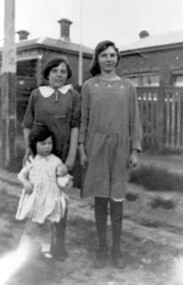
... clothing and dress...(miss) lena jackson...(miss) sylvia jackson...(miss) eleanor jackson...(mr) george jackson...(mrs) alice jackson...nurse...Sylvia was born 20 July 1914 at Nurse Talbot's Hospital in Surrey Hills; d 2008. russell street surrey hills 1911 jewellers clothing and dress (miss) lena jackson (miss) sylvia jackson (miss) eleanor jackson (mr) george jackson (mrs) alice jackson nurse talbot's hospital mr walter dawson A black and white photograph of three young girls outside 7-9 Russell Street, Surrey Hills. ...Eleanor (Lena) and Sylvia were 2 of the 11 children of Alice Eleanor (1868-1924) and George James Jackson (1868-1950). Another was George Hall Jackson - AIF no 4660. The Jacksons were both jewellers and married in 1890, migrating from England. Lena was born 16 December 1911; d. 30 May 1984. She married Walter John Rea Dawson. Sylvia was born 20 July 1914 at Nurse Talbot's Hospital in Surrey Hills; d 2008.A black and white photograph of three young girls outside 7-9 Russell Street, Surrey Hills. The two taller girls are identified as Sylvia and Lena Jackson, whilst the small girl is unidentified.russell street, surrey hills, 1911, jewellers, clothing and dress, (miss) lena jackson, (miss) sylvia jackson, (miss) eleanor jackson, (mr) george jackson, (mrs) alice jackson, nurse talbot's hospital, mr walter dawson -
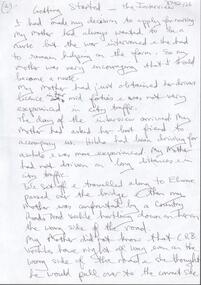 Northern District School of Nursing. Managed by Bendigo Historical Society Inc.
Document - Memories of Rosemary Baker School 59, 1963-66
... History House 11 Mackenzie Street Bendigo goldfields Northern District School of Nursing Nursing Nurse education Five handwritten pages of memories of NDSN Nursing School 59 by Rosemary Baker. Includes information on clothing requirements, living in hostels and learning. ...Northern District School of NursingFive handwritten pages of memories of NDSN Nursing School 59 by Rosemary Baker. Includes information on clothing requirements, living in hostels and learning. Mention of Miss Long being mainly involved with administrative work.nursing, nurse education -
 Stawell Historical Society Inc
Clothing - Costume and Accessories, c1914
... Stawell Historical Society Inc 46 Longfield St Stawell grampians Stawell Clothing Material Nurses Apron White cotton. A bodice fitted to a waist band with ties. ...Nurses Apron White cotton. A bodice fitted to a waist band with ties. A three gored skirt pocket on right. Martha Shalders (nee Chester)stawell clothing material
