
Showing 199 items matching "nurture"
-
 Beechworth Honey Archive
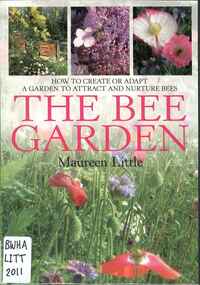
Publication, The bee garden: how to create or adapt a garden to attract and nurture bees (Little, M.), Oxford, 2011, 2011
... The bee garden: how to create or adapt a garden to attract and nurture bees (Little, M.), Oxford, 2011...The bee garden: how to create or adapt a garden to attract and nurture bees (Little, M.), Oxford, 2011 Publication ... -
 Federation University Art Collection
Sculpture - Mace, 'University Mace' by Trefor Prest, 1995
... An opening egg at the top stands for the nurturing of development and learning. The mace's straight shaft is depicted as the tree of knowledge and, incorporating a bark canoe scar, Ballarat's Aboriginal heritage. ...The 'egg' shape enfolds and nurtures the development of knowledge and learning. ...The 'egg' shape enfolds and nurtures the development of knowledge and learning. ...The University's mace was carried in procession for the first time during the Graduation ceremonies in May 1996. The mace was presented to the University by former Chief Commissioner of the Ballarat City Council, Vern Robson, at a ceremony on 02 February, following a national competition for its design, sponsored by the Council. (The Flag, Issue 2, July 1996) Nineteen artists responded to the competition which called for a design that would embody a distinctive Australian image reflecting the heritage of the city and in relationship with gold, an Aboriginal element and the history of the University. The winning entry, dominated by a poppet head, was submitted by Central Victorian artist/sculptor Trefor Prest, a sessional lecturer in sculpture at the University.(The Flag, Issue 2, July 1996) The Herald Sun of 03 February 1996 reported 'the new mace shows importance elements of Ballarat's heritage as well as the university's focus on the future. The artist emphasises the egalitarian nature of Australia as embodied in Ballarat's famous slice of history - the Eureka uprising. ... The mace has a poppet head at the top of the shaft - an unusual element for a mace - but it represents Ballarat's mining history and the University's evolution from the Ballarat School of Mines. An opening egg at the top stands for the nurturing of development and learning. The mace's straight shaft is depicted as the tree of knowledge and, incorporating a bark canoe scar, Ballarat's Aboriginal heritage. At the end of the shaft is a surveying device, which represents precision and accuracy ads embodied in the university's academic pursuits.' Bob Morrell of the University organised the national competition to design the mace and said 'It is in keeping with the university's logo, 'proudly flying the flag', which incorporates the Southern Cross.' This item is part of the Federation University Art Collection. The Art Collection features over 1000 works and was listed as a 'Ballarat Treasure' in 2007. Trefor Prest lectured in Sculpture at the University of Ballarat from 1995-1996.The mace symbolises the office of the Chancellor. The design of the mace is the outcome of a national competition and represents the cultural diversity of Australia. The poppet head on the top of the mace refers to gold mining, which underpinned the development of Ballarat. The protruding spikes recall the Eureka Stockade. The 'egg' shape enfolds and nurtures the development of knowledge and learning. The shaft with the three 'branches' represents the Tree of Knowledge, and includes a bark canoe scar which recognises the integration of black and white Australian traditions. The lower part of the shaft culminates in a device suggestive of scientific or surveying and measuring technology. This represents precision and accuracy embodied in the academic pursuits of Federation University Australia.art, artwork, trefor prest, prest, mace, federation university, university, eureka stockade, aborigines, scarred tree, mining, university mace, ballarat -
 Broadmeadows Historical Society & Museum
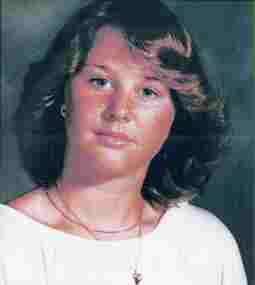
Photograph - Champion Portrait, Melynda Hardie - Club Champion 1975 to 1978, 1978
... Her consecutive wins reflect the club's strong competitive spirit and dedication to nurturing local talent....Her consecutive wins reflect the club's strong competitive spirit and dedication to nurturing local talent. A photograph of Melynda Hardie, Club Champion from 1975 to 1978, is significant as it captures a period of exceptional achievement for Broadmeadows Amateur Swimming Club. ...A photograph of Melynda Hardie, Club Champion from 1975 to 1978, highlights a period of excellence for Broadmeadows Amateur Swimming Club. Her consecutive wins reflect the club's strong competitive spirit and dedication to nurturing local talent.A photograph of Melynda Hardie, Club Champion from 1975 to 1978, is significant as it captures a period of exceptional achievement for Broadmeadows Amateur Swimming Club. Her consecutive victories underscore the club's dedication to fostering local talent and highlight a legacy of competitive excellence and community pride.A colour portrait of club champion Melynda Hardie (1975-78) on glossy card stock, featuring a black border and white writing.broadmeadows amateur swimming, broadmeadows amateur swimming and life club, club champion, melynda hardie, 1975 to 1978 -
 Bialik College
Ephemera (Item) - Bialik College report on Gifted and Special Education 2001
... Subtitled with ' Where the abilities and talents of each unique individual are recognised, valued and nurtured'. For use and permissions email the archive at [email protected] with ' Where the abilities and talents of each unique individual are recognised, valued and nurtured'. For use and permissions email the archive at [email protected] Education Bialik Council Bialik College An A4 brochure folded into thirds, coloured in printing, with both text and photographs. ...Prepared for the School Council meeting 26 March 2001 by Karin Morrison and Rene Silbermann. Subtitled with ' Where the abilities and talents of each unique individual are recognised, valued and nurtured'. For use and permissions email the archive at [email protected], bialik council, bialik college -
 Nillumbik Shire Council
Photograph, Siri Hayes, Toxic Haze Suspension, 2023
... ...nurture...Praiseworthy Alexis Wright photogram debris photography laughing waters Garambi Baanj ecosytem environment Birrarung Diamond Creek Eltham caretaker nurture index Unique state chromogenic photograph (photogram) Toxic Haze Suspension Photograph Siri Hayes ...Found objects including rubbish (thoroughly cleaned), floral and faunal debris collected whilst walking along the Birrarung and Diamond Creek in Eltham were scattered over light sensitive colour paper to create this photogram. The toxic haze hanging over 'Praiseworthy' in Alexis Wright’s award winning epic novel, informs this work and is used as the beginning point for composition: establishing a sensation of human suspension amongst virulent natural cycles that grow under, over and through human generated toxic effluvium. In both Wright’s and this work, untold colonial damage to place and culture are expressed as the result of racist and exploitive systems of domination. The work stems from years of research in the expansive Escarpment project in which I have been working alongside InPlace director Eugene Howard at Garambi Baanj to investigate the possibility of artists working as active caretakers of place and navigating ways creative practice can nurture natural spaces to derive art materials. I engage with the Diamond Creek and Garambi Baanj ecosystems by looking and actively removing rubbish that are transformed into artwork through creative endeavour and processes. Where previously I have framed landscapes from a distance using European compositional devices. In this work I am in with ‘touch’ place, that are also my materials, and look out from amongst it." Of Anglo descent Siri Hayes was born on Boonwurrung Country and has mostly practiced on Wurundjeri Woi wurrung Country in Eltham, where she lives with her artist husband and two children. Hayes works across photography, video and textiles as materials to investigate the photographic paradox in which illusion and the indexical or physical connections to the real, coexist. She is particularly interested with creatively interrogating the slippages between these but is also intrigued with how materials can embody engagement with place. Hayes has exhibited for over 20 years in solo and group exhibitions throughout Australia as well as in Japan, Canada, Finland, France and Poland. These include 'Photography: Real and Imagined,' 'Negotiating this World: Contemporary Australian Art,' 'Melbourne Now' and 'Stormy Weather: Contemporary Landscape Photography' all at the National Gallery of Victoria, 'Future Primitive' at Heide Museum of Modern Art, 'Boundary Line' at TarraWarra Museum of Art, and 'Contemporary Australian Portraiture' at the National Portrait Gallery. Hayes’s work also features in over 20 public Australian collections including the National Gallery of Australia, National Gallery of Victoria, Heide Museum of Modern Art and many reputable collections. She has received several photographic prizes including the National Photographic Purchase Award, an Australia-Korea Foundation travel grant and the Olive Cotton Award for Excellence in Photographic Portraiture. In 2008 she was a finalist in the inaugural Prix Pictet exhibited at the Palais de Tokyo, Paris, France an award for international photography that engages with environmental themes. In 2010 Hayes was artist-in-residence at the. Australia Council studio in Barcelona, Spain. Hayes completed a Bachelor of Fine Arts (photography), a Graduate Diploma of Visual Arts and a Master of Fine Art all at the Victorian College of the Arts. She also works in higher education as a lecturer in photography and visual art at the Victorian College of the Arts and has guest lectured at many other universities and institutions since the early 2000’s. Hayes is a member of the Paradoxa Collective who are four contemporary artists including Penelope Aitken, Anna Farago, Susan Wirth and Hayes that share an interest in peri-urban landscapes, connecting to the land through practical restoration and regeneration activities combined with site-informed art making who often use natural and found materials to create works that reflect on connections between places and people. She is also working onsite at Garambi Baanj alongside InPlace director Eugene Howard on the Escarpment - a multi-year project that investigates how artists might work as active caretakers of place and navigate innovative ways creative practice can nurture natural spaces to derive art materials. Unique state chromogenic photograph (photogram)praiseworthy, alexis wright, photogram, debris, photography, laughing waters, garambi baanj, ecosytem, environment, birrarung, diamond creek, eltham, caretaker, nurture, index -
 Bendigo Historical Society Inc.
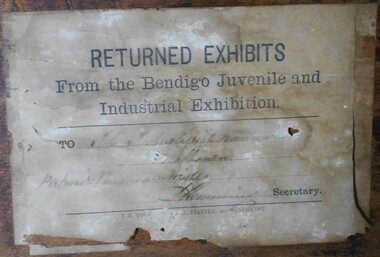
Sign - Returned Exhibits Board
... Around 1886 there were exhibitions held to encourage young people to compete in 'works of industry and usefulness', to impress the dignity and honour of labour , to nurture those in the trades, to show handiwork, to share ideas and to develop the idea of 'useful employment' in leisure hours and to create a 'taste for the fine arts and ornamental works, so as to make the home attractive. ...Around 1886 there were exhibitions held to encourage young people to compete in 'works of industry and usefulness', to impress the dignity and honour of labour , to nurture those in the trades, to show handiwork, to share ideas and to develop the idea of 'useful employment' in leisure hours and to create a 'taste for the fine arts and ornamental works, so as to make the home attractive. ...Around 1886 there were exhibitions held to encourage young people to compete in 'works of industry and usefulness', to impress the dignity and honour of labour , to nurture those in the trades, to show handiwork, to share ideas and to develop the idea of 'useful employment' in leisure hours and to create a 'taste for the fine arts and ornamental works, so as to make the home attractive. (Official Record, Australian Juvenile Industrial Exhibition, Ballarat, 1890). Information gathered from Museums Victoria Collections.A large wooden lid from a crate with a paper slip attached in the middle. The paper slip reads ' RETURNED EXHIBITS from the Juvenile and Industrial Exhibition'. The rest of the writing is illegible. bendigo juvenile & industrial exhibition, trading -
 Broadmeadows Historical Society & Museum
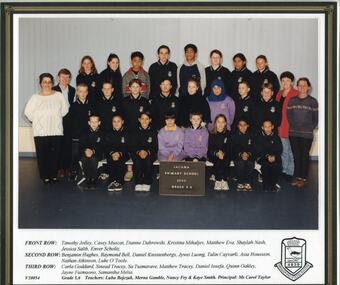
Photograph - School Photo, Fotek School Portraits, Jacana Primary School Grade 5/6 2000, 2000
... Established in 1959 and operating until the early 2000s, the school was a vital part of the local community, nurturing generations through education and shared experience. ...Established in 1959 and operating until the early 2000s, the school was a vital part of the local community, nurturing generations through education and shared experience. ...This group photograph of Jacana Primary School students serves as a poignant reminder of the school’s enduring legacy. Established in 1959 and operating until the early 2000s, the school was a vital part of the local community, nurturing generations through education and shared experience. The image captures not only the faces of its students but also the spirit of camaraderie, diversity, and belonging that defined the school. It stands as a visual record of a time and place that shaped young lives and reflected the broader social fabric of Jacana during its years of operation.This photograph holds significant historical and emotional value as a visual record of Jacana Primary School, which served the community from 1959 until its closure in the early 2000s. It captures the essence of a school that fostered learning, friendship, and community spirit, preserving the legacy of a place that shaped generations of young lives. A vibrant laminated colour photograph featuring a group of children and staff seated in three rows. Their names are displayed on a blue panel, printed on glossy paper, accompanied by the school logo.jacana primary school, education, photograph, group photograph, 2000, grade 5/6, timothy jolley, casey muscat, dianne dabrowski, kristina mihaljev, matthew eva, shayla nash, jessica salib, enver scholz, benjamin hughes, raymond bell, daniel knosten bergs, jywei luong, tulin cayvarli, asia houssein, nathan atkinson, luke o'toole, carla goddard, sinead tracy, sa tuimavave, matthew tracey, daniel iosefa, quinn oakley, jayne fuimadno, samantha melia, luba bojczuk, merna gamble, nancy frye, kaye smith, ms. carol taylor -
 Broadmeadows Historical Society & Museum
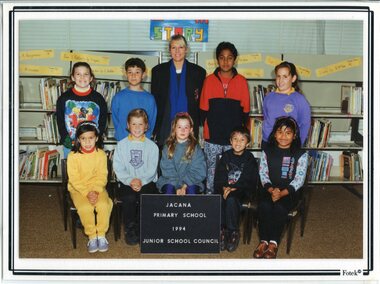
Photograph - Group Photograph, Fotek School Portraits, Jacana Primary School: Junior School Council, 1994, 1994
... It captures the school’s vibrant spirit, cultural richness, and nurturing atmosphere—preserving the legacy of a place that once played a pivotal role in shaping young minds and strengthening community identity. ...The image reflects the school’s commitment to student voice, diversity, and nurturing values, which were central to its identity and impact. ...This 1994 photograph of the Jacana Primary School Junior School Council holds deep historical and emotional value, serving as a visual testament to early childhood education at a now-closed institution. It captures the school’s vibrant spirit, cultural richness, and nurturing atmosphere—preserving the legacy of a place that once played a pivotal role in shaping young minds and strengthening community identity. As a snapshot of its time, it also offers a glimpse into the fashion and hairstyles of the era, making it a cherished artefact for former students, staff, and the wider community.This 1994 photograph of Jacana Primary School’s Junior School Council is a culturally and historically significant artefact. It offers a rare visual record of early childhood education within a now-closed institution, capturing the essence of a vibrant and inclusive school community. The image reflects the school’s commitment to student voice, diversity, and nurturing values, which were central to its identity and impact. Beyond its educational context, the photograph provides insight into the social and aesthetic trends of the time, including fashion and hairstyles, making it a valuable touchstone for former students, staff, and the broader Jacana community. Its preservation contributes to understanding the legacy of local education and community life in Melbourne’s northern suburbs.Colour photograph, mounted on white card with a black border and laminated.Front: Bottom Right Corner: Fotek ©, Back: Top Left Corner - Blue Label: PH - 4519jacana primary school, students, staff, 1994, education, junior school council -
 Broadmeadows Historical Society & Museum
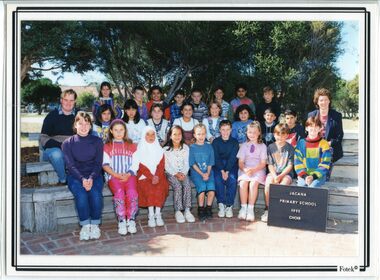
Photograph - Group Photograph, Fotek School Portraits, Jacana Primary School Choir, 1995, 1995
... It captures the vibrant spirit, cultural richness, and nurturing ethos that once defined the school community. ...It captures the vibrant spirit, cultural richness, and nurturing ethos that once defined the school community. ...This 1995 photograph of the Jacana Primary School Choir stands as a poignant historical and emotional record of early childhood education at a now-closed institution. It captures the vibrant spirit, cultural richness, and nurturing ethos that once defined the school community. More than just a group portrait, it preserves the legacy of a place that helped shape young lives and foster a strong sense of local identity. As a snapshot of its time, it also offers a charming glimpse into the fashion and hairstyles of the era, making it a treasured artefact for former students, staff, and the wider community.This photograph of the students and staff of Jacana Primary School in 1995 holds enduring historical and emotional value as a visual record of early childhood education in a now closed institution. It captures a moment in time that reflects the community spirit, diversity and educational environment of Jacana during its operational years. As the school has since closed, the image swerves as a poignant reminder of the role Jacana Primary played in shaping young lives and fostering local identity. It is a valuable artefact for former students, staff and the broader community, preserving the legacy of a place that once stood as a cornerstone of learning and connection. The image is also a record of the fashion and hairstyles of the era. Colour photograph, mounted on white card with a black border and laminated.Front; Bottom right corner: Fotek © Back: Top left corner: PH - 4520 Across back in mirror writing: Please/ do /not/ remove / this photo / from this formjacana primary school, students, staff, education, choir, 1995 -
 Broadmeadows Historical Society & Museum
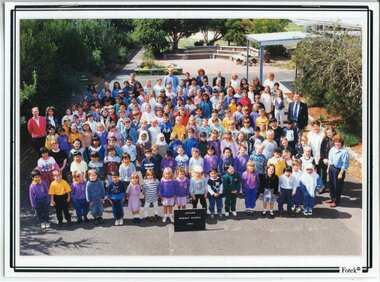
Photograph - School Photograph, Fotek School Portraits, Jacana Primary School 1994, 1994
... It reflects the school’s vibrant community spirit, cultural diversity, and nurturing environment, preserving the legacy of a place that once played a vital role in shaping young lives and fostering local identity. ...It reflects the school’s vibrant community spirit, cultural diversity, and nurturing environment, preserving the legacy of a place that once played a vital role in shaping young lives and fostering local identity. ...This 1994 photograph of Jacana Primary School’s students and staff holds lasting historical and emotional significance as a visual record of early childhood education within a now-closed institution. It reflects the school’s vibrant community spirit, cultural diversity, and nurturing environment, preserving the legacy of a place that once played a vital role in shaping young lives and fostering local identity. As a snapshot of its era, it also offers insight into the fashion and hairstyles of the time, making it a meaningful artefact for former students, staff, and the broader community.This photograph of the students and staff of Jacana Primary School in 1994 holds enduring historical and emotional value as a visual record of early childhood education in a now closed institution. It captures a moment in time that reflects the community spirit, diversity and educational environment of Jacana during its operational years. As the school has since closed, the image swerves as a poignant reminder of the role Jacana Primary played in shaping young lives and fostering local identity. It is a valuable artefact for former students, staff and the broader community, preserving the legacy of a place that once stood as a cornerstone of learning and connection. The image is also a record of the fashion and hairstyles of the era. Colour photograph, mounted on white card with a black border and laminated.jacana primary school, students, staff, 1994, education -
 Broadmeadows Historical Society & Museum
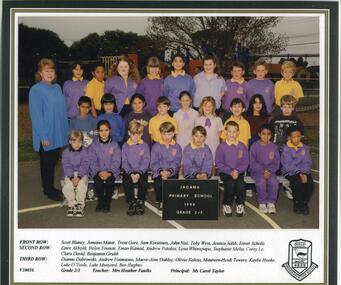
Photograph - School Photo, Fotek School Portraits, Jacana Primary School 1998 Grade 2/3, 1998
... The image stands as a testament to the school’s lasting impact on local identity, its commitment to educational opportunity, and its role in nurturing social cohesion. As a visual document, it provides valuable insight into the educational environment, student experiences, and community values characteristic of suburban Melbourne in the late 20th century. ...The image stands as a testament to the school’s lasting impact on local identity, its commitment to educational opportunity, and its role in nurturing social cohesion. As a visual document, it provides valuable insight into the educational environment, student experiences, and community values characteristic of suburban Melbourne in the late 20th century. ...This 1998 class photograph of Grade 2/3 students at Jacana Primary School captures a meaningful moment in the legacy of a community-focused institution that served Melbourne’s northern suburbs from 1959 until the early 2000s. The image stands as a testament to the school’s lasting impact on local identity, its commitment to educational opportunity, and its role in nurturing social cohesion. As a visual document, it provides valuable insight into the educational environment, student experiences, and community values characteristic of suburban Melbourne in the late 20th century. The 1998 class photograph of Grade 2/3 students at Jacana Primary School holds historical and social significance as a visual representation of a community-oriented educational institution that served Melbourne’s northern suburbs from 1959 until the early 2000s. The image embodies the school’s enduring contribution to the development of local identity, the provision of accessible education, and the fostering of social cohesion within a diverse suburban context. It offers a valuable snapshot of late 20th-century educational practices, student life, and community values, reflecting broader societal trends in public schooling and suburban growth during this period. As such, the photograph is an important cultural artifact that contributes to the collective memory and heritage of the Jacana community.A colour photograph depicting students and teachers at Jacana Primary School, taken in 1998. The image is bordered by a black frame and features a white strip along the bottom edge with names of individuals neatly printed. The Jacana Primary School logo is located in the bottom right-hand corner. The entire photograph has been laminated for preservation purposes.jacana primary school, education, photograph, group photograph, scott blaney, jomana matar, trent gore, sam koistinen, john nisi, toby west, jessica salib, enver scholz, emre akbiyik, helen younan, eman hamad, andrew patalas, lena wharepapa, stephanie melia, corey le, clara david, benjamin grubb, dianne dabrowski, andrew fuimaono, maeve-aine oakley, olivia kaleta, maureen-heidi towers, kaylie hooke, luke o'toole, luke munyard, ben hughes, mrs. heather faulkes, ms. carol taylor, 1998, grade 2/3 -
 Broadmeadows Historical Society & Museum
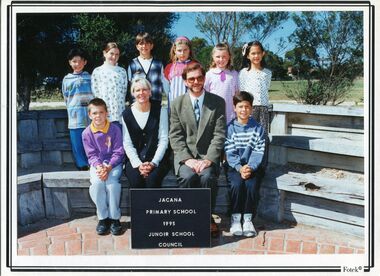
Photograph - Group Photograph, Fotek School Portraits, Jacana Primary School: Junior School Council, 1995, 1995
... It captures the school’s dynamic spirit, cultural diversity, and nurturing values that once defined its community. ...It captures the school’s dynamic spirit, cultural diversity, and nurturing values that once defined its community. ...This 1995 photograph of the Jacana Primary School Junior Council serves as a meaningful historical and emotional record of student leadership within a now-closed educational institution. It captures the school’s dynamic spirit, cultural diversity, and nurturing values that once defined its community. More than a simple group portrait, the image preserves the legacy of a school that played a vital role in shaping young lives and fostering a strong sense of belonging and local identity. As a visual snapshot of the mid-1990s, it also offers a charming reflection of the fashion and hairstyles of the time, making it a treasured keepsake for former students, staff, and the wider Jacana community.The 1995 Jacana Primary School Junior Council photograph is a historically and emotionally significant artefact that highlights student leadership and community values within a now-closed educational institution. It reflects the school’s commitment to fostering responsibility, inclusion, and active participation among its students. More than a group portrait, the image captures the vibrant spirit and cultural diversity that defined Jacana Primary School during the mid-1990s. It also offers a visual record of the fashion and social atmosphere of the time, making it a cherished piece of local history for former students, staff, and the broader community. As part of the school’s legacy, this photograph preserves the memory of a place that played a formative role in shaping young lives and strengthening community identity.Colour photograph on matte photographic paper, mounted on white cardBack: Upper right corner: Blue Label: PH - 2106 jacana primary school, students, staff, education, 1995, jacana, junior council -
 Sunshine and District Historical Society Incorporated
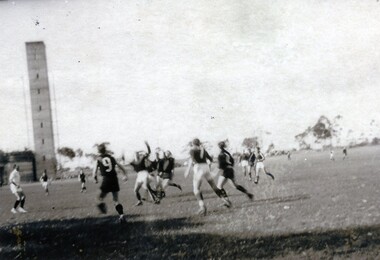
Photograph - St. Albans Youth Club Football Team, Joseph "Joe" Ribarow
... Albans Community Youth Club was central to community life and it "Nurtured a variety of other groups, including the junior football competition.”...Albans Community Youth Club was central to community life and it "Nurtured a variety of other groups, including the junior football competition.” ...The St Albans Youth Club football team refers to the junior football competition that grew out of the St. Albans Community Youth Club in the 1950s–60s. It was not a formal senior club like St. Albans Saints (soccer) or St. Albans Football Club (AFL), but a local youth sporting program that helped launch organised junior football in the suburb. The clearest historical reference comes from Les Cameron’s account of growing up in St. Albans in the 1950s–60s. He states that the St. Albans Community Youth Club was central to community life and it "Nurtured a variety of other groups, including the junior football competition.”The St. Albans Community Youth Club was central to community life in St. Albans from the post‑war population boom of 1950's and onwards. The club supported many different groups, including the junior football, judo, table tennis, gymnasium, scouts, guides, playgroups, etc. These photographs are a rare example of the club's early sporting history.5886.01 - St. Albans Youth Club Football Team 1955.jpg 5886.02 - St. Albans Youth Club Football Team 1956.jpg 5886.03 - St. Albans Youth Club Football Team 1956.jpg 5886.04 - St. Albans Youth Club Football Team 1958.jpgst. albans youth club football team, football, st. albans community youth club -
 Broadmeadows Historical Society & Museum
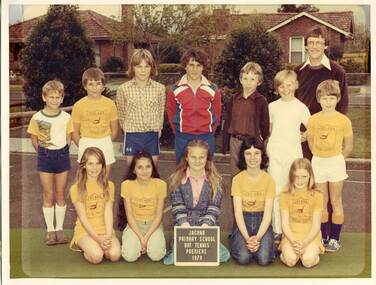
Photograph - School Photo, Jacana Primary School Bat Tennis Premiers 1979, 1979
... The image stands as a testament to the school’s commitment to nurturing well-rounded students through both academic and extracurricular pursuits. ...The image stands as a testament to the school’s commitment to nurturing well-rounded students through both academic and extracurricular pursuits. ...This 1979 photograph of Jacana Primary School’s bat tennis premiers offers a nostalgic glimpse into a vibrant chapter of local school life. More than just a snapshot of sporting success, it reflects the values that underpinned the school’s ethos—participation, perseverance, and community pride. Founded in 1959, Jacana Primary served generations of families until its closure in the early 2000s, becoming a hub for both learning and local connection. The image stands as a testament to the school’s commitment to nurturing well-rounded students through both academic and extracurricular pursuits. It also serves as a cultural time capsule, capturing the spirit of a suburban Melbourne school community during a formative era in public education.This 1979 photograph of Jacana Primary School’s bat tennis premiers holds enduring cultural and historical value as a representation of the school’s commitment to holistic education and community engagement. The image is significant not only for documenting a moment of sporting achievement but also for illustrating the broader educational philosophy of the time—one that emphasised teamwork, resilience, and local pride. As a visual record from a school that served the Jacana community from 1959 until the early 2000s, it offers insight into the social fabric of suburban Melbourne during a period of growth and change. The photograph contributes to the collective memory of the area, symbolising the role of public schools as foundational institutions in shaping both individual lives and community identity.A colour photograph of Jacana Primary School’s 1979 bat tennis team. The students are dressed in various sports clothes and are arranged in rows. The teacher stands in the top right corner of the group.jacana primary school, education, photograph, group photograph, 1979, bat tennis -
 Broadmeadows Historical Society & Museum
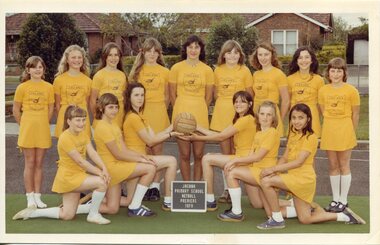
Photograph - Team Photograph, Jacana Primary School: Netball (Premiers) 1979, 1979
... The image highlights the school’s dedication to nurturing well-rounded students through both academic learning and extracurricular involvement. ...The image highlights the school’s dedication to nurturing well-rounded students through both academic learning and extracurricular involvement. ...This 1979 photograph of Jacana Primary School’s netball premiers offers a vivid and nostalgic window into a defining era of local school life. More than a record of sporting achievement, it reflects the school’s core values of participation, perseverance, and community pride. Established in 1959, Jacana Primary served as a vital educational and social hub for generations of families until its closure in the early 2000s. The image highlights the school’s dedication to nurturing well-rounded students through both academic learning and extracurricular involvement. As a cultural artifact, it captures the essence of a suburban Melbourne school community during a formative period in public education, preserving the spirit and camaraderie that shaped the lives of its students.This 1979 photograph of Jacana Primary School’s Netball premiers holds lasting cultural and historical significance as a reflection of the school’s dedication to holistic education and strong community values. Beyond capturing a moment of sporting success, the image illustrates the broader educational philosophy of the time—one that championed teamwork, resilience, and local pride. As a visual record from a school that served the Jacana community from 1959 until its closure in the early 2000s, it offers valuable insight into the social and educational landscape of suburban Melbourne during a period of growth and transformation. The photograph contributes meaningfully to the collective memory of the area, symbolising the vital role public schools played in shaping both individual lives and a shared community identity.A colour photograph of Jacana Primary School’s 1979 Netball team on Matte Paper with a white borderjacana primary school, education, photograph, group photograph, 1979, netball -
 Ruyton Girls' School
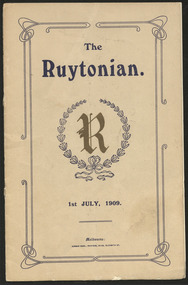
Magazine, Ruyton Girls' School, The Ruytonian, 1909
... It was one of their first projects, and their aim was to nurture continuing interest in the School among former and current students. ...It was one of their first projects, and their aim was to nurture continuing interest in the School among former and current students. ...In July 1909, a modest 12-page booklet was put together by members of the fledgling Old Ruytonians Association (ORA) and distributed to the Ruyton Girls' School community. It was one of their first projects, and their aim was to nurture continuing interest in the School among former and current students. They named it "The Ruytonian." At first, The Ruytonian was produced twice yearly, and always bore a plain cover with a simple name banner. Initially, it was the work of volunteer editors from the ORA, but in 1913 they handed the publication over to the first student editors, Esther Gibson and Lucy Tickell. Since that time, the style and content of The Ruytonian has continuously evolved. The biggest shifts occurred in 1942 when it transitioned to a yearly publication, and in 1969 when it moved to a larger A4 format with a cover image specifically selected for that year.The record has strong historic significance as it pertains to the fourth oldest girls' school in Victoria, Australia. Ruyton was founded in 1878 in the Bulleen Road, Kew, home of newly widowed Mrs Charlotte Anderson (now High Street South). Due to the age of the record dating back to 1909, we can infer it is one of the few remaining complete, intact and original examples of The Ruytonian from this period. Therefore, it can be considered an outstanding representation of its type, and is a reference example for research in early Victorian school history. The record's significance is further enhanced by its exceptionally well-documented provenance, having remained the property of Ruyton Girls' School since its production.Colour publication printed on papyrus coloured paper. 12 pages.Front Cover: The / Ruytonian. / 1st JULY, 1909. / Melbourne: / NORMAN BROS., PRINTERS, 52-58 ELIZABETH ST. /ruyton girls' school, the ruytonian, kew, old ruytonians association, yearbook, school, publication, girls school, junior school, senior school, journal, students, teacher -
 Ruyton Girls' School
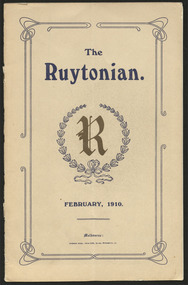
Magazine, Ruyton Girls' School, The Ruytonian, 1910
... It was one of their first projects, and their aim was to nurture continuing interest in the School among former and current students. ...It was one of their first projects, and their aim was to nurture continuing interest in the School among former and current students. ...In July 1909, a modest 12-page booklet was put together by members of the fledgling Old Ruytonians Association (ORA) and distributed to the Ruyton Girls' School community. It was one of their first projects, and their aim was to nurture continuing interest in the School among former and current students. They named it "The Ruytonian." At first, The Ruytonian was produced twice yearly, and always bore a plain cover with a simple name banner. Initially, it was the work of volunteer editors from the ORA, but in 1913 they handed the publication over to the first student editors, Esther Gibson and Lucy Tickell. Since that time, the style and content of The Ruytonian has continuously evolved. The biggest shifts occurred in 1942 when it transitioned to a yearly publication, and in 1969 when it moved to a larger A4 format with a cover image specifically selected for that year.The record has strong historic significance as it pertains to the fourth oldest girls' school in Victoria, Australia. Ruyton was founded in 1878 in the Bulleen Road, Kew, home of newly widowed Mrs Charlotte Anderson (now High Street South). Due to the age of the record dating back to 1910, we can infer it is one of the few remaining complete, intact and original examples of The Ruytonian from this period. Therefore, it can be considered an outstanding representation of its type, and is a reference example for research in early Victorian school history. The record's significance is further enhanced by its exceptionally well-documented provenance, having remained the property of Ruyton Girls' School since its production.Colour publication printed on papyrus coloured paper. 13 pages.Front Cover: The / Ruytonian. / FEBRUARY, 1910. / Melbourne: / NORMAN BROS., PRINTERS, 52-58 ELIZABETH ST. /ruyton girls' school, the ruytonian, kew, old ruytonians association, yearbook, school, publication, girls school, junior school, senior school, journal, students, teacher -
 Ruyton Girls' School
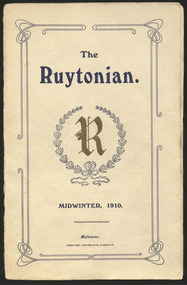
Magazine, Ruyton Girls' School, The Ruytonian, 1910
... It was one of their first projects, and their aim was to nurture continuing interest in the School among former and current students. ...It was one of their first projects, and their aim was to nurture continuing interest in the School among former and current students. ...In July 1909, a modest 12-page booklet was put together by members of the fledgling Old Ruytonians Association (ORA) and distributed to the Ruyton Girls' School community. It was one of their first projects, and their aim was to nurture continuing interest in the School among former and current students. They named it "The Ruytonian." At first, The Ruytonian was produced twice yearly, and always bore a plain cover with a simple name banner. Initially, it was the work of volunteer editors from the ORA, but in 1913 they handed the publication over to the first student editors, Esther Gibson and Lucy Tickell. Since that time, the style and content of The Ruytonian has continuously evolved. The biggest shifts occurred in 1942 when it transitioned to a yearly publication, and in 1969 when it moved to a larger A4 format with a cover image specifically selected for that year.The record has strong historic significance as it pertains to the fourth oldest girls' school in Victoria, Australia. Ruyton was founded in 1878 in the Bulleen Road, Kew, home of newly widowed Mrs Charlotte Anderson (now High Street South). Due to the age of the record dating back to 1910, we can infer it is one of the few remaining complete, intact and original examples of The Ruytonian from this period. Therefore, it can be considered an outstanding representation of its type, and is a reference example for research in early Victorian school history. The record's significance is further enhanced by its exceptionally well-documented provenance, having remained the property of Ruyton Girls' School since its production.Colour publication printed on papyrus coloured paper. 19 pages.Front Cover: The / Ruytonian. / MIDWINTER, 1910. / Melbourne: / NORMAN BROS., PRINTERS, 52-58 ELIZABETH ST. /ruyton girls' school, the ruytonian, kew, old ruytonians association, yearbook, school, publication, girls school, junior school, senior school, journal, students, teacher -
 Ruyton Girls' School
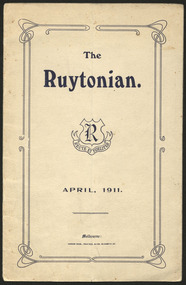
Magazine, Ruyton Girls' School, The Ruytonian, 1911
... It was one of their first projects, and their aim was to nurture continuing interest in the School among former and current students. ...It was one of their first projects, and their aim was to nurture continuing interest in the School among former and current students. ...In July 1909, a modest 12-page booklet was put together by members of the fledgling Old Ruytonians Association (ORA) and distributed to the Ruyton Girls' School community. It was one of their first projects, and their aim was to nurture continuing interest in the School among former and current students. They named it "The Ruytonian." At first, The Ruytonian was produced twice yearly, and always bore a plain cover with a simple name banner. Initially, it was the work of volunteer editors from the ORA, but in 1913 they handed the publication over to the first student editors, Esther Gibson and Lucy Tickell. Since that time, the style and content of The Ruytonian has continuously evolved. The biggest shifts occurred in 1942 when it transitioned to a yearly publication, and in 1969 when it moved to a larger A4 format with a cover image specifically selected for that year.The record has strong historic significance as it pertains to the fourth oldest girls' school in Victoria, Australia. Ruyton was founded in 1878 in the Bulleen Road, Kew, home of newly widowed Mrs Charlotte Anderson (now High Street South). Due to the age of the record dating back to 1911, we can infer it is one of the few remaining complete, intact and original examples of The Ruytonian from this period. Therefore, it can be considered an outstanding representation of its type, and is a reference example for research in early Victorian school history. The record's significance is further enhanced by its exceptionally well-documented provenance, having remained the property of Ruyton Girls' School since its production.Colour publication printed on papyrus coloured paper. 17 pages.Front Cover: The / Ruytonian. / APRIL, 1911. / Melbourne: / NORMAN BROS., PRINTERS, 52-58 ELIZABETH ST. /ruyton girls' school, the ruytonian, kew, old ruytonians association, yearbook, school, publication, girls school, junior school, senior school, journal, students, teacher -
 Ruyton Girls' School
Magazine, Ruyton Girls' School, The Ruytonian, 1912
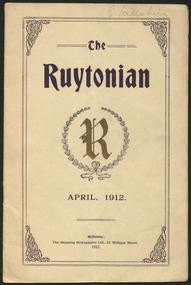
... It was one of their first projects, and their aim was to nurture continuing interest in the School among former and current students. ...It was one of their first projects, and their aim was to nurture continuing interest in the School among former and current students. ...In July 1909, a modest 12-page booklet was put together by members of the fledgling Old Ruytonians Association (ORA) and distributed to the Ruyton Girls' School community. It was one of their first projects, and their aim was to nurture continuing interest in the School among former and current students. They named it "The Ruytonian." At first, The Ruytonian was produced twice yearly, and always bore a plain cover with a simple name banner. Initially, it was the work of volunteer editors from the ORA, but in 1913 they handed the publication over to the first student editors, Esther Gibson and Lucy Tickell. Since that time, the style and content of The Ruytonian has continuously evolved. The biggest shifts occurred in 1942 when it transitioned to a yearly publication, and in 1969 when it moved to a larger A4 format with a cover image specifically selected for that year.The record has strong historic significance as it pertains to the fourth oldest girls' school in Victoria, Australia. Ruyton was founded in 1878 in the Bulleen Road, Kew, home of newly widowed Mrs Charlotte Anderson (now High Street South). Due to the age of the record dating back to 1912, we can infer it is one of the few remaining complete, intact and original examples of The Ruytonian from this period. Therefore, it can be considered an outstanding representation of its type, and is a reference example for research in early Victorian school history. The record's significance is further enhanced by its exceptionally well-documented provenance, having remained the property of Ruyton Girls' School since its production.Colour publication printed on papyrus coloured paper. 18 pages.Front Cover: E. Willshire / The / Ruytonian / APRIL, 1912. / Melbourne: / The Shipping Newspapers Ltd., 31 William Street. / 1912. /ruyton girls' school, the ruytonian, kew, old ruytonians association, yearbook, school, publication, girls school, junior school, senior school, journal, students, teacher -
 Ruyton Girls' School
Magazine, Ruyton Girls' School, The Ruytonian, 1912
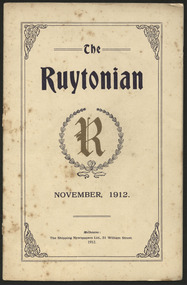
... It was one of their first projects, and their aim was to nurture continuing interest in the School among former and current students. ...It was one of their first projects, and their aim was to nurture continuing interest in the School among former and current students. ...In July 1909, a modest 12-page booklet was put together by members of the fledgling Old Ruytonians Association (ORA) and distributed to the Ruyton Girls' School community. It was one of their first projects, and their aim was to nurture continuing interest in the School among former and current students. They named it "The Ruytonian." At first, The Ruytonian was produced twice yearly, and always bore a plain cover with a simple name banner. Initially, it was the work of volunteer editors from the ORA, but in 1913 they handed the publication over to the first student editors, Esther Gibson and Lucy Tickell. Since that time, the style and content of The Ruytonian has continuously evolved. The biggest shifts occurred in 1942 when it transitioned to a yearly publication, and in 1969 when it moved to a larger A4 format with a cover image specifically selected for that year.The record has strong historic significance as it pertains to the fourth oldest girls' school in Victoria, Australia. Ruyton was founded in 1878 in the Bulleen Road, Kew, home of newly widowed Mrs Charlotte Anderson (now High Street South). Due to the age of the record dating back to 1912, we can infer it is one of the few remaining complete, intact and original examples of The Ruytonian from this period. Therefore, it can be considered an outstanding representation of its type, and is a reference example for research in early Victorian school history. The record's significance is further enhanced by its exceptionally well-documented provenance, having remained the property of Ruyton Girls' School since its production.Colour publication printed on papyrus coloured paper. 19 pages.Front Cover: The / Ruytonian / NOVEMBER, 1912. / Melbourne: / The Shipping Newspapers Ltd., 31 William Street. / 1912. /ruyton girls' school, the ruytonian, kew, old ruytonians association, yearbook, school, publication, girls school, junior school, senior school, journal, students, teacher -
 Ruyton Girls' School
Magazine, Ruyton Girls' School, The Ruytonian, 1913
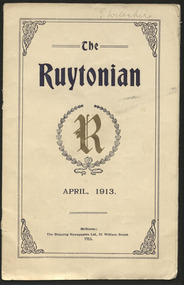
... It was one of their first projects, and their aim was to nurture continuing interest in the School among former and current students. ...It was one of their first projects, and their aim was to nurture continuing interest in the School among former and current students. ...In July 1909, a modest 12-page booklet was put together by members of the fledgling Old Ruytonians Association (ORA) and distributed to the Ruyton Girls' School community. It was one of their first projects, and their aim was to nurture continuing interest in the School among former and current students. They named it "The Ruytonian." At first, The Ruytonian was produced twice yearly, and always bore a plain cover with a simple name banner. Initially, it was the work of volunteer editors from the ORA, but in 1913 they handed the publication over to the first student editors, Esther Gibson and Lucy Tickell. Since that time, the style and content of The Ruytonian has continuously evolved. The biggest shifts occurred in 1942 when it transitioned to a yearly publication, and in 1969 when it moved to a larger A4 format with a cover image specifically selected for that year.The record has strong historic significance as it pertains to the fourth oldest girls' school in Victoria, Australia. Ruyton was founded in 1878 in the Bulleen Road, Kew, home of newly widowed Mrs Charlotte Anderson (now High Street South). Due to the age of the record dating back to 1913, we can infer it is one of the few remaining complete, intact and original examples of The Ruytonian from this period. Therefore, it can be considered an outstanding representation of its type, and is a reference example for research in early Victorian school history. The record's significance is further enhanced by its exceptionally well-documented provenance, having remained the property of Ruyton Girls' School since its production.Colour publication printed on papyrus coloured paper. 19 pages.Front Cover: E. Willshire / The / Ruytonian / APRIL, 1913. / Melbourne: / The Shipping Newspapers Ltd., 31 William Street. / 1913. /ruyton girls' school, the ruytonian, kew, old ruytonians association, yearbook, school, publication, girls school, junior school, senior school, journal, students, teacher -
 Ruyton Girls' School
Magazine, Ruyton Girls' School, The Ruytonian, 1913
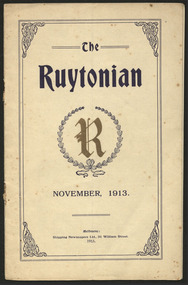
... It was one of their first projects, and their aim was to nurture continuing interest in the School among former and current students. ...It was one of their first projects, and their aim was to nurture continuing interest in the School among former and current students. ...In July 1909, a modest 12-page booklet was put together by members of the fledgling Old Ruytonians Association (ORA) and distributed to the Ruyton Girls' School community. It was one of their first projects, and their aim was to nurture continuing interest in the School among former and current students. They named it "The Ruytonian." At first, The Ruytonian was produced twice yearly, and always bore a plain cover with a simple name banner. Initially, it was the work of volunteer editors from the ORA, but in 1913 they handed the publication over to the first student editors, Esther Gibson and Lucy Tickell. Since that time, the style and content of The Ruytonian has continuously evolved. The biggest shifts occurred in 1942 when it transitioned to a yearly publication, and in 1969 when it moved to a larger A4 format with a cover image specifically selected for that year.The record has strong historic significance as it pertains to the fourth oldest girls' school in Victoria, Australia. Ruyton was founded in 1878 in the Bulleen Road, Kew, home of newly widowed Mrs Charlotte Anderson (now High Street South). Due to the age of the record dating back to 1913, we can infer it is one of the few remaining complete, intact and original examples of The Ruytonian from this period. Therefore, it can be considered an outstanding representation of its type, and is a reference example for research in early Victorian school history. The record's significance is further enhanced by its exceptionally well-documented provenance, having remained the property of Ruyton Girls' School since its production.Colour publication printed on papyrus coloured paper. 19 pages.Front Cover: The / Ruytonian / NOVEMBER, 1913. / Melbourne: / The Shipping Newspapers Ltd., 31 William Street. / 1913. /ruyton girls' school, the ruytonian, kew, old ruytonians association, yearbook, school, publication, girls school, junior school, senior school, journal, students, teacher -
 Ruyton Girls' School
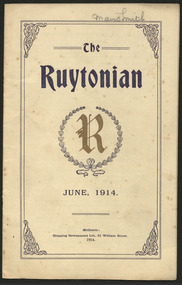
Magazine, Ruyton Girls' School, The Ruytonian, 1914
... It was one of their first projects, and their aim was to nurture continuing interest in the School among former and current students. ...It was one of their first projects, and their aim was to nurture continuing interest in the School among former and current students. ...In July 1909, a modest 12-page booklet was put together by members of the fledgling Old Ruytonians Association (ORA) and distributed to the Ruyton Girls' School community. It was one of their first projects, and their aim was to nurture continuing interest in the School among former and current students. They named it "The Ruytonian." At first, The Ruytonian was produced twice yearly, and always bore a plain cover with a simple name banner. Initially, it was the work of volunteer editors from the ORA, but in 1913 they handed the publication over to the first student editors, Esther Gibson and Lucy Tickell. Since that time, the style and content of The Ruytonian has continuously evolved. The biggest shifts occurred in 1942 when it transitioned to a yearly publication, and in 1969 when it moved to a larger A4 format with a cover image specifically selected for that year.The record has strong historic significance as it pertains to the fourth oldest girls' school in Victoria, Australia. Ruyton was founded in 1878 in the Bulleen Road, Kew, home of newly widowed Mrs Charlotte Anderson (now High Street South). Due to the age of the record dating back to 1914, we can infer it is one of the few remaining complete, intact and original examples of The Ruytonian from this period. Therefore, it can be considered an outstanding representation of its type, and is a reference example for research in early Victorian school history. The record's significance is further enhanced by its exceptionally well-documented provenance, having remained the property of Ruyton Girls' School since its production.Colour publication printed on papyrus coloured paper. 20 pages.Front Cover: Mavis Smith / The / Ruytonian / JUNE, 1914. / Melbourne: / The Shipping Newspapers Ltd., 31 William Street. / 1914. /ruyton girls' school, the ruytonian, kew, old ruytonians association, yearbook, school, publication, girls school, junior school, senior school, journal, students, teacher -
 Ruyton Girls' School
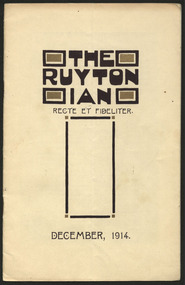
Magazine, Ruyton Girls' School, The Ruytonian, 1914
... It was one of their first projects, and their aim was to nurture continuing interest in the School among former and current students. ...It was one of their first projects, and their aim was to nurture continuing interest in the School among former and current students. ...In July 1909, a modest 12-page booklet was put together by members of the fledgling Old Ruytonians Association (ORA) and distributed to the Ruyton Girls' School community. It was one of their first projects, and their aim was to nurture continuing interest in the School among former and current students. They named it "The Ruytonian." At first, The Ruytonian was produced twice yearly, and always bore a plain cover with a simple name banner. Initially, it was the work of volunteer editors from the ORA, but in 1913 they handed the publication over to the first student editors, Esther Gibson and Lucy Tickell. Since that time, the style and content of The Ruytonian has continuously evolved. The biggest shifts occurred in 1942 when it transitioned to a yearly publication, and in 1969 when it moved to a larger A4 format with a cover image specifically selected for that year.The record has strong historic significance as it pertains to the fourth oldest girls' school in Victoria, Australia. Ruyton was founded in 1878 in the Bulleen Road, Kew, home of newly widowed Mrs Charlotte Anderson (now High Street South). Due to the age of the record dating back to 1914, we can infer it is one of the few remaining complete, intact and original examples of The Ruytonian from this period. Therefore, it can be considered an outstanding representation of its type, and is a reference example for research in early Victorian school history. The record's significance is further enhanced by its exceptionally well-documented provenance, having remained the property of Ruyton Girls' School since its production.Colour publication printed on papyrus coloured paper. 26 pages.Front Cover: THE / RUYTON / IAN / RECTE ET FIDELITER. / DECEMBER, 1914. /ruyton girls' school, the ruytonian, kew, old ruytonians association, yearbook, school, publication, girls school, junior school, senior school, journal, students, teacher -
 Ruyton Girls' School
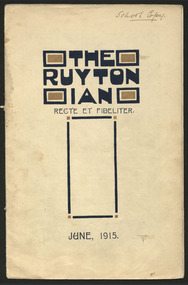
Magazine, Ruyton Girls' School, The Ruytonian, 1915
... It was one of their first projects, and their aim was to nurture continuing interest in the School among former and current students. ...It was one of their first projects, and their aim was to nurture continuing interest in the School among former and current students. ...In July 1909, a modest 12-page booklet was put together by members of the fledgling Old Ruytonians Association (ORA) and distributed to the Ruyton Girls' School community. It was one of their first projects, and their aim was to nurture continuing interest in the School among former and current students. They named it "The Ruytonian." At first, The Ruytonian was produced twice yearly, and always bore a plain cover with a simple name banner. Initially, it was the work of volunteer editors from the ORA, but in 1913 they handed the publication over to the first student editors, Esther Gibson and Lucy Tickell. Since that time, the style and content of The Ruytonian has continuously evolved. The biggest shifts occurred in 1942 when it transitioned to a yearly publication, and in 1969 when it moved to a larger A4 format with a cover image specifically selected for that year.The record has strong historic significance as it pertains to the fourth oldest girls' school in Victoria, Australia. Ruyton was founded in 1878 in the Bulleen Road, Kew, home of newly widowed Mrs Charlotte Anderson (now High Street South). Due to the age of the record dating back to 1915, we can infer it is one of the few remaining complete, intact and original examples of The Ruytonian from this period. Therefore, it can be considered an outstanding representation of its type, and is a reference example for research in early Victorian school history. The date of the record also aligns with the First World War, and thus can offer interesting insight into how schools prepared for potential air raids, which was widely considered a threat at the time. The record's significance is further enhanced by its exceptionally well-documented provenance, having remained the property of Ruyton Girls' School since its production.Colour publication printed on papyrus coloured paper. 26 pages.Front Cover: School Copy. / THE / RUYTON / IAN / RECTE ET FIDELITER. / JUNE, 1915. /ruyton girls' school, the ruytonian, kew, old ruytonians association, yearbook, school, publication, girls school, junior school, senior school, journal, students, teacher, wwi, world war i -
 Ruyton Girls' School
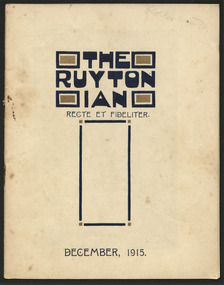
Magazine, Ruyton Girls' School, The Ruytonian, 1915
... It was one of their first projects, and their aim was to nurture continuing interest in the School among former and current students. ...It was one of their first projects, and their aim was to nurture continuing interest in the School among former and current students. ...In July 1909, a modest 12-page booklet was put together by members of the fledgling Old Ruytonians Association (ORA) and distributed to the Ruyton Girls' School community. It was one of their first projects, and their aim was to nurture continuing interest in the School among former and current students. They named it "The Ruytonian." At first, The Ruytonian was produced twice yearly, and always bore a plain cover with a simple name banner. Initially, it was the work of volunteer editors from the ORA, but in 1913 they handed the publication over to the first student editors, Esther Gibson and Lucy Tickell. Since that time, the style and content of The Ruytonian has continuously evolved. The biggest shifts occurred in 1942 when it transitioned to a yearly publication, and in 1969 when it moved to a larger A4 format with a cover image specifically selected for that year.The record has strong historic significance as it pertains to the fourth oldest girls' school in Victoria, Australia. Ruyton was founded in 1878 in the Bulleen Road, Kew, home of newly widowed Mrs Charlotte Anderson (now High Street South). Due to the age of the record dating back to 1915, we can infer it is one of the few remaining complete, intact and original examples of The Ruytonian from this period. Therefore, it can be considered an outstanding representation of its type, and is a reference example for research in early Victorian school history. The date of the record also aligns with the First World War, and thus can offer interesting insight into how schools prepared for potential air raids, which was widely considered a threat at the time. The record's significance is further enhanced by its exceptionally well-documented provenance, having remained the property of Ruyton Girls' School since its production.Colour publication printed on papyrus coloured paper. 27 pages.Front Cover: Rothes Smith / THE / RUYTON / IAN / RECTE ET FIDELITER. / DECEMBER, 1915. /ruyton girls' school, the ruytonian, kew, old ruytonians association, yearbook, school, publication, girls school, junior school, senior school, journal, students, teacher, wwi, world war i -
 Ruyton Girls' School
Magazine, Ruyton Girls' School, The Ruytonian, 1916
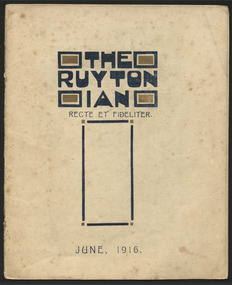
... It was one of their first projects, and their aim was to nurture continuing interest in the School among former and current students. ...It was one of their first projects, and their aim was to nurture continuing interest in the School among former and current students. ...In July 1909, a modest 12-page booklet was put together by members of the fledgling Old Ruytonians Association (ORA) and distributed to the Ruyton Girls' School community. It was one of their first projects, and their aim was to nurture continuing interest in the School among former and current students. They named it "The Ruytonian." At first, The Ruytonian was produced twice yearly, and always bore a plain cover with a simple name banner. Initially, it was the work of volunteer editors from the ORA, but in 1913 they handed the publication over to the first student editors, Esther Gibson and Lucy Tickell. Since that time, the style and content of The Ruytonian has continuously evolved. The biggest shifts occurred in 1942 when it transitioned to a yearly publication, and in 1969 when it moved to a larger A4 format with a cover image specifically selected for that year.The record has strong historic significance as it pertains to the fourth oldest girls' school in Victoria, Australia. Ruyton was founded in 1878 in the Bulleen Road, Kew, home of newly widowed Mrs Charlotte Anderson (now High Street South). Due to the age of the record dating back to 1916, we can infer it is one of the few remaining complete, intact and original examples of The Ruytonian from this period. Therefore, it can be considered an outstanding representation of its type, and is a reference example for research in early Victorian school history. The date of the record also aligns with the First World War, and thus can offer interesting insight into how schools prepared for potential air raids, which was widely considered a threat at the time. The record's significance is further enhanced by its exceptionally well-documented provenance, having remained the property of Ruyton Girls' School since its production.Colour publication printed on papyrus coloured paper. 27 pages.Front Cover: THE / RUYTON / IAN / RECTE ET FIDELITER. / JUNE, 1916. /ruyton girls' school, the ruytonian, kew, old ruytonians association, yearbook, school, publication, girls school, junior school, senior school, journal, students, teacher, wwi, world war i -
 Ruyton Girls' School
Magazine, Ruyton Girls' School, The Ruytonian, 1917
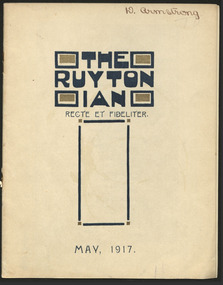
... It was one of their first projects, and their aim was to nurture continuing interest in the School among former and current students. ...It was one of their first projects, and their aim was to nurture continuing interest in the School among former and current students. ...In July 1909, a modest 12-page booklet was put together by members of the fledgling Old Ruytonians Association (ORA) and distributed to the Ruyton Girls' School community. It was one of their first projects, and their aim was to nurture continuing interest in the School among former and current students. They named it "The Ruytonian." At first, The Ruytonian was produced twice yearly, and always bore a plain cover with a simple name banner. Initially, it was the work of volunteer editors from the ORA, but in 1913 they handed the publication over to the first student editors, Esther Gibson and Lucy Tickell. Since that time, the style and content of The Ruytonian has continuously evolved. The biggest shifts occurred in 1942 when it transitioned to a yearly publication, and in 1969 when it moved to a larger A4 format with a cover image specifically selected for that year.The record has strong historic significance as it pertains to the fourth oldest girls' school in Victoria, Australia. Ruyton was founded in 1878 in the Bulleen Road, Kew, home of newly widowed Mrs Charlotte Anderson (now High Street South). Due to the age of the record dating back to 1917, we can infer it is one of the few remaining complete, intact and original examples of The Ruytonian from this period. Therefore, it can be considered an outstanding representation of its type, and is a reference example for research in early Victorian school history. The date of the record also aligns with the First World War, and thus can offer interesting insight into how schools prepared for potential air raids, which was widely considered a threat at the time. The record's significance is further enhanced by its exceptionally well-documented provenance, having remained the property of Ruyton Girls' School since its production.Colour publication printed on papyrus coloured paper. 23 pages.Front Cover: W. Armstrong. / THE / RUYTON / IAN / RECTE ET FIDELITER. / DECEMBER, 1917. /ruyton girls' school, the ruytonian, kew, old ruytonians association, yearbook, school, publication, girls school, junior school, senior school, journal, students, teacher, wwi, world war i -
 Ruyton Girls' School
Magazine, Ruyton Girls' School, The Ruytonian, 1917
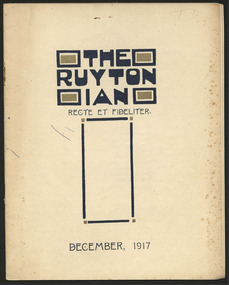
... It was one of their first projects, and their aim was to nurture continuing interest in the School among former and current students. ...It was one of their first projects, and their aim was to nurture continuing interest in the School among former and current students. ...In July 1909, a modest 12-page booklet was put together by members of the fledgling Old Ruytonians Association (ORA) and distributed to the Ruyton Girls' School community. It was one of their first projects, and their aim was to nurture continuing interest in the School among former and current students. They named it "The Ruytonian." At first, The Ruytonian was produced twice yearly, and always bore a plain cover with a simple name banner. Initially, it was the work of volunteer editors from the ORA, but in 1913 they handed the publication over to the first student editors, Esther Gibson and Lucy Tickell. Since that time, the style and content of The Ruytonian has continuously evolved. The biggest shifts occurred in 1942 when it transitioned to a yearly publication, and in 1969 when it moved to a larger A4 format with a cover image specifically selected for that year.The record has strong historic significance as it pertains to the fourth oldest girls' school in Victoria, Australia. Ruyton was founded in 1878 in the Bulleen Road, Kew, home of newly widowed Mrs Charlotte Anderson (now High Street South). Due to the age of the record dating back to 1917, we can infer it is one of the few remaining complete, intact and original examples of The Ruytonian from this period. Therefore, it can be considered an outstanding representation of its type, and is a reference example for research in early Victorian school history. The date of the record also aligns with the First World War, and thus can offer interesting insight into how schools prepared for potential air raids, which was widely considered a threat at the time. The record's significance is further enhanced by its exceptionally well-documented provenance, having remained the property of Ruyton Girls' School since its production.Colour publication printed on papyrus coloured paper. 26 pages.Front Cover: TD / THE / RUYTON / IAN / RECTE ET FIDELITER. / DECEMBER, 1917 /ruyton girls' school, the ruytonian, kew, old ruytonians association, yearbook, school, publication, girls school, junior school, senior school, journal, students, teacher, wwi, world war i
