
Showing 3 items matching "official parliament correspondence"
-
 Bendigo Historical Society Inc.
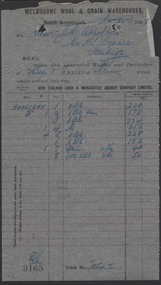
Administrative record - Abbott Collection: 29 letters/notes/correspondence from July to Dec 1909, from business and Victorian Government Officers; addressed to J.H. Abbott & Co
... ...official Parliament correspondence...Abbott company invoices and business correspondence official Parliament correspondence 29 letters/notes/correspondence and one 1909 invoice; from July to Dec 1909, from business and Victorian Government Officers; addressed to J.H. ...29 letters/notes/correspondence, and 1 invoice; from July to Dec 1909, from business and Victorian Government Officers; addressed to Mr. J.H. Abbott 29 letters/notes/correspondence and one 1909 invoice; from July to Dec 1909, from business and Victorian Government Officers; addressed to J.H. Abbott often as MLC in office. Many with Victorian Parliament House, Melbourne letterhead One invoice from the Melbourne Wool & Grain Warehouses, 22 Nov 1919, for a range of goods (for 2 bags & 6 bales of greasy wool, detailed in 8 items)company invoices and business correspondence, official parliament correspondence -
 Flagstaff Hill Maritime Museum and Village
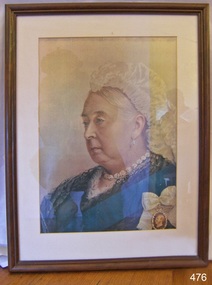
Print - Portrait of Queen Victoria, Hoy Art Picture Framing, Original probably painted in 1887 or 1897 to commemorate 50 or 60 years on the throne
... Until the late 1860s she rarely appeared in public; although she never neglected her official Correspondence, and continued to give audiences to her ministers and official visitors, she was reluctant to resume a full public life. She was persuaded to open Parliament...Until the late 1860s she rarely appeared in public; although she never neglected her official Correspondence, and continued to give audiences to her ministers and official visitors, she was reluctant to resume a full public life. She was persuaded to open Parliament ...Queen Victoria was born at Kensington Palace, London, on 24 May 1819. She was the only daughter of Edward, Duke of Kent, the fourth son of George III. Her father died shortly after her birth and she became heir to the throne because the three uncles who were ahead of her in the succession - George IV, Frederick Duke of York, and William IV - had no legitimate children who survived. Warmhearted and lively, Victoria had a gift for drawing and painting; educated by a governess at home, she was a natural diarist and kept a regular journal throughout her life. On William IV's death in 1837, she became Queen at the age of 18. Queen Victoria is associated with Britain's great age of industrial expansion, economic progress and, especially, empire. At her death, it was said, Britain had a worldwide empire on which the sun never set. In the early part of her reign, she was influenced by two men: her first Prime Minister, Lord Melbourne, and then her husband, Prince Albert, whom she married in 1840. Both men taught her much about how to be a ruler in a 'constitutional monarchy, in which the monarch had very few powers but could use much influence. Albert took an active interest in the arts, science, trade and industry; the project for which he is best remembered was the Great Exhibition of 1851, the profits from which helped to establish the South Kensington museums complex in London. Her marriage to Prince Albert produced nine children between 1840 and 1857. Most of her children married into other Royal families in Europe. Edward VII (born 1841), married Alexandra, daughter of Christian IX of Denmark. Alfred, Duke of Edinburgh and of Saxe-Coburg and Gotha (born 1844) married Marie of Russia. Arthur, Duke of Connaught (born 1850) married Louise Margaret of Prussia. Leopold, Duke of Albany (born 1853) married Helen of Waldeck-Pyrmont. Victoria, Princess Royal (born 1840) married Friedrich III, German Emperor. Alice (born 1843) married Ludwig IV, Grand Duke of Hesse and by Rhine. Helena (born 1846) married Christian of Schleswig-Holstein. Louise (born 1848) married John Campbell, 9th Duke of Argyll. Beatrice (born 1857) married Henry of Battenberg. Victoria bought Osborne House (later presented to the nation by Edward VII) on the Isle of Wight as a family home in 1845, and Albert bought Balmoral in 1852. Victoria was deeply attached to her husband and she sank into depression after he died, aged 42, in 1861. She had lost a devoted husband and her principal trusted adviser in affairs of state. For the rest of her reign she wore black. Until the late 1860s she rarely appeared in public; although she never neglected her official Correspondence, and continued to give audiences to her ministers and official visitors, she was reluctant to resume a full public life. She was persuaded to open Parliament in person in 1866 and 1867, but she was widely criticised for living in seclusion and quite a strong republican movement developed. Seven attempts were made on Victoria's life, between 1840 and 1882 - her courageous attitude towards these attacks greatly strengthened her popularity. With time, the private urgings of her family and the flattering attention of Benjamin Disraeli, Prime Minister in 1868 and from 1874 to 1880, the Queen gradually resumed her public duties. In foreign policy, the Queen's influence during the middle years of her reign was generally used to support peace and reconciliation. In 1864, Victoria pressed her ministers not to intervene in the Prussia-Denmark war, and her letter to the German Emperor (whose son had married her daughter) in 1875 helped to avert a second Franco-German war. On the Eastern Question in the 1870s - the issue of Britain's policy towards the declining Turkish Empire in Europe - Victoria (unlike Gladstone) believed that Britain, while pressing for necessary reforms, ought to uphold Turkish hegemony as a bulwark of stability against Russia, and maintain bi-partisanship at a time when Britain could be involved in war. Victoria's popularity grew with the increasing imperial sentiment from the 1870s onwards. After the Indian Mutiny of 1857, the government of India was transferred from the East India Company to the Crown, with the position of Governor-General upgraded to Viceroy, and in 1877 Victoria became Empress of India under the Royal Titles Act passed by Disraeli's government. During Victoria's long reign, direct political power moved away from the sovereign. A series of Acts broadened the social and economic base of the electorate. These acts included the Second Reform Act of 1867; the introduction of the secret ballot in 1872, which made it impossible to pressurise voters by bribery or intimidation; and the Representation of the Peoples Act of 1884 - all householders and lodgers in accommodation worth at least £10 a year, and occupiers of land worth £10 a year, were entitled to vote. Despite this decline in the Sovereign's power, Victoria showed that a monarch who had a high level of prestige and who was prepared to master the details of political life could exert an important influence. This was demonstrated by her mediation between the Commons and the Lords, during the acrimonious passing of the Irish Church Disestablishment Act of 1869 and the 1884 Reform Act. It was during Victoria's reign that the modern idea of the constitutional monarch, whose role was to remain above political parties, began to evolve. But Victoria herself was not always non-partisan and she took the opportunity to give her opinions, sometimes very forcefully, in private. After the Second Reform Act of 1867, and the growth of the two-party (Liberal and Conservative) system, the Queen's room for manoeuvre decreased. Her freedom to choose which individual should occupy the premiership was increasingly restricted. In 1880, she tried, unsuccessfully, to stop William Gladstone - whom she disliked as much as she admired Disraeli and whose policies she distrusted - from becoming Prime Minister. She much preferred the Marquess of Hartington, another statesman from the Liberal party which had just won the general election. She did not get her way. She was a very strong supporter of the Empire, which brought her closer both to Disraeli and to the Marquess of Salisbury, her last Prime Minister. Although conservative in some respects - like many at the time she opposed giving women the vote - on social issues, she tended to favour measures to improve the lot of the poor, such as the Royal Commission on housing. She also supported many charities involved in education, hospitals and other areas. Victoria and her family travelled and were seen on an unprecedented scale, thanks to transport improvements and other technical changes such as the spread of newspapers and the invention of photography. Victoria was the first reigning monarch to use trains - she made her first train journey in 1842. In her later years, she became the symbol of the British Empire. Both the Golden (1887) and the Diamond (1897) Jubilees, held to celebrate the 50th and 60th anniversaries of the Queen's accession, were marked with great displays and public ceremonies. On both occasions, Colonial Conferences attended by the Prime Ministers of the self-governing colonies were held. Despite her advanced age, Victoria continued her duties to the end - including an official visit to Dublin in 1900. The Boer War in South Africa overshadowed the end of her reign. As in the Crimean War nearly half a century earlier, Victoria reviewed her troops and visited hospitals; she remained undaunted by British reverses during the campaign: 'We are not interested in the possibilities of defeat; they do not exist.' Victoria died at Osborne House on the Isle of Wight, on 22 January 1901 after a reign which lasted almost 64 years, then the longest in British history. Her son, Edward VII succeeded her. She was buried at Windsor beside Prince Albert, in the Frogmore Royal Mausoleum, which she had built for their final resting place. Above the Mausoleum door are inscribed Victoria's words: "Farewell best beloved, here, at last, I shall rest with thee, with thee in Christ I shall rise again." Source: https://www.royal.uk/queen-victoria This picture captures Queen Victoria in her later years. It may well have been painted to commemorate her Golden Anniversary in 1887, or her Diamond Anniversary in 1897.Picture, print, reproduction of a drawing or photograph of Queen Victoria. She is wearing a dark-coloured dress, white headdress and a diamond necklace and earrings. On her left shoulder is the Royal Order of Victoria and Albert, awarded to female members of the British Royal Family and female courtiers. There are four grades or classes of this Royal Order as well as the Sovereign's Badge, which is exclusive to her. Also across her left shoulder, is a blue riband representing the Order of the Garter. The picture is in a medium-coloured timber frame with a white string across the width at the rear. The label says it was framed by Hoy Art, Warrnambool. The signature of the Queen is on the picture but is not obvious since the picture has been re-framed."HOY ART / PICTURE FRAMING / 48 Kepler St, Warrnambool 3280 / Phone (055) 62 8022" Signature (hidden by new framing) "Victoria H.R.S."flagstaff hill, warrnambool, shipwrecked-coast, flagstaff-hill, flagstaff-hill-maritime-museum, maritime-museum, shipwreck-coast, flagstaff-hill-maritime-village, picture of queen victoria, queen victoria, the royal order of victoria and albert, the order of the garter, hoy art -
 Bendigo Historical Society Inc.
Administrative record - Commercial Egg Producers' Association of Victoria (CEPA) Central Council Correspondence, 1985
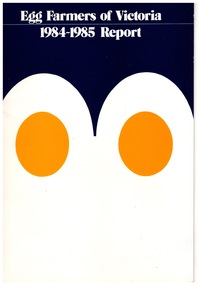
... Hall, Kangaroo Flat, at 8:00 p.m. 8504.41ao This document contains a series of correspondence between the South Bendigo Branch of the Commercial Egg Producers Association, government officials, and members of parliament regarding the aftermath of a fowl plague outbreak in Victoria, Australia. ...Hall, Kangaroo Flat, at 8:00 p.m. 8504.41ao This document contains a series of correspondence between the South Bendigo Branch of the Commercial Egg Producers Association, government officials, and members of parliament regarding the aftermath of a fowl plague outbreak in Victoria, Australia. ...The Commercial Egg Producers' Association of Victoria was active by the 1930s, engaging in industry management and lobbying.The Commercial Egg Producer's Association (CEPA) had branches in Bendigo, South Bendigo, Eaglehawk, Wedderburn, Murrabit and Euroa.CEPA Commercial Egg Producer's Association (Bendigo Region) correspondence, for the year 1985. This item includes the following documents: 8504.41a 8504.41a Egg Farmers of Victoria 1984-1985 Report 26 pages 8504.41b This document is an official invitation from the Victorian Egg Marketing Board, dated July 2, 1985, addressed to Mr. K. Fitzgibbon. Meeting Location and DateThe Board's August meeting is scheduled for August 21, 1985, at the Bendigo Municipal Offices, as the area is expected to be free of quarantine issues by then. 8504.41c The Board postponed the Bendigo meeting due to farm quarantines, which was later confirmed as a responsible decision. 8504.41d The document is a formal response from the Department of Agriculture and Rural Affairs to the Commercial Egg Producers Association regarding poultry industry services in northern Victoria. 8504.41e Department of Agriculture and Rural Affairs. The Central Council of the Commercial Egg Producers Association of Victoria is asked to submit a panel of at least three and not more than five qualified growers for consideration. 8504.41f Department of Agriculture and Rural Affairs. The Governor in Council has made new appointments to the Victorian Egg Marketing Board.Details of these appointments are provided in an enclosed statement (not included in the summary). 8504.41g Here are the key points from the Crystal Egg Company letter addressing complaints from the Commercial Egg Producers Association of Victoria:Response to Complaints:The company disputes all points raised in the association's letter, stating there are no grounds for the complaints.The author expresses confusion about the complaints and suggests direct communication (phone or in-person) to resolve issues quickly. 8504.41h Egg Farmers of Victoria. The document outlines correspondence regarding legislative changes and quota levy arrangements for the Victorian egg industry 8504.41i From Egg Farmers of Victoria; the document outlines proposed amendments to the Marketing of Primary Products Act, focusing on the egg industry in Victoria. 8504.41j The document details the new Producer Agent Contracts for egg producers, outlining two contract types and their key requirements 8504.41k The document is a formal letter from the Commercial Egg Producers' Association of Victoria addressed to Mr. David Kennedy, M.L.A. The Association asks Mr. Kennedy to arrange a meeting with the Minister for Agriculture, Mr. Evan Walker, to discuss issues related to transporting country eggs to Melbourne.Proposal for Egg Board Composition: 8504.41l Letter to the Egg Farmers Association of Victoria's letter. The Association opposes the Board's recommendation to phase out dockage subsidies, viewing it as discriminatory against country egg producers and those outside metropolitan areas.They argue that industry costs should be shared equally across all sectors; also Concerns About Public Health Statements 8504.41m Letter to Bruce Reid MLC regarding the Egg Industry Stabilization Amendment Act 1985 8504.41n Letter to David Kennedy MLA regarding the Egg Industry Stabilization Amendment Act 1985 8504.41o Letter to Bernie Dunne MLC regarding the Egg Industry Stabilization Amendment Act 1985 8504.41p To Evan Walker MLC The document is a formal letter expressing protest and concern regarding the misrepresentation and misuse of confidential correspondence about the Egg Farmers of Victoria's 5-year plan. 8504.41q To the Egg Farmers of Victoria. The document is a formal letter expressing concern and protest over the misrepresentation and misuse of correspondence related to the Egg Farmers of Victoria's 5-year plan. 8504.41r This document is a formal letter to the General Manager of Egg Farmers of Victoria, addressing clarifications and proposed changes to marketing and quota schemes for egg producers in Victoria and New South Wales. 8504.41s This document is a formal letter from the Secretary of CEPA, dated July 30, 1985. The key points are:The letter notifies members about a resolution regarding the incorporation of the Association. 8504.41t Disappointment with Egg Farmers of Victoria Board's Actions Producers. 8504.41u The document is a formal letter from the secretary of CEPA to the manager of Crystal Egg Co., highlighting several concerns about the company's egg grading service 8504.41v Notice of Annual Conference Announcement. The Central Council of the Commercial Egg Producers' Association will hold its Annual Conference.Date and Time: Wednesday, 19th June 1985 at 6:00 p.m.Location: R.S.L. Hall, Kangaroo Flat. 8504.41w Notice of AGM Meeting Date and Time:Thursday, 27th June 1985 at 7:00 8504.41x This document is a formal letter from K. Fitzgibbon, Secretary of CEPA, addressed to Mr. C. L. Jefferson, Secretary of the Egg Farmers of Victoria. Request for Meeting:The association is requesting a deputation with the entire Board of the Egg Farmers of Victoria in Melbourne.The purpose of the meeting is to discuss proposed changes affecting the egg industry. 8504.41y CEPA is submitting nominations for the Producer Member position on the Victorian Egg Marketing Board.T hree candidates are nominated: Peter Carpeneeer: Retiring member, served the past two years, praised for his representation, nominated for another term. Ron Robins: From Harcourt. Gary Robertson: From Lockwood South. The letter is addressed to Mr. E. Walker, Minister of Agriculture, and sent by K. Fitzgibbon, Secretary of the association. 8504.41z The document is a letter from the Commercial Egg & Producers Association of Victoria addressed to Mr. Michael John, M.L.A., congratulating him on his recent election to Parliament. 8504.41aa This document is a congratulatory letter from the Commercial Egg Producers Association of Victoria to Ken Wright, marking his election to Parliament. 8504.41ab This document is a congratulatory letter from the Commercial Egg Producers Association of Victoria to David Kennedy, marking his election to Parliament. 8504.41ac This document is a formal letter from the Secretary of CEPA to the Minister for Agriculture. The key points are:Request for Meeting. The association is seeking a meeting with the Minister for Agriculture at the earliest convenience. The main topic is to discuss the future of the poultry industry in the state. 8504.41ad This document is a formal letter from K. Fitzgibbon, Secretary of CEPA addressed to Mr. C. L. Jefferson, Secretary of the Egg Farmers of Victoria. Request for Meeting:The association is requesting a deputation (meeting) with the entire Board of the Egg Farmers of Victoria in Melbourne. 8504.40ae The document is a letter from the Bendigo Branch of the Commercial Egg Producers Association of Victoria expressing concern about proposed changes to Department of Agriculture services for the poultry industry. Key points include. The letter opposes the recommendation to transfer Greg Parkinson (a poultry industry officer) to Melbourne and review Bendigo's poultry services after 12 months. 8504.41af This document is a membership directory for the C.E.P.A. Bendigo Branch, listing members' names and addresses. Contains a table of members with their names, addresses, and membership numbers. Some members are noted as 'Life Members', indicating special status (e.g., D.T. Dixon, J.D. Oakes). 8504.41ag The document records the executive meeting of the Commercial Egg Producers Association of Victoria held on April 25, 1985 8504.41ah The Central Council Executive Meeting held on 30th May 1985 Minutes 8504.41ai The executive meeting minutes of the Commercial Egg Producers' Association of Victoria, April 1985 8504.41aj CEPA Annual Conference Minutes June 1985 8504.41ak Egg Farmers of Victoria Newsletter, four pages, March 1985 8504.41al This document outlines proposed quality standards and sampling procedures for egg freshness, focusing on Haugh Units, to be included in a 5-year plan 8504.41am Notice of Annual CEPA Meeting June 1995 8504.41an This document is an invitation from the Commercial Egg Producers Association (CEPA) to its members in the Bendigo and South Bendigo branches. Monthly MeetingsMeetings are held on the second Monday of each month at the R.S.L. Hall, Kangaroo Flat, at 8:00 p.m. 8504.41ao This document contains a series of correspondence between the South Bendigo Branch of the Commercial Egg Producers Association, government officials, and members of parliament regarding the aftermath of a fowl plague outbreak in Victoria, Australia. There was significant concern among egg producers about delays in receiving compensation for losses due to the fowl plague outbreak. 8504.41ap This document is a formal letter from the Commercial Egg Producers' Association Co-operative Limited, dated October 7, 1985. The letter informs the recipient about the status of subscription payments. It confirms that two members, Popple E. and Somerville R., have paid their subscriptions through the Co-operative.Action Requested: The secretary recommends that the recipient notes these payments for their records. 8504.41aq This document is a formal letter from the Department of Agriculture, Victoria, addressing the potential transfer and replacement of a poultry officer in the Bendigo area. 8504.41ar This document is a formal letter from the Minister for Agriculture and Rural Affairs addressing the status and future of poultry industry services in the Bendigo region 8504.41as Letters between CEPA and members of parliament re docking charges 8504.41at This document is a formal letter from Ernie Dunn, a Member of the Legislative Council and Leader of the National Party (Council), addressed to Mr. J. Heard, Secretary of the South Bendigo Branch of the Commercial Egg Producers Association. The letter informs Mr. Heard about comments made in the State Parliament regarding the replacement of the Poultry Officer in the Bendigo region. Ernie Dunn has enclosed a copy of his parliamentary comments for Mr. Heard's information.Communication: The letter serves as an official communication to keep the poultry association informed about parliamentary discussions relevant to their interests. 8504.41au This document is a formal letter from Tom Austin, MP, addressing concerns about the proposed removal of the egg transport subsidy. 8504.41av This document is a formal notification to CEPA Secretary Mr. R. Broadbent regarding the appointment of industry representatives to two Poultry Industry/Department working parties, from the Department of Agriculture 8504.41aw This document is a letter from Bernie Dunn, Member of the Legislative Council and Leader of the National Party (Council), addressed to Mrs. Joan Heard, Secretary of the South Bendigo C.E.P.A. Bernie Dunn acknowledges receipt of Mrs. Heard's letter regarding concerns about additional dockage (freight charges) for egg transport between Bendigo and Melbourne. 8504.41ax Letters between CEPA and Members of Parloiamnet. The document outlines the Victorian Egg Board's plan to phase out transport subsidies in the egg industry by 1989. Since 1937, transport costs for moving eggs from grading floors or depots to market or processing plants have been covered by an equalization fund, financed by a levy on all eggs produced.In 1984/85, subsidies totaled $710,000 (1.44 cents per dozen); by 1985/86, this was estimated at $800,000 (1.6 cents per dozen). Rising transport costs have increased the subsidy burden and associated levies.The shift of egg production from metropolitan to country areas has hidden the true cost of transport for some producers.No other primary industry subsidizes transport to market, and Victoria is the last state to do so after NSW removed its subsidy.egg producer's information, correspondence, cepa, commercial egg producers' association
