
Showing 26 items matching "operating victorian gold mines"
-
 Bendigo Historical Society Inc.
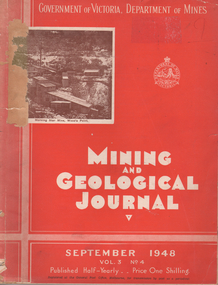
Book - Kairn Collection: Mining & Geological Journal, Department of Mines, Victoria, September 1948
... ...operating Victorian gold mines...Articles relative to Bendigo region: Diatomite near Redesdale; antimony mine South Costerfield, notes from the Mining Districts and Operating Victorian Gold Mines....Mines, Victoria twice a year, during the period 1937 to 1972. It was an official publication of the Victorian Government, Department of Mines, devoted to issues and events surrounding mining and metallurgical engineering in Victoria along with education, research and innovations in mining. The journal also included advertisements and references to business interests. Geology mining gold mining Bendigo Department of Mines diatomite Redesdale antimony mine south costerfield operating ...The Mining & Geological Journal was produced by the Department of Mines, Victoria twice a year, during the period 1937 to 1972. It was an official publication of the Victorian Government, Department of Mines, devoted to issues and events surrounding mining and metallurgical engineering in Victoria along with education, research and innovations in mining. The journal also included advertisements and references to business interests. Orange and white cover, fifty-one pages. On front cover: ' Mining and Geological Journal' September 1948, Government of Victoria, Department of Mines, Vol 3, No. 2, published half yearly, price one shilling. Tan and white photo of Morning Star Mine, Wood's Point, top left. Articles relative to Bendigo region: Diatomite near Redesdale; antimony mine South Costerfield, notes from the Mining Districts and Operating Victorian Gold Mines.geology, mining, gold mining, bendigo, department of mines, diatomite, redesdale, antimony mine, south costerfield, operating victorian gold mines -
 Flagstaff Hill Maritime Museum and Village
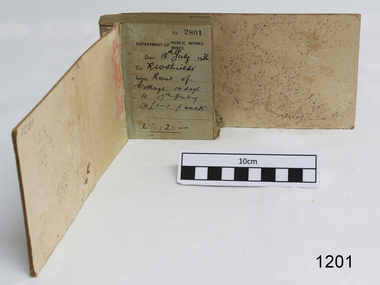
Financial record - Receipt Book, Department of Works and Mines Victoria, July 1936 (first record)
... gold fields, the Department became responsible for rural water supply from the mid 1860s. Statutory responsibility for rural water works during this period rested with the Board of Land and Works. In 1865 the Waterworks Act gave the Board power to construct waterworks, purchase land, levy charges and lease or sell works, while the Public Loans Act 1865 empowered it to provide loans to local water trusts for waterworks. The actual administration of these statutory provisions was undertaken by the Victorian Water Supply Department which operated from 1865 to 1889 as a sub-department of the Department of Mines...gold fields, the Department became responsible for rural water supply from the mid 1860s. Statutory responsibility for rural water works during this period rested with the Board of Land and Works. In 1865 the Waterworks Act gave the Board power to construct waterworks, purchase land, levy charges and lease or sell works, while the Public Loans Act 1865 empowered it to provide loans to local water trusts for waterworks. The actual administration of these statutory provisions was undertaken by the Victorian Water Supply Department which operated from 1865 to 1889 as a sub-department of the Department of Mines ...Establishment and Functions Prior to 1860, the Chief Secretary's Department had been responsible for the administration of the gold fields and associated mining activities. In November 1860 a Commissioner of Mines was appointed and a Department was established under his administration. For the period November 1861 to June 1863, the Postmaster General was responsible for the Mining Department. A Minister of Mines was again appointed in 1863. Responsibilities of the Department of Mines were: 1. Regulation of mining and related public works activities through the issue of miners rights, business and residence licences, mining leases, mineral and other prospecting licences 2. Superintendence of the activities of mining surveyors, registrars, wardens and Mining Boards. 3. Investigation of the state's geological structure, mineral wealth and underground water resources 4. Development of the mining industry 5. Supervision of the safe working of mines, machinery and quarries including checking the credential of mine managers, inspectors and operators 6. Regulation of the disposal of sludge and other waste products 7. Administration of the Victorian Mining Accident Relief Fund. Arising from its initial responsibility for the supply of water on the gold fields, the Department became responsible for rural water supply from the mid 1860s. Statutory responsibility for rural water works during this period rested with the Board of Land and Works. In 1865 the Waterworks Act gave the Board power to construct waterworks, purchase land, levy charges and lease or sell works, while the Public Loans Act 1865 empowered it to provide loans to local water trusts for waterworks. The actual administration of these statutory provisions was undertaken by the Victorian Water Supply Department which operated from 1865 to 1889 as a sub-department of the Department of Mines, from 1889 as a department in its own right, and from 1895 to 1909 as a sub-department of the Department of Mines and Water Supply. For a brief period from 1891 to 1893 the Department of Mines was also responsible for forests and, until 1880, for the Schools of Mines subsequently transferred to the Education Department. In 1895 the Department of Mines and the Victorian Water Supply Department were amalgamated to form the Department of Mines and Water Supply. A snapshot into social history around the 1930s when the Department of works and the Mines Departments were still linkedReceipt Book for the Department of Works; Mines. Receipt No 2801 - 3000. 1st receipt Number 2801, "18th July 1936, for Rent of Cottage: 14 days for 2 pounds, 2 shillings. The inscription on the back is signed by J F Condau in 13-3-33Printed on spine "GENERAL RECEIPTS / 15 / 2801 / TO 3000" Printed on each receipt 'DEPARTMENT OF / PUBLIC WORKS. / MINES." Fill in using ink pen "(DATE) 18th July 1936 / (TO) - - - shields' / BEING) Rent of / Cottage: 14 days / (TO) 17th July / @ (symbol for pound) 1-1. p. week / . (symbol for pound) 2:2:-"Inside cover there is some red pencil writing, words and figures unreadable. Handwritten on back cover "Numbers checked / and found corredt / J S Coudou (?) / 13-3-33" One some receipts "Wharfage / S.S. Koonara"flagstaff hill, warrnambool, shipwrecked coast, flagstaff hill maritime museum, maritime museum, shipwreck coast, flagstaff hill maritime village, great ocean road, department of works: mines, receipt book, rent 1936, imperial currency, living costs 1936, department of works, department of mines, j f condou, 1933, 13-3-33 -
 The Beechworth Burke Museum
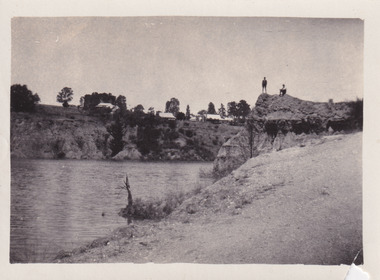
Photograph
... The present day park and reserve occupies the site of the former Rocky Mountain Mining Company, an open-cut sluice mine that began operations in the mid-Nineteenth Century and operated until the early 1900s, through the peak of Victoria’s Gold Rush. It was converted into a park and leisure area in the 1920s. Lake Sambell was formally opened to the public on Friday 5th October 1928 and was opened by the Victorian...The present day park and reserve occupies the site of the former Rocky Mountain Mining Company, an open-cut sluice mine that began operations in the mid-Nineteenth Century and operated until the early 1900s, through the peak of Victoria’s Gold Rush. It was converted into a park and leisure area in the 1920s. Lake Sambell was formally opened to the public on Friday 5th October 1928 and was opened by the Victorian ...The photograph depicts two young men standing atop a prominent outcrop at Lake Sambell, with buildings visible on the further shore. The present day park and reserve occupies the site of the former Rocky Mountain Mining Company, an open-cut sluice mine that began operations in the mid-Nineteenth Century and operated until the early 1900s, through the peak of Victoria’s Gold Rush. It was converted into a park and leisure area in the 1920s. Lake Sambell was formally opened to the public on Friday 5th October 1928 and was opened by the Victorian Government’s Minister of Lands, Mr Bailey, as part of initiatives to boost the economies and development of country towns. The lake was named after Mr L.H. Sambell, a shire engineer and secretary of the Forward Beechworth Committee who was involved in promoting the transformation of the mining site and promoting plantation forestry and tourism as alternative industries. £300 to begin the process was provided by Mr J. McConvill, a former resident of Beechworth, who is remembered in a street name adjacent to the lake. An article in the Ovens and Murray Advertiser on Saturday, 5th May, 1917, gives some insight into issues in the Rocky Mountain Mining Company’s final years. The writer details the 1917 annual meeting of the Rocky Mountain Mining Company, stating that locals present appeared ‘well pleased this important local industry is in such a prosperous condition and that future prospects are so encouraging’. The author describes plans to give workers a bonus as evidence of profit-sharing that would ‘bridge the gulf between capital and labour’. The article concludes, however, with the statement that ‘there is a little arithmetical puzzle in the report in connection with the dredging operations I have been unable to solve.' The photograph is significant as it contributes to knowledge about how Beechworth reinvented itself after the Gold rush period, and more broadly how country towns repurpose and redevelop infrastructure and facilities to meet the present needs of their population. Sepia rectangular photograph printed on matte photographic paper. Obverse: nil. Reverse: 3471 / Velox (paper mark)beechworth, beechworth lake, lake sambell, l.h. sambell, mcconvill, rocky mountain mining company, rocky mountain mining co, minister of lands, forward beechworth committee, wallace park-lake sambell development scheme, wallace park lake sambell development scheme, lake, sambell, j. mcconvill, recreation, reserve, park, transformation, repurposed, redeveloped -
 The Beechworth Burke Museum
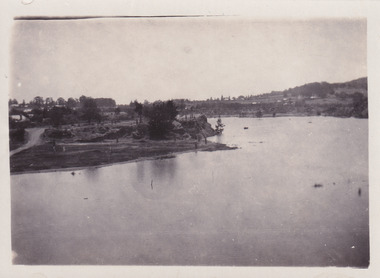
Photograph, c1960
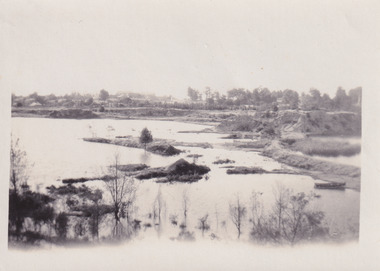
... The present day park and reserve occupies the site of the former Rocky Mountain Mining Company, an open-cut sluice mine that began operations in the mid-Nineteenth Century and operated until the early 1900s, through the peak of Victoria’s Gold Rush. It was converted into a park and leisure area in the 1920s. Lake Sambell was formally opened to the public on Friday 5th October 1928 and was opened by the Victorian...The present day park and reserve occupies the site of the former Rocky Mountain Mining Company, an open-cut sluice mine that began operations in the mid-Nineteenth Century and operated until the early 1900s, through the peak of Victoria’s Gold Rush. It was converted into a park and leisure area in the 1920s. Lake Sambell was formally opened to the public on Friday 5th October 1928 and was opened by the Victorian ...The photograph depicts a view across the water at Lake Sambell. The image dates from approximately 1960. The present day park and reserve occupies the site of the former Rocky Mountain Mining Company, an open-cut sluice mine that began operations in the mid-Nineteenth Century and operated until the early 1900s, through the peak of Victoria’s Gold Rush. It was converted into a park and leisure area in the 1920s. Lake Sambell was formally opened to the public on Friday 5th October 1928 and was opened by the Victorian Government’s Minister of Lands, Mr Bailey, as part of initiatives to boost the economies and development of country towns. The lake was named after Mr L.H. Sambell, a shire engineer and secretary of the Forward Beechworth Committee who was involved in promoting the transformation of the mining site and promoting plantation forestry and tourism as alternative industries. £300 to begin the process was provided by Mr J. McConvill, a former resident of Beechworth, who is remembered in a street name adjacent to the lake. Residents of Beechworth have worked to raise funds to improve the Lake Sambell reserve several times, such as efforts in the 1930s and 1940s to raise the banks several feet to deepen the water for swimming purposes. Fundraising campaigns include the ‘Ugly Man’ competition conducted on behalf of the Wallace Park-Lake Sambell Development Scheme. The latter competition was run by the Fire Brigade Bend’s team as part of a larger competition called the ‘Mile of Pennies’; it was won by Mr Len Knight of Beechworth’s Commercial Hotel. The ‘Mile of Pennies’ was conducted at a Carnival held on New Year’s Eve, 1947. It was proposed by the Beechworth and District Progress Association. As well as improving swimming facilities, funds were raised to install a caravan park facility near the lake. Funds were also donated by commercial entities, such as £250 received from Zwar Bros. Pty Ltd. The photograph is significant as it shows the level of development of Beechworth in the early to mid-Twentieth Century. Sepia rectangular photograph printed on matte photographic paperObverse: nil. Reverse: 3470 / Velox (paper mark)beechworth, beechworth lake, lake sambell, lake, beechworth and district progress association, forward beechworth committee, ugly man, mile of pennies, wallace park lake sambell development scheme, wallace park-lake sambell development scheme, zwar bros, zwar, l.h. sambell, j. mcconvill, minister of lands, commercial hotel, len knight, rocky mountain mining company, rocky mountain mining co, gold rush, redevelopment, transformation, community fundraising -
 The Beechworth Burke Museum
Photograph, c1960
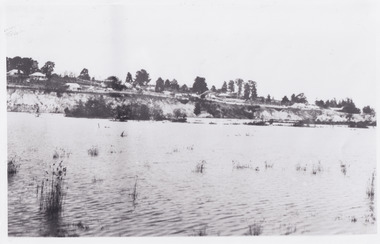
... The present day park and reserve occupies the site of the former Rocky Mountain Mining Company, an open-cut sluice mine that began operations in the mid-Nineteenth Century and operated until the early 1900s, through the peak of Victoria’s Gold Rush. It was converted into a park and leisure area in the 1920s. Lake Sambell was formally opened to the public on Friday 5th October 1928 and was opened by the Victorian...The present day park and reserve occupies the site of the former Rocky Mountain Mining Company, an open-cut sluice mine that began operations in the mid-Nineteenth Century and operated until the early 1900s, through the peak of Victoria’s Gold Rush. It was converted into a park and leisure area in the 1920s. Lake Sambell was formally opened to the public on Friday 5th October 1928 and was opened by the Victorian ...The photograph depicts a view across the water at Lake Sambell. The image is thought to date from the 1960s so may show the lake during a period of drought, such as that experienced across South-Eastern Australia in 1967. The present day park and reserve occupies the site of the former Rocky Mountain Mining Company, an open-cut sluice mine that began operations in the mid-Nineteenth Century and operated until the early 1900s, through the peak of Victoria’s Gold Rush. It was converted into a park and leisure area in the 1920s. Lake Sambell was formally opened to the public on Friday 5th October 1928 and was opened by the Victorian Government’s Minister of Lands, Mr Bailey, as part of initiatives to boost the economies and development of country towns. The lake was named after Mr L.H. Sambell, a shire engineer and secretary of the Forward Beechworth Committee who was involved in promoting the transformation of the mining site and promoting plantation forestry and tourism as alternative industries. £300 to begin the process was provided by Mr J. McConvill, a former resident of Beechworth, who is remembered in a street name adjacent to the lake. Residents of Beechworth have worked to raise funds to improve the Lake Sambell reserve several times, such as efforts in the 1930s and 1940s to raise the banks several feet to deepen the water for swimming purposes. Fundraising campaigns include the ‘Ugly Man’ competition conducted on behalf of the Wallace Park-Lake Sambell Development Scheme. The latter competition was run by the Fire Brigade Bend’s team as part of a larger competition called the ‘Mile of Pennies’; it was won by Mr Len Knight of Beechworth’s Commercial Hotel. The ‘Mile of Pennies’ was conducted at a Carnival held on New Year’s Eve, 1947. It was proposed by the Beechworth and District Progress Association. As well as improving swimming facilities, funds were raised to install a caravan park facility near the lake. Funds were also donated by commercial entities, such as £250 received from Zwar Bros. Pty Ltd.The photograph is significant as it shows Lake Sambell at lower water levels, such as may have been experienced during period of drought.Sepia rectangular photograph printed on matte photographic paperObverse: nil Reverse: 3470beechworth, beechworth lake, lake sambell, lake, beechworth and district progress association, forward beechworth committee, ugly man, mile of pennies, wallace park lake sambell development scheme, wallace park-lake sambell development scheme, zwar bros, zwar, l.h. sambell, j. mcconvill, minister of lands, commercial hotel, len knight, rocky mountain mining company, rocky mountain mining co, gold rush, redevelopment, transformation, community fundraising, drought, 1967, 1960s -
 The Beechworth Burke Museum
Photograph, c1960
... The present day park and reserve occupies the site of the former Rocky Mountain Mining Company, an open-cut sluice mine that began operations in the mid-19th Century and operated until the early 1900s, through the peak of Victoria’s Gold Rush. It was converted into a park and leisure area in the 1920s. Lake Sambell was formally opened to the public on Friday 5th October 1928 and was opened by the Victorian...The present day park and reserve occupies the site of the former Rocky Mountain Mining Company, an open-cut sluice mine that began operations in the mid-19th Century and operated until the early 1900s, through the peak of Victoria’s Gold Rush. It was converted into a park and leisure area in the 1920s. Lake Sambell was formally opened to the public on Friday 5th October 1928 and was opened by the Victorian ...The photographs in this set depict views across the water at Lake Sambell. The images date from approximately 1960. The present day park and reserve occupies the site of the former Rocky Mountain Mining Company, an open-cut sluice mine that began operations in the mid-19th Century and operated until the early 1900s, through the peak of Victoria’s Gold Rush. It was converted into a park and leisure area in the 1920s. Lake Sambell was formally opened to the public on Friday 5th October 1928 and was opened by the Victorian Government’s Minister of Lands, Mr Bailey, as part of initiatives to boost the economies and development of country towns. The lake was named after Mr L.H. Sambell, a shire engineer and secretary of the Forward Beechworth Committee who was involved in promoting the transformation of the mining site and promoting plantation forestry and tourism as alternative industries. £300 to begin the process was provided by Mr J. McConvill, a former resident of Beechworth, who is remembered in a street name adjacent to the lake. Residents of Beechworth have worked to raise funds to improve the Lake Sambell reserve several times, such as efforts in the 1930s and 1940s to raise the banks several feet to deepen the water for swimming purposes. Fundraising campaigns include the ‘Ugly Man’ competition conducted on behalf of the Wallace Park-Lake Sambell Development Scheme. The latter competition was run by the Fire Brigade Bend’s team as part of a larger competition called the ‘Mile of Pennies’; it was won by Mr Len Knight of Beechworth’s Commercial Hotel. The ‘Mile of Pennies’ was conducted at a Carnival held on New Year’s Eve, 1947. It was proposed by the Beechworth and District Progress Association. As well as improving swimming facilities, funds were raised to install a caravan park facility near the lake. Funds were also donated by commercial entities, such as £250 received from Zwar Bros. Pty Ltd.The photographs are significant as they show the level of development in Beechworth in the middle of the Twentieth Century. Four sepia and black and white rectangular photographs printed on matte photographic paper. 3469.1: Obverse: nil Reverse: 3469-1 3469.2: Obverse: nil Reverse: 3469-2 3469.3: Obverse: nil Reverse: 3469-3 3469.4: Obverse: nil Reverse: 3469-4beechworth, beechworth lake, lake sambell, lake, beechworth and district progress association, forward beechworth committee, ugly man, mile of pennies, wallace park lake sambell development scheme, wallace park-lake sambell development scheme, zwar bros, zwar, l.h. sambell, j. mcconvill, minister of lands, commercial hotel, len knight, rocky mountain mining company, rocky mountain mining co, gold rush, redevelopment, transformation, community fundraising -
 The Beechworth Burke Museum
Photograph, 1920-1950
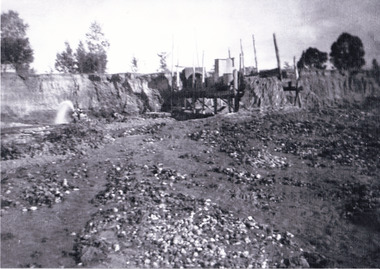
... gold per year from the mine. After Pund's death in 1915, GSG Amalgamated Co operated the site, continuing sluicing until 1950. This image of hydraulic sluicing methods shows the extent of water-works engineering in the landscape. This photograph has historic and research potential for understanding changes to the landscape, the evolution of mining methods, and the extensive construction, manipulation and management of water networks in the Beechworth district. burke museum beechworth museum beechworth gold fields gold rush victorian gold rush hydraulic sluicing spring creek netwown falls mining tunnels water races tailraces gold ming history colonial australia australian gold rushes mining technology beechworth historic district indigo gold trail indigo shire john pund water manipulation water engineering three mile creek three mile mine water race large-scale mining methods historical mining construction alluvial mining mining environmental impacts baarmutha water barons Reverse: 7597-1 / Sluice Mining / Copied from original on loan from Webb (Qld) / Donated Nov 2009 / Baarmutha Three Mile Mine c1920-1950 / Managed by the Plain Bros then Parkinsons / Current Location is: Beechworth Animal Shelter / used for Baarmutha Black and white rectangular photograph on matte paper Photograph Photograph ...This image taken between 1920-1930 depicts open-cut hydraulic sluicing at the Three Mile Mine, located about five kilometres south of Beechworth. Alluvial, or surface, mining began on this site in the 1850s, but was soon replaced by hydraulic sluicing methods. By the start of 1880 it is estimated that nine hundred miles of water races had been cut though soil and rock in the Beechworth district. Hydraulic sluicing employs high pressure jets of water to blast away large areas of earth and wash it down to be run through a sluice box. Gold gets caught in the sluice and the remaining slurry is washed away. Large water quantities were required for hydraulic sluicing, and the long water races and deep tailraces that were constructed were considered great engineering feats. This method of mining is extremely effective, but causes significant environmental damage and impacts to waterways and agricultural operations. Miners at Beechworth built extensive networks of races and dams to secure reliable supplies of water on a scale far greater than elsewhere in Victoria. By the 1880s Beechworth's water barons continued to hold more than half of all the water right licences on issue and undertook sluicing operations on a massive scale. The manipulation of surface and ground water via race networks was well planned and recorded in detail by local mining surveyors. The maps that were created, combined with modern geo-spatial technologies, provide a vital key in understanding the great lengths to which miners went to capture and control critical water resources. Today, Three Mile mine is called Baarmutha. The Three Mile Mine was unproductive until 1865 when John Pund and three other miners secured a fifteen year license and constructed a water race from Upper Nine Mile Creek to Three Mile Creek. In the early twentieth century Pund & Co. averaged over one thousand ounces of gold per year from the mine. After Pund's death in 1915, GSG Amalgamated Co operated the site, continuing sluicing until 1950. This image of hydraulic sluicing methods shows the extent of water-works engineering in the landscape. This photograph has historic and research potential for understanding changes to the landscape, the evolution of mining methods, and the extensive construction, manipulation and management of water networks in the Beechworth district. Black and white rectangular photograph on matte paperReverse: 7597-1 / Sluice Mining / Copied from original on loan from Webb (Qld) / Donated Nov 2009 / Baarmutha Three Mile Mine c1920-1950 / Managed by the Plain Bros then Parkinsons / Current Location is: Beechworth Animal Shelter / used for Baarmuthaburke museum, beechworth museum, beechworth, gold fields, gold rush, victorian gold rush, hydraulic sluicing, spring creek, netwown falls, mining tunnels, water races, tailraces, gold ming history, colonial australia, australian gold rushes, mining technology, beechworth historic district, indigo gold trail, indigo shire, john pund, water manipulation, water engineering, three mile creek, three mile mine, water race, large-scale mining methods, historical mining construction, alluvial mining, mining environmental impacts, baarmutha, water barons -
 Eltham District Historical Society Inc
Photograph - Digital Photograph, Alan King, Site of the Diamond Creek Gold Mine, 28 December 2007
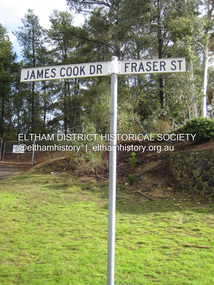
... Mine operated under the Diamond Creek Gold Mine management except when disputes sometimes resulted in separate management. However disagreements had to be resolved as the Union Mine depended on Diamond Creek Gold Mine pumps to remove underground water from common reefs. In 1912 the main shaft of about 380 yards (350m) employed 200 men recovering an average of 5000 ounces (141.7kg) of gold a year. But not everyone did well out of gold. Records of failed mining companies in the Victorian...Mine operated under the Diamond Creek Gold Mine management except when disputes sometimes resulted in separate management. However disagreements had to be resolved as the Union Mine depended on Diamond Creek Gold Mine pumps to remove underground water from common reefs. In 1912 the main shaft of about 380 yards (350m) employed 200 men recovering an average of 5000 ounces (141.7kg) of gold a year. But not everyone did well out of gold. Records of failed mining companies in the Victorian ...The largest gold mine in the area originated from a find in 1862. The mine was closed January 20, 1915 when a fire destroyed nearly all the above ground plant. Published: Nillumbik Now and Then / Marguerite Marshall 2008; photographs Alan King with Marguerite Marshall.; p75 Beneath Mine Hill, as locals call it, runs a network of tunnels once of central importance to the fledgling township of Diamond Creek. These are relics of gold mines, which transformed early Diamond Creek.1 The tiny settlement of about 20 families soared to more than 200 because of gold. For around 50 years, from 1862, gold mining was Diamond Creek’s major source of employment. On September 7, 1854 The Argus newspaper reported a find of a four pound (1.8kg) gold nugget in Nillumbik (an early name for Diamond Creek). Exactly where, is not known.2 The largest mine in the district, the Diamond Creek Gold Mine, apparently originated from a find in 1862. It is said Joe and Dave Wilson were visiting former tailor then cook, Charles Orme, at the southern end of Fraser Street. Sitting on a stump outside the front gate on land belonging to Dr A. E. Phipps the Wilsons found a vein of gold-bearing quartz, which led to the discovery of four quartz reefs varying in width to eight inches (20cm), running north and south. A reef found at the foot of the hill opposite Challenger Street became the Union Mine. This reef was traced south to Allendale Road where a small mine began operations.3 Other smaller mines later operated as well. Dr Phipps immediately began to mine and also built the Diamond Reef Hotel as a boarding house for miners. But Charles Orme, who owned the land alongside, leased his mine to Dr Phipps probably because of insufficient funds and business skills. By mid 1865 the mine had produced 2530 ounces of gold – a 100% profit on the original outlay. Of course there were problems. When the local dam dried up a Blake pump was installed to draw water from the creek. The Union Mine operated under the Diamond Creek Gold Mine management except when disputes sometimes resulted in separate management. However disagreements had to be resolved as the Union Mine depended on Diamond Creek Gold Mine pumps to remove underground water from common reefs. In 1912 the main shaft of about 380 yards (350m) employed 200 men recovering an average of 5000 ounces (141.7kg) of gold a year. But not everyone did well out of gold. Records of failed mining companies in the Victorian Public Record Office, reveal that owner Dr Phipps leased his Right to others. Companies came and went over the next 40 years, most sponsored by Melbourne businessmen who sold shares to gullible locals and then became insolvent. Although there were some good profits, financial returns were haphazard until 1905. Some local residents, who were share holders in short- term companies, became well-known names in modern Diamond Creek such as Scott, Haley, Butler, Alder, Ryan, Wadeson, Reeves, Alston, Paul and Edwards. Gold mining was brought to a disastrous end on January 20, 1915 at 3 pm, when fire destroyed nearly all the above-ground plant. Fortunately no lives were lost. But reopening the mine was almost impossible because of the increasing depth of water in the main shaft. The closed mine destroyed the livelihood of 200 families and the debris took many years to clear.4 In 1946 the Diamond Creek Gold Mine was reopened by the Golden Hind Mining Company, but money ran out before the 600 feet (182.8m) or so of water could be removed. Gold remains in the mine but enormous capital would be needed to buy the land, equipment and to remove the water. Today 12 known sealed shafts along the ridge of the hills on private property extend west for around one kilometre from the corner of Fraser and Haley Streets, crossing Norma and Fyffe to Dering Streets. As recently as 1987, heavy rains revealed a former Union Mine shaft in the Georgiadis family Fyffe Street back yard.5 Allendale Mine, south of Allendale Road, is still open and one of the Union Mine’s main drives (horizontal excavation) remains unsealed, on the Creek Reserve.This collection of almost 130 photos about places and people within the Shire of Nillumbik, an urban and rural municipality in Melbourne's north, contributes to an understanding of the history of the Shire. Published in 2008 immediately prior to the Black Saturday bushfires of February 7, 2009, it documents sites that were impacted, and in some cases destroyed by the fires. It includes photographs taken especially for the publication, creating a unique time capsule representing the Shire in the early 21st century. It remains the most recent comprehenesive publication devoted to the Shire's history connecting local residents to the past. nillumbik now and then (marshall-king) collection, diamond creek, diamond creek mine, fraser street, gold mining, james cook drive, mine hill -
 Bendigo Historical Society Inc.
Photograph - AUSTIN COLLECTION: Wattle Gully Gold Mine, Chewton, Not dated but possibly 1980's
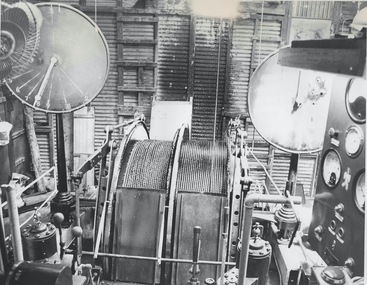
... mine's infrastructure has been a new ore processing plant and a decline tunnel. The ore processing plant was operated by Newmont mining from 1987 to 1990 and subsequently operated by Consolidated Victorian Mines and Duketon Goldfields. The mine site has retained evidence of its development since 1937 with its most recent periods of equipment upgrades in the 1950s and 1980s being documented by buildings, structures and intact and working machinery. Heritage Council Victoria: https://vhd.heritagecouncil.vic.gov.au/places/2380 Gold ...Wattle Gully Mine holds a pivotal position in the history of the State's quartz mining industry. The rich strike at Wattle Gully mine in 1937 helped revive the State's gold mining industry that had been in the doldrums since the First World War. Wattle Gully, and a handful of other 'new' companies - the Maude and Yellow Girl, Morning Star, A 1, and North Deborah - were the flagships of the revived industry and sustained the State's gold production for some 30 years. Wattle Gully mine, with a yield of 350,000 ounces, was the richest mine of its era. By 1940, the Wattle Gully Company had paid out £207,000 in dividends to its shareholders. The company continued to mine profitably through the Second World War, though it struggled due to a shortage of manpower. After the war, the mine continued to develop - in the early 1950s new plant including a winding engine, steel poppet head, and twenty-head battery was added. The plant was obtained from the Central Nell Gwynne Company, Bendigo. On 13 March 1969, the Wattle Gully Company closed down the mine, laying off 62 men. Since 1970 Wattle Gully mine has worked intermittently. Recent additions to the mine's infrastructure has been a new ore processing plant and a decline tunnel. The ore processing plant was operated by Newmont mining from 1987 to 1990 and subsequently operated by Consolidated Victorian Mines and Duketon Goldfields. The mine site has retained evidence of its development since 1937 with its most recent periods of equipment upgrades in the 1950s and 1980s being documented by buildings, structures and intact and working machinery. Heritage Council Victoria: https://vhd.heritagecouncil.vic.gov.au/places/2380 Black and white photograph: view of engine room. Wattle Gully Gold Mine winding gear, two winding wheels in centre of image.gold mining, underground, wattle gully gold mine, chewton, winding gear -
 Bendigo Historical Society Inc.
Photograph - AUSTIN COLLECTION: Winding Gear, Wattle Gully Gold Mine, Chewton, 1982
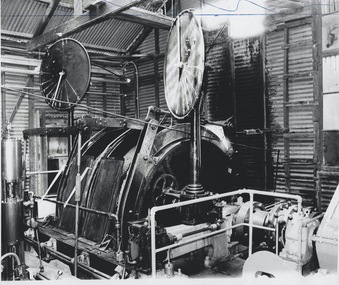
... mine's infrastructure has been a new ore processing plant and a decline tunnel. The ore processing plant was operated by Newmont mining from 1987 to 1990 and subsequently operated by Consolidated Victorian Mines and Duketon Goldfields. The mine site has retained evidence of its development since 1937 with its most recent periods of equipment upgrades in the 1950s and 1980s being documented by buildings, structures and intact and working machinery. Heritage Council Victoria: https://vhd.heritagecouncil.vic.gov.au/places/2380 Gold ...Wattle Gully Mine holds a pivotal position in the history of the State's quartz mining industry. The rich strike at Wattle Gully mine in 1937 helped revive the State's gold mining industry that had been in the doldrums since the First World War. Wattle Gully, and a handful of other 'new' companies - the Maude and Yellow Girl, Morning Star, A 1, and North Deborah - were the flagships of the revived industry and sustained the State's gold production for some 30 years. Wattle Gully mine, with a yield of 350,000 ounces, was the richest mine of its era. By 1940, the Wattle Gully Company had paid out £207,000 in dividends to its shareholders. The company continued to mine profitably through the Second World War, though it struggled due to a shortage of manpower. After the war, the mine continued to develop - in the early 1950s new plant including a winding engine, steel poppet head, and twenty-head battery was added. The plant was obtained from the Central Nell Gwynne Company, Bendigo. On 13 March 1969, the Wattle Gully Company closed down the mine, laying off 62 men. Since 1970 Wattle Gully mine has worked intermittently. Recent additions to the mine's infrastructure has been a new ore processing plant and a decline tunnel. The ore processing plant was operated by Newmont mining from 1987 to 1990 and subsequently operated by Consolidated Victorian Mines and Duketon Goldfields. The mine site has retained evidence of its development since 1937 with its most recent periods of equipment upgrades in the 1950s and 1980s being documented by buildings, structures and intact and working machinery. Heritage Council Victoria: https://vhd.heritagecouncil.vic.gov.au/places/2380 Black and white photograph: view of engine room. Wattle Gully Gold Mine winding gear, two winding wheels in centre of image.gold mining, underground, wattle gully gold mine, chewton, winding gear -
 Bendigo Historical Society Inc.
Photograph - AUSTIN COLLECTION: Wattle Gully Gold Mine, Chewton, 1982
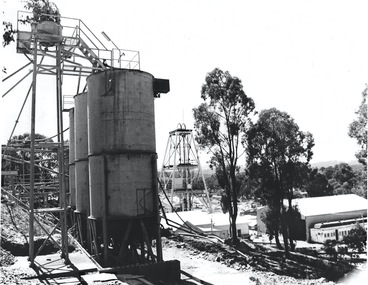
... mine's infrastructure has been a new ore processing plant and a decline tunnel. The ore processing plant was operated by Newmont mining from 1987 to 1990 and subsequently operated by Consolidated Victorian Mines and Duketon Goldfields. The mine site has retained evidence of its development since 1937 with its most recent periods of equipment upgrades in the 1950s and 1980s being documented by buildings, structures and intact and working machinery. Heritage Council Victoria: https://vhd.heritagecouncil.vic.gov.au/places/2380 Gold ...Wattle Gully Mine holds a pivotal position in the history of the State's quartz mining industry. The rich strike at Wattle Gully mine in 1937 helped revive the State's gold mining industry that had been in the doldrums since the First World War. Wattle Gully, and a handful of other 'new' companies - the Maude and Yellow Girl, Morning Star, A 1, and North Deborah - were the flagships of the revived industry and sustained the State's gold production for some 30 years. Wattle Gully mine, with a yield of 350,000 ounces, was the richest mine of its era. By 1940, the Wattle Gully Company had paid out £207,000 in dividends to its shareholders. The company continued to mine profitably through the Second World War, though it struggled due to a shortage of manpower. After the war, the mine continued to develop - in the early 1950s new plant including a winding engine, steel poppet head, and twenty-head battery was added. The plant was obtained from the Central Nell Gwynne Company, Bendigo. On 13 March 1969, the Wattle Gully Company closed down the mine, laying off 62 men. Since 1970 Wattle Gully mine has worked intermittently. Recent additions to the mine's infrastructure has been a new ore processing plant and a decline tunnel. The ore processing plant was operated by Newmont mining from 1987 to 1990 and subsequently operated by Consolidated Victorian Mines and Duketon Goldfields. The mine site has retained evidence of its development since 1937 with its most recent periods of equipment upgrades in the 1950s and 1980s being documented by buildings, structures and intact and working machinery. Heritage Council Victoria: https://vhd.heritagecouncil.vic.gov.au/places/2380 Black and white photograph: view of Wattle Gully mine site with ore bins, poppet head and mining sheds. Eucalypt trees in centre of image. gold mining, underground, wattle gully gold mine, chewton, ore bins, poppet head, mine sheds -
 Bendigo Historical Society Inc.
Photograph - AUSTIN COLLECTION: Wattle Gully Gold Mine, Chewton, 1980's
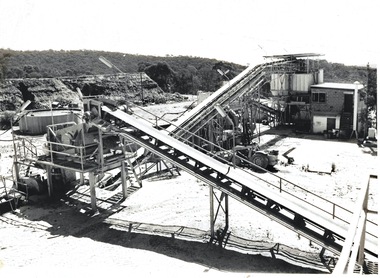
... mine's infrastructure has been a new ore processing plant and a decline tunnel. The ore processing plant was operated by Newmont mining from 1987 to 1990 and subsequently operated by Consolidated Victorian Mines and Duketon Goldfields. The mine site has retained evidence of its development since 1937 with its most recent periods of equipment upgrades in the 1950s and 1980s being documented by buildings, structures and intact and working machinery. Heritage Council Victoria: https://vhd.heritagecouncil.vic.gov.au/places/2380 Gold ...Wattle Gully Mine holds a pivotal position in the history of the State's quartz mining industry. The rich strike at Wattle Gully mine in 1937 helped revive the State's gold mining industry that had been in the doldrums since the First World War. Wattle Gully, and a handful of other 'new' companies - the Maude and Yellow Girl, Morning Star, A 1, and North Deborah - were the flagships of the revived industry and sustained the State's gold production for some 30 years. Wattle Gully mine, with a yield of 350,000 ounces, was the richest mine of its era. By 1940, the Wattle Gully Company had paid out £207,000 in dividends to its shareholders. The company continued to mine profitably through the Second World War, though it struggled due to a shortage of manpower. After the war, the mine continued to develop - in the early 1950s new plant including a winding engine, steel poppet head, and twenty-head battery was added. The plant was obtained from the Central Nell Gwynne Company, Bendigo. On 13 March 1969, the Wattle Gully Company closed down the mine, laying off 62 men. Since 1970 Wattle Gully mine has worked intermittently. Recent additions to the mine's infrastructure has been a new ore processing plant and a decline tunnel. The ore processing plant was operated by Newmont mining from 1987 to 1990 and subsequently operated by Consolidated Victorian Mines and Duketon Goldfields. The mine site has retained evidence of its development since 1937 with its most recent periods of equipment upgrades in the 1950s and 1980s being documented by buildings, structures and intact and working machinery. Heritage Council Victoria: https://vhd.heritagecouncil.vic.gov.au/places/2380 Black and white photograph: view of Wattle Gully mine site with two elevators, centre of image. gold mining, underground, wattle gully gold mine, ore elevators -
 Bendigo Historical Society Inc.
Photograph - AUSTIN COLLECTION: Wattle Gully Gold Mine, Chewton, 1980's
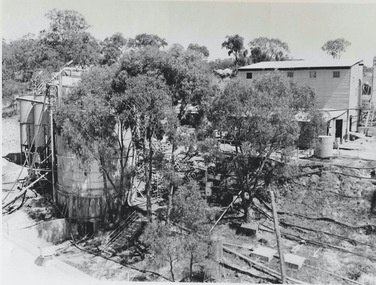
... mine's infrastructure has been a new ore processing plant and a decline tunnel. The ore processing plant was operated by Newmont mining from 1987 to 1990 and subsequently operated by Consolidated Victorian Mines and Duketon Goldfields. The mine site has retained evidence of its development since 1937 with its most recent periods of equipment upgrades in the 1950s and 1980s being documented by buildings, structures and intact and working machinery. Heritage Council Victoria: https://vhd.heritagecouncil.vic.gov.au/places/2380 Gold ...Wattle Gully Mine holds a pivotal position in the history of the State's quartz mining industry. The rich strike at Wattle Gully mine in 1937 helped revive the State's gold mining industry that had been in the doldrums since the First World War. Wattle Gully, and a handful of other 'new' companies - the Maude and Yellow Girl, Morning Star, A 1, and North Deborah - were the flagships of the revived industry and sustained the State's gold production for some 30 years. Wattle Gully mine, with a yield of 350,000 ounces, was the richest mine of its era. By 1940, the Wattle Gully Company had paid out £207,000 in dividends to its shareholders. The company continued to mine profitably through the Second World War, though it struggled due to a shortage of manpower. After the war, the mine continued to develop - in the early 1950s new plant including a winding engine, steel poppet head, and twenty-head battery was added. The plant was obtained from the Central Nell Gwynne Company, Bendigo. On 13 March 1969, the Wattle Gully Company closed down the mine, laying off 62 men. Since 1970 Wattle Gully mine has worked intermittently. Recent additions to the mine's infrastructure has been a new ore processing plant and a decline tunnel. The ore processing plant was operated by Newmont mining from 1987 to 1990 and subsequently operated by Consolidated Victorian Mines and Duketon Goldfields. The mine site has retained evidence of its development since 1937 with its most recent periods of equipment upgrades in the 1950s and 1980s being documented by buildings, structures and intact and working machinery. Heritage Council Victoria: https://vhd.heritagecouncil.vic.gov.au/places/2380 Black and white photograph: landscape view of Wattle Gully mine site. Eucalypt trees in foreground, mining sheds in background. Ore bins on left hand side of image.gold mining, underground, wattle gully gold mine, mine sheds, ore bins -
 Bendigo Historical Society Inc.
Photograph - AUSTIN COLLECTION: Bill Williamson, 1980's
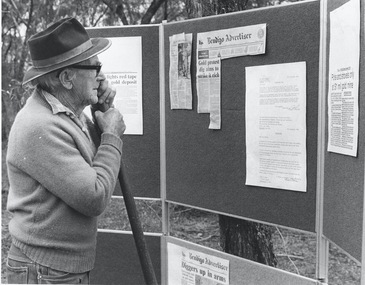
... mine's infrastructure has been a new ore processing plant and a decline tunnel. The ore processing plant was operated by Newmont mining from 1987 to 1990 and subsequently operated by Consolidated Victorian Mines and Duketon Goldfields. The mine site has retained evidence of its development since 1937 with its most recent periods of equipment upgrades in the 1950s and 1980s being documented by buildings, structures and intact and working machinery. Heritage Council Victoria: https://vhd.heritagecouncil.vic.gov.au/places/2380 Gold ...Wattle Gully Mine holds a pivotal position in the history of the State's quartz mining industry. The rich strike at Wattle Gully mine in 1937 helped revive the State's gold mining industry that had been in the doldrums since the First World War. Wattle Gully, and a handful of other 'new' companies - the Maude and Yellow Girl, Morning Star, A 1, and North Deborah - were the flagships of the revived industry and sustained the State's gold production for some 30 years. Wattle Gully mine, with a yield of 350,000 ounces, was the richest mine of its era. By 1940, the Wattle Gully Company had paid out £207,000 in dividends to its shareholders. The company continued to mine profitably through the Second World War, though it struggled due to a shortage of manpower. After the war, the mine continued to develop - in the early 1950s new plant including a winding engine, steel poppet head, and twenty-head battery was added. The plant was obtained from the Central Nell Gwynne Company, Bendigo. On 13 March 1969, the Wattle Gully Company closed down the mine, laying off 62 men. Since 1970 Wattle Gully mine has worked intermittently. Recent additions to the mine's infrastructure has been a new ore processing plant and a decline tunnel. The ore processing plant was operated by Newmont mining from 1987 to 1990 and subsequently operated by Consolidated Victorian Mines and Duketon Goldfields. The mine site has retained evidence of its development since 1937 with its most recent periods of equipment upgrades in the 1950s and 1980s being documented by buildings, structures and intact and working machinery. Heritage Council Victoria: https://vhd.heritagecouncil.vic.gov.au/places/2380 Black and white photograph: former miner from Castlemaine, Bill Williamson, leaning on a shovel, reading newspaper clippings pinned on trifold noticeboard. One notice ' Bendigo Advertiser, 'Gold protest dig aims to strike it rich'. Photo probably taken near Chewton.Written on back of photo in blue pen: Bill Williamson, old miner from Castlemaine, (mined through depression yrs) gold mining, underground, wattle gully gold mine, mine sheds, ore bins -
 Bendigo Historical Society Inc.
Newspaper - Kangaroo Flat Gold Mine Collection: 150 years of gold
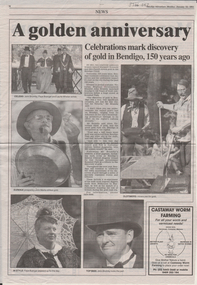
... gold in Bendigo, 150 years ago'. Victorian Regional Development Minister, John Brumby launched Bendigo's 150 Years of Gold before a huge crowd in Rosalind Park, Bendigo. Black and white photos on page from top left: 1. John Brumby, Faye Buerger and Laurie Whelan in costume walking across Bendigo Creek bridge near Rosalind Park 2. John Marks holding a gold pan 3. Faye Buerger, head shot, holding lace umbrella 4. John Brumby in top hat 5. Two men operating a gold cradle. Newspaper Kangaroo Flat Gold Mine ...Bendigo Advertiser newspaper full page article 22nd January, 2001 ; 'A golden anniversary, celebrations mark discovery of gold in Bendigo, 150 years ago'. Victorian Regional Development Minister, John Brumby launched Bendigo's 150 Years of Gold before a huge crowd in Rosalind Park, Bendigo. Black and white photos on page from top left: 1. John Brumby, Faye Buerger and Laurie Whelan in costume walking across Bendigo Creek bridge near Rosalind Park 2. John Marks holding a gold pan 3. Faye Buerger, head shot, holding lace umbrella 4. John Brumby in top hat 5. Two men operating a gold cradle.gold mining, bendigo, bendigo mining, doug buerger, faye buerger, john brumby, gold pan, 150 years of gold, celebration, rosalind park -
 Bendigo Historical Society Inc.
Newspaper - Kangaroo Flat Gold Mine Collection: Gold cradles, Unknown
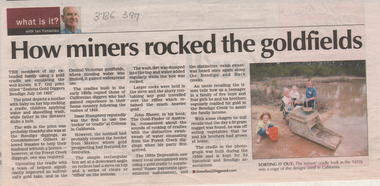
... Gold Mine 'What is it' article, Bendigo Advertiser, not dated.. Article written by Ian Feneslau, 'How miners rocked the goldfields', details the use of gold cradles on the Victorian goldfields. On right of article, colour photo of Ian Feneslau's extended family operating ...'What is it' article, Bendigo Advertiser, not dated.. Article written by Ian Feneslau, 'How miners rocked the goldfields', details the use of gold cradles on the Victorian goldfields. On right of article, colour photo of Ian Feneslau's extended family operating a gold cradle, bendigo, gold mining, gold cradle, ian feneslau, kangaroo flat gold mine -
 Bendigo Historical Society Inc.
Document - Phillip's Water Wheel, Diamond Hill, Bendigo, 1876
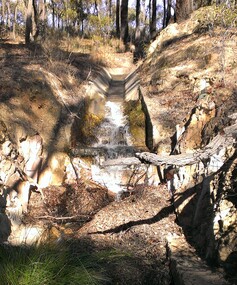
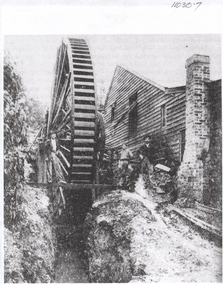
... operate three head of a ten head stamper. The site of the water wheel is still visible on the side of the water race at Diamond Hill. Mr. Geo Phillips held 1000 shares in the float of the Kangaroo Hydraulic Crushing & Gold Mining Company. He was one of the largest shareholders. (Victorian Government Gazette 72 Page 2260, 1893) Mining Sandhurst Phillip's Hydraulic Waterwheel Stafford Gold Mine ...'Messrs. George Phillips and Richard Williams erected a water wheel crushing machine near the site of the Old Albert shaft at Diamond Hill'. ( Bendigo Advertiser 4th June, 1890). The lack of water available for the venture from the water race caused much controversy in the following years. There was only enough water available in July 1890, to allow the company to operate three head of a ten head stamper. The site of the water wheel is still visible on the side of the water race at Diamond Hill. Mr. Geo Phillips held 1000 shares in the float of the Kangaroo Hydraulic Crushing & Gold Mining Company. He was one of the largest shareholders. (Victorian Government Gazette 72 Page 2260, 1893) Black and white photocopy. Image shows the Phillip's Water Wheel on Diamond Hill, Bendigo, date unknown but must be in 1890's. Three men and a dog standing in front of a weatherboard shed, brick chimney on side. Large water wheel on left hand side of image. Three images, 2008, showing former site of water wheel on channel, after heavy rain in district caused dry channel to run. mining, sandhurst, phillip's hydraulic waterwheel, stafford gold mine, diamond hill, george phillips, richard williams -
 Bendigo Historical Society Inc.
Photograph - Phillip's Water Wheel, Diamond Hill, Bendigo, Unknown
... operate three head of a ten head stamper. Mr. Geo Phillips held 1000 shares in the float of the Kangaroo Hydraulic Crushing & Gold Mining Company. He was one of the largest shareholders. (Victorian Government Gazette 72 Page 2260, 1893) Mining Sandhurst Phillip's Hydraulic Waterwheel Stafford Gold Mine Diamond Hill George Phillips Richard Williams Black and white photocopy of original. ...The site of the water wheel is still visible on the side of the water race at Diamond Hill, Bendigo. Messrs. George Phillips and Richard Williams erected a water wheel crushing machine near the site of the Old Albert shaft at Diamond Hill'. ( Bendigo Advertiser 4th June, 1890). The lack of water available for the venture from the water race caused much controversy in the following years. There was only enough water available in July 1890, to allow the company to operate three head of a ten head stamper. Mr. Geo Phillips held 1000 shares in the float of the Kangaroo Hydraulic Crushing & Gold Mining Company. He was one of the largest shareholders. (Victorian Government Gazette 72 Page 2260, 1893) Black and white photocopy of original. Image shows the Phillip's Water Wheel on Diamond Hill, Bendigo. Weatherboard building on right hand side of image, brick chimney on side of building. Large water wheel in cutting directly alongside building. Two men standing in between water wheel and building, one man standing on landing of waterwheel.mining, sandhurst, phillip's hydraulic waterwheel, stafford gold mine, diamond hill, george phillips, richard williams -
 Bendigo Historical Society Inc.
Plan - Central Deborah Gold Mine, J.J. Caldwell, 1945
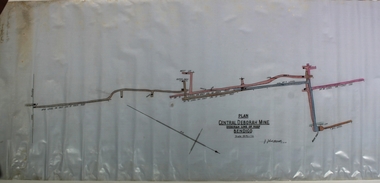
... Gold Mine is situated at 76 Violet Street, Bendigo. The mine operated from 1939 through to 1954 and extracted 929 kg of gold. The Central Deborah Gold Mine is a non-active gold mine and tourist attraction in Bendigo, Australia. It was listed on the Victorian...Gold Mine is situated at 76 Violet Street, Bendigo. The mine operated from 1939 through to 1954 and extracted 929 kg of gold. The Central Deborah Gold Mine is a non-active gold mine and tourist attraction in Bendigo, Australia. It was listed on the Victorian ...The Central Deborah Gold Mine is situated at 76 Violet Street, Bendigo. The mine operated from 1939 through to 1954 and extracted 929 kg of gold. The Central Deborah Gold Mine is a non-active gold mine and tourist attraction in Bendigo, Australia. It was listed on the Victorian Heritage Register on 18 November 1999.[1] The mine was opened in 1939 by the Central Deborah Gold Mining Company during a 1930s revival of the gold industry, extending an existing 108 ft shaft from many years earlier with new machinery. It was one of the last mines to open on the Bendigo goldfields and one of the few to stay open during World War II. It was expanded during 1945–46, with extensions and new machinery. It reached its maximum depth (now recorded as 412m) during the 1940s. It closed in November 1954, having produced 29,865 ounces of gold in its lifetime; the closure of the North Deborah Mine two weeks later marked the last mine in Bendigo to close Central Deborah Gold Mine is now a tourist destination, operated by Bendigo Heritage Attractions: https://www.central-deborah.com/about-us/central-deborah-gold-mine-s-history Blue waxed paper, features on plan drawn in pale pink and blue, title written in black text on centre bottom: 'Plan, Central Deborah Mine, Deborah Line of Reef, Bendigo, Scale 30 ft = 1 in.' Signature of J.J. Caldross, 13.10.45, written below name of mine. Handwritten on outside of plan in black pen: 'Mines Department, Cent. Deborah, Transverse section, Plan of levels' Plan notation shows No. 8 level on east leg of inner reef, level of east leg on outer reef, outer back, west leg, main shaft, numbers 5, 6, 7 and 10 levels. Mine map is part of the Margaret Roberts Collection. gold mining, gold, margaret roberts collection, central deborah gold mine, violet street, tourist attraction, bendigo -
 Bendigo Historical Society Inc.
Document - National Trust Collection: Heritage Bid For Central Victorian Goldfields, 1981
... In November 1981 the City of Bendigo sent out an official invitation and informational outline for two significant events in Bendigo; the Public launch of the World Heritage Bid for the Central Victorian Goldfields and the official launch of the Central Nell Gwynne Poppet Legs Restoration The Central Nell Gwynne Mine operated from 1906 to 1950, reaching a depth of 1,912 feet and yielding 61,884 ounces of gold (approx. $25 million at current prices). ...In November 1981 the City of Bendigo sent out an official invitation and informational outline for two significant events in Bendigo; the Public launch of the World Heritage Bid for the Central Victorian Goldfields and the official launch of the Central Nell Gwynne Poppet Legs Restoration The Central Nell Gwynne Mine operated from 1906 to 1950, reaching a depth of 1,912 feet and yielding 61,884 ounces of gold (approx. $25 million at current prices). ...In November 1981 the City of Bendigo sent out an official invitation and informational outline for two significant events in Bendigo; the Public launch of the World Heritage Bid for the Central Victorian Goldfields and the official launch of the Central Nell Gwynne Poppet Legs Restoration The Central Nell Gwynne Mine operated from 1906 to 1950, reaching a depth of 1,912 feet and yielding 61,884 ounces of gold (approx. $25 million at current prices). The mine was one of the finest on the Bendigo field, with notable engineering features such as tubular steel lattice poppet legs and extensive mining equipment, much of which remains visible on site.Goals are to Stabilize the existing structure, Fabricate internal supports for the poppet legs and winding wheels, Restore original paint colors and install flood lighting. Estimated Cost was $55,000.Project, Team:Supervision: Kurt Bruhn (City Engineer), Colin Campbell Contractor: AllWeld Bendigo; Heritage Consultant: Andrew Ward,Engineering Consultant: Howard Osborne, Project Coordinator: Norm Cameron The restoration was funded by a loan from the Central Goldfields Restoration Fund, as part of a Commonwealth/State Bicentennial Project through the Ministry for Planning and Environment.Invitation to Public Launch, Programme for the launch, Burra Charter - International Charter for the Conservation and Restoration of Monuments and sites, Building included in the initial Register. This item contains the following documents: 3084.51a Invitation from the City of Bendigo to attend the Bendigo Bid for World Heritage of the Goldfields; and the launch of the Central Nell Gwynne Poppet Legs Restoration Project 9th Nov 1989 3084.51b Letters in 1974 from the Natrional Trust. The Bendigo City Council requested a list of historic buildings requiring urgent maintenance to support applications for Australian Government renovation funding and potential inclusion in the Historic Buildings Register. 3084.51c 1981 International Charter for the Restoration of Monuments and Sites (Venice 1966), and the Resolutions of the 5th General Assembly of ICOMOS (Moscow 1978) known as The Burra Charterhistory, national trust bendigo collection, bendigo, central goldfields, nell gwynne mine, north virginia mine -
 Bendigo Historical Society Inc.
Document - Kangaroo Flat Gold Mine Collection: Bendigo Mining, History of Catherine Reef United Mine site, Bendigo Mining NL, Undated
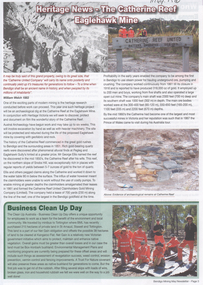
... Gold Mine The Catherine Reef United Claimholders Gold Mine was a significant site in the history of gold mining in Victoria, Australia. It operated from 1861 to 1913 and was considered the second most important gold mine in Victoria, behind the Port Phillip Company at Clunes. The mine utilized steam power for quartz mining, which required pounding the quartz to sand to extract gold. The mine's engine and battery foundations are remnants of this historical activity and are of great archaeological and scientific importance to the State of Victoria. The mine played a crucial role in the development of Victorian...Gold Mine The Catherine Reef United Claimholders Gold Mine was a significant site in the history of gold mining in Victoria, Australia. It operated from 1861 to 1913 and was considered the second most important gold mine in Victoria, behind the Port Phillip Company at Clunes. The mine utilized steam power for quartz mining, which required pounding the quartz to sand to extract gold. The mine's engine and battery foundations are remnants of this historical activity and are of great archaeological and scientific importance to the State of Victoria. The mine played a crucial role in the development of Victorian ...Catherine Reef United Claimholders Gold Mine The Catherine Reef United Claimholders Gold Mine was a significant site in the history of gold mining in Victoria, Australia. It operated from 1861 to 1913 and was considered the second most important gold mine in Victoria, behind the Port Phillip Company at Clunes. The mine utilized steam power for quartz mining, which required pounding the quartz to sand to extract gold. The mine's engine and battery foundations are remnants of this historical activity and are of great archaeological and scientific importance to the State of Victoria. The mine played a crucial role in the development of Victorian manufacturing industry and is a characteristic example of an important form of gold miningThree documents relating to the Catherine Reef United Claimholders Gold Mine, Eaglehawk. 1. Bendigo Mining, one page Information Sheet regarding the history of the Catherine Reef United mine site. Text is an extract from 'Bendigo's Deborah Gold Mine and its Era' by James Lerk. 2. Bendigo Mining Heritage News, - The Catherine Reef Eaglehawk Mine. Double sided one page information sheet. Images of archaelogical remains at Catherin Reef are featured on the front page. Emma Farrell and Mark Andrews question/answers featured on back page. 3. A3 photocopy of map of Catherine Reef United mine site and a list of archaeological remains found. bendigo mining n.l., bendigo, mining, gold, kangaroo flat, james lerk, catherine reef united claimholders gold mine, eaglehawk, archaeological dig, mining heritage, bendigo amalgamated goldfields, poppet head -
Bendigo Historical Society Inc.
Plan - North Hustlers Gold Mine
... The North Hustlers Gold Mine (also known as New Hustlers) was a prominent 19th and early 20th-century gold-mining operation located on the rich Hustler's line of reef in Bendigo (formerly Sandhurst), Victoria. Active during the Victorian gold rush, the mine operated...The North Hustlers Gold Mine (also known as New Hustlers) was a prominent 19th and early 20th-century gold-mining operation located on the rich Hustler's line of reef in Bendigo (formerly Sandhurst), Victoria. Active during the Victorian gold rush, the mine operated ...The North Hustlers Gold Mine (also known as New Hustlers) was a prominent 19th and early 20th-century gold-mining operation located on the rich Hustler's line of reef in Bendigo (formerly Sandhurst), Victoria. Active during the Victorian gold rush, the mine operated at significant depths, with historical records indicating activity around 800-1100 feet in the 1880s. It was located on the Hustlers line of reefNorth Hustlers Gold Mine Plan forms part of the Margaret Roberts Collection.gold mining, gold, bendigo, north hustlers, new hustlers, hustlers hill -
 Bendigo Historical Society Inc.
Document - BILL ASHMAN COLLECTION: CORRESPONDENCE
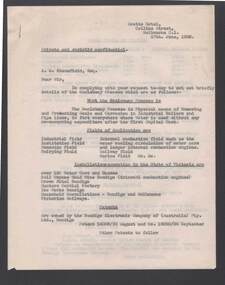
... SCIENCES Instruments - general scalebuoy Bill Ashman Collection - Correspondence Scotts Hotel A S Bloomfield Esq Nell Gwynne Gold Mine Bendigo Crown Hotel Bendigo Hunters Cordial Factory Ice Works Bendigo Victorian Railways Bendigo Electronic Company of (Australia) Pty Ltd R H S Abbott H A Abbott Carbon copy of a letter dated 27 June, 1938. Letter is to A. S. Bloomfield, Esq. No name of who it is from. Items mentioned are: What the Scalebuoy Process is, Fields of Application, Installations operating ...Carbon copy of a letter dated 27 June, 1938. Letter is to A. S. Bloomfield, Esq. No name of who it is from. Items mentioned are: What the Scalebuoy Process is, Fields of Application, Installations operating in the State of Victoria, Patents, Gross Margin of Profits, Promotion and Finance, Manufacture and Working Capital.sciences, instruments - general, scalebuoy, bill ashman collection - correspondence, scotts hotel, a s bloomfield esq, nell gwynne gold mine bendigo, crown hotel bendigo, hunters cordial factory, ice works bendigo, victorian railways, bendigo electronic company of (australia) pty ltd, r h s abbott, h a abbott -
 Bendigo Historical Society Inc.
Document - DEVONSHIRE MINES - DEVONSHIRE MINES PRODUCTION
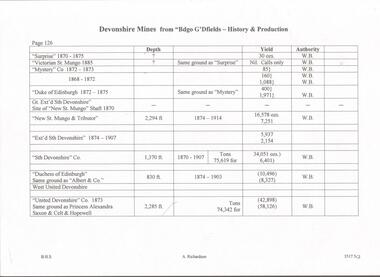
... MINE Gold devonshire mines Devonshire Mines Bendigo Goldfields - History & Production Surprise Victorian St Mungo Mystery Co Duke of Edinburgh Gt Ext'd Sth Devonshire New St Mungo Shaft New St Mungo Ext'd Sth Devonshire Sth Devonshire Co Duchess of Edinburgh Albert & Coy West United Devonshire United Devonshire Co Princess Alexandria Saxon & Celt & Hopewell Hand written notes on Devonshire Mines mentioning name of mine, years of operating, depth, yield and authority. ...Hand written notes on Devonshire Mines mentioning name of mine, years of operating, depth, yield and authority.mine, gold, devonshire mines, devonshire mines, bendigo goldfields - history & production, surprise, victorian st mungo, mystery co, duke of edinburgh, gt ext'd sth devonshire, new st mungo shaft, new st mungo, ext'd sth devonshire, sth devonshire co, duchess of edinburgh, albert & coy, west united devonshire, united devonshire co, princess alexandria, saxon & celt & hopewell -
 Bendigo Historical Society Inc.
Document - DEVONSHIRE MINES - NOTES ON THE DEVONSHIRE GROUP OF MINES
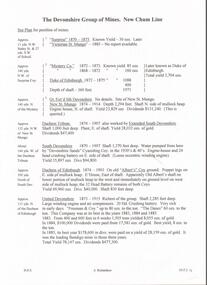
... MINE Gold devonshire mines Devonshire Mines New Chum Line Surprise Victorian St. Mungo Mystery Co. Duke of Edinburgh Gt Ext'd St Devonshire New St Mungo Duchess Tribute Extended South Devonshire South Devonshire Devonshire Sands Cyaniding Coy Duchess of Edinburgh Albert's Coy Old Albert's Shaft United Devonshire Freeman & Coy The Danes West United Devonshire Hopewell Phoenix Extended St Mungo Princess Alexandra Saxon & Celt Coys East Devonshire Sheepshead Line New St Mungo East Shaft Gt. Extended Hustlers Carbon copy of notes on the Devonshire Group of Mines - New Chum Line. Notes mention mines, years of operating ...Carbon copy of notes on the Devonshire Group of Mines - New Chum Line. Notes mention mines, years of operating, location in relation to other mines in the group, yields, dividends and depth of shafts. Some give locations in relationship to streets, etc. Signed by A. Richardson.mine, gold, devonshire mines, devonshire mines, new chum line, surprise, victorian st. mungo, mystery co., duke of edinburgh, gt ext'd st devonshire, new st mungo, duchess tribute, extended south devonshire, south devonshire, devonshire sands cyaniding coy, duchess of edinburgh, albert's coy, old albert's shaft, united devonshire, freeman & coy, the danes, west united devonshire, hopewell, phoenix, extended st mungo, princess alexandra, saxon & celt coys, east devonshire, sheepshead line, new st mungo east shaft, gt. extended hustlers -
 Bendigo Historical Society Inc.
Certificate - Share Certificates: Slate Reef Gold Mining Company and Central Nell Gwynne Mining Company, 1896, 1906
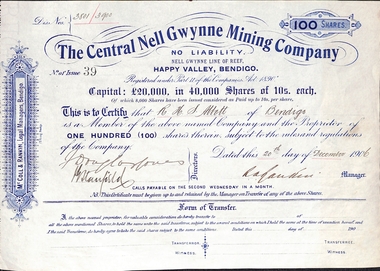
... Victorian Legislative Council. Robert Abbott Share certificates Mining Companies Nell Gwynne Slate Reef \ Two share certificates issued to R.H.S. Abbott from The Central Nell Gwynne Mining Company in 1906 and The State Reef Gold mining Company in 1896. The Central Nell Gwynne Mine operated ...The share certificates were issued after the purchase of shares in the two mining companies. The owner of the shares was Robert Hartley Smith Abbott, the stepson of Joseph Henry Abbott. Robert Abbott inherited the family businesses, including Abbott Supply Co. He served on the council of the Shire of Strathfieldsaye and served as Major of Bendigo 1917 to 1918. He also served in the Victorian Legislative Council.Two share certificates issued to R.H.S. Abbott from The Central Nell Gwynne Mining Company in 1906 and The State Reef Gold mining Company in 1896. The Central Nell Gwynne Mine operated from 1906 until the 1940s with major works during the 1930s. The poppet head is still intact on Happy Valley Road. Slate Reef Gold Mining Company had operations at Wilson's Hill in Marong. A road has been named after Wilson's Hill.robert abbott, share certificates, mining companies, nell gwynne, slate reef, \
