
Showing 34 items matching "ordinance factory"
-
 Sunshine and District Historical Society Incorporated
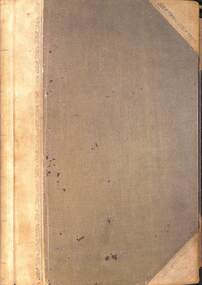
Administrative record - V.I.P. Visitors' Book, Ordinance Factory, Maribyrnong, Victoria, 22 February, 1938 - 20 August, 1993
... Visitors' Book, Ordinance Factory, Maribyrnong, Victoria...Ordinance Factory...The book was signed by many V.I.P. visitors to the to the Ordinance Factory Maribyrong. It ws donated to the Sunshine and District Historical Society through Donald Webster....Ordinance Factory Maribyrnong Signatures of V.I.P.visitors. ...The book was signed by many V.I.P. visitors to the to the Ordinance Factory Maribyrong. It ws donated to the Sunshine and District Historical Society through Donald Webster.Signatures of V.I.P.visitors. The signatures include those of R.G.Menzies, Prime Minister in 1939.ordinance factory, maribyrnong -
 Bendigo Historical Society Inc.
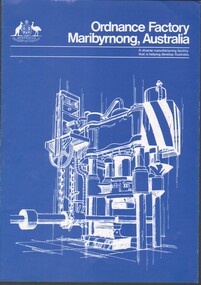
Booklet - Australian Defence Industries (ADI) - Ordinance factory Maribyrnong Australia brochure
... Australian Defence Industries (ADI) - Ordinance factory Maribyrnong Australia brochure...Australian Defence Industries (ADI) - Ordinance Factory Maribyrnong Australia brochure. ...ADI history ADI Maribyrnong facilities Australian Defence Industries (ADI) - Ordinance Factory Maribyrnong Australia brochure. ...Australian Defence Industries (ADI) - Ordinance Factory Maribyrnong Australia brochure. Three sheet colour brochure on facilities and manufacturing, procedures at the Maribyrnong Facility.adi history, adi maribyrnong facilities -
 Bendigo Historical Society Inc.
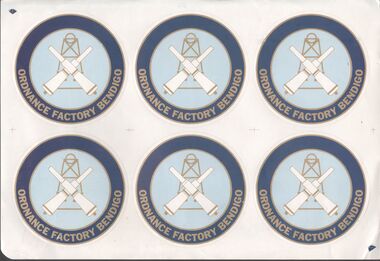
Ephemera - Australian Defence Industries (ADI), one sheet of six circular Ordinance Factory Bendigo stickers
... Australian Defence Industries (ADI), one sheet of six circular Ordinance Factory Bendigo stickers...Australian Defence Industries (ADI), one sheet of six circular Ordinance Factory Bendigo stickers. "ORDINANCE FACTROY BENDIGO" in dark blue outer circle, inner area is light blue contains the Factory symbol against a representative gold mine poppet head....Ephemera Australian Defence Industries (ADI), one sheet of six circular Ordinance Factory Bendigo stickers ...Australian Defence Industries (ADI), one sheet of six circular Ordinance Factory Bendigo stickers. "ORDINANCE FACTROY BENDIGO" in dark blue outer circle, inner area is light blue contains the Factory symbol against a representative gold mine poppet head."ORDINANCE FACTROY BENDIGO" local history, adi history -
 Running Rabbits Military Museum operated by the Upwey Belgrave RSL Sub Branch
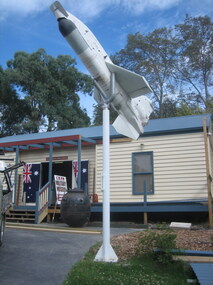
Ikara Missile, Maribyrnong Ordinance Factory in Victoria. et al, 1965
... Maribyrnong Ordinance Factory in Victoria....Ikara Missile Maribyrnong Ordinance Factory in Victoria. Commonwealth of Australia ...During the 1950’s, the growing threat from Submarines, led the Royal Australian Navy to consider a quick reaction, long range ASW torpedo delivery system as an alternative to the USN’s ASROC and the RN’s Match. Full scale research and development began in 1960 using the Turana target drone as the basis for the delivery platform. Shipboard tests began in 1963 and the Government Aircraft Factory (GAF) began production of three variants M3, M4 and M5 in 1965. The M4 variant had a guidance system designed to interface to a full tactical data handling system while the M3 and M5 variants used a simpler system with a dedicated fire control system. The IKARA is an unmanned miniature aircraft with clip on upper and lower stabilizers and wings. The upper stabilizer (SVU) housed and electronic package that transmitted flight data back to the launch platform and received updated target acquisition data during flight. Flight maneuverability was provided by elevons fitted into the trailing edge of each wing, these were operated by an actuator system that received flight correction data transmitted to the autopilot from the fire control system. The payload, either the Mk44 or Mk46 lightweight torpedo was suspended to the underside of the airframe and faired into the body to provide and aerodynamic shape. The forward section of the body housed the autopilot and the thermal battery unit. Propulsion was provided by the MURAWA steel cased, solid propellant rocket motor with a combined boost and sustainer stage. IKARA was capable of engaging a target to the maximum range of the ships sonar, regardless of weather conditions. Target information is fed into the fire control system, which calculated to drop zone for the torpedo taking into account speed and direction of launch platform and target, win speed etc, then tracking the missile to the drop zone where command signals initiate torpedo release. The IKARA is an unmanned miniature aircraft with clip on upper and lower stabilizers and wings. navy, torpedo, rocket, submarine, missile -
 Bendigo Military Museum
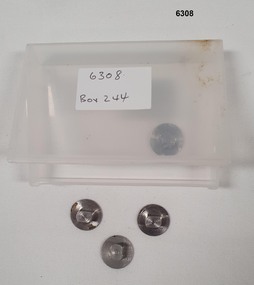
Equipment - Tri punched Film Registration System - stainless steel (studs), Ordinance Factory Bendigo, Circa 1960
... Ordinance Factory Bendigo...Tri punched Film Registration System - stainless steel (studs) Equipment Tri punched Film Registration System - stainless steel (studs) Ordinance Factory Bendigo ...These studs (pins) were used in the manual production of mapping to accurately register a number of sheets of film reproduction material together. A set of three studs were required. This simple but effective system allowed the reproduction material layers (repromat) to expand and contract with changes in temperature whilst maintaining the registration between sheets.Precision engineered stainless steel studs (pins) Set of three required for operation, includes a spare stud all stored in a plastic container. These studs were also produced as a low profile version for use in large format photographic vacuum contact frames so that they would not break the glass.royal australian survey corps, rasvy, fortuna, army survey regiment, army svy regt, asr -
 Bendigo Historical Society Inc.
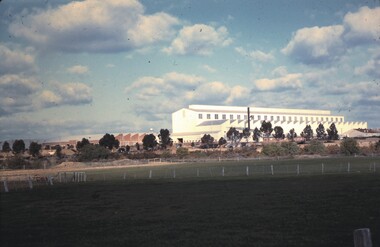
Slide - BENDIGO BUILDINGS, Apr 1960
... Bendigo Buildings. Ordinance factory Bendigo....Bendigo Buildings. Ordinance factory Bendigo. Slide BENDIGO BUILDINGS. ...Slide. Bendigo Buildings. Ordinance factory Bendigo.slide, bendigo, bendigo buildings., bendigo buildings. -
 Bendigo Historical Society Inc.
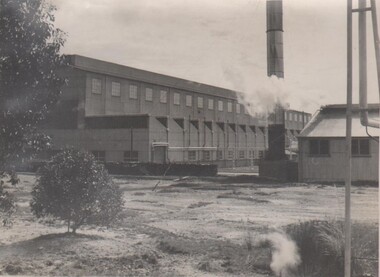
Photograph - BENDIGO ORDNANCE FACTORY COLLECTION: EXTERIOR PHOTOGRAPH OF THE FACTORY
... Bendigo Ordinance Factory - exterior photograph of the factory. ...Bendigo Ordnance Factory Bendigo Businesses Bendigo Ordinance Factory - exterior photograph of the factory. ...Bendigo Ordinance Factory - exterior photograph of the factory. Two copies\Photo taken during 1950sbendigo ordnance factory, bendigo businesses -
 Bendigo Historical Society Inc.
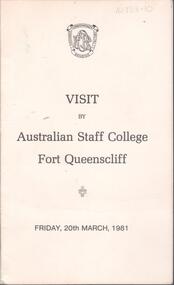
Programme - Australian Defence Industries (ADI) - Program for visit by Australian Staff College Fort Queenscliff, Friday 20th March 1981
... Bifold introduction to the facilities at Ordinance Factory, Bendigo; with B&W aerial view of Ordinance Factory, Bendigo on back cover of the program....Bifold introduction to the facilities at Ordinance Factory, Bendigo; with B&W aerial view of Ordinance Factory, Bendigo on back cover of the program. ...Australian Defence Industries (ADI) - Program for visit by Australian Staff College Fort Queenscliff, Friday 20th March 198. Bifold introduction to the facilities at Ordinance Factory, Bendigo; with B&W aerial view of Ordinance Factory, Bendigo on back cover of the program.adi history, visitor introduction/program -
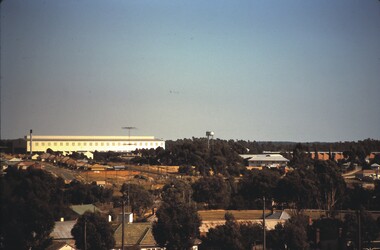 Bendigo Historical Society Inc.
Slide - BENDIGO VIEWS, Feb 1963
... Scenic view of Bendigo with Ordinance Factory (also known as ADI now known as THALES)....Scenic view of Bendigo with Ordinance Factory (also known as ADI now known as THALES). ...Slide. Bendigo Views. Scenic view of Bendigo with Ordinance Factory (also known as ADI now known as THALES).slide, bendigo, bendigo views, bendigo views -
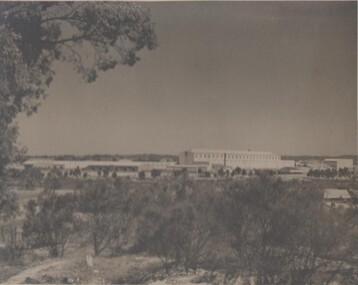 Bendigo Historical Society Inc.
Photograph - BENDIGO ORDNANCE FACTORY COLLECTION: LARGE SCALE VIEW OF THE DEVELOPMENT OF THE ORDNANCE FACTORY SITE, 1950s
... large scale photograph covering the full development of the Ordinance Factory site Black & white photo, large format...Bendigo Businesses Bendigo Ordnance Factory large scale photograph covering the full development of the Ordinance Factory site Black & white photo, large format Photograph BENDIGO ORDNANCE FACTORY COLLECTION: LARGE SCALE VIEW OF THE DEVELOPMENT OF THE ORDNANCE FACTORY SITE ...large scale photograph covering the full development of the Ordinance Factory site Black & white photo, large formatbendigo businesses, bendigo ordnance factory -
 Federation University Historical Collection
Article - Article - Women, Ballarat School of Mines: Women of Note; Jeanette Perkins, First Female Geology Student, (1927 - )
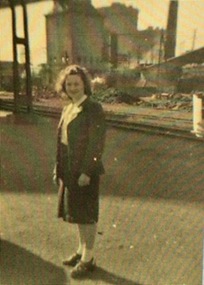
... ...ordinance factory...In 1991 Jeanette Watson was awarded a Doctorate from Deakin University. women of note ballarat school of mines alfredton state school pleasant street state school ballarat high school leaving certificate maths interview with principal heseltine geologist applied chemistry course no female geologists metallurgical chemist married 1949 melbourne ordinance factory part time study melbourne technical college rmit part time lecturer scuba diving science teacher for ten years masters degree doctorate deakin university Ballarat School of Mines: Women of Note; Jeanette Perkins, First Female Geology Student, (1927 - ) Article Article - Women ...Jeanette Perkins was born in 1927 at Ballarat. She attended Alfredton State School and Pleasant Street State School before completing her secondary schooling at Ballarat High School (BHS). During her later years at BHS Perkins decided that she wanted to become a geologist, but was ineligible for university when she failed Leaving Certificate maths. She attended an interview with the principal (Heseltine) at the Ballarat School of Mines (SMB) and announced that she wanted to be a geologist. Heseltine was, according to Perkins, aghast: he informed her that there had never been a female geologist at SMB and they didn't want one. But Perkins persisted. Only then did Heseltine reluctantly enrol her in the School's Applied Chemistry Course which offered the most geological subjects, moreover, it was the only one he considered available to a 'mere' female. After graduating Perkins was employed as a metallurgical chemist with M.B. Johns Valves, Ballarat. In 1949 she married Alfred Watson. In 1951 Jeanette and Alf Watson moved to Melbourne where she commenced work as a metallurgical chemist at the Maribyrnong Ordnance Factory while studying geology part time: Alf returned to study at the University of Melbourne. Once again, Watson set a precedent by becoming the first female student to study geology part-time at the Melbourne Technical College. Increasing demands brought about by her growing family, she turned to part-time lecturing second and third year stratigraphy and palaeontology at RMIT. In 1957 the Watsons moved to the Mary Kathleen Uranium Mine in NW Queensland where he was appointed electrical design engineer. After their return to Melbourne in 1960, Jeanette taught herself to SCUBA dive and quickly developed a passion for the sport and the marine environment. She taught senior science to secondary students for 10 years whilst working towards a Masters degree. In 1991 Jeanette Watson was awarded a Doctorate from Deakin University.women of note, ballarat school of mines, alfredton state school, pleasant street state school, ballarat high school, leaving certificate maths, interview with principal, heseltine, geologist, applied chemistry course, no female geologists, metallurgical chemist, married 1949, melbourne, ordinance factory, part time study, melbourne technical college, rmit, part time lecturer, scuba diving, science teacher for ten years, masters degree, doctorate, deakin university -
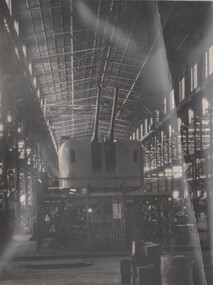 Bendigo Historical Society Inc.
Photograph - BENDIGO ORDNANCE FACTORY COLLECTION: MANUFACTURE OF NAVAL GUNS
... Black and White photograph of manufacture of naval guns at the Commonwealth Government Bendigo Ordinance Factory. Two copies Photo taken in the 1950s....Bendigo Ordnance Factory Manufacturing Black and White photograph of manufacture of naval guns at the Commonwealth Government Bendigo Ordinance Factory. Two copies Photo taken in the 1950s. ...Black and White photograph of manufacture of naval guns at the Commonwealth Government Bendigo Ordinance Factory. Two copies Photo taken in the 1950s.bendigo ordnance factory, manufacturing -
 Beechworth Honey Archive
Income Tax Returns
... Ivan Frost was a machinist in the wartime Ordinance Factory....Ivan Frost was a machinist in the wartime Ordinance Factory. Income Tax Return Frost Ivan Machinist Beechworth Honey Copy of income tax returns for Ivan Wilbur Frost, son of Frank Lebbell Frost, for the year 1944. ...Ivan Frost was a machinist in the wartime Ordinance Factory.Copy of income tax returns for Ivan Wilbur Frost, son of Frank Lebbell Frost, for the year 1944. Occupation stated as "1st Machinist, Metal". For the state of Victoria.income, tax return, frost, ivan, machinist, beechworth honey -
 Bendigo Historical Society Inc.
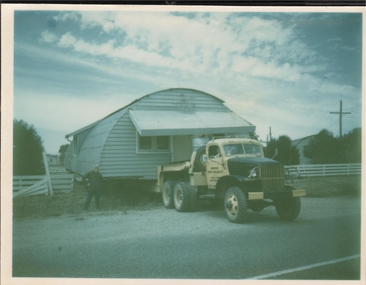
Photograph - SANDHURST BOYS CENTRE COLLECTION: NISSEN HUTS RELOCATION
... Nissen huts being removed from old Bendigo Migrant Centre (former Ordinance Factory) [n.d. 1960's?] Trucks used were from Bendigo Heavy Haulage Co. ....; Bendigo Migrant Hostel Nissen huts being removed from old Bendigo Migrant Centre (former Ordinance Factory) [n.d. 1960's?] Trucks used were from Bendigo Heavy Haulage Co. ...Nissen huts being removed from old Bendigo Migrant Centre (former Ordinance Factory) [n.d. 1960's?] Trucks used were from Bendigo Heavy Haulage Co. Buildings included the Admin Office (with veranda on front). Four photographs.bendigo, institutions, sandhurst boys centre, nissen huts; relocation of buildings; bendigo heavy haulage co.; bendigo migrant hostel -
 Bendigo Historical Society Inc.
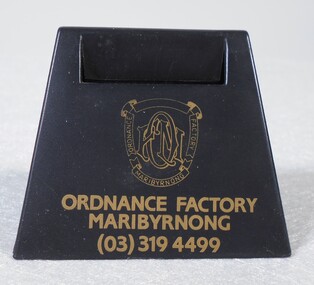
Ephemera - Australian Defence Industries (ADI) desk accessory
... Main edge has the "ADI factory logo and Ordinance Factory Maribyrnong (03) 319 4499" printed in gold. ...Main edge has the "ADI factory logo and Ordinance Factory Maribyrnong (03) 319 4499" printed in gold. ...Australian Defence Industries (ADI) small triangular plastic desk accessory for desk use, could hold business cards, paper clips, etc. Main edge has the "ADI factory logo and Ordinance Factory Maribyrnong (03) 319 4499" printed in gold. Body of the accessory can be accessed by sliding base panel. made in .... (eligible)local history, adi history -
 Bendigo Military Museum
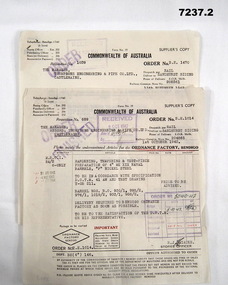
Document - ORDER FORMS
... Commonwealth Order to Bendigo Ordinance Factory to harden, temper and test piece 4"breech block billett "F" Nickel steel. ...Commonwealth Order to Bendigo Ordinance Factory to harden, temper and test piece 4"breech block billett "F" Nickel steel. ...By using this Cat No it will bring up all associated items re Thompsons.1. Commonwealth Order to Ordnance Factory Bendigo to harden, temper and test 4" MK x 1 x Naval Barrels, "" F" nickel steel. Six barrel numbers are shown. Dated 1 Oct 1942. 2. Commonwealth Order to Bendigo Ordinance Factory to harden, temper and test piece 4"breech block billett "F" Nickel steel. Thompsons Foundry.1. Stamped - order finished. Received 2 Oct 1942 - order tracking signed by R. J. Liniacke, shipped 28 June 1944. 2. Stamped - order. Received 21 Nov 1942 - signed by R. J. Liniacke.ww2, cannon manufacture -
 Melbourne Tram Museum
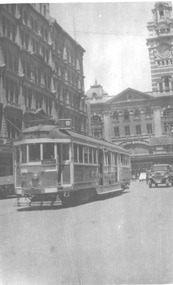
Photograph - Tram 404 leaving Elizabeth St terminus, c1942
... Special B indicated that the tram was going to go the Ordinance Factory - see item 3019. The Flinders St Station building is in the background....Special B indicated that the tram was going to go the Ordinance Factory - see item 3019. The Flinders St Station building is in the background. ...Black and white photograph showing W2 class No. 404 with the destination of "Special" and the route Number "B", leaving the Elizabeth St terminal. The tram has white strip under the cabin front and an auxiliary board, that cannot be read but could be via Flemington Road. Special B indicated that the tram was going to go the Ordinance Factory - see item 3019. The Flinders St Station building is in the background.Yields information about tram 404 and the use of the war time destinations for the Ordinance Factory - c1942Black and White photograph with a plain back.trams, tramways, w2 class, tram 404, elizabeth st -
 Bendigo Historical Society Inc.
Document - Australian Defence Industries (ADI) - 50th Anniversary Celebration Pack
... Australian Defence Industries (ADI) - 50th Anniversary Celebration Pack: a souvenir, 50th Anniversary Program, 7 Feb 1992, with short summary of ADI Bendigo Facility and B&W aerial photo and interior factory photos b 13 page booklet, coloured Ordinance Factory Bendigo c draft welcome pack, d overview, GE Projects at ADI Bendigo, typed sheets and B&W photos e Factory notice of events, and f associated overview sheets...local history ADI history ADI 50th Anniversary Australian Defence Industries (ADI) - 50th Anniversary Celebration Pack: a souvenir, 50th Anniversary Program, 7 Feb 1992, with short summary of ADI Bendigo Facility and B&W aerial photo and interior factory photos b 13 page booklet, coloured Ordinance Factory Bendigo c draft welcome pack, d overview, GE Projects at ADI Bendigo, typed sheets and B&W photos e Factory notice of events, and f associated overview sheets Document Australian Defence Industries (ADI) - 50th Anniversary Celebration Pack ...Australian Defence Industries (ADI) - 50th Anniversary Celebration Pack: a souvenir, 50th Anniversary Program, 7 Feb 1992, with short summary of ADI Bendigo Facility and B&W aerial photo and interior factory photos b 13 page booklet, coloured Ordinance Factory Bendigo c draft welcome pack, d overview, GE Projects at ADI Bendigo, typed sheets and B&W photos e Factory notice of events, and f associated overview sheetslocal history, adi history, adi 50th anniversary -
 Melbourne Tram Museum
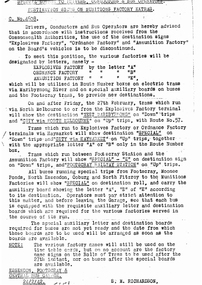
Document - Instruction, Melbourne & Metropolitan Tramways Board, Mal Rowe, Destination Signs on Munitions Factory Extras, 1942
... Printed copies of a digital copies of Instructions issued by the MMTB regarding World War 2 notices to crews. .1 - Notice C4608 - Destination Signs on Munitions Factory Extras - dated 24/2/1942 to Essendon, Footscray and Central Bus Garage crews - when the various signs and route number letters were to be used on Explosives Factory, Ordnance Factory and Ammunition Factory to be shown on trams. .2 - Notice C4551 - "Running to and from Explosives and Ordinance factories - Instructions regarding destination signs to be shown for trams from Brunswick, Malvern, Glenhuntly and Hanna St depots....Trams tramways World War 2 Footscray Destination Roll Maribyrnong West Maribyrnong Explosives Factory Ordnance Factory Ammunition Factory Printed copies of a digital copies of Instructions issued by the MMTB regarding World War 2 notices to crews. .1 - Notice C4608 - Destination Signs on Munitions Factory Extras - dated 24/2/1942 to Essendon, Footscray and Central Bus Garage crews - when the various signs and route number letters were to be used on Explosives Factory, Ordnance Factory and Ammunition Factory to be shown on trams. .2 - Notice C4551 - "Running to and from Explosives and Ordinance factories - Instructions regarding destination signs to be shown for trams from Brunswick, Malvern, Glenhuntly and Hanna St depots. ...Printed copies of a digital copies of Instructions issued by the MMTB regarding World War 2 notices to crews. .1 - Notice C4608 - Destination Signs on Munitions Factory Extras - dated 24/2/1942 to Essendon, Footscray and Central Bus Garage crews - when the various signs and route number letters were to be used on Explosives Factory, Ordnance Factory and Ammunition Factory to be shown on trams. .2 - Notice C4551 - "Running to and from Explosives and Ordinance factories - Instructions regarding destination signs to be shown for trams from Brunswick, Malvern, Glenhuntly and Hanna St depots.trams, tramways, world war 2, footscray, destination roll, maribyrnong, west maribyrnong, explosives factory, ordnance factory, ammunition factory -
 Bendigo Historical Society Inc.
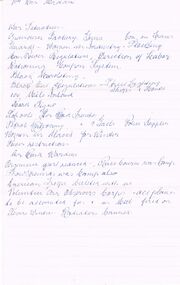
Document - HAND WRITTEN LIST OF WAR RESTRICTIONS
... War situation Ordinance Factory Guns. Con on Trams. Guards - Women in Industry - Stacking. ...War situation Ordinance Factory Guns. Con on Trams. Guards - Women in Industry - Stacking. ...BHS CollectionHand written list of war restrictions: On paper with blue lines for writing, sheet came from a writing pad. War situation Ordinance Factory Guns. Con on Trams. Guards - Women in Industry - Stacking. Man power regulations. Direction of Labour. Rationing Coupon System. Black Marketing. Black out regulations - Street lighting, Shops and Homes. 100 mile inland. Road Signs. Shovels for road trenches. Petrol rationing. 4 Galls Police Supplies. Women in slacks for Winter. Power restrictions. Air raid wardens. Organise spare ........... Racecourse was camp. Show grounds was camp also. American troops billeted with us. Volunteer Air observers. Corps. All planes to be accounted for and ......................................................Severe Winters. Radiators banned. war world ii, list -
 Bendigo Historical Society Inc.
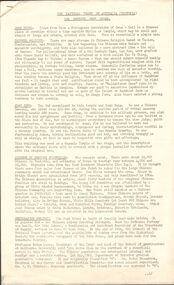
Document - THE BENDIGO JOSS HOUSE: NATIONAL TRUST OF AUSTRALIA (VICTORIA)
... Mitchell, Apex Club, Sandhurst Boys' Centre, Mr John Ball, Ordinance Factory, Bendigo Advertiser, b. C. V. 8, 3 B. ...Mitchell, Apex Club, Sandhurst Boys' Centre, Mr John Ball, Ordinance Factory, Bendigo Advertiser, b. C. V. 8, 3 B. ...''The Bendigo Joss House'' - National Trust of Australia (Victoria) - 2 pages incl - origin of term 'Joss'; basic information about ''Chinese Religion'' and Kwan Gung; synopsis on ''Chinese on Bendigo Goldfields''; details of the restoration project - including costs to date and list of people and bodies assisting. Names on second sheet ; Bendigo Chinese Society, Family of H. E. McGowan, D. O'Hoy, Mr W. Mitchell, Apex Club, Sandhurst Boys' Centre, Mr John Ball, Ordinance Factory, Bendigo Advertiser, b. C. V. 8, 3 B. O. Mrs H. Vellacott, Mrs B. Mullins, S. E. C., contractors and other workmen. Mrs R. R. Adams 39 Barkly Street Bendigo (Secretary).National Trust of Australiabuildings, church, chinese joss house -
 Sunshine and District Historical Society Incorporated
Photograph - Sunshine & District Photographs
... Coles Hampshire Rd Sunshine Opening Day C1951 (Replaced the store of JW McGrath & Co) ICI Deer Park C1920's|Old Braybrook Shire Hall Hunt Club Hotel Deer Park House photos and street photograph perhaps of Sunshine includes 179 Morris St Sunshine Melbourne Meat Preserving Works (later Hume Site) Maribyrnong River Raleigh's Castle Maribyrnong River (Highpoint West nowadays) Maribyrnong Swimming Club and Syd Dunne 1921 AIF Lighthorse Camp or Remount Depot Maribyrnong C1920 (Later ordinance factory site) Riverview Tea Gardens Tennis Etc Maribyrnong River Angler's Hotel Maribyrnong River Maribyrnong River near Ordinance Factory area early 1900's Maribyrnong River in flood 1906|Other area of Maribyrnong River photos Female workers Women hand sewing gloves ammunition workers Kororoit Creek in flood with Parson's house and horsehair factory in the black ground Gum tree and sheds...Coles Hampshire Rd Sunshine Opening Day C1951 (Replaced the store of JW McGrath & Co) ICI Deer Park C1920's|Old Braybrook Shire Hall Hunt Club Hotel Deer Park House photos and street photograph perhaps of Sunshine includes 179 Morris St Sunshine Melbourne Meat Preserving Works (later Hume Site) Maribyrnong River Raleigh's Castle Maribyrnong River (Highpoint West nowadays) Maribyrnong Swimming Club and Syd Dunne 1921 AIF Lighthorse Camp or Remount Depot Maribyrnong C1920 (Later ordinance factory site) Riverview Tea Gardens Tennis Etc Maribyrnong River Angler's Hotel Maribyrnong River Maribyrnong River near Ordinance Factory area early 1900's Maribyrnong River in flood 1906|Other area of Maribyrnong River photos Female workers Women hand sewing gloves ammunition workers Kororoit Creek in flood with Parson's house and horsehair factory in the black ground Gum tree and sheds Large black folder with photos within Photograph Sunshine & District Photographs ...Donated to the Society by the Sunshine Library. Many of the photographs have been used in displaysNewman J : Blacksmith and Wheelwright Ballarat Rd Braybrook H.V. McKay Workers : hats on and off H.V. McKay : Highland band in front of his home at Toorak Sunshine Harvester Works : ploughs tractors etc Harrison men : Harrison's Fram Werribee RSS & AILA Sunshine (Returned Sailors' Soldiers' & Airmen's Imperial League of Australia (RSL R.S.L.) Coles Hampshire Rd Sunshine Opening Day C1951 (Replaced the store of JW McGrath & Co) ICI Deer Park C1920's|Old Braybrook Shire Hall Hunt Club Hotel Deer Park House photos and street photograph perhaps of Sunshine includes 179 Morris St Sunshine Melbourne Meat Preserving Works (later Hume Site) Maribyrnong River Raleigh's Castle Maribyrnong River (Highpoint West nowadays) Maribyrnong Swimming Club and Syd Dunne 1921 AIF Lighthorse Camp or Remount Depot Maribyrnong C1920 (Later ordinance factory site) Riverview Tea Gardens Tennis Etc Maribyrnong River Angler's Hotel Maribyrnong River Maribyrnong River near Ordinance Factory area early 1900's Maribyrnong River in flood 1906|Other area of Maribyrnong River photos Female workers Women hand sewing gloves ammunition workers Kororoit Creek in flood with Parson's house and horsehair factory in the black ground Gum tree and sheds -
 Bendigo Historical Society Inc.
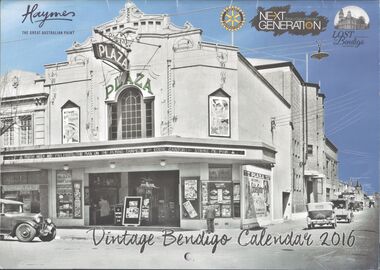
Ephemera - Vintage Calendar of Bendigo. 2016
... Andrews Avenue; June, Charing Cross, 1920's; July, Bendigo Municipal pool; August, Ordinance Factory, Shop Number 9, 1940's; September, Gillies corner, 1960's; October, Jim Elvey's View Point Hotel at Charing Cross; 1960's; November, Mitchell Street, 1950's; December, Pall Mall, 1940's. ...Andrews Avenue; June, Charing Cross, 1920's; July, Bendigo Municipal pool; August, Ordinance Factory, Shop Number 9, 1940's; September, Gillies corner, 1960's; October, Jim Elvey's View Point Hotel at Charing Cross; 1960's; November, Mitchell Street, 1950's; December, Pall Mall, 1940's. ...2016 Vintage Bendigo calendar. 12-month calendar. One historic image of Bendigo per month. January: Pall Mall, 1870's; February, Bendigo Mall, opened in 1981; March, aerial view of Bendigo Goal and Camp Hill, 1922; April, Easter Monday, Howard Place, 1903; May, 'Aldo's Auto Repairs', St. Andrews Avenue; June, Charing Cross, 1920's; July, Bendigo Municipal pool; August, Ordinance Factory, Shop Number 9, 1940's; September, Gillies corner, 1960's; October, Jim Elvey's View Point Hotel at Charing Cross; 1960's; November, Mitchell Street, 1950's; December, Pall Mall, 1940's. This calendar has not been used, and has no personal notations made on it. At the back are a list of Public Holidays for each state and territory, and a list of sponsors/advertisers, including Haymes, Rotary Club and Lost Bendigo.bendigo, business, calendar -
![Drawing - Pencil on Paper, [Group of sketches] by Sybil Craig, 1935](/media/collectors/530576742162ef0fa09a2288/items/534748169821f420f8c0373d/item-media/5eff422b21ea6712bcf90559/item-fit-380x285.jpg?cb=6) Federation University Art Collection
Federation University Art CollectionDrawing - Pencil on Paper, [Group of sketches] by Sybil Craig, 1935
... Based in Melbourne she worked for fourth months at the Commonwealth Ordinance Factory at Maribyrnong, becoming the first female artist to paint women working in the munitions factories. ...Based in Melbourne she worked for fourth months at the Commonwealth Ordinance Factory at Maribyrnong, becoming the first female artist to paint women working in the munitions factories. ...Sybil CRAIG (18/11/1901-09/09/1989) Born London, England Arrived Melbourne 1902 Died Melbourne, Victoria Sybil Frances Craig was a student of John Shirlow in 1920 who introduced her to French avant-garde artists such as Matisse and Gauguin. In 1924 she studied at the National Gallery of Victoria Art School. She also underook private classes with George Bellfor several months where individual expression was encouraged, and she became associated with a group of Modernist artists including Sam Atyeo. In 1945 Sybil Craig became the third woman to be appointed as an official war artist. Based in Melbourne she worked for fourth months at the Commonwealth Ordinance Factory at Maribyrnong, becoming the first female artist to paint women working in the munitions factories. In her work Craig was attracted to many changing ideas and continued to explore line, rhythm, colour, simplicity and design. This item is part of the Federation University Art Collection. The Art Collection features over 2000 works and was listed as a 'Ballarat Treasure' in 2007.Framed pencil sketch.art, artwork, sybil craig, australian war artist, kitchen -
![Drawing - Texta on paper, [Flower Study] by Sybil Craig, 2001](/media/collectors/530576742162ef0fa09a2288/items/534748169821f420f8c0373e/item-media/58cf4cb1d0ce1e3314911c72/item-fit-380x285.jpg?cb=6) Federation University Art Collection
Federation University Art CollectionDrawing - Texta on paper, [Flower Study] by Sybil Craig, 2001
... Based in Melbourne she worked for fourth months at the Commonwealth Ordinance Factory at Maribyrnong, becoming the first female artist to paint women working in the munitions factories. ...Based in Melbourne she worked for fourth months at the Commonwealth Ordinance Factory at Maribyrnong, becoming the first female artist to paint women working in the munitions factories. ...Sybil CRAIG (18/11/1901-09/09/1989) Born London, England Arrived Melbourne 1902 Died Melbourne, Victoria Sybil Frances Craig was a student of John Shirlow in 1920 who introduced her to French avant-garde artists such as Matisse and Gauguin. In 1924 she studied at the National Gallery of Victoria Art School. She also underook private classes with George Bellfor several months where individual expression was encouraged, and she became associated with a group of Modernist artists including Sam Atyeo. In 1945 Sybil Craig became the third woman to be appointed as an official war artist. Based in Melbourne she worked for fourth months at the Commonwealth Ordinance Factory at Maribyrnong, becoming the first female artist to paint women working in the munitions factories. In her work Craig was attracted to many changing ideas and continued to explore line, rhythm, colour, simplicity and design. This item is part of the Federation University Art Collection. The Art Collection features over 1000 works and was listed as a 'Ballarat Treasure' in 2007.Framed texta sketch of a correa.art, artwork, sybil craig, craig, flora, available, leaves, texta, texta colour, correa -
 Bendigo Historical Society Inc.
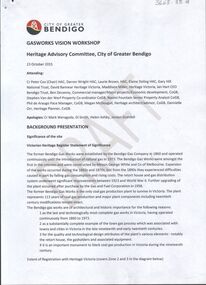
Document - Gasworks Vision Workshop, 2015
... During the Second World War the works were expanded by the Ministry of Munitions to serve the Bendigo Ordinance Factory. The original works were constructed during 1859-1860 under the direction of engineer Alexander Kennedy Smith (1824 - 1881) and developed in a period of growth by W. ...During the Second World War the works were expanded by the Ministry of Munitions to serve the Bendigo Ordinance Factory. The original works were constructed during 1859-1860 under the direction of engineer Alexander Kennedy Smith (1824 - 1881) and developed in a period of growth by W. ...The Bendigo Gas Works are one of around three remaining intact 19th century gas works in the world, and the only one in Australia. It is on the Victorian Heritage Register and regarded by Institution of Engineers Australia as an internationally significant example of an entire provincial gasworks The Bendigo Gasworks operated from 1860 until 1973 when natural gas was introduced and remain as they were at the time of closure; a treasure of industrial heritage frozen in time. It is an internationally significant example of an entire provincial gasworks. It has the only horizontal gas-producing retorts in Australia. Coal Gas was manufactured here from 1860 and operated continuously until the introduction of natural gas in 1973. The works were operated by the Bendigo Gas Company until purchased by the Gas and Fuel Corporation in 1958 at which time they were supplying 3,500 consumers. During the Second World War the works were expanded by the Ministry of Munitions to serve the Bendigo Ordinance Factory. The original works were constructed during 1859-1860 under the direction of engineer Alexander Kennedy Smith (1824 - 1881) and developed in a period of growth by W. A. Simco, General Manager 1922-1939. ( Engineering Heritage Australia: ttps://heritage.engineersaustralia.org.au/wiki/Place:Bendigo_Gas_Works) The site is on the Victorian Heritage Register (VHR) Number H0781 1. Five page, double sided document, typed with photos, prepared by the City of Greater Bendigo, 23rd October 2015. . Heading on front page ' Gasworks Vision Workshop, Heritage Advisory Committee, City of Greater Bendigo'. 'Draft' written across each page. The significance of the site (Victorian Heritage Register Statement of Significance) and the challenges of re-developing the site for tourism are listed for discussion. 2. One page photocopy of the Statement of Significance of the Bendigo Gasworks Conservation Analysis. The gasworks complex, plant and machinery, historic associations of the Gasworks and landscape are assessed. sandhurst, bendigo, gas works, heritage listing, tourism, entertainment, science and engineering, bendigo city council, retorts, coal -
 Bendigo Historical Society Inc.
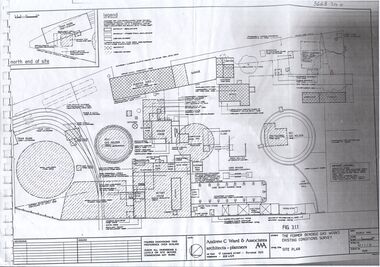
Plan - Bendigo Gasworks, Unknown
... During the Second World War the works were expanded by the Ministry of Munitions to serve the Bendigo Ordinance Factory. The original works were constructed during 1859-1860 under the direction of engineer Alexander Kennedy Smith (1824 - 1881) and developed in a period of growth by W. ...During the Second World War the works were expanded by the Ministry of Munitions to serve the Bendigo Ordinance Factory. The original works were constructed during 1859-1860 under the direction of engineer Alexander Kennedy Smith (1824 - 1881) and developed in a period of growth by W. ...The Bendigo Gas Works are one of around three remaining intact 19th century gas works in the world, and the only one in Australia. It is on the Victorian Heritage Register and regarded by Institution of Engineers Australia as an internationally significant example of an entire provincial gasworks The Bendigo Gasworks operated from 1860 until 1973 when natural gas was introduced and remain as they were at the time of closure; a treasure of industrial heritage frozen in time. It is an internationally significant example of an entire provincial gasworks. It has the only horizontal gas-producing retorts in Australia. Coal Gas was manufactured here from 1860 and operated continuously until the introduction of natural gas in 1973. The works were operated by the Bendigo Gas Company until purchased by the Gas and Fuel Corporation in 1958 at which time they were supplying 3,500 consumers. During the Second World War the works were expanded by the Ministry of Munitions to serve the Bendigo Ordinance Factory. The original works were constructed during 1859-1860 under the direction of engineer Alexander Kennedy Smith (1824 - 1881) and developed in a period of growth by W. A. Simco, General Manager 1922-1939. ( Engineering Heritage Australia: ttps://heritage.engineersaustralia.org.au/wiki/Place:Bendigo_Gas_Works) The site is on the Victorian Heritage Register (VHR) Number H0781 1. One page A3 photocopy of site plan of the former Bendigo Gas Works Existing Conditions Survey, by Andrew C. Ward & Associates, architects and planners. Plan shows location of all items of plant in the Gas Works 2. One page photocopy, headed 'Functional Arrangement of Plant' showing the major functional items of plant, machinery and equipment at the Bendigo Gasworks for the period 1930 - 1965. sandhurst, bendigo, gas works, heritage listing, tourism, science and engineering, bendigo city council, retort -
 Bendigo Historical Society Inc.
Document - Bendigo Gasworks, 2014, 2018
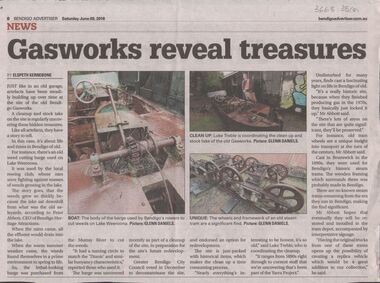
... During the Second World War the works were expanded by the Ministry of Munitions to serve the Bendigo Ordinance Factory. The original works were constructed during 1859-1860 under the direction of engineer Alexander Kennedy Smith (1824 - 1881) and developed in a period of growth by W. ...During the Second World War the works were expanded by the Ministry of Munitions to serve the Bendigo Ordinance Factory. The original works were constructed during 1859-1860 under the direction of engineer Alexander Kennedy Smith (1824 - 1881) and developed in a period of growth by W. ...The Bendigo Gas Works are one of around three remaining intact 19th century gas works in the world, and the only one in Australia. It is on the Victorian Heritage Register and regarded by Institution of Engineers Australia as an internationally significant example of an entire provincial gasworks The Bendigo Gasworks operated from 1860 until 1973 when natural gas was introduced and remain as they were at the time of closure; a treasure of industrial heritage frozen in time. It is an internationally significant example of an entire provincial gasworks. It has the only horizontal gas-producing retorts in Australia. Coal Gas was manufactured here from 1860 and operated continuously until the introduction of natural gas in 1973. The works were operated by the Bendigo Gas Company until purchased by the Gas and Fuel Corporation in 1958 at which time they were supplying 3,500 consumers. During the Second World War the works were expanded by the Ministry of Munitions to serve the Bendigo Ordinance Factory. The original works were constructed during 1859-1860 under the direction of engineer Alexander Kennedy Smith (1824 - 1881) and developed in a period of growth by W. A. Simco, General Manager 1922-1939. ( Engineering Heritage Australia: ttps://heritage.engineersaustralia.org.au/wiki/Place:Bendigo_Gas_Works) The site is on the Victorian Heritage Register (VHR) Number H0781 Two 'Bendigo Advertiser' articles. 1. 'Gasworks reveal treasures' 8th June, 2018. Article discusses the artefacts left behind at the Gasworks 'when they finished producing gas in the 1970's they basically just locked it up' 2. 'Historical treasure awaits full potential', July 30th 2014, double page spread with photos of the gasworks. Bendigo Trust moved to protect the gasworks when it closed.sandhurst, bendigo, gas works, heritage listing, tourism, entertainment, science and engineering, bendigo city council, retorts, coal -
 Bendigo Historical Society Inc.
Photograph - Bendigo Gasworks, 2014, 2018
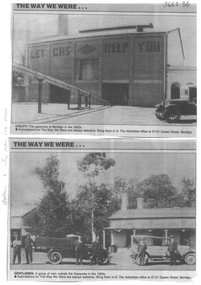
... During the Second World War the works were expanded by the Ministry of Munitions to serve the Bendigo Ordinance Factory. The original works were constructed during 1859-1860 under the direction of engineer Alexander Kennedy Smith (1824 - 1881) and developed in a period of growth by W. ...During the Second World War the works were expanded by the Ministry of Munitions to serve the Bendigo Ordinance Factory. The original works were constructed during 1859-1860 under the direction of engineer Alexander Kennedy Smith (1824 - 1881) and developed in a period of growth by W. ...The Bendigo Gas Works are one of around three remaining intact 19th century gas works in the world, and the only one in Australia. It is on the Victorian Heritage Register and regarded by Institution of Engineers Australia as an internationally significant example of an entire provincial gasworks The Bendigo Gasworks operated from 1860 until 1973 when natural gas was introduced and remain as they were at the time of closure; a treasure of industrial heritage frozen in time. It is an internationally significant example of an entire provincial gasworks. It has the only horizontal gas-producing retorts in Australia. Coal Gas was manufactured here from 1860 and operated continuously until the introduction of natural gas in 1973. The works were operated by the Bendigo Gas Company until purchased by the Gas and Fuel Corporation in 1958 at which time they were supplying 3,500 consumers. During the Second World War the works were expanded by the Ministry of Munitions to serve the Bendigo Ordinance Factory. The original works were constructed during 1859-1860 under the direction of engineer Alexander Kennedy Smith (1824 - 1881) and developed in a period of growth by W. A. Simco, General Manager 1922-1939. ( Engineering Heritage Australia: ttps://heritage.engineersaustralia.org.au/wiki/Place:Bendigo_Gas_Works) The site is on the Victorian Heritage Register (VHR) Number H0781 Two page photocopy, three photos of the Bendigo Gasworks, submitted to the 'Bendigo Advertiser' The Way We Were, series of images. Image of the gasworks in the 1920's, showing a large brick building with decorative brickwork insert 'Let Gas Help You'; group of men outside the gasworks in the 1920's - two cars in front of house and workers in front of a gasometer at Gasworks in the 1920's. sandhurst, bendigo, gas works, heritage listing, tourism, entertainment, science and engineering, bendigo city council, retorts, coal -
 Flagstaff Hill Maritime Museum and Village
Weapon - Cannon, 1866
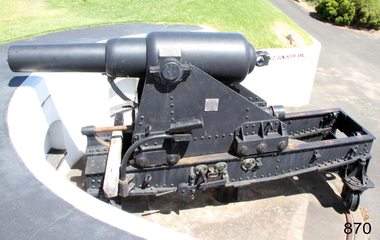
... ordinance...armaments...cannon hill fortifications...4th australian light horse regiment...no 4 field battery...80 pound cannon rifled muzzle loaders (rml)...victorian colonial government...royal gun factory...They were both fully restored by Army First Year Apprentices at the Ordinance Factory in Bendigo in time for the centenary year of the fortifications in 1987. ...They were both fully restored by Army First Year Apprentices at the Ordinance Factory in Bendigo in time for the centenary year of the fortifications in 1987. ...In the years following the Crimean War (1854-1857J) there was a great concern in the Colony that Imperial Russia would attempt an invasion. Coastal defences in the colony of Victoria were greatly strengthened by the Government as a result. Warrnambool was originally protected by cannons at Cannon Hill, approximately 1 kilometer west of the Flagstaff Hill Fortifications. These cannons included two 1866 guns, both 80 Pound Rifled Muzzle Loaders (RML) purchased by Victoria’s Colonial Government. They were part of a shipment of 26 such guns sent from England in December 1866. They are registered as No. 23 (80cwt-2qr-0lbs) - Gun 1, and No.13 (81cwt-1qr-12lbs) - Gun 2. They were cast at the Royal Gun Factory, Woolwich Arsenal, in 1866 and have a 6.3 inch bore. Both barrels carry the Royal Cypher of Queen Victoria, Insignia of the Royal Engineers, within the Garter and Motto surmounted by the Crown, with the Royal Cypher of Queen Victoria within the Garter (letters in centre “VR”, motto “HONI SOIT QUI MAL Y PENSE”, "Shame be to him who thinks evil of it."). The guns were originally supplied with wooden carriages. (The Royal Arsenal at Woolwich, England, was established eleven years after the Restoration of King Charles II. It was the principal supplier of armaments to the British and Empire Governments. At the height of its operations during World War One the factory covered 1300 acres and employed very nearly 80,000 workers. Woolwich was the Headquarters of the Royal Artillery since the raising of that Regiment in 1716. The Arsenal was closed in the late 1960’s.) These two cannons were transferred to the Warrnambool Garrison Artillery Battery Fortifications erected at Flagstaff Hill in 1887 as part of Victoria’s Coastal Defences. The original wooden carriages were subsequently replaced with the present iron garrison carriages in 1888. They are a “C” pivot. The ‘racers’ or curved track set into the floor of the gun emplacement (which enabled the guns to be traversed more quickly) are as specified for guns up to 10 inch, being of wrought iron 2.78 inches wide. A temporary third gun, now no longer on Flagstaff Hill’s site, was a 5 inch Rifled Breech Loading (BL) Armstrong gun mounted on an Elswick hydro pneumatic disappearing carriage It was faster to load and fire than the 80 pound RMLs and its arrival spelt the end of the older 80 pound guns’ useful life, apart from being used for practice sessions. The 5 inch BL gun was the main defensive weapon of the Warrnambool Battery until the Battery was downgraded in importance and the gun was recalled to Melbourne in 1910. The State of Victoria took over the ownership of the guns at the time of Australian Federation in 1901. In about 1901/1902 the Garrison Battery was converted to the Warrnambool Battery of the Australian Field Artillery (No 4 Field Battery). It was equipped with 4.7 inch naval guns mounted on field carriages. They were now a mobile unit but continued to use the Warrnambool Garrison area at Flagstaff Hill for practice. When the Fortifications were declared obsolete, the two 80 Pounder RML were relocated to Cannon Hill in 1910. On the outbreak of World War One the 4.7 inch guns were recalled to Melbourne, and the Battery was disbanded. Most of the personnel probably re-enlisted in the local 4th Australian Light Horse Regiment. The two 80 Pounder RML were moved back to the Fortifications in 1973. They were both fully restored by Army First Year Apprentices at the Ordinance Factory in Bendigo in time for the centenary year of the fortifications in 1987. The guns are capable of firing 80 pound (32.3kg) armour piercing exploding shells 3.65kms out to sea. They were original manned by volunteers before a paid Garrison was established. Now the Guns are again fired by volunteers on Special Event days. Since restoration the Gun Number 1 had been fired on a regular basis but Gun Number 2 hadn’t been fired since the mid 1990’s. In April 2015 Gun Number 2 was serviced in preparation for the firing of both cannons on the ANZAC Centenary commemorations on April 25th 2015. Other guns from the original Cannon Hill location were obsolete by the time the 1887 Warrnambool Garrison Artillery Battery was built. These guns are (1) a 32 Pounder Muzzle Loading Smooth Bore (SB) cast in 1813 at the famous Carron Foundry, number 80837 and now located in the Warrnambool Botanic Gardens (2) a 68 Pounder Muzzle Loading Smooth Bore cast in 1861 at the equally august Low Moor Foundry, number 10310 and now located on the lawn area at the entrance to Flagstaff Hill Maritime Village. Both of these guns are mounted on their original wooden garrison carriages. There are only seven 32 Pounder SB made by Carron and fifteen 68 Pounder SB made at Low Moor known to exist in the State of Victoria. Funding was received to repair Cannon No.2 and its iron carriage. After completion, both Cannon No 1 and No. 2 were 'fired' in a public re-enactment on April 4th, 2026. (Conservation Management Plan for Victorian Guns and Cannon, South Western Victoria, May 2008, ref W/F/05)The Warrnambool Garrison has been added to the Victorian Heritage Register H1250 “for its intact battery and guns, a strong reminder of Victoria’s wealth and determination to protect itself from the perceived threat of invasion in the 1880’s.” The City of Warrnambool is one of several custodians of a collection of artillery pieces of heritage significance at a state, national and international level. These pieces are directly related to the defence of south-west Victoria in the 19th century. The care and preservation come under the Heritage Act 1995. Cannon. 80 Pound Rifled Muzzle Loading (RML) Gun on iron carriage and slide, installed in the Battery at Flagstaff Hill’s Fortifications. Made in 1866 at the Royal Gun Factory (R-G-F), Woolich, England. Gun Reg No 13. Flagstaff Hill Garrison Gun 2 (Gun No. 2). Insignia of the Royal Engineers, and the weight of the gun, stamped on top of the gun’s barrel. There is a brass plate on the side of the gun with the details of 1987 restoration.Stamped into the metal on top of the barrel, Insignia of the Royal Engineers; Garter and Motto “HONI SOIT QUI MAL Y PENSE”, surmounted by the Crown, with the Royal Cypher of Queen Victoria “VR” within the Garter. Also stamped on top of the gun are 2 inward pointing arrows above the weight ”81-1-12”. Brass plate “RESTORATION / BY / FIRST YEAR / APPRENTICES / ORDANANCE FACTORY / BENDIGO 1987”flagstaff hill, warrnambool, shipwrecked coast, flagstaff hill maritime museum, maritime museum, shipwreck coast, flagstaff hill maritime village, great ocean road, colonial defences, victoria’s coastal defences, warrnambool fortification, warrnambool garrison battery, warrnambool volunteer corps, ordinance, armaments, cannon hill fortifications, 4th australian light horse regiment, no 4 field battery, 80 pound cannon rifled muzzle loaders (rml), victorian colonial government, royal gun factory england, woolwich arsenal, royal cypher of queen victoria, garrison gun
