
Showing 683 items matching "organisation document"
-
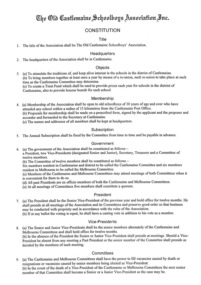 Old Castlemaine Schoolboys Association Inc.
Document, Constitution
... ...organisation document...rules of incorporation organisation document Single sided A4 document containing the rules of the Old Castlemaine Schoolboys Association before incorporation. ...Single sided A4 document containing the rules of the Old Castlemaine Schoolboys Association before incorporation.rules of incorporation, organisation document -
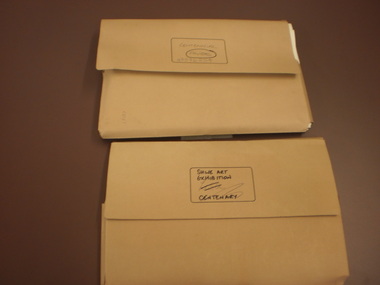 Wangaratta High School
WHS Centennary Miscellaneous documents, 2009
... Two beige folders with documents regarding the centenary celebrations, including organisational documents for engraved pavers and an art exhibition. ...Two beige folders with documents regarding the centenary celebrations, including organisational documents for engraved pavers and an art exhibition. ...Two beige folders with documents regarding the centenary celebrations, including organisational documents for engraved pavers and an art exhibition. -
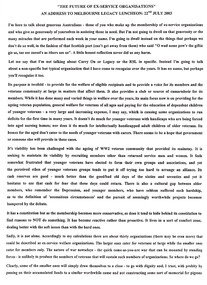 Melbourne Legacy
Document - Speech, Future of Ex-Service Organisations, 2003
... His topic was about the future of ex-service organisations. Document was from a folder of documents donated to the archive by Legatee Bill Rogers that related to his time as President (March 2006 - March 2008) or as a legatee....Future of Ex-Service Organisations Document Speech ...A copy of the address given by Alistair Robb, President of Carry On Victoria at a legatee luncheon in 2003. His topic was about the future of ex-service organisations. Document was from a folder of documents donated to the archive by Legatee Bill Rogers that related to his time as President (March 2006 - March 2008) or as a legatee.A record of speech given at a luncheon.Three A4 pages of an address at a Legatee luncheon on 22 July 2003 about ESOs.carry on victoria, esos -
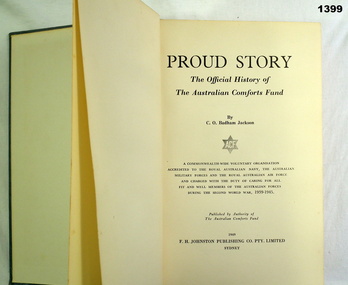 Bendigo Military Museum
Book, C O Badham Jackson, Proud Story - The Official History of the Australian Comfort Fund, 1949
... The Australian Comforts Fund official history documents the organisations role in caring for all fit & well members of the Australian Forces during the Second World War....The Australian Comforts Fund official history documents the organisations role in caring for all fit & well members of the Australian Forces during the Second World War. books- history social military history Blue buckram hard cover, title in gold letters on spine only. 336 pages with cut edges, black & white illustrations. ...The Australian Comforts Fund official history documents the organisations role in caring for all fit & well members of the Australian Forces during the Second World War.Blue buckram hard cover, title in gold letters on spine only. 336 pages with cut edges, black & white illustrations.books- history, social, military history -
 Unions Ballarat
The bitter fight : a pictorial history of the Australian labor movement, Harris, Joe, 1970
... A pictorial history of the labour movement, the book encourages labour and socialist organisations to preserve historical documents and other artefacts thus ensuring that there is an accurate history for the future....A pictorial history of the labour movement, the book encourages labour and socialist organisations to preserve historical documents and other artefacts thus ensuring that there is an accurate history for the future. ...A pictorial history of the labour movement, the book encourages labour and socialist organisations to preserve historical documents and other artefacts thus ensuring that there is an accurate history for the future.Pictorial history. Paper; book. Front cover: red and black background; illustrations in yellow; black and white text. Front cover: author's name and title.btlc, ballarat trades and labour council, ballarat trades hall, history, unions, labour movement -
NMIT (Northern Melbourne Institute of TAFE)
Report:From rhetoric to reality: developing a client focussed service, Glen Villiers 1997
... starts inside the organisation. This document is the final report of the project. ... starts inside the organisation. This document is the final report of the project. ...56 page spiral bound report written by Glen Villiers for Office of Training and Further Education, February 1997. ISBN 0731105362. This report documents a strategy for developing client focussed services at Northern Melbourne Institute of TAFE. The project was initiated in response to national policies which have directed Institutes to become client focussed in the delivery of programs and services. The purpose of the project is to recognise the validity of the statement that the development of a client focussed organisation starts inside the organisation. This document is the final report of the project. The report is divided into two parts. The first part describes the processes used to develop client focussed services at the Institute. The second part contains the resources that were developed as a major part of the project.office of training and further education, vocational education, nmit -
 Alfred Hospital Nurses League - Nursing History Collection
Booklet - Illustrated booklet, Dr R Lynette Russell et al, Unlocking the past: a guide to the Australian College of Nursing archival collection, 2018
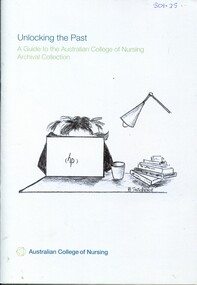
... The Australian College of Nursing (ACN) Archive is the repository for the historical documents, both organisational records and donated material, of the organisation. ...The Australian College of Nursing (ACN) Archive is the repository for the historical documents, both organisational records and donated material, of the organisation. ...Booklet is a guide to the Australian College of Nursing archival collection in Canberra and ParramattaIllustrated stapled booklet with white cover.Front cover has blue and green print. In the centre is an illustration of a person sitting behind a computer with lamp, stack of books and glass to the right. Title is printed above this illustration and publisher below. non-fictionBooklet is a guide to the Australian College of Nursing archival collection in Canberra and Parramatta history of nursing-australia, australian college of nursing, nursing achives, nursing history collections -
 Unions Ballarat
Palliation Plus Program/Hospice Care Steering Committee
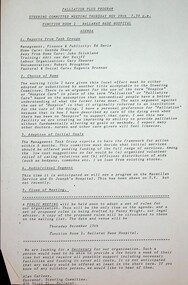
... (From: Ballarat Hospice Care website, https://ballarathospicecare.org.au/who-we-are/history) Unions Ballarat Secretary, Graeme Shearer, was on the steering committee as a Labour Organisation representative. Documents: 1. Palliation Plus Program, Steering Committee Meeting Author: Alan Carless Date: 29 November ???? ...(From: Ballarat Hospice Care website, https://ballarathospicecare.org.au/who-we-are/history) Unions Ballarat Secretary, Graeme Shearer, was on the steering committee as a Labour Organisation representative. Documents: 1. Palliation Plus Program, Steering Committee Meeting Author: Alan Carless Date: 29 November ???? ..."During 1984 local community members identified a need for community based palliative care services. A steering committee formed and after much consultation in 1985 an incorporated association was formed. With strong community support the committee lobbied for and gained government funding. State funds were granted in April 1987 for two nurses and a vehicle to operate from Ballarat and District Nursing Society’s Headquarters in Armstrong St, Ballarat. During 1989 Ballarat Hospice Care was recognised as a model for palliative care services. Service development continued leading to the purchase and refurbishment of 312 Drummond St Sth, Ballarat with operations commencing in 1999 from that location." (From: Ballarat Hospice Care website, https://ballarathospicecare.org.au/who-we-are/history) Unions Ballarat Secretary, Graeme Shearer, was on the steering committee as a Labour Organisation representative. Documents: 1. Palliation Plus Program, Steering Committee Meeting Author: Alan Carless Date: 29 November ???? 2. Ballarat Hospice Care - letter - rules incorporated Author: Alan Carless Date: 3rd December 1984 3. Steering Committee - apologies for not attending meeting and rates of pay for nurses Author: Alan Carless Date: n.d. 4. Palliation Plus Program - letter to Graeme Shearer and Dulcie Corbett, Ballarat Trades and Labour Council Author: Alan Carless Date: 4th November 1984 5. Ballarat Hospice Care - Steering Committee Meeting Author: Alan Carless Date: 29 November 1984 6. Ballarat Hospice Care (inc.) - letter - requesting financial support Author: Ballarat Hospice Care Date: n.d. 7. Ballarat Hospice Care (inc.) - Newsletter Author: Ballarat Hospice Care Date: December 1985-January1986 8. Palliation Plus Program - letter to Graeme Shearer - invitation to first meeting of steering committee. Author: Alan Carless Date: 20 October 1984 9. Palliation Plus Program - Steering Committee Meeting Author: Alan Carless Date: 1st November 1984 10. Palliation Plus Program - hospice working conditions Author: Alan Carless Date: 4th November 1984 Union role in community decision making and social improvements.Loose documents - minutes, agendas and correspondence - scanned.Handwritten notes on some documents.btlc, ballarat trades and labour council, ballarat hospice care, palliative care, community consultation -
Moorabbin Air Museum
Document (series) - Nomad Development Material - Collection of Vilem Gottlieb
... ITEM # DOCUMENT TYPE AIRCRAFT ORGANISATION DOCUMENT/ITEM DETAIL YEAR 1 VHS Nomad ASTA Video - Searchmaster - Miami Bust 2 Metal Plate GAF One metal trade plate - VH-SUW - property of Gov’t Aircraft Factories, Avalon Airfield, Victoria (in ASTA envelope) Unknown 3 Folder US Department of Transportation Advisory Circular - FAA AC 23-8B Flight Test Guide for Certification of Part 23 Airplanes 2003 4 Folder GA-8 Airvan Gippsland Aeronautics/Civil Air Patrol, US Airforce Auxiliary Publication on the GA-8 Skyvan by Gippsland Aeronautics and a Flight test evaluation of the GA-8 Airvan by Civil Air Patrol 2002 5 Folder General Aviation Manufacturers Association Specification for Pilot’s operating handbook - GAMA Specification No.1 2001 6 Folder Varied GAF Vilem Gottlieb - Flying Log Book (includes Nomad) 1964-1973 7 Folder Nomad Inspection Requirements Manual for N22 and N24 2007 8 Manila Folder Nomad GAF “A summary of longitudinal S & C characteristics” by P Larcy, 1973 1973 9 Bound book Aeronautical Engineering Report - AF-47 - “The take-off, climb and landing performance of small piston engine aeroplanes” by J.C. ...ITEM # DOCUMENT TYPE AIRCRAFT ORGANISATION DOCUMENT/ITEM DETAIL YEAR 1 VHS Nomad ASTA Video - Searchmaster - Miami Bust 2 Metal Plate GAF One metal trade plate - VH-SUW - property of Gov’t Aircraft Factories, Avalon Airfield, Victoria (in ASTA envelope) Unknown 3 Folder US Department of Transportation Advisory Circular - FAA AC 23-8B Flight Test Guide for Certification of Part 23 Airplanes 2003 4 Folder GA-8 Airvan Gippsland Aeronautics/Civil Air Patrol, US Airforce Auxiliary Publication on the GA-8 Skyvan by Gippsland Aeronautics and a Flight test evaluation of the GA-8 Airvan by Civil Air Patrol 2002 5 Folder General Aviation Manufacturers Association Specification for Pilot’s operating handbook - GAMA Specification No.1 2001 6 Folder Varied GAF Vilem Gottlieb - Flying Log Book (includes Nomad) 1964-1973 7 Folder Nomad Inspection Requirements Manual for N22 and N24 2007 8 Manila Folder Nomad GAF “A summary of longitudinal S & C characteristics” by P Larcy, 1973 1973 9 Bound book Aeronautical Engineering Report - AF-47 - “The take-off, climb and landing performance of small piston engine aeroplanes” by J.C. ...Donation from Anna Gottlieb -
 Flagstaff Hill Maritime Museum and Village
Photograph - Historical, religious, mid-20th century
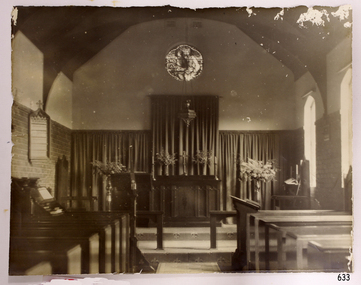
... The Recreation Room was furnished and arranged on advice from experienced members of the Missions to Seamen organisation. A framed document in the building recognises the donor of the furnishings, Victoria Missions to Seamen, and includes the names of some original donors and their donated item/s. ...The Recreation Room was furnished and arranged on advice from experienced members of the Missions to Seamen organisation. A framed document in the building recognises the donor of the furnishings, Victoria Missions to Seamen, and includes the names of some original donors and their donated item/s. ...This photograph records the interior of St Nicholas Seamen's Church at 139 Nelson Place, Williamstown, Victoria, which was purchased and furnished around 1943. The furniture and furnishings are now part of the St. Nicholas Seamen's Church collection. HISTORY of the Missions to Seamen: - DETAILED HISTORY of the Missions to Seamen: - The Missions to Seamen is an Anglican (Church of England) charity that has served the world’s seafarers since 1856. It was inspired by the work of Rev. John Ashley, who, 20 years earlier, had pioneered a ministry to seafarers in the Bristol Channel in Great Britain. When Ashley retired, others continued the work, founding the Missions to Seamen. It adopted a Flying Angel as its symbol, inspired by a verse from the Bible in Revelation 14. Today, over 200 world ports have Missions to Seamen centres and chaplains. A Missions to Seamen’s Club warmly welcomes sailors of all colours, creeds and races and provides a wide range of facilities. The Missions to Seamen organisation changed its name to the Mission to Seafarers in 2000, continuing to include Missions to Seamen clubs in Victoria’s cities of Melbourne, Portland, Geelong and Hastings. Flagstaff Hill’s St Nicholas’ Seamen’s Church is named after its namesake from Williamstown, Victoria, which began in 1857. Bishop Perry opened the first Sailors’ Church there, known as ‘Bethel’, on an old hulk floating in Hobson’s Bay, Port of Melbourne. In 1860, a Sailors’ Rest started operating from rented premises in Williamstown. In 1878, the Sailors’ Church moved into an old Wesleyan chapel in Ann Street. By the end of that year, they managed to purchase the building, which they had already refurbished. In 1883, they affiliated with the Victorian Seamen’s Mission. A few years later, in 1906, the building had to be demolished because it was no longer safe. While they raised funds for a new building, the Sailors’ Rest temporarily moved to premises in front of Customs House in Nelson Place. Around this time, in 1906, the Ladies Harbour Lights Guild was formed in Australia to support and raise funds for the Mission to Seamen organisation in Melbourne. Two of the most significant ladies of the Guild were founding members Ethel Godfrey and Alice Sibthorpe. During the Mission's time at Siddeley Street, Melbourne, the activities of the Guild raised funds for the Mission to Seamen's Chapel at their new, and still current, premises in Flinders Street, Melbourne, opened in 1917. The Guild continued its important work until the 1960s. In 1908, the Williamstown Mission had enough money to purchase the former Mascotte skating rink on Thompson Street, Williamstown. In August of that year, they were inaugurated into the Victorian Missions to Seamen. They continued at that venue for a few decades. In 1943, the former ES&A Bank building at 139 Nelson Place, Williamstown, was purchased to become the new Mission to Seamen’s Club. On May 6th, 1944, it was officially opened, described as a ‘distinctive little building’. Funds had previously been raised for the building and furnishing of the chapel at the rear. The chapel was named St Nicholas’ Seamen’s Church, after St Nicholas, fourth-century bishop and patron saint of sailors. Services were held on Wednesdays and Sundays. The church was supported by the Williamstown Lightkeepers’ Auxiliary, newly founded by Mrs Ethel Margaret Musther in 1943, as well as the Harbour Lights Guild and the League of Soldiers’ and Sailors’ Friends. The Williamstown Mission to Seamen’s Church operated until 1966, when large international ships no longer used the Port of Williamstown. The Commonwealth Government then leased the premises. In the formative years of Flagstaff Hill Maritime Village, the Advisory Board decided to include a Missions to Seamen Chapel and Recreation Room in its village. The Missions organisation was a significant feature of ports during the late 1800s and early 1900s, the period that the Village represents. They often erected Missions to house social and worshipful activities for seamen. Flagstaff Hill’s curator, Mr Ken Marshman, approached the Melbourne Board of Management of Missions to Seamen regarding the Williamstown branch. Consequently, the Board permitted the furnishings of the Williamstown chapel to be transferred to Flagstaff Hill Maritime Village. A provision of the transfer was that the Victoria Missions to Seamen be recognised, that the items would remain as a collection, and that the chapel would be called St Nicholas Seamen’s Church and conduct Divine services. The donation was approved on 21st May 1979. Flagstaff Hill's St. Nicholas Seamen's Church: - The idea behind Flagstaff Hill’s Missions to Seamen’s Church was partly driven by the offer of Stained Glass Memorial Windows that originated from the Warrnambool and District Base Hospital, which was undergoing multi-storey expansion in the late 1960s and early 1970s. The hospital’s Manager/Secretary was eager to see the historic window installed in a suitable place. The church, or chapel, was designed by a local architectural draftsman in collaboration with the Flagstaff Hill Planning Board and was constructed by Mr Leon Habel. The designers hoped that the church would be used for formal worship such as weddings, funerals, and multi-denominational special services like war commemorations. The design is inspired by the ‘Missions to Seamen’ buildings in Portland and the Port of Melbourne. The furniture and furnishings were placed as accurately as possible according to photographs of the Williamstown St Nicholas Seamen’s Church and with assistance from local clergy. The Recreation Room was furnished and arranged on advice from experienced members of the Missions to Seamen organisation. A framed document in the building recognises the donor of the furnishings, Victoria Missions to Seamen, and includes the names of some original donors and their donated item/s. The building’s design incorporates local features such as Warrnambool sandstone, which was no longer commercially available but was procured from demolished buildings and uniformly cut to use as a veneer over the stronger Mt. Gambier stone. Also, traditional green American roofing slate was used, sourced from the 1908 local shipwreck “Falls of Halladale” by Flagstaff Hill volunteer divers. The bell tower includes a bell believed to be from a local shipwreck. Additional furnishings were acquired locally, along with several items donated by Warrnambool residents. Light fittings in both rooms were assembled to simulate 19th-century gas light fittings. The stained-glass window at the back of the church is a memorial to Dr Connell, a well-respected member of the Warrnambool community. It was originally installed in 1928 in the main building of Warrnambool Hospital. The St Nicholas’ Seamen’s Church at Flagstaff Hill was officially opened by His Worship the Mayor, Cr. John Lindsay, on Sunday, 11th October 1981. The event included a service of thanksgiving conducted by the Warrnambool Ministers Fraternal. Since then, the Chapel has been the historic venue for many weddings. This photograph is significant through its association with the St Nicholas' Mission to Seamen Church in Williamstown, Melbourne, established in 1857. The building in the photograph is the former English, Scottish and Australian Bank (ES&A bank), also known as the Mission to Seamen. It is listed on the Victorian Heritage Database for having local historic and aesthetic interest. Photograph of St Nicholas Seamen's Church, Williamstown. Sepia photograph. The photograph shows the inside of the Chapel of Mission to Seamen, including organ, pews and other furniture and furnishings. There is a circular stained glass window high on the back wall depicting a sailor at the helm of a ship and a man standing behind him and pointing the way - "Christ Showing The Helmsman The Way". A Sanctuary Light is suspended from the ceiling. The Sanctuary chars are visible. This shows the St Nicholas Seamen's Church in Williamstown, the furnishings and furniture of which is now part of the St Nicholas Seamen's Church Collection’.flagstaff hill, warrnambool, shipwrecked-coast, flagstaff-hill, flagstaff-hill-maritime-museum, maritime-museum, shipwreck-coast, flagstaff-hill-maritime-village, st nicholas mission to seamen's church williamstown, mission to seamen williamstown, mission to seamen victoria, st nicholas mission to seamen, chapel window, christ showing the helmsman the way, stained glass window, st nicholas seamen's church, religion, religious service, sailor's rest, ladies harbour light guild -
 Flagstaff Hill Maritime Museum and Village
Textile - Seat Squabs, mid-20th century
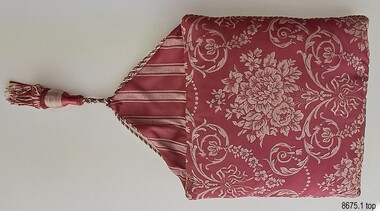
... The Recreation Room was furnished and arranged on advice from experienced members of the Missions to Seamen organisation. A framed document in the building recognises the donor of the furnishings, Victoria Missions to Seamen, and includes the names of some original donors and their donated item/s. ...The Recreation Room was furnished and arranged on advice from experienced members of the Missions to Seamen organisation. A framed document in the building recognises the donor of the furnishings, Victoria Missions to Seamen, and includes the names of some original donors and their donated item/s. ...The term 'seat squabs' is no longer commonly used, but is sometimes referred to in the upholstery and motor vehicle industries. Squabs are padded cushions frequently added to wooden chairs or benches to add comfort to their hard forms. They have been made to an 18th-to-19th-century pattern using beautiful, richly coloured satin fabric and fancy cord tassels. The weighted flap at the rear of the squabs helps to keep them in place on the chair, and could be used on the top of the backrest instead of on the seat. These days, squabs are attached with fabric ties or hook-and-loop tabs. These seat squabs were once used in the St Nicholas Seamen's Church at 139 Nelson Place, Williamstown, Victoria, which was purchased and furnished around 1943. The furniture and furnishings are now part of the St. Nicholas Seamen's Church collection. DETAILED HISTORY of the Missions to Seamen: - The Missions to Seamen is an Anglican (Church of England) charity that has served the world’s seafarers since 1856. It was inspired by the work of Rev. John Ashley, who, 20 years earlier, had pioneered a ministry to seafarers in the Bristol Channel in Great Britain. When Ashley retired, others continued the work, founding the Missions to Seamen. It adopted a Flying Angel as its symbol, inspired by a verse from the Bible in Revelation 14. Today, over 200 world ports have Missions to Seamen centres and chaplains. A Missions to Seamen’s club warmly welcomes sailors of all colours, creeds and races and provides a wide range of facilities. The Missions to Seamen organisation changed its name to the Mission to Seafarers in 2000, continuing to include Missions to Seamen clubs in Victoria’s cities of Melbourne, Portland, Geelong and Hastings. Flagstaff Hill’s St Nicholas’ Seamen’s Church is named after its namesake from Williamstown, Victoria, which began in 1857. Bishop Perry opened the first Sailors’ Church, which was known as ‘Bethel’, on an old hulk floating in Hobson’s Bay, Port of Melbourne. In 1860, a Sailors’ Rest started operating from rented premises in Williamstown. In 1878, the Sailors’ Church moved into an old Wesleyan chapel in Ann Street. By the end of that year, they managed to purchase the building, which they had already refurbished. In 1883, they affiliated with the Victorian Seamen’s Mission. A few years later, in 1906, the building had to be demolished because it was no longer safe. While they raised funds for a new building, the Sailors’ Rest temporarily moved to premises in front of Customs House in Nelson Place. Around this time, in 1906, the Ladies Harbour Lights Guild was formed in Australia to support and raise funds for the Mission to Seamen organisation in Melbourne. Two of the most significant ladies of the Guild were founding members Ethel Godfrey and Alice Sibthorpe. During the Mission's time at Siddeley Street, Melbourne, the activities of the Guild raised funds for the Mission to Seamen's Chapel at their new, and still current, premises in Flinders Street, Melbourne, opened in 1917. The Guild continued its important work until the 1960s. In 1908, the Williamstown Mission had enough money to purchase the former Mascotte skating rink on Thompson Street, Williamstown. In August of that year, they were inaugurated into the Victorian Missions to Seamen. They continued at that venue for a few decades. In 1943, the former ES&A Bank building at 139 Nelson Place, Williamstown, was purchased for the new Mission to Seaman’s Club. The official opening was on May 6th, 1944. It was described as a ‘distinctive little building’. Funds had previously been raised for the building and furnishing of the chapel at the rear. The chapel was named St Nicholas’ Seamen’s Church, after St Nicholas, fourth-century bishop and patron saint of sailors. Services were held on Wednesdays and Sundays. The church was supported by the Williamstown Lightkeepers’ Auxiliary, newly founded by Mrs Ethel Margaret Musther in 1943, as well as the Harbour Lights Guild and the League of Soldiers’ and Sailors’ Friends. The Williamstown Mission to Seamen’s Church operated until 1966, when large international ships no longer used the Port of Williamstown. The Commonwealth Government then leased the premises. In the formative years of Flagstaff Hill Maritime Village, the Advisory Board decided to include a Missions to Seamen Chapel and Recreation Room in its village. The Missions organisation was a significant feature of ports during the late 1800s and early 1900s, the period that the Village represents. They often erected Missions to house social and worshipful activities for seamen. Flagstaff Hill’s curator, Mr Ken Marshman, approached the Melbourne Board of Management of Missions to Seamen regarding the Williamstown branch. Consequently, the Board permitted the furnishings of the Williamstown chapel to be transferred to Flagstaff Hill Maritime Village. A provision of the transfer was that the Victoria Missions to Seamen be recognised, that the items would remain as a collection, and that the chapel would be called St Nicholas Seamen’s Church and conduct Divine services. The donation was approved on 21st May 1979. Flagstaff Hill's St. Nicholas Seamen's Church: - The idea behind Flagstaff Hill’s Missions to Seamen’s Church was partly driven by the offer of Stained Glass Memorial Windows that originated from the Warrnambool and District Base Hospital, which was undergoing multi-storey expansion in the late 1960s and early 1970s. The hospital’s Manager/Secretary was eager to see the historic window installed in a suitable place. The church, or chapel, was designed by a local architectural draftsman in collaboration with the Flagstaff Hill Planning Board and was constructed by Mr Leon Habel. The designers hoped the church would be used for formal worship, such as weddings, funerals, and multi-denominational special services like war commemorations. Its design was inspired by the ‘Missions to Seamen’ buildings in Portland and the Port of Melbourne. The furniture and furnishings were placed as accurately as possible according to photographs of the Williamstown St Nicholas Seamen’s Church and with assistance from local clergy. The Recreation Room was furnished and arranged on advice from experienced members of the Missions to Seamen organisation. A framed document in the building recognises the donor of the furnishings, Victoria Missions to Seamen, and includes the names of some original donors and their donated item/s. The building’s design incorporates local features such as Warrnambool sandstone, which was no longer commercially available but was procured from demolished buildings and uniformly cut to use as a veneer over the stronger Mt. Gambier stone. Also, traditional green American roofing slate was used, sourced from the 1908 local shipwreck “Falls of Halladale” by Flagstaff Hill volunteer divers. The bell tower includes a bell believed to be from a local shipwreck. Additional furnishings were acquired locally, and several items were donated by Warrnambool residents. Light fittings in both rooms were assembled to simulate 19th-century gas light fittings. The stained-glass window at the back of the church is a memorial to Dr Connell, a well-respected member of the Warrnambool community. It was originally installed in 1928 in the main building of Warrnambool Hospital. The St Nicholas’ Seamen’s Church at Flagstaff Hill was officially opened by His Worship the Mayor, Cr. John Lindsay, on Sunday, 11th October 1981. The event included a service of thanksgiving conducted by the Warrnambool Ministers Fraternal. Since then, the Chapel has been the historic venue for many weddings. This pair of seat squabs is historically significant for its origin in the St Nicholas Mission to Seamen's Church in Williamstown, established in 1857 to cater for seafarers’ physical, social, and spiritual needs. The organisation originated in Bristol, England, when a Seamen's Mission was formed in 1837. The squabs are also significant for their use in the St Nicholas Missions to Seamen's chapel, Williamstown, as the original building is now listed on the Victorian Heritage Register. Squabs or padded seat cushions, a pair of two. These 18th to 19th-century design squabs have crimson and cream satin fabric on top and underneath, and weighted tassels are attached to their rear corners. They can be used for comfort on hard seats and benches. The squabs were furnishings from the Missions to Seamen chapel in Williamstown, and they are now part of the St Nicholas Seamen's Church Collection.flagstaff hill, warrnambool, shipwrecked-coast, flagstaff-hill, flagstaff-hill-maritime-museum, maritime-museum, shipwreck-coast, flagstaff-hill-maritime-village, st nicholas mission to seamen's church williamstown, mission to seamen williamstown, mission to seamen victoria, st nicholas mission to seamen, st nicholas seamen's church, religion, religious service, sailor's rest, ladies harbour light guild, squab, seat covers, cushions, squabs, religious furnishing, padded seats, seating, accessory -
 Flagstaff Hill Maritime Museum and Village
Document - Bank notice, List of Offices, ca Nov. 1877
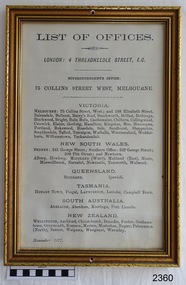
... The framed document is locally significant for its association with the Bank of Australasia, Warrnambool's first bank, established in 1854. The bank continued to operate until the organisation's merger in 1951. ...The addresses given on the List for the London and Melbourne offices have connected the document to the Bank of Australasia. The List is dated November 1877 and shows the number and the location of all of the branches of the Bank at that point in time., a total of 77. - Victoria 35, New South Wales 14, Queensland 2, Tasmania 5, South Australia 5, New Zealand 16 Copies of the notice would have been displayed in all branches of the bank in both Australia and New Zealand to inform customers and perhaps impress them too with a large number of locations and the reference to the bank's connection with London. This document gives information on all bank offices throughout Australia and New Zealand. It refers to the Superintendent's Office address at 75 Collins Street West, Melbourne and is dated November 1877. This places the document at the time just before the new Melbourne office opened on the corner of Collins Street and Queen's Street in 1879. The Bank of Australasia was incorporated by Royal Charter of England in March 1834. It came to Australia on 14th December 1835, opening in Sydney. The Acting Superintendent of the Bank of Australasia in Sydney at that time was David Charters McArthur. He was Superintendent from 1867-to 1876. The Melbourne branch of the Bank of Australasia opened on 28th August 1838 in a two-roomed brick cottage on the north side of Little Collins Street. Two huge mastiff dogs were kept in the backyard and let loose at night to guard the bank. The government also provided an armed military sentinel. Due to the bank's rapid growth, a new building for the Melbourne branch was opened in 1840 at 75 Collins Street West. By 1879 the bank had been upgraded to a magnificent two-storey building on the corners of Collins and Queens Streets, with the entry on Collins Street. In 1951 the Bank of Australasia amalgamated with the Union Bank to form the Australia and New Zealand Bank, now known as the ANZ. Then in 1970, the ANZ merged with both the ES&A and the London Bank of Australia to form the ANZ Banking Group Limited. The ANZ Banking Group Ltd kindly donated a variety of historic items from the Bank of Australasia. BANK of AUSTRALASIA, WARRNAMBOOL – In 1854 Warrnambool had two banks, the Union Back and the Bank of Australasia. Later, completely different bank businesses opened; in 1867 the National Bank of Australasia, then in 1875 the Colonial Bank of Australasia. The original Bank of Australasia was established in Warrnambool in July 1854, and operated from a leased cottage on Merri Street, close to Liebig Street. The bank bought a stone building previously erected by drapers Cramond & Dickson on the corner of Timor and Gibson Streets. Samuel Hannaford was a teller and then Manager at the Warrnambool branch from 1855 to 1856. Warrnambool’s Council chose the Bank of Australasia as its bank 1856-57. In 1859 Roberts & Co. was awarded the contract to build the new Bank of Australasia branch for the sum of £3,000. The land was on a sand hill on the northeast corner of Timor and Kepler Streets and had been bought in 1855 from investor James Cust. The new building opened on May 21, 1860. The bank continued to operate there until 1951 when it merged with the Union Bank to form the ANZ Bank, which continued operating from its Liebig Street building. Warrnambool City Council purchased the former Bank of Australasia building in 1971 and renovated it, then on 3rd December 1973 it was officially opened as the Art Gallery by Cr. Harold Stephenson and Gallery Director John Welsh. The Gallery transferred to the purpose-built building in Liebig Street in 1986 and the old bank building is now the Gallery club. The List of Offices of the Bank of Australasia has early Australian historical significance through its association with the Bank, which was established in 1834 by Royal Charter and opened in Sydney, Australia, in Sydney in 1835. The List is significant for showing the number and location of all of the Offices of the Bank of Australia in November 1877. This shows that Victoria had 45 percent of all Offices. The framed document is locally significant for its association with the Bank of Australasia, Warrnambool's first bank, established in 1854. The bank continued to operate until the organisation's merger in 1951. It became the ANZ Bank, which is still in operation today. The Bank was an integral part of the establishment and growth of commerce in Colonial Warrnambool and throughout Australia.Document in a decorative gilt frame. Titled List of Bank Offices and dated November 1877, facsimile. Offices include London, and a variety of offices in Victoria, New South Wales, Queensland, Tasmania, South Australia and New Zealand. Round holes in the centre top and bottom of the frame. Text includes: "LONDON: 4 THREADNEEDLE STREET, E.C." "SUPERINTENDENT'S OFFICE: / 75 COLLINS STREET WEST, MELBOURNE" "Warrnambool" " November 1877" flagstaff hill, warrnambool, bank of australasia 1877, branches of bank of australasia 1877, banks in australia 1877, commerce 1877, shipwreck-coast, document, bank document, flagstaff hill maritime museum & village, bank of australasia, 1877, branches in australia, bank of london, offices in australia, offices in new zealand, commerce, banking, finance, shipwrecked coast, flagstaff hill maritime museum, maritime museum, shipwreck coast, flagstaff hill maritime village, great ocean road, boa, union bank, australia & new zealand bank, anz bank, david charters mcarthur, d c mcarthur, sydney, new south wales, currency, banknote, legal tender, list of bank offices -
 Flagstaff Hill Maritime Museum and Village
Document - Commemorative, The Victorian Missions to Seamen, St Nicholas Seamen's Church Williamstown, circa 1944
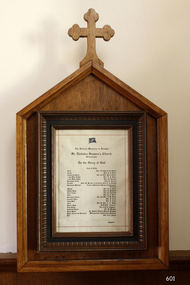
... This framed document titled "The Victorian Missions to Seamen, St Nicholas Seamen's Church Williamstown" shows a list of donors of significant items to the St Nicholas Missions to Seamen's Church in Williamstown when the new building opened in 1944. The organisation...This framed document titled "The Victorian Missions to Seamen, St Nicholas Seamen's Church Williamstown" shows a list of donors of significant items to the St Nicholas Missions to Seamen's Church in Williamstown when the new building opened in 1944. The organisation ...This framed document titled "The Victorian Missions to Seamen, St Nicholas Seamen's Church Williamstown" shows a list of donors of significant items to the St Nicholas Missions to Seamen's Church in Williamstown when the new building opened in 1944. The organisation ceased in 1966, and the furnishings were later donated to Flagstaff Hill Maritime Village in Warrnambool by the Missions to Seamen Victoria. The transcription of the document is as follows: The Victoria Missions to Seamen, St Nicholas Seamen's Church, Williamstown To the Glory of God List of Gifts Altar - Mrs. and Miss J.R. Schutt Cross - Mrs. R.J. Ewart Chalice and Paten - Mr. and Mrs. Percy Taylor 1 Pair Altar Lights - Mrs. R.J. Ewart 1 Pair Altar Lights - Mrs. M. Jackson Sanctuary Lamp - Miss C. Roberts Rerebos - Miss. M. Breaks, in memoriam Miss. L.A. Breaks Sanctuary Window - Victoria Missions to Seamen Lightkeepers' Auxiliary Missal - Mrs. R.J. Ewart Missal Desk - Mrs. R. Hodgkiss Altar Vases - Mrs. R. Kaybould Bible - Mrs. R.J. Ewart Sanctuary Chairs - Mr. and Mrs. F.H. Twist Credence Table - Mrs. F. Clark Altar Dish – Mrs L. Clark Font - Mr. and Mrs. C.V. Dyble Prayer Desk - H.M.H.S. "Centaur" Reed Organ - "Joy Club for Fighters" Collection Plates - Mr. D. MacKae Hymn Board - St. David's Musical Society, Brighton Pews, Carpet and Hangings - Williamstown Lightkeepers' Auxiliary Bell - Mrs. A.L. Feenes THE MISSIONS TO SEAMEN (Brief History: for more, see our Reg. No. 611, Set of Pews) The Missions to Seamen, an Anglican charity, has served seafarers of the world since 1856 in Great Britain. It symbol is a Flying Angel, inspired by a Bible verse. Today there are centr4es in over 200 ports world-wide where seamen of all backgrounds are offered a warm welcome and provided with a wide range of facilities. In Victoria the orgainsation began in Williamstown in 1857. It was as a Sailors’ Church, also known as ‘Bethel’ or the ‘Floating Church’. Its location was an old hulk floating in Hobson’s Bay, Port of Melbourne. It soon became part of the Missions to Seamen, Victoria. In the year 2000 the organisation, now named Mission to Seafarers, still operated locally in Melbourne, Portland, Geelong and Hastings. The Ladies’ Harbour Lights Guild was formed in 1906 to support the Missions to Seamen in Melbourne and other centres such as Williamstown. Two of the most significant ladies of the Guild were founder Ethel Augusta Godfrey and foundation member Alice Sibthorpe Tracy (who established a branch of the Guild in Warrnambool in 1920). The Guild continued its work until the 1960s. In 1943 a former Williamstown bank was purchased for the Missions to Seaman Club. The chapel was named St Nicholas’ Seamen’s Church and was supported by the Ladies’ Harbour Lights Guild, the Williamstown Lightkeepers’ Auxiliary and the League of Soldiers’ and Sailors’ Friends. It ceased operation in 1966. A Missions to Seamen Chapel and Recreation Room was a significant feature of ports during the late 1800s and into the 1900s. It seemed appropriate for Flagstaff Hill to include such a representation within the new Maritime Village, so the Melbourne Board of Management of Missions to Seamen Victoria gave its permission on 21st May 1979 for the entire furnishings of the Williamstown chapel to be transferred to Flagstaff Hill. The St Nicholas Seamen’s Church was officially opened on October 11, 1981 and closely resembles the Williamstown chapel. This document is significant through its association with the St Nicholas' Mission to Seamen Church in Williamstown, Melbourne, established in 1857. The document is socially significant as it connects the community of Williamstown with the St Nicholas' Missions to Seamen and represents the importance of the church to the community. The items in our collection from the Missions to Seamen in Williamstown, Victoria, have historical and social significance. They show that people of the 1800s and 1900s cared about the seafarers’ religious, moral, and social welfare, no matter what the religion, social status or nationality. It had its origins in Bristol, England when a Seamen's Mission was formed in 1837. The first Australian branch was started in 1856 by the Rev. Kerr Johnston, a Church of England clergyman, and operated from a hulk moored in Hobson's Bay; later the Mission occupied buildings in Williamstown and Port Melbourne. Document titled "The Victorian Missions to Seamen, St Nicholas Seamen's Church Williamstown". The document is a list of gifts originally given to the St Nicholas Seaman's Church in Williamstown, Victoria. The document is mounted in a decorative wooden frame with glass cover. This is one of the original items in our ‘St Nicholas Seamen's Church Williamstown Collection’.flagstaff hill, warrnambool, shipwrecked-coast, flagstaff-hill, flagstaff-hill-maritime-museum, maritime-museum, shipwreck-coast, flagstaff-hill-maritime-village, framed document, donations to st nicholas seamen's church williamstown, 139 nelson place williamstown, religion, religious service, sailors rest, bethel sailors’ church, bethel floating church, ladies harbour light guild, mission to seafarers, st nicholas seaman’s church williamstown, mission to seamen williamstown, st nicholas seamen’s church flagstaff hill, flying angel club, mrs. and miss j.r. schutt, mrs. r.j. ewart, mr. and mrs. percy taylor, mrs. m. jackson, miss c. roberts, miss. l.a. breaks, miss. m. breaks, victoria missions to seamen lightkeepers' auxiliary, mrs. r. hodgkiss, mrs. r. kaybould, mr. and mrs. f.h. twist, mrs. f. clark, mrs l. clark, mr. and mrs. c.v. dyble, h.m.h.s. "centaur", "joy club for fighters", mr. d. mackae, williamstown lightkeepers' auxiliary, mrs. a.l. feenes, st. david's musical society brighton -
 Federation University Historical Collection
Document - Documents, Golden Point - Mount Pleasant Progress Association Establishment
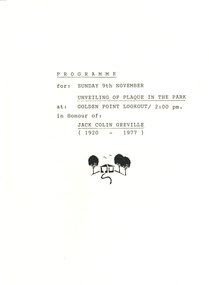
... organisation membership was $2.00. Mara Gluyas served as secretary of the Golden Point - Mt Pleasant Progress Association from 1983 to 1994. Ian McKinnon was the President from 1983 to 1992. Kerry Daniels was the President in 1994. golden point mount pleasant mt pleasant ian mckinnno mara gluyas peter hiscock frank williams geoff howard leigh gillett sovereign hill kerry daniels norm strange; graeme kent; george netherway; keith rash; ian mckinnon albert graham bryan crebbin jim humphreys. wid radbourn heath martin janet dore alex mills park A small white cardboard box with purple lid of A4 documents relating to the establishment of the Golden Point - Mt Pleasant Progress Association. ...The Golden Point - Mt Pleasant Progress Association was established on Wednesday 6 April 1983. Membership was open to any person or organisation in the area generally bounded by Bridge mall and Skipton Street, Elsworth Street and main Road. annual family or organisation membership was $2.00. Mara Gluyas served as secretary of the Golden Point - Mt Pleasant Progress Association from 1983 to 1994. Ian McKinnon was the President from 1983 to 1992. Kerry Daniels was the President in 1994.A small white cardboard box with purple lid of A4 documents relating to the establishment of the Golden Point - Mt Pleasant Progress Association. The documents include the original constitution and minutes. Topics include: Pearce's Park; removal of elms, names and addresses of members, Sovereign Hill realignment; Sovereign Hill Lookout; membership form; Golden Point Historic Mines Direction Indicator; Ballarat Observatory; Nerrina Tip; Yarrowee Creek; Mine Capping (Sovereign Mine); tree planting (Sovereign Hill Lookout); Magpie Street Park; Hill Street; Yarrowee Flora Park; Barkly Street; South Street Bluestone Gutter; Ballarat Goldfields; Eastern baths site; Grant Street; Flooding; Aboriginal Advancement League; Sunnyside Woollen Mill; Chinese Garden; Golden Point Primary School closure; Ballarat West Goldfields; Sovereign Hill Land Title and Management Revision; Wainwright; Street; Llanberris; Yuille's Station Parkgolden point, mount pleasant, mt pleasant, ian mckinnno, mara gluyas, peter hiscock, frank williams, geoff howard, leigh gillett, sovereign hill, kerry daniels, norm strange; graeme kent; george netherway; keith rash; ian mckinnon, albert graham, bryan crebbin, jim humphreys. wid radbourn, heath martin, janet dore, alex mills park -
 Mission to Seafarers Victoria
Administrative record (item) - Annual report, The Victoria Missions to Seamen, 1910 Annual Report of the Victoria Missions to Seamen, 1911
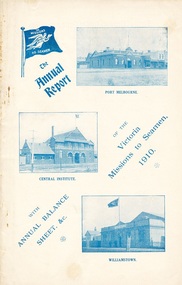
... organisations in Victoria, as well as associated groups, such as the Ladies Harbour Lights Guild. These reports provide documentation of the activities conducted by the Mission, as well recording the people involved. 1910 annual report Victorian seamen's mission williamstown sailors' rest port melbourne siddeley street central institute seamen's institute mission to seafarers melbourne administrative document-annual report written in pencil: MTS0235 (Front cover) A white booklet with blue printed text, the Missions to Seamen's logo and photographs of the Port Melbourne, Central Institute and Williamstown locations. ...The report was produced by and distributed to members, containing reports from the Committee, Chaplain, the Ladies Harbours Lights Guild, as well as a list of subscriptions and rules for the 1910 period. This copy is the first to feature images of all three main Mission venues established in Port Phillip pre WW1.Annual reports were published by the Mission to Seamen each year, and included reports from all seamen's missions and organisations in Victoria, as well as associated groups, such as the Ladies Harbour Lights Guild. These reports provide documentation of the activities conducted by the Mission, as well recording the people involved.written in pencil: MTS0235 (Front cover)1910, annual report, victorian seamen's mission, williamstown, sailors' rest, port melbourne, siddeley street, central institute, seamen's institute, mission to seafarers, melbourne, administrative document-annual report -
 Mission to Seafarers Victoria
Flyer - Advertising, Piano & Theory, Unknown
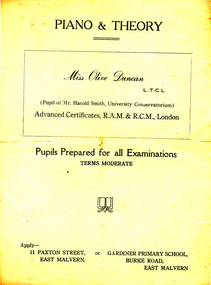
... organisation. The image is also significant as it fleshes out our knowledge of Olive Duncan's life as a lady active in the LHLG. olive duncan ladies harbour lights guild lhlg lillie duncan piano music teacher See image Quarter of an A4 page of white paper advertising piano and theory lessons given by Miss Olive Duncan L.T.C.L. This document ...The object shows that Olive Duncan taught piano and theory in East Malvern, having been a pupil of Mr. Harold Smith of the University Conservatorium. This is a photograph of social and historic significance, being part of a sub-collection of material that provides a snapshot of the type of individuals involved in the Ladies Harbour Lights Guild and the activities carried out by that organisation. The image is also significant as it fleshes out our knowledge of Olive Duncan's life as a lady active in the LHLG.Quarter of an A4 page of white paper advertising piano and theory lessons given by Miss Olive Duncan L.T.C.L. This document is creased because it has been folded into quarters.See imageolive duncan, ladies harbour lights guild, lhlg, lillie duncan, piano, music teacher -
 Federation University Historical Collection
Document - Document - External Lecturers, VIOSH: External Lecturers Session 4, 1980; Renumeration
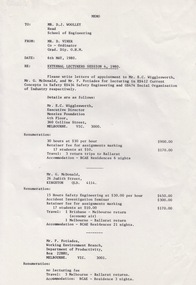
... It was also providing renumeration information for each. viosh victorian institute of occupational safety and health derek woolley derek viner eric wigglesworth g mcdonald current concepts in safety safety engineering social organisation in industry renumeration external lecturers p fotiades A4 page - typed VIOSH: External Lecturers Session 4, 1980; Renumeration Document Document - External Lecturers ...Victorian Institute of Occupational Safety and Health (VIOSH) Australia is the Asia-Pacific centre for teaching and research in occupational health and safety (OHS) and is known as one of Australia's leaders on the field. VIOSH has a global reputation for its innovative approach within the field of OHS management. VIOSH had its first intake of students in 1979. At that time the Institution was known as the Ballarat College of Advanced Education. In 1990 it became known as Ballarat University College, then in 1994 as University of Ballarat. It was 2014 that it became Federation University. VIOSH Australia students are safety managers, senior advisors and experienced OHS professionals. They come from all over Australia and industry. Students are taught active research and enquiry; rather than textbook learning and a one-size fits all approach. VIOSH accepts people into the Graduate Diploma of Occupational Hazard Management who have no undergraduate degree - on the basis of extensive work experience and knowledge. Letter from Derek Woolley to Derek Viner in May 1980. It was asking him to write letters of appointment to E Wigglesworth, G McDonald and P Fotiades re lecturing in Current Concepts in Safety, Safety Engineering and Social Organisation of Industry respectively. It was also providing renumeration information for each.A4 page - typedviosh, victorian institute of occupational safety and health, derek woolley, derek viner, eric wigglesworth, g mcdonald, current concepts in safety, safety engineering, social organisation in industry, renumeration, external lecturers, p fotiades -
 Federation University Historical Collection
Document - Document - Correspondence, VIOSH: Letters from the Australian Trade Union Training Authority and Worksafe Australia re Occupational Health and Safety courses, 1987
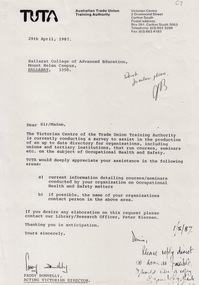
... organisations occupational health and safety courses paddy donnelly TUTA letterhead. Signature of Paddy Donnelly, Acting Victorian Director Worksafe Australia letterhead .Signature of J T C Brassil, Chairman Two A4 sheets, type written. VIOSH: Letters from the Australian Trade Union Training Authority and Worksafe Australia re Occupational Health and Safety courses, 1987 Document ...Victorian Institute of Occupational Safety and Health (VIOSH) Australia is the Asia-Pacific centre for teaching and research in occupational health and safety (OHS) and is known as one of Australia's leaders on the field. VIOSH has a global reputation for its innovative approach within the field of OHS management. VIOSH had its first intake of students in 1979. At that time the Institution was known as the Ballarat College of Advanced Education. In 1990 it became known as Ballarat University College, then in 1994 as University of Ballarat. It was 2014 that it became Federation University. VIOSH Australia students are safety managers, senior advisors and experienced OHS professionals. They come from all over Australia and industry. Students are taught active research and enquiry; rather than textbook learning and a one-size fits all approach. VIOSH accepts people into the Graduate Diploma of Occupational Hazard Management who have no undergraduate degree - on the basis of extensive work experience and knowledge. The letter from the Trade Union Training Authority is requesting information about the course in Occupational Health and Safety being run by tertiary institutions. This is to provide an up-to-date directory of organisations. The letter from the National Occupational Health and Safety Commission states they support the proposal from Ballarat College of Advanced Education to use the combined expertise of inspectorates in all States to look at methods which have been successfully used to improve safety in the Australian workplace and to publish solutions. Two A4 sheets, type written.TUTA letterhead. Signature of Paddy Donnelly, Acting Victorian Director Worksafe Australia letterhead .Signature of J T C Brassil, Chairmanviosh, victorian institute of occupational safety and health, worksafe australia, national occupational health and safety commission, combined expertise of inspectorates, dennis else, j t brassil, australian trade union training authority, ballarat college of advanced education, directory of organisations, occupational health and safety courses, paddy donnelly -
 Federation University Historical Collection
Document - Document - Correspondence, VIOSH: Letters re Visit to Denmark. Requesting visit to Safety Organisations., 1994
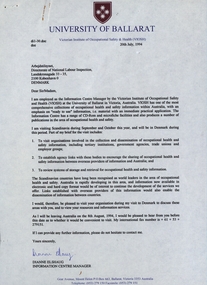
... documents. VIOSH: Letters re Visit to Denmark. Requesting visit to Safety Organisations., 1994 Document Document - Correspondence ...Victorian Institute of Occupational Safety and Health (VIOSH) Australia is the Asia-Pacific centre for teaching and research in occupational health and safety (OHS) and is known as one of Australia's leaders on the field. VIOSH has a global reputation for its innovative approach within the field of OHS management. VIOSH had its first intake of students in 1979. At that time the Institution was known as the Ballarat College of Advanced Education. In 1990 it became known as Ballarat University College, then in 1994 as University of Ballarat. It was 2014 that it became Federation University. VIOSH Australia students are safety managers, senior advisors and experienced OHS professionals. They come from all over Australia and industry. Students are taught active research and enquiry; rather than textbook learning and a one-size fits all approach. VIOSH accepts people into the Graduate Diploma of Occupational Hazard Management who have no undergraduate degree - on the basis of extensive work experience and knowledge. Dianne Elshaug, Information Centre Manager with VIOSH at the University of Ballarat, was requesting permission to visit industry facilities in Denmark to observe their occupational health and safety procedures. The trip was planned for 1994.Letters and fax machine printouts. Plastic folder with flight documents.University of Ballarat letterhead. Danish letterhead. Flight Centres folderviosh, victoriran institute of occupational safety and health, dianne elshaug, university of ballarat, denmark, occupational health and safety procedures, 1994 -
 Federation University Historical Collection
Document - Document - Academic Governance, VIOSH: University of Ballarat; Academic Governance Scheme, 30 January 1996, 1996
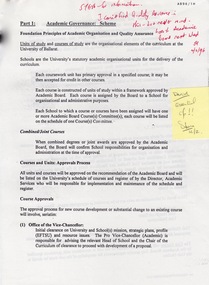
... Document outlines the Academic Governance at the University of Ballarat. The foundation principles of academic organisation and quality assurance are detailed. ...Document outlines the Academic Governance at the University of Ballarat. The foundation principles of academic organisation and quality assurance are detailed. ...Victorian Institute of Occupational Safety and Health (VIOSH) Australia is the Asia-Pacific centre for teaching and research in occupational health and safety (OHS) and is known as one of Australia's leaders on the field. VIOSH has a global reputation for its innovative approach within the field of OHS management. VIOSH had its first intake of students in 1979. At that time the Institution was known as the Ballarat College of Advanced Education. In 1990 it became known as Ballarat University College, then in 1994 as University of Ballarat. It was 2014 that it became Federation University. VIOSH Australia students are safety managers, senior advisors and experienced OHS professionals. They come from all over Australia and industry. Students are taught active research and enquiry; rather than textbook learning and a one-size fits all approach. VIOSH accepts people into the Graduate Diploma of Occupational Hazard Management who have no undergraduate degree - on the basis of extensive work experience and knowledge. Document outlines the Academic Governance at the University of Ballarat. The foundation principles of academic organisation and quality assurance are detailed. Units of study and course s of study are the organisational elements of the curriculum at the university. All units and courses will be approved on the recommendation of the Academic Board. The Pro Vice-Chancellor (Academic) is responsible for advising the relevant Head of School and the Chair of the Curriculum of clearance to proceed with development of a proposal. Discontinuation of a course or part of a course must go through the Vice-Chancellor or the Pro Vice-Chancellor (Academic)who will advise the Academic Board.Five pages - typed. Message in red pen - p1Date - 30 January 1996viosh, victorian institute of occupational safety and health, academic governance, university of ballarat, head of school, chair of the curriculum, vice-chancellor, pro vice-chancellor (academic), academic board, chair of curriculum, professor frank hurley -
Federation University Historical Collection
Document, Dianne Campbell, Lawyers, Publicans & Women on the Ballarat and Central Victorian Goldfields 1851-1886, 2013
... dianne campbell goldfields lawyers collection lawyers ballarat legal central victoria Maryborough stawell maldon chiltern Otago Pyrenees ararat carisbrook Day Daylesford court houses pleasant creek beaufort Creswick golden plains AVoca Tarnagulla Alexander Fraser Alan Fraser William Rainy raffaello carboni Butler Cole Aspinall Edward John Lewis Richard Ireland Richard Davies Ireland Charles Gavin Duffy Robert Molesworth Edward Fitzgerald Nicholas Fitzgerald Maurice McDonough James William Dunbar Robert Walsh Joseph Henry Dunne Redmond Barry Eureka Stockade MIchael Walsh family history genealogy A conference paper prepared for the Victorian Association of Family History Organisations (VAFHO) Conference, Ballarat, 2013 Lawyers, Publicans & Women on the Ballarat and Central Victorian Goldfields 1851-1886 Document Dianne Campbell ...A conference paper prepared for the Victorian Association of Family History Organisations (VAFHO) Conference, Ballarat, 2013dianne campbell goldfields lawyers collection, lawyers, ballarat, legal, central victoria, maryborough, stawell, maldon, chiltern, otago, pyrenees, ararat, carisbrook, day, daylesford, court houses, pleasant creek, beaufort, creswick, golden plains, avoca, tarnagulla, alexander fraser, alan fraser, william rainy, raffaello carboni, butler cole aspinall, edward john lewis, richard ireland, richard davies ireland, charles gavin duffy, robert molesworth, edward fitzgerald, nicholas fitzgerald, maurice mcdonough, james william dunbar, robert walsh, joseph henry dunne, redmond barry, eureka stockade, michael walsh, family history, genealogy -
Federation University Historical Collection
Document - Document - Letter, Ballarat Junior Technical School: Report on Student Teachers George Briggs and Ian Hastie
... Relationships with boys and staff very satisfactory. ballarat junior technical school head master l garner george briggs ian hastie student teachers school camp supervision organisation relationships very satisfactory Cream page, typed. Ballarat Junior Technical School: Report on Student Teachers George Briggs and Ian Hastie. Document ...Two Student Teachers, George Briggs and Ian Hastie, assisted in running the school camp. They supervised the boys in some classes, organised games in recreation periods and ensured work groups satisfactorily carried out their duties. Relationships with boys and staff very satisfactory. Cream page, typed. ballarat junior technical school, head master, l garner, george briggs, ian hastie, student teachers, school camp, supervision organisation relationships very satisfactory -
Federation University Historical Collection
Document - Document - Letter, Ballarat Junior Technical School: Circular to schools from District Inspector, 1952
... Been taken over by Education Department. ballarat junior technical school head master l garner earl pearson district inspector circular june 1952 education week state schools' horticultural society inspection regulations and instructions work efficiency organisation school enrolments school residences desk young farmers' clubs Cream page, typed Ballarat Junior Technical School: Circular to schools from District Inspector, 1952 Document Document - Letter ...Circular from the District Inspector, Earl G Pearson, to all schools, June 1952. Divided into six headings. 1. Education Week information and suggestions. Will be held August 10th to 16th. Sunday 10th is Education Sunday. 2. State Schools' Horticulture Society return form nursery shows very little support. All school should support this and pay annual fee of 7/6d. Location is Teachers' Nursery, Poath Road, Oakleigh. ( Became State Schools' Nursery and now Victorian Schools' Nursery No 4214). 3. Inspection. Teachers to read sections of Regulations and Instruction which will be helpful in assessing efficiency of their work and give direction on organisation. Entry age for new students. Restriction maybe necessary to conserve teaching staff. 3. School residences. 4. Desk surplus. 5. Young Farmers' Clubs. New organizer for schools. Been taken over by Education Department.Cream page, typed ballarat junior technical school, head master, l garner, earl pearson, district inspector, circular, june 1952, education week, state schools' horticultural society, inspection, regulations and instructions, work efficiency, organisation, school enrolments, school residences, desk, young farmers' clubs -
Federation University Historical Collection
Document, Overview of the Ballarat School of Mines and Industries, Ballarat, 1974
... Ballarat School of Mines ballarat technical school ballarat institute of Advanced Education divisions management organisation Mt Helen Campus Three pages from the Ballarat School of Mines and Industries, Ballarat1974 Handbook, including the Ballaray Institute of Advanced Education, the Ballarat School of Industries and the Ballarat Technical School. Overview of the Ballarat School of Mines and Industries, Ballarat Document ...The Ballarat School of Mines is a predecessor institution of Federation University Australia.Three pages from the Ballarat School of Mines and Industries, Ballarat1974 Handbook, including the Ballaray Institute of Advanced Education, the Ballarat School of Industries and the Ballarat Technical School.ballarat school of mines, ballarat technical school, ballarat institute of advanced education, divisions, management, organisation, mt helen campus -
 Federation University Historical Collection
Document - Document - Correspondence, VIOSH: Safety Institute of Australia: Discussions on Occupational Health and Safety Programs in Tertiary Settings,1983
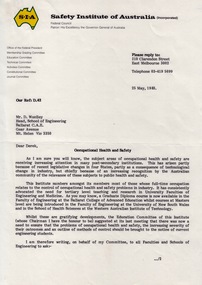
... There is concern that in the past a number of non-educational organisations opted to offer courses of little content and less validity. viosh victorian institute of occupational safety and health eric wigglesworth safety institute of australia occupational health and safety derek woolley federal education committee letterheads ballarat college of advanced education Letterhead of Safety Institute of Australia and Ballarat College of Advanced Education Four sheets of A4. Third sheet printed on both sides VIOSH: Safety Institute of Australia: Discussions on Occupational Health and Safety Programs in Tertiary Settings,1983 Document ...Victorian Institute of Occupational Safety and Health (VIOSH) Australia is the Asia-Pacific centre for teaching and research in occupational health and safety (OHS) and is known as one of Australia's leaders on the field. VIOSH has a global reputation for its innovative approach within the field of OHS management. VIOSH had its first intake of students in 1979. At that time the Institution was known as the Ballarat College of Advanced Education. In 1990 it became known as Ballarat University College, then in 1994 as University of Ballarat. It was 2014 that it became Federation University. VIOSH Australia students are safety managers, senior advisors and experienced OHS professionals. They come from all over Australia and industry. Students are taught active research and enquiry; rather than textbook learning and a one-size fits all approach. VIOSH accepts people into the Graduate Diploma of Occupational Hazard Management who have no undergraduate degree - on the basis of extensive work experience and knowledge. Letter from Eric Wigglesworth, Chairman of Federal Education Committee, Safety Institute of Australia. He outlines the need for Occupational Health and Safety courses to be in tertiary institutions. There is concern that in the past a number of non-educational organisations opted to offer courses of little content and less validity.Four sheets of A4. Third sheet printed on both sidesLetterhead of Safety Institute of Australia and Ballarat College of Advanced Educationviosh, victorian institute of occupational safety and health, eric wigglesworth, safety institute of australia, occupational health and safety, derek woolley, federal education committee, letterheads, ballarat college of advanced education -
 Federation University Historical Collection
Document - Document - Newsletter, VIOSH: Ballarat College of Advanced Education; Association of Occupational Hazard Management Graduates Newsletter, June 1992
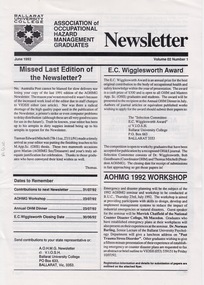
... Speakers are Mr Merrick Chatfield - Natural Disaster Organisation, Australian Counter Disaster College, Mt Macedon, Victoria and Dr Norman Barling, Psychology Department, Ballarat University College. viosh victorian institute of occupational safety and health association of occupational hazard management graduates newsletter thomas mitchell editor e c wigglesworth award dennis else dulcie brooke honorarium s.h.a.r.e. photographs and memorabilia emergency and counter disaster planning merrick chatfield natural disaster organisation australian counter disaster college mt macedon norman barling psychologist ballarat university college Letterhead - Ballarat University College A3 sheet folded in half - four pages with two column each. Separate A4 sheet Seminar Program VIOSH: Ballarat College of Advanced Education; Association of Occupational Hazard Management Graduates Newsletter, June 1992 Document Document - Newsletter ...Victorian Institute of Occupational Safety and Health (VIOSH) Australia is the Asia-Pacific centre for teaching and research in occupational health and safety (OHS) and is known as one of Australia's leaders on the field. VIOSH has a global reputation for its innovative approach within the field of OHS management. VIOSH had its first intake of students in 1979. At that time the Institution was known as the Ballarat College of Advanced Education. In 1990 it became known as Ballarat University College, then in 1994 as University of Ballarat. It was 2014 that it became Federation University. VIOSH Australia students are safety managers, senior advisors and experienced OHS professionals. They come from all over Australia and industry. Students are taught active research and enquiry; rather than textbook learning and a one-size fits all approach. VIOSH accepts people into the Graduate Diploma of Occupational Hazard Management who have no undergraduate degree - on the basis of extensive work experience and knowledge. Newsletter of Ballarat University College Association of Occupational Hazard Management Graduates, June 1992. Editor is Thomas Mitchell, who became a lecturer within VIOSH. Newsletter mentions the E C Wigglesworth Award which is given yearly for the best original contribution of a journal article or equivalent published work. Dennis Else's professorial status, Steve Cowley becoming Director of VIOSH, and Derek Woolley taking up the position of Assistant Director of the College. Dulcie Brooke is awarded an honorarium for her many years of involvement with VIOSH. S.H.A.R.E. program enters a new phase. This was an important feature - sharing solutions to problems by establishing a data base. Leaflet advertising a seminar - "Emergency and Counter Disaster Planning" - 23 July 1992. Speakers are Mr Merrick Chatfield - Natural Disaster Organisation, Australian Counter Disaster College, Mt Macedon, Victoria and Dr Norman Barling, Psychology Department, Ballarat University College.A3 sheet folded in half - four pages with two column each. Separate A4 sheet Seminar ProgramLetterhead - Ballarat University Collegeviosh, victorian institute of occupational safety and health, association of occupational hazard management graduates newsletter, thomas mitchell, editor, e c wigglesworth award, dennis else, dulcie brooke, honorarium, s.h.a.r.e., photographs and memorabilia, emergency and counter disaster planning, merrick chatfield, natural disaster organisation, australian counter disaster college, mt macedon, norman barling, psychologist, ballarat university college -
Federation University Historical Collection
Document - E.J. Barker Papers, Papers collected by E.J. Barker Related to School of Mines Ballarat and Ballarat Institute of Advanced Education Merger
... Scarrott R.W Wirrell R.E Parry Enrolment Forecasts Monash Reporter Mt Helen Campus Plan Notes Submission to the Minister Report Choice of Umbrella Body Education Merger Sound City of Ballarat I.C Smith Australian Universities Commission Education Department Ballarat Institute of Advanced Education Staff Association K.L Jennings Multi-Campus institutions Corporate Nature of Councils Future Development Comments on Merger Umbrella Organisations Correspondence, Reports, Plans, Newspaper articles, Newsletters, notes and other papers from various institutions and Government departments relating to the merger Papers collected by E.J. Barker Related to School of Mines Ballarat and Ballarat Institute of Advanced Education Merger Document ...E.J. Barker is a past principal of the School of Mines Ballarat and the Library at the Mt Helen Campus is named after him. School of Mines is a predecessor of Federation UniversityCorrespondence, Reports, Plans, Newspaper articles, Newsletters, notes and other papers from various institutions and Government departments relating to the merger school of mines ballarat, e.j. barker, merger report, approach to a merger, merger, d. woolley, scv/vic joint committee, scv, vic, ballarat institute of advanced education, state college of victoria, education advisory committee, minster for education, councils of colleges, academic committee, the age, uni must employ surplus staff, university boycott campaign, committees of council, enrolments, master plan soon for new state college, new principal for state college, bendigo advertiser, early decision expected on amalgamation, b.i.t and state college will be merged, f.j. rogers, j.a. chisholm, state college will build, tertiary planning in state of chaos, phone message, victoria institute of colleges, t. swanson, j. ryan, r. mcmullen, r. hinkley, commission on advanced education, newsletter, bendigo institute of technology, dr. law, r.w. birrell, colleges head for merger, mr mcdonnell, tender recommended, k.g. scarrott, r.w wirrell, r.e parry, enrolment forecasts, monash reporter, mt helen campus plan, notes, submission to the minister, report, choice of umbrella body, education merger sound, city of ballarat, i.c smith, australian universities commission, education department, ballarat institute of advanced education staff association, k.l jennings, multi-campus institutions, corporate nature of councils, future development, comments on merger, umbrella organisations -
 Shepparton RSL Sub Branch
Book, Royal Australian Air Force, Standard Notebook for Initial Training Schools: Air Navigation, August 1942
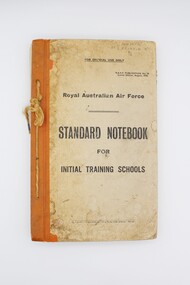
... Contents include: Appendix I: Law, Discipline, Administration and Organisation, Hygiene and Sanitation, Notes on Meteorology, Definitions, The principles of flight, Airframes, Engine; Appendix II: Mathematics problems for revision. This notebook has significant research potential, as it bears the service number of the owner: Roy Eliason. Roy Eliason's service history is well documented ...This notebook contains information on air navigation and electrical science. It was issued to Roy Eliason (449852), a Shepparton local who enlisted in 1944 and served as a Leading Aircraftman with the 2nd Operational Training Unit Mildura. Contents include: Appendix I: Law, Discipline, Administration and Organisation, Hygiene and Sanitation, Notes on Meteorology, Definitions, The principles of flight, Airframes, Engine; Appendix II: Mathematics problems for revision.This notebook has significant research potential, as it bears the service number of the owner: Roy Eliason. Roy Eliason's service history is well documented in the National Archives of Australia and this book provides an insight into a period of his service. Notebooks such as this were presumably issued to new recruits in the early stages of their service. Though this copy is in fair condition with several signs of wear, these signs may in fact increase the significance of the item, demonstrating the frequent use of this item in the hands of a new recruit to the Royal Australian Air Force. Series of pages bound via twine passed through four holes along left side. Front and back cover are card with orange vinyl/fabric strip and paper cover bearing title text. Orange pages throughout mark sections. Book printed throughout.Inscribed on front cover: "449852/AC2 ELIASON R/B/2". Inscribed on interior "449852/ELIASON. R./B/2". air navigation, training, royal australian air force, raaf, eliason, world war ii, wwii, second world war -
Federation University Historical Collection
Document, Federation University Organisational Chart, 2018, 2018
... The name Federation University Australia was chosen to convey the scope and capacity of an expanded regional university with a federated network of campuses. federation university organisational chart Federation University A pdf of an organisational chart for Federation University Federation University Organisational Chart, 2018 Document ...Federation University Australia was established on 1 January 2014. Formerly known as the University of Ballarat, its enabling legislation was the University of Ballarat Amendment (Federation University Australia) Act 2013. Although formally created as a University in 1994, the University of Ballarat has a lineage back to 1870 with the establishment of the School of Mines Ballarat, making it the third institution of higher learning to be established in Australia and the first to be established in regional Australia. On 1 January 1994, Ballarat University College became the University of Ballarat and in 1998 the University merged with three TAFE Institutes to become a dual sector institution with multiple campuses. On 1 January 2014, the University of Ballarat amalgamated with the Monash University Gippsland Campus to form Federation University Australia. The Gippsland Campus also had a long lineage dating back to 1928 with the establishment of the Yallourn Technical School which became a predecessor institution to the Gippsland College of Advanced Education formed in 1968. In 1990, it was renamed the Monash University College and in 1993 became the Gippsland Campus of Monash University. In 2016, Federation University Australia announced plans to take possession, over a two-year period, of Monash’s Berwick Campus in the south-east corridor of Melbourne. Federation University Australia, or FedUni, is headquartered in Ballarat and offers programs in Higher Education and Vocational Education and Training to regional Victoria and beyond. The University’s commitment to educational and social equity, teaching excellence, research distinction, environmental sustainability and regional capacity building has enabled it to develop in a way that draws on its proud heritage to inform its future. Its regional character sets a framework for the University’s priorities but does not constrain it from serving wider community interests, nationally and internationally. The name Federation University Australia was chosen to convey the scope and capacity of an expanded regional university with a federated network of campuses.A pdf of an organisational chart for Federation Universityfederation university organisational chart, federation university -
 Federation University Historical Collection
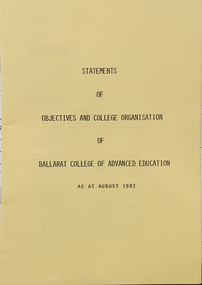
Administrative record - Document, Ballarat College of Advanced Education Statements of Objectives and College Organisation, 08/1982
... Yellow folded document outlining the Objectives and College Organisation of the Ballarat College of Advanced Education...The Ballarat College of Advanced Education is a predecessor organisation of Federation University ballarat college of advanced education policy objectives Yellow folded document outlining the Objectives and College Organisation of the Ballarat College of Advanced Education Ballarat College of Advanced Education Statements of Objectives and College Organisation Administrative record Document ...The Ballarat College of Advanced Education is a predecessor organisation of Federation UniversityYellow folded document outlining the Objectives and College Organisation of the Ballarat College of Advanced Educationballarat college of advanced education, policy, objectives
