
Showing 38 items matching "owen stanley"
-
 Orbost & District Historical Society
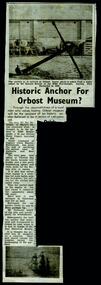
photograph, H.M.S. Rattlesnake, leaving Port Essington 1846-1849 BY STANLEY, OWEN
... Rattlesnake, leaving Port Essington 1846-1849 BY STANLEY, OWEN ...-rattlesnake brierly-oswald stanley-owen...They commissioned the Rattlesnake, a 28 gun frigate of the Royal Navy, whose captain was a keen amateur artist and whose name, Owen Stanley, was given to the mountain ranges of PNG. ...-rattlesnake brierly-oswald stanley-owen This is a copy of a picture of the H.M.S. ..."The marine Hydrographers of the British Admiralty wanted desperately to chart a safe passage through the Great Barrier Reef and the gap between the northern tip of Australia and Papua New Guinea, which would open up the new colony to the East Indies trade. They commissioned the Rattlesnake, a 28 gun frigate of the Royal Navy, whose captain was a keen amateur artist and whose name, Owen Stanley, was given to the mountain ranges of PNG. After the passage out, Stanley brought aboard Oswald Brierly, later to be the marine painter to Queen Victoria, and together these men made two voyages through the Great Barrier Reef, painting and sketching all the while. They produced a visual record of 19th century contact between Europeans and the indigenous people of Northern Australia and New Guinea in an album which contains the original of this copy. It is held in the Mitchell Library in Sydney." (ref. State Library New South Wales) Sir Oswald Brierly, a young marine artist, arrived in Sydney in 1842 on the yacht Wanderer. Settling at the whaling station of Boyd Town in Twofold Bay, he painted extensively and left a vivid account of the whaling life during the five years he spent there. However it was the open sea and adventure that lead Brierly to accept a position on the HMS Rattlesnake as shipboard artist. This item is associated with the anchor of the The Rattlesnake. This anchor is in the main street of Orbost in front of what was once the museum.This is a copy of a picture of the H.M.S. Rattlesnake at sea with a canoe of Aborigines rowing towards it.h.m.s.-rattlesnake brierly-oswald stanley-owen -
 Robin Boyd Foundation
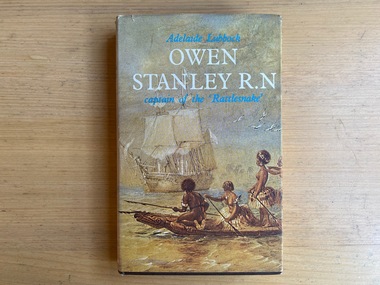
Book, Adelaide Lubbock, Owen Stanley R.N. Captain of the Rattlesnake, 1967
... Owen Stanley R.N. Captain of the Rattlesnake...Biography Substance use Walsh St library Hardcover w/ Dust Jacket Owen Stanley R.N. Captain of the Rattlesnake Book Adelaide Lubbock Heinemann ...Hardcover w/ Dust Jacketbiography, substance use, walsh st library -
 Lara RSL Sub Branch
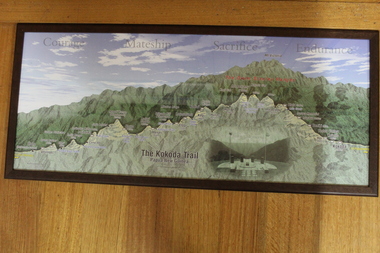
Photograph The Kokoda Trail - "Courage, Mateship, Sacrifice, Endurance", Kokoda Trail - "Courage, Mateship, Sacrifice, Endurance"
... ...owen stanley ranges...Picture Kokoda Trail - Papua New Guinea - Owen Stanley Ranges showing a cut through to emphasize the variation in height in the Ranges, with left to right of the villages and townships that represent the trail. ...Tourist map of the Kokoda Trail, Owen Stanly Ranges - IIolo to Kokoda, Papua to New Guinea Graphical map of the Kokoda Trail kokoda trail owen stanley ranges None Picture Kokoda Trail - Papua New Guinea - Owen Stanley Ranges showing a cut through to emphasize the variation in height in the Ranges, with left to right of the villages and townships that represent the trail. ...Tourist map of the Kokoda Trail, Owen Stanly Ranges - IIolo to Kokoda, Papua to New GuineaGraphical map of the Kokoda TrailPicture Kokoda Trail - Papua New Guinea - Owen Stanley Ranges showing a cut through to emphasize the variation in height in the Ranges, with left to right of the villages and townships that represent the trail. Also contains an inset picture of the Memorial at Isurava Village.Nonekokoda trail, owen stanley ranges -
 Flagstaff Hill Maritime Museum and Village
Book, Discoveries in Australia Vol 1
... ...captain owen stanley...A Narrative of Captain Owen Stanley's visits to the Islands in the Arafura Sea. ...A Narrative of Captain Owen Stanley's visits to the Islands in the Arafura Sea. ...WARRNAMBOOL'S MECHANICS' INSTITUTE Warrnambool's Mechanics' Institute (or Institution as it was sometimes called) was one of the earliest in Victoria. On 17th October 1853 a meeting was held where it was resolved to request the Lieutenant Governor of the Colony to grant land for the erection of a Mechanics' Institutes building. A committee was formed at the meeting and Richard Osburne chaired the first meeting of this committee. The land on the North West corner of Banyan and Merri Streets was granted but there were no funds to erect the building. The Formal Rights of the Warrnambool Mechanics' Institute's encompassed its aims and these were officially adopted in1859; "This Institution has for its object the diffusion of literary, scientific, and other useful knowledge amongst its members, excluding all controversial subjects, religious or political. These objects are sought to be obtained by means of a circulating library, a reading room, the establishment of classes, debates, and the occasional delivery of lectures on natural and experimental philosophy, mechanics, astronomy, chemistry, natural history, literature, and the useful and ornamental arts, particularly those which have a more immediate reference to the colony." The Warrnambool Mechanics' Institute opened its first reading room in November1884 in the National School building at the corner of Banyan and Timor Streets. The Institute was funded by member subscription, payable on a quarterly, half yearly or yearly basis. Samuel Hannaford, the Manager of the Warrnambool Bank of Australasia, was the first Honorary Secretary of the Mechanics' Institutes, and an early President and Vice-President. He also gave several of the early lectures in the Reading Room. Another early Secretary, Librarian and lecturer was Marmaduke Fisher, the teacher at the National School. Lecture topics included The Poets and Poetry of Ireland', 'The Birth and Development of the Earth', 'The Vertebrae - with Remarks on the pleasures resulting from the study of Natural History' and 'Architecture'. In 1856 the Reading Room was moved to James Hider's shop in Timor Street, and by 1864 it was located in the bookshop of Davies and Read. In the 1860's the Mechanics' Institute struggled as membership waned but in 1866, after a series of fund raising efforts, the committee was able to purchase land in Liebig Street, on a site then called Market Square, between the weighbridge and the fire station. A Mechanics' Institute building was opened at this site in August 1871. The following year four more rooms were added to the main Reading Room and in 1873 the Artisan School of Design was incorporated into the Institute. The same year Joseph Archibald established a Museum; however it deteriorated when he was transferred to Bendigo in 1877. In 1880, with Archibald's return to Warrnambool, the Museum was re-established, and in 1885 a new building was built at the back of the Institute to accommodate the re-created School of Design, the Art Gallery and the Museum. In 1887 the Museum section was moved to the former court house in Timor Street (for some time the walls of the building formed part of the TAFE cafeteria but all is now demolished)). In 1911 the Museum was transferred back to the original building and the management of the Mechanics' Institute was handed over to the Warrnambool City Council. The Museum and Art Gallery became one and housed many fine works of art, and the Library continued to grow. The building was well patronised, with records showing that at the beginning of the 20th century there were between 500 and 800 visitors. During World War One the monthly figures were in the thousands, with 3,400 people visiting in January 1915. The Museum was a much loved Institution in Warrnambool until the contents of the Museum and Art Gallery were removed to make room for the Warrnambool City Council Engineers' Department. The contents were stored but many of the items were scattered or lost. When the original building was demolished the site became occupied by the Civic Centre, which included the new City Library. (The library was temporarily located in the old Palais building in Koroit Street.) In the process of reorganisation the Collection was distributed amongst the community groups: -The new City Library took some of the historic books and some important documents, historic photographs and newspapers. -The Art Gallery kept the 19th Century art collection and some of the artefacts from the museum. -The Historic Society has some items -The State Museum has some items -Some items were destroyed -Flagstaff Hill Maritime Village has old newspapers, Government Gazettes, most of the Mechanics' Institute Library, ledgers and documents connected to the Mechanics' Institute Library, some framed and unframed art works and some photographs. The Warrnambool Mechanics' Institute Library book collection is deemed to be of great importance because it is one of the few collections in an almost intact state, and many of the books are now very rare and of great value WARRNAMBOOL PUBLIC LIBRARY The Warrnambool Mechanics’ Institute (WMI) was formed by a voluntary community group in 1863, within six years of Warrnambool’s beginnings, and its Reading Room opened in 1854. The WMI operated until 1963, at which time it was one of the oldest Mechanics’ Institutes in Victoria. Mechanics’ Institutes offered important services to the public including libraries, reading rooms and places to display and store collections of all sorts such as curiosities and local historical relics. In 1886 a Museum and Fine Arts Gallery were added to the WMI and by the beginning of the 20th century there was also a billiards room and a School of Art. By this time all Mechanics’ Institutes in country Victoria had museums attached. Over the years the Warrnambool Mechanics’ Institute Library was also known as the Warrnambool Public Library the Warrnambool Library and the Free Library. Early funding from the government was for the “Free Library”. The inscription in a book “Science of Man” was for the “Warrnambool Public Library”, donated by Joseph Archibald in 1899. Another inscription in the book “Catalogue of Plants Under Cultivation in the Melbourne Botanic Gardens 1 & 2, 1883” was presented to the “Warrnambool Library” and signed by the author W.R. Guilfoyle. In 1903 the Warrnambool Public Library decided to add a Juvenile Department to library and stock it with hundreds of books suitable for youth. In 1905 the Public Library committee decided to update the collection of books and added 100 new novels plus arrangements for the latest novels to be included as soon as they were available in Victoria. In July 1911 the Warrnambool Council took over the management of the Public Library, Art Gallery, Museum and Mechanics’ Institute and planned to double the size of the then-current building. In 1953, when Mr. R. Pattison was Public Librarian, the Warrnambool Public Library’s senior section 10,000 of the 13,000 books were fiction. The children’s section offered an additional 3,400 books. The library had the equivalent of one book per head of population and served around 33 percent of the reading population. The collection of books was made up of around 60 percent reference and 40 percent fiction. The library was lending 400 books per day. In 1963 the Warrnambool City Council allocated the site of the Mechanics’ Institute building, which included the Public Library, Museum and Art Gallery, for the new Municipal Offices and the Collections were dispersed until 1971. The Warrnambool Library took over the Mechanics’ Institute Library’s holdings on behalf of the Warrnambool City Council. Since the closure of the Warrnambool Mechanics’ Institute the exact location and composition of the original WMI books and items has become unclear. Other materials have been added to the collection, including items from Terang MI, Warrnambool Court House and Customs House. Many of the books have been identified as the Pattison Collection, named after the Librarian who catalogued and numbered the books during his time as Warrnambool Public Librarian in the time before the Mechanics’ Institute closed. It seems that when Warrnambool became part of the Corangamite Regional Library some of the books and materials went to its head office in Colac and then back to Warrnambool where they were stored at the Art Gallery for quite some time. Some then went to the Warrnambool Historical Society, some stayed at the Art Gallery and some were moved to Flagstaff Hill Maritime Village. The various stamps and labels on the books held at Flagstaff Hill show the variety of the collection’s distribution and origin. The books in the collection at Flagstaff Hill Maritime Village date from the 1850’s to the late 1950’s and include rare and valuable volumes. Many of the books are part of the “Pattison Collection” after the Warrnambool’s Public Librarian, Mr. R. Pattison. The Pattison Collection, along with other items at Flagstaff Hill Maritime Village, was originally part of the Warrnambool Mechanics' Institute’s collection. The Warrnambool Mechanics’ Institute Collection is primarily significant in its totality, rather than for the individual objects it contains. Its contents are highly representative of the development of Mechanics' Institute libraries across Australia, particularly Victoria. A diversity of publications and themes has been amassed, and these provide clues to our understanding of the nature of and changes in the reading habits of Victorians from the 1850s to the middle of the 20th century. The collection also highlights the Warrnambool community’s commitment to the Mechanics’ Institute, reading, literacy and learning in the regions, and proves that access to knowledge was not impeded by distance. These items help to provide a more complete picture of our community’s ideals and aspirations. The Warrnambool Mechanics Institute book collection has historical and social significance for its strong association with the Mechanics Institute movement and the important role it played in the intellectual, cultural and social development of people throughout the latter part of the nineteenth century and the early twentieth century. The collection of books is a rare example of an early lending library and its significance is enhanced by the survival of an original collection of many volumes. The Warrnambool Mechanics' Institute’s publication collection is of both local and state significance. The Warrnambool Mechanics' Institute Collection is primarily significant in its totality, rather than for the individual objects it contains. Its contents are highly representative of the development of Mechanics' Institute libraries across Australia, particularly Victoria. A diversity of publications and themes has been amassed, and these provide clues to our understanding of the nature of and changes in the reading habits of Victorians from the 1850s to the middle of the 20th century. The collection also highlights the Warrnambool community’s commitment to the Mechanics’ Institute, and to reading, literacy and learning in the regions, and proves that access to knowledge was not impeded by distance. These items help to provide a more complete picture of our community’s ideals and aspirations. As with many Mechanics' Institutes in Australia, the one which operated in Warrnambool was established and overseen for many years by key individuals associated with the development of the city itself. The WMI publication collection is historically significant because of its association with local people, places and the key historical themes in the development of Warrnambool of rural development, industry, farming, education, and community. The collection documents and illustrates the changing interests, focus and tastes of Victorians, especially those in regional cities. Generally the individual items in the collection are not particularly rare, as examples of all probably exist in other public collections in Victoria. It is primarily because there are so very few surviving Mechanics' Institute collections in Victoria, which lends this overall collection its significance. Many items in the WMI Collection have the potential to support further research, both as individual objects and through the collection in its entirety. This material is significant for its ability to assist in the interpretation of the history of the area and adds to the general understanding of the development of the township. Many components of the WMI publication collection complement and reinforce the Flagstaff Hill Maritime Museum Collection, the Warrnambool Art Gallery Collection, and that in the Warrnambool Historical Society, and also contribute to a clearer understanding of the original Warrnambool Mechanics' Institute collections. This will greatly enhance the appreciation of the few surviving Mechanics' Institute collections across Victoria, and also in New South Wales. The similarities and differences between the small number of collections that have survived can provide further insights into how the people of Victoria in general, and Warrnambool in particular, constructed a civic culture of adult learning to foster an informed citizenry. The Warrnambool Mechanics' Institute publication collection is of both local and state significance. Discoveries in Australia Vol 1 With an account of the Coasts and Rivers. Explored and Surveyed during the voyage of HMS Beagle. In the years 1837-38-39-40-41-42-43. A Narrative of Captain Owen Stanley's visits to the Islands in the Arafura Sea. Author: J Lort Stokes Publisher: T & W Boone Date: 1846 Label on spine cover with typed text 919.4 AUS Pastedown front endpaper has sticker from Warrnambool Public Library Inside Fly paper has sticker from Warrnambool Mechanics Institute and Free Librarywarrnambool, shipwrecked-coast, flagstaff-hill, flagstaff-hill-maritime-museum, maritime-museum, shipwreck-coast, flagstaff-hill-maritime-village, shipwrecked-artefact, great ocean road, book, warrnambool library, warrnambool mechanics’ institute, mechanics’ institute library, victorian library board, warrnambool books and records, warrnambool children’s library, discoveries in australia vol 1, captain owen stanley, j lort stokes, hms beagle -
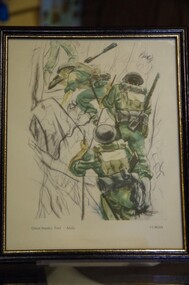 Running Rabbits Military Museum operated by the Upwey Belgrave RSL Sub Branch
Sketch
... Owen Stanley Train...Picture WW2 Army Owen Stanley Train Sketch ...Owen Stanley Trainpicture, ww2, army -
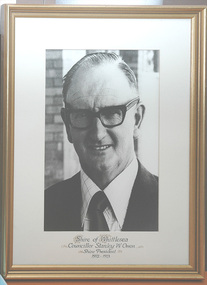 City of Whittlesea
Photograph (item) - Photographs - Councillors, Councillor Stanley W Owen Shire President 1972 - 1973
... Councillor Stanley W Owen Shire President 1972 - 1973...whittlesea councillors whittlesea council photo, black, white, mounted, framed Councillor Stanley W Owen Shire President 1972 - 1973 Photograph Photographs - Councillors ...whittlesea councillors, whittlesea council -
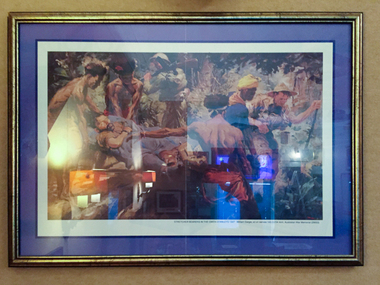 Tramways/East Melbourne RSL Sub Branch - RSL Victoria Listing id: 27511
Print, Stretcher Bearers in the Owen Stanleys
... ...owen stanley...Stretcher Bearers in the Owen Stanleys Print ...Framed reproduction of the print held at the Australian War Memorial of the same name. stretcher bearers, owen stanley, papua new guinea -
 Flagstaff Hill Maritime Museum and Village
Book, Discoveries in Australia Vol 2
... A Narrative of Captain Owen Stanley's visits to the Islands in the Arafura Sea. ...A Narrative of Captain Owen Stanley's visits to the Islands in the Arafura Sea. ...WARRNAMBOOL'S MECHANICS' INSTITUTE Warrnambool's Mechanics' Institute (or Institution as it was sometimes called) was one of the earliest in Victoria. On 17th October 1853 a meeting was held where it was resolved to request the Lieutenant Governor of the Colony to grant land for the erection of a Mechanics' Institutes building. A committee was formed at the meeting and Richard Osburne chaired the first meeting of this committee. The land on the North West corner of Banyan and Merri Streets was granted but there were no funds to erect the building. The Formal Rights of the Warrnambool Mechanics' Institute's encompassed its aims and these were officially adopted in1859; "This Institution has for its object the diffusion of literary, scientific, and other useful knowledge amongst its members, excluding all controversial subjects, religious or political. These objects are sought to be obtained by means of a circulating library, a reading room, the establishment of classes, debates, and the occasional delivery of lectures on natural and experimental philosophy, mechanics, astronomy, chemistry, natural history, literature, and the useful and ornamental arts, particularly those which have a more immediate reference to the colony." The Warrnambool Mechanics' Institute opened its first reading room in November1884 in the National School building at the corner of Banyan and Timor Streets. The Institute was funded by member subscription, payable on a quarterly, half yearly or yearly basis. Samuel Hannaford, the Manager of the Warrnambool Bank of Australasia, was the first Honorary Secretary of the Mechanics' Institutes, and an early President and Vice-President. He also gave several of the early lectures in the Reading Room. Another early Secretary, Librarian and lecturer was Marmaduke Fisher, the teacher at the National School. Lecture topics included The Poets and Poetry of Ireland', 'The Birth and Development of the Earth', 'The Vertebrae - with Remarks on the pleasures resulting from the study of Natural History' and 'Architecture'. In 1856 the Reading Room was moved to James Hider's shop in Timor Street, and by 1864 it was located in the bookshop of Davies and Read. In the 1860's the Mechanics' Institute struggled as membership waned but in 1866, after a series of fund raising efforts, the committee was able to purchase land in Liebig Street, on a site then called Market Square, between the weighbridge and the fire station. A Mechanics' Institute building was opened at this site in August 1871. The following year four more rooms were added to the main Reading Room and in 1873 the Artisan School of Design was incorporated into the Institute. The same year Joseph Archibald established a Museum; however it deteriorated when he was transferred to Bendigo in 1877. In 1880, with Archibald's return to Warrnambool, the Museum was re-established, and in 1885 a new building was built at the back of the Institute to accommodate the re-created School of Design, the Art Gallery and the Museum. In 1887 the Museum section was moved to the former court house in Timor Street (for some time the walls of the building formed part of the TAFE cafeteria but all is now demolished)). In 1911 the Museum was transferred back to the original building and the management of the Mechanics' Institute was handed over to the Warrnambool City Council. The Museum and Art Gallery became one and housed many fine works of art, and the Library continued to grow. The building was well patronised, with records showing that at the beginning of the 20th century there were between 500 and 800 visitors. During World War One the monthly figures were in the thousands, with 3,400 people visiting in January 1915. The Museum was a much loved Institution in Warrnambool until the contents of the Museum and Art Gallery were removed to make room for the Warrnambool City Council Engineers' Department. The contents were stored but many of the items were scattered or lost. When the original building was demolished the site became occupied by the Civic Centre, which included the new City Library. (The library was temporarily located in the old Palais building in Koroit Street.) In the process of reorganisation the Collection was distributed amongst the community groups: -The new City Library took some of the historic books and some important documents, historic photographs and newspapers. -The Art Gallery kept the 19th Century art collection and some of the artefacts from the museum. -The Historic Society has some items -The State Museum has some items -Some items were destroyed -Flagstaff Hill Maritime Village has old newspapers, Government Gazettes, most of the Mechanics' Institute Library, ledgers and documents connected to the Mechanics' Institute Library, some framed and unframed art works and some photographs. The Warrnambool Mechanics' Institute Library book collection is deemed to be of great importance because it is one of the few collections in an almost intact state, and many of the books are now very rare and of great value. WARRNAMBOOL PUBLIC LIBRARY The Warrnambool Mechanics’ Institute (WMI) was formed by a voluntary community group in 1863, within six years of Warrnambool’s beginnings, and its Reading Room opened in 1854. The WMI operated until 1963, at which time it was one of the oldest Mechanics’ Institutes in Victoria. Mechanics’ Institutes offered important services to the public including libraries, reading rooms and places to display and store collections of all sorts such as curiosities and local historical relics. In 1886 a Museum and Fine Arts Gallery were added to the WMI and by the beginning of the 20th century there was also a billiards room and a School of Art. By this time all Mechanics’ Institutes in country Victoria had museums attached. Over the years the Warrnambool Mechanics’ Institute Library was also known as the Warrnambool Public Library the Warrnambool Library and the Free Library. Early funding from the government was for the “Free Library”. The inscription in a book “Science of Man” was for the “Warrnambool Public Library”, donated by Joseph Archibald in 1899. Another inscription in the book “Catalogue of Plants Under Cultivation in the Melbourne Botanic Gardens 1 & 2, 1883” was presented to the “Warrnambool Library” and signed by the author W.R. Guilfoyle. In 1903 the Warrnambool Public Library decided to add a Juvenile Department to library and stock it with hundreds of books suitable for youth. In 1905 the Public Library committee decided to update the collection of books and added 100 new novels plus arrangements for the latest novels to be included as soon as they were available in Victoria. In July 1911 the Warrnambool Council took over the management of the Public Library, Art Gallery, Museum and Mechanics’ Institute and planned to double the size of the then-current building. In 1953, when Mr. R. Pattison was Public Librarian, the Warrnambool Public Library’s senior section 10,000 of the 13,000 books were fiction. The children’s section offered an additional 3,400 books. The library had the equivalent of one book per head of population and served around 33 percent of the reading population. The collection of books was made up of around 60 percent reference and 40 percent fiction. The library was lending 400 books per day. In 1963 the Warrnambool City Council allocated the site of the Mechanics’ Institute building, which included the Public Library, Museum and Art Gallery, for the new Municipal Offices and the Collections were dispersed until 1971. The Warrnambool Library took over the Mechanics’ Institute Library’s holdings on behalf of the Warrnambool City Council. Since the closure of the Warrnambool Mechanics’ Institute the exact location and composition of the original WMI books and items has become unclear. Other materials have been added to the collection, including items from Terang MI, Warrnambool Court House and Customs House. Many of the books have been identified as the Pattison Collection, named after the Librarian who catalogued and numbered the books during his time as Warrnambool Public Librarian in the time before the Mechanics’ Institute closed. It seems that when Warrnambool became part of the Corangamite Regional Library some of the books and materials went to its head office in Colac and then back to Warrnambool where they were stored at the Art Gallery for quite some time. Some then went to the Warrnambool Historical Society, some stayed at the Art Gallery and some were moved to Flagstaff Hill Maritime Village. The various stamps and labels on the books held at Flagstaff Hill show the variety of the collection’s distribution and origin. The books in the collection at Flagstaff Hill Maritime Village date from the 1850’s to the late 1950’s and include rare and valuable volumes. Many of the books are part of the “Pattison Collection” after the Warrnambool’s Public Librarian, Mr. R. Pattison. The Warrnambool Mechanics' Institute Collection is primarily significant in its totality, rather than for the individual objects it contains. Its contents are highly representative of the development of Mechanics' Institute libraries across Australia, particularly Victoria. A diversity of publications and themes has been amassed, and these provide clues to our understanding of the nature of and changes in the reading habits of Victorians from the 1850s to the middle of the 20th century. The collection also highlights the Warrnambool community’s commitment to the Mechanics’ Institute, and to reading, literacy and learning in the regions, and proves that access to knowledge was not impeded by distance. These items help to provide a more complete picture of our community’s ideals and aspirations. As with many Mechanics' Institutes in Australia, the one which operated in Warrnambool was established and overseen for many years by key individuals associated with the development of the city itself. The WMI publication collection is historically significant because of its association with local people, places and the key historical themes in the development of Warrnambool of rural development, industry, farming, education, and community. The collection documents and illustrates the changing interests, focus and tastes of Victorians, especially those in regional cities. Generally the individual items in the collection are not particularly rare, as examples of all probably exist in other public collections in Victoria. It is primarily because there are so very few surviving Mechanics' Institute collections in Victoria, which lends this overall collection its significance. Many items in the WMI Collection have the potential to support further research, both as individual objects and through the collection in its entirety. This material is significant for its ability to assist in the interpretation of the history of the area and adds to the general understanding of the development of the township. Many components of the WMI publication collection complement and reinforce the Flagstaff Hill Maritime Museum Collection, the Warrnambool Art Gallery Collection, and that in the Warrnambool Historical Society, and also contribute to a clearer understanding of the original Warrnambool Mechanics' Institute collections. This will greatly enhance the appreciation of the few surviving Mechanics' Institute collections across Victoria, and also in New South Wales. The similarities and differences between the small number of collections that have survived can provide further insights into how the people of Victoria in general, and Warrnambool in particular, constructed a civic culture of adult learning to foster an informed citizenry. The Warrnambool Mechanics' Institute publication collection is of both local and state significance. Discoveries in Australia Vol 2 With an account of the Coasts and Rivers. Explored and Surveyed during the voyage of HMS Beagle. In the years 1837-38-39-40-41-42-43. A Narrative of Captain Owen Stanley's visits to the Islands in the Arafura Sea. Author: J Lort Stokes Publisher: T & W Boone Date: 1846Label on spine cover with typed text 919.4 AUS Pastedown front endpaper has sticker from Warrnambool Public Library Inside Front loose endpaper has a sticker from Warrnambool Mechanics Institutewarrnambool, shipwrecked-coast, flagstaff-hill, flagstaff-hill-maritime-museum, maritime-museum, shipwreck-coast, flagstaff-hill-maritime-village, shipwrecked-artefact, great ocean road, book, warrnambool library, warrnambool mechanics’ institute, mechanics’ institute library, victorian library board, warrnambool books and records, warrnambool children’s library, discoveries in australia vol 2, j lort stokes -
 Bendigo Military Museum
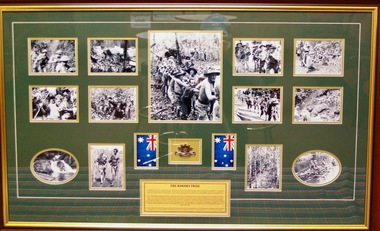
Photograph - THE KOKODA TRAIL, FRAMED, Unknown
... The track is 96 K’s or then it was 60 miles over the Owen Stanley Ranges in New Guinea. Australian casualties were 625 KIA, 1600 WIA and a huge 4,000 casualties due to illness. ...The track is 96 K’s or then it was 60 miles over the Owen Stanley Ranges in New Guinea. Australian casualties were 625 KIA, 1600 WIA and a huge 4,000 casualties due to illness. ...The description outlines the the Kokoda Campaign from July 1942 to November 1942. The track is 96 K’s or then it was 60 miles over the Owen Stanley Ranges in New Guinea. Australian casualties were 625 KIA, 1600 WIA and a huge 4,000 casualties due to illness. Over the years there has been many discussions as to whether it is a “trail” or a”track”. This item is on display in the Bendigo District RSL Havilah Road.Framed series of photos 13 in all re the Kokoda Track Campaign in New Guinea in 1942. Photos are set in a green background with each photo having a yellowish border. A rising Sun Badge is center near the bottom. At the bottom is a text description of the campaign.brsl, smirsl, bdrslinc, kokoda -
 Lara RSL Sub Branch
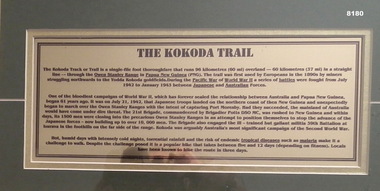
Framed collection of the Kokoda Trail, The Kodoka Trail, Circa 2018
... The Kokoda Track (or Trail) is a single-file thoroughfare that runs 96 kilometres (60ml) overland) - 60 kilometres (37ml) in a straight line - through the Owen Stanley Range in Papua New Guinea (PNG).The trail was First used by Europeans in the 1890s by miners struggling northwards to the Yodda Kokoda goldfields. ...The Kokoda Track (or Trail) is a single-file thoroughfare that runs 96 kilometres (60ml) overland) - 60 kilometres (37ml) in a straight line - through the Owen Stanley Range in Papua New Guinea (PNG).The trail was First used by Europeans in the 1890s by miners struggling northwards to the Yodda Kokoda goldfields. ...The Kokoda Track (or Trail) is a single-file thoroughfare that runs 96 kilometres (60ml) overland) - 60 kilometres (37ml) in a straight line - through the Owen Stanley Range in Papua New Guinea (PNG).The trail was First used by Europeans in the 1890s by miners struggling northwards to the Yodda Kokoda goldfields. During the Pacific War of World War 2 a series of battles were fought from July 1942 to January 1943 between Japanese and Australian forces.One of the bloodiest campaigns of World War 2,which has forever sealed the relation ship between Australia and Papua New Guinea began 61 years ago. This Photographic Memorial is dedicated to those Australian and Papua New Guinea forces who fought against the Japanese with courage and fortitude on the Kokoda Trail.Rectangular shaped glass covered picture frame showing a collection of photos,two flags and a Rising sun badge. The Kododa Trail.kokoda track, world war 2, papua new guinea, australian forces, lara r.s.l. -
 Tatura Irrigation & Wartime Camps Museum
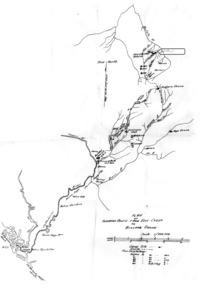
Map - Map - Photocopy, New Guinea Escape Route
... Some men went down to Salamaua and made their way along the north coast, but small groups also made their way over the Owen Stanley Ranges; rafting down the Lakekamu RIver to Yule Island and by boat to Port Moresby. ...Some men went down to Salamaua and made their way along the north coast, but small groups also made their way over the Owen Stanley Ranges; rafting down the Lakekamu RIver to Yule Island and by boat to Port Moresby. ...At the end of January 1942 there was only about 250 men left in Wau, as the women and children had been evacuated by air a little earlier. With no planes to take the men they had to make their own way to Port Moresby and then travel by ship to Australia. Some men went down to Salamaua and made their way along the north coast, but small groups also made their way over the Owen Stanley Ranges; rafting down the Lakekamu RIver to Yule Island and by boat to Port Moresby. Donor Vanessa Kiessling's Father was part of the second group, and had drawn a detailed map of their route. This might be the same route taken by Rev. Willi Hertle Photocopy of New Guinea map showing escape routePlan of surveyed route from Edie Creek to Bulldog Dromepapua new guinea, escape, map, wau, willi hertle, kiessling -
 Melbourne Legacy
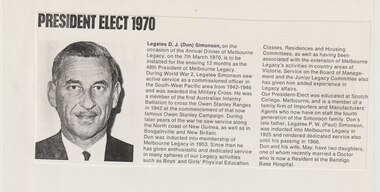
Document - Document, article, Legatee Don Simonson, President 1970
... He was part of the Owen Stanley Campaign and also served in Bougainville and New Britain. ...He was part of the Owen Stanley Campaign and also served in Bougainville and New Britain. ...A cutting from from a Melbourne Legacy President's report showing a photo of Legatee Don Simonson (President of Melbourne Legacy in 1970). It was collected to be a record of a photo of past presidents. Legatee Simonson saw active service as a commissioned officer in the South-West Pacific area and was awarded the Military Cross. He was part of the Owen Stanley Campaign and also served in Bougainville and New Britain. He was inducted into Legacy in 1953. His father was also a Legatee, Paul W Simonson was inducted into Legacy in 1925. The article was part of an album of past presidents from 1965 to 1989. The folder included biographical details and obituaries, eulogies and death notices of prominent Legatees. The items have been catalogued separately.A record of Legatee Don Simonson a past president of Legacy. The information was collected to record the lives of prominent legatees in a folder.Article with a black and white photo of Legatee Don Simonson - President 1970past presidents, don simonson -
 Wangaratta RSL Sub Branch
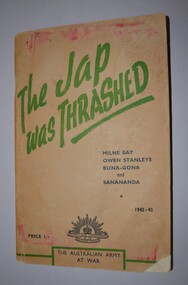
Book - Booklet, The Jap was Thrashed - Milne Bay Owen Stanleys Guna-Gona and Sanananda 1942-43, c1944
... This book, contains 128 pages including photographs and maps, chronicles the Australian Army's campaigns against Japanese forces in New Guinea during World War II, specifically the battles at Milne Bay, the Owen Stanley Range, Buna, Gona, and Sanananda. ...The Jap was Thrashed - Milne Bay Owen Stanleys Guna-Gona and Sanananda 1942-43 Book Booklet ...This book, contains 128 pages including photographs and maps, chronicles the Australian Army's campaigns against Japanese forces in New Guinea during World War II, specifically the battles at Milne Bay, the Owen Stanley Range, Buna, Gona, and Sanananda. Published under the authority of General Sir Thomas Blamey, it served as an official morale-boosting narrative to highlight the resilience of the Australian soldier. Booklet belonged to Robert Francis ISKOV VX15237 born at Glenrowan served with the 59th Battalion CMF before joining the 2/14th Battalion at Caulfield in September 1940. He disembarked for the Middle East in November, 1940 and fought in the Syrian campaign in 1941. In 1942 the 2/14th Battalion returned to Australia and sent to Papua where he fought at the Battle of Isurava before the battalion was sent to Gona. On 1943 Bob returned to Australia to undertake officer training and in 1945 with the 2/23rd Battalion sailed to Morotai and served with the battalion on Tarakan. He returned to Australia in November, 1945 and discharged a month later.Cream colour cardboard soft cover booklet with green and black writing and crest on front cover.Price 1/- The Australian Army at Warww2, new guinea, the jap was thrashed, booklet -
 Warrnambool and District Historical Society Inc.
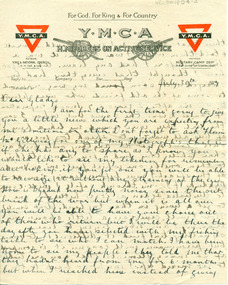
Document - Letters World War 1, Letter: 30 July 1917 To Gladys from 3117 Pte SO Miller, pre 30 July 1917
... Original correspondence from SO Miller to Gladys Holmes, Bakery, Byaduk written from abroad in July 1917. 3117 Pte Stanley Owen Miller was born in London, England. ...Original correspondence from SO Miller to Gladys Holmes, Bakery, Byaduk written from abroad in July 1917. 3117 Pte Stanley Owen Miller was born in London, England. ...Original correspondence from SO Miller to Gladys Holmes, Bakery, Byaduk written from abroad in July 1917. 3117 Pte Stanley Owen Miller was born in London, England. He worked at the McGillivray farm, Byaduk. Enlisted 8th January 1917 and served with the 38th Battio - 7th Reinforcements and embarked on the HMAT A70 Ballarat. Killed on 7th June 1917 at Villiers Bretonneux, France, aged 20. Original correspondence envelope and two page letter written by an Englishman to Gladys Holmes of the Bakery, Byaduk. When working on the McGillivray farm at Byaduk in 1917 he enlisted in the A.I.F. One of fourteen items of documents gifted, all correspondence from abroad to Byaduk residents. 001804.1 - 001804.1R: Envelope- Y.M.C.A. branded issue, black ink postmark and 1d red stamp 001804.2-001804.3R Two sheets of Y.M.C.A. paper, buff with central black YMCA logo, 'For God, For King & For Country' with "HM FORCES ON ACTIVE SERVICE' superimposed on reversed machine guns and two red and blue Y.M.C.A. logos written in blue ink on both sides. 001804.9.-.001804.9R: small black and white photograph of a soldier with 11 lines of handwritten descriptive text on the reverse. 001804.1 -1R: Y.M.C.A. envelope handwritten 'On active service abroad' addressed to Miss G. Holmes/Byaduk (Bakery)/Via Hamilton/Victoria/Australia. Red 1d pRE Reverse- Byaduk/Byaduk/M Miss G.I. Holmes 001804.2- 001804.3R: Three pages of blue ink handwriting on Y.M.C.A. letter paper. Abroad/ Dear Gladys....I remain yours S.O.Miller.gladys holmes, so miller, 3117, hmat a70 ballarat, villiers bretonneoux, byaduk memorial hall, honour board, ww 1, letter, y.m.c.a., photograph, diet sheet, villers bretonneux, byaduk memorial hall honour board, england -
 Chinese Museum
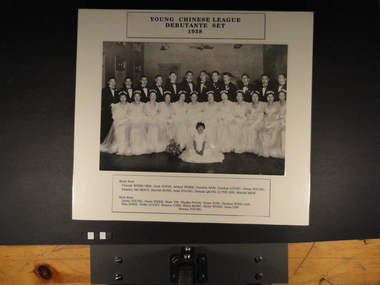
exhibition panel, Young Chinese League debutante set 1938, 1938
... 'Back row: Claude WONG HEE, Jack GOON, Arthur WHEE, Gordon NAM, Gordon LOUEY, Owen YOUNG, Stanley AH MOUY, Harold KONG, Dennis QUON, G TYE DIN, Harold MEW. ...'Back row: Claude WONG HEE, Jack GOON, Arthur WHEE, Gordon NAM, Gordon LOUEY, Owen YOUNG, Stanley AH MOUY, Harold KONG, Dennis QUON, G TYE DIN, Harold MEW. ...This photograph was taken of the debutantes and their partners presented at the annual debutante ball.This photograph is significant for its links to the Chinese Young League. The League was formally established on 4 October 1932 to to promote free social intercourse and goodwill among its members and their mutual improvement. Membership was open to all persons, with one or both parents or grandparents born in China. Wives of Chinese members were permitted as members with the same privileges. It was a significant social organisation for Chinese-Australians in Melbourne in the mid to late twentieth century.Laminated black and white photographic print (copy print) on card. Front of card, top centre: 'Young Chinese League debutante set 1938'. Front of card, bottom centre. 'Back row: Claude WONG HEE, Jack GOON, Arthur WHEE, Gordon NAM, Gordon LOUEY, Owen YOUNG, Stanley AH MOUY, Harold KONG, Dennis QUON, G TYE DIN, Harold MEW. Next Row: Linda YOUNG, Doris WHEE, Rose YIN, Phyllis POON, Violet TOW, Thelma WING JAN, Kim SHEE, Violet LOUEY, Eunice CHIN, Edna KONG, Betty WHEE, Jean LIM, Norma YOUNG'. Back of card, top right hand corner. Number '1938' has been written in blue pen. Sticker text 'P735 (another version = P587) 93.2.1'.young chinese league, debutante balls, melbourne -
 Federation University Historical Collection
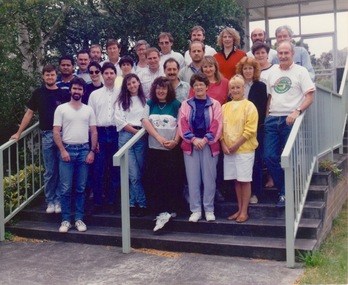
Photograph - Photograph - Colour, VIOSH: Graduate Diploma of Occupational Hazard Management: Intake 15, 1991
... Students are from Intake 15, 1991, at Ballarat University College. viosh victorian institute of occupational safety and health ballarat university college frank anderson ursula balshaw robert blackford ian bond john bowden neil brabham tracey browne david bryant jane davey muriel duncan debbie fitzsimmons marie fox kelvin genn stanley harris brian hastings david hughes annette kappler sharon kelsey miss lealiifano greg loats david mannes nina mccarthy colin mclean wendy owens steven parker ross pilkington leith pontifex gregory raisin allan read elizabeth sanderson colin steer dean taylor dorothy vasiliou wendy welgus christopher western natasha white Colour photograph of student group. ...Victorian Institute of Occupational Safety and Health (VIOSH) Australia is the Asia-Pacific centre for teaching and research in occupational health and safety (OHS) and is known as one of Australia's leaders on the field. VIOSH has a global reputation for its innovative approach within the field of OHS management. VIOSH had its first intake of students in 1979. At that time the Institution was known as the Ballarat College of Advanced Education. In 1990 it became known as Ballarat University College, then in 1994 as University of Ballarat. It was 2014 that it became Federation University. Photograph is of the students of Intake 15, 1991. They are Ballarat University College. VIOSH Australia students are safety managers, senior advisors and experienced OHS professionals. They come from all over Australia and industry. Students are taught active research and enquiry; rather than textbook learning and a one-size fits all approach. VIOSH accepts people into the Graduate Diploma of Occupational Hazard Management who have no undergraduate degree - on the basis of extensive work experience and knowledge. . Students are from Intake 15, 1991, at Ballarat University College. Colour photograph of student group.viosh, victorian institute of occupational safety and health, ballarat university college, frank anderson, ursula balshaw, robert blackford, ian bond, john bowden, neil brabham, tracey browne, david bryant, jane davey, muriel duncan, debbie fitzsimmons, marie fox, kelvin genn, stanley harris, brian hastings, david hughes, annette kappler, sharon kelsey, miss lealiifano, greg loats, david mannes, nina mccarthy, colin mclean, wendy owens, steven parker, ross pilkington, leith pontifex, gregory raisin, allan read, elizabeth sanderson, colin steer, dean taylor, dorothy vasiliou, wendy welgus, christopher western, natasha white -
 Lara RSL Sub Branch
Book, Australia in the War of 1939 - 1945 ARMY South-West Pacific Area First Year - Kokoda to Wau. Author Dudley McCarthy, First Published in 1959
... WWII Kokoda to Way Australia at War 1939-1945 List of events ARMY Historical Record of Kokoda to Way. kokoda milne bay kanga force ioribaiwa eora creek buna gona sanananda track wau blamey general mac arthur minister forde owen stanley's ower's corner native carriers fuzzy wuzzies Australian War Memorial Australia in the War of 1939-1945 - South-West Pacific Area First Year - Kokoda to War Maps, Illustrations and Photographs Australia in the War of 1939 - 1945 ARMY South-West Pacific Area First Year - Kokoda to Wau. ...WWII Kokoda to Way Australia at War 1939-1945 List of events ARMY Historical Record of Kokoda to Way.Australia in the War of 1939-1945 - South-West Pacific Area First Year - Kokoda to War Maps, Illustrations and PhotographsAustralian War Memorialkokoda, milne bay, kanga force, ioribaiwa, eora creek, buna, gona, sanananda track, wau, blamey, general mac arthur, minister forde, owen stanley's, ower's corner, native carriers fuzzy wuzzies -
 Ballarat Clarendon College
Book prize, Nelson's history of the war (6 vols)
... John Stanley Coltman attended Ballarat College 1913 - 1920; Son of W F Coltman of 208 Clarendon St, Brother of W Lawrie, Owen H & Gwenda. ...John Stanley Coltman attended Ballarat College 1913 - 1920; Son of W F Coltman of 208 Clarendon St, Brother of W Lawrie, Owen H & Gwenda. ...John Stanley Coltman attended Ballarat College 1913 - 1920; Son of W F Coltman of 208 Clarendon St, Brother of W Lawrie, Owen H & Gwenda. A high achieving student John was Dux of College 1919, School Captain 1920, Captain of cricket 1920, tennis 1918, 1919, 1920, football 1919, 1920, athletics 1919 1920, Stroke of first crew 1919 and 1920. The Coltman Demonstration Room, part of the MacKinnon Wing First Floor, was named in honour of John (1919py) and Owen Coltman (1917). A 6 volume leather bound set with Ballarat College crest and borders embossed in gold on front cover; page edges are maroon marbled; gold lettering on spine; bookplate fixed to inside of front cover; library plate to right side of end pages;Bookplate: Ballarat College / Awarded to / J S Coltman / Form VIa / Rhodes Prize for Boy who best [buefies] / the Public School Ideal / (Pres. by T T Hollway Esq) / A S Polson B A / Principal / Christmas 1919rhodes prize, 1919, ballarat college, t t hollway (1869) -
Ballarat Clarendon College
Book prize, How the British won India
... John Stanley Coltman attended Ballarat College 1913 - 1920; Son of W F Coltman of 208 Clarendon St, Brother of W Lawrie, Owen H & Gwenda. ...John Stanley Coltman attended Ballarat College 1913 - 1920; Son of W F Coltman of 208 Clarendon St, Brother of W Lawrie, Owen H & Gwenda. ...John Stanley Coltman attended Ballarat College 1913 - 1920; Son of W F Coltman of 208 Clarendon St, Brother of W Lawrie, Owen H & Gwenda. A high achieving student John went on to become Dux of College 1919, School Captain 1920, Captain of cricket 1920, tennis 1918, 1919, 1920, football 1919, 1920, athletics 1919 1920, Stroke of first crew 1919 and 1920. The Coltman Demonstration Room, part of the MacKinnon Wing First Floor, was named in honour of John (1919py) and Owen Coltman (1917). The book was donated back to the school library in 1985. A blue leather bound set with Ballarat College crest and borders embossed in gold on front cover; page edges are maroon marbled; gold lettering on spine; bookplate fixed to inside of front cover; library plate to right side of end pages;Bookplate: Ballarat College / Awarded to / Jack Coltman / Form Vb / Prize for History 1st / A S Polson B A / Principal / Christmas 1915ballarat college, 1915, john-s-coltman -
Ballarat Clarendon College
Book prize, Mary Barton
... John Stanley Coltman attended Ballarat College 1913 - 1920; Son of W F Coltman of 208 Clarendon St, Brother of W Lawrie, Owen H & Gwenda. ...John Stanley Coltman attended Ballarat College 1913 - 1920; Son of W F Coltman of 208 Clarendon St, Brother of W Lawrie, Owen H & Gwenda. ...John Stanley Coltman attended Ballarat College 1913 - 1920; Son of W F Coltman of 208 Clarendon St, Brother of W Lawrie, Owen H & Gwenda. A high achieving student John went on to become Dux of College 1919, School Captain 1920, Captain of cricket 1920, tennis 1918, 1919, 1920, football 1919, 1920, athletics 1919 1920, Stroke of first crew 1919 and 1920. The Coltman Demonstration Room, part of the MacKinnon Wing First Floor, was named in honour of John (1919py) and Owen Coltman (1917). This book was donated back to the school library in 1985. A marron leather bound book with Ballarat College crest and borders embossed in gold on front cover; gold lettering on spine; bookplate fixed to inside of front cover; library plate to right side of end pages;Bookplate: Ballarat College / Awarded to / J Coltman / Form VIb / Prize for Prefect / Presented by Principal / A S Polson B A / Principal / Christmas 1918ballarat college, john-s-coltman, 1918 -
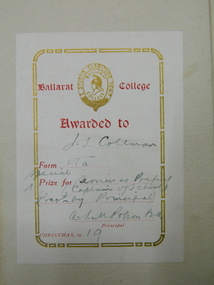 Ballarat Clarendon College
Book prize, Harold: the last of the Saxon kings
... John Stanley Coltman attended Ballarat College 1913 - 1920; Son of W F Coltman of 208 Clarendon St, Brother of W Lawrie, Owen H & Gwenda. ...John Stanley Coltman attended Ballarat College 1913 - 1920; Son of W F Coltman of 208 Clarendon St, Brother of W Lawrie, Owen H & Gwenda. ...John Stanley Coltman attended Ballarat College 1913 - 1920; Son of W F Coltman of 208 Clarendon St, Brother of W Lawrie, Owen H & Gwenda. A high achieving student John went on to become Dux of College 1919, School Captain 1920, Captain of cricket 1920, tennis 1918, 1919, 1920, football 1919, 1920, athletics 1919 1920, Stroke of first crew 1919 and 1920. The Coltman Demonstration Room, part of the MacKinnon Wing First Floor, was named in honour of John (1919py) and Owen Coltman (1917). This book was donated back to the school library in 1985. A blackleather bound book with Ballarat College crest embossed in gold on front cover; gold lettering on spine; bookplate fixed to inside of front cover; library plate to right side of end pages;Bookplate: Ballarat College / Awarded to / J S Coltman / Form VIa / Special Prize for service as Prefect (Captain of School) / Pres. by Principal / A S Polson B A / Principal / Christmas 1919ballarat college, john-s-coltman, 1918 -
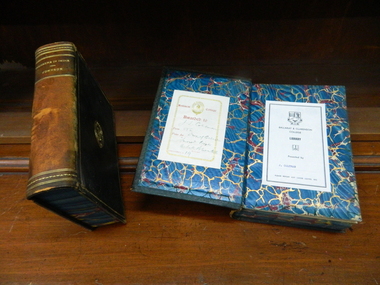 Ballarat Clarendon College
Book prize, Pioneers in Canada and Pioneers in India (2 vols)
... John Stanley Coltman attended Ballarat College 1913 - 1920; Son of W F Coltman of 208 Clarendon St, Brother of W Lawrie, Owen H & Gwenda. ...John Stanley Coltman attended Ballarat College 1913 - 1920; Son of W F Coltman of 208 Clarendon St, Brother of W Lawrie, Owen H & Gwenda. ...John Stanley Coltman attended Ballarat College 1913 - 1920; Son of W F Coltman of 208 Clarendon St, Brother of W Lawrie, Owen H & Gwenda. A high achieving student John went on to become Dux of College 1919, School Captain 1920, Captain of cricket 1920, tennis 1918, 1919, 1920, football 1919, 1920, athletics 1919 1920, Stroke of first crew 1919 and 1920. The Coltman Demonstration Room, part of the MacKinnon Wing First Floor, was named in honour of John (1919py) and Owen Coltman (1917). This book was donated back to the school library in 1985. Dark green leather bound set with Ballarat College crest and borders embossed in gold on front cover; gold lettering on spine; marbled endpages and page edges; bookplate fixed to inside of front cover; library plate to right side of end pages;Bookplate: Ballarat College / Awarded to / J S Coltman / Form VIa / Prize for Dux of College / "Snow" prize / A S M Polson B A / Principal / Christmas 1919ballarat college, john-s-coltman, 1919, dux -
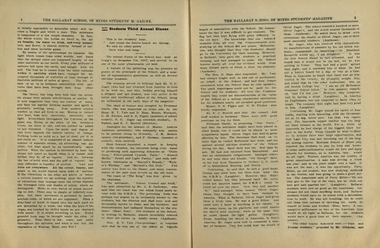 Federation University Historical Collection
Booklet, Ballarat School of Mines, Student Magazine, First Term, 1908, 1908
... owen...l. a. westcott...e. m. boyer...ernie strick...isadore wittowski...m. tyler...h. m. conran...h. g. conran...h. g. cornell...l. j. middleton...j. d. orr...j. r. blight...w. g. taylor...l. hall...c. bult...g. o. ramsay...o. w. williams...stanley...Images. pegging a tramway route transmission of power by rope driving briseis main and new brothers home diabolo snake valley obituary analytical chemistry students' library john brittain a. e. c. kerr w. smith l. seward leslie coulter t. williams f. treloar whitington hart murphy o. w. williams l. knight w. kingston g. w. sides w. gelard w. t. sayer s. r. white a. c. hesselmann r. j. moore r. g. walker j. a. peart newton g. king w. e. eyres g.h davenport a. d. r. galloway j. e. b. crossley j. smart h. hylton j. blayney t. lennon h. s. sheppard p. c. osbourne c.w. nash les smith w. b. tucker c. w. white a. j. robin h. f. owen l. a. westcott e. m. boyer ernie strick isadore wittowski m. tyler h. m. conran h. g. conran h. g. cornell l. j. middleton j. d. orr j. r. blight w. g. taylor l. hall c. bult g. o. ramsay o. w. williams stanley r. heron john a. grant william t. sayer frederick l. treloar patrick s. anderson robert mitchell frederick j. martell Booklet of 26 pages. ...Table of Contents: The location and pegging of a tramway route, The unity of things, Students' third annual dinner, The transmission of power by rope driving, Visit to the Briseis main and new brothers home, School of Mines' sports committee, School of Mines' magazine committee, Diabolo, Limericks sluiced at Snake Valley, Obituary, Hints to the inexperienced, Fossilistic love, Past students, Some bunsen memories, Quaint and curious coincidences, Notes on analytical chemistry, New students, News and notes, Students' library, Sports and pastimes, School of Mines' annual dinner, Correspondence, Answers to correspondents, Editorial notes. Images.Booklet of 26 pages.pegging a tramway route, transmission of power by rope driving, briseis main and new brothers home, diabolo, snake valley, obituary, analytical chemistry, students' library, john brittain, a. e. c. kerr, w. smith, l. seward, leslie coulter, t. williams, f. treloar, whitington, hart, murphy, o. w. williams, l. knight, w. kingston, g. w. sides, w. gelard, w. t. sayer, s. r. white, a. c. hesselmann, r. j. moore, r. g. walker, j. a. peart, newton g. king, w. e. eyres, g.h davenport, a. d. r. galloway, j. e. b. crossley, j. smart, h. hylton, j. blayney, t. lennon, h. s. sheppard, p. c. osbourne, c.w. nash, les smith, w. b. tucker, c. w. white, a. j. robin, h. f. owen, l. a. westcott, e. m. boyer, ernie strick, isadore wittowski, m. tyler, h. m. conran, h. g. conran, h. g. cornell, l. j. middleton, j. d. orr, j. r. blight, w. g. taylor, l. hall, c. bult, g. o. ramsay, o. w. williams, stanley r. heron, john a. grant, william t. sayer, frederick l. treloar, patrick s. anderson, robert mitchell, frederick j. martell -
Federation University Historical Collection
Booklet - Magazine, Ballarat School of Mines Students' Magazine, 1916, 1916
... stanley tomkins...harold herbert...viola jackson...hilda wardle...elsie naples...jessie pridgeon...gertrude owen...Editorial, Fumes from the Lab, First Principles, Excursion to Melbourne, General Principles of the Cinematograph, Arts & Crafts gossip, In Memoriam, Public notices, Answers to correspondents, Echoes of the past, Science School, Technical Art School, Shun Military notes, The Camp Concert, The Junior Techs, Past members of the staff, Swinburne Technical School visit. ballarat school of mines magazine charles w. whyte patrick s. anderson william t. sayer william f. m. johnson robert m. sergeant harold t. w. dixon harrie wilson ernest s. morsehead carl jensen t. wilkins james fairbairn fairley l. c. blick f. maxwell n. turnball j. a. greenshields e. eimering l. tonkin h. smith r.cox r. o. buchanan l. vernon w. h. steane n. henry r. dale ted cannon john walter sutherland basil sawyer charles burbury herbert r. sleeman eustace m. weston oliver e. jaeger godfrey s. hart lionel j. lambert charles g. fraser l.w.g. buchner-malcolm james a. reid richard g. walker leslie j. coulter herbert e. hawkesworth leslie de jersey grut frederick g. brinsden lewis j. westcott angus d. gibson henry j. whittingham virgil tucker norman c. tinworth charles e. finnis benjamin h. bennett valentine g. anderson ernest s. anderson ralph i. moore john a. grant william gerldard francis c. hall harold g. cornell robert b. lamb sydney radcliff george a. denny frederick p. paul j. lipson hancock edgar c. hursfield david w. bonar wilfred l. allen william j. lakeland frederick a. marriott eric byron moore karl byron moore norman stuckey percy r. osborne john f. sporn horace l. giles maurice troup albert e. davies thos. h. trengrove garnet nightingale walter h. bennett cyril theimeyer stanley tomkins harold herbert viola jackson hilda wardle elsie naples jessie pridgeon gertrude owen alfred berryman herbert malin cedric white arthur lilburne donald j. johnson arthur kennedy eulalie perry rex l. cutter ronald ferguson murdoch spencer john b. sutcliffe elliott gower james leckie richard craze thos. r. pridgeon d. hambly harold n. ferguson mabel morris jack blaikie robert allen aubrey simmons janet white harold brown kenneth moss robert tremain j. m. hobba f. g. davis e.j. cannon reginald callister r.c. callister f.g. procter gladstone procter Blue soft covered magazine of 62 pages. ...Editorial, Fumes from the Lab, First Principles, Excursion to Melbourne, General Principles of the Cinematograph, Arts & Crafts gossip, In Memoriam, Public notices, Answers to correspondents, Echoes of the past, Science School, Technical Art School, Shun Military notes, The Camp Concert, The Junior Techs, Past members of the staff, Swinburne Technical School visit. Blue soft covered magazine of 62 pages.ballarat school of mines, magazine, charles w. whyte, patrick s. anderson, william t. sayer, william f. m. johnson, robert m. sergeant, harold t. w. dixon, harrie wilson, ernest s. morsehead, carl jensen, t. wilkins, james fairbairn fairley, l. c. blick, f. maxwell, n. turnball, j. a. greenshields, e. eimering, l. tonkin, h. smith, r.cox, r. o. buchanan, l. vernon, w. h. steane, n. henry, r. dale, ted cannon, john walter sutherland, basil sawyer, charles burbury, herbert r. sleeman, eustace m. weston, oliver e. jaeger, godfrey s. hart, lionel j. lambert, charles g. fraser, l.w.g. buchner-malcolm, james a. reid, richard g. walker, leslie j. coulter, herbert e. hawkesworth, leslie de jersey grut, frederick g. brinsden, lewis j. westcott, angus d. gibson, henry j. whittingham, virgil tucker, norman c. tinworth, charles e. finnis, benjamin h. bennett, valentine g. anderson, ernest s. anderson, ralph i. moore, john a. grant, william gerldard, francis c. hall, harold g. cornell, robert b. lamb, sydney radcliff, george a. denny, frederick p. paul, j. lipson hancock, edgar c. hursfield, david w. bonar, wilfred l. allen, william j. lakeland, frederick a. marriott, eric byron moore, karl byron moore, norman stuckey, percy r. osborne, john f. sporn, horace l. giles, maurice troup, albert e. davies, thos. h. trengrove, garnet nightingale, walter h. bennett, cyril theimeyer, stanley tomkins, harold herbert, viola jackson, hilda wardle, elsie naples, jessie pridgeon, gertrude owen, alfred berryman, herbert malin, cedric white, arthur lilburne, donald j. johnson, arthur kennedy, eulalie perry, rex l. cutter, ronald ferguson, murdoch spencer, john b. sutcliffe, elliott gower, james leckie, richard craze, thos. r. pridgeon, d. hambly, harold n. ferguson, mabel morris, jack blaikie, robert allen, aubrey simmons, janet white, harold brown, kenneth moss, robert tremain, j. m. hobba, f. g. davis, e.j. cannon, reginald callister, r.c. callister, f.g. procter, gladstone procter -
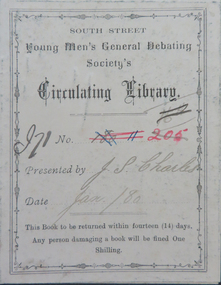 Federation University Historical Collection
Book, W. Stanley Jevons, Money and the Mechanism of Exchange, 1876
... Stanley Jevons was professor of logic and political economy in the Owens College, Manchester....Stanley Jevons was professor of logic and political economy in the Owens College, Manchester. money south street south street debating society south street young men's general debating society circulating library bookplate j.s. charles john p. charles library Barter currency metals as money coining coins standards exchange promissory notes paper currency credit documents foreign bills of exchange bank of england corn rents legal tender Inside front page "The Gift of John P. ...Crimson and black cloth bound book of 350 pages. Formerly part of the South Street Young Men's General Debating Society's Circulating Library.non-fictionmoney, south street, south street debating society, south street young men's general debating society circulating library, bookplate, j.s. charles, john p. charles, library, barter, currency, metals as money, coining, coins, standards, exchange, promissory notes, paper currency, credit documents, foreign bills of exchange, bank of england, corn rents, legal tender -
 Monbulk RSL Sub Branch
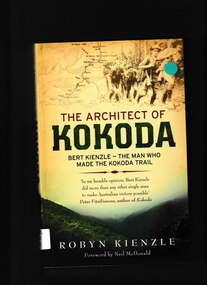
Book, Robyn Kienzle, The architect of Kokoda: Bert Kienzle - the man who made the Kokoda trail, 2011
... His role in building the Kokoda trail ensured that troops in Papua New Guineareceived the food, munitions and medical support they needed kienzle herbert thompson 1905-1988 kokoda trail (papua new guinea) Biography of Bert Kienzle who established a trail across the Owen Stanley ranges. Index, bibliography, ill (plates), p.327. ...Biography of Bert Kienzle who established a trail across the Owen Stanley ranges.Index, bibliography, ill (plates), p.327.non-fictionBiography of Bert Kienzle who established a trail across the Owen Stanley ranges.kienzle herbert thompson 1905-1988, kokoda trail (papua new guinea) -
 Bendigo Historical Society Inc.
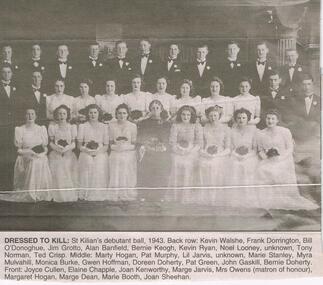
Newspaper - JENNY FOLEY COLLECTION: DRESSED TO KILL
... Middle: Marty Hogan, Pat Murphy, Lil Jarvis, Unknown, Marie Stanley, Myra Mulvahill, Monica Burke, Gwen Hoffman, Doreen Doherty, Pat Green, John Gaskill, Bernie Doherty. Front: Joyce Cullen, Elaine Chapple, Joan Kenworthy, Marge Jarvis, Mrs Owens (matron of honour), Margaret Hogan, Marge Dean, Marie Booth, Joan Sheehan. ...Middle: Marty Hogan, Pat Murphy, Lil Jarvis, Unknown, Marie Stanley, Myra Mulvahill, Monica Burke, Gwen Hoffman, Doreen Doherty, Pat Green, John Gaskill, Bernie Doherty. Front: Joyce Cullen, Elaine Chapple, Joan Kenworthy, Marge Jarvis, Mrs Owens (matron of honour), Margaret Hogan, Marge Dean, Marie Booth, Joan Sheehan. ...BHS CollectionBendigo Advertiser ''The way we were'' from 2003. Dressed to kill: St Killian's debutant ball, 1943. Back row: Kevin Walshe, Frank Dorrington, Bill O'Donoghue, Jim Grotto, Alan Banfield, Bernie Keogh, Kevin Ryan, Noel Looney, Unknown, Tony Norman, Ted Crisp. Middle: Marty Hogan, Pat Murphy, Lil Jarvis, Unknown, Marie Stanley, Myra Mulvahill, Monica Burke, Gwen Hoffman, Doreen Doherty, Pat Green, John Gaskill, Bernie Doherty. Front: Joyce Cullen, Elaine Chapple, Joan Kenworthy, Marge Jarvis, Mrs Owens (matron of honour), Margaret Hogan, Marge Dean, Marie Booth, Joan Sheehan. The clip is in a folder.newspaper, bendigo advertiser, the way we were -
 National Vietnam Veterans Museum (NVVM)
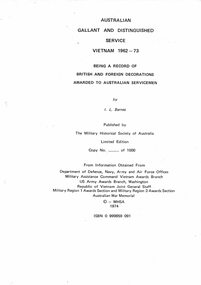
Document, A copy of Australian Gallant and Distinguished Service Vietnam 1962-1973: Being A Record of British and Foreign Decorations Awarded to Australian Servicemen in The Royal Australian Air Force, 1974
... Stanley Donald Mellow...A14968...Cpl Raymond Charles Chandler...A55714...WO James Richard Kenny...A21316...Flight Sergeant Thomas George Lenton...A2927...Sgt Eric Glen Allen...A6548...Aircraftman Ronald Neil McNamara...A25038...Squadron Leader Rex Stevens Ramsey...O33687...Flight Lieutenant Robert Max Hayes...O51626...Flight Lieutenant Clifford Mitchell Dohle...O39642...Flight Lieutenant Geoffrey Alfred Banfield...O37553...Flight Lieutenant John Terence McDonnell...O38531...Flight Lieutenant John McLeod Harris...O43732...Flight Sergeant Owen...Flight Lieutenant Commander Of The Order Of The British Empire CBE Air Commodore Jack Dowling 0370 Air Commodore John Fullarton Lush 0369 Group Captain John Wilkins Hubble 05833 Air Commodore Geoffrey Thompson 0393 Group Captain John Irwin Adams O33119 Air Commodore Frederick Stephen Robey O5787 Group Captain Ronald Jack McKimm O22084 Air Commodore Clarence Haddon Spurgeon O399 Air Commodore Neville Patrick McNamara O11353 Group Captain Roberts (Robert) Hunter Martin O22188 Distinguished Service Order DSO Companion of the Distinguished Service Order Group Captain Peter Frank Raw Wing Commander Anthony Watcyn Powell O314347 Group Captain Selwyn David Evans O22127 Wing Commander John Alan Paule O35028 Wing Commander John Alan Whitehead O33710 Wing Commander Peter Geoffrey Larard O35023 Wing Commander Roy Walter Hibben O37568 Wing Commander Jack Robert Boast O14165 Wing Commander Peter Lionel Howard Coy O26006 Wing Commander Peter William Hahood O52901 Officer of the Order of the British Empire Order Of The British Empire (OBE) Wing Commander Phillip Arthur Bloom O210837 Wing Commander Peter William Kennedy O4667 Member of the Order of the British Empire (MBE) Warrant Officer Andrea Giovanni Pellizzer A4149 Chaplain Third Class Patrick John McCormick O19853 Wing Commander Cecil George Kilsby O33178 Warrant Officer Allan Richard Grinter A31866 Flight Lieutenant Philip Anthony Mogridge O39014 Flight Lieutenant George Walter Foskett O223127 Squandron Leader Ronald Holden Tucker O220878 Flight Lieutenant Neville Colin Walliss O12206 Flight Lieutenant Walter Wolfgang Wurm O55848 Flight Lieutenant John Thomas Connell O33721 Chaplain John Julian White O317689 Squadron Leader Donald Arthur Ernest Tidd O313248 Flight Lieutenant Raymond Keith Crossley O32838 Flight Lieutenant Bruce Victor Tipping O35364 Squadron Leader Robin Norman Wade O217796 Chaplain John Eward Grannall O222956 Distinguished Flying Cross DFC Wing Commander Victor Douglas Guthrie O22015 Wing Commander Raymond Alfred Scott O22143 Wing Commander (Acting) Vance Drummond O33624 Wing Commander Charles James Melchert O11419 Flight Lieutenant Leigh Oxley Hindley O23946 Flight Lieutenant Francis Patrick Riley O216204 Pilot Officer Michael John Haxell O218798 Squadron Leader Anthony John Fookes O33200 Squadron Leader James Henry Cox O216731 Flying Office Macaulay Cottrell O316174 Squadron Leader Peter John Reed O35030 Squadron Leader Athol Charles Jory O15831 Squadron Leader Nicholas James Gregory Watling 015612 Flight Lieutenant Anthony Philip Ford O219917 Flight Lieutenant Peter Graham Smith O216415 Flying Officer Brian Harris Fooks O44200 Wing Commander Jack Darby Espie O33153 Squadron Leader Ronald David Crump O53401 Squadron Leader Brian Leslie John Dirou O314174 Flight Lieutenant Robert Alec Charles Kendell O316951 Flight Lieutenant Donald Herbert Porter O217899 Flight Lieutenant Garry Gordon Cooper O219964 Wing Commander Barry Moore Thomas O32568 Squadron Leader Thomas Ward O14288 Flight Lieutenant Gerald Maurice Cramer O22886 Flight Lieutenant Reginald John Thompson O316968 Flight Lieutenant Roger Arthur Wilson O221235 Flight Lieutenant Peter William Davies O221384 Squadron Leader Graham Dyke O14384 Flight Lieutenant Kenneth James Mitchell O43443 Flight Lieutenant John Frederick Hazelwood O219888 Flying Officer Michael Ross Tardent O113526 Flight Lieutenant Rex Robert Budd O212791 Flying Officer Douglas John Stuart Riding Flight Lieutenant Douglas John Stuart Riding O221573 Flight Lieutenant Edward Brian John Bolger O23741 Squadron Leader Michael Robinson O14202 Squadron Leader Ronald James Crimmins O32764 Squadron Leader Ivan Laurence Grove O34222 Flight Lieutenant Ronald Alexander Slater O61240 Flying Officer Gary John Ennis O19987 Flying Officer Nicholas William Hobson O116949 Squadron Leader Graham Wallace Neil O215111 Flight Lieutenant John Laurence Ellis O315190 Flying Officer Bruce Charles Townsend O224152 Squadron Leader Stewart Cosmann Kostlin Mitchell Wing Commander Stewart Cosmann Kostlin Mitchell O213595 Flight Lieutenant John Patrick Hayden O315434 Flight Lieutenant William Norton Robertson O56673 Flying Officer Christopher Allan Beatty O45549 Flying Officer Robert Francis Meares O223862 Wing Commander Francis John Leonard Downing O34496 Squadron Leader Arthur Barnes O36433 Squadron Leader Donald Couldrey White O13864 Flight Lieutenant Francis Leo Clough O218083 Flight Lieutenant Lindsay Arnold Naylor O315270 Flying Officer David Evan Ozanne O57511 Wing Commander Colin Leonard Ackland O14204 Squadron Leader Stanley Clark O217663 Squadron Leader Kenneth David Clark O52798 Flight Lieutenant Norman Mellville Goodall O43963 Conspicuous Gallantry Medal (Flying) CGM Cpl John Desmond Coughlan A220788 George Medal GM Sgt Gordon Dudley Buttriss A21702 Military Medal MM Sgt Noel Edward Power A111932 Distinguished Flying Medal DFM Sgt Robert Joseph Stoyles A217773 Cpl William Wallace O’Rourke A42889 Cpl John Gordon Yorke A45046 Cpl Barry Thomas Gracie A219151 Sgt Terence John Pinkerton A216972 Cpl George Alexander Edwards A314994 Leading Aircraftman Kerry John Shipp A44980 Leading Aircraftman David Thomas Moles A61704 Leading Aircraftman Trevor Lawrence Hamill A317922 Cpl Rodney Joseph Ranger A222471 British Empire Medal BEM Sgt Ernest Edward Moore O216106 Flight Sergeant Colin Milton Robb A51944 Sgt Alan William Rudd A14871 Sgt Barry William Fitzell A218341 Cpl James Benedict Vanderkyl A216178 British Empire Medal For Gallantry Cpl Robert Albert Stephens A220871 Mentioned in Dispatches MID Flight Lieutenant Ronald George Raymond O33756 Sgt Robert Maxwell Wark A216427 Leading Aircraftman David Michael Gwin A218227 WO Frank Anthony Latham A13057 Pilot Officer Charles John Downes O218221 Flight Lieutenant Anthony Lempriere Harley Abbott O55138 Cpl Robert Patrick St John A218262 Group Captain Lyall Robert Klaffer Squadron Leader Lyall Robert Klaffer O4218 Flight Lieutenant Graeme Alexander Nicholson O41992 Flight Lieutenant George Godfrey O54101 Flying Officer Peter Yates O56263 Cpl Stanley Donald Mellow A14968 Cpl Raymond Charles Chandler A55714 WO James Richard Kenny A21316 Flight Sergeant Thomas George Lenton A2927 Sgt Eric Glen Allen A6548 Aircraftman Ronald Neil McNamara A25038 Squadron Leader Rex Stevens Ramsey O33687 Flight Lieutenant Robert Max Hayes O51626 Flight Lieutenant Clifford Mitchell Dohle O39642 Flight Lieutenant Geoffrey Alfred Banfield O37553 Flight Lieutenant John Terence McDonnell O38531 Flight Lieutenant John McLeod Harris O43732 Flight Sergeant Owen Vincent Cooke A24168 Sgt Douglas William Henry Kennett Cpl Dennis Frederick Olsen A18781 Leading Aircraftman David John Collins A221540 Cpl Herbert Roy Sharpe Leading Aircraftman Herbert Roy Sharpe A45003 Wing Commander Henry Alfred Hughes O21144 Squadron Leader John Irvine Thomson O32446 Squadron Leader Thomas Dunning Wright O27562 Squadron Leader John Maxwell Chesterfield O32860 Flight Lieutenant Barry Squires Squadron Leader Barry Squires O216046 Flight Lieutenant Michael Raymond Lewino Squadron Leader Michael Raymond Lewino O55331 Flight Lieutenant Leslie Wilfred Morris O219176 Flight Lieutenant Jeffrey Allan Pedrina O314595 Flying Officer William Stewart McAlister O17860 Cpl Stewart Hampton Bonett Leading Aircraftman Stewart Hampton Bonett A215424 Cpl Ronald Cecil Orchard Aircraftman Ronald Cecil Orchard A14436 Cpl Gregory Michael Aleckson A222329 Flight Lieutenant William Allen Gill O316957 Flight Lieutenant Robert Charles Thompson O33757 Flight Lieutenant Richard Allan Fisher Flying Officer Richard Allan Fisher O18628 Flying Officer Peter Alexander Davidson Pilot Officer Peter Alexander Davidson O222082 Cpl Murray Denis Johnson A55622 Cpl Arthur Douglas Gale A317317 Flight Lieutenant Alan John Perry O216406 Flying Officer Ian Bruce Cooper O316302 Cpl Allan Elliott Matthews A216396 Wing Commander Robert John Limbury Tebbutt O211575 Squadron Leader Hedley Robert Thomas O219178 Flight Lieutenant Gregory Norman Goddard O15633 Pilot Officer John Knox Ross O113665 Flying Officer Onno Dalmolen O317513 Cpl David John Dubber Leading Aircraftman David John Dubber A317809 Cpl John Henry Parsons Leading Aircraftman John Henry Parsons A223927 Aircraftman John Lynn Seibel A112818 Flying Officer Neil Francis Jonasson Flight Lieutenant Neil Francis Jonasson O314130 Pilot Officer John Jeffrey Wilkinson Flying Officer John Jeffrey Wilkinson O223864 Sgt Patrick Arthur Burkett Flight Sergeant Patrick Arthur Burkett A23477 Leading Aircraftman Ronald Wilson A117793 Cpl Colin William Duffield Leading Aircraftman Colin William Duffield A44284 Squadron Leader Lloyd Duncan Knight Flight Lieutenant Lloyd Duncan Knight O37573 Flight Lieutenant Robert William Howe O218328 Flying Officer Joseph James Wilson O220792 Flying Officer Robert Bruce Treloar O317557 Flight Sergeant Herbert Keith Rieck A13890 Sgt Walter Joseph Jones A36497 Cpl Vincent Albert Lowe Sgt Vincent Albert Lowe A17829 Squadron Leader Hans Jorg Friederich Roser O217004 Flight Lieutenant Raymond John Butler O221233 Flight Lieutenant Bruce David Searle O110302 Flight Lieutenant Kevin Vernon Griffin O43348 Flying Officer Ian Douglas Fogarty O317512 WO David Roy Grover A32816 Squadron Leader Brian Edward O’Shea O116226 Squadron Leader Lynton Thomas Winn O219589 Flight Lieutenant Martin Campbell Newman O316978 Flight Lieutenant Barry Edgar Stanley Williamson O220069 Flight Lieutenant John Francis Byrnes Flying Officer John Francis Byrnes O222542 Flying Officer Stuart Wesley Dalgleish O224143 Flight Sergeant John Penn A25124 Cpl Barry Keith Birchan A44066 Flight Sergeant John Maurice Ignatius Hayes A659 Sgt Ronald O’Neill A12379 Cpl Colin John Gray A21893 Aircraftman Terry David Jackson A317581 Squadron Leader Samuel Nelson Todhunter O53169 Flight Lieutenant Maurice Francis Linden O32387 Flying Officer Richard Neil Kelloway O221393 Pilot Officer Brinley Guest Haylock O223593 WO Patrick Edward Curtis A2887 Leading Aircraftman Jan Johannes Kiewiet A223858 Aircraftman Alan Roy Brazil A45935 Flight Lieutenant Cunningham Norman McIntyre Cassels O316966 Flying Officer Maurice Alexander Lewis O316431 Flying Officer Hector Goldie Rutherford O317276 WO Leslie Alderton A34026 Cpl Barry Alan Sharman A218593 Leading Aircraftman Geoffrey Kenneth Smith A223095 Chaplin Stanley Bruce Ford O217659 Leading Aircraftman Ian Lee Aircraftman Ian Lee A224697 Squadron Leader Lloyd Dennis Brown Flight Lieutenant Lloyd Dennis Brown O110501 Flight Lieutenant Colin Monk O221681 Flight Lieutenant David Kingsley Palmer O44431 Flying Officer Peter Robert Nuske Pilot Officer Peter Robert Nuske O224148 Sgt Kevin Ralph Stapleton A313317 Cpl Glynn James Young Sgt Glynn James Young A56060 Squadron Leader Frank Ronald Lonie Wing Commander Frank Ronald Lonie O35101 Chaplain David Thomas Pritchard O314053 Flight Lieutenant Brian Greatorex Hammond O55985 Flight Lieutenant Kenneth Ian Semmler O44135 Flying Officer Michael Sandro Calvert O57541 Flying Officer Barry James Ellison O15953 Cpl Douwe De Boer A61419 Squadron Leader Bernard Alan Johnson O35022 Flight Lieutenant Anthony John Taylor O116118 Flight Lieutenant John Arthur Power O44953 Flying Officer Robert Upham O117199 Flying Officer Peter Vincent Murphy O117342 Flying Officer Kerry John Connors O117503 Flying Officer John Raymond Huggett O117508 Sgt Kenneth Wayne Marks A222358 Cpl Colin Henry Bruce A222195 Leading Aircraftman Joseph Earl Pettit A113187 Squadron Leader Ian Hamilton Whisker O218759 Flight Lieutenant Bruce John Mouatt Flying Officer Bruce John Mouatt O222080 Flying Officer Robert Lawrence Redman O224385 Cpl Keith John Munns A45385 Wing Commander Elvin Jacki Felton O25166 Flight Lieutenant Rodger Howard Boerth Chaplain Rodger Howard Boerth O318567 Flying Officer Jeffrey Philip Trappett O117198 Flying Officer Rhys Northwood James Pilot Officer Rhys Northwood James O119113 Sgt Gregory Stewart Love A211438 Legion of Merit (LOM The Silver Star Medal (SSM) Flying Officer Macaulay Cottrell 0316174 Squadron Leader Alan Raymond Reed O52363 The Bronze Star Medal Flight Lieutenant William Middlemiss O51083 The Air Medal The National Order of the Republic of Vietnam Fifth Class Medal (Knight’s Badge) Republic of Vietnam Gallantry Cross with Silver Star A copy of Australian Gallant and Distinguished Service Vietnam 1962-1973: Being A Record of British and Foreign Decorations Awarded to Australian Servicemen which was published by The Military Historical Society of Australia. ...Flight Lieutenant A copy of Australian Gallant and Distinguished Service Vietnam 1962-1973: Being A Record of British and Foreign Decorations Awarded to Australian Servicemen which was published by The Military Historical Society of Australia.commander of the order of the british empire, cbe, air commodore jack dowling, 0370, air commodore john fullarton lush, 0369, group captain john wilkins hubble, 05833, air commodore geoffrey thompson, 0393, group captain john irwin adams, o33119, air commodore frederick stephen robey, o5787, group captain ronald jack mckimm, o22084, air commodore clarence haddon spurgeon, o399, air commodore neville patrick mcnamara, o11353, group captain roberts (robert) hunter martin, o22188, distinguished service order, dso, companion of the distinguished service order, group captain peter frank raw, wing commander anthony watcyn powell, o314347, group captain selwyn david evans, o22127, wing commander john alan paule, o35028, wing commander john alan whitehead, o33710, wing commander peter geoffrey larard, o35023, wing commander roy walter hibben, o37568, wing commander jack robert boast, o14165, wing commander peter lionel howard coy, o26006, wing commander peter william hahood, o52901, officer of the order of the british empire, order of the british empire (obe), wing commander phillip arthur bloom, o210837, wing commander peter william kennedy, o4667, member of the order of the british empire (mbe), warrant officer andrea giovanni pellizzer, a4149, chaplain third class patrick john mccormick, o19853, wing commander cecil george kilsby, o33178, warrant officer allan richard grinter, a31866, flight lieutenant philip anthony mogridge, o39014, flight lieutenant george walter foskett, o223127, squandron leader ronald holden tucker, o220878, flight lieutenant neville colin walliss, o12206, flight lieutenant walter wolfgang wurm, o55848, flight lieutenant john thomas connell, o33721, chaplain john julian white, o317689, squadron leader donald arthur ernest tidd, o313248, flight lieutenant raymond keith crossley, o32838, flight lieutenant bruce victor tipping, o35364, squadron leader robin norman wade, o217796, chaplain john eward grannall, o222956, distinguished flying cross, dfc, wing commander victor douglas guthrie, o22015, wing commander raymond alfred scott, o22143, wing commander (acting) vance drummond, o33624, wing commander charles james melchert, o11419, flight lieutenant leigh oxley hindley, o23946, flight lieutenant francis patrick riley, o216204, pilot officer michael john haxell, o218798, squadron leader anthony john fookes, o33200, squadron leader james henry cox, o216731, flying office macaulay cottrell, o316174, squadron leader peter john reed, o35030, squadron leader athol charles jory, o15831, squadron leader nicholas james gregory watling, 015612, flight lieutenant anthony philip ford, o219917, flight lieutenant peter graham smith, o216415, flying officer brian harris fooks, o44200, wing commander jack darby espie, o33153, squadron leader ronald david crump, o53401, squadron leader brian leslie john dirou, o314174, flight lieutenant robert alec charles kendell, o316951, flight lieutenant donald herbert porter, o217899, flight lieutenant garry gordon cooper, o219964, wing commander barry moore thomas, o32568, squadron leader thomas ward, o14288, flight lieutenant gerald maurice cramer, o22886, flight lieutenant reginald john thompson, o316968, flight lieutenant roger arthur wilson, o221235, flight lieutenant peter william davies, o221384, squadron leader graham dyke, o14384, flight lieutenant kenneth james mitchell, o43443, flight lieutenant john frederick hazelwood, o219888, flying officer michael ross tardent, o113526, flight lieutenant rex robert budd, o212791, flying officer douglas john stuart riding, flight lieutenant douglas john stuart riding, o221573, flight lieutenant edward brian john bolger, o23741, squadron leader michael robinson, o14202, squadron leader ronald james crimmins, o32764, squadron leader ivan laurence grove, o34222, flight lieutenant ronald alexander slater, o61240, flying officer gary john ennis, o19987, flying officer nicholas william hobson, o116949, squadron leader graham wallace neil, o215111, flight lieutenant john laurence ellis, o315190, flying officer bruce charles townsend, o224152, squadron leader stewart cosmann kostlin mitchell, wing commander stewart cosmann kostlin mitchell, o213595, flight lieutenant john patrick hayden, o315434, flight lieutenant william norton robertson, o56673, flying officer christopher allan beatty, o45549, flying officer robert francis meares, o223862, wing commander francis john leonard downing, o34496, squadron leader arthur barnes, o36433, squadron leader donald couldrey white, o13864, flight lieutenant francis leo clough, o218083, flight lieutenant lindsay arnold naylor, o315270, flying officer david evan ozanne, o57511, wing commander colin leonard ackland, o14204, squadron leader stanley clark, o217663, squadron leader kenneth david clark, o52798, flight lieutenant norman mellville goodall, o43963, conspicuous gallantry medal (flying), cgm, cpl john desmond coughlan, a220788, george medal, gm, sgt gordon dudley buttriss, a21702, military medal, mm, sgt noel edward power, a111932, distinguished flying medal, dfm, sgt robert joseph stoyles, a217773, cpl william wallace o’rourke, a42889, cpl john gordon yorke, a45046, cpl barry thomas gracie, a219151, sgt terence john pinkerton, a216972, cpl george alexander edwards, a314994, leading aircraftman kerry john shipp, a44980, leading aircraftman david thomas moles, a61704, leading aircraftman trevor lawrence hamill, a317922, cpl rodney joseph ranger, a222471, british empire medal, bem, sgt ernest edward moore, o216106, flight sergeant colin milton robb, a51944, sgt alan william rudd, a14871, sgt barry william fitzell, a218341, cpl james benedict vanderkyl, a216178, british empire medal for gallantry, cpl robert albert stephens, a220871, mentioned in dispatches, mid, flight lieutenant ronald george raymond, o33756, sgt robert maxwell wark, a216427, leading aircraftman david michael gwin, a218227, wo frank anthony latham, a13057, pilot officer charles john downes, o218221, flight lieutenant anthony lempriere harley abbott, o55138, cpl robert patrick st john, a218262, group captain lyall robert klaffer, squadron leader lyall robert klaffer, o4218, flight lieutenant graeme alexander nicholson, o41992, flight lieutenant george godfrey, o54101, flying officer peter yates, o56263, cpl stanley donald mellow, a14968, cpl raymond charles chandler, a55714, wo james richard kenny, a21316, flight sergeant thomas george lenton, a2927, sgt eric glen allen, a6548, aircraftman ronald neil mcnamara, a25038, squadron leader rex stevens ramsey, o33687, flight lieutenant robert max hayes, o51626, flight lieutenant clifford mitchell dohle, o39642, flight lieutenant geoffrey alfred banfield, o37553, flight lieutenant john terence mcdonnell, o38531, flight lieutenant john mcleod harris, o43732, flight sergeant owen vincent cooke, a24168, sgt douglas william henry kennett, cpl dennis frederick olsen, a18781, leading aircraftman david john collins, a221540, cpl herbert roy sharpe, leading aircraftman herbert roy sharpe, a45003, wing commander henry alfred hughes, o21144, squadron leader john irvine thomson, o32446, squadron leader thomas dunning wright, o27562, squadron leader john maxwell chesterfield, o32860, flight lieutenant barry squires, squadron leader barry squires, o216046, flight lieutenant michael raymond lewino, squadron leader michael raymond lewino, o55331, flight lieutenant leslie wilfred morris, o219176, flight lieutenant jeffrey allan pedrina, o314595, flying officer william stewart mcalister, o17860, cpl stewart hampton bonett, leading aircraftman stewart hampton bonett, a215424, cpl ronald cecil orchard, aircraftman ronald cecil orchard, a14436, cpl gregory michael aleckson, a222329, flight lieutenant william allen gill, o316957, flight lieutenant robert charles thompson, o33757, flight lieutenant richard allan fisher, flying officer richard allan fisher, o18628, flying officer peter alexander davidson, pilot officer peter alexander davidson, o222082, cpl murray denis johnson, a55622, cpl arthur douglas gale, a317317, flight lieutenant alan john perry, o216406, flying officer ian bruce cooper, o316302, cpl allan elliott matthews, a216396, wing commander robert john limbury tebbutt, o211575, squadron leader hedley robert thomas, o219178, flight lieutenant gregory norman goddard, o15633, pilot officer john knox ross, o113665, flying officer onno dalmolen, o317513, cpl david john dubber, leading aircraftman david john dubber, a317809, cpl john henry parsons, leading aircraftman john henry parsons, a223927, aircraftman john lynn seibel, a112818, flying officer neil francis jonasson, flight lieutenant neil francis jonasson, o314130, pilot officer john jeffrey wilkinson, flying officer john jeffrey wilkinson, o223864, sgt patrick arthur burkett, flight sergeant patrick arthur burkett, a23477, leading aircraftman ronald wilson, a117793, cpl colin william duffield, leading aircraftman colin william duffield, a44284, squadron leader lloyd duncan knight, flight lieutenant lloyd duncan knight, o37573, flight lieutenant robert william howe, o218328, flying officer joseph james wilson, o220792, flying officer robert bruce treloar, o317557, flight sergeant herbert keith rieck, a13890, sgt walter joseph jones, a36497, cpl vincent albert lowe, sgt vincent albert lowe, a17829, squadron leader hans jorg friederich roser, o217004, flight lieutenant raymond john butler, o221233, flight lieutenant bruce david searle, o110302, flight lieutenant kevin vernon griffin, o43348, flying officer ian douglas fogarty, o317512, wo david roy grover, a32816, squadron leader brian edward o’shea, o116226, squadron leader lynton thomas winn, o219589, flight lieutenant martin campbell newman, o316978, flight lieutenant barry edgar stanley williamson, o220069, flight lieutenant john francis byrnes, flying officer john francis byrnes, o222542, flying officer stuart wesley dalgleish, o224143, flight sergeant john penn, a25124, cpl barry keith birchan, a44066, flight sergeant john maurice ignatius hayes, a659, sgt ronald o’neill, a12379, cpl colin john gray, a21893, aircraftman terry david jackson, a317581, squadron leader samuel nelson todhunter, o53169, flight lieutenant maurice francis linden, o32387, flying officer richard neil kelloway, o221393, pilot officer brinley guest haylock, o223593, wo patrick edward curtis, a2887, leading aircraftman jan johannes kiewiet, a223858, aircraftman alan roy brazil, a45935, flight lieutenant cunningham norman mcintyre cassels, o316966, flying officer maurice alexander lewis, o316431, flying officer hector goldie rutherford, o317276, wo leslie alderton, a34026, cpl barry alan sharman, a218593, leading aircraftman geoffrey kenneth smith, a223095, chaplin stanley bruce ford, o217659, leading aircraftman ian lee, aircraftman ian lee, a224697, squadron leader lloyd dennis brown, flight lieutenant lloyd dennis brown, o110501, flight lieutenant colin monk, o221681, flight lieutenant david kingsley palmer, o44431, flying officer peter robert nuske, pilot officer peter robert nuske, o224148, sgt kevin ralph stapleton, a313317, cpl glynn james young, sgt glynn james young, a56060, squadron leader frank ronald lonie, wing commander frank ronald lonie, o35101, chaplain david thomas pritchard, o314053, flight lieutenant brian greatorex hammond, o55985, flight lieutenant kenneth ian semmler, o44135, flying officer michael sandro calvert, o57541, flying officer barry james ellison, o15953, cpl douwe de boer, a61419, squadron leader bernard alan johnson, o35022, flight lieutenant anthony john taylor, o116118, flight lieutenant john arthur power, o44953, flying officer robert upham, o117199, flying officer peter vincent murphy, o117342, flying officer kerry john connors, o117503, flying officer john raymond huggett, o117508, sgt kenneth wayne marks, a222358, cpl colin henry bruce, a222195, leading aircraftman joseph earl pettit, a113187, squadron leader ian hamilton whisker, o218759, flight lieutenant bruce john mouatt, flying officer bruce john mouatt, o222080, flying officer robert lawrence redman, o224385, cpl keith john munns, a45385, wing commander elvin jacki felton, o25166, flight lieutenant rodger howard boerth, chaplain rodger howard boerth, o318567, flying officer jeffrey philip trappett, o117198, flying officer rhys northwood james, pilot officer rhys northwood james, o119113, sgt gregory stewart love, a211438, legion of merit (lom, the silver star medal (ssm), flying officer macaulay cottrell, 0316174, squadron leader alan raymond reed, o52363, the bronze star medal, flight lieutenant william middlemiss, o51083, the air medal, the national order of the republic of vietnam, fifth class medal (knight’s badge), republic of vietnam gallantry cross with silver star -
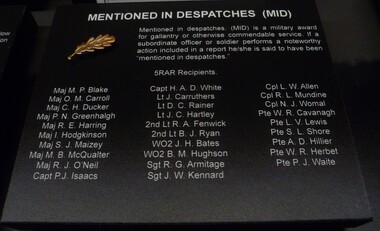 National Vietnam Veterans Museum (NVVM)
Poster - Poster, Information Board, Mentioned in Despatches (MID) for 5RAR Recipients
... Owen Maxwell Carroll...52680...Maj Claude Henry Ducker...335075...Maj Paul Netherton Greenhalgh...335104...Maj Rein Eelmaa Harring...29466...Maj Ivor Ronald John Hodgkinson...Lt Col Ivor Ronald Hodgkinson...57026...Maj Stanley...5 RAR Honour & Awards Memorial Board Mention in Despatches Maj Murray Phillip Blake 57055 Military Cross Maj Owen Maxwell Carroll 52680 Maj Claude Henry Ducker 335075 Maj Paul Netherton Greenhalgh 335104 Maj Rein Eelmaa Harring 29466 Maj Ivor Ronald John Hodgkinson Lt Col Ivor Ronald Hodgkinson 57026 Maj Stanley John Maizey 235023 Maj Malcolm Bruce McQualter 235136 Maj Robert John O'Neil 335113 Capt Peter James Isaacs 311478 Capt Harold Anthony Duckett White 216799 Lt John Carruthers 36911 2nd Lt Dennis Claude Rainer 54624 Lt John Curtis Hartley Capt John Curtis Hartley 17105 Lt Dennis Claude Rainer 2nd Lt Robert Anthony Fenwick 4719038 2nd Lt Barry John Ryan 54761 WO2 John Henry Bates 14820 WO2 Bruce Malcolm Hughson 22684 Sgt Robert George Armitage 5410806 British Empire Medal Commendation for Distinguished Service Sgt John William Kennard 213669 Cpl Leonard William Allen 1201694 Cpl Normal James Womal 15170 Pte William Roy Cavanagh 2781314 Pte Laurence Victor Lewis 61614 Pte Sydney Laurence Shore 3787022 Pte Arthur Douglas Hilllier 2781366 L/Cpl Arthur Douglas Hillier Pte Wayne Robert Herbert 219971 Pte Peter John Waite 2788953 5th Battalion The Royal Australian Regiment Headquarters Australian Force Vietnam 1st Australian Task Force Royal Australian Army Medical Corps Australian Army Training Team Vietnam (AATTV) Australian National Serviceman Cpl R L Mundine Mentioned in Despatches' details and names of recipients A black board with white texts about names of recipients of MID award. ...A black board with white texts about names of recipients of MID award. The medal is a copper leave on top left of the board. Mentioned in Despatches (MID) is a military award for gallantry or otherwise commendable service. If a subordinate officer or soldier performs a noteworthy action included n a report he/she is said to have been "mentioned in despatches." 5 RAR Recipients. Their names are Maj M P Blake, Maj O M Carroll, Maj C H Ducker, Maj P.N. Greenhalgh, Maj R.E. Harring, Maj I Hodgkinson, Maj S J Maizey, Maj M B McQualter, Maj R J O'Neil, Capt P J Isaacs, Capt H A D White, Lt J Carruthers, Lt D C Rainer, Lt J C Hartley, 2nd Lt R A Fenwick, 2nd Lt B J Ryan, WO2 B M Hughson, Sgt R G Armitage, Sgt J W Kennard, Cpl L W Allen, Cpl R L Mundine, Cpl N J Womal, Pte W R Cavanagh, Pte L V Lewis, Pte S L Shore, Pte A D Hillier, Pte W R Herbert, Pte R J WaiteMentioned in Despatches' details and names of recipients5 rar, honour & awards, memorial board, mention in despatches, maj murray phillip blake, 57055, military cross, maj owen maxwell carroll, 52680, maj claude henry ducker, 335075, maj paul netherton greenhalgh, 335104, maj rein eelmaa harring, 29466, maj ivor ronald john hodgkinson, lt col ivor ronald hodgkinson, 57026, maj stanley john maizey, 235023, maj malcolm bruce mcqualter, 235136, maj robert john o'neil, 335113, capt peter james isaacs, 311478, capt harold anthony duckett white, 216799, lt john carruthers, 36911, 2nd lt dennis claude rainer, 54624, lt john curtis hartley, capt john curtis hartley, 17105, lt dennis claude rainer, 2nd lt robert anthony fenwick, 4719038, 2nd lt barry john ryan, 54761, wo2 john henry bates, 14820, wo2 bruce malcolm hughson, 22684, sgt robert george armitage, 5410806, british empire medal, commendation for distinguished service, sgt john william kennard, 213669, cpl leonard william allen, 1201694, cpl normal james womal, 15170, pte william roy cavanagh, 2781314, pte laurence victor lewis, 61614, pte sydney laurence shore, 3787022, pte arthur douglas hilllier, 2781366, l/cpl arthur douglas hillier, pte wayne robert herbert, 219971, pte peter john waite, 2788953, 5th battalion, the royal australian regiment, headquarters, australian force vietnam, 1st australian task force, royal australian army medical corps, australian army training team vietnam (aattv), australian national serviceman, cpl r l mundine -
 Stanley Athenaeum & Public Room
Memorabilia - Wooden board, Tongue and Groove weatherboard
... Signature Joseph A Scovell was a Beechworth Builder 1907 Object removed from Stanley Athenaeum internal front swinging doors when Greg Owen from Period Restorations worked on the Athenaeum building. ...Signature Joseph A Scovell was a Beechworth Builder 1907Object removed from Stanley Athenaeum internal front swinging doors when Greg Owen from Period Restorations worked on the Athenaeum building. Weatherboards had been nailed over the window spaces at the top of the doors, this had then been covered with painted masonite board.Wooden weatherboard painted on one side, rough out on the reverseSignature in pencil Joseph A Scovell 1907
