
Showing 40 items matching "painting - spain"
-
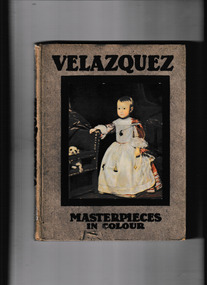 Mrs Aeneas Gunn Memorial Library
Book, T.C. & E.C. Jack, Velazquez, 189
... Painting - Spain...Painting - Spain Diego Velazquez 1599-1660 An illustrated catalogue of the works of Diego Velazquez Ill, p.77. ...An illustrated catalogue of the works of Diego VelazquezIll, p.77.non-fictionAn illustrated catalogue of the works of Diego Velazquezpainting - spain, diego velazquez 1599-1660 -
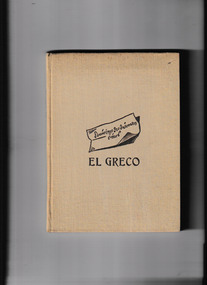 Mrs Aeneas Gunn Memorial Library
Book, Heinemann, El Greco, 1953
... Painting - Spain...Painting - Spain Artists - Spain An illustrated catalogue of the works of El Greco Ill, p.106. ...An illustrated catalogue of the works of El GrecoIll, p.106.non-fictionAn illustrated catalogue of the works of El Grecopainting - spain, artists - spain -
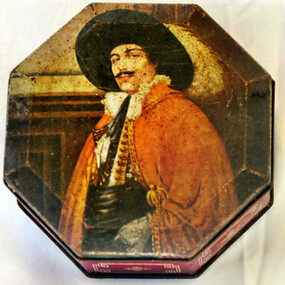 Orbost & District Historical Society
tin
... On the lid is a painting of a Spanish cavalier with red cape. The edges are dark red with rectangular patterns....On the lid is a painting of a Spanish cavalier with red cape. The edges are dark red with rectangular patterns. tin Griffith Sweets ...Octagonal shaped tin. On the lid is a painting of a Spanish cavalier with red cape. The edges are dark red with rectangular patterns.Underneath- Griffith Sweets Horsfall Printers Makers Richmondtin container griffith's-sweets -
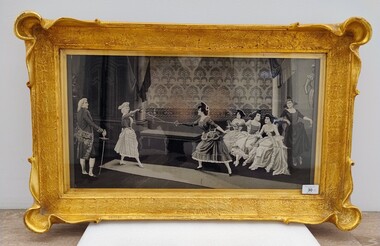 Royal Australian and New Zealand College of Obstetricians & Gynaecologists (RANZCOG)
Craft - Stevengraph, Neyret Freres et Cie, Untitled (Fencing lesson), c. 1890s
... The scene is derived from a painting by Spanish artist Mariano Alonzo Perez (1853-1930). ...The scene is derived from a painting by Spanish artist Mariano Alonzo Perez (1853-1930). ...This is a silk picture woven by the highly acclaimed French jacquard loom woven tapestry maker Neyret Freres. The scene is derived from a painting by Spanish artist Mariano Alonzo Perez (1853-1930). This style of weaving is referred to as a Stevengraph, named for their original creator, Thomas Stevens (1828-1888), a 19th century weaver from Coventry, England. Neyret Freres began manufacturing textiles in 1823, and are still in operation today. Silk embroidery in a decorative gilt frame. The scene depicts a group of women taking a fencing lesson, under the guidance of a male teacher. Two women are pictured pointing sabres at each other at the centre of the image, while four other women look on at the right of the image. The teacher is shown on the left hand side of the image, holding a sabre in his right hand which is pointing downwards so that the tip of his sabre is resting against the floor. All figures in the image are wearing Victorian era dress. There is a sticker for Gibson's Auctioneers attached to the bottom right hand corner of the front of the artwork. Two small stickers for Gibson's Auctioneers are attached to the back of the artwork, as well as a sticker referencing the framer of the work and a shipping sticker for International Art Services. Two d-rings and a wire fitting are attached to the back of the artwork for hanging. -
 Royal Australian and New Zealand College of Obstetricians & Gynaecologists (RANZCOG)
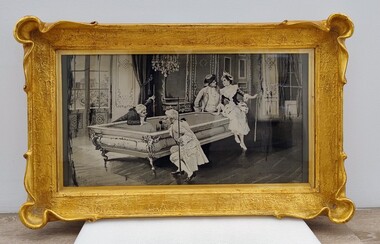
Craft - Stevengraph, Neyret Freres et Cie, Untitled (Billiards), c. 1890s
... The scene is derived from a painting by Spanish artist Mariano Alonzo Perez (1853-1930). ...The scene is derived from a painting by Spanish artist Mariano Alonzo Perez (1853-1930). ...This is a silk picture woven by the highly acclaimed French jacquard loom woven tapestry maker Neyret Freres. The scene is derived from a painting by Spanish artist Mariano Alonzo Perez (1853-1930). This style of weaving is referred to as a Stevengraph, named for their original creator, Thomas Stevens (1828-1888), a 19th century weaver from Coventry, England. Neyret Freres began manufacturing textiles in 1823, and are still in operation today. Silk embroidery in a decorative gilt frame. The scene depicts a Victorian era billiards room. An ornate billiard table is at the centre of the image. At the near end of the table, two men are crouching down and leaning over the table, examining billiard balls while holding billiard cues in their left hands. At the far end of the table, a woman is sitting on the corner of the billiard table while holding a billiard cue in her left hand, in an intimate face to face pose with a man standing behind the billiard table. All figures are depicted in Victorian era aristocratic dress. The bottom right corner of the images features the signature 'D'A. PEREZ'. Three small stickers for Gibson's Auctioneers are attached to the back of the artwork, as well as a sticker referencing the framer of the work and a shipping sticker for International Art Services. Two d-rings and a wire fitting are attached to the back of the artwork for hanging. -
 Mission to Seafarers Victoria
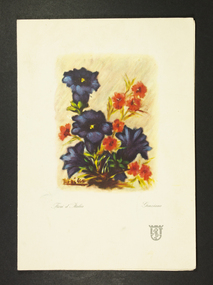
Souvenir - Menu, MV Neptunia Crossing the Line Menu
... Ship's restaurant menu consisting of single folded light card, with vivid watercolour painting of flowers of orange and purple on the front cover. On opening the card, printed menu selection in Spanish is on the left and is in English on the right. ...Representative cruise ship paraphernalia of the period, showing the significance and tradition of celebrating a ship's crossing of the equator. menu crossing-the-line equator neptunia nick garlick Ship's restaurant menu consisting of single folded light card, with vivid watercolour painting of flowers of orange and purple on the front cover. On opening the card, printed menu selection in Spanish is on the left and is in English on the right. ...MV Neptunia ship's menu for the February 1959 equator crossing. Extra historical context by the addition of ship's passengers and crew signing their names and providing contact details. Representative cruise ship paraphernalia of the period, showing the significance and tradition of celebrating a ship's crossing of the equator. Ship's restaurant menu consisting of single folded light card, with vivid watercolour painting of flowers of orange and purple on the front cover. On opening the card, printed menu selection in Spanish is on the left and is in English on the right. Guests and crew have signed randomly over and around the menu listings. menu, crossing-the-line, equator, neptunia, nick garlick -
 Ringwood and District Historical Society
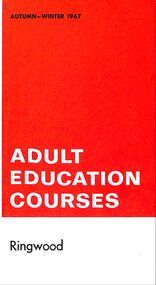
Flyer, Adult Education Courses, Autumn-Winter 1967 - Ringwood, Victoria
... Painting - Mr. Geoff Spruzen, The Modern Cinema - Mr. P.G. Hourigan, B.A. (Hons.) Woodwork for Beginners - Mr. P.J. Waring, German - Miss J. Juhasz, B.A. (Hons.) Dip.Ed., Spanish...Painting - Mr. Geoff Spruzen, The Modern Cinema - Mr. P.G. Hourigan, B.A. (Hons.) Woodwork for Beginners - Mr. P.J. Waring, German - Miss J. Juhasz, B.A. (Hons.) Dip.Ed., Spanish ...Brochure listing Council of Adult Education evening classes at Norwood High School and daytime classes at East Ringwood Community Centre Hall.Subjects and lecturers include: Australia 1967 - Dr. D.B. Waterson, M.A., Phd, Honest Doubt - Mr. C.R. Badger, M.A., Mammals in Australia - Mr. Jack Hyett, How to Read and Understand Music - Mrs. P.J. Rosewarne, L.Mus., Clarinet for Beginners - Mr. C. Boon, Recorder Classes - Mr. Alan Murphy, Mus.Bac., Dip.Ed., Practical Painting - Mr. Geoff Spruzen, The Modern Cinema - Mr. P.G. Hourigan, B.A. (Hons.) Woodwork for Beginners - Mr. P.J. Waring, German - Miss J. Juhasz, B.A. (Hons.) Dip.Ed., Spanish Guitar - Mrs. Susan Ellis, Basic Painting - Mr. Robert Grieve, French - Mrs. G. Bennett, B.A., Dip.Ed. -
 Mission to Seafarers Victoria
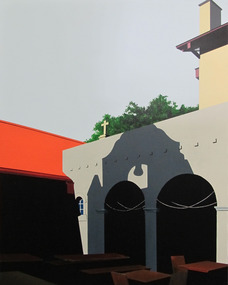
Painting, Hans Schiebold, Home from Home, 2014
... Depiction of the Bell tower also references the special architectural heritage of the Spanish Mission style building. mission to seafarers victoria spanish-courtyard bell tower artwork hans schiebold mission to seafarers Seamen's mission flinders street courtyard bell tables arches artwork-paintings 2014 maritime art prize Inscribed on stretcher: HANS SCHIEBOLD HOME FROM HOME Painting on Unframed stretched canvas depicting courtyard and Bell tower of MTSV chapel Home from Home Painting Hans Schiebold Hans Schiebold ...Hans Schiebold, lives in Seaford and is a former ship’s captain who migrated to Australia more than three decades ago, Schiebold is fully immersed in his life as an artist. In 2012, he was a finalist of the ANL Maritime Art Prize. This artwork was an entry for the Maritime Art Prize 2014.RealistPainting on Unframed stretched canvas depicting courtyard and Bell tower of MTSV chapelInscribed on stretcher: HANS SCHIEBOLD HOME FROM HOME mission to seafarers victoria, spanish-courtyard, bell tower, artwork, hans schiebold, mission to seafarers, seamen's mission, flinders street, courtyard, bell, tables, arches, artwork-paintings, 2014, maritime art prize -
 Mission to Seafarers Victoria
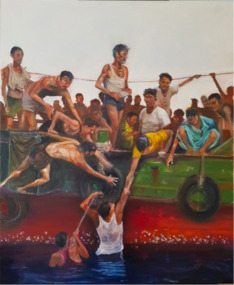
Painting, David Rowe, Diaspora, 2019
... Depiction of the Bell tower also references the special architectural heritage of the Spanish Mission style building. mission to seafarers victoria artwork mission to seafarers Seamen's mission flinders street artwork-paintings maritime art prize sea ship 2019 migrants migration diaspora asylum desperation sinking david rowe cartoonist Oil on canvas depicting asylum seekers in great desperation as they are helping two men in the water to get on board. ..."Asylum seekers in great desperation."This artwork was an entry for the Maritime Art Prize 2019. David Rowe, editorial Ccrtoonist of The Australian Financial Review, has won the Art Prize in 2010.Marine artOil on canvas depicting asylum seekers in great desperation as they are helping two men in the water to get on board.mission to seafarers victoria, artwork, mission to seafarers, seamen's mission, flinders street, artwork-paintings, maritime art prize, sea, ship, 2019, migrants, migration, diaspora, asylum, desperation, sinking, david rowe, cartoonist -
 Eltham District Historical Society Inc
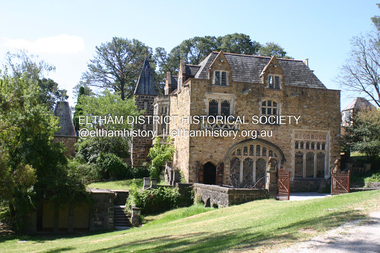
Photograph - Digital Photograph, Alan King, Great Hall, Montsalvat, 8 January 2008
... Spain and recognised that Eltham’s clay soil was ideal for mud-bricks and although labour intensive, it was a very cheap way of building. Jörgensen’s students and friends worked under his direction with the help of local tradesmen, including carpenter, Len Jarrold and later stone mason, Horrie Judd. In return Jörgensen would give the students a painting...Spain and recognised that Eltham’s clay soil was ideal for mud-bricks and although labour intensive, it was a very cheap way of building. Jörgensen’s students and friends worked under his direction with the help of local tradesmen, including carpenter, Len Jarrold and later stone mason, Horrie Judd. In return Jörgensen would give the students a painting ...Great Hall at Montsalvat built 1938-52, designed by Justus Jorgensen Covered under National Estate, National Trust of Australia (Victoria) State Significance, Victorian Heritage and Heritage Overlay, Nillumbik Planning Scheme. Published: Nillumbik Now and Then / Marguerite Marshall 2008; photographs Alan King with Marguerite Marshall.; p129 At first glance, Montsalvat, the artists’ community at Hillcrest Avenue, Eltham, could belong to another time and place. The French provincial Gothic-style buildings blend picturesquely with the introduced and native trees and farm animals on the five hectare property. But Montsalvat belongs very much to today’s Eltham, having inspired much of its creative activity and style. The use of mud-brick and recycled building materials, for which Eltham is so well-known, was largely popularised by Montsalvat. Montsalvat – unique in Victoria and probably in Australia – is registered by the National Trust and National Estate.1 Montsalvat, named after the castle of the Knights of the Holy Grail, has attracted artists and intellectuals since it was founded in 1934. For years at weekends, artists, lawyers, philosophers, politicians and others, who shared a love for what Montsalvat stood for, gathered for a meal and stimulating discussion. The focus for this gathering of talent was Justus Jörgensen, an eccentric man with vision and charisma. It was Jörgensen’s foresight that saw the creation of Montsalvat, which in 1975 was formed into a trust to benefit the Victorian people. The property was then valued at about three million dollars. It is now visited by thousands of people annually. Born in 1894 and brought up a Catholic, Jörgensen had trained as an architect. He later studied painting at the National Gallery School under artist, Frederick McCubbin, then joined the studio of artist Max Meldrum. In 1924, Jörgensen married medical student Lillian Smith, and with artist friends they travelled to Europe to study the great masters. In London Jörgensen exhibited in several major galleries. One of his still life paintings was included in the book The Art of Still Life by Herbert Furst, which featured 100 of the greatest ever still life paintings.2 In 1929, Jörgensen returned to Melbourne where Lil, now qualified, worked as an anaesthetist at St Vincent’s Hospital. They bought a small house in Brighton and Jörgensen rented a large building in Queen Street for his studio until the Royal Automobile Club of Victoria bought it in 1955. While designing and overseeing the building of a studio for his friend the famous cartoonist Percy Leason, in Lavender Park Road, Jörgensen decided to buy land for a country retreat in Eltham. So the building of Montsalvat began. Jörgensen gathered around a dozen of his friends and students from his Queen Street studio. They set to work, first at weekends then some decided to live permanently on the site. Jörgensen had seen mud-brick buildings in Spain and recognised that Eltham’s clay soil was ideal for mud-bricks and although labour intensive, it was a very cheap way of building. Jörgensen’s students and friends worked under his direction with the help of local tradesmen, including carpenter, Len Jarrold and later stone mason, Horrie Judd. In return Jörgensen would give the students a painting lesson or two. It was the Great Depression when many were out of work. Jörgensen also inspired people to give generously of money and materials. With their help Jörgensen found second-hand materials for building. Friends donated slate for roofing, discarded firebricks were used for flooring and windows and doors and a cast-iron circular staircase came from a wrecker. The students’ day started at 7am with building and domestic chores, shared equally between the sexes. The first building was used by his friends at weekends and then became a home for his wife Lil. It consisted of three rooms and an attic under a high-pitched roof. Jörgensen then built a similar structure with the same high-pitched roof as a more permanent home for his students. The two buildings were joined together with a tower and a studio for Jörgensen. While excavating for the studio a reef of yellow mud-stone was found and then used in construction. The next building was the Great Hall, to be used for dining, exhibitions and meetings and completed in 1958, after a halt during the war. Whelan the Wrecker donated the stone-framed windows from the building that housed the Victorian Insurance Co. in Collins Street, which had been demolished in the 1930s. The swimming pool was donated and cubicles were built for the students with their initials marked in tiles on each doorstep.1 One of Jörgensen’s great abilities was to recognise how to use material which harmonised. He would comb through wreckers’ yards for what he needed. Regarding his buildings as sculptural pieces, his first consideration was for the aesthetic quality of a building and only then for its functionality.2 At Montsalvat, Jörgensen found he was able to put his ideas into practice without compromise and those who worked with him had to conform to his ideas. With the Jörgensens, the colony’s original nucleus consisted of the Skipper family – Mervyn and wife Lena, daughters Helen and Sonia and son Matcham,who was to become an eminent jeweller and sculptor represented in National Gallery collections throughout Australia and in European museums.3 Other members were Arthur Munday, Lesley Sinclair, Helen Lempriere, Ian Robertson, John Smith, George Chalmers, John Busst and Sue Van der Kellan; also Jörgensen’s three sons – Max, Sebastian and Sigmund – and Saskia, Sonia Skipper and Arthur Munday’s daughter. Montsalvat went through some hard times when local gossips spread rumours of sexual shenanigans at Montsalvat. However Montsalvat also had many local supporters – especially amongst the local tradespeople. The colony was certainly unconventional – with Jörgensen’s wife Lil (and son Max) and life-time partner Helen Skipper, (mother of Sebastian and Sigmund) living at Montsalvat. Sonia Skipper says in her biography that the group were ‘very conscious of their responsibilities to each other and a desire to make their relationships work’.4 By World War Two many buildings around the Great Hall were completed. Jörgensen was a pacifist, as were most of his students. Some of the Montsalvat community enlisted while others engaged in essential services like dairy farming and market gardening for the war effort. It was then that Jörgensen constructed farm buildings. After the war many well-known personalities such as Clifton Pugh, landscape gardener Gordon Ford, and builder Alistair Knox, were drawn to Montsalvat. They learnt that building was not a ‘sacred cow’ only for professionals, but that anyone who was willing to get their hands dirty could do it. The post-war shortage of materials also encouraged builders to follow Montsalvat’s lead in reusing materials. When Jörgensen died in 1975, his influence did not – thanks largely to the vigilance of his son, Sigmund, who became its administrator. The weekend dinners have gone, but in 2008 about 14 artists still work at Montsalvat – some living there – including a couple who have been there since its early days. Under Sigmund’s direction Montsalvat further expanded its activities which included festivals, art exhibitions, concerts and weddings. Sigmund completed the Chapel, then the Long Gallery next to the pool, After the barn burnt down, he replaced it in 1999 (the builder was Hamish Knox, Alistair’s son) with a new gallery and entrance and added a restaurant. Sigmund has been careful that any new building blends in with the character of Montsalvat. In 2006 Montsalvat was restructured for its continued financial viability and with the help of Arts Victoria a new executive officer was appointed. A representative board from the wider community was established, which includes members from the former Montsalvat Trust including Sigmund Jörgensen – who is now the heritage and arts adviser to the new company Montsalvat Ltd.5 Today, visiting Montsalvat one still sees artists, students and visitors enjoying the unique and beautiful surroundings.This collection of almost 130 photos about places and people within the Shire of Nillumbik, an urban and rural municipality in Melbourne's north, contributes to an understanding of the history of the Shire. Published in 2008 immediately prior to the Black Saturday bushfires of February 7, 2009, it documents sites that were impacted, and in some cases destroyed by the fires. It includes photographs taken especially for the publication, creating a unique time capsule representing the Shire in the early 21st century. It remains the most recent comprehenesive publication devoted to the Shire's history connecting local residents to the past. nillumbik now and then (marshall-king) collection, eltham, great hall, montsalvat -
 Creswick Museum
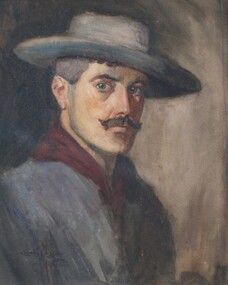
watercolour painting, Self Portrait (Lionel Lindsay)
... Lionel became a famous artist in Australia and Europe, especially noted for his Spanish etchings. lionel lindsay creswick etching watercolour Spain norman lindsay Signed "Lionel Lindsay 1899" Watercolour painting on paper of self portrait by Lionel Lindsay. ...Early self portrait of famous painter Lionel Lindsay. Lionel was one of the famous family of artists, which included Norman Lindsay, Percy Lindsay, Daryl Lindsay and Ruby Lindsay.A rare early self portrait by Lionel Lindsay, showing himself in a "Spanish style", before he followed his dream and went to Spain. Lionel became a famous artist in Australia and Europe, especially noted for his Spanish etchings.Watercolour painting on paper of self portrait by Lionel Lindsay.Signed "Lionel Lindsay 1899"lionel lindsay, creswick, etching, watercolour, spain, norman lindsay -
 Otway Districts Historical Society
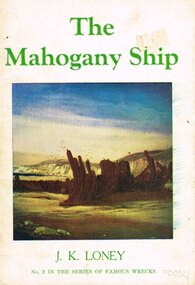
Book, The Mahogany Ship, 1974
... A Spanish ship supposedly buried in sand between Warrnambool and Port Fairy, Victoria, Australia. mahogany ship; shipwrecks; j.k. loney; painting; warrnambool; port fairy; belfast; mahogany ship; shipwrecks; j.k. loney; painting; warrnambool; port fairy; belfast; The Mahogany Ship. ...A Spanish ship supposedly buried in sand between Warrnambool and Port Fairy, Victoria, Australia.The Mahogany Ship. J.K. Loney. 2nd ed. Dimboola (Vic); J.K. Loney; 1974. 24 p.; illus, maps. Soft cover. ISBN 0 909244 03 0mahogany ship; shipwrecks; j.k. loney; painting; warrnambool; port fairy; belfast;, mahogany ship; shipwrecks; j.k. loney; painting; warrnambool; port fairy; belfast; -
 Eltham District Historical Society Inc
Document - Folder, Nilsson, Leif
... Spain. Contents Newspaper article: "Saying it with painting", Diamond Valley News, no date, interview with Lief Nilsson....Spain. Contents Newspaper article: "Saying it with painting", Diamond Valley News, no date, interview with Lief Nilsson. ...Greensborough resident and painter Lief Nilsson came to Australia in 1969, after travelling from his native Sweden, England and Spain. Contents Newspaper article: "Saying it with painting", Diamond Valley News, no date, interview with Lief Nilsson.Newspaper clippings, A4 photocopies, etclief nilsson -
 Eltham District Historical Society Inc
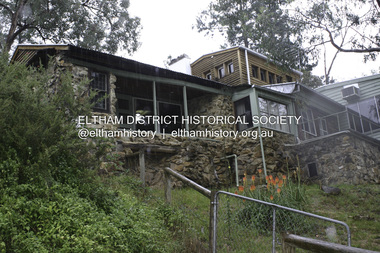
Photograph - Digital Photograph, Alan King, Stonygrad, 34 Hamilton Road, North Warrandyte, 30 January 2008
... Spanish Civil War. The Angry Penguins also objected to the White Australia Policy. Hughes said although most of the Melbourne Expressionists in the 1940s were unskilled and their work crude in style, they helped jolt Australian painting from its pastoral complacency. ...Spanish Civil War. The Angry Penguins also objected to the White Australia Policy. Hughes said although most of the Melbourne Expressionists in the 1940s were unskilled and their work crude in style, they helped jolt Australian painting from its pastoral complacency. ...Vassilieff dynamited rock from his own property to build his house. Stonygrad is reminiscent of a grotto and in parts, of a sculpture. Covered under Heritage Overlay, Nillumbik Planning Scheme. Published: Nillumbik Now and Then / Marguerite Marshall 2008; photographs Alan King with Marguerite Marshall.; p135 Stonygrad, the home built by Expressionist painter and sculptor Danila Vassilieff, is reminiscent of a grotto and in parts, of a sculpture. Vassilieff, who amongst others influenced painter Sydney Nolan and Albert Tucker, was a member of the artists group the Angry Penguins. He was also a highly regarded art teacher at the nearby Koornong Experimental School and taught at Eltham High School. Art critic Robert Hughes described Vassilieff’s painting as ‘lyrical without social commentary’, and said Vassilieff was ‘the most oddly neglected artist in recent Australian History’. Vassilieff, who was born in 1897 in Russia, had an unusually adventurous life before he settled in Warrandyte. The 12th of 18 children, he lived on a farm in the Don Basin. Vassilieff trained with the Imperial Military Academy at St Petersburg and fought in World War One as an officer in the White Russian Army against the communists. In 1920 he was captured, then escaped from prison, stole a horse and rode bareback 150 miles to the Black Sea, helped at first by Tartar freebooters. He then travelled to India, Shanghai and arrived in Queensland as a refugee in 1923 where he began painting. He and his wife Anisia bought a sugar farm near Ingram, and later he constructed railway lines at Mataranka, in the Northern Territory.4 In 1929 Vassilieff went to Brazil for formal art training from former fellow-officer Dmitri Ismailovich, but he soon left to travel up the Amazon River. He then worked as a sidewalk artist in the West Indies and travelled for two years in England, France and Spain. In 1937 he arrived in Melbourne where he lived until his death in 1958. His first major Australian series was the Carlton streetscapes and from 1951 he sculpted in local hard limestone. Vassilieff rejected all dogma and regarded religious subjects as suitable only for decorative arts. In 1944 he helped defeat a communist attempt to take over the Contemporary Art Society. For a short time, from around 1955, Vassilieff taught at various Victorian schools. The Angry Penguins painted mainly between 1937 and 1947, and included Arthur Boyd, Albert Tucker, Sidney Nolan and Joy Hester. The group formed as they felt isolated from European thought and art (including Surrealism) from which their work was derived. They were also angry at what they considered to be the complacency and insularity of their society. They maintained Australians at first were scarcely aware of the threats of the Wall Street Crash and Hitler and were little interested in the Spanish Civil War. The Angry Penguins also objected to the White Australia Policy. Hughes said although most of the Melbourne Expressionists in the 1940s were unskilled and their work crude in style, they helped jolt Australian painting from its pastoral complacency. Their style influenced nearly every painting produced by significant figurative artists in Melbourne in the 1950s such as Charles Blackman. From 1939 Vassilieff built Stonygrad, mainly with local stone. The house stands at the end of a private road surrounded by trees with the quiet occasionally broken by the sounds of bellbirds. To build his house Vassilieff dynamited rock and cut trees from his own property. The original section of the three-level house is of irregular-shaped pieces of solid stone, exposed inside like the exterior. Vassilieff later built sections with timber and brick. Inside is rustic and cave-like, and several rooms are linked by arched openings with no doors. One undulating wall was carved out of rock from which two sculptured heads protrude. Several ceilings are of rough-hewn logs and the built-in table and bookcase are rough, as is a timber ladder leading to a bedroom. Not for the elderly or unsteady! Yet the general impression in the muted light is beautiful, with artistic originality.This collection of almost 130 photos about places and people within the Shire of Nillumbik, an urban and rural municipality in Melbourne's north, contributes to an understanding of the history of the Shire. Published in 2008 immediately prior to the Black Saturday bushfires of February 7, 2009, it documents sites that were impacted, and in some cases destroyed by the fires. It includes photographs taken especially for the publication, creating a unique time capsule representing the Shire in the early 21st century. It remains the most recent comprehenesive publication devoted to the Shire's history connecting local residents to the past. nillumbik now and then (marshall-king) collection, danila vassilieff, hamilton road, north warrandyte, stonygrad -
 Williamstown High School
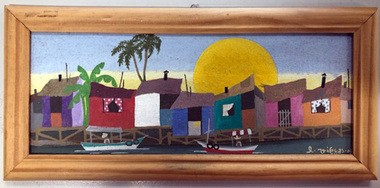
Spanish artwork, S. Paulo - Brasil, by Lori Val Viegas
... painting. Possibly presented to the Williamstown High School after a visit from Spanish students....Art Spanish williamstown high school See image above. Original colour painting. Possibly presented to the Williamstown High School after a visit from Spanish students. ...Original colour painting. Possibly presented to the Williamstown High School after a visit from Spanish students.See image above.art, spanish, williamstown high school -
 Nillumbik Shire Council
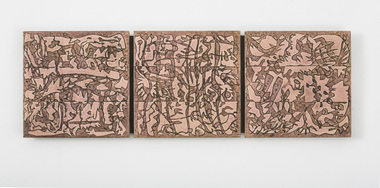
Ceramic (tiles): Tom SANDERS, Untitled, c. 1970s early
... It’s clear that Sanders was inspired by the Spanish surrealist artist Joan Miro from the 1930s in both philosophy and style. Miro’s work is quite playful, symbolic and imaginative. Miro’s preference for painting ...Sanders was a well-known local potter who worked for a time with David Boyd at the Martin Boyd Pottery, before returning to Melbourne where he had some association with Arthur Boyd, at the pottery in Murrumbeena. Sanders set up a studio in Eltham in the early 1950s and made the first of a series of architectural ceramic murals with painter and print maker Lawrence Daws in 1956. After returning from his travels in Europe to Australia in 1964, he began to work solely on creating ceramic murals. Murals created during the second half of the 1960s and into the 70s can/could previously be found at Southland Shopping Centre in Cheltenham, Melbourne (1968) - now demolished, the National Mutual Centre, Melbourne (1964-5) - now demolished, Dee Why Library, Sydney (1966), Woden Valley High School, ACT (1967), Tullamarine Airport, Melbourne (1969, 1970), Perth Concert Hall (1971) and University of Melbourne (1975) (with John Olsen). Sanders has worked with many of Australia’s pre-eminent painters and ceramicists including Fred Williams and John Olsen. In 2015 Nillumbik Shire Council will be installing a mural by Sanders, donated by Tom and his family before Tom passed away in 2009, for the redevelopment of the Eltham Town Square. During the 1970s Sanders produced a number of tapestry designs. Highly respected artist and one time local resident Hilary Jackman worked with Sanders developing and adapting his tile designs to be translated into silk tapestries that were made in Japanese Mills of Kawashima Orimono in Kyoto. They were displayed in the big Hall in the NGV. Sanders gave these tiles to Jackman as payment for her work. The tapestries are based on abstract designs and have a cotton warp, and silk weft. The tiles are similar to Sanders’ other mural works such as Wall of the Moon (Homage to Miro) and the mural located in the Perth Concert Hall. It’s clear that Sanders was inspired by the Spanish surrealist artist Joan Miro from the 1930s in both philosophy and style. Miro’s work is quite playful, symbolic and imaginative. Miro’s preference for painting like this was “to express contempt for conventional painting methods, which he saw was a way of supporting a bourgeois society”. He "famously declared an "assassination of painting" in favor of upsetting the visual elements of established painting.” Three earthenware tiles, embossed with an abstract linear design. N/A -
 Nillumbik Shire Council
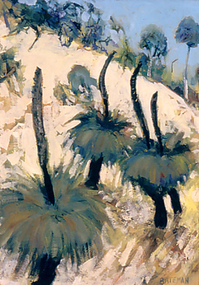
Painting: Piers BATEMAN (b.1947, Perth - d.2015, NSW), Piers Bateman, Blackboys, 1989
... Although Bateman lived in Spain and Italy, his time in Europe made him aware of the contrast between the two continents and the bright clear light that defined the Australian landscape. At the time of this work, Bateman was living in St. Andrews, but travelled regularly to New South Wales and South Australia on painting ...Piers Bateman was a local artist, held in very high esteem by his peers and community. He was born in Perth in 1947, moving to Eltham in 1955 as a young child with his family. In 1966 Bateman moved to London for eighteen months to develop his craft. In 1969 he settled in St Andrews, where he built a studio. The St Andrews locale is said to have been a strong influence on his work. Bateman’s talent was such that he was promoted and mentored by such ilk as Charles Blackman, Clifton Pugh and Arthur Boyd, among others. Bateman’s work is an intimate dialogue with the environment, renowned for his paintings of the outback, wilderness frontiers and the sea. He spent a year in the mid-seventies sailing the Greek Islands and the French canals to Amsterdam. In 1980 Bateman and Marcus Skipper embarked on a trans-Australian venture to the red centre and across northern Australia from Cairns to Broome. In the mid-eighties Bateman returned to the Mediterranean, before returning to the Australian outback in the late-eighties. His international career continued on an upwards trajectory between the Australian outback and European seas, providing a unique contrast throughout the course of his career. Bateman's work questions our relationship with the natural world, and in particular, reconciling our colonial heritage with our indigenous past. This line of questioning and his genuine response to place is the key to Piers Bateman’s work, for which he is lauded and celebrated. On September 4th 2015, Piers Bateman died in a boating accident on the NSW coast line. Piers Bateman was an instinctive painter whose inspiration came from nature. He reworked and scraped off the paint, moving it around until forms and colours of the landscape took shape. Although Bateman lived in Spain and Italy, his time in Europe made him aware of the contrast between the two continents and the bright clear light that defined the Australian landscape. At the time of this work, Bateman was living in St. Andrews, but travelled regularly to New South Wales and South Australia on painting trips. The ‘Grass Tree’ Xanthorrhoea johnsonii (commonly known as ‘blackboy’) is indigenous to these areas. It is a uniquely Australian, slow growing plant with twenty-eight species growing within Australia. Old examples of this tree are survivors of many wild fires, which can cause their blackened trunk, of one to two metres, branch into two or more heads. These heads consist of thick, rough corky bark, surrounded by long, wiry leaves and flowers that produce seed capsules with hard black seeds. The tree’s ability to be one of the first to flower after a wild fire ensures a food source for many insects and birds.Oil on canvas painting. Detail of three grass trees resting on the side of a mountain/hill. Green and gold palette throughout depicting the colours and light of the Australian landscape. Hand written, low right in capitals: 'BATEMAN'bateman, grass trees, xanthorrhoea johnsonii, landscape -
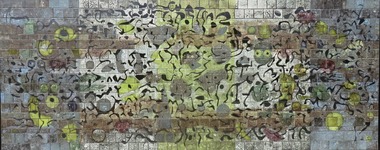 Nillumbik Shire Council
Public Art: Tom SANDERS (b.1925-d.2008 Vic, Aus), Tom Sanders, Wall of the Moon (Homage to Miro) - (Location: Eltham Town Square, Arthur Street, Eltham), 1968
... In 1957 he left for Europe and while there was inspired by the Spanish artist Joan Miro’s unconventional painting style and large scale murals, in particular Wall of the Moon (1957). ...In 1957 he left for Europe and while there was inspired by the Spanish artist Joan Miro’s unconventional painting style and large scale murals, in particular Wall of the Moon (1957). ...Sanders was a well-known local potter who worked for a time with David Boyd at the Martin Boyd Pottery, before returning to Melbourne where he had some association with Arthur Boyd, at the pottery in Murrumbeena. Sanders set up a studio in Eltham in the early 1950s and made the first of a series of architectural ceramic murals with painter and print maker Lawrence Daws in 1956. In 1957 he left for Europe and while there was inspired by the Spanish artist Joan Miro’s unconventional painting style and large scale murals, in particular Wall of the Moon (1957). After returning from his travels in Europe to Australia in 1964, he began to work solely on creating ceramic murals, some of which were commissioned for Southland Shopping Centre in Cheltenham, Melbourne, 1968 (now demolished), the National Mutual Centre, Melbourne,1964-5 (now demolished), Dee Why Library, Sydney 1966, Woden Valley High School, ACT, 1967, Tullamarine Airport Melbourne, 1969-70 (now demolished), Perth Concert Hall, 1971 and The University of Melbourne,1975 (with John Olsen). This mural is one of only three remaining in the public realm by Tom Sanders (the others are at the Perth Concert Hall (1971) and at the University of Melbourne (1975). Ceramic mural (earthenware tiles) consisting of a playful/organic abstract design similar in style to the Spanish artist Joan Miro. Shades of blue, yellow and black glazes are layered onto matte black and shiny bronze tiles. N/Amural, public art, earthernware, pottery, ceramics, glaze, eltham, ekphrasis2017, eltham town square, joan miro -
Tatura Irrigation & Wartime Camps Museum
Photograph, Male dancer in Spanish hat - caricature, 1941-1946
... Colour photo of a caricature painting by Hans Walter von Gruenewaldt depicting one male dancer, red jacket, white shirt, black trousers and Spanish hat....The paintings were completed over a duration of six years (1941-1946). hans walter von gruenewalt german pow's camp 13 murchison pow camps caricatures Colour photo of a caricature painting by Hans Walter von Gruenewaldt depicting one male dancer, red jacket, white shirt, black trousers and Spanish hat. ...Hans Walter von Gruenewaldt was a German POW who used his artistic ability to paint several large mural caricatures while he was held at Camp 13 at Murchison. The technique he used was colourful house paint, painted directly onto the walls of the German mess hut, reading room and recreation hall in compound 13D. The paintings were completed over a duration of six years (1941-1946). Colour photo of a caricature painting by Hans Walter von Gruenewaldt depicting one male dancer, red jacket, white shirt, black trousers and Spanish hat.hans walter von gruenewalt, german pow's, camp 13 murchison, pow camps, caricatures -
Tatura Irrigation & Wartime Camps Museum
Photograph, Female Spanish Dancer - caricature, 1941-1946
... Colour photo of a caricature painting by Hans Walter von Gruenewaldt depicting one female Spanish dancer. ...The paintings were completed over a duration of six years (1941-1946). hans walter von gruenewalt german pow's camp 13 murchison pow camps caricatures Colour photo of a caricature painting by Hans Walter von Gruenewaldt depicting one female Spanish dancer. ...Hans Walter von Gruenewaldt was a German POW who used his artistic ability to paint several large mural caricatures while he was held at Camp 13 at Murchison. The technique he used was colourful house paint, painted directly onto the walls of the German mess hut, reading room and recreation hall in compound 13D. The paintings were completed over a duration of six years (1941-1946). Colour photo of a caricature painting by Hans Walter von Gruenewaldt depicting one female Spanish dancer. Long yellow flounced dress, holding a black fan.hans walter von gruenewalt, german pow's, camp 13 murchison, pow camps, caricatures -
Tatura Irrigation & Wartime Camps Museum
Album - small photo album
... Spain, Holland, German waitress, African Mother and Child,, Asia, Australian swagman, Australian A.W.A.S, British Army W.O, British Naval Officer. Visitors to Memorial service German War Cemetery 1992 Photos show a collection of the art work painted on walls of Camp 13 Recreation hall murchison pow recreation hall german war cemetery Hans-Wolter von Gruenewaldt, German P.O.W. painted these scenes and figures as murals on the walls of the camp 13 Recreation Hall. The hall was transferred to Murchison after WW2 and was purchased by the Murchison R.S.L. as its headquarters in 1955. These paintings ...The artist of the sketches Hans - Wolter von Gruenewaldt - ex South African Mining Engineer served in the North Africa campaign. This album also includes photos of visitors to the Tatura Museum, Memorial service German War Cemetery 1992 and visitors to Camps 1, 2, 4 and 13 Photos include Murchison R.S.L clubhouse,which was Murchison P.O.W Camp,13 Recreation Hall, Colonel Walter Tinsley D.S.O who was appointed Commandant camp 13 1946, Folk Dancers from Hungary,Scotland, Yugoslavia, Russia, Spain, Holland, German waitress, African Mother and Child,, Asia, Australian swagman, Australian A.W.A.S, British Army W.O, British Naval Officer. Visitors to Memorial service German War Cemetery 1992 Photos show a collection of the art work painted on walls of Camp 13 Recreation hall Small, green coloured photo albumHans-Wolter von Gruenewaldt, German P.O.W. painted these scenes and figures as murals on the walls of the camp 13 Recreation Hall. The hall was transferred to Murchison after WW2 and was purchased by the Murchison R.S.L. as its headquarters in 1955. These paintings can now be seen at the David Jones Nursing Home in Murchison.murchison pow recreation hall, german war cemetery -
Art Gallery of Swan Hill
Painting, ARMSTRONG, Ian, Spanish still life, 1982
... Spanish still life Painting ARMSTRONG, Ian ... -
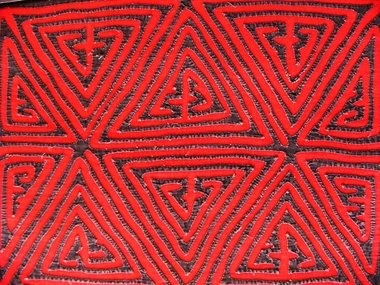 Embroiderers Guild, Victoria
Textile - Panel, Mola Panel
... The mola originated with the tradition of Guna women painting their bodies with geometric designs, using available natural colors; at a certain point, after the arrival of the Spanish, these same designs were woven in cotton, and later still, sewn using cloth "acquired by trade from the ships that came to barter for coconuts during the 19th century". ...The mola originated with the tradition of Guna women painting their bodies with geometric designs, using available natural colors; at a certain point, after the arrival of the Spanish, these same designs were woven in cotton, and later still, sewn using cloth "acquired by trade from the ships that came to barter for coconuts during the 19th century". ...The Mola or Molas is a hand-made textile that forms part of the traditional women's clothing of the indigenous Guna people from Panama. Their clothing includes a patterned wrapped skirt (saburet), a red and yellow headscarf (musue), arm and leg beads (wini), a gold nose ring (olasu) and earrings in addition to the mola blouse (dulemor). Two groups, Choco and Guna lived side by side without intermarriage and without adopting a similar culture.In Dulegaya, the Guna's native language, "mola" means "shirt" or "clothing". The mola originated with the tradition of Guna women painting their bodies with geometric designs, using available natural colors; at a certain point, after the arrival of the Spanish, these same designs were woven in cotton, and later still, sewn using cloth "acquired by trade from the ships that came to barter for coconuts during the 19th century". Red cotton background with black reverse applique mounted on grey cotton. Design includes the serpent symbol.applique, mola - reverse applique, south america, panels -
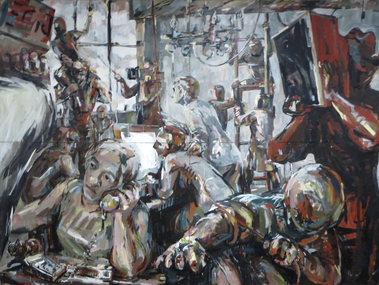 Federation University Art Collection
Painting - Artwork - Painting, 'Triumph of Gutenburg' by Maryanne Coutts, 2002, 2003
... Spain and Thailand and is currently Head of Drawing at the National Art School, Sydney. This item is part of the Federation University Art Collection. The Art Collection features over 2000 works and was listed as a 'Ballarat Treasure' in 2007. art artwork maryanne coutts coutts work alumni office gutenberg This work is presented on four linen canvases. It is a very large work showing a person working in an office. Donated under the Australian Government's Philanthropic Programme, 2005 'Triumph of Gutenburg' by Maryanne Coutts, 2002 Painting ...Of Maryanne Coutts' exhibition at the Ballarat Fine Art Gallery Maryanne Coutts wrote: 'The same old story' is a curious phrase. As usual I can't tell you exactly in words what the story is,simply that I hope that this body of work evokes characters and implies the actions and interactions that engender a story. For me the story if seeking itself, trying to understand what about itself is repeatable yet malleable, rememberable yet changeable. The Triumph of Gutenberg' celebrates the seemingly ordinary by manifold ways that information is transferred and transformed. It arises from a fascination with the way a thought evolves from one idea to the next, often repeating itself, but sometime making leaps and in the dark mutating. Famed for introducing movable type and the printing press to Europe in 1450, Gutenberg enabled the mass production of books. He has consequently become a symbol for the power of the dissemination of knowledge. Vehicles for repeatability, like printing, are myriad and range from specific codes, such as DNA, to more ephemeral language systems like visual and narrative. Stories are my favourite vessels of memory, of recording. It seems that a story can have certain characteristics that allow it to be recognised as a particular story, indeed, that allow it to be repeated withing different narrations, different readings. As a visual storyteller, I have been curious about how much can change while the story remains the same, Within this visual exploration of what I consider to be a consistent story, conveyed through different media, scales, shapes, and styles, I have allowed mutations, which I hope will illuminate the repetition. In some ways this work is a direct response to Poussin's 'The Triumph of Pan', whose arrangement of figures approaches a kind of formal abstraction. As I worked through the drawing, painting and print that are in this exhibition, I have looked increasingly to more recent interpreters of that tradition like Beckmann, Layered, then, withing this story are other stories, other histories. In a metaphoric sense repeatability and mutability characterize both how the work came into being and how, being something more than paper, canvas and pigment, it can travel audiences' neural pathways as both memories of sights seen, as new thoughts ans/or as old thoughts and memories now mutated. Maryanne Coutts, January 2003.Maryanne COUTTS (1960- ) Born Australia Maryanne Coutts studied at the Victorian College of the Arts (VCA), The University of Melbourne, 1979 -1981, the University of NSW (UNSW),1984 and achieved a PhD at Federation University Australia in 1999. She has exhibited extensively throughout Australia and internationally including UK, Spain and Thailand and is currently Head of Drawing at the National Art School, Sydney. This item is part of the Federation University Art Collection. The Art Collection features over 2000 works and was listed as a 'Ballarat Treasure' in 2007.This work is presented on four linen canvases. It is a very large work showing a person working in an office. Donated under the Australian Government's Philanthropic Programme, 2005art, artwork, maryanne coutts, coutts, work, alumni, office, gutenberg -
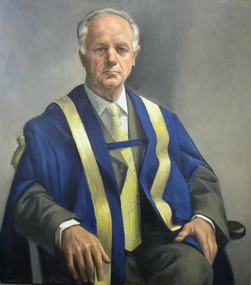 Federation University Art Collection
Painting - Artwork - Painting, 'Portrait of Vice - Chancellor Professor Kerry O. Cox' by Peter Churcher, 2006
... Peter CHURCHER (28 February 1964- ) Born Brisbane, Australia 2006 moved to Barcelona, Spain After studying Music at Trinity College, London Peter Churcher completed a Bachelor of Fine Arts (Painting) at Victoria College (know Deakin University) in 1991. ...Peter CHURCHER (28 February 1964- ) Born Brisbane, Australia 2006 moved to Barcelona, Spain After studying Music at Trinity College, London Peter Churcher completed a Bachelor of Fine Arts (Painting) at Victoria College (know Deakin University) in 1991. ...Peter CHURCHER (28 February 1964- ) Born Brisbane, Australia 2006 moved to Barcelona, Spain After studying Music at Trinity College, London Peter Churcher completed a Bachelor of Fine Arts (Painting) at Victoria College (know Deakin University) in 1991. He is now considered one of Australia's leading figurative painters. Peter Churcher's work was represented in the prestigious Archibald Prize on nine occasions. In 2002 Peter Churcher was commissioned as an Australian War Artist documenting the Royal Australian Navy and the Royal Australian Air Force enduring the Australian involvement in the coalition war against terrorism. His works are held in many Australian collections. Professor Kerry O. Cox was Vice Chancellor at the University of Ballarat from 2001 - 2005. This item is part of the Federation University Art Collection. The Art Collection features over 2000 works and was listed as a 'Ballarat Treasure' in 2007. Framed academic portrait of Vice Chancellor Professor Kerry Cox art, artwork, portrait, academic portrait, peter churcher, kerry cox, vice chancellor, academic regalia -
 Federation University Art Collection
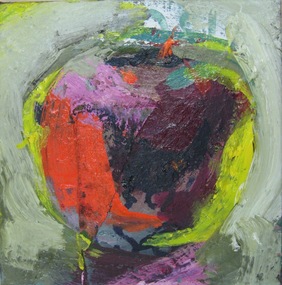
Painting, 'Apple' by Maryanne Coutts, 2003, 2008
... Painting) from Federation University Australia in 1999. She has exhibited extensively throughout Australia and internationally including the United Kingdom, Spain and Thailand. ...Painting) from Federation University Australia in 1999. She has exhibited extensively throughout Australia and internationally including the United Kingdom, Spain and Thailand. ...Maryanne COUTTS (1960- ) Born Melbourne, Victoria Maryanne Coutts studied at the Victorian College of the Arts (VCA), The University of Melbourne, 1979 -1981, the University of NSW (UNSW),1984 and was awarded a PhD (Painting) from Federation University Australia in 1999. She has exhibited extensively throughout Australia and internationally including the United Kingdom, Spain and Thailand. She has worked as a Sessional Lecturer at the Arts Academy, University of Ballarat (1999 - 2003), and is currently Head of Drawing at the National Art School, Sydney. In 2007 Maryanne Coutts won the Portia Geach Memorial Award and was the joint winner of the Blake Price in 1982. This item is part of the Federation University Art Collection. The Art Collection features over 2000 works and was listed as a 'Ballarat Treasure' in 2007.An apple depicted in oil by Maryanne Coutts. This work was created specifically for the 'Imaging the Apple' Touring Exhibition curated by John R. Neeson. It was also exhibited in 'Telling Tales: Maryanne Coutts' at the Ballarat Fine Arts Gallery in 2008. Donated by the Australian Cultural Gifts Program, 2008art, artwork, maryanne coutts, coutts, apple, alumni -
 Federation University Art Collection
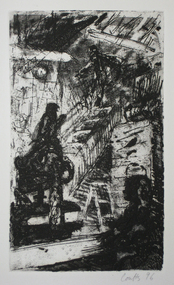
Painting - Printmaking - Etching, 'The Studio' by Maryanne Coutts, 1996, 1996
... Spain and Thailand and is currently Head of Drawing at the National Art School, Sydney. This item is part of the Federation University Art Collection. The Art Collection features over 2000 works and was listed as a 'Ballarat Treasure' in 2007. art artwork maryanne coutts coutts artists' book printmaking etching Etching by Maryanne Coutts showing a corner of the Printmaking Studio at the University of Ballarat, Mount Helen Campus. The etching is presented in an the University of Ballarat Printmaking Artists' Book 1996. 'The Studio' by Maryanne Coutts, 1996 Painting ...Maryanne COUTTS (1960- ) Born Australia Maryanne Coutts studied at the Victorian College of the Arts (VCA), The University of Melbourne, 1979 -1981, the University of NSW (UNSW),1984 and achieved a PhD at Federation University Australia in 1999. She has exhibited extensively throughout Australia and internationally including UK, Spain and Thailand and is currently Head of Drawing at the National Art School, Sydney. This item is part of the Federation University Art Collection. The Art Collection features over 2000 works and was listed as a 'Ballarat Treasure' in 2007.Etching by Maryanne Coutts showing a corner of the Printmaking Studio at the University of Ballarat, Mount Helen Campus. The etching is presented in an the University of Ballarat Printmaking Artists' Book 1996.art, artwork, maryanne coutts, coutts, artists' book, printmaking, etching -
 Ballarat Heritage Services
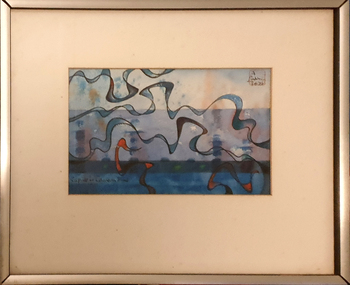
Painting - Artwork - Painting, [Unknown] by Arthur Lindsay, c1979
... paintings in Melbourne in 1946. Lindsay returned to Hong Kong after the War, and supervised an Advertising Agency in Singapore, Kuala Lumpar, and Bangkok. In the 1950’s he travelled to Europe, United Kingdom, Spain...paintings in Melbourne in 1946. Lindsay returned to Hong Kong after the War, and supervised an Advertising Agency in Singapore, Kuala Lumpar, and Bangkok. In the 1950’s he travelled to Europe, United Kingdom, Spain ...Arthur LINDSAY (1912-1990) Born Melbourne Arthur Lindsay, a relative of the Lindsays of Creswick, studied informally under Rupert Bunny, and John Munro in 1933, and held his first Exhibition in 1938, with Peter Cox, at Riddell Galleries. In 1939, he left Australia to tour Japan, but stayed on, accepting a position with a publishing company in Hong Kong. He served with the Hong Kong Medical Corp during World War Two and was interned at Pootung Camp, Shanghai, from 1941 – 45. He held an exhibition of his internment paintings in Melbourne in 1946. Lindsay returned to Hong Kong after the War, and supervised an Advertising Agency in Singapore, Kuala Lumpar, and Bangkok. In the 1950’s he travelled to Europe, United Kingdom, Spain and France. Returning to Australia Lindsay moved to Castlemaine in 1969. A Retrospective of his Art was held at Castlemaine Art Gallery in 1991.AbstractFramed abstract painting by Arthur Boydarthur lindsay, painting, abstract -
 Ballarat Heritage Services
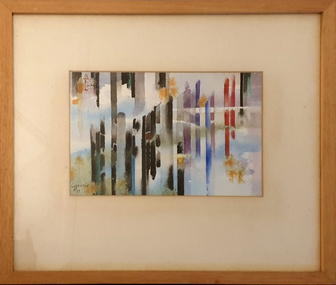
Painting - Artwork - Painting, Capriccio #11 by Arthur Lindsay
... paintings in Melbourne in 1946. Lindsay returned to Hong Kong after the War, and supervised an Advertising Agency in Singapore, Kuala Lumpar, and Bangkok. In the 1950’s he travelled to Europe, United Kingdom, Spain...paintings in Melbourne in 1946. Lindsay returned to Hong Kong after the War, and supervised an Advertising Agency in Singapore, Kuala Lumpar, and Bangkok. In the 1950’s he travelled to Europe, United Kingdom, Spain ...Arthur LINDSAY (1912-1990) Born Melbourne Arthur Lindsay, a relative of the Lindsay family of Creswick, studied informally under Rupert Bunny, and John Munro in 1933, and held his first Exhibition in 1938, with Peter Cox, at Riddell Galleries. In 1939, he left Australia to tour Japan, but stayed on, accepting a position with a publishing company in Hong Kong. He served with the Hong Kong Medical Corp during World War Two and was interned at Pootung Camp, Shanghai, from 1941 – 45. He held an exhibition of his internment paintings in Melbourne in 1946. Lindsay returned to Hong Kong after the War, and supervised an Advertising Agency in Singapore, Kuala Lumpar, and Bangkok. In the 1950’s he travelled to Europe, United Kingdom, Spain and France. Returning to Australia Lindsay moved to Castlemaine in 1969. A Retrospective of his Art was held at Castlemaine Art Gallery in 1991.Framed abstract painting by Arthur Boydarthur lindsay, painting, abstract -
![Painting - Artwork - Painting, Arthur Lindsay, [Landscape] by Arthur Lindsay](/media/collectors/57a00a4fd0cdd1210422a51e/items/5d7dfe2521ea6712f82ed3c6/item-media/5d7dfe7f21ea6712f82f5636/item-fit-380x285.jpg?cb=6) Ballarat Heritage Services
Ballarat Heritage ServicesPainting - Artwork - Painting, Arthur Lindsay, [Landscape] by Arthur Lindsay
... paintings in Melbourne in 1946. Lindsay returned to Hong Kong after the War, and supervised an Advertising Agency in Singapore, Kuala Lumpar, and Bangkok. In the 1950’s he travelled to Europe, United Kingdom, Spain...paintings in Melbourne in 1946. Lindsay returned to Hong Kong after the War, and supervised an Advertising Agency in Singapore, Kuala Lumpar, and Bangkok. In the 1950’s he travelled to Europe, United Kingdom, Spain ...Arthur LINDSAY (1912-1990) Born Melbourne Arthur Lindsay studied informally under Rupert Bunny, and John Munro in 1933, and held his first Exhibition in 1938, with Peter Cox, at Riddell Galleries. In 1939, he left Australia to tour Japan, but stayed on, accepting a position with a publishing company in Hong Kong. He served with the Hong Kong Medical Corp during World War Two and was interned at Pootung Camp, Shanghai, from 1941 – 45. He held an exhibition of his internment paintings in Melbourne in 1946. Lindsay returned to Hong Kong after the War, and supervised an Advertising Agency in Singapore, Kuala Lumpar, and Bangkok. In the 1950’s he travelled to Europe, United Kingdom, Spain and France. Returning to Australia Lindsay moved to Castlemaine in 1969. A Retrospective of his Art was held at Castlemaine Art Gallery in 1991.Watercolour landscapearthur lindsay, watercolour, landscape, artist
