
Showing 291 items matching "parks – kew (vic.)"
-
 Kew Historical Society Inc
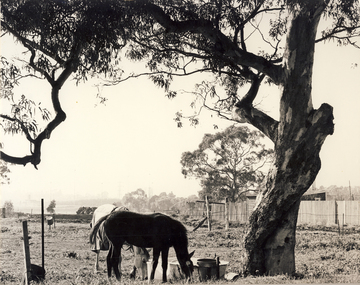
Photograph, City of Kew, Hays Paddock, Kew East, c.1980
... parks...kew (vic) - farming...The photos represent a snapshot in time. hays paddock - kew east (vic) kew (vic) - history kew (vic) - public parks kew (vic) - farming Enlarged photograph mounted on board, donated to the Kew Historical Society by the City of Kew on 10 April 1991. ...One of a series of photos created for an exhibition by the City of Kew of notable locations. The photos represent a snapshot in time.Enlarged photograph mounted on board, donated to the Kew Historical Society by the City of Kew on 10 April 1991.hays paddock - kew east (vic), kew (vic) - history, kew (vic) - public parks, kew (vic) - farming -
 Kew Historical Society Inc
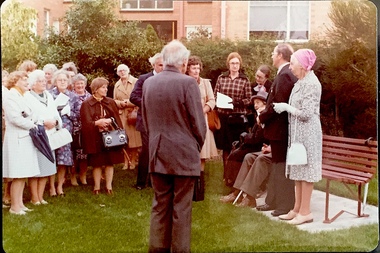
Photograph - Opening of the Dorothy Rogers Reserve, 1976
... ...public parks -- kew (vic.)...Three years after her death in 1973, the Reserve was opened in her honour. dorothy rogers reserve public parks -- kew (vic.) Inscribed verso: "Members and relatives of the late Dorothy Rogers. ...Dorothy Rogers wrote two major books on Kew's history: Lovely Old Homes of Kew (1961) and A History of Kew (1973). In addition to her published works, she was a regular contributor on issues of local history to suburban newspapers. Her archives are held in the collections of the State Library of Victoria and Kew Historical Society. Three years after her death in 1973, the Reserve was opened in her honour.Faded colour positive photograph of the opening of the Dorothy Rogers Reserve in 1976. The naming of the reserve honoured the contribution of the historian Dorothy Rogers, foundation member of the Society. The reserve is located on the north side of Studley Park Road just west of Kew Junction. Inscribed verso: "Members and relatives of the late Dorothy Rogers. Memorial reserve named and unveiled in her honour by (Cr Whiting Mayor) and City Manager Mr Fell 1978. In respect for her great research and service to the history of early Kew, and other places."dorothy rogers reserve, public parks -- kew (vic.) -
 Kew Historical Society Inc
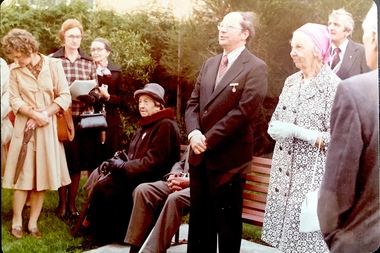
Photograph - Opening of the Dorothy Rogers Reserve, 1976
... ...public parks -- kew (vic.)...Three years after her death in 1973, the Reserve was opened in her honour. dorothy rogers reserve public parks -- kew (vic.) Inscribed verso: "Left to right: Mrs Rogers Jnr, Joy Stewart, Miss Jenkins sitting / Mrs Richardson and Mr Richardson, Brother of D. ...Dorothy Rogers wrote two major books on Kew's history: Lovely Old Homes of Kew (1961) and A History of Kew (1973). In addition to her published works, she was a regular contributor on issues of local history to suburban newspapers. Her archives are held in the collections of the State Library of Victoria and Kew Historical Society. Three years after her death in 1973, the Reserve was opened in her honour.Faded colour positive photograph of the opening of the Dorothy Rogers Reserve in 1976. The naming of the reserve honoured the contribution of the historian Dorothy Rogers, foundation member of the Society. The reserve is located on the north side of Studley Park Road just west of Kew Junction. Inscribed verso: "Left to right: Mrs Rogers Jnr, Joy Stewart, Miss Jenkins sitting / Mrs Richardson and Mr Richardson, Brother of D. Rogers), Mayor Cr Whiting, City Manager Mr Fell, Background / KHS President Miss Hall, Mr B O'Neill KHS member, / taken during the memorial unveiling of the Dorothy Rogers Reserve"dorothy rogers reserve, public parks -- kew (vic.) -
 Kew Historical Society Inc
Archive (Series) - Parks and Gardens [Kew]
... Phillip Healey – Kew (Vic.)...Parks...Phillip Healey – Kew (Vic.) Parks – Kew (Vic.) Gardens – Kew (Vic.) ...Various PartiesReference, Research, InformationArranged by Secondary Values (value of records to users)Documents pertaining to the maintenance and creation of gardens and parks within Kew and surrounding suburbs. The file includes: Letters from Kew Historical Society and Councillor Phillip Healey about place names in Kew, council notes detailing the gardens and parks in Kew, letters describing the pavilions and sporting ovals, letter from Kew Historical Society about the naming of the Council Estate at 121 Wellington Street, Kew.phillip healey – kew (vic.), parks – kew (vic.), gardens – kew (vic.)phillip healey – kew (vic.), parks – kew (vic.), gardens – kew (vic.) -
 Kew Historical Society Inc
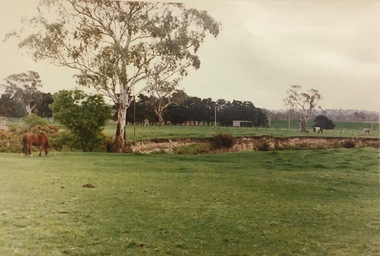
Photograph, Country Roads Board, Hays Paddock, East Kew, 1975
... ...parks and gardens - kew (vic)...hays paddock - kew east (vic) parks and gardens - kew (vic) Reverse: "Hays Paddock. ...Colour photograph of Hays Paddock in East Kew taken by a Country Roads Board photographer. The reverse provides details of the negative and the purpose of the photograph.Reverse: "Hays Paddock. Tops of bank to be rounded gently, grassed & planted."hays paddock - kew east (vic), parks and gardens - kew (vic) -
Kew Historical Society Inc
Archive (Sub-series) - Subject File, CAMPBELL, Dr. Kate (1899-1986), 1958
... doctors - kew (vic)...parks...Typically files will contain primary and secondary sources. doctors - kew (vic) parks and gardens - kew (vic) Archive file containing information on Dame Kate Campbell MD (1899-1986), who was a pioneer doctor in the field of pediatrics. ...Various partiesReference, Research, InformationSecondary Values (KHS Imposed Order)Subject file containing information on Dame Kate Campbell MD (1899-1986), who was a pioneer doctor in the field of pediatrics. The file contains newspaper articles/clippings relating to her work. A number of the articles were written at the time of her death in 1986. Kate Campbell Reserve in northern Kew is named after her.doctors - kew (vic), parks and gardens - kew (vic)doctors - kew (vic), parks and gardens - kew (vic) -
Kew Historical Society Inc
Archive (Sub-series) - Subject File, Chandler Park (Kew), 1958
... chandler park -- kew (vic.)...Typically files will contain primary and secondary sources. chandler park -- kew (vic.) parks and gardens -- kew (vic.) wetlands -- kew (vic.) ...Various partiesReference, Research, InformationSecondary Values (KHS Imposed Order)Subject file containing an extract from a Boroondara Bulletin (2016) outlining community feedback on the concept for a wetland at Chandler Park in Kew.chandler park -- kew (vic.), parks and gardens -- kew (vic.), wetlands -- kew (vic.)chandler park -- kew (vic.), parks and gardens -- kew (vic.), wetlands -- kew (vic.) -
Kew Historical Society Inc
Archive (Sub-series) - Subject File, Kew Historical Society, Dorothy Rogers Reserve, 1958
... parks and gardens - kew (vic)...Since its foundation in 1958, members of the Kew Historical Society have been compiling and storing information about subjects relating to the history of Kew and its environs, of which this file is an example. Typically files will contain primary and secondary sources. parks and gardens - kew (vic) dorothy rogers reserve studley park road - kew (vic) Archive file containing press clippings, correspondence regarding naming of Reserve. ...Various partiesReference, Research, InformationSecondary Values (KHS Imposed Order)Subject file containing press clippings and correspondence regarding naming of Reserve.parks and gardens - kew (vic), dorothy rogers reserve, studley park road - kew (vic)parks and gardens - kew (vic), dorothy rogers reserve, studley park road - kew (vic) -
 Kew Historical Society Inc
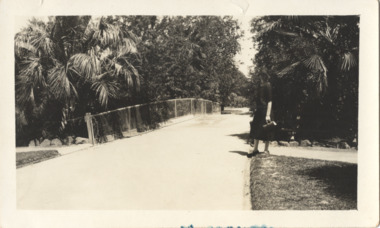
Photograph - In the 'Alexandra Gardens', Kew, 1927
... parks and gardens -- kew (vic.)...Kew in 1906. A rare and early photograph of the gardens showing clearly the changes to the layout and planting during the 1920s. parks and gardens -- kew (vic.) alexandra gardens -- kew (vic.) george pockett Annotation verso: "Alexandra Gardens Kew 1927" Small, sepia coloured photographic positive of a woman standing beside a path and bridge in the Alexandra Gardens in Cotham Road, Kew. ...The Alexandra Gardens in Cotham Road, Kew were opened by the Governor of Victoria in 1910. The first curator of the gardens was George Pockett, who with his brother is credited with the layout of the gardens. The gardens were constructed on land originally owned by the King family of 'Madford' in Wellington Street. The land on which the gardens were developed was originally the back paddock of 'Madford' which was purchased by the Borough of Kew in 1906.A rare and early photograph of the gardens showing clearly the changes to the layout and planting during the 1920s. Small, sepia coloured photographic positive of a woman standing beside a path and bridge in the Alexandra Gardens in Cotham Road, Kew.Annotation verso: "Alexandra Gardens Kew 1927"parks and gardens -- kew (vic.), alexandra gardens -- kew (vic.), george pockett -
 Kew Historical Society Inc
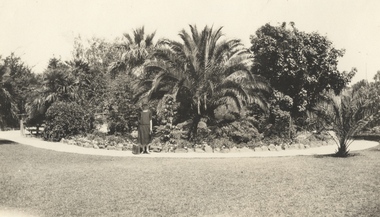
Photograph - In the 'Alexandra Gardens', Kew, 1927
... parks and gardens -- kew (vic.)...Kew in 1906. A rare and early photograph of the gardens showing clearly the changes to the layout and planting during the 1920s. parks and gardens -- kew (vic.) alexandra gardens -- kew (vic.) george pockett Annotation verso: "Alexandra Gardens Kew 1927" Small, sepia coloured photographic positive of a woman with a suitcase standing on a gravel path in front of a semi-circular garden bed in the Alexandra Gardens in Cotham Road, Kew. ...The Alexandra Gardens in Cotham Road, Kew were opened by the Governor of Victoria in 1910. The first curator of the gardens was George Pockett, who with his brother is credited with the layout of the gardens. The gardens were constructed on land originally owned by the King family of 'Madford' in Wellington Street. The land on which the gardens were developed was originally the back paddock of 'Madford' which was purchased by the Borough of Kew in 1906.A rare and early photograph of the gardens showing clearly the changes to the layout and planting during the 1920s. Small, sepia coloured photographic positive of a woman with a suitcase standing on a gravel path in front of a semi-circular garden bed in the Alexandra Gardens in Cotham Road, Kew. The main plantings in the rock-bordered bed are varieties of palms. A wooden bridge can be seen to the woman's leftAnnotation verso: "Alexandra Gardens Kew 1927"parks and gardens -- kew (vic.), alexandra gardens -- kew (vic.), george pockett -
 Kew Historical Society Inc
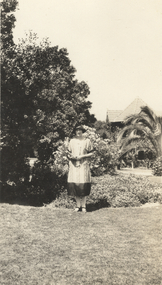
Photograph - In the 'Alexandra Gardens', Kew, 1927
... parks and gardens -- kew (vic.)...Kew in 1906. A rare and early photograph of the gardens showing clearly the changes to the layout and planting during the 1920s. parks and gardens -- kew (vic.) alexandra gardens -- kew (vic.) george pockett Annotation verso: "Alexandra Gardens Kew 1927" Small, sepia coloured photographic positive of a woman standing on the grass in front of a garden bed in the Alexandra Gardens in Cotham Road, Kew. ...The Alexandra Gardens in Cotham Road, Kew were opened by the Governor of Victoria in 1910. The first curator of the gardens was George Pockett, who with his brother is credited with the layout of the gardens. The gardens were constructed on land originally owned by the King family of 'Madford' in Wellington Street. The land on which the gardens were developed was originally the back paddock of 'Madford' which was purchased by the Borough of Kew in 1906.A rare and early photograph of the gardens showing clearly the changes to the layout and planting during the 1920s. Small, sepia coloured photographic positive of a woman standing on the grass in front of a garden bed in the Alexandra Gardens in Cotham Road, Kew. The Centennial Rotunda, built in 1910, can be seen in the background. Annotation verso: "Alexandra Gardens Kew 1927"parks and gardens -- kew (vic.), alexandra gardens -- kew (vic.), george pockett -
 Eltham District Historical Society Inc
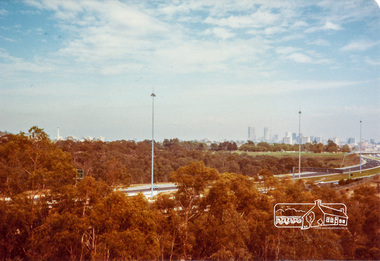
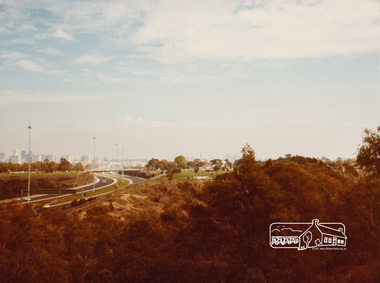
Photograph, Melbourne from Yarra Bend Park, Kew
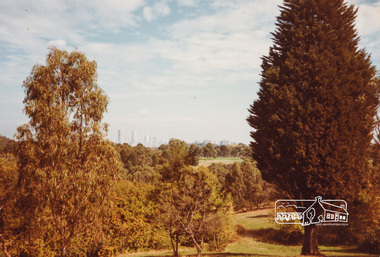
... Originally contained in a 'magnetic' photo album of scenic photos of Yan Yean and Warrandyte believed to be donated by Mrs Eric Stephenson, Jingalong, 110 Ryans Road, Eltham, Vic. 3095; relocated to archival safe storage. Kew Melbourne Yarra Bend Park Colour photograph Melbourne from Yarra Bend Park, Kew Photograph ...Originally contained in a 'magnetic' photo album of scenic photos of Yan Yean and Warrandyte believed to be donated by Mrs Eric Stephenson, Jingalong, 110 Ryans Road, Eltham, Vic. 3095; relocated to archival safe storage.Colour photographkew, melbourne, yarra bend park -
 Eltham District Historical Society Inc
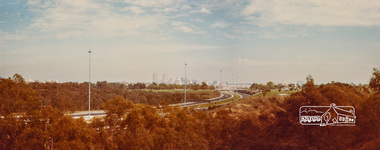
Photograph, Melbourne from Yarra Bend Park, Kew
... Originally contained in a 'magnetic' photo album of scenic photos of Yan Yean and Warrandyte believed to be donated by Mrs Eric Stephenson, Jingalong, 110 Ryans Road, Eltham, Vic. 3095; relocated to archival safe storage. kew melbourne yarra bend park Colour photograph Melbourne from Yarra Bend Park, Kew Photograph ...Originally contained in a 'magnetic' photo album of scenic photos of Yan Yean and Warrandyte believed to be donated by Mrs Eric Stephenson, Jingalong, 110 Ryans Road, Eltham, Vic. 3095; relocated to archival safe storage.Colour photographkew, melbourne, yarra bend park -
 Eltham District Historical Society Inc
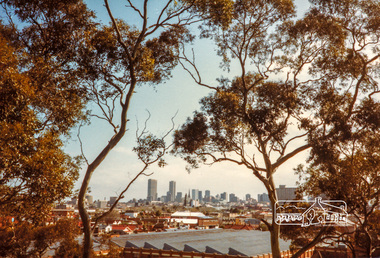
Photograph, Melbourne from Yarra Bend Park, Kew
... Originally contained in a 'magnetic' photo album of scenic photos of Yan Yean and Warrandyte believed to be donated by Mrs Eric Stephenson, Jingalong, 110 Ryans Road, Eltham, Vic. 3095; relocated to archival safe storage. kew melbourne yarra bend park Colour photograph Melbourne from Yarra Bend Park, Kew Photograph ...Originally contained in a 'magnetic' photo album of scenic photos of Yan Yean and Warrandyte believed to be donated by Mrs Eric Stephenson, Jingalong, 110 Ryans Road, Eltham, Vic. 3095; relocated to archival safe storage.Colour photographkew, melbourne, yarra bend park -
 Eltham District Historical Society Inc
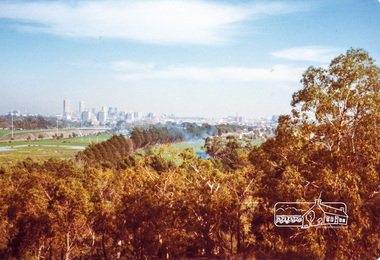
Photograph, Melbourne from Yarra Bend Park, Kew
... Originally contained in a 'magnetic' photo album of scenic photos of Yan Yean and Warrandyte believed to be donated by Mrs Eric Stephenson, Jingalong, 110 Ryans Road, Eltham, Vic. 3095; relocated to archival safe storage. kew melbourne yarra bend park Colour photograph Melbourne from Yarra Bend Park, Kew Photograph ...Originally contained in a 'magnetic' photo album of scenic photos of Yan Yean and Warrandyte believed to be donated by Mrs Eric Stephenson, Jingalong, 110 Ryans Road, Eltham, Vic. 3095; relocated to archival safe storage.Colour photographkew, melbourne, yarra bend park -
 Eltham District Historical Society Inc
Photograph, Melbourne from Yarra Bend Park, Kew
... Originally contained in a 'magnetic' photo album of scenic photos of Yan Yean and Warrandyte believed to be donated by Mrs Eric Stephenson, Jingalong, 110 Ryans Road, Eltham, Vic. 3095; relocated to archival safe storage. kew melbourne yarra bend park Colour photograph Melbourne from Yarra Bend Park, Kew Photograph ...Originally contained in a 'magnetic' photo album of scenic photos of Yan Yean and Warrandyte believed to be donated by Mrs Eric Stephenson, Jingalong, 110 Ryans Road, Eltham, Vic. 3095; relocated to archival safe storage.Colour photographkew, melbourne, yarra bend park -
 Eltham District Historical Society Inc
Photograph, Melbourne from Yarra Bend Park, Kew
... Originally contained in a 'magnetic' photo album of scenic photos of Yan Yean and Warrandyte believed to be donated by Mrs Eric Stephenson, Jingalong, 110 Ryans Road, Eltham, Vic. 3095; relocated to archival safe storage. kew melbourne yarra bend park Colour photograph Melbourne from Yarra Bend Park, Kew Photograph ...Originally contained in a 'magnetic' photo album of scenic photos of Yan Yean and Warrandyte believed to be donated by Mrs Eric Stephenson, Jingalong, 110 Ryans Road, Eltham, Vic. 3095; relocated to archival safe storage.Colour photographkew, melbourne, yarra bend park -
 Ruyton Girls' School
Photograph - Photographic Portrait, Mrs Charlotte Anderson
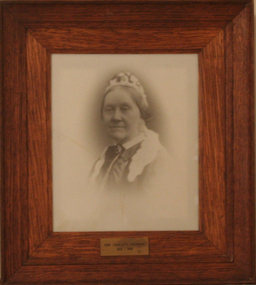
... Kew (Vic)...Bulleen Road...High Street South...Studley Park...Charlotte Anderson Ruyton Ruyton Girls' School Kew (Vic) Bulleen Road High Street South Studley Park Road Edgecomb woman school teacher principal Anderson reproduction 1990s Plaque on frame: "Mrs Charlotte Anderson/ 1878-1888" A framed, black & white reproduction of a photographic portrait. ...Mrs Charlotte Anderson was born Charlotte Eliza Alsop in England in 1838 and arrived in Australia in 1848. She married lawyer James Anderson in 1864, and in the year of his death in 1878 she became the founding owner-Principal of Ruyton Girls' School, Kew. Mrs Anderson operated Ruyton initially in her own home of 63 Bulleen Road, Kew (now 63 High Street South). According to Ruyton histories, Mrs Anderson is said to have begun the school with her own two sons, four daughters and some of her Alsop nieces and nephews who resided in Kew. Around the time of the addition of Maud King, the first student outside the family, the school changed to a 'Ladies College', and the boys were sent elsewhere for their education. By late 1881 Mrs Anderson began using the name 'Ruyton' for the school, in honour of a connection to Ruyton-XI-Towns, Shropshire, England where her great-grandfather had been vicar and where she was baptised. In 1882 Mrs Anderson moved the School to Edgecomb in Studley Park Road from 1882-1888. The larger premises enabled her to begin accepting boarding students from 1882. She retired due to ill health and sold the school to her friend Miss Eliza Bromby. Mrs Anderson lived at 'Bongamero', in the King Valley, Victoria until her death in 1906. She is buried in Boroondara Cemetery. One of Ruyton's four Houses, Anderson, is named for Charlotte Anderson. Artwork AC/0099 is a framed reproduction photograph of an original portrait of Mrs Anderson, c.1900-1906. The location and date of the original photograph is unknown, but may be held among Ruyton papers at the State Library of Victoria (MS 12079). The reproduction was probably created to be part of the gallery of Principals and significant people for the Conference/Boardroom, Henty House.A framed, black & white reproduction of a photographic portrait. The portrait shows the head and shoulders of a middle aged woman wearing Victorian-era clothing including a dark ribbon tied around her collar. She wears a lace cap on her head, and the cap's tail is draped around her shoulders. The woman's body is partially turned away from the camera, while her face is turned toward the camera. Plaque on frame: "Mrs Charlotte Anderson/ 1878-1888"charlotte anderson, ruyton, ruyton girls' school, kew (vic), bulleen road, high street south, studley park road, edgecomb, woman, school, teacher, principal, anderson, reproduction, 1990s -
 Kew Historical Society Inc
Postcard, The VSM.Series, No.351. River Yarra, Studley Park, Kew, Vic, c.1905
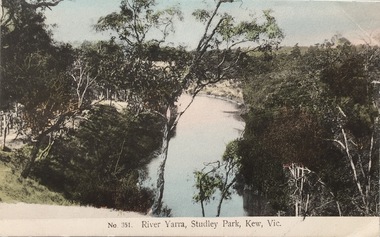
... River Yarra, Studley Park, Kew, Vic....River Yarra, Studley Park, Kew, Vic. Postcard Postcard The VSM.Series ...This is a colour postcard of the River Yarra at Studley Park, circa 1905. The postcard, which has handwritten notes on the reverse. It was printed in Prussia as part of the Victoria Stamp Market (VSM) Series. Coloured postcard of the Yarra River looking north from Galatea Point, near the Johnson Street Bridge.Donated by Miss B. Challen. ?Taken from bend above Galatea Point, looking north. Identified by Darcy Dugan, Yarra Bend Parks.river yarra, victoria stamp market (vsm) series, postcards -
 Kew Historical Society Inc
Postcard, Yarra Falls, The Yarra at Studley Park, 1920-1950
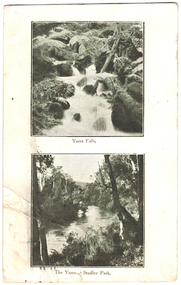
... Park in Kew was a major location for recreation activities by the people of Melbourne. Image of the Yarra at Sudley Park shows remnant vegetation preserved on the banks of the Yarra in this part of Kew. yarra falls dual image postcards yarra river -- studley park -- melbourne (vic.) monochrome postcards "Mrs Clark, Harp Road, East Kew / Wishing Mother a very happy Birthday and many returns / from Eileen" Monochrome postcard with two images of the Yarra River, the lower image showing the Yarra at Studley Park. ...The Yarra River was a major subject for the producers of postcards in Melbourne. This dual image postcard shows images of the Yarra in two locations. Studley Park in Kew was a major location for recreation activities by the people of Melbourne.Image of the Yarra at Sudley Park shows remnant vegetation preserved on the banks of the Yarra in this part of Kew.Monochrome postcard with two images of the Yarra River, the lower image showing the Yarra at Studley Park. The reverse has a handwritten birthday greeting from Eileen to her mother Mrs Clark. Original postage stamp has been removed and slight tearing in top right corner. Two ink stamps KEW HISTORICAL SOCIETY have been added."Mrs Clark, Harp Road, East Kew / Wishing Mother a very happy Birthday and many returns / from Eileen"yarra falls, dual image postcards, yarra river -- studley park -- melbourne (vic.), monochrome postcards -
 Kew Historical Society Inc
Plan, Survey Plan, Park Hill Road, Kew, 1880-1890
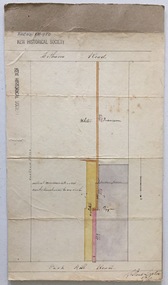
... kew, holland loxton, park hill road - kew...Holland Loxton -- Surveyor...Survey plans -- Parkhill Road -- Kew (Vic...Handdrawn survey plan by a former surveyor and town clerk of Kew surveys - kew, maps - kew, holland loxton, park hill road - kew Holland Loxton -- Surveyor Survey plans -- Parkhill Road -- Kew (Vic.) ...The streets identified on the survey plan - Cotham Road, Park Hill Road East, Park Hill Road West in Kew were each gazetted by the Victorian Government in 1865. The hand-coloured survey plan was completed by Holland Loxton, Town Clerk and Surveyor of the Borough of Kew from 1866. The unnamed survey plan includes names of land owners in addition to measurements (2 chains to 1 inch) and streets. Named owners include Webster, Payne and Francom which will enable us to narrow down the creation date of the survey.Handdrawn survey plan by a former surveyor and town clerk of KewHand drawn and coloured survey plan created by Holland Loxton, Surveyor and Town Clerk of Kew, showing land owned by Payne in Park Hill Road, Kew. The plan includes street names, land measurements and land owners.surveys - kew, maps - kew, holland loxton, park hill road - kew, holland loxton -- surveyor, survey plans -- parkhill road -- kew (vic.) -
 Kew Historical Society Inc
Clothing - Shot Silk Dance Frock & Wrap, Park Avenue Gowns, c.1960
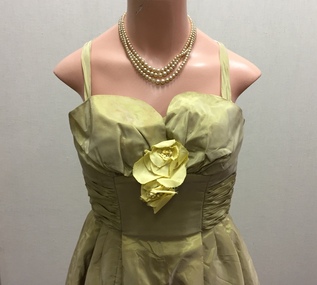
... Kew Historical Society includes examples of women’s, men’s, children’s and infants’ clothing from the 18th, 19th and 20th centuries. Items in the collection were largely produced for, or purchased by women in Melbourne, and includes examples of outerwear, protective wear, nightwear, underwear and costume accessories.This 'dance frock' by Park Avenue Gowns is one of a number of garments in the collection by this designer. women's clothing cocktail dresses dance frocks australian fashion - 1960s fashion designers - melbourne (vic) - park avenue gowns Label : "Park Avenue Gowns" Metallic thread silk cocktail dress and wrap by Park Avenue Gowns, 1960. ...The Fashion & Design collection of the Kew Historical Society includes examples of women’s, men’s, children’s and infants’ clothing from the 18th, 19th and 20th centuries. Items in the collection were largely produced for, or purchased by women in Melbourne, and includes examples of outerwear, protective wear, nightwear, underwear and costume accessories.This 'dance frock' by Park Avenue Gowns is one of a number of garments in the collection by this designer.Metallic thread silk cocktail dress and wrap by Park Avenue Gowns, 1960. Virtually identical dresses by the designer were featured in the Australian Women's Weekly in 1960, described as 'dance frocks', to which the wide flairing skirt would be well suited.Label : "Park Avenue Gowns"women's clothing, cocktail dresses, dance frocks, australian fashion - 1960s, fashion designers - melbourne (vic) - park avenue gowns -
 Kew Historical Society Inc
Drawing - Property Illustration, Margaret Picken, 8 Park Crescent, Kew, 1989
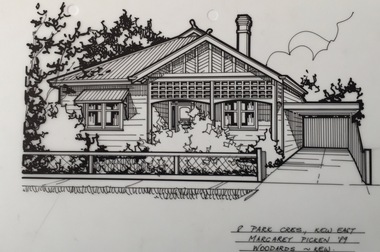
... property illustrations — buildings — kew (vic.)...8 park...The year in which the work was created is also a valuable record for house historians, as a number of the properties depicted have either been altered since that date or demolished. artist -- margaret picken 1950- property illustrations — buildings — kew (vic.) 8 park crescent - kew (vic) 8 PARK CRES., KEW EAST / MARGARET PICKEN '89 / WOODARDS ~ KEW Pen and ink drawing on drafting film of 8 Park Crescent, Kew by Margaret Picken. 8 Park Crescent, Kew Drawing Property Illustration Margaret Picken Woodards (Kew) ...After training as a Cartographic Draftsman within the mining industry, I worked as a property illustrator for real estate firms in the eastern suburbs of Melbourne for 23 years from 1983. I initially photographed houses with a Polaroid camera and made a 'thumbnail' sketch while there. The photos were used to scale off a sketch in pencil and then that sketch was overlaid with drafting film and the 'pen and ink' completed. The pens I used were the Rotring ‘Rapidigraph’ drafting pens. The ink was also made by Rotring (German).The film was ‘Rapidraw’, polyester drafting film, double matte. It takes a very fine line and doesn’t bleed. As well as house sketches, there were often floor plans and site plans ordered. Aerial sketches were ordered when the property needed an overall view. (Margaret Picken, 2020)This drawing is one of a series created by Margaret Picken for real estate agents in Melbourne between 1983 and 2006. Each work is signed and dated by the artist.Gift of Margaret Picken, 2020Pen and ink drawing on drafting film of 8 Park Crescent, Kew by Margaret Picken.8 PARK CRES., KEW EAST / MARGARET PICKEN '89 / WOODARDS ~ KEWartist -- margaret picken 1950-, property illustrations — buildings — kew (vic.), 8 park crescent - kew (vic) -
 Kew Historical Society Inc
Drawing - Property Illustration, Margaret Picken, 2/42 Park Crescent, Kew, 1993
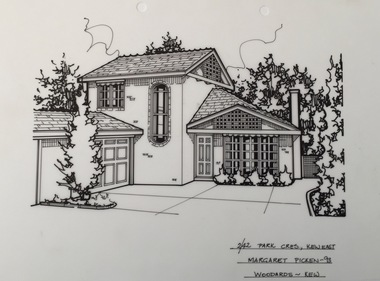
... property illustrations — buildings — kew (vic.)...2/42 park...The year in which the work was created is also a valuable record for house historians, as a number of the properties depicted have either been altered since that date or demolished. artist -- margaret picken 1950- property illustrations — buildings — kew (vic.) 2/42 park crescent - kew (vic) 2/42 PARK CRES., KEW EAST / MARGARET PICKEN ~93 / WOODARDS ~ KEW Pen and ink drawing on drafting film of 2/42 Park Crescent, Kew, by Margaret Picken. 2/42 Park Crescent, Kew Drawing Property Illustration Margaret Picken Woodards (Kew) ...After training as a Cartographic Draftsman within the mining industry, I worked as a property illustrator for real estate firms in the eastern suburbs of Melbourne for 23 years from 1983. I initially photographed houses with a Polaroid camera and made a 'thumbnail' sketch while there. The photos were used to scale off a sketch in pencil and then that sketch was overlaid with drafting film and the 'pen and ink' completed. The pens I used were the Rotring ‘Rapidigraph’ drafting pens. The ink was also made by Rotring (German).The film was ‘Rapidraw’, polyester drafting film, double matte. It takes a very fine line and doesn’t bleed. As well as house sketches, there were often floor plans and site plans ordered. Aerial sketches were ordered when the property needed an overall view. (Margaret Picken, 2020)This drawing is one of a series created by Margaret Picken for real estate agents in Melbourne between 1983 and 2006. Each work is signed and dated by the artist.Gift of Margaret Picken, 2020Pen and ink drawing on drafting film of 2/42 Park Crescent, Kew, by Margaret Picken.2/42 PARK CRES., KEW EAST / MARGARET PICKEN ~93 / WOODARDS ~ KEWartist -- margaret picken 1950-, property illustrations — buildings — kew (vic.), 2/42 park crescent - kew (vic) -
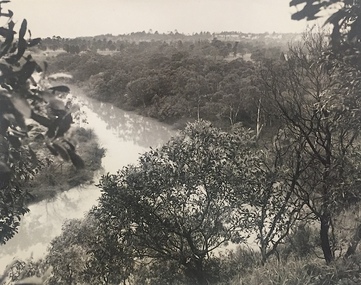 Kew Historical Society Inc
Photograph, J E & B L Rogers, View of Yarra from Cliffs, Studley Park, 1958
... Together it forms the largest privately-donated collection within the archives of the Kew Historical Society. yarra river -- kew (vic) landscape photography "View of Yarra from Cliffs, Studley Park" / "Studley Park" / "Jim's" / "58" Back and white photograph of the Yarra River at Kew. ...This work forms part of the collection assembled by the historian Dorothy Rogers, that was donated to the Kew Historical Society by her son John Rogers in 2015. The manuscripts, photographs, maps, and documents were sourced by her from both family and local collections or produced as references for her print publications. Many were directly used by Rogers in writing ‘Lovely Old Homes of Kew’ (1961) and 'A History of Kew' (1973), or the numerous articles on local history that she produced for suburban newspapers. Most of the photographs in the collection include detailed annotations in her hand.The Rogers Collection provides a comprehensive insight into the working habits of a historian in the 1960s and 1970s. Together it forms the largest privately-donated collection within the archives of the Kew Historical Society.Back and white photograph of the Yarra River at Kew. In the distance the towers of the Kew Asylum are visible."View of Yarra from Cliffs, Studley Park" / "Studley Park" / "Jim's" / "58"yarra river -- kew (vic), landscape photography -
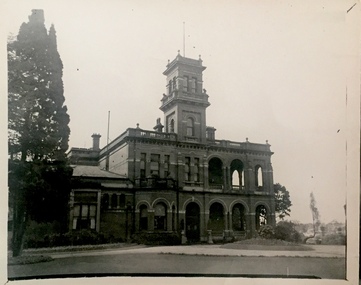 Kew Historical Society Inc
Photograph, 'Raheen', Studley Park Road, c.1959
... raheen -- studley park road -- kew (vic)...Together it forms the largest privately-donated collection within the archives of the Kew Historical Society. raheen -- studley park road -- kew (vic) edward latham archbishop mannix "Raheen / ca. 1870 by Ed. ...This work forms part of the collection assembled by the historian Dorothy Rogers, that was donated to the Kew Historical Society by her son John Rogers in 2015. The manuscripts, photographs, maps, and documents were sourced by her from both family and local collections or produced as references for her print publications. Many were directly used by Rogers in writing ‘Lovely Old Homes of Kew’ (1961) and 'A History of Kew' (1973), or the numerous articles on local history that she produced for suburban newspapers. Most of the photographs in the collection include detailed annotations in her hand.The Rogers Collection provides a comprehensive insight into the working habits of a historian in the 1960s and 1970s. Together it forms the largest privately-donated collection within the archives of the Kew Historical Society.Small black and white photograph of Raheen in Studley Park Road, Kew."Raheen / ca. 1870 by Ed. Latham / Palace of Roman (Catholic Archbishop) / 2 views either one / 22"raheen -- studley park road -- kew (vic), edward latham, archbishop mannix -
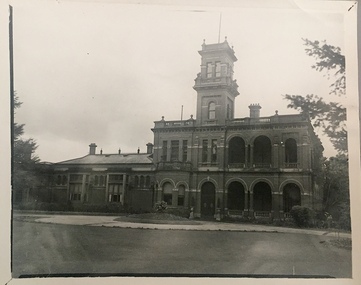 Kew Historical Society Inc
Photograph, 'Raheen', Studley Park Road, c.1959
... raheen -- studley park road -- kew (vic)...Together it forms the largest privately-donated collection within the archives of the Kew Historical Society. raheen -- studley park road -- kew (vic) edward latham archbishop mannix "20" Small black and white photograph of Raheen in Studley Park Road, Kew. ...This work forms part of the collection assembled by the historian Dorothy Rogers, that was donated to the Kew Historical Society by her son John Rogers in 2015. The manuscripts, photographs, maps, and documents were sourced by her from both family and local collections or produced as references for her print publications. Many were directly used by Rogers in writing ‘Lovely Old Homes of Kew’ (1961) and 'A History of Kew' (1973), or the numerous articles on local history that she produced for suburban newspapers. Most of the photographs in the collection include detailed annotations in her hand.The Rogers Collection provides a comprehensive insight into the working habits of a historian in the 1960s and 1970s. Together it forms the largest privately-donated collection within the archives of the Kew Historical Society.Small black and white photograph of Raheen in Studley Park Road, Kew."20"raheen -- studley park road -- kew (vic), edward latham, archbishop mannix -
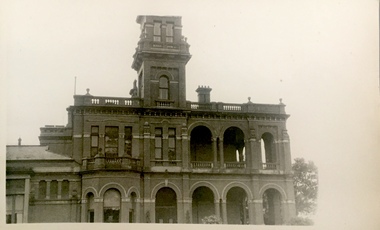 Kew Historical Society Inc
Photograph, 'Raheen', Studley Park Road, c.1959
... raheen -- studley park road -- kew (vic)...Together it forms the largest privately-donated collection within the archives of the Kew Historical Society. raheen -- studley park road -- kew (vic) edward latham archbishop mannix "21" Small black and white photograph of Raheen in Studley Park Road, Kew. ...This work forms part of the collection assembled by the historian Dorothy Rogers, that was donated to the Kew Historical Society by her son John Rogers in 2015. The manuscripts, photographs, maps, and documents were sourced by her from both family and local collections or produced as references for her print publications. Many were directly used by Rogers in writing ‘Lovely Old Homes of Kew’ (1961) and 'A History of Kew' (1973), or the numerous articles on local history that she produced for suburban newspapers. Most of the photographs in the collection include detailed annotations in her hand.The Rogers Collection provides a comprehensive insight into the working habits of a historian in the 1960s and 1970s. Together it forms the largest privately-donated collection within the archives of the Kew Historical Society.Small black and white photograph of Raheen in Studley Park Road, Kew."21"raheen -- studley park road -- kew (vic), edward latham, archbishop mannix -
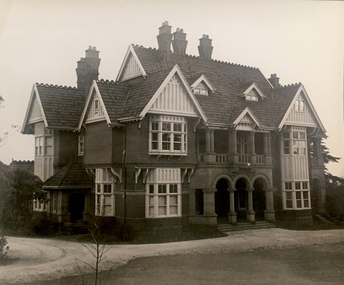 Kew Historical Society Inc
Photograph, 'Campion Hall', Studley Park Road, c.1960
... Together it forms the largest privately-donated collection within the archives of the Kew Historical Society. historic houses -- kew (vic.) campion hall -- house glendalough dalswraith-- dalsraith kew mansions "Ca. 1905 / Campion College / built for S.W. Gibson" Small black and white photograph of 'Campion Hall' (previously called Dalswraith and Glendalough) in Studley Park Road, Kew. ...This work forms part of the collection assembled by the historian Dorothy Rogers, that was donated to the Kew Historical Society by her son John Rogers in 2015. The manuscripts, photographs, maps, and documents were sourced by her from both family and local collections or produced as references for her print publications. Many were directly used by Rogers in writing ‘Lovely Old Homes of Kew’ (1961) and 'A History of Kew' (1973), or the numerous articles on local history that she produced for suburban newspapers. Most of the photographs in the collection include detailed annotations in her hand.The Rogers Collection provides a comprehensive insight into the working habits of a historian in the 1960s and 1970s. Together it forms the largest privately-donated collection within the archives of the Kew Historical Society.Small black and white photograph of 'Campion Hall' (previously called Dalswraith and Glendalough) in Studley Park Road, Kew."Ca. 1905 / Campion College / built for S.W. Gibson"historic houses -- kew (vic.), campion hall -- house, glendalough, dalswraith-- dalsraith, kew mansions -
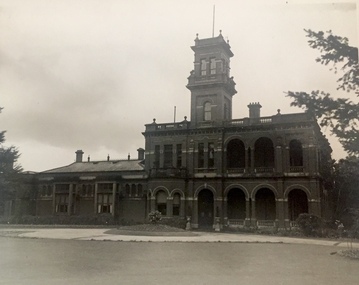 Kew Historical Society Inc
Photograph, 'Raheen', Studley Park Road, c.1960
... kew (vic.) edward latham raheen "Raheen by Ed. Latham / (Palace of Roman Catholic Archbishop / 18 / 2 views - either one" Small black and white photograph of 'Raheen', in Studley Park Road, Kew. ...This work forms part of the collection assembled by the historian Dorothy Rogers, that was donated to the Kew Historical Society by her son John Rogers in 2015. The manuscripts, photographs, maps, and documents were sourced by her from both family and local collections or produced as references for her print publications. Many were directly used by Rogers in writing ‘Lovely Old Homes of Kew’ (1961) and 'A History of Kew' (1973), or the numerous articles on local history that she produced for suburban newspapers. Most of the photographs in the collection include detailed annotations in her hand.The Rogers Collection provides a comprehensive insight into the working habits of a historian in the 1960s and 1970s. Together it forms the largest privately-donated collection within the archives of the Kew Historical Society.Small black and white photograph of 'Raheen', in Studley Park Road, Kew."Raheen by Ed. Latham / (Palace of Roman Catholic Archbishop / 18 / 2 views - either one"historic houses -- kew (vic.), edward latham, raheen
