
Showing 51 items matching "parnell"
-
 Ballarat and District Irish Association
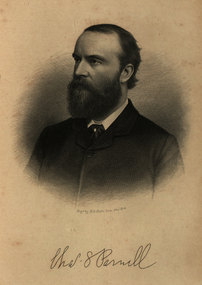
Image, Charles Parnell, c1864, 1864
... Charles Parnell, c1864......Parnell...Parnell was an Irish nationalist and statesman who led the fight for Irish Home Rule in the 1880s. ...Image of bearded man known as Charles Stewart Parnell...Parnell was an Irish nationalist and statesman who led the fight for Irish Home Rule in the 1880s. ...Parnell was an Irish nationalist and statesman who led the fight for Irish Home Rule in the 1880s. Charles Stewart Parnell was born on 27 June 1846 in County Wicklow into a family of Anglo-Irish Protestant landowners. He studied at Cambridge University and was elected to parliament in 1875 as a member of the Home Rule League (later re-named by Parnell the Irish Parliamentary Party). His abilities soon became evident. In 1878, Parnell became an active opponent of the Irish land laws, believing their reform should be the first step on the road to Home Rule. In 1879, Parnell was elected president of the newly founded National Land League and the following year he visited the United States to gain both funds and support for land reform. In the 1880 election, he supported the Liberal leader William Gladstone, but when Gladstone's Land Act of 1881 fell short of expectations, he joined the opposition. By now he had become the accepted leader of the Irish nationalist movement. Parnell now encouraged boycott as a means of influencing landlords and land agents, and as a result he was sent to jail and the Land League was suppressed. From Kilmainham prison he called on Irish peasants to stop paying rent. In March 1882, he negotiated an agreement with Gladstone - the Kilmainham Treaty - in which he urged his followers to avoid violence. But this peaceful policy was severely challenged by the murder in May 1882 of two senior British officials in Phoenix Park in Dublin by members of an Irish terrorist group. Parnell condemned the murders. In 1886, Parnell joined with the Liberals to defeat Lord Salisbury's Conservative government. Gladstone became prime minister and introduced the first Irish Home Rule Bill. Parnell believed it was flawed but said he was prepared to vote for it. The Bill split the Liberal Party and was defeated in the House of Commons. Gladstone's government fell soon afterwards.(http://www.bbc.co.uk/history/historic_figures/parnell_charles.shtml, accessed 21 January 2014) The Irish National Land League (Irish: Conradh na Talún) was an Irish political organisation of the late 19th century which sought to help poor tenant farmers. Its primary aim was to abolish landlordism in Ireland and enable tenant farmers to own the land they worked on. The period of the Land League's agitation is known as the Land War. Within decades of the league's foundation, through the efforts of William O'Brien and George Wyndham (a descendant of Lord Edward FitzGerald), the 1902 Land Conference produced the Land (Purchase) Act 1903 which allowed Irish tenant farmers buy out their freeholds with UK government loans over 68 years through the Land Commission (an arrangement that has never been possible in Britain itself). For agricultural labourers, D.D. Sheehan and the Irish Land and Labour Association secured their demands from the Liberal government elected in 1905 to pass the Labourers (Ireland) Act 1906, and the Labourers (Ireland) Act 1911, which paid County Councils to build over 40,000 new rural cottages, each on an acre of land. By 1914, 75% of occupiers were buying out their landlords, mostly under the two Acts. In all, under the pre-UK Land Acts over 316,000 tenants purchased their holdings amounting to 15 million acres (61,000 km2) out of a total of 20 million acres (81,000 km2) in the country. Sometimes the holdings were described as "uneconomic", but the overall sense of social justice was undeniable. (http://en.wikipedia.org/wiki/Irish_National_Land_League, accessed 21 January 2014) The Irish National Land League was founded at the Imperial Hotel in Castlebar, the County town of Mayo, on 21 October 1879. At that meeting Charles Stewart Parnell was elected president of the league. Andrew Kettle, Michael Davitt, and Thomas Brennan were appointed as honorary secretaries. This united practically all the different strands of land agitation and tenant rights movements under a single organisation. The two aims of the Land League, as stated in the resolutions adopted in the meeting, were: ...first, to bring out a reduction of rack-rents; second, to facilitate the obtaining of the ownership of the soil by the occupiers. That the object of the League can be best attained by promoting organisation among the tenant-farmers; by defending those who may be threatened with eviction for refusing to pay unjust rents; by facilitating the working of the Bright clauses of the Irish Land Act during the winter; and by obtaining such reforms in the laws relating to land as will enable every tenant to become owner of his holding by paying a fair rent for a limited number of years. Charles Stewart Parnell, John Dillon, Michael Davitt, and others including Cal Lynn then went to America to raise funds for the League with spectacular results. Branches were also set up in Scotland, where the Crofters Party imitated the League and secured a reforming Act in 1886. The government had introduced the first ineffective Land Act in 1870, then the equally inadequate Acts of 1880 and 1881 followed. These established a Land Commission that started to reduce some rents. Parnell together with all of his party lieutenants, including Father Eugene Sheehy known as "the Land League priest", went into a bitter verbal offensive and were imprisoned in October 1881 under the Irish Coercion Act in Kilmainham Jail for "sabotaging the Land Act", from where the No-Rent Manifesto was issued, calling for a national tenant farmer rent strike which was partially followed. Although the League discouraged violence, agrarian crimes increased widely. Typically a rent strike would be followed by evictions by the police, or those tenants paying rent would be subject to a local boycott by League members. Where cases went to court, witnesses would change their stories, resulting in an unworkable legal system. This in turn led on to stronger criminal laws being passed that were described by the League as "Coercion Acts". The bitterness that developed helped Parnell later in his Home Rule campaign. Davitt's views were much more extreme, seeking to nationalise all land, as seen in his famous slogan: "The land of Ireland for the people of Ireland". Parnell aimed to harness the emotive element, but he and his party preferred for tenant farmers to become freeholders on the land they rented, instead of land being vested in "the people".(http://en.wikipedia.org/wiki/Irish_National_Land_League, accessed 21 January 2014)Image of bearded man known as Charles Stewart Parnellballarat irish, parnell, charles parnell, home rule -
 Flagstaff Hill Maritime Museum and Village
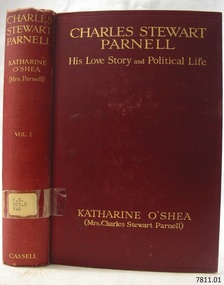
Book, Charles Stewart Parnell Vol 1
... Charles Stewart Parnell Vol 1...Charles Stewart Parnell Vol 1 His Love Story and Political Life Author: Katharine O'Shea (Mrs Charles Stewart Parnell) Publisher: Cassell & Company Date: 1914...warrnambool shipwrecked-coast flagstaff-hill flagstaff-hill-maritime-museum maritime-museum shipwreck-coast flagstaff-hill-maritime-village shipwrecked-artefact great ocean road book warrnambool library warrnambool mechanics’ institute mechanics’ institute library victorian library board warrnambool books and records warrnambool children’s library warrnambool public library charles stewart parnell vol 1 charles stewart parnell katharine o'shea mrs charles stewart parnell Label on spine cover with typed text RH 923.2 PAR Pastedown front endpaper has sticker from Warrnambool Mechanics Institute and Free Library Front loose endpaper has a stamp from Corangamite Regional Library Service Charles Stewart Parnell Vol 1 His Love Story and Political Life Author: Katharine O'Shea (Mrs Charles Stewart Parnell) Publisher: Cassell & Company Date: 1914 Charles Stewart Parnell Vol 1 Book ...Charles Stewart Parnell Vol 1 His Love Story and Political Life Author: Katharine O'Shea (Mrs Charles Stewart Parnell) Publisher: Cassell & Company Date: 1914Label on spine cover with typed text RH 923.2 PAR Pastedown front endpaper has sticker from Warrnambool Mechanics Institute and Free Library Front loose endpaper has a stamp from Corangamite Regional Library Service warrnambool, shipwrecked-coast, flagstaff-hill, flagstaff-hill-maritime-museum, maritime-museum, shipwreck-coast, flagstaff-hill-maritime-village, shipwrecked-artefact, great ocean road, book, warrnambool library, warrnambool mechanics’ institute, mechanics’ institute library, victorian library board, warrnambool books and records, warrnambool children’s library, warrnambool public library, charles stewart parnell vol 1, charles stewart parnell, katharine o'shea, mrs charles stewart parnell -
 Flagstaff Hill Maritime Museum and Village
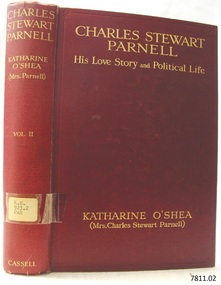
Book, Charles Stewart Parnell Vol 2
... Charles Stewart Parnell Vol 2...Charles Stewart Parnell Vol 2 His Love Story and Political Life Author: Katharine O'Shea (Mrs Charles Stewart Parnell) Publisher: Cassell & Company Date: 1914 ...warrnambool shipwrecked-coast flagstaff-hill flagstaff-hill-maritime-museum maritime-museum shipwreck-coast flagstaff-hill-maritime-village shipwrecked-artefact great ocean road book warrnambool library warrnambool mechanics’ institute mechanics’ institute library victorian library board warrnambool books and records warrnambool children’s library warrnambool public library Charles Stewart Parnell Vol 2 Charles Stewart Parnell Katharine O'Shea Mrs Charles Stewart Parnell Label on spine cover with typed text RH 923.2 PAR Pastedown front endpaper has sticker from Warrnambool Mechanics Institute and Free Library Front loose endpaper has a stamp from Corangamite Regional Library Service Charles Stewart Parnell Vol 2 His Love Story and Political Life Author: Katharine O'Shea (Mrs Charles Stewart Parnell) Publisher: Cassell & Company Date: 1914 Charles Stewart Parnell Vol 2 Book ...Charles Stewart Parnell Vol 2 His Love Story and Political Life Author: Katharine O'Shea (Mrs Charles Stewart Parnell) Publisher: Cassell & Company Date: 1914 Label on spine cover with typed text RH 923.2 PAR Pastedown front endpaper has sticker from Warrnambool Mechanics Institute and Free Library Front loose endpaper has a stamp from Corangamite Regional Library Service warrnambool, shipwrecked-coast, flagstaff-hill, flagstaff-hill-maritime-museum, maritime-museum, shipwreck-coast, flagstaff-hill-maritime-village, shipwrecked-artefact, great ocean road, book, warrnambool library, warrnambool mechanics’ institute, mechanics’ institute library, victorian library board, warrnambool books and records, warrnambool children’s library, warrnambool public library, charles stewart parnell vol 2, charles stewart parnell, katharine o'shea, mrs charles stewart parnell -
 Uniting Church Archives - Synod of Victoria
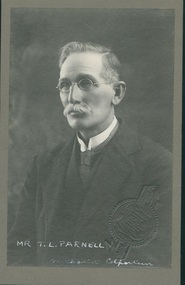
Photograph
... Mr. T. L. Parnell was a Colporteur....Matte, black and white, head and shoulders, studio portrait of Mr. T. L. Parnell....Mr. T.L. Parnell, Methodist Colporteur...Mr. T. L. Parnell was a Colporteur. Methodist Colporteur Parnell, T. ...Mr. T. L. Parnell was a Colporteur.Matte, black and white, head and shoulders, studio portrait of Mr. T. L. Parnell.Mr. T.L. Parnell, Methodist Colporteurmethodist, colporteur, parnell, t. l. -
 Wangaratta RSL Sub Branch
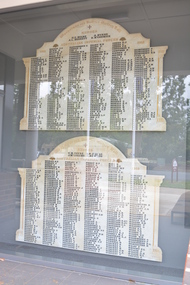
Honour Board, Wangaratta and District Victory Roll
... A. Parnell...A. Parnell...Wangaratta and District Victory Roll Honour Board Honour Board A. Parnell A. Parnell ...Wangaratta and District Victory Roll - lists 528 names of Nurses and AIF personnel who served during 1914-1918 Thousands of honour boards were made to commemorate soldiers who served in the First World War. The number of honour boards crafted reflects the immense loss felt in communities and families and the importance for them of remembering those who served and died. This is the Wangaratta and District Victory Roll, including the names of nurses and AIF personnel from the region. Two large Italian marble tablets inscribed with gold emblems and black lettering list the names of nurses and servicemen of Wangaratta and district who served in World War One. Wangaratta and District Victory Roll Nurses Australian Imperial Forces 1914-1918ww1, wangaratta and district, nurses, victory roll -
 Bendigo Military Museum
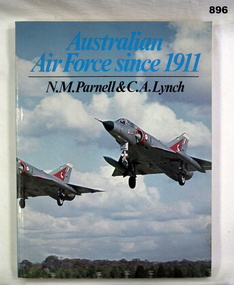
Book, N W Books Pty Ltd, Australian Air Force Since 1911, 1982
... M Parnell & C A Lynch...Australian Air Force Since 1911 Book BOOK M Parnell & C A Lynch N W Books Pty Ltd Kyodo Shing Loong Pty Ltd ...Book, soft paper cover, colour photo blue, green. Title in blue print, Authors in black. 216 illustrated pages, black & white photos, black print on white paper.books, military, history, air force -
 National Vietnam Veterans Museum (NVVM)
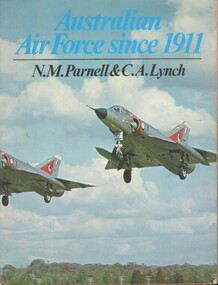
Book, Parnell, N.M. and Lynch, C.A, Australian Air Force since 1911 (Copy 2)
... Parnell, N.M. and Lynch, C.A....Australian Air Force since 1911 (Copy 2) Book Parnell, N.M. and Lynch, C.A. ...This book covers the history of the Royal Australian Air Force, from its earliest days as the Australian Flying Corps to the present RAAF.This book covers the history of the Royal Australian Air Force, from its earliest days as the Australian Flying Corps to the present RAAF.signalman robert william higgins, 3792034, australian national serviceman, royal australian corps of signals, 104 signal squadron, royal australian air force -
 National Vietnam Veterans Museum (NVVM)
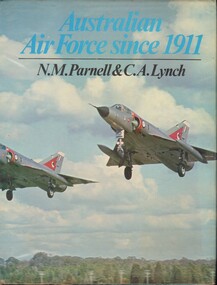
Book, Parnell, N.M, & Lynch, C.A, Australian Air Force since 1911
... Parnell, N.M, & Lynch, C.A....Royal Australian Air Force - History This book covers the history of the royal Australian Air Force, from its earliest days as the Australian Flying Corps to the present RAAF Australian Air Force since 1911 Book Book Parnell, N.M, & Lynch, C.A. ...This book covers the history of the royal Australian Air Force, from its earliest days as the Australian Flying Corps to the present RAAFThis book covers the history of the royal Australian Air Force, from its earliest days as the Australian Flying Corps to the present RAAFaustralia. australian air corps - history, australia. royal australian air force - history -
 Moorabbin Air Museum
Book - BEAUFIGHTERS IN THE PACIFIC, NEVILLE PARNELL, 1980
... NEVILLE PARNELL...BEAUFIGHTERS IN THE PACIFIC Book BEAUFIGHTERS IN THE PACIFIC NEVILLE PARNELL A.H. & A.W. REED PTY LTD ... -
 Wangaratta RSL Sub Branch
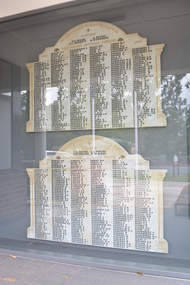
Honour Board - Honour Board -Wangaratta and District Victory Roll
... A. Parnell...Honour Board Honour Board -Wangaratta and District Victory Roll A. Parnell ...Wangaratta and District Victory Roll - listing names of local men and women who volunteered to serve during the Great War 1914-1918 A permanent memorial to honour those who volunteered to serve and die for their country during the Great War.Marble Victory Roll irregular shape, with carved side columns outlined in gold paint. Six columns of names in black.Wangaratta and District Victory Roll Nurses Australian Imperial Forces 1914-1918wangaratta and district victory roll, ww1, world war one, 1914-1919, nurses -
Moorabbin Air Museum
Book - WHISPERING DEATH, Neville Parnell, 1980
... Neville Parnell...WHISPERING DEATH Book WHISPERING DEATH Neville Parnell A.H. & A.W. REED PTY LTD ... -
Moorabbin Air Museum
Book - Flypast, NEVILLE PARNELL AND TREVOR BOUGHTON, 1988
... NEVILLE PARNELL AND TREVOR BOUGHTON...Flypast Book Flypast NEVILLE PARNELL AND TREVOR BOUGHTON CIVIL AVIATION AUTHORITY ... -
Whitehorse Historical Society Inc.
Document, Slater Family, 05/03/1996 and/12/1994
... The photo of the Mayor Lyndon Parnell refers to Mitcham, South Australia....The photo of the Mayor Lyndon Parnell refers to Mitcham, South Australia....The photo of the Mayor Lyndon Parnell refers to Mitcham, South Australia. ...William Henry Slater of Mitcham, Surrey : an Australian pioneer. Notes by Eric Montague 05/03/1996 with an article ' A Mitcham Life' by Paul Parry from 'Merton Messenger' December 1994 on members of the Slater family, lavender growers.William Henry Slater of Mitcham, Surrey : an Australian pioneer. Notes by Eric Montague 05/03/1996 with an article ' A Mitcham Life' by Paul Parry from 'Merton Messenger' December 1994 on members of the Slater family, lavender growers. Includes photograph of William Mitchell. Note: Article refers also to Mitcham England. The photo of the Mayor Lyndon Parnell refers to Mitcham, South Australia.William Henry Slater of Mitcham, Surrey : an Australian pioneer. Notes by Eric Montague 05/03/1996 with an article ' A Mitcham Life' by Paul Parry from 'Merton Messenger' December 1994 on members of the Slater family, lavender growers.herb farms, slater, william henry, mitcham, slater, benjamin, skater, daniel, mitcham, surrey, england -
Glen Eira Historical Society
Article - CROWE FAMILY
... 38 Parnell Street, Elsternwick, Victoria, Australia...Crowe Matilda Ann May Matilda Ann May George Hoolihan Margaret Ann Crowe George Parnell Street Elsternwick Crowe James Nurses Crimean War 1853-1856 May Margaret Ann Article CROWE FAMILY ...This file contains one item about Matilda Ann Crowe and family: 1/Small printed article taken from Brighton Cemetorians flyer on women with a note on their family home by Claire Barton taken from Sands and McDougall 1923 edition.crowe matilda ann, may matilda ann, may george, hoolihan margaret ann, crowe george, parnell street, elsternwick, crowe james, nurses, crimean war 1853-1856, may margaret ann -
 Bendigo Historical Society Inc.
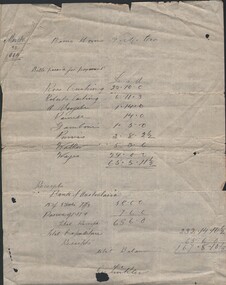
Document - RAMS HORN GOLD MINING COMPANY ACCOU;NTS, 1915
... ... Parnell...Names mentioned include Ross, Roberts, A Vogele, Parnell, Gamboni, Purvis, Walker & J. Tinkler....COTTAGE Miners Rams Horn GMC Ross Roberts A. Vogele Parnell Gamboni Purvis Walker J. Tinkler Document. ...Document. Rams Horn GMC Accounts. Page of accounts for Rams Horn GMC dated 30 Mar. 1915. Names mentioned include Ross, Roberts, A Vogele, Parnell, Gamboni, Purvis, Walker & J. Tinkler.cottage, miners, rams horn gmc, ross, roberts, a. vogele, parnell, gamboni, purvis, walker, j. tinkler -
 Kilmore Historical Society
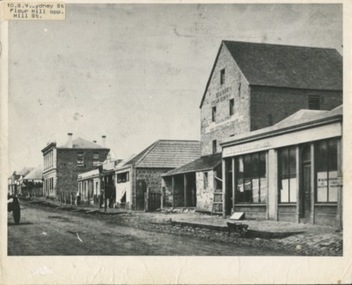
Photograph, SW Sydeny Street, 1860
... The photograph is taken at an angle so you can see multiple buildings on the western side of Sydney Street including: Trainor's Steam Flour Mill, Parnells Boot Shop, Quinn Solicitor, Youngs Bakery and Post Office and Royal Oak Hotel in the distance....Written on the back: #10 Trainor's Steam Flour Mill, Parnell's Bootshop, Quinn Solicitor, Young's Bakery + Post Office #3.#5.10/86-38A Copy of Sydney St. ...post office flour mill bakery bootmaker Written on the back: #10 Trainor's Steam Flour Mill, Parnell's Bootshop, Quinn Solicitor, Young's Bakery + Post Office #3.#5.10/86-38A Copy of Sydney St. ...25cm x 20 cm black and white photograph mounted on board. The photograph is taken at an angle so you can see multiple buildings on the western side of Sydney Street including: Trainor's Steam Flour Mill, Parnells Boot Shop, Quinn Solicitor, Youngs Bakery and Post Office and Royal Oak Hotel in the distance.Written on the back: #10 Trainor's Steam Flour Mill, Parnell's Bootshop, Quinn Solicitor, Young's Bakery + Post Office #3.#5.10/86-38A Copy of Sydney St. Kilmore 1860 Trainors Mill (opposite present Mill St) Royal Oak Hotel in distance.post office, flour mill, bakery, bootmaker -
 Lakes Entrance Historical Society
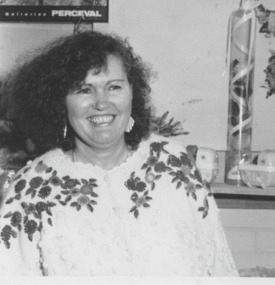
Photograph - Esplanade Florist, Lakes Post Newspaper, 1991
... Black and white photograph of Dorothy Parnell new staff member of Esplanade Florist Lakes Entrance Victoria...Businesses Florist Black and white photograph of Dorothy Parnell new staff member of Esplanade Florist Lakes Entrance Victoria Photograph Esplanade Florist Lakes Post Newspaper ...Black and white photograph of Dorothy Parnell new staff member of Esplanade Florist Lakes Entrance Victoriabusinesses, florist -
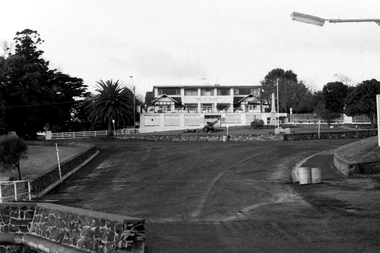 Phillip Island and District Historical Society Inc.
Photograph, Isle of Wight Hotel 1980
... Photos taken by Gary Parnell in 1980...Photos taken by Gary Parnell in 1980 Historical Isle of Wight Hotel Cowes, Phillip Island Gary Parnell 2 large black and white photos showing the Isle of Wight Hotel taken from the jetty area. ...Photos taken by Gary Parnell in 1980Historical2 large black and white photos showing the Isle of Wight Hotel taken from the jetty area. Showing the war memorial, sea wall and surrounding area. One darker than the other.isle of wight hotel, cowes, phillip island, gary parnell -
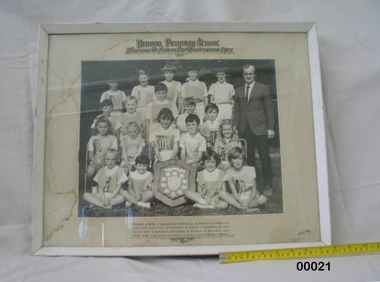 Yendon History Group
School photograph framed, Harvey Photo, 1971 (exact)
... YENDON PRIMARY SCHOOL / WINNERS OF FISKEN CUP ASSOCIATION 1971 / Harvey Photo / Names of pupils and teacher F.C. Parnell...Parnell Black and white photograph of Yendon State School pupils and teacher holding the Fisken Shield. ...Black and white photograph of Yendon State School pupils and teacher holding the Fisken Shield. The white painted wooden frame is chipped and the mount is water stained on left hand side. Photo is take by Harvey Photo in 1971. Names of pupils and teacher under phootgraph.YENDON PRIMARY SCHOOL / WINNERS OF FISKEN CUP ASSOCIATION 1971 / Harvey Photo / Names of pupils and teacher F.C. Parnellchildren, yendon state school, yendon public school, fisken cup association, fisken shield, harvey photo, teacher fc parnell -
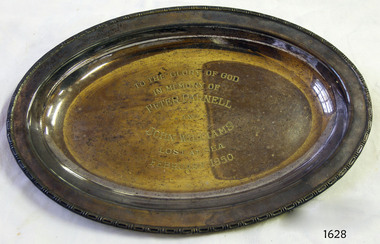 Flagstaff Hill Maritime Museum and Village
Plate
... Inscription on base "To the Glory of God in Memory of Peter Parnell and John Williams Lost at Sea February 1950". ...Inscription on base "To the Glory of God in Memory of Peter Parnell and John Williams Lost at Sea February 1950". ...Plate metal, oval in shape, silver plated commemorative plate with decorated lip. Inscription on base "To the Glory of God in Memory of Peter Parnell and John Williams Lost at Sea February 1950". "SILCRAFT EPNSA1 MELB" on base.flagstaff hill, warrnambool, shipwrecked-coast, flagstaff-hill, flagstaff-hill-maritime-museum, maritime-museum, shipwreck-coast, flagstaff-hill-maritime-village -
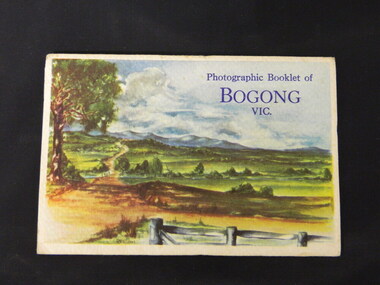 Kiewa Valley Historical Society
Booklet - Bogong, Photographic Booklet of Bogong Vic
... A fold down booklet postcard size of 9 black and white photos of Bogong village and surrounds and a letter addressed to Mrs. A. Parnell of Sydney from Maisie. Maise's husband has 2 married sisters living near Bogong on farms. ...A fold down booklet postcard size of 9 black and white photos of Bogong village and surrounds and a letter addressed to Mrs. A. Parnell of Sydney from Maisie. Maise's husband has 2 married sisters living near Bogong on farms. ...This booklet was produced to advertise Bogong Village and surrounding areas. The photos depict the area's buildings and equipment being used at the time. Bogong Village housed the State Electricity Commission of Victoria's employees working on the Kiewa Hydro Electric Scheme which began in the 1930's and finished in the 1960's. Maisie describes her visit in May 1958 giving an insight into the area including the weather and the roads.The photos indicate what the area around Bogong looked like c1958 towards the end of construction but before the bush grew back after the 1939 fires at Bogong village and after construction of the shopping centre at Mt Beauty. A sno' cat and snow plough are also shown emphasising the change in machinery over the years. This enables comparisons to be made in many areas of study.A fold down booklet postcard size of 9 black and white photos of Bogong village and surrounds and a letter addressed to Mrs. A. Parnell of Sydney from Maisie. Maise's husband has 2 married sisters living near Bogong on farms. The booklet is in a clear plastic sleevePostage stamp arrived in Sydney 28th May 1958.bogong. lake guy. howman gap hostel. mt beauty.bogong high plains. -
Glen Eira Historical Society
Article - St. Agnes Church, Booran Road, 116, Glen Huntly
... Agnes couple Bob and Joy Parnell’s 60th wedding anniversary of 08/09/2011....Agnes Church Booran Road Glen Huntly Glenhuntly Ross Joy Parnell Bob Parnell Demis Parnell Bruce Parnell Joy Youth Groups Weddings Article St. ...Two examples of marriages celebrated at St. Agnes: Marriage service of Cecelia Soriano-Mateos and Gregogry Walsh at St. Agnes Anglican Church, Booran Road Glen Huntly dated 08/01/1995 – service booklet. Newspaper article from Sunday Herald Sun, dated 11/09/2011 of St. Agnes couple Bob and Joy Parnell’s 60th wedding anniversary of 08/09/2011.mateos-soriano cecelia, walsh gregory, st. agnes church, booran road, glen huntly, glenhuntly, ross joy, parnell bob, parnell demis, parnell bruce, parnell joy, youth groups, weddings -
 Federation University Historical Collection
Plant specimen - Book of Botanical Speciman's, Marine Algae Chlorospermeae by Charles Morrison, 1850-1854
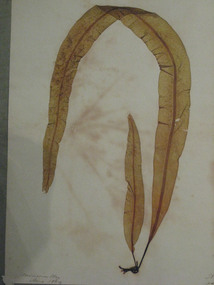
... (see 'Harvey's Travelling Sets of Algae in the TCD Herbarium' by J. Parnell) According to http://www.mobot.org/plantscience/ResBot/flor/Bot_Goat/53_Algae.htm: 'Many of Prof. ...(see 'Harvey's Travelling Sets of Algae in the TCD Herbarium' by J. Parnell) According to http://www.mobot.org/plantscience/ResBot/flor/Bot_Goat/53_Algae.htm: 'Many of Prof. ...Although there is no documentary evidence this volume of specimens could be associated with William Henry Harvey. Harvey travelled extensively and was thought to have carried 'travelling sets' of algae. (see 'Harvey's Travelling Sets of Algae in the TCD Herbarium' by J. Parnell) According to http://www.mobot.org/plantscience/ResBot/flor/Bot_Goat/53_Algae.htm: 'Many of Prof. Harvey's specimens of the Chlorospermeae, of Green Algae, "were personally collected by myself [ie Harvey] in 1850, when travelling in America" ...'Deep purple velvet covered book of pressed Marine Algae Chlorospermeae (green algae) specimens. The specimens appear to be Irish in origin. Author Charles Morrison.date, location and botanical name included on each. These include: Morehead Mrs Griffith 1852 Moville 1853 Portrush Octr 1853 Moville June 1850 Dunoon June 1853 Green Castle Augt 1852 Port a'dorus N of Ireland 1854 Stokes Bay, Lough Sivilly July 1853 Buncrana Octr 1853 Londonderry 1852 Arran Dr Landsborough Oct 1853botany, marine algae chlorospermeae, seaweed, william henry harvey, wh harvey, harvey, dr landsborough, londonderry, charles morrison -
 Ringwood and District Historical Society
Photograph, Ringwood State School - Grade 2, 1949
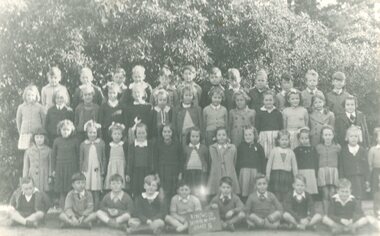
... "Attached to photograph" Back Row - L to R: ?, ?, ?, Ken Parnell, Bruce Fletcher, ?, ?, ?, Bill Mann, Peter Fry, ?..."Attached to photograph" Back Row - L to R: ?, ?, ?, Ken Parnell, Bruce Fletcher, ?, ?, ?, Bill Mann, Peter Fry, ? ...Black and white photograph - Grade 2, 1949."Attached to photograph" Back Row - L to R: ?, ?, ?, Ken Parnell, Bruce Fletcher, ?, ?, ?, Bill Mann, Peter Fry, ?, Alan Telfer. 2nd Row - L to R: ?, ?, ?, ?, ?, ?, ?, Jill Pump, Julie Sanders, ?, ?, ?, ?. 3rd Row - L to R: ?, ?, ?, ?, ?, ?, ?, Wendy Anderson, ?, ?, Sandra Tindal, ?, ?, ?. Front Row - L to R: Dougie McKay, ?, John Willis, ?, ?, ?, ?, ?, Len Parnall, ?. Teacher: -
 Kew Historical Society Inc
Plan - Subdivision Plan, St Helliers Estate, Kew, circa 1910, c.1910
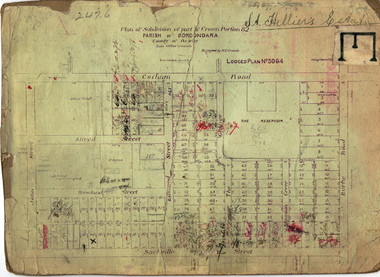
... These include the Genazzano Convent to the north of Cotham Road, the Reservoir, St Hilary’s and the land holding of Colonel Parnell on the corner of John Street and Cotham Road. ...These include the Genazzano Convent to the north of Cotham Road, the Reservoir, St Hilary’s and the land holding of Colonel Parnell on the corner of John Street and Cotham Road. ...Pru Sanderson, in her groundbreaking ‘City of Kew Urban Conservation Study : Volume 2 - Development History’ (1988), summarised the periods of urban development and subdivisions of land in Kew. The periods that she identified included 1845-1880, 1880-1893, 1893-1921, 1921-1933, 1933-1943, and Post-War Development. These periods were selected as they represented periods of rapid growth or decline in urban development. An obvious starting point for Sanderson’s groupings involved population growth and the associated economic cycles. These cycles also highlighted urban expansion onto land that was predominantly rural, although in other cases it represented the decline and breakup of large estates. A number of the plans in the Kew Historical Society’s collection can also be found in other collections, such as those of the State Library of Victoria and the Boroondara Library Service. A number are however unique to the collection.Subdivision plans are historically important documents used as evidence of the growth of suburbs in Australia. They frequently provide information about when the land was sold on which a built structure was subsequently constructed as well as evidence relating to surveyors and real estate and financial agents. The numerous subdivision plans in the Kew Historical Society's collection represent working documents, ranging from the initial sketches made in planning a subdivision to printed plans on which auctioneers or agents listed the prices for which individual lots were sold. In a number of cases, the reverse of a subdivision plan in the collection includes a photograph of a house that was also for sale by the agent. These photographs provide significant heritage information relating house design and decoration, fencing and household gardens.In the subdivision of part of Crown Portion 82, bordered by John and Sackville Streets and Cotham and Burke Roads, over 100 lots were offered for sale. In addition to the designated lots, a number of key locations are also identified. These include the Genazzano Convent to the north of Cotham Road, the Reservoir, St Hilary’s and the land holding of Colonel Parnell on the corner of John Street and Cotham Road. On the Plan, No. 5064, is the handwritten name ‘St. Hellier’s Estate’. St. Helliers, the home of the Dumaresq family is shown beside St. Hilary’s.subdivision plans - kew, st helliers estate -
 Ballarat and District Irish Association
Image, Land League Committee Meeting, Dublin, 1864
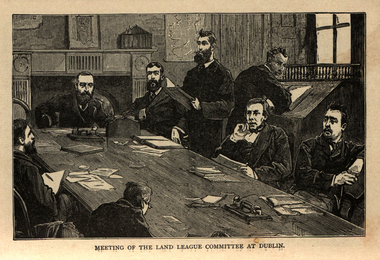
... At that meeting Charles Stewart Parnell was elected president of the league. ...At that meeting Charles Stewart Parnell was elected president of the league. ...The Irish National Land League (Irish: Conradh na Talún) was an Irish political organisation of the late 19th century which sought to help poor tenant farmers. Its primary aim was to abolish landlordism in Ireland and enable tenant farmers to own the land they worked on. The period of the Land League's agitation is known as the Land War. Within decades of the league's foundation, through the efforts of William O'Brien and George Wyndham (a descendant of Lord Edward FitzGerald), the 1902 Land Conference produced the Land (Purchase) Act 1903 which allowed Irish tenant farmers buy out their freeholds with UK government loans over 68 years through the Land Commission (an arrangement that has never been possible in Britain itself). For agricultural labourers, D.D. Sheehan and the Irish Land and Labour Association secured their demands from the Liberal government elected in 1905 to pass the Labourers (Ireland) Act 1906, and the Labourers (Ireland) Act 1911, which paid County Councils to build over 40,000 new rural cottages, each on an acre of land. By 1914, 75% of occupiers were buying out their landlords, mostly under the two Acts. In all, under the pre-UK Land Acts over 316,000 tenants purchased their holdings amounting to 15 million acres (61,000 km2) out of a total of 20 million acres (81,000 km2) in the country. Sometimes the holdings were described as "uneconomic", but the overall sense of social justice was undeniable. (http://en.wikipedia.org/wiki/Irish_National_Land_League, accessed 21 January 2014) The Irish National Land League was founded at the Imperial Hotel in Castlebar, the County town of Mayo, on 21 October 1879. At that meeting Charles Stewart Parnell was elected president of the league. Andrew Kettle, Michael Davitt, and Thomas Brennan were appointed as honorary secretaries. This united practically all the different strands of land agitation and tenant rights movements under a single organisation. The two aims of the Land League, as stated in the resolutions adopted in the meeting, were: ...first, to bring out a reduction of rack-rents; second, to facilitate the obtaining of the ownership of the soil by the occupiers. That the object of the League can be best attained by promoting organisation among the tenant-farmers; by defending those who may be threatened with eviction for refusing to pay unjust rents; by facilitating the working of the Bright clauses of the Irish Land Act during the winter; and by obtaining such reforms in the laws relating to land as will enable every tenant to become owner of his holding by paying a fair rent for a limited number of years. Charles Stewart Parnell, John Dillon, Michael Davitt, and others including Cal Lynn then went to America to raise funds for the League with spectacular results. Branches were also set up in Scotland, where the Crofters Party imitated the League and secured a reforming Act in 1886. The government had introduced the first ineffective Land Act in 1870, then the equally inadequate Acts of 1880 and 1881 followed. These established a Land Commission that started to reduce some rents. Parnell together with all of his party lieutenants, including Father Eugene Sheehy known as "the Land League priest", went into a bitter verbal offensive and were imprisoned in October 1881 under the Irish Coercion Act in Kilmainham Jail for "sabotaging the Land Act", from where the No-Rent Manifesto was issued, calling for a national tenant farmer rent strike which was partially followed. Although the League discouraged violence, agrarian crimes increased widely. Typically a rent strike would be followed by evictions by the police, or those tenants paying rent would be subject to a local boycott by League members. Where cases went to court, witnesses would change their stories, resulting in an unworkable legal system. This in turn led on to stronger criminal laws being passed that were described by the League as "Coercion Acts". The bitterness that developed helped Parnell later in his Home Rule campaign. Davitt's views were much more extreme, seeking to nationalise all land, as seen in his famous slogan: "The land of Ireland for the people of Ireland". Parnell aimed to harness the emotive element, but he and his party preferred for tenant farmers to become freeholders on the land they rented, instead of land being vested in "the people".(http://en.wikipedia.org/wiki/Irish_National_Land_League, accessed 21 January 2014)Image of a number of men sitting around a table. They are members of the Land League Committee during a meeting in Dublin.ballarat irish, land league, land league committee, dublin -
 Lakes Entrance Historical Society
Photograph - Lakes Entrance Football Club Reserves Premiership team 2003, Bairnsdale Advitiser
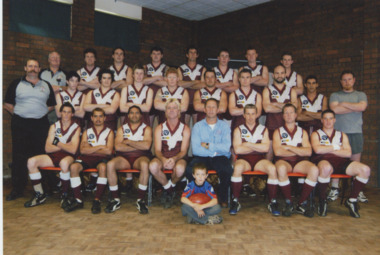
... Colour photograph of Football Club Reserves Premiership team, Back Row: Tom Cook (property Steward) Stephen Fry, Shannon Brown, Scott Parnell, Marc Campesi, Andrew Douglas, Craig Billings, Nick Hayden Centre Row: Wayne Reggardo (president) Matthew Armstead, Steven Bathesta, Sean Brearley, Chris Mills, Gerard Kelly(captain) Robert Love, Keith Gourley (secretary) Brad Hayes, Brett Briggs(waterboy) Front Row: Vaughn McKenzie, Billy Walker, Robert Andsy, Allan Rowlands, Shane O'Donnell (coach) Jason Powney, Glen Gudgin, Chris Bland, Mascott Hyron Fox, Lakes Entrance Victoria...Other number 03640.2 Clubs Football Colour photograph of Football Club Reserves Premiership team, Back Row: Tom Cook (property Steward) Stephen Fry, Shannon Brown, Scott Parnell, Marc Campesi, Andrew Douglas, Craig Billings, Nick Hayden Centre Row: Wayne Reggardo (president) Matthew Armstead, Steven Bathesta, Sean Brearley, Chris Mills, Gerard Kelly(captain) Robert Love, Keith Gourley (secretary) Brad Hayes, Brett Briggs(waterboy) Front Row: Vaughn McKenzie, Billy Walker, Robert Andsy, Allan Rowlands, Shane O'Donnell (coach) Jason Powney, Glen Gudgin, Chris Bland, Mascott Hyron Fox, Lakes Entrance Victoria Photograph Lakes Entrance Football Club Reserves Premiership team 2003 Bairnsdale Advitiser ...Other number 03640.2Colour photograph of Football Club Reserves Premiership team, Back Row: Tom Cook (property Steward) Stephen Fry, Shannon Brown, Scott Parnell, Marc Campesi, Andrew Douglas, Craig Billings, Nick Hayden Centre Row: Wayne Reggardo (president) Matthew Armstead, Steven Bathesta, Sean Brearley, Chris Mills, Gerard Kelly(captain) Robert Love, Keith Gourley (secretary) Brad Hayes, Brett Briggs(waterboy) Front Row: Vaughn McKenzie, Billy Walker, Robert Andsy, Allan Rowlands, Shane O'Donnell (coach) Jason Powney, Glen Gudgin, Chris Bland, Mascott Hyron Fox, Lakes Entrance Victoriaclubs, football -
 Ringwood and District Historical Society
Photograph, Ringwood State School - Grade 3, 1949
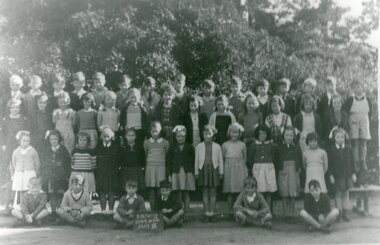
... , Janice Pateman, Margaret Mitchell, Pam McGoldrick, Coral Scurrie, Norma Springett, Irene Parnell, Rosalie Read, Judith Baker, ?. 3rd Row - L to R: ?..., Janice Pateman, Margaret Mitchell, Pam McGoldrick, Coral Scurrie, Norma Springett, Irene Parnell, Rosalie Read, Judith Baker, ?. 3rd Row - L to R: ? ...Black and white photograph - Grade 3, 1949."Attached to photograph" Back Row - L to R: ?, ?, ?, Ron Young, ?, ?, ?, ?, ?, ?, ?, ?, ?, ?, ?. 2nd Row - L to R: Judy Young, Wendy Caughey, Yvonne Cummings, Jennifer (?), Janice Pateman, Margaret Mitchell, Pam McGoldrick, Coral Scurrie, Norma Springett, Irene Parnell, Rosalie Read, Judith Baker, ?. 3rd Row - L to R: ?, ?, Kathleen Hardingham, Pam Johnson, Anne McDowell, Helen Wigley, ?, ?, Glenys Lee, Jeanette Hancy, Heather Taylor, Glenys Rackham, Maureen Dyball. Teacher: -
 Ringwood and District Historical Society
Photograph, Ringwood State School- Grade 1A, 1948
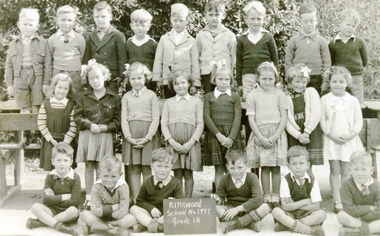
... , Alan Telfer, Tom Williams, John Munday, Ken Parnell, Bruce Fletcher, Ray Taylor. 2nd Row- L to R; Ann Whitehouse, Julie Sanders, Jill Pump, ?..., Alan Telfer, Tom Williams, John Munday, Ken Parnell, Bruce Fletcher, Ray Taylor. 2nd Row- L to R; Ann Whitehouse, Julie Sanders, Jill Pump, ? ...Black and white photograph"Written on back of photograph" Back Row- L to R: Douglas Hume, Ian Sharp, ?, Alan Telfer, Tom Williams, John Munday, Ken Parnell, Bruce Fletcher, Ray Taylor. 2nd Row- L to R; Ann Whitehouse, Julie Sanders, Jill Pump, ?, Diane Dewer, Kathleen Lowe, Isabel Sykes, Wendy Anderson. Front Row- L to R: Brian Rothney, Douglas Mackie, John Willis, Frank Morris, Douglas Bangay. Teacher: -
 Ballarat and District Irish Association
Image, Isaac Butt, c1864, 1864
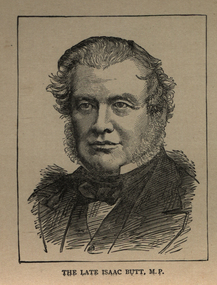
... He was replaced by William Shaw, who in turn was replaced by Charles Stewart Parnell in 1880. (Wikipedia)...He was replaced by William Shaw, who in turn was replaced by Charles Stewart Parnell in 1880. (Wikipedia) Image of a man known as Isaac Butt. ...An Irish barrister, politician, Member of Parliament (M.P.), and the founder and first leader of a number of Irish nationalist parties and organisations, including the Irish Metropolitan Conservative Society in 1836, the Home Government Association in 1870 and in 1873 the Home Rule League. (Wikipedia) After being called to the bar in 1838, Butt quickly established a name for himself as a brilliant barrister. He was known for his opposition to the Irish nationalist leader Daniel O'Connell's campaign for the repeal of the Act of Union.[4] He also lectured at Trinity College, Dublin, in political economy. His experiences during the Great Famine led him to move from being an Irish unionist and an Orangeman[5] to supporting a federal political system for the United Kingdom of Great Britain and Ireland that would give Ireland a greater degree of self-rule. This led to his involvement in Irish nationalist politics and the foundation of the Home Rule League. Butt was instrumental in fostering links between Constitutional and Revolutionary nationalism through his representation of members of the Fenians Society in court. (Wikipedia) He began his career as a Tory politician on Dublin Corporation. He was Member of Parliament for Youghal from 1852 to 1865, and for Limerick from 1871 to 1879 (at the 1852 general election he had also been elected for the English constituency of Harwich, but chose to sit for Youghal). The failed Fenian Rising in 1867 strengthened Butt's belief that a federal system was the only way to break the dreary cycle of inefficient administration punctuated by incompetent uprisings.[6] In 1870 he founded the Irish Home Government Association. This was in no sense a revolutionary organisation. It was designed to mobilise public opinion behind the demand for an Irish parliament, with, as he put it, "full control over our domestic affairs."[6] He believed that Home Rule would promote friendship between Ireland and her neighbour to the east. In November 1873 Butt replaced the Association with a new body, the Home Rule League, which he regarded as a pressure-group, rather than a political party. In the General Election the following year, 59 of its members were elected. However, most of those elected were men of property who were closer to the Liberal cause.[7] In the meantime Charles Stewart Parnell had joined the League, with more radical ideas than most of the incumbent Home Rulers, and was elected to Parliament in a by-election in County Meath in 1875.[8] Butt had failed to win substantial concessions at Westminster on the things that mattered to most Irish people: an amnesty for the Fenians of '67, fixity of tenure for tenant-farmers and Home Rule. Although they worked to get Home Rulers elected, many Fenians along with tenant farmers were dissatisfied with Butt's gentlemanly approach to have bills enacted, although they did not openly attack him, as his defence of the Fenian prisoners in '67 still stood in his favour.[9] However, soon a Belfast Home Ruler, Joseph Gillis Biggar (then a senior member of the IRB), began making extensive use of the ungentlemanly tactic of "obstructionism" to prevent bills being passed by the house. When Parnell entered Parliament he took his cue from John O'Connor Power and Joseph Biggar and allied himself with those Irish members who would support him in his obstructionist campaign. MPs at that time could stand up and talk for as long as they wished on any subject. This caused havoc in Parliament. In one case they talked for 45 hours non-stop, stopping any important bills from being passed. Butt, ageing, and in failing health, could not keep up with this tactic and considered it counter-productive. In July 1877 Butt threatened to resign from the party if obstruction continued, and a gulf developed between himself and Parnell, who was growing steadily in the estimation of both the Fenians and the Home Rulers.[10] The climax came in December 1878, when Parliament was recalled to discuss the war in Afghanistan. Butt considered this discussion too important to the British Empire to be interrupted by obstructionism and publicly warned the Irish members to refrain from this tactic. He was fiercely denounced by the young Nationalist John Dillon, who continued his attacks with considerable support from other Home Rulers at a meeting of the Home Rule League in February 1879. Although he defended himself with dignity, Butt, and all and sundry, knew that his role in the party was at an end.[11] Butt, who had been suffering from bronchitis, had a stroke the following May and died within a week. He was replaced by William Shaw, who in turn was replaced by Charles Stewart Parnell in 1880. (Wikipedia)Image of a man known as Isaac Butt.
