
Showing 19 items matching "pilot's view"
-
 Moorabbin Air Museum
Book - Air crashes - pilot error, Pilot Error. A Professional Study of Contributory Factors
... Pilot's view...Air crashes - pilot error Pilot's view Human factors Designer's view Air traffic control factors Airline management - pilot relations Legal implications Technical/pilot overview of factors contributing to air crashes, circa 1976 Pilot Error. ...Technical/pilot overview of factors contributing to air crashes, circa 1976non-fictionTechnical/pilot overview of factors contributing to air crashes, circa 1976pilot's view, human factors, designer's view, air traffic control factors, airline management - pilot relations, legal implications -
 Port Melbourne Historical & Preservation Society
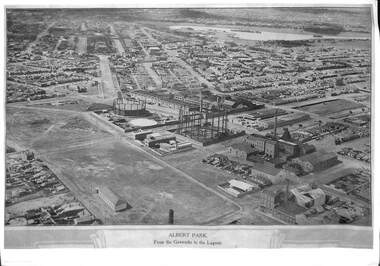
Photograph, E C Joshua, Albert Park from the Gasworks to the Lagoon, 1921
... "Albert Park from the Gasworks to the Lagoon" Copy of aerial photography 1921 of former lagoon area taken by E C JOSHUA (photographer) and Captain H J LARKIN (pilot). "Views from an Aeroplane" black and white copy. ...Transport - Aviation and Aerodrome Sandridge Lagoon Natural Environment Recreation Built Environment Parks and Gardens E C JOSHUA H J LARKINS Gasworks Schumaker Mill furnishing works Pump House Sugar shed Joshua Bros Distillery "Albert Park from the Gasworks to the Lagoon" Copy of aerial photography 1921 of former lagoon area taken by E C JOSHUA (photographer) and Captain H J LARKIN (pilot). "Views from an Aeroplane" black and white copy. ...Rare copy of E C JOSHUA and Captain LARKIN work."Albert Park from the Gasworks to the Lagoon" Copy of aerial photography 1921 of former lagoon area taken by E C JOSHUA (photographer) and Captain H J LARKIN (pilot). "Views from an Aeroplane" black and white copy. Plus separate sheet giving brief description of photographtransport - aviation and aerodrome, sandridge lagoon, natural environment, recreation, built environment, parks and gardens, e c joshua, h j larkins, gasworks, schumaker mill furnishing works, pump house, sugar shed, joshua bros distillery -
 Mission to Seafarers Victoria
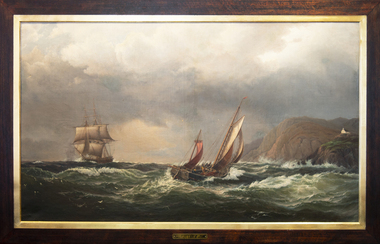
Painting - Oil painting, Madeline M.Ravenna Lewellin, Start Point Light, Devonshire, 1875
... pilot when entering waters approaching Dartmouth. The sailing vessels pre-date the construction of the famous lighthouse. Over the centuries the view...pilot when entering waters approaching Dartmouth. The sailing vessels pre-date the construction of the famous lighthouse. Over the centuries the view ...This painting was made after an artwork by Wilhelm Melby held at the National Gallery of Victoria. Melby is a Danish artist (1824-1882). It depicts a famous Devonshire coastal region famous now for its lighthouse and the pick up point for the pilot when entering waters approaching Dartmouth. The sailing vessels pre-date the construction of the famous lighthouse. Over the centuries the view would have been familiar to many sailors as they left or approached the English mainland and south coast ports in the English Channel. Madeline Mary Ravenna Lewellin (1854 – 24 November 1944) was born in Victoria to Dr John Henry Hill Lewellin, a physician, and Grace Elizabeth (née Danneby). She was one of five daughters, and the family lived in Prahran. Lewellin's brother, Captain Herbert Gordon Hill Lewellin, was a commander in the P. and O. fleet (apprentice on the Romanoff, Lieutenant RNR on the HMS Arethusa in 1899, RMS Mongolia in 1913 sunk in 1917, Naldera in 1920). She studied painting at the National Gallery School in 1879 under Eugene von Guerard. She's also known for collecting and painting specimens, and became a member of the Field Naturalists Club of Victoria in 1885. In 1884 she won a silver medal for her studies of fungi. She collected plants for Australian botanist Ferdinand von Mueller, and the variety of Dicrastylis lewellinii (Purple sand-sage) is named after her. Miss Lewellin, who had a love of the sea and ships as subject matter is listed in 1910 as a donor as a 10/6 member donating to the motor launch fund and in 1918 as a working member of the Ladies Harbour Lights Guild which involved regular volunteer shifts at the Mission to Seamen on canteen and other duties. The painting was donated by Miss Lewellin in 1918 and hanged above the stage in the main hall; it appears on several postcards of the time.Marine art, Maritime artThis oil painting has a dark polished wood and gold leaf slip. The painting depicts two masted boats. The choppy sea takes up the lower-third of the painting, and the other two-thirds of the image of made up of stormy grey clouds. A rocky cliff face can be seen on the right-hand side of the painting. A small church can be seen on the hillside. The ship on the left third of the painting sits on the horizon line of the sea. The centre ship with two masts appears to be leaning to the right and its deck is exposed to the viewer showing four men attempting to handle the masts and rigging. The left-hand ship with three masts is surrounded by two grey distant silhouetted mast ships. There are three seagulls at the upper left-centre of the image. There are another three gulls down on the lower-left of the image. Front: ENGRAVED PLAQUE: Start Point Light. Devonshire. SIGNATURE: After W. Melby / M.M.R Lewellin. 1875. Reverse: IN BLACK MARKER PEN: * Hang from two points * WHITE STICKER WITH CONSERVATOR DETAILS: Art Conservation Frames / 118 Bridport Street, Albert Park, VIC, 3206 / 9696 9066 / artconservationframers.com.aupainting, ships, mast, church, sea, storm, oil painting, seagulls, madeline r. lewellin, artwork-paintings, ngv, wilhelm melby, eugene von guerard, botanist, rms mongolia, captain herbert gordon hill lewellin (1862-1935), paddy lewellin, reproduction, seascape, danger -
 Mission to Seafarers Victoria
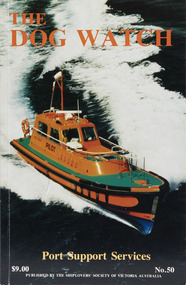
Journal (item) - Periodicals-Annual, Shiplovers' Society of Victoria, The Annual Dog Watch
... Strom - 5 The Port of Melbourne — A Historical View - Andy Gash - 8 We Moved the Cargoes - J. Beggs - 15 A Chaplain’s Chatterings - W.S. McUtchen - 19 Pilots - Late C.E. ...Strom - 5 The Port of Melbourne — A Historical View - Andy Gash - 8 We Moved the Cargoes - J. Beggs - 15 A Chaplain’s Chatterings - W.S. McUtchen - 19 Pilots - Late C.E. ...This journal provides the reader with glimpses of the adventures and hardships of a seaman's life. Many of the stories are of sailing ships.Contributes to our knowledge of the importance of shipping and places on record those stories of the sea which would otherwise be lost.Contents Editorial - Fifty Years Past - Miss S.A.E. Strom - 5 The Port of Melbourne — A Historical View - Andy Gash - 8 We Moved the Cargoes - J. Beggs - 15 A Chaplain’s Chatterings - W.S. McUtchen - 19 Pilots - Late C.E. Borwick - 26 Up the River — Down the River - Lloyd Taylor - 27 Port Services in the Nineteenth Century - M.A. Syme - 45 The Schooner Enterprise - Roy Stuart - Roy Stuart - 49 The Port Phillip Sea Pilot Service - Capt. Michael Carolin - 53 Streamers - G.M. Naug - 60 Errata - - 60 War Diary of H.M.A.S. Bendigo Part 2 1942 - T.W. Richardson - 61 Fire Fighting Services in the Port of Melbourne - Frank M. Stockton - 75 Shipwreck - A. Roland Jones - 81 The Diary of Peter Charles Iredale - Colin Wilson - 87 The John Oxley - R.N. Thiele - 95 The Volunteer - Bert Attwood - 100 Sailing in Wharanui - W.P. Shemmeld - 101 Book Reviews - - 110 The Most Fascinating Immigrant — Marco Polo - K. Shewan - 111sailing ships, steamships, shipping, seafaring life, shiplovers' society of victoria, dog watch -
![Section [side] view drawing of the German Yacht 'Komet](/media/collectors/4f729f7e97f83e03086018d1/items/62f705c1dc1a26e6fcda425b/item-media/62f70650dc1a26e6fcda4d9d/item-fit-380x285.jpg?cb=6) Queenscliffe Maritime Museum
Queenscliffe Maritime MuseumDrawing - 'Komet'
... pilot vessel. She was finally broken up in Melbourne in 1955. Akuna PPPS Port Phillip HMAS Una RAN Doppelschrauben Passagierdampfer Aussen Haut [Double Screws, Passenger Steam Boat, Outside Hight] A sclae drawing showing side view of the double screw passenger steam boat 'Komet' which was captuered by the RAN in WWI Drawing 'Komet' ...HMAS Una was a Royal Australian Navy sloop that began its life as the German motor launch Komet. The ship, and her 57 crew, was captured by an infantry detachment of the Australian Naval and Military Expeditionary Force 9 October 1914, with no loss of life. Komet was then sailed to Sydney as a prize. During the time in which the Una was in service under Australia, the sloop was used as a Patrol and General Purpose Vessel. The sloop was used to patrol the areas of New Guinea, New Britain, New Hebrides and Malayan waters. After World War I, Una was decommissioned and taken to Port Phillip Bay, renamed Akuna and used as a pilot vessel. She was finally broken up in Melbourne in 1955.After World War I, HMAS Una was decommissioned and taken to Port Phillip Bay, renamed Akuna and used as a pilot vessel. She was finally broken up in Melbourne in 1955.A sclae drawing showing side view of the double screw passenger steam boat 'Komet' which was captuered by the RAN in WWI Doppelschrauben Passagierdampfer Aussen Haut [Double Screws, Passenger Steam Boat, Outside Hight]akuna, ppps, port phillip, hmas una, ran -
 Queenscliffe Maritime Museum
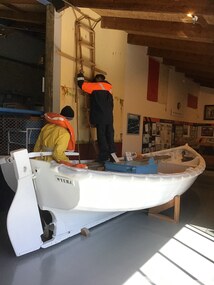
Vehicle - Workboat ex Wyuna
... The design is based on a Gig and was developed by the Pilots as suitable for the severe conditions at the entrance to Port Phillip. To understand how these boats were used view the film "Through The Rip" on the video in the Exhibition Hall....The design is based on a Gig and was developed by the Pilots as suitable for the severe conditions at the entrance to Port Phillip. To understand how these boats were used view the film "Through The Rip" on the video in the Exhibition Hall. ...In 1974, this 18 foot (5.5 meter) diesel-powered workboat was one of the last boats built to operate from the pilot cutter Wyuna. These boats were used to transfer pilots from the Wyuna to the ship being serviced or vice versa. Until 1946 they were propelled by two oars then simplex two-stroke petrol engines were fitted followed by diesel engines. The Pilot Service Shipwrights built the boats in a shed which stood on the site of the present Pilot Station, Tobin Drive, North of Shortland Bluff. The design is based on a Gig and was developed by the Pilots as suitable for the severe conditions at the entrance to Port Phillip. To understand how these boats were used view the film "Through The Rip" on the video in the Exhibition Hall.Close association with QueenscliffTimber Workboat used to transfer pilots between Wyuna and ship requiring servicepilot service, wyuna, workboat, boat buiding, port phillip sea piots -
 Bendigo Historical Society Inc.
Document - HOWARD AND VIOLET JOLLEY COLLECTION: PLANS
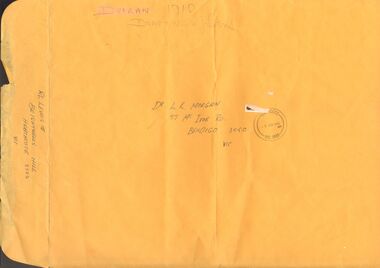
... view' plan is stamp from Civil Aviation Authority Australia , dated 9.12.91. On top RH corner is written ' these drawings are not be be reproduced by anyone other than the builder, Ronald Lloyd Lewis' Items in this collection were donated by Dr. Jan Sherringham, whose husband is a pilot...view' plan is stamp from Civil Aviation Authority Australia , dated 9.12.91. On top RH corner is written ' these drawings are not be be reproduced by anyone other than the builder, Ronald Lloyd Lewis' Items in this collection were donated by Dr. Jan Sherringham, whose husband is a pilot ...3 pages of plans, drawn in black pen, for replica of John Robinson Duigan's Aircraft, 1919. Plans appear to be copies. A3 Manilla envelope addressed to Dr. L.K. Morgan, 57 McIvor Road, Bendigo contains plans. On rear of envelope: RL Lewis Brightwells Hill, Heathcote, 3523. Front view, side view and plan view written respectively on each plan. On bottom RH of 'Front view' plan is stamp from Civil Aviation Authority Australia , dated 9.12.91. On top RH corner is written ' these drawings are not be be reproduced by anyone other than the builder, Ronald Lloyd Lewis' Items in this collection were donated by Dr. Jan Sherringham, whose husband is a pilot. It can only be assumed that this document belonged to them as it postdates Violet's death.person, bendigo, john robinson duigan, duigan, john robinson, lewis, ronald lloyd, aeroplane, plan -
 Eltham District Historical Society Inc
Photograph, Lester Neil Ingram with his Morris Ten Series II delivery van, c.1942
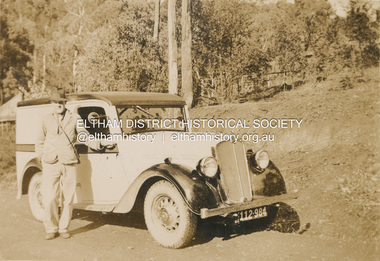
... pilot had accepted the aircraft, which was technically unserviceable as the NCO in charge of flight had not completed the inspection paperwork correctly. The aircraft had undergone a major engine repair the day before. The aircraft took off at 2348 hours from R.A.F. Abington. It was reported that the aircraft take-off was quite normal and after climbing to 800 feet it passed out of view...pilot had accepted the aircraft, which was technically unserviceable as the NCO in charge of flight had not completed the inspection paperwork correctly. The aircraft had undergone a major engine repair the day before. The aircraft took off at 2348 hours from R.A.F. Abington. It was reported that the aircraft take-off was quite normal and after climbing to 800 feet it passed out of view ...The van is a Morris Ten Series II which was manufactured 1935-1937. The numeral only Victorian Registration plate 112-984 was part of the sequence of numeral only plates issued 1910-1939. Lester Neil Ingram was born at Kew, 8 November 1911, the son of John and Ada (Key) Ingram of Research. According to Electoral Roll records, in 1903, John Ingram was a farmer at Lancefield, his wife Ada, a milliner. By 1906, John Ingram was a baker at Research and from about 1912, an orchardist. The family moved to Anglesea River sometime between 1937 and 1942. A sheet metal worker by trade, Lester had run the bakery business for 14 years, his father retired, and was working as a baker at Anglesea when he enlisted in the R.A.A.F. on 5 December 1941 at Melbourne. Previously he had worked as a baker at Research (1937). He undertook training as Aircrew at No. 4 Initial Training School at Victor Harbour, South Australia, followed by No. 1 Wireless Air Gunners School at Ballarat, Victoria, and No. 3 Bombing and Gunnery School, West Sale, Victoria. On October 15, 1942 Lester qualified as an Air Gunner, promoted to Sergeant, and was posted to 1 Embarkation Depot at Ascot Vale, Victoria, and attached to R.A.F. UK. Lester embarked from Australia December 2, 1942 and arrived at 11 Personnel Despatch and Reception Depot on January 13, 1943. On March 9 he was transferred to 10 Operational Training Unit, Group No. 91, Bomber Command, R.A.F. Lester’s service file reveals that on the evening of 22 April 1943, Lester was a member of the aircrew of Whitley V bomber, N.1374. The airframe had run 1,127 hours. A full moon was just rising. The flight was non-operational, its purpose a dual conversion on type mission flown by a student pilot with almost two hours completed at night on similar flights. They had just changed aircraft as their previous aircraft had become unserviceable. The pilot had accepted the aircraft, which was technically unserviceable as the NCO in charge of flight had not completed the inspection paperwork correctly. The aircraft had undergone a major engine repair the day before. The aircraft took off at 2348 hours from R.A.F. Abington. It was reported that the aircraft take-off was quite normal and after climbing to 800 feet it passed out of view of the ground observers. A few seconds later the aircraft crashed, and it was reported that the sound of the engines seemed to become desynchronised. The crash occurred one and a half miles northwest of Longworth, Berkshire and the aircraft destroyed by fire. It carried a crew of five. Lester is commemorated on the Eltham Roll of Honour Board, which was commissioned by the Eltham War Memorial Trust to be hung in the Eltham Infant Welfare Centre, part of complex of buildings that form the Eltham War Memorial. The Honour Roll is presently (2023) hanging in the Eltham Library Community Gallery space. Lester was remembered with the following notices published in The Argus newspaper, Saturday 22 April 1944, p2: INGRAM. —In treasured memories you are with me still. Sgt. Lester Neil Ingram, killed, aircraft accident, England, April 22, 1943. (Mother and father.) INGRAM. —In proud and ever loving memory of Lester, 410236, Sgt. L. N. Ingram, R.A.A.F., air crash England, April 22, 1943. —Per ardua ad astra. (Ellen Peake and family.) [“Per ardua ad astra” is a Latin phrase meaning “through adversity to the stars” or “through struggle to the stars” which was the motto of the Royal Air Force and other Commonwealth air forces such as the Royal Australian Air Force.] And from his fiancé Ellen, in The Argus, Wednesday, 5 May 1943, p2: INGRAM. —On April 22 (result of aircraft accident near Lodgeworth Village, Berks, England), Sgt. Lester Neil Ingram, R.A.A.F., fiance of Ellen. -Treasured memories till we meet again. Lester is buried at Brookwood Military Cemetery, Surrey, United Kingdom, Grave 4. 1. 11. INGRAM, Flt. Sgt. LESTER NEIL, 410236. R.A.A.F. 22nd April 1943. Age 31. Son of John and Ada Ingram, of Anglesea, Victoria, Australia. He gave his life For freedom’s cause ◊ ◊ ◊ LEST WE FORGET “They shall grow not old, as we that are left grow old; Age shall not weary them, nor the years condemn. At the going down of the sun and in the morning We will remember them.”On reverse "Lester Ingram"112-984 (victorian registration), lester neil ingram, morris ten series ii, bakery, delivery van, pam thoonen (nee ingram) collection -
 Eltham District Historical Society Inc
Photograph, Leading Aircraftsman, Lester Neil Ingram, RAAF, c.1943
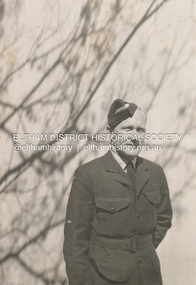
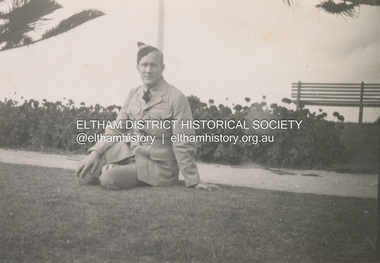
... pilot had accepted the aircraft, which was technically unserviceable as the NCO in charge of flight had not completed the inspection paperwork correctly. The aircraft had undergone a major engine repair the day before. The aircraft took off at 2348 hours from R.A.F. Abington. It was reported that the aircraft take-off was quite normal and after climbing to 800 feet it passed out of view...pilot had accepted the aircraft, which was technically unserviceable as the NCO in charge of flight had not completed the inspection paperwork correctly. The aircraft had undergone a major engine repair the day before. The aircraft took off at 2348 hours from R.A.F. Abington. It was reported that the aircraft take-off was quite normal and after climbing to 800 feet it passed out of view ...Lester Neil Ingram was born at Kew, 8 November 1911, the son of John and Ada (Key) Ingram of Research. According to Electoral Roll records, in 1903, John Ingram was a farmer at Lancefield, his wife Ada, a milliner. By 1906, John Ingram was a baker at Research and from about 1912, an orchardist. The family moved to Anglesea River sometime between 1943 and 1949. A sheet metal worker by trade, Lester had run the bakery business for 14 years, his father retired, and was working as a baker at Anglesea when he enlisted in the R.A.A.F. on 5 December 1941 at Melbourne. Previously he had worked as a baker at Research (1937). He undertook training as Aircrew at No. 4 Initial Training School at Victor Harbour, South Australia, followed by No. 1 Wireless Air Gunners School at Ballarat, Victoria, and No. 3 Bombing and Gunnery School, West Sale, Victoria. On October 15, 1942 Lester qualified as an Air Gunner, promoted to Sergeant, and was posted to 1 Embarkation Depot at Ascot Vale, Victoria, and attached to R.A.F. UK. Lester embarked from Australia December 2, 1942 and arrived at 11 Personnel Despatch and Reception Depot on January 13, 1943. On March 9 he was transferred to 10 Operational Training Unit, Group No. 91, Bomber Command, R.A.F. Lester’s service file reveals that on the evening of 22 April 1943, Lester was a member of the aircrew of Whitley V bomber, N.1374. The airframe had run 1,127 hours. A full moon was just rising. The flight was non-operational, its purpose a dual conversion on type mission flown by a student pilot with almost two hours completed at night on similar flights. They had just changed aircraft as their previous aircraft had become unserviceable. The pilot had accepted the aircraft, which was technically unserviceable as the NCO in charge of flight had not completed the inspection paperwork correctly. The aircraft had undergone a major engine repair the day before. The aircraft took off at 2348 hours from R.A.F. Abington. It was reported that the aircraft take-off was quite normal and after climbing to 800 feet it passed out of view of the ground observers. A few seconds later the aircraft crashed, and it was reported that the sound of the engines seemed to become desynchronised. The crash occurred one and a half miles northwest of Longworth, Berkshire and the aircraft destroyed by fire. It carried a crew of five. Lester is commemorated on the Eltham Roll of Honour Board, which was commissioned by the Eltham War Memorial Trust to be hung in the Eltham Infant Welfare Centre, part of complex of buildings that form the Eltham War Memorial. The Honour Roll is presently (2023) hanging in the Eltham Library Community Gallery space. Lester was remembered with the following notices published in The Argus newspaper, Saturday 22 April 1944, p2: INGRAM. —In treasured memories you are with me still. Sgt. Lester Neil Ingram, killed, aircraft accident, England, April 22, 1943. (Mother and father.) INGRAM. —In proud and ever loving memory of Lester, 410236, Sgt. L. N. Ingram, R.A.A.F., air crash England, April 22, 1943. —Per ardua ad astra. (Ellen Peake and family.) [“Per ardua ad astra” is a Latin phrase meaning “through adversity to the stars” or “through struggle to the stars” which was the motto of the Royal Air Force and other Commonwealth air forces such as the Royal Australian Air Force.] And from his fiancé Ellen, in The Argus, Wednesday, 5 May 1943, p2: INGRAM. —On April 22 (result of aircraft accident near Lodgeworth Village, Berks, England), Sgt. Lester Neil Ingram, R.A.A.F., fiance of Ellen. -Treasured memories till we meet again. Lester is buried at Brookwood Military Cemetery, Surrey, United Kingdom, Grave 4. 1. 11. INGRAM, Flt. Sgt. LESTER NEIL, 410236. R.A.A.F. 22nd April 1943. Age 31. Son of John and Ada Ingram, of Anglesea, Victoria, Australia. He gave his life For freedom’s cause ◊ ◊ ◊ LEST WE FORGET “They shall grow not old, as we that are left grow old; Age shall not weary them, nor the years condemn. At the going down of the sun and in the morning We will remember them.”On reverse "Lester Ingram"lester neil ingram, baker, eltham, honour board, raaf, research (vic.), roll of honour, pam thoonen (nee ingram) collection -
 Eltham District Historical Society Inc
Photograph, Leading Aircraftsman, Lester Neil Ingram, RAAF, c.1943
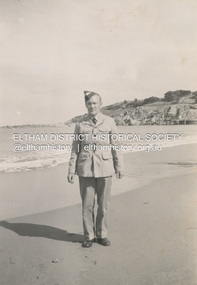
... pilot had accepted the aircraft, which was technically unserviceable as the NCO in charge of flight had not completed the inspection paperwork correctly. The aircraft had undergone a major engine repair the day before. The aircraft took off at 2348 hours from R.A.F. Abington. It was reported that the aircraft take-off was quite normal and after climbing to 800 feet it passed out of view...pilot had accepted the aircraft, which was technically unserviceable as the NCO in charge of flight had not completed the inspection paperwork correctly. The aircraft had undergone a major engine repair the day before. The aircraft took off at 2348 hours from R.A.F. Abington. It was reported that the aircraft take-off was quite normal and after climbing to 800 feet it passed out of view ...Lester Neil Ingram was born at Kew, 8 November 1911, the son of John and Ada (Key) Ingram of Research. According to Electoral Roll records, in 1903, John Ingram was a farmer at Lancefield, his wife Ada, a milliner. By 1906, John Ingram was a baker at Research and from about 1912, an orchardist. The family moved to Anglesea River sometime between 1943 and 1949. A sheet metal worker by trade, Lester had run the bakery business for 14 years, his father retired, and was working as a baker at Anglesea when he enlisted in the R.A.A.F. on 5 December 1941 at Melbourne. Previously he had worked as a baker at Research (1937). He undertook training as Aircrew at No. 4 Initial Training School at Victor Harbour, South Australia, followed by No. 1 Wireless Air Gunners School at Ballarat, Victoria, and No. 3 Bombing and Gunnery School, West Sale, Victoria. On October 15, 1942 Lester qualified as an Air Gunner, promoted to Sergeant, and was posted to 1 Embarkation Depot at Ascot Vale, Victoria, and attached to R.A.F. UK. Lester embarked from Australia December 2, 1942 and arrived at 11 Personnel Despatch and Reception Depot on January 13, 1943. On March 9 he was transferred to 10 Operational Training Unit, Group No. 91, Bomber Command, R.A.F. Lester’s service file reveals that on the evening of 22 April 1943, Lester was a member of the aircrew of Whitley V bomber, N.1374. The airframe had run 1,127 hours. A full moon was just rising. The flight was non-operational, its purpose a dual conversion on type mission flown by a student pilot with almost two hours completed at night on similar flights. They had just changed aircraft as their previous aircraft had become unserviceable. The pilot had accepted the aircraft, which was technically unserviceable as the NCO in charge of flight had not completed the inspection paperwork correctly. The aircraft had undergone a major engine repair the day before. The aircraft took off at 2348 hours from R.A.F. Abington. It was reported that the aircraft take-off was quite normal and after climbing to 800 feet it passed out of view of the ground observers. A few seconds later the aircraft crashed, and it was reported that the sound of the engines seemed to become desynchronised. The crash occurred one and a half miles northwest of Longworth, Berkshire and the aircraft destroyed by fire. It carried a crew of five. Lester is commemorated on the Eltham Roll of Honour Board, which was commissioned by the Eltham War Memorial Trust to be hung in the Eltham Infant Welfare Centre, part of complex of buildings that form the Eltham War Memorial. The Honour Roll is presently (2023) hanging in the Eltham Library Community Gallery space. Lester was remembered with the following notices published in The Argus newspaper, Saturday 22 April 1944, p2: INGRAM. —In treasured memories you are with me still. Sgt. Lester Neil Ingram, killed, aircraft accident, England, April 22, 1943. (Mother and father.) INGRAM. —In proud and ever loving memory of Lester, 410236, Sgt. L. N. Ingram, R.A.A.F., air crash England, April 22, 1943. —Per ardua ad astra. (Ellen Peake and family.) [“Per ardua ad astra” is a Latin phrase meaning “through adversity to the stars” or “through struggle to the stars” which was the motto of the Royal Air Force and other Commonwealth air forces such as the Royal Australian Air Force.] And from his fiancé Ellen, in The Argus, Wednesday, 5 May 1943, p2: INGRAM. —On April 22 (result of aircraft accident near Lodgeworth Village, Berks, England), Sgt. Lester Neil Ingram, R.A.A.F., fiance of Ellen. -Treasured memories till we meet again. Lester is buried at Brookwood Military Cemetery, Surrey, United Kingdom, Grave 4. 1. 11. INGRAM, Flt. Sgt. LESTER NEIL, 410236. R.A.A.F. 22nd April 1943. Age 31. Son of John and Ada Ingram, of Anglesea, Victoria, Australia. He gave his life For freedom’s cause ◊ ◊ ◊ LEST WE FORGET “They shall grow not old, as we that are left grow old; Age shall not weary them, nor the years condemn. At the going down of the sun and in the morning We will remember them.”On reverse "Lester Ingram"lester neil ingram, baker, eltham, honour board, raaf, research (vic.), roll of honour, pam thoonen (nee ingram) collection -
 Eltham District Historical Society Inc
Photograph, Leading Aircraftsman, Lester Neil Ingram, RAAF, c.1943
... pilot had accepted the aircraft, which was technically unserviceable as the NCO in charge of flight had not completed the inspection paperwork correctly. The aircraft had undergone a major engine repair the day before. The aircraft took off at 2348 hours from R.A.F. Abington. It was reported that the aircraft take-off was quite normal and after climbing to 800 feet it passed out of view...pilot had accepted the aircraft, which was technically unserviceable as the NCO in charge of flight had not completed the inspection paperwork correctly. The aircraft had undergone a major engine repair the day before. The aircraft took off at 2348 hours from R.A.F. Abington. It was reported that the aircraft take-off was quite normal and after climbing to 800 feet it passed out of view ...Lester Neil Ingram was born at Kew, 8 November 1911, the son of John and Ada (Key) Ingram of Research. According to Electoral Roll records, in 1903, John Ingram was a farmer at Lancefield, his wife Ada, a milliner. By 1906, John Ingram was a baker at Research and from about 1912, an orchardist. The family moved to Anglesea River sometime between 1943 and 1949. A sheet metal worker by trade, Lester had run the bakery business for 14 years, his father retired, and was working as a baker at Anglesea when he enlisted in the R.A.A.F. on 5 December 1941 at Melbourne. Previously he had worked as a baker at Research (1937). He undertook training as Aircrew at No. 4 Initial Training School at Victor Harbour, South Australia, followed by No. 1 Wireless Air Gunners School at Ballarat, Victoria, and No. 3 Bombing and Gunnery School, West Sale, Victoria. On October 15, 1942 Lester qualified as an Air Gunner, promoted to Sergeant, and was posted to 1 Embarkation Depot at Ascot Vale, Victoria, and attached to R.A.F. UK. Lester embarked from Australia December 2, 1942 and arrived at 11 Personnel Despatch and Reception Depot on January 13, 1943. On March 9 he was transferred to 10 Operational Training Unit, Group No. 91, Bomber Command, R.A.F. Lester’s service file reveals that on the evening of 22 April 1943, Lester was a member of the aircrew of Whitley V bomber, N.1374. The airframe had run 1,127 hours. A full moon was just rising. The flight was non-operational, its purpose a dual conversion on type mission flown by a student pilot with almost two hours completed at night on similar flights. They had just changed aircraft as their previous aircraft had become unserviceable. The pilot had accepted the aircraft, which was technically unserviceable as the NCO in charge of flight had not completed the inspection paperwork correctly. The aircraft had undergone a major engine repair the day before. The aircraft took off at 2348 hours from R.A.F. Abington. It was reported that the aircraft take-off was quite normal and after climbing to 800 feet it passed out of view of the ground observers. A few seconds later the aircraft crashed, and it was reported that the sound of the engines seemed to become desynchronised. The crash occurred one and a half miles northwest of Longworth, Berkshire and the aircraft destroyed by fire. It carried a crew of five. Lester is commemorated on the Eltham Roll of Honour Board, which was commissioned by the Eltham War Memorial Trust to be hung in the Eltham Infant Welfare Centre, part of complex of buildings that form the Eltham War Memorial. The Honour Roll is presently (2023) hanging in the Eltham Library Community Gallery space. Lester was remembered with the following notices published in The Argus newspaper, Saturday 22 April 1944, p2: INGRAM. —In treasured memories you are with me still. Sgt. Lester Neil Ingram, killed, aircraft accident, England, April 22, 1943. (Mother and father.) INGRAM. —In proud and ever loving memory of Lester, 410236, Sgt. L. N. Ingram, R.A.A.F., air crash England, April 22, 1943. —Per ardua ad astra. (Ellen Peake and family.) [“Per ardua ad astra” is a Latin phrase meaning “through adversity to the stars” or “through struggle to the stars” which was the motto of the Royal Air Force and other Commonwealth air forces such as the Royal Australian Air Force.] And from his fiancé Ellen, in The Argus, Wednesday, 5 May 1943, p2: INGRAM. —On April 22 (result of aircraft accident near Lodgeworth Village, Berks, England), Sgt. Lester Neil Ingram, R.A.A.F., fiance of Ellen. -Treasured memories till we meet again. Lester is buried at Brookwood Military Cemetery, Surrey, United Kingdom, Grave 4. 1. 11. INGRAM, Flt. Sgt. LESTER NEIL, 410236. R.A.A.F. 22nd April 1943. Age 31. Son of John and Ada Ingram, of Anglesea, Victoria, Australia. He gave his life For freedom’s cause ◊ ◊ ◊ LEST WE FORGET “They shall grow not old, as we that are left grow old; Age shall not weary them, nor the years condemn. At the going down of the sun and in the morning We will remember them.”On reverse "Lester Ingram"lester neil ingram, baker, eltham, honour board, raaf, research (vic.), roll of honour, pam thoonen (nee ingram) collection -
 Bendigo Historical Society Inc.
Document - BASIL WATSON COLLECTION: LETTER FROM AIR DEPARTMENT (ENGLAND) TO 'ALL INSPECTORS', 1915
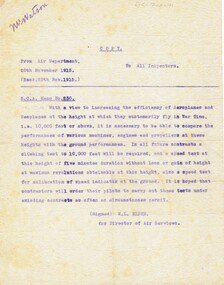
... Single paged typed letter (carbon copy) from Air Department (England) 25th November, 1915, to 'All Inspectors' requesting that pilots carry out certain aircraft flying tests (climb, speed) with a view to increasing the efficiency of aircraft. ...PERSON Individual basil watson Single paged typed letter (carbon copy) from Air Department (England) 25th November, 1915, to 'All Inspectors' requesting that pilots carry out certain aircraft flying tests (climb, speed) with a view to increasing the efficiency of aircraft. ...Single paged typed letter (carbon copy) from Air Department (England) 25th November, 1915, to 'All Inspectors' requesting that pilots carry out certain aircraft flying tests (climb, speed) with a view to increasing the efficiency of aircraft. 'Mr Watson' is handwritten in purple pencil, top left of page.person, individual, basil watson -
 National Vietnam Veterans Museum (NVVM)
Photograph
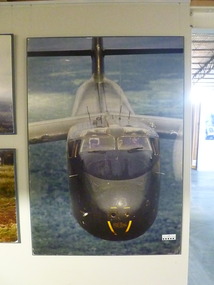
... Coloured photo of the front view of a Caribou aircraft. The pilot & co-pilot are clearly visible in the cockpit. ...Coloured photo of the front view of a Caribou aircraft. The pilot & co-pilot are clearly visible in the cockpit. ...Coloured photo of the front view of a Caribou aircraft. The pilot & co-pilot are clearly visible in the cockpit. The photo is mounted on a timber board.73 on the Nose cone.caribou -
 Lakes Entrance Historical Society
Photograph - New Works Lakes Entrance c1900, 1900c
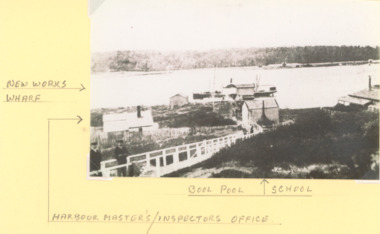
... A very clear view of rear of Boole Poole School, later used as office, Pilot's residence and Harbour Engineer's residence, Carpenter's residence, and wooden boardwalk. ...A very clear view of rear of Boole Poole School, later used as office, Pilot's residence and Harbour Engineer's residence, Carpenter's residence, and wooden boardwalk. ...This photograph has been archivedBlack and white photograph of the township, showing the township along Esplanade, Cunninghame Arm taken from the signal station at New Works. A very clear view of rear of Boole Poole School, later used as office, Pilot's residence and Harbour Engineer's residence, Carpenter's residence, and wooden boardwalk. Lakes Entrance Victoriawaterways, topography -
 Royal District Nursing Service (now known as Bolton Clarke)
Photograph - Photograph, black and white, Barry Sutton, 25.03.1974
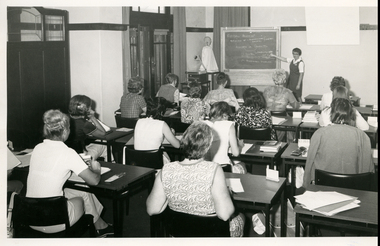
... pilot study, funded by the Federal Government, the Brotherhood of St. Laurence and RDNS, with the program written and taught by Sr. Rowley, was evaluated as successful, and Home Health Aides were employed and worked in RDNS Centres under the supervision of the RDNS Sisters. rdns royal district nursing service rdns education sister pat (paddy) rowley Barry Sutton LY 69 This black and white photograph shows the back view of four rows of Royal District Nursing Service (RDNS) Sisters sitting at small tables and looking toward Sister Pat (Paddy) Rowley who is facing them. ...The photograph shows a group of Royal District Nursing Service (RDNS) Sisters receiving a lecture on 'Physical Handicap' given by Sr. Rowley in the Education Department at RDNS Headquarters 452 St. Kilda Road, Melbourne. Sr. Rowley is the Principal Nurse Educator at RDNS.Education was an integral part of Melbourne District Nursing Society (MDNS), from its inception in 1885, later, in 1966, called Royal District Nursing Service, (RDNS). From 1885, only Trained nurses (Nurses), through the Hospital training system, were employed by the Society, and on visits to patients they taught the necessity of hygiene and cleanliness, as well as the need for a good diet, to bring about good health. Doctor’s lectures were later given at the MDNS home to instruct patients and their families on prevention of disease. Education to patients continued throughout the years regarding health care and the use of equipment in the home. In 1961, Education programs commenced at MDNS with Trained nurses (Sisters) receiving In-service education. Sr. Pat (Paddy) Rowley was a leader in In-service Education and established the RDNS Department of Community Nursing Education in 1962. Staff could also apply for scholarships to further their education outside of RDNS. Many of their senior Sisters received Postgraduate diplomas from the College of Nursing in Community Health Nursing, Education, and Administration, and several travelled overseas visiting nursing organizations viewing their public health and District nursing systems. At RDNS many programs were run, including: a Post Basic Course, Cardiac Rehabilitation Nursing, Haematology/Oncology Nursing, Palliative Care program, Diabetic Stabilization Program, Leg Ulcer Management Program, Wound Care Specialist Program, HIV/AIDS Nursing Care, Cystic Fibrosis Home Support, Veterans Home Care Program, Breast Cancer Support Program, Continence Management Program, Stomal Therapy Program, In-Home Lactation Support Program and the Homeless Persons Program. RDNS Sisters attended several hospitals to observe and learn special care needed to some patients, e.g. to the Austin Hospital to learn the care required for paraplegic and quadriplegic patients at home, and to Mount Royal Hospital to observe the care of patients in the Rehabilitation ward. A Community Nursing Education Program was extended to student nurses from hospitals and to other nursing organizations. These Education programs kept the RDNS Sisters abreast of new techniques, such as changes in technology for e.g. new testing methods in detecting glucose levels in Diabetic patients. Sr. Nan Deakin obtained a Post Basic Certificate in Psychiatric Nursing and included this area in her Education lectures. Sr. Daphne Geldard specialized in the area of Alzheimer’s disease and Dementia. These Sisters visited patients in District areas with the regular RDNS Sister when required. Every member of staff, both professional and non professional staff, received regular education in the Education Department. In 1980, a Home Health Aide pilot study, funded by the Federal Government, the Brotherhood of St. Laurence and RDNS, with the program written and taught by Sr. Rowley, was evaluated as successful, and Home Health Aides were employed and worked in RDNS Centres under the supervision of the RDNS Sisters. This black and white photograph shows the back view of four rows of Royal District Nursing Service (RDNS) Sisters sitting at small tables and looking toward Sister Pat (Paddy) Rowley who is facing them. She is in the rear centre of the photograph. The 16 Sisters, some partly hidden, are wearing a variety of summer day clothes. Spectacle cases, pens, sheets of paper, and some books are on the tables in front of them. Sister Rowley who wears glasses; has short straight dark hair, is wearing a white short sleeve blouse under a dark V neck tunic style dress. She is looking at the group and her right hand is pointing to writing on a large blackboard standing to her right. To the left of the blackboard, a draped Human Torso Model sits on a table. A long dark curtain hangs behind part of the blackboard. Running along the left of the photograph is a wooden door with glass panels at the top, some light colour wall with a dark picture rail, and a set of double glass doors with long grey curtains either side. To the right of Sr. Rowley part of a large white board is seen hanging above and below the dark picture rail on the wall.Barry Sutton LY 69rdns, royal district nursing service, rdns education, sister pat (paddy) rowley -
 Royal District Nursing Service (now known as Bolton Clarke)
Photograph - Photograph, black and white, Barry Sutton, 24.04.1974
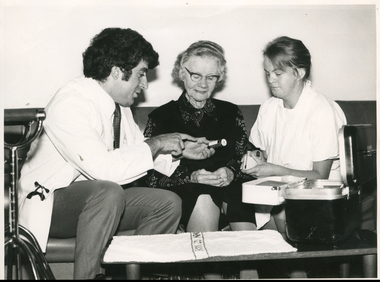
... pilot study, funded by the Federal Government, the Brotherhood of St. Laurence and RDNS, with the program written and taught by Sr. Rowley, was evaluated as successful, and Home Health Aides were employed and worked in RDNS Centres under the supervision of the RDNS Sisters. royal district nursing service rdns rdns patient care rdns education Barry Sutton MA 24 In the left foreground of this black and white photograph is the partial view of two metal 4 prong sticks.To their right, seated on a long dark vinyl type couch, is a Medical Student who has short curly black hair; is wearing a white hospital coat over grey trousers, a white shirt, and a tie with small black and white squares. ...A Medical Student is explaining the use of a bottle of testing tablets to a lady who is a patient of RDNS. The Royal District Nursing Service (RDNS) Sister is holding testing equipment; i.e. the eye dropper and test tube in the receptacle, in her hands, and is observing the Medical Student giving instructions to the lady. The photograph is taken in the lady's home.Education was an integral part of Melbourne District Nursing Society (MDNS) from its inception in 1885, later called Royal District Nursing Service, (RDNS). Only Trained nurses (Nurses) were employed by the Society, and on visits to patients they taught the necessity of hygiene and cleanliness, as well as the need for a good diet, to bring about good health. Doctor’s lectures were later given at the MDNS home to instruct patients and their families on prevention of disease. Education to patients continued throughout the years regarding health care and the use of equipment in the home. In 1961 Education programs commenced at MDNS with Trained nurses (Sisters) receiving In-service education. Sr. Pat (Paddy) Rowley was a leader in In-service Education and established the RDNS Department of Community Nursing Education in 1962. Staff could also apply for scholarships to further their education outside of RDNS. At RDNS many programs were run, including: a Post Basic Course, Cardiac Rehabilitation Nursing, Haematology/Oncology Nursing, Palliative Care program, Diabetic Stabilization Program, Leg Ulcer Management Program, Wound Care Specialist Program, HIV/AIDS Nursing Care, Cystic Fibrosis Home Support, Veterans Home Care Program, Breast Cancer Support Program, Continence Management Program, Stomal Therapy Program, In-Home Lactation Support Program. RDNS Sisters attended several hospitals to observe and learn special care needed to some patients, e.g. to the Austin Hospital to learn the care required for paraplegic and quadriplegic patients at home and to Mount Royal Hospital to observe the care of patients in the rehabilitation ward. RDNS moved its Education Department from 452 St. Kilda Road to 448 St. Kilda Road in 1974. A Community Nursing Education Program was extended to student nurses from hospitals and to other nursing organizations. These Education programs kept the RDNS Sisters abreast of new techniques, such as changes in technology for e.g. new testing methods for detecting glucose levels in Diabetic patients. Sr. Nan Deakin obtained a Post Basic Certificate in Psychiatric Nursing and included this area in her Education lectures. Sr. Daphne Geldard specialized in the area of Alzheimer’s disease and Dementia. These Sisters visited patients in District areas with the regular RDNS Sister when required. Every member of staff, both professional and non professional staff, received regular education in the Education Department. In 1980, a Home Health Aide pilot study, funded by the Federal Government, the Brotherhood of St. Laurence and RDNS, with the program written and taught by Sr. Rowley, was evaluated as successful, and Home Health Aides were employed and worked in RDNS Centres under the supervision of the RDNS Sisters.In the left foreground of this black and white photograph is the partial view of two metal 4 prong sticks.To their right, seated on a long dark vinyl type couch, is a Medical Student who has short curly black hair; is wearing a white hospital coat over grey trousers, a white shirt, and a tie with small black and white squares. A stethoscope is folded in the pocket of his coat. He is turned toward the right of the photograph and is holding, on its side, a small bottle in his left hand and is pointing his right index finger to writing on its label. An elderly lady who is wearing glasses and has wavy grey hair is sitting to his right and is looking at the label on the bottle. She is wearing a black skirt and black sleeveless jacket over a black and white patterned blouse. Her hands are clasped in her lap. Sitting to her right, and facing the lady, is a Royal District Nursing Service (RDNS) Sister who has her long dark hair drawn back. She is wearing a white short sleeve gown over her uniform, and is holding a white oblong receptacle which holds a test tube, which has dark fluid in the bottom, and an eye dropper. In front of her, is a white 'inner tray' which is clipped onto the front edge of an open oblong black RDNS nursing case which is in the right foreground of the photograph sitting on a long, narrow, low table. On the table and to the left of the case a small white hospital drape runs along the table.Barry Sutton MA 24royal district nursing service, rdns, rdns patient care, rdns education -
 Royal District Nursing Service (now known as Bolton Clarke)
Photograph - Photograph, black and white, Barry Sutton, 1972
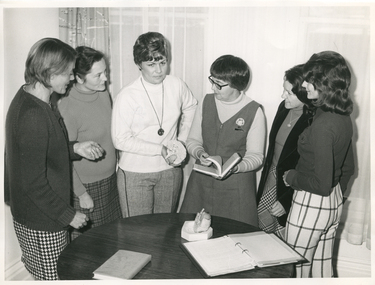
... pilot study, funded by the Federal Government, the Brotherhood of St. Laurence and RDNS, with the program written and taught by Sr. Rowley, was evaluated as successful, and Home Health Aides were employed and worked in RDNS Centres under the supervision of the RDNS Sisters. royal district nursing service rdns rdns education sister jan turski sister pat (paddy) rowley sister lynne lambert sister pat walker sister paula mcbreen sister liz seymour-smith Barry Sutton MB 30 This black and white photograph shows, standing L-R, a side-on view of Jan Turski, who has short, straight light hair and is wearing a dark cardigan and white and black hound's-tooth check skirt; she is facing right. ...This photograph is taken in the Education Department at Royal District Nursing Service (RDNS). Principal Nurse Educator, Sister Pat (Paddy) Rowley is instructing the group in the Anatomy of the Brain. Jan Turski is a Trained nurse (Sister) working in the Domiciliary Infant and Maternal Care (DIMC) section of RDNS. Pat Walker is a Sister from Geelong, Lynne Lambert is a Sister from Qld, Paula McBreen is a Sister from St. Vincent's Hospital and Liz Seymour-Smith is a Sister from Qld. Sister Pat (Paddy) Rowley is wearing the RDNS winter uniform of a blue/grey skivvie under a blue/grey V neck tunic style frock made out of herringbone winter material.Education was an integral part of Melbourne District Nursing Society (MDNS), from its inception in 1885, later, in 1966, called Royal District Nursing Service, (RDNS). From 1885, only Trained Nurses (Nurses), through the Hospital training system, were employed by the Society, and on visits to patients they taught the necessity of hygiene and cleanliness, as well as the need for a good diet, to bring about good health. Doctor’s lectures were later given at the MDNS home to instruct patients and their families on prevention of disease. Education to patients continued throughout the years regarding health care and the use of equipment in the home. In 1961, Education programs commenced at MDNS with Trained nurses (Sisters) receiving In-service education. Sr. Pat (Paddy) Rowley was a leader in In-service Education and established the RDNS Department of Community Nursing Education in 1962. Sisters could also apply for scholarships to further their education outside of RDNS. Many of their senior Sisters received Postgraduate diplomas from the College of Nursing in Community Health Nursing, Education, and Administration, and several travelled overseas visiting nursing organizations viewing their public health and District nursing systems. At RDNS many programs were run, including: a Post Basic Course, Cardiac Rehabilitation Nursing, Haematology/Oncology Nursing, Palliative Care program, Diabetic Stabilization Program, Leg Ulcer Management Program, Wound Care Specialist Program, HIV/AIDS Nursing Care, Cystic Fibrosis Home Support, Veterans Home Care Program, Breast Cancer Support Program, Continence Management Program, Stomal Therapy Program, In-Home Lactation Support Program and the Homeless Persons Program. RDNS Sisters attended several hospitals to observe and learn special care needed to some patients, e.g. to the Austin Hospital to learn the care required for paraplegic and quadriplegic patients at home, and to Mount Royal Hospital to observe the care of patients in the Rehabilitation ward. A Community Nursing Education Program was extended to student nurses from hospitals and to other nursing organizations. These Education programs kept the RDNS Sisters abreast of new techniques, such as changes in technology for e.g. new testing methods in detecting glucose levels in Diabetic patients. Sr. Nan Deakin obtained a Post Basic Certificate in Psychiatric Nursing and included this area in her Education lectures. Sr. Daphne Geldard specialized in the area of Alzheimer’s disease and Dementia. These Sisters visited patients in District areas with the regular RDNS Sister when required. Every member of staff, both professional and non professional staff, received regular education in the Education Department. In 1980, a Home Health Aide pilot study, funded by the Federal Government, the Brotherhood of St. Laurence and RDNS, with the program written and taught by Sr. Rowley, was evaluated as successful, and Home Health Aides were employed and worked in RDNS Centres under the supervision of the RDNS Sisters. This black and white photograph shows, standing L-R, a side-on view of Jan Turski, who has short, straight light hair and is wearing a dark cardigan and white and black hound's-tooth check skirt; she is facing right. Next is Pat Walker, who has short dark hair and is wearing a grey jumper over a check skirt. Then, Lynne Lambert, who has short wavy dark hair, and is wearing a white jumper, with a pendant hanging down it, over grey slacks. She is holding half of an Anatomical brain in her right hand. Next is Royal District Nursing Service (RDNS) Principal Nurse Educator, Pat (Paddy) Rowley, who is looking towards the left of the photograph at the Anatomical brain held by Lynne Lambert. She is wearing glasses, has short dark hair and is wearing a light grey skivvie under a darker V neck tunic style frock. She is holding an open book in her hands. Next is Paula McBreen, who has shoulder length dark hair and is wearing a dark cardigan over a grey skivvie, with a pendant hanging down it, and a check skirt. She is smiling and looking to her right toward the others. On the far right, side-on and facing the others on the left of the photograph, is Liz Seymour-Smith who has shoulder length dark hair and is wearing a dark grey skivvie, and white, with dark check, slacks. In front of the group is a round dark wooden top table, which has a book and open folder on it, as well as a round white plastic base with the other half of the anatomical brain sitting in it.Barry Sutton MB 30royal district nursing service, rdns, rdns education, sister jan turski, sister pat (paddy) rowley, sister lynne lambert, sister pat walker, sister paula mcbreen, sister liz seymour-smith -
 Clayton RSL Sub Branch
Memorabilia - Silk Escape Scarf, WW2
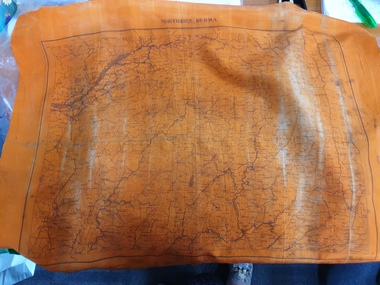
... pilot was captured. The scarf was donated to the RSL by Cedric Hamilton Chindit WW2. Unusual orange silk escape scarf with Burma and North Burma map. Colour may indicate that the scarf was primarily to be used for nighttime viewing. ...Escape scarf was issued to all military personnel, both army and airforce and personnel in theatres of war. The scarf was designed to provide information on escape routes if the soldier/pilot was captured. The scarf was donated to the RSL by Cedric Hamilton Chindit WW2.Unusual orange silk escape scarf with Burma and North Burma map. Colour may indicate that the scarf was primarily to be used for nighttime viewing.orange silk scarf with map of burma on one side and a map of north burma on the other side.One side - Central Burma Second side - North Burmaworld war two, second world war, ww2, wwii, scarf, burma, escape scarf -
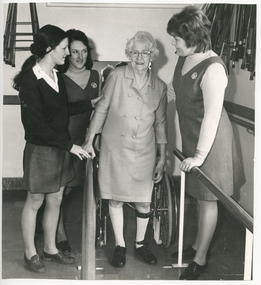 Royal District Nursing Service (now known as Bolton Clarke)
Photograph - Photograph, black and white, Barry Sutton, 20.07.1972
... pilot study, funded by the Federal Government, the Brotherhood of St. Laurence and RDNS, with the program written and taught by Sr. Rowley, was evaluated as successful, and Home Health Aides were employed and worked in RDNS Centres under the supervision of the RDNS Registered Nurses. rdns royal district nursing service rdns uniform rdns education sister sue revill sister helen watt Barry Sutton photographer's stamp. Quote KY 78 Black and white photograph depicting, on the left, a side-on view ...The photograph is taken in the Physiotherapy Department at Mount Royal Hospital. RDNS Sr. Sue Revill is from RDNS Moorabbin Centre and Sr. Helen Watt is from Footscray Centre, They are attending an Education session on Rehabilitation at Mount Royal. Hospital. They are wearing the RDNS winter uniform of a blue/grey skivvie under a V neck tunic style herringbone winter material dress with the RDNS insignia emblazoned on its upper left.Education was an integral part of Melbourne District Nursing Society (MDNS), from its inception in 1885, later, in 1966, called Royal District Nursing Service, (RDNS). From 1885, only Trained Nurses (Nurses) who trained through the Hospital training system were employed by the Society, and on visits to patients they taught the necessity of hygiene and cleanliness, as well as the need for a good diet, to bring about good health. Doctor’s lectures were later given at the MDNS home to instruct patients and their families on prevention of disease. Education to patients continued throughout the years regarding health care and the use of equipment in the home. In 1961, Education programs commenced at MDNS with their Trained nurses (Sisters) receiving In-service education. Sister Pat (Paddy) Rowley was a leader in this In-service Education and established the MDNS, later called RDNS, Department of Community Nursing Education in 1962. Staff could also apply for scholarships to further their education outside of RDNS. Many of their senior Sisters received Postgraduate diplomas from the College of Nursing in Community Health Nursing, Education, and Administration, and several travelled overseas visiting nursing organizations viewing their public health and district nursing systems. Many programs were run at RDNS, including: a Post Basic Course, Cardiac Rehabilitation Nursing, Haematology/Oncology Nursing, Palliative Care program, Diabetic Stabilization Program, Leg Ulcer Management Program, Wound Care Specialist Program, HIV/AIDS Nursing Care, Cystic Fibrosis Home Support, Veterans Home Care Program, Breast Cancer Support Program, Continence Management Program, Stomal Therapy Program, In-Home Lactation Support Program and the Homeless Persons Program. RDNS staff attended several hospitals to observe and learn special care needed to some clients, e.g. to the Austin Hospital to learn the care required for paraplegic and quadriplegic clients at home, and to Mount Royal Hospital to observe the care of clients in the Rehabilitation ward. A Community Nursing Education Program was extended to Student nurses from Hospitals and to other nursing organizations. These Education programs kept the RDNS Sisters abreast of new techniques, such as changes in technology for e.g. new testing methods in detecting glucose levels in Diabetic patients. Sr. Nan Deakin did a Post Basic Course in Psychiatric Nursing and included this area in her education lectures. Sr. Daphne Geldard specialized in the area of Alzheimer’s disease and Dementia. These Sisters visited patients in District areas with the regular RDNS Sister when required. Every member of staff, both professional and non professional staff, received regular education in the Education Department. In 1980, a Home Health Aide pilot study, funded by the Federal Government, the Brotherhood of St. Laurence and RDNS, with the program written and taught by Sr. Rowley, was evaluated as successful, and Home Health Aides were employed and worked in RDNS Centres under the supervision of the RDNS Registered Nurses. Black and white photograph depicting, on the left, a side-on view of a Hospital Physiotherapist with her long hair drawn back in a pony tail, and wearing a grey V neck dress over a white blouse and a dark cardigan who is facing right. She has her left hand on the arm of a standing lady and her right hand on the lady's hand which is on a walking rail. To the right rear of the Physiotherapist is Royal District Nursing Service (RDNS) Sister Sue Revill who has shoulder length dark hair and is looking at the lady. To her right the elderly lady who is wearing glasses; has wavy white hair and is wearing a light grey frock, is standing in front of a wheelchair with her right hand on the walking rail. Her left arm hangs loosely by her side. To her right is a walking rail and standing to its right is Sr. Helen Watt who is looking towards the lady. She has short dark wavy hair, and has her right arm around the back of the lady and her left hand is on the walking rail. In the background of the photograph, the lower section of several 4 prong walking stick are seen hanging on the wall. Barry Sutton photographer's stamp. Quote KY 78rdns, royal district nursing service, rdns uniform, rdns education, sister sue revill, sister helen watt
