
Showing 189 items matching "pins - history"
-
 Returned Nurses RSL Sub-branch
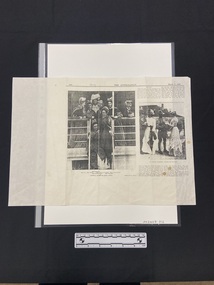
Newspaper - Photocopy of a newspaper clipping, The Australasian, The pin, March 17, 1900
... ...Pins - history...The article discusses the history of the pin, introduced in Britain in the fifteenth century as personal fasteners used in the dressing process. ...Australian Army Nurses Victorian Nurses - South Africa Pins - history 'NC17' [Handwritten in blue ink on the top of the page] Photocopy of a newspaper article. ...The large photo is of seven Victorian nurses bound for South Africa (Sister Ivy, Sister Langlands, Sister Walker, Sister Rawson, Sister Bernhard Smith, Sister Dorothy Smith, Sister Thompson). The article discusses the history of the pin, introduced in Britain in the fifteenth century as personal fasteners used in the dressing process. It explains the materials used for 'pins' and the connection to the phrase 'pin-money'. The second photo was taken at Victoria Barracks, it shows a well-dressed lady pinning on favours to a soldier in uniform, beside them stands another lady arm-in-arm with another soldier.Photocopy of a newspaper article. The article is in the top right corner and there is some white space on the left hand side and below. The article consists of a large photo of a group of women and a Captain boarding a ship. To the right of the image is a smaller photo of two men and two women at Victoria Barracks, above and below this picture are two small columns of text.'NC17' [Handwritten in blue ink on the top of the page]australian army nurses, victorian nurses - south africa, pins - history -
![Australian Nursing Federation Victorian Branch delegate pin, [1990s-2000s?]](/media/collectors/5bb42dc221eaf31100db1d3b/items/5c46ae7d21ea69015012d085/item-media/5c46ae8621ea69015012e2c3/item-fit-380x285.jpg?cb=6) Australian Nursing & Midwifery Federation
Australian Nursing & Midwifery FederationAustralian Nursing Federation Victorian Branch delegate pin, [1990s-2000s?]
... pins...labour history...The Royal Australian Nursing Federation became the Australian Nursing Federation (ANF) in 1989, and then became the Australian Nursing and Midwifery Federation in 2013, suggesting this pin is from the 1990s or early 2000s. nursing nurses unionism unions trade unions union delegates badges pins labour history Red, black and gold pin in the shape of the state of Victoria, Australia. ...Pin awarded to, and worn by, union delegates/job representatives of the Australian Nursing Federation (ANF). Job representatives, or 'job reps', represent nurses and midwives and the union in the workplace. They provide information and advice on employee rights and conditions and referrals to the ANF when appropriate. The Royal Australian Nursing Federation became the Australian Nursing Federation (ANF) in 1989, and then became the Australian Nursing and Midwifery Federation in 2013, suggesting this pin is from the 1990s or early 2000s.Red, black and gold pin in the shape of the state of Victoria, Australia. Printed with 'ANF AUSTRALIAN NURSING FEDERATION REPRESENTATIVE'.nursing, nurses, unionism, unions, trade unions, union delegates, badges, pins, labour history -
![Australian Nursing Federation aged care campaign badge, [2006-2011?]](/media/collectors/5bb42dc221eaf31100db1d3b/items/5c490ca421ea731428fc731d/item-media/5c490cb121ea731428fc84a5/item-fit-380x285.jpg?cb=6) Australian Nursing & Midwifery Federation
Australian Nursing & Midwifery FederationAustralian Nursing Federation aged care campaign badge, [2006-2011?]
... pins...labour history...This historical background suggests the badge is from around 2006 to 2011. nursing nurses unionism trade unions aged care funding badges buttons pins labour history staffing wages workforce patient care australian nursing federation campaigning Circular red, white and blue plastic badge. ...Button distributed to and worn by Australian Nursing Federation (ANF) members. The ANF has been campaigning for more funding and qualified nurses to improve the quality of aged care for the past several decades, and continues to do so. Aged care funding and commitment to workforce improvements were a particular focus of enterprise bargaining for the Victorian Branch around 2006-2011, and similar issues formed the basis of a large federal ANF campaign conducted around the same time entitled 'Because we care'. The Royal Australian Nursing Federation became the Australian Nursing Federation (ANF) in 1989, and then became the Australian Nursing and Midwifery Federation in 2013. This historical background suggests the badge is from around 2006 to 2011.Circular red, white and blue plastic badge. Silver metal, plastic-coated, with safety pin fastener adhered to back. Badge printed with 'VALUE AGED CARE NURSING PROPERLY FOR BETTER RESIDENT CARE' and the ANF [Australian Nursing Federation] website address of the time (www.anfvic.asn.au).nursing, nurses, unionism, trade unions, aged care, funding, badges, buttons, pins, labour history, staffing, wages, workforce, patient care, australian nursing federation, campaigning -
![Royal Australian Nursing Federation student nurse pin, [1980s?]](/media/collectors/5bb42dc221eaf31100db1d3b/items/5c52423a21ea6710d8d35726/item-media/5c52424721ea6710d8d374e2/item-fit-380x285.jpg?cb=6) Australian Nursing & Midwifery Federation
Australian Nursing & Midwifery FederationRoyal Australian Nursing Federation student nurse pin, [1980s?]
... pins...nursing history...The Royal Australian Nursing Federation (RANF) became the Australian Nursing Federation in 1989, suggesting that this button is from the 1980s. nursing nurses students education badges pins nursing history royal australian nursing federation Oval-shaped green, red and gold pin. pin printed with 'R.A.N.F.' ...Pin given to, and worn by, student nurse members of the Royal Australian Nursing Federation (R.A.N.F.). This badge is likely from a period when nursing education was moving from hospital-based training to tertiary settings. A 2013 report from the Federal Department of Health provides this following overview of nursing education: "during the mid-1980s, nursing education commenced a period of change from being hospital-based to being conducted in tertiary settings, with practical clinical experience components. By 1993, all registered nursing students in Australia were entering the profession via the university education pathway". The Royal Australian Nursing Federation (RANF) became the Australian Nursing Federation in 1989, suggesting that this button is from the 1980s.Oval-shaped green, red and gold pin. pin printed with 'R.A.N.F.' [Royal Australian Nursing Federation], 'STUDENT NURSE UNIT', and the acronym 'SNU' in the shape of Australia.nursing, nurses, students, education, badges, pins, nursing history, royal australian nursing federation -
![Australian Nursing Federation pin, [1990s-2000s?]](/media/collectors/5bb42dc221eaf31100db1d3b/items/5c73756721ea6d1634663347/item-media/5c73758321ea6d1634664d1c/item-fit-380x285.jpg?cb=6) Australian Nursing & Midwifery Federation
Australian Nursing & Midwifery FederationAustralian Nursing Federation pin, [1990s-2000s?]
... pins...labour history...The Royal Australian Nursing Federation became the Australian Nursing Federation (ANF) in 1989, and then became the Australian Nursing and Midwifery Federation in 2013, suggesting this pin is from the 1990s or early 2000s. nursing nurses unionism unions trade unions badges pins labour history Rectangular white, blue and silver pin. ...Pin that was likely distributed to union delegates/job representatives of the Australian Nursing Federation (ANF). Job representatives, or 'job reps', represent nurses and midwives and the union in the workplace. They provide information and advice on employee rights and conditions to their colleagues and referrals to the ANF when appropriate. The Royal Australian Nursing Federation became the Australian Nursing Federation (ANF) in 1989, and then became the Australian Nursing and Midwifery Federation in 2013, suggesting this pin is from the 1990s or early 2000s.Rectangular white, blue and silver pin. Printed with 'AUSTRALIAN NURSING FEDERATION' and a large logo ['ANF'].nursing, nurses, unionism, unions, trade unions, badges, pins, labour history -
 Embroiderers Guild, Victoria
Tool - Pin (antique), c1860
... Pins have a very important role in social history. Pins were made from steel with separate heads which were applied to the shaft. ...Pins have a very important role in social history. Pins were made from steel with separate heads which were applied to the shaft. ...Pins have a very important role in social history. Pins were made from steel with separate heads which were applied to the shaft. The lacquering of this steel pin may indicate that it was a mourning pin,.Mourning clothes were the social custom from Regency period when it was not acceptable to wear anything which might glitter. The lacquer coating both smoothed the rough steel and prevented any inappropriate glitter.Steel (or iron) pin, coated with black lacquer. Head was made separately and attached to shankmourning pin, early pin manufacture -
![Australian Nursing Federation mental health campaign badge, [1990s-2000s?]](/media/collectors/5bb42dc221eaf31100db1d3b/items/5c9aeefe21ea720f88d7cab6/item-media/5c9aef0521ea720f88d7e345/item-fit-380x285.jpg?cb=6) Australian Nursing & Midwifery Federation
Australian Nursing & Midwifery FederationAustralian Nursing Federation mental health campaign badge, [1990s-2000s?]
... pins...trade unions...labour history...nurses, unionism, badges, buttons, pins, trade unions, labour history, australian nursing federation, staffing, workforce, patient care...nurses, unionism, badges, buttons, pins, trade unions, labour history, australian nursing federation, staffing, workforce, patient care nurses mental health nursing unionism badges buttons pins trade unions labour history australian nursing federation funding Circular red plastic badge. ...nurses, unionism, badges, buttons, pins, trade unions, labour history, australian nursing federation, staffing, workforce, patient careCircular red plastic badge. Silver metal, plastic-coated, with safety pin fastener adhered to back. Badge printed with 'UNSHACKLE MENTAL HEALTH', the ANF [Australian Nursing Federation] logo and an image of broken chains and shackles.nurses, mental health, nursing, unionism, badges, buttons, pins, trade unions, labour history, australian nursing federation, funding -
 Flagstaff Hill Maritime Museum and Village
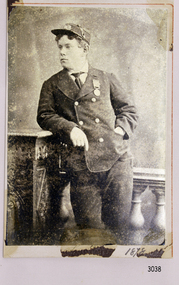
Photograph - Portrait, late 19th century
... Criterion C: Potential to yield information that will contribute to an understanding of Victoria’s cultural history. flagstaff hill warrnambool shipwrecked coast flagstaff hill maritime museum maritime museum shipwreck coast flagstaff hill maritime village loch ard shipwreck tom pearce thomas r pearce eva carmichael mutton bird island loch ard survivor loch ard hero coleman jacobs the young hero schottische photograph of tom pearce Printed green text “PHOTOGRAPHIC / SOCIETY OF VICTORIA / MELBOURNE / REGISTERED COPYRIGHT / JULY 24th 1878” and “NONE ARE GENUINE UNLESS WITH / SIGNATURES THUS” and “PRESIDENT / VICE PRESIDENT / SECRETARY” Photograph of Mr Tom Pearce dressed in a uniform with a medal pinned on it. ...This photograph is of Tom Pearce, one of only 2 survivors from the shipwreck LOCH ARD. Loch Ard was bound for Melbourne in 1878 loaded with passengers and cargo when it ran into a rocky reef at the base of Mutton Bird Island, near Port Campbell. Of the 54 crew members and passengers on board, only two survived: an apprentice, Tom Pearce and a young woman passenger, Eva Carmichael, who lost all of her family in the tragedy. Coleman Jacobs composed the music “The Young Hero Schottische” and dedicated it, by permission, to Mr. Thomas R. (Tom) Pearce. The sheet music was published in 1878 by the Messieurs Roberts, professors of dancing etc. Melbourne. It was on sale for 3/- (3 shillings) and in aid of the “LOCH ARD” fund. [This is Coleman Jacobs’ only surviving musical work Coleman Jacobs, accomplished pianist, musical performer, singer, composer, professor of music and music teacher, was born in 1827 and died on 4 July 1885, aged 58 years. Coleman Jacobs was buried in the Melbourne Cemetery (grave 461, Church of England section).] The wreck of Loch Ard still lies at the base of Mutton Bird Island and much of the cargo has been salvaged. Some was washed up into what is now known as Loch Ard Gorge following the shipwreck. Cargo and artefacts have also been illegally salvaged over many years before protective legislation was introduced. The photograph is significant for its association with the wreck of the Loch Ard. This wreck has been protected as a Historic Shipwreck since 11 March 1982, under the Commonwealth Historic Shipwrecks Act (1976) Flagstaff Hill’s collection of artefacts from Loch Ard is significant for being one of the largest collections of artefacts from this shipwreck in Victoria. It is significant for its association with the shipwreck, which is on the Victorian Heritage Register. The collection is significant because of the relationship between the objects, as together they have a high potential to interpret the story of the Loch Ard. The Loch Ard collection is archaeologically significant as the remains of a large international passenger and cargo ship. The Loch Ard collection is historically significant for representing aspects of Victoria’s shipping history and its potential to interpret sub-theme 1.5 of Victoria’s Framework of Historical Themes (living with natural processes). The collection is also historically significant for its association with the Loch Ard, which was one of the worst and best known shipwrecks in Victoria’s history. The Loch Ard collection meets the following criteria for assessment: Criterion A: Importance to the course, or pattern, of Victoria’s cultural history. Criterion B: Possession of uncommon, rare or endangered aspects of Victoria’s cultural history. Criterion C: Potential to yield information that will contribute to an understanding of Victoria’s cultural history. Photograph of Mr Tom Pearce dressed in a uniform with a medal pinned on it. Standing with his arm resting on a masonry pillar. Reverse has piece of tape centre top and bottom. Also has printed maker’s information. Printed by the Photographic Society of Victoria, Melbourne.Printed green text “PHOTOGRAPHIC / SOCIETY OF VICTORIA / MELBOURNE / REGISTERED COPYRIGHT / JULY 24th 1878” and “NONE ARE GENUINE UNLESS WITH / SIGNATURES THUS” and “PRESIDENT / VICE PRESIDENT / SECRETARY” flagstaff hill, warrnambool, shipwrecked coast, flagstaff hill maritime museum, maritime museum, shipwreck coast, flagstaff hill maritime village, loch ard shipwreck, tom pearce, thomas r pearce, eva carmichael, mutton bird island, loch ard survivor, loch ard hero, coleman jacobs, the young hero schottische, photograph of tom pearce -
 Flagstaff Hill Maritime Museum and Village
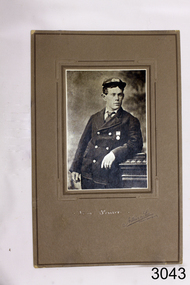
Photograph - Portrait, late 19th century
... Criterion C: Potential to yield information that will contribute to an understanding of Victoria’s cultural history. flagstaff hill warrnambool shipwrecked coast flagstaff hill flagstaff hill maritime museum maritime museum shipwreck coast flagstaff hill maritime village loch ard shipwreck tom pearce Thomas R Pearce Eva Carmichael Mutton Bird Island loch ard survivor loch ard hero Coleman Jacobs The Young Hero Schottische Photograph of Tom Pearce Photograph of Mr Tom Pearce dressed in a uniform with a medal pinned on it. ...This photograph is of Tom Pearce, one of only 2 survivors from the shipwreck LOCH ARD. Loch Ard was bound for Melbourne in 1878 loaded with passengers and cargo when it ran into a rocky reef at the base of Mutton Bird Island, near Port Campbell. Of the 54 crew members and passengers on board, only two survived: an apprentice, Tom Pearce and a young woman passenger, Eva Carmichael, who lost all of her family in the tragedy. Coleman Jacobs composed the music “The Young Hero Schottische” and dedicated it, by permission, to Mr. Thomas R. (Tom) Pearce. The sheet music was published in 1878 by the Messieurs Roberts, professors of dancing etc. Melbourne. It was on sale for 3/- (3 shillings) and in aid of the “LOCH ARD” fund. [This is Coleman Jacobs’ only surviving musical work Coleman Jacobs, accomplished pianist, musical performer, singer, composer, professor of music and music teacher, was born in 1827 and died on 4 July 1885, aged 58 years. Coleman Jacobs was buried in the Melbourne Cemetery (grave 461, Church of England section).] The wreck of Loch Ard still lies at the base of Mutton Bird Island and much of the cargo has been salvaged. Some was washed up into what is now known as Loch Ard Gorge following the shipwreck. Cargo and artefacts have also been illegally salvaged over many years before protective legislation was introduced. The photograph is significant for its association with the wreck of the Loch Ard. This wreck has been protected as a Historic Shipwreck since 11 March 1982, under the Commonwealth Historic Shipwrecks Act (1976) Flagstaff Hill’s collection of artefacts from Loch Ard is significant for being one of the largest collections of artefacts from this shipwreck in Victoria. It is significant for its association with the shipwreck, which is on the Victorian Heritage Register. The collection is significant because of the relationship between the objects, as together they have a high potential to interpret the story of the Loch Ard. The Loch Ard collection is archaeologically significant as the remains of a large international passenger and cargo ship. The Loch Ard collection is historically significant for representing aspects of Victoria’s shipping history and its potential to interpret sub-theme 1.5 of Victoria’s Framework of Historical Themes (living with natural processes). The collection is also historically significant for its association with the Loch Ard, which was one of the worst and best known shipwrecks in Victoria’s history. The Loch Ard collection meets the following criteria for assessment: Criterion A: Importance to the course, or pattern, of Victoria’s cultural history. Criterion B: Possession of uncommon, rare or endangered aspects of Victoria’s cultural history. Criterion C: Potential to yield information that will contribute to an understanding of Victoria’s cultural history. Photograph of Mr Tom Pearce dressed in a uniform with a medal pinned on it. Standing with his arm resting on a masonry pillar.flagstaff hill, warrnambool, shipwrecked coast, flagstaff hill, flagstaff hill maritime museum, maritime museum, shipwreck coast, flagstaff hill maritime village, loch ard shipwreck, tom pearce, thomas r pearce, eva carmichael, mutton bird island, loch ard survivor, loch ard hero, coleman jacobs, the young hero schottische, photograph of tom pearce -
 Ballarat and Queen's Anglican Grammar School
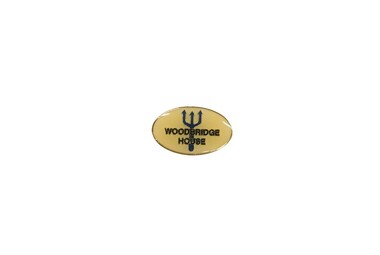
Book - Pin, 2005
... History of College and Clarendon 1964-2004 Book Pin ...Golden Heritage. History of College and Clarendon 1964-2004 -
 The Beechworth Burke Museum
Photograph, Border Morning Mail newspaper, 14/5/2979
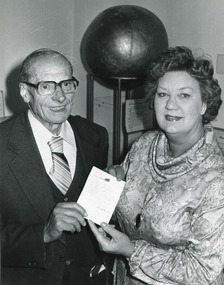
... pin artefact in the Burke Museum collection, via donation by Alan Dunlop. In addition, it depicts Val Mason, the first female president of the former Beechworth Shire for two terms and a councillor for nine years. It is of social significance as it depicts two well-known and respected Beechworth locals handling a key artefact of significance to the Beechworth Goldfields, and therefore Beechworth local history. ...This photograph is recorded as depicting the presentation by Mr Alan Dunlop to Cr Val Mason, Shire President, of a 2.86-gram solid gold nugget found in the area more than 100 years ago, at the Burke Museum. The gold is reported as attached to a small amount of milk quartz mounted onto a tie pin. The photo and an article about the donation appeared in the Border Morning Mail on Friday 14th May, 1979. Alan Dunlop, pictured, was Sir Edward 'Weary' Dunlop's older brother. The tie pin artefact being donated in this photo is entered into the Victorian Collections database as follows: 'This nugget was found on the Beechworth Goldfield in the late 1800s by Mr Fred McIntosh (Alan & Edward Dunlop's Uncle by marriage, husband of Elizabeth (Bessie) Dunlop), who had made it into a tie pin and presented it to the Dunlop family'. Furthermore, Val Mason was the first female president of the former Beechworth Shire for two terms and a councillor for nine years. This photograph is of historic significance as it depicts known individuals who have connections to key Australian figures. Alan Dunlop is the brother of famous war doctor Edward 'Weary' Dunlop, and both men are Beechworth locals. The object Alan holds is a tie pin made from gold found by the Dunlops' uncle. It's also significant as it documents visually the origin of the tie pin artefact in the Burke Museum collection, via donation by Alan Dunlop. In addition, it depicts Val Mason, the first female president of the former Beechworth Shire for two terms and a councillor for nine years. It is of social significance as it depicts two well-known and respected Beechworth locals handling a key artefact of significance to the Beechworth Goldfields, and therefore Beechworth local history. It also shows the Burke Museum in 1979, providing research potential for those interested in the history of the development of the museum's collection.Black and white, rectangular photograph printed on paper.Obverse: (lllegible) Reverse: A02653weary dunlop, gold, beechworth, val mason, tie pin, jewellery, goldfield, beechworth goldfield, fred mcintosh, bessie dunlop, elizabeth dunlop, dunlop, border morning mail, victorian collections, donation, burke museum -
 The Beechworth Burke Museum
Photograph, 14/05/1979
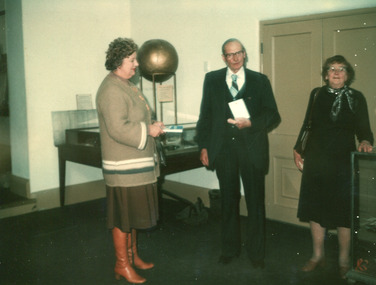
... pin artefact into the Burke Museum Collection. In addition, it depicts Valerie ‘Val’ Mason, in her role as the president of the former Beechworth Shire. Val was the first female in this role, which she held for two terms, and was a councillor in the Shire for nine years. This photograph is of social significance as it depicts two well-known and respected Beechworth locals handling a key artefact of significance to the Beechworth Goldfields. It also shows the Burke Museum in 1979, providing research potential for those interested in the history ...Taken on 14 May 1979, this photo depicts Mr Alan J. Dunlop and his wife presenting a 2.86-gram solid gold nugget found in the Beechworth area more than 100 years ago, to the Shire President, Councillor Mrs Valerie Mason. The gold is reported as attached to a small amount of milk quartz mounted onto a tie pin, and was donated to the Burke Museum by the Dunlop family. Alan Dunlop, pictured, was Sir Edward 'Weary' Dunlop's older brother. The tie pin artefact being donated in this photograph is entered into the Victorian Collections, and records that the nugget was found in the Beechworth Goldfields by Mr Fred McIntosh, in the last 1800s. Fred McIntosh, the husband of Elizabeth (Bessie) Dunlop (the sister of Alan & Edward's father, John) had the nugget made into tie pin and presented it to the Dunlop Family. Furthermore, Valerie 'Val' Mason was the first female president of the former Beechworth Shire for two terms and a councillor for nine years. This photograph is of historic significance as it depicts known individuals who have connections to key Australian figures. Alan Dunlop is the brother of famous war doctor Edward 'Weary' Dunlop, and both men are Beechworth locals. The object Alan holds is a tie pin made from gold found by the Dunlops' uncle, and the provenance of the item – from goldfield to family collection to museum collection – provides a recent context with which to interpret the significance of gold-mining on present and future generations, as well as strong research potential on minerals known to be sourced in the area. In conjunction with other photographs in the collection, this photograph visually documents the donation and acquisition of the tie pin artefact into the Burke Museum Collection. In addition, it depicts Valerie ‘Val’ Mason, in her role as the president of the former Beechworth Shire. Val was the first female in this role, which she held for two terms, and was a councillor in the Shire for nine years. This photograph is of social significance as it depicts two well-known and respected Beechworth locals handling a key artefact of significance to the Beechworth Goldfields. It also shows the Burke Museum in 1979, providing research potential for those interested in the history of the development of the museum's collection. Colour rectangular photograph printed on matte photographic paper.Reverse: Polacolor (Registered Trademark symbol) Type 108 / LR / Mrs Valerie Mason / Mr Dunlop (Weary's brother) / Mrs Vivian Payne (erased) / 14-5-1979 A.J. Dunlop & wife with Cr. Mason /L85052P gold, nugget, tie pin, pin, beechworth, burke museum, goldrush, goldfield, dunlop, edward dunlop, weary dunlop, alan dunlop, valerie mason, fred mcintosh, gold mining, donation, museum, collection, president, councillor, shire, female -
 Federation University Historical Collection
Costume, Ballarat Teachers' College Blazer, 1940s
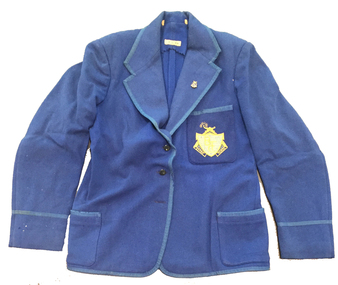
... ("Ruffians Attempted to Carry of the School Tent: A History of State Education in Ballarat", 1974, p73-4.) ballarat teachers' college blazer elaine cook costume textiles uniform embroidery Hand written with pen on white tape - E. Cook Blue woollen blazer with Ballarat Teachers College lapel pin ...This blazer was worn by Elaine Cooke when she attended the Ballarat Teachers College. The Ballarat Teachers' College was established after the Victorian State Government and the State Education Department decided to establish two provincial teachers' colleges, at Ballarat and Bendigo. On 04 May 1926 W.H. Ellwood (Principal), Miss A. Bouchier, and Mr A.B. Jones, welcomed the first enrolment of 61 students to undertake the one year course. In 1927 the College moved to the former Ballarat East Town Hall in Barkly Street, which was remodelled for their use. It closed in December 1931 due to the Great Depression. In 1946 Ballarat Teachers' College reopened and relocated to the Dana Street State School. It was originally planned to open as a women's college, for whom the residence at 130 Victoria Street was purchased, but the decision was made to admit resident men from Ballarat. Mr T.W. Turner was appointed as Principal in 1951 and directed the introduction of a two year course for the Trained Primary Teachers' Certificate. The former one year course was terminated at the end of 1951. In 1958 the College was relocated to a custom built facility at Gillies Street, in close proximity to the Ballarat Botanical Gardens. Numbers increased with the introduction of the Trained Infant Teachers' Certificate course under the guidance of Mary Egan. With the introduction of a three year Diploma Course in 1968 accommodation became cramped. The introduction of the Diploma of Teaching (Primary) led to the Trained Infant Teachers' Certificate being discontinued in 1969, and the end of the Trained Primary Teachers' Certificate in 1969. Secondary Art and Craft students began studies at Ballarat Teachers' College in 1969 under Mr Ted Doney. In 1971 Mr D. Watson was appointed Principal. The State College of Victoria was proclaimed by Order in Council on 24 July 1973, and Ballarat Teachers' College became a constituent college of the State College of Victoria, and was known as State College of Victoria, Ballarat. By 1975 the College moved to Mount Helen as part of the Ballarat College of Advanced Education. Pre service teachers currently undertake their studies on the Mount Helen Campus of Federation University. ("Ruffians Attempted to Carry of the School Tent: A History of State Education in Ballarat", 1974, p73-4.)Blue woollen blazer with Ballarat Teachers College lapel pin and embroidered pocket. The edges are bound, including the two side pockets and the breast pocket and the sleeve cuffs have the binding 10.5 cm from the edge. The blazer has three front buttons. The body is unlined but the sleeves are lined with a cotton fabric. The hem edge is bound and hand stitched in place, whilst the back neck facing is cut with pinking shears.Hand written with pen on white tape - E. Cookballarat teachers' college, blazer, elaine cook, costume, textiles, uniform, embroidery -
 Federation University Historical Collection
Stick Pin, Swann, Ballarat Teachers' College Stick Pins, c1948/50
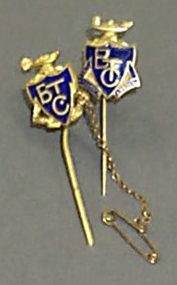
... ("Ruffians Attempted to Carry of the School Tent: A History of State Education in Ballarat", 1974, p73-4.) ballarat teachers' college stick pin student stick pin ex student association stick pin helen veitch BTC shield Two gold coloured stick pins with the Ballarat Teachers' College Shield, featuring a blue enamelled background with the letters in gold. 1). has Ex Students Assoc'n in gold with blue enamelled background at the bottom of the shield. 2). has Extra Muros in gold coloured relief at the bottom of the shield and a safety chain and pin attached. ...Both this students stick pin and Ex Students' Association stick pin were owned and worn by Helen Veitch who was a student at the Ballarat Teachers' College in 1948. The Ballarat Teachers' College was established after the Victorian State Government and the State Education Department decided to establish two provincial teachers' colleges, at Ballarat and Bendigo. On 04 May 1926 W.H. Ellwood (Principal), Miss A. Bouchier, and Mr A.B. Jones, welcomed the first enrolment of 61 students to undertake the one year course. In 1927 the College moved to the former Ballarat East Town Hall in Barkly Street, which was remodelled for their use. It closed in December 1931 due to the Great Depression. In 1946 Ballarat Teachers' College reopened and relocated to the Dana Street State School. It was originally planned to open as a women's college, for whom the residence at 130 Victoria Street was purchased, but the decision was made to admit resident men from Ballarat. Mr T.W. Turner was appointed as Principal in 1951 and directed the introduction of a two year course for the Trained Primary Teachers' Certificate. The former one year course was terminated at the end of 1951. In 1958 the College was relocated to a custom built facility at Gillies Street, in close proximity to the Ballarat Botanical Gardens. Numbers increased with the introduction of the Trained Infant Teachers' Certificate course under the guidance of Mary Egan. With the introduction of a three year Diploma Course in 1968 accommodation became cramped. The introduction of the Diploma of Teaching (Primary) led to the Trained Infant Teachers' Certificate being discontinued in 1969, and the end of the Trained Primary Teachers' Certificate in 1969. Secondary Art and Craft students began studies at Ballarat Teachers' College in 1969 under Mr Ted Doney. In 1971 Mr D. Watson was appointed Principal. The State College of Victoria was proclaimed by Order in Council on 24 July 1973, and Ballarat Teachers' College became a constituent college of the State College of Victoria, and was known as State College of Victoria, Ballarat. By 1975 the College moved to Mount Helen as part of the Ballarat College of Advanced Education. Pre service teachers currently undertake their studies on the Mount Helen Campus of Federation University. ("Ruffians Attempted to Carry of the School Tent: A History of State Education in Ballarat", 1974, p73-4.)Two gold coloured stick pins with the Ballarat Teachers' College Shield, featuring a blue enamelled background with the letters in gold. 1). has Ex Students Assoc'n in gold with blue enamelled background at the bottom of the shield. 2). has Extra Muros in gold coloured relief at the bottom of the shield and a safety chain and pin attached.BTC shield ballarat teachers' college, stick pin, student stick pin, ex student association stick pin, helen veitch -
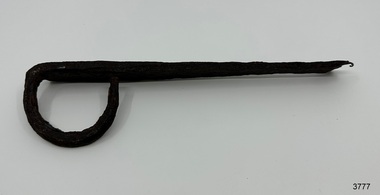 Flagstaff Hill Maritime Museum and Village
Functional object - Latch, before 1890
... Flagstaff Hill’s early Accession Records book lists the items as being received from the Old Warrnambool Museum collection; the Latch is record 152 and the Pin is record 153. An article, ‘Birthplace of our History’ by Don Dean, is on file in the Warrnambool and District Historical Society. ...Flagstaff Hill’s early Accession Records book lists the items as being received from the Old Warrnambool Museum collection; the Latch is record 152 and the Pin is record 153. An article, ‘Birthplace of our History’ by Don Dean, is on file in the Warrnambool and District Historical Society. ...Due to the interest of a public works inspector, James Gilroy, who in 1890 dug in the 'ship's remains' of a wreck now known as the Mahogany Ship, Ancient Wreck, Gold Ship, or Ancient Vessel, three relics were located. Two of these objects, a bronze bolt and an iron latch, are part of Flagstaff Hill’s collection of shipwreck artefacts. The third object was a heavily oxidised ‘quantity of ironwork’. - The iron latch was possibly from a galley oven door or fireplace - The bronze bolt, spike or pin Both the bolt and latch are listed on the same page in the records of the Old Warrnambool Museum, and noted that they were found by K.A.G. (or H.A.G.) on the site of the Ancient wreck in 1890. Interestingly, another item in these records is ‘Notes on Ancient wreck, near Gorman’s Lane’. Gorman’s Lane is just inland from the sand dunes of the Coastal Reserve at Tower Hill. The current location of these Notes is unknown. The Museum opened in 1886 and continued until 1963, when it was closed by the Warrnambool City Council and the whole collection was put into storage. The council then transferred items to various places, including Flagstaff Hill and the current Warrnambool Art Gallery. Flagstaff Hill’s early Accession Records book lists the items as being received from the Old Warrnambool Museum collection; the Latch is record 152 and the Pin is record 153. An article, ‘Birthplace of our History’ by Don Dean, is on file in the Warrnambool and District Historical Society. It was published in the Australian POST, on March 17, 1955. This article describes the findings of the items going back to 1890, along with other information about sightings of what has come to be known as the Mahogany Ship. The mystery of the Mahogany Ship began in 1836 when two shipwrecked sealers discovered the remains of an “ancient vessel” in the sand dunes about four miles west of Warrnambool. Since the last recorded sightings in the 1880’s the true origin of the Mahogany Ship has remained one of Australia’s most famous historical mysteries. One of the more recent theories is that the vessel was one of the Portuguese ships exploring the Australian coast in 1522. For over one hundred years, searchers have attempted to locate and identify the wreck. The search continues for the tangible evidence which will once and for all establish the Mahogany Ship’s place in Australia’s History. The latch has local historic significance as it was found in the sand dunes of Warrnambool in 1890. The latch is also significant for being part of the original 1886 Warrnambool Museum's collection. The latch is significant for its possible link to one of Victoria’s and Australia’s maritime mysteries, the Mahogany Ship (also known as the Ancient Wreck). It is one of the very few known relics that could give evidence of the existence and history of the vessel. The ship is listed on the Victorian Heritage Register S438 as it is one of Victoria’s oldest recorded shipwrecks. The identity of the vessel has the potential to change Australia’s history.Latch, iron. Flat iron latch tapers inward from loop handle to narrow end with prongs. Handmade. warrnambool, shipwrecked coast, flagstaff hill maritime museum, shipwreck coast, mahogany ship, latch, relic, old warrnambool museum, ancient vessel, ancient wreck, oven latch, fireplace latch, galley oven, gold ship, gorman's lane, coastal reserve, tower hill -
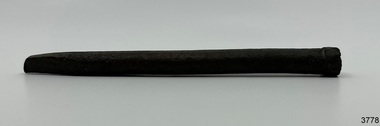 Flagstaff Hill Maritime Museum and Village
Functional object - Bolt, before 1890
... Flagstaff Hill’s early Accession Records book lists the items as being received from the Old Warrnambool Museum collection; the Latch is record 152 and the Pin is record 153. An article, ‘Birthplace of our History’ by Don Dean, is on file in the Warrnambool and District Historical Society. ...Flagstaff Hill’s early Accession Records book lists the items as being received from the Old Warrnambool Museum collection; the Latch is record 152 and the Pin is record 153. An article, ‘Birthplace of our History’ by Don Dean, is on file in the Warrnambool and District Historical Society. ...Due to the interest of a public works inspector, James Gilroy, who in 1890 dug in the 'ship's remains' of a wreck now known as the Mahogany Ship, Ancient Wreck, Gold Ship, or Ancient Vessel, three relics were located. Two of these objects, a bronze bolt and an iron latch, are part of Flagstaff Hill’s collection of shipwreck artefacts. The third object was a heavily oxidised ‘quantity of ironwork’. - The iron latch was possibly from a galley oven door or fireplace - The bronze bolt, spike or pin Both the bolt and latch are listed on the same page in the records of the Old Warrnambool Museum, and noted that they were found by K.A.G. (or H.A.G.) on the site of the Ancient wreck in 1890. Interestingly, another item in these records is ‘Notes on Ancient wreck, near Gorman’s Lane’. Gorman’s Lane is just inland from the sand dunes of the Coastal Reserve at Tower Hill. The current location of these Notes is unknown. The Museum opened in 1886 and continued until 1963, when it was closed by the Warrnambool City Council and the whole collection was put into storage. The council then transferred items to various places, including Flagstaff Hill and the current Warrnambool Art Gallery. Flagstaff Hill’s early Accession Records book lists the items as being received from the Old Warrnambool Museum collection; the Latch is record 152 and the Pin is record 153. An article, ‘Birthplace of our History’ by Don Dean, is on file in the Warrnambool and District Historical Society. It was published in the Australian POST, on March 17, 1955. This article describes the findings of the items going back to 1890, along with other information about sightings of what has come to be known as the Mahogany Ship. The mystery of the Mahogany Ship began in 1836 when two shipwrecked sealers discovered the remains of an “ancient vessel” in the sand dunes about four miles west of Warrnambool. Since the last recorded sightings in the 1880’s the true origin of the Mahogany Ship has remained one of Australia’s most famous historical mysteries. One of the more recent theories is that the vessel was one of the Portuguese ships exploring the Australian coast in 1522. For over one hundred years, searchers have attempted to locate and identify the wreck. The search continues for the tangible evidence which will once and for all establish the Mahogany Ship’s place in Australia’s History. The bolt has local historic significance as it was found in the sand dunes of Warrnambool in 1890. The bolt is also significant for being part of the original 1886 Warrnambool Museum's collection. The bolt is significant for its possible link to one of Victoria’s and Australia’s maritime mysteries, the Mahogany Ship (also known as the Ancient Wreck). It is one of the very few known relics that could give evidence of the existence and history of the vessel. The ship is listed on the Victorian Heritage Register S438 as it is one of Victoria’s oldest recorded shipwrecks. The identity of the vessel has the potential to change Australia’s history.Bolt, also referred to as spike or pin. Bronze bolt, round body with head on one end that has straight sides, tapers to a point at the other end.warrnambool, shipwrecked coast, flagstaff hill maritime museum, shipwreck coast, mahogany ship, relic, pin, spike, old warrnambool museum, nail, ancient vessel, ancient wreck, portuguese ship, gold ship, gorman’s lane, coastal reserve, tower hill -
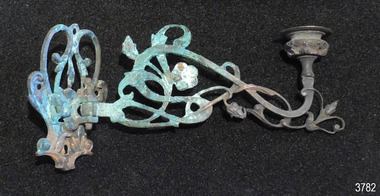 Flagstaff Hill Maritime Museum and Village
Domestic object - Candle Bracket, c. 1878
... The collection is also historically significant for its association with the LOCH ARD, which was one of the worst and best known shipwrecks in Victoria’s history. flagstaff hill warrnambool shipwrecked coast flagstaff hill maritime museum maritime museum shipwreck coast flagstaff hill maritime village great ocean road shipwreck artefact loch ard Victoria eva Carmichael tom pearce Antique candle holder candle bracket candlestick holder lighting ship lighting ship hardware Candle bracket, bronze with fancy floral design. Bracket has been hand wrought with varying widths of flat iron. Bracket’s arm swivels on a pin ...This candle bracket was recovered from the wreck of the sailing ship Loch Ard after the to the disaster in 1878. The bracket has been hand forged into a pleasing shape and design. The candle holder on the arm of the bracket cn swivel from side to side allowing the light to be adjusted. LOCH ARD 1873-1878 – The Scottish-built clipper ship Loch Ard was bound for Melbourne in 1878 with 54 people on board. The mixed cargo it carried included items for the 1880 International Exhibition in Melbourne, one of which was the now famous Majorca ware Minton ‘Peacock’ statue. The Loch Ard was wrecked on June 1st when the ship crashed into Mutton Bird Island, east of Port Campbell. The only survivors were Tom Pearce, a crew member, and Eva Carmichael, a young passenger who was rescued by Pearce. The Gibsons, owners of nearby Glenample Homestead, cared for Tom, and for Eva who stayed longer before returning to Ireland. The wreck of the Loch Ard was discovered in 1967, before the introduction of the Victorian historic shipwreck legislation. In 1969 it was decided that all recovered material should be lodged with the Receiver of Wrecks. In 1980 Flagstaff Hill Maritime Museum Divers received a permit to recover artefacts from the wreck to safeguard them from looters. In 1982 the site was listed as a Historic Shipwreck, and the Maritime Archaeology Unit recovered loose artefact material. The candle bracket is an example of light fittings from the ship ‘Loch Ard’ or from part of the ship’s cargo, imported for use in Colonial Victoria in the 19th to early 20th century. Flagstaff Hill’s collection of artefacts from LOCH ARD is significant for being one of the largest collections of artefacts from this shipwreck in Victoria. It is significant for its association with the shipwreck, which is on the Victorian Heritage Register (VHR S417). The collection is significant because of the relationship between the objects, as together they have a high potential to interpret the story of the LOCH ARD. The LOCH ARD collection is archaeologically significant as the remains of a large international passenger and cargo ship. The LOCH ARD collection is historically significant for representing aspects of Victoria’s shipping history and its potential to interpret sub-theme 1.5 of Victoria’s Framework of Historical Themes (living with natural processes). The collection is also historically significant for its association with the LOCH ARD, which was one of the worst and best known shipwrecks in Victoria’s history. Candle bracket, bronze with fancy floral design. Bracket has been hand wrought with varying widths of flat iron. Bracket’s arm swivels on a pin front of bracket. Bracket was recovered from the wreck of the Loch Ard. flagstaff hill, warrnambool, shipwrecked coast, flagstaff hill maritime museum, maritime museum, shipwreck coast, flagstaff hill maritime village, great ocean road, shipwreck artefact, loch ard, victoria, eva carmichael, tom pearce, antique, candle holder, candle bracket, candlestick holder, lighting, ship lighting, ship hardware -
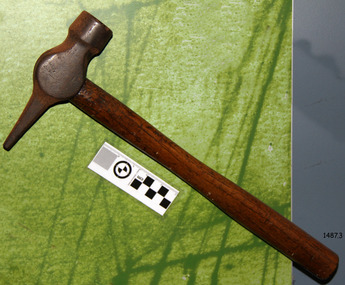 Flagstaff Hill Maritime Museum and Village
Tool - Pin hammer, Mid-to-late 20th century
... history of Victoria through their past owner, user and donor, Laurie Dilks. Laurie began his career as a shipwright at Ports and Harbours in Melbourne in the mid-1900s, following in the wake of the skilled carpenters who have over many centuries used their craft to build and maintain marine vessels and their fittings. flagstaff hill warrnambool great ocean road shipwreck coast maritime museum maritime village Shipwright carpenter shipbuilding ship repairs hand tool equipment ship maintenance cooper tool marine technology hammer shipwright's hammer pin hammer Laurie Dilks L Dilks Port and Harbours Melbourne Pin hammer; Wooden handle and steel head, thick heavy rounded end on one side, tapered wedge shape end on the other side. ...One end of the peg hammer’s head had a wedge-shaped tapered end, which was referred to as the peg poll and was used for hammering in pegs or bolts. The shipwright’s tools on display in the Great Circle Gallery are connected to the maritime history of Victoria through their past owner, user and donor, Laurie Dilks. Laurie began his career as a shipwright in the mid-1900s, following in the wake of the skilled carpenters who have over many centuries used their craft to build and maintain marine vessels and their fittings. You can see Laurie’s inscription on the tool called a ‘bevel’. Laurie worked for Ports and Harbours, Melbourne, for over 50 years, beginning in the early 1960s. He and a fellow shipwright inscribed their names on a wheelhouse they built in 1965; the inscription was discovered many decades later during a repair of the plumbing. Many decades later Laurie worked on the Yarra moving barges up and down the river and was fondly given the title ‘Riverboat Man’ His interest in maritime history led him to volunteer with the Maritime Trust of Australia’s project to restore and preserve the historic WWII 1942 Corvette, the minesweeper HMAS Castlemaine, which is a sister ship to the HMAS Warrnambool J202. Laurie Dilks donated two handmade displays of some of his tools in the late 1970s to early-1980s. The varnished timber boards displayed the tools below together with brass plaques. During the upgrade of the Great Circle Gallery Laurie’s tools were transferred to the new display you see there today. He also donated tools to Queenscliffe Maritime Museum and Clunes Museum.The shipwright’s tools on display in the Great Circle Gallery are connected to the maritime history of Victoria through their past owner, user and donor, Laurie Dilks. Laurie began his career as a shipwright at Ports and Harbours in Melbourne in the mid-1900s, following in the wake of the skilled carpenters who have over many centuries used their craft to build and maintain marine vessels and their fittings.Pin hammer; Wooden handle and steel head, thick heavy rounded end on one side, tapered wedge shape end on the other side. It once belonged to shipwright Laurie Dinks.flagstaff hill, warrnambool, great ocean road, shipwreck coast, maritime museum, maritime village, shipwright, carpenter, shipbuilding, ship repairs, hand tool, equipment, ship maintenance, cooper, tool, marine technology, hammer, shipwright's hammer, pin hammer, laurie dilks, l dilks, port and harbours melbourne -
 Flagstaff Hill Maritime Museum and Village
Tool - Shackle punch, Mid-to-late 20th century
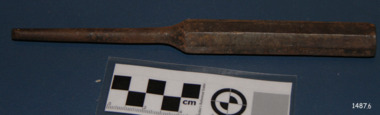
... pins. This shackle punch has a handle with six flat sides that prevent it from rolling around when stored. It has a fine shank that tapers down to the end. The tool is placed on the join of the shackle, and then the end of that handle is hit with a hammer until the join breaks apart. The shipwright’s tools on display in the Great Circle Gallery are connected to the maritime history...pins. This shackle punch has a handle with six flat sides that prevent it from rolling around when stored. It has a fine shank that tapers down to the end. The tool is placed on the join of the shackle, and then the end of that handle is hit with a hammer until the join breaks apart. The shipwright’s tools on display in the Great Circle Gallery are connected to the maritime history ...Chains are available in a variety of link shapes and sizes. They have many uses on sailing vessels, such as part of anchoring systems or loading cargo onboard the ships. A link called a shackle is used as a quick and flexible way to join two pieces of chain. Sometimes the shackle needs a tool to remove it. A shackle punch like this one will do the job. A modern term for a similar tool, that also has a handle, is a ‘breakdown’ tool. It is designed for aligning and driving pins in and for removing bolts, rivets and pins. This shackle punch has a handle with six flat sides that prevent it from rolling around when stored. It has a fine shank that tapers down to the end. The tool is placed on the join of the shackle, and then the end of that handle is hit with a hammer until the join breaks apart. The shipwright’s tools on display in the Great Circle Gallery are connected to the maritime history of Victoria through their past owner, user and donor, Laurie Dilks. Laurie began his career as a shipwright in the mid-1900s, following in the wake of the skilled carpenters who have over many centuries used their craft to build and maintain marine vessels and their fittings. You can see Laurie’s inscription on the tool called a ‘bevel’. Laurie worked for Ports and Harbours, Melbourne, for over 50 years, beginning in the early 1960s. He and a fellow shipwright inscribed their names on a wheelhouse they built in 1965; the inscription was discovered many decades later during a repair of the plumbing. Many decades later Laurie worked on the Yarra moving barges up and down the river and was fondly given the title ‘Riverboat Man’ His interest in maritime history led him to volunteer with the Maritime Trust of Australia’s project to restore and preserve the historic WWII 1942 Corvette, the minesweeper HMAS Castlemaine, which is a sister ship to the HMAS Warrnambool J202. Laurie Dilks donated two handmade displays of some of his tools in the late 1970s to early-1980s. The varnished timber boards displayed the tools below together with brass plaques. During the upgrade of the Great Circle Gallery Laurie’s tools were transferred to the new display you see there today. He also donated tools to Queenscliffe Maritime Museum and Clunes Museum.The shipwright’s tools on display in the Great Circle Gallery are connected to the maritime history of Victoria through their past owner, user and donor, Laurie Dilks. Laurie began his career as a shipwright at Ports and Harbours in Melbourne in the mid-1900s, following in the wake of the skilled carpenters who have over many centuries used their craft to build and maintain marine vessels and their fittings.A shackle punch; a metal tool with six flat sides on the handle and the shank tapers inwards to a rouded point. It once belonged to shipwright Laurie Dinks.flagstaff hill, warrnambool, great ocean road, shipwreck coast, maritime museum, maritime village, shipwright, carpenter, shipbuilding, ship repairs, hand tool, equipment, ship maintenance, cooper, tool, marine technology, shackle punch, breakdown tool, chains, links, laurie dilks, l dilks, port and harbours melbourne -
 Flagstaff Hill Maritime Museum and Village
badge - Presbyterian Brotherhood badge, 1920s to 1940s
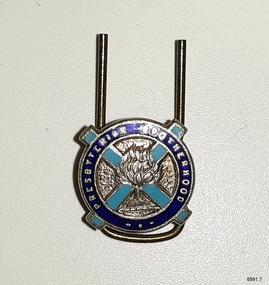
... history of the Presbyterian Church in Australia, showing the historic logo of the burning bush and the Scottish flag. The W.R. Angus Collection is significant for still being located at the site it is connected with, Doctor Angus being the last Port Medical Officer in Warrnambool. The Collection includes historical medical objects that date back to the late 1800s. Flagstaff Hill Warrnambool Maritime Village Maritime Museum Shipwreck coast Great Ocean Road W.R. Angus badge organisation badge Flagstaff Hill Maritime Museum and Village badges buttons lapel badge religious badge denominational badge Presbyterian church Presbyterian Brotherhood hat pin ...This badge is one of a set of badges collected by Dr W R Angus from the organisations in which he was involved. The set of badges is now part of Flagstaff Hill’s comprehensive W.R. Angus Collection, donated by the family of Dr W R Angus, surgeon and oculist. The badge represents the Australian Presbyterian Brotherhood. The Presbyterian church has used the burning bush logo from the 1800s. The logo describes the Biblical account of the prophet Moses, who saw the miracle of a bush on fire that did not burn and heard the voice of God giving his instructions. The light blue cross symbolises the origin of the Australian Presbyterian church, the Church of Scotland, which is Presbyterian. Its flag is blue with a white 'x' and a burning bush symbol in the centre. Dr William Roy Angus was of Scottish heritage. He sailed overseas to further his studies at Edinburgh Royal Infirmary and in 1928, was awarded FRCS (Fellow from the Royal College of Surgeons), Edinburgh, Scotland. He was e Presbyterian and treated Sunday as a Sabbath, a day of rest. He would visit three or four country patients on a Sunday, taking his children along ‘for the ride’ and visiting with him. Sunday evenings he would play the pianola and sing Scottish songs to his family. In 1928, Dr Angus was a Flying Doctor in the A.I.M. (Australian Inland Ministry) Aerial Medical Service, which was established by the Presbyterian Church in that year. The W.R. Angus Collection includes historical medical equipment, surgical instruments and material belonging to Dr Edward Ryan and Dr Thomas Francis Ryan, (both of Nhill, Victoria) and Dr Angus’ own belongings. The Collection’s history spans the medical practices of the two Doctors Ryan, from 1885-1926 plus that of Dr Angus, up until 1969. It includes historical medical and surgical equipment and instruments from the doctors Edward and Thomas Ryan of Nhill, Victoria. Dr Angus married Gladys in 1927 at Ballarat, the nearest big city to Nhill where he began as a Medical Assistant. He was also Acting House surgeon at the Nhill hospital where their two daughters were born. During World War II He served as a Military Doctor in the Australian Defence Forces. Dr Angus and his family moved to Warrnambool in 1939, where Dr Angus operated his own medical practice. He later added the part-time Port Medical Officer responsibility and was the last person appointed to that position. Both Dr Angus and his wife were very involved in the local community, including the planning stages of the new Flagstaff Hill and the layout of the gardens there. Dr Angus passed away in March 1970.This badge is significant for connecting Doctor Angus with organisations that he supported. The badge also associates Dr Angus with the history of the Presbyterian Church in Australia, showing the historic logo of the burning bush and the Scottish flag. The W.R. Angus Collection is significant for still being located at the site it is connected with, Doctor Angus being the last Port Medical Officer in Warrnambool. The Collection includes historical medical objects that date back to the late 1800s.Badge; a round badge with a blue enamel outer border in front of a light blue enamel ‘x’. A silver logo is on top of the 'X'. There is a silver inscription around the outer circle. It is the badge of the Presbyterian Brotherhood of Australia.This badge is part of a set of badges collected by Dr W R Angus. the set represents organisations that he was involved in, and is part of the W.R. Angus Collection.On the dark blue border: “PRESBYTERIAN BROTHERHOOD’ Logo [a bush on fire] a 'burning bush'flagstaff hill, warrnambool, maritime village, maritime museum, shipwreck coast, great ocean road, w.r. angus, badge, organisation badge, flagstaff hill maritime museum and village, badges, buttons, lapel badge, religious badge, denominational badge, presbyterian church, presbyterian brotherhood, hat pin, flying doctor, scottish heritage, w.r. angus collection -
Glenelg Shire Council Cultural Collection
Accessory - Badge - Borough of Portland Proper Officer, "Borough of Portland Proper Officer", 1930-1940
... Displayed at History House Front: Borough of/proper officer/Portland Metal badge with pin and clasp. ...Displayed at History HouseMetal badge with pin and clasp. Measures diameter 5.0cm x Depth 0.7cmFront: Borough of/proper officer/Portland -
Glenelg Shire Council Cultural Collection
Archive - Notes from a personal history - K. S. Anderson, n.d
... 8 pages of handwirtten notes - 'My Personal History' from a spiral back notebook. Held together with 2 sewing pins. Some military notes attached with safety pins. ...K S Anderson Collection personal history 8 pages of handwirtten notes - 'My Personal History' from a spiral back notebook. Held together with 2 sewing pins. Some military notes attached with safety pins. ...8 pages of handwirtten notes - 'My Personal History' from a spiral back notebook. Held together with 2 sewing pins. Some military notes attached with safety pins. Envelope for the above.k s anderson collection, personal history -
Glenelg Shire Council Cultural Collection
Accessory - Badge - Proclamation Day, November 19th, 1949, 1949
... History House Front: Proclamation Day. November 19th 1949 (outer rim) Town of Portland. Vic./1855 (inner rim) Coat of arms in blue within an orange outer rim. Metal badge with paper image under hard plastic covering. Metal pin ...Displayed at History HouseCoat of arms in blue within an orange outer rim. Metal badge with paper image under hard plastic covering. Metal pin on back.Front: Proclamation Day. November 19th 1949 (outer rim) Town of Portland. Vic./1855 (inner rim) -
Glenelg Shire Council Cultural Collection
Accessory - Badge - Back to Portland, 1929, 1929
... History House. Owned previously by Betty Vivian. Portland souvenir 1929 Front: Back to Portland/1929 (around edge) Back: Stokes and Sons/Melbourne (lower centre) Lighthouse surrounded by text banner reading "Back to Portland/1929". Brass design and text on blue background. Pin ...Displayed at History House. Owned previously by Betty Vivian.Lighthouse surrounded by text banner reading "Back to Portland/1929". Brass design and text on blue background. Pin (brass) attached to back.Front: Back to Portland/1929 (around edge) Back: Stokes and Sons/Melbourne (lower centre)portland souvenir, 1929 -
Glenelg Shire Council Cultural Collection
Accessory - Badge - Back to Portland, November 14th to 21st, 1929, 1929
... History House. Back to Portland memorabilia 1929 Front: Back to Portland/Nov. 14th to 21st 1929 (green print, around edge) Back: Side: Windsor MFG CB., 6 Albert St., Windsor (white print) Metal round badge with faded image of a lifeboat under an open-sided cover shed. Colours: Blue, orange and green. Paper image under hard plastic surface. Metal back and pin ...Displayed at History House.Metal round badge with faded image of a lifeboat under an open-sided cover shed. Colours: Blue, orange and green. Paper image under hard plastic surface. Metal back and pin.Front: Back to Portland/Nov. 14th to 21st 1929 (green print, around edge) Back: Side: Windsor MFG CB., 6 Albert St., Windsor (white print)back to portland, memorabilia, 1929 -
 Glenelg Shire Council Cultural Collection
Photograph - Photograph - "Opening of the 'New Pier', Portland, Victoria. 13 Feb. 1902, 1902
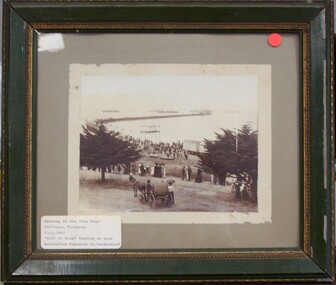
... History House Back: Opeining new pier C 13.2.1902/The Australian Squadron/off depwater pier, Portland./Pier 3.200 ft long/ 120ft wide./ "Gulf of Siam" loading at pier./Donated by Grace Capmbell (pen)./8 May 1978 (stamp) Black and white photograph of crowd of people next to a pier. Ships in background. Pin ...Displayed in History HouseBlack and white photograph of crowd of people next to a pier. Ships in background. Pin trees and horse and buggy in foreground.Back: Opeining new pier C 13.2.1902/The Australian Squadron/off depwater pier, Portland./Pier 3.200 ft long/ 120ft wide./ "Gulf of Siam" loading at pier./Donated by Grace Capmbell (pen)./8 May 1978 (stamp) -
Glenelg Shire Council Cultural Collection
Decorative object - Badge, "Henty Portland Progress Association", n.d
... Displayed at History House Front: Portland/Progress/Association/Henty Brass and blue (enamel?) in cross-pattern frame. Portrait of Henty in centre. Pin ...Displayed at History HouseBrass and blue (enamel?) in cross-pattern frame. Portrait of Henty in centre. Pin and hinge on back.Front: Portland/Progress/Association/Henty -
Glenelg Shire Council Cultural Collection
Memorabilia - Lapel Pin - Victorian Women Vote, c. 2008
... womens history Vida Goldstein emancipation Pin Badge; metal white with green and mauve swirls, purple 'Victorian Women Vote' and green '1908-2008'. ...Pin Badge; metal white with green and mauve swirls, purple 'Victorian Women Vote' and green '1908-2008'. Badge attached to card with information explaining badge, plus Victoria's logo. Enclosed in clear cellophane packet.womens history, vida goldstein, emancipation -
Glenelg Shire Council Cultural Collection
Accessory - Badge - North Portland Cricket Club, n.d
... Displayed in History House badge numismatics souvenir North Portland cricket recreation Front: NORTH PORTLAND/ CRICKET CLUB Back: K.G. LUKE/ MELB. Enamelled badge with gold metal details, letters, backing and pin. ...Displayed in History HouseEnamelled badge with gold metal details, letters, backing and pin. Enamelled design. Two gold cricket bats crossed over stumps on red background. Gold writing on blue background.Front: NORTH PORTLAND/ CRICKET CLUB Back: K.G. LUKE/ MELB.badge, numismatics, souvenir, north portland cricket, recreation -
Glenelg Shire Council Cultural Collection
Souvenir - Souvenir - North Portland Cricket Club Badge, n.d
... Displayed in History House Front: NORTH PORTLAND/ CRICKET CLUB Back: K.G. LUKE/ MELB. Enamelled badge with gold metal details, letters, backing and pin. ...Displayed in History HouseEnamelled badge with gold metal details, letters, backing and pin. Enamelled design. Two gold cricket bats crossed over stumps on red background. Gold writing on blue background.Front: NORTH PORTLAND/ CRICKET CLUB Back: K.G. LUKE/ MELB.
