
Showing 42 items matching "pocket cameras"
-
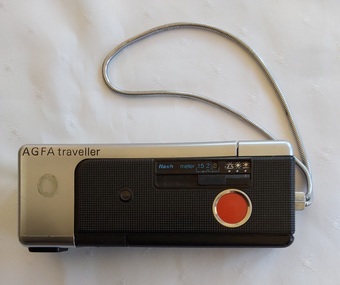 Mont De Lancey
Domestic object - Camera, Agfa-Geveart, 1982
... ...Pocket cameras...The Agfa Traveller is essentially the same device underneath as an Agfamatic pocket camera. , specifically sharing its core mechanics and body with the Agfamatic 3000 Flash Pocket. ...Film cameras Autofocus cameras 28MM cameras Pocket cameras A small white triangle with white lettering on the bottom has the 'Agfa' symbol inside it with 'Agfa Gevaert' below. ...The vintage Agfa-Gevaert Traveller is a compact 110-format pocket film snapshot camera produced during the 1980s, reflecting the corporate merging of German photo giant Agfa and Belgian film maker Gevaert. The Agfa Traveller is essentially the same device underneath as an Agfamatic pocket camera. , specifically sharing its core mechanics and body with the Agfamatic 3000 Flash Pocket. Released in 1982, the Traveller was marketed with a more elegant aluminum sliding front panel instead of the standard plastic finish, while retaining the exact same 110-film pocket format. The Agfa Traveller arrived in 1982 near the very end of Agfa's proprietary camera manufacturing era, as the company wound down its internal West German camera production lines by 1983.A slimline Agfa Gevaert Traveller camera made from black plastic and silver metal with the brand stamped on the top left front. It was designed for easy travel and casual everyday use utilizing 110 drop-in film cartridges. It has a red dot button to press to take the picture. The viewfinder is released by pushing downwards a small black button on the back top left, which slides the lens open for use. This button is pressed upwards to close the camera when not in use. The flash is protected by a clear plastic lined cover. Inside is a used Kodak Gold film 24 exp 200. 0n the counter it shows 18 out of the 24 images have been used, with six remaining. There is a Batt. cover which cannot be opened. On the front is a lever for selecting flash distances and sunlight. A linked silver coloured metal chain holder is connected at one end.A small white triangle with white lettering on the bottom has the 'Agfa' symbol inside it with 'Agfa Gevaert' below. 'Batt.' is stamped on the small black section next next to the viewfinder at the top. 'AGFA traveller' is stamped onto the silver top near the flash. 'Agfa Colour Apotar 26mm' is printed in white lettering around the outside of the lens.film cameras, autofocus cameras, 28mm cameras, pocket cameras -
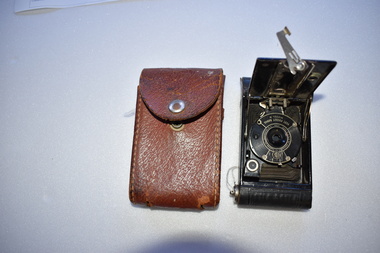 Warrnambool and District Historical Society Inc.
Camera, Black rectangular Kodak with case, 1925-1935
... camera...vest pocket kodak model b...This camera was known as the Vest Pocket camera the earliest models of which were first manufactured in 1912-1914. ....1 On outside of camera " Use Film No A127" Inside hinged Back, " made In USA by Eastman Kodak Co Rochester NY 27323 Vest Pocket Camera Model B .2 Kodak is stamped in the leather above the fastener. ...This camera was known as the Vest Pocket camera the earliest models of which were first manufactured in 1912-1914. ...This camera was known as the Vest Pocket camera the earliest models of which were first manufactured in 1912-1914. The later model which was made from 1915 was very successful, selling 1.75 million units and was used during the First World War. This particular model was manufactured from 1925-1934 This camera has significance being one of the earliest made which made photography accessible to a much section of the community..1 Black rectangular camera with rounded ends and white metal fittings. There is a hinged back which when opened reveals a circular section with a folding bed behind.A metal hinged screw is on the left side The other side has a small circular red inset and a movable metal section. .2 Dark tan leather case, rectangular in shape with rounded edges.It closes with a silver metal clasp. There are two slits in the opposite end possibly for strap.There is a sunburst stamped into both sides of the case and it is stitched with coarse cotton thread..1 On outside of camera " Use Film No A127" Inside hinged Back, " made In USA by Eastman Kodak Co Rochester NY 27323 Vest Pocket Camera Model B .2 Kodak is stamped in the leather above the fastener. warrnambool, kodak, eastman kodak camera, vest pocket kodak model b -
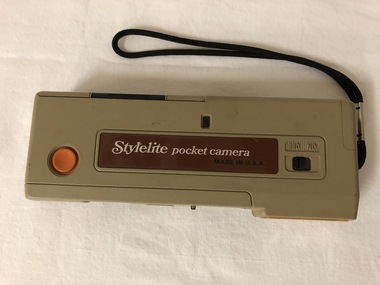 Mont De Lancey
Camera and Booklet
... "Stylelite pocket camera Made in USA" "Kodak" ...Cameras Instruction booklets "Stylelite pocket camera Made in USA" "Kodak" Camera with cord carry handle and an instruction booklet. ...Camera with cord carry handle and an instruction booklet."Stylelite pocket camera Made in USA" "Kodak" cameras, instruction booklets -
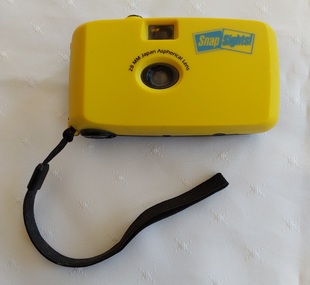 Mont De Lancey
Domestic object - Camera, Intova, 1995
... ...Pocket cameras...Film cameras Autofocus cameras 28MM cameras Pocket cameras A sticker on the back: 'Preloaded with film. ...By the 1990s, the mass-production of plastic-molded aspherical elements revolutionized consumer "point and shoot" cameras, allowing cameras like the Snap Sights! to offer clear, wide-angle photos, with some in an affordable, waterproof package. The 28mm Camera Focus Free Yellow Snap Sights is a unique and collectible camera with a focus-free feature, making it easy to capture moments effortlessly. The yellow color adds a fun and retro touch to the generic model, making it stand out from other cameras.A 28mm Japan Aspherical Lens Snap Sights! reusable point-and-shoot camera encased in a yellow and black, rugged plastic housing with a black flat cotton carry cord. There is no see through plastic waterproof casing for this camera.The brand is printed in yellow and blue lettering inside rectangular shapes at the front top right hand corner next to the viewfinder and lens. To use, at the top right is the black push down shutter button. The film winder is at the back bottom left. The back opens to reveal internally where to insert the film spool. A sticker on the back: 'Preloaded with film. Must rewind before opening.'film cameras, autofocus cameras, 28mm cameras, pocket cameras -
 Mont De Lancey
Domestic object - Camera, 1990's
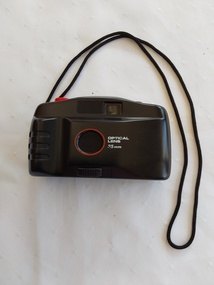
... ...Pocket cameras...Film cameras Autofocus cameras Pocket cameras 35mm camera A sticker on the bottom says 'Made in China' Inside the back cover is printed 'UK Reg. 2007256 Copyright 1990' A black plastic lightweight no brand 35mm Optical Lens automatic focus camera with a black woven cotton neck cord attached with a black vinyl carry case. ...A "no brand" or unbranded 1990s 35mm Optical Lens camera is a generic, mass-produced plastic point-and-shoot. These budget-friendly souvenirs and novelty items were made by contract manufacturers in East Asia and sold or given away under various retail storefront names, promotional campaigns, or blank labels.A black plastic lightweight no brand 35mm Optical Lens automatic focus camera with a black woven cotton neck cord attached with a black vinyl carry case. It has a red line around the covered lens at the front with Optical Lens 35mm printed in white lettering to the right. There is a small lined lever to push to open the lens cover. To use, at the top right is a red push down shutter button. The film winder is at the top left. There is a silver metal fixture next to this for a flash to be attached. The lined lever at the side slides up to open the back to reveal internally where to insert the film spool is inserted and wound onto a spool. The lens is seen from inside. It has a black plastic fold over cover which is closed with black velcro tabs.A sticker on the bottom says 'Made in China' Inside the back cover is printed 'UK Reg. 2007256 Copyright 1990'film cameras, autofocus cameras, pocket cameras, 35mm camera -
 Mont De Lancey
Domestic object - Camera, Ricoh, 1993
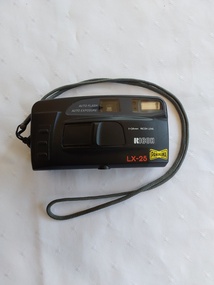
... ...Pocket cameras...Film cameras Autofocus cameras Pocket cameras 35mm camera On the top front of the camera is printed: 'Auto Flash Auto Exposure' On the main body is printed: 'f=34mm Ricoh lens RICOH LX-25 Panorama' The top of the camera has printed: 'P' (for the Panorama setting.) ...Ricoh is a Japanese company founded in Tokyo in 1936 that historically manufactured many iconic cameras, watches, and office equipment in Japan. The Ricoh LX-25 is a fixed-focus 35mm compact point-and-shoot film camera released in August 1993. It features a 34mm f/4.5 lens, a switchable panorama mode, and an automatic flash. It has a switchable format that masks the top and bottom of the frame to create a panoramic aspect ratio.A RICOH LX-25 Panorama camera made from black plastic with silver metal parts inside. The brand is printed at the bottom right at the front, with Panorama in a yellow shape. The viewfinder is on the back with a grey button on the top right which is pressed to take the picture. The flash on the front is protected by a clear plastic lined cover. A grey cotton cord holder is connected to a black vinyl carry case.On the top front of the camera is printed: 'Auto Flash Auto Exposure' On the main body is printed: 'f=34mm Ricoh lens RICOH LX-25 Panorama' The top of the camera has printed: 'P' (for the Panorama setting.) On the bottom is printed; ' 'LX-25' D D 130279 RICOH Company, Ltd. Taiwan R.O.C.'film cameras, autofocus cameras, pocket cameras, 35mm camera -
 Broadmeadows Historical Society & Museum
Equipment - Camera, 1972 - 1976
... ...Camera...pocket...Black + Silver Plastic Camera Kodak Pocket Instatmatic 500 Camera Electronic...Top : Screen Printed : Kodak Logo / Made In Germany : Kodak / Pocket Instamatic 500/ Camera Electronic : Focal + Light Details. ( See Images ) Front : Embossed : Kodak...Photography Development Of Camera With Regards To Amateur Photography Photography Camera pocket Amateur Photography Top : Screen Printed : Kodak Logo / Made In Germany : Kodak / Pocket Instamatic 500/ Camera Electronic : Focal + Light Details. ( See Images ) Front : Embossed : Kodak Black + Silver Plastic Camera Kodak Pocket Instatmatic 500 Camera Electronic Equipment Camera Kodak Eastman ...PhotographyDevelopment Of Camera With Regards To Amateur PhotographyBlack + Silver Plastic Camera Kodak Pocket Instatmatic 500 Camera ElectronicTop : Screen Printed : Kodak Logo / Made In Germany : Kodak / Pocket Instamatic 500/ Camera Electronic : Focal + Light Details. ( See Images ) Front : Embossed : Kodakphotography, camera, pocket, amateur photography -
 Stawell Historical Society Inc
Memorabilia - Realia, 1885-1889
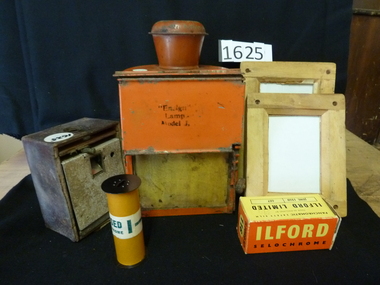
... Pocket Eastman Kodak Camera & Photo Equipment...Stawell Pocket Eastman Kodak Camera & Photo Equipment Memorabilia Realia ...Pocket Eastman Kodak Camera & Photo Equipmentstawell -
 Whitehorse Historical Society Inc.
Equipment - Camera, 1978
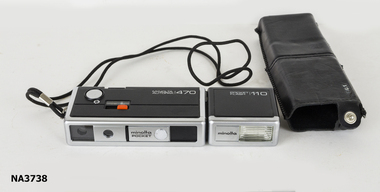
... Minolta Pocket Autopak Camera with a Pocket Flash 110 attached and cover.Three pieces in total. ...photography cameras Minolta Autopak 470 - Pocket Flash Minolta Pocket Autopak Camera with a Pocket Flash 110 attached and cover.Three pieces in total. ...Minolta Pocket Autopak Camera with a Pocket Flash 110 attached and cover.Three pieces in total. It was made 1978 with a 26mm (f3.5) zone focusing (1.6 feet to infinity) lens. Electronic shutter with speeds of 2 seconds - 1/1000. CDS meter provides programmed exposure control. Hot shoe. Tripod and cable release sockets. Built-in close-up lens and detachable flash. Viewfinder shows a red warning LED if a flash is needed. With the f:3.5 lens, a flash with a guide number of only 40 (in feet, at ISO 100) will be good to over 20 feet with ISO 400 film. The camera senses when a flash unit is mounted, and automatically sets smaller apertures for focus distances of 12' or less, to prevent . overexposure, assuming a fixed-output flash with a guide number of 40. Built-in sliding lens cover locks shutter. This is the most compact of the high-quality Minolta 110 pocket cameras (handy, very small pocket size, overall 1 x 2 1/8 x 4 5/8'), it is truly a dress-shirt-pocket camera, not just a coat-pocket camera. 100 or 400 speed film. Needs two MS76 or EPX76 or equivalent; battery-check button.Minolta Autopak 470 - Pocket Flashphotography, cameras -
 Anglesea and District Historical Society
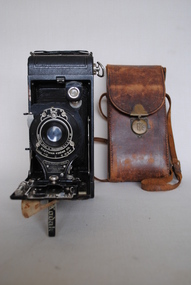
Kodak Camera and Brown Case, Eastman Kodak, No 1A Folding Pocket Camera, 1899 - 1905
... No 1A Folding Pocket Camera...camera...folding...kodak...pocket...This black folding Pocket Kodak camera comes with brown leather case and was on the market fron 1899 to 1905 and cost 12.00 US dollars. ...No 1A Folding Pocket Camera Kodak Camera and Brown Case Eastman Kodak ...This black folding Pocket Kodak camera comes with brown leather case and was on the market fron 1899 to 1905 and cost 12.00 US dollars. It uses film size A116.EKc on clasp. Case: KODAK CASE - MADE IN AUSTRALIA T.B. 25, 50 No.1. EKc - on top of lens. Shutter made in: ROCHESTER N.Y. USA by EASTMAN KODAK CO. - on bottom of lens 27258 F 7.9, 11, 16, 22, 32, 45 No 1A POCKET KODAK made in USA by EASTMAN KODAK COMPANY ROCHESTER N.Y. USE FILM SIZE A116 - on backcamera, folding, kodak, pocket -
Broadmeadows Historical Society & Museum
Equipment - Camera, Kodak Eastman, 1926 - 1932
... Kodak No. 1a pocket Kodak Folding camera for 2/2" x 4/4" exposure on type 116 rolls ...photography : amateur photography only one in photography collection photography Camera Kodak Kodak No. 1a pocket Kodak Folding camera for 2/2" x 4/4" exposure on type 116 rolls Equipment Camera Kodak Eastman ...photography : amateur photographyonly one in photography collectionKodak No. 1a pocket Kodak Folding camera for 2/2" x 4/4" exposure on type 116 rolls photography, camera, kodak -
 Orbost & District Historical Society
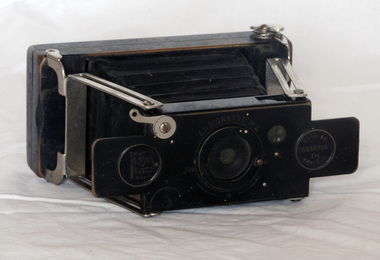
camera, 1907-1915
... The ensignette was a vest pocket camera. The Ensignette was one of the very characteristic camera types of Houghtons Ltd., London. ...The ensignette was a vest pocket camera. The Ensignette was one of the very characteristic camera types of Houghtons Ltd., London. ...The ensignette was a vest pocket camera. The Ensignette was one of the very characteristic camera types of Houghtons Ltd., London. This strut folding roll film camera of Houghton's "Ensign – British made" brand was an ingenious construction, a real vest pocket item when folded. One of the round framed impressions on its front plate says that it was based on patent 28464 of the year 1907. The Swedish engineer Magnus Neill had designed this first British all-metal camera of which ten of thousands were made. The camera was launched before Christmas 1909. It was ordered by distributors all over the world, for example by G. Gennert. (Ref: camerapedia) The Ensignette was very popular because it was one of the first practical, compact cameras at an affordable price to the average man. A miniature bellows, roll film, camera - Ensignette No. 2. It is black metal with folding bellows. On the front is an aperture control knob. There is a window at the back for the film number.Flag with Union Jack Ensignphotography ensignette camera -
 Parks Victoria - Mount Buffalo Chalet
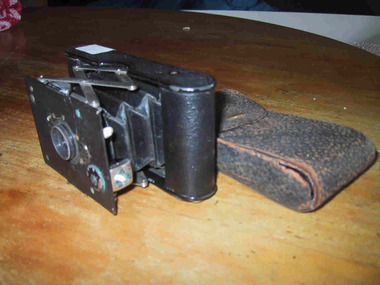
Camera
... The Vest Pocket Kodak cameras were a best-selling folding camera series made by Eastman Kodak (Rochester), from 1912 to 1926. ...The Vest Pocket Kodak cameras were a best-selling folding camera series made by Eastman Kodak (Rochester), from 1912 to 1926. ...The Vest Pocket Kodak cameras were a best-selling folding camera series made by Eastman Kodak (Rochester), from 1912 to 1926. They were the first cameras to use the smaller 127 film reels.(http://camerapedia.wikia.com/wiki/Vest_Pocket_Kodak) One of the items collected by Roger Jones.Listed in Draft Inventory of Significant Collection items. Appendix A.3, Snow sports equipment and other recreational items. (Pg 166 Historica)..1 Camera, small black metal with extendable leather sleeve with lens. Is covered in leatherette. .2 Camera case - brown leather with press stud closure."V.P AUTOGRAPHIC KODAK SPECIAL" -
 Whitehorse Historical Society Inc.
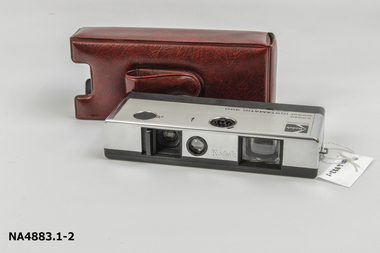
Equipment - Camera and case
... Kodak Pocket Instamatic 400 camera. Black and silver metal casing. ...Hobby ceased due to poor eyesight. photography cameras camera accessories Kodak Pocket Instamatic 400 camera. Black and silver metal casing. ...Donor, Howard, became interesed in photography through his father who had Kodak camera and a home development kit. Could adjust size. In school Howard formed a camera club (aged 16). Had a ' Baby Brownie'. When he retired he built own workroom was one of the first to get a digital camera. Hobby ceased due to poor eyesight.Kodak Pocket Instamatic 400 camera. Black and silver metal casing. Kodak logo on left hand corner. Camera case maroon coloured plastic. Kodak logo front bottom right corner. Pocket clips on reversephotography, cameras, camera accessories -
 Ballarat Tramway Museum
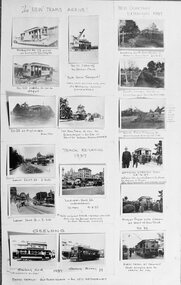
Photograph - Photograph of a Framed group of Photographs, George Netherway, TRACK RE-LAYING 1937, 1930's late
... Photos taken with a Kodak Vest Pocket camera. See Kings, Ballarat Tramways...Photos taken with a Kodak Vest Pocket camera. See Kings, Ballarat Tramways TRACK RE-LAYING 1937 Photograph Photograph of a Framed group of Photographs George Netherway ...Photograph of framed set of 17 No. 60mm x 38mm black and white photographs (see 588 - 604) showing arrival of new trams ex Melbourne in 1930, construction of Lydiard St North track relaying in Ballarat during 1937, opening of Lydiard St. extension in 1937 and two Geelong trams in 1937. Mounted on a white cardboard based with captions written under photos in brown ink, red ink underline contained within a brown stained wooden frame with glass front and cardboard backing sheet, held with small nails. For photo of opening of Lydiard St. Nth extension, has a piece of tape over date, corrected from 28-9-37 to 30-8-37. Also in pencil on rear of frame. For details of individual photographs see prints of photos items 588 - 604. Photos taken with a Kodak Vest Pocket camera. See Kings, Ballarat Tramwaystrams, tramways, ballarat, geelong, lydiard st. north, new trams -
 Ballarat Tramway Museum
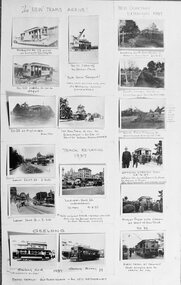
Photograph - Framed Photographs, George Netherway, 1930's late
... Photos taken with a Kodak Vest Pocket camera. See Kings, Ballarat Tramways...Photos taken with a Kodak Vest Pocket camera. See Kings, Ballarat Tramways Photograph Framed Photographs George Netherway ...Framed set of 17 No. 60mm x 38mm black and white photographs (see 588 - 604) showing arrival of new trams ex Melbourne in 1930, construction of Lydiard St North track relaying in Ballarat during 1937, opening of Lydiard St. extension in 1937 and two Geelong trams in 1937. Mounted on a white cardboard based with captions written under photos in brown ink, red ink underline contained within a brown stained wooden frame with glass front and cardboard backing sheet, held with small nails. Also see Item No. 587A, AS Box 56 - 5" x 8" photo of same. For photo of opening of Lydiard St. Nth extension, has a piece of tape over date, corrected from 28-9-37 to 30-8-37. Also in pencil on rear of frame. For details of individual photographs see prints of photos items 588 - 604. Photos taken with a Kodak Vest Pocket camera. See Kings, Ballarat TramwaysIn pencil on rear "Lydiard St. Nth from Aug. 30/37"trams, tramways, ballarat, geelong, lydiard st. north, new trams -
 Dandenong/Cranbourne RSL Sub Branch
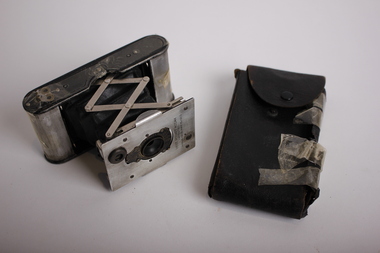
Equipment - Camera & Case, EASTMAN KODAK Co, c. 1913
... Metal silver Vest Pocket Kodak Camera. Rectangular box type with scissor pop out lens. ...Metal silver Vest Pocket Kodak Camera. Rectangular box type with scissor pop out lens. ...This camera went ashore at Gallipoli on the first day of the invasion 25/04/1915.Metal silver Vest Pocket Kodak Camera. Rectangular box type with scissor pop out lens. Bellows made of leather During WW1 it was marketed as a camera suitable for soldiers due to size and portability, often referred to as "The soldiers camera". It has small shutter release button mounted above the lens plate and below the lens there is a slider for choice of apertures, It originally used A127 autographic roll film. The case is small leather black rectangular shaped with flap and press stud to keep shut.On plate holding the lens-:VEST POCKET KODAK Patented Mar 4,1902,May 6,1913 On bronze piece surrounding the lens -: 25BT50 clear ...brilliant tripod gray 1/2 sec ...dull 3/4 sec...very 01 sec Made by Eastman Kodak Co Rochester USA Autotime patent 1908 cloud marine distant view ave rge view nearview portrait No markings on leather case. -
 Whitehorse Historical Society Inc.
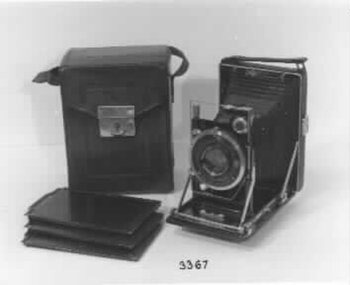
Functional object - Camera & Accessories, c1920
... |Camera is of steel covered and is covered with leather with a carrying handle. provision is made in the back to carry a film slide in a small envelope style pocket|Camera is made by Kamera Werkstatten of Dresden c1920....|Camera is of steel covered and is covered with leather with a carrying handle. provision is made in the back to carry a film slide in a small envelope style pocket|Camera is made by Kamera Werkstatten of Dresden c1920. ...History prior to 1946 unknown. Camera etc was purchased by the donor in 1946 from Herbert Small Camera Supply then in Elizabeth Street Melbourne. Donor used camera regularly until recent years.'Etue' folding camera with accessories (camera, case, 3 negative containers in a imitation leather & cardboard container) and an additional slide tray. Camera can be used with glass plates, cut negative film and film packs. When camera is opened the lens, bellows etc slide into position. The whole lot slides on a rail system and can be locked in the position required. Item to be photographed can be viewed in a viewfinder which can be turned to a horizontal or vertical plane. In the viewfinder has a small bubble level. It includes an oblong chrome wire which is used to set the minimum distance from lens to object.|Camera is of steel covered and is covered with leather with a carrying handle. provision is made in the back to carry a film slide in a small envelope style pocket|Camera is made by Kamera Werkstatten of Dresden c1920.|It has a 'Zeiss Tessar' 1:4.5 lens of 10.5 cm focal length. Shutter is a 'Compur' with speeds of 1 to 1/250th of a second with Bulb and Time. It also has a delayed action feature. It also has a double extension for close up studies.|When folder it is a mere 4.5 cm from front to back, which cause it to be advertised as the slimmest camera made.|Camera case is made of brown tooled leather with a chrome clip and adjustable carrying handle - lid open upwards for the camera .Case is lined with a purple type of velvet material. 10 Items in total.photography, cameras, camera accessories -
 Whitehorse Historical Society Inc.
Equipment - Camera, c1975
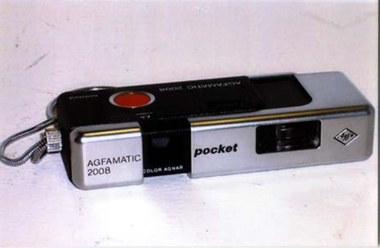
... An Agfamatic 2008 110film camera. Pocket automatic with Flip Flash, a fixed focus colour Agno - f9.2/26 mm lens. ...photography cameras AGFAMATIC 2008 Sensor Pocket An Agfamatic 2008 110film camera. ...An Agfamatic 2008 110film camera. Pocket automatic with Flip Flash, a fixed focus colour Agno - f9.2/26 mm lens. It uses two shutters (close up and landscape) with a flash and daylight setting. Fitted with a wrist chain and a leather carry case. It has a partly exposed film in it. It is metal with a brushed chrome finish and imitation leather on parts. The camera lens cover is part of the opening and closing of the camera.AGFAMATIC 2008 Sensor Pocketphotography, cameras -
Kiewa Valley Historical Society
Camera Case for Box Brownie, Circa mid to late 1900s
... Digitalisation of photographic equipment for non professional use brought with it a reduction in camera size (pocket), increased portability and the dispensing of thick leather cases. ...Digitalisation of photographic equipment for non professional use brought with it a reduction in camera size (pocket), increased portability and the dispensing of thick leather cases. ...When this leather case was made it was the only material available that not only looked fashionable but also was able to absorb any small knocks or scratches which may happen to the mobile but still delicate camera. Digitalisation of photographic equipment for non professional use brought with it a reduction in camera size (pocket), increased portability and the dispensing of thick leather cases. With the increase of camera functions on mobile telephones, the need by tourists and the general public for a dedicated camera is rapidly diminishing. The protective leather wrapping for expensive, professional goods, especially electronics is very rare and foam padded aluminium bags and containers are the preferred mode for travel.This particular leather case has travelled to and from England via an ocean cruise by a now retired couple living in the Kiewa Valley. It is significant to this region because it underlines the slow transition from a purely farming, grazing, mining and tourist region to an area opening up to a specific socio-economical structure for retirees. This social and demographic shift by retirees will produce a greater need for changes in facilities required by an increasing aged population. Though it may take more time for cities and larger towns to come to grips with a growing aged population, rural areas(because these will define more clearly any imbalance of population) present the first demonstrative change to Australia, and world wide, a population based phenomenon.This item is a brown coloured leather camera case (Box Brownie Six-20) with an adjustable strap and associated buckle. The leather has been moulded to the shape of the camera and is slightly tapered as a closing flap fastened at the front with a lockable clasp. The end of the leather flap has a metal(tin) with a semi circular ring formed to allow it to be held as part of the clasp. Pressed into the underbelly of the semicircular closing mechanism is"PAT. APPLIED FOR" and underneath this"MADE IN ENGLAND" camera, case photography, hobby, personal equipment -
 Nhill Aviation Heritage Centre
Memorabilia - Camera and case, No.1 Pocket Kodak Special, 1922 to 1931
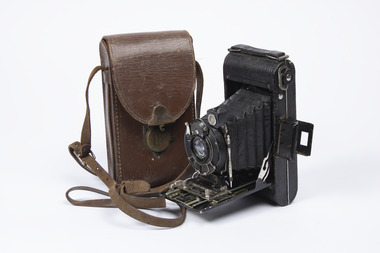
... No.1 Pocket Kodak Special Memorabilia Camera and case ...This camera belonged to Stan Guilfoyle who was a wireless operator air gunner (WAG) here at Nhill Air Navigation School, December 1943.This item is of great significance being here at the air school during it's operation. Some of the photos in Kevin O'Reilly's book In Just Five Years were taken with this camera. Folding Kodak Camera, metal casing with paper concertina folding body and lens assembly, comes with leather carry case. Has various lens adjusters and a scribing pin attached.Kodamatic, No.1 Pocket Kodak Special, Made in USA by Kodak Company Rochester NY, 26980camera, kodak, guilfoyle, stan guilfoyle, wag, -
 Flagstaff Hill Maritime Museum and Village
Postcard - Local Postcards, Joseph Jordan Photographic Studio, Nov 1908 - early 1909
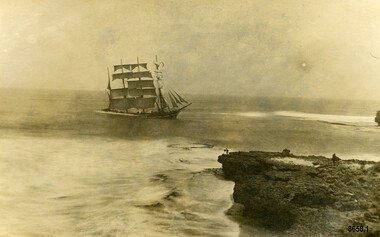
... ...3A Folding Pocket Kodak camera...In 1903 in America, George Eastman designed and marketed the "Model 3A Folding Pocket Kodak" which used postcard-size negatives and provided the average person with a camera with which to make real photo postcards. ...Flagstaff Hill Maritime Museum and Village Warrnambool Peterborough Great Ocean Road Falls of Halladale shipwreck postcards photographic images Mary Agnes Kerr Leura farm Camperdown Jordan series handwritten notes photographs George Eastman 3A Folding Pocket Kodak camera Back of postcard 8658.1- "POST" "EMPIRE" "CARD" "FOR CORRESPONDENCE" "FOR ADDRESS ONLY" "STAMP" "Miss M Kerr / Leura / Camperdown" "Looking forward to letter today" "Hope fish arrived / allright. ...ABOUT THE ‘FALLS OF HALLADALE’ (1886 - 1908) Built: in1886 by Russell & Co., Greenock shipyards, River Clyde, Scotland, UK. The company was founded in 1870 (or 1873) as a partnership between Joseph Russell (1834-1917), Anderson Rodger and William Todd Lithgow. During the period 1882-92 Russell & Co., they standardised designs, which sped up their building process so much that they were able to build 271 ships over that time. In 1886 they introduced a 3000 ton class of sailing vessel with auxiliary engines and brace halyard winches. In 1890 they broke the world output record. Owner: Falls Line, Wright, Breakenridge & Co, 111 Union Street, Glasgow, Scotland. Configuration: Four masted sailing ship; iron-hulled barque; iron masts, wire rigging, fore & aft lifting bridges. Size: Length 83.87m x Breadth 12.6m x Depth 7.23m, Gross tonnage 2085 ton Wrecked: the night of 14th November 1908, Curdies Inlet, Peterborough southwest Victoria Crew: 29 The Falls of Halladale was a four-masted sailing ship built-in 1886 in Glasgow, Scotland, for the long-distance cargo trade and was mostly used for Pacific grain trade. She was owned by Wright, Breakenridge & Co of Glasgow and was one of several Falls Line ships, all of which were named after waterfalls in Scotland. The lines flag was of red, blue and white vertical stripes. The Falls of Halladale had a sturdy construction built to carry maximum cargo and able to maintain full sail in heavy gales, one of the last of the ‘windjammers’ that sailed the Trade Route. She and her sister ship, the Falls of Garry, were the first ships in the world to include fore and aft lifting bridges. Previous to this, heavily loaded vessels could have heavy seas break along the full length of the deck, causing serious injury or even death to those on deck. The new, raised catwalk-type decking allowed the crew to move above the deck stormy conditions. This idea is still used today in the most modern tankers and cargo vessels and has proved to be an important step forward in the safety of men at sea. On 4th August 1908, with new sails, 29 crew, and 2800 tons of cargo, the Falls of Halladale left New York, bound for Melbourne and Sydney via the Cape of Good Hope. The cargo on board was valued at £35,000 and included 56,763 tiles of American slate roofing tiles (roof slates), 5,673 coils of barbed wire, 600 stoves, 500 sewing machines, 6,500 gallons of oil, 14,400 gallons of benzene, plumbing iron, 117 cases of crockery and glassware and many other manufactured items. The Falls of Halladale had been at sail for 102 days when, at 3 am on the night of 14th November 1908, under full sail in calm seas with a six knots breeze behind and misleading fog along the coast, the great vessel rose upon an ocean swell and settled on top of a submerged reef near Peterborough on south-west Victoria’s coast. The ship was jammed on the rocks and began filling with water. The crew launched the two lifeboats and all 29 crew landed safely on the beach over 4 miles away at the Bay of Islands. The postmistress at Peterborough, who kept a watch for vessels in distress, saw the stranding and sent out an alert to the local people. A rescue party went to the aid of the sailors and the Port Campbell rocket crew was dispatched, but the crew had all managed to reach shore safely by the time help arrived. The ship stayed in full sail on the rocky shelf for nearly two months, attracting hundreds of sightseers who watched her slowly disintegrate until the pounding seas and dynamiting by salvagers finally broke her back, and her remains disappeared back into deeper water. The valuable cargo was largely lost, despite two salvage attempts in 1908-09 and 1910. Further salvage operations were made from 1974-1986, during which time 22,000 slate tiles were recovered with the help of 14 oil drums to float them, plus personal artefacts, ship fittings, reams of paper and other items. The Court of Marine Inquiry in Melbourne ruled that the foundering of the ship was entirely due to Captain David Wood Thomson’s navigational error, not too technical failure of the Clyde-built ship. The shipwreck is a popular site for divers, about 300m offshore and in 3 – 15m of water. Some of the original cargo can be seen at the site, including pieces of roof slate and coils of barbed wire. These 5 postcards have photographic images taken while the Falls of Halladale was stuck on the reef near Peterborough. They are not stamped or dated but four of the images show the ship still in fairly good condition with her stern very low in the water so can be dated to around late November 1908 to January 1909 and the fifth image shows the ship beginning to disintegrate soon after. The image on Postcard 8658.3 was taken by Joseph Jordan (a well-known Warrnambool photographer who had his own studio in Liebig Street, Warrnambool). The other four images were supposedly taken by the sender (Bob) and converted to postcards. Amateur photography in Australia in the early 1900's was becoming very popular (and accessible) to the average person. Many newspapers published advertisements and articles about photography and photographic supplies. In 1903 in America, George Eastman designed and marketed the "Model 3A Folding Pocket Kodak" which used postcard-size negatives and provided the average person with a camera with which to make real photo postcards. As they became popular, George Eastman was able to develop and market a wide range of supplies for the amateur photographer to develop and print their own photographs onto a postcard backing at home. Four of the postcards were addressed to "Miss M. Kerr, Leura, Camperdown". Mary Agnes Kerr (1888 - 1943) was the daughter of William and Mary Ann Kerr (nee Spence) who owned "Leura Farm" at Camperdown. Mary Agnes Kerr went on to marry James Young Caldwell (a local tailor and mercer) in 1917. James Yong Caldwell came to Camperdown around 1908 and was employed as a draper. The postcards were signed "Bob". On postcard 5658.2 he has written his name with quotation marks around it - suggesting "Bob" is a nickname. He writes about the weather, meeting a friend, sending fish to Mary Agnes' family and the cargo expected to be washed up on the beach. On postcard 8658.4 he wrote about being busy after the wreck and supplying the shipwrecked crew with boots and pants which suggests "Bob" may be James Caldwell (the mercer and tailor).The Falls of Halladale shipwreck is listed on the Victorian Heritage Register (No. S255). She was one of the last ships to sail the Trade Routes. She is one of the first vessels to have fore and aft lifting bridges. She is an example of the remains of an International Cargo Ship and also represents aspects of Victoria’s shipping industry. The wreck is protected as a Historic Shipwreck under the Commonwealth Historic Shipwrecks Act (1976). These postcards are significant as examples of the continued interest the locals around the district of Peterborough showed towards the Falls of Halladale wreck and its disintegration during the next few months. Four of the postcards are also significant examples of the new hobby of photography that was available to the average person during the beginning of the 20th century.Set of 5 postcards showing different images of the Falls of Halladale sailing ship after it became stuck on a reef near Peterborough. None of the postcards are dated or stamped. Postcard 8658.1 has a sepia toned image of the Falls of Halladale, with its stern sitting very low in the water. It has many of its sails unfurled and there is a rocky headland in the foreground. A very small figure appears to be on the edge of the cliff. The back of the postcard has a handwritten message addressed to "Miss M Kerr, Leura, Camperdown" and is signed "Love Bob". Postcard 8658.2 has a sepia image of the Falls of Halladale taken some months after it had been stuck on the reef. Its sails are missing and only two broken masts remain. A large rock is visible in the front right hand side of the photo. There is a handwritten message on the back signed by "Bob". Postcard 8658.3 has a black and white image of the Falls of Halladale showing her almost side on with her stern very low in the water and still in full sail. The words "Falls of Halladale. No 1" are printed on the lower left side of the image. The back is labelled "Jordan Series". There is no message written on the back. Postcard 8658.4 has a sepia toned image of the Falls of Halladale facing two rocky headlands. She is showing full sail and the sea appears calm. There is a handwritten note on the back addressed to "Miss M Kerr" from "Bob". Postcard 8658.5 has a sepia image of a side view of the Falls of Halladale with her stern very low in the water and her sails are all up. The sea is calm and a rocky reef can be seen in the foreground. It has a handwritten note on the back from "Bob" to "Miss M Kerr" of Leura, Camperdown.Back of postcard 8658.1- "POST" "EMPIRE" "CARD" "FOR CORRESPONDENCE" "FOR ADDRESS ONLY" "STAMP" "Miss M Kerr / Leura / Camperdown" "Looking forward to letter today" "Hope fish arrived / allright. Don't / know for sure / what day I will / be going to Town / to buy. Some day / this week / Love Bob Back of postcard 8658.2 - "POST CARD"/ "CORRESPONDENCE" "ADDRESS ONLY" "93"/ "Friday / This is a contrast to the first/ I sent you. Having glorious weather / Saw Saw (Saul)? on Thursday at Peterborough / He is having a grand holiday / Expecting letter on /Tuesday Fondest Love / "Bob" Front of postcard 8658.3 - "Falls of Halladale. No 1" Back of postcard 8658.3 -"Post" "Card"/ Printed in Great Britain" /"This space may be used for Communication" "The Address to be written / here" "Jordan Series" Back of postcard 8658.4 -"POST" "EMPIRE" "CARD"/ "FOR CORRESPONDENCE" "FOR ADDRESS ONLY" / "STAMP" "Miss M Kerr/ Leura / Camperdown"/ "We are/ very busy. The / wreck is about / 11/2 other side of / Peterborough./ Fondest Love, Bob "Had to supply sailors with Boots Pants etc/ 25 pairs Boots, good order ah!" Back of postcard 8658.5 - "POST" "EMPIRE" "CARD" / "FOR CORRESPONDENCE" "FOR ADDRESS ONLY" / "STAMP"/ "Miss M Kerr / Leura / Camperdown" "Tuesday / Her estimated / value cargo included/ is (pounds)100,000. When / she breaks up the coast / will be strewn with / wreckage as the cargo / includes Rolls Paper./all sorts machinery thousands / cases Benzine etc/ love Bob flagstaff hill maritime museum and village, warrnambool, peterborough, great ocean road, falls of halladale, shipwreck, postcards, photographic images, mary agnes kerr, leura farm, camperdown, jordan series, handwritten notes, photographs, george eastman, 3a folding pocket kodak camera -
 Glenelg Shire Council Cultural Collection
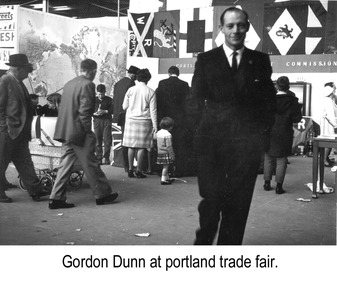
Photograph - Photograph - Gordon Dunn, Publicity Officer, Portland Harbour Trust at Portland Trade Fair, n.d
... pockets before a series of display stands. There is a crowd of people walking and looking at the stands. A stand on the left has a large map of the world on display, and a stand to the background right has a series of flag, and below this a sign with the words "Portl... Commission", partially obscured by the man posed for the camera...pockets before a series of display stands. There is a crowd of people walking and looking at the stands. A stand on the left has a large map of the world on display, and a stand to the background right has a series of flag, and below this a sign with the words "Portl... Commission", partially obscured by the man posed for the camera ...Port of Portland Authority archivesFront: (no inscriptions) Back: Gordon Dunn/ Publicity Officer PHT (blue pen, centre)port of portland authority archives -
 Bendigo Historical Society Inc.
Equipment - LYDIA CHANCELLOR COLLECTION: CAMERA
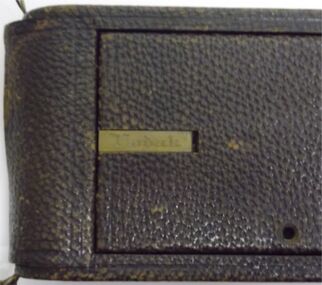
... An Eastman Kodak camera - ' No 3-A Folding Pocket Kodak. Model B-4. US Patents. ...PHOTOGRAPHY Cameras - still kodak Lydia Chancellor collection photography camera An Eastman Kodak camera - ' No 3-A Folding Pocket Kodak. Model B-4. US Patents. ...An Eastman Kodak camera - ' No 3-A Folding Pocket Kodak. Model B-4. US Patents. Sep. 26. 1894, Jun. 21. 1888, Sep. 20. 1888, Sep. 9.1902, Oct. 8. 1901, Jan. 21. 1902, Apr. 29. 1902, Oct.19. 1909. Other Patents Pending. Manufactured by EASTMAN KODAK Co. Rochester, N.Y. Made in U.S.A.'photography, cameras - still, kodak, lydia chancellor, collection, photography, camera -
 Victoria Police Museum
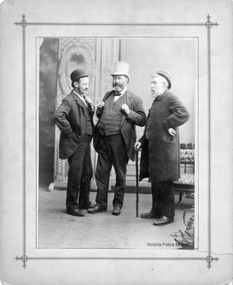
Photograph (Victoria Police), Early century 3 men in suits, 1900s
... camera. On the left, men is relatively more simple dressed, with small hat. In the middle, men with tall hat and pocket watch on fancy suit. ...camera. On the left, men is relatively more simple dressed, with small hat. In the middle, men with tall hat and pocket watch on fancy suit. ...Black and white photograph mounted on bege frame with red ornaments. Seems to be taken very early in the 20th century, before WWI. 3 Gentlemen stand on room, facing each other and not the camera. On the left, men is relatively more simple dressed, with small hat. In the middle, men with tall hat and pocket watch on fancy suit. And on the right, older man with hat, walking stick and overcoat.Handwritten: (top left) 55 P99(crossed out) (top right) AP 78 (bottom left) 81 (centre) (stick) FOYLE // PHOTOGRAPHER // WARRNAMBOOLvictoria police museum, police officers, police force, foyle photographer, warrnambool -
 National Vietnam Veterans Museum (NVVM)
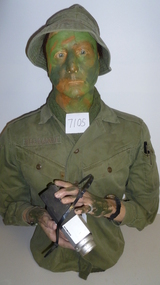
Uniform - Uniform, Army
... Top half life-sized mannequin of a soldier in jungle greens shirt, hat, scarf watch, two pens in pocket. He is holding a movie camera with microphone chord through webbing...Mannequin John Neervoort Uniform Clothing Movie Camera Top half life-sized mannequin of a soldier in jungle greens shirt, hat, scarf watch, two pens in pocket. ...Top half life-sized mannequin of a soldier in jungle greens shirt, hat, scarf watch, two pens in pocket. He is holding a movie camera with microphone chord through webbingmannequin, john neervoort, uniform, clothing, movie camera -
 Warrnambool and District Historical Society Inc.
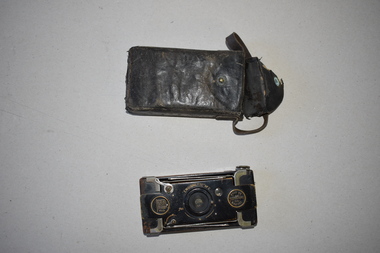
Camera, Eastman Kodak Co, Vest Pocket, 1920s
... Printed information etched into the surface can be found in various locations around this camera. Vest Pocket Camera Eastman Kodak Co. ...This camera, made by the American firm of Eastman Kodak, was the best-selling folding camera during the first half of the 20th century. This is the ‘autographic’ model as there is provision at the back of the camera for note-taking. This model was made between 1915 and 1926 and it is called the soldier’s camera because of its compact size. Over 1,000,000 cameras of this type were sold during World War One. This camera belonged to C.C. McNeil of Caramut, a town 55 kilometres north of Warrnambool. This camera is of interest as it belonged to a person from the Warrnambool district and it is a good example of a pocket camera with note-writing facilities. This is a black metal camera in a rectangular shape with rounded edges. It has three glass apertures and a metal winder. It also has an opening shutter at the back of the camera where notes can be written on to the paper backing of the film. The front of the camera opens and a concertina-like metal attachment affixed to the back of the camera can be pulled out to reveal the lens. This is covered in black leather. Printed information etched into the surface can be found in various locations around this camera. Vest Pocket Autographic Kodak U.S. Patents – Mar 4 1902, May 6 1913 Eastman Kodak Co. Rochester N.Y. U.S.A. Celia C. McNeil Caramut 20th century photography, history of warrnambool -
 National Wool Museum
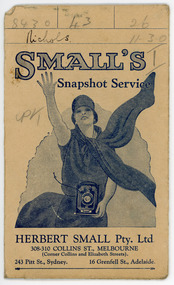
Ephemera - Photograph Envelope, Small's Snapshot Service, Herbert Small Pty Ltd, 1928-1929
... Printed paper fold out envelope featuring a blue image and text on the front, showing a woman holding a camera. The inside has two paper pockets and the back features a blue printed image of a camera with bellows and blue printed text. ...Printed paper fold out envelope featuring a blue image and text on the front, showing a woman holding a camera. The inside has two paper pockets and the back features a blue printed image of a camera with bellows and blue printed text. ...This envelope was found loose in the first of three albums compiled and owned by J W Allen, Secretary of New South Wales Grazier's, and is associated with the New South Wales Graziers Association world tour of sheep 1928-1929. The album contains photographs of travel, sheep, farms, stations, people and landscapes from around the world. Locations include Naples, Port Said, Suez, Birregurra (Vic), Alexandra (Vic), Ballangeich (Vic), Keith (SA), Mt Gambier (SA), Buckland Park (SA), Tasmania, Winton (QLD), Sydney Harbour, Canberra (ACT), Toowoomba (QLD), Rockhampton (QLD), Tocal (NSW), Deepwater (NSW), Glen Innes (NSW), Longreach (QLD), Moree (NSW), Barraba (NSW) and Mudgee (NSW). Properties depicted include Mooleric, Turkeith, Woolongoon, Minadale, Crower Station, Merrindie, Koomooloo Station, Cappeedee, Koonoona, Rathmore, Ellenthorpe, Camden Park Station, Glenlegh, Strathmore Station, Ilparran Station, Binneguy, Midkin, Terlings, Ashley, Bereen, Plumthorpe, Mayvale and Havilah. The album was found in a clean out at the Great Southern Agricultural Research Institute and donated to the National Wool Museum, along with other related material such as photographs, glass lantern slides and ephemera.Printed paper fold out envelope featuring a blue image and text on the front, showing a woman holding a camera. The inside has two paper pockets and the back features a blue printed image of a camera with bellows and blue printed text. Envelope has hand written and printed text.front: SMALL’S / Snapshot Service / HERBERT SMALL Pty. Ltd. / 308-310 COLLINS STREET., MELBOURNE / (Corner Collins and Elizabeth Streets). / 243 Pitt St., Sydney. / 16 Grenfell St., Adelaide.agriculture, sheep, farming, stations, research, breeding, photography, travel -
 Numurkah & District Historical Society
Expanding Concertina Camera
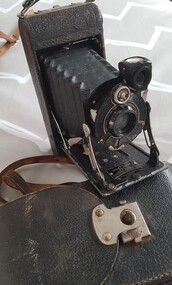
... Camera Case: E J Berry Bunyip Gippsland hand written inside Camera: Kodak on outside / No 1 pocket Kodak Series 2 Made in USA Eastman Kodal & co Rochester NY on inside ...Camera Case: E J Berry Bunyip Gippsland hand written inside Camera: Kodak on outside / No 1 pocket Kodak Series 2 Made in USA Eastman Kodal & co Rochester NY on inside Leather covered camera, thin rectangle with curved ends (leather missing from expanding section). ...Leather covered camera, thin rectangle with curved ends (leather missing from expanding section). Concertina lens folds out by pressing button at the side, near film winder. Inside the hinged concertina section there is a lens, view finder and shutter button Camera has a leather case with long carry strap of similar size and shape. Original instruction manual inside carry caseCamera Case: E J Berry Bunyip Gippsland hand written inside Camera: Kodak on outside / No 1 pocket Kodak Series 2 Made in USA Eastman Kodal & co Rochester NY on inside -
 Uniting Church Archives - Synod of Victoria
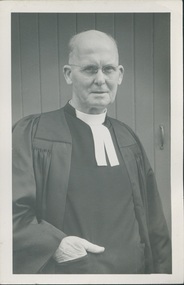
Photograph, C. 1952 - 1954
... They show the Rev T G Allan looking at the camera wearing clerical robes. His right hand is in his pocket. ...They show the Rev T G Allan looking at the camera wearing clerical robes. His right hand is in his pocket. Photograph Photograph ...T G Allen was born 07/06/1890 and died 10/03/1970. He was ordained at Wilston Qld. in 1921. T G Allen served at Gympie 1921, Amidale NSW 1932, Eastwood NSW 1937, St. John's Essendon Vic 1943-1954 and Mowbranton Qld. 1955.F15.1 and F15.2 black and white portrait photographs of a Presbyterian minister with white borders. They show the Rev T G Allan looking at the camera wearing clerical robes. His right hand is in his pocket. (1) Essendon December 1954 T. G. Allan (signed). (2) Centenary year 1952 T.G. Allan 1943-presbyterian minister, t g allen presbyterian minister, t g allen, st john's essenden presbyterian church
