
Showing 66 items matching "poet laureate"
-
 Flagstaff Hill Maritime Museum and Village
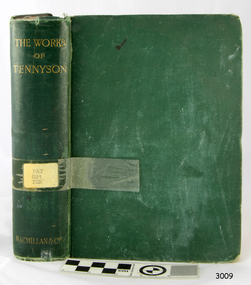
Book, The Works of Alfred Lord Tennyson
... ...poet laureate...The Works of Alfred Lord Tennyson Author: Alfred, Lord Tennyson - Poet Laureate Publisher: Macmillan And Co Date: 1892...The Warrnambool Mechanics' Institute’s publication collection is of both local and state significance. shipwrecked-coast flagstaff-hill flagstaff-hill-maritime-museum warrnambool maritime-museum shipwreck-coast flagstaff-hill-maritime-village shipwrecked-artefact book pattison collection warrnambool library warrnambool mechanics’ institute ralph eric pattison corangamite regional library service warrnambool city librarian mechanics’ institute library victorian library board warrnambool books and records warrnambool children’s library the works of alfred lord tennyson alfred, lord tennyson poet laureate alfred tennyson The label on spine cover has typed text PAT 821 TEN Pastedown front endpaper has a sticker from Warrnambool Mechanics Institute and Free Library Front loose endpaper has a sticker from Corangamite Regional Library Service Front loose endpaper has a stamp from Corangamite Regional Library Service Flyleaf has a stamp from Warrnambool Public Museum The Works of Alfred Lord Tennyson Author: Alfred, Lord Tennyson - Poet Laureate Publisher: Macmillan And Co Date: 1892 The Works of Alfred Lord Tennyson Book Book ...This item is from the ‘Pattison Collection’, a collection of books and records that was originally owned by the Warrnambool Mechanics’ Institute, which was founded in Warrnambool in 1853. By 1886 the Warrnambool Mechanics’ Institute (WMI) had grown to have a Library, Museum and Fine Arts Gallery, with a collection of “… choice productions of art and valuable specimens in almost every branch and many wonderful national curiosities are now to be seen there, including historic relics of the town and district.” It later included a School of Design. Although it was very well patronised, the lack of financial support led the WMI in 1911 to ask the City Council to take it over. In 1935 Ralph Pattison was appointed as City Librarian to establish and organise the Warrnambool Library as it was then called. When the WMI building was pulled down in 1963 a new civic building was erected on the site and the new Warrnambool Library, on behalf of the City Council, took over all the holdings of the WMI. At this time some of the items were separated and identified as the ‘Pattison Collection’, named after Ralph Pattison. Eventually, the components of the WMI were distributed from the Warrnambool Library to various places, including the Art Gallery, Historical Society and Flagstaff Hill. Later some were even distributed to other regional branches of Corangamite Regional Library and passed to and fro. It is difficult now to trace just where all of the items have ended up. The books at Flagstaff Hill Maritime Village generally display stamps and markings from Pattison as well as a variety of other institutions including the Mechanics’ Institute itself. RALPH ERIC PATTISON Ralph Eric Pattison was born in Rockhampton, Queensland, in 1891. He married Maude Swan from Warrnambool in 1920 and they set up home in Warrnambool. In 1935 Pattison accepted a position as City Librarian for the Warrnambool City Council. His huge challenge was to make a functional library within two rooms of the Mechanics’ Institute. He tirelessly cleaned, cleared and sorted a disarrayed collection of old books, jars of preserved specimens and other items reserved for exhibition in the city’s museum. He developed and updated the library with a wide variety of books for all tastes, including reference books for students; a difficult task to fulfil during the years following the Depression. He converted all of the lower areas of the building into a library, reference room and reading room for members and the public. The books were sorted and stored using a cataloguing and card index system that he had developed himself. He also prepared the upper floor of the building and established the Art Gallery and later the Museum, a place to exhibit the many old relics that had been stored for years for this purpose. One of the treasures he found was a beautiful ancient clock, which he repaired, restored and enjoyed using in his office during the years of his service there. Ralph Pattison was described as “a meticulous gentleman whose punctuality, floorless courtesy and distinctive neat dress were hallmarks of his character, and ‘his’ clock controlled his daily routine and his opening and closing of the library’s large heavy doors to the minute.” Pattison took leave from 1942 to 1945 to serve in the Royal Australian Navy, Volunteer Reserve as Lieutenant. A few years later he converted one of the Museum’s rooms into a Children’s Library, stocking it with suitable books for the younger generation. This was an instant success. In the 1950’s he had the honour of being appointed to the Victorian Library Board and received more inspiration from the monthly conferences in Melbourne. He was sadly retired in 1959 after over 23 years of service, due to the fact that he had gone over the working age of council officers. However, he continued to take a very keen interest in the continual development of the Library until his death in 1969. WARRNAMBOOL MECHANICS’ INSTITUTE Warrnambool's Mechanics' Institute (or Institution as it was sometimes called) was one of the earliest in Victoria. On 17th October 1853, a meeting was held where it was resolved to request the Lieutenant Governor of the Colony to grant land for the erection of a Mechanics' Institutes building. A committee was formed at the meeting and Richard Osburne chaired the first meeting of this committee. The land on the North West corner of Banyan and Merri Streets was granted but there were no funds to erect the building. The Formal Rights of the Warrnambool Mechanics' Institute's encompassed its aims and these were officially adopted in1859; "This Institution has for its object the diffusion of literary, scientific, and other useful knowledge amongst its members, excluding all controversial subjects, religious or political. These objects are sought to be obtained by means of a circulating library, a reading room, the establishment of classes, debates, and the occasional delivery of lectures on natural and experimental philosophy, mechanics, astronomy, chemistry, natural history, literature, and the useful and ornamental arts, particularly those which have a more immediate reference to the colony." The Warrnambool Mechanics' Institute opened its first reading room in November 1884 in the National School building at the corner of Banyan and Timor Streets. The Institute was funded by member subscription, payable on a quarterly, half-yearly or yearly basis. Samuel Hannaford, the Manager of the Warrnambool Bank of Australasia, was the first Honorary Secretary of the Mechanics' Institutes, and an early President and Vice-President. He also gave several of the early lectures in the Reading Room. Another early Secretary, Librarian and lecturer was Marmaduke Fisher, the teacher at the National School. Lecture topics included The Poets and Poetry of Ireland', 'The Birth and Development of the Earth', 'The Vertebrae - with Remarks on the pleasures resulting from the study of Natural History' and 'Architecture'. In 1856 the Reading Room was moved to James Hider's shop in Timor Street, and by 1864 it was located in the bookshop of Davies and Read. In the 1860's the Mechanics' Institute struggled as membership waned but in 1866, after a series of fundraising efforts, the committee was able to purchase land in Liebig Street, on a site then called Market Square, between the weighbridge and the fire station. A Mechanics' Institute building was opened at this site in August 1871. The following year four more rooms were added to the main Reading Room and in 1873 the Artisan School of Design was incorporated into the Institute. The same year Joseph Archibald established a Museum; however, it deteriorated when he was transferred to Bendigo in 1877. In 1880, with Archibald's return to Warrnambool, the Museum was re-established, and in 1885 a new building was built at the back of the Institute to accommodate the re-created School of Design, the Art Gallery and the Museum. In 1887 the Museum section was moved to the former courthouse in Timor Street (for some time the walls of the building formed part of the TAFE cafeteria but all is now demolished)). In 1911 the Museum was transferred back to the original building and the management of the Mechanics' Institute was handed over to the Warrnambool City Council. The Museum and Art Gallery became one and housed many fine works of art, and the Library continued to grow. The building was well patronised, with records showing that at the beginning of the 20th century there were between 500 and 800 visitors. During World War One the monthly figures were in the thousands, with 3,400 people visiting in January 1915. The Museum was a much-loved Institution in Warrnambool until the contents of the Museum and Art Gallery were removed to make room for the Warrnambool City Council Engineers' Department. The contents were stored but many of the items were scattered or lost. When the original building was demolished the site became occupied by the Civic Centre, which included the new City Library. (The library was temporarily located in the old Palais building in Koroit Street.) In the process of reorganisation the Collection was distributed amongst the community groups: -The new City Library took some of the historical books and some important documents, historic photographs and newspapers. -The Art Gallery kept the 19th Century art collection and some of the artefacts from the museum. -The Historical Society has some items -The State Museum has some items -Some items were destroyed -Flagstaff Hill Maritime Village has old newspapers, Government Gazettes, most of the Mechanics' Institute Library, ledgers and documents connected to the Mechanics' Institute Library, some framed and unframed artworks and some photographs. The Warrnambool Mechanics' Institute Library book collection is deemed to be of great importance because it is one of the few collections in an almost intact state, and many of the books are now very rare and of great value. The Pattison Collection, along with other items at Flagstaff Hill Maritime Village, was originally part of the Warrnambool Mechanics' Institute’s collection. The Warrnambool Mechanics’ Institute Collection is primarily significant in its totality, rather than for the individual objects it contains. Its contents are highly representative of the development of Mechanics' Institute libraries across Australia, particularly Victoria. A diversity of publications and themes has been amassed, and these provide clues to our understanding of the nature of and changes in the reading habits of Victorians from the 1850s to the middle of the 20th century. The collection also highlights the Warrnambool community’s commitment to the Mechanics’ Institute, reading, literacy and learning in the regions, and proves that access to knowledge was not impeded by distance. These items help to provide a more complete picture of our community’s ideals and aspirations. The Warrnambool Mechanics Institute book collection has historical and social significance for its strong association with the Mechanics Institute movement and the important role it played in the intellectual, cultural and social development of people throughout the latter part of the nineteenth century and the early twentieth century. The collection of books is a rare example of an early lending library and its significance is enhanced by the survival of an original collection of many volumes. The Warrnambool Mechanics' Institute’s publication collection is of both local and state significance. The Works of Alfred Lord Tennyson Author: Alfred, Lord Tennyson - Poet Laureate Publisher: Macmillan And Co Date: 1892The label on spine cover has typed text PAT 821 TEN Pastedown front endpaper has a sticker from Warrnambool Mechanics Institute and Free Library Front loose endpaper has a sticker from Corangamite Regional Library Service Front loose endpaper has a stamp from Corangamite Regional Library Service Flyleaf has a stamp from Warrnambool Public Museumshipwrecked-coast, flagstaff-hill, flagstaff-hill-maritime-museum, warrnambool, maritime-museum, shipwreck-coast, flagstaff-hill-maritime-village, shipwrecked-artefact, book, pattison collection, warrnambool library, warrnambool mechanics’ institute, ralph eric pattison, corangamite regional library service, warrnambool city librarian, mechanics’ institute library, victorian library board, warrnambool books and records, warrnambool children’s library, the works of alfred lord tennyson, alfred, lord tennyson, poet laureate, alfred tennyson -
 Ballarat Clarendon College
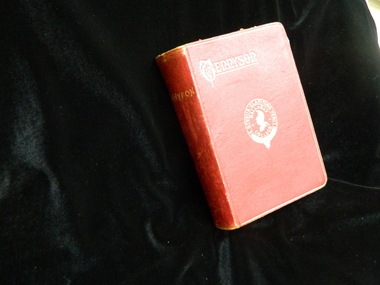
Book prize, The works of Alfred Lord Tennyson Poet Laureate
... The works of Alfred Lord Tennyson Poet Laureate...The works of Alfred Lord Tennyson Poet Laureate Book prize ...Rosina (Rose) Morey was a student at Ballarat Ladies College, girls' school of Ballarat College (1875 - 1892). Rosina Morey was born in 1871 and spent most of her life in Ballarat. Her father was Edward Morey, a mining and civic leader in Ballarat. The book was donated by Poss Morrow (Walker) having belonged to her great aunt Rose Morey. In 2008 Poss wrote: Rose loved sewing and my memories of her are that she was always dressed in black. She was the third daughter of Edward and Mary Ann Morey. Great aunt Rose spent many happy times with our family when we lived in East Malvern. My father Edward McDonald Walker was her nephew. She loved coming to the city by train to go shopping and join in the family celebrations. She never married but lived to a great age. She died in a nursing home in East Malvern 24 July 1960 and was buried in the Morey family grave in the Ballarat Old Cemetery. The prize, presented to Rose in 1889, remained in my father's library for many years and was given to me recently.Red calf-binding with fine gold border to cover; gold lettered title and school crest to front cover; and gold lettered title to spine. Book plate on inside of front cover. Book plate on inside of front cover: School crest / Fancy Needlework / Senior Form / "Gross" prize / Awarded to / Rose Morey / Christmas 1889rose-morey, ballarat-ladies-college, book-prize, needlework -
 Phillip Island and District Historical Society Inc.
Book, TENNYSON, Lord Alfred, Poetical works of Alfred Lord Tennyson, poet laureate, 1899
... Poetical works of Alfred Lord Tennyson, poet laureate...Poetical works of Alfred Lord Tennyson, poet laureate Book TENNYSON, Lord Alfred Macmillan ...Inscribed : Esther Bergin, San Remo, February [19]01. Labelled 'Phillip Island Historical Society, Cleeland Bequest'. -
 Charlton Golden Grains Museum Inc
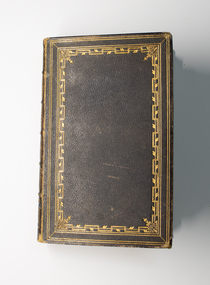
Book - Book of Poetry, " POEMS by ALFRED TENNYSON. D.C.L." POET LAUREATE ELEVENTH EDITION, 1856
... " POEMS by ALFRED TENNYSON. D.C.L." POET LAUREATE ELEVENTH EDITION..."Tis a gift of love That seeks thy good alone Take it for the giver's sake And read it as thy own" T Howhuit (name to be checked) Cover- Blue with Gold Edging. 380 pages " POEMS by ALFRED TENNYSON. D.C.L." POET LAUREATE ELEVENTH EDITION Book Book of Poetry ...Cover- Blue with Gold Edging. 380 pages"Tis a gift of love That seeks thy good alone Take it for the giver's sake And read it as thy own" T Howhuit (name to be checked) -
 Mrs Aeneas Gunn Memorial Library
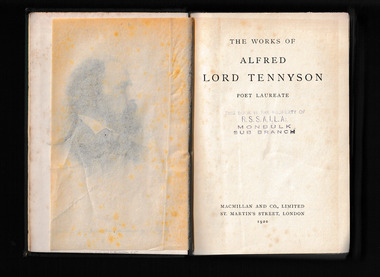
Book, McMillan and Co, The works of Alfred Lord Tennyson, poet laureate, 1920
... The works of Alfred Lord Tennyson, poet laureate....Poetry - English Alfred Lord Tennyson 1809-1892 The works of Alfred Lord Tennyson, poet laureate. Index, p.894. The works of Alfred Lord Tennyson, poet laureate. ...The works of Alfred Lord Tennyson, poet laureate.Index, p.894.fictionThe works of Alfred Lord Tennyson, poet laureate.poetry - english, alfred lord tennyson 1809-1892 -
 Kiewa Valley Historical Society
Paper - Early Days of the Area and Poem by W. Baldwin
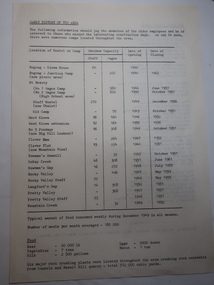
... ...Poet Laureate...On reverse a poem titled 'Our Ruddy Hydro Scheme' by W Baldwin (Bogong Poet Laureate Wally Baldwin in the early days of the scheme...Wally Baldwin lived at Bogong and was interested in history and poetry. 'Poet Laureate' meaning that he was officially appointed by a government or conferring institution. ...The introduction "The following information should jog the memories of the older employees and be of interest to those who missed the interesting construction days."Wally Baldwin lived at Bogong and was interested in history and poetry. 'Poet Laureate' meaning that he was officially appointed by a government or conferring institution.A4 sheet. One side titled "Early History of the Area" with headings - Location, Capacity of Staff and Wages, 'Date of Opening' and 'Date of Closing'. On reverse a poem titled 'Our Ruddy Hydro Scheme' by W Baldwin (Bogong Poet Laureate Wally Baldwin in the early days of the schemewally baldwin, poem 'hydro scheme', khes early days, poet laureate -
 Flagstaff Hill Maritime Museum and Village
Literary work - Book, Macmillan & Co, The Works of Alfred Lord Tennyson, 1892
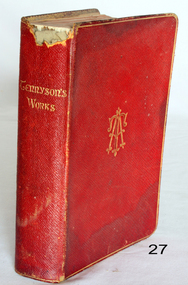
... Alfred Tennyson, 1st Baron Tennyson FRS (6 August 1809 – 6 October 1892) was a British poet. He was the Poet Laureate during much of Queen Victoria's reign and remains one of the most popular British poets. ...Book “The Works of Alfred Lord Tennyson” poet laureate. Spine of book says “Tennyson’s Works”. ...Alfred Tennyson, 1st Baron Tennyson FRS (6 August 1809 – 6 October 1892) was a British poet. He was the Poet Laureate during much of Queen Victoria's reign and remains one of the most popular British poets. ...This book of poetry was a Prize Awarded for Botany and Physiology an unidentifiable recipient who was Dux of Form V, it was presented by James Scott B.A., Warrnambool College. Alfred Tennyson, 1st Baron Tennyson FRS (6 August 1809 – 6 October 1892) was a British poet. He was the Poet Laureate during much of Queen Victoria's reign and remains one of the most popular British poets. In 1829, Tennyson was awarded the Chancellor's Gold Medal at Cambridge for one of his first pieces, "Timbuktu". He published his first solo collection of poems, Poems Chiefly Lyrical in 1830. "Claribel" and "Mariana", which remain some of Tennyson's most celebrated poems, were included in this volume. Although decried by some critics as overly sentimental, his verse soon proved popular and brought Tennyson to the attention of well-known writers of the day, including Samuel Taylor Coleridge. Tennyson's early poetry, with its medievalism and powerful visual imagery, was a major influence on the Pre-Raphaelite Brotherhood.This book was awarded to a student of Warrnambool College as an end of year prize is an example of how it was the custom to award prizes as scholastic encouragement to students for exemplary work during the school year in the late 19th to early 20th centuries.Book “The Works of Alfred Lord Tennyson” poet laureate. Spine of book says “Tennyson’s Works”. Published 1892 in London and New York, by Macmillan and Co. Cover is read with gold border. Prize label book presented by James Scott BA "Form V/Dux/Botany Physiology to Master … / James Scott B.A. / Dec 18th 1893"flagstaff hill, warrnambool, shipwrecked coast, flagstaff hill maritime museum, shipwreck coast, flagstaff hill maritime village, great ocean road, alfred lord tennyson, poetical works, james scott b.a., warrnambool college form v prize 1893 -
Marysville & District Historical Society
THE TRIANGLE NEWS-VOL 1 NO 15-OCTOBER 29 1976
... ...poet laureate...marysville victoria australia wirreanda prices rainfall artshow football club art and craft shop senior citizens golf marysville kindergarten & infant welfare centre wanted benz bender boots poem kenneth h mcleod poet laureate swimming club new year's eve crossways marysville tennis club marysville football club narbethong hall committee anything goes almost cricket johnny chester night THE TRIANGLE NEWS-VOL 1 NO 15-OCTOBER 29 1976 ...marysville, victoria, australia, wirreanda, prices, rainfall, artshow, football club, art and craft shop, senior citizens, golf, marysville kindergarten & infant welfare centre, wanted, benz bender boots, poem kenneth h mcleod, poet laureate, swimming club, new year's eve crossways, marysville tennis club, marysville football club, narbethong hall committee, anything goes almost, cricket, johnny chester night -
 Flagstaff Hill Maritime Museum and Village
Book, Poems
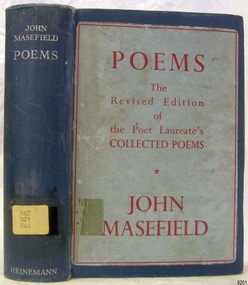
... Poems Author: John Masefield Publisher: William Heinemann Ltd Date: 1946 Edition: The Revised Edition of the Poet Laureate's Collected poems...The Warrnambool Mechanics' Institute’s publication collection is of both local and state significance. flagstaff hill warrnambool shipwrecked coast flagstaff hill maritime museum maritime museum shipwreck coast flagstaff hill maritime village great ocean road book pattison collection warrnambool library warrnambool mechanics’ institute ralph eric pattison corangamite regional library service warrnambool city librarian mechanics’ institute library victorian library board warrnambool books and records warrnambool children’s library Poems John Masefield The label on spine cover has typed text PAT 821 MAS Pastedown front endpaper has a sticker from Warrnambool Public Library Front loose endpaper has a sticker from Corangamite Regional Library Service Front loose endpaper has a stamp from Corangamite Regional Library Service Flyleaf has a stamp from Warrnambool Public Library Poems Author: John Masefield Publisher: William Heinemann Ltd Date: 1946 Edition: The Revised Edition of the Poet Laureate's Collected poems Poems Book ...This book was part of a large group of books referred to as the Pattison Collection, which belonged to the Warrnambool Public Library, part of the Warrnambool Mechanics’ Institute. About RALPH ERIC PATTISON and the ‘PATTISON COLLECTION’ The ‘Pattison Collection’ is a collection of books and records that was originally owned by the Warrnambool Mechanics’ Institute, founded in Warrnambool in 1853. By 1886 the Warrnambool Mechanics’ Institute (WMI) had grown to have a Library, Museum and Fine Arts Gallery, with a collection of “… choice productions of art and valuable specimens in almost every branch and many wonderful national curiosities are now to be seen there, including historic relics of the town and district.” It later included a School of Design. Although it was very well patronised, the WMI was led to ask the City Council to take it over in 1911 due to lack of financial support. In 1935 Ralph Pattison was appointed as City Librarian to establish and organise the Warrnambool Public Library as it was then called. Ralph Eric Pattison was born in Rockhampton, Queensland, in 1891. He married Maude Swan from Warrnambool in 1920 and they set up home in Warrnambool. In 1935 when Pattison accepted the position as City Librarian for the Warrnambool City Council his huge challenge was to make a functional library within two rooms of the Mechanics’ Institute. He tirelessly cleaned, cleared and sorted a disarrayed collection of old books, jars of preserved specimens and other items reserved for exhibition in the city’s museum. He developed and updated the library with a wide variety of books for all tastes, including reference books for students; a difficult task to fulfil during the years following the Depression. He converted all of the lower areas of the building into a library, reference room and reading room for members and the public. The books were sorted and stored using a cataloguing and card index system that he had developed himself. He also prepared the upper floor of the building and established the Art Gallery and later the Museum, a place to exhibit the many old relics that had been stored for years for this purpose. One of the treasures he found was a beautiful ancient clock, which he repaired, restored and enjoyed using in his office during the years of his service there. Ralph Pattison was described as “a meticulous gentleman whose punctuality, floorless courtesy and distinctive neat dress were hallmarks of his character, and ‘his’ clock controlled his daily routine and his opening and closing of the library’s large heavy doors to the minute.” Pattison took leave from 1942 to 1945 to serve in the Royal Australian Navy, Volunteer Reserve as Lieutenant. A few years later he converted one of the Museum’s rooms into a Children’s Library, stocking it with suitable books for the younger generation. This was an instant success. In the 1950’s he had the honour of being appointed to the Victorian Library Board and received more inspiration from the monthly conferences in Melbourne. He was sadly retired in 1959 after over 23 years of service, due to the fact that he had gone over the working age of council officers. However, he continued to take a very keen interest in the continual development of the Library until his death in 1969. THE NEW WARRNAMBOOL LIBRARY When the WMI building was pulled down in 1963 a new civic building was erected on the site and the new Warrnambool Library, on behalf of the City Council, took over all the holdings of the WMI. At this time some of the items were separated and identified as the ‘Pattison Collection’, named after Pattison. Eventually, the components of the WMI were distributed from the Warrnambool Library to various places, including the Art Gallery, Historical Society and Flagstaff Hill. Later some were even distributed to other regional branches of Corangamite Regional Library and passed to and fro. It is difficult now to trace just where all of the items have ended up. The books at Flagstaff Hill Maritime Village generally display stamps and markings from Pattison as well as a variety of other institutions including the Mechanics’ Institute itself. WARRNAMBOOL PUBLIC LIBRARY The Warrnambool Mechanics’ Institute (WMI) was formed by a voluntary community group in 1863, within six years of Warrnambool’s beginnings, and its Reading Room opened in 1854. The WMI operated until 1963, at which time it was one of the oldest Mechanics’ Institutes in Victoria. Mechanics’ Institutes offered important services to the public including libraries, reading rooms and places to display and store collections of all sorts such as curiosities and local historical relics. In 1886 a Museum and Fine Arts Gallery were added to the WMI and by the beginning of the 20th century there was also a billiards room and a School of Art. By this time all Mechanics’ Institutes in country Victoria had museums attached. Over the years the Warrnambool Mechanics’ Institute Library was also known as the Warrnambool Public Library the Warrnambool Library and the Free Library. Early funding from the government was for the “Free Library”. The inscription in a book “Science of Man” was for the “Warrnambool Public Library”, donated by Joseph Archibald in 1899. Another inscription in the book “Catalogue of Plants Under Cultivation in the Melbourne Botanic Gardens 1 & 2, 1883” was presented to the “Warrnambool Library” and signed by the author W.R. Guilfoyle. In 1903 the Warrnambool Public Library decided to add a Juvenile Department to library and stock it with hundreds of books suitable for youth. In 1905 the Public Library committee decided to update the collection of books and added 100 new novels plus arrangements for the latest novels to be included as soon as they were available in Victoria. In July 1911 the Warrnambool Council took over the management of the Public Library, Art Gallery, Museum and Mechanics’ Institute and planned to double the size of the then-current building. In 1953, when Mr. R. Pattison was Public Librarian, the Warrnambool Public Library’s senior section 10,000 of the 13,000 books were fiction. The children’s section offered an additional 3,400 books. The library had the equivalent of one book per head of population and served around 33 percent of the reading population. The collection of books was made up of around 60 percent reference and 40 percent fiction. The library was lending 400 books per day. In 1963 the Warrnambool City Council allocated the site of the Mechanics’ Institute building, which included the Public Library, Museum and Art Gallery, for the new Municipal Offices and the Collections were dispersed until 1971. The Warrnambool Library took over the Mechanics’ Institute Library’s holdings on behalf of the Warrnambool City Council. Since the closure of the Warrnambool Mechanics’ Institute the exact location and composition of the original WMI books and items has become unclear. Other materials have been added to the collection, including items from Terang MI, Warrnambool Court House and Customs House. Many of the books have been identified as the Pattison Collection, named after the Librarian who catalogued and numbered the books during his time as Warrnambool Public Librarian in the time before the Mechanics’ Institute closed. It seems that when Warrnambool became part of the Corangamite Regional Library some of the books and materials went to its head office in Colac and then back to Warrnambool where they were stored at the Art Gallery for quite some time. Some then went to the Warrnambool Historical Society, some stayed at the Art Gallery and some were moved to Flagstaff Hill Maritime Village. The various stamps and labels on the books held at Flagstaff Hill show the variety of the collection’s distribution and origin. The books in the collection at Flagstaff Hill Maritime Village date from the 1850’s to the late 1950’s and include rare and valuable volumes. Many of the books are part of the “Pattison Collection” after the Warrnambool’s Public Librarian, Mr. R. Pattison. The Pattison Collection, along with other items at Flagstaff Hill Maritime Village, was originally part of the Warrnambool Mechanics' Institute’s collection. The Warrnambool Mechanics’ Institute Collection is primarily significant in its totality, rather than for the individual objects it contains. Its contents are highly representative of the development of Mechanics' Institute libraries across Australia, particularly Victoria. A diversity of publications and themes has been amassed, and these provide clues to our understanding of the nature of and changes in the reading habits of Victorians from the 1850s to the middle of the 20th century. The collection also highlights the Warrnambool community’s commitment to the Mechanics’ Institute, reading, literacy and learning in the regions, and proves that access to knowledge was not impeded by distance. These items help to provide a more complete picture of our community’s ideals and aspirations. The Warrnambool Mechanics Institute book collection has historical and social significance for its strong association with the Mechanics Institute movement and the important role it played in the intellectual, cultural and social development of people throughout the latter part of the nineteenth century and the early twentieth century. The collection of books is a rare example of an early lending library and its significance is enhanced by the survival of an original collection of many volumes. The Warrnambool Mechanics' Institute’s publication collection is of both local and state significance. Poems Author: John Masefield Publisher: William Heinemann Ltd Date: 1946 Edition: The Revised Edition of the Poet Laureate's Collected poemsThe label on spine cover has typed text PAT 821 MAS Pastedown front endpaper has a sticker from Warrnambool Public Library Front loose endpaper has a sticker from Corangamite Regional Library Service Front loose endpaper has a stamp from Corangamite Regional Library Service Flyleaf has a stamp from Warrnambool Public Libraryflagstaff hill, warrnambool, shipwrecked coast, flagstaff hill maritime museum, maritime museum, shipwreck coast, flagstaff hill maritime village, great ocean road, book, pattison collection, warrnambool library, warrnambool mechanics’ institute, ralph eric pattison, corangamite regional library service, warrnambool city librarian, mechanics’ institute library, victorian library board, warrnambool books and records, warrnambool children’s library, poems, john masefield -
 Bendigo Military Museum
Booklet - WHAT ARE WE FIGHTING FOR, 1915
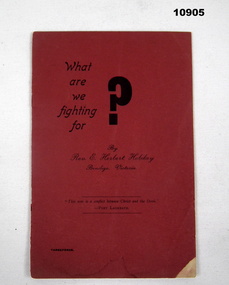
... Herbert Hobday Bendigo Victoria” - “This War is a conflict between Christ and the Devil - Poet Laureate”. On the photo inside cover, “Rev E.Herbert. ...Herbert Hobday Bendigo Victoria” - “This War is a conflict between Christ and the Devil - Poet Laureate”. On the photo inside cover, “Rev E.Herbert. ...This Patriotic sermon by Rev Herbert Hobday was given at the Bendigo Baptist Church Hargreaves Street Bendigo on Sunday evening July 25th 1915. The Newspaper article on rear page the Rev delivered a short address to wish two Soldiers who had enlisted, George Every and Sydney Draper. George (Geo) Every, refer Cat No 10760.4P for his service details. Staley collection, refer Cat No 10758.2P for more details.Booklet red covers, 12 pages with text in black, inside the front cover has an image sepia tone of a Reverend, rear cover inside has a newspaper article pasted in.On the front cover under the heading, “By the Reverend E. Herbert Hobday Bendigo Victoria” - “This War is a conflict between Christ and the Devil - Poet Laureate”. On the photo inside cover, “Rev E.Herbert. Hobday”tmstaleycollection, sermon -
 Melbourne Legacy
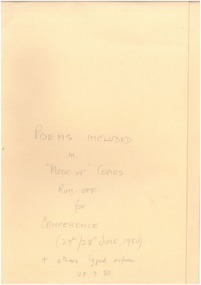
Document - Poem, Various titles, 1980
... A collection of witty poems by Poet Laureate L.F.J. and other Legatees. The poems are about happenings of Legatees and Legacy. ...A collection of witty poems by Poet Laureate L.F.J. and other Legatees. The poems are about happenings of Legatees and Legacy. ...A collection of witty poems by Poet Laureate L.F.J. and other Legatees. The poems are about happenings of Legatees and Legacy. TBA - no of pages? Check location.These poems penned by L.F.J. were regularly read out at the weekly legacy luncheons, providing much mirth and merriment to all.White paper with black type, compilation of poemsTitle page, hand written in pencil: Poems included in Mock-up copies run-off for Conference (27th / 28th June 1980) and others typed are from 29.7.1980poems, comradeship -
 Surrey Hills Historical Society Collection
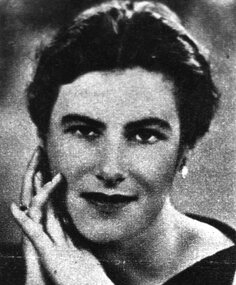
Photograph, Miss Norma Bull
... The article this photo appeared in noted that Norma Bull had recently (1940) been sketching at the home of John Masefield, Poet Laureate, in Oxford having painted him when he visited Melbourne. ...The article this photo appeared in noted that Norma Bull had recently (1940) been sketching at the home of John Masefield, Poet Laureate, in Oxford having painted him when he visited Melbourne. ...The article this photo appeared in noted that Norma Bull had recently (1940) been sketching at the home of John Masefield, Poet Laureate, in Oxford having painted him when he visited Melbourne. Norma Catherine was one of two children of Dr Richard Joseph Bull and his wife Catherine Grace (nee Perrier); she was born in 1906 and died in 1980. She was cremated at Springvale.A black and white photograph of a woman with short dark hair, wearing earrings. Her hands are clasped near her chin. norma bull (miss), norma catherine bull (miss), john masefield (mr), artist -
 Orbost & District Historical Society
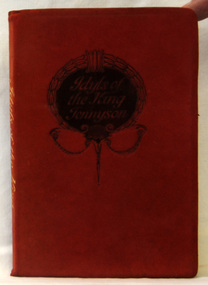
book, Morrison & Gibbs Ltd, Idyls of the KIng Tennyson, Late 19th century/early 20th century
... Idylls of the King,first published between 1859 and 1885, is a cycle of twelve narrative poems by the English poet Alfred, Lord Tennyson (1809–1892) who was the Poet Laureate from 1850. It retells the legend of King Arthur, his knights, his love for Guinevere and her tragic betrayal of him. ...Idylls of the King,first published between 1859 and 1885, is a cycle of twelve narrative poems by the English poet Alfred, Lord Tennyson (1809–1892) who was the Poet Laureate from 1850. It retells the legend of King Arthur, his knights, his love for Guinevere and her tragic betrayal of him. ...Idylls of the King,first published between 1859 and 1885, is a cycle of twelve narrative poems by the English poet Alfred, Lord Tennyson (1809–1892) who was the Poet Laureate from 1850. It retells the legend of King Arthur, his knights, his love for Guinevere and her tragic betrayal of him. The book was given by Emmie Gibbs as a Christmas gift to Hilda Wehner. Hilda Wehner was the daughter of Herman Wehner (1862-1937) one of Orbost's early blacksmiths.A small red cloth covered book with a black motif on the cover. There is gold print on the spine.Inside- To Hilda M. Wehner from her friend Emma Gibbs wishing her the complimenst of the season Xmas 1916tennyson literature idyls-of-the-king book -
 Mont De Lancey
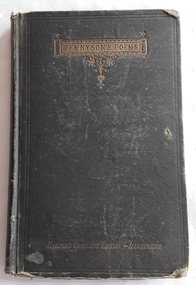
Book, Harper & Brothers, Tennyson's Poems
... Inside on the title page is printed - The Poetical Works of Alfred Tennyson Poet Laureate. Numerous illustrations, publisher details and 1871 with a head and shoulder black lined illustration of Tennyson. ...Inside on the title page is printed - The Poetical Works of Alfred Tennyson Poet Laureate. Numerous illustrations, publisher details and 1871 with a head and shoulder black lined illustration of Tennyson. ...A Harper's Complete Illustrated collection of Tennyson's poems with Additional Poems at the back of the book.A damaged dark green fabric covered book of Tennyson's Poems with the title printed in gold in an elaborate decorative style at the top of the front cover. At the bottom written in gold lettering is Harper's Complete Edition - Illustrated. The spine has Tennyson's Poems in a gold lined rectangle at the top and Harper's at the bottom. Inside on the title page is printed - The Poetical Works of Alfred Tennyson Poet Laureate. Numerous illustrations, publisher details and 1871 with a head and shoulder black lined illustration of Tennyson. Opposite, the frontispiece shows an illustration of a man rowing a small boat past a castle on the hillside with a woman who has died lying in it shrouded by a lace coverlet.The Contents page lists his many varied works with a list of additional poems printed exclusively in this edition. At the back is a Harper Brothers' List of new Books, brief outlines of Draper's History of the American Civil War and Winchell's Sketches of Creation. p. 250.non-fictionA Harper's Complete Illustrated collection of Tennyson's poems with Additional Poems at the back of the book. poetry, alfred tennyson -
 Bendigo Historical Society Inc.
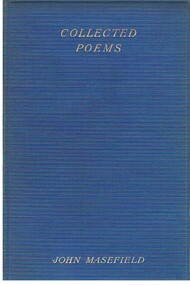
Book - ALEC H CHISHOLM COLLECTION: BOOK ''THE COLLECTED POEMS OF JOHN MASEFIELD''
... ALEC H CHISHOLM COLLECTION. 784 page blue hardcover book of poetry by Poet Laureate, John Masefield. Published in 1923 by William Heinemann, London. ...ALEC H CHISHOLM COLLECTION. 784 page blue hardcover book of poetry by Poet Laureate, John Masefield. Published in 1923 by William Heinemann, London. ...Book. ALEC H CHISHOLM COLLECTION. 784 page blue hardcover book of poetry by Poet Laureate, John Masefield. Published in 1923 by William Heinemann, London. Printed by Morrison & Gibb Ltd, Edinburgh. Two newspaper cuttings from the Melbourne Herald inside front cover. 13 May 1967 - Reporting the death of J. Masefield aged 88. 20 May 1967 - Brief article on Masefield. Catalogue sticker '2117 MAS on spine. Signature of John Masefield written in ink on flyleaf. Also handwritten in ink inside front cover ''This book was among those present when Austn (Australian) authors entertained John Masefield at Scott's Hotel, Melbne (Melbourne) on Fri., Nov.9, 1934. Masefield signed the book on the first page & some of the local lads & lasses signed on the next page. A. H. Chisholm 10/11/34'' Signatures of the following authors on the second page 'Vance Palmer, Louis Esson, Katherine Susannah Prichard, Bernard Cronin, Bernard O'Dowd, Shaw Neilson, Myra Morris, Georgia Rivers, Alec H Chisholm 9-11-34'John Masefieldbooks, collections, poetry, alec h chisholm collection, john masefield, vance palmer, louis esson, katherine susannah prichard, bernard cronin, bernard o'dowd, shaw neilson, myra morris, georgia rivers, poetry -
 Ruyton Girls' School
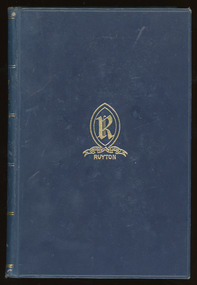
Literary work - Ruyton Prize Book, Geoffrey Cumberlege Oxford University Press, Poems of Tennyson, 1950
... Alfred Tennyson, 1st Baron Tennyson FRS, was the Poet Laureate during much of Queen Victoria's reign. ...Alfred Tennyson, 1st Baron Tennyson FRS, was the Poet Laureate during much of Queen Victoria's reign. ...This book contains a collection of poems written by English poet, Alfred, Lord Tennyson, between 1830-1870. It also contains an introduction written by Sir Thomas Herbert Warren, former President of Magdalen College at Oxford University, plus 91 black-and-white illustrations by Millais, Rossetti, Maclise, and others. Alfred Tennyson, 1st Baron Tennyson FRS, was the Poet Laureate during much of Queen Victoria's reign. In 1829, Tennyson was awarded the Chancellor's Gold Medal at Cambridge for one of his first pieces, "Timbuktu." Ruyton Girls' School has a long tradition of awarding prizes to students at annual "Speech Night" events. Speech Night at Ruyton is an extraordinary occasion. It is a time when we gather to celebrate both the year just lived and the contribution of our Year 12 girls to the life of our School. It is a night of stirring student speeches, acknowledgement of student endeavour and excellence and awe-inspiring performances by School choirs and ensembles. The Maisie Brodribb Memorial Prize was named in honour of former Ruyton Girls' School student, Maisie Anderson (maiden name Brodribb), who attended the School between 1898-1903. The Prize, now discontinued, had been awarded for Mathematics and Science.The record has strong historic significance as it was awarded to a former notable student, Helen Gordon (maiden name Cole). Helen started at Little Ruyton in Prep 1940 and finished Year 12 in 1952 as School Captain, Bromby Captain, Form Captain for Matric, Tennis Captain, Hockey Captain, Swimming Vice Captain, and an award for Best All-Round Girl. She also played baseball for Victoria. After finishing school, Helen went on to graduate from the University of Melbourne as a physiotherapist in 1956. Her first position at age 19 involved setting up clinics with the Victorian Health Department Poliomyelitis Rural division. Helen’s strong ties to Ruyton continued when she held the position of President of the Old Ruytonians’ Association from the start of 1966 to the end of 1967. In 2019, Helen received an Order of Australia Medal for service to community health as a physiotherapist. She was also the recipient of the 2022 Victorian Senior Achiever Award at Parliament House. Helen passed away in July 2023 at age 88. The record's significance is further enhanced by its strong provenance, having been produced by Ruyton Girls' School and donated to the Archives by a familial connection.Navy leather hardcover bound book with gold detailing on front cover and spine. 882 pages.Front Cover: R / RECTE ET FIDE LITER / RUYTON / Spine: POEMS OF / TENNYSON / Inside Cover: R / RECTE ET FIDE LITER / RUYTON / PRIZE / AWARDED TO / Helen Cole / FOR / Biology / Form Matriculation / H. Daniell. / 11th Dec. 1952 / Maisie Brodribb Memorial Prize /ruyton girls' school, school, students, prize, speech night, poetry, lord tennyson, queen victoria, senior school, high school, ruyton, old ruytonians' association -
 Flagstaff Hill Maritime Museum and Village
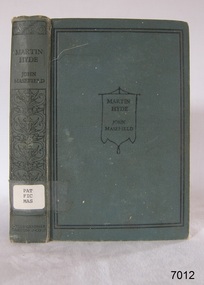
Book - Fictional Story, John Masefield, Martin Hyde The Dukes Messenger, 1928 to 1949
... John Masefield (1878–1967) was an English poet, novelist, and dramatist who served as Poet Laureate of the United Kingdom from 1930 until his death in 1967. ...John Masefield (1878–1967) was an English poet, novelist, and dramatist who served as Poet Laureate of the United Kingdom from 1930 until his death in 1967. ...Martin Hyde, the Duke's Messenger is a historical novel set in the late 17th century, following a young boy named Martin Hyde as he moves from a carefree childhood in rural Suffolk into a web of intrigue in London. Orphaned young, Martin goes to live with his uncle in London, where he becomes tangled up in royal conspiracies and secret missions. After his father's death in 1685, the 12-year-old goes to live with his uncle and eventually becomes messenger for James Scott, Duke of Monmouth, as Monmouth tries to build support for his claim to the English throne after the death of Charles II. It's often compared to Robert Louis Stevenson's Treasure Island or Kidnapped a boy's-own adventure that takes Martin overseas and eventually back to England to take part in the Monmouth Rebellion of 1685, with a rival working for the Crown whom he has to outwit. A reviewer also notes a small, restrained love-story thread Martin's messenger rival turns out to be a girl in disguise which nudges the book slightly outside the standard boys'-adventure genre of its era.Hard cover book. Martin Hyde “The Dukes Messenger” Author: John Masefield Publisher: Wells Gardner Darton & Co Date: 1928 to 1949 Further Information: Blue Cloth hardcover with lettering and patterning to spine in black. Publisher Logo to front cover with title & authors name. The spine has a Library label with an inscription.fictionMartin Hyde, the Duke's Messenger is a historical novel set in the late 17th century, following a young boy named Martin Hyde as he moves from a carefree childhood in rural Suffolk into a web of intrigue in London. Orphaned young, Martin goes to live with his uncle in London, where he becomes tangled up in royal conspiracies and secret missions. After his father's death in 1685, the 12-year-old goes to live with his uncle and eventually becomes messenger for James Scott, Duke of Monmouth, as Monmouth tries to build support for his claim to the English throne after the death of Charles II. It's often compared to Robert Louis Stevenson's Treasure Island or Kidnapped a boy's-own adventure that takes Martin overseas and eventually back to England to take part in the Monmouth Rebellion of 1685, with a rival working for the Crown whom he has to outwit. A reviewer also notes a small, restrained love-story thread Martin's messenger rival turns out to be a girl in disguise which nudges the book slightly outside the standard boys'-adventure genre of its era.warrnambool, shipwrecked-coast, flagstaff-hill, flagstaff-hill-maritime-museum, maritime-museum, shipwreck-coast, flagstaff-hill-maritime-village, shipwrecked-artefact, martin hyde the dukes messenger, john masefield, book, warrnambool mechanics’ institute, pattison collection, warrnambool library, ralph eric pattison, corangamite regional library service, warrnambool city librarian, mechanics’ institute library, victorian library board, warrnambool books and records, warrnambool children’s library -
 Flagstaff Hill Maritime Museum and Village
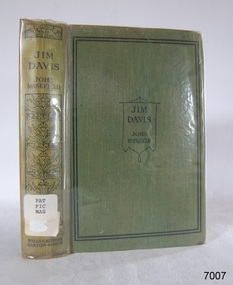
Book - Fictional Story, John Masefield, Jim Davis, 1912-1220s
... John Masefield (1878–1967) was an English poet, novelist, and dramatist who served as Poet Laureate of the United Kingdom from 1930 until his death in 1967. ...John Masefield (1878–1967) was an English poet, novelist, and dramatist who served as Poet Laureate of the United Kingdom from 1930 until his death in 1967. ...Jim Davis is a classic British sea-adventure novel written for young adults. Set along the Devon coast of England in 1812, the story follows a twelve-year-old orphan named Jim Davis. While exploring local caves and coastlines, Jim inadvertently stumbles upon a ring of night-riders and smugglers led by a fierce, charismatic captain named Marah. To protect their operational secrets, the smugglers kidnap Jim and take him to sea. The novel details his reluctant adventures aboard smuggling luggers, evasions of the coastguard, skirmishes, and his eventual effort to escape and return to civilian life.Hard cover book. Jim Davis Author: John Masefield Publisher: Wells Gardner Darton & Co Date: 1912-1920s Further Information: Green Cloth hardcover with lettering and patterning to spine in black. The spine has a Library label with an inscription.fictionJim Davis is a classic British sea-adventure novel written for young adults. Set along the Devon coast of England in 1812, the story follows a twelve-year-old orphan named Jim Davis. While exploring local caves and coastlines, Jim inadvertently stumbles upon a ring of night-riders and smugglers led by a fierce, charismatic captain named Marah. To protect their operational secrets, the smugglers kidnap Jim and take him to sea. The novel details his reluctant adventures aboard smuggling luggers, evasions of the coastguard, skirmishes, and his eventual effort to escape and return to civilian life.warrnambool, shipwrecked-coast, flagstaff-hill, flagstaff-hill-maritime-museum, maritime-museum, shipwreck-coast, flagstaff-hill-maritime-village, shipwrecked-artefact, book, jim davis, john masefield, warrnambool mechanics’ institute, pattison collection, warrnambool library, ralph eric pattison, corangamite regional library service, warrnambool city librarian, mechanics’ institute library, victorian library board, warrnambool books and records, warrnambool children’s library -
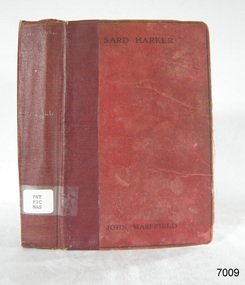 Flagstaff Hill Maritime Museum and Village
Book - Fictional Story, John Masefield, Sard Harker, 1924
... John Masefield (1878–1967) was an English poet, novelist, and dramatist who served as Poet Laureate of the United Kingdom from 1930 until his death in 1967. ...John Masefield (1878–1967) was an English poet, novelist, and dramatist who served as Poet Laureate of the United Kingdom from 1930 until his death in 1967. ...The novel centres on Chanticleer "Sard" Harker, a serious, stoic first mate aboard the trading ship Pathfinder. While anchored off the coast of the fictionalised South American nation of Santa Barbara a recurring setting in Masefield's fiction Harker experiences a vivid, recurring dream predicting that a woman named Doña Margherita Luisa Rosa is in grave danger. Driven by a strict sense of duty and premonition, Harker goes ashore to track down the estate where she is staying to deliver a warning. This decision plunges him into an extraordinary physical ordeal: separated from his ship and framed for murder, Harker must trek through hostile jungles, arid deserts, treacherous swamps, and rugged mountain passes while battling corrupt local officials, bandits, and a sinister occultist/cult leader named Don Hirsch Gomez.Hard cover book. Sard Harker Author: John Masefield Publisher: William Heinemann Ltd Date: 1924 Further Information: Red Cloth hardcover with lettering and patterning to spine in black. The spine has a Library label with an inscription.fictionThe novel centres on Chanticleer "Sard" Harker, a serious, stoic first mate aboard the trading ship Pathfinder. While anchored off the coast of the fictionalised South American nation of Santa Barbara a recurring setting in Masefield's fiction Harker experiences a vivid, recurring dream predicting that a woman named Doña Margherita Luisa Rosa is in grave danger. Driven by a strict sense of duty and premonition, Harker goes ashore to track down the estate where she is staying to deliver a warning. This decision plunges him into an extraordinary physical ordeal: separated from his ship and framed for murder, Harker must trek through hostile jungles, arid deserts, treacherous swamps, and rugged mountain passes while battling corrupt local officials, bandits, and a sinister occultist/cult leader named Don Hirsch Gomez.warrnambool, shipwrecked-coast, flagstaff-hill, flagstaff-hill-maritime-museum, maritime-museum, shipwreck-coast, flagstaff-hill-maritime-village, shipwrecked-artefact, book, sard harker, john masefield, warrnambool mechanics’ institute, pattison collection, warrnambool library, ralph eric pattison, corangamite regional library service, warrnambool city librarian, mechanics’ institute library, victorian library board, warrnambool books and records, warrnambool children’s library -
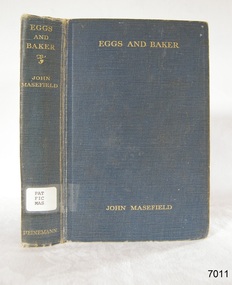 Flagstaff Hill Maritime Museum and Village
Book - Fictional Story, John Masefield, Eggs and Baker or ( The Days Of Trial), 1936
... John Masefield (1878–1967) was an English poet, novelist, and dramatist who served as Poet Laureate of the United Kingdom from 1930 until his death in 1967. ...John Masefield (1878–1967) was an English poet, novelist, and dramatist who served as Poet Laureate of the United Kingdom from 1930 until his death in 1967. ...Eggs and Baker, or The Days of Trial (1936) is a novel by the English poet and Poet Laureate John Masefield, best known for verse ('Sea-Fever', The Everlasting Mercy) and children's classics like The Box of Delights and The Midnight Folk, published the previous year. The story is set inland in Masefield's imagined English county of Tatchester/Condicote his recurring fictional geography, also used in The Box of Delights. The plot centres on a long-running trial of two men one a 'half-wit' accused of shooting and killing a gamekeeper while poaching. The real protagonist, though, is a baker who is losing business and standing in the community because of his socialist sympathies, and who takes up the accused men's cause at real cost to himself. A contemporary Kirkus review called it 'a totally unexpected book from Masefield, and a disappointing one', and wondered whether it was intended as 'a spoof on the law, or a serious commentary on problems of justice'.Hard cover book. Eggs & Baker or The Days of Trial Author: John Masefield Publisher: William Heinemann Ltd Date: 1936 Further Information: Navy blue cloth with pictorial end papers hardcover with lettering and patterning to spine in black. The spine has a Library label with an inscription.fictionEggs and Baker, or The Days of Trial (1936) is a novel by the English poet and Poet Laureate John Masefield, best known for verse ('Sea-Fever', The Everlasting Mercy) and children's classics like The Box of Delights and The Midnight Folk, published the previous year. The story is set inland in Masefield's imagined English county of Tatchester/Condicote his recurring fictional geography, also used in The Box of Delights. The plot centres on a long-running trial of two men one a 'half-wit' accused of shooting and killing a gamekeeper while poaching. The real protagonist, though, is a baker who is losing business and standing in the community because of his socialist sympathies, and who takes up the accused men's cause at real cost to himself. A contemporary Kirkus review called it 'a totally unexpected book from Masefield, and a disappointing one', and wondered whether it was intended as 'a spoof on the law, or a serious commentary on problems of justice'.warrnambool, shipwrecked-coast, flagstaff-hill, flagstaff-hill-maritime-museum, maritime-museum, shipwreck-coast, flagstaff-hill-maritime-village, shipwrecked-artefact, masefield, john, eggs and baker, john masefield, warrnambool mechanics’ institute, pattison collection, warrnambool library, ralph eric pattison, corangamite regional library service, warrnambool city librarian, mechanics’ institute library, victorian library board, warrnambool books and records, warrnambool children’s library -
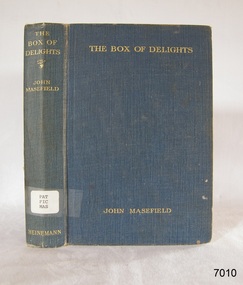 Flagstaff Hill Maritime Museum and Village
Book - A Fictional Story, John Masefield et al, The Box of Delights, 1935
... John Masefield (1878–1967) was an English poet, novelist, and dramatist who served as Poet Laureate of the United Kingdom from 1930 until his death in 1967. ...John Masefield (1878–1967) was an English poet, novelist, and dramatist who served as Poet Laureate of the United Kingdom from 1930 until his death in 1967. ...The Box of Delights is a children's fantasy novel by John Masefield, a sequel to The Midnight Folk, first published in 1935. Kay Harker is returning from boarding school when he finds himself mixed up in a battle to possess a magical box which allows the owner to shrink in size, to fly swiftly, to go into the past and to experience the magical wonders contained within. He's opposed by a wizard named Abner Brown and his gang of disguised bandits and witches masquerading as clergymen, and aided by talking animals, most memorably the cat Nibbins. It's a Christmas story at heart, steeped in English folklore, magic, and the atmosphere of a snowy Midlands winter.Hard cover book. The Box of Delights Author: John Masefield Illustrator: Judith Masefield Publisher: William Heinemann Ltd Date: 1935 Further Information: Navy blue cloth with pictorial end papers hardcover with lettering and patterning to spine in black. The spine has a Library label with an inscription. fictionThe Box of Delights is a children's fantasy novel by John Masefield, a sequel to The Midnight Folk, first published in 1935. Kay Harker is returning from boarding school when he finds himself mixed up in a battle to possess a magical box which allows the owner to shrink in size, to fly swiftly, to go into the past and to experience the magical wonders contained within. He's opposed by a wizard named Abner Brown and his gang of disguised bandits and witches masquerading as clergymen, and aided by talking animals, most memorably the cat Nibbins. It's a Christmas story at heart, steeped in English folklore, magic, and the atmosphere of a snowy Midlands winter.warrnambool, shipwrecked-coast, flagstaff-hill, flagstaff-hill-maritime-museum, maritime-museum, shipwreck-coast, flagstaff-hill-maritime-village, shipwrecked-artefact, book, the box of delights, john masefield, warrnambool mechanics’ institute, pattison collection, warrnambool library, ralph eric pattison, corangamite regional library service, warrnambool city librarian, mechanics’ institute library, victorian library board, warrnambool books and records, warrnambool children’s library -
 Flagstaff Hill Maritime Museum and Village
Book - Fictional Story, John Masefield, Dead Ned, 1938
... John Masefield (1878–1967) was an English poet, novelist, and dramatist who served as Poet Laureate of the United Kingdom from 1930 until his death in 1967. ...John Masefield (1878–1967) was an English poet, novelist, and dramatist who served as Poet Laureate of the United Kingdom from 1930 until his death in 1967. ...The full title for Dead Ned is The Autobiography of a Corpse Who Recovered Life Within the Coast of Dead Ned and Came to What Fortune You Shall Hear. The novel follows a young doctor who is hanged for a murder he did not commit, is rescued just in time, and rushed out of the country on a slave ship. The novel is an 18th-century-set adventure about a wrongly accused medical student, Ned Mansell. While he's aboard the slave ship, the story follows his journey as he is saved from the gallows at the last minute by friends who send him off to hide as a doctor on the vessel. It has a sequel, Live and Kicking Ned (1939), a seafaring novel about the African slave trade that continues the 1938 story.Hard cover book. Dead Ned Author: John Masefield Publisher: William Heinemann Ltd Date: 1938 Further Information: Green Cloth hardcover with lettering and patterning to spine in black. The spine has a Library label with an inscription.fictionThe full title for Dead Ned is The Autobiography of a Corpse Who Recovered Life Within the Coast of Dead Ned and Came to What Fortune You Shall Hear. The novel follows a young doctor who is hanged for a murder he did not commit, is rescued just in time, and rushed out of the country on a slave ship. The novel is an 18th-century-set adventure about a wrongly accused medical student, Ned Mansell. While he's aboard the slave ship, the story follows his journey as he is saved from the gallows at the last minute by friends who send him off to hide as a doctor on the vessel. It has a sequel, Live and Kicking Ned (1939), a seafaring novel about the African slave trade that continues the 1938 story.warrnambool, shipwrecked-coast, flagstaff-hill, flagstaff-hill-maritime-museum, maritime-museum, shipwreck-coast, flagstaff-hill-maritime-village, shipwrecked-artefact, book, dead ned, john masefield, warrnambool mechanics’ institute, pattison collection, warrnambool library, ralph eric pattison, corangamite regional library service, warrnambool city librarian, mechanics’ institute library, victorian library board, warrnambool books and records, warrnambool children’s library -
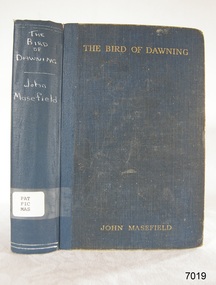 Flagstaff Hill Maritime Museum and Village
Book - Fictional Story, John Masefield, The Bird of Dawning, 1933 to 1939
... John Masefield (1878–1967) was an English poet, novelist, and dramatist who served as Poet Laureate of the United Kingdom from 1930 until his death in 1967. ...John Masefield (1878–1967) was an English poet, novelist, and dramatist who served as Poet Laureate of the United Kingdom from 1930 until his death in 1967. ...The Bird of Dawning (1933) is a sea-adventure novel about the clipper ship Black gauntlet, which is racing home from China to London when she's struck at night by a passing steamer. Only about half the crew sixteen men escape into a lifeboat before she goes down. The 22-year-old second mate, Cruiser Trewsbury, takes command of the survivors and leads them on a roughly 700-mile open-boat voyage to the island of Fayal in the Azores, fighting sharks, dwindling water and food, a leaking boat, and the threat of mutiny along the way. Partway through, the survivors come across an abandoned, dismasted clipper still afloat and Cruiser gets the chance to jury-rig her and sail her home himself, turning survival into a race against time.Hard cover book. The Bird of Dawning Author: John Masefield Publisher: William Heinemann Ltd Date: 1933 to 1939 Further Information: Blue Cloth hardcover with lettering and patterning to spine in gilt. Front cover with title & authors name in gilt. The spine has a Library label with an inscription.fictionThe Bird of Dawning (1933) is a sea-adventure novel about the clipper ship Black gauntlet, which is racing home from China to London when she's struck at night by a passing steamer. Only about half the crew sixteen men escape into a lifeboat before she goes down. The 22-year-old second mate, Cruiser Trewsbury, takes command of the survivors and leads them on a roughly 700-mile open-boat voyage to the island of Fayal in the Azores, fighting sharks, dwindling water and food, a leaking boat, and the threat of mutiny along the way. Partway through, the survivors come across an abandoned, dismasted clipper still afloat and Cruiser gets the chance to jury-rig her and sail her home himself, turning survival into a race against time.warrnambool, shipwrecked-coast, flagstaff-hill, flagstaff-hill-maritime-museum, maritime-museum, shipwreck-coast, flagstaff-hill-maritime-village, shipwrecked-artefact, martin hyde the dukes messenger, john masefield, book, warrnambool mechanics’ institute, pattison collection, warrnambool library, ralph eric pattison, corangamite regional library service, warrnambool city librarian, mechanics’ institute library, victorian library board, warrnambool books and records, warrnambool children’s library -
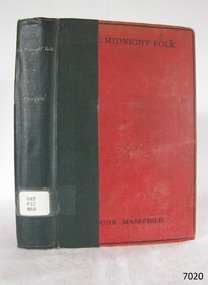 Flagstaff Hill Maritime Museum and Village
Book - Fictional Story, John Masefield, The Midnight Folk, 1930-1940
... John Masefield (1878–1967) was an English poet, novelist, and dramatist who served as Poet Laureate of the United Kingdom from 1930 until his death in 1967. ...John Masefield (1878–1967) was an English poet, novelist, and dramatist who served as Poet Laureate of the United Kingdom from 1930 until his death in 1967. ...The Midnight Folk (first published in 1927) is a celebrated fantasy novel for young readers written by John Masefield. The story centres on a young, lonely orphan named Kay Harker, who lives in a country house guarded by his stern governess. Kay learns that his great-grandfather, Captain Harker, lost a valuable treasure—the plunder of the Santa Barbara—that was entrusted to him. Kay sets out on a quest to locate the lost treasure. Guided by his cat, Nibbins, and an assortment of talking animals, witches, goblins, and nocturnal creatures (the titular 'Midnight Folk'), Kay journeys through magical, dream-like realms. The story seamlessly weaves together British folklore, nautical high adventure, piracy, and childhood wonder.Hard cover book. The Midnight Folk Author: John Masefield Publisher: William Heinemann Ltd Date: 1930-1940 Further Information: Two-tone quarter binding dark green/black spine and quarter shelf-back with red cloth sides, with hand-lettered ink text on the spine "The Midnight Folk / Masefield"). The spine has a Library label with an inscription.fictionThe Midnight Folk (first published in 1927) is a celebrated fantasy novel for young readers written by John Masefield. The story centres on a young, lonely orphan named Kay Harker, who lives in a country house guarded by his stern governess. Kay learns that his great-grandfather, Captain Harker, lost a valuable treasure—the plunder of the Santa Barbara—that was entrusted to him. Kay sets out on a quest to locate the lost treasure. Guided by his cat, Nibbins, and an assortment of talking animals, witches, goblins, and nocturnal creatures (the titular 'Midnight Folk'), Kay journeys through magical, dream-like realms. The story seamlessly weaves together British folklore, nautical high adventure, piracy, and childhood wonder.warrnambool, shipwrecked-coast, flagstaff-hill, flagstaff-hill-maritime-museum, maritime-museum, shipwreck-coast, flagstaff-hill-maritime-village, shipwrecked-artefact, book, the midnight folk, john masefield, warrnambool mechanics’ institute, pattison collection, warrnambool library, ralph eric pattison, corangamite regional library service, warrnambool city librarian, mechanics’ institute library, victorian library board, warrnambool books and records, warrnambool children’s library -
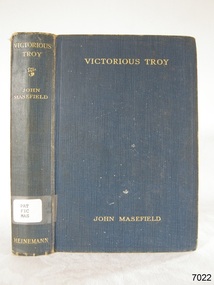 Flagstaff Hill Maritime Museum and Village
Book - Fictional Story, John Masefield, Victorious Troy or The Hurrying Angel, 1935
... John Masefield (1878–1967) was an English poet, novelist, and dramatist who served as Poet Laureate of the United Kingdom from 1930 until his death in 1967. ...John Masefield (1878–1967) was an English poet, novelist, and dramatist who served as Poet Laureate of the United Kingdom from 1930 until his death in 1967. ...Victorious Troy or The Hurrying Angel (first published in 1935) is a dramatic maritime novel by John Masefield. Set in 1922, the story takes place aboard a full-rigged grain ship—the Hurrying Angel—sailing from Melbourne, Australia, back to the UK across the South Pacific. Deep in the ocean, the ship is hit by a catastrophic cyclone. The storm dismasts the vessel, kills or incapacitates the captain and senior officers, and leaves the ship in perilous condition. The hero of this novel is eighteen-year-old senior apprentice Dick Pomfret, who is forced to take command. Through sheer grit, seamanship, and leadership, Dick clears the wreckage, constructs a jury-rig mast, and navigates the battered ship towards safety. Grounded in Masefield's real-life young adult experiences aboard merchant sailing ships, the novel is celebrated for its technical accuracy, vivid descriptions of rough seas, and authentic nautical terminology.Hard cover book. Victorious Troy or The Hurrying Angel Author: John Masefield Publisher: William Heinemann Ltd Date: 1935 Further Information: First edition with original publisher's blue cloth binding with gold foil/gilt lettering on both the front board ("VICTORIOUS TROY / JOHN MASEFIELD") and the spine. The spine has a Library label with an inscription.fictionVictorious Troy or The Hurrying Angel (first published in 1935) is a dramatic maritime novel by John Masefield. Set in 1922, the story takes place aboard a full-rigged grain ship—the Hurrying Angel—sailing from Melbourne, Australia, back to the UK across the South Pacific. Deep in the ocean, the ship is hit by a catastrophic cyclone. The storm dismasts the vessel, kills or incapacitates the captain and senior officers, and leaves the ship in perilous condition. The hero of this novel is eighteen-year-old senior apprentice Dick Pomfret, who is forced to take command. Through sheer grit, seamanship, and leadership, Dick clears the wreckage, constructs a jury-rig mast, and navigates the battered ship towards safety. Grounded in Masefield's real-life young adult experiences aboard merchant sailing ships, the novel is celebrated for its technical accuracy, vivid descriptions of rough seas, and authentic nautical terminology.warrnambool, shipwrecked-coast, flagstaff-hill, flagstaff-hill-maritime-museum, maritime-museum, shipwreck-coast, flagstaff-hill-maritime-village, shipwrecked-artefact, book, victorious troy, the hurrying angel, john masefield, warrnambool mechanics’ institute, pattison collection, warrnambool library, ralph eric pattison, corangamite regional library service, warrnambool city librarian, mechanics’ institute library, victorian library board, warrnambool books and records, warrnambool children’s library -
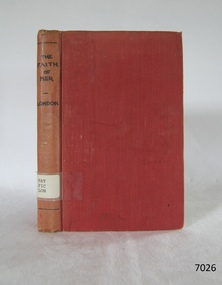 Flagstaff Hill Maritime Museum and Village
Book - A Fictional story, Jack London, The Faith of Men, 1904
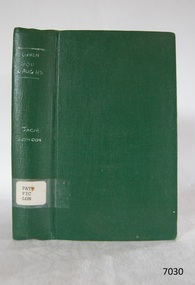
... Masefield, as Poet Laureate, was exactly the calibre of author the firm specialised in....Masefield, as Poet Laureate, was exactly the calibre of author the firm specialised in. ...The Faith of Men, and Other Stories (1904) is Jack London's fourth short story collection, gathering eight tales largely set against the backdrop of the Klondike Gold Rush and the far north the milieu that made London famous. The collection includes the title story "The Faith of Men," along with others such as "Too Much Gold," "The Marriage of Lit-lit," "The Story of Jees Uck," and "The One Thousand Dozen." As with much of London's northern fiction, the stories explore themes of survival, endurance, greed, loyalty, and the clash between "civilised" and Indigenous or frontier codes of conduct hallmarks of the naturalist style he became known for.Hard cover book. The Faith of Men Author: Jack London Publisher: William Heinemann Ltd Date: 1904 Further Information: Brick-red cloth boards, gilt/black spine lettering. Small 8vo format, roughly 246 pages. William Heinemann publisher's device on the title page, and referenced in bibliographies as BAL 11878 / Woodbridge 27fictionThe Faith of Men, and Other Stories (1904) is Jack London's fourth short story collection, gathering eight tales largely set against the backdrop of the Klondike Gold Rush and the far north the milieu that made London famous. The collection includes the title story "The Faith of Men," along with others such as "Too Much Gold," "The Marriage of Lit-lit," "The Story of Jees Uck," and "The One Thousand Dozen." As with much of London's northern fiction, the stories explore themes of survival, endurance, greed, loyalty, and the clash between "civilised" and Indigenous or frontier codes of conduct hallmarks of the naturalist style he became known for.warrnambool, shipwrecked-coast, flagstaff-hill, flagstaff-hill-maritime-museum, maritime-museum, shipwreck-coast, flagstaff-hill-maritime-village, shipwrecked-artefact, book, the faith of men, jack london, warrnambool mechanics’ institute, pattison collection, warrnambool library, ralph eric pattison, corangamite regional library service, warrnambool city librarian, mechanics’ institute library, victorian library board, warrnambool books and records, warrnambool children’s library -
 Flagstaff Hill Maritime Museum and Village
Book - Collection of Fictional Stories, Jack London, When God Laughs, 1912-1940s
... Masefield, as Poet Laureate, was exactly the calibre of author the firm specialised in....Masefield, as Poet Laureate, was exactly the calibre of author the firm specialised in. ...When God Laughs, and Other Stories is Jack London's eleventh collection of short fiction, originally published in 1911 (by Mills & Boon in the UK) when London was about thirty-five and roughly at the midpoint of his career. It gathers twelve stories he had mostly written as quick, paying magazine work, and the quality is famously uneven hack pieces sit alongside some of his finest short fiction. Jack London lived beyond his income for much of his writing career, and to pay his bills he often produced 'immediately remunerative short fiction for the magazines'. In 1911 he pulled twelve of these into one volume. The collection takes its name from the opening story, about a couple who try in vain to sustain an intensely idealistic romance against the erosion of time and human inconstancy, and the book as a whole explores themes London was known for: survival in hostile environments, humanity's rawest instincts, and worker exploitation under industrial capitalism. Unlike much of London's earlier Klondike centred work, this collection is set largely in Polynesia and the South Seas, reflecting his voyages aboard the Snark in the years just before.Hard cover book. When God Laughs Author: Jack London Publisher: Reprint Publisher Unclear Possibly Heinemann Date: 1912-1940s Further Information: A plain dark green cloth binding with the title and author stamped in flat white/silver block lettering "WHEN GOD / LAUGHS" over "JACK LONDON." There's no gilt decoration, no illustrated boards, and no dust jacket. fictionWhen God Laughs, and Other Stories is Jack London's eleventh collection of short fiction, originally published in 1911 (by Mills & Boon in the UK) when London was about thirty-five and roughly at the midpoint of his career. It gathers twelve stories he had mostly written as quick, paying magazine work, and the quality is famously uneven hack pieces sit alongside some of his finest short fiction. Jack London lived beyond his income for much of his writing career, and to pay his bills he often produced 'immediately remunerative short fiction for the magazines'. In 1911 he pulled twelve of these into one volume. The collection takes its name from the opening story, about a couple who try in vain to sustain an intensely idealistic romance against the erosion of time and human inconstancy, and the book as a whole explores themes London was known for: survival in hostile environments, humanity's rawest instincts, and worker exploitation under industrial capitalism. Unlike much of London's earlier Klondike centred work, this collection is set largely in Polynesia and the South Seas, reflecting his voyages aboard the Snark in the years just before.warrnambool, shipwrecked-coast, flagstaff-hill, flagstaff-hill-maritime-museum, maritime-museum, shipwreck-coast, flagstaff-hill-maritime-village, shipwrecked-artefact, book, when god laughs, jack london, warrnambool mechanics’ institute, pattison collection, warrnambool library, ralph eric pattison, corangamite regional library service, warrnambool city librarian, mechanics’ institute library, victorian library board, warrnambool books and records, warrnambool children’s library -
 Eltham District Historical Society Inc
Photograph, Upper Yarra Dam, Spring Tour, 22 Oct 1995, 22/10/1995
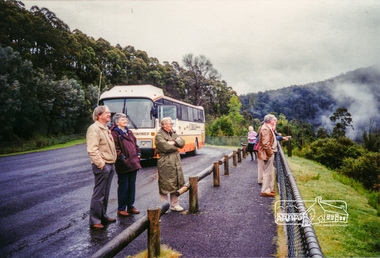
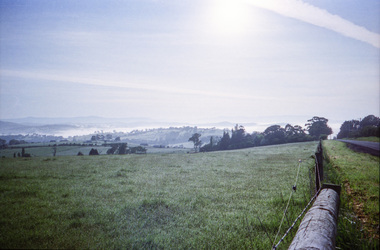
... Russell excelled as 'Poet Laureate', reading from Dacre Smyth's book. ...Russell excelled as 'Poet Laureate', reading from Dacre Smyth's book. ...EXPLORING THE UPPER YARRA (Newsletter No. 105, November 1995, by Bettina Woodburn) We enjoyed the Spring Excursion, this year "Exploring the Upper Yarra" - in spite of the constant rain and the countryside under the cloud cover, especially in the valleys, being mainly shiny shades of green. The occasional fields of buttercups, clumps of arum lilies and splendid rhododendron and other flowering bushes became very special. The Cobb and Co coach was warm and a cosy retreat as we zig-zagged on the highways and byways to glimpse the Yarra River, upstream and down, its secret places, and particularly the many bridges. Russell excelled as 'Poet Laureate', reading from Dacre Smyth's book. This 1979 publication includes paintings of all the bridges along the river with poems and brief descriptions of each one. Some of the bridges are in out of the way places and are not very well known. We looked forward to hearing the poetry as much as seeing the ' constructions'…Big Pat (was he short or tall, lean or fat? He did win the two hundred pound reward for discovering gold and had the creek named after him), about the 'Eddies'?, and the disliked 'meccano' bridge in Warburton, etc. etc. The hot roast lunch in the old Reefton Hotel was also most welcome. It was easy to imagine it peopled by miners and early settlers. Starting by crossing the new (1974) concrete bridge at Warrandyte we headed through Wonga Park with views to the Christmas Hills and to the escarpment of the Yering Gorge, which causes flood waters to back up through the Yarra Glen plain, so avoiding disasters downstream. At the end of a long driveway we found the wooden, privately owned Henley Bridge (1935 after the 1934 floods). This facilitates access to different parts of Henley Farm and to Lilydale. Everard Park, named after Blanche Shallard's father, a State Member for 17 years, below the Highway Yarra crossing was in need of care. It is 10 miles from Yarra Glen by road but, as "Yarra Marra” canoeists well know, 32 winding miles down by water. After more delightful countryside scenes we joined the Warburton Highway at Woori Yallock. From the old Railway Station at Launching Place the Centennial Trail for walkers, cyclists and ' horse riders has replaced the rails. The line from Lilydale was opened in 1901, and the last diesel freight train ran to Warburton in 1965. It continued to rain as we had morning tea in Warburton in a shelter between footbridges. From here we continued upstream past the Bridge to O'Shannasy Lodge and Reservoir, Starvation Creek, and the Peninsular tunnel (miners dug it as at Pound Bend) which we visited (scrambling down those steps!) on our return after lunch. Our furthermost point was the Upper Yarra Dam Reserve (and vast catchment area). Finished in 1957 after ten years work and 100 years after Yan Yean, it supplies much of Melbourne's water. After crossing the 30m Launching Place Bridge to the Eltham side of the Yarra and Healesville, we saw in the distance the Yarra Glen Timber Trestle Bridge over the river flats "the longest for years in the land it was said!" Harry's dream of "better weather over the Divide" unfortunately didn't come true, but I'm sure we 36 members will retain happy memories of a day that was wet and green and filled with Bridges. Bettina Woodburn - October 1995 Record of the Society's history of activities - Spring 1995 excursionColour photographshire of eltham historical society, activities, upper yarra dam, henley bridge -
 Eltham District Historical Society Inc
Photograph, Upper Yarra Dam, Spring Tour, 22 Oct 1995, 22/10/1995
... Russell excelled as 'Poet Laureate', reading from Dacre Smyth's book. ...Russell excelled as 'Poet Laureate', reading from Dacre Smyth's book. ...EXPLORING THE UPPER YARRA (Newsletter No. 105, November 1995, by Bettina Woodburn) We enjoyed the Spring Excursion, this year "Exploring the Upper Yarra" - in spite of the constant rain and the countryside under the cloud cover, especially in the valleys, being mainly shiny shades of green. The occasional fields of buttercups, clumps of arum lilies and splendid rhododendron and other flowering bushes became very special. The Cobb and Co coach was warm and a cosy retreat as we zig-zagged on the highways and byways to glimpse the Yarra River, upstream and down, its secret places, and particularly the many bridges. Russell excelled as 'Poet Laureate', reading from Dacre Smyth's book. This 1979 publication includes paintings of all the bridges along the river with poems and brief descriptions of each one. Some of the bridges are in out of the way places and are not very well known. We looked forward to hearing the poetry as much as seeing the ' constructions'…Big Pat (was he short or tall, lean or fat? He did win the two hundred pound reward for discovering gold and had the creek named after him), about the 'Eddies'?, and the disliked 'meccano' bridge in Warburton, etc. etc. The hot roast lunch in the old Reefton Hotel was also most welcome. It was easy to imagine it peopled by miners and early settlers. Starting by crossing the new (1974) concrete bridge at Warrandyte we headed through Wonga Park with views to the Christmas Hills and to the escarpment of the Yering Gorge, which causes flood waters to back up through the Yarra Glen plain, so avoiding disasters downstream. At the end of a long driveway we found the wooden, privately owned Henley Bridge (1935 after the 1934 floods). This facilitates access to different parts of Henley Farm and to Lilydale. Everard Park, named after Blanche Shallard's father, a State Member for 17 years, below the Highway Yarra crossing was in need of care. It is 10 miles from Yarra Glen by road but, as "Yarra Marra” canoeists well know, 32 winding miles down by water. After more delightful countryside scenes we joined the Warburton Highway at Woori Yallock. From the old Railway Station at Launching Place the Centennial Trail for walkers, cyclists and ' horse riders has replaced the rails. The line from Lilydale was opened in 1901, and the last diesel freight train ran to Warburton in 1965. It continued to rain as we had morning tea in Warburton in a shelter between footbridges. From here we continued upstream past the Bridge to O'Shannasy Lodge and Reservoir, Starvation Creek, and the Peninsular tunnel (miners dug it as at Pound Bend) which we visited (scrambling down those steps!) on our return after lunch. Our furthermost point was the Upper Yarra Dam Reserve (and vast catchment area). Finished in 1957 after ten years work and 100 years after Yan Yean, it supplies much of Melbourne's water. After crossing the 30m Launching Place Bridge to the Eltham side of the Yarra and Healesville, we saw in the distance the Yarra Glen Timber Trestle Bridge over the river flats "the longest for years in the land it was said!" Harry's dream of "better weather over the Divide" unfortunately didn't come true, but I'm sure we 36 members will retain happy memories of a day that was wet and green and filled with Bridges. Bettina Woodburn - October 1995 Record of the Society's history of activities - Spring 1995 excursionRoll of 35mm colour negative film, 3 stripsKodak Gold 200-4shire of eltham historical society, activities, upper yarra dam, henley bridge -
 Eltham District Historical Society Inc
Photograph, Upper Yarra Dam, Spring Tour, 22 Oct 1995, 22/10/1995
... Russell excelled as 'Poet Laureate', reading from Dacre Smyth's book. ...Russell excelled as 'Poet Laureate', reading from Dacre Smyth's book. ...EXPLORING THE UPPER YARRA (Newsletter No. 105, November 1995, by Bettina Woodburn) We enjoyed the Spring Excursion, this year "Exploring the Upper Yarra" - in spite of the constant rain and the countryside under the cloud cover, especially in the valleys, being mainly shiny shades of green. The occasional fields of buttercups, clumps of arum lilies and splendid rhododendron and other flowering bushes became very special. The Cobb and Co coach was warm and a cosy retreat as we zig-zagged on the highways and byways to glimpse the Yarra River, upstream and down, its secret places, and particularly the many bridges. Russell excelled as 'Poet Laureate', reading from Dacre Smyth's book. This 1979 publication includes paintings of all the bridges along the river with poems and brief descriptions of each one. Some of the bridges are in out of the way places and are not very well known. We looked forward to hearing the poetry as much as seeing the ' constructions'…Big Pat (was he short or tall, lean or fat? He did win the two hundred pound reward for discovering gold and had the creek named after him), about the 'Eddies'?, and the disliked 'meccano' bridge in Warburton, etc. etc. The hot roast lunch in the old Reefton Hotel was also most welcome. It was easy to imagine it peopled by miners and early settlers. Starting by crossing the new (1974) concrete bridge at Warrandyte we headed through Wonga Park with views to the Christmas Hills and to the escarpment of the Yering Gorge, which causes flood waters to back up through the Yarra Glen plain, so avoiding disasters downstream. At the end of a long driveway we found the wooden, privately owned Henley Bridge (1935 after the 1934 floods). This facilitates access to different parts of Henley Farm and to Lilydale. Everard Park, named after Blanche Shallard's father, a State Member for 17 years, below the Highway Yarra crossing was in need of care. It is 10 miles from Yarra Glen by road but, as "Yarra Marra” canoeists well know, 32 winding miles down by water. After more delightful countryside scenes we joined the Warburton Highway at Woori Yallock. From the old Railway Station at Launching Place the Centennial Trail for walkers, cyclists and ' horse riders has replaced the rails. The line from Lilydale was opened in 1901, and the last diesel freight train ran to Warburton in 1965. It continued to rain as we had morning tea in Warburton in a shelter between footbridges. From here we continued upstream past the Bridge to O'Shannasy Lodge and Reservoir, Starvation Creek, and the Peninsular tunnel (miners dug it as at Pound Bend) which we visited (scrambling down those steps!) on our return after lunch. Our furthermost point was the Upper Yarra Dam Reserve (and vast catchment area). Finished in 1957 after ten years work and 100 years after Yan Yean, it supplies much of Melbourne's water. After crossing the 30m Launching Place Bridge to the Eltham side of the Yarra and Healesville, we saw in the distance the Yarra Glen Timber Trestle Bridge over the river flats "the longest for years in the land it was said!" Harry's dream of "better weather over the Divide" unfortunately didn't come true, but I'm sure we 36 members will retain happy memories of a day that was wet and green and filled with Bridges. Bettina Woodburn - October 1995 Record of the Society's history of activities - Spring 1995 excursionRoll of 35mm colour negative film, 3 stripsKodak Gold 200-4shire of eltham historical society, activities, upper yarra dam, henley bridge
