
Showing 8 items matching "postcolonialism"
-
 Wyndham Art Gallery (Wyndham City Council)
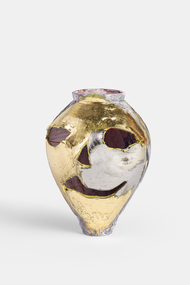
Sculpture - Vessel Mask II, Ramesh Mario Nithiyendran, 2025
... ...Postcolonialism...Ceramics Ceramic sculpture Contemporary sculpture Mythology Religion Spirituality Ritual Sri Lankan-Australian art South Asian influences Contemporary mythology Postcolonialism Decolonisation Vessel Mask II Sculpture Vessel Mask II Ramesh Mario Nithiyendran ...Ramesh Mario Nithiyendran is a contemporary artist of Sri Lankan, Tamil heritage. His practice traverses global histories and languages of figuration with a particular focus on South Asian traditions. He sees the imaginative exploration of ancient pasts as a way to speculate on parallel futures and to expand ways of perceiving the present. While he works across ceramics, bronze casting, painting, drawing, and immersive installation, he is best known for his hybrid ceramic sculptures that fuse references to ancient forms with various tropes and imagery from popular culture, zoology and other discourses. Through these works he explores themes of secular and non-secular idolatry, co-existent belief systems, queer aesthetics, disciplinary and regional histories of ceramics and sculpture, monumentality, as well as self-portraiture and autobiography.ceramics, ceramic sculpture, contemporary sculpture, mythology, religion, spirituality, ritual, sri lankan-australian art, south asian influences, contemporary mythology, postcolonialism, decolonisation -
 Victorian Aboriginal Corporation for Languages
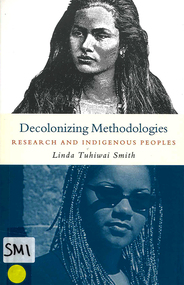
Book, Linda Tuhiwai Smith, Decolonizing methodologies : research and Indigenous peoples, 1999
... Extending the work of Foucault, she explores the intersections of imperialism, knowledge and research; en route she provides a history of knowledge from the Enlightenment to postcoloniality. The second part of the book meets an urgent demand: people who are carrying out their own research projects need literature which validates their frustrations in dealing with various Western paradigms. ...Extending the work of Foucault, she explores the intersections of imperialism, knowledge and research; en route she provides a history of knowledge from the Enlightenment to postcoloniality. The second part of the book meets an urgent demand: people who are carrying out their own research projects need literature which validates their frustrations in dealing with various Western paradigms. ...From the vantage point of the colonised, the term 'research' is inextricably linked with European colonialism; the way in which scientific research has been implicated in the worst excesses of imperialism remains a powerful remembered history for many of the world's colonised peoples. Here, an indigenous researcher issues a clarion call for the decolonisation of research methods. In the first part of the book, the author critically examines the historical and philosophical base of Western research. Extending the work of Foucault, she explores the intersections of imperialism, knowledge and research; en route she provides a history of knowledge from the Enlightenment to postcoloniality. The second part of the book meets an urgent demand: people who are carrying out their own research projects need literature which validates their frustrations in dealing with various Western paradigms. In setting an agenda for planning and implementing indigenous research, the author shows how such programmes are part of the wider project of reclaiming control over indigenous ways of knowing and being.tables, diagramscolonisation, research, imperialsim -
 Victorian Aboriginal Corporation for Languages
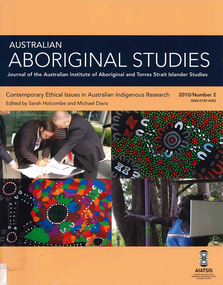
Periodical, Australian Institute of Aboriginal and Torres Strait Islander Studies, Australian Aboriginal studies : journal of the Australian Institute of Aboriginal and Torres Strait Islander Studies, 2010
... u Elders and their students to reflect upon ethical teaching and research in postcolonial knowledge practices. Closing the gaps in and through Indigenous health research: Guidelines, processes and practices Pat Dudgeon (UWA), Kerrie Kelly (Australian Indigenous Psychologists Association) and Roz Walker (UWA) Research in Aboriginal contexts remains a vexed issue given the ongoing inequities and injustices in Indigenous health. ...u Elders and their students to reflect upon ethical teaching and research in postcolonial knowledge practices. Closing the gaps in and through Indigenous health research: Guidelines, processes and practices Pat Dudgeon (UWA), Kerrie Kelly (Australian Indigenous Psychologists Association) and Roz Walker (UWA) Research in Aboriginal contexts remains a vexed issue given the ongoing inequities and injustices in Indigenous health. ...'Whose Ethics?':Codifying and enacting ethics in research settings Bringing ethics up to date? A review of the AIATSIS ethical guidelines Michael Davis (Independent Academic) A revision of the AIATSIS Guidelines for Ethical Research in Indigenous Studies was carried out during 2009-10. The purpose of the revision was to bring the Guidelines up to date in light of a range of critical developments that have occurred in Indigenous rights, research and knowledge management since the previous version of the Guidelines was released in 2000. In this paper I present an outline of these developments, and briefly discuss the review process. I argue that the review, and the developments that it responded to, have highlighted that ethical research needs to be thought about more as a type of behaviour and practice between engaged participants, and less as an institutionalised, document-focused and prescriptive approach. The arrogance of ethnography: Managing anthropological research knowledge Sarah Holcombe (ANU) The ethnographic method is a core feature of anthropological practice. This locally intensive research enables insight into local praxis and culturally relative practices that would otherwise not be possible. Indeed, empathetic engagement is only possible in this close and intimate encounter. However, this paper argues that this method can also provide the practitioner with a false sense of his or her own knowing and expertise and, indeed, with arrogance. And the boundaries between the anthropologist as knowledge sink - cultural translator and interpreter - and the knowledge of the local knowledge owners can become opaque. Globalisation and the knowledge ?commons?, exemplified by Google, also highlight the increasing complexities in this area of the governance and ownership of knowledge. Our stronghold of working in remote areas and/or with marginalised groups places us at the forefront of negotiating the multiple new technological knowledge spaces that are opening up in the form of Indigenous websites and knowledge centres in these areas. Anthropology is not immune from the increasing awareness of the limitations and risks of the intellectual property regime for protecting or managing Indigenous knowledge. The relevance of the Declaration on the Rights of Indigenous Peoples in opening up a ?rights-based? discourse, especially in the area of knowledge ownership, brings these issues to the fore. For anthropology to remain relevant, we have to engage locally with these global discourses. This paper begins to traverse some of this ground. Protocols: Devices for translating moralities, controlling knowledge and defining actors in Indigenous research, and critical ethical reflection Margaret Raven (Institute for Sustainability and Technology Policy (ISTP), Murdoch University) Protocols are devices that act to assist with ethical research behaviour in Indigenous research contexts. Protocols also attempt to play a mediating role in the power and control inherent in research. While the development of bureaucratically derived protocols is on the increase, critiques and review of protocols have been undertaken in an ad hoc manner and in the absence of an overarching ethical framework or standard. Additionally, actors implicated in research networks are seldom theorised. This paper sketches out a typology of research characters and the different moral positioning that each of them plays in the research game. It argues that by understanding the ways actors enact research protocols we are better able to understand what protocols are, and how they seek to build ethical research practices. Ethics and research: Dilemmas raised in managing research collections of Aboriginal and Torres Strait Islander materials Grace Koch (AIATSIS) This paper examines some of the ethical dilemmas for the proper management of research collections of Indigenous cultural materials, concentrating upon the use of such material for Native Title purposes. It refers directly to a number of points in the draft of the revised AIATSIS Guidelines for Ethical Research in Indigenous Studies and draws upon both actual and hypothetical examples of issues that may arise when requests are made for Indigenous material. Specific concerns about ethical practices in collecting data and the subsequent control of access to both the data itself and to published works based upon it are raised within the context of several types of collections, including those held by AIATSIS and by Native Title Representative Bodies. Ethics or social justice? Heritage and the politics of recognition Laurajane Smith (ANU) Nancy Fraser?s model of the politics of recognition is used to examine how ethical practices are interconnected with wider struggles for recognition and social justice. This paper focuses on the concept of 'heritage' and the way it is often uncritically linked to 'identity' to illustrate how expert knowledge can become implicated in struggles for recognition. The consequences of this for ethical practice and for rethinking the role of expertise, professional discourses and disciplinary identity are discussed. The ethics of teaching from country Michael Christie (CDU), with the assistance of Yi?iya Guyula, Kathy Gotha and Dh�?gal Gurruwiwi The 'Teaching from Country' program provided the opportunity and the funding for Yol?u (north-east Arnhem Land Aboriginal) knowledge authorities to participate actively in the academic teaching of their languages and cultures from their remote homeland centres using new digital technologies. As two knowledge systems and their practices came to work together, so too did two divergent epistemologies and metaphysics, and challenges to our understandings of our ethical behaviour. This paper uses an examination of the philosophical and pedagogical work of the Yol?u Elders and their students to reflect upon ethical teaching and research in postcolonial knowledge practices. Closing the gaps in and through Indigenous health research: Guidelines, processes and practices Pat Dudgeon (UWA), Kerrie Kelly (Australian Indigenous Psychologists Association) and Roz Walker (UWA) Research in Aboriginal contexts remains a vexed issue given the ongoing inequities and injustices in Indigenous health. It is widely accepted that good research providing a sound evidence base is critical to closing the gap in Aboriginal health and wellbeing outcomes. However, key contemporary research issues still remain regarding how that research is prioritised, carried out, disseminated and translated so that Aboriginal people are the main beneficiaries of the research in every sense. It is widely acknowledged that, historically, research on Indigenous groups by non-Indigenous researchers has benefited the careers and reputations of researchers, often with little benefit and considerably more harm for Indigenous peoples in Australia and internationally. This paper argues that genuine collaborative and equal partnerships in Indigenous health research are critical to enable Aboriginal and Torres Islander people to determine the solutions to close the gap on many contemporary health issues. It suggests that greater recognition of research methodologies, such as community participatory action research, is necessary to ensure that Aboriginal people have control of, or significant input into, determining the Indigenous health research agenda at all levels. This can occur at a national level, such as through the National Health and Medical Research Council (NHMRC) Road Map on Indigenous research priorities (RAWG 2002), and at a local level through the development of structural mechanisms and processes, including research ethics committees? research protocols to hold researchers accountable to the NHMRC ethical guidelines and values which recognise Indigenous culture in all aspects of research. Researching on Ngarrindjeri Ruwe/Ruwar: Methodologies for positive transformation Steve Hemming (Flinders University) , Daryle Rigney (Flinders University) and Shaun Berg (Berg Lawyers) Ngarrindjeri engagement with cultural and natural resource management over the past decade provides a useful case study for examining the relationship between research, colonialism and improved Indigenous wellbeing. The Ngarrindjeri nation is located in south-eastern Australia, a ?white? space framed by Aboriginalist myths of cultural extinction recycled through burgeoning heritage, Native Title, natural resource management ?industries?. Research is a central element of this network of intrusive interests and colonising practices. Government management regimes such as natural resource management draw upon the research and business sectors to form complex alliances to access funds to support their research, monitoring, policy development, management and on-ground works programs. We argue that understanding the political and ethical location of research in this contemporary management landscape is crucial to any assessment of the potential positive contribution of research to 'Bridging the Gap' or improving Indigenous wellbeing. Recognition that research conducted on Ngarrindjeri Ruwe/Ruwar (country/body/spirit) has impacts on Ngarrindjeri and that Ngarrindjeri have a right and responsibility to care for their lands and waters are important platforms for any just or ethical research. Ngarrindjeri have linked these rights and responsibilities to long-term community development focused on Ngarrindjeri capacity building and shifts in Ngarrindjeri power in programs designed to research and manage Ngarrindjeri Ruwe/Ruwar. Research agreements that protect Ngarrindjeri interests, including cultural knowledge and intellectual property, are crucial elements in these shifts in power. A preliminary review of ethics resources, with particular focus on those available online from Indigenous organisations in WA, NT and Qld Sarah Holcombe (ANU) and Natalia Gould (La Trobe University) In light of a growing interest in Indigenous knowledge, this preliminary review maps the forms and contents of some existing resources and processes currently available and under development in the Northern Territory, Queensland and Western Australia, along with those enacted through several cross-jurisdictional initiatives. A significant majority of ethics resources have been developed in response to a growing interest in the application of Indigenous knowledge in land and natural resource management. The aim of these resources is to ?manage? (i.e. protect and maintain) Indigenous knowledge by ensuring ethical engagement with the knowledge holders. Case studies are drawn on from each jurisdiction to illustrate both the diversity and commonality in the approach to managing this intercultural engagement. Such resources include protocols, guidelines, memorandums of understanding, research agreements and strategic plans. In conducting this review we encourage greater awareness of the range of approaches in practice and under development today, while emphasising that systematic, localised processes for establishing these mechanisms is of fundamental importance to ensuring equitable collaboration. Likewise, making available a range of ethics tools and resources also enables the sharing of the local and regional initiatives in this very dynamic area of Indigenous knowledge rights.b&w photographs, colour photographsngarrindjeri, ethics, ethnography, indigenous research, social justice, indigenous health -
 Monbulk RSL Sub Branch
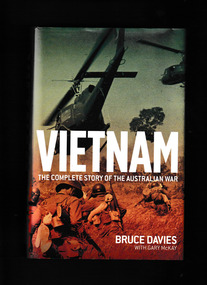
Book, Allen & Unwin, Vietnam : the complete story of the Australian War, 2012
... The rise of Japan, the war in the Pacific and the postcolonial independence of the peoples of southeast Asia, coupled with the mercurial influence of Ho Chi Minh and the rise of communism, form the background to the commitment of Australian forces. ...Take a journey back to the front line with two Australian veterans as they retrace the footsteps of soldiers and politicians, villagers and the enemy in a meticulously researched new history of the Vietnam War. Thirty years after the end of the Vietnam war comes an objective analysis of Australia's involvement. The book shows the extent of Australia's engagement in the Vietnam war and its contribution compared to its allies. "For Australians, Vietnam remains one of the most difficult-and controversial-wars we have fought. On the fiftieth anniversary of Australia's first involvement comes Vietnam: the complete story of the Australian war, for anyone who wishes to understand why Australia went to war, and who wants to make sense of the intensely unrelenting warfare. For Bruce Davies and Gary McKay, the history of Vietnam-its wars, colonial domination, its search for freedom and its subsequent loss-speaks to an Australian anxiety of a very small population far away from the centre of an empire to which it was firmly committed. The rise of Japan, the war in the Pacific and the postcolonial independence of the peoples of southeast Asia, coupled with the mercurial influence of Ho Chi Minh and the rise of communism, form the background to the commitment of Australian forces. Vietnam takes the reader to the front line, describing the experiences of soldier, politician, villager, enemy; and into the war room to unpick the military and political strategies. We see the challenges the Australians faced against not only a dogged enemy, but also those by the allies in the quest to defeat a powerful counterinsurgency. ... Meticulously researched and marked with acute critical analysis and a deep understanding of the place and the war, Vietnam shows the experience of Australian soldiers as never before.Index, notes, ill, p.601.non-fictionTake a journey back to the front line with two Australian veterans as they retrace the footsteps of soldiers and politicians, villagers and the enemy in a meticulously researched new history of the Vietnam War. Thirty years after the end of the Vietnam war comes an objective analysis of Australia's involvement. The book shows the extent of Australia's engagement in the Vietnam war and its contribution compared to its allies. "For Australians, Vietnam remains one of the most difficult-and controversial-wars we have fought. On the fiftieth anniversary of Australia's first involvement comes Vietnam: the complete story of the Australian war, for anyone who wishes to understand why Australia went to war, and who wants to make sense of the intensely unrelenting warfare. For Bruce Davies and Gary McKay, the history of Vietnam-its wars, colonial domination, its search for freedom and its subsequent loss-speaks to an Australian anxiety of a very small population far away from the centre of an empire to which it was firmly committed. The rise of Japan, the war in the Pacific and the postcolonial independence of the peoples of southeast Asia, coupled with the mercurial influence of Ho Chi Minh and the rise of communism, form the background to the commitment of Australian forces. Vietnam takes the reader to the front line, describing the experiences of soldier, politician, villager, enemy; and into the war room to unpick the military and political strategies. We see the challenges the Australians faced against not only a dogged enemy, but also those by the allies in the quest to defeat a powerful counterinsurgency. ... Meticulously researched and marked with acute critical analysis and a deep understanding of the place and the war, Vietnam shows the experience of Australian soldiers as never before.vietnam war 1961-1975 – history, vietnam war 1961-1975 – australian involvement -
 Flagstaff Hill Maritime Museum and Village
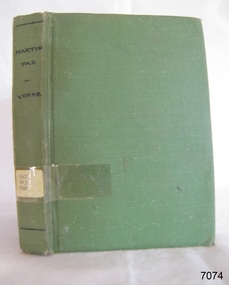
Book - A Fictional Adventure Story, Jules Verne, Martin Paz, 1876
... Of added significance is as the story is set in colonial and postcolonial Peru with a focus on racial hierarchy, love, and political unrest rather than technology or exploration. ...Martin Paz was published with “The Survivors of the Chancellor” novel, "Martin Paz" is a novella written in 1851 and set in Lima, Peru. The story follows a forbidden romance between Sarah, daughter of a Jewish businessman, and Martin Paz, a young Indian chief. When Sarah is promised to another man, their love ignites a dangerous chain of events involving knife fights, secret identities, and a violent Indian rebellion. As family secrets emerge and loyalties clash, the lovers must navigate the treacherous currents of Antisemitism, aristocracy, and cultural conflict in colonial Peru. This story is one of Verne’s early works written in 1851 and was first published in French in 1876 as part of the Voyages Extraordinaire series of works.Hard cover book, Martin Paz. Author: Jules Verne Publisher: Sampson Low Marston Searle and Rivington, Crown Buildings 188 Fleet Street, London. W1. Date: 1876 Light green hardcover with the title on the spine having lettering to spine in black hand written text pen. fictionMartin Paz was published with “The Survivors of the Chancellor” novel, "Martin Paz" is a novella written in 1851 and set in Lima, Peru. The story follows a forbidden romance between Sarah, daughter of a Jewish businessman, and Martin Paz, a young Indian chief. When Sarah is promised to another man, their love ignites a dangerous chain of events involving knife fights, secret identities, and a violent Indian rebellion. As family secrets emerge and loyalties clash, the lovers must navigate the treacherous currents of Antisemitism, aristocracy, and cultural conflict in colonial Peru. This story is one of Verne’s early works written in 1851 and was first published in French in 1876 as part of the Voyages Extraordinaire series of works.warrnambool, shipwrecked-coast, flagstaff-hill, flagstaff-hill-maritime-museum, maritime-museum, flagstaff-hill-maritime-village, shipwrecked-artefact, book, warrnambool mechanics’ institute, pattison collection, warrnambool library, corangamite regional library service, warrnambool city librarian, mechanics’ institute library, victorian library board, warrnambool books and records, warrnambool children’s library, ralph eric pattison, jules verne, voyages extraordinaire series, l’école des robinson's, ellen elizabeth frewer -
 Flagstaff Hill Maritime Museum and Village
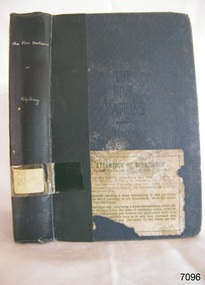
Book - Collection of Poetry, Rudyard Kipling, The Five Nations, 1903
... For that reason it appears constantly in postcolonial scholarship, if not always admiringly. ...The Five Nations is a collection of poems by Rudyard Kipling, first published in late 1903 in both the United Kingdom and the United States. Some poems were new; others had appeared before most notably "Recessional" of 1897 sometimes in different versions. The volume is in two parts: an untitled first section covering a wide range of subjects, and a second titled "Service Songs", mostly concerning the real or imagined experiences of common British soldiers around the turn of the twentieth century. The book is dominated by the Second Anglo-Boer War (1899–1902). Kipling had immersed himself in South African affairs after the conflict erupted in October 1899, and "The Old Issue", later collected here, was issued as a political warning. Well-known pieces include "Boots", "The Islanders", "The Lesson", "Stellenbosch", "The Broken Men", "The Sea and the Hills" and "The White Man's Burden". Kipling placed "Recessional" as the very last poem in the book, following the "Service Songs" suite about how combatants had been changed by the war. The title itself has been debated. In 1903 the United Kingdom consisted of four nations England, Ireland, Scotland and Wales and it was soon suggested that Kipling's "five nations" were Canada, Australia, New Zealand, South Africa (Cape Colony) and "the islands of the sea", meaning the British Isles. Interestingly, no commentator seems to have suggested that India was among them.Hard cover book. The Five Nations Author: Rudyard Kipling Publisher: Methuen & Co Date: 1903 Further Information:Dark Blue Cloth hardcover with lettering and patterning to spine in white texter. The spine has a Library label with an inscription.fictionThe Five Nations is a collection of poems by Rudyard Kipling, first published in late 1903 in both the United Kingdom and the United States. Some poems were new; others had appeared before most notably "Recessional" of 1897 sometimes in different versions. The volume is in two parts: an untitled first section covering a wide range of subjects, and a second titled "Service Songs", mostly concerning the real or imagined experiences of common British soldiers around the turn of the twentieth century. The book is dominated by the Second Anglo-Boer War (1899–1902). Kipling had immersed himself in South African affairs after the conflict erupted in October 1899, and "The Old Issue", later collected here, was issued as a political warning. Well-known pieces include "Boots", "The Islanders", "The Lesson", "Stellenbosch", "The Broken Men", "The Sea and the Hills" and "The White Man's Burden". Kipling placed "Recessional" as the very last poem in the book, following the "Service Songs" suite about how combatants had been changed by the war. The title itself has been debated. In 1903 the United Kingdom consisted of four nations England, Ireland, Scotland and Wales and it was soon suggested that Kipling's "five nations" were Canada, Australia, New Zealand, South Africa (Cape Colony) and "the islands of the sea", meaning the British Isles. Interestingly, no commentator seems to have suggested that India was among them.warrnambool, shipwrecked-coast, flagstaff-hill, flagstaff-hill-maritime-museum, maritime-museum, shipwreck-coast, flagstaff-hill-maritime-village, shipwrecked-artefact, book, the five nations, rudyard kipling -
 Merri-bek City Council
Photograph - Ilford smooth pearl print, Atong Atem, Nyanluak, 2022
... With an ongoing interest in portraiture, Atem uses photography to explore and examine postcolonial practices among the African diaspora in Melbourne. ... -
 Flagstaff Hill Maritime Museum and Village
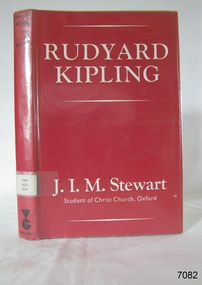
Book - Biography, John Innes Mackintosh Stewart, Rudyard Kipling, 1966
... It was later reassessed by postcolonial critics, after a period in which serious critical reappraisals of Kipling had been relatively few, giving this work some historical value as part of that mid-1960s reassessment of Kipling's work. ...J. I. M. Stewart's "Rudyard Kipling" is a critical biography covering Kipling's Childhood, Schooldays, Indian Years, and Indian writings such as The Conquest of London and The Light That Failed, Vermont, New Horizons, From the Jungle Books to Rewards and Fairies, Stalky and Others, The Mature Craftsman, and Verse. There is a conclusion, followed by a bibliography of Kipling's principal publications. The physical work runs to 190 pages and includes a list of "Published works of Rudyard Kipling referred to in this work". Reference sources describe the volume quite plainly as "a biographical and critical study of Kipling's writing and his personality." It traces Kipling's life from his 1865 Bombay birth through his Indian journalism career, his sudden London fame, and on to his controversial later reputation as his political views started to draw criticism.Hard cover book. Rudyard Kipling Author: John Innes Mackintosh Stewart Publisher: Victor Gollancz Limited Date: 1966 Further Information: Red Cloth hardcover with dust cover lettering to cover & spine in white on red background. The spine has a Library label with an inscription.non-fictionJ. I. M. Stewart's "Rudyard Kipling" is a critical biography covering Kipling's Childhood, Schooldays, Indian Years, and Indian writings such as The Conquest of London and The Light That Failed, Vermont, New Horizons, From the Jungle Books to Rewards and Fairies, Stalky and Others, The Mature Craftsman, and Verse. There is a conclusion, followed by a bibliography of Kipling's principal publications. The physical work runs to 190 pages and includes a list of "Published works of Rudyard Kipling referred to in this work". Reference sources describe the volume quite plainly as "a biographical and critical study of Kipling's writing and his personality." It traces Kipling's life from his 1865 Bombay birth through his Indian journalism career, his sudden London fame, and on to his controversial later reputation as his political views started to draw criticism.shipwrecked-coast, flagstaff-hill, flagstaff-hill-maritime-museum, warrnambool, maritime-museum, shipwreck-coast, flagstaff-hill-maritime-village, shipwrecked-artefact, book, pattison collection, warrnambool library, warrnambool mechanics’ institute, ralph eric pattison, corangamite regional library service, warrnambool city librarian, mechanics’ institute library, victorian library board, warrnambool books and records, warrnambool children’s library, rudyard kipling, john innes mackintosh stewart
