
Showing 86 items matching "pottery finishes"
-
 Flagstaff Hill Maritime Museum and Village
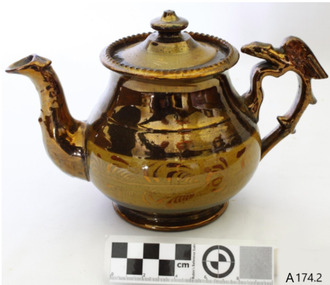
Ceramic - Teapot, First half of the 20th century
... ...Pottery Finishes...The technique on pottery was first developed in Mesopotamia (modern Iraq) in the early 9th century. It is produced by metallic oxides in an overglaze finish, which is given a second firing at a lower temperature in a "muffle kiln", or a reduction kiln, excluding oxygen. ...The teapot at this time cannot be associated with a historical event, person, or place, provenance regards manufacture is unknown, item assessed as a collection asset given it was produced before 1950. warrnambool flagstaff-hill flagstaff-hill-maritime-museum maritime-museum shipwreck-coast flagstaff-hill-maritime-village teapot tea set kitchen ware ceramic Lusterware Pottery Staffordshire UK Pottery Finishes None Teapot ceramic ornate copper lusterware abstract floral design handle has a protruding sculptured bird for thumb grip. ...Lusterware is a type of pottery or porcelain with a metallic glaze that gives the effect of iridescence. The technique on pottery was first developed in Mesopotamia (modern Iraq) in the early 9th century. It is produced by metallic oxides in an overglaze finish, which is given a second firing at a lower temperature in a "muffle kiln", or a reduction kiln, excluding oxygen. The Lusterware effect is a final coating applied over the ceramic glaze, and fixed by a light second firing, applying small amounts of metallic compounds (generally of silver or copper) mixed with something to make it paintable (clay or ochre). This is then fired in a reducing atmosphere at a temperature high enough to "soften" the glaze from the first firing, and break down the metallic compounds, leaving a very thin ("perhaps 10 or 20 atoms thick") layer that is fused with the main glaze, but is mainly metal. Lusterware normally only uses one colour per piece, and the range is limited a "gold" derived from silver compounds was historically the most common. The process has always been expensive and rather unpredictable, always requiring two firings, and often the use of expensive materials such as silver and platinum. The very thin layer of luster is often delicate, and many types of Lusterware are easily damaged by scratching removing the metallic layer, or by contact with acids. Lusterware has therefore always been for display and occasional use, although by the 19th century it could be relatively cheap. Many pieces show the luster effect only working correctly on parts of the surface, or not at all. An item probably made in Staffordshire UK where this type of pottery was popular in the late 19th century by unknown pottery as the subject item has no marks. The teapot at this time cannot be associated with a historical event, person, or place, provenance regards manufacture is unknown, item assessed as a collection asset given it was produced before 1950.Teapot ceramic ornate copper lusterware abstract floral design handle has a protruding sculptured bird for thumb grip. Nonewarrnambool, flagstaff-hill, flagstaff-hill-maritime-museum, maritime-museum, shipwreck-coast, flagstaff-hill-maritime-village, teapot, tea set, kitchen ware, ceramic, lusterware, pottery, staffordshire uk, pottery finishes -
 Working Heritage Crown Land Collection
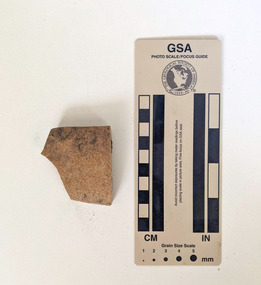
Ceramic - pottery shard, Mint pottery shard
... Pottery shard with glazed finish...Pottery shard with glazed finish Mint pottery shard Ceramic pottery shard ...Pottery shard with glazed finish -
 Working Heritage Crown Land Collection
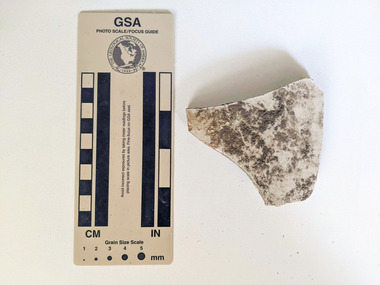
Ceramic - pottery shard, Mint pottery shard
... White pottery shard with glazed finish...White pottery shard with glazed finish Mint pottery shard Ceramic pottery shard ...White pottery shard with glazed finish -
 Flagstaff Hill Maritime Museum and Village
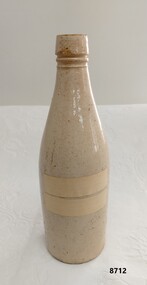
Container - Stone Ware Bottle, Port Dundas Pottery, Circa early 1870's
... 1878" "1624 TNS SAILING SHIP / ONLY 2 SURVIVORS OUT OF / 54 PEOPLE ON BOARD/ NOW KNOWN AS LOCH ARD GORGE" Stamp - "PORT DUNDAS POTTERY / GLASGOW" Symbol - Stamp square with "D" A beige coloured,salt glazed stoneware bottle with gently tapered sides and a speckled finish. ...This bottle was made at the Dundas Pottery Works, in Glasgow, Scotland and recovered from the shipwreck of the Loch Ard. Stoneware bottles similar to this one were in common use during the mid-to-late 19th century. They were used to store and transport beverages like ginger beer, porter or stout. The bottles were handmade using either a potter's wheel or in moulds such as a plaster mould, which gave the bottles uniformity in size and shape. The bottle would then be fired and glazed in a hot kiln. Makers often identified their bottles with the impression of a small symbol or adding a colour to the mouth. The manufacturer usually stamped their bottles with their name and logo, and sometimes a message that the bottle remained their property and should be returned to them. The bottles could then be cleaned and refilled. DUNDAS POTTERY WORKS - The Dundas Pottery works were established in 1828 by William Johnstone in partnership with John Forsyth and John Mc Coll. Located where the Forth and Clyde Canal joined the Monkland Canal, North of Glasgow. Johnstone sold the pottery in 1835 to Robert Cochran and James Couper. Mc Coll was retained as manager until 1837when in 1839 Cochran & Couper sold the pottery and purchased the St Rollex Glass Works. George Duncan took over briefly but died in 1841, with the pottery possibly being run by his widow Helen and a potter named Alexander Paul. James Miller was the manager at the time and he bought the pottery in 1856, in partnership with John Moody. Miller's long and careful stewardship of the pottery saw success from the export market which allowed him to purchase the North British pottery in 1867 until 1874 when it was sold. In 1875, Miller, in partnership with John Young, leased part of Caledonian Pottery, naming it Crown Pottery, however, it burned down in 1879. In the early 1880s, Young extended the pottery and named it Milton Pottery. Miller’s son, James W., became a partner in Milton pottery in 1905. James Miller Snr died in 1905 and the company continued as a limited liability company, being sold to the Borax Consolidation Ltd in 1929, but it was unsuccessful and Possil pottery purchased some of the company's equipment before it finally closed in 1932. From 1828 until the James Miller period of circa 1856, the pottery produced salt-glazed stoneware for the local industrial trade; mainly bottles and drain pipes. James Miller produced various bottles, whisky and acid jars, casks, butter crocks, jam jars and domestic wares in Bristol glaze. He streamlined the water filter manufacturing, which had become a specialty of the pottery, and a dedicated section of the pottery was created solely for their production, which was exported worldwide. It was salvaged from the Loch Ard. The ship Loch Ard was built on the River Clyde in Scotland in 1873 for the prestigious Loch Line of colonial clipper ships, designed for the Australian run. It sailed from England on 1 March 1878 carrying 37 crew, 17 passengers and a diverse general cargo ranging from luxury items to bulk railway iron. On 1 June 1878, emerging from fog and hearing too late the sound of breakers against the tall limestone cliffs, the vessel struck the southern foot of Mutton Bird Island and sank in 23 metres of water. Of the fifty-four people on board only two survived, one young male crewman, Tom Pearce, and one young female passenger, Eva Carmichael. This ink bottle was given to George Shields - a member of the Shields family who have had a long association with the wreck of the Loch Ard. In 1878, following the wreck of the Loch Ard and the subsequent rescue of Eva Carmichael, Eva was taken to Glenample station (near Princetown) to recuperate. It was during this period that Eva became great friends with Jane Shields (an Aunt of George Shields) - a friendship that continued throughout their lives. At that time, Jane was a young woman living in Princetown with her parents and siblings. Many of the Shields family continued to have a great interest in the Loch Ard and several generations of the family are buried in the Loch Ard cemetery.This stoneware bottle is historically significant for its manufacture and use in trade and transport in the late 19th to the early 20th century. This bottle is historically significant for its connection with the well-known stoneware manufacturers, Dundas Pottery of Glasgow, Scotland. The shipwreck of the Loch Ard is of significance for Victoria and is registered on the Victorian Heritage Register ( S 417). Flagstaff Hill has a varied collection of artefact's from Loch Ard and its collection is significant for being one of the largest accumulation of artefact's from this notable Victorian shipwreck of which the subject items are a small part. The collection's objects give us a snapshot of how we can interpret the story of this tragic event. The collection is also archaeologically significant as it represents aspects of Victoria's shipping history that allows us to interpret Victoria's social and historical themes of the time. Through is associated with the worst and best-known shipwreck in Victoria's history.A beige coloured,salt glazed stoneware bottle with gently tapered sides and a speckled finish. It has two narrow channels around the neck and is missing a stopper. Two 8.5 centimetre pieces of tape, with very faded writing, are stuck horizontally on the side of the bottle. The bottom of the bottle has brown discolouration. It has an oval shaped stamp with a makers' name and location on bottom side of bottle.On tape - "STONE BOTTLE SALVAGED / FROM WRECK OF LOCH ARD/ SUNK NEAR PORT CAMPBELL/ ? 1878" "1624 TNS SAILING SHIP / ONLY 2 SURVIVORS OUT OF / 54 PEOPLE ON BOARD/ NOW KNOWN AS LOCH ARD GORGE" Stamp - "PORT DUNDAS POTTERY / GLASGOW" Symbol - Stamp square with "D"flagstaff hill maritime museum and village, warrnambool, great ocean road, shipwreck coast, loch ard, stoneware bottle, port dundas pottery, shields family, ginger beer bottle, loch ard salvage, loch ard artefact -
 Bendigo Historical Society Inc.
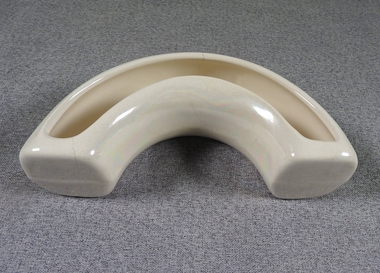
Ceramic - Raynham Vase, white semicircular, Raynham Ceramic Pty. Ltd, 1948 - 1964
... Slipcast Vases Paddy McDonald Bendigo Pottery White semi- circular small vase with a metallic shimmering finish (lustreware) . ...Raynham (Ray) Cook started his pottery in 1946 in the garage in the back yard of 218 Murrumbeena Rd East Bentleigh Victoria and moved to a factory in North Rd East Bentleigh in 1948. The company was named Raynham Ceramic Pty. Ltd. after his first name and produced all sorts of light weight slipware. some speckled lustreware vases. He had a second pottery at 237 East Boundary Rd East Bentleigh and also operated from Carey St East Bentleigh after buying out Guy Boyd. Ray was a pioneer in Australia of the electric pottery kiln which was very novel in the 1940's Ray's greatest attribute was probably his design skills. All Raynham pottery was his designs. One of his key employees was "Paddy" McDonald who undertook the majority of the thrown pottery. Ray Cook sold the company to Bendigo Pottery in the early 1970's who continued to use the Raynham brand for a short time. Most examples by that company have the same form but are unmarked.White semi- circular small vase with a metallic shimmering finish (lustreware) . A fine seven centremetre crack in it. 208 in pencil on the baseray cook, raynham ceramic pty. ltd., slipcast vases, paddy mcdonald, bendigo pottery -
 Bendigo Historical Society Inc.
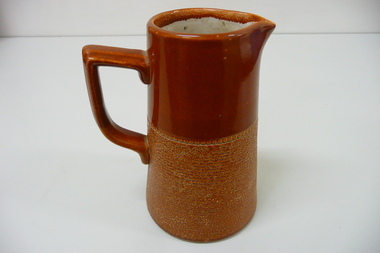
Domestic Object - BROWN POTTERY JUG
... DOMESTIC EQUIPMENT Food storage & preservation jug Permashe Leadless Glaze 1 1/2 PT Brown glazed Langley Ware jug with applied handle, smooth glaze on top section with rough finish on base, white interior. Domestic Object BROWN POTTERY JUG ...Brown glazed Langley Ware jug with applied handle, smooth glaze on top section with rough finish on base, white interior.Permashe Leadless Glaze 1 1/2 PTdomestic equipment, food storage & preservation, jug -
 Bendigo Historical Society Inc.
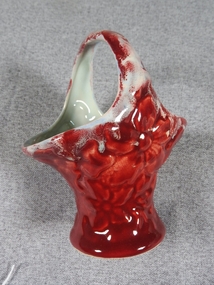
Ceramic - Raynham Vase, small red basket shape, Raynham Ceramic Pty. Ltd, 1948 - 1964
... Slipcast Vases Paddy McDonald Bendigo Pottery A small basket shape, the exterior is a deep red colour with white patches on the handle, the interior is cream coloured. There are floral designs impressed into the vase. It has shiny gloss finish ...Raynham (Ray) Cook started his pottery in 1946 in the garage in the back yard of 218 Murrumbeena Rd East Bentleigh Victoria and moved to a factory in North Rd East Bentleigh in 1948. The company was named Raynham Ceramic Pty. Ltd. after his first name and produced all sorts of light weight slipware. some speckled lustreware vases. He had a second pottery at 237 East Boundary Rd East Bentleigh and also operated from Carey St East Bentleigh after buying out Guy Boyd. Ray was a pioneer in Australia of the electric pottery kiln which was very novel in the 1940's Ray's greatest attribute was probably his design skills. All Raynham pottery was his designs. One of his key employees was "Paddy" McDonald who undertook the majority of the thrown pottery. Ray Cook sold the company to Bendigo Pottery in the early 1970's who continued to use the Raynham brand for a short time. Most examples by that company have the same form but are unmarked. A small basket shape, the exterior is a deep red colour with white patches on the handle, the interior is cream coloured. There are floral designs impressed into the vase. It has shiny gloss finish. Red printing on the base - Raynham and a black number 36ray cook, raynham ceramic pty. ltd., slipcast vases, paddy mcdonald, bendigo pottery -
 Bendigo Historical Society Inc.
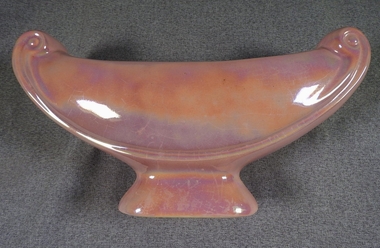
Ceramic - Raynham Vase, large pink boat shape, Raynham Ceramic Pty. Ltd, 1948 - 1964
... Slipcast Vases Paddy McDonald Bendigo Pottery A large boat shaped vase with a pink metallic shimmering finish (lustreware) and a pink smooth gloss internal surface. ...Raynham (Ray) Cook started his pottery in 1946 in the garage in the back yard of 218 Murrumbeena Rd East Bentleigh Victoria and moved to a factory in North Rd East Bentleigh in 1948. The company was named Raynham Ceramic Pty. Ltd. after his first name and produced all sorts of light weight slipware. some speckled lustreware vases. He had a second pottery at 237 East Boundary Rd East Bentleigh and also operated from Carey St East Bentleigh after buying out Guy Boyd. Ray was a pioneer in Australia of the electric pottery kiln which was very novel in the 1940's Ray's greatest attribute was probably his design skills. All Raynham pottery was his designs. One of his key employees was "Paddy" McDonald who undertook the majority of the thrown pottery. Ray Cook sold the company to Bendigo Pottery in the early 1970's who continued to use the Raynham brand for a short time. Most examples by that company have the same form but are unmarked. A large boat shaped vase with a pink metallic shimmering finish (lustreware) and a pink smooth gloss internal surface. There are scrolls on both ends. It's on a squat pedestal in the same mould. Markings on the base illegible, possibly Raynham and a number.ray cook, raynham ceramic pty. ltd., slipcast vases, paddy mcdonald, bendigo pottery -
 Bendigo Historical Society Inc.
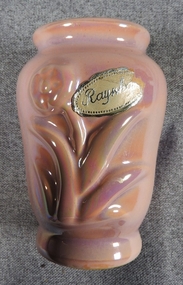
Ceramic - Raynham Vase, small pink cylindrical vase, Raynham Ceramic Pty. Ltd, 1948 - 1964
... Slipcast Vases Paddy McDonald Bendigo Pottery A small cylindrical vase. The external surface has a pink metallic shimmering finish (lustreware) with an indentation of a flower and a small, damaged cream coloured stick-on label - Raynham. ...Raynham (Ray) Cook started his pottery in 1946 in the garage in the back yard of 218 Murrumbeena Rd East Bentleigh Victoria and moved to a factory in North Rd East Bentleigh in 1948. The company was named Raynham Ceramic Pty. Ltd. after his first name and produced all sorts of light weight slipware. some speckled lustreware vases. He had a second pottery at 237 East Boundary Rd East Bentleigh and also operated from Carey St East Bentleigh after buying out Guy Boyd. Ray was a pioneer in Australia of the electric pottery kiln which was very novel in the 1940's Ray's greatest attribute was probably his design skills. All Raynham pottery was his designs. One of his key employees was "Paddy" McDonald who undertook the majority of the thrown pottery. Ray Cook sold the company to Bendigo Pottery in the early 1970's who continued to use the Raynham brand for a short time. Most examples by that company have the same form but are unmarked. A small cylindrical vase. The external surface has a pink metallic shimmering finish (lustreware) with an indentation of a flower and a small, damaged cream coloured stick-on label - Raynham. The inside is pink smooth gloss surface and a small red stick-on label - GUARANTEED Raynham PRODUCTION AUSTRALIA The vase is slightly wider at the top than its base. Markings on the base - Raynham 27, From Marge & Rex Sa.... Birthday 1962ray cook, raynham ceramic pty. ltd., slipcast vases, paddy mcdonald, bendigo pottery -
 Bendigo Historical Society Inc.
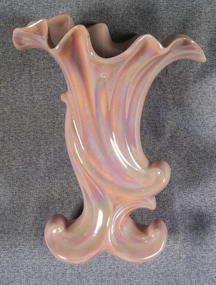
Ceramic - Raynham Vase, tall pink vase, Raynham Ceramic Pty. Ltd, 1948 - 1964
... Slipcast Vases Paddy McDonald Bendigo Pottery A tall asymmetrical centrepiece vase with flared fluted opening, the base is two scrolls. The external surface and the upper part of the internal surface has a pink metallic shimmering finish (lustreware) Marking on the base - Raynham 330 Ceramic Raynham Vase, tall pink vase Raynham Ceramic Pty. ...Raynham (Ray) Cook started his pottery in 1946 in the garage in the back yard of 218 Murrumbeena Rd East Bentleigh Victoria and moved to a factory in North Rd East Bentleigh in 1948. The company was named Raynham Ceramic Pty. Ltd. after his first name and produced all sorts of light weight slipware. some speckled lustreware vases. He had a second pottery at 237 East Boundary Rd East Bentleigh and also operated from Carey St East Bentleigh after buying out Guy Boyd. Ray was a pioneer in Australia of the electric pottery kiln which was very novel in the 1940's Ray's greatest attribute was probably his design skills. All Raynham pottery was his designs. One of his key employees was "Paddy" McDonald who undertook the majority of the thrown pottery. Ray Cook sold the company to Bendigo Pottery in the early 1970's who continued to use the Raynham brand for a short time. Most examples by that company have the same form but are unmarked. A tall asymmetrical centrepiece vase with flared fluted opening, the base is two scrolls. The external surface and the upper part of the internal surface has a pink metallic shimmering finish (lustreware) Marking on the base - Raynham 330ray cook, raynham ceramic pty. ltd., slipcast vases, paddy mcdonald, bendigo pottery -
 Bendigo Historical Society Inc.
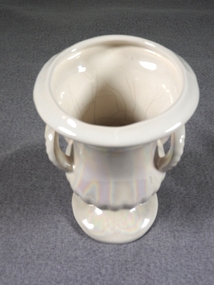
Ceramic - Raynham Vase, tall white vase, Raynham Ceramic Pty. Ltd, 1948 - 1964
... Slipcast Vases Paddy McDonald Bendigo Pottery A tall cylindrical white vase curves in from the top then bulges out near its base with two horseshoe shaped handles on the bulge. It's on a squat pedestal in the same mould. It has a white metallic shimmering finish ...Raynham (Ray) Cook started his pottery in 1946 in the garage in the back yard of 218 Murrumbeena Rd East Bentleigh Victoria and moved to a factory in North Rd East Bentleigh in 1948. The company was named Raynham Ceramic Pty. Ltd. after his first name and produced all sorts of light weight slipware. some speckled lustreware vases. He had a second pottery at 237 East Boundary Rd East Bentleigh and also operated from Carey St East Bentleigh after buying out Guy Boyd. Ray was a pioneer in Australia of the electric pottery kiln which was very novel in the 1940's Ray's greatest attribute was probably his design skills. All Raynham pottery was his designs. One of his key employees was "Paddy" McDonald who undertook the majority of the thrown pottery. Ray Cook sold the company to Bendigo Pottery in the early 1970's who continued to use the Raynham brand for a short time. Most examples by that company have the same form but are unmarked.A tall cylindrical white vase curves in from the top then bulges out near its base with two horseshoe shaped handles on the bulge. It's on a squat pedestal in the same mould. It has a white metallic shimmering finish (lustreware). The inside has numerous cracks. Markings on the base - 904ray cook, raynham ceramic pty. ltd., slipcast vases, paddy mcdonald, bendigo pottery -
 Federation University Art Collection
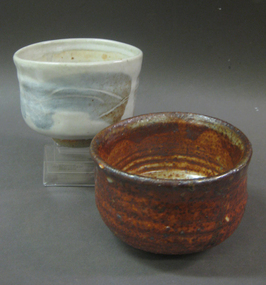
Artwork- Ceramic, Rasmussen, Mary, 'Vessel' by Mary Rasmussen, 2009
... pottery in 1980. In 1993 she was employed as a Ceramics tearcher at the Ballarat School of Mines. In 2009 Mary Rasmussen celebrated ten years continuous service teaching Ceramics at the Federation Univeristy Arts Academy. In 2015 she curated the 2015 Clunes Ceramics Award. This item is part of the Federation University Art Collection. The Art Collection features over 1000 works and was listed as a 'Ballarat Treasure' in 2007. art artwork mary rasmussen ceramics woodfire Two wheel thrown vessels, woodfired. .1) Light coloured finish ...Mary RASMUSSEN (1940- ) A student of John Gilbert, Mary Rassmussin (Davidson) established her own pottery in 1980. In 1993 she was employed as a Ceramics tearcher at the Ballarat School of Mines. In 2009 Mary Rasmussen celebrated ten years continuous service teaching Ceramics at the Federation Univeristy Arts Academy. In 2015 she curated the 2015 Clunes Ceramics Award. This item is part of the Federation University Art Collection. The Art Collection features over 1000 works and was listed as a 'Ballarat Treasure' in 2007.Two wheel thrown vessels, woodfired. .1) Light coloured finish .2) Brown and rust finish This work was purchased from the Victorian Bushfire Appeal Concert 'Ballarat RemEmbers', March 2009. Works were donated for the appeal.art, artwork, mary rasmussen, ceramics, woodfire -
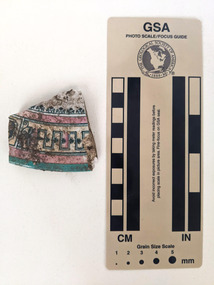 Working Heritage Crown Land Collection
Ceramic - Ceramic shard, Mint ceramic shard
... Pottery Ceramic Archaeology Hellenistic geometric design Ceramic shard with glazed finish with a decorative design in pink, yellow and blue. ...Ceramic shard with glazed finish with a decorative design in pink, yellow and blue.Hellenistic geometric designpottery, ceramic, archaeology -
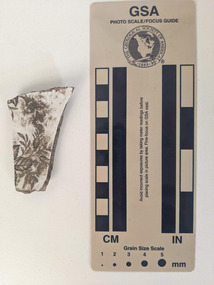 Working Heritage Crown Land Collection
Ceramic - Ceramic shard, Mint ceramic shard
... Pottery Ceramic Archaeology Floral design Ceramic shard with white glazed finish with a decorative floral design in black. ...Ceramic shard with white glazed finish with a decorative floral design in black.Floral designpottery, ceramic, archaeology -
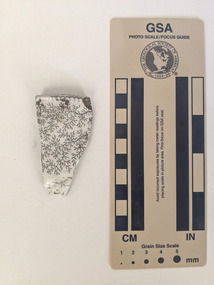 Working Heritage Crown Land Collection
Ceramic - Ceramic shard, Mint ceramic shard
... Pottery Ceramic Archaeology Floral design Ceramic shard with white glazed finish with a decorative floral design in black. ...Ceramic shard with white glazed finish with a decorative floral design in black.Floral designpottery, ceramic, archaeology -
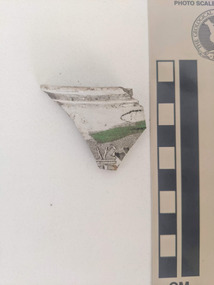 Working Heritage Crown Land Collection
Ceramic - Ceramic shard, Mint ceramic shard
... Pottery Ceramic Archaeology Black and green decorative pattern Ceramic shard with white glazed finish and black and green decorative pattern. ...Ceramic shard with white glazed finish and black and green decorative pattern.Black and green decorative patternpottery, ceramic, archaeology -
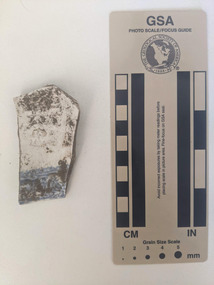 Working Heritage Crown Land Collection
Ceramic - Ceramic shard, Mint ceramic shard
... Pottery Ceramic Archaeology blue decorative pattern Ceramic shard with white glazed finish and a blue decorative design. ...Ceramic shard with white glazed finish and a blue decorative design. blue decorative patternpottery, ceramic, archaeology -
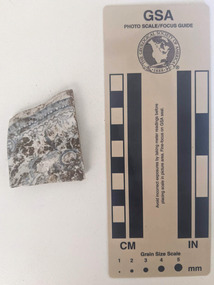 Working Heritage Crown Land Collection
Ceramic - Ceramic shard, Mint ceramic shard
... Pottery Ceramic Archaeology blue decorative pattern Ceramic shard with white glazed finish and a blue decorative design. ...Ceramic shard with white glazed finish and a blue decorative design. blue decorative patternpottery, ceramic, archaeology -
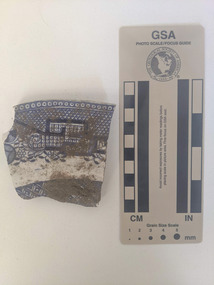 Working Heritage Crown Land Collection
Ceramic - Ceramic shard, Mint ceramic shard
... Pottery Ceramic Archaeology blue decorative pattern Ceramic shard with white glazed finish and a blue decorative design. ...Ceramic shard with white glazed finish and a blue decorative design. blue decorative patternpottery, ceramic, archaeology -
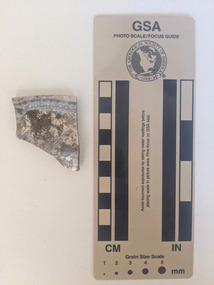 Working Heritage Crown Land Collection
Ceramic - Ceramic shard, Mint ceramic shard
... Pottery Ceramic Archaeology blue decorative pattern Ceramic shard with white glazed finish and a blue decorative design. ...Ceramic shard with white glazed finish and a blue decorative design. blue decorative patternpottery, ceramic, archaeology -
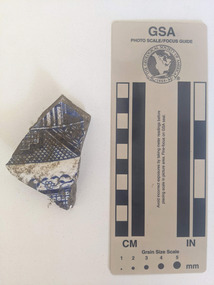 Working Heritage Crown Land Collection
Ceramic - Ceramic shard, Mint ceramic shard
... Pottery Ceramic Archaeology blue decorative pattern Ceramic shard with white glazed finish and a blue decorative design. ...Ceramic shard with white glazed finish and a blue decorative design. blue decorative patternpottery, ceramic, archaeology -
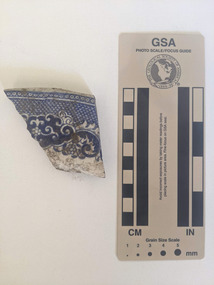 Working Heritage Crown Land Collection
Ceramic - Ceramic shard, Mint ceramic shard
... Pottery Ceramic Archaeology blue decorative pattern Ceramic shard with white glazed finish and a blue decorative design. ...Ceramic shard with white glazed finish and a blue decorative design. blue decorative patternpottery, ceramic, archaeology -
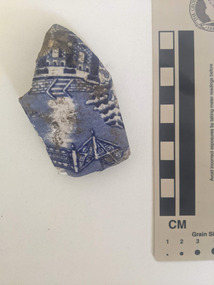 Working Heritage Crown Land Collection
Ceramic - Ceramic shard, Mint ceramic shard
... Pottery Ceramic Archaeology blue pictorial design Ceramic shard with white glazed finish and a blue pictorial design. ...Ceramic shard with white glazed finish and a blue pictorial design. blue pictorial designpottery, ceramic, archaeology -
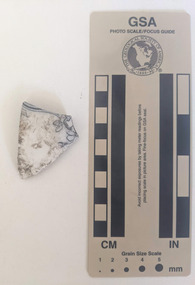 Working Heritage Crown Land Collection
Ceramic - Ceramic shard, Mint ceramic shard
... Pottery Ceramic Archaeology black floral design Ceramic shard with white glazed finish and a black floral design. ...Ceramic shard with white glazed finish and a black floral design.black floral designpottery, ceramic, archaeology -
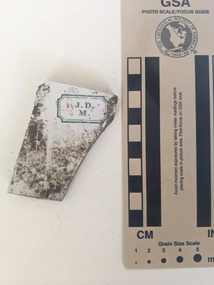 Working Heritage Crown Land Collection
Ceramic - Ceramic shard, Mint ceramic shard
... Pottery Ceramic Archaeology J D M Ceramic shard with white glazed finish and a blue design with the letters J D M Mint ceramic shard Ceramic Ceramic shard ...Ceramic shard with white glazed finish and a blue design with the letters J D MJ D Mpottery, ceramic, archaeology -
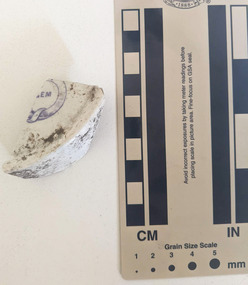 Working Heritage Crown Land Collection
Ceramic - Ceramic shard, Mint ceramic shard
... Pottery Ceramic Archaeology E M Ceramic shard with white glazed finish and a blue design with the letters E M Mint ceramic shard Ceramic Ceramic shard ...Ceramic shard with white glazed finish and a blue design with the letters E ME Mpottery, ceramic, archaeology -
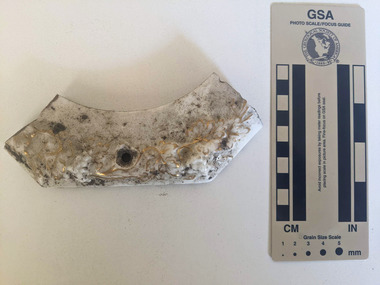 Working Heritage Crown Land Collection
Ceramic - Ceramic shard, Mint ceramic shard
... Pottery Ceramic Archaeology floral design in gold Ceramic shard with white glazed finish and a raised design with a gold floral pattern Mint ceramic shard Ceramic Ceramic shard ...Ceramic shard with white glazed finish and a raised design with a gold floral patternfloral design in goldpottery, ceramic, archaeology -
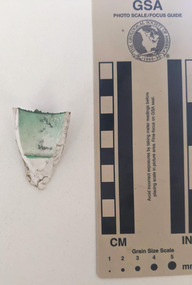 Working Heritage Crown Land Collection
Ceramic - Ceramic shard, Mint ceramic shard
... Pottery Ceramic Archaeology Ceramic shard with white and green glazed finish Mint ceramic shard Ceramic Ceramic shard ...Ceramic shard with white and green glazed finish pottery, ceramic, archaeology -
 Working Heritage Crown Land Collection
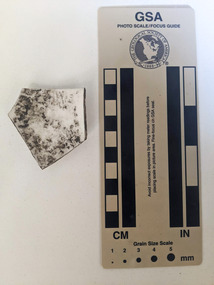
Ceramic - Ceramic shard, Mint ceramic shard
... Pottery Ceramic Archaeology Ceramic shard with white glazed finish Mint ceramic shard Ceramic Ceramic shard ...Ceramic shard with white glazed finish pottery, ceramic, archaeology -
 Working Heritage Crown Land Collection
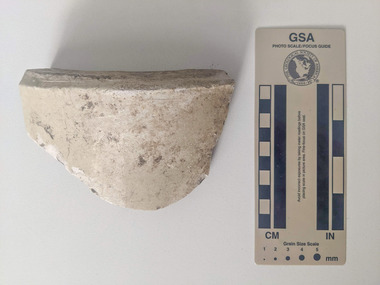
Ceramic - Ceramic shard, Mint ceramic shard
... Pottery Ceramic Archaeology Ceramic shard with white glazed finish Mint ceramic shard Ceramic Ceramic shard ...Ceramic shard with white glazed finish pottery, ceramic, archaeology
