
Showing 33 items matching "poultry farming"
-
 Emerald Museum & Nobelius Heritage Park
Book - Farming Reference Book, Government Printer, Handbook of Tasmania. Orcharding, Dairy, Poultry, and General Farming, 1914
... Orcharding, Dairy, Poultry, and General Farming...Orcharding, Dairy, Poultry, and General Farming Book Farming Reference Book Government Printer ...Probable source is Nobelius Nursery. C. A. Nobelius had extensive apple orchards at Freshwater Point on the Tamar River north of Launceston75-page book, repaired with cardboard cover and fitted with plastic protective covering, includes black and white photographs throughout book and on cover.Emerald History Museumnurseries (plants), orchards, fruit growing, farms, government of tasmania, documents, book, dairy, poultry -
Box Hill Historical Society
Book, Frederick J. Howell, The Depths of the Wood, 1958
... ...Poultry farming...Howell> Frederick J. Poultry farming Agriculture Poetry Book features the poems of Frederick J. ...Book features the poems of Frederick J. Howell who was a poultry farmer in Box Hill from approximately 1909-1920. Book features a frontispiece photographic portrait of Howell and a biographical section. He is buried in Box Hill Cemetery.86ppBook features the poems of Frederick J. Howell who was a poultry farmer in Box Hill from approximately 1909-1920. Book features a frontispiece photographic portrait of Howell and a biographical section. He is buried in Box Hill Cemetery.howell> frederick j., poultry farming, agriculture, poetry -
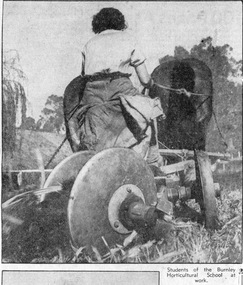 University of Melbourne, Burnley Campus Archives
Newspaper - Newspaper Cutting, The Herald, Out-Door Careers for Modern Girls, 1939
... poultry...chicken farming...the herald female students careers for girls poultry chicken farming Article with 2 photographs in "The Herald" February 3, 1939 about the Burnley course and careers for girls. ...Article with 2 photographs in "The Herald" February 3, 1939 about the Burnley course and careers for girls.the herald, female students, careers for girls, poultry, chicken farming -
 City of Moorabbin Historical Society (Operating the Box Cottage Museum)
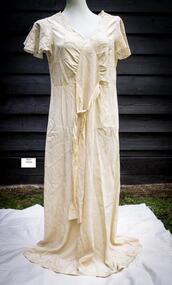
Clothing - Clothing, lady's silk nightgown c1930, c1930
... After surviving the Depression Years many market gardeners changed to poultry farming and egg supply to build a multi million dollar industry . ...After surviving the Depression Years many market gardeners changed to poultry farming and egg supply to build a multi million dollar industry . ...After surviving the Depression Years many market gardeners changed to poultry farming and egg supply to build a multi million dollar industry . Women were able to follow the fashion trends even if they still made the clothes themselves. The City of Moorabbin was declared in 1934. A lady's beige silk nightgown with a lace bodice and long waist ties c1930. Bias cutsilk, machine lace, lingerie, clothing, moorabbin, cheltenham, bentleigh, early settlers, market gardeners, blackburn nance, city of moorabbin, poultry farmers, dairy farmers, -
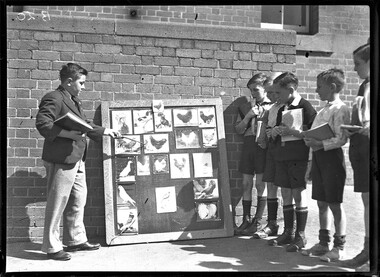 City of Melbourne Libraries
Photograph, Poultry Club, Wales Street School, Northcote
... poultry...schools...clubs...farming...He was also in charge of Grade 6 at Northcote’s Wales Street State School No. 3139 and president of their poultry club. 1930-1939 poultry schools clubs farming Photographer notations on slide: "B20". ...Photographer notations on slide: "B20" Wales Street State School poultry club lesson Mr Taylor of Ballarat was founder of the largest Young Farmers’ Club in Western Victoria. He was also in charge of Grade 6 at Northcote’s Wales Street State School No. 3139 and president of their poultry club.Photographer notations on slide: "B20".1930-1939, poultry, schools, clubs, farming -
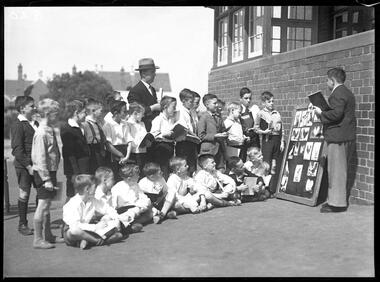 City of Melbourne Libraries
Photograph, Bull, Hugh Jones, 1897-1993, Poultry Club, Wales Street School, Northcote
... The “4 G’s” of poultry farming Student and club secretary Edward Steet lectures the poultry club. ...The “4 G’s” of poultry farming Student and club secretary Edward Steet lectures the poultry club. ...The “4 G’s” of poultry farming Student and club secretary Edward Steet lectures the poultry club. His prize bird was a Rhode Island Red, described as “happy go clucky”. Teacher Mr Taylor, a keen newspaper correspondent, wrote in The Age that White Leghorn and Australorp breeds were good egg producers, but most important were: “the 4 G’s of poultry farming – grains, greens, grit and gumption. One might be excused for asking that “grit” be read with double meaning. Brain sees through a thing, but grit sees it through after the novelty has died off”. Mr Taylor also commented that girls were often more successful at poultry-keeping as they provided patient care and attention and were not just interested in profit! Featured in "Newsworthy: Melbourne in photographs 1933-1936" exhibition at East Melbourne Library, October to December 2023. Exhibition caption by project volunteer, Louise McKenzie. Photographer notations on slide: "B20"Photographer notations on slide: "B20".schools, poultry, 1930-1939, clubs -
 Eltham District Historical Society Inc
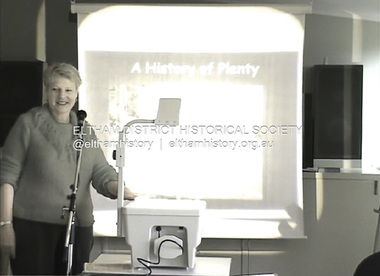
Film - Video (DVD), Neisha Forbes et al, Tales of Old Nillumbik; stories of life in years gone by - Plenty Historical Society, 15 November 2005
... Early industry such as fruit growing, poultry farming, goldmining, rabbit skinning and how they contributed to the development and employment of the area and in the case of rabbit skinning the development of other industries in Victoria during the Depression...Early industry such as fruit growing, poultry farming, goldmining, rabbit skinning and how they contributed to the development and employment of the area and in the case of rabbit skinning the development of other industries in Victoria during the Depression Video Recording DVD converted to MP4 01:01:12 duration 264MB Tales of Old Nillumbik; stories of life in years gone by - Plenty Historical Society Film Video (DVD) Neisha Forbes Plenty Historical Society Marie Ryan ...A series of talks held October - December 2005 at the Eltham Living and Learning Centre which allowed Nillumbik Historical Societies to record the verbal history of the area with some of the well known residents of Nillumbik and surrounds Recorded and edited by Marie Ryan of Plenty Valley FM Speaker: Neisha Forbes 15th November 2005 This session covers the early settlement of Plenty. Learn about the mills situated on the Plenty River from the 1840s. Early industry such as fruit growing, poultry farming, goldmining, rabbit skinning and how they contributed to the development and employment of the area and in the case of rabbit skinning the development of other industries in Victoria during the Depressionvideo recording -
 Bendigo Historical Society Inc.
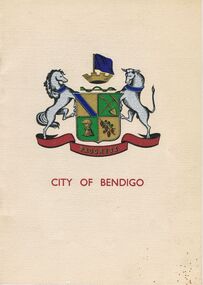
Book - JOAN O'SHEA COLLECTION: 150TH ANNIVERSARY OF BENDIGO BOOKLET, 1850 - 1950's
... Icons of Bendigo The Bendigo base Hospital,Law Courts & Post Office, Primary Schools, Housing, Industry including Butter Production, Poultry Farming, Livestock Sales & Tomato Growing, Slaughter House & ordnance factory. ...Icons of Bendigo The Bendigo base Hospital,Law Courts & Post Office, Primary Schools, Housing, Industry including Butter Production, Poultry Farming, Livestock Sales & Tomato Growing, Slaughter House & ordnance factory. ...Joan O'Shea Collection. Buff Coloured Booklet City of Bendigo. 150th anniversary of Bendigo 1850s to 1950s. Image on cover coat of arms for City of Bendigo underneath word progress, left hand side horse, right hand side bullock. History of Bendigo: From Sheep Run to Provincial City in 100 years. Map of Bendigo and Surrounds Railways, Water Courses & Storage, Power, Municipal Boundaries & Land Available for Industry. Municipal District Creation 1855, Borough Proclamation 1863, Proclaimed City 1871, Area: 7992 Acres Population as of last census City of Bendigo 28,722, City of Bendigo and adjacent Urban Areas 36,909. City of Bendigo Map, The Past Prior to 1850. Icons of Bendigo The Bendigo base Hospital,Law Courts & Post Office, Primary Schools, Housing, Industry including Butter Production, Poultry Farming, Livestock Sales & Tomato Growing, Slaughter House & ordnance factory. The Present Recreation Photos: Bendigo Bowling Club, Queen Elizabeth Oval, Municipal Lawn Tennis Courts The Future of Bendigo, Bendigo Photographs From The 1950s,Cambridge Press Bendigobendigo, history, progress of bendigo 1850s on. -
 City of Melbourne Libraries
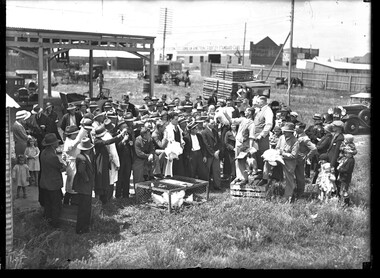
Photograph, Bull, Hugh Jones, 1897-1993, Poultry auction for Christmas dinners, Bentleigh Poultry Market
... By the late 1930s poultry farming had been added to market gardening as a local industry. ...By the late 1930s poultry farming had been added to market gardening as a local industry. ...Published: Age (Melbourne, Vic.: 1854- ), Thursday 21 December 1933, page 11 Published title: : POULTRY FOR CHRISTMAS DINNERS Published caption: With the approach of the Festive Season, the demand for poultry of all descriptions tends to harden and good clearances of many thousands of birds have been effected at recent auctions. The above picture was taken yesterday at the sale conducted by Messrs. Parnham and Carter of Bentleigh, whose auctions are the largest in Melbourne on the basis of individual sales. The auctioneer's assistant is holding up a prime goose for the appraisement of bidders preparing for Christmas fare. Trove article identifier: http://nla.gov.au/nla.news-article203351699 Research by project volunteer, Louise McKenzie: This photo is full of action! A poultry auction is in full flight. The serious-looking auctioneer and his assistant stand on a Parnham & Carter wooden box so that the auctioneer can make eye contact with the bidding crowd. The auctioneer is wearing a waistcoat and tie and has his pencil and paper ready to record the winning bids. The assistant in overalls is holding a live white duck in each hand. Two other assistants also hold live birds. A wire cage on the ground holds a few white chickens – presumably the next auction items. The majority of the substantial crowd is male, mostly wearing Fedora hats and jackets or suits and ties. Some women are present, wearing hats and coats, and at least seven children are visible, some dressed up, others dressed more casually. The auction is taking place in a rural setting, possibly on the site where the birds are farmed. It is an informal, rather rough, grassed area next to a large shed with a high verandah. Two horse drawn vehicles are visible in the background, as well as five motorised vehicles. There are stacks of wooden boxes or crates which look as if they transport birds, and two cows are grazing by the fence. There are two telegraph poles with many lines. In the adjacent block is a very large car business comprising two large brick warehouse style buildings, plus outbuildings. The signage on one brick warehouse mentions Standard Cars. Both a man and a woman have their arms raised to bid. It is an occasion – but a serious one. We cannot be sure if these birds are for breeding or the table, but buying poultry for the Christmas meal was a tradition in Melbourne with purchasers going either to the auctions, or perhaps the Queen Victoria Market. The Argus in its article “Christmas Dinner” on 6 December 1932 advised of increased demand for turkeys and chickens ahead of a possible Christmas shortage. Part of this shortage would be because of the outbreak of Newcastle disease which resulted in a quarantine around Melbourne within which all killing must be under supervision and bear the Government brand. They believed this would result in smaller producers not bothering to get such a permit as "for many of them the poultry cheque is only pin money for their wives.” Interestingly, an article in the Sun News Pictorial of 26 January 1934 reported a strong market, and “One auctioneer stated that buyers were taking up chickens freely now for the Centenary celebrations because they would probably never be as plentiful at the present levels of prices until next season.” That same article quoted officials of the Department of Agriculture stating that "…they had received a fair number of inquiries from farmers recently on the possibilities of table poultry breeding for local and export markets. The good prices being paid for poultry were attracting interest.” In fact, on 29 December 1933, the Sun News-Pictorial had reported that for the first time, the innovation of holding poultry sales in Melbourne between the Christmas and New Year holidays had been trialled the day before, and had proved successful. The Bentleigh area had a long history of poultry farming. The Seal of the Municipality of Moorabbin has a cockerel featured in the top right quadrant, and according to its local history website, “Writers in the local press gave advice on breeding, feeding, marketing and other matters of concern to anyone keeping fowls. In 1914 poultry farms were spread from Ormond, through Cheltenham and Mentone to Mordialloc.” The Encyclopedia of Melbourne online advises that the Shire of Moorabbin once covered an extensive area of the south-eastern suburbs, land where the Boon wurrung people had hunted, fished and collected water from the natural springs near Beaumaris and Cheltenham. The Boon wurrung reputedly called this district Mooroobin, a name that Richard and John King adapted to Moorabbin for the cattle run they established in the mid-1840s. The sandy soil of much of the district proved suitable for market gardening which flourished in Moorabbin from the 1850s. Some districts, such as Highett, remained largely devoted to cattle, while fishing was a major activity in the coastal villages. Moorabbin's population remained tiny throughout the 19th and much of the early 20th century with less than 1000 ratepayers in the shire. When the more popular coastal resort areas of the shire seceded after World War I, Moorabbin was left as an under-serviced, still largely rural area. It was not until the 1930s that the population rose above 20,000. By the late 1930s poultry farming had been added to market gardening as a local industry. But northern sections of the city, such as Bentleigh and McKinnon, were beginning to develop as residential areas. The local council took steps to attract industry and new residents to the city by erecting reputedly the largest neon sign in Melbourne at the time on the Point Nepean Road (later Nepean Highway), pointing out that plentiful residential and industrial land was available. The era of gardeners’ picnics, the formation of the Market Gardeners’ & Fruit Growers’ Association, and the Moorabbin Horticultural, Poultry & Dog Society Spring Shows was over. References: POULTRY SALES HELD (1933, December 29). The Sun News-Pictorial (Melbourne, Vic. : 1922 - 1954; 1956), p. 20. Retrieved July 30, 2024, from http://nla.gov.au/nla.news-article276124760 MUCH INTEREST IN POULTRY (1934, January 26). The Sun News-Pictorial (Melbourne, Vic. : 1922 - 1954; 1956), p. 30. Retrieved July 30, 2024, from http://nla.gov.au/nla.news-article277292695 Christmas Dinner. (1932, December 6). The Argus (Melbourne, Vic. : 1848 - 1957), p. 6. Retrieved July 30, 2024, from http://nla.gov.au/nla.news-article4512606 'Moorabin', eMelbourne, https://www.emelbourne.net.au/biogs/EM01004b.htm 'City of Glen Eira Thematic Environmental History [Refresh] 2020', prepared for The City of Glen Eira by Built Heritage P/L, https://www.gleneira.vic.gov.au/media/7583/glen-eira-c214glen-city-of-glen-eira-thematic-environmentla-history-refresh-2020.pdf Photographer notations on slide: "Poultry for Christmas Dinners Age 21-12-33 B9".christmas, poultry -
 Sunshine and District Historical Society Incorporated
Administrative record - City of Sunshine - Commissioner Mr Alexander Alex George Gillon Collection 1976 - 1982 - Minutes of the special meeting of council held on 12th January 1978, City of Sunshine, 12th January 1978
... Minutes of the Special Meeting of Council held on 12th January 1978 Report of the Town clerk Approval of tender for Tennis Courts Dempster Park including Albion Tennis Club contributions Report of City Engineer Land Use Permit Display village and subsequent cluster subdivision Station Road Land Use Permit Subdivision and detached house Robinsons Road Land Use Permit Sales and servicing of motorcycles 60A Monash Street Land Use Permit Two display homes and associated car parking Aycliff Drive and Phyllis Parade Land Use Permit Extension to existing primary school Lot 55 Churchill Avenue Land Use Permit Ornamental garden display and sales of domestic pets 553A and 553B Geelong Road Land Use Permit 5 Display homes Camelot Drive and Trafalgar Street Land Use Permit Soccer ground and sports club Selwyn Club Selwyn Street Land Use Permit Subdivision and detached houses Lot 1009 Tamar Drive Enforcement 34 Garnet Street panel beating and spray painting Land Use Permit Factory light engineering lot 45 Cromer Avenue Land Use Permit Poultry farming and dressed chicken sales and take away food premises 159 - 161 Rosamond Road Land Use Permit Flats Lot 9 Mernda Street Land Use Permit Extension to furniture sales buildings 85 - 91 Hampshire Road Land Use Permit Storage of soil and retail plant nursery Northwest corner Fairbairn Road and Boundary Road Land Use Permit Squash court Centre Rosamond Road Enforcement 2 Gregory Street bee keeping Land Use Permit Sand blasting and protective coasting Fairbairn Road Land Use Permit Flats Main Road West, Kodre Street and Washington Street Land Use Permit Store Lot 24 Cromer Avenue Land Use Permit Squash Court Complex lots 32. 33 & 34 Raleigh Road Land Use Permit Panel beating factory McIntyre Road Strata Subdivision 3 Bardsley Street Consolidation of Title 99 Couch Street Amenities Vans Tenders for installation of wheel wash at new tip...City of Sunshine Alexander "Alex" George Gillon Sunshine North Tennis Club Albion Tennis Club Dempster Park Phoenix Street Sunshine North Station Road Deer Park Robinsons Road Monash Street Sunshine Phyllis Parade Churchill Avenue Braybrook Christ The King Primary School Geelong Road Brooklyn Camelot Drive Trafalgar Street Albanvale Albion Rovers Soccer Club Selwyn Sports Club Selwyn Park Selwyn Street Albion Tamar Drive Garnet Street Cromer Avenue Rosamond Road Maribyrnong Mernda Street Sunshine West Hampshire Road Fairnbairn Road Boundary Road Gregory Street Main Road West Raleigh Road McIntyre Road Aycliffe Drive Minutes of the Special Meeting of Council held on 12th January 1978 Report of the Town clerk Approval of tender for Tennis Courts Dempster Park including Albion Tennis Club contributions Report of City Engineer Land Use Permit Display village and subsequent cluster subdivision Station Road Land Use Permit Subdivision and detached house Robinsons Road Land Use Permit Sales and servicing of motorcycles 60A Monash Street Land Use Permit Two display homes and associated car parking Aycliff Drive and Phyllis Parade Land Use Permit Extension to existing primary school Lot 55 Churchill Avenue Land Use Permit Ornamental garden display and sales of domestic pets 553A and 553B Geelong Road Land Use Permit 5 Display homes Camelot Drive and Trafalgar Street Land Use Permit Soccer ground and sports club Selwyn Club Selwyn Street Land Use Permit Subdivision and detached houses Lot 1009 Tamar Drive Enforcement 34 Garnet Street panel beating and spray painting Land Use Permit Factory light engineering lot 45 Cromer Avenue Land Use Permit Poultry farming and dressed chicken sales and take away food premises 159 - 161 Rosamond Road Land Use Permit Flats Lot 9 Mernda Street Land Use Permit Extension to furniture sales buildings 85 - 91 Hampshire Road Land Use Permit Storage of soil and retail plant nursery Northwest corner Fairbairn Road and Boundary Road Land Use Permit Squash court Centre Rosamond Road Enforcement 2 Gregory Street bee keeping Land Use Permit Sand blasting and protective coasting Fairbairn Road Land Use Permit Flats Main Road West, Kodre Street and Washington Street Land Use Permit Store Lot 24 Cromer Avenue Land Use Permit Squash Court Complex lots 32. 33 & 34 Raleigh Road Land Use Permit Panel beating factory McIntyre Road Strata Subdivision 3 Bardsley Street Consolidation of Title 99 Couch Street Amenities Vans Tenders for installation of wheel wash at new tip Foolscap sized document. ...Minutes of the Special Meeting of Council held on 12th January 1978 Report of the Town clerk Approval of tender for Tennis Courts Dempster Park including Albion Tennis Club contributions Report of City Engineer Land Use Permit Display village and subsequent cluster subdivision Station Road Land Use Permit Subdivision and detached house Robinsons Road Land Use Permit Sales and servicing of motorcycles 60A Monash Street Land Use Permit Two display homes and associated car parking Aycliff Drive and Phyllis Parade Land Use Permit Extension to existing primary school Lot 55 Churchill Avenue Land Use Permit Ornamental garden display and sales of domestic pets 553A and 553B Geelong Road Land Use Permit 5 Display homes Camelot Drive and Trafalgar Street Land Use Permit Soccer ground and sports club Selwyn Club Selwyn Street Land Use Permit Subdivision and detached houses Lot 1009 Tamar Drive Enforcement 34 Garnet Street panel beating and spray painting Land Use Permit Factory light engineering lot 45 Cromer Avenue Land Use Permit Poultry farming and dressed chicken sales and take away food premises 159 - 161 Rosamond Road Land Use Permit Flats Lot 9 Mernda Street Land Use Permit Extension to furniture sales buildings 85 - 91 Hampshire Road Land Use Permit Storage of soil and retail plant nursery Northwest corner Fairbairn Road and Boundary Road Land Use Permit Squash court Centre Rosamond Road Enforcement 2 Gregory Street bee keeping Land Use Permit Sand blasting and protective coasting Fairbairn Road Land Use Permit Flats Main Road West, Kodre Street and Washington Street Land Use Permit Store Lot 24 Cromer Avenue Land Use Permit Squash Court Complex lots 32. 33 & 34 Raleigh Road Land Use Permit Panel beating factory McIntyre Road Strata Subdivision 3 Bardsley Street Consolidation of Title 99 Couch Street Amenities Vans Tenders for installation of wheel wash at new tip city of sunshine, alexander "alex" george gillon, sunshine north tennis club, albion tennis club, dempster park, phoenix street, sunshine north, station road, deer park, robinsons road, monash street, sunshine, phyllis parade, churchill avenue, braybrook, christ the king primary school, geelong road, brooklyn, camelot drive, trafalgar street, albanvale, albion rovers soccer club, selwyn sports club, selwyn park, selwyn street, albion, tamar drive, garnet street, cromer avenue, rosamond road, maribyrnong, mernda street, sunshine west, hampshire road, fairnbairn road, boundary road, gregory street, main road west, raleigh road, mcintyre road, aycliffe drive -
 Sunshine and District Historical Society Incorporated
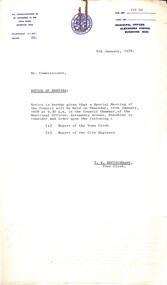
Administrative record - City of Sunshine - Commissioner Mr Alexander Alex George Gillon Collection 1976 - 1982 - Notice of Special Meeting of the Council 12th January 1978, City of Sunshine, 6th January 1978
... Notice of Special Meeting of the Council 12th January 1978 Report of the Town Clerk Approval of tender for Tennis Courts Dempster Park including Albion Tennis Club contributions Repor to of the City Engineer Land Use Permit Display village and subsequent cluster subdivision Station Road Land Use Permit Subdivision and detached house Robinsons Road Land Use Permit Sales and servicing of motorcycles 60A Monash Street Land Use Permit Two display homes and associated car parking Aycliff Drive and Phyllis Parade Land Use Permit Extension to existing primary school Lot 55 Churchill Avenue Land Use Permit Ornamental garden display and sales of domestic pets 553A and 553B Geelong Road Land Use Permit 5 Display homes Camelot Drive and Trafalgar Street Land Use Permit Soccer ground and sports club Selwyn Club Selwyn Street Land Use Permit Subdivision and detached houses Lot 1009 Tamar Drive Enforcement 34 Garnet Street panel beating and spray painting Land Use Permit Factory light engineering lot 45 Cromer Avenue Land Use Permit Poultry farming and dressed chicken sales and take away food premises 159 - 161 Rosamond Road Land Use Permit Flats Lot 9 Mernda Street Land Use Permit Extension to furniture sales buildings 85 - 91 Hampshire Road Land Use Permit Storage of soil and retail plant nursery Northwest corner Fairbairn Road and Boundary Road Land Use Permit Squash court Centre Rosamond Road Enforcement 2 Gregory Street bee keeping Land Use Permit Sand blasting and protective coasting Fairbairn Road Land Use Permit Flats Main Road West, Kodre Street and Washington Street Land Use Permit Store Lot 24 Cromer Avenue Land Use Permit Squash Court Complex lots 32. 33 & 34 Raleigh Road Land Use Permit Panel beating factory McIntyre Road Strata Subdivision 3 Bardsley Street Consolidation of Title 99 Couch Street Amenities Vans Tenders for installation of wheel wash at new Sunshine Tip Land Use Permit Flats Station Road Report of the Chief Planner Land Use Permit Application Access to Ballarat Road Land Use Permit Flats 104 Station Road Deer Park Swimming Pool Relocation of Bus Stop McIntyre Road Fencing Orloff Court, Shipley Court, Jacana Court and Maldon Court Brick Garage 40A Poole Street Deer Park Deer Park Hall Maintenance...City of Sunshine Alexander "Alex" George Gillon Sunshine North Tennis Club Albion Tennis Club Dempster Park Phoenix Street Sunshine North Station Road Deer Park Robinsons Road Monash Street Sunshine Phyllis Parade Churchill Avenue Braybrook Christ The King Primary School Geelong Road Brooklyn Camelot Drive Trafalgar Street Albanvale Albion Rovers Soccer Club Selwyn Sports Club Selwyn Park Selwyn Street Albion Tamar Drive Garnet Street Cromer Avenue Rosamond Road Maribyrnong Mernda Street Sunshine West Hampshire Road Fairnbairn Road Boundary Road Gregory Street Main Road West Raleigh Road McIntyre Road Sunshine Tip Ballarat Road Deer Park Swimming Pool Orloff Court Shipley Court Jacana Court Maldon Court Poole Street Deer Park Hall Aycliffe Drive Notice of Special Meeting of the Council 12th January 1978 Report of the Town Clerk Approval of tender for Tennis Courts Dempster Park including Albion Tennis Club contributions Repor to of the City Engineer Land Use Permit Display village and subsequent cluster subdivision Station Road Land Use Permit Subdivision and detached house Robinsons Road Land Use Permit Sales and servicing of motorcycles 60A Monash Street Land Use Permit Two display homes and associated car parking Aycliff Drive and Phyllis Parade Land Use Permit Extension to existing primary school Lot 55 Churchill Avenue Land Use Permit Ornamental garden display and sales of domestic pets 553A and 553B Geelong Road Land Use Permit 5 Display homes Camelot Drive and Trafalgar Street Land Use Permit Soccer ground and sports club Selwyn Club Selwyn Street Land Use Permit Subdivision and detached houses Lot 1009 Tamar Drive Enforcement 34 Garnet Street panel beating and spray painting Land Use Permit Factory light engineering lot 45 Cromer Avenue Land Use Permit Poultry farming and dressed chicken sales and take away food premises 159 - 161 Rosamond Road Land Use Permit Flats Lot 9 Mernda Street Land Use Permit Extension to furniture sales buildings 85 - 91 Hampshire Road Land Use Permit Storage of soil and retail plant nursery Northwest corner Fairbairn Road and Boundary Road Land Use Permit Squash court Centre Rosamond Road Enforcement 2 Gregory Street bee keeping Land Use Permit Sand blasting and protective coasting Fairbairn Road Land Use Permit Flats Main Road West, Kodre Street and Washington Street Land Use Permit Store Lot 24 Cromer Avenue Land Use Permit Squash Court Complex lots 32. 33 & 34 Raleigh Road Land Use Permit Panel beating factory McIntyre Road Strata Subdivision 3 Bardsley Street Consolidation of Title 99 Couch Street Amenities Vans Tenders for installation of wheel wash at new Sunshine Tip Land Use Permit Flats Station Road Report of the Chief Planner Land Use Permit Application Access to Ballarat Road Land Use Permit Flats 104 Station Road Deer Park Swimming Pool Relocation of Bus Stop McIntyre Road Fencing Orloff Court, Shipley Court, Jacana Court and Maldon Court Brick Garage 40A Poole Street Deer Park Deer Park Hall Maintenance Foolscap sized document. ...Notice of Special Meeting of the Council 12th January 1978 Report of the Town Clerk Approval of tender for Tennis Courts Dempster Park including Albion Tennis Club contributions Repor to of the City Engineer Land Use Permit Display village and subsequent cluster subdivision Station Road Land Use Permit Subdivision and detached house Robinsons Road Land Use Permit Sales and servicing of motorcycles 60A Monash Street Land Use Permit Two display homes and associated car parking Aycliff Drive and Phyllis Parade Land Use Permit Extension to existing primary school Lot 55 Churchill Avenue Land Use Permit Ornamental garden display and sales of domestic pets 553A and 553B Geelong Road Land Use Permit 5 Display homes Camelot Drive and Trafalgar Street Land Use Permit Soccer ground and sports club Selwyn Club Selwyn Street Land Use Permit Subdivision and detached houses Lot 1009 Tamar Drive Enforcement 34 Garnet Street panel beating and spray painting Land Use Permit Factory light engineering lot 45 Cromer Avenue Land Use Permit Poultry farming and dressed chicken sales and take away food premises 159 - 161 Rosamond Road Land Use Permit Flats Lot 9 Mernda Street Land Use Permit Extension to furniture sales buildings 85 - 91 Hampshire Road Land Use Permit Storage of soil and retail plant nursery Northwest corner Fairbairn Road and Boundary Road Land Use Permit Squash court Centre Rosamond Road Enforcement 2 Gregory Street bee keeping Land Use Permit Sand blasting and protective coasting Fairbairn Road Land Use Permit Flats Main Road West, Kodre Street and Washington Street Land Use Permit Store Lot 24 Cromer Avenue Land Use Permit Squash Court Complex lots 32. 33 & 34 Raleigh Road Land Use Permit Panel beating factory McIntyre Road Strata Subdivision 3 Bardsley Street Consolidation of Title 99 Couch Street Amenities Vans Tenders for installation of wheel wash at new Sunshine Tip Land Use Permit Flats Station Road Report of the Chief Planner Land Use Permit Application Access to Ballarat Road Land Use Permit Flats 104 Station Road Deer Park Swimming Pool Relocation of Bus Stop McIntyre Road Fencing Orloff Court, Shipley Court, Jacana Court and Maldon Court Brick Garage 40A Poole Street Deer Park Deer Park Hall Maintenance city of sunshine, alexander "alex" george gillon, sunshine north tennis club, albion tennis club, dempster park, phoenix street, sunshine north, station road, deer park, robinsons road, monash street, sunshine, phyllis parade, churchill avenue, braybrook, christ the king primary school, geelong road, brooklyn, camelot drive, trafalgar street, albanvale, albion rovers soccer club, selwyn sports club, selwyn park, selwyn street, albion, tamar drive, garnet street, cromer avenue, rosamond road, maribyrnong, mernda street, sunshine west, hampshire road, fairnbairn road, boundary road, gregory street, main road west, raleigh road, mcintyre road, sunshine tip, ballarat road, deer park swimming pool, orloff court, shipley court, jacana court, maldon court, poole street, deer park hall, aycliffe drive -
 Sunshine and District Historical Society Incorporated
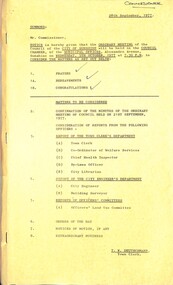
Administrative record - City of Sunshine - Commissioner Mr Alexander Alex George Gillon Collection 1976 - 1982 - Notice of ordinary meeting of the council of the City of Sunshine to be held on 5th October 1977, City of Sunshine, 28th September 1977
... Notice of Ordinary Meeting of the Council of the City of Sunshine to be held on 5th October 1977 Report of the Town Clerk's Department Report of the Town Clerk Private Street Construction Scheme Sheffield Estate and Cumberland Street Area United Grants From Commonwealth Government through State Government House 6 Corio Street Demolishment Alternative Premises for Citizens Advice Bureau Increases Charges at Sunshine Tip Cultural Centre for Western Region Henderson House Footscray Crossing over Railway Line at Ardeer Land Acquisition Maribyrnong Valley Zoning Officer's Committees Reports Method of Presentation Home Help Service Housekeepers Speaking Different Languages Sale of Land Derby Road and Anderson Road to Education Department Report of the Co-Ordinator of Welfare Services The Combined Pensioners Association Report of the Chief Health Inspector Training & Registration of Public Swimming Pool Operators Prosecutions Proceedings Sunshine Magistrate Court Application for Septic Tank Warranties Report of City Engineer Land Use Permit Application Poultry Farming Service Premises and Take Away Food Premise 159 - 161 Rosamond Road Maribyrnong Land Use Permit Application Extension to Existing Holy Eucharist Primary School, Holy Eucharist Church and Holy Eucharist Parish Centre Oleander Drive Land Use Permit Application Service Premises Mitchell Street Land Use Permit Application External Paging System 556 Ballarat Road Land Use Permit Application Car Sales Yard Lots 497 & 498 St. ...Albans Road Lawton Street Braybrook Hampstead Road Emu Street Hook Street Vule Street Neale Road Albanvale Deer Park Suffolk Road Albion Explosive Factory Monsanto Bon Thomas Reserve Quinn Street Fairbairn Pre-School Centre Fairbairn Road Sunshine Indoor Swimming Pool Albion Percy Street Kevin Street Berkshire Road Adelaide Street Notice of Ordinary Meeting of the Council of the City of Sunshine to be held on 5th October 1977 Report of the Town Clerk's Department Report of the Town Clerk Private Street Construction Scheme Sheffield Estate and Cumberland Street Area United Grants From Commonwealth Government through State Government House 6 Corio Street Demolishment Alternative Premises for Citizens Advice Bureau Increases Charges at Sunshine Tip Cultural Centre for Western Region Henderson House Footscray Crossing over Railway Line at Ardeer Land Acquisition Maribyrnong Valley Zoning Officer's Committees Reports Method of Presentation Home Help Service Housekeepers Speaking Different Languages Sale of Land Derby Road and Anderson Road to Education Department Report of the Co-Ordinator of Welfare Services The Combined Pensioners Association Report of the Chief Health Inspector Training & Registration of Public Swimming Pool Operators Prosecutions Proceedings Sunshine Magistrate Court Application for Septic Tank Warranties Report of City Engineer Land Use Permit Application Poultry Farming Service Premises and Take Away Food Premise 159 - 161 Rosamond Road Maribyrnong Land Use Permit Application Extension to Existing Holy Eucharist Primary School, Holy Eucharist Church and Holy Eucharist Parish Centre Oleander Drive Land Use Permit Application Service Premises Mitchell Street Land Use Permit Application External Paging System 556 Ballarat Road Land Use Permit Application Car Sales Yard Lots 497 & 498 St. ...Notice of Ordinary Meeting of the Council of the City of Sunshine to be held on 5th October 1977 Report of the Town Clerk's Department Report of the Town Clerk Private Street Construction Scheme Sheffield Estate and Cumberland Street Area United Grants From Commonwealth Government through State Government House 6 Corio Street Demolishment Alternative Premises for Citizens Advice Bureau Increases Charges at Sunshine Tip Cultural Centre for Western Region Henderson House Footscray Crossing over Railway Line at Ardeer Land Acquisition Maribyrnong Valley Zoning Officer's Committees Reports Method of Presentation Home Help Service Housekeepers Speaking Different Languages Sale of Land Derby Road and Anderson Road to Education Department Report of the Co-Ordinator of Welfare Services The Combined Pensioners Association Report of the Chief Health Inspector Training & Registration of Public Swimming Pool Operators Prosecutions Proceedings Sunshine Magistrate Court Application for Septic Tank Warranties Report of City Engineer Land Use Permit Application Poultry Farming Service Premises and Take Away Food Premise 159 - 161 Rosamond Road Maribyrnong Land Use Permit Application Extension to Existing Holy Eucharist Primary School, Holy Eucharist Church and Holy Eucharist Parish Centre Oleander Drive Land Use Permit Application Service Premises Mitchell Street Land Use Permit Application External Paging System 556 Ballarat Road Land Use Permit Application Car Sales Yard Lots 497 & 498 St. Albans Road Land Use Permit Application Two Illuminated signs 501 Ballarat Road Albion Land Use Permit Application Light Industry Loy 76 Lawton Street Braybrook Enforcement under the Town and Country Planning Act Massage Parlours Cities of Essendon & St. Kilda Land Use Permit Application Service Premises Take Away Food Premise and Caretaker's Residence Addition to Existing Retail Nursery and Bird Aviary Corner Hampstead Road and Emu Street Contract Supply & Maintenance of Vehicles Contract Supply of Tractor & Gang Mower Plan of subdivision Hook Street and Vule Street Plan of Subdivision Stage 26 Albanvale Westerngate Estate Neale Road Bus Routes and Bus Stops Sunshine Bus Lines Suffolk Road Shops Bicycle Racks 407 Ballarat Road (Opposite McDonald) No Standing Anytime Use of Commonwealth Land for Garbage Disposal Purposes Eastern Side of Albion Explosive Factory Monsanto Outfall Drain Brooklyn Telecom Australia Public Telephones in the Maidstone Area Bon Thomas Reserve Development Report of the Building Surveyor Maintenance Organisation Australian Institute of Building Surveyors Annual Conference Fencing Council Contribution towards Shared Fences with Owner Fairbairn Pre-School Centre Fairbairn Road Sunshine West Sunshine Indoor Swimming Pool Sunshine Indoor Swimming Pool Facilities Fencing 34 Adelaide Street Flats Lot 30 Percy Street St. Albans Extension to House 2 Kevin Street Sunshine Installation of Overhead Tank 44 Berkshire Road Sunshine North Report of Land Use Committee Orders of the Day Accounts Submitted for Payment as at 15th September 1977 Notice of Motion Commissioner Gillon to Move Rates Commissioner Gillon to Move Sanitary Commissioner Gillon to Move Valuation city of sunshine, alexander "alex" george gillon, cumberland street, sunshine north, corio street, sunshine, maribyrnong valley, derby road, anderson road, citizens advice bureau, sunshine tip, rosamond road, maribyrnong, holy eucharist primary school, holy eucharist church, holy eucharist parish centre, oleander drive, st. albans, mitchell street, maidstone, ballarat road, st. albans road, lawton street, braybrook, hampstead road, emu street, hook street, vule street, neale road, albanvale, deer park, suffolk road, albion explosive factory, monsanto, bon thomas reserve, quinn street, fairbairn pre-school centre, fairbairn road, sunshine indoor swimming pool, albion, percy street, kevin street, berkshire road, adelaide street -
 Sunshine and District Historical Society Incorporated
Administrative record - City of Sunshine - Commissioner Mr Alexander Alex George Gillon Collection 1976 - 1982 - Minutes of the ordinary meeting of council held on 5th October 1977, City of Sunshine, 5th October 1977
... Minutes of the Ordinary Meeting of Council held on 5th October 1977 Report of the Town Clerk's Department Report of the Town Clerk Private Street Construction Scheme Sheffield Estate and Cumberland Street Area United Grants From Commonwealth Government through State Government House 6 Corio Street Demolishment Alternative Premises for Citizens Advice Bureau Increases Charges at Sunshine Tip Cultural Centre for Western Region Henderson House Footscray Crossing over Railway Line at Ardeer Land Acquisition Maribyrnong Valley Zoning Officer's Committees Reports Method of Presentation Home Help Service Housekeepers Speaking Different Languages Sale of Land Derby Road and Anderson Road to Education Department Report of the Co-Ordinator of Welfare Services The Combined Pensioners Association Report of the Chief Health Inspector Training & Registration of Public Swimming Pool Operators Prosecutions Proceedings Sunshine Magistrate Court Application for Septic Tank Warranties Report of City Engineer Land Use Permit Application Poultry Farming Service Premises and Take Away Food Premise 159 - 161 Rosamond Road Maribyrnong Land Use Permit Application Extension to Existing Holy Eucharist Primary School, Holy Eucharist Church and Holy Eucharist Parish Centre Oleander Drive Land Use Permit Application Service Premises Mitchell Street Land Use Permit Application External Paging System 556 Ballarat Road Land Use Permit Application Car Sales Yard Lots 497 & 498 St. ...Albans Road Lawton Street Braybrook Hampstead Road Emu Street Hook Street Vule Street Albanvale Neale Road Deer Park Suffolk Road Albion Explosive Factory Monsanto Brooklyn Bon Thomas Reserve Quinn Street Fairbairn Pre-School Centre Fairbairn Road Sunshine West Sunshine Indoor Swimming Pool Adelaide Street Percy Street Kevin Street Berkshire Road Minutes of the Ordinary Meeting of Council held on 5th October 1977 Report of the Town Clerk's Department Report of the Town Clerk Private Street Construction Scheme Sheffield Estate and Cumberland Street Area United Grants From Commonwealth Government through State Government House 6 Corio Street Demolishment Alternative Premises for Citizens Advice Bureau Increases Charges at Sunshine Tip Cultural Centre for Western Region Henderson House Footscray Crossing over Railway Line at Ardeer Land Acquisition Maribyrnong Valley Zoning Officer's Committees Reports Method of Presentation Home Help Service Housekeepers Speaking Different Languages Sale of Land Derby Road and Anderson Road to Education Department Report of the Co-Ordinator of Welfare Services The Combined Pensioners Association Report of the Chief Health Inspector Training & Registration of Public Swimming Pool Operators Prosecutions Proceedings Sunshine Magistrate Court Application for Septic Tank Warranties Report of City Engineer Land Use Permit Application Poultry Farming Service Premises and Take Away Food Premise 159 - 161 Rosamond Road Maribyrnong Land Use Permit Application Extension to Existing Holy Eucharist Primary School, Holy Eucharist Church and Holy Eucharist Parish Centre Oleander Drive Land Use Permit Application Service Premises Mitchell Street Land Use Permit Application External Paging System 556 Ballarat Road Land Use Permit Application Car Sales Yard Lots 497 & 498 St. ...Minutes of the Ordinary Meeting of Council held on 5th October 1977 Report of the Town Clerk's Department Report of the Town Clerk Private Street Construction Scheme Sheffield Estate and Cumberland Street Area United Grants From Commonwealth Government through State Government House 6 Corio Street Demolishment Alternative Premises for Citizens Advice Bureau Increases Charges at Sunshine Tip Cultural Centre for Western Region Henderson House Footscray Crossing over Railway Line at Ardeer Land Acquisition Maribyrnong Valley Zoning Officer's Committees Reports Method of Presentation Home Help Service Housekeepers Speaking Different Languages Sale of Land Derby Road and Anderson Road to Education Department Report of the Co-Ordinator of Welfare Services The Combined Pensioners Association Report of the Chief Health Inspector Training & Registration of Public Swimming Pool Operators Prosecutions Proceedings Sunshine Magistrate Court Application for Septic Tank Warranties Report of City Engineer Land Use Permit Application Poultry Farming Service Premises and Take Away Food Premise 159 - 161 Rosamond Road Maribyrnong Land Use Permit Application Extension to Existing Holy Eucharist Primary School, Holy Eucharist Church and Holy Eucharist Parish Centre Oleander Drive Land Use Permit Application Service Premises Mitchell Street Land Use Permit Application External Paging System 556 Ballarat Road Land Use Permit Application Car Sales Yard Lots 497 & 498 St. Albans Road Land Use Permit Application Two Illuminated signs 501 Ballarat Road Albion Land Use Permit Application Light Industry Loy 76 Lawton Street Braybrook Enforcement under the Town and Country Planning Act Massage Parlours Cities of Essendon & St. Kilda Land Use Permit Application Service Premises Take Away Food Premise and Caretaker's Residence Addition to Existing Retail Nursery and Bird Aviary Corner Hampstead Road and Emu Street Contract Supply & Maintenance of Vehicles Contract Supply of Tractor & Gang Mower Plan of subdivision Hook Street and Vule Street Plan of Subdivision Stage 26 Albanvale Westerngate Estate Neale Road Bus Routes and Bus Stops Sunshine Bus Lines Suffolk Road Shops Bicycle Racks 407 Ballarat Road (Opposite McDonald) No Standing Anytime Use of Commonwealth Land for Garbage Disposal Purposes Eastern Side of Albion Explosive Factory Monsanto Outfall Drain Brooklyn Telecom Australia Public Telephones in the Maidstone Area Bon Thomas Reserve Development Report of the Building Surveyor Maintenance Organisation Australian Institute of Building Surveyors Annual Conference Fencing Council Contribution towards Shared Fences with Owner Fairbairn Pre-School Centre Fairbairn Road Sunshine West Sunshine Indoor Swimming Pool Sunshine Indoor Swimming Pool Facilities Fencing 34 Adelaide Street Flats Lot 30 Percy Street St. Albans Extension to House 2 Kevin Street Sunshine Installation of Overhead Tank 44 Berkshire Road Sunshine North Report of Land Use Committee Orders of the Day Accounts Submitted for Payment as at 15th September 1977 Notice of Motion Commissioner Gillon to Move Rates Commissioner Gillon to Move Sanitary Commissioner Gillon to Move Valuation city of sunshine, alexander "alex" george gillon, cumberland street, sunshine north, corio street, sunshine, maribyrnong valley, derby road, anderson road, rosamond road, maribyrnong, holy eucharist primary school, holy eucharist church, holy eucharist parish centre, oleander drive, st. albans, mitchell street, maidstone, ballarat road, albion, st. albans road, lawton street, braybrook, hampstead road, emu street, hook street, vule street, albanvale, neale road, deer park, suffolk road, albion explosive factory, monsanto, brooklyn, bon thomas reserve, quinn street, fairbairn pre-school centre, fairbairn road, sunshine west, sunshine indoor swimming pool, adelaide street, percy street, kevin street, berkshire road -
 City of Melbourne Libraries
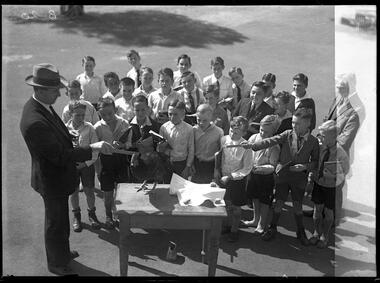
Photograph, Bull, Hugh Jones, 1897-1993, Poultry Club, Wales Street School, Northcote
... White Leghorn and Australorp breeds were good egg producers, but most important were, “the 4 G’s of poultry farming:— grains, greens, grit and gumption — the latter being extremely important. ...White Leghorn and Australorp breeds were good egg producers, but most important were, “the 4 G’s of poultry farming:— grains, greens, grit and gumption — the latter being extremely important. ...Wales Street State School poultry club lesson “Fresh eggs for breakfast will be available now in many Northcote homes. Mr Taylor of the Wales Street School, is explaining the points of a good hen to the members of the school poultry club.” Mr Taylor of Ballarat was founder of the largest Young Farmers’ Club in Western Victoria. He was also in charge of Grade 6 at Northcote’s Wales Street State School No. 3139 and president of their poultry club. The chook under inspection is the Australorp, an Australian breed developed from the UK Black Orpington and the US Rhode Island Red. It achieved world-wide popularity in the 1920s for its laying ability: in a 1922/23 world record, six hens laid an average of 309.5 eggs per hen during a 365 consecutive day trial. MCK 059 Published: The Age 16 March 1934 Featured in "Newsworthy: Melbourne in photographs 1933-1936" exhibition at East Melbourne Library, October to December 2023. Exhibition caption by project volunteer, Louise McKenzie. Photographer notations on slide: "B20" Published: 16 March 1934 The Age p3 Published title: SUBURBAN BOYS' POULTRY CLUB Published caption: Fresh eggs for breakfast will be available now in many Northcote homes. Mr. Taylor, of the Wales-street school, is explaining the points of a good hen to the members of the school poultry club. Trove article identifier: http://nla.gov.au/nla.news-article203841415 Description: The scene is outside in a school playground. 25 schoolboys and one teacher stand around a wooden table on which a large live chicken is standing. An instructor stands beside the chicken, holding a ruler, which rests lightly on the chicken’s neck. The boys wear shorts and shirts. Mostly they wear shoes or boots and socks, although one has bare feet. Some wear a jacket, some wear ties; one has braces. Their hair has been freshly brushed. One boy stands out from the group: he appears older than the others and wears a tie, shirt and blazer, with two badges on the lapel. The young teacher wears a slightly scruffy short suit with shirt and tie; the instructor wears a dark suit with tie and hat. The boys are carrying exercise books. They look to be around 10 years of age. Research by project volunteer, Louise McKenzie: From the text of the newspaper article we know this is the Wales Street Primary School, in Northcote. It opened in 1891 when it was known as the Prince of Wales Park State School. As a result of economic depression it closed in 1892, but reopened in 1900, and in 1920 reached its peak with 1232 pupils. The instructing teacher is Mr James Taylor, who was leader of the school’s Poultry Club. He wrote articles for the Age explaining that “since 1927 when the Young Farmers Clubs were first established in Victorian State schools, poultry keeping as a school project and a hobby has become extremely popular.” He encouraged girls and boys to become involved for profit and pleasure. White Leghorn and Australorp breeds were good egg producers, but most important were, “the 4 G’s of poultry farming:— grains, greens, grit and gumption — the latter being extremely important. One might be excused also for asking that the word "grit" be read with a double meaning. Brain sees through a thing, but grit sees it through. The successful person in poultry keeping is he or she who continues to work well with the birds long after the novelty has died off.” According to a visitor to the Poultry Club, expert farmer Mr Buscomb of NUPHA, the key features of a good bird were that it should be "as wide as possible across the saddle, have a clean face, close feathers, bayonet shaped legs, and fine textured combs and wattles." The Australorp is a chicken breed of Australian origin, developed out of Black Orpington (UK) and Rhode Island Red birds. White Leghorn, Langshan and Minorca elements were also added, resulting in a very utilitarian bird known as the Australian Black Orpington (Austral-orp). It achieved world-wide popularity in the 1920s for its laying ability. In 1922-23 a team of six hens set a world record by laying 1857 eggs for an average of 309.5 eggs per hen during a 365 consecutive day trial. In Australia the Australorp is recognised in black, white and blue colouring. The Weekly Times of Saturday 24 February 1934 reported that Mr James Taylor of Ballarat, founder of the largest Young Farmers’ club in Victoria (at Murtoa) was now in charge of Grade 6 at the Wales Street State School No. 3139 and was president of their poultry club. This feature followed in The Age of 16 March 1934, with another in 28 December 1934. The topic is again featured in the Weekly Times of April 1935 – Mr Taylor was making quite an impact! References: SUBURBAN BOYS' POULTRY CLUB--PREMIERSHIP CRICKET TEAM--AROUND THE SUN DIAL--"EYES LEFT !" (1934, March 16). The Age (Melbourne, Vic. : 1854 - 1954), p. 3. Retrieved September 19, 2023, from http://nla.gov.au/nla.news-article203841415 Poultry at Northcote (1935, April 27). Weekly Times (Melbourne, Vic. : 1869 - 1954), p. 47. Retrieved September 19, 2023, from http://nla.gov.au/nla.news-article223353807 POCKET MONEY FROM POULTRY. (1934, December 28). The Age (Melbourne, Vic. : 1854 - 1954), p. 14. Retrieved September 19, 2023, from http://nla.gov.au/nla.news-article205074190 A City Club (1934, February 24). Weekly Times (Melbourne, Vic. : 1869 - 1954), p. 49. Retrieved September 19, 2023, from http://nla.gov.au/nla.news-article223202561 Australorp, Wikipedia, https://en.wikipedia.org/wiki/AustralorpPhotographer notations on slide: "B20".schools, poultry, clubs, 1930-1939 -
 Flagstaff Hill Maritime Museum and Village
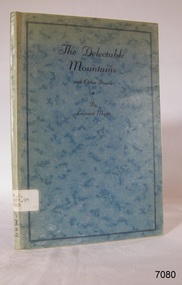
Book - Poetry Collection, Leonard Mann, The Delectable Mountains, 1944
... After 1948, Mann settled in the Dandenong Ranges, farming poultry, and continued to write, publishing Andrea Caslin (1959) and Venus Half-Caste (1963). ...After 1948, Mann settled in the Dandenong Ranges, farming poultry, and continued to write, publishing Andrea Caslin (1959) and Venus Half-Caste (1963). ...The subject volume is a poetry collection; its full title is The Delectable Mountains, and Other Poems, written by the Australian poet and novelist Leonard Mann, and published by Angus & Robertson (Sydney & London) in 1944. It was the third of Mann's four published volumes of poetry, following The Plumed Voice (1938) and Poems from the Mask (1941), and preceding his prize-winning Elegiac and Other Poems (1957). The collection's full bibliographic listing places it as 'The Delectable Mountains, and other poems. Sydney & London: Angus & Robertson, 1944.Hard cover book. The Delectable Mountains Author: Leonard Mann Publisher: Angus & Robertson Date: 1944 Further Information: Blue pattered cloth hardcover with lettering and patterning to front cover in black. The spine has a Library label with an inscription.fictionThe subject volume is a poetry collection; its full title is The Delectable Mountains, and Other Poems, written by the Australian poet and novelist Leonard Mann, and published by Angus & Robertson (Sydney & London) in 1944. It was the third of Mann's four published volumes of poetry, following The Plumed Voice (1938) and Poems from the Mask (1941), and preceding his prize-winning Elegiac and Other Poems (1957). The collection's full bibliographic listing places it as 'The Delectable Mountains, and other poems. Sydney & London: Angus & Robertson, 1944.shipwrecked-coast, flagstaff-hill, flagstaff-hill-maritime-museum, warrnambool, maritime-museum, shipwreck-coast, flagstaff-hill-maritime-village, shipwrecked-artefact, book, pattison collection, warrnambool library, warrnambool mechanics’ institute, ralph eric pattison, corangamite regional library service, warrnambool city librarian, mechanics’ institute library, victorian library board, warrnambool books and records, warrnambool children’s library, the delectable mountains, leonard mann -
 The Beechworth Burke Museum
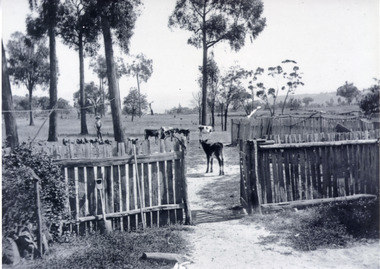
Photograph, circa. 1850
... Date not confirmed, a farm in the Beechworth, Warner property with a farmer overlooking calves, poultry and timber. This photograph depicts the farming and agriculture industry in Beechworth. ...Date not confirmed, a farm in the Beechworth, Warner property with a farmer overlooking calves, poultry and timber. This photograph depicts the farming and agriculture industry in Beechworth. The property, known as Daintree Stud or the Warner property, formed a part of the town of Beechworth, Victoria. Beechworth became famous in the 19th century from a short- lived gold-rush. The town grew to the extent of building a hospital and mental hospital, courthouse, hotels, convent, and prison. During this time, the industrial growth of Beechworth was significant, seeing a rise in practices including tanning, cobbling, blacksmithing, and the selling of livestock. This photograph perhaps reveals a small degree of insight into the livestock business.Black and white rectangular photograph on matte photographic paper, unmountedReverse: 5896/ BMM 8093-1farm, agriculture, farming and agriculture, beechworth, beechworth farm, industry -
Federation University Historical Collection
Booklet, Ballarat School of Mines, Occupational Objectives: Farmer 12:79, 05/1979
... farming...occupations...poulty farmrt...dairy farmrt...sheep farmer...poultry...ballarat school of mines farmer farming occupations poulty farmrt dairy farmrt sheep farmer poultry farmer swineher creals grower oil seed grower viticulturalist markert gardener tabacco grower orchardist silviculturist biodynamics irrigationists permaculturists feedlotters hot-house White cardboard cover with black plastic spine Occupational Objectives: Farmer 12:79 Booklet Booklet Ballarat School of Mines J.L. ...White cardboard cover with black plastic spineballarat school of mines, farmer, farming, occupations, poulty farmrt, dairy farmrt, sheep farmer, poultry farmer, swineher, creals grower, oil seed grower, viticulturalist, markert gardener, tabacco grower, orchardist, silviculturist, biodynamics, irrigationists, permaculturists, feedlotters, hot-house -
 Greensborough Historical Society
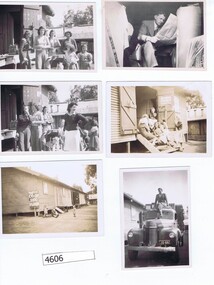
Photographs, Greensborough Egg Co-op, 1948_
... The Egg Co-op was an indication of the importance of poultry farming and egg production in Greensborough mid 20th Century. greensborough egg co-operative jack gibb coral williams elaine rank john bell elaine drakeford Captions on back of photos 6 black and white photographs Greensborough Egg Co-op Photographs ...Photographs are of Greensborough Egg co-op staff, premises and truck (1946 Commer). The Egg Co-op was located on the present site of the Simpson Barracks.The Egg Co-op was an indication of the importance of poultry farming and egg production in Greensborough mid 20th Century.6 black and white photographsCaptions on back of photosgreensborough egg co-operative, jack gibb, coral williams, elaine rank, john bell, elaine drakeford -
 Glenelg Shire Council Cultural Collection
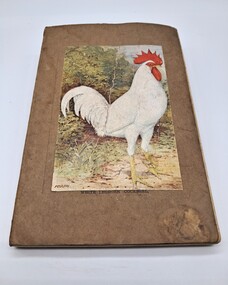
Booklet, Tillotsons (Bolton) Ltd, Fortunes From Eggs, 1919
... Farming...Birds...Poultry...This was part of a donation from the Portland Veterinary Clinic. Farming Birds Poultry Agriculture Hobby Farminh Portland Glenelg Shire Chicken A non-fiction book with information about rare breeds of poultry and how to care for and farm poultry 128 page booklet. ...A non-fiction book with information about rare breeds of poultry and how to care for and farm poultry128 page booklet. The front cover is brown card with a coloured imaged of a white cockerel on the front. The bird stands in front of some greenery. It is a white bird with red comb. To the bottom left of the image is the work ' poultry' and underneath the image on the cover are the words ' White Leghorn Cockerel'. The bottom right of the front cover has a circle of damage where something may have been spilled. Inside the book the text is printed in black lettering. There are some black and white images and in the middle of the booklet are a number of colour illustrations. non-fictionA non-fiction book with information about rare breeds of poultry and how to care for and farm poultryfarming, birds, poultry, agriculture, hobby farminh, portland, glenelg shire, chicken -
![Photograph - Colour Print, Harry Gilham [Attrib.], Living and Learning Centre, Main Road, Eltham, Aug 1988](/media/collectors/4f729f7b97f83e03086018a5/items/6a1ccb54e43e4200865b4676/item-media/6a1ccbd3e43e4200865b58ed/item-fit-380x285.jpg?cb=6) Eltham District Historical Society Inc
Eltham District Historical Society IncPhotograph - Colour Print, Harry Gilham [Attrib.], Living and Learning Centre, Main Road, Eltham, Aug 1988
... Claire's interest in farming and animal husbandry and breeding saw her modify and establish buildings on the property to house goats and poultry with a horse stable and storage sheds for the animal food. ...Claire's interest in farming and animal husbandry and breeding saw her modify and establish buildings on the property to house goats and poultry with a horse stable and storage sheds for the animal food. ...North face of house viewed from the current (1990) pottery area (now pathed) The kitchen was separate from the house as a safety measure in the late 1800s. A detailed history of the site and early development of the Eltham Living and Learning Centre can be found in EDHS_04870 - Folder, Shire of Eltham Living and Learning Centre, 1996 The original property was part of Josiah Holloways subdivision of Little Eltham. It had a 70 foot frontage to Maria Street and stretched down to the Diamond Creek. John Perason, a Tanner, purchased the property in 1857 for £100 and he built a solid brick house which over the years was modified significantly by various owners and which is the basis of the present-day Living and Learning Centre. Claire Fitzpatrick and her husband Alfred, a retired chemical engineer, bought it in the early 1950's. Claire's interest in farming and animal husbandry and breeding saw her modify and establish buildings on the property to house goats and poultry with a horse stable and storage sheds for the animal food. She also built the coach house with its horse box and tack room and built an adjoining garage for their car. Structural alterations to the house were also carried out during the period of their ownership. Their house renovations removed the four fireplaces and chimneys and added a wider verandah, a fibro cement extension on the north wall requiring a doorway to be made in the brick wall for access. Part of a passage wall was removed to join the northwest room, now the "sitting room". A new jarrah floor was put in as the old one was rotten with borer. The verandahs, front and back, were re-organised in design and the front door had its leadlighting panels removed to allow more light into the house. During this period the water catchment well was filled in. This well had a concrete slab fitted onto a collar around its top. The well is 12 feet deep and 8 feet in diameter. Septic sewerage was installed and an internal toilet fitted in the house. The former northeast room was divided into bathroom/toilet and passageway with cupboards to access the extension. Kitchen stove and sink was removed (they fell apart) and a slow-combustion stove with hot water heater installed. Basins and hot water were connected to the new bathroom. In the early 1970s Eltham Shire Council, Councillors Frank Maas and Don Maling, were proposing an extended communities activities program be set up and the Commonwealth Grants Commission was approached for financial assistance to such a scheme. During 1974 a $50,000 Commonwealth Government grant was received by the Shire Council to acquire the Fitzpatrick property as part of the Shire's planning to establish an "extended community activities program". Council's Committee recommended an annual budget of $26,950 for the program and the project was named the Living and Learning Centre and in charge of the program was the first co-ordinator, Carina Hack. The activities were planned to cover "practical skills for living" and included cooking, preserving, gardening, animal husbandry, home economics, electronics, carpentry, hairdressing, making children's clothes and car maintenance. Hobbies and arts and crafts that would include amongst other future items, winemaking, music spinning and weaving and painting. 739 main road eltham, eltham living and learning centre, living and learning centre, living and learning nillumbik (eltham), main road eltham -
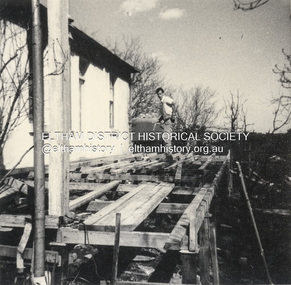 Eltham District Historical Society Inc
Photograph - Black and White Print, Widening of the verandah of 'Rosebank,' now Living and Learning Centre, Main Road, Eltham, c.1965
... Claire's interest in farming and animal husbandry and breeding saw her modify and establish buildings on the property to house goats and poultry with a horse stable and storage sheds for the animal food. ...Claire's interest in farming and animal husbandry and breeding saw her modify and establish buildings on the property to house goats and poultry with a horse stable and storage sheds for the animal food. ...Restructure of the front verandah of 'Rosebank' by widening, c.1965. It was glassed in at a later date. The west facing front verandah was widened and enclosed for additional class room use by the Living and Learning Centre. A detailed history of the site and early development of the Eltham Living and Learning Centre can be found in EDHS_04870 - Folder, Shire of Eltham Living and Learning Centre, 1996 The original property was part of Josiah Holloways subdivision of Little Eltham. It had a 70 foot frontage to Maria Street and stretched down to the Diamond Creek. John Perason, a Tanner, purchased the property in 1857 for £100 and he built a solid brick house which over the years was modified significantly by various owners and which is the basis of the present-day Living and Learning Centre. Claire Fitzpatrick and her husband Alfred, a retired chemical engineer, bought it in the early 1950's. Claire's interest in farming and animal husbandry and breeding saw her modify and establish buildings on the property to house goats and poultry with a horse stable and storage sheds for the animal food. She also built the coach house with its horse box and tack room and built an adjoining garage for their car. Structural alterations to the house were also carried out during the period of their ownership. Their house renovations removed the four fireplaces and chimneys and added a wider verandah, a fibro cement extension on the north wall requiring a doorway to be made in the brick wall for access. Part of a passage wall was removed to join the northwest room, now the "sitting room". A new jarrah floor was put in as the old one was rotten with borer. The verandahs, front and back, were re-organised in design and the front door had its leadlighting panels removed to allow more light into the house. During this period the water catchment well was filled in. This well had a concrete slab fitted onto a collar around its top. The well is 12 feet deep and 8 feet in diameter. Septic sewerage was installed and an internal toilet fitted in the house. The former northeast room was divided into bathroom/toilet and passageway with cupboards to access the extension. Kitchen stove and sink was removed (they fell apart) and a slow-combustion stove with hot water heater installed. Basins and hot water were connected to the new bathroom. In the early 1970s Eltham Shire Council, Councillors Frank Maas and Don Maling, were proposing an extended communities activities program be set up and the Commonwealth Grants Commission was approached for financial assistance to such a scheme. During 1974 a $50,000 Commonwealth Government grant was received by the Shire Council to acquire the Fitzpatrick property as part of the Shire's planning to establish an "extended community activities program". Council's Committee recommended an annual budget of $26,950 for the program and the project was named the Living and Learning Centre and in charge of the program was the first co-ordinator, Carina Hack. The activities were planned to cover "practical skills for living" and included cooking, preserving, gardening, animal husbandry, home economics, electronics, carpentry, hairdressing, making children's clothes and car maintenance. Hobbies and arts and crafts that would include amongst other future items, winemaking, music spinning and weaving and painting. 739 main road eltham, eltham living and learning centre, living and learning centre, living and learning nillumbik (eltham), main road eltham -
![Photograph - Colour Print, Harry Gilham [Attrib.], Living and Learning Centre, Main Road, Eltham, c.1988](/media/collectors/4f729f7b97f83e03086018a5/items/6a1cdaf8e43e4200865c849d/item-media/6a1cdb13e43e4200865c85b6/item-fit-380x285.jpg?cb=6) Eltham District Historical Society Inc
Eltham District Historical Society IncPhotograph - Colour Print, Harry Gilham [Attrib.], Living and Learning Centre, Main Road, Eltham, c.1988
... Claire's interest in farming and animal husbandry and breeding saw her modify and establish buildings on the property to house goats and poultry with a horse stable and storage sheds for the animal food. ...Claire's interest in farming and animal husbandry and breeding saw her modify and establish buildings on the property to house goats and poultry with a horse stable and storage sheds for the animal food. ...The 'back door' which faced the Main Road entrance to the office, Eltham Living and Learning Centre, herb garden at its peak, late 1980s A detailed history of the site and early development of the Eltham Living and Learning Centre can be found in EDHS_04870 - Folder, Shire of Eltham Living and Learning Centre, 1996 The original property was part of Josiah Holloways subdivision of Little Eltham. It had a 70 foot frontage to Maria Street and stretched down to the Diamond Creek. John Perason, a Tanner, purchased the property in 1857 for £100 and he built a solid brick house which over the years was modified significantly by various owners and which is the basis of the present-day Living and Learning Centre. Claire Fitzpatrick and her husband Alfred, a retired chemical engineer, bought it in the early 1950's. Claire's interest in farming and animal husbandry and breeding saw her modify and establish buildings on the property to house goats and poultry with a horse stable and storage sheds for the animal food. She also built the coach house with its horse box and tack room and built an adjoining garage for their car. Structural alterations to the house were also carried out during the period of their ownership. Their house renovations removed the four fireplaces and chimneys and added a wider verandah, a fibro cement extension on the north wall requiring a doorway to be made in the brick wall for access. Part of a passage wall was removed to join the northwest room, now the "sitting room". A new jarrah floor was put in as the old one was rotten with borer. The verandahs, front and back, were re-organised in design and the front door had its leadlighting panels removed to allow more light into the house. During this period the water catchment well was filled in. This well had a concrete slab fitted onto a collar around its top. The well is 12 feet deep and 8 feet in diameter. Septic sewerage was installed and an internal toilet fitted in the house. The former northeast room was divided into bathroom/toilet and passageway with cupboards to access the extension. Kitchen stove and sink was removed (they fell apart) and a slow-combustion stove with hot water heater installed. Basins and hot water were connected to the new bathroom. In the early 1970s Eltham Shire Council, Councillors Frank Maas and Don Maling, were proposing an extended communities activities program be set up and the Commonwealth Grants Commission was approached for financial assistance to such a scheme. During 1974 a $50,000 Commonwealth Government grant was received by the Shire Council to acquire the Fitzpatrick property as part of the Shire's planning to establish an "extended community activities program". Council's Committee recommended an annual budget of $26,950 for the program and the project was named the Living and Learning Centre and in charge of the program was the first co-ordinator, Carina Hack. The activities were planned to cover "practical skills for living" and included cooking, preserving, gardening, animal husbandry, home economics, electronics, carpentry, hairdressing, making children's clothes and car maintenance. Hobbies and arts and crafts that would include amongst other future items, winemaking, music spinning and weaving and painting. 739 main road eltham, eltham living and learning centre, living and learning centre, living and learning nillumbik (eltham), main road eltham -
![Photograph - Black and White Print, Harry Gilham [Attrib.], Living and Learning Centre, Main Road, Eltham, 1990](/media/collectors/4f729f7b97f83e03086018a5/items/6a1cdbffe43e4200865c95df/item-media/6a1cdc19e43e4200865c975d/item-fit-380x285.jpg?cb=6) Eltham District Historical Society Inc
Eltham District Historical Society IncPhotograph - Black and White Print, Harry Gilham [Attrib.], Living and Learning Centre, Main Road, Eltham, 1990
... Claire's interest in farming and animal husbandry and breeding saw her modify and establish buildings on the property to house goats and poultry with a horse stable and storage sheds for the animal food. ...Claire's interest in farming and animal husbandry and breeding saw her modify and establish buildings on the property to house goats and poultry with a horse stable and storage sheds for the animal food. ...The 'back door' which faced the Main Road entrance to the office, Eltham Living and Learning Centre - Shows original sandstone blocks in back verandah floor A detailed history of the site and early development of the Eltham Living and Learning Centre can be found in EDHS_04870 - Folder, Shire of Eltham Living and Learning Centre, 1996 The original property was part of Josiah Holloways subdivision of Little Eltham. It had a 70 foot frontage to Maria Street and stretched down to the Diamond Creek. John Perason, a Tanner, purchased the property in 1857 for £100 and he built a solid brick house which over the years was modified significantly by various owners and which is the basis of the present-day Living and Learning Centre. Claire Fitzpatrick and her husband Alfred, a retired chemical engineer, bought it in the early 1950's. Claire's interest in farming and animal husbandry and breeding saw her modify and establish buildings on the property to house goats and poultry with a horse stable and storage sheds for the animal food. She also built the coach house with its horse box and tack room and built an adjoining garage for their car. Structural alterations to the house were also carried out during the period of their ownership. Their house renovations removed the four fireplaces and chimneys and added a wider verandah, a fibro cement extension on the north wall requiring a doorway to be made in the brick wall for access. Part of a passage wall was removed to join the northwest room, now the "sitting room". A new jarrah floor was put in as the old one was rotten with borer. The verandahs, front and back, were re-organised in design and the front door had its leadlighting panels removed to allow more light into the house. During this period the water catchment well was filled in. This well had a concrete slab fitted onto a collar around its top. The well is 12 feet deep and 8 feet in diameter. Septic sewerage was installed and an internal toilet fitted in the house. The former northeast room was divided into bathroom/toilet and passageway with cupboards to access the extension. Kitchen stove and sink was removed (they fell apart) and a slow-combustion stove with hot water heater installed. Basins and hot water were connected to the new bathroom. In the early 1970s Eltham Shire Council, Councillors Frank Maas and Don Maling, were proposing an extended communities activities program be set up and the Commonwealth Grants Commission was approached for financial assistance to such a scheme. During 1974 a $50,000 Commonwealth Government grant was received by the Shire Council to acquire the Fitzpatrick property as part of the Shire's planning to establish an "extended community activities program". Council's Committee recommended an annual budget of $26,950 for the program and the project was named the Living and Learning Centre and in charge of the program was the first co-ordinator, Carina Hack. The activities were planned to cover "practical skills for living" and included cooking, preserving, gardening, animal husbandry, home economics, electronics, carpentry, hairdressing, making children's clothes and car maintenance. Hobbies and arts and crafts that would include amongst other future items, winemaking, music spinning and weaving and painting. 739 main road eltham, eltham living and learning centre, living and learning centre, living and learning nillumbik (eltham), main road eltham -
![Photograph - Black and White Print, Harry Gilham [Attrib.], Living and Learning Centre, Main Road, Eltham, c.1990](/media/collectors/4f729f7b97f83e03086018a5/items/6a1cddabe43e4200865cee41/item-media/6a1cddbbe43e4200865cf696/item-fit-380x285.jpg?cb=6) Eltham District Historical Society Inc
Eltham District Historical Society IncPhotograph - Black and White Print, Harry Gilham [Attrib.], Living and Learning Centre, Main Road, Eltham, c.1990
... Claire's interest in farming and animal husbandry and breeding saw her modify and establish buildings on the property to house goats and poultry with a horse stable and storage sheds for the animal food. ...Claire's interest in farming and animal husbandry and breeding saw her modify and establish buildings on the property to house goats and poultry with a horse stable and storage sheds for the animal food. ...Brick storage shed, south wall entry. This cool room, half set down in the soil still standing at time but with a more modern galvanised tin roof. A detailed history of the site and early development of the Eltham Living and Learning Centre can be found in EDHS_04870 - Folder, Shire of Eltham Living and Learning Centre, 1996 The original property was part of Josiah Holloways subdivision of Little Eltham. It had a 70 foot frontage to Maria Street and stretched down to the Diamond Creek. John Perason, a Tanner, purchased the property in 1857 for £100 and he built a solid brick house which over the years was modified significantly by various owners and which is the basis of the present-day Living and Learning Centre. Claire Fitzpatrick and her husband Alfred, a retired chemical engineer, bought it in the early 1950's. Claire's interest in farming and animal husbandry and breeding saw her modify and establish buildings on the property to house goats and poultry with a horse stable and storage sheds for the animal food. She also built the coach house with its horse box and tack room and built an adjoining garage for their car. Structural alterations to the house were also carried out during the period of their ownership. Their house renovations removed the four fireplaces and chimneys and added a wider verandah, a fibro cement extension on the north wall requiring a doorway to be made in the brick wall for access. Part of a passage wall was removed to join the northwest room, now the "sitting room". A new jarrah floor was put in as the old one was rotten with borer. The verandahs, front and back, were re-organised in design and the front door had its leadlighting panels removed to allow more light into the house. During this period the water catchment well was filled in. This well had a concrete slab fitted onto a collar around its top. The well is 12 feet deep and 8 feet in diameter. Septic sewerage was installed and an internal toilet fitted in the house. The former northeast room was divided into bathroom/toilet and passageway with cupboards to access the extension. Kitchen stove and sink was removed (they fell apart) and a slow-combustion stove with hot water heater installed. Basins and hot water were connected to the new bathroom. In the early 1970s Eltham Shire Council, Councillors Frank Maas and Don Maling, were proposing an extended communities activities program be set up and the Commonwealth Grants Commission was approached for financial assistance to such a scheme. During 1974 a $50,000 Commonwealth Government grant was received by the Shire Council to acquire the Fitzpatrick property as part of the Shire's planning to establish an "extended community activities program". Council's Committee recommended an annual budget of $26,950 for the program and the project was named the Living and Learning Centre and in charge of the program was the first co-ordinator, Carina Hack. The activities were planned to cover "practical skills for living" and included cooking, preserving, gardening, animal husbandry, home economics, electronics, carpentry, hairdressing, making children's clothes and car maintenance. Hobbies and arts and crafts that would include amongst other future items, winemaking, music spinning and weaving and painting. 739 main road eltham, eltham living and learning centre, living and learning centre, living and learning nillumbik (eltham), main road eltham -
![Photograph - Colour Print, Harry Gilham [Attrib.], Living and Learning Centre, Main Road, Eltham, 1995](/media/collectors/4f729f7b97f83e03086018a5/items/6a1cde5de43e4200865d0c81/item-media/6a1cde8be43e4200865d1127/item-fit-380x285.jpg?cb=6) Eltham District Historical Society Inc
Eltham District Historical Society IncPhotograph - Colour Print, Harry Gilham [Attrib.], Living and Learning Centre, Main Road, Eltham, 1995
... Claire's interest in farming and animal husbandry and breeding saw her modify and establish buildings on the property to house goats and poultry with a horse stable and storage sheds for the animal food. ...Claire's interest in farming and animal husbandry and breeding saw her modify and establish buildings on the property to house goats and poultry with a horse stable and storage sheds for the animal food. ...New Pavilion at left has plants appearing. Grass area needs a mow - verandah with repainted stool/forms - early spring 1995 A detailed history of the site and early development of the Eltham Living and Learning Centre can be found in EDHS_04870 - Folder, Shire of Eltham Living and Learning Centre, 1996 The original property was part of Josiah Holloways subdivision of Little Eltham. It had a 70 foot frontage to Maria Street and stretched down to the Diamond Creek. John Perason, a Tanner, purchased the property in 1857 for £100 and he built a solid brick house which over the years was modified significantly by various owners and which is the basis of the present-day Living and Learning Centre. Claire Fitzpatrick and her husband Alfred, a retired chemical engineer, bought it in the early 1950's. Claire's interest in farming and animal husbandry and breeding saw her modify and establish buildings on the property to house goats and poultry with a horse stable and storage sheds for the animal food. She also built the coach house with its horse box and tack room and built an adjoining garage for their car. Structural alterations to the house were also carried out during the period of their ownership. Their house renovations removed the four fireplaces and chimneys and added a wider verandah, a fibro cement extension on the north wall requiring a doorway to be made in the brick wall for access. Part of a passage wall was removed to join the northwest room, now the "sitting room". A new jarrah floor was put in as the old one was rotten with borer. The verandahs, front and back, were re-organised in design and the front door had its leadlighting panels removed to allow more light into the house. During this period the water catchment well was filled in. This well had a concrete slab fitted onto a collar around its top. The well is 12 feet deep and 8 feet in diameter. Septic sewerage was installed and an internal toilet fitted in the house. The former northeast room was divided into bathroom/toilet and passageway with cupboards to access the extension. Kitchen stove and sink was removed (they fell apart) and a slow-combustion stove with hot water heater installed. Basins and hot water were connected to the new bathroom. In the early 1970s Eltham Shire Council, Councillors Frank Maas and Don Maling, were proposing an extended communities activities program be set up and the Commonwealth Grants Commission was approached for financial assistance to such a scheme. During 1974 a $50,000 Commonwealth Government grant was received by the Shire Council to acquire the Fitzpatrick property as part of the Shire's planning to establish an "extended community activities program". Council's Committee recommended an annual budget of $26,950 for the program and the project was named the Living and Learning Centre and in charge of the program was the first co-ordinator, Carina Hack. The activities were planned to cover "practical skills for living" and included cooking, preserving, gardening, animal husbandry, home economics, electronics, carpentry, hairdressing, making children's clothes and car maintenance. Hobbies and arts and crafts that would include amongst other future items, winemaking, music spinning and weaving and painting. 739 main road eltham, eltham living and learning centre, living and learning centre, living and learning nillumbik (eltham), main road eltham -
![Photograph - Colour Print, Harry Gilham [Attrib.], Living and Learning Centre, Main Road, Eltham, 1995](/media/collectors/4f729f7b97f83e03086018a5/items/6a1cdf36e43e4200865d43d6/item-media/6a1cdf50e43e4200865d4778/item-fit-380x285.jpg?cb=6) Eltham District Historical Society Inc
Eltham District Historical Society IncPhotograph - Colour Print, Harry Gilham [Attrib.], Living and Learning Centre, Main Road, Eltham, 1995
... Claire's interest in farming and animal husbandry and breeding saw her modify and establish buildings on the property to house goats and poultry with a horse stable and storage sheds for the animal food. ...Claire's interest in farming and animal husbandry and breeding saw her modify and establish buildings on the property to house goats and poultry with a horse stable and storage sheds for the animal food. ...New verandah Eltham Living and Learning Centre on the western face looking down over the Tannery site and Diamond Creek. Pavilion in place (LH Side). The verandah with its upgrade of curtains 1995. Originally 4 feet 6 inches wide. A detailed history of the site and early development of the Eltham Living and Learning Centre can be found in EDHS_04870 - Folder, Shire of Eltham Living and Learning Centre, 1996 The original property was part of Josiah Holloways subdivision of Little Eltham. It had a 70 foot frontage to Maria Street and stretched down to the Diamond Creek. John Perason, a Tanner, purchased the property in 1857 for £100 and he built a solid brick house which over the years was modified significantly by various owners and which is the basis of the present-day Living and Learning Centre. Claire Fitzpatrick and her husband Alfred, a retired chemical engineer, bought it in the early 1950's. Claire's interest in farming and animal husbandry and breeding saw her modify and establish buildings on the property to house goats and poultry with a horse stable and storage sheds for the animal food. She also built the coach house with its horse box and tack room and built an adjoining garage for their car. Structural alterations to the house were also carried out during the period of their ownership. Their house renovations removed the four fireplaces and chimneys and added a wider verandah, a fibro cement extension on the north wall requiring a doorway to be made in the brick wall for access. Part of a passage wall was removed to join the northwest room, now the "sitting room". A new jarrah floor was put in as the old one was rotten with borer. The verandahs, front and back, were re-organised in design and the front door had its leadlighting panels removed to allow more light into the house. During this period the water catchment well was filled in. This well had a concrete slab fitted onto a collar around its top. The well is 12 feet deep and 8 feet in diameter. Septic sewerage was installed and an internal toilet fitted in the house. The former northeast room was divided into bathroom/toilet and passageway with cupboards to access the extension. Kitchen stove and sink was removed (they fell apart) and a slow-combustion stove with hot water heater installed. Basins and hot water were connected to the new bathroom. In the early 1970s Eltham Shire Council, Councillors Frank Maas and Don Maling, were proposing an extended communities activities program be set up and the Commonwealth Grants Commission was approached for financial assistance to such a scheme. During 1974 a $50,000 Commonwealth Government grant was received by the Shire Council to acquire the Fitzpatrick property as part of the Shire's planning to establish an "extended community activities program". Council's Committee recommended an annual budget of $26,950 for the program and the project was named the Living and Learning Centre and in charge of the program was the first co-ordinator, Carina Hack. The activities were planned to cover "practical skills for living" and included cooking, preserving, gardening, animal husbandry, home economics, electronics, carpentry, hairdressing, making children's clothes and car maintenance. Hobbies and arts and crafts that would include amongst other future items, winemaking, music spinning and weaving and painting. 739 main road eltham, eltham living and learning centre, living and learning centre, living and learning nillumbik (eltham), main road eltham -
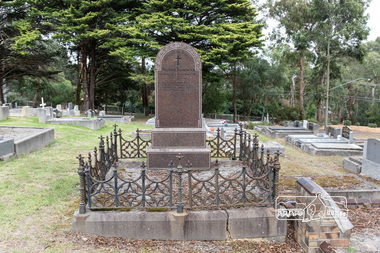 Eltham District Historical Society Inc
Photograph, Peter Pidgeon, Grave of Patrick Carrucan, Eltham Cemetery, Victoria, 5 April 2021
... poultry and an orchard. Patrick and Mary had ten children (Bridget, Michael, Susan, Patrick, Thomas, Mary Anne, Catherine, Margaret, Frances and Annie) and lived in Eltham for the rest of their lives. In later years, the Sweeney and the Carrucan families intermarried, as did most of the old Catholic farming...poultry and an orchard. Patrick and Mary had ten children (Bridget, Michael, Susan, Patrick, Thomas, Mary Anne, Catherine, Margaret, Frances and Annie) and lived in Eltham for the rest of their lives. In later years, the Sweeney and the Carrucan families intermarried, as did most of the old Catholic farming ...Whilst the three original Carrucan pioneers and their spouses are all buried at Eltham, only one gravestone (that of Patrick Carrucan) exists. Like many of the poor farmers of these early times, their graves were not marked with any permanent stone monuments and have deteriorated to become unmarked graves over the years. Patrick Carrucan, born in 1831 in Ireland, was the second oldest son of Patrick and Bridget Carrucan. He married Mary O'Brien in Ireland in 1856 before migrating to Australia, accompanied by Mary’s father, to join his sister Bridget Coleman in Eltham who had migrated in 1853. Patrick and Mary purchased a farm at the corner of Dalton and Bible Streets, initially living in a hut. After a few years, a more substantial house was built with assistance from Mary's father, who then returned to Ireland. The farm gradually prospered, with cattle, poultry and an orchard. Patrick and Mary had ten children (Bridget, Michael, Susan, Patrick, Thomas, Mary Anne, Catherine, Margaret, Frances and Annie) and lived in Eltham for the rest of their lives. In later years, the Sweeney and the Carrucan families intermarried, as did most of the old Catholic farming families of the Eltham District. Patrick died 6 October 1894 aged 63, reputedly from a broken back after being run over by his own bullock cart. Mary died in 2 Nov 1927 aged 90. They, together with other family members, are buried in a family plot in Eltham Cemetery, though only Patrick is recorded on the gravestone. Patrick's gravestone was in such disrepair that Betty Erickson (nee Carrucan) paid to have a new one erected in the late 1970s. Unfortunately, this gravestone, like the original, only honours Patrick Carrucan and does not record the other family members buried in this family plot. Betty wrote in 1989 "our people were farmers; the Sweeneys well-educated and prosperous, the Carrucans on a somewhat less favoured scale, but solid workers and providers." Patrick Carrucan Who departed this life 6 Oct. 1894 Aged 63 yearsBorn Digitaleltham cemetery, gravestones, patrick carrucan -
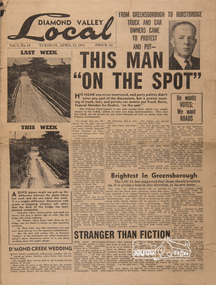 Eltham District Historical Society Inc
Newspaper, Diamond Valley Local, 13 Apr 1954, 13 April 1954
... Stubley & Son (Chook Breeder and fencing ) Greensborough – page 6 and 11 Vaness Motors Grimshaw St Greensborough page 6 Fred Shaw Motors Main Street Greensborough p. 6 Dennis Hogg electrical contractor McDowell St Greensborough p. 7 D.R Ross (electrician) Main Street Greensborough p. 8 S Page Fencing William St Greensborough p. 11 Greensborough District Bakery – p. 11 Moir and Lott Pty Ltd (Chook Breeder) Hurstbridge – page 7 Hurstbridge Motors Main Street Hurstbridge – page 8 W & U Freeman (Clothing, Footwear , knitting wool and patterns) Main Street Hurstbridge p. 9 Avonlea Diary / Scales Dairy Hurstbridge page 9 A R Saunders car truck farm plant Hurstbridge – page 9 W Saville poultry seller Hurstbirdge – p 11 John R Horton Hurstbridge bakery Hurstbridge p 11 W. F. Burrell Motors 238 Plenty Road Preston (agent for Ferguson mechanised farming) -p 6. ...Stubley & Son (Chook Breeder and fencing ) Greensborough – page 6 and 11 Vaness Motors Grimshaw St Greensborough page 6 Fred Shaw Motors Main Street Greensborough p. 6 Dennis Hogg electrical contractor McDowell St Greensborough p. 7 D.R Ross (electrician) Main Street Greensborough p. 8 S Page Fencing William St Greensborough p. 11 Greensborough District Bakery – p. 11 Moir and Lott Pty Ltd (Chook Breeder) Hurstbridge – page 7 Hurstbridge Motors Main Street Hurstbridge – page 8 W & U Freeman (Clothing, Footwear , knitting wool and patterns) Main Street Hurstbridge p. 9 Avonlea Diary / Scales Dairy Hurstbridge page 9 A R Saunders car truck farm plant Hurstbridge – page 9 W Saville poultry seller Hurstbirdge – p 11 John R Horton Hurstbridge bakery Hurstbridge p 11 W. F. Burrell Motors 238 Plenty Road Preston (agent for Ferguson mechanised farming) -p 6. ...Page 1 Protest Meeting re Lack of Funds from Federal Government means that the Country Roads Board (CRB) cannot help municipalities Reference to newly formed Diamond Valley Chamber of Commerce Bridgeworks on unidentified bridge Diamond Creek wedding- LOTT – STEIN LOCAL newspaper new home in Greensborough Page 2 Mudbricks Eltham Gymkhana (and add page 3) – in aid of war memorial trust Memorial window at St Helena Church Page 3 Annual report for South and North Ridings, incl photo of Dr. Corder Bus Route in Research Hurstbridge Hall Rolls Royse hits out Labor Member At the films – Greensborough, Eltham, Diamond Theatre and Montmorency Theatre, RSL Hall, Page 4 Bus journey between Eltham and Warrandyte (inc photos) Page 5 Article on campaign inviting better local shopping conditions for the DV Public Properties for sale, some with photos in Croydon, Greensborough, Montmorency, Warrandyte including a 5 acre flower farm in Briar Hill with house. Page 6 Article with photo on Eltham butcher Don Dureau (no personal history however) Panton Hill Cricket Club annual dinner Page 7 CWA Diamond Creek branch 5th birthday – Letter to editor referring Cr. Alice Peake and re-subdivision of the City of Heidelberg two yrs ago. Panton Hill Red Cross Page 8 Electric light for Research, Eltham North, Hurstbridge, St Andrews Page 9 Hurstbridge Methodist Community Phone box for Wattle Glen. Page 11 Report on Heidelberg Council Page 12 Pigeon racing DV Tennis association Adds for the following local businesses The Blue Gum (deli meats and cakes) Cnr Pryor and Main Rds Eltham p, 2 Eltham Hotel (inc photo) Main Rd Eltham - p. 2 Eltham Meat Supply – Main Road – p. 2 A & S Davis, (Paint store_ Main Road Eltham – p 4 and 10 Presswells Garage, Main Street, Eltham East – page 4 (and article on page 9 reference to “newly named” Eltham East – Post Office and News Agent J N Burgoyne & Sons (groceries) Main Rd, Eltham – page 6 John Mclean & Son Eltham (Chook Breeder) Eltham – page 7 Eltham Hardware & Timber Co, Main Road Eltham – page 8 I J Thompson Chemist, Eltham – page 8 E L Owen Carrier Dudley St Eltham page 8 Arnetts (bakers) Main St Eltham p. 9 Jean Kimber Florist Hillcrest Ave. Eltham p. 9 J C Rains haberdashery , drapery, school wear – Main road Eltham P. 10 Alistair Knox (joinery) York Street Eltham – p 11 T. R.. Walker Plumber Main rd Eltham – pa 11 John McLean & Sons (supplies for poultry farmers_ Main rd Eltham – p 11 Briar Hill Iceworks Beaconsfield Rd, Briar Hill p. 9 Briar Hill Timber & Trading – page 4 D & E Middleton (Steelworkers) Sherbourne Rd Briar Hill – page 9 and 10 R W Fell Delicatessen Supplies (with photo) Montmorency Eltham Taxi service, Rattray Road (Montmorency) – page 6 Tozer & Whiteway (Grover) Were St Montmorency = p 4 W. Hutchinson (sand, screenings, soil, stone) Rattray Rd Montmorency 0. 7 L & W Stephenson (grocer) Were St Montmorency p.9 M Ricardo painter Elizabeth St (off Looker St) Montmorency back page. Ken Smith Fire Wood Main Road Lower Plenty Hillcrest Dry Cleaners Main road Research p. 11 C Jessop and Co, Greensborough – p. 2 The “Rose Bower” Floral Salon, Main St, Greensborough – p 2. J. D. Baines (Upholsterer) 140 Grimshaw St, Greensborough p. 4 Greensborough and DV Real Estate, Cnr Grimshaw and Main St Greensborough p. 5 Greensborough Hardware p. 6 P. B. Stubley & Son (Chook Breeder and fencing ) Greensborough – page 6 and 11 Vaness Motors Grimshaw St Greensborough page 6 Fred Shaw Motors Main Street Greensborough p. 6 Dennis Hogg electrical contractor McDowell St Greensborough p. 7 D.R Ross (electrician) Main Street Greensborough p. 8 S Page Fencing William St Greensborough p. 11 Greensborough District Bakery – p. 11 Moir and Lott Pty Ltd (Chook Breeder) Hurstbridge – page 7 Hurstbridge Motors Main Street Hurstbridge – page 8 W & U Freeman (Clothing, Footwear , knitting wool and patterns) Main Street Hurstbridge p. 9 Avonlea Diary / Scales Dairy Hurstbridge page 9 A R Saunders car truck farm plant Hurstbridge – page 9 W Saville poultry seller Hurstbirdge – p 11 John R Horton Hurstbridge bakery Hurstbridge p 11 W. F. Burrell Motors 238 Plenty Road Preston (agent for Ferguson mechanised farming) -p 6. Macleod Hardware Between Provlan’s Garage and Macleod railway station p. 7 W S Heard Electrician Macleod -page 8 Sew – Ezt Sewing Machine service – 227 Upper Heidelberg Road, Ivanhoe – p 7 G. W. Middleton (dam and road construction) Diamond Creel -page 9 L R Bassett Pty Ltd (Hire of bulldozer) Diamond Creek p. 10 Warings General Store Diamond Creek p. 9 Davey Jones’ Locker Chinese and English cooking Panton Hill – page 9 The friendly pub – Panton Hill back page T H Fisher dairymen Yarra Glenn p. 10 Local newspaper (complete); 12 pagesnewspaper, local newspapers, diamond valley local -
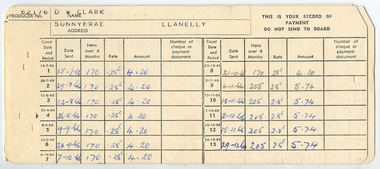 Tarnagulla History Archive
Poultry Levy Collection Booklet, 1960s
... Donald Clark Collection. government farming A Poultry Levy Collection Booklet used by Donald Clark of Llanelly in the 1960s. ...Donald Clark Collection.A Poultry Levy Collection Booklet used by Donald Clark of Llanelly in the 1960s.government, farming -
 Tarnagulla History Archive
Poultry Levy Collection Booklet, 1960s
... Donald Clark Collection. government farming A Poultry Levy Collection Booklet used by Donald Clark of Llanelly in the 1960s. ...Donald Clark Collection.A Poultry Levy Collection Booklet used by Donald Clark of Llanelly in the 1960s.government, farming
