
Showing 39 items matching "pow deaths"
-
 Bendigo Military Museum
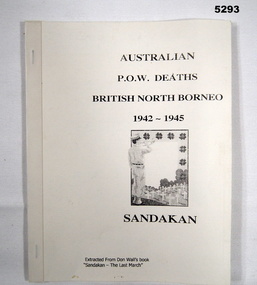
Booklet - BOOKLET OF POW DEATHS AT SANDAKAN, Extraction from Don Wall's book - "Sandakan - The Last March", "AUSTRALIAN/ POW DEATHS/ BRITISH NORTH BORNEO/1942-1945/ SANDAKAN", c 1988
... BOOKLET OF POW DEATHS AT SANDAKAN...."AUSTRALIAN/ POW DEATHS/ BRITISH NORTH BORNEO/1942-1945/ SANDAKAN" ....Booklet BOOKLET OF POW DEATHS AT SANDAKAN. Extraction from Don Wall's book - "Sandakan - The Last March". ...Booklet information "Extracted from Don Wall's book - Sandakan - The Last March" .Soft cover booklet - facsimile. Cover - cardboard, black print on cover, white background. Illustration - front, small black print of a soldier with bugle with cemetery scene. Binding tape. Pages 148 to 181 copied into booklet paper. End papers - printed colour triangular shaped images.books, history, ww2, sandakan -
 Bendigo Military Museum
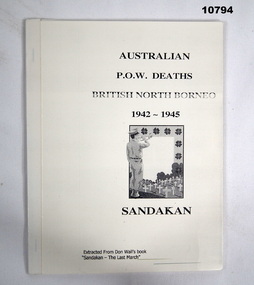
Book - POW DEATHS, SANDAKAN, Extraction from Don Wall's book - "Sandakan - The Last March", "AUSTRALIAN P.O.W. DEATHS BRITISH NORTH BORNEO 1942-1945, SANDAKAN", Unknown
... POW DEATHS, SANDAKAN......POW Deaths...Publication Book POW Deaths Sandakan WW2 Owner details - black ink stamp. ...Extracted from Don Wall's book "Sandakan - The Last March". This is in Chapter 15 "Honor Roll".Soft cover book - this is a facsimile copy. Cover - cardboard, cream colour with black ink print on front. "Introduction", "forward" and 148 to 181 pages, off white paper. Front end papers - owners stamp.Owner details - black ink stamp. "Mr. W.J. HAMMILL, A.A.I.M. PO Box 76 Kangaroo Flat, Victoria, 3555, Australia".publication, book, pow deaths, sandakan, ww2 -
 Bendigo Military Museum
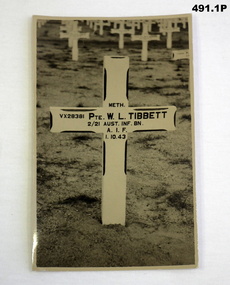
Photograph - PHOTOGRAPHS FRAMED, C. WWII
... Off the Gull Force of 1131 men 779 were either KIA or died as POW’s. His death is listed as 1.10.43. Refer 503P also 930....Off the Gull Force of 1131 men 779 were either KIA or died as POW’s. His death is listed as 1.10.43. Refer 503P also 930. photography - photographs, frames frame accessories Graves .1) Handwritten on back in black, 2/21 Btn Gull Force marching in Melb prior to leaving for Darwin , Pte. ...William Leslie Tibbett No VX28381 (born Footscray, enlisted Caulfield) on 19.6.40 in 2/21st Batt AIF age 20 years. As part of Gull Force they were posted on the Island of Ambon to defend the Harbour and Airstrip. In January 1942 some 20,000 Japanese troops invaded the Island. Off the Gull Force of 1131 men 779 were either KIA or died as POW’s. His death is listed as 1.10.43. Refer 503P also 930..1) 2/21st Batt A.I.F marching through Melbourne prior to leaveing for Darwin, black and white photo mounted on perspex, khaki on metal brass coloured stand. .2) Photo of Pte. W.L Tibbett, black and white photo mounted on perspex (fawn coloured) on metal backed frame. .3) Photo of Pte W.L Tibbett's war grave, black and white photo.1) Handwritten on back in black, 2/21 Btn Gull Force marching in Melb prior to leaving for Darwin , Pte. W.L. Tibbett VX28381 , K.I.A .2) On back handwritten in black pen - Pte W.L. Tibbett, VX28381, 2/21 Btn Gull force, K.I.A. .3) On back handwritten in black pen - Gull Force.photography - photographs,, frames, frame accessories, graves -
 Tatura Irrigation & Wartime Camps Museum
Folder - survey maps
... Brief outline of camps life, release and repatriation, list of deaths, of POW's and internees....Brief outline of camps life, release and repatriation, list of deaths, of POW's and internees. gerhard meinke loveday camp camp 14 south australian internment camps japanese internees Blue back clear plastic folder containing maps of No 14 camp and documents on Loveday Camp. ...Maps of no 14 A, B, C and D internment camps and documents on Loveday Camp, South Australia. Donated by Gerhard Meinke concerning Loveday Camp. Brief outline of camps life, release and repatriation, list of deaths, of POW's and internees.Blue back clear plastic folder containing maps of No 14 camp and documents on Loveday Camp.gerhard meinke, loveday camp, camp 14, south australian internment camps, japanese internees -
 Bendigo Military Museum
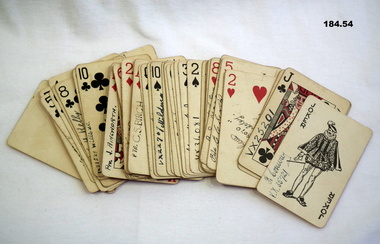
Leisure object - CARDS, PLAYING WW2, 1939-40
... Birkin was taken POW and his death was on 1.7.42. Numbers escaped, others were massacred at the TOL Plantation and many more of the total Force and civilians lost their lives on the Japanese prison ship “Montivedeo Maru” which was sunk by an American Submarine on 1.7.42. ...Birkin was taken POW and his death was on 1.7.42. Numbers escaped, others were massacred at the TOL Plantation and many more of the total Force and civilians lost their lives on the Japanese prison ship “Montivedeo Maru” which was sunk by an American Submarine on 1.7.42. ...Frederick Birkin No VX32484 (born Castlemaine, enlisted Royal Park) in the 2nd AIF on 25.6.40 age 24 years. Attached to 2/22nd Batt known as “Lark Force” they were stationed in Rabaul awaiting a possible attack by the Japanese. The attack came in early 1942. Birkin was taken POW and his death was on 1.7.42. Numbers escaped, others were massacred at the TOL Plantation and many more of the total Force and civilians lost their lives on the Japanese prison ship “Montivedeo Maru” which was sunk by an American Submarine on 1.7.42. A small number survived this. The cards were all written on the back with name and number of men in Birkins unit prior to embarkation to Rabaul. All were traceable as to their fate or transfer to another unit prior to embarkation. Refer also 182.2, 183. Set of playing cards, red in colour, with 2 white figures sword fighting. Owned by Frederick Birkin.Cards have been written on reverse, in ink, by colleagues of Fred Birkin.documents, cards, personal effects, leisure activities -
 Australian Commando Association - Victoria
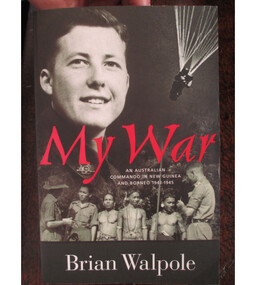
Book, My War: An Australian Commando in New Guinea and Borneo 1943 to 1945
... Brian relates how on the 14th of September 1945 while still an operative in SRD he was able to save POWs from certain death and after a firefight arrested 10 Japanese soldiers at Simanggang Borneo. ...Brian relates how on the 14th of September 1945 while still an operative in SRD he was able to save POWs from certain death and after a firefight arrested 10 Japanese soldiers at Simanggang Borneo. ...Brian Walpole, the author, was a Australian Commando and special operations operative behind enemy lines in New Guinea and Borneo during WW2. Brian was a commando with the Australian 2/3 Independent Company. He went to New Guinea in January 1943 and remained until the fall of the Japanese base at Salamaua in September. He fought on the Bobdubi Ridge. His commanding officer was the well-regarded George Warfe, whose portrait was sketched by war artist Ivor Hele. Brian blazed a trail through the New Guinea jungle which appears on some maps as Walpole’s Track, discovering and naming the ambush site Goodview Junction. Soon afterwards (July 1943) Goodview Junction was the scene of a key campaign victory which contributed to George Warfe being awarded the Military Cross.Brian’s Special Operations training mostly took place at Careening Bay (Western Australia) and Fraser Island (Queensland). He arrived in Borneo at the time of the 9th Division’s landing at Labuan Island, and took part in two SRD operations – Colt and Semut 3. After the surrender, Walpole's work continued as many of the Japanese did not recognise the surrender and continued to fight on. Brian relates how on the 14th of September 1945 while still an operative in SRD he was able to save POWs from certain death and after a firefight arrested 10 Japanese soldiers at Simanggang Borneo. He was alone and had been assisted in the battle by 20 headhunters from the jungles along the Rejang River. One of the people saved was a young nurse in her 20s, Lena Ricketts. ww2, australian special operations, australian commando, new guinea, borneo, world war ii -
 Lara RSL Sub Branch
Book, Orders of Service Sandakan, Laden, Fevered, Starved the POWs Of Sandakan North Borneo, 1945, 1999
... Of 2700 prisoners, 6 survived Book and Booklets on the memorial Service held in March of 1999 commemorating the Borneo Death Marches of the POWs From Sandakan North Borneo. ...Publication of Book on the Death Marches from Sandakan Borneo in 1945. Of 2700 prisoners, 6 survived Book and Booklets on the memorial Service held in March of 1999 commemorating the Borneo Death Marches of the POWs From Sandakan North Borneo. Memorial Service honouring those who died and survived the Death Marches in 1999! book, 4 Orders of Service Booklets 23 Coloured photos of memorial services Emails on A4 paper Book - Laden, Fevered , Starved The POWs of Sandakan North Borneo Sandakan Memorial Park Order of Ceremony Opening of the Commemorative Pavilion Order of Service Dedication of the Sanadakan Memorial Labuan War Cemetery Order of Service Ranau Order of Service Kranji War Cemetery Changi Memorial Chapel Orders of Service death march, sandakan borneo labuan ranau kranji, owen campbell -
 Eltham District Historical Society Inc
Document (Item) - Article, The Eltham Roll of Honour: Second World War, 9 Aug 2020
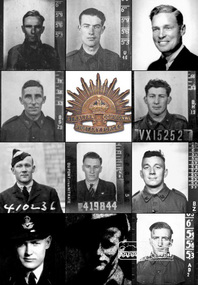
... pow)...ranau number 1 jungle camp...sandakan death...Lt., 410262 (KIA 5 Apr 1945, Varrelbusch, Germany) FIELD, Kevin Francis, Pte., VX144763 (KIA 28 Jun 1945, Bougainville, PNG) BUTHERWAY, Jack Herbert, Pte, VX37645 (DOD 8 Jul 1945, Borneo) eltham war memorial roll of honour second world war eltham eltham roll of honour shire of eltham 2/4 field workshop 22 independent brigade group ordnance workshop a.i.f. australian army ordnance corps australian corps of electrical and mechanical engineers changi falkiner street florence mary butherway jack herbert butherway prisoner of war (pow) ranau number 1 jungle camp sandakan death march singapore thomas james butherway vx37645 2/2 field company 6th division abington annie castledine arthur frederick castledine george ernest castledine greece jean simonson lower plenty old eltham road royal australian engineers vx10044 sapper g. e. castledine 2/23 bn derril gahan house main road rats of tobruk studley manston gahan tobruk vx48379 3 squadron r.a.a.f. aboukir alamein memorial beulah alice (simpson) rutter bir el gubbi broken hill aero club david rutter egypt hubert rutter libya yarra braes 2/21 bn 23rd australian infrantry brigade 8th division alfred charles clerke ambon island battle of ambon bidgeland park estate inga caroline (nicholls) clerke inga mary nicholls laha airfield nora ann clerke rose matilda clerke vx23112 william charles clerke 2/14 bn 2/16 bn 21st brigade 7th division cuthbert douglas dunlop gona gona war cemetery henry street janet dunlop kokoda track new guinea palestine papua new guinea port moresby (bomana) war cemetery reuben cuthbert dunlop syria vx15252 10 operational training unit 410236 ada (key) ingram berkshire bomber command england group no. 91 john ingram lester neil ingram longworth n.1374 r.a.a.f. r.a.f. r.a.f. abington research (vic.) whitley v bomber 419844 514 bomber squadron emmerich germany gordon stanley mclean ji-g2 kleve lancaster lm735 lucy mclean mount pleasant road r.a.f. waterbeach reichswald forest war cemetery stanley mclean 2/10 ordnance workshops albert feldbauer eltham cricket association eltham girls club frank street henry feldbauer jessie margarette feldbauer june feldbauer ken ingram margaret (feldbauer) ingram montmorency imperials research cricket club research state school sandakan number 1 camp sandakan number 2 camp theodore albert feldbauer valerie (feldbauer) waller violet amelda (teagle) feldbauer vx51733 247 ‘china-british’ squadron caithness cloppenburg donlad hemphill rutter essen gloucester hanover war cemetery hanover-limmer british military cemetery holten-lochem oldenburg r.a.f. castletown r.a.f. station lealing stoppenburg typhoon ib jp443 typhoon ib sw526 15th australian infantry brigade 1940 cup 3rd division 57th/60th bn best and fairest bougainville island buin road mary field mayona road mivo river mobiai river montmorency vx144763 william field Word/PDF document file The Eltham Roll of Honour: Second World War Document Article ...Information regarding the circumstances of the eleven men of the Shire of Eltham who died serving their country in the Second World War and for whom the Eltham War Memorial was dedicated. Their names are listed on the Eltham Roll of Honour in order of rank. The image portrayed shows the eleven men (left to right, top to bottom) by date of fatality: CASTLEDINE, George Ernest, Spr., VX10044 (KIA 18 Apr 1941, Greece) GAHAN, Studley Manston, Capt., VX48379 (KIA 17 May 1941, Tobruk, Libya) RUTTER, David, Flying Off., 833 (400833) (KIA 9 Dec 1941, Bir El Gubbi, Libya) CLERKE, Alfred Charles, Cpl., VX23112 (KIA 2 Feb 1942, Laha, Ambon Island) DUNLOP, Cuthbert Douglas, Sgt., VX15252 (KIA 22 Nov 1942, Gona, New Guinea) INGRAM, Lester Neil, Flt. Sgt., 410236 (DOD 22 Apr 1943, Longworth, England) McLEAN, Stanley, Flt. Sgt., 419844 (KIA 7 Oct 1944, Emmerich, Germany) FELDBAUER, Theodore, Sgt., VX51733 (DOD 27 Mar 1945, Borneo) RUTTER, Donald Hemphill, Flt. Lt., 410262 (KIA 5 Apr 1945, Varrelbusch, Germany) FIELD, Kevin Francis, Pte., VX144763 (KIA 28 Jun 1945, Bougainville, PNG) BUTHERWAY, Jack Herbert, Pte, VX37645 (DOD 8 Jul 1945, Borneo)eltham war memorial, roll of honour, second world war, eltham, eltham roll of honour, shire of eltham, 2/4 field workshop, 22 independent brigade group ordnance workshop, a.i.f., australian army ordnance corps, australian corps of electrical and mechanical engineers, changi, falkiner street, florence mary butherway, jack herbert butherway, prisoner of war (pow), ranau number 1 jungle camp, sandakan death march, singapore, thomas james butherway, vx37645, 2/2 field company, 6th division, abington, annie castledine, arthur frederick castledine, george ernest castledine, greece, jean simonson, lower plenty, old eltham road, royal australian engineers, vx10044 sapper g. e. castledine, 2/23 bn, derril, gahan house, main road, rats of tobruk, studley manston gahan, tobruk, vx48379, 3 squadron r.a.a.f., aboukir, alamein memorial, beulah alice (simpson) rutter, bir el gubbi, broken hill aero club, david rutter, egypt, hubert rutter, libya, yarra braes, 2/21 bn, 23rd australian infrantry brigade, 8th division, alfred charles clerke, ambon island, battle of ambon, bidgeland park estate, inga caroline (nicholls) clerke, inga mary nicholls, laha airfield, nora ann clerke, rose matilda clerke, vx23112, william charles clerke, 2/14 bn, 2/16 bn, 21st brigade, 7th division, cuthbert douglas dunlop, gona, gona war cemetery, henry street, janet dunlop, kokoda track, new guinea, palestine, papua new guinea, port moresby (bomana) war cemetery, reuben cuthbert dunlop, syria, vx15252, 10 operational training unit, 410236, ada (key) ingram, berkshire, bomber command, england, group no. 91, john ingram, lester neil ingram, longworth, n.1374, r.a.a.f., r.a.f., r.a.f. abington, research (vic.), whitley v bomber, 419844, 514 bomber squadron, emmerich, germany, gordon stanley mclean, ji-g2, kleve, lancaster lm735, lucy mclean, mount pleasant road, r.a.f. waterbeach, reichswald forest war cemetery, stanley mclean, 2/10 ordnance workshops, albert feldbauer, eltham cricket association, eltham girls club, frank street, henry feldbauer, jessie margarette feldbauer, june feldbauer, ken ingram, margaret (feldbauer) ingram, montmorency imperials, research cricket club, research state school, sandakan number 1 camp, sandakan number 2 camp, theodore albert feldbauer, valerie (feldbauer) waller, violet amelda (teagle) feldbauer, vx51733, 247 ‘china-british’ squadron, caithness, cloppenburg, donlad hemphill rutter, essen, gloucester, hanover war cemetery, hanover-limmer british military cemetery, holten-lochem, oldenburg, r.a.f. castletown, r.a.f. station lealing, stoppenburg, typhoon ib jp443, typhoon ib sw526, 15th australian infantry brigade, 1940 cup, 3rd division, 57th/60th bn, best and fairest, bougainville island, buin road, mary field, mayona road, mivo river, mobiai river, montmorency, vx144763, william field -
 Bendigo Military Museum
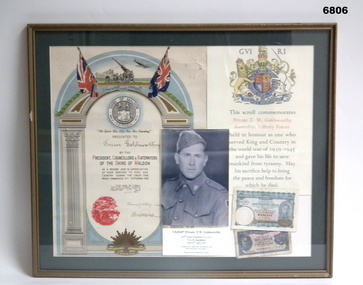
Memorabilia - MEMORIAL SCROLL, SHIRE OF MALDON, PHOTO, FRAMED, Unknown
... Sandakan Death March...POW...GOLDSWORTHY" was a POW at Sandakan and died there on 20 April 1945. Sandakan Death March POW WW2 PTE T.W. ..."VX35497 Pte T.W. GOLDSWORTHY" was a POW at Sandakan and died there on 20 April 1945. This is a framed display. The edge is of dull gold colour. Inside the frame there is an approx 27mm wide border - green colour. The objects in the frame are:- A certificate from the Shire of Maldon for the service and sacrifice of "Trevor Goldsworthy". There is the King's memorial scroll for the death of "Pte T. W. Goldsworthy" Aust. Military Forces. There is a B & W portrait of VX35497 Pte T.W. Goldsworthy, 2/5 Hygiene section. He is in uniform. There is two paper notes from Malaya. 25 cents printed 1 Sep 1940, 10 cents printed 15 Aug 1940.The Maroon Certificate is signed by “Thomas J Ottrey, President, and Edward A Rewell, Secretary” It is dated “15 June 1946”sandakan death march, pow, ww2, pte t.w. goldsworthy -
 Bendigo Military Museum
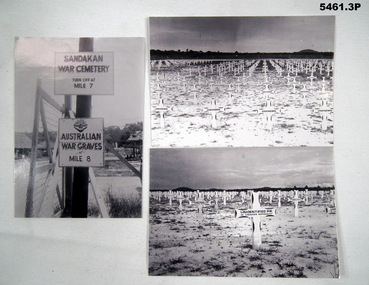
Photograph - PHOTOGRAPH, SANDAKAN WAR CEMETERY, H Eisfelder, 1947
... Sandakan- Panali, North Borneo were the places of the infamous Sandakan death march. Thousands of allied POWS died. Aust lost 1787 men. ...Sandakan- Panali, North Borneo were the places of the infamous Sandakan death march. Thousands of allied POWS died. Aust lost 1787 men. ...Sandakan- Panali, North Borneo were the places of the infamous Sandakan death march. Thousands of allied POWS died. Aust lost 1787 men. Refer to the Australian War Memorial for details. Three black and white photographs taken just after WW2 .1) Photograph showing two signs, a gate post and barbed wire gate. .2) Photograph of flat land, with an enormous number of white wooden crosses. The crosses in the foreground are marked unknown. .3) photograph of flat land, with numerous white crosses. The foreground ones are marked unidentified P.W of unknown nationality .1) Photograph of signs. “Sandakan War Cemetery Turn off at Mile 7 Other sign “ Australian War graves at Mile 8” Rear has a label. All three- Sandakan (North Bendigo) photo taken early June 1947 by H. Eisfelder. ww2, p.o.w, sandakan -
 Bendigo Military Museum
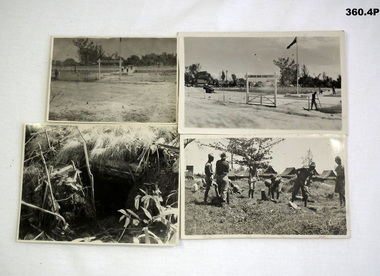
Photograph - PHOTOGRAPHS WW2, 1945
... Refer Cat No 357.3 photography-photographs Graves cemetery Japanese POW’s ..1) "AIF War Cemetery Labuan" on back of Photo. .2) "Labuan ,some graves from Sandakan Death March" on back of Photo. ,3) "Jap Fox Hole" on back of Photo. .4) "Japs at Work" on back of Photo. .1) Labuan War Cemetery showing entrance & Men working. .2) Labuan War Cemetery showing entrance & men working. .3) Camouflage entrance to Japanese fox hole. ,4) Japanese POW's on work party. ...Photos collected by Alan Telford VX146055 2nd AIF. Refer Cat No 357.3 .1) Labuan War Cemetery showing entrance & Men working. .2) Labuan War Cemetery showing entrance & men working. .3) Camouflage entrance to Japanese fox hole. ,4) Japanese POW's on work party...1) "AIF War Cemetery Labuan" on back of Photo. .2) "Labuan ,some graves from Sandakan Death March" on back of Photo. ,3) "Jap Fox Hole" on back of Photo. .4) "Japs at Work" on back of Photo.photography-photographs, graves cemetery, japanese pow’s -
 Bendigo Military Museum
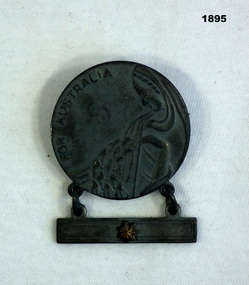
Badge - MOTHERS AND WIDOWS BADGE WW11, 1942
... This is a Death Railway related POW cemetery. Walter Baldwin was born in Mildura on the 12th of May 1921, and prior to enlisting lived at Iron Bark in Bendigo with his parents. ...This is a Death Railway related POW cemetery. Walter Baldwin was born in Mildura on the 12th of May 1921, and prior to enlisting lived at Iron Bark in Bendigo with his parents. ...One star on the clasp means " One son K.I.A in WWII" This Mothers and Windows Badge was issued to Mrs M Baldwin, the mother of Pte Walter Robert Baldwin who died as a prisoner of war in Burma on the 27th of May 1943. He rests at the Thanbyuzayat Prisoner of War Cemetery, which is in what is now called Myanmar. This is a Death Railway related POW cemetery. Walter Baldwin was born in Mildura on the 12th of May 1921, and prior to enlisting lived at Iron Bark in Bendigo with his parents. He enlisted as No VX55835 in the 2nd AIF on 14.5.1941 in the 2/29th Batt aged 20 years. Embarked for Singapore on 30.7.1941 and disembarked 15.8.1941. He contracted Malaria in a December 1941. Taken POW early 1942 he is listed as died suffering from Cholera on 27.5.1943. “The 2/29th Infantry Battalion was formed at Bonegilla in Victoria in October 1940. It was part of the 8th Division's 27th Brigade, which was the last AIF infantry brigade raised for service during the Second World War.” Badge, metal, "for Australia." Circular section depicting a woman, wreath and an arm. suspended by two rings is a clasp with one star =. Rear has 2 lugs and a pin." issued by C'wlth govt A12229”numismatics - badges - military - army, mothers, widows -
 Bendigo Military Museum
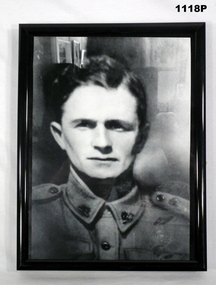
Photograph - PHOTOGRAPH WW2, FRAMED, 1941
... Taken strength at RRD Royal Park on 7.10.1941, posted to 2/10th Ordnance W/Shops 2.1.1942, embarked for Malaya 10.1.1942 arriving 26.1.1942, reported missing 16.2.1942, listed POW dated 29.10.1942, deceased while POW, cause not stated 5.6.1945. Raymond died in Borneo on the Sandakan Death March....Taken strength at RRD Royal Park on 7.10.1941, posted to 2/10th Ordnance W/Shops 2.1.1942, embarked for Malaya 10.1.1942 arriving 26.1.1942, reported missing 16.2.1942, listed POW dated 29.10.1942, deceased while POW, cause not stated 5.6.1945. Raymond died in Borneo on the Sandakan Death March. photography - photgraphs military history Sandakan borneo Photo, B & W Portrait of R.J.R. ...Raymond James Russel WHYTE Initially enlisted on 16.8.40 as V28354 serving in 2 Cav Div ASC. He was discharged on 6.10.41 his enlistment date into the AIF on his records is stated as 1.10.1941 age 24 years 4 months. Taken strength at RRD Royal Park on 7.10.1941, posted to 2/10th Ordnance W/Shops 2.1.1942, embarked for Malaya 10.1.1942 arriving 26.1.1942, reported missing 16.2.1942, listed POW dated 29.10.1942, deceased while POW, cause not stated 5.6.1945. Raymond died in Borneo on the Sandakan Death March.Photo, B & W Portrait of R.J.R. Whyte in uniform, no hat on. Photo is in a black plastic frame.photography - photgraphs, military history, sandakan, borneo -
 Bendigo Military Museum
Photograph - PHOTOGRAPH WW2, FRAMED, 1941
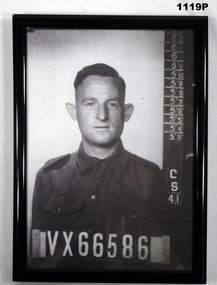
... POW, cause not stated 5.6.1945. A letter to Mrs Sheperd dated 18.1.1946 states died of Malaria. This was from Japanese records mostly. William died on the Sandakan Death...POW, cause not stated 5.6.1945. A letter to Mrs Sheperd dated 18.1.1946 states died of Malaria. This was from Japanese records mostly. William died on the Sandakan Death ...William Patrick SHEPHERD No VX66586 enlisted in the 2nd AIF on 26.11.1941 age 25 years 10 months at RRD Royal Park. Transfers to A.A.S.C on 3.12.1941 then posted to 2/10th Ordnance W/Shops, embark for Malaya 10.1.1942 arriving Singapore 26.1.1942, listed Missing 16.2.1942, listed as POW 13.4.1943, dated 28.9.1945 listed as deceased whilst POW, cause not stated 5.6.1945. A letter to Mrs Sheperd dated 18.1.1946 states died of Malaria. This was from Japanese records mostly. William died on the Sandakan Death March Borneo.Photo B & W portrait of W.P Sheperd in uniform no hat. Photo taken with his Regt No. Display at bottomphotography - photographs, military history, sandakan, borneo -
 Eltham District Historical Society Inc
Photograph, Peter Pidgeon, Grave of Violet Feldbauer (nee Teagle), Eltham Cemetery, Victoria, 5 April 2021
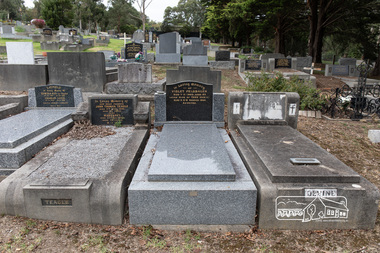
... The 1,494 POWs that made up B Force were transported from Changi [Singapore] on 7 July 1942 on board the tramp ship Ubi Maru, arriving in Sandakan Harbour on 18 July 1942. Sergeant Feldbauer, aged 35, died as a prisoner of the Japanese on 27 March 1945 at Sandakan Number 1 Camp. The Japanese recorded his death...The 1,494 POWs that made up B Force were transported from Changi [Singapore] on 7 July 1942 on board the tramp ship Ubi Maru, arriving in Sandakan Harbour on 18 July 1942. Sergeant Feldbauer, aged 35, died as a prisoner of the Japanese on 27 March 1945 at Sandakan Number 1 Camp. The Japanese recorded his death ...FELDBAUER / TEAGLE Theodore Albert ‘Curly’ Feldbauer was born 15 October 1909 at Melbourne, the son of Theodore Henry (a naturalised German) and Jessie Margarette Feldbauer. The family moved several times during his childhood but before he was 20 he was living and working in the Eltham district. He became a well-known local sportsman. He played cricket for the Montmorency Imperials in 1929 and 1930 in the Eltham Cricket Association and excelled as a footballer and football coach. There are press references at the time to minor misdemeanours and accidents: evidently he was up for a brawl or two, but he was also able to do a recitation at a social night to launch the Eltham Girls Club in 1932. He married a local girl, Violet Amelda Teagle, in 1933, the 12th of 13 Teagle offspring who lived in Frank Street. Curly and Violet’s first child, June, was born the following year. By 1935 Curly was honorary secretary of the Research Cricket Club. He continued playing cricket regularly, mainly for Research, through till the 1940 season, after the war had begun. The girls started at Research State School in 1939 and 1940, respectively. They lived near Violet’s parents in Frank Street. Curly and Violet’s daughter, Valerie Waller recalls: “We lived near my Teagle grandparents, who had a cow. Dad took over the milking. He would rest his head against the cow and sing to her. When he left to join the army, it took weeks before she would settle down to allow anyone else to milk her.” Curly’s service record is not yet accessible from the National Archives of Australia. Valerie Waller gives us some insight into that period between Curly joining and ultimately embarking for Singapore: “Before he sailed to Singapore, Mum would travel by train, to Seymour, to spend a few hours with him. He sent her postcards and called her his “dear love”. His idea was that the sooner everyone eligible joined up, the sooner the war would be over. He had a great love for Australia.” “While he was a prisoner, Mum received a few postcards from him, not in his neat handwriting, but in block letter printing, to tell her he had received no mail or parcels from her. He must have felt we’d forgotten him, because, of course, Mum had sent lots of parcels and letters, and the Japanese hadn’t handed them on.” Theo was one of over 2,000 Allied prisoners of war held in the Sandakan POW camp in north Borneo, having been transferred there from Singapore as part of B Force. The 1,494 POWs that made up B Force were transported from Changi [Singapore] on 7 July 1942 on board the tramp ship Ubi Maru, arriving in Sandakan Harbour on 18 July 1942. Sergeant Feldbauer, aged 35, died as a prisoner of the Japanese on 27 March 1945 at Sandakan Number 1 Camp. The Japanese recorded his death from Malaria. He has no known grave, but it is believed to be at Sandakan Number 2 Camp. His death was not reported in Australia until some months later. Valerie noted: “I will never forget the sound my mother made when she received the telegram saying Dad had died months earlier, ostensibly from Malaria, but he died during the march. The sound still haunts me.” Violet’s husband Theo is recognised on the Eltham Roll of Honour, which was commissioned by the Eltham War Memorial Trust to be hung in the Baby Health Centre opened in 1952; the first of three buildings, the others being the Eltham Kindergarten and Children’s Library, that were established as the Eltham War Memorial a living memorial, with a specific focus for the welfare of children of the district. Violet and Theo’s son Albert, being the youngest child of the children of soldier fathers attending a school in the district, was given the honour of turning the first sod for the Eltham War Memorial Building, 15 July 1950. In Loving Memory of Violet Feldbauer Died 7. 11 .1982 aged 88 Loved wife of Theo (Curly) Died P.O.W. Borneo 1945 Re-united Alongside Violet lay her parents, John Thomas and Margaret TeagleBorn Digitaleltham cemetery, gravestones, charles louis layfield, edwina may layfield (nee teagle), john thomas teagle, margaret teagle, theodore feldbauer, violet feldbauer (nee teagle), annie lillian devine, frederick raymond devine, eltham war memorial, honour board, roll of honour -
 Bendigo Military Museum
Document - EXTRACT OF DEATH, 1978
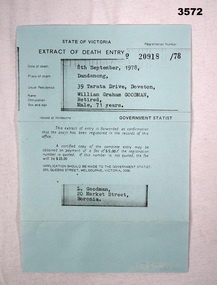
... POW Germany. Died 8.9.1978, Dandenong. Ref Cat No's 3568 for his service history, 3569, 3570, 3571, 3572, 3573. Document extract death ...William GOODMAN VX11397 ex AIF & POW Germany. Died 8.9.1978, Dandenong. Ref Cat No's 3568 for his service history, 3569, 3570, 3571, 3572, 3573.Extract of Death Entry No 20918/78, blue paper.document, extract, death -
 Waverley RSL Sub Branch
Key
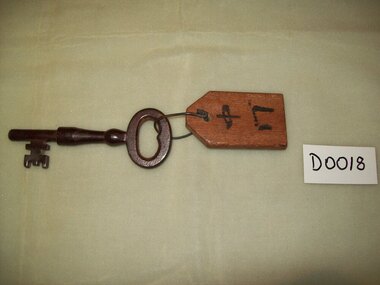
... About 850 POWs died during their internment in Changi during the Japanese Occupation of Singapore,[2] a relatively low rate compared to the overall death rate of 27% for POWs in Japanese camps.[3] However, many more prisoners died after being transferred from Changi to various labour camps outside Singapore, including the Burma Railway and the Sandakan airfield....About 850 POWs died during their internment in Changi during the Japanese Occupation of Singapore,[2] a relatively low rate compared to the overall death rate of 27% for POWs in Japanese camps.[3] However, many more prisoners died after being transferred from Changi to various labour camps outside Singapore, including the Burma Railway and the Sandakan airfield. this item is of historical significance because it is supposedly one of the few surving keys to Changi Jail and donated by Mr.Robertson . ...During World War II, following the Fall of Singapore in February 1942, the Japanese military detained about 3,000 civilians in Changi Prison, which was built to house only 600 prisoners. The Japanese used the British Army's Selarang Barracks, near the prison, as a prisoner of war camp, holding some 50,000 Allied—predominantly British and Australian—soldiers.[1] Although POWs were rarely, if ever, held in the civilian prison, the name Changi became synonymous in the UK, Australia, and elsewhere with the POW camp. About 850 POWs died during their internment in Changi during the Japanese Occupation of Singapore,[2] a relatively low rate compared to the overall death rate of 27% for POWs in Japanese camps.[3] However, many more prisoners died after being transferred from Changi to various labour camps outside Singapore, including the Burma Railway and the Sandakan airfield.this item is of historical significance because it is supposedly one of the few surving keys to Changi Jail and donated by Mr.Robertson . Changi is significant as it was a major prison camp during WWII Changi Jail Key. Blackened metal key, Wooden tag attached with Japanese print on it. Kanji Characters read Middle Gatechangi, fall of singapore, key, p.o.w. -
 Bendigo Military Museum
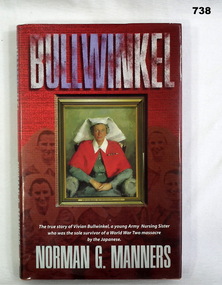
Book, Norman G Manners, Bullwinkel, 1999
... On front end paper "John W Bill Toon OAM. 8th Div AASC. Ex POW. VX30397. Siam Burma Death Railway Slave 1942-45" and "Donated by Bgo YMCA" ...Details the story of Vivian Bullwinkel, sole survivor of a massacre of Australian nurses by the Japanese during WWII. books military history On front end paper "John W Bill Toon OAM. 8th Div AASC. Ex POW. VX30397. Siam Burma Death Railway Slave 1942-45" and "Donated by Bgo YMCA" Orange buckram hardcover book with title in gold on cover and spine. ...Details the story of Vivian Bullwinkel, sole survivor of a massacre of Australian nurses by the Japanese during WWII.Orange buckram hardcover book with title in gold on cover and spine. Red dust cover with image of nurses and inset colour picture of Vivian Bullwinkel in red, grey and white nurse's uniform. 239 plain paper pages with cut edges and illustrations.On front end paper "John W Bill Toon OAM. 8th Div AASC. Ex POW. VX30397. Siam Burma Death Railway Slave 1942-45" and "Donated by Bgo YMCA" books, military history -
 Bendigo Military Museum
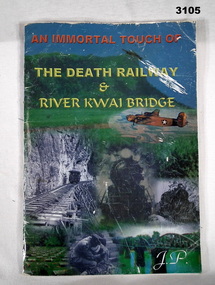
Book - BOOK, POW’S, Organised by JP, The Death Railway & River Kwai Bridge
... Taken from an oration by Fred Seiker in which he recalls the conditions under which the POW's lived & worked. books-military-history civil engineering/railways River Kwai burma Stamped inside front & back covers: Bendigo District RSL Sub Branch Soft cover illustrated front & back with colour & black & white photos. 60 pages with cut edges. Bound with staples. The Death ...Book details the construction of the Thai Burma Railway & the bridge over the Rivew Kwai. Contains detailed photos & drawings. Taken from an oration by Fred Seiker in which he recalls the conditions under which the POW's lived & worked.Soft cover illustrated front & back with colour & black & white photos. 60 pages with cut edges. Bound with staples. Stamped inside front & back covers: Bendigo District RSL Sub Branch books-military-history, civil engineering/railways, river kwai, burma -
 Warrnambool RSL Sub Branch
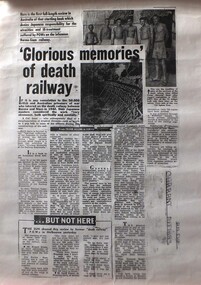
Work on paper - New Book released in Japan, a Reaction, 'Glorious memories' of death railway
... A response to a perceived 'revisionist' history of Japanese military history released in Japan which includes a Japanese version of treatment of POW's in WW2 shows attitudes in Australia and Japan 20 years after WW2 in response to a new Japanese book Japan. WW2 . Revisionist history Hand written on bottom Right: Currant (sic) Affairs. Am DG Single page from Sun Newspaper 'Glorious memories' of death ...A response to a perceived 'revisionist' history of Japanese military history released in Japan which includes a Japanese version of treatment of POW's in WW2shows attitudes in Australia and Japan 20 years after WW2 in response to a new Japanese bookSingle page from Sun NewspaperHand written on bottom Right: Currant (sic) Affairs. Am DGjapan. ww2 . revisionist history -
 Monbulk RSL Sub Branch
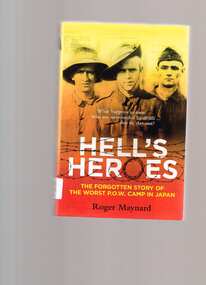
Book, Harper Collins, Hell's heroes, 2009
... World war 1939 – 1945 - Prisons and prisoners - Japanese Atrocities - Japan Hell′s Heroes is the story of the POW camp that never was − so dubbed by one old soldier because the atrocities that occurred there went largely unreported at the time. For while the Burma−Thai railway‚ the Bataan death ...Hell′s Heroes is the story of the POW camp that never was − so dubbed by one old soldier because the atrocities that occurred there went largely unreported at the time. For while the Burma−Thai railway‚ the Bataan death march and events at Changi and in many other parts of Asia became synonymous with Japanese brutality‚ most of the camps which were set up to provide slave labour for the enemy military machine at home were slowly forgotten in the aftermath of World War II.Ill, maps, p.359.non-fictionHell′s Heroes is the story of the POW camp that never was − so dubbed by one old soldier because the atrocities that occurred there went largely unreported at the time. For while the Burma−Thai railway‚ the Bataan death march and events at Changi and in many other parts of Asia became synonymous with Japanese brutality‚ most of the camps which were set up to provide slave labour for the enemy military machine at home were slowly forgotten in the aftermath of World War II.world war 1939 – 1945 - prisons and prisoners - japanese, atrocities - japan -
 Monbulk RSL Sub Branch
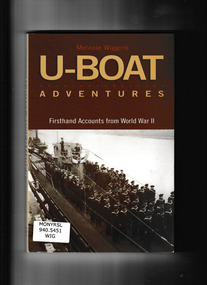
Book, Naval Institute, U-boat adventures : firsthand accounts from World War II, 2010
... death and ninety-four-year-old Commander Jѓrgen Wattenberg in Hamburg add important dimensions to the work. Among the individual sagas included are Radioman Hans Bѓrck's description of his 1942 patrol to Aruba and the visit of Japanese submarine I-30 at Lorient; Fireman 2nd Class Josef Erben's explanation of how his boat, U-128, got stuck on a large rock and had to be hauled free; POW Ernst Gؤ:thling's memories of being wounded in a British prison camp when German planes mistakenly dropped bombs in the area. ...Twenty-two U-boat veterans tell their stories in this collection of their experiences, recorded by the author during several years of travel throughout Germany. While many books have been written about the U-boat war, this is one of the few that focuses on the lives of the submariners, and rarer still is its concentration on the crewmen rather than the officers. Melanie Wiggins interviewed seventeen men of the enlisted ranks, along with five commanders, to take readers into the terrifying world of underwater warfare, where every single crewman made a crucial difference in the fate of his boat. As she searched for and interviewed U-boat men, Wiggins also collected photographs from scrapbooks and archives, and consulted war-era personnel records and secret diaries. Her attendance at a reunion of the crew of U-682 netted a wealth of information as did her interviews with submarine veterans in Gؤrlitz, former East Germany. Her interviews with Admiral Otto Kretschmer just two months before his death and ninety-four-year-old Commander Jѓrgen Wattenberg in Hamburg add important dimensions to the work. Among the individual sagas included are Radioman Hans Bѓrck's description of his 1942 patrol to Aruba and the visit of Japanese submarine I-30 at Lorient; Fireman 2nd Class Josef Erben's explanation of how his boat, U-128, got stuck on a large rock and had to be hauled free; POW Ernst Gؤ:thling's memories of being wounded in a British prison camp when German planes mistakenly dropped bombs in the area.Index, bibliography, notes, ill, p.250.non-fictionTwenty-two U-boat veterans tell their stories in this collection of their experiences, recorded by the author during several years of travel throughout Germany. While many books have been written about the U-boat war, this is one of the few that focuses on the lives of the submariners, and rarer still is its concentration on the crewmen rather than the officers. Melanie Wiggins interviewed seventeen men of the enlisted ranks, along with five commanders, to take readers into the terrifying world of underwater warfare, where every single crewman made a crucial difference in the fate of his boat. As she searched for and interviewed U-boat men, Wiggins also collected photographs from scrapbooks and archives, and consulted war-era personnel records and secret diaries. Her attendance at a reunion of the crew of U-682 netted a wealth of information as did her interviews with submarine veterans in Gؤrlitz, former East Germany. Her interviews with Admiral Otto Kretschmer just two months before his death and ninety-four-year-old Commander Jѓrgen Wattenberg in Hamburg add important dimensions to the work. Among the individual sagas included are Radioman Hans Bѓrck's description of his 1942 patrol to Aruba and the visit of Japanese submarine I-30 at Lorient; Fireman 2nd Class Josef Erben's explanation of how his boat, U-128, got stuck on a large rock and had to be hauled free; POW Ernst Gؤ:thling's memories of being wounded in a British prison camp when German planes mistakenly dropped bombs in the area.world war 1939 – 1945 –naval operations - germany, germany - u-boats -
 Monbulk RSL Sub Branch
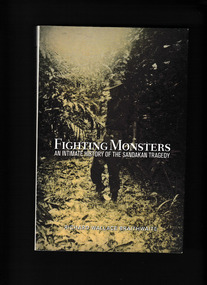
Book, Richard Wallace Braithwaite, Fighting monsters:An intimate story of the Sandakan tragedy, 2016
... World War 1939-1945 - Prisoners of war - Sandakan World war 1939 – 1945 - Prisons and prisoners - Japanese Only six escapees survived the Sandakan death marches of 1945 in North Borneo, the worst atrocity ever inflicted on Australian soldiers. 1787 Australian and 641 British POWs perished. ...Only six escapees survived the Sandakan death marches of 1945 in North Borneo, the worst atrocity ever inflicted on Australian soldiers. 1787 Australian and 641 British POWs perished. Previous descriptions of the numerous violent acts have yielded little understanding of a situation where the real struggle was to keep one's humanity when so many were losing theirs, whether Allied POWs, local residents of Borneo, Javanese slave labourers, or Japanese soldiers. Understanding this extraordinary story is aided by reference to a wide range of sources in different countries and disciplines, and by examining the perspectives of all players in this terrible game of survivalIndex, ill, p.530.non-fictionOnly six escapees survived the Sandakan death marches of 1945 in North Borneo, the worst atrocity ever inflicted on Australian soldiers. 1787 Australian and 641 British POWs perished. Previous descriptions of the numerous violent acts have yielded little understanding of a situation where the real struggle was to keep one's humanity when so many were losing theirs, whether Allied POWs, local residents of Borneo, Javanese slave labourers, or Japanese soldiers. Understanding this extraordinary story is aided by reference to a wide range of sources in different countries and disciplines, and by examining the perspectives of all players in this terrible game of survivalworld war 1939-1945 - prisoners of war - sandakan, world war 1939 – 1945 - prisons and prisoners - japanese -
 Monbulk RSL Sub Branch
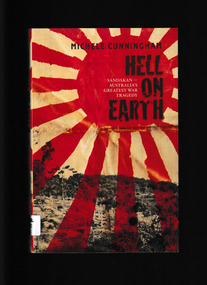
Book, Michele Cunningham, Hell on Earth : Sandakan - Australia's greatest war tragedy, 2103
... POW camp in North Borneo, whose very name came to symbolise cruelty and ill-treatment. In mid-1942, after the fall of Singapore, almost three thousand Allied prisoners of war were taken by the Japanese from Changi to Sandakan. Of those, 2500 lost their lives. Men died at Sandakan and on the infamous death ...The heart-rending story of the Australians brutally imprisoned in Sandakan, the Japanese POW camp in North Borneo, whose very name came to symbolise cruelty and ill-treatment. In mid-1942, after the fall of Singapore, almost three thousand Allied prisoners of war were taken by the Japanese from Changi to Sandakan. Of those, 2500 lost their lives. Men died at Sandakan and on the infamous death marches: they died from sickness and starvation, torture and appalling violence, or were killed by the guards as they were forced to keep moving along a seemingly never-ending track. Only six Australians survived the death marches, out of the thousand who leftIndex, ill, p.335.non-fictionThe heart-rending story of the Australians brutally imprisoned in Sandakan, the Japanese POW camp in North Borneo, whose very name came to symbolise cruelty and ill-treatment. In mid-1942, after the fall of Singapore, almost three thousand Allied prisoners of war were taken by the Japanese from Changi to Sandakan. Of those, 2500 lost their lives. Men died at Sandakan and on the infamous death marches: they died from sickness and starvation, torture and appalling violence, or were killed by the guards as they were forced to keep moving along a seemingly never-ending track. Only six Australians survived the death marches, out of the thousand who left world war 1939-1945 - prisoners of war - sandakan, world war 1939 – 1945 - prisons and prisoners – australia -
 RSL Victoria - Anzac House Reference Library and Memorabilia Collection
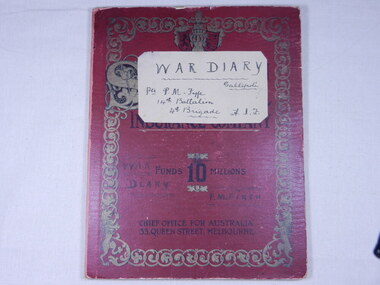
Diary and letter of Peter Maurice Fyfe - (Items held at Monash Memorial Defence Library), Peter Maurice Fyfe, April 1915 to February 1916
... Letter outlines details and circumstances of the death at Gallipoli of John (Jack) Henry Cartwright (Taylor's son). Fyfe embarked again from Melbourne in October 1916 and was a POW in Europe....Letter outlines details and circumstances of the death at Gallipoli of John (Jack) Henry Cartwright (Taylor's son). Fyfe embarked again from Melbourne in October 1916 and was a POW in Europe. gallipoli diaries peter maurice fyfe 14 battalion prisoners of war john henry cartwright margaret taylor Handwritten copy (sixty two pages) of WW1 diary of Peter Fyfe (709 - 14th Battalion). ...Period covered by diary from April 1915 until Fyfe's return to Australia in February 1916, includes Gallipoli operations. Letter outlines details and circumstances of the death at Gallipoli of John (Jack) Henry Cartwright (Taylor's son). Fyfe embarked again from Melbourne in October 1916 and was a POW in Europe.Handwritten copy (sixty two pages) of WW1 diary of Peter Fyfe (709 - 14th Battalion). Sheets enclosed in a Scottish Union & National Insurance Company cover. Two-page letter dated June 1916 to Mrs Margaret Taylor of Korumburra.gallipoli, diaries, peter maurice fyfe, 14 battalion, prisoners of war, john henry cartwright, margaret taylor -
 Bendigo Military Museum
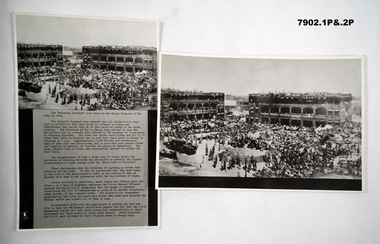
Photograph - PHOTOGRAPH, SELARANG BARRACKS, 1942
... Selarang Incident was where Japanese Forces pressured Allied POW's to sign "No Escape" promise on threat of death. Part of the collection of Lloyd Farrell. ...Selarang Incident was where Japanese Forces pressured Allied POW's to sign "No Escape" promise on threat of death. Part of the collection of Lloyd Farrell. refer Cat No. 7889.4P. ...Selarang Incident was where Japanese Forces pressured Allied POW's to sign "No Escape" promise on threat of death. Part of the collection of Lloyd Farrell. refer Cat No. 7889.4P.Series of photos of Commonwealth Defence soldiers based and camped at Selarang Garrison during WW2. One photo of POW's includes a written description of the Selarang incident. Photos are of high concentrations of allied POW's in the square of the barracks.Nil on 1 to 3. 4. On top headed "Selarang Barracks 1942".changi prisoners, selarang, photographs -
 Wangaratta RSL Sub Branch
Badge, unknown
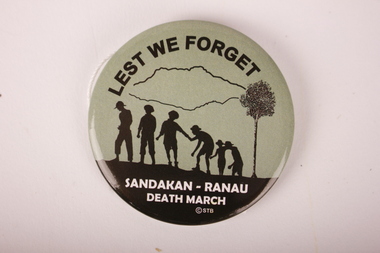
... pow...world war two...death...The Sandakan “death march” remains the greatest single atrocity committed against Australians in war. pow world war two death march sandakan death marches borneo "LEST WE FORGET" "Sandakan Ranau / Death March" Circular badge with green background and black text and figures. ...Badge commemorating the Sandakan death marches, one of the worst atrocities suffered by Australian troops during WWII.Australian prisoners were sent to Sandakan in 1942 to build an airstrip. At first they were treated reasonably well. Gradually, however, rations were reduced and bashings increased. By late 1944, with Allied forces advancing toward Borneo, the Japanese decided to send about 2,000 Australian and British prisoners westward to Ranau, in Borneo’s rugged interior. Weak and sick prisoners staggered for about 260 kilometres along jungle tracks. Many died on the way, their bodies never recovered. Those unable to continue were killed; those too weak to march had been left behind in Sandakan, where all died or were killed. Only six – all Australians – out of about a thousand sent to Ranau survived the war. The Sandakan “death march” remains the greatest single atrocity committed against Australians in war.Circular badge with green background and black text and figures. Six soldiers are silhouetted next to a tree. Safety pin clasp on back."LEST WE FORGET" "Sandakan Ranau / Death March"pow, world war two, death march, sandakan death marches, borneo -
Tatura Irrigation & Wartime Camps Museum
Sculpture - Mould - concrete/death mask, Death Mask, 1940's
... Death mask mould found in Camp 13 POW rubbish tip by former Army Garrison guard on a return visit to the camp....Death mask mould found in Camp 13 POW rubbish tip by former Army Garrison guard on a return visit to the camp. death mask death mask mould camp 13 rubbish tip Concrete casting/death mask of a face, pitted, soiled, part of nose missing Death Mask Sculpture Mould - concrete/death mask ...Death mask mould found in Camp 13 POW rubbish tip by former Army Garrison guard on a return visit to the camp.Concrete casting/death mask of a face, pitted, soiled, part of nose missingdeath mask, death mask mould, camp 13 rubbish tip -
Tatura Irrigation & Wartime Camps Museum
Document, POW escapes from Camp 13 Murchison, 1991
... Notification from the Apostolic Delegation to POW Cpl Paul Fuchs, informing him of the accidental death of his father....Notification from the Apostolic Delegation to POW Cpl Paul Fuchs, informing him of the accidental death of his father. camp 13 murchison victoria gustav polic heinrich pexa rudi pruckner kurt freidrick joe pagliari karatchali italian pow internment camps camp escapes paul fuchs intelligence report Blue backed clear plastic folder. ...Documents and newspaper articles concerning POW escapes from Camp 13 Murchison. Gustav Polig compiled this collection of articles of numerous escapes from camps around Tatura. Heinrich Pexa, Rudi Pruckner and Kurt Freidrick and Italian prisoner Joe Pagliari, all captured. Also the murder of POW Karatchali. Also included is a copy of Intelligence report no 94, for the period of 10 June 19944 - 17 June 1944. Notification from the Apostolic Delegation to POW Cpl Paul Fuchs, informing him of the accidental death of his father.Blue backed clear plastic folder. camp 13, murchison victoria, gustav polic, heinrich pexa, rudi pruckner, kurt freidrick, joe pagliari, karatchali, italian pow, internment camps, camp escapes, paul fuchs, intelligence report -
Tatura Irrigation & Wartime Camps Museum
Book, Hugh Clarke, Escape to Death
... Cowra Breakout Japanese POW's Hugh Clarke Camp 13 Escape to Death Paperback account of Cowra breakout by Japanese POW's 1944. ...Purchased by T & D Historical Society.Paperback account of Cowra breakout by Japanese POW's 1944.Escape to Deathcowra breakout, japanese pow's, hugh clarke, camp 13
