
Showing 85 items matching "prisoner of war nurses"
-
 Returned Nurses RSL Sub-branch
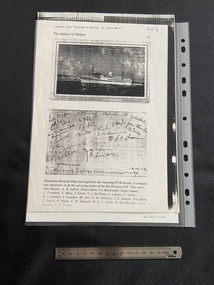
Document - Photocopy of postcard, Mandura Hospital Ship card, unknown
... ...Prisoner of War Nurses...It is signed on the back by the surviving prisoner of war nurses from the 8th Division AIF....It is signed on the back by the surviving prisoner of war nurses from the 8th Division AIF. Manunda Hospital Ship Prisoner of War Nurses 8th Division Army Medical Corps Malaya ' Black and white photocopied page from a book. ...A copy of a postcard of the Australian hospital ship, Manunda. It is signed on the back by the surviving prisoner of war nurses from the 8th Division AIF.Black and white photocopied page from a book. The page is titled 'The defence of Malaya' across the top. There is an image of the front of a postcard showing a ship sailing close to land with '2/1 AUST. HOSPITAL SHIP, MANUNDA, AIF, Painting by John Allcot' printed across the bottom of the card. Underneath is an image of the reverse side of the postcard covered in signatures. At the bottom of the page are the names of all the signatues typed out.' manunda hospital ship, prisoner of war nurses, 8th division army medical corps, malaya -
 Returned Nurses RSL Sub-branch
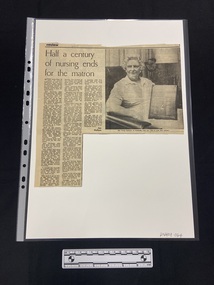
Newspaper - Newspaper clipping, Jan Hallam, Half a century of nursing ends for the matron
... War Two...Banka Island...Army Nurse...SS Vyner Brooke...Vivian Statham (nee Bullwinkel)...Vivian Bullwinkel...Prisoner...Nurses that were with her in the POW camp. WWII WW2 World War Two Banka Island Army Nurse SS Vyner Brooke Vivian Statham (nee Bullwinkel) Vivian Bullwinkel Prisoner of War Nurses 'WWII' [Handwritten in blue ink at the top of the clipping] Newspaper clipping with two and a half columns of text below the heading and a large photo of a woman dsplaying a plaque on the right hand side. ...Biographical account of Vivian Bullwinkel with a photo of her proudly displaying the plaque she was presented with by the Lifetime Associates of Sydney in 1977 listing the names of the Australian Nurses that were with her in the POW camp.Newspaper clipping with two and a half columns of text below the heading and a large photo of a woman dsplaying a plaque on the right hand side.'WWII' [Handwritten in blue ink at the top of the clipping]wwii, ww2, world war two, banka island, army nurse, ss vyner brooke, vivian statham (nee bullwinkel), vivian bullwinkel, prisoner of war nurses -
![Newspaper - Newspaper clipping, The Weekly Telegraph, Escape from a POW camp brothel, July 19, [?]](/media/collectors/64a5077bc83bd7b7b94f4211/items/69b0bbeb3d5082ac59e59258/item-media/69b0c20e3d5082ac59e6dd79/item-fit-380x285.jpg?cb=6) Returned Nurses RSL Sub-branch
Returned Nurses RSL Sub-branchNewspaper - Newspaper clipping, The Weekly Telegraph, Escape from a POW camp brothel, July 19, [?]
... ...Prisoner of War Nurses...An account of the failed attempt of Japanese soldiers, in the prisoner-of-war camp in Sumatra, to force Australin Nurses to prepare and accompany them to a brothel in the camp....WWII WW2 World War Two Prisoner of War Nurses Ellen Mavis Allgrove Sumatra Japanese soldiers Large newspaper clipping. ...An account of the failed attempt of Japanese soldiers, in the prisoner-of-war camp in Sumatra, to force Australin Nurses to prepare and accompany them to a brothel in the camp.Large newspaper clipping. Two large side by side photos across most of the page, with five short columns of text below.wwii, ww2, world war two, prisoner of war nurses, ellen mavis allgrove, sumatra, japanese soldiers -
 Returned Nurses RSL Sub-branch
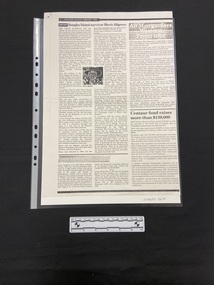
Newspaper - Photocopy of newspaper clipping, Vetaffairs, Obituary: Bangka Island survivor Mavis Allgrove, 1994
... ...Prisoner of War Nurses...The article speaks of her life during and after the war and her journey back to Bangka Island for the dedication and memorial ceremony. Australian Army Nurses World War 1939-1945 WW2 WWII Mavis Allgrove Ellen Mavis Hannah Vyner Brooke Bangka Island Prisoner of War Nurses Photocopy of newspaper page. ...Obituary written about the life of Sister Ellen Mavis Hannah (Allgrove). Mavis was the senior surving officer on Bangka Island after the Vyner Brooke was bombed and her Matron was killed in the Bangka Island Massacre. The article speaks of her life during and after the war and her journey back to Bangka Island for the dedication and memorial ceremony.Photocopy of newspaper page. The relevant article is in the top left corner (below and to the right are smaller unrelated articles). There are two columns of text and inset in the centre is a photographic image of Mavis Allgrove. australian army nurses, world war 1939-1945, ww2, wwii, mavis allgrove, ellen mavis hannah, vyner brooke, bangka island, prisoner of war nurses -
 Returned Nurses RSL Sub-branch
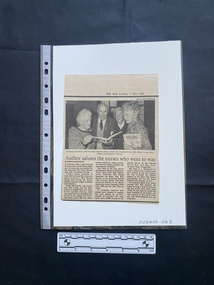
Newspaper - Newspaper clipping, The Age, Author salutes the nurses who went to war, Tuesday 17 May 1988
... ...Prisoner of war...Returned Nurses...War Nurses', as a "memorial to some of those brave women who have helped in our war years". The book traces the history of the Royal Australian Army Nursing Crorps from 1902 and the Boer War to today. Dr Goodman met with three of the women who inspired the book, Wilma Young, Betty jeffrey and Margaret O'Bryan. In Februrary 142, a ship ferrying 65 Australian nurses from Singapore to Australia was bombed by the Japanese. Twelve nurses drowned, 21 were shot and the rest were taken prisoner...WWII WW2 World War Two Our War Nurses - The History of the Royal Australian Army Nursing Corps 1902-1988 World War 2 World War One World War 1 WW1 WWI Korea Vietnam Margaret Anderson Wilma Oram Vyner Brooke Empire Star Banka Banka Island Pacific POW Prisoner of war Returned Nurses Club Anzac House A newspaper clipping of three columns of text beneath a large black and white photo of three older women and an older man looking at an open book between them. ...Dr Rupert Goodman has spent three years writing his book, 'Our War Nurses', as a "memorial to some of those brave women who have helped in our war years". The book traces the history of the Royal Australian Army Nursing Crorps from 1902 and the Boer War to today. Dr Goodman met with three of the women who inspired the book, Wilma Young, Betty jeffrey and Margaret O'Bryan. In Februrary 142, a ship ferrying 65 Australian nurses from Singapore to Australia was bombed by the Japanese. Twelve nurses drowned, 21 were shot and the rest were taken prisoner.A newspaper clipping of three columns of text beneath a large black and white photo of three older women and an older man looking at an open book between them.wwii, ww2, world war two, our war nurses - the history of the royal australian army nursing corps 1902-1988, world war 2, world war one, world war 1, ww1, wwi, korea, vietnam, margaret anderson, wilma oram, vyner brooke, empire star, banka, banka island, pacific, pow, prisoner of war, returned nurses club, anzac house -
 Returned Nurses RSL Sub-branch
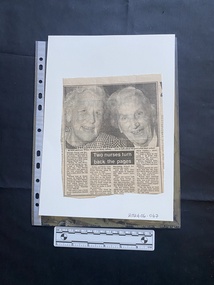
Newspaper - Newspaper clipping, The Age, Two nurses turn back the pages, Tuesday 17 May 1988
... ...Prisoner of war...Returned Nurses...War 2, after surviving the sinking of the Vyner Brooke in 1942. Of the 65 nurses on board only 24 made it home to Australia. Betty said while nursing discipline and friendship helped her survive the camp, life after they came home wasn't easy either. She spent two years in hospital to "get right again', then wrote her book, 'White Coolies' about her experiences. WWII WW2 World War Two Our War Nurses - The History of the Royal Australian Army Nursing Corps 1902-1988 World War 2 Wilma Oram Vyner Brooke Empire Star Banka Island Prisoner ...Wilma Young and Betty Jeffery were at Anzac House to launch 'Our War Nurses', by Rupert Goodman. Together they survived three years in a POW camp during World War 2, after surviving the sinking of the Vyner Brooke in 1942. Of the 65 nurses on board only 24 made it home to Australia. Betty said while nursing discipline and friendship helped her survive the camp, life after they came home wasn't easy either. She spent two years in hospital to "get right again', then wrote her book, 'White Coolies' about her experiences. A newspaper clipping consisting of four columns of text and a title under a large black and white photo cropped close in on two older women's smiling faces.wwii, ww2, world war two, our war nurses - the history of the royal australian army nursing corps 1902-1988, world war 2, wilma oram, vyner brooke, empire star, banka island, prisoner of war, returned nurses club, anzac house, indonesia, collins st -
 The Beechworth Burke Museum
Audio - Oral History, Joyce Snow
... Joyce had nursed prisoners of the First World War. She shared about the differences of medical practice back then in comparison to now. ...Joyce had nursed prisoners of the First World War. She shared about the differences of medical practice back then in comparison to now. ...Joyce Snow was born in Avenel and came to Beechworth at the age of twenty-three. She grew up at Bundarta, a place just out of Shepparton. Her father was a soldier who was part of the 37th Battallion while her mother's family were some of the pioneers of Beechworth--the Duracks. She finished school at about thirteen years old, did a correspondence course, and when she was old enough, she went training for nursing. Joyce was a trained nurse at the old Mooroopna Base, Hospital. She working at a Hospital in Shepparton when Manpower sent her to Beechworth. She arrived at Beechworth in 1943 at a train in Wangaratta. She had been a nurse in Beechworth for more than seven years. She got married in Beechworth and had three children, two girls and one boy. By the time of her third child, she studied a one year supplementary course on Psychy at May Day. Joyce had nursed prisoners of the First World War. She shared about the differences of medical practice back then in comparison to now. This oral history recording was part of a project conducted by Jennifer Williams in the year 2000 to capture the everyday life and struggles in Beechworth during the twentieth century. This project involved recording seventy oral histories on cassette tapes of local Beechworth residents which were then published in a book titled: Listen to what they say: voices of twentieth century Beechworth. These cassette tapes were digitised in July 2021 with funds made available by the Friends of the Burke.Joyce Snow's account of her life in the early 20th century is historically and socially significant to the cultural heritage of the region. She gave information about the settlements and life of the prisoners of First World War, the early forms of entertainment, education system and societal roles. She also mentioned changes in employment and migrant communities. This oral history account is socially and historically significant as these accounts provide a unique insight into the day-to-day life of the town's residents during the 20th century, many of which will have now been lost if they had not been preserved.This is a digital copy of a recording that was originally captured on a cassette tape. The cassette tape is black with a horizontal white strip and is currently stored in a clear flat plastic rectangular container. It holds up 40 minutes of recordings on each side.Joyce Snowburke museum, beechworth, hospital, oral history, nursing, nurse, first world war, prisoners of war, tatatura, moonrapna, peritontitis, doctors, tuck shops, largactil, rock films, victoria park, kings in grass castle, durack, duracks, glory box, d'oylies -
 Bendigo Military Museum
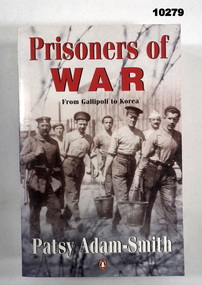
Book - POW'S, GALLIPOLI to KOREA, Patsy Adam - Smith, "PRISONERS OF WAR", 1992, This edition 1997
... Prisoners of War/ From Gallipoli to Korea". Publication Books Military History POW's WW2 Soft cover book. Cover - cardboard. Red, black and white print on front, spine and back. Illustrated - black and white photographs. Front and spine - group of soldiers with guard. Back - group of nurses ...From Title Page "Prisoners of War/ From Gallipoli to Korea".Soft cover book. Cover - cardboard. Red, black and white print on front, spine and back. Illustrated - black and white photographs. Front and spine - group of soldiers with guard. Back - group of nurses (Army and Civilian). 754 pages - cut, plain, off white colour paper. Illustrated, black and white photographs.publication, books, military history, pow's, ww2 -
 4th/19th Prince of Wales's Light Horse Regiment Unit History Room
Princess Mary Gift Tin, 1914
... The wounded on leave or in hospital, nurses, and the widows or parents of those killed were also entitled to the gift. Prisoners of war at the time had theirs reserved until they were repatriated. ...The wounded on leave or in hospital, nurses, and the widows or parents of those killed were also entitled to the gift. Prisoners of war at the time had theirs reserved until they were repatriated. ...In November 1914, an advertisement was placed in the national press inviting monetary contributions to a 'Sailors & Soldiers Christmas Fund' which had been created by Princess Mary, the seventeen year old daughter of King George V and Queen Mary. The purpose was to provide everyone wearing the King's uniform and serving overseas on Christmas Day 1914 with a 'gift from the nation'. The response was truly overwhelming, and it was decided to spend the money on an embossed brass box, based on a design by Messrs Adshead and Ramsey. The contents varied considerably; officers and men on active service afloat or at the front received a box containing a combination of pipe, lighter, 1 oz of tobacco and twenty cigarettes in distinctive yellow monogrammed wrappers. Non-smokers and boys received a bullet pencil and a packet of sweets instead. Indian troops often got sweets and spices, and nurses were treated to chocolate. Many of these items were despatched separately from the tins themselves, as once the standard issue of tobacco and cigarettes was placed in the tin there was little room for much else apart from the greeting card All boxes, irrespective of recipient, contained a Christmas card and a picture of the Princess. Those which were not distributed until after Christmas were sent out with a card wishing the recipient a 'victorious new year'. The wounded on leave or in hospital, nurses, and the widows or parents of those killed were also entitled to the gift. Prisoners of war at the time had theirs reserved until they were repatriated. Great efforts were made to distribute the gifts in time for Christmas, and huge demands were made on an already stretched postal service. More than 355,000 were successfully delivered by the deadline. As time pressed on, a shortage of brass meant that many entitled personnel did not receive their gift until as late as the summer of 1916, and in January 1919 it was reported that 'considerable' numbers had still not been distributed. Orders for brass strip were placed with the USA, who were not yet involved in the war, and a large consignment was lost with the ship 'Lusitania'. As so much brass was being consumed in the production of weapons and munitions, the quality of the boxes which were manufactured late on was poor, being of a plated inferior alloy, when compared with the earlier pure brass examples. When the fund finally closed in 1920, almost £200,000 had been donated for the provision of more than two and a half million boxes with contents. The 'tin' is approximately 5" long by 3¼" wide by 1¼" deep with a double-skinned, hinged, lid. The surface of the lid depicts the head of Princess Mary in the centre, surrounded by a laurel wreath and flanked on either side by the 'M' monogram. At the top, a decorative cartouche contains the words 'Imperium Britannicum' with a sword and scabbard either side. On the lower edge, another cartouche contains the words 'Christmas 1914', which is flanked by the bows of battleships forging through a heavy sea. In the corners, small roundels house the names of the Allies: Belgium, Japan, Montenegro and Servia; France and Russia are at the edges, each superimposed on three furled flags or standards. -
 Monbulk RSL Sub Branch
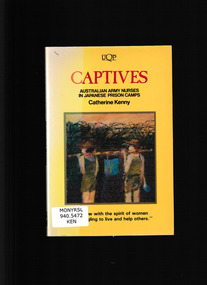
Book, University of Queensland Press, Captives: Australian Army Nurses in Japanese Prison Camps, 1986
... World war 1939 – 1945 - Prisons and prisoners - Japanese Australian Army Nursing Service The story of the experiences of Australian Army nurses as Japanese prisoners of war Index, ill, p.162. ...The story of the experiences of Australian Army nurses as Japanese prisoners of warIndex, ill, p.162.non-fictionThe story of the experiences of Australian Army nurses as Japanese prisoners of warworld war 1939 – 1945 - prisons and prisoners - japanese, australian army nursing service -
 Monbulk RSL Sub Branch
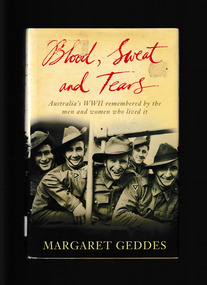
Book, Viking, Blood, sweat and tears : Australia's WWII remembered by the men and women who lived it, 2004
... World War 1939-1945 - Australia - History Australia 1939-1945 - Social conditions Blood, Sweat and Tears brings together the first-hand accounts of more than seventy-five ordinary Australians who did extraordinary things during World War II. Prisoners of war, airmen, nurses, landgirls, internees, schoolchildren, soldiers, sailors and volunteers of every description share their memories of a time of horror, tragedy, love and excitement. ...Blood, Sweat and Tears brings together the first-hand accounts of more than seventy-five ordinary Australians who did extraordinary things during World War II. Prisoners of war, airmen, nurses, landgirls, internees, schoolchildren, soldiers, sailors and volunteers of every description share their memories of a time of horror, tragedy, love and excitement. BIndex, ill, p.403.non-fictionBlood, Sweat and Tears brings together the first-hand accounts of more than seventy-five ordinary Australians who did extraordinary things during World War II. Prisoners of war, airmen, nurses, landgirls, internees, schoolchildren, soldiers, sailors and volunteers of every description share their memories of a time of horror, tragedy, love and excitement. Bworld war 1939-1945 - australia - history, australia 1939-1945 - social conditions -
 Alfred Hospital Nurses League - Nursing History Collection
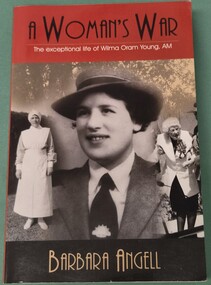
Book - Illustrated book, Barbara Angell 1935, A woman's war; the exceptional life of Wilma Oram Young, AM, 2003
... for three and a half years during World War II, Wilma Oram, a young Australian nurse experienced the very worst of human brutality: starvation, deprivation and degradation. Yet, through the comradeship of her fellow prisoners ...This is the story of one of Australia's most remarkable women. As a prisoner of war for three and a half years during World War II, Wilma Oram, a young Australian nurse experienced the very worst of human brutality: starvation, deprivation and degradation. Yet, through the comradeship of her fellow prisoners, she also experienced humankind at its best. Following her return to Australia, Wilma was inspired to help her fellow ex-POWs and war veterans through her tireless work with the RSL.Illustrated book, with three black and white photographs of Wilma Oram Young (as student nurse, in army uniform and in older age). There is a mid-brown band above this photo on which the title is printed in black and white, below the photos there is a black band on which the author's name is printed in light brown. Spine has mid brown background with title printed in black, author's name in light brown, and publisher's mark in white. The back cover has a summary of the book printed in black ink on a light brown background.non-fictionThis is the story of one of Australia's most remarkable women. As a prisoner of war for three and a half years during World War II, Wilma Oram, a young Australian nurse experienced the very worst of human brutality: starvation, deprivation and degradation. Yet, through the comradeship of her fellow prisoners, she also experienced humankind at its best. Following her return to Australia, Wilma was inspired to help her fellow ex-POWs and war veterans through her tireless work with the RSL.wilma oram young, nurses-australia-biography, world ward 1939-1945-prisoners and prisons-japaneses -
 Alfred Hospital Nurses League - Nursing History Collection
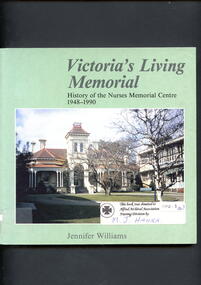
Book - Illustrated book, Jennifer Williams, Victoria's living memorial: history of the Nurses Memorial Centre 1948-1990, 1991
... Nurses Memorial Centre-History Nursing -Victoria-History This is a history of the Nurses Memorial Centre, including the fund-raising efforts of Vivian Bullwinkel and Betty Jeffrey who visited every hospital in Victoria with more than twenty beds, recounting their war time experiences. The nurses Memorial Centre is a living memorial to the heroism and sacrifice of the 76 Australian nurses who died during World War Two and to those who survived years in prisoner-of-war camps during that time. ...This is a history of the Nurses Memorial Centre, including the fund-raising efforts of Vivian Bullwinkel and Betty Jeffrey who visited every hospital in Victoria with more than twenty beds, recounting their war time experiences. The nurses Memorial Centre is a living memorial to the heroism and sacrifice of the 76 Australian nurses who died during World War Two and to those who survived years in prisoner-of-war camps during that time.Illustrated book with light green cover. On the front cover, in addition to the title and author's name printed in dark grey and black ink, is a coloured photograph of the original Nurses Memorial Centre at 431 St Kilda Rd Melbourne. Title and authors name also printed on the spine. On the back cover are comments about the Centre by Vivian Statham (Bullwinkel) and Betty Jeffrey.non-fictionThis is a history of the Nurses Memorial Centre, including the fund-raising efforts of Vivian Bullwinkel and Betty Jeffrey who visited every hospital in Victoria with more than twenty beds, recounting their war time experiences. The nurses Memorial Centre is a living memorial to the heroism and sacrifice of the 76 Australian nurses who died during World War Two and to those who survived years in prisoner-of-war camps during that time.nurses memorial centre-history, nursing -victoria-history -
 Alfred Hospital Nurses League - Nursing History Collection
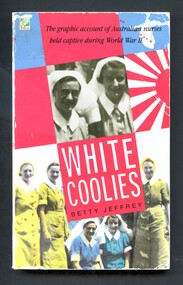
Book, Betty Jeffrey 1908-2000, White Coolies, 1988
... Book has signatures of nine of the survivors Of significance to the AHNL as the author, Betty Jeffrey, was an Alfred Graduate (1939) World War 1939-1945 prisoners of war Nurses n 1942 a group of sixty-five Australian Army nursing sisters was evacuated from Malaya aboard the Vyner Brooke, a few days before the fall of Singapore. ...n 1942 a group of sixty-five Australian Army nursing sisters was evacuated from Malaya aboard the Vyner Brooke, a few days before the fall of Singapore. Two days later their ship was bombed and sunk by the Japanese. Of the fifty-three survivors who scrambled ashore, twenty-one were murdered and the remaining thirty-two were taken prisoner. The book is the engrossing record kept by one of the sisters, Betty Jeffrey, during the three grueling years of imprisonment that followed. It is an amazing story of survival and deprivation in the harshest of conditions.Book has a red white and Malaya 1941, Nursing Sisters of cover, tile printed in white and author's name printed in black on front cover. On the front cover is a coloured black and white photograph "Malaya 1941, Nursing Sisters of 2/4 Clearing Station, 8 Division. Title and author's name also printed in white on spine. The back cover has a summary of the booknon-fictionn 1942 a group of sixty-five Australian Army nursing sisters was evacuated from Malaya aboard the Vyner Brooke, a few days before the fall of Singapore. Two days later their ship was bombed and sunk by the Japanese. Of the fifty-three survivors who scrambled ashore, twenty-one were murdered and the remaining thirty-two were taken prisoner. The book is the engrossing record kept by one of the sisters, Betty Jeffrey, during the three grueling years of imprisonment that followed. It is an amazing story of survival and deprivation in the harshest of conditions.world war 1939-1945 prisoners of war, nurses -
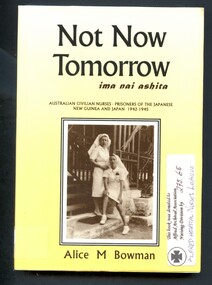 Alfred Hospital Nurses League - Nursing History Collection
Book - Illustrated Book, Alice M. (Alice Mary) Bowman 1912-2000, Not now tomorrow=ima nai ashita, 1996
... Of significance to the AHNL as it is an important record of the conditions nurses endured ad prisoners of war World War 1939-1945 Prisoners of War-Papua New Guinea Prisoners of War-Japan nurses A true story of a civilian nurse from the Government Hospital in Rabaul, who was held prisoner in New Britain (six months) and Japan (3 years) following the Japanese attack of Rabaul in 1942 On the front of the dustjacket is a printed black and white donation sticker: black Maltese cross in circle, "This book was donated to Alfred Archival Association Nursing Division by" Alfred Hospital Nurses League (handwritten in black ink) Also previous catalogue number handwritten in black ink on this label Illustrated book with dust jacket. ...A true story of a civilian nurse from the Government Hospital in Rabaul, who was held prisoner in New Britain (six months) and Japan (3 years) following the Japanese attack of Rabaul in 1942Illustrated book with dust jacket. Book has a yellow cover with title and author's name printed in white on front and spine. Dust jacket has a pale-yellow background, title and author's name printed in brown on front and spine. The front of the dustjacket also has a black and white photograph of the author (Alice Bowman) (seated) and Joyce McGahan (standing) they are wearing Sisters uniforms; a building of the Namanalu Hospital, Rabaul is behind them (1939). On the back cover is another black and white photograph: Rabaul panorama, and a summary of the book in brown print. non-fictionA true story of a civilian nurse from the Government Hospital in Rabaul, who was held prisoner in New Britain (six months) and Japan (3 years) following the Japanese attack of Rabaul in 1942world war 1939-1945, prisoners of war-papua new guinea, prisoners of war-japan, nurses -
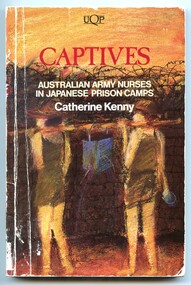 Alfred Hospital Nurses League - Nursing History Collection
Book - Illustrated Book, Catherine Kenny 1962, Captives: Australian army nurses in Japanese prison camps, 1986
... nurses were evacuated on the Vyner Brooke. Twelve drowned when the ship was sunk off the coast of Sumatra, a further 21 died in the Banka Island massacre, and another eight died in captivity Of significance to AHNL as Alfred graduates were among the captives World War 1939-1945 Australian Army Nurses prisoners of War military nursing nurses Experiences of Australian Army nurses who were prisoners of the Japanese during World War two At the bottom left of the first page is a printed coloured donation sticker: AHNL logo, "This book was donated to AHNL Inc-Nursing Archives by" the Alfred Hospital Library 21/3/18 (handwritten in ink) The previous catalogue number is handwritten in ink at top right of this page. ...Experiences of Australian Army nurses who were prisoners of the Japanese during World War twoIllustrated book. Front cover has a painting by Cynthia Breusch depicting two female figures carrying a container hanging from a pole on their shoulders. Behind them is a barbwire topped fence. The book title is printed over this painting in red and white ink. The author's name is printed in white below the title, and the publisher's mark is printed in black above the title. The Spine is cream in colour, with abbreviated title printed in red, author's surname and publishers mark printed in black. The back cover has a cream background, with quotes from two nurses and a summary of the book overprinted in blacknon-fictionExperiences of Australian Army nurses who were prisoners of the Japanese during World War twoworld war 1939-1945, australian army nurses, prisoners of war, military nursing, nurses -
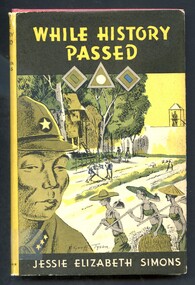 Alfred Hospital Nurses League - Nursing History Collection
Book - Illustrated book, Jesse Elizabeth Simmons 1911- et al, While history passed: the story of the Australian Nurses who were prisoners of the Japanese for three and a half years, 1954
... Of significance to the AHNL as Alfred graduates were among the prisoners World War 1939-1945 prisoners of war Nurses The author was one of sixty-five Australian Army nurses ordered to leave Singapore aboard the Vyner Brooke. ...The author was one of sixty-five Australian Army nurses ordered to leave Singapore aboard the Vyner Brooke. This is their story, including the years spent as prisoners of war in Sumatra by the survivorsIllustrated book with dust jacket. Book has a red cover with title and author's surname embossed in gold on spine. Front of the dust jacket has an illustration of a guard with female prisoners in the background (drawn by Geoff Tyson) Title is printed in yellow on a black background above this illustration, author's name is printed in white on a black background below this illustration. Title, author's and publisher's names are printed in black on a yellow background on the spinenon-fictionThe author was one of sixty-five Australian Army nurses ordered to leave Singapore aboard the Vyner Brooke. This is their story, including the years spent as prisoners of war in Sumatra by the survivorsworld war 1939-1945 prisoners of war, nurses -
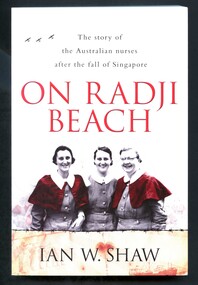 Alfred Hospital Nurses League - Nursing History Collection
Book - Illustrated Book, Ian Winton Shaw, On Radji Beach, 2010
... Researched from the diaries and papers of some of the nurses who survived Of significance to the AHNL as it is an important part of nursing history Vivian Bullwinkel Vyner Brooke Australia Army-Nurses World War 1939-1945 prisoners of war Nurses Australia The story of Australian nurses after the fall of Singapore in World War Two At the bottom right of the front page is a printed black and white donation sticker: black Maltese cross in circle, "This book was donated to Alfred Archival Association Nursing Division by"AHNL (handwritten in black ink) Also previous catalogue number handwritten in black ink on this sticker. ...The story of Australian nurses after the fall of Singapore in World War TwoIllustrated book with red and black print on front and spine. Front cover also has a red, grey and white photograph of three nurses in uniform. Title and authors name on front and spine. Summary of book in black print on back covernon-fictionThe story of Australian nurses after the fall of Singapore in World War Twovivian bullwinkel, vyner brooke, australia army-nurses, world war 1939-1945 prisoners of war, nurses australia -
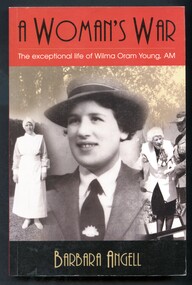 Alfred Hospital Nurses League - Nursing History Collection
Book - Illustrated book, Barbara Angell 1935, A woman's war; the exceptional life of Wilma Oram Young, AM, 2003
... for three and a half years during World War II, Wilma Oram, a young Australian nurse experienced the very worst of human brutality: starvation, deprivation and degradation. Yet, through the comradeship of her fellow prisoners ...This is the story of one of Australia's most remarkable women. As a prisoner of war for three and a half years during World War II, Wilma Oram, a young Australian nurse experienced the very worst of human brutality: starvation, deprivation and degradation. Yet, through the comradeship of her fellow prisoners, she also experienced humankind at its best. Following her return to Australia, Wilma was inspired to help her fellow ex-POWs and war veterans through her tireless work with the RSL.Illustrated book, with three black and white photographs of Wilma Oram Young (as student nurse, in army uniform and in older age). There is a mid-brown band above this photo on which the title is printed in black and white, below the photos there is a black band on which the author's name is printed in light brown. Spine has mid brown background with title printed in black, author's name in light brown, and publisher's mark in white. The back cover has a summary of the book printed in black ink on a light brown background.non-fictionThis is the story of one of Australia's most remarkable women. As a prisoner of war for three and a half years during World War II, Wilma Oram, a young Australian nurse experienced the very worst of human brutality: starvation, deprivation and degradation. Yet, through the comradeship of her fellow prisoners, she also experienced humankind at its best. Following her return to Australia, Wilma was inspired to help her fellow ex-POWs and war veterans through her tireless work with the RSL.wilma oram young, nurses-australia-biography, world ward 1939-1945-prisoners and prisons-japaneses -
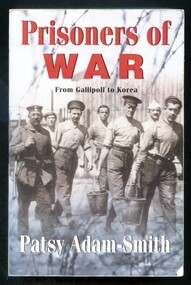 Alfred Hospital Nurses League - Nursing History Collection
Book - Illustrated book, Patsy Adam-Smith 1924-2001, Prisoners of war: from Gallipoli to Korea, 1998
... Using dozens of interviews with former POWs, the author shows the strength and courage of Australians taken prisoner in World War I, World War II and the Korean War. Of significance to the AHNL as it contains information about nurses who were prisoners of war. ...This book has not been written for ex-prisoners: they know the homesickness of exile, the tyranny of bondage; it was written for those people of today who know little of the experiences of these men and women, of their courage, endurance and pain. It has been written for the generations to come.Illustrated book. The front cover and spine have the same black and white photograph of six men walking ("the guards were old, the soldiers young. Bertie Giles is third from left) Front cover has full title in red and black print, authors name in white print. Spine has abbreviated title in red print, authors name in black and white print and publishers name in black print. Back cover has a black and white photograph of a group of women (Australian nurses, (civilian and army) after being held POW for almost three and a half years by the Japanese). Under this photograph is a summary of the book and information about the author.non-fictionThis book has not been written for ex-prisoners: they know the homesickness of exile, the tyranny of bondage; it was written for those people of today who know little of the experiences of these men and women, of their courage, endurance and pain. It has been written for the generations to come.prisoners of war-australia, world war 1914-1918-prisoners and prisons, world war 1939-1945-prisoners and prisons, korean war 1950-1953 - prisoners and prisons -
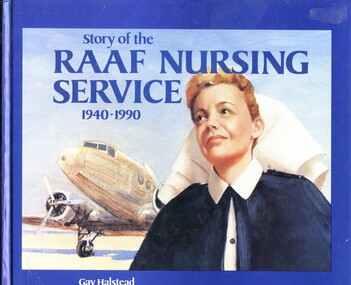 Alfred Hospital Nurses League - Nursing History Collection
Book - Illustrated book, Gay Halstead 1929, Story of the RAAF Nursing Service 1940-1990, 1994
... With the Medical Air Evacuation Transport Unit (MAETU), established in 1944, nurses helped with aerial evacuation of casualties and were involved with the liberation of Prisoners of War from Singapore and other areas. ...Established in July 1914, the Royal Australian Airforce Nursing Service (RAAFNS) personnel expanded from 45 in December 1940 to 616 in December 1945. Miss Margaret Irene Lang was appointed Matron-in -Chief and her staff's conditions in service were similar to those of the Australian Army Nursing Service. The nurses were originally attached to RAAF bases in Australia but later served in New Guinea and the Pacific Islands. With the Medical Air Evacuation Transport Unit (MAETU), established in 1944, nurses helped with aerial evacuation of casualties and were involved with the liberation of Prisoners of War from Singapore and other areas. The service was disbanded at the end of World War Two, but in 1948 a peace-time service was formed, and the RAAF nurses have served in the Korean War, the Malayan Emergency and the Vietnam War. They continue to care for the sick and injured at RAAF hospitals. Includes honours, awards and the nominal roll of RAAFNS 1940-1952.Illustrated book with blue cover. Front cover has a coloured illustration by Vivian and Marjorie Mare of a nurse in uniform standing in front of a plane, the title is printed in blue and the author's name printed in white. Title and author's name are also printed in white on the spine. The back cover has a collage of black and white photographs of RAAF personnel including nurses. Limited edition of 1000 copies.non-fictionEstablished in July 1914, the Royal Australian Airforce Nursing Service (RAAFNS) personnel expanded from 45 in December 1940 to 616 in December 1945. Miss Margaret Irene Lang was appointed Matron-in -Chief and her staff's conditions in service were similar to those of the Australian Army Nursing Service. The nurses were originally attached to RAAF bases in Australia but later served in New Guinea and the Pacific Islands. With the Medical Air Evacuation Transport Unit (MAETU), established in 1944, nurses helped with aerial evacuation of casualties and were involved with the liberation of Prisoners of War from Singapore and other areas. The service was disbanded at the end of World War Two, but in 1948 a peace-time service was formed, and the RAAF nurses have served in the Korean War, the Malayan Emergency and the Vietnam War. They continue to care for the sick and injured at RAAF hospitals. Includes honours, awards and the nominal roll of RAAFNS 1940-1952.royal australian air force nursing service-history, world war 1939-1945-medical care-australia, military nursing-australia, nurses, nursing -
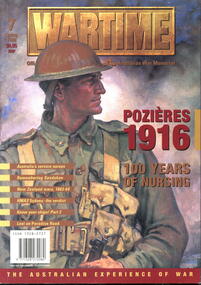 Alfred Hospital Nurses League - Nursing History Collection
Magazine - Illustrated magazine, Philip J Turner & Rex Curtis-Griffiths, Wartime: Number 7 Spring 1997, 1999
... nurses have made in times of conflict. Military nursing-Australia-History World War 1914-1918 World War 1939-1945 Vietnam War World War 1939-1945 prisoners of war Rwanda Nurses Nursing The Australian experience of war: the magazine contains other war related articles, the ones referring to nursing experiences are Florence Nightingale, Fanny Hines (died of pneumonia in the Boer War), Catherine Tully (awarded the 1914 Star with clasp) other World War One Experiences, Jessie Simmons (World War Two POW) Ann Mackinnon (served with the 2/6th Australian General Hospital), RAAF medevac nurses in Vietnam, nurses in Rwanda, and a review of the film Paradise Road. ...The Australian experience of war: the magazine contains other war related articles, the ones referring to nursing experiences are Florence Nightingale, Fanny Hines (died of pneumonia in the Boer War), Catherine Tully (awarded the 1914 Star with clasp) other World War One Experiences, Jessie Simmons (World War Two POW) Ann Mackinnon (served with the 2/6th Australian General Hospital), RAAF medevac nurses in Vietnam, nurses in Rwanda, and a review of the film Paradise Road.Illustrated magazine. The front cover has a copy of a painting by Hilda Rix-Nicholas: Australian soldier of the Great War. The man is wearing a metal helmet and combat uniform. Title and list of contents are printed are printed in gold and red brown on front cover also. non-fictionThe Australian experience of war: the magazine contains other war related articles, the ones referring to nursing experiences are Florence Nightingale, Fanny Hines (died of pneumonia in the Boer War), Catherine Tully (awarded the 1914 Star with clasp) other World War One Experiences, Jessie Simmons (World War Two POW) Ann Mackinnon (served with the 2/6th Australian General Hospital), RAAF medevac nurses in Vietnam, nurses in Rwanda, and a review of the film Paradise Road.military nursing-australia-history, world war 1914-1918, world war 1939-1945, vietnam war, world war 1939-1945 prisoners of war, rwanda, nurses, nursing -
 Alfred Hospital Nurses League - Nursing History Collection
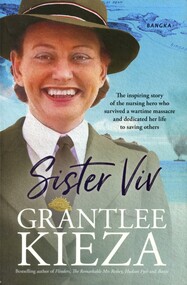
Book - Illustrated book, Grantlee Kieza, Sister Viv, 2024
... Of significance to the AHNL as it is the biography of an important Australian nurse Vivian Bullwinkel World War 1939-1945 prisoners of War A biography about Vivivien Bullwinkel : the astonishing story of the courage, sacrifice and love of a young army nurse who became an Australian icon some writing on the front end page has been obliterated Illustrated book with light blue cover and black and white print. ...A biography about Vivivien Bullwinkel : the astonishing story of the courage, sacrifice and love of a young army nurse who became an Australian iconIllustrated book with light blue cover and black and white print. Also on front cover is a coloured photograph of a woman in Australian Army Uniform (Siter Vivian Bullwinkle) In the bakground ther is a map of Banka Island and a ship. Title and author's name are printed on front cover and spine. Summary of the book is printed on the back cover, along with a small photoraph and information about the author.non-fictionA biography about Vivivien Bullwinkel : the astonishing story of the courage, sacrifice and love of a young army nurse who became an Australian iconvivian bullwinkel, world war 1939-1945, prisoners of war -
 Alfred Hospital Nurses League - Nursing History Collection
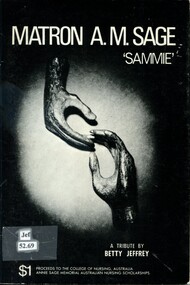
Booklet, Betty Jeffrey 1908-2000, Matron A M Sage "Sammie", 1970
... proceeds from the sale of this booklet went to the College of Nursing Australia Annie Sage Memorial Australian Nursing Scholarships of significance to the AHNL as some Alfred nurses were prisoners of war Annie Moriah Sage World War 1939-1945 prisoners of war Prisoners of war - biography World War 1939-1945 - personal narratives-Australian Annie Moriah Sage, CBE, RRC (1895-1969), also known as Matron A.M. ...Annie Moriah Sage, CBE, RRC (1895-1969), also known as Matron A.M. Sage, was an Australian nursing administrator and Matron-in-Chief during the Second World War. She served in the Second Australian Imperial Force and saw service in the Middle East, Pacific Area, New Guinea, and Singapore. She is also known for arranging the repatriation of Australian nurses released from prinoners of war camps in SingaporeStapled booklet with black cover. Title and authors name are printed in white on the front cover along with phograph of a sculpture of two hands reaching towards each other ['hands' by Henry Moore]non-fictionAnnie Moriah Sage, CBE, RRC (1895-1969), also known as Matron A.M. Sage, was an Australian nursing administrator and Matron-in-Chief during the Second World War. She served in the Second Australian Imperial Force and saw service in the Middle East, Pacific Area, New Guinea, and Singapore. She is also known for arranging the repatriation of Australian nurses released from prinoners of war camps in Singaporeannie moriah sage, world war 1939-1945 prisoners of war, prisoners of war - biography, world war 1939-1945 - personal narratives-australian -
 Wangaratta RSL Sub Branch
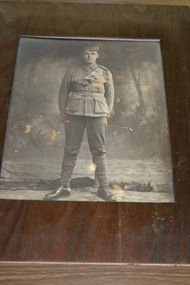
Photograph, Talma & Co, John "Jack" AMBROSE MM
... Nurses during the First World War along with youngest brother Alfred Ernest PAYNE 1256. The latter three together with Jack AMBROSE are listed on the Wangaratta and District Victory Roll. Colonel Sir Ernest Edward "Weary" Dunlop, AC, CMG, OBE was born at Wangaratta (12 July 1907 – 2 July 1993) and an Australian Surgeon renowned for his leadership while being held prisoner by the Japanese during the Second World War. john ambrose 5th battalion ww1 carboor Wangaratta Weary Dunlop Below photograph handwritten "Jack Ambrose married a girl Chick" Rear Miss S Wright Farm Hill Carboor East via Wangaratta Framed timber mounted photograph of unknown WW1 Soldier - now identified to be John AMBROSE MM 1132 of Carboor John "Jack" AMBROSE MM Photograph Photograph Talma & Co ...Unknown WW1 soldier ................. 22/11/2018 ..........due to its poor condition the photograph was removed from its timber frame revealing below the photograph the handwritten words "Jack Ambrose married a girl Chick"..... identified as Ethel Maud CHICK Soldier identified as John AMBROSE MM 1132 Labourer of Carboor who served on the western front in France during the First World War. Joined 19/2/1916 aged 23 years and 4 months Born and enlisted at Wangaratta Embarked on 3/6/1916 on HMAT Persic. Served with 5/37Battalions. Wounded on 3 occasions, returning to Australia on 27/7/1919. Next of Kin - Edward Henry PAYNE (Cousin) of Carboor. Jack and Edward were both cousins to Sir Edward "Weary" Dunlop.By identifying this originally unknown soldier to be John "Jack" AMBROSE has revealed links to the children of Edward Samuel PAYNE and his wife Catherine Marie nee WALPOLE. Jack's mother Ida Elizabeth AMBROSE nee PAYNE is the elder sister of Alice Emily Maud DUNLOP nee PAYNE mother of Sir Ernest Edward "Weary" DUNLOP, twin sisters Lily May and Violet Minnie PAYNE who both served as Nurses during the First World War along with youngest brother Alfred Ernest PAYNE 1256. The latter three together with Jack AMBROSE are listed on the Wangaratta and District Victory Roll. Colonel Sir Ernest Edward "Weary" Dunlop, AC, CMG, OBE was born at Wangaratta (12 July 1907 – 2 July 1993) and an Australian Surgeon renowned for his leadership while being held prisoner by the Japanese during the Second World War.Framed timber mounted photograph of unknown WW1 Soldier - now identified to be John AMBROSE MM 1132 of CarboorBelow photograph handwritten "Jack Ambrose married a girl Chick" Rear Miss S Wright Farm Hill Carboor East via Wangarattajohn ambrose, 5th battalion ww1, carboor, wangaratta, weary dunlop -
 St Kilda Historical Society
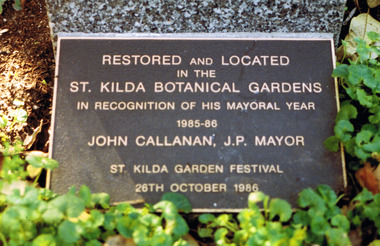
Photograph, Edith Cavell statue, St Kilda Botanical Gardens - images collection
... nurse in the late 1890s. She was also an accomplished linguist, musician and artist. In 1907 she was assisted in establishing a modern nursing system at the Berkendael Medical Institute in Brussels. At the outbreak of World War One she was left in charge of the hospital and what is now known as the Red Cross. During that time she assisted more than 200 Belgian, British and French soldiers who had been separated from their armies, or who had escaped German detention. In 1915, she was accused of conspiring to help prisoners...nurse in the late 1890s. She was also an accomplished linguist, musician and artist. In 1907 she was assisted in establishing a modern nursing system at the Berkendael Medical Institute in Brussels. At the outbreak of World War One she was left in charge of the hospital and what is now known as the Red Cross. During that time she assisted more than 200 Belgian, British and French soldiers who had been separated from their armies, or who had escaped German detention. In 1915, she was accused of conspiring to help prisoners ...Edith Cavell was born in England in 1865 and trained as a nurse in the late 1890s. She was also an accomplished linguist, musician and artist. In 1907 she was assisted in establishing a modern nursing system at the Berkendael Medical Institute in Brussels. At the outbreak of World War One she was left in charge of the hospital and what is now known as the Red Cross. During that time she assisted more than 200 Belgian, British and French soldiers who had been separated from their armies, or who had escaped German detention. In 1915, she was accused of conspiring to help prisoners escape, and was tried by a military court in Brussels. She was convicted and sentenced to death, along with four others. Cavell was executed by firing squad on 12 October 1915; she was still wearing her nurse’s uniform. Her body was returned to England in 1919, where a full military service was conducted at Westminster Abbey.colour photograph unmountedBase of the bust: Edith Cavell 1865-1915 Plaque on the plinth: Restored and located in the St Kilda Botanical Gardens in recognition of his mayoral year 1985-86. John Callanan, JP, Mayor. St Kilda Garden Festival 26th October 1986st kilda, st kilda botanical gardens, plaques, edith cavell, world war i -
 Stawell Historical Society Inc
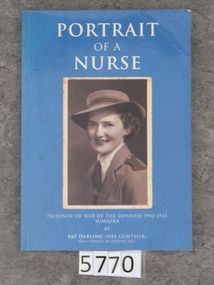
Book, Pat Darling, Portrait of a Nurse - Prisoner of war of the Japanese 1942-1945 Sumatra, 2001
... Portrait of a Nurse - Prisoner of war of the Japanese 1942-1945 Sumatra...Portrait of a Nurse Prisoner of War of the Japanese 1942-1945 Sumatra By Pat Darling (Nee Gunther) Mentioned in Dispatches...Account of a Nuses imprisonment by the Japenese as a prisoner of War from 1942 - 1945 stawell ww2 Portrait of a Nurse Prisoner of War of the Japanese 1942-1945 Sumatra By Pat Darling (Nee Gunther) Mentioned in Dispatches Blue card cover with centered portrait of an Army Nurse in uniform Portrait of a Nurse - Prisoner of war of the Japanese 1942-1945 Sumatra Book Pat Darling ...Account of a Nuses imprisonment by the Japenese as a prisoner of War from 1942 - 1945Blue card cover with centered portrait of an Army Nurse in uniformPortrait of a Nurse Prisoner of War of the Japanese 1942-1945 Sumatra By Pat Darling (Nee Gunther) Mentioned in Dispatchesstawell ww2 -
 Dandenong & District Historical Society
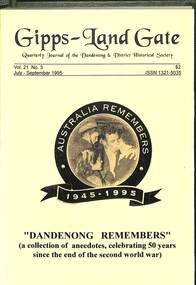
Journal, Dandenong & District Historical Society, Gipps-Land Gate Vol.21 No.3, 1995
... Bill Toon, Prisoner Of War Adele Mortimer, Wife Of A Prisoner Of War Eric Eckstein, A Dunera Boy Neil Tucker, A.I.F. Grace Hill, W.R.A.N.S. Dave Morris, A.I.F. Pam Oldmeadow, School Girl Graeme Trigg, RAN Joan Cameron, A.w.A.S. Elwyn Wilke, Army Nurse...Bill Toon, Prisoner Of War Adele Mortimer, Wife Of A Prisoner Of War Eric Eckstein, A Dunera Boy Neil Tucker, A.I.F. Grace Hill, W.R.A.N.S. Dave Morris, A.I.F. Pam Oldmeadow, School Girl Graeme Trigg, RAN Joan Cameron, A.w.A.S. Elwyn Wilke, Army Nurse ...An interesting group of Early Dandenong Personalities, Places and EventsA5 size publication of the Gipps-Land Gate, July-September 1995 featuring an old picture of Dandenong on the cover. Dandenong Remembers Carma Keast, Wife Of A Soldier Gil Kingsbury,R. A. A. F. Bill Toon, Prisoner Of War Adele Mortimer, Wife Of A Prisoner Of War Eric Eckstein, A Dunera Boy Neil Tucker, A.I.F. Grace Hill, W.R.A.N.S. Dave Morris, A.I.F. Pam Oldmeadow, School Girl Graeme Trigg, RAN Joan Cameron, A.w.A.S. Elwyn Wilke, Army Nurse Joyce Blundell, W.A.A.A.F. Jim Hardy, A.I.F. Muriel Norris, Red Cross Volunteer Bill Brooks, R.A.A.F. Did You Know That During The Years 1939 To 1945 Society News An interesting group of Early Dandenong Personalities, Places and Eventshotel history, early education in dandenong, interesting milestones, family histories -
Ballarat RSL Sub-Branch Inc.
Australian Active Service Medal 1945-1975
... She served as Nurse in RAAF and participated in medical evacuation of the wounded from Vietnam. Rosalie Dolores HENSELEIT was not a prisoner of war. ...She served as Nurse in RAAF and participated in medical evacuation of the wounded from Vietnam. Rosalie Dolores HENSELEIT was not a prisoner of war. ...This object relates to Rosalie Dolores HENSELEIT. She was born on 26/09/1929 in Horsham, VIC. Rosalie Dolores served in the RAAF Nursing Service (N43989) enlisting on, 01/01/1955 before being discharged from duties with the 902nd AEROMED EVAC SQN USAF on 28/04/1967. She served as Nurse in RAAF and participated in medical evacuation of the wounded from Vietnam. Rosalie Dolores HENSELEIT was not a prisoner of war. Rosalie Henseleit was awarded the Australian Active Service Medal 1945-1975 and the Vietnam Medal. Rosalie was a Branch Member.vietnam war, 1962-75, medals, ballarat rsl, ballarat -
 Ballarat RSL Sub-Branch Inc.
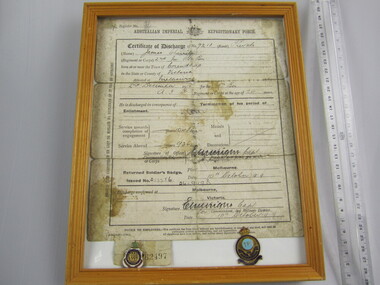
Certificate of Discharge - Framed
... She served as Nurse in RAAF and participated in medical evacuation of the wounded from Vietnam. Rosalie Dolores HENSELEIT was not a prisoner of war. ...She served as Nurse in RAAF and participated in medical evacuation of the wounded from Vietnam. Rosalie Dolores HENSELEIT was not a prisoner of war. ...This object relates to Rosalie Dolores HENSELEIT. She was born on 26/09/1929 in Horsham, VIC. Rosalie Dolores served in the RAAF Nursing Service (N43989) enlisting on, 01/01/1955 before being discharged from duties with the 902nd AEROMED EVAC SQN USAF on 28/04/1967. She served as Nurse in RAAF and participated in medical evacuation of the wounded from Vietnam. Rosalie Dolores HENSELEIT was not a prisoner of war. Rosalie Henseleit was awarded the Australian Active Service Medal 1945-1975 and the Vietnam Medal. Rosalie was a Branch Member.RSL Badge No. V62497 and TPI Badge included in framefirst world war (ww1), 1914 - 1918, literature, ballarat rsl, ballarat
