
Showing 61 items matching "racial"
-
 Wheen Bee Foundation
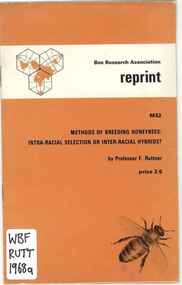
Publication, Ruttner, F, Methods of breeding honeybees: intra-racial selection or inter-racial hybrids? (Ruttner, F.), London, 1968, 1968
... Methods of breeding honeybees: intra-racial selection or inter-racial hybrids? (Ruttner, F.), London, 1968...Methods of breeding honeybees: intra-racial selection or inter-racial hybrids? (Ruttner, F.), London, 1968 Publication Ruttner, F. ... -
 Wheen Bee Foundation
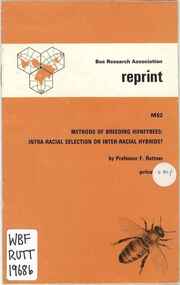
Publication, Ruttner, F, Methods of breeding honeybees: intra-racial selection or inter-racial hybrids? (Ruttner, F.), London, 1968, 1968
... Methods of breeding honeybees: intra-racial selection or inter-racial hybrids? (Ruttner, F.), London, 1968...Methods of breeding honeybees: intra-racial selection or inter-racial hybrids? (Ruttner, F.), London, 1968 Publication Ruttner, F. ... -
 Victorian Aboriginal Corporation for Languages
Book with CD, Human Rights and Equal Opportunity Commission, Voices of Australia : 30 years of the Racial Discrimination Act : 1975-2005 : a collection of real-life stories about Australians living together, 2005
... Voices of Australia : 30 years of the Racial Discrimination Act : 1975-2005 : a collection of real-life stories about Australians living together...colour illustrations, colour photographs, CD Voices of Australia : 30 years of the Racial Discrimination Act : 1975-2005 : a collection of real-life stories about Australians living together Book with CD Human Rights and Equal Opportunity Commission ...colour illustrations, colour photographs, CD -
Koorie Heritage Trust
Journal - Serials, Birdsell, Joseph B. et al, Records of the Queen Victoria Museum Launceston. Contents - The racial origins of the Extinct Tasmanians. A survey of possible sea routes available to the Tasmanian Aborigines. The Tasmanians - a summary, 1949
... Records of the Queen Victoria Museum Launceston. Contents - The racial origins of the Extinct Tasmanians. ...Tasmanians - Racial Origins. Australian Aboriginals - origins. ...Some of the points raised seem rather dated, but an interesting set of theories historically.105-145P.; plates; refs. figs.Some of the points raised seem rather dated, but an interesting set of theories historically.tasmanians - racial origins., australian aboriginals - origins., migration theories - tasmanians., bass strait - geology. -
Koorie Heritage Trust
Book, Beresford, Quentin, Our State of Mind. Racial Planning and the Stolen Generations, 1998
... Our State of Mind. Racial Planning and the Stolen Generations....Our State of Mind. Racial Planning and the Stolen Generations. ...The book examines the racial thinking behind the developments of child removal and assimilation.8-295 P.; notes; index; bib.; 21 cm.The book examines the racial thinking behind the developments of child removal and assimilation.stolen generations-government policy-?ustralia, assimilation-government policies -
Victorian Aboriginal Corporation for Languages
Book, Edgar Morrison, The Loddon Aborigines : tales of old Jim Crow, 1971
... This regional survey is the last of a trilogy, each of which deals with a particular aspect of living conditions and racial relationships in the Loddon watershed in the early Colonial days....Loddon maps, b&w photographs This regional survey is the last of a trilogy, each of which deals with a particular aspect of living conditions and racial relationships in the Loddon watershed in the early Colonial days. ...This regional survey is the last of a trilogy, each of which deals with a particular aspect of living conditions and racial relationships in the Loddon watershed in the early Colonial days.maps, b&w photographsloddon -
 Ambulance Victoria Museum
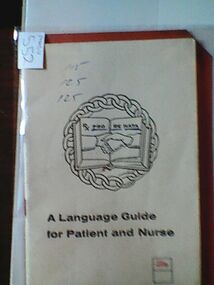
Booklet, A Language Guide for Patient and Nurse, Lilly, A Language Guide for Patient and Nurse, Circa 1970
... Used to help medical staff communicate with patients of different racial backgrounds....Used to help medical staff communicate with patients of different racial backgrounds. PRO RE NATA Card covered booklet. ...Used to help medical staff communicate with patients of different racial backgrounds.Card covered booklet. White with black printing. Cover shows two hands shaking on the pages of an opened book with circular chain surrounding book. Multiple languages PRO RE NATA -
 Greensborough Historical Society
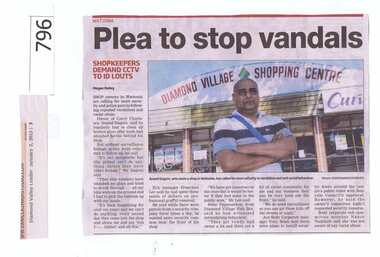
Newspaper clipping, Diamond Valley Leader, Plea to stop vandals, 02/01/2013
... The article is about repeated vandalism and racial abuse at the Diamond Village shopping centre....The article is about repeated vandalism and racial abuse at the Diamond Village shopping centre. ...The article is about repeated vandalism and racial abuse at the Diamond Village shopping centre.Vandals were targeting the Diamond Village shopping centre with racial taunts, graffiti and attempting to break into shops. The article highlights the lack of evidence to give the police due to a reluctance to install outside security cameras.A half page featuring a colour photograph.Nilracial abuse, greensborough, diamond village shopping centre, vandlism, police numbers -
Lakes Entrance Historical Society
Book, Reynolds Henry, Frontier'Aboriginal, Settlers and Land, 1989
... This book presents attitudes and behaviour of the settlers in all regions of Australia, their reaction to the Aboriginal, frontier conflicts, racial idealogy and land ownership indexed Bibliography...This book presents attitudes and behaviour of the settlers in all regions of Australia, their reaction to the Aboriginal, frontier conflicts, racial idealogy and land ownership indexed Bibliography Aboriginals Police Frontier'Aboriginal, Settlers and Land Book Reynolds Henry ...This book presents attitudes and behaviour of the settlers in all regions of Australia, their reaction to the Aboriginal, frontier conflicts, racial idealogy and land ownership indexed Bibliographyaboriginals, police -
![Aborigines in Colonial Victoria 1835-86 / [by] M.F. Christie](/media/collectors/550653872162f11fb04854aa/items/5ed04cf1dcf9cd08346bc646/item-media/5ed04db8dcf9cd08346bcaf0/item-fit-380x285.jpg?cb=6) Kew Historical Society Inc
Kew Historical Society IncBook, Sydney University Press, Aborigines in Colonial Victoria 1835-86, 1979
... General account of pre-contact Aborigines; white colonisation and violent conflict; racial attitudes of early settlers; native police; government policy; mission work; foundation of reserves; Coranderrk...General account of pre-contact Aborigines; white colonisation and violent conflict; racial attitudes of early settlers; native police; government policy; mission work; foundation of reserves; Coranderrk aboriginal australians -- victoria -- treatment -- history. aboriginal and torres straight islander General account of pre-contact Aborigines; white colonisation and violent conflict; racial attitudes of early settlers; native police; government policy; mission work; foundation of reserves; Coranderrk. ...General account of pre-contact Aborigines; white colonisation and violent conflict; racial attitudes of early settlers; native police; government policy; mission work; foundation of reserves; Coranderrk.Sydney : Sydney University Press, 1979 viii,227p., 12p. of plates : maps ; 22cm. non-fictionGeneral account of pre-contact Aborigines; white colonisation and violent conflict; racial attitudes of early settlers; native police; government policy; mission work; foundation of reserves; Coranderrk.aboriginal australians -- victoria -- treatment -- history., aboriginal and torres straight islander -
Victorian Aboriginal Corporation for Languages
Book, Pat Dodson et al, Recognising Aboriginal and Torres Strait Islander Peoples in the Constitution : report of the expert panel, 2012
... The 'race' provisions 6. Racial non-discrimination 7. Governance and political participation 8. ...The 'race' provisions 6. Racial non-discrimination 7. Governance and political participation 8. ...Current multiparty support has created a historic opportunity to recognise Aboriginal and Torres Strait Islander peoples as the first peoples of Australia, to affirm their full and equal citizenship, and to remove the last vestiges of racial discrimination from the Constitution. The Expert Panel was tasked to report to the Government on possible options for constitutional change to give effect to Indigenous constitutional recognition, including advice as to the level of support from Indigenous people and the broader community for these options. This executive summary sets out the Panel's conclusions and recommendations" [taken from executive summary]. Report contains draft Bill for an Act to alter the Constitution to recognise Aboriginal and Torres Strait Islander peoples and their cultures, languages and heritage, to replace racially discriminatory provisions and to include a prohibition of racial discrimination. Letter to the Prime Minister Foreword from the co-chairs Executive summary Introduction: Expert panel and its methodology 1. Historical background 2. Comparative and international recognition 3. The national conversation: themes from the consultation program 4. Forms of recognition 5. The 'race' provisions 6. Racial non-discrimination 7. Governance and political participation 8. Agreement-making 9. The question of sovereignty 10. Approaches to the referendum 11. Draft bill Appendixes Bibliography.maps, tables, colour photographs, chartsconstitutional history, legislation, australian constitution, constitutional law, closing the gap, 1967 referendum, white australia policy, sovereignty -
Victorian Aboriginal Corporation for Languages
DVD, Don Featherstone, Babakiueria : (Barbeque area), 2006
... A critical and popular success, this 'reverse angle' probe into racial inequality in Australia has developed a cult following. ...A critical and popular success, this 'reverse angle' probe into racial inequality in Australia has developed a cult following. ...A satirical film about Aboriginal people's discovery of Australia and its white inhabitants. A critical and popular success, this 'reverse angle' probe into racial inequality in Australia has developed a cult following. It approaches its subject with humour but is no less effective for that - perhaps more so. Cast includes: Michelle Torres, Bob Maza, Cecily Polson, Tony Barry. Winner of the UN Media Peace Prize 1987.DVDindigenous australians, australian history, humour, satire, australian television -
 Yarra City Council
Painting - Public Art, Rule 30
... Rule 30 in the AFL was the first racial vilification code in Australian sport. ...Rule 30 in the AFL was the first racial vilification code in Australian sport. ...Clinton Naina’s earliest memory is attending Collingwood football matches at Victoria Park with his father and uncles. His dad was an avid Collingwood supporter and Naina proudly wore his football colours. Lining up to enter the grounds at the big old black-and-white painted wooden doors gave Naina the feeling of entering into another world. 'Rule 30' is a comment on race relations in sport. The artwork is made from the original doors located at the front entrance of the Collingwood Football Club’s grounds at Victoria Park. When the club was refurbished the door was gifted to Naina by a friend—an ex-Collingwood football player—for use in his art practice. The work depicts a big red target painted on the existing Black and white stripes—Collingwood colours—of the door. Naina placed a fabric number ‘30’ on top of the target—created from material used for numbers on the back of players’ football vests. This represents the individuals who have been racially vilified while playing football over many years. The red represents the colour of human blood, while the Blak and white Collingwood colours already painted on the wood are a very fitting comment on race relations. The door itself becomes a potent metaphor for “overcoming barriers, making change, breaking down doors and moving forth into a new era of respect for people”. Rule 30 in the AFL was the first racial vilification code in Australian sport. It prohibited conduct between players, clubs and other AFL officials, which threatened, disparaged, vilified or insulted another person on the basis of that person’s race, religion, colour, descent or ethnic origin. In 2013, ‘Rule 30’ was amended to ‘Rule 35’ to combat other forms of discrimination including disability, appearance and sexuality.The number '30' cut out of fabric placed on top of a painted red target at the centre of an existing black and white wooden door.Accompanying labelracism, sport, football, afl -
 Victorian Aboriginal Corporation for Languages
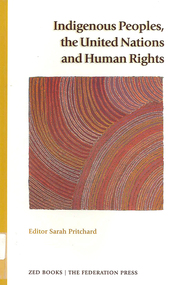
Book, Sarah Pritchard, Indigenous Peoples, the United Nations and human rights, 1998
... Elizabeth Evatt .-- The Committee on the Elimination of Racial Discrimination: non-governmental input and the early warning and urgent procedure /? ...Elizabeth Evatt .-- The Committee on the Elimination of Racial Discrimination: non-governmental input and the early warning and urgent procedure /? ...Introduction: The significance of international law /? Sarah Pritchard.-- Linking international standards with contemporary concerns of Aboriginal and Torres Strait Islander peoples /? Mick Dodson.-- The UN Charter-based human rights system: The UN Charter-based human rights system: an overview /? Garth Nettheim.-- Working Group on Indigenous Populations: mandate, standard-setting activities and future perspectives /? Sarah Pritchard.-- The UN treaty-based human rights system and individual complaints: The UN treaty-based human rights system: an overview /? Hilary Charlesworth.-- Individual complaints: an overview and admissibility requirements /? Hilary Charlesworth.-- Individual complaints: historical perspectives and the International Covenant on Economic, Social and Cultural Rights /? Philip Alston.-- Individual communications under the Optional Protocol to the International Covenant on Civil and Political Rights Elizabeth Evatt.-- Individual communications: the Convention against Torture and the Convention on the Elimination of All Forms of Racial Discrimination /? Michael O'Flaherty.-- The UN treaty-based human rights system and periodic reporting: Periodic reporting: the International Covenant on Economic, Social and Cultural Rights and the Convention on the Rights of the Child /? Philip Alston.-- Periodic reporting: the International Covenant on Civil and Political Rights and the Convention on the Elimination of All Forms of Discrimination against Women /? Elizabeth Evatt .-- The Committee on the Elimination of Racial Discrimination: non-governmental input and the early warning and urgent procedure /? Michael O'Flaherty.-- Indigenous peoples and some relevant human rights standards: Substantive provisions of the International Convention on the Elimination of All Forms of Racial Discrimination /? Michael O'Flaherty.-- The International Covenant on Civil and Political Rights and Indigenous peoples /? Sarah Pritchard.united nations -- history. indigenous peoples -- legal status, laws, etc. aboriginal australians -- civil rights. aboriginal australians -- legal status, laws, etc. human rights. -
Glen Eira Historical Society
Newspaper - Vorchheimer, Menachem
... They describe the racial abuse, theft and assault on Glen Eira resident Menachem Vorchheimer on 14/06/2007 by footballers from Ocean Grove in Balaclava Road and of his efforts to obtain justice, compensation and community awareness following the attack....They describe the racial abuse, theft and assault on Glen Eira resident Menachem Vorchheimer on 14/06/2007 by footballers from Ocean Grove in Balaclava Road and of his efforts to obtain justice, compensation and community awareness following the attack. ...This file contains five newspaper cuttings The PORT PHILLIP/CAULFIELD LEADER dated 13/03/2007 and 26/08/2008, THE AGE dated 19/04/2007 and 15/08/2008, THE AGE GOOD WEEKEND dated 24/02/2007. They describe the racial abuse, theft and assault on Glen Eira resident Menachem Vorchheimer on 14/06/2007 by footballers from Ocean Grove in Balaclava Road and of his efforts to obtain justice, compensation and community awareness following the attack.vorchheimer menachem, solowiejczyk eli, althaus emmanuel, rosenbaum norman, van de wil qc remy van, east st kilda, balaclava road, caulfield, glen eira road, orrong road, hotham street, mizrachi synagogue, b’nai brith anti-defamation commission, race course, caulfield race course, caulfield guineas -
 Ithacan Historical Society
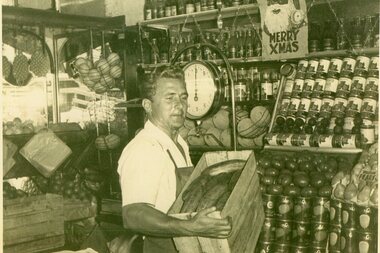
Photograph, Speros Defteros, fruiterer, c 1950s
... He later supplied fruit to restaurants and hotels in Melbourne. As a result of racial prejudice he experienced on his arrival, Spero took up boxing and later wrestling where he experienced success and was nominated to compete for Greece in the London Olympics of 1948. ...He later supplied fruit to restaurants and hotels in Melbourne. As a result of racial prejudice he experienced on his arrival, Spero took up boxing and later wrestling where he experienced success and was nominated to compete for Greece in the London Olympics of 1948. ...Speros Defteros is the fruiterer in the photograph. He arrived in Melbourne in 1938 to join his father in a Coburg fruit shop. During his working life he had fruit shops in Toorak Road in South Yarra, Centre Road in Bentleigh and Domain Road in South Yarra. He later supplied fruit to restaurants and hotels in Melbourne. As a result of racial prejudice he experienced on his arrival, Spero took up boxing and later wrestling where he experienced success and was nominated to compete for Greece in the London Olympics of 1948. As he was unnaturalised at the time of the Melbourne Olympics he competed once again for Greece in 1956. Spero is an example of many young Ithacans who left Greece between the war years to join relations in Melbourne and to work in a family business. They later went on to open their own business, mostly in food retailing businesses such as fruit, fish and chips, milk bars and restaurants. A black and white photograph of a man holding a box of cucumbers in his fruit shop. -
 Victorian Aboriginal Corporation for Languages
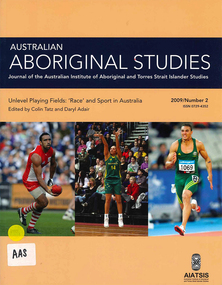
Periodical, Australian Institute of Aboriginal and Torres Strait Islander Studies, Australian Aboriginal studies : journal of the Australian Institute of Aboriginal and Torres Strait Islander Studies, 2009
... This reappraisal of the tour explores the centrality of racial ideology, racial science and racial power imbalances that enabled, created and shaped the tour. ...This reappraisal of the tour explores the centrality of racial ideology, racial science and racial power imbalances that enabled, created and shaped the tour. ...Darkness and a little light: ?Race? and sport in Australia Colin Tatz (AIATSIS & Australian National University) and Daryl Adair (University of Technology Sydney) Despite ?the wonderful and chaotic universe of clashing colors, temperaments and emotions, of brave deeds against odds seemingly insuperable?, sport is mixed with ?mean and shameful acts of pure skullduggery?, villainy, cowardice, depravity, rapaciousness and malice. Thus wrote celebrated American novelist Paul Gallico on the eve of the Second World War (Gallico 1938 [1988]:9-10). An acute enough observation about society in general, his farewell to sports writing also captures the ?clashing colors? in Australian sport. In this ?land of the fair go?, we look at the malice of racism in the arenas where, as custom might have it, one would least want or expect to find it. The history of the connection between sport, race and society - the long past, the recent past and the social present - is commonly dark and ugly but some light and decency are just becoming visible. Coming to terms: ?Race?, ethnicity, identity and Aboriginality in sport Colin Tatz (AIATSIS & Australian National University) Notions of genetic superiority have led to some of the world?s greatest human calamities. Just as social scientists thought that racial anthropology and biology had ended with the cataclysm of the Second World War, so some influential researchers and sports commentators have rekindled the pre-war debate about the muscular merits of ?races? in a new discipline that Nyborg (1994) calls the ?science of physicology?. The more recent realm of racial ?athletic genes?, especially within socially constructed black athletic communities, may intend no malice but this search for the keys to their success may well revive the old, discredited discourses. This critical commentary shows what can happen when some population geneticists and sports writers ignore history and when medical, biological and sporting doctrines deriving from ?race? are dislocated from any historical, geographic, cultural and social contexts. Understanding discourses about race, racism, ethnicity, otherness, identity and Aboriginality are essential if sense, or nonsense, is to be made of genetic/racial ?explanations? of sporting excellence. Between the two major wars boxing was, disproportionately, a Jewish sport; Kenyans and Ethiopians now ?own? middle- and long-distance running and Jamaicans the shorter events; South Koreans dominate women?s professional golf. This essay explores the various explanations put forward for such ?statistical domination?: genes, biochemistry, biomechanics, history, culture, social dynamics, the search for identity, alienation, need, chance, circumstances, and personal bent or aptitude. Traditional games of a timeless land: Play cultures in Aboriginal and Torres Strait Islander communities Ken Edwards (University of Southern Queensland) Sports history in Australia has focused almost entirely on modern, Eurocentric sports and has therefore largely ignored the multitude of unique pre- European games that are, or once were, played. The area of traditional games, especially those of Aboriginal and Torres Strait Islander peoples, is an important aspect of the cultural, social and historical experiences of Indigenous communities. These activities include customs of play that are normally not associated with European notions of competitive sport. Overall, this paper surveys research undertaken into traditional games among Indigenous Australians, as well as proposals for much needed further study in this area. Culture, ?race? and discrimination in the 1868 Aboriginal cricket tour of England David Sampson As a consequence of John Mulvaney?s important historical research, the Aboriginal cricket and performance tour of Britain in 1868 has in recent decades become established as perhaps the most famous of all public events in contact history involving Aborigines, white settlers and the British metropolis. Although recognition of its importance is welcome and significant, public commemorations of the tour have enveloped the tour in mythologies of cricket and nation. Such mythologies have obscured fundamental aspects of the tour that were inescapable racial and colonial realities of the Victorian era. This reappraisal of the tour explores the centrality of racial ideology, racial science and racial power imbalances that enabled, created and shaped the tour. By exploring beyond cricketing mythology, it restores the central importance of the spectacular performances of Aboriginal skills without which the tour would have been impossible. Such a reappraisal seeks to fully recognise the often trivialised non-cricketing expertise of all of the Aboriginal performers in 1868 for their achievement of pioneering their unique culture, skills and technologies to a mass international audience. Football, ?race? and resistance: The Darwin Football League, 1926?29 Matthew Stephen (Northern Territory Archive Service) Darwin was a diverse but deeply divided society in the early twentieth century. The Commonwealth Government introduced the Aboriginals Ordinance 1911 in the Northern Territory, instituting state surveillance, control and a racially segregated hierarchy of whites foremost, then Asians, ?Coloureds? (Aborigines and others of mixed descent) and, lastly, the so-called ?full-blood? Aborigines. Sport was important in scaffolding this stratification. Whites believed that sport was their private domain and strictly controlled non-white participation. Australian Rules football, established in Darwin from 1916, was the first sport in which ?Coloured? sportsmen challenged this domination. Football became a battleground for recognition, rights and identity for all groups. The ?Coloured? community embraced its team, Vesteys, which dominated the Northern Territory Football League (NTFL) in the 1920s. In 1926, amidst growing racial tension, the white-administered NTFL changed its constitution to exclude non-white players. In reaction, ?Coloured? and Chinese footballers formed their own competition - the Darwin Football League (DFL). The saga of that colour bar is an important chapter in Australia?s football history, yet it has faded from Darwin?s social memory and is almost unknown among historians. That picture - Nicky Winmar and the history of an image Matthew Klugman (Victoria University) and Gary Osmond (The University of Queensland) In April 1993 Australian Rules footballer Nicky Winmar responded to on-field racist abuse by lifting his jersey and pointing to his chest. The photographic image of that event is now famous as a response to racial abuse and has come to be seen as starting a movement against racism in football. The racial connotations in the image might seem a foregone conclusion: the power, appeal and dominant meaning of the photograph might appear to be self-evident. But neither the fame of the image nor its racial connotation was automatic. Through interviews with the photographers and analysis of the use of the image in the media, we explore how that picture came to be of such symbolic importance, and how it has remained something to be re-shown and emulated. Rather than analyse the image as a photograph or work of art, we uncover some of its early history and explore the debates that continue to swirl around its purpose and meaning. We also draw attention to the way the careful study of photographs might enhance the study of sport, race and racism. ?She?s not one of us?: Cathy Freeman and the place of Aboriginal people in Australian national culture Toni Bruce (University of Waikato) and Emma Wensing (Independent scholar) The Sydney 2000 Olympic Games generated a national media celebration of Aboriginal 400 metre runner Cathy Freeman. The construction of Freeman as the symbol of national reconciliation was evident in print and on television, the Internet and radio. In contrast to this celebration of Freeman, the letters to the editor sections of 11 major newspapers became sites for competing claims over what constitutes Australian identity and the place of Aboriginal people in national culture. We analyse this under-explored medium of opinion and discuss how the deep feelings evident in these letters, and the often vitriolic responses to them, illustrate some of the enduring racial tensions in Australian society. Sport, physical activity and urban Indigenous young people Alison Nelson (The University of Queensland) This paper challenges some of the commonly held assumptions and ?knowledges? about Indigenous young people and their engagement in physical activity. These include their ?natural? ability, and the use of sport as a panacea for health, education and behavioural issues. Data is presented from qualitative research undertaken with a group of 14 urban Indigenous young people with a view to ?speaking back? to these commentaries. This research draws on Critical Race Theory in order to make visible the taken-for-granted assumptions about Indigenous Australians made by the dominant white, Western culture. Multiple, shifting and complex identities were expressed in the young people?s articulation of the place and meaning of sport and physical activity in their lives. They both engaged in, and resisted, dominant Western discourses regarding representations of Indigenous people in sport. The paper gives voice to these young people in an attempt to disrupt and subvert hegemonic discourses. An unwanted corroboree: The politics of the New South Wales Aboriginal Rugby League Knockout Heidi Norman (University of Technology Sydney) The annual New South Wales Aboriginal Rugby League Knockout is so much more than a sporting event. Involving a high level of organisation, it is both a social and cultural coming together of diverse communities for a social and cultural experience considered ?bigger than Christmas?. As if the planning and logistics were not difficult enough, the rotating-venue Knockout has been beset, especially since the late 1980s and 1990s, by layers of opposition and open hostility based on ?race?: from country town newspapers, local town and shire councils, local business houses and, inevitably, the local police. A few towns have welcomed the event, seeing economic advantage and community good will for all. Commonly, the Aboriginal ?influx? of visitors and players - people perceived as ?strangers?, ?outsiders?, ?non-taxpayers? - provoked public fear about crime waves, violence and physical safety, requiring heavy policing. Without exception, these racist expectations were shown to be totally unfounded. Research report: Recent advances in digital audio recorder technology provide considerable advantages in terms of cost and portability for language workers.b&w photographs, colour photographs, tablessport and race, racism, cathy freeman, nicky winmar, rugby league, afl, athletics, cricket, digital audio recorders -
Victorian Aboriginal Corporation for Languages
Video, Richard Frankland, From Sand to Celluloid, 1996
... Touches on topics which include Black Deaths In Custody, family life, social interaction and social disadvantage, traditions and racial discrimination. No way to forget /? writer, director, Richard Frankland (11 min.) ...Touches on topics which include Black Deaths In Custody, family life, social interaction and social disadvantage, traditions and racial discrimination. No way to forget /? writer, director, Richard Frankland (11 min.) ...A compilation of 6 short films by Aboriginal filmakers dramatising various aspects of Aboriginal life in white Australia. Touches on topics which include Black Deaths In Custody, family life, social interaction and social disadvantage, traditions and racial discrimination. No way to forget /? writer, director, Richard Frankland (11 min.) Fly Peewee fly /? writer, director, Sally Riley (10 min.) Round up /? writer, director, Rima Tamou (16 min.) Two bob mermaid /? writer, director, Darlene Johnson (15 min.) Payback /? writer, director, Warwick Thornton (10 min.) Black man down /? writer, co-producer, Sam Watson ; director, Bill McCrow (11 min.) No way to forget /? writer, director, Richard Frankland (11 min.).videocassetteindigenous filmmakers, richard frankland, darlene johnson, sally riley, rima tamou, warwick thornton, australian film institute, afi -
 Ballarat Heritage Services
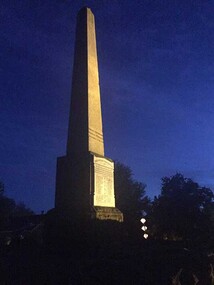
Photograph - Photograph - Colour, Burning of an Effigy of Pauline Hanson, 03 December 2016, 03/12/2016
... “While Immigration Minister Peter Dutton (burned in effigy at last year’s Eureka Dawn), has become the face of refugee detention cruelty, Pauline Hanson has become the face and voice of popular advocacy for racial discrimination. “We want the burning of Pauline in effigy to be seen as a repudiation of racism and attempts to associate the Eureka flag with racial discrimination and anti refugee and migrant policies. ...“While Immigration Minister Peter Dutton (burned in effigy at last year’s Eureka Dawn), has become the face of refugee detention cruelty, Pauline Hanson has become the face and voice of popular advocacy for racial discrimination. “We want the burning of Pauline in effigy to be seen as a repudiation of racism and attempts to associate the Eureka flag with racial discrimination and anti refugee and migrant policies. ...Media Release 29 January 2016 Advocate of Racism to burn at Eureka Dawn A cardboard effigy of Senator Pauline Hanson, will burn at the Ballarat Eureka Stockade Memorial next Eureka Dawn 3 December. For eight years now effigy burning has become an integral and flamboyant part of the annual 3 December Eureka remembrance, part of the Reclaim the Radical Spirit of the Eureka Rebellion program organised by Dr Joe Toscano, medical practitioner, broadcaster on Melbourne community radio 3CR and Australia's best known anarchist. Colour photographs of the burning of a cardboard effigy of Pauline Hanson at dawn on Eureka Day, 03 December 2016. Pauline Hanson was chosen as the effigy to be burnt by the Anarchist Media Alliance at Eureka Dawn because she was an advocate of racism. eureka stockade, anniversary, joe toscano, reclaim the radical spirit of the eureka rebellion, graeme dunstam, pauline hanson, effigy burning, pauline hanson effigy -
 Women's Art Register
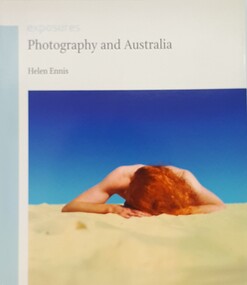
Book, Helen Ennis, Photography and Australia, 2007
... racial...Indigenous Australia Complements other material held in the Women's Art Register racial political social Brenda L. Croft Leah King-Smith Tracey Moffat Brook Andrew Destiny Deacon Rosemary Laing Olive Cotton Margaret Michaelis Ruth Maddison Carol Jerrems Fiona Hall Patricia Piccinni Jacky Redgate Anne Zahalka Pat Brassington Anne Ferran Visual and written documentation on photography in Australia and its importance. ...Visual and written documentation on photography in Australia and its importance.non-fictionVisual and written documentation on photography in Australia and its importance.racial, political, social, brenda l. croft, leah king-smith, tracey moffat, brook andrew, destiny deacon, rosemary laing, olive cotton, margaret michaelis, ruth maddison, carol jerrems, fiona hall, patricia piccinni, jacky redgate, anne zahalka, pat brassington, anne ferran -
![[1] Three Bears Porridge Flaked Oatmeal Bag (Front)](/media/collectors/510b3f7f023fd725b4cd51fe/items/683baf6c69688f11138d56ba/item-media/683bf711460ecdfee7105b40/item-fit-380x285.jpg?cb=6) Arapiles Historical Society
Arapiles Historical SocietyContainer - Roy SCHMIDT Collection - Cotton Flour Bags (3)
... The use of the name "Mammy" and the caricatured illustration draws on a now widely recognised and offensive racial stereotype originating from American minstrel culture, commonly used in product branding in the early-to-mid 20th century. ...The use of the name "Mammy" and the caricatured illustration draws on a now widely recognised and offensive racial stereotype originating from American minstrel culture, commonly used in product branding in the early-to-mid 20th century. ...[1] Three Bears Porridge Flaked Oatmeal Bag: This textile bag originates from Canadian Cereal Mills Ltd., which marketed "Three Bears" flaked oatmeal. Popular in the early 1900s to mid-century, this product combined functional packaging with a child-friendly incentive — a cut-out cloth doll. The practice of printing toys, games, or clothing patterns on flour or oat sacks was a common marketing strategy, encouraging reuse and appealing to families during times when thrift and creativity were essential, especially during the Depression and wartime years. The Three Bears brand played off the enduring popularity of children’s nursery tales, while the doll encouraged children (and parents) to reuse packaging creatively. This object captures a unique intersection of food marketing, household resourcefulness, and early 20th-century domestic life. [2] Mammy Self-Raising Flour Bag: This item is a mid-20th-century Australian flour bag, branded “Mammy Oven Puff”, produced by A. Mammy Products Pty Ltd in West Footscray, Victoria. The use of the name "Mammy" and the caricatured illustration draws on a now widely recognised and offensive racial stereotype originating from American minstrel culture, commonly used in product branding in the early-to-mid 20th century. While the bag reflects a specific period in Australian domestic and commercial packaging history, it also exemplifies racially insensitive advertising that would be considered inappropriate and harmful by today’s standards. Such items are preserved today in museum collections to help document past social attitudes, consumer culture, and the evolution of racial representation in advertising. [3] Bandung Blue Triangle Brand Flour Bag: This bag represents a mid-20th-century Australian flour export product, particularly aimed at international markets such as Indonesia (as indicated by "Bandung"). The “Blue Triangle Brand” was likely a registered trademark used by a Melbourne-based flour mill engaged in both local and overseas trade. The use of durable cloth bags for bulk flour was common prior to the widespread adoption of paper and plastic packaging. These bags were often reused domestically for household textiles, clothing patterns, or storage. The export reference (Bandung) underscores Australia's historical agricultural trade ties with Southeast Asia, especially in wheat and flour exports. – Roy SCHMIDT resided with his siblings Mabel and Jack at ‘Parklands’ 85 Lake Avenue Natimuk home of Heinrich Friederick ‘Heiny’ & Minna Christina SUDHOLZ nee LANGE and their children Louis, Sophie, Alma, Lena (Roy's Mother), Florence 'Florrie' and Edward ‘Ted’.[1] Three Bears Porridge Flaked Oatmeal Bag: A vintage cloth oatmeal bag printed with black ink on both sides. One side is branded with "Three Bears Porridge – Flaked Oatmeal", showing an image of three bears behind a gate, referencing the well-known “Goldilocks and the Three Bears” fairytale. The opposite side features a printed cut-out doll design, showing a young girl with curly hair holding a bouquet of flowers, intended to be sewn into a stuffed toy. Instructions note that the reverse side (the doll’s back) could be obtained from a second bag. The design combines product branding with a promotional activity for children, typical of early- to mid-20th-century grocery packaging aimed at reuse. [2] Mammy Self-Raising Flour Bag: A small vintage cloth flour bag with printed branding in faded red, blue, and black inks. The front of the bag features a central image of a caricatured smiling African American woman wearing a headscarf. The text is unevenly faded but legible in parts. The bag has a rectangular shape with an open top edge and signs of previous use, including creasing and some fraying at the corners. [3] Bandung Blue Triangle Brand Flour Bag: A large, rectangular vintage cloth flour bag made of cream-coloured calico or cotton. The front of the bag is printed in bold blue ink with branding and export information. It prominently features a large triangular logo reading “Blue Triangle Brand” and numerous lines of text in block and stylised fonts. The bag is open at the top with frayed edges, suggesting it was once machine-stitched shut and later opened.[1] Three Bears Porridge Flaked Oatmeal Bag: Front side (branding side): "THREE BEARS Porridge – FLAKED OATMEAL" "7 Lbs. Net." “Packed and guaranteed by Canadian Cereal Mills Ltd., Toronto” Reverse side (doll pattern): "This is the Front for Three Bears Cut-out Doll" "In order to complete this Doll it will be necessary to obtain the Back Design from another Bag of Three Bears Rolled Oats or Oatmeal." [2] Mammy Self-Raising Flour Bag: Main product name: “MAMMY OVEN PUFF SELF-RAISING FLOUR” Additional text: “The Only Creamed Flour” “Prepared with phosphate aerator” “A. MAMMY PRODUCTS PTY. LTD., Sunshine Rd., West Footscray. Phone: FW 7321” “7 LBS. NET” (near top edge, very faded) [3] Bandung Blue Triangle Brand Flour Bag: The bag is printed with the following: “10270” “G.W.C | H.L” “BANDUNG” “BEST AUSTRALIAN” “BLUE TRIANGLE BRAND” (inside the triangle logo) “GROWER & GRINDERS” (curved around the logo) “Patent Roller” “MELBOURNE” “FLOUR” “50 LBS. GROSS WHEN PACKED” These inscriptions indicate that this flour bag was manufactured in Melbourne, Australia, and was likely exported to Bandung, Indonesia.farm equipment, flour, milling, oats, mammy, bandung blue, schmidt, sudholz, parklands -
 The Beechworth Burke Museum
Audio - Oral History, Jennifer Williams, Mr Alfred Spencer, 17th February 2000
... He briefly discusses racial tensions between Chinese migrants and other miners on the goldfields. ...He briefly discusses racial tensions between Chinese migrants and other miners on the goldfields. ...Alfred 'Alf' Spencer grew up on a dairy farm run by his mother, west south west of Beechworth 'down Robertson Road', and was very well connected to the wider Beechworth area. In this oral history, he recalls his time driving the milk cart around Beechworth as well as the time he spent buying lollies and seeing the pictures. He talks extensively about working as a butcher at his brother's store, including how the butchers interacted with the rest of the town and the staff, as well as his time constructing roads and the pipe network of Beechworth. He discusses the dynamics of other workplaces around Beechworth, describing issues with how the local tannery treated its workers as well as how post-war migrants integrated across the town. He briefly discusses racial tensions between Chinese migrants and other miners on the goldfields. He also discusses the experience of health care in a rural area during his childhood. This oral history recording was part of a project conducted by Jennifer Williams in the year 2000 to capture the everyday life and struggles in Beechworth during the twentieth century. This project involved recording seventy oral histories on cassette tapes of local Beechworth residents which were then published in a book titled: Listen to what they say: voices of twentieth century Beechworth. These cassette tapes were digitised in July 2021 with funds made available by the Friends of the Burke.Alfred Spencer's oral history of his life around Beechworth during the 20th century is historically and socially significant to the cultural history of the region and Victoria. There is a lot of detail about workplaces, their staff, and how the resources of the town interacted. He explores themes that are important to Victorian history, such as migration. This oral history account is socially and historically significant as it is a part of a broader collection of interviews conducted by Jennifer Williams which were published in the book 'Listen to what they say: voices of twentieth-century Beechworth.' While the township of Beechworth is known for its history as a gold rush town, these accounts provide a unique insight into the day-to-day life of the town's residents during the 20th century, many of which will have now been lost if they had not been preserved.This is a digital copy of a recording that was originally captured on a cassette tape. The cassette tape is black with a horizontal white strip and is currently stored in a clear flat plastic rectangular container. It holds up to 40 minutes of recordings on each side.Mr Alfred Spencer /listen to what they say, beechworth, oral history, burke museum, spencer, alfred spencer, migration, post-war migration, goldfields, health care, farm, farming, dairy farm, black springs, butchers, meat processing, butcher, road, road network, labour relations -
 Victorian Aboriginal Corporation for Languages
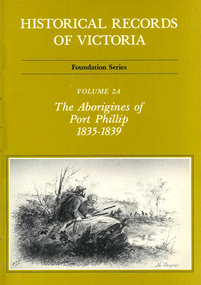
Book, Ian Macfarlane, Historical records of Victoria : foundation series : volume 2A : the Aborigines of Port Phillip 1835-1839, 1982
... Proposals to appoint protectors of aborigines Ch. 2. Racial conflict in the year of official settlement at Port Phillip Ch. 3. ...Proposals to appoint protectors of aborigines Ch. 2. Racial conflict in the year of official settlement at Port Phillip Ch. 3. ...Reproductions of various transactions and reports dealing with Aboriginal people in Port Phillip in the period 1835-39, beginning with some of the earliest reports and tracing the evolution of government interaction and policy towards Aborigines in the 19th century. Covers mission work, government reports, the native police, conflicts with squatters, with numerous illustrations and original reports. Contents: Part I, Evolution of British policy Ch. 1. Proposals to appoint protectors of aborigines Ch. 2. Racial conflict in the year of official settlement at Port Phillip Ch. 3. House of Commons Select Committee on Aborigines Part II, The Wesleyan Mission at Buntingdale Ch. 4. Establishment and early operations of the Wesleyan mission Part III, The Government acts Ch. 5. Establishing the first government mission 1835-7 Ch. 6. Food and clothing for the Aborigines Ch. 7. Punishment of Aborigines found drunk, 1836-8 Ch. 8. Operations of the government mission, November 1837 to March 1839 Ch. 9. First attempt to form a native police corps Part IV, Growing conflict with squatters, 1837-8 Ch. 10. The disappearance of Gellibrand and Hesse Ch. 11. Attacks in the Western District Ch. 12. Attacks on the overland routes to Port Phillip Ch. 13. Evolution of policy in Sydney, 1838.b&w illustrations, b&w photographs, tables, document reproductionsvictorian history, colonisation, justice system -
The Beechworth Burke Museum
Audio - Oral History, Jennifer Williams, Mrs Vanessa McDonald, 9 November 2000
... Like other early Victorian mining settlements, Stanley was a hotbed of political and racial tensions during the gold rush. One side of the Nine Mile Creek was known as 'Little Scotland’, the other, 'Little Ireland'. ...Like other early Victorian mining settlements, Stanley was a hotbed of political and racial tensions during the gold rush. One side of the Nine Mile Creek was known as 'Little Scotland’, the other, 'Little Ireland'. ...Mrs. Vanessa McDonald was born in Beechworth in 1917. Christened, Agnes Bertha Collins, Vanessa changed her name in 1960. Mrs. McDonald's family's connection with gold mining in the district reach back to the first of Beechworth's gold rushes, when her great grandfather, a Dutchman who adopted the name Charles Collins, arrived in 1851-1852. Mrs. McDonald spent her childhood in the isolated hamlet of Stanley, in the area known as 'Little Scotland', where she recalls helping her mother to raise younger siblings, picking apples and walnuts on the family farm, and roaming the hills for wildflowers. As a young woman Mrs. McDonald attended religious and social gatherings in the local community. In 1940 she went to Melbourne to work as a mothercraft nurse during the Second World War. She met her husband at a Beechworth football match and was married at the Stanley Methodist Church in 1941. The gold diggings known as the 'Nine Mile' became the hamlet of Stanley, after the British Prime Minister, Lord Stanley, in 1858. By the late 1850s, Stanley boasted schools, an athenaeum, a church, a weekly newspaper and several hotels and other civic infrastructure to cater for a growing population. The area attracted large numbers of Chinese miners, whose presence was frequently resisted. Like other early Victorian mining settlements, Stanley was a hotbed of political and racial tensions during the gold rush. One side of the Nine Mile Creek was known as 'Little Scotland’, the other, 'Little Ireland'. A number of Christian denominations built congregations and churches in Stanley, including the Church of England, Methodist Church, the Catholic Church, and Presbyterian Church. Stanley became part of the United Shire of Beechworth in 1871. By 1880 timber was being cut and two sawmills were established by 1887. River-dredged gold mining consumed vast amounts of timber from the forests in the area, and in 1931 the first of several softwood plantations began. This oral history recording was part of a project conducted by Jennifer Williams in the year 2000 to capture the everyday life and struggles in Beechworth during the twentieth century. This project involved recording seventy oral histories on cassette tapes of local Beechworth residents which were then published in a book titled: 'Listen to what they say: voices of twentieth century Beechworth'. These cassette tapes were digitised in July 2021 with funds made available by the Friends of the Burke.Following the decline in the mining and associated industries during the early-mid-twentieth century, the Beechworth district experienced a period of general economic decline. On the east side of the Dingle Range, Mrs. McDonald's father, William Henry Collins, felled timber and the family were pioneer apple orchardists. The establishment of apple orchards in Stanley reflects changes to how land was used and contributes to our understanding of the historical development of rural communities following the gold rush. Mrs. McDonald's recollections are significant for understanding family and social life in a small rural town in years leading up to the Great Depression and prior to the Second World War. This oral history recording may be compared with other oral histories and items in the Burke Museum's collection. This oral history account is socially and historically significant as it is a part of a broader collection of interviews conducted by Jennifer Williams which were published in the book 'Listen to what they say: voices of twentieth-century Beechworth.' While the township of Beechworth is known for its history as a gold rush town, these accounts provide a unique insight into the day-to-day life of the town's residents during the 20th century, many of which will have now been lost if they had not been preserved.This is a digital copy of a recording that was originally captured on a cassette tape. The cassette tape is black with a horizontal white strip and is currently stored in a clear flat plastic rectangular container. It holds up 40 minutes of recordings on each side.Mrs Vanessa McDonald /listen to what they say, beechworth, oral history, burke museum, emigration, gold rush immigration, victorian gold rush, mining families, apple orchard, forestry, forest plantation, little scotland, stanley, twentieth century history, regional australia, rural australia, farming, harvest festival, great depression, dingle range, the nine mile, australian wildflowers, high country wildflowers, mothercraft nurse, rural and regional women, social history, collins, mrs. vanessa mcdonald, building community life, shaping cultural and creative life, fruit growers, family history, changes to land use in regional victoria -
 Bendigo Historical Society Inc.
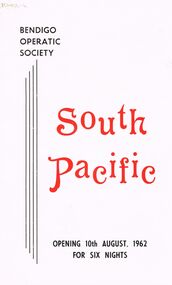
Document - VIKKI SPICER COLLECTION: BENDIGO OPERATIC SOCIETY PROGRAMME BOOKLET, 10th August, 1962
... A secondary romance, between a U.S. lieutenant and a young Tonkinese woman, explores his fears of the social consequences should he marry his Asian sweetheart. The issue of racial prejudice is candidly explored throughout the musical, most controversially in the lieutenant's song, "You've Got to Be Carefully Taught". ...A secondary romance, between a U.S. lieutenant and a young Tonkinese woman, explores his fears of the social consequences should he marry his Asian sweetheart. The issue of racial prejudice is candidly explored throughout the musical, most controversially in the lieutenant's song, "You've Got to Be Carefully Taught". ...Bendigo Operatic Society White Paper Cover Black & White Text Programme Booklet Production 'South Pacific' Opening 10th August 1962 for six nights. Does not state where performed. With the permission of Chappells Ltd Bendigo Operatic Society presents 'South Pacific.' A Beatrice Oakley Production. Music & Lyrics Rogers & Hammerstein II. Book Hammerstein II & Joshua Logan. Musical Director Mr Max O' Loghlen. South Pacific's plot is based on James A. Michener's Pulitzer Prize-winning 1947 book Tales of the South Pacific and combines elements of several of those stories. Rodgers and Hammerstein believed they could write a musical based on Michener's work that would be financially successful and, at the same time, would send a strong progressive message on racism. South Pacific focuses on an American nurse stationed on a South Pacific island during World War II, who falls in love with a middle-aged expatriate French plantation owner but struggles to accept his mixed-race children. A secondary romance, between a U.S. lieutenant and a young Tonkinese woman, explores his fears of the social consequences should he marry his Asian sweetheart. The issue of racial prejudice is candidly explored throughout the musical, most controversially in the lieutenant's song, "You've Got to Be Carefully Taught". Supporting characters, including a comic petty officer and the Tonkinese girl's mother, help to tie the stories together. Because he lacked military knowledge, Hammerstein had difficulty writing that part of the script; the director of the original production, Logan, assisted him and received credit as co-writer of the book. Cast: Ray Austin, John Boromeo, Ruth Lyon, Carol Crane, Roger Sprawson, Patricia McCracken, John Stephens, Patricia Lyon, Kenneth Nicholls, Victor White, Alfred Annison, Brain Whetstone, Fred Trewarne, Peter Houston, John Gow, Ian Beckwith, Gerry Gleeson, John Reed, Roy Cronin, Reginald Boromeo, Len Carr, Denis Cremen, Daryl Walker, George Steele, Barry Washington, Joan Crane, Dawn Beckwith, Annette Wilson, Emily Houston, Jill Angwin, Carole McKenzie, Greta Smyth, Rhonda Scott, Lorraine Brennan, Mary Speedy, Katherine Alexander, Bronwen Townsend, Ferd. Lorenz. Songs Include: ''Bali Hai'', ''I'm in Love with a Wonderful Guy,'' ''Younger Than Springtime,'' ''This Nearly Was Mine,'' '' Some Enchanted Evening,'' ''There is Nothing Like a Dame,'' ''I'm Gonna Wash That Man Right Out of My Hair,'' and many others.Arthur Hocking Press.clubs and associations, theatre, bendigo operatic society -
 Uniting Church Archives - Synod of Victoria
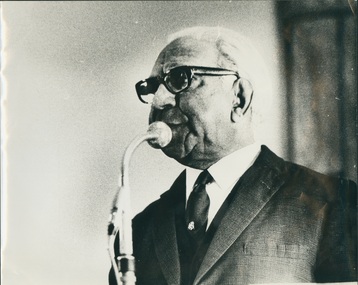
B&W photo of another photo or newspaper photograph of Pastor Sir Douglas Nicholls, Undated
... He faced stiff competition from those who wanted to best the noted Melbourne black footballer, the crowd adding racial abuse. A far better footballer than boxer, he copped some punishment. ...He faced stiff competition from those who wanted to best the noted Melbourne black footballer, the crowd adding racial abuse. A far better footballer than boxer, he copped some punishment. ...Sir Douglas Ralph Nicholls (1906-1988), footballer, pastor, activist and governor, was born on 9 December 1906 at Cummeragunja Aboriginal mission, New South Wales, fifth child of Herbert Nicholls, seasonal worker, and his wife Florence, née Atkinson. Doug grew up at Cummeragunja, on the Murray River near Barmah, in its golden years of Aboriginal autonomy. Thomas Shadrach James gave him and other Yorta Yorta children a sound primary education, reinforcing the pride and self-assurance gained from their parents. As Doug grew, so too did the powers of the State’s Aboriginal Protection Board. Doug’s elder sister Hilda was removed about 1915. When Doug reached 14, he was moved off under the Aborigines Protection Act (1909) to find work. He took a job with dredging teams constructing levees on the Murray. Like other youths in the region Nicholls played Australian rules football, emulating kinsmen who had won local premierships since the 1890s. Doug and his brother Herbert (‘Dowie’) played with Tongala in the mid-1920s. Melbourne football beckoned, Doug trying out unsuccessfully for Carlton in 1927. He signed with the Northcote Victorian Football Association team, despite his nervousness about his Aboriginality, and was given a job with Northcote City Council. ‘Dowie’ joined him for a season. Doug was short at 5 ft 2 ins (158 cm), but muscular and lightning fast. He competed regularly during a boom in professional running, winning many heat and place prizes. In 1929 he won the Nyah and Warracknabeal gifts, earning a sash and £100 in each, together with a case of cutlery in the latter. Using his speed on the wing for Northcote, he produced great spring and agility from his compact body. The Sporting Globe reported in 1929 that ‘he flashes through packs of big men, whisks around small men . . . and attempts marks at the back of any six-footer’. In front-on clashes he was flattened only to rise again. The sole Aborigine in the VFA, he was known affectionately as the ‘flying Abo’ but called worse by his opponents’ barrackers. He competed for five seasons, being named ‘best and fairest’ twice, appearing in three association grand finals and winning in 1929. Keen to earn more than a seasonal wage, in 1931 Nicholls accepted a three-year contract with Jimmy Sharman’s travelling boxing show. The bouts matched opposites, local against tent boxer, white against black, and sometimes men of different sizes. He faced stiff competition from those who wanted to best the noted Melbourne black footballer, the crowd adding racial abuse. A far better footballer than boxer, he copped some punishment. Fighting in the Melbourne Stadium in December 1931, he was described by Truth as ‘slow and awkward’, but packing a ‘good wallop’. In 1932 Sharman, who treated his boxers fairly, released Nicholls to join the Fitzroy Victorian Football League team, which agreed to employ him as its groundsman. He played fifty-four games for Fitzroy over six seasons until knee trouble forced him out in 1937. Winning cups in 1934 and 1935, he played alongside Haydn Bunton and Wilfred (‘Chicken’) Smallhorn. Grand finals eluded him but he represented Victoria twice. Following his mother’s death, Nicholls revisited the Church of Christ chapel in Northcote, where they had worshipped together. On 17 July 1932 he experienced a conversion. He was soon baptised and witnessed openly, leading his fellow footballers to occasional church parades. Nicholls exhibited leadership qualities. William Cooper, founder of the Australian Aborigines’ League and Nicholls’ Yorta Yorta kinsman and fellow Christian, encouraged the young footballer. In February 1935 Cooper, Nicholls and others lobbied Thomas Paterson, the Commonwealth minister for the interior, over the need for Federal control of Aboriginal affairs. Nicholls attended the Day of Mourning protest for Aborigines held in Sydney on 26 January 1938, declaring: ‘after 150 years our people are still influenced and bossed by white people. I know we can proudly hold our own with others if given the chance’. When Cooper retired in November 1940 Nicholls became secretary of the AAL. On 2 June 1941 Nicholls enlisted in the Citizen Military Forces. He trained at Seymour and Bonegilla before being posted to the 29th Battalion. As Major Frank Corr’s batman, he was popular with other soldiers who tolerated his preaching and Bible reading. His army service was brief, however, and he was discharged in Melbourne on compassionate grounds on 22 January 1942. His biographer claimed that the Fitzroy police requested his return to mediate in the racial tensions developing between servicemen and the mostly respectable Aboriginal families living in crowded and dilapidated Fitzroy housing; Aboriginal people maintain that they requested his release. Nicholls began welfare work and religious services from an Aboriginal home in Gertrude Street, Fitzroy. In April 1942, ‘Dowie’ died of road accident trauma, leaving his wife, Gladys, née Bux, and three children. On 26 December 1942 at Moama Methodist Church, New South Wales, Nicholls married her, a caring gesture which developed into a loving partnership. In January 1943 he initiated ‘Aboriginal Sunday’, featuring a gum leaf orchestra and choir. By 1955 this service had moved to July and later evolved into National Aborigines and Islanders Day Observance Committee (NAIDOC) week. Ordained a Churches of Christ pastor in 1945, Nicholls conducted a vigorous ministry from a chapel in Gore Street, Fitzroy. His work survived on donations, a small honorarium, and his employment as team coach (1947) and curator at the Northcote Football Ground. In the 1950s Gladys established grocery and opportunity shops to earn income and provide services. Their house soon overflowed with people in need or visitors to Melbourne. Nicholls also hosted inspiring African American visitors such as the pianist Winifred Attwell and the singer Harry Belafonte. His ministry extended to Aboriginal country communities. Gladys taught Sunday school, undertook endless fund-raising and welfare work beside her husband, and became his greatest supporter and financial manager. They formed an Aboriginal Girls’ Hostel in 1956, for which they acted as house parents, and bought holiday units for Aborigines at Queenscliff. Persistently advocating Aboriginal rights, Nicholls protested about the impact of the Woomera rocket range on the people of the Warburton Ranges, co-ordinated the production of a concert, Out of the Dark, scripted by Jean Campbell, to rectify the omission of Aborigines from Victoria’s Commonwealth jubilee celebrations, and criticised the Victorian Aboriginal Protection Board. In 1957 when the board was transformed into the Aborigines’ Welfare Board, he and Harold Blair were appointed as Aboriginal representatives. Maintaining the stance of a political moderate, he did not bear grudges and sought to build bridges between black and white. He co-operated with any group that aided the cause, including the Council of Aboriginal Rights, whose executive were members of the Communist Party of Australia. This association attracted the attention of the Australian Security Intelligence Organization, which in 1957 began to keep a file on Nicholls. In May 1957 Nicholls formed the Victorian Aborigines Advancement League with Doris Blackburn and Gordon Bryant, a Federal parliamentarian. As its paid field officer and spokesman, Nicholls contested assimilation policies and used film to raise awareness of issues. When the Welfare Board attempted to close Lake Tyers reserve, Gippsland, he resigned in disgust and led a protest march on parliament in May 1963. The AAL also petitioned the United Nations on land rights in June, perhaps the first indigenous body to do so. He argued for new premises at 58 Cunningham Street, Northcote, opened in 1966 as the ‘Doug Nicholls Centre’. In 1958 Nicholls was a foundation member of the Federal Council for Aboriginal Advancement (Federal Council for the Advancement of Aboriginal and Torres Strait Islanders after 1964), which he served as national field officer (1961) and Victorian secretary (1962-63). While an innovator in tactics, he was alarmed by the influence of confrontational ‘black power’ politics in the AAL and resigned as a director amid turmoil on this issue in 1969, claiming the concept was a ‘bitter word’, not needed in Australia. Similar tensions in FCAATSI led him to join with Kath Walker (Oodgeroo Noonuccal) in establishing the short-lived National Tribal Council as an alternative forum. As the AAL leadership moderated their stance, he returned as president (1969-74) of the new all-Aboriginal organisation. He was also a keen patron of the National Aboriginal Sports Foundation, founded in 1969. Many honours were conferred on Nicholls: he was appointed MBE (1957) and OBE (1968) and knighted (1972). In 1962 he was named Victorian ‘Father of the Year’ and the State’s second Aboriginal justice of the peace. Crowned Melbourne’s 1973 King of Moomba, he was declared Bapu Mamus (a Torres Strait term for ‘headman’) by the NTC. On 1 December 1976 Sir Douglas was appointed Governor of South Australia, but his health deteriorated within weeks, making it difficult for him to perform his official duties. In March 1977 he hosted Queen Elizabeth during her royal tour and was appointed KCVO. He relinquished his governorship on 30 April 1977 following a stroke. Ill health continued to dog him during retirement, but he played his Nelson Eddy records, enjoyed his expanding family, and when able, ministered to the Aboriginal Church at the League’s premises. Sir Douglas Nicholls died on 4 June 1988 at Mooroopna, predeceased (1981) by his wife and survived by his five children. He was given a state funeral and buried in tribal ground at Cummeragunja cemetery. Among the many tributes to him are an oval at Northcote, handed to the AAL in 1982, a Canberra suburb gazetted in 1991, and a fellowship for Indigenous leadership established in 2003, all in his name, and a statue of Sir Doug and Lady Nicholls by Louis Laumen, unveiled in 2007 in Parliament Gardens, Melbourne. Sir Douglas Nicholls is shown speaking at a microphone; head and shoulders; dressed in a suit.Pastor Douglas Nicholls -
 Melbourne Tram Museum
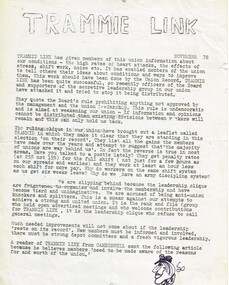
Newsletter, Tramways rank and file group, "Trammie Link", 1978 - 1982 and 1991 and 1992
... Amalgamation was a major push of the Hawke - Keating Government. .14 - March 1992 - supportive of Jim Harper, dismissive of Lou DiGregorio, Union executive, union amalgamation, cross linking of tram routes, racial discrimination within the PTC, Kew Depot, ACTU. ...Amalgamation was a major push of the Hawke - Keating Government. .14 - March 1992 - supportive of Jim Harper, dismissive of Lou DiGregorio, Union executive, union amalgamation, cross linking of tram routes, racial discrimination within the PTC, Kew Depot, ACTU. ...Set of 14 duplicated newsletters printed on coloured quarto or foolscap duplicated paper, "Trammie Link" .1 - November 1978 - 1 quarto sheet - complaining about the lack of union leadership - published by a "tramways rank and file group" .2 - March 1979 - 4 sheets - training, shift work, Burke Road tram, route 72 tram, Gardiner, lifeguards, uniforms. .3 - April 1979 - 4 sheets - disciplinary panel, rosters, Camberwell depot, route 72, buses, North Fitzroy, Doncaster, Clifton Hill, Z class cars. .4 - May 1979 - 4 sheets - discipline, lifeguards, bus safety, union issues. .5 - June 1979 - 3 sheets - politics and unions, Preston depot, Camberwell depot, wage indexation, union matters, finance for public transport, Tramway Record. .6 - August 1979 - 10 pages- Preston Depot, item written by Jim Harper, public transport and government, hook turns, union meetings, women, ACTU, wages, shift work, rosters, depots, wage indexation, shift lengths. .7 - June 1980? - two pages - undated - Service cuts at North Fitzroy, depot committees, news from depots, and note re a meeting on Monday 7 July. .8 - July 1979? - 4 pages - strikes, union campaigns, depot management, industrial issues, discipline, depot facilities. .9 - Sep. 1980 - 3 pages - Lonie report, buses, closure, public transport, union, 35 hour week, unions. .10 - Oct. 1980 - 4 pages - union elections, industrial campaigns, 35 hour week, Lonie repot, public transport. .11 - Oct. 1982 - 3 pages - Preston workshops and new trams, new trams, W class trams, accidents. .12 - Undated - 2 pages about Paul Krutulis - a scab or an Agent Provocateur - see https://www.anu.edu.au/polsci/marx/interventions/years/11revival.htm - accessed 30-8-2016. - Extracted are the 4th and 5th paragraph below which give a bit of a background. .13 - July 1991 - 4 pages - open letter to Jim Harper re union Amalgamation, rank file view, what it would mean to workers - a negative view. Amalgamation was a major push of the Hawke - Keating Government. .14 - March 1992 - supportive of Jim Harper, dismissive of Lou DiGregorio, Union executive, union amalgamation, cross linking of tram routes, racial discrimination within the PTC, Kew Depot, ACTU. Lists the rank and file committee - see key associations. Latham’s frustrations were shared by several would-be heroes in Victoria. In 1977 Paul Krutulis gained an exemption from union membership from the Arbitration Commission as a conscientious objector, only to find that tramway workers at Kew planned to stop work as soon as he appeared. Commissioner Cohen then recommended his dismissal, saying she “had to deal with the reality of the situation.” Krutulis later became president of a group called People Against Communism, before being murdered in September. Thus Krutulis departed the scene to be followed in early 1978 by motor mechanic Jack Kane, who had crossed a picket line at a Melbourne City Council depot. The AMWU forced the Council to sack him before it would end the strike. In September of the same year, Barbara Biggs succeeded in provoking a confrontation in the tramways where Krutulis had failed, by refusing to join the union and prompting 100 unionists at Brunswick depot to go on strike. The union executive had arranged token action confined to this depot, but the members wanted more. The strike spread to Preston, then 2,000 trammies at a mass meeting voted for an indefinite strike amidst “rowdy outbursts”. When Biggs complained at being excluded from the meeting a conductress told her, “We should have let you in, love. You would have been torn to pieces.” Paul was murdered by his brother George in Sydney - see the Age 29/11/1977, but there seems to be some conspiracy theories abounding as well.Handwritten note / letter from Chris Jacobson.trams, tramways, unions, training, shifts, uniforms, route 75, gardiner, light rail, camberwell, z class, buses, discipline, tramway record, preston, north fitzroy, services, strike, depots, discipline, lonie report, public transport, preston workshops, rtbu, actu, ptc -
 Sunshine and District Historical Society Incorporated
Archive - Aboriginal First Nation and Archaelogy
... Newspaper Article Brimbank Independent 6 May 1997 Aboriginal reconciliation meeting at St Albans|Typed Letter 8 June 1982 Victoria Archaelogical Survey|Typed Letter 10 June 1982 Survey of Archaelogical Sites in the Melbourne Metropolitan Area|Newspaper Article Herald Sun 18 September 1994 Before the white man|Newspaper Article Advocate 30 June 1999 We re rockin on Rock of Ages - Volcanic rock from the banks of the Kororoit Creek|Newspaper Article Advocate 20 June 2000 History revealed Aboriginal artefacts on a West Sunshine site|Typed Report First Residents of Melbourne's Western Region by Gary Presland|Brochure First Residents of Melbourne's Western Region by Gary Presland|Flyer The Melbourne and Metropolitan Archaeological Survey|Flyer John Bateman and the Aborigines|Flyer and Time A Celebration of Victoria's Submerged Archaelogical Heritage|Flyer Aborigines in the Gellibrand Hill area|Program 9 Octoberr 1981 Archaelogy|Handmade Map 1997 Brimbank Dreamtime Festival 22nd March 1997 - Map of Festival Layout at Brimbank Park|Newspaper Article Advocate 20 April 2013 Call for leaders to take a stand|Typed Letter 2010 Preliminary Report on Aboriginal Artefacts found in Albion and Ardeer by Robert Jackson|Brimbank Together Yes Acknowledging our history embracing our future poster - Use by Brimbank Council at The Hunt Club Community Centre|Newspaper Article Weekly Times 2 July 2002 A cultural experience for students Maribyrnong Primary School|Newspaper Article Living Museum 10 October 2001 Project forges links between cultures|The Advocate 20th April - Call for leaders to take a stand Colleen Marion|Booklet The Voice to Parliament|Booklet The Voice to Parliament Your Questions answered|Brochure Yes23 It's time to recognise Aboriginal and Torres Strait Islander Peoples in the Consititution throug a voice information sheets|Your official referendum booklet|Flyer How to vote yes campaign cards|Newspaper Article Herald Sun 15 October 2023 Time to Unite after the referendum defeat|Newspaper Article Herald Sun 16 October 2023 How Australia Voted|Brochure Brimbank council wants a better future for Aboriginal and Torres Strait Islander people|Brochure council for Aboriginal Reconciliation Working Together|Email La Trobe University Branch 4 March 2001|Typed Letter 13 March 1991 The Aboriginal Programme Exchange|Typed Letter 20 April 2000 Union of Australian Women|Typed Letter August 2000 Union of Australian Women Newsletter|Magazine Dissent Spring 2000 Aborigines reconciliation racial prejudice|Brochure Talking Together Women and Reconciliation|Brochure A National Action Network|Brochure High Court Decision on Native Title|Brochure Running Discussion Groups|Brochure Dealing with the Media|Brochure Contacts and Resources|Program The Western Metropolitan Region NAIDOC Program 2007|Newspaper Article The Age 25 May 1991 The Jawoyns troubled dreaming|Newsletter AEQUA Equal Employment Opportunity Newsletter 12 August 1981 Aboriginal employment in the APS on the up|Photocopy of Photograph Off Opie Road near Brachnell Place|Brochure Brimbank News Issue 10 2023 Be Bold Festival 7 October 2023|Typed Notes Uluru Statement from the Heart|Newspaper Article The Age 18 January 2001 William Barak|Newspaper Article The Star 17th October 2006 Special day for youth Karen Jackson|Newspaper Article Lalor Star March 1980 Aboriginal Treaty|Typed Letter Womens International Leagure for Peace and Freedom November 1979|Newspaper Article The Age 17 April 1997 Rednecks using Wik debate to grab new rights|Flyer Support Workers Claims for Stolen Wages and Return the Stolen wages for Workers and their families and Support Wage Justice Return the Stolen Wages|Handwritten Letter from Leo Prestia 27 January|List of Aboriginal Organisatons February 2004|Newspaper Article A Saturday Reflection|Postcard Pitchi Richi Sanctuary Alice Springs|Postcard Pitchi Richi Sanctuary Alice Spring|Invitation The Mayor and Councillors of Moreland City Council Connections Land and people|Notes Address Selina Aborignes|Booklet Recognition The Way forward An Issues paper from the Ausralian Catholic Social Justice Council|Newspaper Article The Age 21 January 1980 Signs of ancient man found in threatened valley|Form Australians for Native title reconciliation|Booklet Vic Uni News June 1997 Jindi woraback joining together|Newspaper Article The Age 17 April 1997 Black network hears Wik plan|Booklet Australian Institute for a Just Sustainable Peaceful Future Native Title Implications for Land management April 1997 Discussion Paper Number 11|Typed Notes Parliament of Australia Department of the Parliamentary Library current Information Digest Education and Welfare 14 January 1973 Aborigines Government Policy|Koori music and the Multicultural choir 13 July|Typed Notes 4 February 2004|Flyer State of Shock A new film by David Bradbury|Newspaper Article 21 October 1997 The Age Metro Arts and Life Heritage voting for a Trust you can trust6|Typed Letter from Parliament of Australia The Senate Hon Margaret Reynolds 15 September 1997 Native title Amendment bill 1997|Typed notes What are the International implications of Australias proposed legislative response to the Wik decision 16 May 1997|Newspaper Article The Age 11 October 1980 CRA and the Aborigines|Newspaper Article The Age 27 October 1980 Lost languages of the Aborigine|Program Western Metropolitan Region NAIDOC Committee 6 October 2004|Typed Notes How the English Language is used to put Aborigines down Deny us rights or Is Employed as a Political Tool Against Us|Flyer Australias for Reconciliation Study Circle The Footscray Community Arts Centre|Newspaper Article Weekly Times 4 December 2001 Smoking marks opening|Flyer Save The Racial Discrimination Act The Law for All of Us|Flyer Freedom fund for 1988 Dont Celebrate 1988 White Australia Has a Black History|Typed Notes 4 May 1997 Area Meeting on Aboriginal Reconciliation 20 May 1997 Why Reconciliation|Newspaper Article Sunday Press 17 July 1988 Hes black hes white and hes Browned off|Handwritten list Morning Tea with Yolande Klempprier 5 December 1979|Typed Notes Interim Consultative Committee Western Region Community Legal Centre|Brochure Aboriginal Myths and Legends from the Goldfields to the South West of Western Australia|Brochure Messagestick Conserve or Destroy May 1980 Voume 5 No 1|Brochure Aboringinal Women's Task Force "We need to know what you think"|Newspaper Article The Age 27th February 1980 Aboriginal skeleton found by workmen Barries Rd Melton|Newspaper Article 18th September 1985 Only maternal instricts have saved Aboriginal race from destruction says Hollows|Newspaper Article Star Weekly 26th March 2024 New Indigenous name for Sydenham Park "Yaluk barring Park"|Newspaper Article Star Weekly 30th July 2024 - New name for park|Newspaper Artilce 9th January 2024 Abandoning January 26 - Brimbank Council will no longer hold citizenship ceremonies on January 26|Newspaper Article Star Weekly 14th July 2026 Page 14 - Celebrating NAIDOC Week|Newspaper Article Star Weekly 14th July 2026 Page 3 - Brimbank Council votes to not join native title proceedings...Aborigine Aboriginal First Nation Newspaper Article Brimbank Independent 6 May 1997 Aboriginal reconciliation meeting at St Albans|Typed Letter 8 June 1982 Victoria Archaelogical Survey|Typed Letter 10 June 1982 Survey of Archaelogical Sites in the Melbourne Metropolitan Area|Newspaper Article Herald Sun 18 September 1994 Before the white man|Newspaper Article Advocate 30 June 1999 We re rockin on Rock of Ages - Volcanic rock from the banks of the Kororoit Creek|Newspaper Article Advocate 20 June 2000 History revealed Aboriginal artefacts on a West Sunshine site|Typed Report First Residents of Melbourne's Western Region by Gary Presland|Brochure First Residents of Melbourne's Western Region by Gary Presland|Flyer The Melbourne and Metropolitan Archaeological Survey|Flyer John Bateman and the Aborigines|Flyer and Time A Celebration of Victoria's Submerged Archaelogical Heritage|Flyer Aborigines in the Gellibrand Hill area|Program 9 Octoberr 1981 Archaelogy|Handmade Map 1997 Brimbank Dreamtime Festival 22nd March 1997 - Map of Festival Layout at Brimbank Park|Newspaper Article Advocate 20 April 2013 Call for leaders to take a stand|Typed Letter 2010 Preliminary Report on Aboriginal Artefacts found in Albion and Ardeer by Robert Jackson|Brimbank Together Yes Acknowledging our history embracing our future poster - Use by Brimbank Council at The Hunt Club Community Centre|Newspaper Article Weekly Times 2 July 2002 A cultural experience for students Maribyrnong Primary School|Newspaper Article Living Museum 10 October 2001 Project forges links between cultures|The Advocate 20th April - Call for leaders to take a stand Colleen Marion|Booklet The Voice to Parliament|Booklet The Voice to Parliament Your Questions answered|Brochure Yes23 It's time to recognise Aboriginal and Torres Strait Islander Peoples in the Consititution throug a voice information sheets|Your official referendum booklet|Flyer How to vote yes campaign cards|Newspaper Article Herald Sun 15 October 2023 Time to Unite after the referendum defeat|Newspaper Article Herald Sun 16 October 2023 How Australia Voted|Brochure Brimbank council wants a better future for Aboriginal and Torres Strait Islander people|Brochure council for Aboriginal Reconciliation Working Together|Email La Trobe University Branch 4 March 2001|Typed Letter 13 March 1991 The Aboriginal Programme Exchange|Typed Letter 20 April 2000 Union of Australian Women|Typed Letter August 2000 Union of Australian Women Newsletter|Magazine Dissent Spring 2000 Aborigines reconciliation racial prejudice|Brochure Talking Together Women and Reconciliation|Brochure A National Action Network|Brochure High Court Decision on Native Title|Brochure Running Discussion Groups|Brochure Dealing with the Media|Brochure Contacts and Resources|Program The Western Metropolitan Region NAIDOC Program 2007|Newspaper Article The Age 25 May 1991 The Jawoyns troubled dreaming|Newsletter AEQUA Equal Employment Opportunity Newsletter 12 August 1981 Aboriginal employment in the APS on the up|Photocopy of Photograph Off Opie Road near Brachnell Place|Brochure Brimbank News Issue 10 2023 Be Bold Festival 7 October 2023|Typed Notes Uluru Statement from the Heart|Newspaper Article The Age 18 January 2001 William Barak|Newspaper Article The Star 17th October 2006 Special day for youth Karen Jackson|Newspaper Article Lalor Star March 1980 Aboriginal Treaty|Typed Letter Womens International Leagure for Peace and Freedom November 1979|Newspaper Article The Age 17 April 1997 Rednecks using Wik debate to grab new rights|Flyer Support Workers Claims for Stolen Wages and Return the Stolen wages for Workers and their families and Support Wage Justice Return the Stolen Wages|Handwritten Letter from Leo Prestia 27 January|List of Aboriginal Organisatons February 2004|Newspaper Article A Saturday Reflection|Postcard Pitchi Richi Sanctuary Alice Springs|Postcard Pitchi Richi Sanctuary Alice Spring|Invitation The Mayor and Councillors of Moreland City Council Connections Land and people|Notes Address Selina Aborignes|Booklet Recognition The Way forward An Issues paper from the Ausralian Catholic Social Justice Council|Newspaper Article The Age 21 January 1980 Signs of ancient man found in threatened valley|Form Australians for Native title reconciliation|Booklet Vic Uni News June 1997 Jindi woraback joining together|Newspaper Article The Age 17 April 1997 Black network hears Wik plan|Booklet Australian Institute for a Just Sustainable Peaceful Future Native Title Implications for Land management April 1997 Discussion Paper Number 11|Typed Notes Parliament of Australia Department of the Parliamentary Library current Information Digest Education and Welfare 14 January 1973 Aborigines Government Policy|Koori music and the Multicultural choir 13 July|Typed Notes 4 February 2004|Flyer State of Shock A new film by David Bradbury|Newspaper Article 21 October 1997 The Age Metro Arts and Life Heritage voting for a Trust you can trust6|Typed Letter from Parliament of Australia The Senate Hon Margaret Reynolds 15 September 1997 Native title Amendment bill 1997|Typed notes What are the International implications of Australias proposed legislative response to the Wik decision 16 May 1997|Newspaper Article The Age 11 October 1980 CRA and the Aborigines|Newspaper Article The Age 27 October 1980 Lost languages of the Aborigine|Program Western Metropolitan Region NAIDOC Committee 6 October 2004|Typed Notes How the English Language is used to put Aborigines down Deny us rights or Is Employed as a Political Tool Against Us|Flyer Australias for Reconciliation Study Circle The Footscray Community Arts Centre|Newspaper Article Weekly Times 4 December 2001 Smoking marks opening|Flyer Save The Racial Discrimination Act The Law for All of Us|Flyer Freedom fund for 1988 Dont Celebrate 1988 White Australia Has a Black History|Typed Notes 4 May 1997 Area Meeting on Aboriginal Reconciliation 20 May 1997 Why Reconciliation|Newspaper Article Sunday Press 17 July 1988 Hes black hes white and hes Browned off|Handwritten list Morning Tea with Yolande Klempprier 5 December 1979|Typed Notes Interim Consultative Committee Western Region Community Legal Centre|Brochure Aboriginal Myths and Legends from the Goldfields to the South West of Western Australia|Brochure Messagestick Conserve or Destroy May 1980 Voume 5 No 1|Brochure Aboringinal Women's Task Force "We need to know what you think"|Newspaper Article The Age 27th February 1980 Aboriginal skeleton found by workmen Barries Rd Melton|Newspaper Article 18th September 1985 Only maternal instricts have saved Aboriginal race from destruction says Hollows|Newspaper Article Star Weekly 26th March 2024 New Indigenous name for Sydenham Park "Yaluk barring Park"|Newspaper Article Star Weekly 30th July 2024 - New name for park|Newspaper Artilce 9th January 2024 Abandoning January 26 - Brimbank Council will no longer hold citizenship ceremonies on January 26|Newspaper Article Star Weekly 14th July 2026 Page 14 - Celebrating NAIDOC Week|Newspaper Article Star Weekly 14th July 2026 Page 3 - Brimbank Council votes to not join native title proceedings Collection documents relating to Aboriginal First Nation and Archaelogy in the district Archive Aboriginal First Nation and Archaelogy ...Newspaper Article Brimbank Independent 6 May 1997 Aboriginal reconciliation meeting at St Albans|Typed Letter 8 June 1982 Victoria Archaelogical Survey|Typed Letter 10 June 1982 Survey of Archaelogical Sites in the Melbourne Metropolitan Area|Newspaper Article Herald Sun 18 September 1994 Before the white man|Newspaper Article Advocate 30 June 1999 We re rockin on Rock of Ages - Volcanic rock from the banks of the Kororoit Creek|Newspaper Article Advocate 20 June 2000 History revealed Aboriginal artefacts on a West Sunshine site|Typed Report First Residents of Melbourne's Western Region by Gary Presland|Brochure First Residents of Melbourne's Western Region by Gary Presland|Flyer The Melbourne and Metropolitan Archaeological Survey|Flyer John Bateman and the Aborigines|Flyer and Time A Celebration of Victoria's Submerged Archaelogical Heritage|Flyer Aborigines in the Gellibrand Hill area|Program 9 Octoberr 1981 Archaelogy|Handmade Map 1997 Brimbank Dreamtime Festival 22nd March 1997 - Map of Festival Layout at Brimbank Park|Newspaper Article Advocate 20 April 2013 Call for leaders to take a stand|Typed Letter 2010 Preliminary Report on Aboriginal Artefacts found in Albion and Ardeer by Robert Jackson|Brimbank Together Yes Acknowledging our history embracing our future poster - Use by Brimbank Council at The Hunt Club Community Centre|Newspaper Article Weekly Times 2 July 2002 A cultural experience for students Maribyrnong Primary School|Newspaper Article Living Museum 10 October 2001 Project forges links between cultures|The Advocate 20th April - Call for leaders to take a stand Colleen Marion|Booklet The Voice to Parliament|Booklet The Voice to Parliament Your Questions answered|Brochure Yes23 It's time to recognise Aboriginal and Torres Strait Islander Peoples in the Consititution throug a voice information sheets|Your official referendum booklet|Flyer How to vote yes campaign cards|Newspaper Article Herald Sun 15 October 2023 Time to Unite after the referendum defeat|Newspaper Article Herald Sun 16 October 2023 How Australia Voted|Brochure Brimbank council wants a better future for Aboriginal and Torres Strait Islander people|Brochure council for Aboriginal Reconciliation Working Together|Email La Trobe University Branch 4 March 2001|Typed Letter 13 March 1991 The Aboriginal Programme Exchange|Typed Letter 20 April 2000 Union of Australian Women|Typed Letter August 2000 Union of Australian Women Newsletter|Magazine Dissent Spring 2000 Aborigines reconciliation racial prejudice|Brochure Talking Together Women and Reconciliation|Brochure A National Action Network|Brochure High Court Decision on Native Title|Brochure Running Discussion Groups|Brochure Dealing with the Media|Brochure Contacts and Resources|Program The Western Metropolitan Region NAIDOC Program 2007|Newspaper Article The Age 25 May 1991 The Jawoyns troubled dreaming|Newsletter AEQUA Equal Employment Opportunity Newsletter 12 August 1981 Aboriginal employment in the APS on the up|Photocopy of Photograph Off Opie Road near Brachnell Place|Brochure Brimbank News Issue 10 2023 Be Bold Festival 7 October 2023|Typed Notes Uluru Statement from the Heart|Newspaper Article The Age 18 January 2001 William Barak|Newspaper Article The Star 17th October 2006 Special day for youth Karen Jackson|Newspaper Article Lalor Star March 1980 Aboriginal Treaty|Typed Letter Womens International Leagure for Peace and Freedom November 1979|Newspaper Article The Age 17 April 1997 Rednecks using Wik debate to grab new rights|Flyer Support Workers Claims for Stolen Wages and Return the Stolen wages for Workers and their families and Support Wage Justice Return the Stolen Wages|Handwritten Letter from Leo Prestia 27 January|List of Aboriginal Organisatons February 2004|Newspaper Article A Saturday Reflection|Postcard Pitchi Richi Sanctuary Alice Springs|Postcard Pitchi Richi Sanctuary Alice Spring|Invitation The Mayor and Councillors of Moreland City Council Connections Land and people|Notes Address Selina Aborignes|Booklet Recognition The Way forward An Issues paper from the Ausralian Catholic Social Justice Council|Newspaper Article The Age 21 January 1980 Signs of ancient man found in threatened valley|Form Australians for Native title reconciliation|Booklet Vic Uni News June 1997 Jindi woraback joining together|Newspaper Article The Age 17 April 1997 Black network hears Wik plan|Booklet Australian Institute for a Just Sustainable Peaceful Future Native Title Implications for Land management April 1997 Discussion Paper Number 11|Typed Notes Parliament of Australia Department of the Parliamentary Library current Information Digest Education and Welfare 14 January 1973 Aborigines Government Policy|Koori music and the Multicultural choir 13 July|Typed Notes 4 February 2004|Flyer State of Shock A new film by David Bradbury|Newspaper Article 21 October 1997 The Age Metro Arts and Life Heritage voting for a Trust you can trust6|Typed Letter from Parliament of Australia The Senate Hon Margaret Reynolds 15 September 1997 Native title Amendment bill 1997|Typed notes What are the International implications of Australias proposed legislative response to the Wik decision 16 May 1997|Newspaper Article The Age 11 October 1980 CRA and the Aborigines|Newspaper Article The Age 27 October 1980 Lost languages of the Aborigine|Program Western Metropolitan Region NAIDOC Committee 6 October 2004|Typed Notes How the English Language is used to put Aborigines down Deny us rights or Is Employed as a Political Tool Against Us|Flyer Australias for Reconciliation Study Circle The Footscray Community Arts Centre|Newspaper Article Weekly Times 4 December 2001 Smoking marks opening|Flyer Save The Racial Discrimination Act The Law for All of Us|Flyer Freedom fund for 1988 Dont Celebrate 1988 White Australia Has a Black History|Typed Notes 4 May 1997 Area Meeting on Aboriginal Reconciliation 20 May 1997 Why Reconciliation|Newspaper Article Sunday Press 17 July 1988 Hes black hes white and hes Browned off|Handwritten list Morning Tea with Yolande Klempprier 5 December 1979|Typed Notes Interim Consultative Committee Western Region Community Legal Centre|Brochure Aboriginal Myths and Legends from the Goldfields to the South West of Western Australia|Brochure Messagestick Conserve or Destroy May 1980 Voume 5 No 1|Brochure Aboringinal Women's Task Force "We need to know what you think"|Newspaper Article The Age 27th February 1980 Aboriginal skeleton found by workmen Barries Rd Melton|Newspaper Article 18th September 1985 Only maternal instricts have saved Aboriginal race from destruction says Hollows|Newspaper Article Star Weekly 26th March 2024 New Indigenous name for Sydenham Park "Yaluk barring Park"|Newspaper Article Star Weekly 30th July 2024 - New name for park|Newspaper Artilce 9th January 2024 Abandoning January 26 - Brimbank Council will no longer hold citizenship ceremonies on January 26|Newspaper Article Star Weekly 14th July 2026 Page 14 - Celebrating NAIDOC Week|Newspaper Article Star Weekly 14th July 2026 Page 3 - Brimbank Council votes to not join native title proceedingsaborigine, aboriginal, first nation -
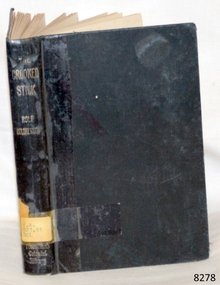 Flagstaff Hill Maritime Museum and Village
Book - Fictional Novel, Robert Clark, The Crooked Stick Or Pollie's Probation, 1895
... Literary historians analyse it for how it reflects the anxieties, prejudices, and romanticised racial ideologies of the late Victorian era. ...The Crooked Stick; or, Pollie's Probation is another of Rolf Boldrewood's lesser-known, late-Victorian novels. Published by Macmillan & Co. in 1895, it takes a sharp departure from his typical bushranger action, operating instead as a domestic social drama set against the backdrop of colonial pastoral life. The title is derived from an old folk proverb: "Go through the wood and through the wood, and take a crooked stick at last." It serves as a warning against being too selective in choosing a spouse, only to end up with a poor match out of desperation. The story centres on Pollie Devereux, a beautiful, high-spirited, and wealthy young woman living on Corindgerie, a prosperous Australian sheep station. Following her father's death, she is left under the guardianship of her sensible cousin, Tom Devereux. Tom is deeply in love with Pollie and represents stability, safety, and a traditional life on the land. Pollie, however, craves the romance, glamour, and sophistication she associates with Europe. Enter Bertram Devereux, an English cousin who arrives from the UK. He is polished, charming, and highly cynical—a classic Victorian "dandy". Pollie is infatuated, and the core of the book follows her "probation", a period of emotional maturity where she must learn to distinguish between superficial English charm and rugged, genuine Australian worth.Hard cover book, The Crooked Stick Or Pollie's Probation Author: Pen Name Rolf Boldrewood For (Thomas Alexander Browne) Publisher: Macmillan And Co Printer: Robert Clark Date: 1895 Blue cloth hardcover and spine with spine lettering in gilt. The label on the spine has a Library Label.fictionThe Crooked Stick; or, Pollie's Probation is another of Rolf Boldrewood's lesser-known, late-Victorian novels. Published by Macmillan & Co. in 1895, it takes a sharp departure from his typical bushranger action, operating instead as a domestic social drama set against the backdrop of colonial pastoral life. The title is derived from an old folk proverb: "Go through the wood and through the wood, and take a crooked stick at last." It serves as a warning against being too selective in choosing a spouse, only to end up with a poor match out of desperation. The story centres on Pollie Devereux, a beautiful, high-spirited, and wealthy young woman living on Corindgerie, a prosperous Australian sheep station. Following her father's death, she is left under the guardianship of her sensible cousin, Tom Devereux. Tom is deeply in love with Pollie and represents stability, safety, and a traditional life on the land. Pollie, however, craves the romance, glamour, and sophistication she associates with Europe. Enter Bertram Devereux, an English cousin who arrives from the UK. He is polished, charming, and highly cynical—a classic Victorian "dandy". Pollie is infatuated, and the core of the book follows her "probation", a period of emotional maturity where she must learn to distinguish between superficial English charm and rugged, genuine Australian worth.flagstaff hill, warrnambool, shipwrecked coast, flagstaff hill maritime museum, maritime museum, shipwreck coast, flagstaff hill maritime village, great ocean road, book, pattison collection, warrnambool library, warrnambool mechanics’ institute, ralph eric pattison, corangamite regional library service, warrnambool city librarian, mechanics’ institute library, victorian library board, warrnambool books and records, warrnambool children’s library, the crooked stick or pollie's probation, rolf bolderwood -
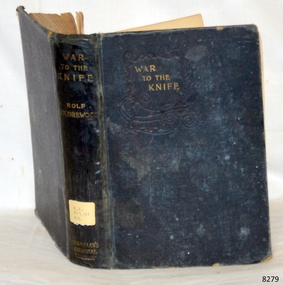 Flagstaff Hill Maritime Museum and Village
Book - Fictional Novel, Rolf Boldrewood (Pen Name), War to The Knife, 1899
... Literary historians analyse it for how it reflects the anxieties, prejudices, and romanticised racial ideologies of the late Victorian era. ...War to the Knife; or, Tangata Maori is a late 19th-century historical romance novel written by the prominent Australian author Rolf Boldrewood (the pen name of Thomas Alexander Browne) and published by the historic house Macmillan & Co. in 1899. Unlike most of Boldrewood's work, which is rooted deeply in the Australian outback, War to the Knife shifts its setting to New Zealand during the Waikato War of the 1860s, which was part of the New Zealand Land Wars. The story follows Sir Roland Massinger, a cultured English squire who suffers a devastating heartbreak at home when the woman he loves, Hypatia Tollemache, rejects him to pursue a life dedicated to social reform. Distraught, Sir Roland leaves his ancestral estate and emigrates to New Zealand in search of adventure and a fresh start. Upon arriving, he finds himself caught squarely in the middle of the violent clash between the Pakeha (British colonial settlers) and the indigenous Maori tribes over the ownership of the Waitara land block. Written in a late-Victorian style that heavily blends high-stakes adventure with a romanticised "frontier" view, the book attempts to explore colonial identity and the cultural friction of the era.War to The Knife Author: Pen Name Rolf Boldrewood For (Thomas Alexander Browne) Publisher: Macmillan And Co Printer: Robert Clark Date: 1899 Blue cloth hardcover and spine with spine lettering in gilt. The spine has a Library label with inscription.fictionWar to the Knife; or, Tangata Maori is a late 19th-century historical romance novel written by the prominent Australian author Rolf Boldrewood (the pen name of Thomas Alexander Browne) and published by the historic house Macmillan & Co. in 1899. Unlike most of Boldrewood's work, which is rooted deeply in the Australian outback, War to the Knife shifts its setting to New Zealand during the Waikato War of the 1860s, which was part of the New Zealand Land Wars. The story follows Sir Roland Massinger, a cultured English squire who suffers a devastating heartbreak at home when the woman he loves, Hypatia Tollemache, rejects him to pursue a life dedicated to social reform. Distraught, Sir Roland leaves his ancestral estate and emigrates to New Zealand in search of adventure and a fresh start. Upon arriving, he finds himself caught squarely in the middle of the violent clash between the Pakeha (British colonial settlers) and the indigenous Maori tribes over the ownership of the Waitara land block. Written in a late-Victorian style that heavily blends high-stakes adventure with a romanticised "frontier" view, the book attempts to explore colonial identity and the cultural friction of the era. flagstaff hill, warrnambool, shipwrecked coast, flagstaff hill maritime museum, maritime museum, shipwreck coast, flagstaff hill maritime village, great ocean road, book, pattison collection, warrnambool library, warrnambool mechanics’ institute, ralph eric pattison, corangamite regional library service, warrnambool city librarian, mechanics’ institute library, victorian library board, warrnambool books and records, warrnambool children’s library, war to the knife, rolf bolderwood
