
Showing 9 items matching "radji beach"
-
 Warrnambool and District Historical Society Inc.
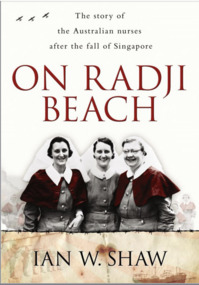
Book, On Radji Beach
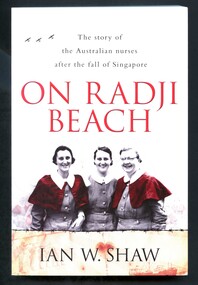
... On Radji Beach...A middle section contains several black and white photographs. On Radji Beach Book ...This book by Ian Shaw is about the Australian nurses who were evacuated from Singapore after it fell to the Japanese in 1942 and their subsequent fates. Two of the nurses, Wilma Oram and Mona Wilton trained at the Warrnambool Hospital. Wilma Oram survived the war but Mona Wilton, born in Willaura near Warrnambool, was killed when the ship ‘Vyner Brooke’ was sunk by the Japanese in 1942. Mona Wilton was a member of the Australian Army Nursing Service and had been part of the 13th Australian General Hospital unit in Singapore. A Mona Wilton memorial window is now in the Warrnambool Hospital (South West Health Care). This book is of interest as it contains the stories of those Australian nurses who served and died in World War Two after the fall of Singapore in 1942 and in particular it has the stories of those nurses who trained at the Warrnambool Hospital before the advent of war. The story of Mona Winton’s war experiences and her death is of special significance as she was born in the Warrnambool district. This is a soft cover book of 370 pages. The cover has a colour photograph of three nurses on the front and printing on the back. The book contains a prologue, three sections of text, a postscript, a bibliography and an index. A middle section contains several black and white photographs. mona wilton, world war two nurse, world war two, warrnambool -
 Bendigo Military Museum
Book - BOOK WW2 NURSES, Pan Macmillan Aust PTY LTD, On Radji Beach, 2010
... On Radji Beach...Books Nurses WW2 Biography POW’s Japan Book, soft cover, cardboard, red and black print on front, spine and back, front cover has a photo of three Nurses in uniform in red, white and grey, 360 pages, plain white paper, illustrated B & W and colour photographs. On Radji Beach Book BOOK WW2 NURSES Pan Macmillan Aust PTY LTD Ian A Shaw (Author) McPhersons Printing Group ...The story of Australian Nurses after the Fall of Singapore, February 1942, an account of the fate of every Nurse who boarded the Coastal Freighter “Vyner Brooke”, the nurses service, ill fated evacuation and their courage, compassion, ingenuity and fortitude in the unthinkable events that followed.Book, soft cover, cardboard, red and black print on front, spine and back, front cover has a photo of three Nurses in uniform in red, white and grey, 360 pages, plain white paper, illustrated B & W and colour photographs.books, nurses ww2, biography, pow’s, japan -
 Warrnambool RSL Sub Branch
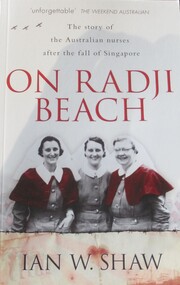
Book, BOOK: On Radji Beach - The story of the Australian Nurses after the fall of Singapore
... BOOK: On Radji Beach - The story of the Australian Nurses after the fall of Singapore...Warrnambool RSL Sub Branch Cnr Merri & Liebig Streets Warrnambool great-ocean-road Author: Ian Winton Shaw Publisher: Pan MacMillan, Australia. 2010 BOOK: On Radji Beach - The story of the Australian Nurses after the fall of Singapore Book ... -
 Returned Nurses RSL Sub-branch
Book - Paperback book, Ian W. Shaw, On Radji Beach: the story of the Australian nurses after the fall of Singapore, 2012
... On Radji Beach: the story of the Australian nurses after the fall of Singapore...The cover shows three Australian nurses standing together. On Radji Beach: the story of the Australian nurses after the fall of Singapore Book Paperback book Ian W. ...When Singapore fell dramatically to the Japanese on 15 February 1942, hundreds of people scrambled to leave. Amongst the evacuees were 65 Australian nurses. They boarded a coastal freighter named the Vyner Brooke, which was sunk by the Japanese. Miraculously, there was one survivor, Vivian Bullwinkel who, in spite of a bullet wound, endured 13 days in the jungle before surrendering to another Japanese patrol. On 12 February 1942, Singapore was just days away from its fall to the Japanese. As the city burned, hundreds of desperate people scrambled to the docks to flee. Amongst them were 65 Australian Army nurses, who boarded a coastal freighter, the Vyner Brooke. But theirs was a doomed voyage. Japanese bombers attacked and sank the vessel off Sumatra. Those who survived drifted for up to three days before making landfall on one of the many beaches on Banka Island. A group of survivors, including 22 nurses, gathered at Radji Beach. They voted to surrender, but the Japanese patrol that found them divided them into three groups and the executions began. In the last group were the Australian nurses, who died in a hail of bullets as they walked, abreast, into the sea. Miraculously, there was one survivor, Vivian Bullwinkel, who in spite of a bullet wound endured 13 days in the jungle before surrendering to another Japanese patrol. She was reunited with the other surviving Vyner Brooke nurses in a makeshift camp on the island. Three-and-a-half years later, only 24 made it home. Meticulously researched from the diaries and papers of some of the nurses who survived, this is a moving account of the fate of every nurse who boarded the Vyner Brooke that day. [From Trove]Paperback book with a white cover and the title printed in red. The cover shows three Australian nurses standing together.non-fictionWhen Singapore fell dramatically to the Japanese on 15 February 1942, hundreds of people scrambled to leave. Amongst the evacuees were 65 Australian nurses. They boarded a coastal freighter named the Vyner Brooke, which was sunk by the Japanese. Miraculously, there was one survivor, Vivian Bullwinkel who, in spite of a bullet wound, endured 13 days in the jungle before surrendering to another Japanese patrol. On 12 February 1942, Singapore was just days away from its fall to the Japanese. As the city burned, hundreds of desperate people scrambled to the docks to flee. Amongst them were 65 Australian Army nurses, who boarded a coastal freighter, the Vyner Brooke. But theirs was a doomed voyage. Japanese bombers attacked and sank the vessel off Sumatra. Those who survived drifted for up to three days before making landfall on one of the many beaches on Banka Island. A group of survivors, including 22 nurses, gathered at Radji Beach. They voted to surrender, but the Japanese patrol that found them divided them into three groups and the executions began. In the last group were the Australian nurses, who died in a hail of bullets as they walked, abreast, into the sea. Miraculously, there was one survivor, Vivian Bullwinkel, who in spite of a bullet wound endured 13 days in the jungle before surrendering to another Japanese patrol. She was reunited with the other surviving Vyner Brooke nurses in a makeshift camp on the island. Three-and-a-half years later, only 24 made it home. Meticulously researched from the diaries and papers of some of the nurses who survived, this is a moving account of the fate of every nurse who boarded the Vyner Brooke that day. [From Trove]australian nurses, singapore, prisoners of war, world war two, wwii, world war 2, vivian bullwinkel -
 Alfred Hospital Nurses League - Nursing History Collection
Book - Illustrated Book, Ian Winton Shaw, On Radji Beach, 2010
... On Radji Beach...Summary of book in black print on back cover On Radji Beach Book Illustrated Book Ian Winton Shaw Pan Macmillan Australia Pty Ltd McPherson's Printing Group ...The story of Australian nurses after the fall of Singapore in World War TwoIllustrated book with red and black print on front and spine. Front cover also has a red, grey and white photograph of three nurses in uniform. Title and authors name on front and spine. Summary of book in black print on back covernon-fictionThe story of Australian nurses after the fall of Singapore in World War Twovivian bullwinkel, vyner brooke, australia army-nurses, world war 1939-1945 prisoners of war, nurses australia -
 Returned Nurses RSL Sub-branch
Book - Paperback book, Ian W. Shaw, On Radji Beach: the story of the Australian nurses after the fall of Singapore, 2012
... On Radji Beach: the story of the Australian nurses after the fall of Singapore...The cover shows three Australian nurses standing together. On Radji Beach: the story of the Australian nurses after the fall of Singapore Book Paperback book Ian W. ...When Singapore fell dramatically to the Japanese on 15 February 1942, hundreds of people scrambled to leave. Amongst the evacuees were 65 Australian nurses. They boarded a coastal freighter named the Vyner Brooke, which was sunk by the Japanese. Miraculously, there was one survivor, Vivian Bullwinkel who, in spite of a bullet wound, endured 13 days in the jungle before surrendering to another Japanese patrol. On 12 February 1942, Singapore was just days away from its fall to the Japanese. As the city burned, hundreds of desperate people scrambled to the docks to flee. Amongst them were 65 Australian Army nurses, who boarded a coastal freighter, the Vyner Brooke. But theirs was a doomed voyage. Japanese bombers attacked and sank the vessel off Sumatra. Those who survived drifted for up to three days before making landfall on one of the many beaches on Banka Island. A group of survivors, including 22 nurses, gathered at Radji Beach. They voted to surrender, but the Japanese patrol that found them divided them into three groups and the executions began. In the last group were the Australian nurses, who died in a hail of bullets as they walked, abreast, into the sea. Miraculously, there was one survivor, Vivian Bullwinkel, who in spite of a bullet wound endured 13 days in the jungle before surrendering to another Japanese patrol. She was reunited with the other surviving Vyner Brooke nurses in a makeshift camp on the island. Three-and-a-half years later, only 24 made it home. Meticulously researched from the diaries and papers of some of the nurses who survived, this is a moving account of the fate of every nurse who boarded the Vyner Brooke that day. [From Trove]Paperback book with a white cover and the title printed in red. The cover shows three Australian nurses standing together.non-fictionWhen Singapore fell dramatically to the Japanese on 15 February 1942, hundreds of people scrambled to leave. Amongst the evacuees were 65 Australian nurses. They boarded a coastal freighter named the Vyner Brooke, which was sunk by the Japanese. Miraculously, there was one survivor, Vivian Bullwinkel who, in spite of a bullet wound, endured 13 days in the jungle before surrendering to another Japanese patrol. On 12 February 1942, Singapore was just days away from its fall to the Japanese. As the city burned, hundreds of desperate people scrambled to the docks to flee. Amongst them were 65 Australian Army nurses, who boarded a coastal freighter, the Vyner Brooke. But theirs was a doomed voyage. Japanese bombers attacked and sank the vessel off Sumatra. Those who survived drifted for up to three days before making landfall on one of the many beaches on Banka Island. A group of survivors, including 22 nurses, gathered at Radji Beach. They voted to surrender, but the Japanese patrol that found them divided them into three groups and the executions began. In the last group were the Australian nurses, who died in a hail of bullets as they walked, abreast, into the sea. Miraculously, there was one survivor, Vivian Bullwinkel, who in spite of a bullet wound endured 13 days in the jungle before surrendering to another Japanese patrol. She was reunited with the other surviving Vyner Brooke nurses in a makeshift camp on the island. Three-and-a-half years later, only 24 made it home. Meticulously researched from the diaries and papers of some of the nurses who survived, this is a moving account of the fate of every nurse who boarded the Vyner Brooke that day. [From Trove]australian nurses, singapore, prisoners of war, world war two, wwii, world war 2, vivian bullwinkel -
 Returned Nurses RSL Sub-branch
Newspaper - Newspaper clipping, [Weekened Australian], POWs fight comfort women rumours, [July 25 1992]
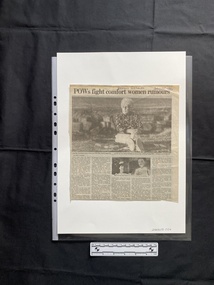
... ...Radji Beach...WWII World war two WW2 Sir William Webb Japanese Government Asian women Korea Palembang Sumatra Vyner Brooke Radji Beach Vivian Bullwinkel Melbourne 'WEEKEND AUSTRALIAN. ...For more than forty five years former Australian army nurses who were held as prisoners of war (POW) by the Japanese during World War 2 have battle rumour, insinuation and innuendo. An angry Mrs Wilma Young (nee Oram) is speaking out as a recent report on how an attempt had been made to force eight Australian nurses to become prostitutes or 'comfort girls' has been published by a leading Japanese newspaper, the Asahi. A large newspaper clipping featuring a large black and white photo with a smaller photo beneath and five columns of text. The large photo is of an older woman sitting on the ground, the smmaler photo isof the same woman when she was younger.'WEEKEND AUSTRALIAN. July 25 1992' [blue ink, along top right]wwii, world war two, ww2, sir william webb, japanese government, asian women, korea, palembang, sumatra, vyner brooke, radji beach, vivian bullwinkel, melbourne -
 Returned Nurses RSL Sub-branch
Newspaper - Newspaper clipping, The Border Mail, Prisoners of the Japanese, October 28 1989
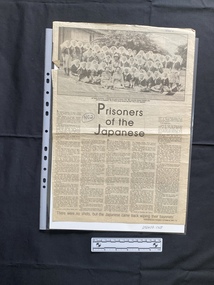
... ...Radji Beach...World War 1939-1945 Thelma McEachern 10th Australian General Hospital AGH Radji Beach Sumatra Banka Strait 2/22nd Battalion Tootie McPherson Mavis Cullen Naruto Maru Dutch Eurasian Iole Harper Nesta James Waltzing Matilda Margaret Dryburgh Marjory Jennings Norah Chambers New Guinea Yokohama Yacht Club Yokohama Mount Fuji Kay Parker Eileen Callaghan Banks Island Betty Jeffrey Flo Trotter Blanche Hempsted Perth Melbourne Melbourne Cup Micky Syer 'NC2' [circled, blue ink, middle left of page] Large newspaper page with a full page story consisting of five columns of text and a large, bold title beneath a large black and white group photo of forty six people, most in nurses uniforms Prisoners of the Japanese Newspaper Newspaper clipping The Border Mail ...The newspaper article gives a basic overview of two groups of POW nurses during World War 2. Twenty two of the nurses trying to escape from the Japanese in Singapore, February 1942, on the Vyner Brooke came ashore on Banka Island. A few days afterwards they were all machine gunned by the Japanese, with only one survivor, Vivian Bullwinkel. She managed to get herself and a wounded British soldier to Muntok, where they both became POWs (prisoners of war). Of the sixty nurses on the Vyner Brooke, twelve had drowned, twenty one had been murdered and thirty two had gone into prison. Those that would survive the war made it through on a terrible diet consisting mostly of rice, attempts of the Japanese to use them for 'entertainment', making their own entertainment in celebrating birthdays and holidays, having music concerts and terrible sicknesses including cerebral malaria. Finally after the Japanese surrendered they were met at an airstrip by the Matron in Chief, A.M. Sage. She was hoping for the full sixty five from the Vyner Brooke. There were twenty four left. Another group of nurses were captured by the Japanese in Rabaul, January 1942, where twenty of their patients were taken, killed and buried in a mass grave. The nurses were put in a prison camp with civilian women where they too were treated terribly. They would be knocked down and kicked if they didn't bow deep enough, or would have their captors trying to urinate on them while laughing. After being moved to Japan they continued to try to survive by eating glue they were using to make envelopes for the Japanese. Large newspaper page with a full page story consisting of five columns of text and a large, bold title beneath a large black and white group photo of forty six people, most in nurses uniforms'NC2' [circled, blue ink, middle left of page]world war 1939-1945, thelma mceachern, 10th australian general hospital, agh, radji beach, sumatra, banka strait, 2/22nd battalion, tootie mcpherson, mavis cullen, naruto maru, dutch, eurasian, iole harper, nesta james, waltzing matilda, margaret dryburgh, marjory jennings, norah chambers, new guinea, yokohama yacht club, yokohama, mount fuji, kay parker, eileen callaghan, banks island, betty jeffrey, flo trotter, blanche hempsted, perth, melbourne, melbourne cup, micky syer -
 Returned Nurses RSL Sub-branch
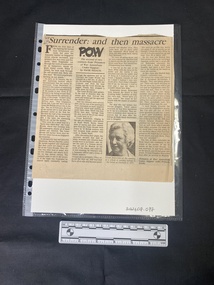
Newspaper - Newspaper clipping, Hank Nelson, Surrender: and then massacre, 26/4/[1985]
... Sister Vivian Bullwinkel, clinging to the side of a lifeboat, came ashore on Radji Beach, Banka Island. She became one of a group of twenty-two nurse, other Vyner Brooke passengers and twenty British soldier from another bombed ship. ...Sister Vivian Bullwinkel, clinging to the side of a lifeboat, came ashore on Radji Beach, Banka Island. She became one of a group of twenty-two nurse, other Vyner Brooke passengers and twenty British soldier from another bombed ship. ...The newspaper clipping is the second of two extract from 'Prisoners of War: Australians Under Nippon', by Hank Nelson. The extract touches on the conditions the nurses serving in Singapore experienced, moving into the eventual evacuation. The first nurses were evacuated on February 10, [1942], with half of the remainder the following day, and the final nurses were evacuated February 13. These sixty-five nurses were aboard the Vyner Brooke with 300 other passengers, mostly women and children. The ship was spotted and bombed the next day. Sister Vivian Bullwinkel, clinging to the side of a lifeboat, came ashore on Radji Beach, Banka Island. She became one of a group of twenty-two nurse, other Vyner Brooke passengers and twenty British soldier from another bombed ship. This group decided to surrender to the Japanese, who proceeded to kill all but one British soldier and Vivian Bullwinkel. After holding out for ten days the pair made their way to Muntok, hiding the evidence they had both survived a massacre. Of the sixty-five nurses to board the Vyner Brooke, twelve had drowned, twenty-one had been killed on the beach and thirty-two became prisoners of war (POW).A newspaper clipping consisting of four large columns of text and a small black and white photo of an older woman (head).'A[G]E / 26/4'[blue ink, top left]world war 2, wwii, ww2, world war ii, olive dorothy paschke, vyner brooke, vivian bullwinkel, sumatra, palembang, jean ashton, betty jeffrey, wah sui, empire star, micky syer, banka strait, private kingsley, cecil kingsley, 10th australian general hospital
