
Showing 91 items matching "railway operations - new south wales"
-
 Victorian Railway History Library
Book, O'Brien, Dennis, Tracks In Time: From The Dennis O'Brien Collection, 1997
... ...Railway operations - New South Wales - pictorial...Railroads - New South Wales - Australia Railway operations - New South Wales - pictorial Pictorial history of railways in New South Wales from the photographic collection of Dennis O'Brien. ill, p.128. ...Pictorial history of railways in New South Wales from the photographic collection of Dennis O'Brien.ill, p.128.non-fictionPictorial history of railways in New South Wales from the photographic collection of Dennis O'Brien.railroads - new south wales - australia, railway operations - new south wales - pictorial -
 Victorian Railway History Library
Book, Mark Carter, Modern rail Portfolios - No. 1 - New South Wales, 1994
... ...Railway Operations - New South Wales...Railways New South Wales - History Railway Operations - New South Wales A pictorial and descriptive history of railway operations in New South Wales ill, p. 69, Modern rail Portfolios - No. 1 - New South Wales Book Mark Carter Gresley Publishing ...A pictorial and descriptive history of railway operations in New South Walesill, p. 69,non-fictionA pictorial and descriptive history of railway operations in New South Walesrailways new south wales - history, railway operations - new south wales -
 Eltham District Historical Society Inc
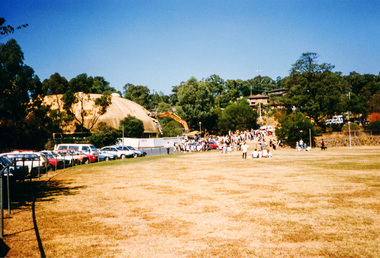
Photograph, Demolishing the Bini Shell at Diamond Creek, 1991, 1991
... new public hall in Diamond Creek. Council considered the Bini shell form of construction which was in operation overseas and in use in New South Wales as libraries, gymnasiums, sports centres and multi-purpose centres. The Council gave the go-ahead. A site was chosen opposite the Hotel and close to the railway...new public hall in Diamond Creek. Council considered the Bini shell form of construction which was in operation overseas and in use in New South Wales as libraries, gymnasiums, sports centres and multi-purpose centres. The Council gave the go-ahead. A site was chosen opposite the Hotel and close to the railway ...In 1978 Diamond Valley Shire recognised the need for a new public hall in Diamond Creek. Council considered the Bini shell form of construction which was in operation overseas and in use in New South Wales as libraries, gymnasiums, sports centres and multi-purpose centres. The Council gave the go-ahead. A site was chosen opposite the Hotel and close to the railway line. One day in - the following year, in 1979, activity stood still in Diamond Creek as school children and other excited spectators watched the one-hour inflation of the Bini Shell. This unusual method of construction was invented by Italian industrial designer and architect Dante Bini. The construction pneumatically raises a level of reinforced concrete from ground level which has not been set, using an internal balloon. The inner membrane inflates and compresses the mesh and concrete against the outer membrane. A net of flexible steel rods was laid on the building’s circular base, on the top of a fabric bladder. 300 tonnes of reinforced concrete were poured onto the mesh and a sealed cover laid over the concrete making a sandwich of cover, bladder and mesh. Compressed air was pumped into the bladder and the sandwich slowly began to rise and become a massive self-supporting dome. After inflation and removal of the outer membrane workmen filled in any holes. It was some days before pneumatic drills pecked out the first opening. The ceiling of the concrete dome was lined with fluffy insulating material. The dome was 36 metres in diameter at the base and 12 metres high in the centre with a usable floor space of 670 square metres. An opening night dinner was held to celebrate the new facility on March 12, 1980. Shire President Ron Pata made a speech and unveiled a plaque. It was the first public building in Victoria to be erected using the Bini Shell design method of construction The facility could cater for up to 400 people and in 1980 a fee for use was $100 for up to 200 people, $150 for up to 300 people and $200 for up to 400 people. For the next ten years or so, locals attended the hall for marital arts classes, basketball and netball games and school discoes and various other activities. After pieces of concrete fell off a Bini shell interstate due to a construction fault, the Council closed the centre. Demotion took place during the Diamond Creek Town Fair in 1991, as part of the annual Town Fair’s program. Research by L.P. Jan 2022This was the first public building in Victoria to be erected using the Bini Shell design method of construction.Colour photograph1991, diamond creek, bini shell, demolition, oval -
 Eltham District Historical Society Inc
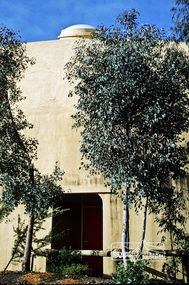
Photograph, Fred Mitchell, Bini Shell at Diamond Creek, 1983, 1983
... new public hall in Diamond Creek. Council considered the Bini shell form of construction which was in operation overseas and in use in New South Wales as libraries, gymnasiums, sports centres and multi-purpose centres. The Council gave the go-ahead. A site was chosen opposite the Hotel and close to the railway...new public hall in Diamond Creek. Council considered the Bini shell form of construction which was in operation overseas and in use in New South Wales as libraries, gymnasiums, sports centres and multi-purpose centres. The Council gave the go-ahead. A site was chosen opposite the Hotel and close to the railway ...In 1978 Diamond Valley Shire recognised the need for a new public hall in Diamond Creek. Council considered the Bini shell form of construction which was in operation overseas and in use in New South Wales as libraries, gymnasiums, sports centres and multi-purpose centres. The Council gave the go-ahead. A site was chosen opposite the Hotel and close to the railway line. One day in - the following year, in 1979, activity stood still in Diamond Creek as school children and other excited spectators watched the one-hour inflation of the Bini Shell. This unusual method of construction was invented by Italian industrial designer and architect Dante Bini. The construction pneumatically raises a level of reinforced concrete from ground level which has not been set, using an internal balloon. The inner membrane inflates and compresses the mesh and concrete against the outer membrane. A net of flexible steel rods was laid on the building’s circular base, on the top of a fabric bladder. 300 tonnes of reinforced concrete were poured onto the mesh and a sealed cover laid over the concrete making a sandwich of cover, bladder and mesh. Compressed air was pumped into the bladder and the sandwich slowly began to rise and become a massive self-supporting dome. After inflation and removal of the outer membrane workmen filled in any holes. It was some days before pneumatic drills pecked out the first opening. The ceiling of the concrete dome was lined with fluffy insulating material. The dome was 36 metres in diameter at the base and 12 metres high in the centre with a usable floor space of 670 square metres. An opening night dinner was held to celebrate the new facility on March 12, 1980. Shire President Ron Pata made a speech and unveiled a plaque. It was the first public building in Victoria to be erected using the Bini Shell design method of construction The facility could cater for up to 400 people and in 1980 a fee for use was $100 for up to 200 people, $150 for up to 300 people and $200 for up to 400 people. For the next ten years or so, locals attended the hall for marital arts classes, basketball and netball games and school discoes and various other activities. After pieces of concrete fell off a Bini shell interstate due to a construction fault, the Council closed the centre. Demotion took place during the Diamond Creek Town Fair in 1991, as part of the annual Town Fair’s program. Research by LP January 2022This was the first public building in Victoria to be erected using the Bini Shell design method of construction.Digital copy of colour photographfred mitchell collection, 1983, bini shell, diamond creek -
 Wodonga & District Historical Society Inc
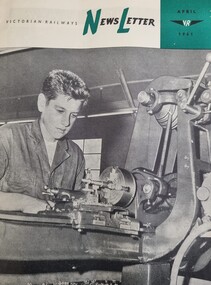
Newsletter - Victorian Railways April 1961
... Railways from the early 1960s until the late 1980s. During this period the corporate name changed to VLine and the newsletter continued to be published as VLine Newsletter. This issue from April 1961 features an article "Wodonga Links the States" which explains the complexity of operations of the railways at Wodonga and Albury due to the break of gauge in gauge between the two railway networks. The article was written to acknowledge the work carried out by the railway at both stations prior to the opening of the standard gauge track. Until this time Victorian trains operated on 4’ 8½” tracks whilst New South Wales ...This booklet is one of a series featuring news items from Victorian Railways from the early 1960s until the late 1980s. During this period the corporate name changed to VLine and the newsletter continued to be published as VLine Newsletter. This issue from April 1961 features an article "Wodonga Links the States" which explains the complexity of operations of the railways at Wodonga and Albury due to the break of gauge in gauge between the two railway networks. The article was written to acknowledge the work carried out by the railway at both stations prior to the opening of the standard gauge track. Until this time Victorian trains operated on 4’ 8½” tracks whilst New South Wales were 5’ 3” wide. With an overall stall of 241, Wodonga railmen prepared, serviced and manned 14 "up" and 11 "down" trains as well as specials each day. Special migrant trains to Bonegilla were often a feature at this time as well as transport of heavy equipment to the Snowy Mountain Scheme.A small booklet of 14 pages including articles and images.This booklet is one of a series featuring news items from Victorian Railways from the early 1960s until the late 1980s. During this period the corporate name changed to VLine and the newsletter continued to be published as VLine Newsletter. This issue from April 1961 features an article "Wodonga Links the States" which explains the complexity of operations of the railways at Wodonga and Albury due to the break of gauge in gauge between the two railway networks. The article was written to acknowledge the work carried out by the railway at both stations prior to the opening of the standard gauge track. Until this time Victorian trains operated on 4’ 8½” tracks whilst New South Wales were 5’ 3” wide. With an overall stall of 241, Wodonga railmen prepared, serviced and manned 14 "up" and 11 "down" trains as well as specials each day. Special migrant trains to Bonegilla were often a feature at this time as well as transport of heavy equipment to the Snowy Mountain Scheme.wodonga railways, victorian railways, victorian railways wodonga -
 Wodonga & District Historical Society Inc
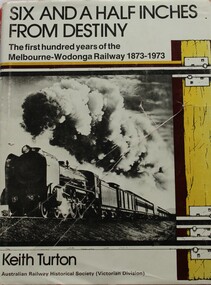
Book - Six and a Half Inches from Destiny: First 100 Years of Melbourne to Wodonga Railway, 1873 - 1973, Keith W. Turton
... railway was extended over the River Murray to meet the New South Wales railhead at Albury. When the two lines finally met a significant fact became apparent - the track gauges of the two systems differed by six and a half inches. For 80 years this difference created havoc until a new railway of uniform gauge was built parallel to the Victorian gauge line from Melbourne to Wodonga. This book deals with the planning, construction and the first 100 years of operation ...Inter-colonial railway communication was established in 1883 when the Melbourne - Wodonga railway was extended over the River Murray to meet the New South Wales railhead at Albury. When the two lines finally met a significant fact became apparent - the track gauges of the two systems differed by six and a half inches. For 80 years this difference created havoc until a new railway of uniform gauge was built parallel to the Victorian gauge line from Melbourne to Wodonga. This book deals with the planning, construction and the first 100 years of operation or the railway to Wodonga, together with its locomotives, stations and trains which travelled its tracks.non-fictionInter-colonial railway communication was established in 1883 when the Melbourne - Wodonga railway was extended over the River Murray to meet the New South Wales railhead at Albury. When the two lines finally met a significant fact became apparent - the track gauges of the two systems differed by six and a half inches. For 80 years this difference created havoc until a new railway of uniform gauge was built parallel to the Victorian gauge line from Melbourne to Wodonga. This book deals with the planning, construction and the first 100 years of operation or the railway to Wodonga, together with its locomotives, stations and trains which travelled its tracks.railways victoria, railway melbourne to wodonga -
 Wodonga & District Historical Society Inc
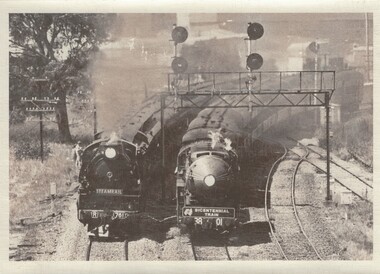
Photograph - Fred Rochow Railways Collection - Locomotive R761 and Bicentennial Train 3801 departing Wodonga, 16 October 1988
... operation in Victoria. After years of debate about its future, on the 30th March 1985 the loco was officially returned to service, hauling special trains to celebrate the years of steam locomotives. Locomotive 3801 was built by Sydney company The Clyde Engineering Co. Ltd., Granville in 1943 as the first of five streamlined (C) 38-class locomotives for the New South Wales Government Railways...operation in Victoria. After years of debate about its future, on the 30th March 1985 the loco was officially returned to service, hauling special trains to celebrate the years of steam locomotives. Locomotive 3801 was built by Sydney company The Clyde Engineering Co. Ltd., Granville in 1943 as the first of five streamlined (C) 38-class locomotives for the New South Wales Government Railways ...The Fred Rochow Railways Collection incorporates photos related to the operation of the Wodonga Railway Station including different types of trains and railways staff C. 1930 – 1990. It was donated to the Wodonga Historical Society by Fred Rochow, a railwayman who spent many years based in Wodonga. He joined the Victorian Railways on 17th June l947 and retired in 1988. For some time, he was a member of the Australian Federated Union of Locomotive Enginemen and served a term as a member of the Trades Hall Council. He had an extensive knowledge of the struggles that took place to achieve better conditions for railway workers. Fred worked for many years as a fireman and then worked his way up the ranks to driver, experiencing many changes from the days of steam locomotives through to diesel trains, locomotives and even the modern XPT train. He worked throughout Victoria at different stages of his career, with his final working years focused on the northeast of Victoria and the Albury to Melbourne line. After his retirement, Fred continued to share his love of steam miniature trains with the community.This collection has local and statewide significance as it captures images of trains, locomotives and personnel who operated the railway services in Wodonga and throughout Northeast Victoria. The railways played a critical role in opening up Victoria and connecting Australia for trade, business, social communication and transport.Locomotive R761 with Driver Norm Depomeroy and Fireman Steve Gibson running in parallel with the Bicentennial Train hauled by Locomotive 3801 with Driver Fred Rochow and Fireman David Brown. Locomotive R761 - The R761 arrived in Victoria on the 28th February 1952 upon the ship ‘Helenus’ and entered service on the 9th April 1952. R761 spent long periods in storage and occasionally saw service until it was withdrawn. In 1970 R761 was overhauled and was made available for use on special trains. It became the final R class to run in VR service on the 5th September 1974, ending 120 years of mainline steam operation in Victoria. After years of debate about its future, on the 30th March 1985 the loco was officially returned to service, hauling special trains to celebrate the years of steam locomotives. Locomotive 3801 was built by Sydney company The Clyde Engineering Co. Ltd., Granville in 1943 as the first of five streamlined (C) 38-class locomotives for the New South Wales Government Railways’ top-link express passenger duties. The delivery of 3801 was much delayed due to wartime labour & material shortages, together with competing wartime construction priorities. After many years of service, 3801 had been scheduled for withdrawal in 1962 due to deteriorating mechanical condition, but rail enthusiasts raised sufficient funds to cover the cost of its overhaul. 3801 joined the collection of the New South Wales Rail Transport Museum (NSWRTM), Enfield on withdrawal from NSWGR service and continued in operation as a tour locomotive. It hauled the “Western Endeavour” on the first crossing of the Australian continent by a standard gauge train from Sydney to Perth and return in August – September 1970. 3801 also stars in the railway film ‘A Steam Train Passes’ made by Film Australia in 1974 By 1976 had been withdrawn from service due to poor boiler condition and placed on static display by the Rail Transport Museum in Thirlmere, NSW. The Locomotive remained in Thirlmere until 1983 when it was decided it should be restored for the Australian Bicentenary in 1988. A new organisation was created specifically for the purpose of operating 3801, and thus 3801 Limited was incorporated on 5th June 1985. Work on the locomotive was completed after three years, with 3801 making its debut at a special Railway Ball hosted in its honour on 29th November 1986. During the Australian Bicentenary celebrations in 1988, it operated an extensive program across Australia visiting every mainland capital accessible by rail including an appearance at AusSteam ’88 in Melbourne in October 1988, stopping over in Wodonga on the way. After the company’s 20-year lease on the locomotive expired in 2006 Railcorp chose not to extend the agreement, and the locomotive returned to the Rail Transport Museum at Thirlmere (now the NSW Rail Museum). 3801 was withdrawn from service in 2007 for major boiler repairs. Locomotive 3801 was officially relaunched at Sydney's Central Station on Friday 12 March 2021 by Her Excellency, the Honourable Margaret Beazley AC QC, Governor of New South Wales.On front of locomotive on the left "STEAMRAIL /R761". On front of locomotive on the right "BICENTENNIAL TRAIN/3801" railways wodonga, fred rochow, locomotive r761, bicentennial train, locomotive 3801 -
 Wodonga & District Historical Society Inc
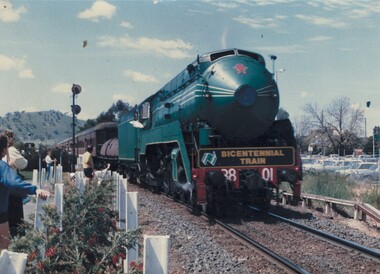
Photograph - Fred Rochow Railways Collection - Bicentennial Train Locomotive 3801, 29 October 1988
... New South Wales Government Railways’ top-link express passenger duties. The delivery of 3801 was much delayed due to wartime labour & material shortages, together with competing wartime construction priorities. After many years of service, 3801 had been scheduled for withdrawal in 1962 due to deteriorating mechanical condition, but rail enthusiasts raised sufficient funds to cover the cost of its overhaul. 3801 joined the collection of the New South Wales Rail Transport Museum (NSWRTM), Enfield on withdrawal from NSWGR service and continued in operation as a tour locomotive. ...New South Wales Government Railways’ top-link express passenger duties. The delivery of 3801 was much delayed due to wartime labour & material shortages, together with competing wartime construction priorities. After many years of service, 3801 had been scheduled for withdrawal in 1962 due to deteriorating mechanical condition, but rail enthusiasts raised sufficient funds to cover the cost of its overhaul. 3801 joined the collection of the New South Wales Rail Transport Museum (NSWRTM), Enfield on withdrawal from NSWGR service and continued in operation as a tour locomotive. ...The Fred Rochow Railways Collection incorporates photos related to the operation of the Wodonga Railway Station including different types of trains and railways staff C. 1930 – 1990. It was donated to the Wodonga Historical Society by Fred Rochow, a railwayman who spent many years based in Wodonga. He joined the Victorian Railways on 17th June l947 and retired in 1988. For some time, he was a member of the Australian Federated Union of Locomotive Enginemen and served a term as a member of the Trades Hall Council. He had an extensive knowledge of the struggles that took place to achieve better conditions for railway workers. Fred worked for many years as a fireman and then worked his way up the ranks to driver, experiencing many changes from the days of steam locomotives through to diesel trains, locomotives and even the modern XPT train. He worked throughout Victoria at different stages of his career, with his final working years focused on the northeast of Victoria and the Albury to Melbourne line. After his retirement, Fred continued to share his love of steam miniature trains with the community.This collection has local and statewide significance as it captures images of trains, locomotives and personnel who operated the railway services in Wodonga and throughout Northeast Victoria. The railways played a critical role in opening up Victoria and connecting Australia for trade, business, social communication and transport.Bicentennial Train hauled by Locomotive 3801 passing through Wodonga. Locomotive 3801 was built by Sydney company The Clyde Engineering Co. Ltd., Granville in 1943 as the first of five streamlined (C) 38-class locomotives for the New South Wales Government Railways’ top-link express passenger duties. The delivery of 3801 was much delayed due to wartime labour & material shortages, together with competing wartime construction priorities. After many years of service, 3801 had been scheduled for withdrawal in 1962 due to deteriorating mechanical condition, but rail enthusiasts raised sufficient funds to cover the cost of its overhaul. 3801 joined the collection of the New South Wales Rail Transport Museum (NSWRTM), Enfield on withdrawal from NSWGR service and continued in operation as a tour locomotive. It hauled the “Western Endeavour” on the first crossing of the Australian continent by a standard gauge train from Sydney to Perth and return in August – September 1970. 3801 also stars in the railway film ‘A Steam Train Passes’ made by Film Australia in 1974 By 1976 had been withdrawn from service due to poor boiler condition and placed on static display by the Rail Transport Museum in Thirlmere, NSW. The Locomotive remained in Thirlmere until 1983 when it was decided it should be restored for the Australian Bicentenary in 1988. A new organisation was created specifically for the purpose of operating 3801, and thus 3801 Limited was incorporated on 5th June 1985. Work on the locomotive was completed after three years, with 3801 making its debut at a special Railway Ball hosted in its honour on 29th November 1986. During the Australian Bicentenary celebrations in 1988, it operated an extensive program across Australia visiting every mainland capital accessible by rail including an appearance at AusSteam ’88 in Melbourne in October 1988, stopping over in Wodonga on the way. After the company’s 20-year lease on the locomotive expired in 2006 Railcorp chose not to extend the agreement, and the locomotive returned to the Rail Transport Museum at Thirlmere (now the NSW Rail Museum). 3801 was withdrawn from service in 2007 for major boiler repairs. Locomotive 3801 was officially relaunched at Sydney's Central Station on Friday 12 March 2021 by Her Excellency, the Honourable Margaret Beazley AC QC, Governor of New South Wales.On front of locomotive Australia Bicentennial logo and sign "BICENTENNIAL TRAIN/3801" railways wodonga, fred rochow, locomotive r761, bicentennial train, locomotive 3801 -
 Wodonga & District Historical Society Inc
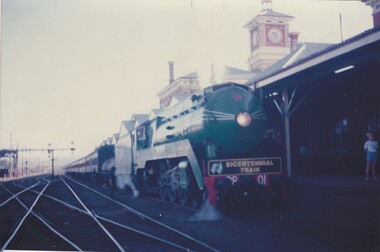
Photograph - Fred Rochow Railways Collection - Bicentennial Train Locomotive 3801 arriving in Albury, 29 October 1988
... New South Wales Government Railways’ top-link express passenger duties. The delivery of 3801 was much delayed due to wartime labour & material shortages, together with competing wartime construction priorities. After many years of service, 3801 had been scheduled for withdrawal in 1962 due to deteriorating mechanical condition, but rail enthusiasts raised sufficient funds to cover the cost of its overhaul. 3801 joined the collection of the New South Wales Rail Transport Museum (NSWRTM), Enfield on withdrawal from NSWGR service and continued in operation as a tour locomotive. ...New South Wales Government Railways’ top-link express passenger duties. The delivery of 3801 was much delayed due to wartime labour & material shortages, together with competing wartime construction priorities. After many years of service, 3801 had been scheduled for withdrawal in 1962 due to deteriorating mechanical condition, but rail enthusiasts raised sufficient funds to cover the cost of its overhaul. 3801 joined the collection of the New South Wales Rail Transport Museum (NSWRTM), Enfield on withdrawal from NSWGR service and continued in operation as a tour locomotive. ...The Fred Rochow Railways Collection incorporates photos related to the operation of the Wodonga Railway Station including different types of trains and railways staff C. 1930 – 1990. It was donated to the Wodonga Historical Society by Fred Rochow, a railwayman who spent many years based in Wodonga. He joined the Victorian Railways on 17th June l947 and retired in 1988. For some time, he was a member of the Australian Federated Union of Locomotive Enginemen and served a term as a member of the Trades Hall Council. He had an extensive knowledge of the struggles that took place to achieve better conditions for railway workers. Fred worked for many years as a fireman and then worked his way up the ranks to driver, experiencing many changes from the days of steam locomotives through to diesel trains, locomotives and even the modern XPT train. He worked throughout Victoria at different stages of his career, with his final working years focused on the northeast of Victoria and the Albury to Melbourne line. After his retirement, Fred continued to share his love of steam miniature trains with the community.This collection has local and statewide significance as it captures images of trains, locomotives and personnel who operated the railway services in Wodonga and throughout Northeast Victoria. The railways played a critical role in opening up Victoria and connecting Australia for trade, business, social communication and transport.Bicentennial Train hauled by Locomotive 3801 arriving at Albury Station, Locomotive 3801 was built by Sydney company The Clyde Engineering Co. Ltd., Granville in 1943 as the first of five streamlined (C) 38-class locomotives for the New South Wales Government Railways’ top-link express passenger duties. The delivery of 3801 was much delayed due to wartime labour & material shortages, together with competing wartime construction priorities. After many years of service, 3801 had been scheduled for withdrawal in 1962 due to deteriorating mechanical condition, but rail enthusiasts raised sufficient funds to cover the cost of its overhaul. 3801 joined the collection of the New South Wales Rail Transport Museum (NSWRTM), Enfield on withdrawal from NSWGR service and continued in operation as a tour locomotive. It hauled the “Western Endeavour” on the first crossing of the Australian continent by a standard gauge train from Sydney to Perth and return in August – September 1970. 3801 also stars in the railway film ‘A Steam Train Passes’ made by Film Australia in 1974 By 1976 had been withdrawn from service due to poor boiler condition and placed on static display by the Rail Transport Museum in Thirlmere, NSW. The Locomotive remained in Thirlmere until 1983 when it was decided it should be restored for the Australian Bicentenary in 1988. A new organisation was created specifically for the purpose of operating 3801, and thus 3801 Limited was incorporated on 5th June 1985. Work on the locomotive was completed after three years, with 3801 making its debut at a special Railway Ball hosted in its honour on 29th November 1986. During the Australian Bicentenary celebrations in 1988, it operated an extensive program across Australia visiting every mainland capital accessible by rail including an appearance at AusSteam ’88 in Melbourne in October 1988, stopping over in Wodonga on the way. After the company’s 20-year lease on the locomotive expired in 2006 Railcorp chose not to extend the agreement, and the locomotive returned to the Rail Transport Museum at Thirlmere (now the NSW Rail Museum). 3801 was withdrawn from service in 2007 for major boiler repairs. Locomotive 3801 was officially relaunched at Sydney's Central Station on Friday 12 March 2021 by Her Excellency, the Honourable Margaret Beazley AC QC, Governor of New South Wales.On front of locomotive Australia Bicentennial logo and sign "BICENTENNIAL TRAIN/3801" railways wodonga, fred rochow, locomotive r761, bicentennial train, locomotive 3801 -
 Wodonga & District Historical Society Inc
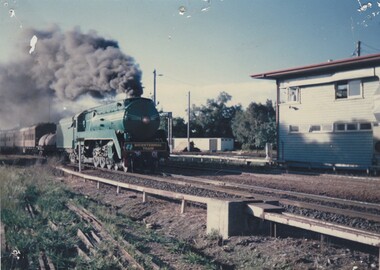
Photograph - Fred Rochow Railways Collection - Bicentennial Train Locomotive 3801 passing Wodonga Signal box, 29 October 1988
... New South Wales Government Railways’ top-link express passenger duties. The delivery of 3801 was much delayed due to wartime labour & material shortages, together with competing wartime construction priorities. After many years of service, 3801 had been scheduled for withdrawal in 1962 due to deteriorating mechanical condition, but rail enthusiasts raised sufficient funds to cover the cost of its overhaul. 3801 joined the collection of the New South Wales Rail Transport Museum (NSWRTM), Enfield on withdrawal from NSWGR service and continued in operation as a tour locomotive. ...New South Wales Government Railways’ top-link express passenger duties. The delivery of 3801 was much delayed due to wartime labour & material shortages, together with competing wartime construction priorities. After many years of service, 3801 had been scheduled for withdrawal in 1962 due to deteriorating mechanical condition, but rail enthusiasts raised sufficient funds to cover the cost of its overhaul. 3801 joined the collection of the New South Wales Rail Transport Museum (NSWRTM), Enfield on withdrawal from NSWGR service and continued in operation as a tour locomotive. ...The Fred Rochow Railways Collection incorporates photos related to the operation of the Wodonga Railway Station including different types of trains and railways staff C. 1930 – 1990. It was donated to the Wodonga Historical Society by Fred Rochow, a railwayman who spent many years based in Wodonga. He joined the Victorian Railways on 17th June l947 and retired in 1988. For some time, he was a member of the Australian Federated Union of Locomotive Enginemen and served a term as a member of the Trades Hall Council. He had an extensive knowledge of the struggles that took place to achieve better conditions for railway workers. Fred worked for many years as a fireman and then worked his way up the ranks to driver, experiencing many changes from the days of steam locomotives through to diesel trains, locomotives and even the modern XPT train. He worked throughout Victoria at different stages of his career, with his final working years focused on the northeast of Victoria and the Albury to Melbourne line. After his retirement, Fred continued to share his love of steam miniature trains with the community.This collection has local and statewide significance as it captures images of trains, locomotives and personnel who operated the railway services in Wodonga and throughout Northeast Victoria. The railways played a critical role in opening up Victoria and connecting Australia for trade, business, social communication and transport.Bicentennial Train hauled by Locomotive 3801 passing the Wodonga Signal box. Locomotive 3801 was built by Sydney company The Clyde Engineering Co. Ltd., Granville in 1943 as the first of five streamlined (C) 38-class locomotives for the New South Wales Government Railways’ top-link express passenger duties. The delivery of 3801 was much delayed due to wartime labour & material shortages, together with competing wartime construction priorities. After many years of service, 3801 had been scheduled for withdrawal in 1962 due to deteriorating mechanical condition, but rail enthusiasts raised sufficient funds to cover the cost of its overhaul. 3801 joined the collection of the New South Wales Rail Transport Museum (NSWRTM), Enfield on withdrawal from NSWGR service and continued in operation as a tour locomotive. It hauled the “Western Endeavour” on the first crossing of the Australian continent by a standard gauge train from Sydney to Perth and return in August – September 1970. 3801 also stars in the railway film ‘A Steam Train Passes’ made by Film Australia in 1974 By 1976 had been withdrawn from service due to poor boiler condition and placed on static display by the Rail Transport Museum in Thirlmere, NSW. The Locomotive remained in Thirlmere until 1983 when it was decided it should be restored for the Australian Bicentenary in 1988. A new organisation was created specifically for the purpose of operating 3801, and thus 3801 Limited was incorporated on 5th June 1985. Work on the locomotive was completed after three years, with 3801 making its debut at a special Railway Ball hosted in its honour on 29th November 1986. During the Australian Bicentenary celebrations in 1988, it operated an extensive program across Australia visiting every mainland capital accessible by rail including an appearance at AusSteam ’88 in Melbourne in October 1988, stopping over in Wodonga on the way. After the company’s 20-year lease on the locomotive expired in 2006 Railcorp chose not to extend the agreement, and the locomotive returned to the Rail Transport Museum at Thirlmere (now the NSW Rail Museum). 3801 was withdrawn from service in 2007 for major boiler repairs. Locomotive 3801 was officially relaunched at Sydney's Central Station on Friday 12 March 2021 by Her Excellency, the Honourable Margaret Beazley AC QC, Governor of New South Wales.On front of locomotive Australia Bicentennial logo and sign "BICENTENNIAL TRAIN/3801" railways wodonga, fred rochow, locomotive r761, bicentennial train, locomotive 3801 -
 Victorian Railway History Library
Book, Dargan, James, Morse to Micro: A History of NSW Railways Communications, 1988
... railroad signalling - New South Wales - history railroad operations - New South Wales - history A history of communications systems on the NSW railways from morse code to microcircuit electronic communications from 1857 to 1987. index, ill, p.105. ...A history of communications systems on the NSW railways from morse code to microcircuit electronic communications from 1857 to 1987.index, ill, p.105.non-fictionA history of communications systems on the NSW railways from morse code to microcircuit electronic communications from 1857 to 1987.railroad signalling - new south wales - history, railroad operations - new south wales - history -
 Victorian Railway History Library
Book, Dunn, Ian, Byways of Steam 1, 1990
... Railroads - NSW - history Steam locomotives - NSW – pictorial Details and photographs of railway operations on the railways of New South Wales during the end of the steam era in the 1960s. ill, maps, p.120. ...Details and photographs of railway operations on the railways of New South Wales during the end of the steam era in the 1960s.ill, maps, p.120.non-fictionDetails and photographs of railway operations on the railways of New South Wales during the end of the steam era in the 1960s.railroads - nsw - history, steam locomotives - nsw – pictorial -
 Victorian Railway History Library
Book, Dunn, Ian, Byways of Steam 2, 1991
... Railroads - NSW - history Steam locomotives - NSW – pictorial Details and photographs of railway operations on the railways of New South Wales during the end of the steam era in the 1960s. ill, maps, p.108. ...Details and photographs of railway operations on the railways of New South Wales during the end of the steam era in the 1960s.ill, maps, p.108.non-fictionDetails and photographs of railway operations on the railways of New South Wales during the end of the steam era in the 1960s.railroads - nsw - history, steam locomotives - nsw – pictorial -
 Victorian Railway History Library
Book, Dunn, Ian, Byways of Steam 3, 1991
... Railroads - NSW - history Steam locomotives - NSW – pictorial Details and photographs of railway operations on the railways of New South Wales during the steam era of the 1950s and the 1960s.. ill, maps, p.120. ...Details and photographs of railway operations on the railways of New South Wales during the steam era of the 1950s and the 1960s..ill, maps, p.120.non-fictionDetails and photographs of railway operations on the railways of New South Wales during the steam era of the 1950s and the 1960s..railroads - nsw - history, steam locomotives - nsw – pictorial -
 Victorian Railway History Library
Book, Dunn, Ian, Byways of Steam 4, 1992
... Railroads - NSW - history Steam locomotives - NSW – pictorial Details and photographs of railway operations on the railways of New South Wales. ill, maps, p.132. ...Details and photographs of railway operations on the railways of New South Wales.ill, maps, p.132.non-fictionDetails and photographs of railway operations on the railways of New South Wales.railroads - nsw - history, steam locomotives - nsw – pictorial -
 Victorian Railway History Library
Book, Dunn, Ian, Byways of Steam 5, 1992
... Railroads - NSW - history Steam locomotives - NSW – pictorial Details and photographs of railway operations on the railways of New South Wales. ill, maps, p.120. ...Details and photographs of railway operations on the railways of New South Wales.ill, maps, p.120.non-fictionDetails and photographs of railway operations on the railways of New South Wales.railroads - nsw - history, steam locomotives - nsw – pictorial -
 Victorian Railway History Library
Book, Dunn, Ian, Byways of Steam 6, 1993
... Railroads - NSW - history Steam locomotives - NSW – pictorial Details and photographs of railway operations on the railways of New South Wales. ill, maps, p.108. ...Details and photographs of railway operations on the railways of New South Wales.ill, maps, p.108.non-fictionDetails and photographs of railway operations on the railways of New South Wales.railroads - nsw - history, steam locomotives - nsw – pictorial -
 Victorian Railway History Library
Book, Dunn, Ian, Byways of Steam 7, 1993
... Railroads - NSW - history Steam locomotives - NSW – pictorial Details and photographs of railway operations on the railways of New South Wales. ill, maps, p.116. ...Details and photographs of railway operations on the railways of New South Wales.ill, maps, p.116.non-fictionDetails and photographs of railway operations on the railways of New South Wales.railroads - nsw - history, steam locomotives - nsw – pictorial -
 Victorian Railway History Library
Book, Dunn, Ian, Byways of Steam 8, 1994
... Railroads - NSW - history Steam locomotives - NSW – pictorial Details and photographs of railway operations on the railways of New South Wales. ill, maps, p.112. ...Details and photographs of railway operations on the railways of New South Wales.ill, maps, p.112.non-fictionDetails and photographs of railway operations on the railways of New South Wales.railroads - nsw - history, steam locomotives - nsw – pictorial -
 Victorian Railway History Library
Book, Dunn, Ian, Byways of Steam 13, 1997
... Railroads - NSW - history Steam locomotives - NSW – pictorial Details and photographs of railway operations on the railways of New South Wales featuring Junee and the locomotive depot. ill, maps, p.164. ...Details and photographs of railway operations on the railways of New South Wales featuring Junee and the locomotive depot.ill, maps, p.164.non-fictionDetails and photographs of railway operations on the railways of New South Wales featuring Junee and the locomotive depot.railroads - nsw - history, steam locomotives - nsw – pictorial -
 Victorian Railway History Library
Book, Jacobson, O.F, Illawarra Mountain Railway: New South Wales, 1977
... railroad construction - New South Wales - history Railroad operations - New South Wales - history A history of the mountain railway from Unanderra in the Illawarra region of New South Wales to Moss Vale. ...A history of the mountain railway from Unanderra in the Illawarra region of New South Wales to Moss Vale.Ill, maps, p.64.non-fictionA history of the mountain railway from Unanderra in the Illawarra region of New South Wales to Moss Vale.railroad construction - new south wales - history, railroad operations - new south wales - history -
 Victorian Railway History Library
Book, Beckhaus, John G, Railway Freight Wagons of New South Wales, 1970
... railroad operations - New South Wales - history Railroad - freight - New South Wales A handbook for freight wagons on the New South Wales Railways. ill, p.59. ...A handbook for freight wagons on the New South Wales Railways.ill, p.59.non-fictionA handbook for freight wagons on the New South Wales Railways.railroad operations - new south wales - history, railroad - freight - new south wales -
 Victorian Railway History Library
Book, New South Wales Department of Railways, New South Wales Steam Locomotive Data, 1966
... railroad operations - New South Wales - history Locomotives - New South Wales - history Data on steam locomotives of the New South Wales Railway in April 1966. p.50. ...Data on steam locomotives of the New South Wales Railway in April 1966.p.50.non-fictionData on steam locomotives of the New South Wales Railway in April 1966.railroad operations - new south wales - history, locomotives - new south wales - history -
 Victorian Railway History Library
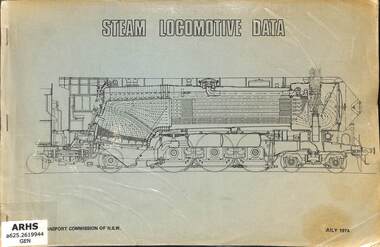
Book, New South Wales Public Transport Commission, Steam Locomotive Data Public Transport Commission of N.S.W. July 1974, 1974
... railroad operations - New South Wales - history Locomotives - New South Wales - history Data on steam locomotives of the New South Wales Railway in July 1974. p.113 Steam Locomotive Data Public Transport Commission of N.S.W. ...Data on steam locomotives of the New South Wales Railway in July 1974.p.113non-fictionData on steam locomotives of the New South Wales Railway in July 1974.railroad operations - new south wales - history, locomotives - new south wales - history -
 Victorian Railway History Library
Book, Cardew, C.A, The Progressive Development of the Steam Locomotive (and its Equipment) on the New South Wales Railways, 1965
... railroad operations - New South Wales - history Locomotives - New South Wales - history A report on the progressive development of the steam locomotive and its equipment on the New South Wales Railways. ill, p.38. ...A report on the progressive development of the steam locomotive and its equipment on the New South Wales Railways.ill, p.38.non-fictionA report on the progressive development of the steam locomotive and its equipment on the New South Wales Railways.railroad operations - new south wales - history, locomotives - new south wales - history -
 Victorian Railway History Library
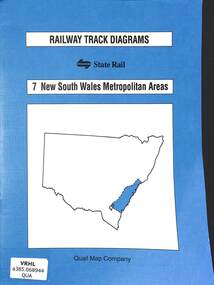
Book, Yonge, John, Railway Track Diagrams 7 - New South Wales Metropolitan Areas, 1998
... Railway & Tramway Maps - NSW Railroad operations - New South Wales - history Railway & tramway maps of New South Wales from Canberra to Newcastle including Sydney and the Metropolitan area. maps, p.20. ...Railway & tramway maps of New South Wales from Canberra to Newcastle including Sydney and the Metropolitan area.maps, p.20.non-fictionRailway & tramway maps of New South Wales from Canberra to Newcastle including Sydney and the Metropolitan area. railway & tramway maps - nsw, railroad operations - new south wales - history -
 Victorian Railway History Library
Book, Oakes, John, Sydney's Forgotten Goods Railways, 2013
... Railroad freight - Sydney - history Railroad operations - New South Wales - history An illustrated history of goods railways and goods yards in Sydney, some of which have been closed and dismantled. ill, maps, p.112. ...An illustrated history of goods railways and goods yards in Sydney, some of which have been closed and dismantled.ill, maps, p.112.non-fictionAn illustrated history of goods railways and goods yards in Sydney, some of which have been closed and dismantled.railroad freight - sydney - history, railroad operations - new south wales - history -
 Victorian Railway History Library
Book, Oakes, John, Sydney's Forgotten Park and Rural Railways, 2014
... Railroad operations - New South Wales - history Railroad branch lines - New South Wales - history An illustrated history of rural branch lines and railways to parks and cementaries in Sydney, most of which have been closed and dismantled. ill, maps, p.112. ...An illustrated history of rural branch lines and railways to parks and cementaries in Sydney, most of which have been closed and dismantled.ill, maps, p.112.non-fictionAn illustrated history of rural branch lines and railways to parks and cementaries in Sydney, most of which have been closed and dismantled.railroad operations - new south wales - history, railroad branch lines - new south wales - history -
 Victorian Railway History Library
Book, Oakes, John, Sydney's Forgotten Military Railways, 2011
... Railroad operations - New South Wales - history Railroad branch lines - New South Wales - history An illustrated history of branch lines serving military bases in Sydney, all of which have been closed and dismantled. ill, maps, p.112. Sydney's Forgotten Military Railways ...An illustrated history of branch lines serving military bases in Sydney, all of which have been closed and dismantled.ill, maps, p.112.non-fictionAn illustrated history of branch lines serving military bases in Sydney, all of which have been closed and dismantled.railroad operations - new south wales - history, railroad branch lines - new south wales - history -
 Victorian Railway History Library
Book, Oakes, John, Sydney's Forgotten City Railways, 2003
... Railroad operations - New South Wales - history Suburban Railways - Sydney An illustrated history of underground railway tunnels built in the Sydney CBD that were never completed. ill, maps, p.112. ...An illustrated history of underground railway tunnels built in the Sydney CBD that were never completed.ill, maps, p.112.non-fictionAn illustrated history of underground railway tunnels built in the Sydney CBD that were never completed.railroad operations - new south wales - history, suburban railways - sydney
