
Showing 307 items matching "railways new south wales"
-
 Victorian Railway History Library
Book, New South Wales, Department of Railways et al, The Railways of New South Wales, 1855-1955, 1955
... The Railways of New South Wales, 1855-1955......Railways -- New South Wales....Railways...New South Wales, Department of Railways...Railroads -- New South Wales -- History. Railways -- New South Wales. An illustrated history of the Railways of New South Wales from 1855-1955 created to celebrate the centenary of the railway. ill, maps, p.304. ...An illustrated history of the Railways of New South Wales from 1855-1955 created to celebrate the centenary of the railway.ill, maps, p.304.non-fictionAn illustrated history of the Railways of New South Wales from 1855-1955 created to celebrate the centenary of the railway.railroads -- new south wales -- history., railways -- new south wales. -
 Victorian Railway History Library
Book, Gunn, John, Along parallel lines : a history of the railways of New South Wales, 1850-1986, 1989
... Along parallel lines : a history of the railways of New South Wales, 1850-1986.......RAILWAYS - New South Wales - History....Railroads -- Australia -- New South Wales -- History. RAILWAYS - New South Wales - History. ...A history of the railways of New South Wales from 1850-1986 with maps and photographs..Index, ill, maps, p.581.non-fictionA history of the railways of New South Wales from 1850-1986 with maps and photographs..railroads -- australia -- new south wales -- history., railways - new south wales - history. -
 Victorian Railway History Library
Booklet, Department of Railways, New South Wales, Railway Quiz, 1951
... New South Wales Government Railways - Publicity...Railway...Department of Railways, New South Wales...New South Wales Government Railways - Publicity Railway questions A book of questions relating to railway matters p.56 Railway Quiz Booklet Department of Railways, New South Wales ...A book of questions relating to railway mattersp.56non-fictionA book of questions relating to railway mattersnew south wales government railways - publicity, railway questions -
 Victorian Railway History Library
Booklet, Department of Railways, New South Wales, Freight Handbook and Guide to Modern Transport by Rail, 1960s
... Department of Railways, New South Wales...Railroad - freight - New South Wales Railroads - New South Wales - Australia A hand book with information for sending freight by rail in New South Wales. ill, p.54. Freight Handbook and Guide to Modern Transport by Rail Booklet Department of Railways, New South Wales ...A hand book with information for sending freight by rail in New South Wales.ill, p.54.non-fictionA hand book with information for sending freight by rail in New South Wales.railroad - freight - new south wales, railroads - new south wales - australia -
 Victorian Railway History Library
Book, Australian Railway Historical Society NSW Division, A Century of Locomotives New South Wales Railways 1855-1955, 1955
... Australian Railway Historical Society NSW Division...Department of Railways, New South Wales...A Century of Locomotives New South Wales Railways 1855-1955 Book Australian Railway Historical Society NSW Division Department of Railways, New South Wales ...A history of the locomotives of the New South Wales Railways from 1855 to 1955 to celebrate the centenary of the railways opening.ill, p.128.non-fictionA history of the locomotives of the New South Wales Railways from 1855 to 1955 to celebrate the centenary of the railways opening.locomotives -- new south wales -- history, railroads -- new south wales -- history -
 Victorian Railway History Library
Book, Australian Railway Historical Society NSW Division, A Century Plus of Locomotives New South Wales Railways 1855-1965, 1965
... Australian Railway Historical Society NSW Division...Department of Railways, New South Wales...Locomotives -- New South Wales -- History Railroads -- New South Wales -- History A history of the locomotives of the New South Wales Railways from 1855 to 1965. ...A history of the locomotives of the New South Wales Railways from 1855 to 1965. An expanded version to include the 10 years after the centenary celebrations of the opening of the railways.ill, p.143non-fictionA history of the locomotives of the New South Wales Railways from 1855 to 1965. An expanded version to include the 10 years after the centenary celebrations of the opening of the railways.locomotives -- new south wales -- history, railroads -- new south wales -- history -
 Victorian Railway History Library
Book, Dedman, Daryl, Railways New South Wales, 2009
... Railways New South Wales...Railways New South Wales Book Dedman, Daryl Blurb.com ...Personal reflections of the New South Wales Government Railways.ill, p.75.non-fictionPersonal reflections of the New South Wales Government Railways.railroads -- australia -- trains -- pictorial works, railroad operations - new south wales - pictorial works -
 Victorian Railway History Library
Book, Burke, David, With Iron Rails - A Bicentennial History of the Railways in New South Wales, 1988
... With Iron Rails - A Bicentennial History of the Railways in New South Wales...New South Wales -- History. State Rail Authority of New South Wales -- History. a history of the railways in New South Wales up to 1988 the bicentenary of the colonizing of Australia. index, ill, maps, p.248. ...a history of the railways in New South Wales up to 1988 the bicentenary of the colonizing of Australia.index, ill, maps, p.248.non-fictiona history of the railways in New South Wales up to 1988 the bicentenary of the colonizing of Australia.railroads -- australia -- new south wales -- history., state rail authority of new south wales -- history. -
 Victorian Railway History Library
Book, Dornan, S.E, The Electric Railways of New South Wales, 1976
... The Electric Railways of New South Wales...railroad operations - New South Wales - history Electric trains - New South Wales - history A brief history of the electrified railway system operated by the New South Wales Government from 1926 to 1976. ill, maps, p.96. ...A brief history of the electrified railway system operated by the New South Wales Government from 1926 to 1976.ill, maps, p.96.non-fictionA brief history of the electrified railway system operated by the New South Wales Government from 1926 to 1976.railroad operations - new south wales - history, electric trains - new south wales - history -
 Victorian Railway History Library
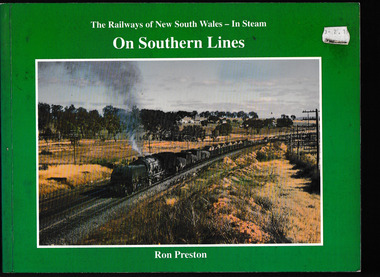
Book, Preston, R.G, The railways of New South Wales - In steam on southern lines, 2001
... The railways of New South Wales - In steam on southern lines...Pictorial works - Steam - New South Wales Steam trains - New South Wales A pictorial history of New South Wales steam on the southern lines ill, p.80. The railways ...A pictorial history of New South Wales steam on the southern linesill, p.80.non-fictionA pictorial history of New South Wales steam on the southern linespictorial works - steam - new south wales, steam trains - new south wales -
 Victorian Railway History Library
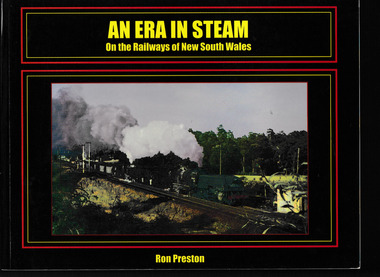
Book, Preston, R.G, An era in steam on the railways of New South Wales, 2001
... An era in steam on the railways of New South Wales...Pictorial works - Steam - New South Wales Steam trains - New South Wales A pictorial history of New South Wales steam ill, p.112. An era in steam on the railways of New South Wales Book Preston, R.G. ...A pictorial history of New South Wales steamill, p.112.non-fictionA pictorial history of New South Wales steam pictorial works - steam - new south wales, steam trains - new south wales -
 Victorian Railway History Library
Book, Rayment, Alfred, The Romance of the Railway - with reminiscences of a railway staff-officer, 1935
... RAILWAYS - New South Wales - History....RAILWAYS - New South Wales - History. railways - New South Wales - personal reminiscence Reminiscences of Alfred Rayment a railway staff-officer on the New South Wales railways. p.79. ...Reminiscences of Alfred Rayment a railway staff-officer on the New South Wales railways.p.79.non-fictionReminiscences of Alfred Rayment a railway staff-officer on the New South Wales railways.railways - new south wales - history., railways - new south wales - personal reminiscence -
 Victorian Railway History Library
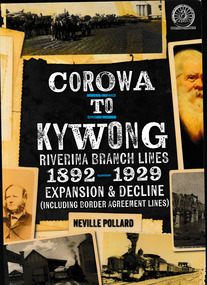
Book, Australian Railway Historical Society (New South Wales Division), Corowa to Kywong: Riverina branch lines 1892-1929 Expansion and decline (Including border agreement lines), 2026
... Railways - New South Wales - Riverina...Australian Railway Historical Society (New South Wales Division)...Railways - New South Wales - Riverina Railways - New South Wales - History This book is the sequel to Railways to the Riverina 1855–1886: Personalities, Policies and Resources, continuing the story of the expansion of the railway network across southern New South Wales. ...This book is the sequel to Railways to the Riverina 1855–1886: Personalities, Policies and Resources, continuing the story of the expansion of the railway network across southern New South Wales. While the first volume traced the arrival of the main lines to Albury, Hay, Jerilderie and Gundagai, this book follows the next chapter: the era of pioneer, or developmental, railways.Ill, maps, notes, p.215.non-fictionThis book is the sequel to Railways to the Riverina 1855–1886: Personalities, Policies and Resources, continuing the story of the expansion of the railway network across southern New South Wales. While the first volume traced the arrival of the main lines to Albury, Hay, Jerilderie and Gundagai, this book follows the next chapter: the era of pioneer, or developmental, railways.railways - new south wales - riverina, railways - new south wales - history -
 Victorian Railway History Library
Book, Ryan, J.S, Armidale and District Historical Society Journal - Railway Issue, 1977
... RAILWAYS - New South Wales - History....RAILWAYS - New South Wales - History. Railway construction - Australia History and information about the railway from Maitland to Wallangarra in New South Wales. ill, maps, p.140. ...History and information about the railway from Maitland to Wallangarra in New South Wales.ill, maps, p.140.non-fictionHistory and information about the railway from Maitland to Wallangarra in New South Wales.railways - new south wales - history., railway construction - australia -
 Victorian Railway History Library
Book, Simpson, John, 35 Years of Railway Yarns, 1993
... railways - New South Wales - personal reminiscence...railways - New South Wales - personal reminiscence Australian folklore. ...A collection of railway stories from railway worker John Simpson in New South Wales.ill, p.96.non-fictionA collection of railway stories from railway worker John Simpson in New South Wales.railways - new south wales - personal reminiscence, australian folklore. special subjects: railway services. personal observations. collections. -
 Victorian Railway History Library
Book, Ames, Ken, Reflections of an Engineman, 1993
... railways - New South Wales - personal reminiscence...railways - New South Wales - personal reminiscence railroad operations - New South Wales - history Personal recollections from the engine driver Ken Ames and his time on the N.S.W. government railways. ill, maps, p.160. ...Personal recollections from the engine driver Ken Ames and his time on the N.S.W. government railways.ill, maps, p.160.non-fictionPersonal recollections from the engine driver Ken Ames and his time on the N.S.W. government railways.railways - new south wales - personal reminiscence, railroad operations - new south wales - history -
 Victorian Railway History Library
Book, Ellis, Denny, A Railwayman's Journey, 2005
... ...railways - New South Wales - personal reminiscence...Australian Railway Historical Society New South Wales Division...railroad operations - New South Wales - history railways - New South Wales - personal reminiscence Personal recollections from railwayman Denny Ellis of his time on the New South Railways government railways in the 1950s and 1960s. ill, maps, p.448. ...Personal recollections from railwayman Denny Ellis of his time on the New South Railways government railways in the 1950s and 1960s.ill, maps, p.448.non-fictionPersonal recollections from railwayman Denny Ellis of his time on the New South Railways government railways in the 1950s and 1960s.railroad operations - new south wales - history, railways - new south wales - personal reminiscence -
 Victorian Railway History Library
Book, Mark Carter, Modern rail Portfolios - No. 1 - New South Wales, 1994
... Railways New South Wales - History...Railways New South Wales - History Railway Operations - New South Wales A pictorial and descriptive history of railway operations in New South Wales ill, p. 69, Modern rail Portfolios - No. 1 - New South Wales Book Mark Carter Gresley Publishing ...A pictorial and descriptive history of railway operations in New South Walesill, p. 69,non-fictionA pictorial and descriptive history of railway operations in New South Walesrailways new south wales - history, railway operations - new south wales -
Victorian Railway History Library
Book, John H. Forsyth, How & Why of Station Names; meanings and origins, 1982
... Railways New South Wales...Railways New South Wales Railway Stations - New South Wales Details of New South Wales railway Station names ill, bib, p.258. ...Details of New South Wales railway Station namesill, bib, p.258.non-fictionDetails of New South Wales railway Station namesrailways new south wales, railway stations - new south wales -
National Wool Museum
Invoice form
... Blank wool invoice forms from the Department of Railways, New South Wales. Found in the ceiling of Exeter Railway Station, some 20km south of Moss Vale (ref Donation letter)....Blank wool invoice forms from the Department of Railways, New South Wales. Found in the ceiling of Exeter Railway Station, some 20km south of Moss Vale (ref Donation letter). ...Blank wool invoice forms from the Department of Railways, New South Wales. Found in the ceiling of Exeter Railway Station, some 20km south of Moss Vale (ref Donation letter).wool - transportation export - wool, nsw; department of railways, wool - transportation, export - wool -
 Ballarat Tramway Museum
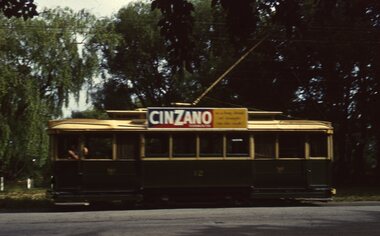
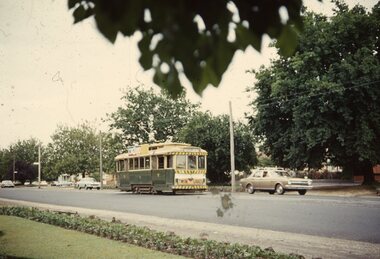
Photograph - Ballarat Tram 12, Tram in Wendouree Parade, 27 December 1970
... When the trams stopped running in 1971 it went to South Pacific Electric Railway, Sydney, New South Wales. Classified operable. ...When the trams stopped running in 1971 it went to South Pacific Electric Railway, Sydney, New South Wales. Classified operable. ...Tram 12 was built by Meadowbank Manufacturing Co. Sydney in 1915. First ran for the Prahran and Malvern Tramways Trust and then Geelong as Tram 27. Came to Ballarat in 1936. When the trams stopped running in 1971 it went to South Pacific Electric Railway, Sydney, New South Wales. Classified operable. Photograph shows Tram 12 in Wendouree Parade. Cinzano roof advertisement on the tram. Photograph taken by Campbell Duncan, photographer, dated 27/12/1970.Colour image in C/B Ferraniacolor mount, 35mm slideHandwritten notation in ink on mountmeadowbank manufacturing, 1915, prahran and malvern tramways trust, ballarat 1936, 1971, 1983 to ballarat, campbell duncan, photographer, december 1970, wendouree parade, ballarat tram 12, roof advertisement -
 Ballarat Tramway Museum
Photograph - Ballarat Tram 12, Tram in Victoria Street, 27 December 1970
... When the trams stopped running in 1971 it went to South Pacific Electric Railway, Sydney, New South Wales. Classified operable. ...When the trams stopped running in 1971 it went to South Pacific Electric Railway, Sydney, New South Wales. Classified operable. ...Tram 12 was built by Meadowbank Manufacturing Co. Sydney in 1915. First ran for the Prahran and Malvern Tramways Trust and then Geelong as Tram 27. Came to Ballarat in 1936. When the trams stopped running in 1971 it went to South Pacific Electric Railway, Sydney, New South Wales. Classified operable. Photograph shows Tram 12 in Victoria Street. Twin Lakes sign on front of the tram. Photograph taken by Campbell Duncan, photographer, dated 27/12/1970.Colour image in C/B Ferraniacolor mount, 35mm slideHandwritten notation in ink on mountmeadowbank manufacturing, 1915, prahran and malvern tramways trust, ballarat 1936, 1971, 1983 to ballarat, campbell duncan, photographer, december 1970, ballarat tram 12, victoria street, twin lakes sign -
 Puffing Billy Railway
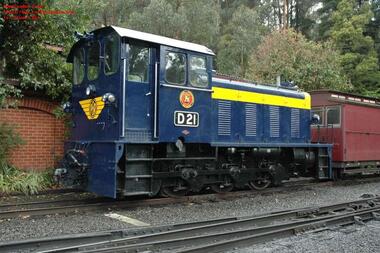
D21 - Diesel Mechanical locomotive, 1968
... Ten have been preserved: V1 by the Bellarine Peninsula Railway, Victoria V2 by the Don River Railway V4 by the Hotham Valley Railway, Western Australia V5 by the Hotham Valley Railway, Western Australia V7 by the Derwent Valley Railway V8 by the Bellarine Peninsula Railway, Victoria V9 by the West Coast Wilderness Railway V12 by the Puffing Billy Railway, Victoria (regauged to 760 mm gauge and numbered D21) V13 by the Zig Zag Railway, New South Wales, sold to the West Coast Wilderness Railway, renumbered D2 22 by the West Coast Wilderness Railway, renumbered D1 Tasmanian Government Railways V class Manufacturer Vulcan Foundry Tasmanian Government Railways Entered service 1948 Number built 14 Number preserved 10 Fleet numbers TGR: V1-V13 Emu Bay: 22 Power: 152kW (204hp) or 114kW (153hp) Motor: Gardner 8L3 (V) or Gardner 6L3 (VA) Wheel Arrangement: - C - Weight: 25.6t Allowable load on 1:40 grade: 170t Length over headstocks: 6.8m (22ft 6in) Introduced: 1948 Built By: Vulcan Foundry, England; TGR Workshops, Launceston; Using parts supplied by Drewry Car Co (UK) Number Preserved: 10 Number In Service: 0 Total Number Built: 14...Ten have been preserved: V1 by the Bellarine Peninsula Railway, Victoria V2 by the Don River Railway V4 by the Hotham Valley Railway, Western Australia V5 by the Hotham Valley Railway, Western Australia V7 by the Derwent Valley Railway V8 by the Bellarine Peninsula Railway, Victoria V9 by the West Coast Wilderness Railway V12 by the Puffing Billy Railway, Victoria (regauged to 760 mm gauge and numbered D21) V13 by the Zig Zag Railway, New South Wales, sold to the West Coast Wilderness Railway, renumbered D2 22 by the West Coast Wilderness Railway, renumbered D1 Tasmanian Government Railways V class Manufacturer Vulcan Foundry Tasmanian Government Railways Entered service 1948 Number built 14 Number preserved 10 Fleet numbers TGR: V1-V13 Emu Bay: 22 Power: 152kW (204hp) or 114kW (153hp) Motor: Gardner 8L3 (V) or Gardner 6L3 (VA) Wheel Arrangement: - C - Weight: 25.6t Allowable load on 1:40 grade: 170t Length over headstocks: 6.8m (22ft 6in) Introduced: 1948 Built By: Vulcan Foundry, England; TGR Workshops, Launceston; Using parts supplied by Drewry Car Co (UK) Number Preserved: 10 Number In Service: 0 Total Number Built: 14 Historic - Tasmanian Government Railways - Diesel Mechanical locomotive - V12 / Puffing Billy Railway Diesel Mechanical locomotive D21 diesel mechanical locomotive puffing billy d21 v12 diesel mechanical locomotive d21 diesel mechanical locomotive tasmanian government railways D21 D21 - Diesel Mechanical locomotive made of steel D21 - Diesel Mechanical locomotive Tasmanian Government Railways ...D21 - Diesel Mechanical locomotive Date built - 1968 Original owner - TGR Original gauge - 1067mm Withdrawn - 1983 Built to 3'6" gauge in 1968 by the Tasmanian Government Railways and numbered V12, ownership of this Diesel Mechanical locomotive was transferred to Australian National Railways (Tas.) in 1978. It was withdrawn and sold to the E.T.R.B. in 1983 1968 - D21 ex-Tasmanian Government Railways (TGR) V class No.12, built by the TGR Launceston Workshops in 1968 to a design of Vulcan-Drewry (England). Tasmanian Government Railways V class The V class were the first diesel locomotives operated by the Tasmanian Government Railways (TGR) with four delivered by the Vulcan Foundry in 1948 to a design by the Drewry Car Co. They were a narrow gauge version of the British Rail Class 04. In 1951 a fellow two were delivered followed by another two in 1955. Between 1959 and 1968 the TGR built a further four at its Launceston Workshops. Two identical locomotives were purchased by the Mount Lyell Mining and Railway Company in 1953. When it closed in 1963, 2405 was sold to the Emu Bay Railway as number 22, while 2406 went to the TGR as V13. All the TGR units were withdrawn between 1983 and 1987 while the Emu Bay unit remained in service until 2000. Ten have been preserved: V1 by the Bellarine Peninsula Railway, Victoria V2 by the Don River Railway V4 by the Hotham Valley Railway, Western Australia V5 by the Hotham Valley Railway, Western Australia V7 by the Derwent Valley Railway V8 by the Bellarine Peninsula Railway, Victoria V9 by the West Coast Wilderness Railway V12 by the Puffing Billy Railway, Victoria (regauged to 760 mm gauge and numbered D21) V13 by the Zig Zag Railway, New South Wales, sold to the West Coast Wilderness Railway, renumbered D2 22 by the West Coast Wilderness Railway, renumbered D1 Tasmanian Government Railways V class Manufacturer Vulcan Foundry Tasmanian Government Railways Entered service 1948 Number built 14 Number preserved 10 Fleet numbers TGR: V1-V13 Emu Bay: 22 Power: 152kW (204hp) or 114kW (153hp) Motor: Gardner 8L3 (V) or Gardner 6L3 (VA) Wheel Arrangement: - C - Weight: 25.6t Allowable load on 1:40 grade: 170t Length over headstocks: 6.8m (22ft 6in) Introduced: 1948 Built By: Vulcan Foundry, England; TGR Workshops, Launceston; Using parts supplied by Drewry Car Co (UK) Number Preserved: 10 Number In Service: 0 Total Number Built: 14Historic - Tasmanian Government Railways - Diesel Mechanical locomotive - V12 / Puffing Billy Railway Diesel Mechanical locomotive D21D21 - Diesel Mechanical locomotive made of steel D21diesel mechanical locomotive, puffing billy, d21, v12 diesel mechanical locomotive, d21 diesel mechanical locomotive, tasmanian government railways -
 Wodonga & District Historical Society Inc
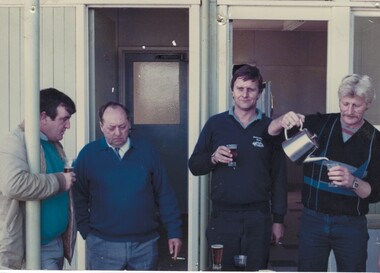
Photograph - Fred Rochow Railways Collection - Group of 4 men in Wodonga
... . - The Australian Railways Union formed in September 1920 with the amalgamation of the Queensland Railways Union, the New South Wales Amalgamated Railway and Tramway Service Association, the Victorian Railway Union, the Railway and Tramway Employees Association of South Australia and the Tasmanian Railway Union. .... - The Australian Railways Union formed in September 1920 with the amalgamation of the Queensland Railways Union, the New South Wales Amalgamated Railway and Tramway Service Association, the Victorian Railway Union, the Railway and Tramway Employees Association of South Australia and the Tasmanian Railway Union. ...The Fred Rochow Railways Collection incorporates photos related to the operation of the Wodonga Railway Station including different types of trains and railways staff C. 1930 – 1990. It was donated to the Wodonga Historical Society by Fred Rochow, a railwayman who spent many years based in Wodonga. He joined the Victorian Railways on 17th June l947 and retired in 1988. For some time, he was a member of the Australian Federated Union of Locomotive Enginemen and served a term as a member of the Trades Hall Council. He had an extensive knowledge of the struggles that took place to achieve better conditions for railway workers. Fred worked for many years as a fireman and then worked his way up the ranks to driver, experiencing many changes from the days of steam locomotives through to diesel trains, locomotives and even the modern XPT train. He worked throughout Victoria at different stages of his career, with his final working years focused on the northeast of Victoria and the Albury to Melbourne line. After his retirement, Fred continued to share his love of steam miniature trains with the community The first railway union in the world was created in Melbourne in 1861 when twenty locomotive drivers banded together to form the Locomotive Engine Drivers Association of Victoria. The forerunner to the A.F.U.L.E., the Association continues today and is the oldest continuous railway union in the world. A.R.U. - The Australian Railways Union formed in September 1920 with the amalgamation of the Queensland Railways Union, the New South Wales Amalgamated Railway and Tramway Service Association, the Victorian Railway Union, the Railway and Tramway Employees Association of South Australia and the Tasmanian Railway Union. It was the first Australian all-grades organisation of railway workers and was federally registered on 8 February 1921. In 1993 the ARU merged with other unions to form the Rail Tram & Bus Industry Union.This collection has local and statewide significance as it captures images of trains, locomotives and personnel who operated the railway services in Wodonga and throughout Northeast Victoria. The railways played a critical role in opening up Victoria and connecting Australia for trade, business, social communication and transport.A group 4 men in Wodonga. Possibly at branch union meeting.Left to right: Driver R. Heathcote AFULE Branch Secretary; Guard J. Young, ARU Branch Secretary; Driver S. Withers; P. Murnane.fred rochow, victorian railways wodonga, railway employees wodonga, railway trade unions -
 Puffing Billy Railway
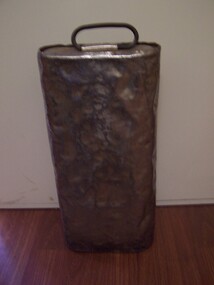
Equipment - Victorian Railways Carriage Foot Warmer
... The McLaren patent foot warmer was used on railways in New South Wales, Queensland, Victoria and South Australia as well as South Africa and New Zealand. ...The McLaren patent foot warmer was used on railways in New South Wales, Queensland, Victoria and South Australia as well as South Africa and New Zealand. ...During prestige, long distance train journeys some carriages had air-conditioning, and the majority of passengers had to brave unheated carriages. To offer some comfort during the winter months, the non-air-conditioned carriages were provided with footwarmers. These were metal containers roughly 100 mm thick and 300 mm wide, and about 750 mm long, which were filled with salt crystals (concentrated crystalline hydrated sodium acetate). The footwarmers were covered by sleeves of thick canvas, and two footwarmers were usually placed in each compartment of non-air-conditioned carriages. To activate the chemicals, the footwarmers were heated almost to boiling point. This was done by removing the canvas sleeves and placing the footwarmers in a large bath of very hot water. After they had been heated, they were removed from the bath and the sleeves refitted. They were then ready to be placed in the carriages. The McLaren patent foot warmer was used on railways in New South Wales, Queensland, Victoria and South Australia as well as South Africa and New Zealand. It was during the 1901 royal visit by the Duke and Duchess of Cornwall that these foot warmers were first used in New Zealand in the royal carriage. Before railway carriage heating was introduced, McLaren patent foot warmers were placed on the floor of New South Wales government railway carriages from 1891 to provide a little passenger comfort. The rectangular steel container worked a bit like a hot water bottle but instead of water contained six and a half kilograms of loosely-packed salt crystals, (concentrated crystalline hydrated sodium acetate). This was permanently sealed inside the container with a soldered cap. After the foot warmer was heated in vat of boiling water for about one and a quarter hours the crystals became a hot liquid. (The melting point for sodium acetate is 58 degrees). There was a whole infrastructure of special furnaces set up at stations for the daily heating of foot warmers. By 1914 the Victorian railways had 4,000 foot warmers in service and by 1935 there were 33 furnaces at principal stations to heat them. After about 10 hours the container was picked up by the handle and given a good vertical shake which helped the cooled liquid reform into a solid mass of hot crystals. Staff or sometimes passengers shook them en route when the foot warmers began to get cold. However, as they were heavy this was only possible by fit and agile passengers. At the end of the journey the containers were boiled again for reuse on the next trip. Sodium acetate railway foot warmers were introduced in Victoria in 1889, Adelaide to Melbourne express in 1899. "Shaking up" on this service took place at Murray Bridge and Stawell on the tip to Melbourne and at Ballarat and Serviceton on the trip to Adelaide. The use of foot warmers began to decline in New South Wales from the 1930s with the first trial of carriage air-conditioning in 1936, steam heating from 1948 ad LP gas heating from 1961. By the early 1960s the main services using foot warmers were the overnight mail trains. info from : http://www.powerhousemuseum.com/collection/database/?irn=67564#ixzz4UBNzVf6t Under Creative Commons License: Attribution Non-Commercial There was a whole infrastructure set up at stations for the daily heating of foot warmers in special furnaces. In Victoria alone in 1935 there were 33 heating works.Historic - Victorian Railways - Carriage Heater - Foot warmerA rectangular-shaped stainless steel casing with a welded seam down the back and welded ends. There is a handle at one end for carrying and shaking. Inside the foot warmer are two baffle plates and three trays to contain the sodium acetate. There was a cast-iron ball in each internal compartment. puffing billy, victorian railways, carriage haeter, foot warmer, passenger comfort, station furnace, railway ephemera, early heating methods -
 Flagstaff Hill Maritime Museum and Village
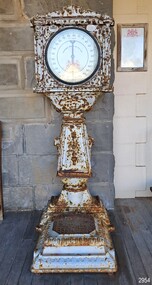
Instrument - Scale, Weighing Machine, G. Salter & Co, 1884-1909
... In 1923, the firm tendered for the right to place Automatic Weighing Machines on railway and tram premises throughout New South Wales, subsequently for five-year terms, in return for a fixed payment per machine and a portion of the revenue to the NSW Government. ...In 1923, the firm tendered for the right to place Automatic Weighing Machines on railway and tram premises throughout New South Wales, subsequently for five-year terms, in return for a fixed payment per machine and a portion of the revenue to the NSW Government. ...This ornate, Victorian-era automatic weighing machine was made in England around 1884-1909, by George Salter and Co. of West Bromwich, UK, makers of scales since 1760. It is protected by Queen Victoria’s Royal Letters Patent, signed in 1900. The scale stood outside the Warrnambool Post Office in Timor Street from around 1909 to 1966, as shown on postcards and photographs held at the State Library of Victoria. The scale is identified by the Serial Number '665', and was installed by the distributors, the Australasian Automatic Weighing Machine Co. Ltd.. The scale’s weight measurements were in Imperial stones and pounds up to 20 stone (127 kg). The scale’s face included charts of average weights, for men, women, boys and girls, by various heights, in feet and inches. The coin slot and its face were converted to metric measurements by the Eastern Scale Company Pty. Ltd; that firm was registered on October 2, 1974. The Australasian Automatic Weighing Machine Co. Ltd was a large supplier of weighing scales in Australia and held the Royal Letters patent for their machines, distributing them in prominent locations. In 1902, the firm was listed under the Import Entries Passed at His Majesty’s Customs, importing into Sydney, NSW, eight cases of scales. In 1911, the company asked permission from the Port Pirie Corporation to install a machine in Alexander Street. In 1913, the company applied to the City of Sydney to install machines around the city, including at the tram depot. One application mentions “… three machines in three places for three pounds per year”. In 1923, the firm tendered for the right to place Automatic Weighing Machines on railway and tram premises throughout New South Wales, subsequently for five-year terms, in return for a fixed payment per machine and a portion of the revenue to the NSW Government. In 1928, the Sydney Harbour Trust gave the firm the right to place the weighing machines on various ferry jetties. The firm was still operating in 1941, advertising for two boys aged 14-16 for the workshop and messages, at the Rialto building, 497 Collins St., Melbourne. On December 21, 1946, the Commonwealth government invited offers to tender for the right to place automatic weighing machines on postal premises throughout the six states; the successful company then made arrangements with the federal Postmaster General's Department to place machines outside post offices across the country. A few years later, on September 11, 1950, the firm's Adelaide branch ceased trading. From 11th July 1950, the Australian and Eastern Engineering Company Pty. Ltd took over at the same premises, at 179 Pirie Street, Adelaide. The Perth branch ceased business in WA on July 6th, 1950. Percival Everitt invented and patented the automatic, coin-operated personal scale design. Everitt was a Norfolk-born engineer and regarded as the father of the coin-operated industry. As a young man in 1877, he invented a hay and corn pitcher, a turnip thinner in 1878 and an Automatic Travelling Anchor in 1880. But his fame came in 1883 with the first postcard-vending machine, over a hundred of which he distributed around London. In 1884, he patented one of his many inventions, the coin-operated scales for use in public places; for many people, it was their first exposure to coin-operated machines. His success prompted the formation of the Weighing Machine Company in 1885. Further inventions followed: a blow tester in 1887, the machine for testing a person's grip in 1888, and in 1889, the dispensing machine for hiring out opera glasses, and a device for shutting down the coin entry slot if the machine was empty. In 1890, he invented a fortune-telling machine. Everitt sadly did not make his fortune; he died suddenly in February 1893, in his late forties, with £71 to his name. George Salter & Co., West Bromwich, England, produced automatic weighing scale machines from Everitt’s patented design, and advertised them as suitable for hotels, pleasure gardens, theatres, exhibition halls, clubs, baths and places of public resort. The company was established in 1760 by brothers Richard and William Salter, and manufactured springs and pocket steelyards (spring balances). After several generations, the company was taken over in 1855 by a nephew, George, and renamed George Salter & Co. In 1884, Salter registered the trademark of a Staffordshire knot pierced by an arrow. The company's expanded range of products included the first coin-operated public weighing machines in the 1880s and, in 1895, the first English-made typewriter. In 1915, Salter became a limited company, Geo. Salter & Co. Ltd. When the last George Salter died in 1917, the company passed into the hands of other relatives, but continued to grow before being bought out by Staveley Industries in 1973. Despite several subsequent mergers, the Salter name continues to be seen on household products such as digital scales. This patented, coin-operated weight machine is significant for its association with Percival Everitt, the inventor of the world’s first slot machine, with the renowned maker of scales, G. Salter & Co., which began operating in 1760, and also with the Australasian Automatic Weighing Scale Co., which imported and widely distributed the scales throughout Australia from the early-to-mid 20th century. It is a rare example of an early vending machine used in public places from the late 19th through to the mid-20th century. These machines were the early step in the evolution of coin-in-the-slot machines, which are still used today. The scales give a glimpse into our history; they became quickly popular with the public, which, until then, had little access to weight scales apart from those at medical services. They also provided inexpensive entertainment for families, especially while waiting for trains or visiting the post office. The machines were also attractive and lucrative to the distributors; once installed, they required very little maintenance, and their low cost to customers kept the money coming in. This automatic weighing machine is also significant for its decades of service to the local and regional community of Warrnambool, for personal and commercial purposes. A public coin-operated weighing scale, also called a penny scale. It is a large, silver-painted cast metal stand with a square top on a pedestal that flares outwards to join a rectangular platform base with posts on the side and corners that may have had fitted wheels. The round, white face on top has red and black measurements and inscriptions. A slim indicator with a point at one end and an arc at the other is attached to the face’s centre. The coin slot is above the face, on the left, and the scale’s identification number is engraved on an oval plate on the right. Moulded motifs decorate the pedestal’s front and are repeated on its sides; they depict a tall, narrow urn with a bowl on top and fancy scrolls on either side. There is a decorative panel across the front top of the stand. The top of the pedestal has a small keyhole. The size of the coin slot fitted a penny coin, and the weight measurements on the face were in Imperial stones and pounds. Quite some time after 1966, when Australia introduced new decimal weights, measurements and currency, the scale was updated; the coin slot size was changed, and a new face with metric measurements was installed. The scale now accepts a $1 coin (one dollar) and the scale measures weight in kilograms and grams, from 0 to 125 kg.. The rear of the scale has a small, rectangular metal plate with printed text. The scale was made by G Salter & Co. of West Bromwich, UK, distributed by the Australasian Automatic Weighing Platform Co., and updated to metric measurements by Eastern Scale Co. Pty Ltd. It was previously installed at the Warrnambool Post Office. Engraved on an oval plate on the right: "665" Top centre of the face, in red: "$1 coin" Top of face: "EASTERN SCALE CO. PTY LTD" Base of face, in red: "[Royal Coat of Arms of Britain]" with words, below in red: "BY ROYAL LETTERS PATENT" Around the face, in black: "[numbers 0 to 125, in increments 5, and makes between the numbers for each 500g]" "kg" Below the face, moulded letters within a shield: "AUSTRALASIAN AUTOMATIC WEIGHING MACHINES CO. LTD." At the back of the weighing platform: "G SALTER & CO. / WEST BROMWICH", remnants of logo “[Staffordshire knot pierced by an arrow]” Plate on rear: THIS SCALE REMAINS THE PROPERTY OF EASTERN SCALE CO. PTY. LTD., 8 GEORGE COURT, GREENSBOROUGH, VIC, 3088. PHONE (03 ) _ 34 _ _ 33” (434 9333 ?_flagstaff hill, warrnambool, maritime village, maritime museum, flagstaff hill maritime museum and village, shipwreck coast, great ocean road, scale, weighing scale, salter, australasian, 1 dollar, $1 coin, 1p, 1 penny coin, penny scale, coin in slot scale, eastern scale co. pty. ltd., british royal coat of arms, royal letters patent, letters patent, health, ending machine, coin-operated machine, percival everett, weighing machine co., george salter & co., g salter & co, west bromwich, vending machine, weights & balances, measurements, slot machine, coin operated machine, penny-in-the-slot, coin fed, coin op scale, weights & measures, australasian automatic weighing machine co. ltd., warrnambool post office, machine 665, no. 665, blalnce technology, scales and weights, weights and measures, penny weight scales, vintage, weighing machine, coin in the slot, coin operated, public scale, public weighing machine, penny-weighing machines, penny weighing machines, penny scales, coin operated weighing machine, scale weighing machine -
 Federation University Historical Collection
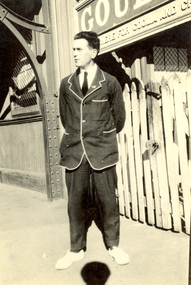
Photograph - Black and White, V. Holt, Frank Wright at Goulbourn Station, New South Wales, 1923
... South Street and in New Zealand. The Frank Wright Medal at the Royal South Street competition is awarded to an individual recognized as making an outstanding contribution to brass music in Australia. frank wright cornet conductor ballarat goulbourne railway station blazer Written in pen on the back - Frank Wright 21, on Goulbourne station N.S.W., Easter 1923 Black and white photograph of a man wearing trousers and a white trimmed blazer. He is standing on the platform at the Goulbourne railway station. The man is Frank Wright. Frank Wright at Goulbourn Station, New South Wales ...Frank Wright was a renown resident of Smeaton, where he was born. He lived at Laura Villa, and attended Smeaton State School. His father William was a gold miner and his mother's name was Sarah. Their family won many singing and instrumental awards. Frank was tutored by Percy Code and was awarded a gold medal for the highest marks in the ALCM examinations in the British Colonies at the age of seventeen years. He became the Australian Open Cornet Champion by the age of eighteen. A year later, Frank conducted the City of Ballarat Band, and later the Ballarat Soldiers’ Memorial Band. He formed the Frank Wright Frisco Band and Frank Wright and his Coliseum Orchestra. These bands won many South Street awards, and Frank as conductor won many awards in the Australian Band Championship contest. In 1933 Frank Wright sailed to England to conduct the famous St Hilda’s Band and was later appointed Musical Director of the London County Council, where he organized many amazing concerts in parks, in and around the London district. He was made Professor of Brass and Military Band Scoring and conducted at the Guildhall of Music and Drama. Frank was often invited to adjudicate Brass Band Championships around Europe, in Australia, including South Street and in New Zealand. The Frank Wright Medal at the Royal South Street competition is awarded to an individual recognized as making an outstanding contribution to brass music in Australia.Black and white photograph of a man wearing trousers and a white trimmed blazer. He is standing on the platform at the Goulbourne railway station. The man is Frank Wright.Written in pen on the back - Frank Wright 21, on Goulbourne station N.S.W., Easter 1923frank wright, cornet, conductor, ballarat, goulbourne railway station, blazer -
 Federation University Historical Collection
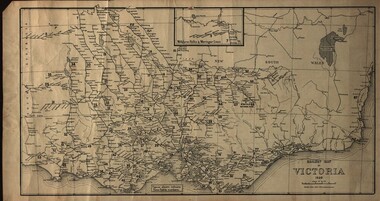
Map, Railway Map of Victoria, 1930
... Cardboard map of Victorian railway system in 1930. Maps out all train-lines in Victoria and into New South Wales. ...map railway train-lines victoria Victorian Railways railway lines Cardboard map of Victorian railway system in 1930. Maps out all train-lines in Victoria and into New South Wales. ...Cardboard map of Victorian railway system in 1930. Maps out all train-lines in Victoria and into New South Wales. map, railway, train-lines, victoria, victorian railways, railway lines -
Federation University Historical Collection
Booklet - Walking Guide, Ballarat Heritage Walking Guide, c2015
... New South Wales...George Hotel...Old Colonists' hall...Art Gallery of Ballarat...Union Fidelity Hall...Goller's Warehouse...Dunn's Warehouse...Ludbrook House...Reid's Coffe Police...Ballarat Railway...Ballarat Walking trail Statues Gold Monument Sturt Street unicorn hotel Ballarat Town hall Sugg light Ballarat Post Office Camp Street Summerscales Building State Offices Police court Huyghue House Pratt's Building YMCA Ballarat Trades Hall ANA Hall maps Lydiard Street Ballarat Gaol Ballarat School of Mines Wesleyan Church Ansonia Lynn's Chambers Craig's Royal Hotel her Majesty's Theatre Union Bank Building Bank of Australasia National Bank Colonial Bank of Australasia Bank of New South Wales George Hotel Old Colonists' hall Art Gallery of Ballarat Union Fidelity Hall Goller's Warehouse Dunn's Warehouse Ludbrook House Reid's Coffe Police Ballarat Railway Station Cenotaph Queen Victoria Fountain Boer War Memorial Burke and Wills Founitain Titanic Memorial Bandstand 35 page booklet with a detail from the Mining Exchange on the front. ...35 page booklet with a detail from the Mining Exchange on the front. ballarat, walking trail, statues, gold monument, sturt street, unicorn hotel, ballarat town hall, sugg light, ballarat post office, camp street, summerscales building, state offices, police court, huyghue house, pratt's building, ymca, ballarat trades hall, ana hall, maps, lydiard street, ballarat gaol, ballarat school of mines, wesleyan church, ansonia, lynn's chambers, craig's royal hotel, her majesty's theatre, union bank building, bank of australasia, national bank, colonial bank of australasia, bank of new south wales, george hotel, old colonists' hall, art gallery of ballarat, union fidelity hall, goller's warehouse, dunn's warehouse, ludbrook house, reid's coffe police, ballarat railway station, cenotaph, queen victoria fountain, boer war memorial, burke and wills founitain, titanic memorial bandstand -
 Orbost & District Historical Society
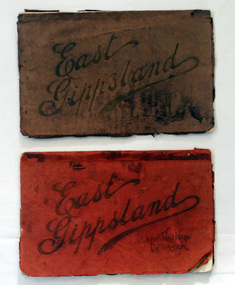
magazines, Atlas Press Pty Ltd, East Gippsland & Railway Extension, 10 September 1908
... railway length in 1908 was about 140 miles and the cost was estimated £800,000. The line was proposed to proceed from Bairnsdale by way of the Lower Nicholson to Bruthen. “After crossing the Tambo River, it would be carried to near Nowa Nowa; the head of Lake Tyers, forward to Orbost. From Orbost it would proceed in a north-easterly way to the New South Wales...railway length in 1908 was about 140 miles and the cost was estimated £800,000. The line was proposed to proceed from Bairnsdale by way of the Lower Nicholson to Bruthen. “After crossing the Tambo River, it would be carried to near Nowa Nowa; the head of Lake Tyers, forward to Orbost. From Orbost it would proceed in a north-easterly way to the New South Wales ...Orbost and East Gippsland Railway League had proposed a railway extension through East Gippsland in 1908, which aimed to develop an isolated part of the country. At the time, construction of a railway could be considered a beneficial investment for the country as it could increase the population in the region. The proposed railway length in 1908 was about 140 miles and the cost was estimated £800,000. The line was proposed to proceed from Bairnsdale by way of the Lower Nicholson to Bruthen. “After crossing the Tambo River, it would be carried to near Nowa Nowa; the head of Lake Tyers, forward to Orbost. From Orbost it would proceed in a north-easterly way to the New South Wales border. There were different suggested routes between Orbost and the New South Wales border, the first was through Bendoc, another by the Cann River and another which is located between these two. This item is associated with the history of the Orbost-Bairnsdale railway line and therefore reflects the role that the rail line played in the social and economic history of Orbost. The Bairnsdale-Orbost railway was opened in 1916 to serve the agricultural and timber industry. Because of the decline in traffic and heavy operating costs, the line was finally closed in August, 1987. Two small magazines showing the railway extension through East Gippsland. 678.1 has a dark maroon cover with gold print writing. It contains b/w photographs. 678.2 has a red cover with black print writing. Both are bound. 678.1 - inside front cover - M. Beattie ???????? Newmerella 678.2 - inside front cover - Gordon Fisher Orbosteast-gippsland-railway-league railway
