
Showing 275 items matching "religion - victoria"
-
 Mont De Lancey
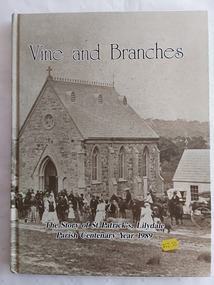
Book, Moira Burgi, Vine and Branches, 1989
... ...Religion - Victoria...St Patrick's Church Lilydale - history Catholic Church Lilydale - history Religion - Victoria This is a 160-page historical account published in 1989 to mark the centenary of St Patrick’s Catholic Church in Lilydale, Victoria. ...This is a 160-page historical account published in 1989 to mark the centenary of St Patrick’s Catholic Church in Lilydale, Victoria. Edited by Ed Burgi, this book chronicles the development of the parish, its community, and the church's role in the local area.A light tan book, Vine and Branches - The Story of St Patrick's, Lilydale Parish Centenary Year 1989 with a full wrap around photograph of the church on the occasion of its opening on March 17, 1871. The original old wooden church is seen at the right of the new one. It shows parishioners in their Sunday best clothes gathered outside. There are horses and a buggy. The title is printed in black lettering outlined in white. The spine has the title in similar print. On the bottom right hand corner of the front cover is a small yellow price sticker $12.50. Inside on the front end paper is a Mont De Lancey round stamp. There is a Dedication and a copy of a coloured certificate from The Holy Father giving his blessing to the priest and parishioners of the church in 1989. The title page has, 'I am the Vine... You are the Branches' and a psalm related to this. The Story of St Patrick's, Lilydale To mark the Centenary of the Parish 1989 is printed at the bottom. There is a list of sponsors, a Foreword, Preface and the history of St Patrick's life preceding the 28 chapters which give full details of the local people. At the back is Sources of Information and Some illustrations, Thanks, and an Abridged Index. The back cover has Historical Highlights and details of the photograph.non-fictionThis is a 160-page historical account published in 1989 to mark the centenary of St Patrick’s Catholic Church in Lilydale, Victoria. Edited by Ed Burgi, this book chronicles the development of the parish, its community, and the church's role in the local area. st patrick's church lilydale - history, catholic church lilydale - history, religion - victoria -
 Federation University Historical Collection
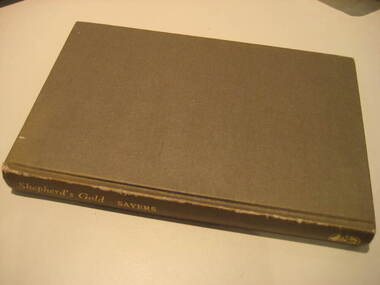
Book, C.E. Sayers, Shepherd's Gold: The Story of Stawell, 1966 (exact)
... religion...stawell victoria...One of the 6 University of Ballarat campuses is at Stawell. education religion stawell victoria stawell Grey hard covered book of 194 pages covering the history of Stawell, Victoria. ...One of the 6 University of Ballarat campuses is at Stawell.Grey hard covered book of 194 pages covering the history of Stawell, Victoria. Contents include Gold, squatters, Ayreys of Warranooke, Diggings, Reefs, Local Government, Road District, Shire, Borough, Town, Hospital, schools, Churches, Growth of Settlement, Claim Jumps, Sheep, Farming, Water, Grampians, Magdala, Callawadda, Deap Lead, Glenorchi, Great Western, Green's Creek, Marnoo, Wal Wal.education, religion, stawell victoria, stawell -
 Koorie Heritage Trust
Book, Barlow, Alex, The brothers Barmbarmbult and Mopoke, 1991
... | Aboriginal Australians -- Victoria -- Religion -- Juvenile literature. | Aboriginal Australians -- Victoria -- Food -- Juvenile literature...Religion. | Readers -- Aboriginal Australians -- Food. | Aboriginal Australians -- Victoria -- Folklore. | Aboriginal Australians -- Victoria -- Religion -- Juvenile literature. | Aboriginal Australians -- Victoria -- Food -- Juvenile literature. | Food -- Folklore. ...Story retold by Alex Barlow with illustrations by Elizabeth Djandilnga Thorne. "Long ago, when the great spirit ancestors were making the land, two spirit brothers lived in north-west Victoria. They were the brave warriors Barmbarmbult. this story recounts one of their many adventures."32 p. : col. ill. ; 22 cm.Story retold by Alex Barlow with illustrations by Elizabeth Djandilnga Thorne. "Long ago, when the great spirit ancestors were making the land, two spirit brothers lived in north-west Victoria. They were the brave warriors Barmbarmbult. this story recounts one of their many adventures."readers (primary) | readers -- aboriginal australians -- folklore. | readers -- aboriginal australians -- religion. | readers -- aboriginal australians -- food. | aboriginal australians -- victoria -- folklore. | aboriginal australians -- victoria -- religion -- juvenile literature. | aboriginal australians -- victoria -- food -- juvenile literature. | food -- folklore. long age -
 Surrey Hills Historical Society Collection
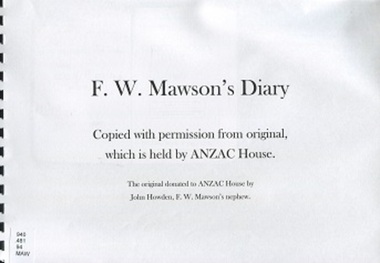
Book, F.W. Mawson's Diary facsimile
... Details re Fred Mawson (source AIF Project): Regimental number: 3073; Place of birth: Carlton, Victoria; School: Surrey Hills State School, Victoria; Religion: Presbyterian; Occupation: Carpenter; Address: Bona Vista Avenue, Surrey Hills; Marital status: Single; Age at embarkation: 22; Next of kin: Father, Frederick Mawson, Bona Vista Avenue, Surrey Hills; Enlistment date: 12 July 1915; Rank on enlistment: Sapper; Unit name: 5th Field Company Engineers; AWM Embarkation Roll number: 14/24/1; Embarkation details: Unit embarked from Melbourne, Victoria, on board HMAT A40 Ceramic on 24 November 1915; Rank from Nominal Roll: Lance Corporal; Fate Killed in Action 9 November 1917; Miscellaneous details (Nominal Roll): *second given name is William; Place of death or wounding: Ypres, Belgium; Age at death: 24; Place of burial: Ramparts Cemetery (Row J, Grave No. 24), Ypres, Belgium; Panel number, Roll of Honour, Australian War Memorial: 24. ...Details re Fred Mawson (source AIF Project): Regimental number: 3073; Place of birth: Carlton, Victoria; School: Surrey Hills State School, Victoria; Religion: Presbyterian; Occupation: Carpenter; Address: Bona Vista Avenue, Surrey Hills; Marital status: Single; Age at embarkation: 22; Next of kin: Father, Frederick Mawson, Bona Vista Avenue, Surrey Hills; Enlistment date: 12 July 1915; Rank on enlistment: Sapper; Unit name: 5th Field Company Engineers; AWM Embarkation Roll number: 14/24/1; Embarkation details: Unit embarked from Melbourne, Victoria, on board HMAT A40 Ceramic on 24 November 1915; Rank from Nominal Roll: Lance Corporal; Fate Killed in Action 9 November 1917; Miscellaneous details (Nominal Roll): *second given name is William; Place of death or wounding: Ypres, Belgium; Age at death: 24; Place of burial: Ramparts Cemetery (Row J, Grave No. 24), Ypres, Belgium; Panel number, Roll of Honour, Australian War Memorial: 24. ...This is a photocopy of the original diary which was donated to ANZAC house by John Howden, F.W. Mawson's nephew. Copied using Surrey Hills Historical Society funds with permission of Anzac House librarian, Fred Pratt. Copied and later transcribed as a result of the loan of the original for the exhibition mounted as part of the 'Gallipoli and Beyond 2015' raft of events coordinated by City of Boroondara and the historical societies of Boroondara. Details re Fred Mawson (source AIF Project): Regimental number: 3073; Place of birth: Carlton, Victoria; School: Surrey Hills State School, Victoria; Religion: Presbyterian; Occupation: Carpenter; Address: Bona Vista Avenue, Surrey Hills; Marital status: Single; Age at embarkation: 22; Next of kin: Father, Frederick Mawson, Bona Vista Avenue, Surrey Hills; Enlistment date: 12 July 1915; Rank on enlistment: Sapper; Unit name: 5th Field Company Engineers; AWM Embarkation Roll number: 14/24/1; Embarkation details: Unit embarked from Melbourne, Victoria, on board HMAT A40 Ceramic on 24 November 1915; Rank from Nominal Roll: Lance Corporal; Fate Killed in Action 9 November 1917; Miscellaneous details (Nominal Roll): *second given name is William; Place of death or wounding: Ypres, Belgium; Age at death: 24; Place of burial: Ramparts Cemetery (Row J, Grave No. 24), Ypres, Belgium; Panel number, Roll of Honour, Australian War Memorial: 24. Also listed on the honour roll of The Shrine in the Surrey Gardens. A photocopy of a diary written in 1916 in F.W. Mawson during part of his period of service during WW1.(mrs) f w mawson, holmsdale, house names, bona vista avenue, surrey hills, world war 1, 1914 - 1918, diaries and journals, (mr) frederick william mawson, (mr) fred mawson,, (mr) frederick mawson (snr), surrey gardens memorial -
 Surrey Hills Historical Society Collection
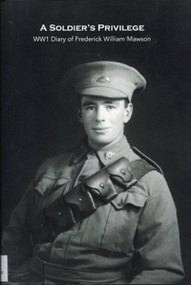
Book, A Soldier's Privilege - WW1 Diary of Frederick William Mawson
... Details re Fred Mawson (source AIF Project): Regimental number: 3073; Place of birth: Carlton, Victoria; School: Surrey Hills State School, Victoria; Religion: Presbyterian; Occupation: Carpenter; Address: Bona Vista Avenue, Surrey Hills; Marital status: Single; Age at embarkation: 22; Next of kin: Father, Frederick Mawson, Bona Vista Avenue, Surrey Hills; Enlistment date: 12 July 1915; Rank on enlistment: Sapper; Unit name: 5th Field Company Engineers; AWM Embarkation Roll number: 14/24/1; Embarkation details: Unit embarked from Melbourne, Victoria, on board HMAT A40 Ceramic on 24 November 1915; Rank from Nominal Roll: Lance Corporal; Fate Killed in Action 9 November 1917; Miscellaneous details (Nominal Roll): *second given name is William; Place of death or wounding: Ypres, Belgium; Age at death: 24; Place of burial: Ramparts Cemetery (Row J, Grave No. 24), Ypres, Belgium; Panel number, Roll of Honour, Australian War Memorial: 24. ...Details re Fred Mawson (source AIF Project): Regimental number: 3073; Place of birth: Carlton, Victoria; School: Surrey Hills State School, Victoria; Religion: Presbyterian; Occupation: Carpenter; Address: Bona Vista Avenue, Surrey Hills; Marital status: Single; Age at embarkation: 22; Next of kin: Father, Frederick Mawson, Bona Vista Avenue, Surrey Hills; Enlistment date: 12 July 1915; Rank on enlistment: Sapper; Unit name: 5th Field Company Engineers; AWM Embarkation Roll number: 14/24/1; Embarkation details: Unit embarked from Melbourne, Victoria, on board HMAT A40 Ceramic on 24 November 1915; Rank from Nominal Roll: Lance Corporal; Fate Killed in Action 9 November 1917; Miscellaneous details (Nominal Roll): *second given name is William; Place of death or wounding: Ypres, Belgium; Age at death: 24; Place of burial: Ramparts Cemetery (Row J, Grave No. 24), Ypres, Belgium; Panel number, Roll of Honour, Australian War Memorial: 24. ...This is a transcription by Sandra Dexter of the original WW1 diary which was donated to ANZAC House by John Howden, F.W. Mawson's nephew. Sandra augmented the words in the diary with additional material including photos to give context to the people, places and events referred to in Frederick Mawson's words. Published with Surrey Hills Historical Society funds with permission of Anzac House librarian, Fred Pratt. Transcribed as a result of the loan of the original for the exhibition mounted as part of the 'Gallipoli and Beyond 2015' raft of events coordinated by City of Boroondara and the historical societies of Boroondara. Details re Fred Mawson (source AIF Project): Regimental number: 3073; Place of birth: Carlton, Victoria; School: Surrey Hills State School, Victoria; Religion: Presbyterian; Occupation: Carpenter; Address: Bona Vista Avenue, Surrey Hills; Marital status: Single; Age at embarkation: 22; Next of kin: Father, Frederick Mawson, Bona Vista Avenue, Surrey Hills; Enlistment date: 12 July 1915; Rank on enlistment: Sapper; Unit name: 5th Field Company Engineers; AWM Embarkation Roll number: 14/24/1; Embarkation details: Unit embarked from Melbourne, Victoria, on board HMAT A40 Ceramic on 24 November 1915; Rank from Nominal Roll: Lance Corporal; Fate Killed in Action 9 November 1917; Miscellaneous details (Nominal Roll): *second given name is William; Place of death or wounding: Ypres, Belgium; Age at death: 24; Place of burial: Ramparts Cemetery (Row J, Grave No. 24), Ypres, Belgium; Panel number, Roll of Honour, Australian War Memorial: 24. Also listed on the honour roll of The Shrine in the Surrey Gardens. A transcription (with footnotes and illustrations, including photographs) of a diary written in 1916 in F.W. Mawson during part of his period of service during WW1.(mrs) f w mawson, holmsdale, house names, bona vista avenue, surrey hills, world war 1, 1914 - 1918, diaries and journals, (mr) frederick william mawson, (mr) fred mawson,, (mr) frederick mawson (snr), surrey gardens memorial, sandra dexter -
 Kew Historical Society Inc
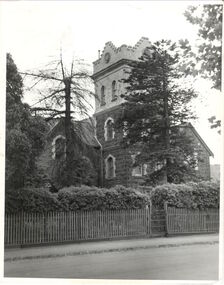
Photograph, J E & B L Rogers, 'Ivy Grange', Malmsbury Street, c. 1965
... Manly reflected credit on the pioneer priests, who had laid well and solidly the foundations, of religion in Victoria. (Applause.) He was glad that reference had been~made to the work of their late beloved pastor, Fr. ...Manly reflected credit on the pioneer priests, who had laid well and solidly the foundations, of religion in Victoria. (Applause.) He was glad that reference had been~made to the work of their late beloved pastor, Fr. ...Rate Book evidence records that by 1870 Charles Vickers, architect, was the occupier of this house, having an NA.V. at that date o f£1105, although it is apparent that the house was in fact built by 1864, from the dat; set in the brickwork above the main door. In 1873 the property was purchased by David Beath, a merchant, and it was in the following year that the house was first recorded as 'Ivy Grange'. Beath was a deeply religious man and was a foundation member of both the Congregational and the Presbyterian (the Church of Scotland) Churches of Kew . He added, probably the tower wing, to the house in 1877 when architects Crouch and Wilson called tenders in that year 'for the erection of bluestone additions to (a) villa at Kew, for Davis Beath Esq.' The house was again added to in 1885 by the leading firm Reed, Henderson and Smart. For a number of years in the 1920s 'Ivy Grange' was used as a private mental hospital and is currently a guest house. In 1921 a fete was held at Ivy Grange in aid of building a new church (Sacred Heart, Kew): "Garden Fete in Aid of New Church, Kew. A SUCCESSFUL FUNCTION. Beautiful weather favoured the opening of a garden fete at "Ivy Grange," the residence of Mr. and Mrs. J. Lawlor, Malmsbury and Princess streets, Kew, on last Saturday afternoon, in aid of the fine new Church of the Sacred Heart, Kew, which is now receiving its finishing touches. Not content to wait for the official opening, the lady stallholders did a good business on the previous evening. The ceremony was performed" by the Very Rev. Dean Hegarty, P.P., V.F. (Carlton), with whom were associated the Rev. J. Manly, P.P. (Kew), and the Rev. R. S. Benson, P.P. (South Yarra), Mr. and Mrs. J. Lawlor, and others. Fr. Manly, who was cordially received, said he desired to thank Mr. and Mrs. Lawlor for lending their charming grounds, and for the trouble, time and expense they had given to preparing for the fete. He wished to thank Dean Hegarty for coming to open the fete. The Dean had been a dear and lifelong friend of the late Fr. O'Donoghoe, the beloved pastor of the Kew parish. Next June the Dean would celebrate the golden jubilee of his priesthood, so they could see that he was not a young man. (Laughter.) He hoped that the fete would be a great success, and that when his Grace the Archbishop —: (applause) — should open the new church, he (the speaker) would be able to present a satisfactory financial statement. (Applause.) Dean Hegarty, who was very cordially received, said it was a source of great pleasure to him to come to Kew, of which he entertained many pleasant recollections. The new church would have delighted the heart of their late beloved pastor, but it had pleased God to take him to a holler temple. His mantle had fallen on worthy shoulders, in the person of Fr. Manly—(applause)—who was carrying on the work of the parish well and vigorously. (Applause.) Some wondered how these great works were successfully accomplished. The prime factor in the wonderful progress of the Church— the work of the people, priests and nuns—was their deep, abiding Catholic faith. (Applause.) Kew was not by any means a large parish, yet look at the magnificent church that Fr. Manly was building on the hill! He said to his people, "Come, follow me, and we shall win through." (Applause.) It gave him great pleasure to declare the fete open, and he wished it the highest measure of success. (Prolonged applause.) Mr. J. Lawlor, who was greeted with applause, in moving a hearty vote of thanks to Dean Hegarty for his presence and support, said he knew of the great work done by the Dean in Gippsland, where he (the speaker) lived when a young man. The Dean ministered to a parish at that time as large as was the diocese of Sale to-day. The Dean and Fr. Manly reflected credit on the pioneer priests, who had laid well and solidly the foundations, of religion in Victoria. (Applause.) He was glad that reference had been~made to the work of their late beloved pastor, Fr. O'Donoghoe. : Mr. Pierce Cody seconded the motion, which, was carried by acclamation. The Dean,* in acknowledging the compliment, paid a tribute to Mr. and Mrs. Lawlor for their great generosity in connection with the fete, and complimented them on their successful efforts. (Applause.). A cafe chantant, organised by Mr. John. Sullivan, was contributed to by Misses G. Hornal, M. O'Donnell, Ella Burke, Eileen Burke, Alice Marsh, and M. Carrucan, and Messrs. T. Hammond, J. Donovan, J. Sullivan, and Fr. Lanigan. Mrs. J. Donovan was at the piano. St. Vincent de Paul Boys' Orphanage Band (South Melbourne) rendered selections. The stalls ware as follow:—Cake and Sweets Stall: Mesdames Needham, Treacey, Lynch and Cody. Fancy Stall: Mesdames Lawlor, J. P. Martin, M. Treacey, Simpson, Giddons and A. Molton, and Miss, Shirley. Refrestiment Stall: Mesdames Shiels, Hunter, Kealy, Duane and the Misses Turner and Delahunty; Produce Stall: Mesdames O'Sullivan, Mareli, Carrucan, and Kennedy. Mr. P. J. Kennedy acted as hon. general secretary. The fete was continued in the evening, the grounds being brilliantly illuminated. (Advocate (Melbourne, Vic. : 1868 - 1954), Thursday 7 April 1921, page 13) In 1930 it was acquired by the Carmelite Fathers for use as a novitiate: "IVY GRANGE," KEW." Acquired for Carmelite Novitiate. The valuable property, "Ivy Grange," Kew. which" belonged to the McGuiness family has been acquired by the Carmelite Fathers for a novitiate." (Advocate (Melbourne, Vic. : 1868 - 1954), Thursday 18 September 1930, page 18This work forms part of the collection assembled by the historian Dorothy Rogers, that was donated to the Kew Historical Society by her son John Rogers in 2015. The manuscripts, photographs, maps, and documents were sourced by her from both family and local collections or produced as references for her print publications. Many were directly used by Rogers in writing ‘Lovely Old Homes of Kew’ (1961) and 'A History of Kew' (1973), or the numerous articles on local history that she produced for suburban newspapers. Most of the photographs in the collection include detailed annotations in her hand. The Rogers Collection provides a comprehensive insight into the working habits of a historian in the 1960s and 1970s. Together it forms the largest privately-donated collection within the archives of the Kew Historical Society.Ivy Grange, cnr Malmsbury and Princess Streets, Kew. Ivy Grange. Home of David Beath. Commenced 1864, Tower Wing added 1877. Chap 38.ivy grange, malmsbury street, dorothy rogers, david beath, charles vickers, crouch and wilson, kew houses -
 Flagstaff Hill Maritime Museum and Village
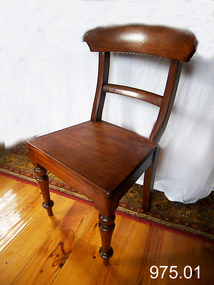
Furniture - Chair, ca 1944
... Religion...Religious service...St Nicholas Seamen’s Church...Williamstown...Missions to Seamen Victoria...Victoria. The Church was operated by the Mission to Seamen organisation. This chair, one of three, is significant historically for its origin in the St Nicholas Mission to Seamen's Church in Williamstown, established in 1857 to cater for the physical, social, and spiritual needs of seafarers. It originated in Bristol, England when a Seamen's Mission was formed in 1837. Flagstaff Hill Maritime Museum and Village Flagstaff Hill Warrnambool Maritime Museum Maritime Village Shipwreck Coast Great Ocean Road Religion ...This chair, one of a set of three, was part of the original furnishings of the St Nicholas' Mission to Seamen's Church at 139 Nelson Place, Williamstown, Victoria. The Church was operated by the Mission to Seamen organisation. This chair, one of three, is significant historically for its origin in the St Nicholas Mission to Seamen's Church in Williamstown, established in 1857 to cater for the physical, social, and spiritual needs of seafarers. It originated in Bristol, England when a Seamen's Mission was formed in 1837. Chair wooden dark brown with curved back rest, one of a set of three. The 2 front legs are decoratively shaped (turned) while the back legs are plain and flat-sided. Almost square flat seat. Part of the St Nicholas Seamen's Church collection.flagstaff hill maritime museum and village, flagstaff hill, warrnambool, maritime museum, maritime village, shipwreck coast, great ocean road, religion, religious service, st nicholas seamen’s church, williamstown, missions to seamen victoria, religious furniture, chair, wooden chair -
 Flagstaff Hill Maritime Museum and Village
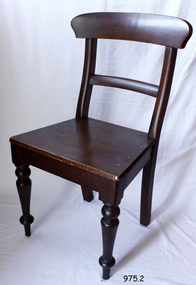
Furniture - Chair, ca 1944
... Religion...Religious service...St Nicholas Seamen’s Church...Williamstown...Missions to Seamen Victoria...Flagstaff Hill Maritime Museum and Village Flagstaff Hill Warrnambool Maritime Museum Maritime Village Shipwreck Coast Great Ocean Road Religion Religious service St Nicholas Seamen’s Church Williamstown Missions to Seamen Victoria chair religious furniture Chair wooden dark brown with curved backrest, one of a set of three. ...This chair, one of a set of three, is significant historically for its origin in the St Nicholas Mission to Seamen's Church in Williamstown, established in 1857 to cater for the physical, social, and spiritual needs of seafarers. It originated in Bristol, England when a Seamen's Mission was formed in 1837. Chair wooden dark brown with curved backrest, one of a set of three. The two front legs are decoratively shaped (turned) while the back legs are plain and flat-sided. Almost square flat seat.flagstaff hill maritime museum and village, flagstaff hill, warrnambool, maritime museum, maritime village, shipwreck coast, great ocean road, religion, religious service, st nicholas seamen’s church, williamstown, missions to seamen victoria, chair, religious furniture -
 Flagstaff Hill Maritime Museum and Village
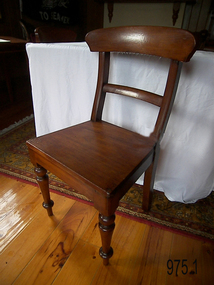
Furniture - Chair, ca. 1944
... Religion...Religious service...St Nicholas Seamen’s Church...Williamstown...Missions to Seamen Victoria...Flagstaff Hill Maritime Museum and Village Flagstaff Hill Warrnambool Maritime Museum Maritime Village Shipwreck Coast Great Ocean Road Religion Religious service St Nicholas Seamen’s Church Williamstown Missions to Seamen Victoria chair religious furniture dining chair church furniture religious worship Anglican Church worship service Mission to Seafarers St Nicholas Missions to Seamen’s Church Williamstown Missions to Seamen St Nicholas Missions to Seamen’s Church Flagstaff Hill 139 Nelson Place Williamstown Chair, dark brown wood, curved backrest. ...This chair, one of a set of three, was part of the original furnishings of the St Nicholas' Mission to Seamen's Church at 139 Nelson Place, Williamstown, Victoria. The Church was operated by the Mission to Seamen organisation. THE MISSIONS TO SEAMEN (Brief History: for more, see our Reg. No. 611, Set of Pews) The Missions to Seamen was an Anglican charity that served seafarers of the world since 1856 in Great Britain. It symbol is a Flying Angel, inspired by a Bible verse. Today there are centres in over 200 ports worldwide where seamen of all backgrounds are offered a warm welcome and provided with a wide range of facilities. In Victoria, the organisation began in Williamstown in 1857 as a Sailors’ Church, also known as ‘Bethel’ or the ‘Floating Church’ in an old hulk floating in Hobson’s Bay, Port of Melbourne. It soon became part of the Missions to Seamen, Victoria. In the year 2000 the organisation, now named Mission to Seafarers, still operated locally in Melbourne, Portland, Geelong and Hastings. The Ladies’ Harbour Lights Guild was formed in 1906 to support the Missions to Seamen in Melbourne and other centres such as Williamstown. Two of the most significant ladies of the Guild were founder Ethel Augusta Godfrey and foundation member Alice Sibthorpe Tracy (who established a branch of the Guild in Warrnambool in 1920). The Guild continued its work until the 1960s. In 1943 a former Williamstown bank was purchased for the Missions to Seaman Club. The chapel was named St Nicholas’ Seamen’s Church and was supported by the Ladies’ Harbour Lights Guild, the Williamstown Lightkeepers’ Auxiliary and the League of Soldiers’ and Sailors’ Friends. It ceased operation in 1966. A Missions to Seamen Chapel and Recreation Room was a significant feature of ports during the late 1800s and into the 1900s. It seemed appropriate for Flagstaff Hill to include such a representation within the new Maritime Village, so the Melbourne Board of Management of Missions to Seamen Victoria gave its permission on 21st May 1979 for the entire furnishings of the Williamstown chapel to be transferred to Flagstaff Hill. The St Nicholas Seamen’s Church was officially opened on October 11, 1981, and closely resembles the Williamstown chapel. This chair is historically significant for its origin in the St Nicholas Mission to Seamen's Church in Williamstown, established in 1857 to cater for the physical, social, and spiritual needs of seafarers. The organisation originated in Bristol, England, when a Seamen's Mission was formed in 1837. Chair, dark brown wood, curved backrest. One of a set of three. The two front legs are decoratively shaped (turned), while the back legs are plain and flat-sided. It has an almost square flat seat. This chair is part of the St Nicholas Seamen's Church Collection. flagstaff hill maritime museum and village, flagstaff hill, warrnambool, maritime museum, maritime village, shipwreck coast, great ocean road, religion, religious service, st nicholas seamen’s church, williamstown, missions to seamen victoria, chair, religious furniture, dining chair, church furniture, religious worship, anglican church, worship service, mission to seafarers, st nicholas missions to seamen’s church williamstown, missions to seamen, st nicholas missions to seamen’s church flagstaff hill, 139 nelson place williamstown -
 Flagstaff Hill Maritime Museum and Village
Textile - Altar Cloth
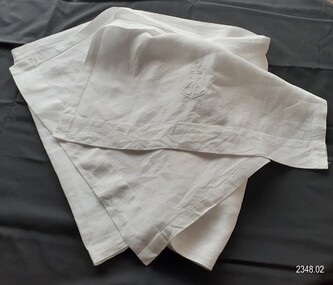
... religion...religious service...st nicholas seamen’s church flagstaff hill...altar cloth...church linen...ecclesiastical linen...mariner’s cross...anchor cross...cross of hope...symbol of christianity...anchored cross...Flagstaff Hill Maritime Museum and Village...Maritime Village...religious worship...worship service...St Nicholas Seamen’s Church...Williamstown...Missions to Seamen Victoria...Victoria. The Mariner's Cross embroidered onto the altar cloth gives it a connection with the early Christian church and with the Missions to Seamen. The fine hand stitching and embroidery are examples of traditional handcraft skills used over the centuries and continuing in use today. flagstaff hill warrnambool shipwrecked coast flagstaff hill maritime museum maritime museum shipwreck coast flagstaff hill maritime village great ocean road religion religious service st nicholas seamen’s church flagstaff hill altar cloth church linen ecclesiastical linen mariner’s cross anchor cross cross of hope symbol of christianity anchored cross Flagstaff Hill Maritime Museum and Village Maritime Village religious worship worship service St Nicholas Seamen’s Church Williamstown Missions to Seamen Victoria Mission to Seafarers St Nicholas Missions to Seamen’s Church Williamstown Missions to Seamen St Nicholas Missions to Seamen’s Church Flagstaff Hill 139 Nelson Place Williamstown Anglican church On cloth: symbol of (anchor with an 'X' stitched behind the centre of it). ...This altar cloth is representative of ecclesiastical linen in use in the early to mid-20th century. It is decorated with the Mariner's Cross symbol, connecting it to the history of the early Christian church. The cover for the cloth shows the respect the maker had for the cloth and what it stands for. The Mariner's Cross symbol also makes it appropriate as an altar cloth for the St Nicholas Seamen's Church at Flagstaff Hill Maritime Village. MARINER'S CROSS symbol: - The symbol of an anchor that also looks like a cross is called the Mariner’s Cross (also called the Anchored Cross or Cross of Hope). It looks like a ‘plus’ sign with anchor flukes at the base and a ring at the top. The anchor is one of the earliest symbols used in Christianity and represents faith, hope and salvation in times of trial. The Mariner’s Cross is linked to the scripture in Hebrews 6:19, which says, “Which hope we have as an anchor of the soul, both sure and steadfast, and which entereth into that within the veil”. This particular Mariner’s Cross also has the letter ‘X’ under the post of the anchor. In Greek, the language of the New Testament, the word for Christ is ‘Christos’, which begins with the Greek letter ‘X’ or ‘Chi’. Together, the elements on this Mariner’s Cross - anchor, cross and ‘X’ - symbolise to the Christian that Jesus Christ the Saviour gives security and safety, hope and salvation. Many church organisations still use various forms of the Mariner’s Cross. THE MISSIONS TO SEAMEN (Brief History): - The Missions to Seamen was an Anglican charity that has served seafarers of the world since 1856 in Great Britain. Its symbol is a Flying Angel, inspired by a Bible verse. Today, there are centres in over 200 ports worldwide where seamen of all backgrounds are offered a warm welcome and provided with a wide range of facilities. In Victoria, the organisation began in Williamstown in 1857 as a Sailors’ Church, also known as ‘Bethel’ or the ‘Floating Church’ in an old hulk floating in Hobson’s Bay, Port of Melbourne. It soon became part of the Missions to Seamen, Victoria. In the year 2000, the organisation, now named Mission to Seafarers, still operated locally in Melbourne, Portland, Geelong and Hastings. The Ladies’ Harbour Lights Guild was formed in 1906 to support the Missions to Seamen in Melbourne and other centres, such as Williamstown. Two of the most significant ladies of the Guild were founder Ethel Augusta Godfrey and foundation member Alice Sibthorpe Tracy (who established a branch of the Guild in Warrnambool in 1920). The Guild continued its work until the 1960s. In 1943, a former Williamstown bank was purchased for the Missions to Seaman Club. The chapel was named St Nicholas’ Seamen’s Church and was supported by the Ladies’ Harbour Lights Guild, the Williamstown Lightkeepers’ Auxiliary and the League of Soldiers’ and Sailors’ Friends. It ceased operation in 1966. A Missions to Seamen Chapel and Recreation Room was a significant feature of ports during the late 1800s and into the 1900s. It seemed appropriate for Flagstaff Hill to include such a representation within the new Maritime Village, so the Melbourne Board of Management of Missions to Seamen Victoria gave its permission on 21st May 1979 for the entire furnishings of the Williamstown chapel to be transferred to Flagstaff Hill. The St Nicholas Seamen’s Church was officially opened on October 11, 1981, and closely resembles the Williamstown chapel. The altar cloth is representative of the ecclesiastical linen in use in the early to mid-20th century, when the original St Nicholas Seamen's Church was opened in Williamstown, Victoria. The Mariner's Cross embroidered onto the altar cloth gives it a connection with the early Christian church and with the Missions to Seamen. The fine hand stitching and embroidery are examples of traditional handcraft skills used over the centuries and continuing in use today.Altar cloth, white linen, with custom-made white cotton cover. The long rectangular cloth has the symbol of a Mariner's Cross (anchor and cross) embroidered with white silk thread on each short end. The wide hems are hand-stitched. The cover has two white tape ties and embroidered text in blue silk thread. This cloth and cover is part of the St. Nicholas Seamen's Church Collection. On cloth: symbol of (anchor with an 'X' stitched behind the centre of it). On cover, text "FLAGSTAFF/ HILL" flagstaff hill, warrnambool, shipwrecked coast, flagstaff hill maritime museum, maritime museum, shipwreck coast, flagstaff hill maritime village, great ocean road, religion, religious service, st nicholas seamen’s church flagstaff hill, altar cloth, church linen, ecclesiastical linen, mariner’s cross, anchor cross, cross of hope, symbol of christianity, anchored cross, flagstaff hill maritime museum and village, maritime village, religious worship, worship service, st nicholas seamen’s church, williamstown, missions to seamen victoria, mission to seafarers, st nicholas missions to seamen’s church williamstown, missions to seamen, st nicholas missions to seamen’s church flagstaff hill, 139 nelson place williamstown, anglican church -
 Flagstaff Hill Maritime Museum and Village
Document - Commemorative, The Victorian Missions to Seamen, St Nicholas Seamen's Church Williamstown, circa 1944
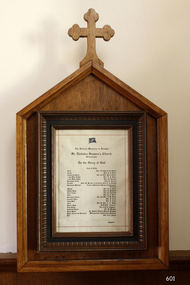
... religion...religious service...sailors rest...bethel sailors’ church...bethel floating church...ladies harbour light guild...mission to seafarers...st nicholas seaman’s church williamstown...mission to seamen williamstown...st nicholas seamen’s church flagstaff hill...flying angel club...mrs. and miss j.r. schutt...mrs. r.j. ewart...mr. and mrs. percy taylor...mrs. m. jackson...miss c. roberts...miss. l.a. breaks...miss. m. breaks...victoria...Victoria, have historical and social significance. They show that people of the 1800s and 1900s cared about the seafarers’ religious, moral, and social welfare, no matter what the religion, social status or nationality. ...This framed document titled "The Victorian Missions to Seamen, St Nicholas Seamen's Church Williamstown" shows a list of donors of significant items to the St Nicholas Missions to Seamen's Church in Williamstown when the new building opened in 1944. The organisation ceased in 1966, and the furnishings were later donated to Flagstaff Hill Maritime Village in Warrnambool by the Missions to Seamen Victoria. The transcription of the document is as follows: The Victoria Missions to Seamen, St Nicholas Seamen's Church, Williamstown To the Glory of God List of Gifts Altar - Mrs. and Miss J.R. Schutt Cross - Mrs. R.J. Ewart Chalice and Paten - Mr. and Mrs. Percy Taylor 1 Pair Altar Lights - Mrs. R.J. Ewart 1 Pair Altar Lights - Mrs. M. Jackson Sanctuary Lamp - Miss C. Roberts Rerebos - Miss. M. Breaks, in memoriam Miss. L.A. Breaks Sanctuary Window - Victoria Missions to Seamen Lightkeepers' Auxiliary Missal - Mrs. R.J. Ewart Missal Desk - Mrs. R. Hodgkiss Altar Vases - Mrs. R. Kaybould Bible - Mrs. R.J. Ewart Sanctuary Chairs - Mr. and Mrs. F.H. Twist Credence Table - Mrs. F. Clark Altar Dish – Mrs L. Clark Font - Mr. and Mrs. C.V. Dyble Prayer Desk - H.M.H.S. "Centaur" Reed Organ - "Joy Club for Fighters" Collection Plates - Mr. D. MacKae Hymn Board - St. David's Musical Society, Brighton Pews, Carpet and Hangings - Williamstown Lightkeepers' Auxiliary Bell - Mrs. A.L. Feenes THE MISSIONS TO SEAMEN (Brief History: for more, see our Reg. No. 611, Set of Pews) The Missions to Seamen, an Anglican charity, has served seafarers of the world since 1856 in Great Britain. It symbol is a Flying Angel, inspired by a Bible verse. Today there are centr4es in over 200 ports world-wide where seamen of all backgrounds are offered a warm welcome and provided with a wide range of facilities. In Victoria the orgainsation began in Williamstown in 1857. It was as a Sailors’ Church, also known as ‘Bethel’ or the ‘Floating Church’. Its location was an old hulk floating in Hobson’s Bay, Port of Melbourne. It soon became part of the Missions to Seamen, Victoria. In the year 2000 the organisation, now named Mission to Seafarers, still operated locally in Melbourne, Portland, Geelong and Hastings. The Ladies’ Harbour Lights Guild was formed in 1906 to support the Missions to Seamen in Melbourne and other centres such as Williamstown. Two of the most significant ladies of the Guild were founder Ethel Augusta Godfrey and foundation member Alice Sibthorpe Tracy (who established a branch of the Guild in Warrnambool in 1920). The Guild continued its work until the 1960s. In 1943 a former Williamstown bank was purchased for the Missions to Seaman Club. The chapel was named St Nicholas’ Seamen’s Church and was supported by the Ladies’ Harbour Lights Guild, the Williamstown Lightkeepers’ Auxiliary and the League of Soldiers’ and Sailors’ Friends. It ceased operation in 1966. A Missions to Seamen Chapel and Recreation Room was a significant feature of ports during the late 1800s and into the 1900s. It seemed appropriate for Flagstaff Hill to include such a representation within the new Maritime Village, so the Melbourne Board of Management of Missions to Seamen Victoria gave its permission on 21st May 1979 for the entire furnishings of the Williamstown chapel to be transferred to Flagstaff Hill. The St Nicholas Seamen’s Church was officially opened on October 11, 1981 and closely resembles the Williamstown chapel. This document is significant through its association with the St Nicholas' Mission to Seamen Church in Williamstown, Melbourne, established in 1857. The document is socially significant as it connects the community of Williamstown with the St Nicholas' Missions to Seamen and represents the importance of the church to the community. The items in our collection from the Missions to Seamen in Williamstown, Victoria, have historical and social significance. They show that people of the 1800s and 1900s cared about the seafarers’ religious, moral, and social welfare, no matter what the religion, social status or nationality. It had its origins in Bristol, England when a Seamen's Mission was formed in 1837. The first Australian branch was started in 1856 by the Rev. Kerr Johnston, a Church of England clergyman, and operated from a hulk moored in Hobson's Bay; later the Mission occupied buildings in Williamstown and Port Melbourne. Document titled "The Victorian Missions to Seamen, St Nicholas Seamen's Church Williamstown". The document is a list of gifts originally given to the St Nicholas Seaman's Church in Williamstown, Victoria. The document is mounted in a decorative wooden frame with glass cover. This is one of the original items in our ‘St Nicholas Seamen's Church Williamstown Collection’.flagstaff hill, warrnambool, shipwrecked-coast, flagstaff-hill, flagstaff-hill-maritime-museum, maritime-museum, shipwreck-coast, flagstaff-hill-maritime-village, framed document, donations to st nicholas seamen's church williamstown, 139 nelson place williamstown, religion, religious service, sailors rest, bethel sailors’ church, bethel floating church, ladies harbour light guild, mission to seafarers, st nicholas seaman’s church williamstown, mission to seamen williamstown, st nicholas seamen’s church flagstaff hill, flying angel club, mrs. and miss j.r. schutt, mrs. r.j. ewart, mr. and mrs. percy taylor, mrs. m. jackson, miss c. roberts, miss. l.a. breaks, miss. m. breaks, victoria missions to seamen lightkeepers' auxiliary, mrs. r. hodgkiss, mrs. r. kaybould, mr. and mrs. f.h. twist, mrs. f. clark, mrs l. clark, mr. and mrs. c.v. dyble, h.m.h.s. "centaur", "joy club for fighters", mr. d. mackae, williamstown lightkeepers' auxiliary, mrs. a.l. feenes, st. david's musical society brighton -
 Flagstaff Hill Maritime Museum and Village
Book - Religious Book, The Book of Common Prayer, 20th century
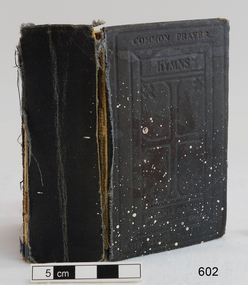
... religion...religious service...sailors rest...bethel sailors’ church...bethel floating church...ladies harbour light guild...missions to seamen victoria...Victoria, have historical and social significance. They show that people of the 1800s and 1900s cared about the seafarers’ religious, moral, and social welfare, no matter what the religion, social status or nationality. ...The Book of Common Prayer is the foundational liturgical text of the Church of England and the broader Anglican Communion. The subject book as a standard 730-page UK edition often printed in the late 19th or early 20th century by major privilege presses like Cambridge University Press, Oxford University Press, or William Clowes & Sons contains the complete 1662 standard text. The volume is structured into distinct sections designed for daily worship, sacramental rites, and personal devotion. There is introductory matter within the text that includes the original prefaces regarding the service of the Church and how the Psalter and Holy Scriptures are ordered to be read. Lectionary and calendar tables are also included as well as lessons for daily Bible readings, rules for determining the date of Easter, and the calendar of Holy Days and saints' days.The Book of Common Prayer. Small book, dark fabric hardcovers, both embossed design on cover incorporating a cross. Owner's name written in black ink inside the cover, also four brown stamps of a cross inside cover. Titled "The Book of Common Prayer and Administration of the Sacraments and other Rules and Ceremonies of the CHURCH according to the use of The Church of England". Printed in Great Britain. Book has 730 numbered pages. Inscribed with a signature inside the front cover as well as brown stamps of images of a cross.. This is one of the original items in our St Nicholas Seamen's Church Williamstown Collection.non-fictionThe Book of Common Prayer is the foundational liturgical text of the Church of England and the broader Anglican Communion. The subject book as a standard 730-page UK edition often printed in the late 19th or early 20th century by major privilege presses like Cambridge University Press, Oxford University Press, or William Clowes & Sons contains the complete 1662 standard text. The volume is structured into distinct sections designed for daily worship, sacramental rites, and personal devotion. There is introductory matter within the text that includes the original prefaces regarding the service of the Church and how the Psalter and Holy Scriptures are ordered to be read. Lectionary and calendar tables are also included as well as lessons for daily Bible readings, rules for determining the date of Easter, and the calendar of Holy Days and saints' days.flagstaff hill, warrnambool, shipwrecked-coast, flagstaff-hill, flagstaff-hill-maritime-museum, maritime-museum, shipwreck-coast, flagstaff-hill-maritime-village, book, prayer book, the book of common prayer, church of england prayer book, anne ambrose, religion, religious service, sailors rest, bethel sailors’ church, bethel floating church, ladies harbour light guild, missions to seamen victoria, mission to seafarers, st nicholas seaman’s church williamstown, st nicholas mission to seamen church williamstown, mission to seamen williamstown, st nicholas seamen’s church flagstaff hill, 139 nelson place williamstown, flying angel club -
 Flagstaff Hill Maritime Museum and Village
Book - Religious Book, Oxford University Press, The Book of Common Prayer, early 20th century
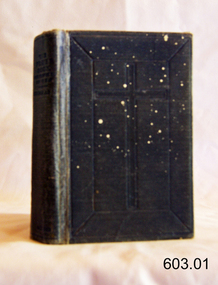
... religion...religious service...sailors rest...bethel sailors’ church...bethel floating church...ladies harbour light guild...missions to seamen victoria...The connection of this set of books to the Mission to Seamen and to the Ladies Lightkeepers Auxiliary highlights the strong community awareness of the life of people at sea, their dangers and hardships, and their need for physical, financial, spiritual and moral support. flagstaff hill warrnambool shipwrecked coast flagstaff hill maritime museum maritime museum shipwreck coast flagstaff hill maritime village great ocean road preyer books book of common prayer anglican church prayer book religion religious service sailors rest bethel sailors’ church bethel floating church ladies harbour light guild missions to seamen victoria mission to seafarers flying angels club st nicholas seaman’s church williamstown st nicholas mission to seamen church williamstown mission to seamen williamstown st nicholas seamen’s church flagstaff hill 139 nelson place williamstown anglican church religious book vc queries search - photo st nicholas seamen’s church williamstown collection The Book of Common Prayer is the foundational liturgical text of the Church of England and the broader Anglican Communion. ...The Book of Common Prayer is the foundational liturgical text of the Church of England and the broader Anglican Communion. The subject book as a standard 730-page UK edition often printed in the late 19th or early 20th century by major privilege presses like Cambridge University Press, Oxford University Press, or William Clowes & Sons contains the complete 1662 standard text. The volume is structured into distinct sections designed for daily worship, sacramental rites, and personal devotion. There is introductory matter within the text that includes the original prefaces regarding the service of the Church and how the Psalter and Holy Scriptures are ordered to be read. Lectionary and calendar tables are also included as well as lessons for daily Bible readings, rules for determining the date of Easter, and the calendar of Holy Days and saints' days.The Book of Common Prayer. Blue cloth cover. Title: The Book of Common Prayer with the Additions and Deviations proposed in 1928 Publisher: Humphrey Milford, Oxford University Press, London. 244 numbered pages. This is one of a set of original items in our ‘St Nicholas Seamen's Church Williamstown Collection’.non-fictionThe Book of Common Prayer is the foundational liturgical text of the Church of England and the broader Anglican Communion. The subject book as a standard 730-page UK edition often printed in the late 19th or early 20th century by major privilege presses like Cambridge University Press, Oxford University Press, or William Clowes & Sons contains the complete 1662 standard text. The volume is structured into distinct sections designed for daily worship, sacramental rites, and personal devotion. There is introductory matter within the text that includes the original prefaces regarding the service of the Church and how the Psalter and Holy Scriptures are ordered to be read. Lectionary and calendar tables are also included as well as lessons for daily Bible readings, rules for determining the date of Easter, and the calendar of Holy Days and saints' days.flagstaff hill, warrnambool, shipwrecked coast, flagstaff hill maritime museum, maritime museum, shipwreck coast, flagstaff hill maritime village, great ocean road, preyer books, book of common prayer, anglican church prayer book, religion, religious service, sailors rest, bethel sailors’ church, bethel floating church, ladies harbour light guild, missions to seamen victoria, mission to seafarers, flying angels club, st nicholas seaman’s church williamstown, st nicholas mission to seamen church williamstown, mission to seamen williamstown, st nicholas seamen’s church flagstaff hill, 139 nelson place williamstown, anglican church, religious book, vc queries, search -, photo, st nicholas seamen’s church williamstown collection -
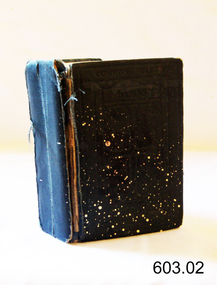 Flagstaff Hill Maritime Museum and Village
Book - Religious Book, Oxford University Press, The Book of Common Prayer, Early 20th century
... religion...religious service...sailors rest...bethel sailors’ church...bethel floating church...ladies harbour light guild...missions to seamen victoria...The connection of this set of books to the Mission to Seamen and to the Ladies Lightkeepers Auxiliary highlights the strong community awareness of the life of people at sea, their dangers and hardships, and their need for physical, financial, spiritual and moral support. flagstaff hill warrnambool shipwrecked coast flagstaff hill maritime museum maritime museum shipwreck coast flagstaff hill maritime village great ocean road preyer books book of common prayer anglican church prayer book religion religious service sailors rest bethel sailors’ church bethel floating church ladies harbour light guild missions to seamen victoria mission to seafarers flying angels club st nicholas seaman’s church williamstown st nicholas mission to seamen church williamstown missions to seamen williamstown st nicholas seamen’s church flagstaff hill 139 nelson place williamstown anglican church religious book The Book of Common Prayer is the foundational liturgical text of the Church of England and the broader Anglican Communion. ...The Book of Common Prayer is the foundational liturgical text of the Church of England and the broader Anglican Communion. The subject book as a standard 730-page UK edition often printed in the late 19th or early 20th century by major privilege presses like Cambridge University Press, Oxford University Press, or William Clowes & Sons contains the complete 1662 standard text. The volume is structured into distinct sections designed for daily worship, sacramental rites, and personal devotion. There is introductory matter within the text that includes the original prefaces regarding the service of the Church and how the Psalter and Holy Scriptures are ordered to be read. Lectionary and calendar tables are also included as well as lessons for daily Bible readings, rules for determining the date of Easter, and the calendar of Holy Days and saints' days.The Book of Common Prayer. Blue cloth cover. Title: The Book of Common Prayer with the Additions and Deviations proposed in 1928 Publisher: Humphrey Milford, Oxford University Press, London. Spines have gold inlay print. 244 numbered pages. This is one of a set of original items in our ‘St Nicholas Seamen's Church Williamstown Collection’.non-fictionThe Book of Common Prayer is the foundational liturgical text of the Church of England and the broader Anglican Communion. The subject book as a standard 730-page UK edition often printed in the late 19th or early 20th century by major privilege presses like Cambridge University Press, Oxford University Press, or William Clowes & Sons contains the complete 1662 standard text. The volume is structured into distinct sections designed for daily worship, sacramental rites, and personal devotion. There is introductory matter within the text that includes the original prefaces regarding the service of the Church and how the Psalter and Holy Scriptures are ordered to be read. Lectionary and calendar tables are also included as well as lessons for daily Bible readings, rules for determining the date of Easter, and the calendar of Holy Days and saints' days.flagstaff hill, warrnambool, shipwrecked coast, flagstaff hill maritime museum, maritime museum, shipwreck coast, flagstaff hill maritime village, great ocean road, preyer books, book of common prayer, anglican church prayer book, religion, religious service, sailors rest, bethel sailors’ church, bethel floating church, ladies harbour light guild, missions to seamen victoria, mission to seafarers, flying angels club, st nicholas seaman’s church williamstown, st nicholas mission to seamen church williamstown, missions to seamen williamstown, st nicholas seamen’s church flagstaff hill, 139 nelson place williamstown, anglican church, religious book -
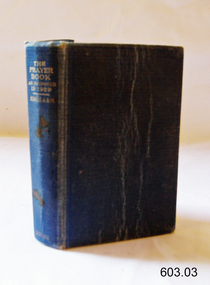 Flagstaff Hill Maritime Museum and Village
Book - Religious Book, Oxford University Press, The Book of Common Prayer, Early 20th century
... religion...religious service...sailors rest...bethel sailors’ church...bethel floating church...ladies harbour light guild...missions to seamen victoria...The connection of this set of books to the Mission to Seamen and to the Ladies Lightkeepers Auxiliary highlights the strong community awareness of the life of people at sea, their dangers and hardships, and their need for physical, financial, spiritual and moral support. flagstaff hill warrnambool shipwrecked coast flagstaff hill maritime museum maritime museum shipwreck coast flagstaff hill maritime village great ocean road preyer books book of common prayer anglican church prayer book religion religious service sailors rest bethel sailors’ church bethel floating church ladies harbour light guild missions to seamen victoria mission to seafarers flying angels club st nicholas seaman’s church williamstown st nicholas mission to seamen church williamstown missions to seamen williamstown st nicholas seamen’s church flagstaff hill 139 nelson place williamstown anglican church religious book The Book of Common Prayer is the foundational liturgical text of the Church of England and the broader Anglican Communion. ...The Book of Common Prayer is the foundational liturgical text of the Church of England and the broader Anglican Communion. The subject book as a standard 730-page UK edition often printed in the late 19th or early 20th century by major privilege presses like Cambridge University Press, Oxford University Press, or William Clowes & Sons contains the complete 1662 standard text. The volume is structured into distinct sections designed for daily worship, sacramental rites, and personal devotion. There is introductory matter within the text that includes the original prefaces regarding the service of the Church and how the Psalter and Holy Scriptures are ordered to be read. Lectionary and calendar tables are also included as well as lessons for daily Bible readings, rules for determining the date of Easter, and the calendar of Holy Days and saints' days.The Book of Common Prayer. Blue cloth cover. Title: The Book of Common Prayer with the Additions and Deviations proposed in 1928 Publisher: Humphrey Milford, Oxford University Press, London. Spines have gold inlay print. 244 numbered pages. This is one of a set of original items in our ‘St Nicholas Seamen's Church Williamstown Collection’.non-fictionThe Book of Common Prayer is the foundational liturgical text of the Church of England and the broader Anglican Communion. The subject book as a standard 730-page UK edition often printed in the late 19th or early 20th century by major privilege presses like Cambridge University Press, Oxford University Press, or William Clowes & Sons contains the complete 1662 standard text. The volume is structured into distinct sections designed for daily worship, sacramental rites, and personal devotion. There is introductory matter within the text that includes the original prefaces regarding the service of the Church and how the Psalter and Holy Scriptures are ordered to be read. Lectionary and calendar tables are also included as well as lessons for daily Bible readings, rules for determining the date of Easter, and the calendar of Holy Days and saints' days.flagstaff hill, warrnambool, shipwrecked coast, flagstaff hill maritime museum, maritime museum, shipwreck coast, flagstaff hill maritime village, great ocean road, preyer books, book of common prayer, anglican church prayer book, religion, religious service, sailors rest, bethel sailors’ church, bethel floating church, ladies harbour light guild, missions to seamen victoria, mission to seafarers, flying angels club, st nicholas seaman’s church williamstown, st nicholas mission to seamen church williamstown, missions to seamen williamstown, st nicholas seamen’s church flagstaff hill, 139 nelson place williamstown, anglican church, religious book -
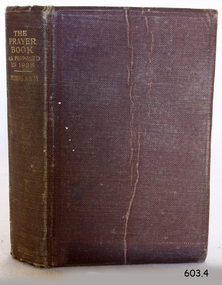 Flagstaff Hill Maritime Museum and Village
Book - Religious Book, Oxford University Press, The Book of Common Prayer, Early 20th century
... religion...religious service...sailors rest...bethel sailors’ church...bethel floating church...ladies harbour light guild...missions to seamen victoria...The connection of this set of books to the Mission to Seamen and to the Ladies Lightkeepers Auxiliary highlights the strong community awareness of the life of people at sea, their dangers and hardships, and their need for physical, financial, spiritual and moral support. flagstaff hill warrnambool shipwrecked coast flagstaff hill maritime museum maritime museum shipwreck coast flagstaff hill maritime village great ocean road preyer books book of common prayer anglican church prayer book religion religious service sailors rest bethel sailors’ church bethel floating church ladies harbour light guild missions to seamen victoria mission to seafarers flying angels club st nicholas seaman’s church williamstown st nicholas mission to seamen church williamstown missions to seamen williamstown st nicholas seamen’s church flagstaff hill 139 nelson place williamstown anglican church religious book book The Book of Common Prayer is the foundational liturgical text of the Church of England and the broader Anglican Communion. ...The Book of Common Prayer is the foundational liturgical text of the Church of England and the broader Anglican Communion. The subject book as a standard 730-page UK edition often printed in the late 19th or early 20th century by major privilege presses like Cambridge University Press, Oxford University Press, or William Clowes & Sons contains the complete 1662 standard text. The volume is structured into distinct sections designed for daily worship, sacramental rites, and personal devotion. There is introductory matter within the text that includes the original prefaces regarding the service of the Church and how the Psalter and Holy Scriptures are ordered to be read. Lectionary and calendar tables are also included as well as lessons for daily Bible readings, rules for determining the date of Easter, and the calendar of Holy Days and saints' days.The Book of Common Prayer. Red cloth cover. Title: The Book of Common Prayer with the Additions and Deviations proposed in 1928 Publisher: Humphrey Milford, Oxford University Press, London. Spines have gold inlay print. 244 numbered pages. This is one of a set of original items in our ‘St Nicholas Seamen's Church Williamstown Collection’.non-fictionThe Book of Common Prayer is the foundational liturgical text of the Church of England and the broader Anglican Communion. The subject book as a standard 730-page UK edition often printed in the late 19th or early 20th century by major privilege presses like Cambridge University Press, Oxford University Press, or William Clowes & Sons contains the complete 1662 standard text. The volume is structured into distinct sections designed for daily worship, sacramental rites, and personal devotion. There is introductory matter within the text that includes the original prefaces regarding the service of the Church and how the Psalter and Holy Scriptures are ordered to be read. Lectionary and calendar tables are also included as well as lessons for daily Bible readings, rules for determining the date of Easter, and the calendar of Holy Days and saints' days.flagstaff hill, warrnambool, shipwrecked coast, flagstaff hill maritime museum, maritime museum, shipwreck coast, flagstaff hill maritime village, great ocean road, preyer books, book of common prayer, anglican church prayer book, religion, religious service, sailors rest, bethel sailors’ church, bethel floating church, ladies harbour light guild, missions to seamen victoria, mission to seafarers, flying angels club, st nicholas seaman’s church williamstown, st nicholas mission to seamen church williamstown, missions to seamen williamstown, st nicholas seamen’s church flagstaff hill, 139 nelson place williamstown, anglican church, religious book, book -
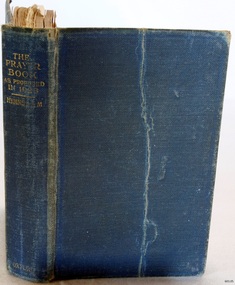 Flagstaff Hill Maritime Museum and Village
Book - Religious Book, Oxford University Press, The Book of Common Prayer, Early 20th century
... religion...religious service...sailors rest...bethel sailors’ church...bethel floating church...ladies harbour light guild...missions to seamen victoria...The connection of this set of books to the Mission to Seamen and to the Ladies Lightkeepers Auxiliary highlights the strong community awareness of the life of people at sea, their dangers and hardships, and their need for physical, financial, spiritual and moral support. flagstaff hill warrnambool shipwrecked coast flagstaff hill maritime museum maritime museum shipwreck coast flagstaff hill maritime village great ocean road preyer books book of common prayer anglican church prayer book religion religious service sailors rest bethel sailors’ church bethel floating church ladies harbour light guild missions to seamen victoria mission to seafarers flying angels club st nicholas seaman’s church williamstown st nicholas mission to seamen church williamstown missions to seamen williamstown st nicholas seamen’s church flagstaff hill 139 nelson place williamstown anglican church religious book book The Book of Common Prayer is the foundational liturgical text of the Church of England and the broader Anglican Communion. ...The Book of Common Prayer is the foundational liturgical text of the Church of England and the broader Anglican Communion. The subject book as a standard 730-page UK edition often printed in the late 19th or early 20th century by major privilege presses like Cambridge University Press, Oxford University Press, or William Clowes & Sons contains the complete 1662 standard text. The volume is structured into distinct sections designed for daily worship, sacramental rites, and personal devotion. There is introductory matter within the text that includes the original prefaces regarding the service of the Church and how the Psalter and Holy Scriptures are ordered to be read. Lectionary and calendar tables are also included as well as lessons for daily Bible readings, rules for determining the date of Easter, and the calendar of Holy Days and saints' days.The Book of Common Prayer. Blue cloth cover. Title: The Book of Common Prayer with the Additions and Deviations proposed in 1928 Publisher: Humphrey Milford, Oxford University Press, London. Spines have gold inlay print. 244 numbered pages. This is one of a set of original items in our ‘St Nicholas Seamen's Church Williamstown Collection’.non-fictionThe Book of Common Prayer is the foundational liturgical text of the Church of England and the broader Anglican Communion. The subject book as a standard 730-page UK edition often printed in the late 19th or early 20th century by major privilege presses like Cambridge University Press, Oxford University Press, or William Clowes & Sons contains the complete 1662 standard text. The volume is structured into distinct sections designed for daily worship, sacramental rites, and personal devotion. There is introductory matter within the text that includes the original prefaces regarding the service of the Church and how the Psalter and Holy Scriptures are ordered to be read. Lectionary and calendar tables are also included as well as lessons for daily Bible readings, rules for determining the date of Easter, and the calendar of Holy Days and saints' days.flagstaff hill, warrnambool, shipwrecked coast, flagstaff hill maritime museum, maritime museum, shipwreck coast, flagstaff hill maritime village, great ocean road, preyer books, book of common prayer, anglican church prayer book, religion, religious service, sailors rest, bethel sailors’ church, bethel floating church, ladies harbour light guild, missions to seamen victoria, mission to seafarers, flying angels club, st nicholas seaman’s church williamstown, st nicholas mission to seamen church williamstown, missions to seamen williamstown, st nicholas seamen’s church flagstaff hill, 139 nelson place williamstown, anglican church, religious book, book -
 Flagstaff Hill Maritime Museum and Village
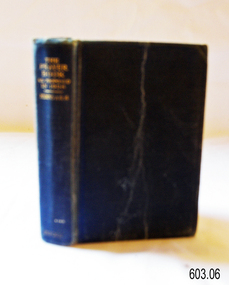
Book - Religious Book, Oxford University Press, The Book of Common Prayer, Early 20th century
... religion...religious service...sailors rest...bethel sailors’ church...bethel floating church...ladies harbour light guild...missions to seamen victoria...The connection of this set of books to the Mission to Seamen and to the Ladies Lightkeepers Auxiliary highlights the strong community awareness of the life of people at sea, their dangers and hardships, and their need for physical, financial, spiritual and moral support. flagstaff hill warrnambool shipwrecked coast flagstaff hill maritime museum maritime museum shipwreck coast flagstaff hill maritime village great ocean road preyer books book of common prayer anglican church prayer book religion religious service sailors rest bethel sailors’ church bethel floating church ladies harbour light guild missions to seamen victoria mission to seafarers flying angels club st nicholas seaman’s church williamstown st nicholas mission to seamen church williamstown missions to seamen williamstown st nicholas seamen’s church flagstaff hill 139 nelson place williamstown anglican church religious book book The Book of Common Prayer is the foundational liturgical text of the Church of England and the broader Anglican Communion. ...The Book of Common Prayer is the foundational liturgical text of the Church of England and the broader Anglican Communion. The subject book as a standard 730-page UK edition often printed in the late 19th or early 20th century by major privilege presses like Cambridge University Press, Oxford University Press, or William Clowes & Sons contains the complete 1662 standard text. The volume is structured into distinct sections designed for daily worship, sacramental rites, and personal devotion. There is introductory matter within the text that includes the original prefaces regarding the service of the Church and how the Psalter and Holy Scriptures are ordered to be read. Lectionary and calendar tables are also included as well as lessons for daily Bible readings, rules for determining the date of Easter, and the calendar of Holy Days and saints' days.The Book of Common Prayer. Blue cloth cover. Title: The Book of Common Prayer with the Additions and Deviations proposed in 1928 Publisher: Humphrey Milford, Oxford University Press, London. Spines have gold inlay print. 244 numbered pages. This is one of a set of original items in our ‘St Nicholas Seamen's Church Williamstown Collection’.non-fictionThe Book of Common Prayer is the foundational liturgical text of the Church of England and the broader Anglican Communion. The subject book as a standard 730-page UK edition often printed in the late 19th or early 20th century by major privilege presses like Cambridge University Press, Oxford University Press, or William Clowes & Sons contains the complete 1662 standard text. The volume is structured into distinct sections designed for daily worship, sacramental rites, and personal devotion. There is introductory matter within the text that includes the original prefaces regarding the service of the Church and how the Psalter and Holy Scriptures are ordered to be read. Lectionary and calendar tables are also included as well as lessons for daily Bible readings, rules for determining the date of Easter, and the calendar of Holy Days and saints' days.flagstaff hill, warrnambool, shipwrecked coast, flagstaff hill maritime museum, maritime museum, shipwreck coast, flagstaff hill maritime village, great ocean road, preyer books, book of common prayer, anglican church prayer book, religion, religious service, sailors rest, bethel sailors’ church, bethel floating church, ladies harbour light guild, missions to seamen victoria, mission to seafarers, flying angels club, st nicholas seaman’s church williamstown, st nicholas mission to seamen church williamstown, missions to seamen williamstown, st nicholas seamen’s church flagstaff hill, 139 nelson place williamstown, anglican church, religious book, book -
 Flagstaff Hill Maritime Museum and Village
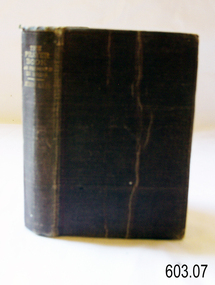
Book - Religious Book, Oxford University Press, The Book of Common Prayer, Early 20th century
... religion...religious service...sailors rest...bethel sailors’ church...bethel floating church...ladies harbour light guild...lightkeepers’ auxiliary...missions to seamen victoria...The connection of this set of books to the Mission to Seamen and to the Ladies Lightkeepers Auxiliary highlights the strong community awareness of the life of people at sea, their dangers and hardships, and their need for physical, financial, spiritual and moral support. flagstaff hill warrnambool shipwrecked coast flagstaff hill maritime museum maritime museum shipwreck coast flagstaff hill maritime village great ocean road religion religious service sailors rest bethel sailors’ church bethel floating church ladies harbour light guild lightkeepers’ auxiliary missions to seamen victoria mission to seafarers flying angel’s club st nicholas seaman’s church williamstown st nicholas mission to seamen church williamstown st nicholas seamen's church williamstown collection mission to seamen williamstown st nicholas seamen’s church flagstaff hill 139 nelson place williamstown religious book religious worship anglican church prayer book book of common prayer The Book of Common Prayer is the foundational liturgical text of the Church of England and the broader Anglican Communion. ...The Book of Common Prayer is the foundational liturgical text of the Church of England and the broader Anglican Communion. The subject book as a standard 730-page UK edition often printed in the late 19th or early 20th century by major privilege presses like Cambridge University Press, Oxford University Press, or William Clowes & Sons contains the complete 1662 standard text. The volume is structured into distinct sections designed for daily worship, sacramental rites, and personal devotion. There is introductory matter within the text that includes the original prefaces regarding the service of the Church and how the Psalter and Holy Scriptures are ordered to be read. Lectionary and calendar tables are also included as well as lessons for daily Bible readings, rules for determining the date of Easter, and the calendar of Holy Days and saints' days.The Book of Common Prayer. Red cloth cover. Title: The Book of Common Prayer with the Additions and Deviations proposed in 1928 Publisher: Humphrey Milford, Oxford University Press, London. Spines have gold inlay print. 244 numbered pages. This is one of a set of original items in our ‘St Nicholas Seamen's Church Williamstown Collection’.non-fictionThe Book of Common Prayer is the foundational liturgical text of the Church of England and the broader Anglican Communion. The subject book as a standard 730-page UK edition often printed in the late 19th or early 20th century by major privilege presses like Cambridge University Press, Oxford University Press, or William Clowes & Sons contains the complete 1662 standard text. The volume is structured into distinct sections designed for daily worship, sacramental rites, and personal devotion. There is introductory matter within the text that includes the original prefaces regarding the service of the Church and how the Psalter and Holy Scriptures are ordered to be read. Lectionary and calendar tables are also included as well as lessons for daily Bible readings, rules for determining the date of Easter, and the calendar of Holy Days and saints' days.flagstaff hill, warrnambool, shipwrecked coast, flagstaff hill maritime museum, maritime museum, shipwreck coast, flagstaff hill maritime village, great ocean road, religion, religious service, sailors rest, bethel sailors’ church, bethel floating church, ladies harbour light guild, lightkeepers’ auxiliary, missions to seamen victoria, mission to seafarers, flying angel’s club, st nicholas seaman’s church williamstown, st nicholas mission to seamen church williamstown, st nicholas seamen's church williamstown collection, mission to seamen williamstown, st nicholas seamen’s church flagstaff hill, 139 nelson place williamstown, religious book, religious worship, anglican church, prayer book, book of common prayer -
 Flagstaff Hill Maritime Museum and Village
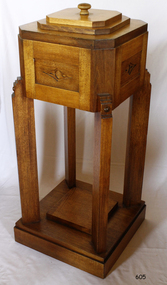
Ceremonial object - Font, 1940s
... religion...religious service...sailors rest...bethel sailors’ church...bethel floating church...ladies harbour light guild...missions to seamen victoria...Victoria, has historical and social significance. They show that people of the 1800s and 1900s cared about the seafarers’ religious, moral, and social welfare, no matter what their religion, social status or nationality. ...This font is a piece of church furniture used in a baptism or christening service. It was originally installed in the St Nicholas Seamen's Church at 139 Nelson Place, Williamstown, Victoria. The church was a branch of the Victoria Missions to Seamen. THE MISSIONS TO SEAMEN (Brief History): - The Missions to Seamen was an Anglican charity that has served seafarers of the world since 1856 in Great Britain. Its symbol is a Flying Angel, inspired by a Bible verse. Today, there are centres in over 200 ports worldwide where seamen of all backgrounds are offered a warm welcome and provided with a wide range of facilities. In Victoria, the organisation began in Williamstown in 1857 as a Sailors’ Church, also known as ‘Bethel’ or the ‘Floating Church’ in an old hulk floating in Hobson’s Bay, Port of Melbourne. It soon became part of the Missions to Seamen, Victoria. In the year 2000, the organisation, now named Mission to Seafarers, still operated locally in Melbourne, Portland, Geelong and Hastings. The Ladies’ Harbour Lights Guild was formed in 1906 to support the Missions to Seamen in Melbourne and other centres, such as Williamstown. Two of the most significant ladies of the Guild were founder Ethel Augusta Godfrey and foundation member Alice Sibthorpe Tracy (who established a branch of the Guild in Warrnambool in 1920). The Guild continued its work until the 1960s. In 1943, a former Williamstown bank was purchased for the Missions to Seaman Club. The chapel was named St Nicholas’ Seamen’s Church and was supported by the Ladies’ Harbour Lights Guild, the Williamstown Lightkeepers’ Auxiliary and the League of Soldiers’ and Sailors’ Friends. It ceased operation in 1966. A Missions to Seamen Chapel and Recreation Room was a significant feature of ports during the late 1800s and into the 1900s. It seemed appropriate for Flagstaff Hill to include such a representation within the new Maritime Village, so the Melbourne Board of Management of Missions to Seamen Victoria gave its permission on 21st May 1979 for the entire furnishings of the Williamstown chapel to be transferred to Flagstaff Hill. The St Nicholas Seamen’s Church was officially opened on October 11, 1981, and closely resembles the Williamstown chapel. This font is significant through its association with the St Nicholas' Mission to Seamen Church in Williamstown, Melbourne, established in 1857. The collection of items from the Missions to Seamen in Williamstown, Victoria, has historical and social significance. They show that people of the 1800s and 1900s cared about the seafarers’ religious, moral, and social welfare, no matter what their religion, social status or nationality. It had its origins in Bristol, England, when a Seamen's Mission was formed in 1837. The first Australian branch was started in 1856 by the Rev. Kerr Johnston, a Church of England clergyman, and operated from a hulk moored in Hobson’s Bay; later, the Mission occupied buildings in Williamstown and Port Melbourne. Baptismal font: four-legged, varnished oak wood pedestal supporting a wooden box with a hand-beaten, rolled edge, copper ewer, bowl or basin insert. The box has a removable cover that has a round wooden knob. The sides of the box section have a decorative, diamond-shaped motif. The box and lid are octagonal, with four short sides and four long sides. The tops of the legs have an ornamental design. This is one of the original items in our St Nicholas Seamen's Church Williamstown Collection.flagstaff hill, warrnambool, shipwrecked-coast, flagstaff-hill, flagstaff-hill-maritime-museum, maritime-museum, shipwreck-coast, flagstaff-hill-maritime-village, font, baptisimal font, church furniture, religious ceremony, copper ewet, religious furniture, christening font, religion, religious service, sailors rest, bethel sailors’ church, bethel floating church, ladies harbour light guild, missions to seamen victoria, mission to seafarers, st nicholas seaman’s church williamstown, st nicholas mission to seamen church williamstown, mission to seamen williamstown, st nicholas seamen’s church flagstaff hill, 139 nelson place williamstown, anglican church, flying angel club, copper ewer, copper bowl, flagstaff hill maritime museum and village, maritime museum, maritime village, shipwreck coast, great ocean road, religious worship, worship service, st nicholas seamen’s church, williamstown, st nicholas missions to seamen’s church williamstown, missions to seamen, st nicholas missions to seamen’s church flagstaff hill, baptism, christening, ceremony, tradition, hand-beaten copper ewer -
 Flagstaff Hill Maritime Museum and Village
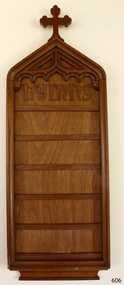
Furniture - Hymn Board, 1944-1966
... religion...religious service...sailors rest...bethel sailors’ church...bethel floating church...ladies harbour light guild...missions to seamen victoria...Victoria, have historical and social significance. They show that people of the 1800s and 1900s cared about the seafarers’ religious, moral, and social welfare, no matter what the religion, social status or nationality. ...This hymn board is attached to the wall. Numbers referring to the hymn or hymns for the current religious service would have been placed onto the rails and would be visible to the congregation. It is used for showing the hymn number or numbers that will be sung during the service. This hymn board was part of the original furnishings of the St Nicholas' Mission to Seamen's Church at 139 Nelson Place, Williamstown, Victoria. THE MISSIONS TO SEAMEN (Brief History: for more, see our Reg. No. 611, Set of Pews) The Missions to Seamen, an Anglican charity, has served seafarers of the world since 1856 in Great Britain. It symbol is a Flying Angel, inspired by a Bible verse. Today there are centr4es in over 200 ports world-wide where seamen of all backgrounds are offered a warm welcome and provided with a wide range of facilities. In Victoria the orgainsation began in Williamstown in 1857. It was as a Sailors’ Church, also known as ‘Bethel’ or the ‘Floating Church’. Its location was an old hulk floating in Hobson’s Bay, Port of Melbourne. It soon became part of the Missions to Seamen, Victoria. In the year 2000 the organisation, now named Mission to Seafarers, still operated locally in Melbourne, Portland, Geelong and Hastings. The Ladies’ Harbour Lights Guild was formed in 1906 to support the Missions to Seamen in Melbourne and other centres such as Williamstown. Two of the most significant ladies of the Guild were founder Ethel Augusta Godfrey and foundation member Alice Sibthorpe Tracy (who established a branch of the Guild in Warrnambool in 1920). The Guild continued its work until the 1960s. In 1943 a former Williamstown bank was purchased for the Missions to Seaman Club. The chapel was named St Nicholas’ Seamen’s Church and was supported by the Ladies’ Harbour Lights Guild, the Williamstown Lightkeepers’ Auxiliary and the League of Soldiers’ and Sailors’ Friends. It ceased operation in 1966. A Missions to Seamen Chapel and Recreation Room was a significant feature of ports during the late 1800s and into the 1900s. It seemed appropriate for Flagstaff Hill to include such a representation within the new Maritime Village, so the Melbourne Board of Management of Missions to Seamen Victoria gave its permission on 21st May 1979 for the entire furnishings of the Williamstown chapel to be transferred to Flagstaff Hill. The St Nicholas Seamen’s Church was officially opened on October 11, 1981 and closely resembles the Williamstown chapel. This hymn board is significant through its association with the St Nicholas' Mission to Seamen Church in Williamstown, Melbourne, established in 1857. The items in our collection from the Missions to Seamen in Williamstown, Victoria, have historical and social significance. They show that people of the 1800s and 1900s cared about the seafarers’ religious, moral, and social welfare, no matter what the religion, social status or nationality. It had its origins in Bristol, England when a Seamen's Mission was formed in 1837. The first Australian branch was started in 1856 by the Rev. Kerr Johnston, a Church of England clergyman, and operated from a hulk moored in Hobson’s Bay; later the Mission occupied buildings in Williamstown and Port Melbourne. Hymn board; arch-shaped wooden board with relief decorative wood and decorative cross on top of the peak. The word 'hymns' is raised in decorative wood on the top. The board has six rails. This is one of the original items in our ‘St Nicholas Seamen's Church Williamstown Collection’.Carved into the wood "hymns"flagstaff hill, warrnambool, shipwrecked-coast, flagstaff-hill, flagstaff-hill-maritime-museum, maritime-museum, shipwreck-coast, flagstaff-hill-maritime-village, religion, religious service, sailors rest, bethel sailors’ church, bethel floating church, ladies harbour light guild, missions to seamen victoria, mission to seafarers, st nicholas seaman’s church williamstown, st nicholas mission to seamen church williamstown, mission to seamen williamstown, st nicholas seamen’s church flagstaff hill, 139 nelson place williamstown, church furniture, religious furniture, anglican church, flying angel club, hymn board, song board, religious worship, worship service, worship music -
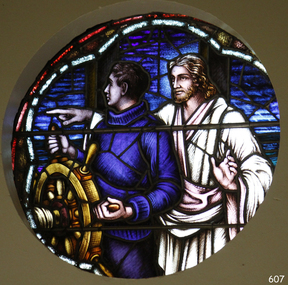 Flagstaff Hill Maritime Museum and Village
Artwork, other - Window, Brooks, Robinson & Co, Christ Showing the Helmsman the Way, circa August 1947
... victoria...mission to seafarers...lightkeepers auxiliary...ladies harbour light guild...139 nelson place williamstown...religion...This memorial window is significant as a part of Victoria's War Heritage and is listed on the Victorian Heritage Database, Heritage Number 196973. flagstaff hill warrnambool shipwrecked coast flagstaff hill maritime museum maritime museum shipwreck coast flagstaff hill maritime village great ocean road mission to seamen williamstown st nicholas seaman’s church williamstown missions to seamen victoria mission to seafarers lightkeepers auxiliary ladies harbour light guild 139 nelson place williamstown religion religious service sailors rest bethel sailors’ church bethel floating church e. s. & a. bank williamstown christ directing a sailor christ showing the helmsman the way quartermaster’s hand on the wheel stained glass window church window religious window sanctuary window memorial window war memorial window victorian war heritage inventory victorian heritage database merchant navy ww2 1939-1945 anglican church bishop mckie mrs musther brooks robinson & co flying angel club williamstown lightkeepers' auxiliary ladies' harbour lights guild commemorative window Window, stained glass, circular, with reinforcing bars. ...This round, stained glass window, titled "Christ Showing the Helmsman the Way", was also referred to as the Sanctuary Window or Memorial window. It was installed in the St Nicholas Seamen's Church at 139 Nelson Place, Williamstown, Victoria, inside the chapel above the altar. This memorial window has significance as a part of Victoria's War Heritage and is listed on the Victorian Heritage Database. The window and subsequent plaque were donated to St Nicholas Seamen’s Church as a memorial to the members of the Merchant Navy whose lives were lost in the Second World War, 1939-1945. The donor was the Williamstown Lightkeepers Auxiliary, an independent ladies' association working with the Williamstown Missions to Seamen (the Missions to Seamen organisation was re-named the Mission to Seafarers in the year 2000). The window was officially dedicated on December 14, 1947, by Geelong's Anglican Bishop, Rt. Rev. J.D. McKie. In the early months of 1948, a bronze plaque was also placed in the chapel above the altar. It recognises the lost souls of the Merchant Navy during World War 2, as well as the donor of the window, the Williamstown Lightkeepers Auxiliary. The inscription impressed on the rectangular bronze plaque, 20.4 x 10.2cm, is as follows: “IN MEMORY OF THE MEMBERS OF THE MERCHANT NAVY WHO WERE LOST IN THE SECOND WORLD WAR 1939-1945 FAITHFUL UNTO DEATH. THE WINDOW ABOVE THE ALTAR WAS ERECTED BY THE WILLIAMSTOWN LIGHTKEEPERS AUXILIARY 1947.” The Williamstown St Nicholas Seamen’s Church ceased operation in 1966. In 1979, the Victoria Missions to Seamen donated this round, stained glass window and the memorial plaque to Flagstaff Hill Maritime Village, along with many other items and furnishings. These items have been used to simulate the Williamstown Mission and Chapel as much as possible. The round space that formerly displayed the window can still be seen at the back of the old St Nicholas Seamen’s Church, previously the ES&A bank, in Williamstown. THE MISSIONS TO SEAMEN (Brief History): - The Missions to Seamen was an Anglican charity in Great Britain that has served the world's seafarers since 1856. Its symbol is a Flying Angel, inspired by a Bible verse. Today, there are centres in over 200 ports worldwide where seamen of all backgrounds are offered a warm welcome and provided with a wide range of facilities. In Victoria, the organisation began in Williamstown in 1857 as a Sailors’ Church, also known as ‘Bethel’ or the ‘Floating Church’ in an old hulk floating in Hobson’s Bay, Port of Melbourne. It soon became part of the Missions to Seamen, Victoria. In 2000, the organisation, now named Mission to Seafarers, still operated locally in Melbourne, Portland, Geelong and Hastings. The Ladies’ Harbour Lights Guild was formed in 1906 to support the Missions to Seamen in Melbourne and other centres, such as Williamstown. Two of the most significant ladies of the Guild were founder Ethel Augusta Godfrey and foundation member Alice Sibthorpe Tracy (who established a branch of the Guild in Warrnambool in 1920). The Guild continued its work until the 1960s. In 1943, a former Williamstown bank was purchased for the Missions to Seamen Club. The chapel was named St Nicholas’ Seamen’s Church and was supported by the Ladies’ Harbour Lights Guild, the Williamstown Lightkeepers’ Auxiliary and the League of Soldiers’ and Sailors’ Friends. It ceased operation in 1966. A Missions to Seamen Chapel and Recreation Room was a significant feature of ports during the late 1800s and 1900s. It seemed appropriate for Flagstaff Hill to include such a representation within the new Maritime Village, and the Melbourne Board of Management of Missions to Seamen Victoria gave its permission on 21st May 1979 for the entire furnishings of the Williamstown chapel to be transferred to Flagstaff Hill. The St Nicholas Seamen’s Church was officially opened on October 11, 1981, and resembles the Williamstown chapel. This stained glass window is historically significant for its connection to the St Nicholas Mission to Seamen's Church in Williamstown, established in 1857 to cater for the physical, social, and spiritual needs of seafarers. It was donated to the Mission by the Lightkeepers Auxiliary (Ladies Harbour Lights Guild, which was formed in 1905). The Missions to Seamen organisation had its origins in Bristol, England, when a Seamen's Mission was formed in 1837. The first Australian branch was started in 1856 by the Rev. Kerr Johnston, a Church of England clergyman, and operated from a hulk moored in Hobson’s Bay. Later, the Mission occupied buildings in Williamstown and Port Melbourne. The connection of this window, the Mission to Seamen and the Ladies Harbour Lights Guild highlights the strong community awareness of the life of people at sea, their dangers and hardships, and their need for physical, financial, spiritual and moral support. This memorial window is significant as a part of Victoria's War Heritage and is listed on the Victorian Heritage Database, Heritage Number 196973.Window, stained glass, circular, with reinforcing bars. The window represents Christ showing the helmsman the way. It shows a man in blue knitted jumper holding onto a ship's wheel, looking over his right shoulder. Behind him stands a man in a white robe, pointing to his right and looking to his left, his left hand gesturing to pause. The background has various shapes and patterns of blue glass, bordered by two arcs; the outer one is white, the inner one is red. This beautiful window is in our St Nicholas Seamen's Church Collection and was brought to Warrnambool from the original St Nicholas Seamen’s Church in Williamstown. flagstaff hill, warrnambool, shipwrecked coast, flagstaff hill maritime museum, maritime museum, shipwreck coast, flagstaff hill maritime village, great ocean road, mission to seamen williamstown, st nicholas seaman’s church williamstown, missions to seamen victoria, mission to seafarers, lightkeepers auxiliary, ladies harbour light guild, 139 nelson place williamstown, religion, religious service, sailors rest, bethel sailors’ church, bethel floating church, e. s. & a. bank williamstown, christ directing a sailor, christ showing the helmsman the way, quartermaster’s hand on the wheel, stained glass window, church window, religious window, sanctuary window, memorial window, war memorial window, victorian war heritage inventory, victorian heritage database, merchant navy ww2, 1939-1945, anglican church, bishop mckie, mrs musther, brooks robinson & co, flying angel club, williamstown lightkeepers' auxiliary, ladies' harbour lights guild, commemorative window -
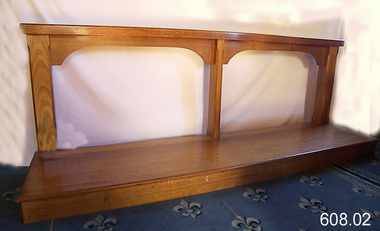 Flagstaff Hill Maritime Museum and Village
Furniture - Rail and Base, circa 1944
... religion...religious service...sailors rest...bethel sailors’ church...bethel floating church...ladies harbour light guild...missions to seamen victoria...Victoria, have historical and social significance. They show that people of the 1800s and 1900s cared about the seafarers’ religious, moral, and social welfare, no matter what the religion, social status or nationality. ...This is one of a pair of kneeling rails that were part of the original furnishings of the St Nicholas Mission to Seamen's Church at 139 Nelson Place, Williamstown, Victoria. A kneeling rail is a part of the church's furniture and is used during religious prayer to assist the person in assuming the kneeling position. A padded kneeling mat or cushion would also be provided for comfort. THE MISSIONS TO SEAMEN (Brief History): - The Missions to Seamen was an Anglican charity in Great Britain that has served the world's seafarers since 1856. Its symbol is a Flying Angel, inspired by a Bible verse. Today, there are centres in over 200 ports worldwide where seamen of all backgrounds are offered a warm welcome and provided with a wide range of facilities. In Victoria, the organisation began in Williamstown in 1857 as a Sailors’ Church, also known as ‘Bethel’ or the ‘Floating Church’ in an old hulk floating in Hobson’s Bay, Port of Melbourne. It soon became part of the Missions to Seamen, Victoria. In 2000, the organisation, now named Mission to Seafarers, still operated locally in Melbourne, Portland, Geelong and Hastings. The Ladies’ Harbour Lights Guild was formed in 1906 to support the Missions to Seamen in Melbourne and other centres, such as Williamstown. Two of the most significant ladies of the Guild were founder Ethel Augusta Godfrey and foundation member Alice Sibthorpe Tracy (who established a branch of the Guild in Warrnambool in 1920). The Guild continued its work until the 1960s. In 1943, a former Williamstown bank was purchased for the Missions to Seamen Club. The chapel was named St Nicholas’ Seamen’s Church and was supported by the Ladies’ Harbour Lights Guild, the Williamstown Lightkeepers’ Auxiliary and the League of Soldiers’ and Sailors’ Friends. It ceased operation in 1966. A Missions to Seamen Chapel and Recreation Room was a significant feature of ports during the late 1800s and 1900s. It seemed appropriate for Flagstaff Hill to include such a representation within the new Maritime Village, and the Melbourne Board of Management of Missions to Seamen Victoria gave its permission on 21st May 1979 for the entire furnishings of the Williamstown chapel to be transferred to Flagstaff Hill. The St Nicholas Seamen’s Church was officially opened on October 11, 1981, and resembles the Williamstown chapel. This pair of kneeling rails is significant through its association with the St Nicholas' Mission to Seamen Church in Williamstown, Melbourne, established in 1857. The items in our collection from the Missions to Seamen in Williamstown, Victoria, have historical and social significance. They show that people of the 1800s and 1900s cared about the seafarers’ religious, moral, and social welfare, no matter what the religion, social status or nationality. It had its origins in Bristol, England when a Seamen's Mission was formed in 1837. The first Australian branch was started in 1856 by the Rev. Kerr Johnston, a Church of England clergyman, and operated from a hulk moored in Hobson’s Bay; later the Mission occupied buildings in Williamstown and Port Melbourne. Rail and base, one of a pair of two kneeling rails. Three varnished wood pillars and cap rail, mounted on a rectangular box-shaped base: a kneeling rail is used in religious worship. These kneeling rails are part of the St Nicholas Seamen's Church Williamstown Collection.flagstaff hill, warrnambool, shipwrecked-coast, flagstaff-hill, flagstaff-hill-maritime-museum, maritime-museum, shipwreck-coast, flagstaff-hill-maritime-village, rail for kneeling, rail, kneeling rail, religion, religious service, sailors rest, bethel sailors’ church, bethel floating church, ladies harbour light guild, missions to seamen victoria, mission to seafarers, st nicholas seaman’s church williamstown, st nicholas mission to seamen church williamstown, mission to seamen williamstown, st nicholas seamen’s church flagstaff hill, 139 nelson place williamstown, church furniture, religious furniture, religious worship, flying angel club, altar rail, kneeler, prayer, ceremonial furniture -
 Flagstaff Hill Maritime Museum and Village
Ceremonial object - Kneeling Mat, ca. 1944
... religion...religious service...sailors rest...bethel sailors’ church...bethel floating church...ladies harbour light guild...lightkeepers’ auxiliary...missions to seamen victoria...The organisation originated in Bristol, England, when a Seamen's Mission was formed in 1837. flagstaff hill warrnambool shipwrecked coast flagstaff hill maritime museum maritime museum shipwreck coast flagstaff hill maritime village great ocean road religion religious service sailors rest bethel sailors’ church bethel floating church ladies harbour light guild lightkeepers’ auxiliary missions to seamen victoria mission to seafarers flying angel’s club st nicholas seaman’s church williamstown st nicholas mission to seamen church williamstown mission to seamen williamstown st nicholas seamen’s church flagstaff hill 139 nelson place williamstown religious worship anglican church prayer accessory kneeling mat prayer mat religious custom religious tradition Mat, quantity of two. ...This pair of comfortable kneeling mats is from the original furnishings of St Nicholas Seamen's Church, Williamstown, operated by the Williamstown Missions to Seamen organisation. THE MISSIONS TO SEAMEN (Brief History): - The Missions to Seamen was an Anglican charity that has served seafarers of the world since 1856 in Great Britain. Its symbol is a Flying Angel, inspired by a Bible verse. Today, there are centres in over 200 ports worldwide where seamen of all backgrounds are offered a warm welcome and provided with a wide range of facilities. In Victoria, the organisation began in Williamstown in 1857 as a Sailors’ Church, also known as ‘Bethel’ or the ‘Floating Church’ in an old hulk floating in Hobson’s Bay, Port of Melbourne. It soon became part of the Missions to Seamen, Victoria. In the year 2000, the organisation, now named Mission to Seafarers, still operated locally in Melbourne, Portland, Geelong and Hastings. The Ladies’ Harbour Lights Guild was formed in 1906 to support the Missions to Seamen in Melbourne and other centres, such as Williamstown. Two of the most significant ladies of the Guild were founder Ethel Augusta Godfrey and foundation member Alice Sibthorpe Tracy (who established a branch of the Guild in Warrnambool in 1920). The Guild continued its work until the 1960s. In 1943, a former Williamstown bank was purchased for the Missions to Seaman Club. The chapel was named St Nicholas’ Seamen’s Church and was supported by the Ladies’ Harbour Lights Guild, the Williamstown Lightkeepers’ Auxiliary and the League of Soldiers’ and Sailors’ Friends. It ceased operation in 1966. A Missions to Seamen Chapel and Recreation Room was a significant feature of ports during the late 1800s and into the 1900s. It seemed appropriate for Flagstaff Hill to include such a representation within the new Maritime Village, so the Melbourne Board of Management of Missions to Seamen Victoria gave its permission on 21st May 1979 for the entire furnishings of the Williamstown chapel to be transferred to Flagstaff Hill. The St Nicholas Seamen’s Church was officially opened on October 11, 1981, and closely resembles the Williamstown chapel. This pair of kneeling mats is historically significant for its origin in the St Nicholas Mission to Seamen's Church in Williamstown, established in 1857 to cater for seafarers’ physical, social, and spiritual needs. The organisation originated in Bristol, England, when a Seamen's Mission was formed in 1837. Mat, quantity of two. Kneeling mats used during prayer. Mats are rectangular and made of blue cloth with sewn edges and padding inside. The mats are part of the St. Nicholas Seamen's Church Williamstown Collection.flagstaff hill, warrnambool, shipwrecked coast, flagstaff hill maritime museum, maritime museum, shipwreck coast, flagstaff hill maritime village, great ocean road, religion, religious service, sailors rest, bethel sailors’ church, bethel floating church, ladies harbour light guild, lightkeepers’ auxiliary, missions to seamen victoria, mission to seafarers, flying angel’s club, st nicholas seaman’s church williamstown, st nicholas mission to seamen church williamstown, mission to seamen williamstown, st nicholas seamen’s church flagstaff hill, 139 nelson place williamstown, religious worship, anglican church, prayer accessory, kneeling mat, prayer mat, religious custom, religious tradition -
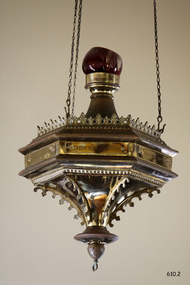 Flagstaff Hill Maritime Museum and Village
Functional object - Sanctuary Lamp, ca. 1944
... Religion...Religious service...Sailors Rest...Bethel Sailors’ Church...Bethel Floating Church...Ladies Harbour Light Guild...Harbor Lights Guild...Joy Club for Fighters...Ladies Lightkeepers’ Auxiliary...Missions to Seamen Victoria...Flagstaff Hill Warrnambool Shipwrecked coast Flagstaff Hill Maritime Museum Maritime Museum Shipwreck coast Flagstaff Hill Maritime Village Great Ocean Road Religion Religious service Sailors Rest Bethel Sailors’ Church Bethel Floating Church Ladies Harbour Light Guild Harbor Lights Guild Joy Club for Fighters Ladies Lightkeepers’ Auxiliary Missions to Seamen Victoria Mission to Seafarers Flying Angel’s Club St Nicholas Seamen’s Church Williamstown St Nicholas Mission to Seamen Church Williamstown Mission to Seamen Williamstown St Nicholas Seamen’s Church Flagstaff Hill 139 Nelson Place Williamstown Sanctuary lamp electric lamp church lighting pendant lamp Edward Roberts memorial plaque 7-08-1905 C. ...The sanctuary lamp was part of the original furnishings of St Nicholas Seamen's Church, Williamstown, Victoria. The church was operated by the Missions to Seamen organisation. The lamp was donated by Miss C. Roberts to St Nicholas Seamen's Church, Williamstown, as a memorial to Edward Roberts, who passed away on August 7th, 1905, as stated on the plaque. THE MISSIONS TO SEAMEN (Brief History): - The Missions to Seamen was an Anglican charity in Great Britain that has served the world's seafarers since 1856. Its symbol is a Flying Angel, inspired by a Bible verse. Today, there are centres in over 200 ports worldwide where seamen of all backgrounds are offered a warm welcome and provided with a wide range of facilities. In Victoria, the organisation began in Williamstown in 1857 as a Sailors’ Church, also known as ‘Bethel’ or the ‘Floating Church’ in an old hulk floating in Hobson’s Bay, Port of Melbourne. It soon became part of the Missions to Seamen, Victoria. In 2000, the organisation, now named Mission to Seafarers, still operated locally in Melbourne, Portland, Geelong and Hastings. The Ladies’ Harbour Lights Guild was formed in 1906 to support the Missions to Seamen in Melbourne and other centres, such as Williamstown. Two of the most significant ladies of the Guild were founder Ethel Augusta Godfrey and foundation member Alice Sibthorpe Tracy (who established a branch of the Guild in Warrnambool in 1920). The Guild continued its work until the 1960s. In 1943, a former Williamstown bank was purchased for the Missions to Seamen Club. The chapel was named St Nicholas’ Seamen’s Church and was supported by the Ladies’ Harbour Lights Guild, the Williamstown Lightkeepers’ Auxiliary and the League of Soldiers’ and Sailors’ Friends. It ceased operation in 1966. A Missions to Seamen Chapel and Recreation Room was a significant feature of ports during the late 1800s and 1900s. It seemed appropriate for Flagstaff Hill to include such a representation within the new Maritime Village, and the Melbourne Board of Management of Missions to Seamen Victoria gave its permission on 21st May 1979 for the entire furnishings of the Williamstown chapel to be transferred to Flagstaff Hill. The St Nicholas Seamen’s Church was officially opened on October 11, 1981, and resembles the Williamstown chapel. The lamp is socially significant as a lasting memorial to Edward Roberts. It is also significant historically for its origin in the St Nicholas Mission to Seamen's Church in Williamstown, established in 1857 to cater for the physical, social, and spiritual needs of seafarers. It originated in Bristol, England when a Seamen's Mission was formed in 1837. The lamp is historically significant for its connection to the Ladies Lightkeepers’ Auxiliary, an organisation of women formed to support seafarers. The connection of this lamp to the Mission to Seamen highlights the strong community awareness of the life of people at sea, their dangers and hardships, and their need for physical, financial, spiritual and moral support. Sanctuary Lamp, a brass six-sided lamp supported by three chains to a main disc, with a single chain above. Base ring. Ruby glass bowl on top. Inscribed glass plates on the sides. The lamp bowl is lit by an electric lamp. Made in England. It is now part of the St. Nicholas Seamen's Church Collection. Marked on plates "In Loving Memory of Edward Roberts who passed away 7 August 1905 Nearer My God To Thee"flagstaff hill, warrnambool, shipwrecked coast, flagstaff hill maritime museum, maritime museum, shipwreck coast, flagstaff hill maritime village, great ocean road, religion, religious service, sailors rest, bethel sailors’ church, bethel floating church, ladies harbour light guild, harbor lights guild, joy club for fighters, ladies lightkeepers’ auxiliary, missions to seamen victoria, mission to seafarers, flying angel’s club, st nicholas seamen’s church williamstown, st nicholas mission to seamen church williamstown, mission to seamen williamstown, st nicholas seamen’s church flagstaff hill, 139 nelson place williamstown, sanctuary lamp, electric lamp, church lighting, pendant lamp, edward roberts, memorial plaque, 7-08-1905, c. roberts -
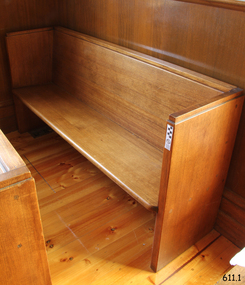 Flagstaff Hill Maritime Museum and Village
Furniture - Pew, circa 1944
... religion...religious service...lightkeepers’ auxiliary...mrs musther...missions to seamen victoria...The connection of these pews to the Mission to Seamen and to the Ladies Lightkeepers’ Auxiliary highlights the strong community awareness of the life of people at sea, their dangers and hardships, and their need for physical, financial, spiritual and moral support. flagstaff hill warrnambool shipwrecked coast flagstaff hill maritime museum maritime museum shipwreck coast flagstaff hill maritime village great ocean road religion religious service lightkeepers’ auxiliary mrs musther missions to seamen victoria mission to seafarers flying angel’s club st nicholas seaman’s church williamstown st nicholas mission to seamen church williamstown mission to seamen williamstown st nicholas seamen’s church flagstaff hill 139 nelson place williamstown church furniture church seats church pew religious furniture religious worship anglican church set of pews Church pew, one of a set of seventeen varnished wooden church pews. ...This pew is one of a set of seventeen church pews originally used in St. Nicholas Seamen’s Church, 139 Nelson Place, Williamstown, Victoria, during religious services there. The Church was operated by the Mission to Seamen organisation. The pews were donated to the St Nicholas Seamen’s Church by the Williamstown Lightkeepers’ Auxiliary, founded by Ethel Margaret Musther, M.B.E. * for more detailed history please see our Registration Number 611, Set of Pews The set of pews is significant historically for its origin in the St Nicholas Mission to Seamen's Church in Williamstown, established in 1857 to cater for the physical, social, and spiritual needs of seafarers. It originated in Bristol, England when a Seamen's Mission was formed in 1837. The set of pews id historically significant for their connection to the Ladies Lightkeepers’ Auxiliary, an organisation of women, formed to support seafarers. The connection of these pews to the Mission to Seamen and to the Ladies Lightkeepers’ Auxiliary highlights the strong community awareness of the life of people at sea, their dangers and hardships, and their need for physical, financial, spiritual and moral support. Church pew, one of a set of seventeen varnished wooden church pews. The pews have a shelf fitted behind the backrest. This is one of a set of original items in our ‘St Nicholas Seamen's Church Williamstown Collection’.flagstaff hill, warrnambool, shipwrecked coast, flagstaff hill maritime museum, maritime museum, shipwreck coast, flagstaff hill maritime village, great ocean road, religion, religious service, lightkeepers’ auxiliary, mrs musther, missions to seamen victoria, mission to seafarers, flying angel’s club, st nicholas seaman’s church williamstown, st nicholas mission to seamen church williamstown, mission to seamen williamstown, st nicholas seamen’s church flagstaff hill, 139 nelson place williamstown, church furniture, church seats, church pew, religious furniture, religious worship, anglican church, set of pews -
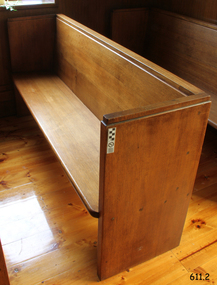 Flagstaff Hill Maritime Museum and Village
Furniture - Pew, Circa 1944
... religion...religious service...lightkeepers’ auxiliary...mrs musther...missions to seamen victoria...The connection of these pews to the Mission to Seamen and to the Ladies Lightkeepers’ Auxiliary highlights the strong community awareness of the life of people at sea, their dangers and hardships, and their need for physical, financial, spiritual and moral support. flagstaff hill warrnambool shipwrecked coast flagstaff hill maritime museum maritime museum shipwreck coast flagstaff hill maritime village great ocean road religion religious service lightkeepers’ auxiliary mrs musther missions to seamen victoria mission to seafarers flying angel’s club st nicholas seaman’s church williamstown st nicholas mission to seamen church williamstown mission to seamen williamstown st nicholas seamen’s church flagstaff hill 139 nelson place williamstown church furniture church seats church pew religious furniture religious worship anglican church set of pews Church pew, one of a set of seventeen varnished wooden church pews. ...This pew is one of a set of seventeen church pews originally used in St. Nicholas Seamen’s Church, 139 Nelson Place, Williamstown, Victoria, during religious services there. The Church was operated by the Mission to Seamen organisation. The pews were donated to the St Nicholas Seamen’s Church by the Williamstown Lightkeepers’ Auxiliary, founded by Ethel Margaret Musther, M.B.E. * for more detailed history please see our Registration Number 611, Set of Pews The set of pews is significant historically for its origin in the St Nicholas Mission to Seamen's Church in Williamstown, established in 1857 to cater for the physical, social, and spiritual needs of seafarers. It originated in Bristol, England when a Seamen's Mission was formed in 1837. The set of pews id historically significant for their connection to the Ladies Lightkeepers’ Auxiliary, an organisation of women, formed to support seafarers. The connection of these pews to the Mission to Seamen and to the Ladies Lightkeepers’ Auxiliary highlights the strong community awareness of the life of people at sea, their dangers and hardships, and their need for physical, financial, spiritual and moral support. Church pew, one of a set of seventeen varnished wooden church pews. The pew has a shelf fitted behind the backrest. This is one of a set of original items in our ‘St Nicholas Seamen's Church Williamstown Collection’.flagstaff hill, warrnambool, shipwrecked coast, flagstaff hill maritime museum, maritime museum, shipwreck coast, flagstaff hill maritime village, great ocean road, religion, religious service, lightkeepers’ auxiliary, mrs musther, missions to seamen victoria, mission to seafarers, flying angel’s club, st nicholas seaman’s church williamstown, st nicholas mission to seamen church williamstown, mission to seamen williamstown, st nicholas seamen’s church flagstaff hill, 139 nelson place williamstown, church furniture, church seats, church pew, religious furniture, religious worship, anglican church, set of pews -
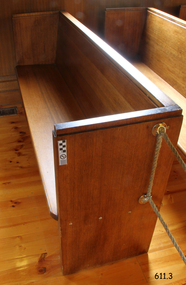 Flagstaff Hill Maritime Museum and Village
Furniture - Pew, Circa 1944
... religion...religious service...lightkeepers’ auxiliary...mrs musther...missions to seamen victoria...The connection of these pews to the Mission to Seamen and to the Ladies Lightkeepers’ Auxiliary highlights the strong community awareness of the life of people at sea, their dangers and hardships, and their need for physical, financial, spiritual and moral support. flagstaff hill warrnambool shipwrecked coast flagstaff hill maritime museum maritime museum shipwreck coast flagstaff hill maritime village great ocean road religion religious service lightkeepers’ auxiliary mrs musther missions to seamen victoria mission to seafarers flying angel’s club st nicholas seaman’s church williamstown st nicholas mission to seamen church williamstown mission to seamen williamstown st nicholas seamen’s church flagstaff hill 139 nelson place williamstown church furniture church seats church pew religious furniture religious worship anglican church set of pews Church pew, one of a set of seventeen varnished wooden church pews. ...This pew is one of a set of seventeen church pews originally used in St. Nicholas Seamen’s Church, 139 Nelson Place, Williamstown, Victoria, during religious services there. The Church was operated by the Mission to Seamen organisation. The pews were donated to the St Nicholas Seamen’s Church by the Williamstown Lightkeepers’ Auxiliary, founded by Ethel Margaret Musther, M.B.E. * for more detailed history please see our Registration Number 611, Set of Pews The set of pews is significant historically for its origin in the St Nicholas Mission to Seamen's Church in Williamstown, established in 1857 to cater for the physical, social, and spiritual needs of seafarers. It originated in Bristol, England when a Seamen's Mission was formed in 1837. The set of pews id historically significant for their connection to the Ladies Lightkeepers’ Auxiliary, an organisation of women, formed to support seafarers. The connection of these pews to the Mission to Seamen and to the Ladies Lightkeepers’ Auxiliary highlights the strong community awareness of the life of people at sea, their dangers and hardships, and their need for physical, financial, spiritual and moral support. Church pew, one of a set of seventeen varnished wooden church pews. The pew has a shelf fitted behind the backrest. This is one of a set of original items in our ‘St Nicholas Seamen's Church Williamstown Collection’. flagstaff hill, warrnambool, shipwrecked coast, flagstaff hill maritime museum, maritime museum, shipwreck coast, flagstaff hill maritime village, great ocean road, religion, religious service, lightkeepers’ auxiliary, mrs musther, missions to seamen victoria, mission to seafarers, flying angel’s club, st nicholas seaman’s church williamstown, st nicholas mission to seamen church williamstown, mission to seamen williamstown, st nicholas seamen’s church flagstaff hill, 139 nelson place williamstown, church furniture, church seats, church pew, religious furniture, religious worship, anglican church, set of pews -
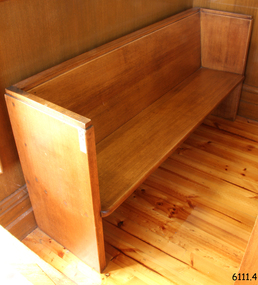 Flagstaff Hill Maritime Museum and Village
Furniture - Pew, Circa 1944
... religion...religious service...lightkeepers’ auxiliary...mrs musther...missions to seamen victoria...The connection of these pews to the Mission to Seamen and to the Ladies Lightkeepers’ Auxiliary highlights the strong community awareness of the life of people at sea, their dangers and hardships, and their need for physical, financial, spiritual and moral support. flagstaff hill warrnambool shipwrecked coast flagstaff hill maritime museum maritime museum shipwreck coast flagstaff hill maritime village great ocean road religion religious service lightkeepers’ auxiliary mrs musther missions to seamen victoria mission to seafarers flying angel’s club st nicholas seaman’s church williamstown st nicholas mission to seamen church williamstown mission to seamen williamstown st nicholas seamen’s church flagstaff hill 139 nelson place williamstown church furniture church seats church pew religious furniture religious worship anglican church set of pews Church pew, one of a set of seventeen varnished wooden church pews. ...This pew is one of a set of seventeen church pews originally used in St. Nicholas Seamen’s Church, 139 Nelson Place, Williamstown, Victoria, during religious services there. The Church was operated by the Mission to Seamen organisation. The pews were donated to the St Nicholas Seamen’s Church by the Williamstown Lightkeepers’ Auxiliary, founded by Ethel Margaret Musther, M.B.E. * for more detailed history please see our Registration Number 611, Set of Pews The set of pews is significant historically for its origin in the St Nicholas Mission to Seamen's Church in Williamstown, established in 1857 to cater for the physical, social, and spiritual needs of seafarers. It originated in Bristol, England when a Seamen's Mission was formed in 1837. The set of pews id historically significant for their connection to the Ladies Lightkeepers’ Auxiliary, an organisation of women, formed to support seafarers. The connection of these pews to the Mission to Seamen and to the Ladies Lightkeepers’ Auxiliary highlights the strong community awareness of the life of people at sea, their dangers and hardships, and their need for physical, financial, spiritual and moral support. Church pew, one of a set of seventeen varnished wooden church pews. The pew has a shelf fitted behind the backrest. This is one of a set of original items in our ‘St Nicholas Seamen's Church Williamstown Collection’. flagstaff hill, warrnambool, shipwrecked coast, flagstaff hill maritime museum, maritime museum, shipwreck coast, flagstaff hill maritime village, great ocean road, religion, religious service, lightkeepers’ auxiliary, mrs musther, missions to seamen victoria, mission to seafarers, flying angel’s club, st nicholas seaman’s church williamstown, st nicholas mission to seamen church williamstown, mission to seamen williamstown, st nicholas seamen’s church flagstaff hill, 139 nelson place williamstown, church furniture, church seats, church pew, religious furniture, religious worship, anglican church, set of pews -
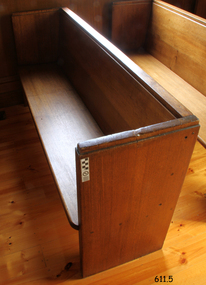 Flagstaff Hill Maritime Museum and Village
Furniture - Pew, Circa 1944
... religion...religious service...lightkeepers’ auxiliary...mrs musther...missions to seamen victoria...The connection of these pews to the Mission to Seamen and to the Ladies Lightkeepers’ Auxiliary highlights the strong community awareness of the life of people at sea, their dangers and hardships, and their need for physical, financial, spiritual and moral support. flagstaff hill warrnambool shipwrecked coast flagstaff hill maritime museum maritime museum shipwreck coast flagstaff hill maritime village great ocean road religion religious service lightkeepers’ auxiliary mrs musther missions to seamen victoria mission to seafarers flying angel’s club st nicholas seaman’s church williamstown st nicholas mission to seamen church williamstown mission to seamen williamstown st nicholas seamen’s church flagstaff hill 139 nelson place williamstown church furniture church seats church pew religious furniture religious worship anglican church set of pews Church pew, one of a set of seventeen varnished wooden church pews. ...This pew is one of a set of seventeen church pews originally used in St. Nicholas Seamen’s Church, 139 Nelson Place, Williamstown, Victoria, during religious services there. The Church was operated by the Mission to Seamen organisation. The pews were donated to the St Nicholas Seamen’s Church by the Williamstown Lightkeepers’ Auxiliary, founded by Ethel Margaret Musther, M.B.E. * for more detailed history please see our Registration Number 611, Set of Pews The set of pews is significant historically for its origin in the St Nicholas Mission to Seamen's Church in Williamstown, established in 1857 to cater for the physical, social, and spiritual needs of seafarers. It originated in Bristol, England when a Seamen's Mission was formed in 1837. The set of pews id historically significant for their connection to the Ladies Lightkeepers’ Auxiliary, an organisation of women, formed to support seafarers. The connection of these pews to the Mission to Seamen and to the Ladies Lightkeepers’ Auxiliary highlights the strong community awareness of the life of people at sea, their dangers and hardships, and their need for physical, financial, spiritual and moral support. Church pew, one of a set of seventeen varnished wooden church pews. The pew has a shelf fitted behind the backrest. This is one of a set of original items in our ‘St Nicholas Seamen's Church Williamstown Collection’. flagstaff hill, warrnambool, shipwrecked coast, flagstaff hill maritime museum, maritime museum, shipwreck coast, flagstaff hill maritime village, great ocean road, religion, religious service, lightkeepers’ auxiliary, mrs musther, missions to seamen victoria, mission to seafarers, flying angel’s club, st nicholas seaman’s church williamstown, st nicholas mission to seamen church williamstown, mission to seamen williamstown, st nicholas seamen’s church flagstaff hill, 139 nelson place williamstown, church furniture, church seats, church pew, religious furniture, religious worship, anglican church, set of pews
