
Showing 5 items matching "religious custom"
-
 Flagstaff Hill Maritime Museum and Village
Ceremonial object - Kneeling Mat, ca. 1944
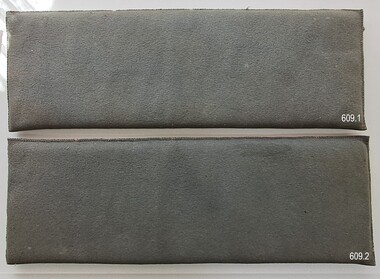
... ...religious custom...The organisation originated in Bristol, England, when a Seamen's Mission was formed in 1837. flagstaff hill warrnambool shipwrecked coast flagstaff hill maritime museum maritime museum shipwreck coast flagstaff hill maritime village great ocean road religion religious service sailors rest bethel sailors’ church bethel floating church ladies harbour light guild lightkeepers’ auxiliary missions to seamen victoria mission to seafarers flying angel’s club st nicholas seaman’s church williamstown st nicholas mission to seamen church williamstown mission to seamen williamstown st nicholas seamen’s church flagstaff hill 139 nelson place williamstown religious worship anglican church prayer accessory kneeling mat prayer mat religious custom religious tradition Mat, quantity of two. ...This pair of comfortable kneeling mats is from the original furnishings of St Nicholas Seamen's Church, Williamstown, operated by the Williamstown Missions to Seamen organisation. THE MISSIONS TO SEAMEN (Brief History): - The Missions to Seamen was an Anglican charity that has served seafarers of the world since 1856 in Great Britain. Its symbol is a Flying Angel, inspired by a Bible verse. Today, there are centres in over 200 ports worldwide where seamen of all backgrounds are offered a warm welcome and provided with a wide range of facilities. In Victoria, the organisation began in Williamstown in 1857 as a Sailors’ Church, also known as ‘Bethel’ or the ‘Floating Church’ in an old hulk floating in Hobson’s Bay, Port of Melbourne. It soon became part of the Missions to Seamen, Victoria. In the year 2000, the organisation, now named Mission to Seafarers, still operated locally in Melbourne, Portland, Geelong and Hastings. The Ladies’ Harbour Lights Guild was formed in 1906 to support the Missions to Seamen in Melbourne and other centres, such as Williamstown. Two of the most significant ladies of the Guild were founder Ethel Augusta Godfrey and foundation member Alice Sibthorpe Tracy (who established a branch of the Guild in Warrnambool in 1920). The Guild continued its work until the 1960s. In 1943, a former Williamstown bank was purchased for the Missions to Seaman Club. The chapel was named St Nicholas’ Seamen’s Church and was supported by the Ladies’ Harbour Lights Guild, the Williamstown Lightkeepers’ Auxiliary and the League of Soldiers’ and Sailors’ Friends. It ceased operation in 1966. A Missions to Seamen Chapel and Recreation Room was a significant feature of ports during the late 1800s and into the 1900s. It seemed appropriate for Flagstaff Hill to include such a representation within the new Maritime Village, so the Melbourne Board of Management of Missions to Seamen Victoria gave its permission on 21st May 1979 for the entire furnishings of the Williamstown chapel to be transferred to Flagstaff Hill. The St Nicholas Seamen’s Church was officially opened on October 11, 1981, and closely resembles the Williamstown chapel. This pair of kneeling mats is historically significant for its origin in the St Nicholas Mission to Seamen's Church in Williamstown, established in 1857 to cater for seafarers’ physical, social, and spiritual needs. The organisation originated in Bristol, England, when a Seamen's Mission was formed in 1837. Mat, quantity of two. Kneeling mats used during prayer. Mats are rectangular and made of blue cloth with sewn edges and padding inside. The mats are part of the St. Nicholas Seamen's Church Williamstown Collection.flagstaff hill, warrnambool, shipwrecked coast, flagstaff hill maritime museum, maritime museum, shipwreck coast, flagstaff hill maritime village, great ocean road, religion, religious service, sailors rest, bethel sailors’ church, bethel floating church, ladies harbour light guild, lightkeepers’ auxiliary, missions to seamen victoria, mission to seafarers, flying angel’s club, st nicholas seaman’s church williamstown, st nicholas mission to seamen church williamstown, mission to seamen williamstown, st nicholas seamen’s church flagstaff hill, 139 nelson place williamstown, religious worship, anglican church, prayer accessory, kneeling mat, prayer mat, religious custom, religious tradition -
 Flagstaff Hill Maritime Museum and Village
Textile - Altar Cloth
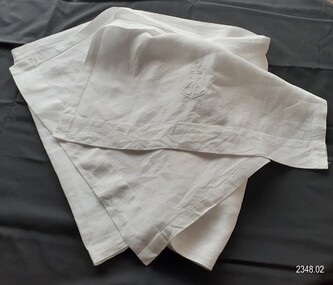
... The fine hand stitching and embroidery are examples of traditional handcraft skills used over the centuries and continuing in use today. flagstaff hill warrnambool shipwrecked coast flagstaff hill maritime museum maritime museum shipwreck coast flagstaff hill maritime village great ocean road religion religious service st nicholas seamen’s church flagstaff hill altar cloth church linen ecclesiastical linen mariner’s cross anchor cross cross of hope symbol of christianity anchored cross Flagstaff Hill Maritime Museum and Village Maritime Village religious worship worship service St Nicholas Seamen’s Church Williamstown Missions to Seamen Victoria Mission to Seafarers St Nicholas Missions to Seamen’s Church Williamstown Missions to Seamen St Nicholas Missions to Seamen’s Church Flagstaff Hill 139 Nelson Place Williamstown Anglican church On cloth: symbol of (anchor with an 'X' stitched behind the centre of it). On cover, text "FLAGSTAFF/ HILL" Altar cloth, white linen, with custom ...This altar cloth is representative of ecclesiastical linen in use in the early to mid-20th century. It is decorated with the Mariner's Cross symbol, connecting it to the history of the early Christian church. The cover for the cloth shows the respect the maker had for the cloth and what it stands for. The Mariner's Cross symbol also makes it appropriate as an altar cloth for the St Nicholas Seamen's Church at Flagstaff Hill Maritime Village. MARINER'S CROSS symbol: - The symbol of an anchor that also looks like a cross is called the Mariner’s Cross (also called the Anchored Cross or Cross of Hope). It looks like a ‘plus’ sign with anchor flukes at the base and a ring at the top. The anchor is one of the earliest symbols used in Christianity and represents faith, hope and salvation in times of trial. The Mariner’s Cross is linked to the scripture in Hebrews 6:19, which says, “Which hope we have as an anchor of the soul, both sure and steadfast, and which entereth into that within the veil”. This particular Mariner’s Cross also has the letter ‘X’ under the post of the anchor. In Greek, the language of the New Testament, the word for Christ is ‘Christos’, which begins with the Greek letter ‘X’ or ‘Chi’. Together, the elements on this Mariner’s Cross - anchor, cross and ‘X’ - symbolise to the Christian that Jesus Christ the Saviour gives security and safety, hope and salvation. Many church organisations still use various forms of the Mariner’s Cross. THE MISSIONS TO SEAMEN (Brief History): - The Missions to Seamen was an Anglican charity that has served seafarers of the world since 1856 in Great Britain. Its symbol is a Flying Angel, inspired by a Bible verse. Today, there are centres in over 200 ports worldwide where seamen of all backgrounds are offered a warm welcome and provided with a wide range of facilities. In Victoria, the organisation began in Williamstown in 1857 as a Sailors’ Church, also known as ‘Bethel’ or the ‘Floating Church’ in an old hulk floating in Hobson’s Bay, Port of Melbourne. It soon became part of the Missions to Seamen, Victoria. In the year 2000, the organisation, now named Mission to Seafarers, still operated locally in Melbourne, Portland, Geelong and Hastings. The Ladies’ Harbour Lights Guild was formed in 1906 to support the Missions to Seamen in Melbourne and other centres, such as Williamstown. Two of the most significant ladies of the Guild were founder Ethel Augusta Godfrey and foundation member Alice Sibthorpe Tracy (who established a branch of the Guild in Warrnambool in 1920). The Guild continued its work until the 1960s. In 1943, a former Williamstown bank was purchased for the Missions to Seaman Club. The chapel was named St Nicholas’ Seamen’s Church and was supported by the Ladies’ Harbour Lights Guild, the Williamstown Lightkeepers’ Auxiliary and the League of Soldiers’ and Sailors’ Friends. It ceased operation in 1966. A Missions to Seamen Chapel and Recreation Room was a significant feature of ports during the late 1800s and into the 1900s. It seemed appropriate for Flagstaff Hill to include such a representation within the new Maritime Village, so the Melbourne Board of Management of Missions to Seamen Victoria gave its permission on 21st May 1979 for the entire furnishings of the Williamstown chapel to be transferred to Flagstaff Hill. The St Nicholas Seamen’s Church was officially opened on October 11, 1981, and closely resembles the Williamstown chapel. The altar cloth is representative of the ecclesiastical linen in use in the early to mid-20th century, when the original St Nicholas Seamen's Church was opened in Williamstown, Victoria. The Mariner's Cross embroidered onto the altar cloth gives it a connection with the early Christian church and with the Missions to Seamen. The fine hand stitching and embroidery are examples of traditional handcraft skills used over the centuries and continuing in use today.Altar cloth, white linen, with custom-made white cotton cover. The long rectangular cloth has the symbol of a Mariner's Cross (anchor and cross) embroidered with white silk thread on each short end. The wide hems are hand-stitched. The cover has two white tape ties and embroidered text in blue silk thread. This cloth and cover is part of the St. Nicholas Seamen's Church Collection. On cloth: symbol of (anchor with an 'X' stitched behind the centre of it). On cover, text "FLAGSTAFF/ HILL" flagstaff hill, warrnambool, shipwrecked coast, flagstaff hill maritime museum, maritime museum, shipwreck coast, flagstaff hill maritime village, great ocean road, religion, religious service, st nicholas seamen’s church flagstaff hill, altar cloth, church linen, ecclesiastical linen, mariner’s cross, anchor cross, cross of hope, symbol of christianity, anchored cross, flagstaff hill maritime museum and village, maritime village, religious worship, worship service, st nicholas seamen’s church, williamstown, missions to seamen victoria, mission to seafarers, st nicholas missions to seamen’s church williamstown, missions to seamen, st nicholas missions to seamen’s church flagstaff hill, 139 nelson place williamstown, anglican church -
 Flagstaff Hill Maritime Museum and Village
Book - Reference Encyclopedia, Phillips & Hunt in 1881, The People's Cyclopedia of Universal Knowledge, 1881
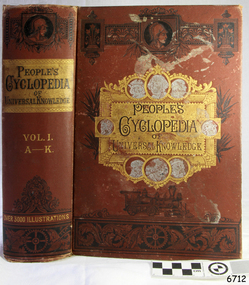
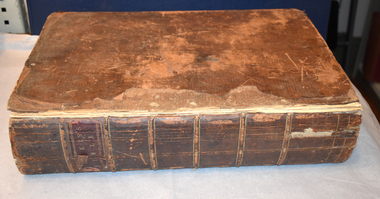
... custom local title page to sell via subscription to the Australian public. William Harrison De Puy (1821–1901) was a prominent American Methodist minister, author, and professional editor. For nearly two decades, he served as the Associate Editor of The Christian Advocate in New York, which was one of the most widely circulated religious and secular family newspapers in the United States at the time. ...custom local title page to sell via subscription to the Australian public. William Harrison De Puy (1821–1901) was a prominent American Methodist minister, author, and professional editor. For nearly two decades, he served as the Associate Editor of The Christian Advocate in New York, which was one of the most widely circulated religious and secular family newspapers in the United States at the time. ...The People’s Cyclopedia of Universal Knowledge is a comprehensive general reference encyclopedia designed for the everyday household, working families, and businesses. Instead of being overly academic or dry, it was structured with a practical, industrial, and "populist" edge. It covers general science, global history, geography, arts, biographical sketches, and heavily features the practical "industrial arts" and agriculture. It was famous for being heavily illustrated with wood-carved engravings, diagnostic diagrams, and beautifully coloured maps.The People's Cyclopedia of Universal Knowledge Author: W.H. De Puy, A.M., D.D., Publisher: C.A.Hawkins & Co, Melbourne Victoria Australia. Date: 1881non-fictionThe People’s Cyclopedia of Universal Knowledge is a comprehensive general reference encyclopedia designed for the everyday household, working families, and businesses. Instead of being overly academic or dry, it was structured with a practical, industrial, and "populist" edge. It covers general science, global history, geography, arts, biographical sketches, and heavily features the practical "industrial arts" and agriculture. It was famous for being heavily illustrated with wood-carved engravings, diagnostic diagrams, and beautifully coloured maps.flagstaff hill, warrnambool, shipwrecked-coast, flagstaff-hill, flagstaff-hill-maritime-museum, maritime-museum, shipwreck-coast, flagstaff-hill-maritime-village, book, the people's cyclopedia of universal knowledge, shipwrecked-artefact, great ocean road, warrnambool library, warrnambool mechanics’ institute, mechanics’ institute library, victorian library board, warrnambool books and records, warrnambool public library, encyclopedia -
 Dutch Australian Heritage Centre Victoria
Medal, 1987
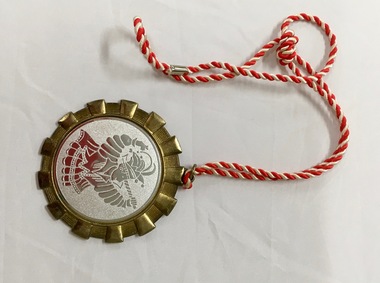
... The custom has lost some of its religious significance and is mainly kept up as a fun event....The custom has lost some of its religious significance and is mainly kept up as a fun event. ...Dutch migrants from the province of Limburg started a Jokers Club in Melbourne choosing a "Carnival Prins" every year. Hans 2 was chosen in 1987. The custom of partying prior to the start of Lent was very strong in the mainly Catholic Southern provinces - Limburg and Brabant. The custom has lost some of its religious significance and is mainly kept up as a fun event.Brass medal depicting a Joker on one side with names and a date on the other. The medal is suspended from a red and white twisted cord.Back of the medal reads: "Hans 2 1987 Bieëgdje". Made in Italy. -
 Warrnambool and District Historical Society Inc.
Book, Cassell, Petter and Galpin, London and New York, The Holy Bible Illustrated
... custom in the 19th and early 20th centuries. This Bible has no known local provenance and is retained because of its antiquarian value. Religious ...This is a family bibleThe cloth cover is heavily patterned and slightly embossed with gold lettering. It is partly detached from the spine. On the spine is gold lettering and an image of a saint. The pages contain text, over ninety reproductions of engravings and the calligraphy initials are printed at the start of each chapter. non-fictionThis is a family biblereligious education, family bible, illustrated family bible, bible 19th century, warrnambool
