
Showing 117 items matching "robert smart"
-
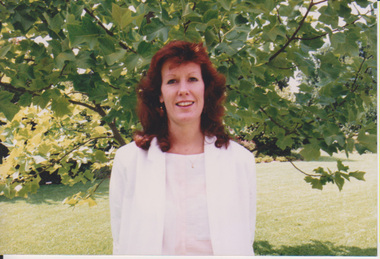 University of Melbourne, Burnley Campus Archives
Photograph - Colour prints, Kodak, Staff, Unknown
... ...robert smart...Identified by Ala Shtrauser and Andrew Smith. (2) Robert Smart-Tutor. (3) Hans Frederick-Admin Assistant. (6) Sue Barrett-Nursery Apprentice. (7) Margaret Wood-Admin Officer. (10) James Hitchmough-Lecturer. (13) Jim Stafford-Admin Officer. (14) Russell Benellack-Admin Officer. (15) David Curby-Handyman/Carpenter. (16) Diane Kolevas-Admin Asst. (176) Rosemary McConell-Librarian. (18) Cathryn Jaggs-Admin Officer. (19) Brian Pell-Principal. (20) Geoff Olive-Lecturer. (21) Kevin Blaze-Lecturer. (22) Darrell Gibbs-Admin Officer. (23) Johan Burnett-Lecturer. (24) Sandra Christians-Admin. (26) Ed Smart-Lecturer....staff id photographs ala shtrauser andrew smith robert smart hans frederick sue barrett margaret wood james hitchmough jim stafford russell benellack david curby diane kolevas rosemary mcconell cathryn jaggs brian pell geoff olive kevin blaze darrell gibb johan burnett sandra christians ed smart Colour Staff ID photographs. ...Colour Staff ID photographs. Identified by Ala Shtrauser and Andrew Smith. (2) Robert Smart-Tutor. (3) Hans Frederick-Admin Assistant. (6) Sue Barrett-Nursery Apprentice. (7) Margaret Wood-Admin Officer. (10) James Hitchmough-Lecturer. (13) Jim Stafford-Admin Officer. (14) Russell Benellack-Admin Officer. (15) David Curby-Handyman/Carpenter. (16) Diane Kolevas-Admin Asst. (176) Rosemary McConell-Librarian. (18) Cathryn Jaggs-Admin Officer. (19) Brian Pell-Principal. (20) Geoff Olive-Lecturer. (21) Kevin Blaze-Lecturer. (22) Darrell Gibbs-Admin Officer. (23) Johan Burnett-Lecturer. (24) Sandra Christians-Admin. (26) Ed Smart-Lecturer.staff, id photographs, ala shtrauser, andrew smith, robert smart, hans frederick, sue barrett, margaret wood, james hitchmough, jim stafford, russell benellack, david curby, diane kolevas, rosemary mcconell, cathryn jaggs, brian pell, geoff olive, kevin blaze, darrell gibb, johan burnett, sandra christians, ed smart -
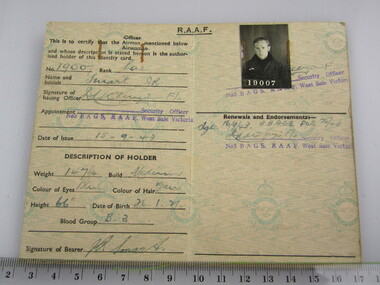 Ballarat RSL Sub-Branch Inc.
ID Card
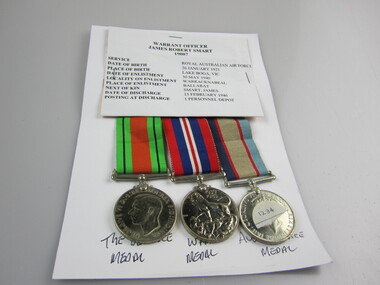
... This object relates to James Robert SMART. He was born on 26/01/1921 in Lake Boga, VIC. ...This object relates to James Robert SMART. He was born on 26/01/1921 in Lake Boga, VIC. ...This object relates to James Robert SMART. He was born on 26/01/1921 in Lake Boga, VIC. James Robert served in the RAAF (19007) enlisting on, 30/05/1940 in Warracknabeal, VIC before being discharged from duties with the 1 PERSONNEL DEPOT as a RAAF Commissioned Flying Officer (FLGOFF) on 15/02/1946. James Smart was awarded the Australia Service Medal 1939-1946, Australian Defence Medal, War Medal 1939-1945. James Robert SMART was not a prisoner of war.second world war (ww2), 1939 - 1945, personal items, ballarat rsl, ballarat -
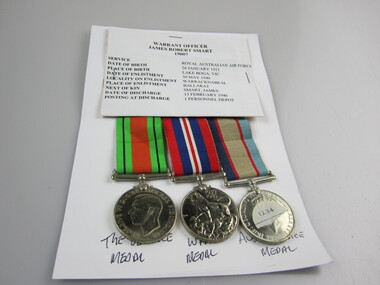 Ballarat RSL Sub-Branch Inc.
Australian Defence Medal
... This object relates to James Robert SMART. He was born on 26/01/1921 in Lake Boga, VIC. ...This object relates to James Robert SMART. He was born on 26/01/1921 in Lake Boga, VIC. ...This object relates to James Robert SMART. He was born on 26/01/1921 in Lake Boga, VIC. James Robert served in the RAAF (19007) enlisting on, 30/05/1940 in Warracknabeal, VIC before being discharged from duties with the 1 PERSONNEL DEPOT as a RAAF Commissioned Flying Officer (FLGOFF) on 15/02/1946. James Smart was awarded the Australia Service Medal 1939-1946, Australian Defence Medal, War Medal 1939-1945. James Robert SMART was not a prisoner of war.second world war (ww2), 1939 - 1945, medals, ballarat rsl, ballarat -
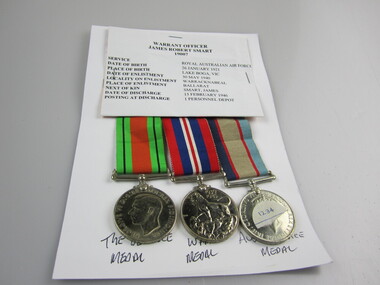 Ballarat RSL Sub-Branch Inc.
War Medal 1939-1945
... This object relates to James Robert SMART. He was born on 26/01/1921 in Lake Boga, VIC. ...This object relates to James Robert SMART. He was born on 26/01/1921 in Lake Boga, VIC. ...This object relates to James Robert SMART. He was born on 26/01/1921 in Lake Boga, VIC. James Robert served in the RAAF (19007) enlisting on, 30/05/1940 in Warracknabeal, VIC before being discharged from duties with the 1 PERSONNEL DEPOT as a RAAF Commissioned Flying Officer (FLGOFF) on 15/02/1946. James Smart was awarded the Australia Service Medal 1939-1946, Australian Defence Medal, War Medal 1939-1945. James Robert SMART was not a prisoner of war.medals, ballarat rsl, ballarat -
 Ballarat RSL Sub-Branch Inc.
Australia Service Medal 1939-1946
... This object relates to James Robert SMART. He was born on 26/01/1921 in Lake Boga, VIC. ...This object relates to James Robert SMART. He was born on 26/01/1921 in Lake Boga, VIC. ...This object relates to James Robert SMART. He was born on 26/01/1921 in Lake Boga, VIC. James Robert served in the RAAF (19007) enlisting on, 30/05/1940 in Warracknabeal, VIC before being discharged from duties with the 1 PERSONNEL DEPOT as a RAAF Commissioned Flying Officer (FLGOFF) on 15/02/1946. James Smart was awarded the Australia Service Medal 1939-1946, Australian Defence Medal, War Medal 1939-1945. James Robert SMART was not a prisoner of war.medals, ballarat rsl, ballarat -
 Ballarat RSL Sub-Branch Inc.
Photograph - Framed
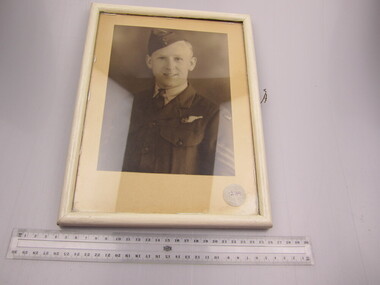
... This object relates to James Robert SMART. He was born on 26/01/1921 in Lake Boga, VIC. ...This object relates to James Robert SMART. He was born on 26/01/1921 in Lake Boga, VIC. ...This object relates to James Robert SMART. He was born on 26/01/1921 in Lake Boga, VIC. James Robert served in the RAAF (19007) enlisting on, 30/05/1940 in Warracknabeal, VIC before being discharged from duties with the 1 PERSONNEL DEPOT as a RAAF Commissioned Flying Officer (FLGOFF) on 15/02/1946. James Smart was awarded the Australia Service Medal 1939-1946, Australian Defence Medal, War Medal 1939-1945. James Robert SMART was not a prisoner of war.second world war (ww2), 1939 - 1945, photo/pictures, ballarat rsl, ballarat -
 Eltham District Historical Society Inc
Photograph - Digital Copy, George Murray, Eltham State School, Grade 2, 1958
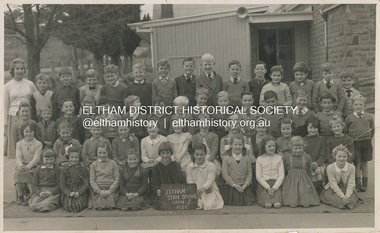
... ...Robert Spencer...Russell Smart...Back Row (L-R): Russell Smart, John Mead, Peter Norman, Kim Hunter, Richard Lynch, Stephen Short, Gilbert McGloughlin, Don Muir, Jeff Steele, Geoffrey Thorpe, Ian Murray, Marcus Skipper, Ray ( ? ), Robert...Back Row (L-R): Russell Smart, John Mead, Peter Norman, Kim Hunter, Richard Lynch, Stephen Short, Gilbert McGloughlin, Don Muir, Jeff Steele, Geoffrey Thorpe, Ian Murray, Marcus Skipper, Ray ( ? ), Robert ...Back Row (L-R): Russell Smart, John Mead, Peter Norman, Kim Hunter, Richard Lynch, Stephen Short, Gilbert McGloughlin, Don Muir, Jeff Steele, Geoffrey Thorpe, Ian Murray, Marcus Skipper, Ray ( ? ), Robert Spencer Third Row (L-R): Bruce Martin, Neville Myers, Nelson (Smart?), George Sutherland, Robert Dowdell, David Campbell, Ken Dickerson, Kit Hill, Wayne Brodford, Martin Fowler, Michael Kilpatrick, Colin Graham, Ken Brown, David Boss, Greg Lewis Second Row (L-R): Bora Meredith, Heather Dyke, Linda Morris, Janne Miles, Biddy Quinlan, Cheryl Croft, Terry Croft, Margaret Box, Shelley Barker, Wendy Bradley, Sandra Black, Lynette Pitcher Front Row (L-R): Sally Lewis, Faye Harris, Elizabeth Jolley, Wendy Rainsbury, Helen Corrie, Bronwen Cavistock, June Skippington, Gloria Oldfield, Anna Jacka, Ruth GangellNames written on reverse and photographer's stamp1958, anna jacka, biddy quinlan, bora meredith, bronwen cavistock, bruce martin, cheryl croft, class photo, colin graham, david boss, david campbell, don muir, elizabeth jolley, eltham state school no. 209, faye harris, faye walker (nee harris) collection, geoffrey thorpe, george sutherland, gilbert mcgloughlin, gloria oldfield, grade 2, greg lewis, heather dyke, helen corrie, ian murray, janne miles, jeff steele, john mead, june skippington, ken brown, ken dickerson, kim hunter, kit hill, linda morris, lynette pitcher, marcus skipper, margaret box, martin fowler, michael kilpatrick, nelson smart, neville myers, peter norman, richard lynch, robert dowdell, robert spencer, russell smart, ruth gangell, sally lewis, sandra black, shelley barker, stephen short, terry croft, wayne brodford, wendy bradley, wendy rainsbury -
 Ringwood and District Historical Society
Photograph - Photograph-School, Kuddly Koala School Portraits, Ringwood Primary School 1994 Class Photo Grade Prep, 1994
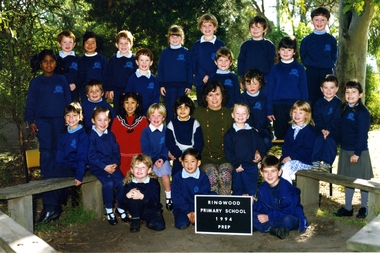
... Top Row:(L to R) Stuart Campbell, Brenda Chamroeun, Jordan Carmichael, Natasha Kempton, Mitchell James, Aaron Oldfield, Naythan Gurkin. 3rd Row: Mala Dayalan, John Roberts, Piers Smart, Emily Eversteyn . 2nd Row: Sarah Jesudhason, Shaun Chambers, Rebecca Dalton, Linda Hing, Aleesha Ashdown, Russi Singh, Mrs. ...Top Row:(L to R) Stuart Campbell, Brenda Chamroeun, Jordan Carmichael, Natasha Kempton, Mitchell James, Aaron Oldfield, Naythan Gurkin. 3rd Row: Mala Dayalan, John Roberts, Piers Smart, Emily Eversteyn . 2nd Row: Sarah Jesudhason, Shaun Chambers, Rebecca Dalton, Linda Hing, Aleesha Ashdown, Russi Singh, Mrs. ...Grade Prep 1994 Names taken from typed legend below each photo (via OCR). Photos mounted on Kuddly Koala School Portraits Card. Top Row:(L to R) Stuart Campbell, Brenda Chamroeun, Jordan Carmichael, Natasha Kempton, Mitchell James, Aaron Oldfield, Naythan Gurkin. 3rd Row: Mala Dayalan, John Roberts, Piers Smart, Emily Eversteyn . 2nd Row: Sarah Jesudhason, Shaun Chambers, Rebecca Dalton, Linda Hing, Aleesha Ashdown, Russi Singh, Mrs. Sim, Michael Neve, Brendan McKee, Niina Larm, Ricki Neve, Ashlee Winnen. 1st Row: Shayne Stewart, Ben Sengsouvanh, Karl Vita. Teacher: Mrs. Margaret Sim. Principal: Mr. Geoff Buzaglo. -
 Ringwood and District Historical Society
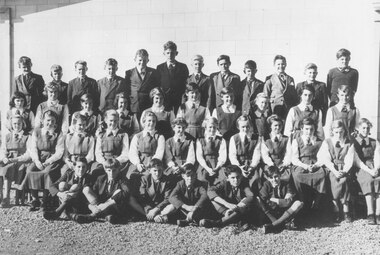
Photograph, Ringwood High School - 1954, Form 1C
... Front row: Robert Crutchfield, Stuart Barclay, James McAleese, Robert Horkings, John Smart, Ronald Crutchfield....Front row: Robert Crutchfield, Stuart Barclay, James McAleese, Robert Horkings, John Smart, Ronald Crutchfield. Black and white photograph Ringwood High School - 1954, Form 1C. ...Black and white photographPaper list with photographs reads: "Ringwood High School, 1954- Form 1C. Back row (L-R): Ian Kilpatrick, Keith Anderson, Peter Zaff, Jim Ord, Gordon Burnett, Tim Pinninger, Geoff Giggings, Bernard Whitney, Andrew Ternouth, Clive Kettle, Robert Tozer, Frank Stubbs. 3rd row: Janet Johns, Norma Walsh, Marilyn Bird, Doris Hamell, Lynette Jungwirth, Janice Hunt, Sandra Davenport, Margaret Williams, Margaret Norwood, Lorrice Stratton. 2nd row: Kathleen Low, Valma McLean, Sandra Tyndal, Gillian Morris, Esma Bradley, Jill Pump, Judith Byrne, Shirley Kofoed, Marlene Mangles, Pam Erlandsen, Myrna Cooper, Elizabeth Hinchcliffe. Front row: Robert Crutchfield, Stuart Barclay, James McAleese, Robert Horkings, John Smart, Ronald Crutchfield. -
 Sunshine and District Historical Society Incorporated
Photograph - Albion State School 2002 Class Photographs
... 5155.01 - Albion State School 2002 Grade 1 2T Names Back Row L2R Aaron Mayne Christene Protacio Julie Ung Nicholas Burrows Ebony Wemyss David Truong Natasha Malolo Second Row L2R Joshua Micallef Rochaell Donoghue Mana Lumm Meghan Douglas Jarrod Doherty Orlando Mayor Hayden Formosa Paige Mackenzie Front Row L2R Chelsea Lever Naomi Truong Nuri Nurhussien Stephanie Nedelkovska Emma Gruescu Ashleigh Gauci David Tran Zoe Ward Malea Culhane Saamu Teacher Mrs Jann Turner Mr Angela Paschalidis Principal Mr Joe Vella 5155.02 - Albion State School 2002 Grade 2 3M 5155.02 - Albion State School 2002 Grade 2 3M Names Back Row L2R Bethany Tippet Narrell Raye Aaron McIntyre Joshua Boudoloh Reece Mayne Travis Montague Jesse Culhane Saamu Nicolle Reynolds Second Row L2R Annie Lam Jessica Nedelkovska Paloma Donato Travis Blacket Tim ONeill Bojana Kakuca Thuy Tran Melissa Hall Front Row L2R Alfie Kennedy Imran Rashid Danielle Williams Jim Murphy Kobi HOle Marsden Chantel Attard Natalie Coburn Kieran Azzopardi Luke DAlfonso Teacher Ms Andrea Murray Principal Mr Joe Vella 5155.03 - Albion State School 2002 Grade 3 4H 5155.03 - Albion State School 2002 Grade 3 4H Names Back Row L2R Peter Mayne Safia Ali William Burrows David Kennedy Jesse Hearn James Schwencke Samantha Firth Second Row L2R Alisi Faingaanuku Jessica Heeps Nathaniel Dizon Owen Malolo Tarick Haleseh Amy Caruana Smith Ashley Skew Ethan Morgan Front Row L2R Nicole Williams Rahma Nurhussien Daniel Falzon Tiffany Smith Kasey Davis Natalie Miranda Zorana Popovic Jenny Le Shakira Lever Teacher Mrs Julie Hrovatin Mrs Lorraine Farrugia Principal Mr Joe Vella 5155.04 - Albion State School 2002 Grade 4 5R 5155.04 - Albion State School 2002 Grade 4 5R Names Back Row L2R Merren Smart Robert Reynolds Mitchell Durbin Zayne Duggan Cody Mayne Callan Tishler Ladd John Second Row L2R Nivaar Rolston Gosia Wasilewska Sam Malolo Stephanie Stronell Julie Rand Kelly Kennedy Aidan Wileman Michael Nardella Teagan Maguire Front Row L2R Jennifer Williams Daniel Kindred Corine Markovic Jade Formosa Nichalos Davie Jahnah Clark Luke Meyer Jake Raye Jennifer Truong Teacher Miss Jennifer Ryan Principal Mr Joe Vella 5155.05 - Albion State School 2002 Grade 6H 5155.05 - Albion State School 2002 Grade 6H Names Back Row L2R James Durham Kristy Ward Melissa Kennedy Sharnee Adams Courtney Teray Troy Maguire Steven Puckek Second Row L2R Shane Quinsee Steven Cameron IKamil Bulinski Megan Montague Phillip Cetwerschuk Mathew Smith Adis Husejnovic William Raye Absent Mathew Grima Teacher Mr Wayne Haren Mrs Sandra Spurr Principal Mr Joe Vella Front Row L2R 5155.06 - Albion State School 2002 Grade Prep 1B 5155.06 - Albion State School 2002 Grade Prep 1B Names Back Row L2R Travis Rand Benjamin Britton Jack Schofield John Huynh David Ung Second Row L2R Stephen Coburn Kurtis Maguire Jayde Page Milos Zarkovic Kaliesha Birch Melisa Husejnovic Tyson Freeman Annalise McMillan Front Row L2R Nerys Davie Chelsea TeRay Blake MacKenzie Brayden Lumm Mile Ajder Jordan Boudoloh Nhu Nguyen Jessica Tawaf Sang Lam Teacher Miss Elisaa Barr Mrs Betty Batty Principal Mr Joe Vella 5155.07 - Albion State School 2002 Grade Prep G 5155.07 - Albion State School 2002 Grade Prep G Names Back Row L2R Liam Noack Brendan Stendt Steven Firth Ashley Rattray Second Row L2R Cecilia Nguyen Jennifer Ung Dale Reynolds Samuel Miranda Kyle Durbin Sharon Mach Hani Mohammad Front Row L2R Shae Scholfield Kelvin Quach Brenden Smith Dean Pegram Amanda Mach Jamie Wooding Brandon Marsh Howe Alexis Ante Absent Elias Boudoloh Linh Tran Teacher Miss Marnie Galea Principal Mr Joe Vella 5155.08 - Albion State School 2002 Staff 5155.08 - Albion State School 2002 Staff Names Back Row L2R Marnie Galea Andrea Murray Elissa Barr John Milne Julie Hrovatin Sandra Spurr Jennifer Ryan Sandy Dennis Front Row L2R Lynn Mahoney Angela Paschalidis Susan Carpenter Joe Vella Teresa Woods Lorraine Farrugia Pt Porigneaux Absent Wayne Haren Jann Turner Betty Batty...Albion State School Albion Primary School Adelaide Street Albion 5155.01 - Albion State School 2002 Grade 1 2T Names Back Row L2R Aaron Mayne Christene Protacio Julie Ung Nicholas Burrows Ebony Wemyss David Truong Natasha Malolo Second Row L2R Joshua Micallef Rochaell Donoghue Mana Lumm Meghan Douglas Jarrod Doherty Orlando Mayor Hayden Formosa Paige Mackenzie Front Row L2R Chelsea Lever Naomi Truong Nuri Nurhussien Stephanie Nedelkovska Emma Gruescu Ashleigh Gauci David Tran Zoe Ward Malea Culhane Saamu Teacher Mrs Jann Turner Mr Angela Paschalidis Principal Mr Joe Vella 5155.02 - Albion State School 2002 Grade 2 3M 5155.02 - Albion State School 2002 Grade 2 3M Names Back Row L2R Bethany Tippet Narrell Raye Aaron McIntyre Joshua Boudoloh Reece Mayne Travis Montague Jesse Culhane Saamu Nicolle Reynolds Second Row L2R Annie Lam Jessica Nedelkovska Paloma Donato Travis Blacket Tim ONeill Bojana Kakuca Thuy Tran Melissa Hall Front Row L2R Alfie Kennedy Imran Rashid Danielle Williams Jim Murphy Kobi HOle Marsden Chantel Attard Natalie Coburn Kieran Azzopardi Luke DAlfonso Teacher Ms Andrea Murray Principal Mr Joe Vella 5155.03 - Albion State School 2002 Grade 3 4H 5155.03 - Albion State School 2002 Grade 3 4H Names Back Row L2R Peter Mayne Safia Ali William Burrows David Kennedy Jesse Hearn James Schwencke Samantha Firth Second Row L2R Alisi Faingaanuku Jessica Heeps Nathaniel Dizon Owen Malolo Tarick Haleseh Amy Caruana Smith Ashley Skew Ethan Morgan Front Row L2R Nicole Williams Rahma Nurhussien Daniel Falzon Tiffany Smith Kasey Davis Natalie Miranda Zorana Popovic Jenny Le Shakira Lever Teacher Mrs Julie Hrovatin Mrs Lorraine Farrugia Principal Mr Joe Vella 5155.04 - Albion State School 2002 Grade 4 5R 5155.04 - Albion State School 2002 Grade 4 5R Names Back Row L2R Merren Smart Robert Reynolds Mitchell Durbin Zayne Duggan Cody Mayne Callan Tishler Ladd John Second Row L2R Nivaar Rolston Gosia Wasilewska Sam Malolo Stephanie Stronell Julie Rand Kelly Kennedy Aidan Wileman Michael Nardella Teagan Maguire Front Row L2R Jennifer Williams Daniel Kindred Corine Markovic Jade Formosa Nichalos Davie Jahnah Clark Luke Meyer Jake Raye Jennifer Truong Teacher Miss Jennifer Ryan Principal Mr Joe Vella 5155.05 - Albion State School 2002 Grade 6H 5155.05 - Albion State School 2002 Grade 6H Names Back Row L2R James Durham Kristy Ward Melissa Kennedy Sharnee Adams Courtney Teray Troy Maguire Steven Puckek Second Row L2R Shane Quinsee Steven Cameron IKamil Bulinski Megan Montague Phillip Cetwerschuk Mathew Smith Adis Husejnovic William Raye Absent Mathew Grima Teacher Mr Wayne Haren Mrs Sandra Spurr Principal Mr Joe Vella Front Row L2R 5155.06 - Albion State School 2002 Grade Prep 1B 5155.06 - Albion State School 2002 Grade Prep 1B Names Back Row L2R Travis Rand Benjamin Britton Jack Schofield John Huynh David Ung Second Row L2R Stephen Coburn Kurtis Maguire Jayde Page Milos Zarkovic Kaliesha Birch Melisa Husejnovic Tyson Freeman Annalise McMillan Front Row L2R Nerys Davie Chelsea TeRay Blake MacKenzie Brayden Lumm Mile Ajder Jordan Boudoloh Nhu Nguyen Jessica Tawaf Sang Lam Teacher Miss Elisaa Barr Mrs Betty Batty Principal Mr Joe Vella 5155.07 - Albion State School 2002 Grade Prep G 5155.07 - Albion State School 2002 Grade Prep G Names Back Row L2R Liam Noack Brendan Stendt Steven Firth Ashley Rattray Second Row L2R Cecilia Nguyen Jennifer Ung Dale Reynolds Samuel Miranda Kyle Durbin Sharon Mach Hani Mohammad Front Row L2R Shae Scholfield Kelvin Quach Brenden Smith Dean Pegram Amanda Mach Jamie Wooding Brandon Marsh Howe Alexis Ante Absent Elias Boudoloh Linh Tran Teacher Miss Marnie Galea Principal Mr Joe Vella 5155.08 - Albion State School 2002 Staff 5155.08 - Albion State School 2002 Staff Names Back Row L2R Marnie Galea Andrea Murray Elissa Barr John Milne Julie Hrovatin Sandra Spurr Jennifer Ryan Sandy Dennis Front Row L2R Lynn Mahoney Angela Paschalidis Susan Carpenter Joe Vella Teresa Woods Lorraine Farrugia Pt Porigneaux Absent Wayne Haren Jann Turner Betty Batty Collection of Digital Photographs Photograph Albion State School 2002 Class Photographs ...The current school, Albion Primary School, No 4265 opened in 1926. It was built on a site once owned by John Fitzgerald (1850s). The land was later acquired by H. V. McKay who had transferred his Sunshine Harvester Works to the area in 1905 - 7. In 1920, the Albion railway station was moved nearer Ballarat Road at the request of Mr McKay. More people came to live in the area including soldier settlers.Albion Primary School's mission is to 'Aim High' in all we do so that our students grow to be socially capable, reach their full academic potential and become caring, respectful community minded people. Albion Primary School is located in a residential area in Albion, a small pocket of the local government area of Brimbank, approximately 10 kilometres west of Melbourne and was established in 1926. Our current enrolment is 199 students. We have a rich cultural diversity amongst our school community. The school is set around a courtyard with spacious playing areas including a grassed oval, running track, games courts, an adventure playground, sand pit, jumping pits, shady courtyard and garden areas, a vegetable garden and fruit tree orchard. As well as classroom groups, we have our learning teams, student house groups (siblings are allocated to the same house) and a Junior School Council. The school has four main buildings. All classrooms have air conditioning and interactive screens. Block A houses classrooms, staff areas and the administration offices. Our newest building has classrooms and some small group/office spaces. Block B includes our library, canteen and a multi-purpose room used for indoor physical education, Perceptual Motor Program, drama, visiting performers, and community activities. Block C houses classrooms and specialist rooms. We expect and receive the best from our students in terms of their learning and behaviour. The school’s dedicated and effective staff is strongly committed to helping students achieve personal, behavioural, social and academic success. In terms of learning, the highest priority is placed on the work in English and Mathematics. We also have a range of specialist and extra-curricular programs that we provide. Our specialist teacher-librarian is involved in reading extension programs that support development in literacy. All children are able to develop their artistic abilities through visual arts and music program. Our music program is supported by the Australian Children's Music Foundation. A specialist Physical Education teacher provides lessons for all children as well as the opportunity for students to participate in organised lunch time sporting competitions between the house groups. Auslan is the additional language all students learn at Albion. All children participate in a student wellbeing program that focuses on developing strong connections and a sense of belonging within the school. Our school student leaders participate in programs that help develop their leadership skills. 5155.01 - Albion State School 2002 Grade 1 2T Names Back Row L2R Aaron Mayne Christene Protacio Julie Ung Nicholas Burrows Ebony Wemyss David Truong Natasha Malolo Second Row L2R Joshua Micallef Rochaell Donoghue Mana Lumm Meghan Douglas Jarrod Doherty Orlando Mayor Hayden Formosa Paige Mackenzie Front Row L2R Chelsea Lever Naomi Truong Nuri Nurhussien Stephanie Nedelkovska Emma Gruescu Ashleigh Gauci David Tran Zoe Ward Malea Culhane Saamu Teacher Mrs Jann Turner Mr Angela Paschalidis Principal Mr Joe Vella 5155.02 - Albion State School 2002 Grade 2 3M 5155.02 - Albion State School 2002 Grade 2 3M Names Back Row L2R Bethany Tippet Narrell Raye Aaron McIntyre Joshua Boudoloh Reece Mayne Travis Montague Jesse Culhane Saamu Nicolle Reynolds Second Row L2R Annie Lam Jessica Nedelkovska Paloma Donato Travis Blacket Tim ONeill Bojana Kakuca Thuy Tran Melissa Hall Front Row L2R Alfie Kennedy Imran Rashid Danielle Williams Jim Murphy Kobi HOle Marsden Chantel Attard Natalie Coburn Kieran Azzopardi Luke DAlfonso Teacher Ms Andrea Murray Principal Mr Joe Vella 5155.03 - Albion State School 2002 Grade 3 4H 5155.03 - Albion State School 2002 Grade 3 4H Names Back Row L2R Peter Mayne Safia Ali William Burrows David Kennedy Jesse Hearn James Schwencke Samantha Firth Second Row L2R Alisi Faingaanuku Jessica Heeps Nathaniel Dizon Owen Malolo Tarick Haleseh Amy Caruana Smith Ashley Skew Ethan Morgan Front Row L2R Nicole Williams Rahma Nurhussien Daniel Falzon Tiffany Smith Kasey Davis Natalie Miranda Zorana Popovic Jenny Le Shakira Lever Teacher Mrs Julie Hrovatin Mrs Lorraine Farrugia Principal Mr Joe Vella 5155.04 - Albion State School 2002 Grade 4 5R 5155.04 - Albion State School 2002 Grade 4 5R Names Back Row L2R Merren Smart Robert Reynolds Mitchell Durbin Zayne Duggan Cody Mayne Callan Tishler Ladd John Second Row L2R Nivaar Rolston Gosia Wasilewska Sam Malolo Stephanie Stronell Julie Rand Kelly Kennedy Aidan Wileman Michael Nardella Teagan Maguire Front Row L2R Jennifer Williams Daniel Kindred Corine Markovic Jade Formosa Nichalos Davie Jahnah Clark Luke Meyer Jake Raye Jennifer Truong Teacher Miss Jennifer Ryan Principal Mr Joe Vella 5155.05 - Albion State School 2002 Grade 6H 5155.05 - Albion State School 2002 Grade 6H Names Back Row L2R James Durham Kristy Ward Melissa Kennedy Sharnee Adams Courtney Teray Troy Maguire Steven Puckek Second Row L2R Shane Quinsee Steven Cameron IKamil Bulinski Megan Montague Phillip Cetwerschuk Mathew Smith Adis Husejnovic William Raye Absent Mathew Grima Teacher Mr Wayne Haren Mrs Sandra Spurr Principal Mr Joe Vella Front Row L2R 5155.06 - Albion State School 2002 Grade Prep 1B 5155.06 - Albion State School 2002 Grade Prep 1B Names Back Row L2R Travis Rand Benjamin Britton Jack Schofield John Huynh David Ung Second Row L2R Stephen Coburn Kurtis Maguire Jayde Page Milos Zarkovic Kaliesha Birch Melisa Husejnovic Tyson Freeman Annalise McMillan Front Row L2R Nerys Davie Chelsea TeRay Blake MacKenzie Brayden Lumm Mile Ajder Jordan Boudoloh Nhu Nguyen Jessica Tawaf Sang Lam Teacher Miss Elisaa Barr Mrs Betty Batty Principal Mr Joe Vella 5155.07 - Albion State School 2002 Grade Prep G 5155.07 - Albion State School 2002 Grade Prep G Names Back Row L2R Liam Noack Brendan Stendt Steven Firth Ashley Rattray Second Row L2R Cecilia Nguyen Jennifer Ung Dale Reynolds Samuel Miranda Kyle Durbin Sharon Mach Hani Mohammad Front Row L2R Shae Scholfield Kelvin Quach Brenden Smith Dean Pegram Amanda Mach Jamie Wooding Brandon Marsh Howe Alexis Ante Absent Elias Boudoloh Linh Tran Teacher Miss Marnie Galea Principal Mr Joe Vella 5155.08 - Albion State School 2002 Staff 5155.08 - Albion State School 2002 Staff Names Back Row L2R Marnie Galea Andrea Murray Elissa Barr John Milne Julie Hrovatin Sandra Spurr Jennifer Ryan Sandy Dennis Front Row L2R Lynn Mahoney Angela Paschalidis Susan Carpenter Joe Vella Teresa Woods Lorraine Farrugia Pt Porigneaux Absent Wayne Haren Jann Turner Betty Battyalbion state school, albion primary school, adelaide street, albion -
 Federation University Historical Collection
Document, New premises for the school's central library
... Smart...Grant Gilbert...Bruce Miller...John Nathan...Leo Shannon...W.T.H. Corbould...Jimmy Corbould...Bryan Crebbin...J.D. McCaughey...James Oddie...Graeme Hood...Ian Smith...Tom Cragg...Alfred Mica Smith...F.M. Krause...Thomas Stephen Hart...Fiona Watson...Justice Barry...Robert...Smart Grant Gilbert Bruce Miller John Nathan Leo Shannon W.T.H. Corbould Jimmy Corbould Bryan Crebbin J.D. McCaughey James Oddie Graeme Hood Ian Smith Tom Cragg Alfred Mica Smith F.M. Krause Thomas Stephen Hart Fiona Watson Justice Barry Robert ...School of Mines Ballarat is a predecessor of Federation University.A4 typed document of 26 pages on white paper being draft No. 1 pf New premises fopr the school's central library Original copy to W. Perry 18/05/1993 written on the topcentral library, new building, school of mines ballarat, w. perry, brian webber, b.c. mclennan, n. mroczkowski, r.c. morgan, a.g. peart, p. mcnulty, rocky hazlett, l.wallis, a.j. smail, john sullivan, jean blackburn, norman curry, fr. tom doyle, peter kirby, ken mckinnon, bernard rechter, helen praetz, marion russell, j.k. matthews, therese scanlon, jan reeves, carole seymour, francis miller, helen fairhall, anne fennell, steven mendelson, peter shiells, geoffrey blainey, earnest scott, k.j. flecknoe, bruce mcknight, graham h. beanland, r.w. richards, e.j. barker, jack barker, nancye kent perry, alfred leahy, w.t. ryan, e.j. t. tippett, peter alsop, j.w. sutherland, david avery, ian r. duggan, ronaldson brothers, w.h. middleton, n.w. titheridge, d.a. wynach, ricky car, joanna harris, john bastin, edgar james bartrop, rodney smart, grant gilbert, bruce miller, john nathan, leo shannon, w.t.h. corbould, jimmy corbould, bryan crebbin, j.d. mccaughey, james oddie, graeme hood, ian smith, tom cragg, alfred mica smith, f.m. krause, thomas stephen hart, fiona watson, justice barry, robert charles morgan, roger murchison, a.m praetz, john van dreven, davis mccaughey, r.c. lovett, b.f. crebbin, morgan william beven john, charles howard beanland, ballarat school of mines history -
 Federation University Historical Collection
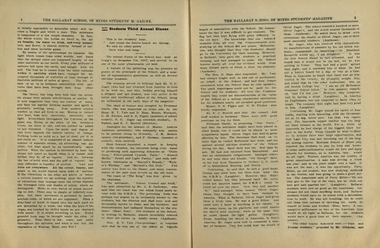
Booklet, Ballarat School of Mines, Student Magazine, First Term, 1908, 1908
... smart...h. hylton...j. blayney...t. lennon...h. s. sheppard...p. c. osbourne...c.w. nash...les smith...w. b. tucker...c. w. white...a. j. robin...h. f. owen...l. a. westcott...e. m. boyer...ernie strick...isadore wittowski...m. tyler...h. m. conran...h. g. conran...h. g. cornell...l. j. middleton...j. d. orr...j. r. blight...w. g. taylor...l. hall...c. bult...g. o. ramsay...o. w. williams...stanley r. heron...john a. grant...william t. sayer...frederick l. treloar...patrick s. anderson...robert...Images. pegging a tramway route transmission of power by rope driving briseis main and new brothers home diabolo snake valley obituary analytical chemistry students' library john brittain a. e. c. kerr w. smith l. seward leslie coulter t. williams f. treloar whitington hart murphy o. w. williams l. knight w. kingston g. w. sides w. gelard w. t. sayer s. r. white a. c. hesselmann r. j. moore r. g. walker j. a. peart newton g. king w. e. eyres g.h davenport a. d. r. galloway j. e. b. crossley j. smart h. hylton j. blayney t. lennon h. s. sheppard p. c. osbourne c.w. nash les smith w. b. tucker c. w. white a. j. robin h. f. owen l. a. westcott e. m. boyer ernie strick isadore wittowski m. tyler h. m. conran h. g. conran h. g. cornell l. j. middleton j. d. orr j. r. blight w. g. taylor l. hall c. bult g. o. ramsay o. w. williams stanley r. heron john a. grant william t. sayer frederick l. treloar patrick s. anderson robert mitchell frederick j. martell Booklet of 26 pages. ...Table of Contents: The location and pegging of a tramway route, The unity of things, Students' third annual dinner, The transmission of power by rope driving, Visit to the Briseis main and new brothers home, School of Mines' sports committee, School of Mines' magazine committee, Diabolo, Limericks sluiced at Snake Valley, Obituary, Hints to the inexperienced, Fossilistic love, Past students, Some bunsen memories, Quaint and curious coincidences, Notes on analytical chemistry, New students, News and notes, Students' library, Sports and pastimes, School of Mines' annual dinner, Correspondence, Answers to correspondents, Editorial notes. Images.Booklet of 26 pages.pegging a tramway route, transmission of power by rope driving, briseis main and new brothers home, diabolo, snake valley, obituary, analytical chemistry, students' library, john brittain, a. e. c. kerr, w. smith, l. seward, leslie coulter, t. williams, f. treloar, whitington, hart, murphy, o. w. williams, l. knight, w. kingston, g. w. sides, w. gelard, w. t. sayer, s. r. white, a. c. hesselmann, r. j. moore, r. g. walker, j. a. peart, newton g. king, w. e. eyres, g.h davenport, a. d. r. galloway, j. e. b. crossley, j. smart, h. hylton, j. blayney, t. lennon, h. s. sheppard, p. c. osbourne, c.w. nash, les smith, w. b. tucker, c. w. white, a. j. robin, h. f. owen, l. a. westcott, e. m. boyer, ernie strick, isadore wittowski, m. tyler, h. m. conran, h. g. conran, h. g. cornell, l. j. middleton, j. d. orr, j. r. blight, w. g. taylor, l. hall, c. bult, g. o. ramsay, o. w. williams, stanley r. heron, john a. grant, william t. sayer, frederick l. treloar, patrick s. anderson, robert mitchell, frederick j. martell -
 Ringwood and District Historical Society
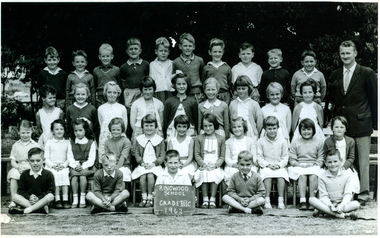
Photograph, Ringwood State School - Grade 3C, 1962
... Robert Kenny, Mark Pekkarinen, Graeme Adamson, Paul Goddard, Alan Bibby, Peter Shiels, Lindsay Nelson, Frank Spenser, Robin Davies. 2nd Row- L to R: Vicky Munroe, Kerry Marsh, Dianne Fisher, ?, Julianne Glavimans, Anne (?), Barbara Hollingsworth, Helen Taylor, Barbara Trotter. 3rd Row- L to R: Gale Brade, Pauline Gardener, ?, Margarita Stevenson, ?, Lynette Costello, Cheryl (?), Susan Skurry, Gwen Jones, Kay-Cherie Mitchell, Julie Smart...Robert Kenny, Mark Pekkarinen, Graeme Adamson, Paul Goddard, Alan Bibby, Peter Shiels, Lindsay Nelson, Frank Spenser, Robin Davies. 2nd Row- L to R: Vicky Munroe, Kerry Marsh, Dianne Fisher, ?, Julianne Glavimans, Anne (?), Barbara Hollingsworth, Helen Taylor, Barbara Trotter. 3rd Row- L to R: Gale Brade, Pauline Gardener, ?, Margarita Stevenson, ?, Lynette Costello, Cheryl (?), Susan Skurry, Gwen Jones, Kay-Cherie Mitchell, Julie Smart ...Black and white photograph - Grade 3C, 1962"Attached to photograph" Back Row- L to R: Russell Walters, Robert Kenny, Mark Pekkarinen, Graeme Adamson, Paul Goddard, Alan Bibby, Peter Shiels, Lindsay Nelson, Frank Spenser, Robin Davies. 2nd Row- L to R: Vicky Munroe, Kerry Marsh, Dianne Fisher, ?, Julianne Glavimans, Anne (?), Barbara Hollingsworth, Helen Taylor, Barbara Trotter. 3rd Row- L to R: Gale Brade, Pauline Gardener, ?, Margarita Stevenson, ?, Lynette Costello, Cheryl (?), Susan Skurry, Gwen Jones, Kay-Cherie Mitchell, Julie Smart. Front Row- L to R: Daryl Mitchum, Shawn Finlay, Russell Prouse, Iain Thompson, Trevor Senior. Teacher: Mr Ellis -
 Bendigo Historical Society Inc.
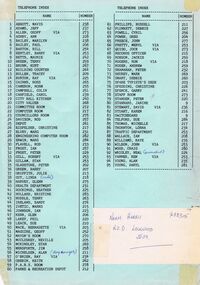
Document - BENDIGO SALEYARDS COLLECTION: TELEPHONE INDEX
... Robert... Gillam Stan... Gladstone Peter... Green Barry... Griffith Julie... Guy Linda... Harvey Glenn... Hockings Heather... Holland Kristine... Huddle Terry... Ireland Sandy... Ivetic Marko... Johnson Ian... Kerr Glen... Lakey Phil... Leach Sue... Mace Bernadette... Maguire Geoff... McCluskey Neville... McKindley Stan... Mensforth Jim... Michelson Alan... O'Brien Ray... Oberin Keith... Phillips Russell... Plumkett Debbie... Powell Cyril... Power Reg... Preece John... Pretty Meryl... Quigg Jock... Robson Jackie... Rogers Ron... Rosen Andrew... Shanahan Peter... Shurey Mark... Smart...BENDIGO Council cattle markets Bendigo Saleyards Collection - Telephone Index Abbott Mavis Adams Jeff Allen Geoff Ashby Ann Bailey Marilyn Bailey Paul Barton Bill Bentley Barry Betts Maurie Breen Terry Bruhn Kurt Bullen Tracey Burton Ray Cairns Ross Cameron Norm Campbell Colin Canfield Carol Davison Rod Eisfelder Christine Elvey Marg Erwin Marg Flavell Rod Frost Ian Frost Peter Gill Robert Gillam Stan Gladstone Peter Green Barry Griffith Julie Guy Linda Harvey Glenn Hockings Heather Holland Kristine Huddle Terry Ireland Sandy Ivetic Marko Johnson Ian Kerr Glen Lakey Phil Leach Sue Mace Bernadette Maguire Geoff McCluskey Neville McKindley Stan Mensforth Jim Michelson Alan O'Brien Ray Oberin Keith Phillips Russell Plumkett Debbie Powell Cyril Power Reg Preece John Pretty Meryl Quigg Jock Robson Jackie Rogers Ron Rosen Andrew Shanahan Peter Shurey Mark Smart Debbie Spedding Christine Spence Garry Standen Peter Stannard Janine Stewart David Stuart Karen Telford Sue Thomas Michelle Thornton Lorna Wallace Ian Williams Kaye Wilson John Wood Craig Wrigley Neal Yanner Ken Young Alan Young Daryl Norm Harris Typed blue page titled Telephone Index. ...Typed blue page titled Telephone Index. It has the name and number of various people and offices. Piece of white paper attached has the name , address and number of Norm Harris. Also two blank pages ruled into columns for Agents, Cows & Calves, Springing Heifers, Steers and Unjoined Heifers.bendigo, council, cattle markets, bendigo saleyards collection - telephone index, abbott mavis, adams jeff, allen geoff, ashby ann, bailey marilyn, bailey paul, barton bill, bentley barry, betts maurie, breen terry, bruhn kurt, bullen tracey, burton ray, cairns ross, cameron norm, campbell, colin, canfield carol, davison rod, eisfelder christine, elvey marg, erwin marg, flavell rod, frost ian, frost peter, gill robert, gillam stan, gladstone peter, green barry, griffith julie, guy linda, harvey glenn, hockings heather, holland kristine, huddle terry, ireland sandy, ivetic marko, johnson ian, kerr glen, lakey phil, leach sue, mace bernadette, maguire geoff, mccluskey neville, mckindley stan, mensforth jim, michelson alan, o'brien ray, oberin keith, phillips russell, plumkett debbie, powell cyril, power reg, preece john, pretty meryl, quigg jock, robson jackie, rogers ron, rosen andrew, shanahan peter, shurey mark, smart debbie, spedding christine, spence garry, standen peter, stannard janine, stewart david, stuart karen, telford sue, thomas michelle, thornton lorna, wallace ian, williams kaye, wilson john, wood craig, wrigley neal, yanner ken, young alan, young daryl, norm harris -
 Bendigo Historical Society Inc.
Document - EAGLEHAWK DAHILA & ARTS FESTIVAL ART & CRAFT, March, 1981
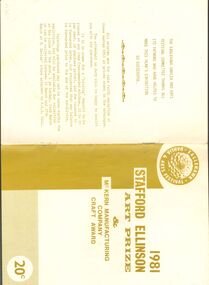
... Section A - Painting or Drawing: L Lockett, J miles, R Ellis, C Williams, J Hughes, D Dempsey, S Hartwell, D Hopgood, M Hartney, D Donaldson, B Clemson, P Wright, L Ovens, P Bonne, M Bailey, D Owen, P Crothers, R Johnson, C Smart, S Fitzgibbon, J Thorne, G Gallaway, J Babbage-Mlekuz, D Leggo, D Harris, S Thomas, R Pearce, B Goddard, M Byrne, L Bennell, S Hill, J B Perry, S Lawson, I Williams, G Tavener, G Paynter, W Williamson, I Glanville, G Thompson, T Lambert, H Bennett, B Harding, G Sparks, G Stocks, J Lai, H McKean, J Kerr, M Roberts, J Scown, C Holland, A Evans, R Winderlich, B Read, V Trevean, R Morse, K Powell, D Kemp, U Bourke, J York-Moore, P York-Moore, G Rutherford, P Costello, M Hartwell, R Lenton, R Green, M Penno, S Denham, B John, H Mathiske, A Clarkson, L Clarkson, O Atkinson, C Cola, B Butcher, G Rowe. ...Section A - Painting or Drawing: L Lockett J miles R Ellis C Williams J Hughes D Dempsey S Hartwell D Hopgood M Hartney D Donaldson B Clemson P Wright L Ovens P Bonne M Bailey D Owen P Crothers R Johnson C Smart S Fitzgibbon J Thorne G Gallaway J Babbage-Mlekuz D Leggo D Harris S Thomas R Pearce B Goddard M Byrne L Bennell S Hill J B Perry S Lawson I Williams G Tavener G Paynter W Williamson I Glanville G Thompson T Lambert H Bennett B Harding G Sparks G Stocks J Lai H McKean J Kerr M Roberts J Scown C Holland A Evans R Winderlich B Read V Trevean R Morse K Powell D Kemp U Bourke J York-Moore P York-Moore G Rutherford P Costello M Hartwell R Lenton R Green M Penno S Denham B John H Mathiske A Clarkson L Clarkson O Atkinson C Cola B Butcher G Rowe. ...Eaglehawk Dahlia & Arts Festival Art & Craft 1981. Stafford Ellison Art Prize & McKern Manufacturing Company Craft Award. 20c. Section A - Painting or Drawing: L Lockett, J miles, R Ellis, C Williams, J Hughes, D Dempsey, S Hartwell, D Hopgood, M Hartney, D Donaldson, B Clemson, P Wright, L Ovens, P Bonne, M Bailey, D Owen, P Crothers, R Johnson, C Smart, S Fitzgibbon, J Thorne, G Gallaway, J Babbage-Mlekuz, D Leggo, D Harris, S Thomas, R Pearce, B Goddard, M Byrne, L Bennell, S Hill, J B Perry, S Lawson, I Williams, G Tavener, G Paynter, W Williamson, I Glanville, G Thompson, T Lambert, H Bennett, B Harding, G Sparks, G Stocks, J Lai, H McKean, J Kerr, M Roberts, J Scown, C Holland, A Evans, R Winderlich, B Read, V Trevean, R Morse, K Powell, D Kemp, U Bourke, J York-Moore, P York-Moore, G Rutherford, P Costello, M Hartwell, R Lenton, R Green, M Penno, S Denham, B John, H Mathiske, A Clarkson, L Clarkson, O Atkinson, C Cola, B Butcher, G Rowe. Section A Weaving: J Grimmer, W Junghenn, M Tweeddale, J Thorne, A Ebsworth, R Pearce, A Denham, A Letts, R Lenton, F Clancy. Section C Any Other Media: L Lockett, G Kairn, N Canobie, J Tebb, R Pearce, J Van Zanten, M Van Zanten, T Henty, N O'Donnell, T Duckett, T Duvoisin, D Healy, R Seipolt, S Fyfe, M Hartwell, R Green, M Penno, S Denham, U Rawlins, M Schofield, M Clemson, C McKern. The Eaglehawk Dahlia and Arts Festival Committee thanks all it's patrons who have helped to make this year's exhibitions so successful. All entries are for sale. . . Can be collected at end of show 22 march or . . .event, exhibition, eaglehawk dahlia & arts festival, eaglehawk dahlia & arts festival art & craft 1981. stafford ellison art prize & mckern manufacturing company craft award. 20c. section a - painting or drawing: l lockett, j miles, r ellis, c williams, j hughes, d dempsey, s hartwell, d hopgood, m hartney, d donaldson, b clemson, p wright, l ovens, p bonne, m bailey, d owen, p crothers, r johnson, c smart, s fitzgibbon, j thorne, g gallaway, j babbage-mlekuz, d leggo, d harris, s thomas, r pearce, b goddard, m byrne, l bennell, s hill, j b perry, s lawson, i williams, g tavener, g paynter, w williamson, i glanville, g thompson, t lambert, h bennett, b harding, g sparks, g stocks, j lai, h mckean, j kerr, m roberts, j scown, c holland, a evans, r winderlich, b read, v trevean, r morse, k powell, d kemp, u bourke, j york-moore, p york-moore, g rutherford, p costello, m hartwell, r lenton, r green, m penno, s denham, b john, h mathiske, a clarkson, l clarkson, o atkinson, c cola, b butcher, g rowe. section a weaving: j grimmer, w junghenn, m tweeddale, j thorne, a ebsworth, r pearce, a denham, a letts, r lenton, f clancy. section c any other media: l lockett, g kairn, n canobie, j tebb, r pearce, j van zanten, m van zanten, t henty, n o'donnell, t duckett, t duvoisin, d healy, r seipolt, s fyfe, m hartwell, r green, m penno, s denham, u rawlins, m schofield, m clemson, c mckern. all entries are for sale. . . can be collected at end of show 22 march or -
Port Melbourne Historical & Preservation Society
Book, Richard Broome, Remembering Melbourne 1850-1960, 2016
... robert harper & co ltd faram brothers hardware j kitchen & sons pty ltd courthouse police station north port oval missions to seamen commonwealth engine works Royal Historical Society Victoria (RHSV) bookplate signed by Don Garden and Richard Broome. "Remembering Melbourne 1850-1960". Large red covered book with black and white dust cover featuring panoramic view of Princes Bridge looking North. Photographs and text covering Melbourne CBD and 20 suburbs including Port Melbourne. Remembering Melbourne 1850-1960 Book Richard Broome Richard Barden Don Garden Don Gibb Elizabeth Jackson Judith Smart ..."Remembering Melbourne 1850-1960". Large red covered book with black and white dust cover featuring panoramic view of Princes Bridge looking North. Photographs and text covering Melbourne CBD and 20 suburbs including Port Melbourne.Royal Historical Society Victoria (RHSV) bookplate signed by Don Garden and Richard Broome.built environment, business and traders, centenary bridge, piers and wharves - railway pier, sport, industry, religion - anglican (holy trinity), swallow & ariell ltd, sandridge lagoon, melbourne air service, joshua brothers distillery, robert harper & co ltd, faram brothers hardware, j kitchen & sons pty ltd, courthouse, police station, north port oval, missions to seamen, commonwealth engine works -
Port Melbourne Historical & Preservation Society
Article, Holy Trinity "Old Boys" ordained to priesthood, 9 Dec 1972
... Robert STRAHAN...Mrs PINCHIN...Mrs MURPHY...Eileen HART...Tessie HART...Willa RICHARDSON...C STOLEY...L SMART...Who was involved in the church at this time, any documents, key members of the church in Port Melbourne Cyril LETTS Religion - Anglican (Holy Trinity) Kenneth LETTS Brian AUDSLEY Ruby LETTS Donald Arthur LANGFORD Mrs SHORT Mrs DILLOW S STOCKDALE B SIDWELL Mrs SIDWELL Fred JONES Mrs JONES R CATON Mrs CATON Robert STRAHAN Mrs PINCHIN Mrs MURPHY Eileen HART Tessie HART Willa RICHARDSON C STOLEY L SMART T QUINN John GLEESON F A W 'Skip' SHORT Newspaper article describing two "Old Boys" being ordained to priesthood. ...Documentation of the celebration . Who was involved in the church at this time, any documents, key members of the church in Port MelbourneNewspaper article describing two "Old Boys" being ordained to priesthood. Mentions who attended each ceremony and where they were held.cyril letts, religion - anglican (holy trinity), kenneth letts, brian audsley, ruby letts, donald arthur langford, mrs short, mrs dillow, s stockdale, b sidwell, mrs sidwell, fred jones, mrs jones, r caton, mrs caton, robert strahan, mrs pinchin, mrs murphy, eileen hart, tessie hart, willa richardson, c stoley, l smart, t quinn, john gleeson, f a w 'skip' short -
Glen Eira Historical Society
Document - Christian Family
... Robert... Trumble Kathleen... Christian Dorothy... Dandenong Road... Caulfield... Luxton Thomas J.... Trumble Ken... Christian Edgar John... Emery Irene... The Golden Age of Cricket... The Trumble Family in Australia... Dunstan John R.... O’Donnell J.... Caulfield Historical Society... Alma Road... Hawthorn Road... Dandenong Road... Craigellachie... Orrong Road... P.C. Day Dawn... P.C. Gold Mining Company Ltd.... Charters Towers... Mines and Mining... Gold Mining... Balconies... Verandahs... Cast Iron Work... Towers... Stained Glass... Mansions... Ievers William... Pfeiffer Frederick... Newmann Violet Mary... Lloyd John Charles... Architects... Brooke Family... Servants... Stairs... Teacher Work... Cellars... Flats... Slate Tiles... Roofs... Chimneys... Fireplaces... Land Subdivision... Coach Houses... Reed Henderson and Smart...Robert Trumble Kathleen Christian Dorothy Dandenong Road Caulfield Luxton Thomas J. Trumble Ken Christian Edgar John Emery Irene The Golden Age of Cricket The Trumble Family in Australia Dunstan John R. O’Donnell J. Caulfield Historical Society Alma Road Hawthorn Road Dandenong Road Craigellachie Orrong Road P.C. Day Dawn P.C. Gold Mining Company Ltd. Charters Towers Mines and Mining Gold Mining Balconies Verandahs Cast Iron Work Towers Stained Glass Mansions Ievers William Pfeiffer Frederick Newmann Violet Mary Lloyd John Charles Architects Brooke Family Servants Stairs Teacher Work Cellars Flats Slate Tiles Roofs Chimneys Fireplaces Land Subdivision Coach Houses Reed Henderson and Smart (Architects) Wills Ships Wakool Henderson Anketell Document Christian Family ...Six documents on the Christian Family. Nine typed pages by Robert Trumble dated 08/02/1974. Extracts taken from two books written by him about the Christian family in Australia. Three pages about Thomas Christian and Myoora from Caulfield Historical Society Newsletter April/June 1974. Handwritten notes on Thomas and Violet Christian from 1886-1891, possibly taken from Rate Books, unsigned and undated. Handwritten information from the Public Record Office Victoria giving extract of register of Wills, Vol.W1, page 39 Christian, Thomas. Unsigned and undated. Photocopied UK incoming passenger list dated 28/04/1899 showing Mrs. Christian, eight children and maid on the ship Wakool, from Ancestry.com.au Newspaper item dated 26/01/2013 from the Saturday Age mentioning Coolart Homestead, late Victorian mansion, owned at one stage by Tom Luxton who was married to Gertrude Christian.christian thomas, christian violet mary, christian dorothy, christian emily, barclay frank, baker blanch miss, christian florence, trumble hugh, christian arthur james, christian may, player charles dr., llaneast, house names, player janet, player alison, player dorothy, myoora, christian gertrude, christian grace, richards henry caselli, richards harry, trumble robert, trumble kathleen, christian dorothy, dandenong road, caulfield, luxton thomas j., trumble ken, christian edgar john, emery irene, the golden age of cricket, the trumble family in australia, dunstan john r., o’donnell j., caulfield historical society, alma road, hawthorn road, dandenong road, craigellachie, orrong road, p.c. day dawn, p.c. gold mining company ltd., charters towers, mines and mining, gold mining, balconies, verandahs, cast iron work, towers, stained glass, mansions, ievers william, pfeiffer frederick, newmann violet mary, lloyd john charles, architects, brooke family, servants, stairs, teacher work, cellars, flats, slate tiles, roofs, chimneys, fireplaces, land subdivision, coach houses, reed henderson and smart (architects), wills, ships, wakool, henderson anketell -
 Sunshine and District Historical Society Incorporated
Book - Remembering Melbourne, 1850 - 1960, Royal Victorian Historical Society et al, 2016
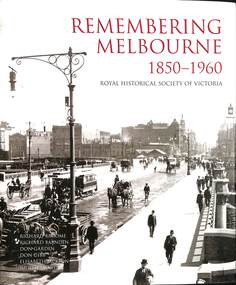
... Robert Doyle, the Lord Mayor of Melbourne. Large red book with hard cover. and a white illustrated dust cover. Black and white photos from Melbourne and its suburbs. Each suburb and photo has its history Remembering Melbourne, 1850 - 1960 Book Remembering Melbourne, 1850 - 1960 Royal Victorian Historical Society Richard Broome Richard Barnden Don Garden Don Gibb Elisabeth Jackson Judith Smart ...The book covers the history and transformation of the City of Melbourne.Large red book with hard cover. and a white illustrated dust cover. Black and white photos from Melbourne and its suburbs. Each suburb and photo has its historynon-fictionThe book covers the history and transformation of the City of Melbourne. history, historical buildings, melbourne and suburbs, sunshine -
 National Wool Museum
Textile - Children's Cardigan, Kathryn Knitwear, c.1965
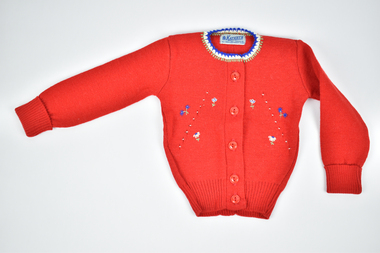
... Robert Blake’s Son, Brendan recalls that “The Kathryn brand was famous around Australia, anywhere children needed to keep warm and dress smartly. ...Robert Blake’s Son, Brendan recalls that “The Kathryn brand was famous around Australia, anywhere children needed to keep warm and dress smartly. ...Kathryn Knitwear, founded by Robert Blake, manufactured high quality children’s knitwear in Melbourne from the 1940s – 1980s. Robert Blake began manufacturing children’s knitwear in his bedroom in Strathmore using a hand powered machine in the late 1940s. The operation moved to Ascot Vale and Essendon, before eventually establishing a factory in Moonee Ponds in the early 1950s. The business continued to expand, necessitating a move to a new factory in Broadmeadows. By 1962, the Broadmeadows factory was producing an average of 20,000 garments per month, which increased to 24,000 by 1964. Robert Blake’s Son, Brendan recalls that “The Kathryn brand was famous around Australia, anywhere children needed to keep warm and dress smartly. It also won a number of wool fashion awards”, including the 1969 Wool Awards, which was held by the Australian Wool Bureau and published in Women’s Weekly. The Kathryn range was designed for durability, comfort and care, without sacrificing style. They used patterning techniques that increase stretchiness, comfort and fit, as well as integrating decorative elements into the fabric to prevent them from being bulky, uncomfortable or tight. Making longevity of style a priority, Brendan Blake remembers that “there was one particular garment that was in the range for at least thirty years”. He also recalls “In the past, when women have found out that I was associated with Kathryn Knitwear, they would often relate to me the story of a garment they had purchased or received as a gift and, when their child had grown out of it, they would hand it on to another child. Several ladies have told me of purchasing garments for their daughters’ glory box, or saving a particular garment after their daughter had grown out of it. Brendan Blake: “At the peak of their operation they employed approximately two hundred people, mainly women and girls. A family would often seek to send their daughter to work in this company because they knew they would be looked after and safe. One lady wrote to me telling me that working at the Moonee Ponds Factory prior to getting married was the happiest time of her life.” In 1963, workers at the Kathryn factory earned £13 per week, which was 8 shillings and 8 pence higher than the minimum weekly wage for female workers in the textile manufacturing industry (£12 11s 4d). By 1970, the Kathryn Knitwear brand expanded from children’s knitwear into womenswear under the brand name ‘Lady Kathryn’, and for boys and men under ‘Robert Blake’. Continuing to diversify their distribution, they also began exporting ‘Kathryn’ garments to New Zealand, the Pacific Islands, and Japan. The decoration on this garment was embroidered by hand by a skilled worker at the Kathryn Knitwear factory. ‘Kathryn Knitwear’ was well-known for their early adoption of modern materials and techniques that had broad appeal to their customer base. This is shown in their early use of the acrylic fibre ‘Orlon’ in the 50s and 60s and ‘Superwash’ wool in the 1970s. Many of Kathryn Knitwear’s styles, particularly those that were long running staples of the brand, were available in both wool and Orlon to suit the consumer’s preference. Wool has been renowned for its excellent properties for thousands of years, by people from all over the world. Not only good for thick winter woollens, it can help keep you cool in summer, as well as being durable and resistant to water, fire, ultraviolet light, stains and odour. Far from the humble origins of one man in his bedroom with a hand-cranked machine; at its closure in 1980, the Broadmeadows factory of ‘Kathryn’ housed more than 100 machines, including 53 sewing machines and 45 knitting machines. Robert Blake was “a passionate advocate for wool and Australian Made” throughout his whole life. A strong thread that ties through the lifespan of Robert Blake and Kathryn Knitwear is a balance between adopting new innovations without sacrificing the core values of durability, comfort, care and style that had made the brand so well known. Their legacy forms an integral part of both Australian social and manufacturing history.Red cardigan embroidered with decorative tuck stitches and floral motifs on front panel, crochet around collar in blue, white and green. Closes at centre front with 5 plastic buttons[Label at back neck with blue lettering woven into label] KATHRYN REGD ALL WOOL / 20 /CREATED BY ROBERT BLAKEchildren's knitwear, knitwear, children's clothing, clothing, cardigan, manufacturing, fashion textile production, machine knitting, embroidery, hand embroidery, floral embroidery, floral motif, tuck stitch -
 National Wool Museum
Textile - Children's Cardigan, Kathryn Knitwear, c.1960
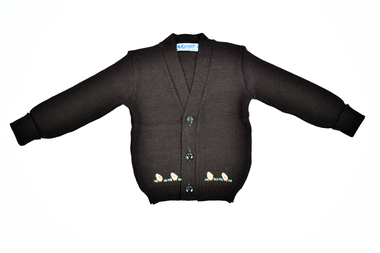
... Robert Blake’s Son, Brendan recalls that “The Kathryn brand was famous around Australia, anywhere children needed to keep warm and dress smartly. ...Robert Blake’s Son, Brendan recalls that “The Kathryn brand was famous around Australia, anywhere children needed to keep warm and dress smartly. ...Kathryn Knitwear, founded by Robert Blake, manufactured high quality children’s knitwear in Melbourne from the 1940s – 1980s. Robert Blake began manufacturing children’s knitwear in his bedroom in Strathmore using a hand powered machine in the late 1940s. The operation moved to Ascot Vale and Essendon, before eventually establishing a factory in Moonee Ponds in the early 1950s. The business continued to expand, necessitating a move to a new factory in Broadmeadows. By 1962, the Broadmeadows factory was producing an average of 20,000 garments per month, which increased to 24,000 by 1964. Robert Blake’s Son, Brendan recalls that “The Kathryn brand was famous around Australia, anywhere children needed to keep warm and dress smartly. It also won a number of wool fashion awards”, including the 1969 Wool Awards, which was held by the Australian Wool Bureau and published in Women’s Weekly. The Kathryn range was designed for durability, comfort and care, without sacrificing style. They used patterning techniques that increase stretchiness, comfort and fit, as well as integrating decorative elements into the fabric to prevent them from being bulky, uncomfortable or tight. Making longevity of style a priority, Brendan Blake remembers that “there was one particular garment that was in the range for at least thirty years”. He also recalls “In the past, when women have found out that I was associated with Kathryn Knitwear, they would often relate to me the story of a garment they had purchased or received as a gift and, when their child had grown out of it, they would hand it on to another child. Several ladies have told me of purchasing garments for their daughters’ glory box, or saving a particular garment after their daughter had grown out of it. Brendan Blake: “At the peak of their operation they employed approximately two hundred people, mainly women and girls. A family would often seek to send their daughter to work in this company because they knew they would be looked after and safe. One lady wrote to me telling me that working at the Moonee Ponds Factory prior to getting married was the happiest time of her life.” In 1963, workers at the Kathryn factory earned £13 per week, which was 8 shillings and 8 pence higher than the minimum weekly wage for female workers in the textile manufacturing industry (£12 11s 4d). By 1970, the Kathryn Knitwear brand expanded from children’s knitwear into womenswear under the brand name ‘Lady Kathryn’, and for boys and men under ‘Robert Blake’. Continuing to diversify their distribution, they also began exporting ‘Kathryn’ garments to New Zealand, the Pacific Islands, and Japan. The decoration on this garment was embroidered by hand by a skilled worker at the Kathryn Knitwear factory. ‘Kathryn Knitwear’ was well-known for their early adoption of modern materials and techniques that had broad appeal to their customer base. This is shown in their early use of the acrylic fibre ‘Orlon’ in the 50s and 60s and ‘Superwash’ wool in the 1970s. Many of Kathryn Knitwear’s styles, particularly those that were long running staples of the brand, were available in both wool and Orlon to suit the consumer’s preference. Wool has been renowned for its excellent properties for thousands of years, by people from all over the world. Not only good for thick winter woollens, it can help keep you cool in summer, as well as being durable and resistant to water, fire, ultraviolet light, stains and odour. Far from the humble origins of one man in his bedroom with a hand-cranked machine; at its closure in 1980, the Broadmeadows factory of ‘Kathryn’ housed more than 100 machines, including 53 sewing machines and 45 knitting machines. Robert Blake was “a passionate advocate for wool and Australian Made” throughout his whole life. A strong thread that ties through the lifespan of Robert Blake and Kathryn Knitwear is a balance between adopting new innovations without sacrificing the core values of durability, comfort, care and style that had made the brand so well known. Their legacy forms an integral part of both Australian social and manufacturing history.Brown children’s cardigan with embroidery of four baby chicks in yellow and red on green grass at bottom of front panels. Closes at centre front with three brown plastic buttons[Label at back neck with blue lettering woven into label] KATHRYN REGD / 20 ALL WOOL CREATED BY ROBERT BLAKEchildren's knitwear, children's clothing, clothing, knitwear, manufacturing, fashion textile production, machine knitting, embroidery, embroiderer, chickens, chicks, baby animals, cute animals -
 National Wool Museum
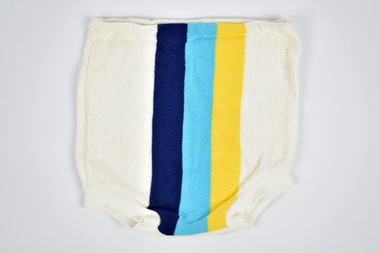
Textile - Baby Swimwear, Kathryn Knitwear, c.1960
... Robert Blake’s Son, Brendan recalls that “The Kathryn brand was famous around Australia, anywhere children needed to keep warm and dress smartly. ...Robert Blake’s Son, Brendan recalls that “The Kathryn brand was famous around Australia, anywhere children needed to keep warm and dress smartly. ...Kathryn Knitwear, founded by Robert Blake, manufactured high quality children’s knitwear in Melbourne from the 1940s – 1980s. Robert Blake began manufacturing children’s knitwear in his bedroom in Strathmore using a hand powered machine in the late 1940s. The operation moved to Ascot Vale and Essendon, before eventually establishing a factory in Moonee Ponds in the early 1950s. The business continued to expand, necessitating a move to a new factory in Broadmeadows. By 1962, the Broadmeadows factory was producing an average of 20,000 garments per month, which increased to 24,000 by 1964. Robert Blake’s Son, Brendan recalls that “The Kathryn brand was famous around Australia, anywhere children needed to keep warm and dress smartly. It also won a number of wool fashion awards”, including the 1969 Wool Awards, which was held by the Australian Wool Bureau and published in Women’s Weekly. The Kathryn range was designed for durability, comfort and care, without sacrificing style. They used patterning techniques that increase stretchiness, comfort and fit, as well as integrating decorative elements into the fabric to prevent them from being bulky, uncomfortable or tight. Making longevity of style a priority, Brendan Blake remembers that “there was one particular garment that was in the range for at least thirty years”. He also recalls “In the past, when women have found out that I was associated with Kathryn Knitwear, they would often relate to me the story of a garment they had purchased or received as a gift and, when their child had grown out of it, they would hand it on to another child. Several ladies have told me of purchasing garments for their daughters’ glory box, or saving a particular garment after their daughter had grown out of it. Brendan Blake: “At the peak of their operation they employed approximately two hundred people, mainly women and girls. A family would often seek to send their daughter to work in this company because they knew they would be looked after and safe. One lady wrote to me telling me that working at the Moonee Ponds Factory prior to getting married was the happiest time of her life.” In 1963, workers at the Kathryn factory earned £13 per week, which was 8 shillings and 8 pence higher than the minimum weekly wage for female workers in the textile manufacturing industry (£12 11s 4d). By 1970, the Kathryn Knitwear brand expanded from children’s knitwear into womenswear under the brand name ‘Lady Kathryn’, and for boys and men under ‘Robert Blake’. Continuing to diversify their distribution, they also began exporting ‘Kathryn’ garments to New Zealand, the Pacific Islands, and Japan. ‘Kathryn Knitwear’ was well-known for their early adoption of modern materials and techniques that had broad appeal to their customer base. This is shown in their early use of the acrylic fibre ‘Orlon’ in the 50s and 60s and ‘Superwash’ wool in the 1970s. Many of Kathryn Knitwear’s styles, particularly those that were long running staples of the brand, were available in both wool and Orlon to suit the consumer’s preference. Orlon was developed by DuPont in the 1940s and became the first commercially successful acrylic fibre in the 1950s and 1960s. The development of Orlon coincided with an increase in availability of washing machines in everyday Australian homes. The great appeal of Orlon was that while wool garments still had to be hand-washed, Orlon’s shrink-resistant nature made it machine washable and dryable. This was a very appealing prospect, especially for the seemingly unending task of cleaning active children’s clothing. Machine washable wool would not be available until the development of the ‘Superwash’ treatment by the Australian Wool Board and CSIRO in 1970. Far from the humble origins of one man in his bedroom with a hand-cranked machine; at its closure in 1980, the Broadmeadows factory of ‘Kathryn’ housed more than 100 machines, including 53 sewing machines and 45 knitting machines. Robert Blake was “a passionate advocate for wool and Australian Made” throughout his whole life. A strong thread that ties through the lifespan of Robert Blake and Kathryn Knitwear is a balance between adopting new innovations without sacrificing the core values of durability, comfort, care and style that had made the brand so well known. Their legacy forms an integral part of both Australian social and manufacturing history.White baby’s swimming shorts with stripes on front in navy, cyan and yellowchildren's knitwear, children's clothing, knitwear, clothing, manufacturing, fashion textile production, machine knitting, colourwork, swimwear, baby swimwear -
 National Wool Museum
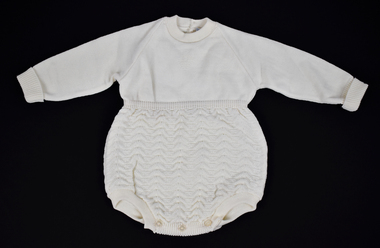
Textile - Baby Romper Suit, Kathryn Knitwear, c.1960
... Robert Blake’s Son, Brendan recalls that “The Kathryn brand was famous around Australia, anywhere children needed to keep warm and dress smartly. ...Robert Blake’s Son, Brendan recalls that “The Kathryn brand was famous around Australia, anywhere children needed to keep warm and dress smartly. ...Kathryn Knitwear, founded by Robert Blake, manufactured high quality children’s knitwear in Melbourne from the 1940s – 1980s. Robert Blake began manufacturing children’s knitwear in his bedroom in Strathmore using a hand powered machine in the late 1940s. The operation moved to Ascot Vale and Essendon, before eventually establishing a factory in Moonee Ponds in the early 1950s. The business continued to expand, necessitating a move to a new factory in Broadmeadows. By 1962, the Broadmeadows factory was producing an average of 20,000 garments per month, which increased to 24,000 by 1964. Robert Blake’s Son, Brendan recalls that “The Kathryn brand was famous around Australia, anywhere children needed to keep warm and dress smartly. It also won a number of wool fashion awards”, including the 1969 Wool Awards, which was held by the Australian Wool Bureau and published in Women’s Weekly. The Kathryn range was designed for durability, comfort and care, without sacrificing style. They used patterning techniques that increase stretchiness, comfort and fit, as well as integrating decorative elements into the fabric to prevent them from being bulky, uncomfortable or tight. Making longevity of style a priority, Brendan Blake remembers that “there was one particular garment that was in the range for at least thirty years”. He also recalls “In the past, when women have found out that I was associated with Kathryn Knitwear, they would often relate to me the story of a garment they had purchased or received as a gift and, when their child had grown out of it, they would hand it on to another child. Several ladies have told me of purchasing garments for their daughters’ glory box, or saving a particular garment after their daughter had grown out of it. Brendan Blake: “At the peak of their operation they employed approximately two hundred people, mainly women and girls. A family would often seek to send their daughter to work in this company because they knew they would be looked after and safe. One lady wrote to me telling me that working at the Moonee Ponds Factory prior to getting married was the happiest time of her life.” In 1963, workers at the Kathryn factory earned £13 per week, which was 8 shillings and 8 pence higher than the minimum weekly wage for female workers in the textile manufacturing industry (£12 11s 4d). By 1970, the Kathryn Knitwear brand expanded from children’s knitwear into womenswear under the brand name ‘Lady Kathryn’, and for boys and men under ‘Robert Blake’. Continuing to diversify their distribution, they also began exporting ‘Kathryn’ garments to New Zealand, the Pacific Islands, and Japan. ‘Kathryn Knitwear’ was well-known for their early adoption of modern materials and techniques that had broad appeal to their customer base. This is shown in their early use of the acrylic fibre ‘Orlon’ in the 50s and 60s and ‘Superwash’ wool in the 1970s. Many of Kathryn Knitwear’s styles, particularly those that were long running staples of the brand, were available in both wool and Orlon to suit the consumer’s preference. Orlon was developed by DuPont in the 1940s and became the first commercially successful acrylic fibre in the 1950s and 1960s. The development of Orlon coincided with an increase in availability of washing machines in everyday Australian homes. The great appeal of Orlon was that while wool garments still had to be hand-washed, Orlon’s shrink-resistant nature made it machine washable and dryable. This was a very appealing prospect, especially for the seemingly unending task of cleaning active children’s clothing. Machine washable wool would not be available until the development of the ‘Superwash’ treatment by the Australian Wool Board and CSIRO in 1970. Far from the humble origins of one man in his bedroom with a hand-cranked machine; at its closure in 1980, the Broadmeadows factory of ‘Kathryn’ housed more than 100 machines, including 53 sewing machines and 45 knitting machines. Robert Blake was “a passionate advocate for wool and Australian Made” throughout his whole life. A strong thread that ties through the lifespan of Robert Blake and Kathryn Knitwear is a balance between adopting new innovations without sacrificing the core values of durability, comfort, care and style that had made the brand so well known. Their legacy forms an integral part of both Australian social and manufacturing history.Long sleeved cream baby romper suit with patterned stitch on bottom half and diamond emblem on chest. Closes with two pearlescent plastic buttons at centre back and with three pearlescent plastic buttons at crotch.Kathryn Reg’d / 100% orlon / 20 [handwritten]children's clothing, children's knitwear, clothing, knitwear, romper, jumpsuit, baby clothing, baby clothes, manufacturing, fashion textile production, machine knitting -
 National Wool Museum
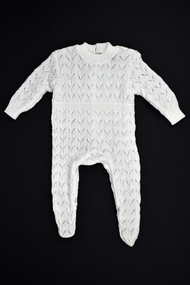
Textile - Baby Romper Suit, Kathryn Knitwear, c.1970
... Robert Blake’s Son, Brendan recalls that “The Kathryn brand was famous around Australia, anywhere children needed to keep warm and dress smartly. ...Robert Blake’s Son, Brendan recalls that “The Kathryn brand was famous around Australia, anywhere children needed to keep warm and dress smartly. ...Kathryn Knitwear, founded by Robert Blake, manufactured high quality children’s knitwear in Melbourne from the 1940s – 1980s. Robert Blake began manufacturing children’s knitwear in his bedroom in Strathmore using a hand powered machine in the late 1940s. The operation moved to Ascot Vale and Essendon, before eventually establishing a factory in Moonee Ponds in the early 1950s. The business continued to expand, necessitating a move to a new factory in Broadmeadows. By 1962, the Broadmeadows factory was producing an average of 20,000 garments per month, which increased to 24,000 by 1964. Robert Blake’s Son, Brendan recalls that “The Kathryn brand was famous around Australia, anywhere children needed to keep warm and dress smartly. It also won a number of wool fashion awards”, including the 1969 Wool Awards, which was held by the Australian Wool Bureau and published in Women’s Weekly. The Kathryn range was designed for durability, comfort and care, without sacrificing style. They used patterning techniques that increase stretchiness, comfort and fit, as well as integrating decorative elements into the fabric to prevent them from being bulky, uncomfortable or tight. Making longevity of style a priority, Brendan Blake remembers that “there was one particular garment that was in the range for at least thirty years”. He also recalls “In the past, when women have found out that I was associated with Kathryn Knitwear, they would often relate to me the story of a garment they had purchased or received as a gift and, when their child had grown out of it, they would hand it on to another child. Several ladies have told me of purchasing garments for their daughters’ glory box, or saving a particular garment after their daughter had grown out of it. Brendan Blake: “At the peak of their operation they employed approximately two hundred people, mainly women and girls. A family would often seek to send their daughter to work in this company because they knew they would be looked after and safe. One lady wrote to me telling me that working at the Moonee Ponds Factory prior to getting married was the happiest time of her life.” In 1963, workers at the Kathryn factory earned £13 per week, which was 8 shillings and 8 pence higher than the minimum weekly wage for female workers in the textile manufacturing industry (£12 11s 4d). By 1970, the Kathryn Knitwear brand expanded from children’s knitwear into womenswear under the brand name ‘Lady Kathryn’, and for boys and men under ‘Robert Blake’. Continuing to diversify their distribution, they also began exporting ‘Kathryn’ garments to New Zealand, the Pacific Islands, and Japan. ‘Kathryn Knitwear’ was well-known for their early adoption of modern materials and techniques that had broad appeal to their customer base. This is shown in their early use of the acrylic fibre ‘Orlon’ in the 50s and 60s and ‘Superwash’ wool in the 1970s. Many of Kathryn Knitwear’s styles, particularly those that were long running staples of the brand, were available in both wool and Orlon to suit the consumer’s preference. Orlon was developed by DuPont in the 1940s and became the first commercially successful acrylic fibre in the 1950s and 1960s. The development of Orlon coincided with an increase in availability of washing machines in everyday Australian homes. The great appeal of Orlon was that while wool garments still had to be hand-washed, Orlon’s shrink-resistant nature made it machine washable and dryable. This was a very appealing prospect, especially for the seemingly unending task of cleaning active children’s clothing. Machine washable wool would not be available until the development of the ‘Superwash’ treatment by the Australian Wool Board and CSIRO in 1970. Far from the humble origins of one man in his bedroom with a hand-cranked machine; at its closure in 1980, the Broadmeadows factory of ‘Kathryn’ housed more than 100 machines, including 53 sewing machines and 45 knitting machines. Robert Blake was “a passionate advocate for wool and Australian Made” throughout his whole life. A strong thread that ties through the lifespan of Robert Blake and Kathryn Knitwear is a balance between adopting new innovations without sacrificing the core values of durability, comfort, care and style that had made the brand so well known. Their legacy forms an integral part of both Australian social and manufacturing history.White lacework baby romper suit with long sleeves and legs, and enclosed feet. Closes at centre back with two plastic buttons. Zips open around leg inseam. Size 00 .2 is a retail tag marked with the price and size, and refers to the label sewn into the garment for washing instructions..2 [Retail Swing Tag] [Obverse] KATHRYN Children’s Knitwear STYLE PRICE [handwritten] $18 SIZE [handwritten] 00 [Reverse] WASHING INSTRUCTIONS Refer to label sewn in Garment Designed and manufactured by ROBERT BLAKE PTY. LTD., Melb., Aust.children's knitwear, children's clothing, baby clothing, baby knitwear, clothing, knitwear, romper, jumpsuit, manufacturing, fashion textile production, machine knitting, machine lace, baby clothes -
 National Wool Museum
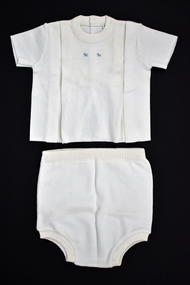
Textile - Diaper Set, Kathryn Knitwear, c.1960
... Robert Blake’s Son, Brendan recalls that “The Kathryn brand was famous around Australia, anywhere children needed to keep warm and dress smartly. ...Robert Blake’s Son, Brendan recalls that “The Kathryn brand was famous around Australia, anywhere children needed to keep warm and dress smartly. ...Kathryn Knitwear, founded by Robert Blake, manufactured high quality children’s knitwear in Melbourne from the 1940s – 1980s. Robert Blake began manufacturing children’s knitwear in his bedroom in Strathmore using a hand powered machine in the late 1940s. The operation moved to Ascot Vale and Essendon, before eventually establishing a factory in Moonee Ponds in the early 1950s. The business continued to expand, necessitating a move to a new factory in Broadmeadows. By 1962, the Broadmeadows factory was producing an average of 20,000 garments per month, which increased to 24,000 by 1964. Robert Blake’s Son, Brendan recalls that “The Kathryn brand was famous around Australia, anywhere children needed to keep warm and dress smartly. It also won a number of wool fashion awards”, including the 1969 Wool Awards, which was held by the Australian Wool Bureau and published in Women’s Weekly. The Kathryn range was designed for durability, comfort and care, without sacrificing style. They used patterning techniques that increase stretchiness, comfort and fit, as well as integrating decorative elements into the fabric to prevent them from being bulky, uncomfortable or tight. Making longevity of style a priority, Brendan Blake remembers that “there was one particular garment that was in the range for at least thirty years”. He also recalls “In the past, when women have found out that I was associated with Kathryn Knitwear, they would often relate to me the story of a garment they had purchased or received as a gift and, when their child had grown out of it, they would hand it on to another child. Several ladies have told me of purchasing garments for their daughters’ glory box, or saving a particular garment after their daughter had grown out of it. Brendan Blake: “At the peak of their operation they employed approximately two hundred people, mainly women and girls. A family would often seek to send their daughter to work in this company because they knew they would be looked after and safe. One lady wrote to me telling me that working at the Moonee Ponds Factory prior to getting married was the happiest time of her life.” In 1963, workers at the Kathryn factory earned £13 per week, which was 8 shillings and 8 pence higher than the minimum weekly wage for female workers in the textile manufacturing industry (£12 11s 4d). By 1970, the Kathryn Knitwear brand expanded from children’s knitwear into womenswear under the brand name ‘Lady Kathryn’, and for boys and men under ‘Robert Blake’. Continuing to diversify their distribution, they also began exporting ‘Kathryn’ garments to New Zealand, the Pacific Islands, and Japan. ‘Kathryn Knitwear’ was well-known for their early adoption of modern materials and techniques that had broad appeal to their customer base. This is shown in their early use of the acrylic fibre ‘Orlon’ in the 50s and 60s and ‘Superwash’ wool in the 1970s. Many of Kathryn Knitwear’s styles, particularly those that were long running staples of the brand, were available in both wool and Orlon to suit the consumer’s preference. Cotton is a common material for knitwear worn in the warmer months, as it is very breathable and absorbs moisture easily. While we mostly associate knitwear with keeping us warm in the cold, the market for Australian knitwear would be very limited without options to wear all year round. The decoration on this garment was embroidered by hand by a skilled worker at the Kathryn Knitwear factory. Far from the humble origins of one man in his bedroom with a hand-cranked machine; at its closure in 1980, the Broadmeadows factory of ‘Kathryn’ housed more than 100 machines, including 53 sewing machines and 45 knitting machines. Robert Blake was “a passionate advocate for wool and Australian Made” throughout his whole life. A strong thread that ties through the lifespan of Robert Blake and Kathryn Knitwear is a balance between adopting new innovations without sacrificing the core values of durability, comfort, care and style that had made the brand so well known. Their legacy forms an integral part of both Australian social and manufacturing history.White diaper set. Short sleeved white top with two inverted box pleats along whole length, stitched at shoulder and mid chest. Embroidered in half cross stitch with two blue dogs on front. Closes in centre back with three plastic pearlescent buttons. White baby diaper shorts with ribbing at waist and leg holes .3 is a sample tag with manufacturing information, including price, size and colours available .4 is a swing tag with manufacturer care instructions.1 [label at back neck of top] Kathryn Reg’d / All Cotton / 18 .3 [sample label] [Obverse] STYLE: 314. Diaper Sat [sic] – Emb top. Combed Cotton. SIZE: 18” PRICE: 26/- COLOR: BLUE. LEMON. WHITE. [reverse] KATHRYN Garments are •PRE-SHRUNK •STANDARD MEASUREMENTS •FIT EXACTLY •LAUNDER PERFECTLY Designed and Manufactured by ROBERT BLAKE, MELBOURNE .4 [retail label] [obverse] Kathryn PRE-SHRUNK KNITWEAR Style: 314 [handwritten] DESIGNED & MANUFACTURED BY Robert Blake MELBOURNE [reverse] IMPORTANT. Special care should be taken with white and pastel shades. Rinse thoroughly. Do NOT dry in sunlight. WASHING INSTRUCTIONS 1.Wash frequently to AVOID HEAVY SOILING 2.Wash garment BY HAND, in lukewarm Velvet Soap suds. ON NO ACCOUNT RUB SOAP ON GARMENT. 3.Squeeze suds gently through garment but DO NOT RUB. Rubbing will cause garment to thicken. 4.RINSE AT LEAST TWICE IN CLEAN WATER TO REMOVE ALL SOAP. 5.To dry, roll garment in a towel to remove excess moisture, turn garment inside out and pull it lengthwise, then safety-pin to line through shoulder tape. 6.To keep Brushed Wool garments like new brush frequently with nylon brush.children's knitwear, children's clothing, knitwear, clothing, manufacturing, fashion textile production, embroidery, embroiderer, hand embroidery, dog embroidery, animal embroidery, animal motif, dog motif, dog, animal, baby clothes, baby knitwear, baby clothing -
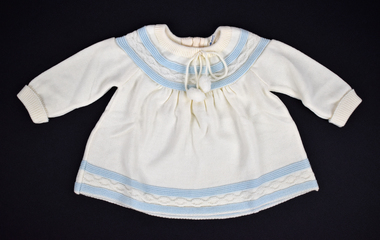 National Wool Museum
Textile - Children's Dress, Kathryn Knitwear, c.1960
... Robert Blake’s Son, Brendan recalls that “The Kathryn brand was famous around Australia, anywhere children needed to keep warm and dress smartly. ...Robert Blake’s Son, Brendan recalls that “The Kathryn brand was famous around Australia, anywhere children needed to keep warm and dress smartly. ...Kathryn Knitwear, founded by Robert Blake, manufactured high quality children’s knitwear in Melbourne from the 1940s – 1980s. Robert Blake began manufacturing children’s knitwear in his bedroom in Strathmore using a hand powered machine in the late 1940s. The operation moved to Ascot Vale and Essendon, before eventually establishing a factory in Moonee Ponds in the early 1950s. The business continued to expand, necessitating a move to a new factory in Broadmeadows. By 1962, the Broadmeadows factory was producing an average of 20,000 garments per month, which increased to 24,000 by 1964. Robert Blake’s Son, Brendan recalls that “The Kathryn brand was famous around Australia, anywhere children needed to keep warm and dress smartly. It also won a number of wool fashion awards”, including the 1969 Wool Awards, which was held by the Australian Wool Bureau and published in Women’s Weekly. The Kathryn range was designed for durability, comfort and care, without sacrificing style. They used patterning techniques that increase stretchiness, comfort and fit, as well as integrating decorative elements into the fabric to prevent them from being bulky, uncomfortable or tight. Making longevity of style a priority, Brendan Blake remembers that “there was one particular garment that was in the range for at least thirty years”. He also recalls “In the past, when women have found out that I was associated with Kathryn Knitwear, they would often relate to me the story of a garment they had purchased or received as a gift and, when their child had grown out of it, they would hand it on to another child. Several ladies have told me of purchasing garments for their daughters’ glory box, or saving a particular garment after their daughter had grown out of it. Brendan Blake: “At the peak of their operation they employed approximately two hundred people, mainly women and girls. A family would often seek to send their daughter to work in this company because they knew they would be looked after and safe. One lady wrote to me telling me that working at the Moonee Ponds Factory prior to getting married was the happiest time of her life.” In 1963, workers at the Kathryn factory earned £13 per week, which was 8 shillings and 8 pence higher than the minimum weekly wage for female workers in the textile manufacturing industry (£12 11s 4d). By 1970, the Kathryn Knitwear brand expanded from children’s knitwear into womenswear under the brand name ‘Lady Kathryn’, and for boys and men under ‘Robert Blake’. Continuing to diversify their distribution, they also began exporting ‘Kathryn’ garments to New Zealand, the Pacific Islands, and Japan. ‘Kathryn Knitwear’ was well-known for their early adoption of modern materials and techniques that had broad appeal to their customer base. This is shown in their early use of the acrylic fibre ‘Orlon’ in the 50s and 60s and ‘Superwash’ wool in the 1970s. Many of Kathryn Knitwear’s styles, particularly those that were long running staples of the brand, were available in both wool and Orlon to suit the consumer’s preference. Orlon was developed by DuPont in the 1940s and became the first commercially successful acrylic fibre in the 1950s and 1960s. The development of Orlon coincided with an increase in availability of washing machines in everyday Australian homes. The great appeal of Orlon was that while wool garments still had to be hand-washed, Orlon’s shrink-resistant nature made it machine washable and dryable. This was a very appealing prospect, especially for the seemingly unending task of cleaning active children’s clothing. Machine washable wool would not be available until the development of the ‘Superwash’ treatment by the Australian Wool Board and CSIRO in 1970. Far from the humble origins of one man in his bedroom with a hand-cranked machine; at its closure in 1980, the Broadmeadows factory of ‘Kathryn’ housed more than 100 machines, including 53 sewing machines and 45 knitting machines. Robert Blake was “a passionate advocate for wool and Australian Made” throughout his whole life. A strong thread that ties through the lifespan of Robert Blake and Kathryn Knitwear is a balance between adopting new innovations without sacrificing the core values of durability, comfort, care and style that had made the brand so well known. Their legacy forms an integral part of both Australian social and manufacturing history.Cream baby dress with long sleeves, blue stripe and cream faux cable textured details at yoke and hem. Body is gathered and attaches at yoke. Dress has a drawstring tie at neck accented with cream pompoms and closes at centre back with three pearlescent plastic buttons. Back opening is reinforced with grosgrain ribbon. .2 is a sample tag with manufacturing information, including sizes and colours available .3 is a retail tag with style, care instructions and brand marketing[label stitched into back neck] KATHRYN 100% Orlon .2 [sample label] [Obverse] 802/F – BABIES ORLON FROCK. 16” – LENGTH 24/6 BLUE/WHT LEMON/WHT PINK/WHT WHT/BLUE WHT/LEMON WHT/PINK .3 [Obverse] KATHRYN Children’s Knitwear STYLE [handwritten] 802/F SIZE PRICE [reverse] KATHRYN Garments are •PRE-SHRUNK •STANDARD MEASUREMENTS •FIT EXACTLY •LAUNDER PERFECTLYclothing, children's clothing, knitwear, children's knitwear, manufacturing, fashion textile production, colourwork, pom-pom, pom poms -
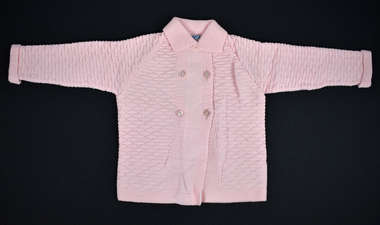 National Wool Museum
Textile - Children's Clothing Set, Kathryn Knitwear, c.1962-1964
... Robert Blake’s Son, Brendan recalls that “The Kathryn brand was famous around Australia, anywhere children needed to keep warm and dress smartly. ...Robert Blake’s Son, Brendan recalls that “The Kathryn brand was famous around Australia, anywhere children needed to keep warm and dress smartly. ...Kathryn Knitwear, founded by Robert Blake, manufactured high quality children’s knitwear in Melbourne from the 1940s – 1980s. Robert Blake began manufacturing children’s knitwear in his bedroom in Strathmore using a hand powered machine in the late 1940s. The operation moved to Ascot Vale and Essendon, before eventually establishing a factory in Moonee Ponds in the early 1950s. The business continued to expand, necessitating a move to a new factory in Broadmeadows. By 1962, the Broadmeadows factory was producing an average of 20,000 garments per month, which increased to 24,000 by 1964. Robert Blake’s Son, Brendan recalls that “The Kathryn brand was famous around Australia, anywhere children needed to keep warm and dress smartly. It also won a number of wool fashion awards”, including the 1969 Wool Awards, which was held by the Australian Wool Bureau and published in Women’s Weekly. The Kathryn range was designed for durability, comfort and care, without sacrificing style. They used patterning techniques that increase stretchiness, comfort and fit, as well as integrating decorative elements into the fabric to prevent them from being bulky, uncomfortable or tight. Making longevity of style a priority, Brendan Blake remembers that “there was one particular garment that was in the range for at least thirty years”. He also recalls “In the past, when women have found out that I was associated with Kathryn Knitwear, they would often relate to me the story of a garment they had purchased or received as a gift and, when their child had grown out of it, they would hand it on to another child. Several ladies have told me of purchasing garments for their daughters’ glory box, or saving a particular garment after their daughter had grown out of it. Brendan Blake: “At the peak of their operation they employed approximately two hundred people, mainly women and girls. A family would often seek to send their daughter to work in this company because they knew they would be looked after and safe. One lady wrote to me telling me that working at the Moonee Ponds Factory prior to getting married was the happiest time of her life.” In 1963, workers at the Kathryn factory earned £13 per week, which was 8 shillings and 8 pence higher than the minimum weekly wage for female workers in the textile manufacturing industry (£12 11s 4d). By 1970, the Kathryn Knitwear brand expanded from children’s knitwear into womenswear under the brand name ‘Lady Kathryn’, and for boys and men under ‘Robert Blake’. Continuing to diversify their distribution, they also began exporting ‘Kathryn’ garments to New Zealand, the Pacific Islands, and Japan. ‘Kathryn Knitwear’ was well-known for their early adoption of modern materials and techniques that had broad appeal to their customer base. This is shown in their early use of the acrylic fibre ‘Orlon’ in the 50s and 60s and ‘Superwash’ wool in the 1970s. Many of Kathryn Knitwear’s styles, particularly those that were long running staples of the brand, were available in both wool and Orlon to suit the consumer’s preference. Orlon was developed by DuPont in the 1940s and became the first commercially successful acrylic fibre in the 1950s and 1960s. The development of Orlon coincided with an increase in availability of washing machines in everyday Australian homes. The great appeal of Orlon was that while wool garments still had to be hand-washed, Orlon’s shrink-resistant nature made it machine washable and dryable. This was a very appealing prospect, especially for the seemingly unending task of cleaning active children’s clothing. Machine washable wool would not be available until the development of the ‘Superwash’ treatment by the Australian Wool Board and CSIRO in 1970. Far from the humble origins of one man in his bedroom with a hand-cranked machine; at its closure in 1980, the Broadmeadows factory of ‘Kathryn’ housed more than 100 machines, including 53 sewing machines and 45 knitting machines. Robert Blake was “a passionate advocate for wool and Australian Made” throughout his whole life. A strong thread that ties through the lifespan of Robert Blake and Kathryn Knitwear is a balance between adopting new innovations without sacrificing the core values of durability, comfort, care and style that had made the brand so well known. Their legacy forms an integral part of both Australian social and manufacturing history.Pink three piece legging suit, consisting of cardigan, lettings and beanie. Cardigan is knitted with textured stitch and has stocking stitch panel bordered with garter stitch at centre front. Two rows of buttons on garter stitch tab, with a fifth button under left collar. Leggings are plain garter stitch with an elastic waistband and a flap that extends onto the top of the foot with elastic to keep it held under the sole. Hat is in same patterned stitch as cardigan, has ear flaps with ties and a white pompom.1) [Label at back neck with blue lettering woven into label] KATHRYN REGD ORLON / 20 /CREATED BY ROBERT BLAKE [sample label] [OBVERSE] STYLE LS/PWO – 3 PCS – LEGGING SUIT – PEARL PATT. – 80% ORLON 20% WOOL SIZE 18” 20” PRICE 48/6 51/6 COLOR BLUE. LEMON. PINK. WHITE. [REVERSE] KATHRYN Garments are • PRE-SHRUNK • STANDARD MEASUREMENTS • FIT EXACTLY • LAUNDER PERFECTLY Designed and Manufactured by ROBERT BLAKE, MELBOURNEknitwear, clothing, children's knitwear, children's clothing, manufacturing, fashion textile production, machine knitting, clothing set, pom poms -
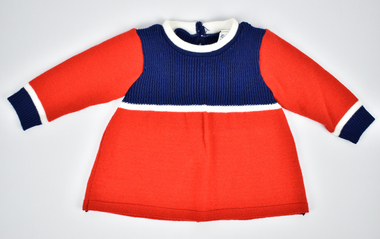 National Wool Museum
Textile - Children's Clothing Set, Kathryn Knitwear, c.1970
... Robert Blake’s Son, Brendan recalls that “The Kathryn brand was famous around Australia, anywhere children needed to keep warm and dress smartly. ...Robert Blake’s Son, Brendan recalls that “The Kathryn brand was famous around Australia, anywhere children needed to keep warm and dress smartly. ...Kathryn Knitwear, founded by Robert Blake, manufactured high quality children’s knitwear in Melbourne from the 1940s – 1980s. Robert Blake began manufacturing children’s knitwear in his bedroom in Strathmore using a hand powered machine in the late 1940s. The operation moved to Ascot Vale and Essendon, before eventually establishing a factory in Moonee Ponds in the early 1950s. The business continued to expand, necessitating a move to a new factory in Broadmeadows. By 1962, the Broadmeadows factory was producing an average of 20,000 garments per month, which increased to 24,000 by 1964. Robert Blake’s Son, Brendan recalls that “The Kathryn brand was famous around Australia, anywhere children needed to keep warm and dress smartly. It also won a number of wool fashion awards”, including the 1969 Wool Awards, which was held by the Australian Wool Bureau and published in Women’s Weekly. The Kathryn range was designed for durability, comfort and care, without sacrificing style. They used patterning techniques that increase stretchiness, comfort and fit, as well as integrating decorative elements into the fabric to prevent them from being bulky, uncomfortable or tight. Making longevity of style a priority, Brendan Blake remembers that “there was one particular garment that was in the range for at least thirty years”. He also recalls “In the past, when women have found out that I was associated with Kathryn Knitwear, they would often relate to me the story of a garment they had purchased or received as a gift and, when their child had grown out of it, they would hand it on to another child. Several ladies have told me of purchasing garments for their daughters’ glory box, or saving a particular garment after their daughter had grown out of it. Brendan Blake: “At the peak of their operation they employed approximately two hundred people, mainly women and girls. A family would often seek to send their daughter to work in this company because they knew they would be looked after and safe. One lady wrote to me telling me that working at the Moonee Ponds Factory prior to getting married was the happiest time of her life.” In 1963, workers at the Kathryn factory earned £13 per week, which was 8 shillings and 8 pence higher than the minimum weekly wage for female workers in the textile manufacturing industry (£12 11s 4d). By 1970, the Kathryn Knitwear brand expanded from children’s knitwear into womenswear under the brand name ‘Lady Kathryn’, and for boys and men under ‘Robert Blake’. Continuing to diversify their distribution, they also began exporting ‘Kathryn’ garments to New Zealand, the Pacific Islands, and Japan. ‘Kathryn Knitwear’ was well-known for their early adoption of modern materials and techniques that had broad appeal to their customer base. This is shown in their early use of the acrylic fibre ‘Orlon’ in the 50s and 60s and ‘Superwash’ wool in the 1970s. Many of Kathryn Knitwear’s styles, particularly those that were long running staples of the brand, were available in both wool and Orlon to suit the consumer’s preference. Orlon was developed by DuPont in the 1940s and became the first commercially successful acrylic fibre in the 1950s and 1960s. The development of Orlon coincided with an increase in availability of washing machines in everyday Australian homes. The great appeal of Orlon was that while wool garments still had to be hand-washed, Orlon’s shrink-resistant nature made it machine washable and dryable. This was a very appealing prospect, especially for the seemingly unending task of cleaning active children’s clothing. Machine washable wool would not be available until the development of the ‘Superwash’ treatment by the Australian Wool Board and CSIRO in 1970. Far from the humble origins of one man in his bedroom with a hand-cranked machine; at its closure in 1980, the Broadmeadows factory of ‘Kathryn’ housed more than 100 machines, including 53 sewing machines and 45 knitting machines. Robert Blake was “a passionate advocate for wool and Australian Made” throughout his whole life. A strong thread that ties through the lifespan of Robert Blake and Kathryn Knitwear is a balance between adopting new innovations without sacrificing the core values of durability, comfort, care and style that had made the brand so well known. Their legacy forms an integral part of both Australian social and manufacturing history.Children’s two-piece outfit set, consisting of a top and leggings. Knitted in colour blocks of navy, red and white. Top has ribbed navy bodice section with white stripe separating red skirt and closes at back neck with two navy plastic buttons. Leggings are primarily red, with a white stripe at the ankle and navy-blue feet. Leggings are constructed primarily as one piece and seamed up at centre back and inseam, with additional gusset piece..1) [tag stitched into back neck of top] KATHRYN REGD 100% ACRYLIC FIBRE SIZE 0 WEIGHT 10 LENGTH 76 MADE IN AUSTRALIA .3) [blue sample label] STYLE 574/ Pop Top and B’tts S.26. Acrylic. SIZES: 00 0 PRICE: $8.95 COLORS: Navy/Wht/Red Red/Wht/Navy P.Blue/Wht/Navy Dec on Del.knitwear, clothing, children's knitwear, children's clothing, manufacturing, fashion textile production, machine knitting, clothing set -
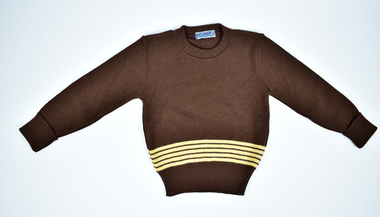 National Wool Museum
Textile - Children's Clothing Set, Kathryn Knitwear, c.1965
... Robert Blake’s Son, Brendan recalls that “The Kathryn brand was famous around Australia, anywhere children needed to keep warm and dress smartly. ...Robert Blake’s Son, Brendan recalls that “The Kathryn brand was famous around Australia, anywhere children needed to keep warm and dress smartly. ...Kathryn Knitwear, founded by Robert Blake, manufactured high quality children’s knitwear in Melbourne from the 1940s – 1980s. Robert Blake began manufacturing children’s knitwear in his bedroom in Strathmore using a hand powered machine in the late 1940s. The operation moved to Ascot Vale and Essendon, before eventually establishing a factory in Moonee Ponds in the early 1950s. The business continued to expand, necessitating a move to a new factory in Broadmeadows. By 1962, the Broadmeadows factory was producing an average of 20,000 garments per month, which increased to 24,000 by 1964. Robert Blake’s Son, Brendan recalls that “The Kathryn brand was famous around Australia, anywhere children needed to keep warm and dress smartly. It also won a number of wool fashion awards”, including the 1969 Wool Awards, which was held by the Australian Wool Bureau and published in Women’s Weekly. The Kathryn range was designed for durability, comfort and care, without sacrificing style. They used patterning techniques that increase stretchiness, comfort and fit, as well as integrating decorative elements into the fabric to prevent them from being bulky, uncomfortable or tight. Making longevity of style a priority, Brendan Blake remembers that “there was one particular garment that was in the range for at least thirty years”. He also recalls “In the past, when women have found out that I was associated with Kathryn Knitwear, they would often relate to me the story of a garment they had purchased or received as a gift and, when their child had grown out of it, they would hand it on to another child. Several ladies have told me of purchasing garments for their daughters’ glory box, or saving a particular garment after their daughter had grown out of it. Brendan Blake: “At the peak of their operation they employed approximately two hundred people, mainly women and girls. A family would often seek to send their daughter to work in this company because they knew they would be looked after and safe. One lady wrote to me telling me that working at the Moonee Ponds Factory prior to getting married was the happiest time of her life.” In 1963, workers at the Kathryn factory earned £13 per week, which was 8 shillings and 8 pence higher than the minimum weekly wage for female workers in the textile manufacturing industry (£12 11s 4d). By 1970, the Kathryn Knitwear brand expanded from children’s knitwear into womenswear under the brand name ‘Lady Kathryn’, and for boys and men under ‘Robert Blake’. Continuing to diversify their distribution, they also began exporting ‘Kathryn’ garments to New Zealand, the Pacific Islands, and Japan. ‘Kathryn Knitwear’ was well-known for their early adoption of modern materials and techniques that had broad appeal to their customer base. This is shown in their early use of the acrylic fibre ‘Orlon’ in the 50s and 60s and ‘Superwash’ wool in the 1970s. Many of Kathryn Knitwear’s styles, particularly those that were long running staples of the brand, were available in both wool and Orlon to suit the consumer’s preference. Wool has been renowned for its excellent properties for thousands of years, by people from all over the world. Not only good for thick winter woollens, it can help keep you cool in summer, as well as being durable and resistant to water, fire, ultraviolet light, stains and odour. Far from the humble origins of one man in his bedroom with a hand-cranked machine; at its closure in 1980, the Broadmeadows factory of ‘Kathryn’ housed more than 100 machines, including 53 sewing machines and 45 knitting machines. Robert Blake was “a passionate advocate for wool and Australian Made” throughout his whole life. A strong thread that ties through the lifespan of Robert Blake and Kathryn Knitwear is a balance between adopting new innovations without sacrificing the core values of durability, comfort, care and style that had made the brand so well known. Their legacy forms an integral part of both Australian social and manufacturing history.Three-piece brown and yellow outfit consisting of jumper, pants and hat. Jumper is long sleeved with a high crew neck and five yellow stripes above ribbing along bottom. Pants are brown with wide legs that dramatically taper into the ribbed cuff at bottom. Body of hat is brown and tapers into a long point and has a brown and yellow pompom at the tip. The hat is shaped with a tuck at the back neck near cuff..1 [Label at back neck of jumper with blue lettering woven into label] KATHRYN REGD / 24 ALL WOOL CREATED BY ROBERT BLAKEknitwear, clothing, children's knitwear, children's clothing, manufacturing, fashion textile production, machine knitting, clothing set, pom poms, wool -
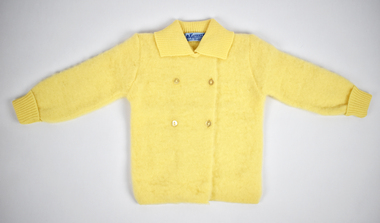 National Wool Museum
Textile - Children's Clothing Set, Kathryn Knitwear, c.1953-1961
... Robert Blake’s Son, Brendan recalls that “The Kathryn brand was famous around Australia, anywhere children needed to keep warm and dress smartly. ...Robert Blake’s Son, Brendan recalls that “The Kathryn brand was famous around Australia, anywhere children needed to keep warm and dress smartly. ...Kathryn Knitwear, founded by Robert Blake, manufactured high quality children’s knitwear in Melbourne from the 1940s – 1980s. Robert Blake began manufacturing children’s knitwear in his bedroom in Strathmore using a hand powered machine in the late 1940s. The operation moved to Ascot Vale and Essendon, before eventually establishing a factory in Moonee Ponds in the early 1950s. The business continued to expand, necessitating a move to a new factory in Broadmeadows. By 1962, the Broadmeadows factory was producing an average of 20,000 garments per month, which increased to 24,000 by 1964. Robert Blake’s Son, Brendan recalls that “The Kathryn brand was famous around Australia, anywhere children needed to keep warm and dress smartly. It also won a number of wool fashion awards”, including the 1969 Wool Awards, which was held by the Australian Wool Bureau and published in Women’s Weekly. The Kathryn range was designed for durability, comfort and care, without sacrificing style. They used patterning techniques that increase stretchiness, comfort and fit, as well as integrating decorative elements into the fabric to prevent them from being bulky, uncomfortable or tight. Making longevity of style a priority, Brendan Blake remembers that “there was one particular garment that was in the range for at least thirty years”. He also recalls “In the past, when women have found out that I was associated with Kathryn Knitwear, they would often relate to me the story of a garment they had purchased or received as a gift and, when their child had grown out of it, they would hand it on to another child. Several ladies have told me of purchasing garments for their daughters’ glory box, or saving a particular garment after their daughter had grown out of it. This style of “brushed wool leginette suit” was produced by Kathryn from at least 1953-1964, though this example likely dates from before 1962. In the winter of 1961, the brand sold 4376 suits of this style. It came with an included nylon brush in order to keep the brushed finish of the garments, which can be found under NWM-09016 Brendan Blake: “At the peak of their operation they employed approximately two hundred people, mainly women and girls. A family would often seek to send their daughter to work in this company because they knew they would be looked after and safe. One lady wrote to me telling me that working at the Moonee Ponds Factory prior to getting married was the happiest time of her life.” In 1963, workers at the Kathryn factory earned £13 per week, which was 8 shillings and 8 pence higher than the minimum weekly wage for female workers in the textile manufacturing industry (£12 11s 4d). By 1970, the Kathryn Knitwear brand expanded from children’s knitwear into womenswear under the brand name ‘Lady Kathryn’, and for boys and men under ‘Robert Blake’. Continuing to diversify their distribution, they also began exporting ‘Kathryn’ garments to New Zealand, the Pacific Islands, and Japan. ‘Kathryn Knitwear’ was well-known for their early adoption of modern materials and techniques that had broad appeal to their customer base. This is shown in their early use of the acrylic fibre ‘Orlon’ in the 50s and 60s and ‘Superwash’ wool in the 1970s. Many of Kathryn Knitwear’s styles, particularly those that were long running staples of the brand, were available in both wool and Orlon to suit the consumer’s preference. Wool has been renowned for its excellent properties for thousands of years, by people from all over the world. Not only good for thick winter woollens, it can help keep you cool in summer, as well as being durable and resistant to water, fire, ultraviolet light, stains and odour. Far from the humble origins of one man in his bedroom with a hand-cranked machine; at its closure in 1980, the Broadmeadows factory of ‘Kathryn’ housed more than 100 machines, including 53 sewing machines and 45 knitting machines. Robert Blake was “a passionate advocate for wool and Australian Made” throughout his whole life. A strong thread that ties through the lifespan of Robert Blake and Kathryn Knitwear is a balance between adopting new innovations without sacrificing the core values of durability, comfort, care and style that had made the brand so well known. Their legacy forms an integral part of both Australian social and manufacturing history. This style of “brushed wool leginette suit” was produced by Kathryn from at least 1953-1964, though this example likely dates from before 1962. In the winter of 1961, the brand sold 4376 suits of this style.Four-piece legging suit consisting of cardigan, leggings, hat and mittens in fuzzy yellow brushed wool. Cardigan is double breasted and closes with two rows of yellow plastic buttons, with a fifth button under the collar. Fold-over collar and cuffs are not brushed wool and provide contrasting texture. Leggings have elastic at waist and ankle to go under foot. Bottom of leg has foot flap. Hat is in a bonnet style and has turnback around face and ties under neck. Mittens are each construced in one piece with no additional thumb pocket, and tie at wrists..1) [label at back neck of cardigan] KATHRYN REGD. CREATED BY PURE WOOL / 20 / ROBERT BLAKE .5) [sample label] [OBVERSE] STYLE: LS/W. LEGGING SUIT – BRUSHED WOOL SIZE: 18” 20” PRICE: 39/9 42/6 3 PCE: 42/9 45/6 4 PCE: COLOR: BLUE. LEMON. PINK. WHITE.knitwear, clothing, children's knitwear, children's clothing, manufacturing, fashion textile production, machine knitting, clothing set, brushed wool, wool, fluffy
