
Showing 34 items matching "royal melbourne zoo"
-
 University of Melbourne, Burnley Campus Archives
Album - Colour slides, Arboreal Enclosure Royal Melbourne Zoo, 1977-1981
... Arboreal Enclosure Royal Melbourne Zoo......royal melbourne zoo...Show construction of the Arboreal Enclosure at the Royal Melbourne Zoo between 1971 and 1981. Also other views of the zoo. ...arboreal enclosure royal melbourne zoo animals toxic plants plants Approximately 300 slides, mostly labelled. ...Approximately 300 slides, mostly labelled. Show construction of the Arboreal Enclosure at the Royal Melbourne Zoo between 1971 and 1981. Also other views of the zoo. In compartmentalised wooden box. Includes handwritten list of dates, animals, toxic plants, other plants for particular uses, etc. Not scanned. arboreal enclosure, royal melbourne zoo, animals, toxic plants, plants -
Vision Australia
Audio (item) - Sound recording, Royal Victorian Institute for the Blind, Around the Institute: February 12, 2002
... February 12: Blind City website - Mick Curran, Royal Melbourne zoo vision impaired tours – Yvonne Linsell. ...February 12: Blind City website - Mick Curran, Royal Melbourne zoo vision impaired tours – Yvonne Linsell. ...Around the Institute was a weekly program designed to keep clients and staff informed of events, activities and thoughts relating to low vision and blindness. It consisted of interviews undertaken by Jo Matthews-Lamb, Susan Thompson, Janet Cronin and Corey Nassau, with sound engineer Ed Gamble, designed to inform, educate and explore on a variety of topics. February 12: Blind City website - Mick Curran, Royal Melbourne zoo vision impaired tours – Yvonne Linsell. royal victorian institute for the blind, radio shows -
 Melbourne Tram Museum
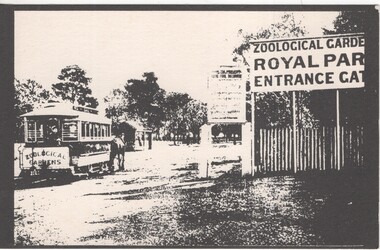
Postcard - Zoo Horse tram, Tramway Museum Society of Victoria (TMSV), c1980
... Postcard - Zoo Horse Tramway, TMSV Souvenir Card with a photo of Royal Park Melbourne zoo tram and sign with historical details on the rear, along with details of the Museum's "Zoo horse tram" No. 256. ...Postcard - Zoo Horse Tramway, TMSV Souvenir Card with a photo of Royal Park Melbourne zoo tram and sign with historical details on the rear, along with details of the Museum's "Zoo horse tram" No. 256. ...Postcard - Zoo Horse Tramway, TMSV Souvenir Card with a photo of Royal Park Melbourne zoo tram and sign with historical details on the rear, along with details of the Museum's "Zoo horse tram" No. 256. Yields information about the zoo horse tram line. Postcard with a reproduced photo of the zoo horse tram and history details on rear produced by the Tramway Museum Society of Victoria. trams, tramways, zoo horse tram, tram 256, tmsv -
 Mission to Seafarers Victoria
Album (item) - Photographic Album, digital copy, Freda Kathleen Oxley (1882-1969), Album of photographs of a voyage to Australia and visit to the Mission to Seamen, Melbourne [picture] / Freda Oxley, 1925-1928
... Freda Kathleen Oxley 1882-1969 ss persic gardens botanical garden picnics officers portsea sydney rev. w.m robertson dora simpson nee walker wedding alice sibthorpe tracy ethel augusta godfrey 1861-1935 royal botanical garden nellie melba coombe zoo seamen sailors Walter Richmond Butler (1864–1949) Juan Oyarzo John Oyarzo Fern Tree gully Kerferd family The album was donated to the National Library of Australia by Miss Elizabeth Phillips, with her address in England, with a typed note attached that reads: 'These photographs were taken by my aunt Miss Freda Oxley between 1925 and 1928. She went out to Melbourne ...This is a copy of an album of photographs held at the National Library of Australia. The album was photographed by Reverend's Weller grand daughter. Freda Oxley was a friend of the Wellers. She was born in Windsor in 1882 where Alexina Weller (nee Caley) was also born in 1885. She travelled on the SS Persic from England and arrived in 1925. She stayed at the Mission for several years, and became a host of the many picnics, making friends with the ladies from the Guild, taking photographs of people and events. Page 1 to 3: Outward Bound - SS Persic - September 26th .... November 12th 1925 Page 4: Interiors of the Mission to Seamen Melbourne Page 5: Mission to Seamen exteriors and wharf Page 6: Wellers with officers during lunch in the Manse Page 7-8: Mission's staff, garden, Wellers Page 8: Freda Oxley, the Wellers, Alexina Weller, Xmas Day 1927, Dora Walker and Rev. Weller Page 9: Gardens: the photographs show the garden's plants in its early years / Botanical Gardens / Nellie Melba's gardens in her estate Coombe: Walter Butler, the architect of the Mission had designed some extensions for Nellie Melba's estate and part of the gardens of the property, so it was likely through they acquaintance that the Mission's reverend and friends were invited. Page 10: Ships in the Yarra River Page 11: Skaregrom and Mitchell ships Page 12-15: Picnics Page 16: Christmas at the Mission, tennis court Page 17: Picnic Page 18: Dora Walker's wedding Page 19: Beach holiday Freda went back to the UK in March 1929 on the Cathay. But she came back to help the Mission as she's listed on the electoral roll in 1931 living there with the Olivers. This album provides valuable photographs of the Mission's interiors, garden, staff, guests and activities during the Wellers stay. It also provides the provenance of the Weller album held in the Mission's collection. The album was donated to the National Library of Australia by Miss Elizabeth Phillips, with her address in England, with a typed note attached that reads: 'These photographs were taken by my aunt Miss Freda Oxley between 1925 and 1928. She went out to Melbourne at that time and stayed at the Mission to Seamen with her friends the Revd Jack Weller and Mrs Weller. The Revd Weller later became Bishop of the Falkland Islands.' freda kathleen oxley 1882-1969, ss persic, gardens, botanical garden, picnics, officers, portsea, sydney, rev. w.m robertson, dora simpson nee walker, wedding, alice sibthorpe tracy, ethel augusta godfrey 1861-1935, royal botanical garden, nellie melba, coombe, zoo, seamen, sailors, walter richmond butler (1864–1949), juan oyarzo, john oyarzo, fern tree gully, kerferd family -
 Ballarat Tramway Museum
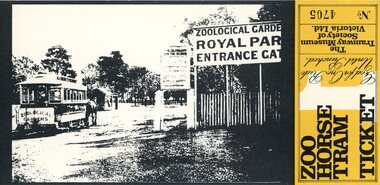
Card - Card - Souvenir Card, Souvenir Card for Zoo Horse Tram, Melbourne's Royal Park
... Melbourne. Card gives brief history of the Zoo Horse Tram that ran from Sydney Road cable tramway, through Royal Park to the Zoo gates. ...Melbourne. Card gives brief history of the Zoo Horse Tram that ran from Sydney Road cable tramway, through Royal Park to the Zoo gates. ...Ron Bridger was an avid collector of items related to transport, predominately Trams. These items include newspaper cuttings, pamphlets, reports, timetables, fares prices plus special items relating to events. Items from Melbourne and regional Victoria, interstate - Adelaide and Sydney, plus overseas, make up this collection. Small souvenir card produced by The Tramway Museum Society of Victoria Limited, Melbourne. Card gives brief history of the Zoo Horse Tram that ran from Sydney Road cable tramway, through Royal Park to the Zoo gates. It opened on the 10th March 1890. Initially there were two open "toastrack" trams. The tramway subsequently introduced two additional enclosed vehicles Pale yellow card with bright yellow sections. Black and white photograph on front. Brief history of Zoo Horse Tram on back The Tramway Museum Society of Victoria Ltd. Ticket No, 4705 tramway museum society of victoria, zoo horse tram, royal park, open toastrack tram, enclosed trams, 1890, souvenir card, sydney road cable tram, ron bridger collection, as box 48a -
 Ballarat Tramway Museum
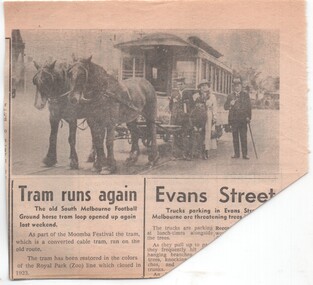
Newspaper, "Tram runs again", 1950's
... Newspaper Clipping undated from an unknown newspaper about the operation of a horse tram on the South Melbourne Football ground loop during the Moomba Festival. Noted the tram has been restored in the colours of the Royal Park (Zoo) line. ...Trams tramways Horse Trams South Melbourne Football Ground Moomba Festival Newspaper Clipping undated from an unknown newspaper about the operation of a horse tram on the South Melbourne Football ground loop during the Moomba Festival. Noted the tram has been restored in the colours of the Royal Park (Zoo) line. ...Newspaper Clipping undated from an unknown newspaper about the operation of a horse tram on the South Melbourne Football ground loop during the Moomba Festival. Noted the tram has been restored in the colours of the Royal Park (Zoo) line. Has a photo of a horse drawn tram with two horses and conductor, and family dressed in either period costume or a reproduction of a very old photograph. On the rear of the Newspaper is an item about people trying to save the horses that pulled the garbage trucks in the City of Port Melbourne. This probably dates the Clipping to the mid 1950's. Appears to be possibly a local paper. trams, tramways, horse trams, south melbourne football ground, moomba festival -
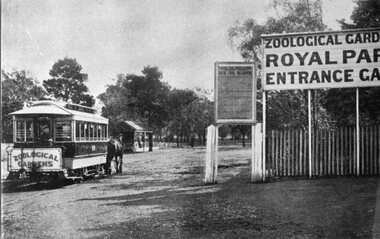 Melbourne Tram Museum
Photograph - Black & White Photograph/s, 3/06/1916 12:00:00 AM
... On rear in ink "Melbourne, Zoo Horse tram at Cnr. Royal Pde Parkville Car No. 42 or 43". ...Trams tramways Zoo Tram Royal Park Horse Trams On rear in ink "Melbourne, Zoo Horse tram at Cnr. ...Black and white copy print of Zoo Tram at the Royal Park gates, corner of Royal Parade Parkville. On rear in ink "Melbourne, Zoo Horse tram at Cnr. Royal Pde Parkville Car No. 42 or 43". Has a "M. Rowe Copyright" on rear. trams, tramways, zoo tram, royal park, horse trams -
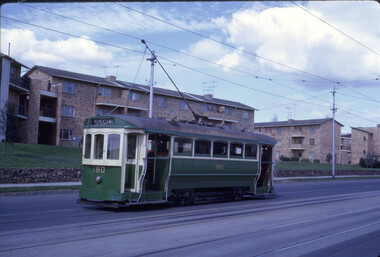 Melbourne Tram Museum
Slide - MMTB, and MTOCo - set of 12, Hugh Ballment, 1950s to 1960s
... Melbourne depot...Footscray...tram 610...TMSV...Haymarket...Royal Park...tram 104...Melville Rd...River St...tram 772...tram 731...tram 862...Port Melbourne...cable trams...Brunswick Depot...The Zoo...HBM200 - MMTB Tram 610, 22/09/1968, Haymarket, with the Hotel Gresham, Evan Evans and the CBA bank in the background HBM201 - MMTB Tram 610, 22/09/1968, Royal Park, Railway bridge HBM202 - MMTB Tram 610, 22/09/1968, Melville Rd , West Coburg terminus, with the State Savings Bank, W G P Allen Chemist and a newsagent in the background HBM203 - MMTB Trams 104, 106, 28/07/1968, William St into LaTrobe St, TMSV tour - HBM204 - MMTB Trams 772, 731, 862, 22/09/1968, Brunswick depot, HBM205 - MMTB Tram 610, 22/09/1968, River St, Maribyrnong HBM206 - MMTB Tram 610, 22/09/1968, Royal Park, Back of Zoo HBM207 - MT&O, 1950s, Port Melbourne cable carshed, Cable tramway slot visible in road. ...Tramways Epsom Rd tram 180 tram 676 Caulfield South Melbourne depot Footscray tram 610 TMSV Haymarket Royal Park tram 104 Melville Rd River St tram 772 tram 731 tram 862 Port Melbourne cable trams Brunswick Depot The Zoo Kodachrome cardboard mounts, with notes - set of 12 Slide MMTB, and MTOCo - set of 12 Hugh Ballment ...Set of 12 photos by Hugh Ballment, unless noted, of MMTB, and one of Port Melbourne cable tram depot trackwork. HBM196 - MMTB Tram 180, 10/09/1967, Epsom Rd, TMSV Tour - tours database gives the date of 10/9/1967, confirmed by TMSV tours listing. HBM197 - MMTB Tram 676, 10/09/1967, Caulfield, TMSV tour with the railway bridge in the background, along with an advert for EB Latice bricks HBM198 - MMTB Tram 180, 10/09/1967, South Melbourne depot, general view with some of the tour participants HBM199 - MMTB Tram 610, 22/09/1968, Footscray station, TMSV tour - Leeds St with the Appleton & Wright Mens wear and the railway station buildings in the background. HBM200 - MMTB Tram 610, 22/09/1968, Haymarket, with the Hotel Gresham, Evan Evans and the CBA bank in the background HBM201 - MMTB Tram 610, 22/09/1968, Royal Park, Railway bridge HBM202 - MMTB Tram 610, 22/09/1968, Melville Rd , West Coburg terminus, with the State Savings Bank, W G P Allen Chemist and a newsagent in the background HBM203 - MMTB Trams 104, 106, 28/07/1968, William St into LaTrobe St, TMSV tour - HBM204 - MMTB Trams 772, 731, 862, 22/09/1968, Brunswick depot, HBM205 - MMTB Tram 610, 22/09/1968, River St, Maribyrnong HBM206 - MMTB Tram 610, 22/09/1968, Royal Park, Back of Zoo HBM207 - MT&O, 1950s, Port Melbourne cable carshed, Cable tramway slot visible in road. Shows the car shed entrance, a hotel that was next door. In the view are adverts for Penfolds and Orlando wines. Yields information about Melbourne tram operations, with 1950s to 1960s photos of Melbourne tramways. Kodachrome cardboard mounts, with notes - set of 12 tramways, epsom rd, tram 180, tram 676, caulfield, south melbourne depot, footscray, tram 610, tmsv, haymarket, royal park, tram 104, melville rd, river st, tram 772, tram 731, tram 862, port melbourne, cable trams, brunswick depot, the zoo -
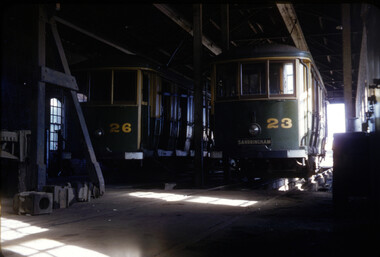 Melbourne Tram Museum
Slide - MMTB, and VR - set of 11, Hugh Ballment, 1950s to 1997
... Royal Park...tram 104...The Zoo...Hong Kong...VR...tram 26...tram 23...Montague St...South Melbourne...Melbourne football ground loop?, while on a TMSV tour HBM215 - MMTB Trams 180, 676, 10/09/1967, Dandenong Rd, while on a TMSV tour HBM216 - MMTB Trams 180, 676, 10/09/1967, Peel St , while on a TMSV tour HBM217 - MMTB Tram 304, c1968, Preston Workshops, W2 for burning HBM218 - MMTB Tram 610, 22/09/1968, Royal Park, Railway bridge Yields information about Melbourne tram operations, with 1950s to 1960s and 1997 photos of Melbourne tramways. Tramways tram 180 tram 676 tram 610 TMSV Royal Park tram 104 The Zoo ...Set of 11 photos by Hugh Ballment, unless noted, of MMTB, VR and one of a Hong Kong tram at Comeng. HBM208 - VR Trams 26, 23, 1950s, Sandringham depot, showing the interior of the shed including the overhead troughing HBM209 - KCR, cNov1997, ComEng Dandenong, Tuen Mun tram HBM210 - MMTB Tram 676, 10/09/1967, South Melbourne depot, while on a TMSV tour HBM211 - MMTB Trams 180, 676, 10/09/1967, Montague St, St Vincents gardens HBM212 - MMTB Trams 104, 106, 28/07/1968, South Melbourne depot, while on a TMSV tour HBM213 - MMTB Tram 610, 22/09/1968, Melville Rd?, while on a TMSV tour HBM214 - MMTB Trams 180, 676, 10/09/1967, South Melbourne football ground loop?, while on a TMSV tour HBM215 - MMTB Trams 180, 676, 10/09/1967, Dandenong Rd, while on a TMSV tour HBM216 - MMTB Trams 180, 676, 10/09/1967, Peel St , while on a TMSV tour HBM217 - MMTB Tram 304, c1968, Preston Workshops, W2 for burning HBM218 - MMTB Tram 610, 22/09/1968, Royal Park, Railway bridge Yields information about Melbourne tram operations, with 1950s to 1960s and 1997 photos of Melbourne tramways. Kodachrome cardboard and plastic mounts, with notes - set of 11 tramways, tram 180, tram 676, tram 610, tmsv, royal park, tram 104, the zoo, hong kong, vr, tram 26, tram 23, montague st, south melbourne depot, melville rd, dandenong rd, sandringham, sandringham depot -
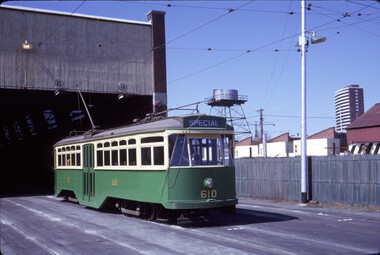 Melbourne Tram Museum
Slide - MMTB, and TMSV Tours - set of 12, Hugh Ballment, 1960s
... Royal Park...tram 104...The Zoo...South Melbourne...Yields information about Melbourne tram operations, TMSV tours of the 1960s, photos of Melbourne tramways. Tramways tram 610 TMSV Royal Park tram 104 The Zoo South Melbourne depot Melville Rd Dandenong Rd Sandringham depot tram 676 tram 106 tram 769. tram 764 tram 862 Flemington Road tram 282 tram 769 tram 772 Brunswick Depot Preston Workshops Traverser victoria parade Kodachrome cardboard mounts, with notes - set of 12 Slide MMTB, and TMSV Tours - set of 12 Hugh Ballment ...Set of 12 photos by Hugh Ballment, unless noted, of MMTB trams and TMSV Tours. HBM219 - MMTB Tram 610, 22/09/1968, South Melbourne depot, HBM220 - MMTB Tram 610, 22/09/1968, Moreland Rd, Stub terminus, has Gilmours Milk Bar in the background advertising Peters Ice Cream, Tarax, Four'n Twenty pies. HBM221 - MMTB Trams 940, 104, 106, 28/07/1968, South Melbourne depot, while on a TMSV tour HBM222 - MMTB Tram 610, 22/09/1968, Flemington Rd, while on a TMSV tour HBM223 - MMTB Tram 676, 10/09/1967, Royal Pde?, while on a TMSV tour HBM224 - MMTB Tram 610, 22/09/1968, South Melbourne depot, while on a TMSV tour HBM225 - MMTB Trams 104, 106, 28/07/1968, South Melbourne depot, while on a TMSV tour HBM226 - MMTB Trams 282, 769, 772, 764, 862, 22/09/1968, Brunswick depot, while on a TMSV tour HBM227 - MMTB Trams 104 106, 28/07/1968, Victoria Pde, while on a TMSV tour HBM228 - MMTB Tram 106, 28/07/1968, Preston Workshops, while on a TMSV tour HBM229 - MMTB Tram 104, 28/07/1968, Preston workshops, On traverser HBM230 - MMTB Trams 772, 257, 509, 28/07/1968, Preston workshops, General view in front of the paint shop with six trams. Yields information about Melbourne tram operations, TMSV tours of the 1960s, photos of Melbourne tramways. Kodachrome cardboard mounts, with notes - set of 12 tramways, tram 610, tmsv, royal park, tram 104, the zoo, south melbourne depot, melville rd, dandenong rd, sandringham depot, tram 676, tram 106, tram 769., tram 764, tram 862, flemington road, tram 282, tram 769, tram 772, brunswick depot, preston workshops, traverser, victoria parade -
 Vision Australia
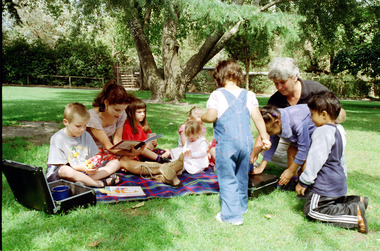
Photograph - Image, Lisa Saad, Sigrid Thornton and children at the Melbourne Zoo for the launch of the Feelix library, 12 February 2013
... Launched at the Melbourne Zoo on 11 February 2003, ambassador Sigrid Thornton read 'The Story about Ping' by Margery Flack and Kurt Wiese to a group of five children, who played with the other objects in the suitcase as well as those for 'The Tiger who Came to Tea' by Judith Kerr. These included a soft toy duck in bright plaid fabric, a shiny metal tea pot, a cassette recording of the story, tactile books for both stories, and metal cups. Royal ...The Feelix library was developed to help children who were blind or have low vision experience the connection with books via tactile objects. Each print book was hand selected, a clear Braille overlay placed on the pages, and items relating to the story were made or purchased and added to the kit. The kit (book and objects) was held inside a cardboard suitcase and sent through the mail in a bright orange, zippered plastic padded pouch with a carry strap. Launched at the Melbourne Zoo on 11 February 2003, ambassador Sigrid Thornton read 'The Story about Ping' by Margery Flack and Kurt Wiese to a group of five children, who played with the other objects in the suitcase as well as those for 'The Tiger who Came to Tea' by Judith Kerr. These included a soft toy duck in bright plaid fabric, a shiny metal tea pot, a cassette recording of the story, tactile books for both stories, and metal cups. 36 digital photographs of Sigrid Thornton and five children at launch of Feelix library royal victorian institute for the blind, feelix, sigrid thornton -
 Vision Australia
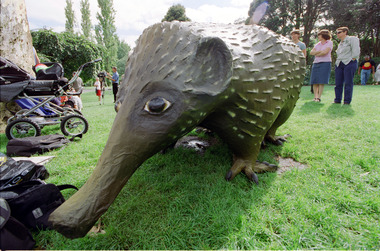
Photograph - Image, Lisa Saad, Launch of the Feelix library at Melbourne Zoo with Sigrid Thornton, 12 February 2013
... Melbourne Zoo on 11 February 2003, ambassador Sigrid Thornton read 'Owl Babies' by Martin Waddell to the crowd. These images were taken of the families who attended, including Zoos Victoria CEO Laura Mumaw, Minister for Community Services Sherryl Garbut and RVIB CEO Doug Kent. Royal ...The Feelix library was developed to help children who were blind or have low vision experience the connection with books via tactile objects. Each print book was hand selected, a clear Braille overlay placed on the pages, and items relating to the story were made or purchased and added to the kit. The kit (book and objects) was held inside a cardboard suitcase and sent through the mail in a bright orange, zippered plastic padded pouch with a carry strap. Launched at the Melbourne Zoo on 11 February 2003, ambassador Sigrid Thornton read 'Owl Babies' by Martin Waddell to the crowd. These images were taken of the families who attended, including Zoos Victoria CEO Laura Mumaw, Minister for Community Services Sherryl Garbut and RVIB CEO Doug Kent. 36 digital photographs of families and official guests at launch of Feelix library royal victorian institute for the blind, feelix, sigrid thornton, sherryl garbut, laura mumaw, doug kent, louise curtin -
 Vision Australia
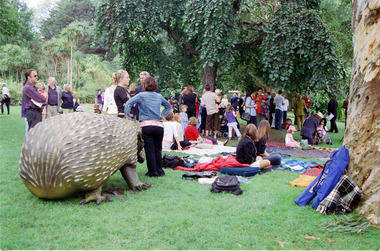
Photograph - Image, Lisa Saad, Launch of the Feelix library at Melbourne Zoo, 12 February 2013
... Launched at the Melbourne Zoo on 11 February 2003, these images were taken of the families who attended, including Zoos Victoria CEO Laura Mumaw, Minister for Community Services Sherryl Garbut and RVIB CEO Doug Kent, and the Feelix kits displayed on the day. Royal ...The Feelix library was developed to help children who were blind or have low vision experience the connection with books via tactile objects. Each print book was hand selected, a clear Braille overlay placed on the pages, and items relating to the story were made or purchased and added to the kit. The kit (book and objects) was held inside a cardboard suitcase and sent through the mail in a bright orange, zippered plastic padded pouch with a carry strap. Launched at the Melbourne Zoo on 11 February 2003, these images were taken of the families who attended, including Zoos Victoria CEO Laura Mumaw, Minister for Community Services Sherryl Garbut and RVIB CEO Doug Kent, and the Feelix kits displayed on the day. 37 digital photographs of families and official guests at launch of Feelix library royal victorian institute for the blind, feelix, sigrid thornton, sherryl garbut, laura mumaw, doug kent, louise curtin -
 Vision Australia
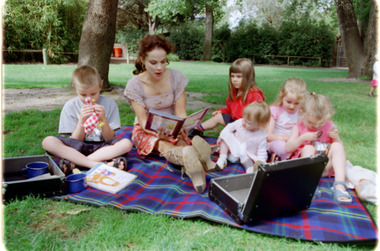
Photograph - Image, Lisa Saad, Sigrid Thornton and children at the Melbourne Zoo for the launch of the Feelix library, 12 February 2013
... Launched at the Melbourne Zoo on 11 February 2003, ambassador Sigrid Thornton read 'The Story about Ping' by Margery Flack and Kurt Wiese to a group of five children, who played with the other objects in the suitcase as well as those for 'The Tiger who Came to Tea' by Judith Kerr. These included a soft toy duck in bright plaid fabric, a shiny metal tea pot, a cassette recording of the story, tactile books for both stories, and metal cups. Royal ...The Feelix library was developed to help children who were blind or have low vision experience the connection with books via tactile objects. Each print book was hand selected, a clear Braille overlay placed on the pages, and items relating to the story were made or purchased and added to the kit. The kit (book and objects) was held inside a cardboard suitcase and sent through the mail in a bright orange, zippered plastic padded pouch with a carry strap. Launched at the Melbourne Zoo on 11 February 2003, ambassador Sigrid Thornton read 'The Story about Ping' by Margery Flack and Kurt Wiese to a group of five children, who played with the other objects in the suitcase as well as those for 'The Tiger who Came to Tea' by Judith Kerr. These included a soft toy duck in bright plaid fabric, a shiny metal tea pot, a cassette recording of the story, tactile books for both stories, and metal cups. 37 digital photographs of Sigrid Thornton and five children at launch of Feelix library royal victorian institute for the blind, feelix, sigrid thornton -
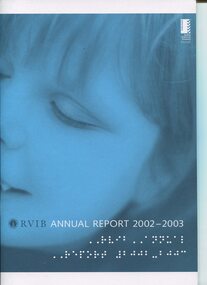 Vision Australia
Administrative record - Text, RVIB Annual Report 2002-2003, 2003
... Articles in annual report include: continuing involvement with Project Nexus (to merge with RBS and VAF), NILS becoming a separate entity, launch of History Project, launch of Feelix at Melbourne Zoo with patron Sigrid Thornton, funding of "Little Steps to Learning" by Paul Newman Foundation, RVIB For Sight Week, RVIB Gold Ball, Dare to Date ball and hosting Southern Cross games. Royal ...An overview of activities and achievements during the past financial year. Articles in annual report include: continuing involvement with Project Nexus (to merge with RBS and VAF), NILS becoming a separate entity, launch of History Project, launch of Feelix at Melbourne Zoo with patron Sigrid Thornton, funding of "Little Steps to Learning" by Paul Newman Foundation, RVIB For Sight Week, RVIB Gold Ball, Dare to Date ball and hosting Southern Cross games. 1 printed volume of information about the RVIB during the financial year royal victorian institute for the blind, annual report, jade sanderson, trevor anderson, doug kent, sigrid thornton, rhonda burchmore, ray martin, hi-5, vanessa amorosi, chad kelly, kushbu lal, wanda egerton, russell short -
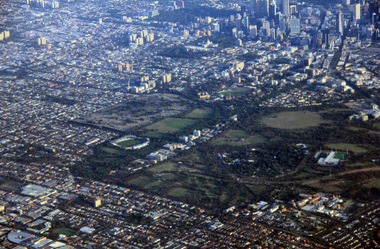 Ballarat Heritage Services
Digital Photograph, L.J. Gervasoni, Royal Park CBD and zoo from the air, 2016
... melbourne...yarra river...cbd...royal park...zoo...aerial melbourne yarra river cbd royal park zoo Digital Image showing an aerial view of the Melbourne Central Business District and Royal Park. ...Digital Image showing an aerial view of the Melbourne Central Business District and Royal Park. aerial, melbourne, yarra river, cbd, royal park, zoo -
University of Melbourne, Burnley Campus Archives
Plan - Photocopy, Royal Park Landscape Development Plan, 1985
... Royal Park landscape City of Melbourne Zoological Gardens Laceworks Landscape Collaborative Maunsell and Partners Photocopies of plans prepared for the City of Melbourne, November 1985 by Laceworks Landscape Collaborative Maunsell and Partners. (1) P & G DRG No 3/11 1 Longterm Parking Zoo. (2) P & G DRG No 3/12 0 Existing Conditions Royal Park Landscape Development Plan Plan Photocopy ...Photocopies of plans prepared for the City of Melbourne, November 1985 by Laceworks Landscape Collaborative Maunsell and Partners. (1) P & G DRG No 3/11 1 Longterm Parking Zoo. (2) P & G DRG No 3/12 0 Existing Conditions royal park, landscape, city of melbourne, zoological gardens, laceworks landscape collaborative maunsell and partners -
University of Melbourne, Burnley Campus Archives
Plan, Caroline Le Souef, Plan of the Gardens of the Zoological and Acclimatisation Society of Victoria, Royal Park, melbourne, 1877
... Also see B18.0029 Similar plan. caroline le souef alfred lynch zoological and acclimatisation society of victoria royal park g. purchas Copy of plan from the 'Proceedings of the Zoological and Acclimatisation Society of Victoria, Vol 4, 1877. Drawn by Caroline Le Souef and reproduced in the early Melbourne Zoo guides. ...Appears to be based on the design by Alfred Lynch in 1861 see B17.0076. From ' Little Worlds: Australian Zoological Gardens Part III UWA. Also see B18.0029 Similar plan. Copy of plan from the 'Proceedings of the Zoological and Acclimatisation Society of Victoria, Vol 4, 1877. Drawn by Caroline Le Souef and reproduced in the early Melbourne Zoo guides. caroline le souef, alfred lynch, zoological and acclimatisation society of victoria, royal park, g. purchas -
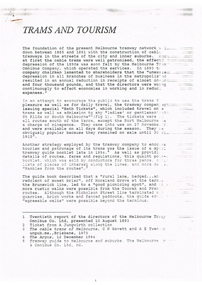 Melbourne Tram Museum
Document - Research Notes, Robert Green, "Trams and Tourism", c1994
... Eight page A4 document, photocopied, stapled in top left hand corner, titled "Trams and Tourism", looking at the use of trams for tourist purposes in Melbourne, bath tickets, walks, beaches, connecting services with paddle steamers, royal park zoo, Beaumaris tramway, circular tickets, Doncaster, round trip tickets, St Kilda, Wattle park chalet, tourist tickets, tourist tours, tourist trams, Melbourne Pageant-Salute to Australia, V214, L and Y class trams, Melbourne Tourist Tram in June 1992 that did not eventuate. ...Trams tramways Tourist Trams Tourist Ticket MMTB The Met Zoo Tram Beaumaris Wattle Park Doncaster Eight page A4 document, photocopied, stapled in top left hand corner, titled "Trams and Tourism", looking at the use of trams for tourist purposes in Melbourne, bath tickets, walks, beaches, connecting services with paddle steamers, royal park zoo, Beaumaris tramway, circular tickets, Doncaster, round trip tickets, St Kilda, Wattle park chalet, tourist tickets, tourist tours, tourist trams, Melbourne Pageant-Salute to Australia, V214, L and Y class trams, Melbourne Tourist Tram in June 1992 that did not eventuate. ...Eight page A4 document, photocopied, stapled in top left hand corner, titled "Trams and Tourism", looking at the use of trams for tourist purposes in Melbourne, bath tickets, walks, beaches, connecting services with paddle steamers, royal park zoo, Beaumaris tramway, circular tickets, Doncaster, round trip tickets, St Kilda, Wattle park chalet, tourist tickets, tourist tours, tourist trams, Melbourne Pageant-Salute to Australia, V214, L and Y class trams, Melbourne Tourist Tram in June 1992 that did not eventuate. Has references and illustrating of tickets. Written by Robert Green 1994. See Reg Item 5675 for a sample cable tram round trip ticket. trams, tramways, tourist trams, tourist ticket, mmtb, the met, zoo tram, beaumaris, wattle park, doncaster -
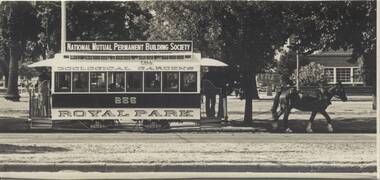 Melbourne Tram Museum
Photograph - Set of 3 Black & White Photograph/s, John Dare, 1975
... Set of three photograph by John Dare, 9/3/1975 of the operation of the TMSV horse Royal Park Zoo tram, No. 256, in the South Melbourne Football ground loop. .1 - Side of view of the tram with horse. .2 - With "Seven Colour Television Tram" passing on the inbound track. .3 - general view of the tram. ...Melbourne Football Ground. 9/3/75". Along with the ARHS Photo collection and John Dare name and address stamp. On .2 - as for .1, but with the additional words "Here it is seen paralleling the seven colour television tram" Set of three photograph by John Dare, 9/3/1975 of the operation of the TMSV horse Royal Park Zoo tram, No. 256, in the South Melbourne Football ground loop. .1 - Side of view of the tram with horse. .2 - With "Seven Colour Television Tram" passing on the inbound track. .3 - general view of the tram. ...Set of three photograph by John Dare, 9/3/1975 of the operation of the TMSV horse Royal Park Zoo tram, No. 256, in the South Melbourne Football ground loop. .1 - Side of view of the tram with horse. .2 - With "Seven Colour Television Tram" passing on the inbound track. .3 - general view of the tram. The adtrams article (http://www.vicsig.net/index.php?page=trams&article=adtrams) accessed 22/8/2013 gives the advertising tram as SW6 900. image i4 - scan of three back of the photographs. On .1 and .3 - On rear ink "Recently restored horse tram was one of the highlights of the Labour Day weekend when it operated on a loop of track opposite the South Melbourne Football Ground. 9/3/75". Along with the ARHS Photo collection and John Dare name and address stamp. On .2 - as for .1, but with the additional words "Here it is seen paralleling the seven colour television tram" trams, tramways, horse trams, tmsv, south melbourne loop, advertising trams, tram 256, tram 900 -
 Melbourne Tram Museum
Photograph - Set of 3 Black & White Photograph/s, c1920
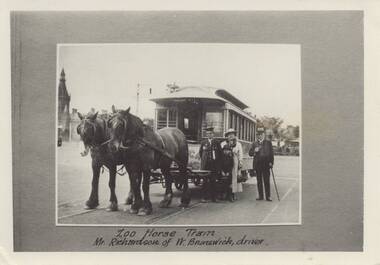
... Melbourne Zoo Horse tram. .1 - view of tram with horses, a conductor, and a well dressed family in front of the tram. Photo taken at the Sydney road terminus. Has the note under the photo "Zoo Horse Tram Mr Richardson of W. Brunswick, driver." .2 - Side of view of the horse tram - No. 42 with "Royal...Royal Park Zoo Tram tram 42 On the rear of .3 -"M. G. R? collection" On rear of 2nd copy of .2 is the MMTB Stamp. Set of three black and white photographs of the Melbourne Zoo Horse tram. .1 - view of tram with horses, a conductor, and a well dressed family in front of the tram. ...Set of three black and white photographs of the Melbourne Zoo Horse tram. .1 - view of tram with horses, a conductor, and a well dressed family in front of the tram. Photo taken at the Sydney road terminus. Has the note under the photo "Zoo Horse Tram Mr Richardson of W. Brunswick, driver." .2 - Side of view of the horse tram - No. 42 with "Royal Park" on the side. .3 - View of the zoo terminus, from the rear of the tram with "Zoological Gardens" on the rear dash panel of the tram. The conductor appears to be applying the hand brake. Note the signage on the right side of the photo. Photos c1900 to 1910. 2nd copy of .2 and .3 added from the Keith Kings collection - 14-8-2021 - see also Reg Item 5993 for another copy. On the rear of .3 -"M. G. R? collection" On rear of 2nd copy of .2 is the MMTB Stamp. trams, tramways, horse trams, royal park, zoo tram, tram 42 -
 Melbourne Tram Museum
Photograph - Black & White Photograph/s and Illustration, c1925
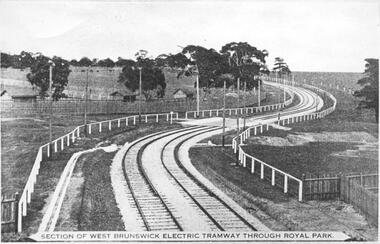
... Black and white photograph of a illustration of the Royal Park Tramway reproduced from a report The photo is titled: "Section of West Brunswick Electric Tramway Through Royal Park" The newly constructed permanent way viewed from just south of the Melbourne to Fawkner railway embankment (c1925). Note the clean ballast under the track, the guard rail provided on the curves using non grooved rail, the new platform stop and the timber picket fence around the Zoo. ...Trams tramways Royal Park West Brunswick Electric Tramway Track Laying Rails Reserved Track Black and white photograph of a illustration of the Royal Park Tramway reproduced from a report The photo is titled: "Section of West Brunswick Electric Tramway Through Royal Park" The newly constructed permanent way viewed from just south of the Melbourne to Fawkner railway embankment (c1925). Note the clean ballast under the track, the guard rail provided on the curves using non grooved rail, the new platform stop and the timber picket fence around the Zoo. ...Black and white photograph of a illustration of the Royal Park Tramway reproduced from a report The photo is titled: "Section of West Brunswick Electric Tramway Through Royal Park" The newly constructed permanent way viewed from just south of the Melbourne to Fawkner railway embankment (c1925). Note the clean ballast under the track, the guard rail provided on the curves using non grooved rail, the new platform stop and the timber picket fence around the Zoo. Refer to article "A Winding Road" on the Melbourne Tram Museum website for more details. http://www.hawthorntramdepot.org.au/papers/westcoburg-2.htm trams, tramways, royal park, west brunswick electric tramway, track laying, rails, reserved track -
 Melbourne Tram Museum
Slide, Keith Caldwell, 24/07/1982 12:00:00 AM
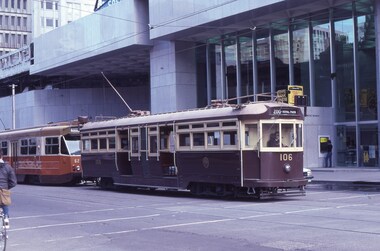
... Trams tramways Z class W2 class Elizabeth St Zoo Tram Bourke St tram 106 tram 62 In ink "Melbourne Tram 106 (24-7-82)" and "Keith" in the bottom left hand corner. Kodachrome Colour slide, cardboard, by Keith Caldwell dated 24-7-1982 of L class 106 (Zoo Royal Park) followed by a Z62, Airport West at the corner of Elizabeth and Bourke Streets with the State Savings Bank building still under construction in the background. ...Kodachrome Colour slide, cardboard, by Keith Caldwell dated 24-7-1982 of L class 106 (Zoo Royal Park) followed by a Z62, Airport West at the corner of Elizabeth and Bourke Streets with the State Savings Bank building still under construction in the background. In ink "Melbourne Tram 106 (24-7-82)" and "Keith" in the bottom left hand corner. trams, tramways, z class, w2 class, elizabeth st, zoo tram, bourke st, tram 106, tram 62 -
 Melbourne Tram Museum
Legal record, Melbourne & Metropolitan Tramways Board (MMTB), "Supply and Erection of gates and paling fence and repairs to existing fences at the Royal Park car shed", Mar. 2020
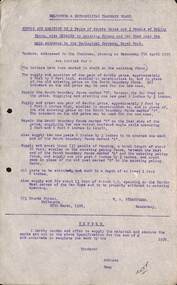
... Trams tramways MMTB Cable Trams Royal Park Tenders Depots Zoo Tram .1 - Legal document - tender document - typed carbon copy titled "Supply and Erection of gates and paling fence and repairs to existing fences at the Royal Park car shed" with specification for the work, dated 25/3/1920 asking for prices - single sheet to be returned to the Secretary. .2 - same document but the lower portion has a price and name of the tenderer, John Broderick of Napier St Footscray, for 21 pounds. Dated 7/4/1920. "Supply and Erection of gates and paling fence and repairs to existing fences at the Royal Park car shed" Legal record Melbourne ....1 - Legal document - tender document - typed carbon copy titled "Supply and Erection of gates and paling fence and repairs to existing fences at the Royal Park car shed" with specification for the work, dated 25/3/1920 asking for prices - single sheet to be returned to the Secretary. .2 - same document but the lower portion has a price and name of the tenderer, John Broderick of Napier St Footscray, for 21 pounds. Dated 7/4/1920. trams, tramways, mmtb, cable trams, royal park, tenders, depots, zoo tram -
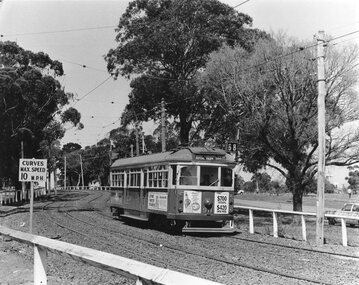 Melbourne Tram Museum
Photograph - Black & White Photograph/s, David Keenan, Oct. 1973
... Royal Park (Zoo), Route 68. The "Curves Max Speed 10 MPH" board alongside the wooden fence. Tram has advert for BOAC return airfares, Tudor Royal Whiskey. Photo appears on the rear cover of David Keenan's book "Melbourne...Royal Park (Zoo), Route 68. The "Curves Max Speed 10 MPH" board alongside the wooden fence. Tram has advert for BOAC return airfares, Tudor Royal Whiskey. Photo appears on the rear cover of David Keenan's book "Melbourne ...Photographs, Black and White, of SW6 911, in Royal Park with the golf course in the background. Tram has the destination of "West Coburg via Royal Park (Zoo), Route 68. The "Curves Max Speed 10 MPH" board alongside the wooden fence. Tram has advert for BOAC return airfares, Tudor Royal Whiskey. Photo appears on the rear cover of David Keenan's book "Melbourne Tramways in 1974". The author advises that all photos by the author in Oct. 1973, See htd4644doc.pdf for a letter from the Author to Keith Kings advised of the photograph. trams, tramways, royal park, west coburg, route 68, sw6 class, tram 911 -
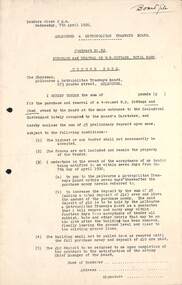 Melbourne Tram Museum
Document - Tender Document, Melbourne & Metropolitan Tramways Board (MMTB), Tramway Board (MMTB), "Contract No. 92 Purchase and removal of WB Cottage Royal Park - Tender form", Nov. 1917
... Royal Park... Horse Trams... Zoo Tram... North Melbourne...Trams tramways Tenders Contracts MMTB Royal Park Horse Trams Zoo Tram North Melbourne Abbotsford St Handwritten notation in top right hand corner - "Board File" Tender document - single foolscap sheet - "Contract No. 92 Purchase and removal of WB Cottage Royal Park - Tender form". closing 7/4/1920. ...Tender document - single foolscap sheet - "Contract No. 92 Purchase and removal of WB Cottage Royal Park - Tender form". closing 7/4/1920. Notes cottage as four room, recently vacated by the Caretaker. No drawings provided. 2 copies held. .1 - single foolscap sheet for the purchase and removal of No. 41 Abbotsford St North Melbourne. Dated 1917. Handwritten notation in top right hand corner - "Board File" trams, tramways, tenders, contracts, mmtb, royal park, horse trams, zoo tram, north melbourne, abbotsford st -
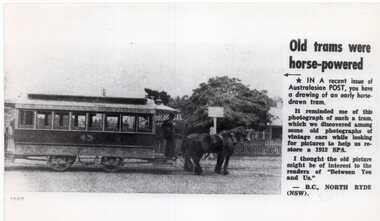 Melbourne Tram Museum
Photograph - Black & White Photograph/s, mid 1970's
... Black and white photograph the Australasian Post magazine item titled "Old trams were horse-powered" of Melbourne Zoo horse tram No. 43 in The Avenue at Royal Parade, Parkville. ...In ink on rear "Melbourne Zoo horse tram No. 43 in The Avenue at Royal Parade, Parkville, plus text. ...Trams tramways Horse Trams Zoo Tram Royal Park tram 43 In ink on rear "Melbourne Zoo horse tram No. 43 in The Avenue at Royal Parade, Parkville, plus text. ...Black and white photograph the Australasian Post magazine item titled "Old trams were horse-powered" of Melbourne Zoo horse tram No. 43 in The Avenue at Royal Parade, Parkville. See item 8356 for a similar photo with the same tramcar. In ink on rear "Melbourne Zoo horse tram No. 43 in The Avenue at Royal Parade, Parkville, plus text. From a periodical in the R. W Green collection". trams, tramways, horse trams, zoo tram, royal park, tram 43 -
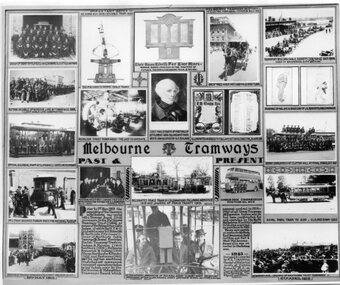 Melbourne Tram Museum
Photograph - Black and White, Melbourne & Metropolitan Tramways Board (MMTB), "Melbourne Tramways Past & Present", 1943
... "Melbourne Tramways Past & Present" - set of photos, drawings and notes of (Left to Right, Top to Bottom), Cable tram Richmond Depot employees 1909, Grip mechanism, Photo of the WW1 Honour Board, a horse cab carrying revenue to a bank, Transporting a cable by horse, installing cable to the Windsor line by T Warr & Co 1891, Nicholson St Power House interior, Chief Magistrate of Port Phillip settlement 1836 to 1939 who lived in a house now occupied by Head Office Building, illuminated address to F B Clapp, retirement 1916, drawings by Hal Gye & David Low of J G Roberts Cable Manager, Official & Clerical Staff at Clifton Hill - last line to operate, Depot Employees at Clifton Hill at Final Stage Oct 1940, No. 1 tram becomes Museum piece for National Museum, Australias First Conductresses Aug 1941, Instructor G S Boardman, Decorated peace tram in celebration following armistice 1919, Double deck bus with Conductresses, Royal Park Zoo tram, Openings of PMTT 1910, text box history of the bodies that formed the MMTB, Peter Henry ABC Broadcaster 3-7-1940 on a cable tram, and opening of HTT in 1916. Original poster prepared by the MMTB in 1943 See Reg Item 2854 for a framed photograph and 6367 for another poster of the time - Melbourne tramways past and present poster. ..."Melbourne Tramways Past & Present" - set of photos, drawings and notes of (Left to Right, Top to Bottom), Cable tram Richmond Depot employees 1909, Grip mechanism, Photo of the WW1 Honour Board, a horse cab carrying revenue to a bank, Transporting a cable by horse, installing cable to the Windsor line by T Warr & Co 1891, Nicholson St Power House interior, Chief Magistrate of Port Phillip settlement 1836 to 1939 who lived in a house now occupied by Head Office Building, illuminated address to F B Clapp, retirement 1916, drawings by Hal Gye & David Low of J G Roberts Cable Manager, Official & Clerical Staff at Clifton Hill - last line to operate, Depot Employees at Clifton Hill at Final Stage Oct 1940, No. 1 tram becomes Museum piece for National Museum, Australias First Conductresses Aug 1941, Instructor G S Boardman, Decorated peace tram in celebration following armistice 1919, Double deck bus with Conductresses, Royal Park Zoo tram, Openings of PMTT 1910, text box history of the bodies that formed the MMTB, Peter Henry ABC Broadcaster 3-7-1940 on a cable tram, and opening of HTT in 1916. Original poster prepared by the MMTB in 1943 See Reg Item 2854 for a framed photograph and 6367 for another poster of the time - Melbourne tramways past and present poster. ..."Melbourne Tramways Past & Present" - set of photos, drawings and notes of (Left to Right, Top to Bottom), Cable tram Richmond Depot employees 1909, Grip mechanism, Photo of the WW1 Honour Board, a horse cab carrying revenue to a bank, Transporting a cable by horse, installing cable to the Windsor line by T Warr & Co 1891, Nicholson St Power House interior, Chief Magistrate of Port Phillip settlement 1836 to 1939 who lived in a house now occupied by Head Office Building, illuminated address to F B Clapp, retirement 1916, drawings by Hal Gye & David Low of J G Roberts Cable Manager, Official & Clerical Staff at Clifton Hill - last line to operate, Depot Employees at Clifton Hill at Final Stage Oct 1940, No. 1 tram becomes Museum piece for National Museum, Australias First Conductresses Aug 1941, Instructor G S Boardman, Decorated peace tram in celebration following armistice 1919, Double deck bus with Conductresses, Royal Park Zoo tram, Openings of PMTT 1910, text box history of the bodies that formed the MMTB, Peter Henry ABC Broadcaster 3-7-1940 on a cable tram, and opening of HTT in 1916. Original poster prepared by the MMTB in 1943 See Reg Item 2854 for a framed photograph and 6367 for another poster of the time - Melbourne tramways past and present poster. See Reg Items 6358, 6122, 6121, 6354 and 6774 for individual photographs. Yields information about the Melbourne tram system and its history to 1943 Photograph - of a MMTB Poster titled "Melbourne Tramways Past & Present" tramways, trams, cable trams, richmond, honour board, cash transport, cable ropes, clifton hill, nicholson st, winding house, f b clapp, conductresses, peace tram, double deck buses, zoo horse tram, pmtt, htt, abc -
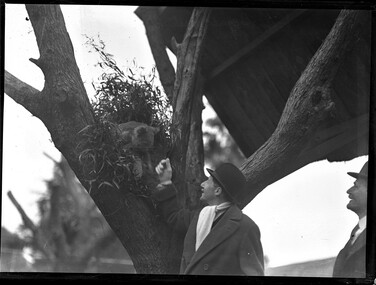 City of Melbourne Libraries
Photograph, Bull, Hugh Jones, 1897-1993, Vice-regal visit to zoo: Governor (Lord Huntingfield) and koala
... Unfortunately the Yarra River frontage was damp, swampy and subject to flooding, so the animals were briefly housed at the Botanical Gardens until in 1862, the City of Melbourne donated 55 acres (22 hectares) of land at Royal Park for the fledgling zoo. ...Unfortunately the Yarra River frontage was damp, swampy and subject to flooding, so the animals were briefly housed at the Botanical Gardens until in 1862, the City of Melbourne donated 55 acres (22 hectares) of land at Royal Park for the fledgling zoo. ...Published: (1934, June 26). The Age (Melbourne, Vic. : 1854 - 1954), p. 11. Published title: VICE-ROYALTY GREETS THE KING OF THE BEASTS AT THE ZOO. Published caption: Lord Huntingfield experienced a pleasant “induction ceremony” as Patron of the Royal Zoological and Acclimatisation Society yesterday, when he made a tour of the Zoological Gardens. The picture shows the Governor, accompanied by Lady Huntingfield, inspecting the King of Beasts, who is submitting to a little playful treatment from the Director of the Gardens, Mr. Wilkie, while the Director whispers in his ear that a distinguished visitor has come to see him. (Inset), is a picture of Lord Huntingfield greeting one of the Koalas. Trove article identifier: http://nla.gov.au/nla.news-article204818472 Description: A man wearing a hat, scarf and overcoat reaches up to pat a koala in a tree watched by a man in a hat and suit. Research by project volunteer, Fiona Collyer: In 1932, the Zoo built an Australian native animal enclosure which visitors could enter and closely view koalas, wallabies, kookaburras and magpies all placed together. The branches of the trees in the enclosure were cut so that visitors could easily see and feed the koalas sitting in them. The cost to feed each koala fresh gum leaves was fifteen shillings per week. By 1924, Queensland was the last stronghold in Australia for the koala. They were functionally extinct in South Australia, only a few hundred in NSW, and an estimated population of 1000 animals remained in Victoria. There had been a six-month open season on koalas in Queensland in 1919 where over a million had been slaughtered, however with its vast, dense forests it was impossible to accurately know their numbers. Koala fur is tough, warm and waterproof and was in high demand from consumers in Canada, Britain and the US to make hats and gloves and for lining greatcoats. In 1927, with Queensland suffering a crippling drought and high unemployment, the cash-strapped McCormack Labor Government declared an “Open Season” on koalas and “opossums” for their skins, for the month of August. (Possums were often called “opossums” at this time but they are actually possums). There were widespread protests from many groups including the Nature Lovers League, Wild Life Preservation Society of Australia, Queensland Museum, C.W.A. Royal Australian Ornithologist Union, Boy Scouts, religious and women’s groups. There were letters to newspapers from ordinary people, editorials and pleas to women to refuse to wear or purchase koala fur. People questioned the masculinity of koala hunters as it was felt that no proper bushman or sportsman would kill such a defenceless creature. The Brisbane Courier newspaper led the campaign, devoting six columns a day to “Spare the Bear”. Author Vance Palmer sent an impassioned letter to the editor of the The Brisbane Courier, 19 July 1927: “Sir- It is be hoped that the disgust which all humane people have felt at the declaration of an open season for native bears in August will not be allowed to fade away until some protest... so overwhelming and effective that the question will never be raised again. For the shooting of our harmless and loveable native bear is nothing less than barbarous. His case is entirely different from that of other furred animals. No one has ever accused him of spoiling the farmers’ wheat, eating the squatters’ grass or even spreading the prickly pear. There is not a social vice that can be put down to his account. In addition, he is comparatively defenceless. He affords no sport to the gunman, and can be trusted to present a sitting target to the creature mean enough to aim at him. For this reason he has been almost blotted out already from some areas, in days when our fauna and flora were held in such little regard that the settlers’ first instinct was to shoot every strange animal and to sink his axe into every unfamiliar tree.” The Anglican Archbishop of Brisbane, Gerald Sharp, had his letter published in The Brisbane Courier on 16 July 1927: “Sir... The extermination of fauna so distinctive of our country, especially of such harmless and pretty creatures as our native bears, seems to me a shameful thing, and this is likely to mean their extermination.” But it was all to no avail. Known as “Black August”, the government was unmoved by the public’s outrage. 10,000 licences were issued to hunters and “the slaughter of the innocents” went ahead. The newspapers were full of stories of dreadful cruelty against the helpless, benign creatures by the heartless hunters who not only used guns and spotlights but wire snares and cyanide baits so that pelts wouldn’t be damaged. Infant koalas were left orphaned and unlikely to survive without their mothers. Top quality pelts were sold at an average price of 56 shillings and 9 pence per dozen, poor quality skins for as little as 2 1/2 pence each. In December 1927, the Minister for Agriculture and Stock, Mr W. Forgan Smith told the Parliament that during the August open season 597,985 koala pelts worth £139,595 had netted the state’s coffers £6000. 952,194 “opossum” pelts were sold and £9000 made for the State. The backlash that followed helped topple the Queensland Labor Government in 1929. The Wild Life Preservation Society of Australia lobbied the Prime Minister Mr Stanley Bruce to refuse to issue exportation permits for koala pelts and from 10 November 1927 the Commonwealth Government suspended the issuing of permits. In 1930, the Society made a direct appeal to USA President Herbert Hoover and he signed an order prohibiting the importation of koala and wombat fur to USA, eliminating a major market. Koala pelts were often deliberately mislabelled “wombat” to get around restrictions. The ban most likely saved the koala from probable extinction. Three years later the Australian Federal Government banned the export of koala products. This movement against koala killing was really the first conservation campaign in Australia. It raised awareness of the vulnerability of a beloved animal and eventually brought about national parks and national laws for their protection. By 1936, community opposition to possum open seasons was beginning. The koala was made a Protected Species in all states in 1937, meaning no one is allowed to harm a koala, however the laws protecting the gum trees they rely on for food and shelter are weak. The Australian Government estimates the wild koala population in Australia is between 225,000 and 500,000 in 2024. The Australian Koala Foundation estimates the national population at less than 60,000 in 2021 with a 30% decline in three years. Habitat loss from land clearing, dog attacks, road deaths, chlamydia, bushfires and drought exacerbated by climate change, continues to cause their decline. Over eight million koalas were killed for their pelts between 1888 and 1927. Any one of the annual harvests killed more koalas than are alive now. At this time, children were also being taught to appreciate Australian native animals. In 1933, “Blinky Bill: The Quaint Little Australian” book for children was published by Angus and Robertson. It was written and illustrated by New Zealand-born author Dorothy Wall and “Dedicated to my son Peter and all other Peters and Johns and Bobs and Toms and Marys and Bettys and Joans and Pats and all kind children.” The book tells the story of Blinky Bill - a mischievous, patched knickerbocker-wearing koala and his mother and father. The story has messages of conservation and instances of human unkindness and cruelty. Mr. and Mrs. Koala and young Blinky lead a mostly idyllic family life amongst a variety of other animals in the forest. However it all changes in chapter two, when Blinky Bill’s father is distressingly shot by a hunter. There is a harrowing description of Mr. Koala’s shooting and eventual death. “The Koala family lived so happily; never thinking of harm, or that anything could happen to disturb their little home, as all they asked for were plenty of fresh gum-leaves and the warm sun. They had no idea such things as guns were in the world or that a human being had a heart so cruel that he would take a pleasure in seeing a poor little body riddled with bullets hanging helplessly from the tree-top... That same being might just as well take his gun and shoot baby kookaburras, so helpless were they all and so trusting.” “Poor Mr. Koala one day was curled up asleep in his favourite corner, when the terrible thing happened. Bang! He opened his eyes in wonder. What was that? Did the limb of the tree snap where that young cub of his was skylarking? ... bang! again. This time he felt a stinging pain in his leg... Peering over the bough of the tree he saw a man on the ground with something long and black in his arms... Another bang and his ear began to hurt. Bang! again and now his little body was stinging all over. He grunted loudly and slowly climbed up the tree, calling Mrs. Koala and Blinky as he went. He managed to reach the topmost branch... Tears were pouring down his poor little face. He brushed them away with his front paws and cried just like a baby. Fortunately Mrs. Koala and Blinky Bill were hiding in the leaves quite motionless, and the shadows of the tree made them appear as part of it. The man with the gun stood and waited a long time, then walked away, whistling as he went - the only sound to be heard in the bush except the cries of the little bear far up in the tree.” Blinky and his mother quietly and fearfully wait for Mr. Koala to wake. In the morning, grunting and crying, they feel his lifeless body with their paws. Eventually Mrs. Koala realises that her husband is dead and that they need to move to a safe place. After travelling deeper into the forest, Mrs. Koala and Blinky meet koalas Mrs. Grunty and her son Snubby and she describes how she was captured as a baby by koala fur trappers to be a pet for a little girl. The trapper forgot to bring gum leaves for the koala so they try to feed her cake, milk and bananas, making her sick. The little girl’s father relays something he read in the paper: “During the year 1920 to 1921, two hundred and five thousand six hundred and seventy-nine koalas were killed and their skins sold to the fur market, under the name of wombat.” They place the koala in a box with a teddy bear for company. The baby koala’s health deteriorates and the alarmed trapper returns her to the bush. Mrs. Grunty tells Mrs. Koala that she and Blinky are the only bears that she has seen for ten years: “I remember well the little girl’s father telling her... that not so many years ago the bush was alive with us bears, from Queensland to the south of Victoria. Now, we are so rare that we have become a curiosity, something to put in zoos, for children to see; and actually in museums. I believe our grandparents sit there in glass cases, stuffed with something inside to make them appear alive, and, oh dear, glass eyes. In New South Wales, I think we could wander for miles from one corner to another and never meet a bear. I don’t know why we were all killed. As you know, we don’t eat the farmers’ crop or ruin their orchards. All we asked for were our own gum-trees.” At the end of the book, Dorothy tells her readers - “The kindest action of all would be to leave the koala baby in his own bushland, among his own playmates, with the sun, the sky, the birds, and the gum-trees, where he will grow to manhood and live for many years - happy as he should be.” In 1934, a “Wild Zoo”, the Sir Colin Mackenzie Sanctuary, opened on 32 hectares of land, formerly part of Coranderrk Aboriginal Reserve in the Yarra Valley, exclusively displaying Australian native animals, birds and reptiles. It was later renamed Healesville Sanctuary and is now managed by Melbourne Zoo and home to over 200 species of Australian native fauna. The Sanctuary is committed to rescuing, breeding, researching and raising awareness of the vulnerability of Australian animals. Andrew Arthur Wellesley Wilkie, 1853-1948, was Director of the Melbourne Zoo from 1923 to 1936 and was associated with the zoo for 70 years. He first worked as a horticultural assistant to Government botanist Baron Ferdinand von Mueller at the Botanical Gardens at the age of 13, along with his older brother David. One of Andrew’s jobs was to capture moths for the National Herbarium. In 1857, a group of prominent Melburnians assembled at St. Patrick’s Hall to form the Zoological Society of Victoria, with the aim of introducing animals and plants from overseas. It was conceived, “For the purposes of science and for that of affording the public the advantages of studying the habits of the animal creation in properly arranged zoological gardens.” The Victorian Government granted 32 acres (13 hectares) of land to the Zoological Society at the southern end of Richmond Paddock on the opposite bank to the Botanical Gardens. (This is where AAMI Stadium and Collingwood Football Club now stand.) In 1861, the Zoological Society of Victoria was renamed The Acclimatisation Society of Victoria. Unfortunately the Yarra River frontage was damp, swampy and subject to flooding, so the animals were briefly housed at the Botanical Gardens until in 1862, the City of Melbourne donated 55 acres (22 hectares) of land at Royal Park for the fledgling zoo. Baron von Mueller secured employment at Royal Park for Andrew and David and they helped to lay out the gardens, plant trees and take care of a collection of deer, pheasants, hares and partridges. Initially the zoo was used for the acclimatisation of animals recovering from the long voyage to Australia and for breeding them for sport. In 1872, the zoo bought two lions, a leopard and a cheetah that had been seized from circus showmen Keith and Phillips when they were unable to pay the bill of butcher Mr T K Bennet of Bourke Street. The first zoo director, Mr. Albert Le Souef, negotiated with captains of ships to buy animals at overseas ports they visited and soon a multitude of exotic species arrived, including a ten-year-old Indian elephant in 1878. In 1923, after being head keeper for some years, Andrew was appointed director of the zoo. By 1933, the zoo had 110 different species of animals, 200 species of birds and 72 species of reptiles under Andrew’s care. He had personally planted all but six trees and laid out the garden beds. As director he lobbied authorities for funds to build more humane enclosures for the animals. In June 1928, Table Talk magazine wrote of Andrew Wilkie: “Up at the Zoo there is a humble gentleman who is a lion among the lions, who knows the proper specific to employ when the boa constrictor has chilblains, and who is a friend and confidant of Queenie the elephant. His fount of zoological lore has never been plumbed. It is bottomless, like his good fellowship and geniality. Every day he may be seen somewhere in the grounds of that growing sanctuary for the strange and arresting fauna and creeping things of the world, and I assure you as one who is privy to his passion that that area and its inhabitants are rarely out of his thoughts.” Andrew retired from the zoo in 1936 at the age of 83 and in 1948 died at his home in Brunswick aged 94. He and his wife Josephine had six children. The Victorian Acclimatisation Society was founded in 1861 by Edward Wilson, 1813-1878, then owner and editor of The Argus newspaper. He said that Australian indigenous animals were practically useless, providing only “a little sport and an occasional meal”. The Society believed that Australia’s plants and animals were vastly inferior to those in Europe. They wanted to introduce and acclimatise to Victoria “all innoxious animals, birds, fishes, insects and vegetables, whether useful or ornamental” for sport and for the table, and to spread indigenous animals and plants from the colony around the world. Their motto was “if it lives, we want it”. The Society was primarily responsible for introducing sparrows, starlings, sambar and hog deer, ostriches, brown trout, blackberries, and carp to the Murray River. They released the European songbirds, thrush and blackbird to quell the homesickness of British settlers. The Society also sent Australian animals like platypus, echidnas, kangaroos and koalas to Europe for scientific and novelty purposes. Thomas Austin, a wealthy sheep farmer of Barwon Park, Winchelsea (property now owned by the National Trust) was a member and in 1859 he introduced hares, blackbirds, thrushes and partridges onto his property. He is probably best known for introducing 24 breeding rabbits onto his estate as game for shooting parties. Thomas quipped, “The introduction of a few rabbits could do little harm and might provide a touch of home, in addition to a spot of hunting." In 2022, genomic data confirmed that Australia’s feral rabbit population is entirely descended from these rabbits. Biological control has brought the rabbit population down from an estimated high of 10 billion rabbits in the 1920s to approximately 200 million today, inhabiting 70% of Australian landmass (5.3 million square kilometres). In 1872, the Acclimatisation Society was renamed The Zoological and Acclimatisation Society of Victoria and they focused on importing exotic animals for display purposes to the zoo. In 1937, the Royal Acclimatisation Society of Victoria was recreated as the Zoological Board of Victoria with a focus on research of native animals threatened with extinction. In an editorial for The Argus newspaper, 16 March 1856, Edward Wilson lamented: "...this country has been shamelessly stolen from the blacks. Had they been like the New Zealanders or the North American Indians, we should have bought their land, and supplied them with the means of living when we took it... In less than twenty years we have nearly swept them off the face of the earth. We have shot them down like dogs. In the guise of friendship we have issued corrosion sublimate in their damper, and consigned whole tribes to the agonies of an excruciating death. We have made them drunkards, and infected them with disease which has rotted the bones of their adults, and made such few children as are born amongst them a sorrow and a torture from the very instant of their birth. We have made them outcasts on their own land, and are rapidly consigning them to entire annihilation. There are but a few of them left, comparatively. This is what we would do for that few. We would feed and clothe every one of them.” [Note: this last sentence is italicized in the original newspaper article text]. Lord Huntingfield, (William Charles Arcedeckne Vanneck) 1883-1969, Governor of Victoria 1934-1939, was a British Conservative Party politician and the first ever Australian-born Governor of an Australian state (although he was always considered British). He was patron of the Royal Zoological and Acclimatisation Society of Victoria and was acting Governor-General for six months during the absence of Lord Gowie in 1938. Lady Huntingfield (née Margaret Eleanor Crosby) 1884-1943, his American-born wife showed great interest in social welfare and the advancement of women and children. She was president of the City Newsboys Society and Patroness of the Girls Friendly Society. In 1937, rose breeder Alister Clark named a yellow hybrid tea rose for her. In 1940, the City of Melbourne opened the Lady Huntingfield Free Kindergarten in North Melbourne, now the Lady Huntingfield Early Learning and Family Services Centre. Lady Huntingfield died in London in 1943 after her house was bombed during a German airstrike. The Lady Huntingfield Memorial Scholarship was established after the City of Melbourne raised £1000 in a public appeal conducted in her memory for students undertaking a Social Work degree at the University of Melbourne. It is awarded annually to this day. The Queen Victoria Hospital named a bed in her honour. References: VICE-ROYALTY GREETS THE KING OF BEASTS AT THE ZOO. (1934, June 26). The Age (Melbourne, Vic. : 1854 - 1954), p. 11. Retrieved August 23, 2024, from http://nla.gov.au/nla.news-article204818472 Prominent Personalities ANDREW WILKIE (1928, June 7). Table Talk (Melbourne, Vic. : 1885 - 1939), p. 15. Retrieved August 29, 2024, from http://nla.gov.au/nla.news-article146562949 'Edward Wilson (journalist)', Wikipedia, https://en.wikipedia.org/wiki/Edward_Wilson_(journalist) 'Thomas Austin (pastoralist)', Wikipedia, https://en.wikipedia.org/wiki/Thomas_Austin_(pastoralist) 'The Acclimatisation Society was driven by misguided ideals about 'fixing nature' in Australia', ABC News, https://www.abc.net.au/news/2022-11-04/acclimatisation-society-introduced-species-history-listen/101588262?utm_campaign=abc_news_web&utm_content=link&utm_medium=content_shared&utm_source=abc_news_web Blinky Bill: the quaint little Australian (eBook); by Dorothy Wall, 1933, 2023, Project Gutenberg Australia, https://gutenberg.net.au/ebooks04/0400571h.html "Black August": Queensland's Open Season on koalas in 1927 (thesis); Glenn Fowler, 1993, Australian National University, https://www.savethekoala.com/wp-content/uploads/2018/11/Black-August.pdf Unfair game: Queensland's Open Season on koalas in 1927; Jacqui Donegan, 2000, University of Queensland, https://mesto-ku.narod.ru/koalas.pdf OPEN SEASON CONDEMNED. (1927, July 19). The Brisbane Courier (Qld. : 1864 - 1933), p. 15. Retrieved September 5, 2024, from http://nla.gov.au/nla.news-article21863465 COUNTRY WOMEN'S ASSOCIATION. (1927, July 30). The Brisbane Courier (Qld. : 1864 - 1933), p. 25. Retrieved September 20, 2024, from http://nla.gov.au/nla.news-article21866965 AUSTRALIA: Barnardo's children at Melbourne Park Zoo (1929), British Pathé, YouTube, https://www.youtube.com/watch?v=_Wcrbo_cHpI 'Kodak Cinegraph Compilation No 8', ACMI Collection, https://www.youtube.com/watch?v=MCrBng5RwFI KOALA SKINS. EXPORT BAN SOUGHT. (1927, August 4). The Brisbane Courier (Qld. : 1864 - 1933), p. 10. Retrieved September 15, 2024, from http://nla.gov.au/nla.news-article21868746 THE ABORIGINES. (1856, March 16). The Argus (Melbourne, Vic. : 1848 - 1957), p. 5. Retrieved September 28, 2024, from http://nla.gov.au/nla.news-article4833244 Koala Bears (1937), British Pathé, YouTube, https://www.youtube.com/watch?v=XbqgMtyuzwE Australian Koala Bear (Earliest Archive Footage: 1929), Pond5, https://www.pond5.com/stock-footage/item/152767491-australian-koala-bear-earliest-archive-footage-1929 Photographer notations on slide: "Vice Regal visit to zoo B42". 1930-1939, zoos, governors, koalas, conservation, possums, botanic gardens -
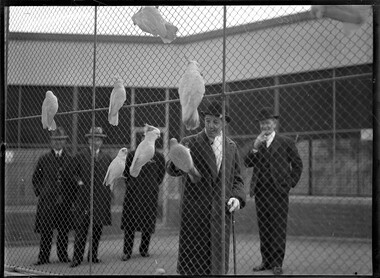 City of Melbourne Libraries
Photograph, Bull, Hugh Jones, 1897-1993, Vice-regal visit to zoo: Governor (Lord Huntingfield) meets the cockatoos
... Unfortunately the Yarra River frontage was damp, swampy and subject to flooding, so the animals were briefly housed at the Botanical Gardens until in 1862, the City of Melbourne donated 55 acres (22 hectares) of land at Royal Park for the fledgling zoo. ...Unfortunately the Yarra River frontage was damp, swampy and subject to flooding, so the animals were briefly housed at the Botanical Gardens until in 1862, the City of Melbourne donated 55 acres (22 hectares) of land at Royal Park for the fledgling zoo. ...A group of five men dressed in hats and overcoats look at caged cockatoos. Research by project volunteer, Fiona Collyer: On 25 June 1934, new Victorian Governor, His Excellency Lord Huntingfield and his wife Lady Huntingfield made an official visit to the Melbourne Zoological Gardens in order to grant his patronage to the Royal Zoological and Acclimatisation Society. The zoo director, Mr. Andrew Wilkie, introduced them to the cockatoos in the flight aviary. The Argus newspaper reported the visit in the following morning’s issue: "Birds' Greeting To Governor. Visit to Zoological Gardens. "A Very Important Society." "Cheery shouts of "Hullo!" and requests for drinks greeted His Excellency the Governor (Lord Huntingfield) on one of his official visits yesterday morning. Lady Huntingfield, who accompanied him, was asked loudly for a kiss. They were inspecting the huge cockatoo aviary at the Zoological Gardens after Lord Huntingfield had granted his patronage to the Royal Zoological and Acclimatisation Society. Both obviously enjoyed the democratic experience. It was explained to them that most of the cockatoos had been presented by residents of flats, whose neighbours objected to the noise of the birds, while others were protected birds which had been surrendered. Lord Huntingfield recalled that he had taken two Australian cockatoos to England when he left Australia in his youth. One, a galah, had lived in England for many years." In 1929, the Zoo built a commodious new flight aviary at the cost of several thousand pounds and Zoo director, Mr Andrew Wilkie, sent out an appeal published in newspapers Australia-wide for donations of parrots from all states. Many of the parrot species he wanted were protected and a special permit needed for their capture, however Mr Wilkie guaranteed he would obtain authority from the Fisheries and Game Department and that the cost of transit would be borne by the Zoo. The wanted birds were "Parrots - Black-tailed, Rock Pebbler, King, Superb, Grass (all kinds), Swamp or Ground, Mallee or Ringneck" and "Cockatoo[s] - Black, Pink or Major Mitchell, Gang-Gang". The Zoo asked that the birds be sent in boxes large enough to prevent overcrowding, contain food and water and the Zoo notified on the type and number of birds in transit. All boxes were to be addressed to 'The Zoo, Melbourne'. A letter from a reader appeared in the Weekly Times newspaper's popular "Camp-fire Circle" page for "Young Australians", 11 May 1929: "Dear Pal, I am much interested in your page, especially the nature notes. I have a pet parrot, but I don’t like to see it shut up in a cage, so I am giving it to the Melbourne Zoo. It can whistle 'Pretty Joey' and 'What's the Matter with Father' and is just learning to whistle for the dog... Wishing you and the Camp-fire Circle success." - Murray Holmes (Gorae, Vic.) The fate of this talented parrot is unknown, however in 1932, this young naturist, T Murray Holmes, 1912-1947, collected for the first time a type specimen, blue star sun orchid from Gorae (near Portland, Victoria), and it was named in his honour, Thelymitra holmesii. Murray was described by orchid collector W H Nicholls as "a youthful and energetic orchidologist, who added much to our knowledge of the orchids of south-western Victoria." Murray Holmes enlisted in the army in 1941 and fought in the Middle East before being sent to Java. In 1942 he was captured by the Japanese and became a prisoner of war for three years, working on the notorious Thai-Burma railway. Murray's health was undermined though ill treatment and starvation and he returned to Australia after the war, broken and sick. He died aged 35 in 1947. He was intensely interested in the flora and fauna of the Gorae area to the end. Murray's parents received over 200 tributes of respect for their son - too many to answer personally so they put a notice in the Portland Guardian thanking "all kind friends and relatives for letters, cards, floral tributes and personal expressions of sympathy received in their recent sad bereavement - the lamented death of their loved son, Murray." Andrew Arthur Wellesley Wilkie, 1853-1948, was Director of the Melbourne Zoo from 1923 to 1936 and was associated with the zoo for 70 years. He first worked as a horticultural assistant to Government botanist Baron Ferdinand von Mueller at the Botanical Gardens at the age of 13, along with his older brother David. One of Andrew’s jobs was to capture moths for the National Herbarium. In 1857, a group of prominent Melburnians assembled at St. Patrick’s Hall to form the Zoological Society of Victoria, with the aim of introducing animals and plants from overseas. It was conceived, “For the purposes of science and for that of affording the public the advantages of studying the habits of the animal creation in properly arranged zoological gardens.” The Victorian Government granted 32 acres (13 hectares) of land to the Zoological Society at the southern end of Richmond Paddock on the opposite bank to the Botanical Gardens. (This is where AAMI Stadium and Collingwood Football Club now stand.) In 1861, the Zoological Society of Victoria was renamed The Acclimatisation Society of Victoria. Unfortunately the Yarra River frontage was damp, swampy and subject to flooding, so the animals were briefly housed at the Botanical Gardens until in 1862, the City of Melbourne donated 55 acres (22 hectares) of land at Royal Park for the fledgling zoo. Baron von Mueller secured employment at Royal Park for Andrew and David and they helped to lay out the gardens, plant trees and take care of a collection of deer, pheasants, hares and partridges. Initially the zoo was used for the acclimatisation of animals recovering from the long voyage to Australia and for breeding them for sport. In 1872, the zoo bought two lions, a leopard and a cheetah that had been seized from circus showmen Keith and Phillips when they were unable to pay the bill of butcher Mr T K Bennet of Bourke Street. The first zoo director, Mr. Albert Le Souef, negotiated with captains of ships to buy animals at overseas ports they visited and soon a multitude of exotic species arrived, including a ten-year-old Indian elephant in 1878. In 1923, after being head keeper for some years, Andrew was appointed director of the zoo. By 1933, the zoo had 110 different species of animals, 200 species of birds and 72 species of reptiles under Andrew’s care. He had personally planted all but six trees and laid out the garden beds. As director he lobbied authorities for funds to build more humane enclosures for the animals. In June 1928, Table Talk magazine wrote of Andrew Wilkie: “Up at the Zoo there is a humble gentleman who is a lion among the lions, who knows the proper specific to employ when the boa constrictor has chilblains, and who is a friend and confidant of Queenie the elephant. His fount of zoological lore has never been plumbed. It is bottomless, like his good fellowship and geniality. Every day he may be seen somewhere in the grounds of that growing sanctuary for the strange and arresting fauna and creeping things of the world, and I assure you as one who is privy to his passion that that area and its inhabitants are rarely out of his thoughts.” Andrew retired from the zoo in 1936 at the age of 83 and in 1948 died at his home in Brunswick aged 94. He and his wife Josephine had six children. The Victorian Acclimatisation Society was founded in 1861 by Edward Wilson, 1813-1878, then owner and editor of The Argus newspaper. He said that Australian indigenous animals were practically useless, providing only “a little sport and an occasional meal”. The Society believed that Australia’s plants and animals were vastly inferior to those in Europe. They wanted to introduce and acclimatise to Victoria “all innoxious animals, birds, fishes, insects and vegetables, whether useful or ornamental” for sport and for the table, and to spread indigenous animals and plants from the colony around the world. Their motto was “if it lives, we want it”. The Society was primarily responsible for introducing sparrows, starlings, sambar and hog deer, ostriches, brown trout, blackberries, and carp to the Murray River. They released the European songbirds, thrush and blackbird to quell the homesickness of British settlers. The Society also sent Australian animals like platypus, echidnas, kangaroos and koalas to Europe for scientific and novelty purposes. Thomas Austin, a wealthy sheep farmer of Barwon Park, Winchelsea (property now owned by the National Trust) was a member and in 1859 he introduced hares, blackbirds, thrushes and partridges onto his property. He is probably best known for introducing 24 breeding rabbits onto his estate as game for shooting parties. Thomas quipped, “The introduction of a few rabbits could do little harm and might provide a touch of home, in addition to a spot of hunting." In 2022, genomic data confirmed that Australia’s feral rabbit population is entirely descended from these rabbits. Biological control has brought the rabbit population down from an estimated high of 10 billion rabbits in the 1920s to approximately 200 million today, inhabiting 70% of Australian landmass (5.3 million square kilometres). In 1872, the Acclimatisation Society was renamed The Zoological and Acclimatisation Society of Victoria and they focused on importing exotic animals for display purposes to the zoo. In 1937, the Royal Acclimatisation Society of Victoria was recreated as the Zoological Board of Victoria with a focus on research of native animals threatened with extinction. In an editorial for The Argus newspaper, 16 March 1856, Edward Wilson lamented: "...this country has been shamelessly stolen from the blacks. Had they been like the New Zealanders or the North American Indians, we should have bought their land, and supplied them with the means of living when we took it... In less than twenty years we have nearly swept them off the face of the earth. We have shot them down like dogs. In the guise of friendship we have issued corrosion sublimate in their damper, and consigned whole tribes to the agonies of an excruciating death. We have made them drunkards, and infected them with disease which has rotted the bones of their adults, and made such few children as are born amongst them a sorrow and a torture from the very instant of their birth. We have made them outcasts on their own land, and are rapidly consigning them to entire annihilation. There are but a few of them left, comparatively. This is what we would do for that few. We would feed and clothe every one of them.” [Note: this last sentence is italicized in the original newspaper article text]. Lord Huntingfield, (William Charles Arcedeckne Vanneck) 1883-1969, Governor of Victoria 1934-1939, was a British Conservative Party politician and the first ever Australian-born Governor of an Australian state (although he was always considered British). He was patron of the Royal Zoological and Acclimatisation Society of Victoria and was acting Governor-General for six months during the absence of Lord Gowie in 1938. Lady Huntingfield (née Margaret Eleanor Crosby) 1884-1943, his American-born wife showed great interest in social welfare and the advancement of women and children. She was president of the City Newsboys Society and Patroness of the Girls Friendly Society. In 1937, rose breeder Alister Clark named a yellow hybrid tea rose for her. In 1940, the City of Melbourne opened the Lady Huntingfield Free Kindergarten in North Melbourne, now the Lady Huntingfield Early Learning and Family Services Centre. Lady Huntingfield died in London in 1943 after her house was bombed during a German airstrike. The Lady Huntingfield Memorial Scholarship was established after the City of Melbourne raised £1000 in a public appeal conducted in her memory for students undertaking a Social Work degree at the University of Melbourne. It is awarded annually to this day. The Queen Victoria Hospital named a bed in her honour. References: Prominent Personalities ANDREW WILKIE (1928, June 7). Table Talk (Melbourne, Vic. : 1885 - 1939), p. 15. Retrieved August 29, 2024, from http://nla.gov.au/nla.news-article146562949 BIRDS' GREETING TO GOVERNOR (1934, June 26). The Argus (Melbourne, Vic. : 1848 - 1957), p. 6. Retrieved August 19, 2024, from http://nla.gov.au/nla.news-article10950051 Zoo Appealing For Parrots And Cockatoos To Fill Aviary For Children’s Instruction (1929, April 11). The Sun News-Pictorial (Melbourne, Vic. : 1922 - 1954; 1956), p. 31. Retrieved August 23, 2024, from http://nla.gov.au/nla.news-article275757361 LETTERS FROM READERS (1929, May 11). Weekly Times (Melbourne, Vic. : 1869 - 1954), p. 50. Retrieved October 6, 2024, from http://nla.gov.au/nla.news-article223183144 Correspondence. (1929, April 18). Corryong Courier (Vic. : 1894 - 1945), p. 6. Retrieved August 30, 2024, from http://nla.gov.au/nla.news-article269039262 'Edward Wilson (journalist)', Wikipedia, https://en.wikipedia.org/wiki/Edward_Wilson_(journalist) 'Thomas Austin (pastoralist)', Wikipedia, https://en.wikipedia.org/wiki/Thomas_Austin_(pastoralist) 'The Acclimatisation Society was driven by misguided ideals about 'fixing nature' in Australia', ABC News, https://www.abc.net.au/news/2022-11-04/acclimatisation-society-introduced-species-history-listen/101588262? utm_source=abc_news_app&utm_medium=content_shared&utm_campaign=abc_news_app&utm_content=safari Touching Canine Devotion. (1942, September 21). Portland Guardian (Vic. : 1876 - 1953), p. 1 (EVENING). Retrieved October 6, 2024, from http://nla.gov.au/nla.news-article64381989 OBITUARY (1947, August 11). Portland Guardian (Vic. : 1876 - 1953), p. 2 (EVENING). Retrieved August 26, 2024, from http://nla.gov.au/nla.news-article64412155 Family Notices (1947, September 11). Portland Guardian (Vic. : 1876 - 1953), p. 2 (EVENING). Retrieved October 10, 2024, from http://nla.gov.au/nla.news-article64412476 'Thelymitra holmesii', Wikipedia, https://en.wikipedia.org/wiki/Thelymitra_holmesii THE ABORIGINES. (1856, March 16). The Argus (Melbourne, Vic. : 1848 - 1957), p. 4. Retrieved September 28, 2024, from http://nla.gov.au/nla.news-article4833244 Photographer notations on slide: "Vice Regal visit to zoo B42". zoos, governors, 1930-1939, cockatoos
