
Showing 35 items matching "rural commerce"
-
 Flagstaff Hill Maritime Museum and Village
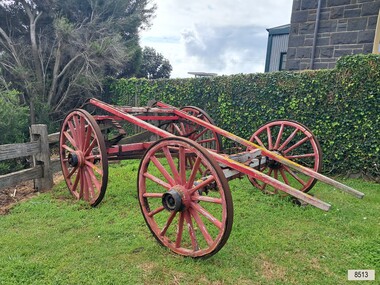
Vehicle - Wagon, Circa 1909
... ...rural commerce...Flagstaff Hill Warrnambool Maritime Village Maritime Museum Flagstaff Hill Maritime Museum and Village Shipwreck coast Great Ocean Road southwest Victoria northwest Victoria western district Colac Colac Hospital Colac Licensing Court Thowgla Corryong Garvoc Cooramook Road Warrnambool Petty Sessions Court Warrnambool Hospital Russells Creek Road Ganges Warrnambool Cemetery Uppal Bhopa Jalandhar Hawker’s Licence covered wagon wagon hawker's wagon horse-drawn cart hawker's cart light delivery vehicle hawker travelling salesman travelling hawker door-to-door sales rural salesman rural commerce Prince Duke Clydesdale horse 1997 Pooran Singh Indian immigrant Pat John James Moore Vera Moore John and Vera Moore John Moore Guyatt’s Funerals Kapil Dev Harmel Uppal Avis Quarrell Wagon: a light delivery vehicle once used as a hawker's wagon. ...This wagon was used in towns across south-west Victoria during the first half of the twentieth century by Pooran Singh, an Indian-born immigrant. Singh arrived in Australia alone in 1899 at the age of 30. The following year, at the Colac Licensing Court in western Victoria, he was one of 78 hawkers granted a Hawker’s Licence. According to the Colac Herald, all but two of the applicants appeared to be Asian. While some hawkers registered horse-drawn carts, Singh was one of nineteen licensed to trade on foot, selling door to door. Applicants were encouraged to contribute to a collection for the Colac Hospital. Over time, Pooran Singh came to own his own wagon—a top-of-the-range light delivery vehicle—and a horse named Prince. His work often took him along rough country roads, and for a period, he worked in the Corryong district of north-eastern Victoria, an area popular with hawkers. In September 1909, near Thowgla, he was thrown from his wagon while attempting to navigate a deep rut and was run over by one of its wheels. Although he suffered bruising to his chest, his injuries were not serious. The following year, he was granted a Hawker’s Licence in Corryong. By 1916, Singh was living and working at Garvoc in western Victoria, where that year, he lost his paper licence on Cooramook Road, and he placed a notice in The Standard. In 1918, at the Warrnambool Petty Sessions Court, he was one of four applicants granted renewal of their hawkers’ licences, and each donated ten shillings to Warrnambool Hospital. Throughout these years, Singh became well known to farmers and their families as he travelled across Victoria’s Western District, living and working from his covered wagon. In his later years, Pooran Singh formed a close friendship with John Jandes Moore and his wife, Vera, of Russells Creek, Warrnambool. They offered him the use of their property as a base for his travels and cared for him during his final illness. John Moore was later appointed one of the two executors of Singh’s will. Pooran Singh died in Warrnambool on 8 June 1947, aged 77. His final wish was to be cremated and for his ashes to be returned to India for immersion in the Ganges. The cremation was arranged by Guyett’s Funerals in Warrnambool. Having never married, Singh left his estate to his four nephews, enabling them to buy land and build homes; one later installed a memorial plaque in his honour. In the late 1980s, Guyett’s Funerals placed his ashes in the niche wall at Warrnambool Cemetery as a memorial, while continuing to hope that family instructions might eventually arrive. Nearly 63 years after his death, renewed enquiries brought public attention to the long and respectful care given to his ashes. As a result, the renowned Indian cricketer Kapil Dev travelled to Warrnambool to collect them and escort them to India, helping to fulfil Singh’s final wish. He was joined by one of Singh’s grand-nephews, Harmel Uppal, who had travelled from England. At a formal ceremony on 25 July 2010 commemorating Singh’s life, the ashes were handed to Dev and Uppal, and local resident Avis Quarrell, who had known Singh as a child, read a poem she had written in his memory. She still owned a shell necklace that Singh had made for her mother. Some Warrnambool locals who had been closely involved also travelled to India, where they joined Uppal’s family from the village of Uppal Bhopa, near Jalandhar. On 31 July 2010, Pooran Singh’s ashes were immersed in the Ganges, fulfilling the wish he had expressed more than six decades earlier. After Pooran Singh’s death, his horse and wagon remained on John Moore’s property. When Prince died, he was buried on the beach at Warrnambool. The wagon remained with the Moore family and was occasionally used as a cubby house. In about 1997, John Moore, the son of John Jandes Moore, donated it to Flagstaff Hill. After restoration, the wagon became an attraction in the village, where volunteer Pat and his Clydesdale horse, Duke, offered visitors rides around Flagstaff Hill’s lake. This wagon is significant for its association with an Indian emigrant who used it to earn an income in Australia. It also reflects the vital role of hawkers, who travelled through rural and regional communities in the late nineteenth and early twentieth centuries, supplying food, goods and news. The wagon is also historically significant as a former Flagstaff Hill attraction, offering visitors the experience of horse-drawn rides around the lake.Wagon: a light delivery vehicle once used as a hawker's wagon. It is a four-wheel, horse-drawn vehicle with iron tyres, brakes, spoked wheels painted red with decorative yellow strips on the hubs, a timber shaft, and springs on the undercarriage. It was once a covered wagon, fitted with green, wooden sideboards, a front seat with leather-padded backrest and mounting steps. The late-19th to early-20th-century wagon was once owned by Pooran Singh, a local Indian hawker. flagstaff hill, warrnambool, maritime village, maritime museum, flagstaff hill maritime museum and village, shipwreck coast, great ocean road, southwest victoria, northwest victoria, western district, colac, colac hospital, colac licensing court, thowgla, corryong, garvoc, cooramook road, warrnambool petty sessions court, warrnambool hospital, russells creek road, ganges, warrnambool cemetery, uppal bhopa, jalandhar, hawker’s licence, covered wagon, wagon, hawker's wagon, horse-drawn cart, hawker's cart, light delivery vehicle, hawker, travelling salesman, travelling hawker, door-to-door sales, rural salesman, rural commerce, prince, duke, clydesdale horse, 1997, pooran singh, indian immigrant, pat, john james moore, vera moore, john and vera moore, john moore, guyatt’s funerals, kapil dev, harmel uppal, avis quarrell -
 National Wool Museum
Book - Wool Pages: A Directory of the Sheep and Wool Industry, Eighth Edition, The Australian Wool Showcase Inc, 2004
... Contents include Education, Processing and Manufacturing, Rural Equipment, Services, Rural Tourism, Sheep, Trade / Commerce / Finance, Wool Craft, Wool Organisations / Associations, Wool Products. ...Contents include Education, Processing and Manufacturing, Rural Equipment, Services, Rural Tourism, Sheep, Trade / Commerce / Finance, Wool Craft, Wool Organisations / Associations, Wool Products. ...Contents include Education, Processing and Manufacturing, Rural Equipment, Services, Rural Tourism, Sheep, Trade / Commerce / Finance, Wool Craft, Wool Organisations / Associations, Wool Products. Eighty eight page booklet showing an image of sheep on the cover, with printed text.front: [printed] WOOL PAGES / Directory 2004 / Compiled by Australian Wool Showcase / australian wool / innovation / limitedwool, organisations, directory, rural equipment, manufacturing, tourism, wool craft, wool products, education -
 Federation University Historical Collection
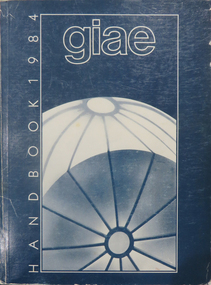
Book, Gippsland Institute of Advanced Education Handbooks, 1970-1985
... The Council of the Institute includes members of the Gippsland community who are prominent in industry, commerce, education and the professions, the Director of the institute, the representative of the academic staff, of general staff, of students and of the Convocation of the Institute. In 1972 the Institute occupied the first of its permanent buildings on a large campus in rural...The Council of the Institute includes members of the Gippsland community who are prominent in industry, commerce, education and the professions, the Director of the institute, the representative of the academic staff, of general staff, of students and of the Convocation of the Institute. In 1972 the Institute occupied the first of its permanent buildings on a large campus in rural ....1) 1977 Gippsland Institute of Advanced Education Handbook with white cover .2) 1978 Gippsland Institute of Advanced Education Handbook with blue/black cover .3) 1979 Gippsland Institute of Advanced Education Handbook with orange cover .4) 1980 Gippsland Institute of Advanced Education Handbook with yellow/brown cover .5) 1981 Gippsland Institute of Advanced Education Handbook with grey/black cover .6 1984 Gippsland Institute of Advanced Education Handbook with blue cover .7) 1985 Gippsland Institute of Advanced Education Handbook with purple cover .8) 1989 Gippsland Institute of Advanced Education Handbook with white/purple/grey/red/blue cover .7) 1985 Gippsland Institute of Advanced Education Handbook with pale green cover. .9) 1974 Gippsland Institute of Advanced Education Handbook with orangeand white cover .10) 1975 Gippsland Institute of Advanced Education Handbook with green and white cover .11) 1976 Gippsland Institute of Advanced Education Handbook with white cover .12) 1986 Gippsland Institute of Advanced Education Handbook with mid-blue cover .13) 1987 Gippsland Institute of Advanced Education Handbook with red cover .14) 1988 Gippsland Institute of Advanced Education Handbook with red cover .15) 1973 Gippsland Institute of Advanced Education Handbook with brown cover .16) 1972 Gippsland Institute of Advanced Education Handbook with pale green cover .17) 1971 Gippsland Institute of Advanced Education Handbook with mid-blue cover non-fictiongippsland institute of advanced education, giae, gippsland, churchill, morwell, electricty, handbook, gippsland campus -
 Federation University Historical Collection
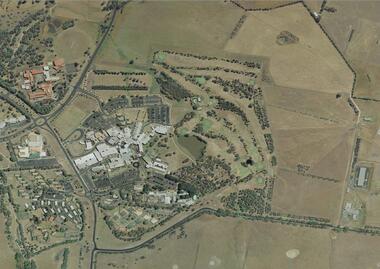
Photograph - Photograph - Colour, Federation University Gippsland Campus, c1995, c1995
... The Council of the Institute includes members of the Gippsland community who are prominent in industry, commerce, education and the professions, the Director of the institute, the representative of the academic staff, of general staff, of students and of the Convocation of the Institute. In 1972 the Institute occupied the first of its permanent buildings on a large campus in rural...The Council of the Institute includes members of the Gippsland community who are prominent in industry, commerce, education and the professions, the Director of the institute, the representative of the academic staff, of general staff, of students and of the Convocation of the Institute. In 1972 the Institute occupied the first of its permanent buildings on a large campus in rural ...The following information was the preface of the 1985 GIAE handbook: The Gippsland institute of Advanced Education was established by an Order-in-Council in September, 1968, but, owes its origin to engineering diploma courses established in 1928 to service the developing electrical industry. The Council of the Institute includes members of the Gippsland community who are prominent in industry, commerce, education and the professions, the Director of the institute, the representative of the academic staff, of general staff, of students and of the Convocation of the Institute. In 1972 the Institute occupied the first of its permanent buildings on a large campus in rural surroundings near the township of Churchill, ten kilometres south of Morwell and one hundred and sixty kilometres east of Melbourne. Engineering laboratories are temporarily located in buildings on the site of the Yallourn College of TAFE at Newborough and they will be consolidated on the Churchill campus by the end on 1985. In 1974 new buildings were completed under a self-help program to house the School of Visual Arts. A building complex to provide the first stages of the permanent library and the Union, and accommodation for the School of Business and Social Sciences was completed in 1976. An Education building, an Applied Science building and student residential buildings for 108 student places were completed at the beginning on 1976. The Binishell, a multi-purpose facility was completed in 1980. On its establishment, the Institute assumed responsibility for the diploma courses which were previously offered by the Yallourn Technical College. These were diploma in Civil, Electrical, and Mechanical Engineering, Applied Chemistry, and Business, all of which were recognised by the appropriate professional bodies. The Gippsland Institute of Advanced Education is the only centre of Higher Education east of Melbourne and offers a range of vocational courses at associate diploma, diploma, degree, graduate degree and master levels to meet the educational needs of the Gippsland regions. The institute also has a very large commitment to a program on external studies. Federation University Australia was established on 1 January 2014. Formerly known as the University of Ballarat, its enabling legislation was the University of Ballarat Amendment (Federation University Australia) Act 2013. Although formally created as a University in 1994, the University of Ballarat had a lineage back to 1870 with the establishment of the School of Mines Ballarat, making it the third institution of higher learning to be established in Australia and the first to be established in regional Australia. On 1 January 1994, Ballarat University College became the University of Ballarat and in 1998 the University merged with three TAFE Institutes to become a dual sector institution with multiple campuses. On 1 January 2014, the University of Ballarat amalgamated with the Monash University Gippsland Campus to form Federation University Australia. The Gippsland Campus also had a long lineage dating back to 1928 with the establishment of the Yallourn Technical School which became a predecessor institution to the Gippsland College of Advanced Education formed in 1968. In 1990, it was renamed the Monash University College and in 1993 became the Gippsland Campus of Monash University. Large photograph adhered to foamcore showing an aerial view of the Federation University Gippsland Campus at Churchill, Victoria as it was c1995.churchill, gippsland campus, gippsland institute of advanced education, federation university, yallourn, morwell, binishell -
 Federation University Historical Collection
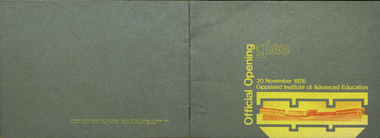
Booklet, Gippsland Printers, GIAE Official Opening, 1976, 1976
... commerce, education and the professions, the Director of the Institute, and representatives of the academic staff, students, and graduates. On its establishment, the institute assumed responsibility for the diploma courses previously offered by the Yallourn Technical College which had commenced diploma teaching in 1929. Initially, all the Institute's teaching was conducted in the diploma building of the Yallourn Technical College. In 1972 the Institute transferred part of its operations to the first of its permanent buildings on a large campus in rural...commerce, education and the professions, the Director of the Institute, and representatives of the academic staff, students, and graduates. On its establishment, the institute assumed responsibility for the diploma courses previously offered by the Yallourn Technical College which had commenced diploma teaching in 1929. Initially, all the Institute's teaching was conducted in the diploma building of the Yallourn Technical College. In 1972 the Institute transferred part of its operations to the first of its permanent buildings on a large campus in rural ...The Gippsland Institute of Advanced Education was established by an Order-in-Council in September 1968. The Council of the Institute included members of the Gippsland community who are prominent in local government, industry, commerce, education and the professions, the Director of the Institute, and representatives of the academic staff, students, and graduates. On its establishment, the institute assumed responsibility for the diploma courses previously offered by the Yallourn Technical College which had commenced diploma teaching in 1929. Initially, all the Institute's teaching was conducted in the diploma building of the Yallourn Technical College. In 1972 the Institute transferred part of its operations to the first of its permanent buildings on a large campus in rural surrounds near the township of Churchill, ten kilometres south of Morwell and one hundred and sixty kilometres east of Melbourne. The Gippsland Institute of Advanced Education was opened on 20 November 1976 by the Honourable Lindsay Thompson, Deputy Premier of Victoria and Minister of Education; and Senator J.L. Carrick, Minister for Education in the Commonwealth Government. Silver and yellow soft covered booklet celebrating the opening of the Gippsland Institute of Advanced Education at Churchill, Victoria. An introduction is written by C.H. Ford, President of Council. The book was designed and produced by the design Centre, G.I.A.E. SChool of Visual Arts.gippsland institute of advanced education, m.w. hopper, c.h. ford, lindsay thompson, j.l. carrick, r.w. muncey, churchill, yallourn, morwell, yallourn technical school, yuncken freeman architects, f.a. gray, f.r. goddard, j. milton-smith, j.r. lawry, b.r. groves, c.p.a. hos, c.w. tolley, k.f. smith, j. dowsley, robert charles bigelow, charles hartley ford, daniel eric kent, barbara lapin, john charles mcgauran, neville thompson, john charles vinall, leslie alfred galvin, maxwell francis gray, john alfred forster oram, donald robert hannington, john perrin kellaway, john james robertson, leslie lawrence shipp, valerie lorraine willington, leonard allan falk, kwong chiu lee dow, brenton robert groves, glen william drover, kenneth francis gibson, maxwell wallace hopper, teunis jan geerit korevaar, j.j. robertson, d.f. kretlow, chancellor and patrick, churchill campus, gippsland campus collection -
 Federation University Historical Collection
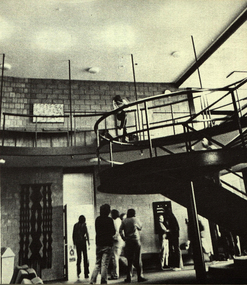
Photograph, The Knuckle at Gippsland Institute of Advanced Education, c1976
... commerce, education and the professions, the Director of the Institute, and representatives of the academic staff, students, and graduates. On its establishment, the institute assumed responsibility for the diploma courses previously offered by the Yallourn Technical College which had commenced diploma teaching in 1929. Initially, all the Institute's teaching was conducted in the diploma building of the Yallourn Technical College. In 1972 the Institute transferred part of its operations to the first of its permanent buildings on a large campus in rural...commerce, education and the professions, the Director of the Institute, and representatives of the academic staff, students, and graduates. On its establishment, the institute assumed responsibility for the diploma courses previously offered by the Yallourn Technical College which had commenced diploma teaching in 1929. Initially, all the Institute's teaching was conducted in the diploma building of the Yallourn Technical College. In 1972 the Institute transferred part of its operations to the first of its permanent buildings on a large campus in rural ...The Gippsland Institute of Advanced Education was established by an Order-in-Council in September 1968. The Council of the Institute included members of the Gippsland community who are prominent in local government, industry, commerce, education and the professions, the Director of the Institute, and representatives of the academic staff, students, and graduates. On its establishment, the institute assumed responsibility for the diploma courses previously offered by the Yallourn Technical College which had commenced diploma teaching in 1929. Initially, all the Institute's teaching was conducted in the diploma building of the Yallourn Technical College. In 1972 the Institute transferred part of its operations to the first of its permanent buildings on a large campus in rural surrounds near the township of Churchill, ten kilometres south of MOrwell and one hundred and sixty kilometres east of Melbourne. The Gippsland Institute of Advanced Education was opened on 20 November 1976 by the Honourable Lindsay Thompson, Deputy Premier of Victoria and Minister of Education; and Senator J.L. Carrick, Minister for Education in the Commonwealth Government. Image of an area in the Gippsland Institute of Advanced Education known as The Knuckle.gippsland institute of advanced education, gippsland campus collection, the knuckle, churchill -
 Federation University Historical Collection
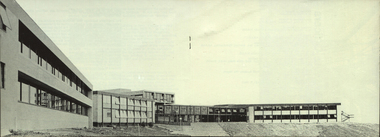
Photograph, Gippsland Institute of Advanced Education Ampitheatre, c1976
... commerce, education and the professions, the Director of the Institute, and representatives of the academic staff, students, and graduates. On its establishment, the institute assumed responsibility for the diploma courses previously offered by the Yallourn Technical College which had commenced diploma teaching in 1929. Initially, all the Institute's teaching was conducted in the diploma building of the Yallourn Technical College. In 1972 the Institute transferred part of its operations to the first of its permanent buildings on a large campus in rural...commerce, education and the professions, the Director of the Institute, and representatives of the academic staff, students, and graduates. On its establishment, the institute assumed responsibility for the diploma courses previously offered by the Yallourn Technical College which had commenced diploma teaching in 1929. Initially, all the Institute's teaching was conducted in the diploma building of the Yallourn Technical College. In 1972 the Institute transferred part of its operations to the first of its permanent buildings on a large campus in rural ...The Gippsland Institute of Advanced Education was established by an Order-in-Council in September 1968. The Council of the Institute included members of the Gippsland community who are prominent in local government, industry, commerce, education and the professions, the Director of the Institute, and representatives of the academic staff, students, and graduates. On its establishment, the institute assumed responsibility for the diploma courses previously offered by the Yallourn Technical College which had commenced diploma teaching in 1929. Initially, all the Institute's teaching was conducted in the diploma building of the Yallourn Technical College. In 1972 the Institute transferred part of its operations to the first of its permanent buildings on a large campus in rural surrounds near the township of Churchill, ten kilometres south of MOrwell and one hundred and sixty kilometres east of Melbourne. The Gippsland Institute of Advanced Education was opened on 20 November 1976 by the Honourable Lindsay Thompson, Deputy Premier of Victoria and Minister of Education; and Senator J.L. Carrick, Minister for Education in the Commonwealth Government. The Gippsland Institute of Advanced Education ampitheatregippsland institute of advanced education, gippsland campus collection, churchill, ampitheatre, buildings -
 Marysville & District Historical Society
THE TRIANGLE NEWS-VOL 41 NO 10-MARCH 21 2014
... commerce...special general members meeting...dog & cat registrations due...mayor's chair...buxton park first bootcamp...councillor comment...lions rich fruit cakes...advertisements...free community event...residential and rural...marysville victoria australia recognising our local cfa members cfa national emergency medal presentation new contact details for triangle news what's on when in march friends of the marysville walks working bee at steavenson falls the committee of management of the gallipoli park precinct marysville community market creative triangle thank you lions club marysville community golf and bowls club marysville cultural community buxton ridge vineyard wine tasting church notices mystic mountains tourism marysville & district chamber of commerce special general members meeting dog & cat registrations due mayor's chair buxton park first bootcamp councillor comment lions rich fruit cakes advertisements free community event residential and rural real estate marysville real estate intrepid triangle bushwalkers social dancing buxton hall fire prevention irrigation systems buxton cfa 70th anniversary buxton hotel chinese night holly eradication program at narbethong rock 'n roll night at buxton hall marysville midweek netball marysville preschool long day care and kindergarten combined energy services training activities marysville beer and platter garden leukaemia foundation world's greatest shave earth hour-time to switch off dinner & auction fundraiser marysville & triangle youth marysville brownies guides open gardens marysville construction of the marysville youth space regional victoria living expo expressions of interest triangle blackberry action group THE TRIANGLE NEWS-VOL 41 NO 10-MARCH 21 2014 ...marysville, victoria, australia, recognising our local cfa members, cfa national emergency medal presentation, new contact details for triangle news, what's on when in march, friends of the marysville walks working bee at steavenson falls, the committee of management of the gallipoli park precinct, marysville community market, creative triangle, thank you lions club, marysville community golf and bowls club, marysville cultural community, buxton ridge vineyard wine tasting, church notices, mystic mountains tourism, marysville & district chamber of commerce, special general members meeting, dog & cat registrations due, mayor's chair, buxton park first bootcamp, councillor comment, lions rich fruit cakes, advertisements, free community event, residential and rural real estate, marysville real estate, intrepid triangle bushwalkers, social dancing buxton hall, fire prevention irrigation systems, buxton cfa 70th anniversary, buxton hotel chinese night, holly eradication program at narbethong, rock 'n roll night at buxton hall, marysville midweek netball, marysville preschool long day care and kindergarten, combined energy services training activities, marysville beer and platter garden, leukaemia foundation, world's greatest shave, earth hour-time to switch off, dinner & auction fundraiser, marysville & triangle youth, marysville brownies guides, open gardens marysville, construction of the marysville youth space, regional victoria living expo, expressions of interest, triangle blackberry action group -
Marysville & District Historical Society
THE TRIANGLE NEWS-VOL 41 NO 11-MARCH 28 2014
... commerce...special general members meeting...dog & cat registrations due...mayor's chair...positions vacant...marysville cultural community agm...lions rich fruit cakes...advertisements...cfa national emergency medal presentation...free community event...residential and rural...marysville victoria australia new boardwalk among the gum trees celebrate first national eucalyptus day new contact details for triangle news what's on when in march friends of the marysville walks working bee at steavenson falls the committee of management of the gallipoli park precinct marysville community market creative triangle village walk marysville shop to lease triangle community dinner el kanah village church notices mystic mountains tourism marysville & district chamber of commerce special general members meeting dog & cat registrations due mayor's chair positions vacant marysville cultural community agm lions rich fruit cakes advertisements cfa national emergency medal presentation free community event residential and rural real estate marysville triangle real estate fire prevention irrigation systems golf & bowls club house renovations proceeding well buxton hotel chinese night holly eradication program at narbethong rock 'n roll night at buxton hall marysville & district football & netball club season opener launch marysville villains marysville preschool centre long day care & kindergarten marysville beer and platter garden dinner & auction fundraiser marysville triangle youth marysville brownies guides narbethong hall news from the gallipoli park precinct committee of management lake mountain alpine resort casual employment available alpine resort iconic bridge officially opened sports & recreation grants to improve facilities THE TRIANGLE NEWS-VOL 41 NO 11-MARCH 28 2014 ...marysville, victoria, australia, new boardwalk among the gum trees, celebrate first national eucalyptus day, new contact details for triangle news, what's on when in march, friends of the marysville walks working bee at steavenson falls, the committee of management of the gallipoli park precinct, marysville community market, creative triangle, village walk marysville shop to lease, triangle community dinner, el kanah village, church notices, mystic mountains tourism, marysville & district chamber of commerce, special general members meeting, dog & cat registrations due, mayor's chair, positions vacant, marysville cultural community agm, lions rich fruit cakes, advertisements, cfa national emergency medal presentation, free community event, residential and rural real estate, marysville triangle real estate, fire prevention irrigation systems, golf & bowls club house renovations proceeding well, buxton hotel chinese night, holly eradication program at narbethong, rock 'n roll night at buxton hall, marysville & district football & netball club season opener launch, marysville villains, marysville preschool centre, long day care & kindergarten, marysville beer and platter garden, dinner & auction fundraiser, marysville triangle youth, marysville brownies guides, narbethong hall, news from the gallipoli park precinct committee of management, lake mountain alpine resort, casual employment available alpine resort, iconic bridge officially opened, sports & recreation grants to improve facilities -
Marysville & District Historical Society
THE TRIANGLE NEWS-VOL 41 NO 12-APRIL 4 2014
... commerce...special general members meeting...dog & cat registrations due...mayor's chair...buxton park first bootcamp...tupperware sale...advertisements...councillor comments...marysville cultural community...tenders...jer's tradies-golf day final update...vale dr neil mckern...residential and rural...marysville victoria australia perfect spot for mountain bike enthusiasts department of environment & primary industries depi murrindindi cycle club new contact details for triangle news what's on when in march taggerty 4 seasons autumn market the committee of management of the gallipoli park precinct marysville community market village walk marysville shop to lease triangle community dinner el kanah village 2014 seasonal influenza vaccine available church notices mystic mountains tourism marysville & district chamber of commerce special general members meeting dog & cat registrations due mayor's chair buxton park first bootcamp tupperware sale advertisements councillor comments marysville cultural community tenders jer's tradies-golf day final update vale dr neil mckern residential and rural real estate marysville triangle real estate marysville & triangle community foundation new logo required buxton hotel parma night sport & recreational grants to improve facilities for sale portable building expressions of interests marysville district football & netball club season opener lunch marysville villains operation trident targets illegal commercial firewood sales marysville preschool centre long day care & kindergarten marysville beer & platter garden notice of proposal to make a local law come dine with the doc dr galen comstock zoning changes open opportunities across shire lake mountain alpine resort casual employment position vacant library & customer service marsyville golfers play well at the murrindindi masters easter monday with marysville preschool burns planned near marysville black spur inn trivia night holly eradication program at narbethong an open letter to triangle communities buxton hall kicks up its heels the big egg hunt THE TRIANGLE NEWS-VOL 41 NO 12-APRIL 4 2014 ...marysville, victoria, australia, perfect spot for mountain bike enthusiasts, department of environment & primary industries, depi, murrindindi cycle club, new contact details for triangle news, what's on when in march, taggerty 4 seasons autumn market, the committee of management of the gallipoli park precinct, marysville community market, village walk marysville shop to lease, triangle community dinner, el kanah village, 2014 seasonal influenza vaccine available, church notices, mystic mountains tourism, marysville & district chamber of commerce, special general members meeting, dog & cat registrations due, mayor's chair, buxton park first bootcamp, tupperware sale, advertisements, councillor comments, marysville cultural community, tenders, jer's tradies-golf day final update, vale dr neil mckern, residential and rural real estate, marysville triangle real estate, marysville & triangle community foundation new logo required, buxton hotel parma night, sport & recreational grants to improve facilities, for sale portable building, expressions of interests, marysville district football & netball club season opener lunch, marysville villains, operation trident targets illegal commercial firewood sales, marysville preschool centre, long day care & kindergarten, marysville beer & platter garden, notice of proposal to make a local law, come dine with the doc, dr galen comstock, zoning changes open opportunities across shire, lake mountain alpine resort casual employment, position vacant, library & customer service, marsyville golfers play well at the murrindindi masters, easter monday with marysville preschool, burns planned near marysville, black spur inn trivia night, holly eradication program at narbethong, an open letter to triangle communities, buxton hall kicks up its heels, the big egg hunt -
Marysville & District Historical Society
THE TRIANGLE NEWS-VOL 41 NO 13-APRIL 11 2014
... commerce...marysville triangle business tourism...new contact details for triangle news...what's on when in april...the committee of management of the gallipoli park precinct...marysville community market...creative triangle...marysville sub branch rsl...anzac day service...cfa good friday appeal...2014 seasonal influenza vaccine available...church notices...advertisments...mayor's chair...councillors comment...top end/central tour...tenders...meeting practices improved in proposed local law...marysville road closure...anzac day march...marysville cultural community agm...residential and rural...marysville victoria australia trivia success for south cathedral landcare group a new era for mystic mountain tourism & district chamber of commerce marysville triangle business tourism new contact details for triangle news what's on when in april the committee of management of the gallipoli park precinct marysville community market creative triangle marysville sub branch rsl anzac day service cfa good friday appeal 2014 seasonal influenza vaccine available church notices advertisments mayor's chair councillors comment top end/central tour tenders meeting practices improved in proposed local law marysville road closure anzac day march marysville cultural community agm residential and rural real estate marysville triangle real estate 1000 hands an open invitation marysville & triangle community foundation new logo required buxton hotel sports and recreation grants to improve facilities for sale portable building marysville district football & netball club season opener lunch marysville villains anzac day services 2014 marysville pre school marysville preschool long day care and kindergarten marysville beer & platter garden notice of a proposal to make a local law easter & anzac day office closures holly eradication program at narbethong training day and working bee wandering stocks on roads el kanah marysville eat in eat out menu lake mountain alpine resort easter monday with the marysville preschool the big egg hunt THE TRIANGLE NEWS-VOL 41 NO 13-APRIL 11 2014 ...marysville, victoria, australia, trivia success for south cathedral landcare group, a new era for mystic mountain tourism & district chamber of commerce, marysville triangle business tourism, new contact details for triangle news, what's on when in april, the committee of management of the gallipoli park precinct, marysville community market, creative triangle, marysville sub branch rsl, anzac day service, cfa good friday appeal, 2014 seasonal influenza vaccine available, church notices, advertisments, mayor's chair, councillors comment, top end/central tour, tenders, meeting practices improved in proposed local law, marysville road closure, anzac day march, marysville cultural community agm, residential and rural real estate, marysville triangle real estate, 1000 hands an open invitation, marysville & triangle community foundation new logo required, buxton hotel, sports and recreation grants to improve facilities, for sale portable building, marysville district football & netball club season opener lunch, marysville villains, anzac day services 2014, marysville pre school, marysville preschool long day care and kindergarten, marysville beer & platter garden, notice of a proposal to make a local law, easter & anzac day office closures, holly eradication program at narbethong, training day and working bee, wandering stocks on roads, el kanah, marysville eat in eat out menu, lake mountain alpine resort, easter monday with the marysville preschool, the big egg hunt -
 Orbost & District Historical Society
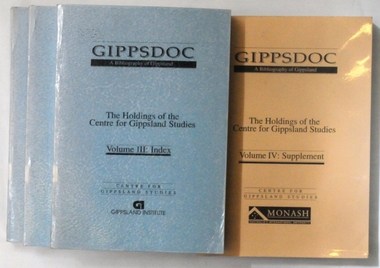
books, Gippsland Institute of Advanced Education, Gippsdoc A Bibliography of Gippsland, 2292.`1; 2292.2; 2292.3 in 1989 and 2292.4 in 1993
... commerce, education and the professions, the Director of the Institute, and representatives of the academic staff, students, and graduates. The institute assumed responsibility for the diploma courses previously offered by the Yallourn Technical College. Initially, all the Institute's teaching was conducted in the diploma building of the Yallourn Technical College. In 1972 the Institute transferred part of its operations to the first of its permanent buildings on a large campus in rural...commerce, education and the professions, the Director of the Institute, and representatives of the academic staff, students, and graduates. The institute assumed responsibility for the diploma courses previously offered by the Yallourn Technical College. Initially, all the Institute's teaching was conducted in the diploma building of the Yallourn Technical College. In 1972 the Institute transferred part of its operations to the first of its permanent buildings on a large campus in rural ...The Gippsland Institute of Advanced Education was opened on 20 November 1976. The Council of the Institute included members of the Gippsland community who are prominent in local government, industry, commerce, education and the professions, the Director of the Institute, and representatives of the academic staff, students, and graduates. The institute assumed responsibility for the diploma courses previously offered by the Yallourn Technical College. Initially, all the Institute's teaching was conducted in the diploma building of the Yallourn Technical College. In 1972 the Institute transferred part of its operations to the first of its permanent buildings on a large campus in rural surrounds near the township of Churchill.These books are useful reference tools.Four thick volumes of "Gippsdoc A Bibliography of Gippsland". Volumes 1, 2 and 3 have blue covers and Volume 4, the Supplement, has a beige cover. Volume 3 has 1072 pp and is an index. These books list published books which are about Gippsland.books-a-bibliography-of-gippsland gippsland-institute-of-advance-education -
 Eltham District Historical Society Inc
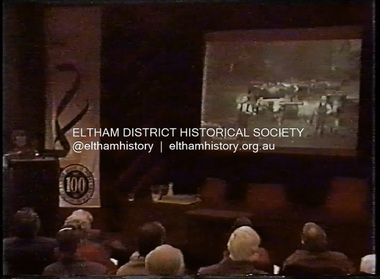
Film - Video (DVD), Melbourne and Metropolitan Board of Works, Yarra River Conference Proceedings; a Board of Works centenary event, 13-16 April 1991
... Conceived and presented by a group of prominent historians as a chronological 'trip down the river in time', and profusely illustrated with slides, this segment traced the various impacts that urban and rural growth, development of marine commerce, recreational uses, and environmental problems have had on the Yarra during a century and a half of European occupation. ...Conceived and presented by a group of prominent historians as a chronological 'trip down the river in time', and profusely illustrated with slides, this segment traced the various impacts that urban and rural growth, development of marine commerce, recreational uses, and environmental problems have had on the Yarra during a century and a half of European occupation. ...Yarra River Conference History Segment [Noted on VHS tape jackets "Due to unavoidable circumstances, the quality of these tapes in some setions is less than desired."] The Yarra River Conference, organised by the Board of Works as part of the Centenary Celebrations, was held in the Board's Head Office Theatrette from 13-16 April, 1991. A segment of the Conference focussed on the role that the Yarra River has played in relation to the historical development of Melbourne. Conceived and presented by a group of prominent historians as a chronological 'trip down the river in time', and profusely illustrated with slides, this segment traced the various impacts that urban and rural growth, development of marine commerce, recreational uses, and environmental problems have had on the Yarra during a century and a half of European occupation. As no formal written paper of this combined presentation is available, these two video-tapes provide a record for anyone who has an interest in tis fascinating aspect of the Yarra's history. The speakers who combined to present this segment are identified on the cover of Tape 2. Tape 1 (2 hours) 1838-1863 Deputy ?? to Utility Early navigators of the Yarra River; developing the port of Melbourne; the gold rush and its effect on the new colony; punts and bridges; water supply; pollution of the Yarra; the discovery of gold and early settlement of the Yarra valley; floods of 1839 and 1863. 1863-1891 Formation of the Harbour Trust; Coode Canal; pollution of the Yarra by industry; aborigines, gold miners, timber getters in the Upper Yarra areas; bridges; the flood of 1891. Tape 2 ( 1 1/2 hours) 1892-1934: People Begin to See Beauty and Romance to the River Henley-on-Yarra; realignment of the Yarra; MMBW is responsible for a sewerage system; new docks to cope with increased overseas trade; development of recreational parks; new reservoirs; timber production and timber tramways; bushfire; flood of 1934. 1935-1970: The River is Neglected Still, Except When it Proves Useful Bushfirs of 1939; the end of many sawmills; birth of tourism; increased interest in conservation and preservation of land for open space; further augmentation of water supply system; birth of containerisation changes the port; environmental concerns gain momentum. Speakers Dr Tony Dingle *, Department of Economic History, Monash University Dr Carolyn Rasmussen *, History Consultant Prof. Graeme Davison, History Department, Monash University Mr. Tom Griffiths, Lecturer in Public History, Monash Uiversity Mr. Patrick Miller, History Consultant Mr. Colin Jones, Author and Historian * Co-authors of the Board's history, 'Vital Connections'.video recording, yarra river, conference proceedings -
 Kiewa Valley Historical Society
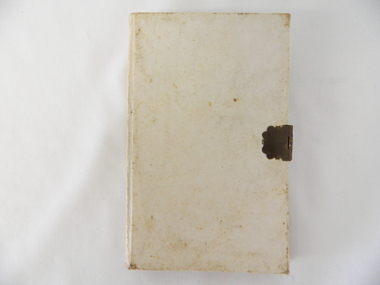
Book - Commerce Savings, Bank of Australasia Beechworth Branch 1892 - 1895, circa 1890's
... This Item documents the day to day commerce and financial transactions of a business in a regional centre of a rural district. ...This Item documents the day to day commerce and financial transactions of a business in a regional centre of a rural district. ...Historically this item is from the early to late 1890's. This Item documents the day to day commerce and financial transactions of a business in a regional centre of a rural district. It illustrates the greater degree of personal contact between bank staff and client, outside electronic money transfers and A.T.Ms. The personal activities especially in small towns between bank and customers made for a clearer and friendlier transaction interchange possibleThis item clearly details pre Federation banking and the important link with English law and commerce. Regional banking was very strong and the rural sectors provided the "wealth of the nation". This confidence was backed by the assurances of the Royal Charter and the financial strength of the British Homeland. The strong Pound Sterling was the currency of the "Empire"Discoloured white, hard cardboard book with brass clasp/clip early Pass book containing 45 pages. The page thickness is close to thin cardboard.No outside markings. Inside cover printed "The Bank Of Australia (Incorporated by Royal Charter, 1835)". Also Listed, the paid up capital, the reserve fund and regulatory information. The second page details the list of offices in Australia and the London office. Following pages credit debit information of typical bank Pass Book of "John Woodside No.2 A/Ccommerce, banking beechworth early accounting pre federation -
 Kiewa Valley Historical Society
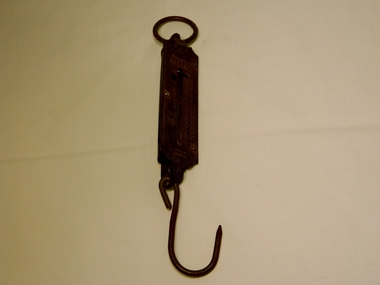
Scales Balance Pocket, Circa 1900
... In the Kiewa Valley small quantity commercial undertakings e.g. gold mining, fur pelts and rabbit meat trade did not require bulk weight type scales. Commerce in rural production e.g. fruit and vegetables involved more farmers and their staff in a barter and/or "in kind" payments. ...Historically this item would have been used by gold miners, rabbit shooters, mobile "Rag and Bone" traders and other mobile(in caravans and/or horse drawn cart) traders of various small goods and haberdashery. Although marked as not to be used as trade, the isolation and sometimes difficult terrain rules out using larger and more delicate scales. In the early 1900s rough roads and severe weather conditions forced traders to be more flexible in trading with weights and measures. The "close enough is good enough" doctrine was the Australian outback rule of thumb. The significance of this item in the Kiewa Valley during this period demonstrates the slower acceptance of accurate trading measure using the country side principle "my hand shake is my bond". In the Kiewa Valley small quantity commercial undertakings e.g. gold mining, fur pelts and rabbit meat trade did not require bulk weight type scales. Commerce in rural production e.g. fruit and vegetables involved more farmers and their staff in a barter and/or "in kind" payments. This was more so in the depression years 1929 to late 1930s. Self sufficiency was to a large extent more attainable in this region than in the city/ large country town environment. The Australian "fair go" ethical approach to life and commerce was very much ingrained in those living in country regions, like Kiewa Valley as is demonstrated by the not so accurate hand balance, spring loaded scales. Portable Pocket Balance with front plate made from brass. Spring mechanism enclosed by black painted medium gauge steel cover( three quarters cylindrical). Front scale face and rear spring casing fastened by three rivets. Spring loaded marker blade is located in the centre of the front plate. See item KVHS 0224 for a similar scales.Front plate marked: at top "Not legal for use in trade", below this in larger print "Pocket Balance", under and to the right in smaller print "lbs" under this graded marks, first marked with a Zero, then every second mark in ascending order up to 25. At the bottom of the front plate is marked "Made in Germany"antique pocket balance, scales, mobile weights, vintage appliances -
 Kiewa Valley Historical Society
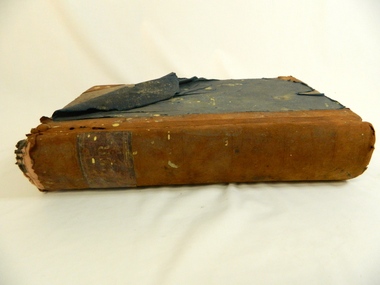
Book - Ledger Commercial, Ledger No 5, Commenced Jan 1st 1897, circa 1890's
... commerce required an accuracy in writing and arithmetic. Neatness and order were a selection requirement This item clearly identifies the Kiewa Valley as having a substantial financial hub to accommodate the various commercial enterprises within a rural environment Circa 1880's. ...Historically this ledger not only details the legible hand writing of this era but also the day to day commercial activity in this region. The neatness and the diligence of those who were required to pen the information was a requirement by all who were in commercial trade. Emphasis on neatness was ingrained in students at a young age. This era was well before general typewriters and computers. Generally all students of commerce required an accuracy in writing and arithmetic. Neatness and order were a selection requirement This item clearly identifies the Kiewa Valley as having a substantial financial hub to accommodate the various commercial enterprises within a rural environment Circa 1880's. Although Kiewa Valley had mining, agriculture, cattle and sheep it was also composed of a mixed society, encompassing all levels of society at that period. It identifies some family farming history in the specific year of 1897Leather reinforced corner covers and spine. Remaining book front and back covers are protected by blue weaved cloth. The covers are very thick cardboard, in layers. Missing front index pages C,E - 0,Q,T,U,V,XSpine of book marked in faded golden print "Ledger". First page in hand writing "Ledger No. 5" and underneath handwritten "Commenced Jan 1st !897" After the index pages each page (double sided) has a page number stamped in black and is 6mm highledger, early bookkeeping, local history, commerce circa 1890 -
 Kiewa Valley Historical Society
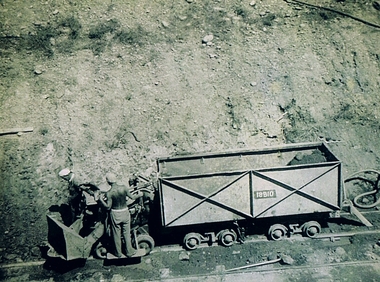
Photograph Shovel Truck, Shovel Loading Rail Truck, circa 1950s
... A visual link or time capsule of the 1950s rural/mining sectors clashing with the established rural industries This photo depicts the time (1950's) and place (Bogong and Mount Beauty) where construction workers had an immense impact, not only on the physical environment but also on the social and economic development of the Victorian Alps region. The fast expansion of smaller settlements brought about increased pressures on the welfare viability of certain subgroups within the region e.g. farming, droving and commerce ...This item shows the excavation of the side of a railway track using a pneumatic shovel and a rail mounted truck by two workmen. The period covered was well before State Health and Safety requirements, such as helmets, became law. It also details that the workmen were from European heritage as their head coverings were a handkerchief knotted at each corner. This was typical for workmen of this heritage, others used caps or hats or no head covering at all (the macho male look)The photograph of this item was one of many depicting great achievements and opening up the region. A visual link or time capsule of the 1950s rural/mining sectors clashing with the established rural industriesThis photo depicts the time (1950's) and place (Bogong and Mount Beauty) where construction workers had an immense impact, not only on the physical environment but also on the social and economic development of the Victorian Alps region. The fast expansion of smaller settlements brought about increased pressures on the welfare viability of certain subgroups within the region e.g. farming, droving and commerce (caravan hawkers versus static shops). These changes brought about a heightened awareness by both local and State Governments to upgrade not only facilities within the region but also access to the region. Black and white photo of two workmen on a rail mounted shovel truck. The photo is of good definition allowing a clear view of the subject matter. The paper is semi gloss.On the back of the photo, paper suppliers etchings are "Kodak XtraLife II paper"mining, hydro electricity, victorian alps, construction camps, earth moving machines -
 Kiewa Valley Historical Society
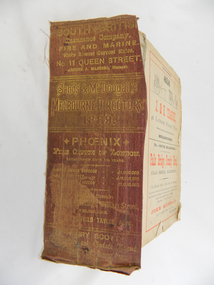
Book - Reference Melbourne Directory, Melbourne and Suburban Directory for 1889, Circa 1889
... commerce, an example pay days for principle firms. Greater evolution of trade locations started to balloon out after the mid 1950's. Increased populations and greater levels of communication and safe fast transport facilities permitted greater devolution of commercial enterprises into rural communities, such as the Kiewa Valley. state government listings names and location of early melbourne population business names 1889 members of the victorian executive council On the spine in gold colour "South * British insurance Company Fire and Marine. ...This Directory of 1889 covers the location of Melbourne based trade and professional offices by street and in Alphabetical order. It covers all of Melbourne and its suburbs. It also covers government and official, ecclesiastic, legal, municipal and miscellaneous information. The directory details a cross section of a developing city with a splattering of advertisements opening up an in depth look of all aspects of living in the late 1800s. It is interesting to see that all the advertisements do not have any telecommunication numbers listed (personal shoppers or mail orders only). This was a period of high moral standing within the community and hotels advertised rooms " suites of rooms for families and single rooms for Ladies and Gentlemen" also "electric bells throughout the house. Telephone, night porter and hot and cold baths."This directory would be used by the majority of families and businesses working and living within the Kiewa Valley and the surrounding area. Melbourne was the only place where every aspect of living requirement was catered for. Although the delivery of services and goods were not at a high rate, certain items or transactions would require a visit to "the big smoke". Business information are listed both by suburb and alphabetically. There is also a section for British and Foreign Trade. This directory covered nearly everything to do with commerce, an example pay days for principle firms. Greater evolution of trade locations started to balloon out after the mid 1950's. Increased populations and greater levels of communication and safe fast transport facilities permitted greater devolution of commercial enterprises into rural communities, such as the Kiewa Valley.This directory has no front or back cover and is held together by its cloth spine. It contains over 1300 pages, however there may be some pages missing front and back of the directory which would have contained advertisements of some unknown shops. All the sides of this directory (except the spine) have advertisements and content information stamped on. The spine cover has been placed in the directory until further conservation work is carried out. It has gold coloured printing and in the central section, a gold coloured background with the words "Sands & McDougall's Melbourne Directory 1889." The spine has three adverts on the spine.On the spine in gold colour "South * British insurance Company Fire and Marine. Risks Lowest Current Rates No. 11 Queen Street, Arthur J Masters, Manager" and half way down " *Phoenix* Fire Office of London established over 100 years Annual Income exceeds (pound sign) 1,000,000" underneath "Losses Paid Over (pound sign) 16,000,000" underneath "Reserve Fund Exceeds (pound sign) 1,000,000" underneath "9 Market Buildings William Street, Melbourne " underneath " R. Manfield Taylor, Agent" and at the bottom section" Henry Scott Auctioneer and Estate Agent 49 Bridport St., Albert Park" stamped on the bottom side across the page endings "The Wonderful Wertheim Sewing Machines Swanston Street opposite Town Hall", stamped on the top side across the page endings " The Sweet Hapsburg Pianos & Organs Swanston Street Opposite Town Hall"state government listings, names and location of early melbourne population business names, 1889 members of the victorian executive council -
 Kiewa Valley Historical Society
Pamphlet - Bright Tourism, Guide to Bright and District, late 1900s
... The increasing level of self promotion by local business and commerce sectors of the region the more sought after the region became and the greater the ability of the region to grow (non rural based economy). ...The increasing level of self promotion by local business and commerce sectors of the region the more sought after the region became and the greater the ability of the region to grow (non rural based economy). ...This publication was produced in the early 1950s to provide the growing tourism trade (at this time), to the region with a more detailed overview of the facilities available to tourists of the region's attractions. This brochure is a very efficient and effective promotional publication. The increasing level of self promotion by local business and commerce sectors of the region the more sought after the region became and the greater the ability of the region to grow (non rural based economy). Some of the regions unique facilities and geological structures are well suited to those tourists who live in cities and "flat land" regional bush areas within Australia. This was a period when the average Australian domestic tourist was more able (finance and transport wise) to see more of their country within the short time they had for "holidays". In the late 1900s, however, with the increase to workers' recreational leave and better transportation (fares, ease of travel to overseas destinations) the local tourism numbers from other domestic locations have been steadily declining. From the 1970s onwards, the increased tourism demand from overseas tourists, for better facilities and easier access to these regional facilities, resulted in better transport, accommodation and communication, which has been a boon for all tourism within Australia. In the 21st century the world is becoming smaller and smaller for the international tourist, especially for those from crowded Asian cities. The greater attraction for "open" spaced locations such as this region are becoming a much sought after change of scenery. This pamphlet which targets the tourist, whether either from other Australian regions or the global tourist, is a good example of self promotion by a relatively small local population. This is especially significant because before the "tourist explosion" in the 1950s onward, these regional areas had a more introspective society with greater emphasis to locally established mores and values. The increased interactions with people from other areas and nations, combined with a greater global communication network is affecting those traditionally established mores to produce a some what unique social transformation which is constantly changing from one generation to the next. One important factor which tourism does bring is that it opens up the region to a wider range of people who look to the region for their own lifestyle changes.This pamphlet has a front cover in colour with the major activities in the region sketched depicting : sunshine, snow skiing, trout fishing, mountain climbing, golfing, swimming, alpine views, tennis, lawn bowls and picnics. The back cover is blank. The pamphlet is fastened together by two staples 30mm from top and bottom, and is folded with the cover slightly thicker than the fifteen pages. Thirteen pages have been printed on both sides. The first page has a black and white photograph of the hotel Alpine and the tall brick constructed Clock Tower. There are another five black and white photographs in the pamphlet.on front cover "Guide to BRIGHT"local tourism, regional information booklet, "time" related brochures, alpine local history -
 Kiewa Valley Historical Society
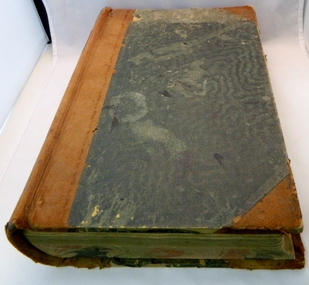
Book - Ledger Commercial, unknown, Circa 1920
... rural area. Emphasis on neatness was ingrained in students at a young age. This era was well before general commercial stock computer based inventories. Generally all students of commerce...rural area. Emphasis on neatness was ingrained in students at a young age. This era was well before general commercial stock computer based inventories. Generally all students of commerce ...Historically(1920 to 1927), this ledger not only details the legible hand writing of this era but also the day to day commercial activity in the Kiewa Valley region. The neatness and the diligence of those who were required to pen the information into this ledger was a requirement by all who were involved in commercial trade be it in the city or in the rural area. Emphasis on neatness was ingrained in students at a young age. This era was well before general commercial stock computer based inventories. Generally all students of commerce required an accuracy in writing and arithmetic. Neatness and order were a "selection criteria" requirementThis item clearly identifies the Kiewa Valley as having a substantial financial hub to accommodate the various commercial enterprises within a rural environment Circa 1880's. Although Kiewa Valley had mining, agriculture, cattle and sheep it was also composed of a mixed society, encompassing all levels of society at that period. It identifies some the commercial activities(newsagency) undertaken by specific families farming in the Kiewa Valley and relates their history in the period of 1920 to 1927This ledger has a very thick cover of strong compressed cardboard. It has a cloth covering (Glued on) and is a faded blue colour. The corners of the opening side of the cover are reinforced by suede cloth,in a triangular shape, and enclose both the front and inside portions of the the ledger. The spin is reinforced by a suede section to provide increased strength and protection. The inside cover (both front and back) has an orange and brown bubbles and specks pattern. The grammage of the lined sheets (blue) is approximately 120g/m. The first twelve pages are indented and alphabetically marked with alternating red and black letters (two letters per page except for the last page which has three letters). The remaining pages are numbered in black print at the top outside edge of each page. There are 742 page numbers. Each page has thirty two blue horizontal lines and one double red line (second from top) Each page has thirteen vertical lines starting from the top horizontal double red lines and ending at the bottom of the page. These lines segregate the page into blocks for the date, the transaction and financial input. There are three double vertical red lines which designate the amount of money of each transaction (in pounds shillings,and pence).Located on the top section of the spin (in gold print on red background) "LEDGER" This is framed within a golden printed pattern of straight and squiggly lines.ledger, book keeping, 1920s commercial transactions, local kiewa valley commercial history -
 Kiewa Valley Historical Society
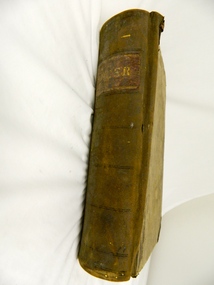
Book - Ledger Commercial, "Ledger No. 4", Circa 1895
... commerce required an accuracy in writing and arithmetic. Neatness and order were a selection requirement. This ledger belonged to a general store, which was a forerunner to supermarkets and specialty stores. The shop provided everything from food, postage stamps, nails, tobacco, boots and Epsom salts. The general store provided nearly every product required to exist in a remote rural...commerce required an accuracy in writing and arithmetic. Neatness and order were a selection requirement. This ledger belonged to a general store, which was a forerunner to supermarkets and specialty stores. The shop provided everything from food, postage stamps, nails, tobacco, boots and Epsom salts. The general store provided nearly every product required to exist in a remote rural ...Historically this ledger not only details the legible hand writing of this era but also the day to day commercial activity in this region(first entry in 1895).The neatness and the diligence of those who were required to pen the information was a requirement by all who were in commercial trade. Emphasis on neatness was ingrained in students at a young age. This era was well before general typewriters and computers. Generally all students of commerce required an accuracy in writing and arithmetic. Neatness and order were a selection requirement. This ledger belonged to a general store, which was a forerunner to supermarkets and specialty stores. The shop provided everything from food, postage stamps, nails, tobacco, boots and Epsom salts. The general store provided nearly every product required to exist in a remote rural area of Australia in the 1800's.This item clearly identifies the Kiewa Valley as having a substantial financial hub to accommodate the various commercial enterprises within a rural environment Circa 1880's. Although Kiewa Valley had mining, agriculture, cattle and sheep it was also composed of a mixed society, encompassing all levels of society at that period. It identifies some the commercial activities(newsagency/general store) undertaken by specific families farming in the Kiewa Valley and relates their history in the pioneer period of the late 1800's. Some of those pioneers still have descendants living on the same home sites provided by the 1847 Land Act.This ledger has a very thick cover of strong compressed cardboard. Originally it had a cloth covering both front and back(Glued on) but due to wear and tear it is only attached to the back cover) and is a faded blue colour. The corners of the opening side of the cover are reinforced by suede cloth,in a triangular shape, and enclose both the front and inside portions of the the ledger. The spine is reinforced by a suede section to provide increased strength and protection. The inside cover (both front and back) has an orange bubbles with red and blue sinuous lines forming shapes in a haphazardous pattern. The grammage of the lined sheets (blue) is approximately 120g/m. Originally the first seven of twelve pages were indented and alphabetically marked with black letters (one letter per page) however this ledger had been modified to cover only the initials of customers and the pages of unused letters were glued to the previous page. The remaining pages are numbered in black print at the top outside edge of each page. There are 890 page numbers. Each page has thirty seven blue horizontal lines and one double red line ( top). Each page has thirteen vertical lines starting from the top horizontal double red lines and ending at the bottom of the page. These lines segregate the page into blocks for the date, the transaction and financial input. There are three double vertical red lines which designate the amount of money of each transaction (in pounds, shillings,and pence).On the suede spine in gold lettering and on a red (port coloured) background "LEDGER"grocery shop, haberdashery, general store -
 Kiewa Valley Historical Society
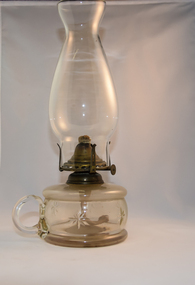
Lamp Table Kerosene, pre 1950s
... rural regions before state wide electricity was available. The significance of this kerosene lamp to the Kiewa Valley is that it provides the proof that before the Hydro electricity scheme was established in the valley, householder and commerce relied on candle/kerosene power. ...This particular lamp was made for the dinner table or "parlour". This was the most effective indoor lighting before electrical lighting was introduced in the 1940's. These table lights would have still been used after this time as emergency lighting during electrical power shortages (outages). These emergency lighting lamps, including candles, were eventually replaced by battery power. The Kiewa Valley was supplied by electricity well before many other rural regions due to the State Electricity Commission constructing the Kiewa Hydro Electricity power turbines (late 1930's to mid 1950's). Petrol and diesel generators were used in other rural regions before state wide electricity was available.The significance of this kerosene lamp to the Kiewa Valley is that it provides the proof that before the Hydro electricity scheme was established in the valley, householder and commerce relied on candle/kerosene power. Although at certain times before battery and solar energy became the night time lighters the sole source of lighting was candle power and kerosene power. The supply of both however was still required by most of the population by supply from city and larger country town suppliers. This nearly fully glass made table lamp(kerosene) has a large glass bowl/basin like kerosene storage unit with a glass circular finger handle (similar to a ordinary cup). Formed single star like patterns (50mm apart) encircle the centre of the bowl. On top of the bowl sits the metal (brass) wick holder with a small wheel protruding out one side for adjusting the wick length(increasing or decreasing the strength(regulating) of the amount of light projected. Four prongs rise from the circular base light fixture holding the windproof and refractive glass "pot belly" shield. lamp table, kerosene lamp, household lighting (non electrical) -
 Kiewa Valley Historical Society
Scales Weighing Pocket, circa early 1900s
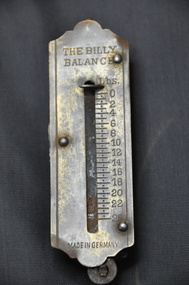
... In the Kiewa Valley small quantity commercial undertakings e.g. gold mining, fur pelts and rabbit meat trade did not require bulk weight type scales. Commerce in rural production e.g. fruit and vegetables involved more farmers and their staff in a barter and/or "in kind" payments. ...Historically this item would have been used by gold miners, rabbit shooters, mobile "Rag and Bone" traders and other mobile(in caravans and/or horse drawn cart) traders of various small goods and haberdashery. Although marked as not to be used as trade, the isolation and sometimes difficult terrain rules out using larger and more delicate scales. In the early 1900s rough roads and severe weather conditions forced traders to be more flexible in trading with weights and measures. The "close enough is good enough" doctrine was the Australian outback rule of thumb.The significance of this item in the Kiewa Valley during this period demonstrates the slower acceptance of accurate trading measure using the country side principle "my hand shake is my bond". In the Kiewa Valley small quantity commercial undertakings e.g. gold mining, fur pelts and rabbit meat trade did not require bulk weight type scales. Commerce in rural production e.g. fruit and vegetables involved more farmers and their staff in a barter and/or "in kind" payments. This was more so in the depression years 1929 to late 1930s. Self sufficiency was to a large extent more attainable in this region than in the city/ large country town environment. The Australian "fair go" ethical approach to life and commerce was very much ingrained in those living in country regions, like Kiewa Valley as is demonstrated by the not so accurate hand balance, spring loaded scales.This brass "faced" portable Pocket Balance ( Fish Scales) has front plate made from thin pressed brass. The mild steel spring mechanism enclosed by black painted medium gauge steel cover( three quarters cylindrical). Front scale face and rear spring casing fastened by three rivets. Spring loaded marker blade is located in the centre of the front plate. A steel " finger holder" ring is attached at the top of the scale unit from one of two pre drilled holes. The top is for holding the scale upright and the bottom for a hook to dangle the item to be weighed from the bottom. See item KVHS 0223 for similar scales"THE BILLY BALANCE" and at the bottom "MADE IN GERMANY"antique pocket balance, scales, mobile weights, vintage appliances -
Bendigo Historical Society Inc.
Newspaper - Bendigo Advertiser Collection: Small Town With Big Hearts Article on Raywood, June 23 1993
... commerce. Government costs and changing economic conditions have impacted local employment and services. Residents participate in school councils, volunteer firefighting, and community organizations. The town school remains a focal point, with about 80 pupils and hopes to avoid closure or change. Despite hardships, such as floods and fires, residents like Dennis and Jill O'Gorman (publicans) and the Neate family remain committed to Raywood.Long-term residents, like Stewie, emphasize the importance of keeping both their businesses and the town alive. Raywood's story highlights the importance of local initiative, adaptability, and strong community ties in maintaining rural...commerce. Government costs and changing economic conditions have impacted local employment and services. Residents participate in school councils, volunteer firefighting, and community organizations. The town school remains a focal point, with about 80 pupils and hopes to avoid closure or change. Despite hardships, such as floods and fires, residents like Dennis and Jill O'Gorman (publicans) and the Neate family remain committed to Raywood.Long-term residents, like Stewie, emphasize the importance of keeping both their businesses and the town alive. Raywood's story highlights the importance of local initiative, adaptability, and strong community ties in maintaining rural ...Raywood is portrayed as a close-knit, self-reliant rural community where local businesses and residents play a central role in sustaining town life. Residents take initiative, such as managing the swimming pool access themselves and seeking new financial services after the local bank agency closed. Local businesses adapt to challenges, like the butcher expanding to home deliveries to stay afloat. The butcher's shop, pub, general store, and newsagency are central to daily life and social interaction.Business owners, such as Ron the butcher and Stewie the shopkeeper, are deeply invested in the town's survival and continuity. The closure of the Commonwealth Bank agency was met with community resolve to prove their independence. Young people increasingly spend money outside town, posing a challenge to local commerce. Government costs and changing economic conditions have impacted local employment and services. Residents participate in school councils, volunteer firefighting, and community organizations. The town school remains a focal point, with about 80 pupils and hopes to avoid closure or change. Despite hardships, such as floods and fires, residents like Dennis and Jill O'Gorman (publicans) and the Neate family remain committed to Raywood.Long-term residents, like Stewie, emphasize the importance of keeping both their businesses and the town alive. Raywood's story highlights the importance of local initiative, adaptability, and strong community ties in maintaining rural town life. Northern United Football Club won four consecutive premierships, but some locals feel these victories were tainted because the club paid high prices to attract top players from Bendigo.When the financial support ended, these players left, leaving the club without a strong foundation or new local talent. The club struggled after the departure of paid players, lacking reliable and affordable local players. A drought period followed, with Northern United going two years without a win. The club recently celebrated a rare victory, only its second in two-and-a-half years, which brought great joy to the community. The town now values these hard-earned wins more than the earlier, expensive premierships.Small Towns With Big Hearts Ravenswood. Series of photos and information about Raywood. Pictures by Peter Hyett. Written by Wayne Gregson. This item contains the following documents newspaper articles and black and white photos: 8091.606a Part of Page 22, the Bendigo Advertiser Weds Nov 03 1993 8091.606b Part of Page 22, the Bendigo Advertiser Wednesday Nov 03 1993 8091.606c Black and White Photo of Ron the Butcher - Contact BHS for Details 8091.606d Black and White Photo of Beverley Neale, the Post Mistriss - Contact BHS for Details 8091.606e Black and White Elevated view of Raywood and countryside - Contact BHS for Details 8091.606f Black and White General Store and Town Hall - Contact BHS for Details 8091.606g Black and White Photo of Sign Posts - Contact BHS for Details 8091.606h Black and White Photo of Stewie McGregor Store-keeper - Contact BHS for Details 8091.606i Black and White Photo of Dennis and Jill O'Gorman Publicans of the Raywood Hotel - Contact BHS for Details 8091.606j Black and White Photo of an old cart behind a fence - Contact BHS for Detailsnewspaper, bendigo advertiser, raywood -
 Uniting Church Archives - Synod of Victoria
Bw photo, Undated
... rural areas of Tasmania and Victoria. The family saw the grinding poverty and desperate human need wrought by the Depression as a ceaseless tide of people came knocking at the door of the local parsonage for help. In 1941, Perkins enlisted as an officer in the Australian Navy and served in the Pacific theatre until 1946. To his children, he explained his justification as being the real threat of invasion but it was a war that altered the direction of his life. On discharge he abandoned his completed studies at Melbourne University in law and commerce...rural areas of Tasmania and Victoria. The family saw the grinding poverty and desperate human need wrought by the Depression as a ceaseless tide of people came knocking at the door of the local parsonage for help. In 1941, Perkins enlisted as an officer in the Australian Navy and served in the Pacific theatre until 1946. To his children, he explained his justification as being the real threat of invasion but it was a war that altered the direction of his life. On discharge he abandoned his completed studies at Melbourne University in law and commerce ...Harvey Perkins was a Methodist minister and a peacemaker throughout his life of service and social activism. He knew the certainty that without justice there can be no peace, within, or between, communities and nations. He was greatly influenced by ''liberation theology'' and framed his life of thought, analysis and action on the teachings of the Bible. He was also a visionary in working closely with Asian churches on ecumenical and social justice issues in a way that anticipated by decades the closer relationships Australia now enjoys with Asia. He understood that any form of intervention altered the power relationship within a community and often challenged the dominant social interests in the post-colonial Asian countries. He knew any form of aid had to empower its recipients and be based on a partnership of equality. In the early 1960s, Perkins was an opponent of the war in Indochina and conscription in Australia and played an important role in activating congregations to protest against the war. His keen intelligence, knowledge of history and analytical skills demolished the false foundation on which the US and its allies entered the war and he organised medical and social work teams in South Vietnam and Laos to help refugees and displaced persons. In the 1970s Perkins played an important role in ''decolonising'' and devolving power in the Methodist Church missions in Aboriginal Australia and the Pacific Islands by analysing power structures and relationships through what he had learnt in Asia. Harvey Perkins and his twin sister, Jean, were born in Tasmania on January 29, 1919, children of Leslie Perkins and his wife, Doris (nee Cook). Leslie was a Methodist minister and Harvey and Jean's childhood was spent in parishes in urban and rural areas of Tasmania and Victoria. The family saw the grinding poverty and desperate human need wrought by the Depression as a ceaseless tide of people came knocking at the door of the local parsonage for help. In 1941, Perkins enlisted as an officer in the Australian Navy and served in the Pacific theatre until 1946. To his children, he explained his justification as being the real threat of invasion but it was a war that altered the direction of his life. On discharge he abandoned his completed studies at Melbourne University in law and commerce and studied for a degree in divinity. He was active in the World Student Christian Federation and in 1949, was ordained into the Methodist Church. A few years later, Perkins travelled to a World Student Christian Federation conference in Canada, on his way to study in Cambridge, and met an expatriate, Jill McCrory. They married in 1953. After Cambridge, Perkins returned to Australia and served as a minister in the Mitcham area of the growing Melbourne outer suburbs until 1956, when he was appointed General Secretary of the Australian Council of Churches and director of the Inter-Church Aid and Refugee World Service. From 1968 to 1971, Perkins worked with the East Asian Christian Conference and then took a position with the World Council of Churches in Geneva with its Commission on Churches Participation in Development. He returned to Australia in 1973 to a position with the Methodist Board of Missions and then returned to the Christian Conference of Asia in 1976 and relocated to Singapore for several years. Before retiring in 1984 he worked with the Uniting Church Board of Social Responsibility. In retirement Perkins continued to work in the Dee Why parish, enjoying preaching, leading study groups and working as a pastor in a local community. Along with his work, Perkins had a lifelong passion for AFL and his beloved team North Melbourne. Wherever he was in the world he could be found fiddling with a short-wave radio to listen to a game. In later years, Perkins developed Alzheimer's and his home became his haven until two weeks before his death. Harvey Perkins is survived by Jill, children Mary, Ro, David, Marguerite, Anna, Harvey and Kate and their partners, 13 grandchildren and two great-grandchildren. Jean died in 1981. (Obituary in the SMH by David Perkins) Head and shoulders portrait of Rev. Harvey PerkinsRev. Harvey Perkinsrev. harvey perkins; methodist minister; christian conference of asia; australian council of churches -
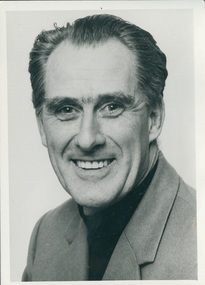 Uniting Church Archives - Synod of Victoria
BW photo, Undated
... rural areas of Tasmania and Victoria. The family saw the grinding poverty and desperate human need wrought by the Depression as a ceaseless tide of people came knocking at the door of the local parsonage for help. In 1941, Perkins enlisted as an officer in the Australian Navy and served in the Pacific theatre until 1946. To his children, he explained his justification as being the real threat of invasion but it was a war that altered the direction of his life. On discharge he abandoned his completed studies at Melbourne University in law and commerce...rural areas of Tasmania and Victoria. The family saw the grinding poverty and desperate human need wrought by the Depression as a ceaseless tide of people came knocking at the door of the local parsonage for help. In 1941, Perkins enlisted as an officer in the Australian Navy and served in the Pacific theatre until 1946. To his children, he explained his justification as being the real threat of invasion but it was a war that altered the direction of his life. On discharge he abandoned his completed studies at Melbourne University in law and commerce ...Harvey Perkins was a Methodist minister and a peacemaker throughout his life of service and social activism. He knew the certainty that without justice there can be no peace, within, or between, communities and nations. He was greatly influenced by ''liberation theology'' and framed his life of thought, analysis and action on the teachings of the Bible. He was also a visionary in working closely with Asian churches on ecumenical and social justice issues in a way that anticipated by decades the closer relationships Australia now enjoys with Asia. He understood that any form of intervention altered the power relationship within a community and often challenged the dominant social interests in the post-colonial Asian countries. He knew any form of aid had to empower its recipients and be based on a partnership of equality. In the early 1960s, Perkins was an opponent of the war in Indochina and conscription in Australia and played an important role in activating congregations to protest against the war. His keen intelligence, knowledge of history and analytical skills demolished the false foundation on which the US and its allies entered the war and he organised medical and social work teams in South Vietnam and Laos to help refugees and displaced persons. In the 1970s Perkins played an important role in ''decolonising'' and devolving power in the Methodist Church missions in Aboriginal Australia and the Pacific Islands by analysing power structures and relationships through what he had learnt in Asia. Harvey Perkins and his twin sister, Jean, were born in Tasmania on January 29, 1919, children of Leslie Perkins and his wife, Doris (nee Cook). Leslie was a Methodist minister and Harvey and Jean's childhood was spent in parishes in urban and rural areas of Tasmania and Victoria. The family saw the grinding poverty and desperate human need wrought by the Depression as a ceaseless tide of people came knocking at the door of the local parsonage for help. In 1941, Perkins enlisted as an officer in the Australian Navy and served in the Pacific theatre until 1946. To his children, he explained his justification as being the real threat of invasion but it was a war that altered the direction of his life. On discharge he abandoned his completed studies at Melbourne University in law and commerce and studied for a degree in divinity. He was active in the World Student Christian Federation and in 1949, was ordained into the Methodist Church. A few years later, Perkins travelled to a World Student Christian Federation conference in Canada, on his way to study in Cambridge, and met an expatriate, Jill McCrory. They married in 1953. After Cambridge, Perkins returned to Australia and served as a minister in the Mitcham area of the growing Melbourne outer suburbs until 1956, when he was appointed General Secretary of the Australian Council of Churches and director of the Inter-Church Aid and Refugee World Service. From 1968 to 1971, Perkins worked with the East Asian Christian Conference and then took a position with the World Council of Churches in Geneva with its Commission on Churches Participation in Development. He returned to Australia in 1973 to a position with the Methodist Board of Missions and then returned to the Christian Conference of Asia in 1976 and relocated to Singapore for several years. Before retiring in 1984 he worked with the Uniting Church Board of Social Responsibility. In retirement Perkins continued to work in the Dee Why parish, enjoying preaching, leading study groups and working as a pastor in a local community. Along with his work, Perkins had a lifelong passion for AFL and his beloved team North Melbourne. Wherever he was in the world he could be found fiddling with a short-wave radio to listen to a game. In later years, Perkins developed Alzheimer's and his home became his haven until two weeks before his death. Harvey Perkins is survived by Jill, children Mary, Ro, David, Marguerite, Anna, Harvey and Kate and their partners, 13 grandchildren and two great-grandchildren. Jean died in 1981. (Obituary in the SMH by David Perkins) Head and shoulders portrait of the Rev. Harvey Perkins. Photo taken some years before the photo of him in F524 -9Rev. Harvey Perkinsrev. harvey perkins; methodist minister; christian conference of asia; australian council of churches -
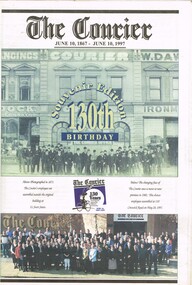 Ballarat Tramway Museum
Newspaper, The Rural Press (Vic ) Pty Ltd, The Courier 10/06/1867 - 10/06/1997, 10/06/1997 12:00:00 AM
... Trams tramways Ballarat The Courier Ballarat Commerce Ballarat Social History ESCo nil 48 page supplement to Ballarat Courier of 10/06/1997, celebrating 130 (130th) years of publication. many adverts, stories, & social history notes & photographs - black & white & colour printing. Trams - see p30 (horse tram photos) p32 (ESCo era), p33 - (late 1960's, early 70's0 all with trams. Includes reproduction of first issue. Images added 3-12-2016 The Courier 10/06/1867 - 10/06/1997 Newspaper The Rural ...48 page supplement to Ballarat Courier of 10/06/1997, celebrating 130 (130th) years of publication. many adverts, stories, & social history notes & photographs - black & white & colour printing. Trams - see p30 (horse tram photos) p32 (ESCo era), p33 - (late 1960's, early 70's0 all with trams. Includes reproduction of first issue. Images added 3-12-2016niltrams, tramways, ballarat, the courier, ballarat commerce, ballarat social history, esco -
 Wodonga & District Historical Society Inc
Financial record - Kalamazoo - Acme Visible Card Book, c. 1930s
... rural produce business to the Kelly brothers in 2006. Local significance due to its use in the J. Mann & Sons General Store in High St, Wodonga and association with the prominent Mann family. National significance as kalamazoos were manufactured by an Australian company and used in the 1930s for accounting purposes by local businesses. mann accounting financial record high street wodonga wodonga commerce business kalamazoo general store j. mann & sons Details for each customer provided on individual cards. ...Part of the 'Mann' collection in the Wodonga Historical Society, used for accounting in the J. Mann & Sons General Store in High Street, Wodonga in 1934-35. J. Mann and Sons was first established as a farm produce store in 1921. The range of products was extended in the 1930s and included groceries and hardware, as well as the first petrol bowser in Wodonga outside the store. After WWII, the premises were extended and the range of products continued to increase. In the 1960s the Mann Family opened a new supermarket in Wodonga, in addition to the hardware business, providing steel, plumbing and industrial supplies, and they employed over 100 people at one stage. With changes in the retail industry, the Mann Family sold the main hardware business to Bunnings and the steel and rural produce business to the Kelly brothers in 2006.Local significance due to its use in the J. Mann & Sons General Store in High St, Wodonga and association with the prominent Mann family. National significance as kalamazoos were manufactured by an Australian company and used in the 1930s for accounting purposes by local businesses.Visible card book or kalamazoo used by the accounts department of J. Mann & Sons General Store, High Street, Wodonga, in 1934-35 for customers with surnames from K to P.Details for each customer provided on individual cards. "KALAMAZOO - ACME / Visible Card Equipment / THE "RAPID SIGHT" METHOD / Kalamazoo (AUST.) LTD. / SYDNEY - MELBOURNE - BRISBANE - ADELAIDE"mann, accounting, financial record, high street wodonga, wodonga, commerce, business, kalamazoo, general store, j. mann & sons -
 Wodonga & District Historical Society Inc
Functional object - National cash register used in the J.Mann & Sons General Store in Wodonga
... rural produce business to the Kelly brothers in 2006. The National cash register has local significance due to its use in the J. Mann & Sons General Store in High St, Wodonga and the association with the Mann family. cash register national cash register mann high street wodonga local business commerce general stores j. mann & sons "National" "U 5044298 / CL6136 16R&S10" on a small rectangular metal plate on the front of the cash register. ...The National cash register was used in the J. Mann & Sons General Store in High St., Wodonga, Victoria, and is part of the 'Mann' collection in the Wodonga Historical Society. J. Mann and Sons was first established as a farm produce store in 1921. The range of products was extended in the 1930s and included groceries and hardware, as well as the first petrol bowser in Wodonga outside the store. After WWII, the premises were extended and the range of products continued to increase. In the 1960s the Mann Family opened a new supermarket in Wodonga, in addition to the hardware business, providing steel, plumbing and industrial supplies, and they employed over 100 people at one stage. With changes in the retail industry, the Mann Family sold the main hardware business to Bunnings and the steel and rural produce business to the Kelly brothers in 2006. The National cash register has local significance due to its use in the J. Mann & Sons General Store in High St, Wodonga and the association with the Mann family. National cash register used in the J. Mann & Sons General Store in High St., Wodonga, Victoria. It has a metal exterior with faux wood grain and there is a grey electrical cable attached to the proper left side."National" "U 5044298 / CL6136 16R&S10" on a small rectangular metal plate on the front of the cash register.cash register, national cash register, mann, high street wodonga, local business, commerce, general stores, j. mann & sons -
 Wodonga & District Historical Society Inc
Functional object - Amano Time Clock used in the J. Mann & Sons General Store in Wodonga, c. 1960s
... rural produce business to the Kelly brothers in 2006. The Amano time clock has local significance due to its use in the J. Mann & Sons General Store in High St, Wodonga and the association with the prominent Mann family. mann general store wodonga time clock commerce local business high street j. mann & sons "AMANO" - on the clock face "TIMETEK SYSTEMS / Phone or Fax: / BU..NESS / BISCOM / COMMUNICATIONS" - on the lower front "Model 6733 Serial No 23229 / Volts /240 / Watts 5 / Hz 50 / AMANO CORPORATION / MADE IN JAPAN / S 422" - on the lower proper left side Green metal electronic Amano time clock used by employees in the J. ...Part of the 'Mann' collection, used for time keeping by employees in the J. Mann & Sons General Store in Wodonga High Street in the c 1960s. J. Mann and Sons was first established as a farm produce store in 1921. The range of products was extended in the 1930s and included groceries and hardware, as well as the first petrol bowser in Wodonga outside the store. After WWII, the premises were extended and the range of products continued to increase. In the 1960s the Mann Family opened a new supermarket in Wodonga, in addition to the hardware business, providing steel, plumbing and industrial supplies, and they employed over 100 people at one stage. With changes in the retail industry, the Mann Family sold the main hardware business to Bunnings and the steel and rural produce business to the Kelly brothers in 2006.The Amano time clock has local significance due to its use in the J. Mann & Sons General Store in High St, Wodonga and the association with the prominent Mann family.Green metal electronic Amano time clock used by employees in the J. Mann & Sons General Store in Wodonga, with a brown clock face and light coloured numbers. Two labels on the lower part of the front surface with a horizontal lock between them, and a small metal plate on the proper left side with the model and serial numbers, plus "S 422" written in black marker below. Slot in the top surface of the time clock for the employees' time cards."AMANO" - on the clock face "TIMETEK SYSTEMS / Phone or Fax: / BU..NESS / BISCOM / COMMUNICATIONS" - on the lower front "Model 6733 Serial No 23229 / Volts /240 / Watts 5 / Hz 50 / AMANO CORPORATION / MADE IN JAPAN / S 422" - on the lower proper left sidemann, general store, wodonga, time clock, commerce, local business, high street, j. mann & sons
