
Showing 3 items matching "rural product technology"
-
 Federation University Historical Collection
Pamphlet - Applied Science Courses, Applied Science Course Pamphlets 1980s, 1980s
... ...Rural Product Technology....1 Trifold pale pink pamphlet for Applied Biology - Rural Product Technology .2 Trifold pale blue pamphlet for Applied Physics .3 Trifold pale green pamphlet for Metallurgy .4 Tan A5 booklet for Bachelor of Applied Science .5 Beige A5 booklet with maroon and white images for Applied Science 1983 .6 Tan, grey and black A5 booklet for Applied Science 1987 .7 Brown, Beige and White A5 booklet for Applied Science (some pages missing)...Ballarat College of Advanced Education is a predecessor of Federation University Applied Biology Rural Product Technology Ballarat College of Advanced Education Applied Physics Pamphlets Courses Metallurgy Applied Science R.R. ...Ballarat College of Advanced Education is a predecessor of Federation University .1 Trifold pale pink pamphlet for Applied Biology - Rural Product Technology .2 Trifold pale blue pamphlet for Applied Physics .3 Trifold pale green pamphlet for Metallurgy .4 Tan A5 booklet for Bachelor of Applied Science .5 Beige A5 booklet with maroon and white images for Applied Science 1983 .6 Tan, grey and black A5 booklet for Applied Science 1987 .7 Brown, Beige and White A5 booklet for Applied Science (some pages missing).5 R.R. Schrieke Chemistry written on the frontapplied biology, rural product technology, ballarat college of advanced education, applied physics, pamphlets, courses, metallurgy, applied science, r.r. schrieke, chemistry -
 Federation University Historical Collection
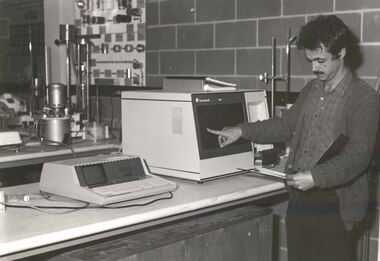
Photograph - Black and White Photograph, Ballarat College of Advanced Education Biology Department, 04/1985
... biology andrew ristrom lorraine leheny rural products apple cider elssefie junior ghana international student .1) Andrew Ristrom works on computers in the Biology department at Ballarat College of Advaned Education (Mt Helen). .2) Lorraine Leheny andRex Elssefie Junior (from Ghana) making apple cider in Food Technology. ....1) Andrew Ristrom works on computers in the Biology department at Ballarat College of Advaned Education (Mt Helen). .2) Lorraine Leheny andRex Elssefie Junior (from Ghana) making apple cider in Food Technology.biology, andrew ristrom, lorraine leheny, rural products, apple cider, elssefie junior, ghana, international student -
 Kiewa Valley Historical Society
Bowl Ceramic, 1955 to 1962
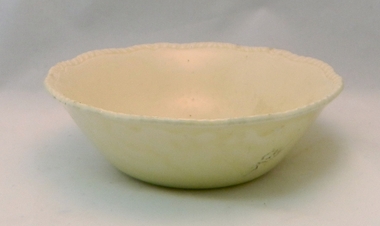
... rural sections and changing economic ties with Asia and the USA connected to the greater influx of dinner wares and the cheaper produce. The "throw away" society mores , developed in the USA, after World War II, and transferred to Australia by new technology driven media outlets had a very effective outcome for the demise of quality products from the "mother" country. ceramic bowls kitchen crockery domestic plates On the outside bottom the makers seal "Est. 1792" and in a double lined scroll like frame "RIDGEWAY" underneath in smaller print "Made In England". ...This bowl was imported from "the mother" country (England) in the period when good table ware was either shipped from England or Europe. It was in the period before the American and Asian imports were sought (post World War II and the depression/recession years), when only the best quality kitchenware was preferred and the cheaper mass produced goods were not on the market. The maker's details on the bottom puts the manufacture time between 1955 to 1962.This item, used by one of the Kiewa Valley's oldest established families provides the historical provenance for the item and the period purchased within the time frame when change in the purchasing (in cities) practices from traditional sources, England and Europe was slowly evolving from these sources to cheaper USA and Asian producers. This change however was slower in rural sectors than the cities and larger rural towns. The "traditional" sources was ingrained into the mores of rural sections and changing economic ties with Asia and the USA connected to the greater influx of dinner wares and the cheaper produce. The "throw away" society mores , developed in the USA, after World War II, and transferred to Australia by new technology driven media outlets had a very effective outcome for the demise of quality products from the "mother" country.This buff coloured glazed ceramic bowl was manufactured by an official potter to Her Majesty Queen Victoria. It has a "patterned" top rim but no other details.On the outside bottom the makers seal "Est. 1792" and in a double lined scroll like frame "RIDGEWAY" underneath in smaller print "Made In England".ceramic bowls, kitchen crockery, domestic plates
