
Showing 4 items matching "russian front 1918-1919"
-
 Lara RSL Sub Branch
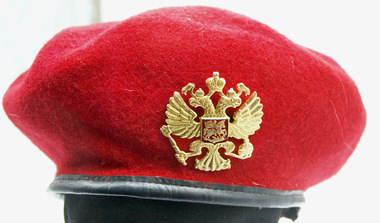
Uniform - Russian paratrooper red beret
... russian front 1918-1919...In April 1930, Soviet industry produced its first run of domestic parachutes, not surprisingly patterned on the Irvin style. russian front 1918-1919 russian paratroopers history of russian paratroopers history of change in aircraft to cater for paratroopers fabric informatiion labelt i.e. dry clean Red felted wool beret withblack leather hat trim Uniform Russian paratrooper red beret ...The Soviet Union was one of the first countries to realize the unique potential of parachute forces. As early as 1927 there were reports of parachute troops being used against bandits in Central Asia. Within the next two to three years Leonid G. Minov began to organize the first military parachute units. He traveled to the United States to study parachute strategy and techniques employed in air rescue missions. He returned to his country with a supply of American-made Irvin parachutes. In April 1930, Soviet industry produced its first run of domestic parachutes, not surprisingly patterned on the Irvin style.Red felted wool beret withblack leather hat trimfabric informatiion labelt i.e. dry cleanrussian front 1918-1919, russian paratroopers history of russian paratroopers, history of change in aircraft to cater for paratroopers -
 4th/19th Prince of Wales's Light Horse Regiment Unit History Room
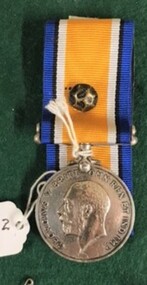
Medal, British War Medal 1914-18, 1919
... 1919. The silver or bronze medal was awarded to officers and men of the British and Imperial Forces who either entered a theatre of war or entered service overseas between 5th August 1914 and 11th November 1918 inclusive. This was later extended to services in Russia, Siberia and some other areas in 1919 and 1920. Approximately 6.5 million British War Medals were issued. Approximately 6.4 million of these were the silver versions of this medal. Around 110,000 of a bronze version were issued mainly to Chinese, Maltese and Indian Labour Corps. The front...1919. The silver or bronze medal was awarded to officers and men of the British and Imperial Forces who either entered a theatre of war or entered service overseas between 5th August 1914 and 11th November 1918 inclusive. This was later extended to services in Russia, Siberia and some other areas in 1919 and 1920. Approximately 6.5 million British War Medals were issued. Approximately 6.4 million of these were the silver versions of this medal. Around 110,000 of a bronze version were issued mainly to Chinese, Maltese and Indian Labour Corps. The front ...Established on 26th July 1919. The silver or bronze medal was awarded to officers and men of the British and Imperial Forces who either entered a theatre of war or entered service overseas between 5th August 1914 and 11th November 1918 inclusive. This was later extended to services in Russia, Siberia and some other areas in 1919 and 1920. Approximately 6.5 million British War Medals were issued. Approximately 6.4 million of these were the silver versions of this medal. Around 110,000 of a bronze version were issued mainly to Chinese, Maltese and Indian Labour Corps. The front (obv or obverse) of the medal depicts the head of George V. The recipient's service number, rank, name and unit was impressed on the rim.The medal is silver and circular. A truncated bust of King George V is on the obverse, while there is a depiction of Saint George on the reverse. There is a straight clasp carrying a watered silk ribbon. This has a central band of golden yellow with three stripes of white, black and blue on both sides. The blue stripes come at the edges. 6,610,000 British War Medals were issued. The soldier's regiment and number are inscribed around the rim. Recipient: 908 DVR J E Whyte 3 LH FD AMBwar medal 1914-18 -
 8th/13th Victorian Mounted Rifles Regimental Collection
Medal - Whittaker BWM
... 1918 inclusive. This was later extended to services in Russia, Siberia and some other areas in 1919 and 1920. Approximately 6.5 million British War Medals were issued. Approximately 6.4 million of these were the silver versions of this medal. Around 110,000 of a bronze version were issued mainly to Chinese, Maltese and Indian Labour Corps. The front...1918 inclusive. This was later extended to services in Russia, Siberia and some other areas in 1919 and 1920. Approximately 6.5 million British War Medals were issued. Approximately 6.4 million of these were the silver versions of this medal. Around 110,000 of a bronze version were issued mainly to Chinese, Maltese and Indian Labour Corps. The front ...The silver or bronze medal was awarded to officers and men of the British and Imperial Forces who either entered a theatre of war or entered service overseas between 5th August 1914 and 11th November 1918 inclusive. This was later extended to services in Russia, Siberia and some other areas in 1919 and 1920. Approximately 6.5 million British War Medals were issued. Approximately 6.4 million of these were the silver versions of this medal. Around 110,000 of a bronze version were issued mainly to Chinese, Maltese and Indian Labour Corps. The front (obv or obverse) of the medal depicts the head of George V. The recipient’s service number, rank, name and unit was impressed on the rim.World War One British War Medal 1914-1918 awarded to 260268 Private J Whittaker. Medal is attached to board with thumb tack through ribbon.bwm, medal, world war one, wwi -
Emerald Museum & Nobelius Heritage Park
Award - British War Medal 1914-20, Royal Mint, 1919-1920
... front in France in February 1918. In that year the 33rd Battalion engaged in a number of significant battles as the Germans launched their ‘Spring Offensive’ – a final push for victory following the revolution and collapse of the Russian army in late 1917. Some of the notable engagements include the Battle of Mont St Quentin, the Battle of Amiens and the Battle of Villers Bretonneux. The British War Medal 1914-20 was instituted by King George V in 1919...front in France in February 1918. In that year the 33rd Battalion engaged in a number of significant battles as the Germans launched their ‘Spring Offensive’ – a final push for victory following the revolution and collapse of the Russian army in late 1917. Some of the notable engagements include the Battle of Mont St Quentin, the Battle of Amiens and the Battle of Villers Bretonneux. The British War Medal 1914-20 was instituted by King George V in 1919 ...James Beashel enlisted for the Australian Imperial Force (AIF) on 1 June 1917. He served with the 33rd Battalion and was marched out to the front in France in February 1918. In that year the 33rd Battalion engaged in a number of significant battles as the Germans launched their ‘Spring Offensive’ – a final push for victory following the revolution and collapse of the Russian army in late 1917. Some of the notable engagements include the Battle of Mont St Quentin, the Battle of Amiens and the Battle of Villers Bretonneux. The British War Medal 1914-20 was instituted by King George V in 1919 to mark the end of the First World War. It was awarded to members of British and Imperial forces who had served for a prescribed period during the course of the war, or who had died in active service. Beashel was not the most disciplined of soldiers throughout his time with the AIF. He was regularly disciplined for offences such as neglecting to obey orders, drunkenness, going AWOL and missing marching parades. He was discharged from the AIF at the conclusion of the First World War and returned home to New South Wales. Later in life he relocated to Victoria and died in 1965. For his service he received the Victory Medal, the British War Medal 1914-20, and the 1914-15 Star.This item is historically significant as it represents the service of an Australian in one of the most significant events of the twentieth century, and indeed in human history. 416,809 Australians enlisted for service, of which more than 60,000 were killed and more than 150,000 were wounded, gassed, or taken prisoner. The First World War remains a significant event in Australia's history. The landings at Gallipoli on April 25, 1915 is remembered as ANZAC Day, and is still commemorated to this day, over 100 years later.Silver, circular medallion. The profile of King George V is impressed on the obverse, along with the words 'GEORGIVS V BRITT: OMN: REX ET IND: IMP:' The reverse has an impression of St George on horseback, along with '1914' and '1918'. The ribbon is a thick orange band, flanked on both sides by thinner blue, black and white bands.Obverse: GEORGIVS V BRITT: OMN: REX ET IND: IMP: / Reverse: 1914 1918 //medal, commemorative medals, military, first world war, world war one, world war i, world war 1, wwi, ww1
