
Showing 33 items matching "s. groom"
-
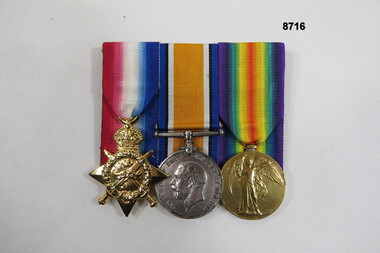 Bendigo Military Museum
Award - MEDAL SET WW1, Post 1919
... ...S. GROOM...Passchendaele Barracks Trust PBT711 S. GROOM Bob English Collection Medals WW1 On British War medal and Victory medal, "9326 PTE S.GROOM S.STAFF.R". ...Medals, set of three (3) mounted. 1914-15 Star (replica) British War Medal 1914-18 Victory Medal 1914-19On British War medal and Victory medal, "9326 PTE S.GROOM S.STAFF.R".passchendaele barracks trust, pbt711, s. groom, bob english collection, medals, ww1 -
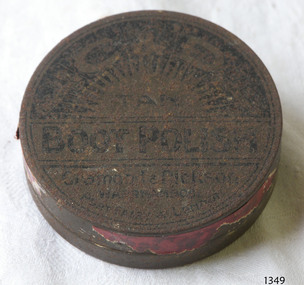 Flagstaff Hill Maritime Museum and Village
Container - Boot Polish Tin, Cramond and Dickson, 1855-1974
... s significant for its association with Cramond and Dickson, a large retail store established in Warrnambool and operating from 1855 to 1974. Both partners were prominent figures in the community. Flagstaff Hill Maritime Museum and Village Flagstaff Hill Maritime Village Maritime Museum Shipwreck Coast Great Ocean Road Warrnambool boot polish shoe cleaning grooming Cramond and Dickson Warrnambool business department store commerce Timor Street Liebig Street Port Fairy business metal craft tinware "C and D Tan Boot Polish" and "Cramond and Dickson, Warrnambool, Port Fairy & London" and "For best results, remove all dust and apply a little C and D Dressing, Brush Briskly" "Weight when packed 1 1/2 ozs net" Container: a tin of boot polish, with a small amount of light tan polish inside. ...This tin of boot polish was a product sold be Cramond and Dickson store, which traded in Warrnambool from 1855 - 1974. John Glass Cramond and James Dickson migrated from Scotland to Melbourne, where they opened a Cramond and Dickson store in St Kilda. They were inspired by the growth in Warrnambool after a visit and opened a second store there in 1855. The Cramond and Dickson store, grocers – drapery – ironmongery - chemist, was located on the corner of Liebig and Timor Streets, Warrnambool. Both Cramond and Dickson were involved in the business and social aspects of Warrnambool’s community. Cramond and Dickson closed in 1974. An advertisement placed by Cramond and Dickson in The Camperdown Chronicle, Saturday 6th April 1895, states them “showing the latest novelties for the coming winter season” … “import directly from English and Continental manufacturers” … “representatives in London … always in touch with the Newest Continental Fashions” ... “having been established for so many years we know the requirements of the Western District”… “allow 5 percent discount on goods paid for at the time of purchase”.The tin of boot polish is an example of the goods sold in Warrnambool in the 19th and early 20th century. It s significant for its association with Cramond and Dickson, a large retail store established in Warrnambool and operating from 1855 to 1974. Both partners were prominent figures in the community.Container: a tin of boot polish, with a small amount of light tan polish inside. Inscribed for the makers, Cramond and Dickson, Warrnambool, Port Fairy & Londo. Labelling is partly obscured by corrosion. Instructions for use are on the base of the tin. "C and D Tan Boot Polish" and "Cramond and Dickson, Warrnambool, Port Fairy & London" and "For best results, remove all dust and apply a little C and D Dressing, Brush Briskly" "Weight when packed 1 1/2 ozs net"flagstaff hill maritime museum and village, flagstaff hill, maritime village, maritime museum, shipwreck coast, great ocean road, warrnambool, boot polish, shoe cleaning, grooming, cramond and dickson, warrnambool business, department store, commerce, timor street, liebig street, port fairy business, metal craft, tinware -
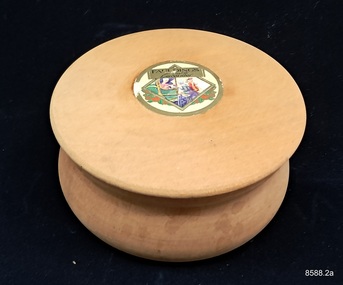 Flagstaff Hill Maritime Museum and Village
Container - Wooden Box, 1930s
... The powder box is an example of fashion and grooming in the 1930's in Australia. The W.R. Angus Collection is significant for still being located at the site it is connected with, Doctor Angus being the last Port Medical Officer in Warrnambool. ...One pharmaceutical enterprise which put greater emphasis on the manufacturing side of its business and whose successors strengthened this emphasis was Faulding's. A pharmacist, Francis H. Faulding, started his shop in Adelaide in 1841 and formed a partnership with an English physician, L. Scammel, in 1861. From its beginnings the firm showed a flare for innovation. After Simpson's discovery of the anaesthetic properties of chloroform in 1847, Francis Faulding was the first to import chloroform; in 1858 he distributed cocaine preparations; in 1864 he produced the first olive oil from South Australian olives and, after J. Lister's reports in Lancet on the reduction of mortality after surgery with the use of phenol, Faulding began production of antiseptics ('Solyptol') in 1867. Faulding was also the first to utilize the medicinal and antiseptic properties of eucalyptus oil which was obtained from distilleries on Kangaroo Island The Second World War in Europe disrupted the supply of cod liver oil, an important source of Vitamin A. Faulding chemists found an alternative source in white schnapper shark, which sustained supplies in Australia as well as generated exports to the UK . When supplies of I.G. Farben's newly discovered sulpha drugs ran out, Faulding became involved in the national program organised by the Medical Equipment Control Committee (MECC) and, jointly with universities, synthesised sulphanilamide. Following the transfer of American knowhow. Faulding's was also the first private enterprise to produce yet another life saving drug of military importance, penicillin. After the war basic synthesis of antibiotics became difficult to sustain by private enterprise because of the gigantic scale advantages of competing US producers, and competition in the synthesis of new drugs demanded huge investment in R & D; Fauldings maintained their business by a combination of marketing, wholesaling and producing consumer and medical products. In the 1970s, however, Fauldings set a remarkable precedent in research strategy and achievement in the Australian pharmaceutical business. They decided to concentrate their research on drugs which had proven efficacy, but which also suffered from certain shortcomings restricting their clinical usefulness, and to seek advances overcoming these shortcomings. This was an imaginative new strategy, a way of grafting Australian knowhow on to major products, in keeping with local resources and yet offering opportunities for sophisticated skill. At the same time it promised to open internatiSurgeon and onal markets, since the major producers of the basic drugs could hardly ignore significant advances. https://www.samhs.org.au/Virtual%20Museum/Medicine/drugs_nonsurg/Fauldings_drug/Fauldings_drugs.html This decorative gift box once containing Faulding’s Old English Lavender soap or powder belonged to Dr. Angus' wife, Gladys. It was donated to Flagstaff Hill Maritime Village by his daughter, Bernice McDade. It is part of the “W.R. Angus Collection” that includes historical medical equipment, surgical instruments and material once belonging to Dr Edward Ryan and Dr Thomas Francis Ryan, (both of Nhill, Victoria) as well as Dr Angus’ own belongings. The Collection’s history spans the medical practices of the two Doctors Ryan, from 1885-1926 plus that of Dr Angus, up until 1969. Powder or soap in boxes such as this was perfumed and used as part of a women’s personal grooming in the early to mid 20th century. Faulding’s Company began in Adelaide, Australia, in 1845 and made a wide range of cosmetic and perfume products as well as pharmaceuticals. The company is still in operation today. ABOUT THE “W.R.ANGUS COLLECTION” Doctor William Roy Angus M.B., B.S., Adel., 1923, F.R.C.S. Edin.,1928 (also known as Dr Roy Angus) was born in Murrumbeena, Victoria in 1901 and lived until 1970. He qualified as a doctor in 1923 at University of Adelaide, was Resident Medical Officer at the Royal Adelaide Hospital in 1924 and for a period was house surgeon to Sir (then Mr.) Henry Simpson Newland. Dr Angus was briefly an Assistant to Dr Riddell of Kapunda, then commenced private practice at Curramulka, Yorke Peninsula, SA, where he was physician, surgeon and chemist. In 1926, he was appointed as new Medical Assistant to Dr Thomas Francis Ryan (T.F. Ryan, or Tom), in Nhill, Victoria, where his experiences included radiology and pharmacy. In 1927 he was Acting House Surgeon in Dr Tom Ryan’s absence. Dr Angus had become engaged to Gladys Forsyth and they decided he further his studies overseas in the UK in 1927. He studied at London University College Hospital and at Edinburgh Royal Infirmary and in 1928, was awarded FRCS (Fellow from the Royal College of Surgeons), Edinburgh. He worked his passage back to Australia as a Ship’s Surgeon on the on the Australian Commonwealth Line’s T.S.S. Largs Bay. Dr Angus married Gladys in 1929, in Ballarat. (They went on to have one son (Graham 1932, born in SA) and two daughters (Helen (died 12/07/1996) and Berenice (Berry), both born at Mira, Nhill ) According to Berry, her mother Gladys made a lot of their clothes. She was very talented and did some lovely embroidery including lingerie for her trousseau and beautifully handmade baby clothes. Dr Angus was a ‘flying doctor’ for the A.I.M. (Australian Inland Ministry) Aerial Medical Service in 1928 . Its first station was in the remote town of Oodnadatta, where Dr Angus was stationed. He was locum tenens there on North-South Railway at 21 Mile Camp. He took up this ‘flying doctor’ position in response to a call from Dr John Flynn; the organisation was later known as the Flying Doctor Service, then the Royal Flying Doctor Service. A lot of his work during this time involved dental surgery also. Between 1928-1932 he was surgeon at the Curramulka Hospital, Yorke Peninsula, South Australia. In 1933 Dr Angus returned to Nhill and purchased a share of the Nelson Street practice and Mira hospital (a 2 bed ward at the Nelson Street Practice) from Dr Les Middleton one of the Middleton Brothers, the current owners of what previously once Dr Tom Ryan’s practice. Dr Tom and his brother had worked as surgeons included eye surgery. Dr Tom Ryan performed many of his operations in the Mira private hospital on his premises. He had been House Surgeon at the Nhill Hospital 1902-1926. Dr Tom Ryan had one of the only two pieces of radiology equipment in Victoria during his practicing years – The Royal Melbourne Hospital had the other one. Over the years Dr Tom Ryan had gradually set up what was effectively a training school for country general-practitioner-surgeons. Each patient was carefully examined, including using the X-ray machine, and any surgery was discussed and planned with Dr Ryan’s assistants several days in advance. Dr Angus gained experience in using the X-ray machine there during his time as assistant to Dr Ryan. When Dr Angus bought into the Nelson Street premises in Nhill he was also appointed as the Nhill Hospital’s Honorary House Surgeon 1933-1938. His practitioner’s plate from his Nhill surgery is now mounted on the doorway to the Port Medical Office at Flagstaff Hill Maritime Village, Warrnambool. When Dr Angus took up practice in the Dr Edward and Dr Tom Ryan’s old premises he obtained their extensive collection of historical medical equipment and materials spanning 1884-1926. A large part of this collection is now on display at the Port Medical Office at Flagstaff Hill Maritime Village in Warrnambool. In 1939 Dr Angus and his family moved to Warrnambool where he purchased “Birchwood,” the 1852 home and medical practice of Dr John Hunter Henderson, at 214 Koroit Street. (This property was sold in1965 to the State Government and is now the site of the Warrnambool Police Station. and an ALDI sore is on the land that was once their tennis court). The Angus family was able to afford gardeners, cooks and maids; their home was a popular place for visiting dignitaries to stay whilst visiting Warrnambool. Dr Angus had his own silk worm farm at home in a Mulberry tree. His young daughter used his centrifuge for spinning the silk. Dr Angus was appointed on a part-time basis as Port Medical Officer (Health Officer) in Warrnambool and held this position until the 1940’s when the government no longer required the service of a Port Medical Officer in Warrnambool; he was thus Warrnambool’s last serving Port Medical Officer. (Masters of immigrant ships arriving in port reported incidents of diseases, illness and death and the Port Medical Officer made a decision on whether the ship required Quarantine and for how long, in this way preventing contagious illness from spreading from new immigrants to the residents already in the colony.) Dr Angus was a member of the Australian Medical Association, for 35 years and surgeon at the Warrnambool Base Hospital 1939-1942, He served as a Surgeon Captain during WWII1942-45, in Ballarat, Victoria, and in Bonegilla, N.S.W., completing his service just before the end of the war due to suffering from a heart attack. During his convalescence he carved an intricate and ‘most artistic’ chess set from the material that dentures were made from. He then studied ophthalmology at the Royal Melbourne Eye and Ear Hospital and created cosmetically superior artificial eyes by pioneering using the intrascleral cartilage. Angus received accolades from the Ophthalmological Society of Australasia for this work. He returned to Warrnambool to commence practice as an ophthalmologist, pioneering in artificial eye improvements. He was Honorary Consultant Ophthalmologist to Warrnambool Base Hospital for 31 years. He made monthly visits to Portland as a visiting surgeon, to perform eye surgery. He represented the Victorian South-West subdivision of the Australian Medical Association as its secretary between 1949 and 1956 and as chairman from 1956 to 1958. In 1968 Dr Angus was elected member of Spain’s Barraquer Institute of Barcelona after his research work in Intrasclearal cartilage grafting, becoming one of the few Australian ophthalmologists to receive this honour, and in the following year presented his final paper on Living Intrasclearal Cartilage Implants at the Inaugural Meeting of the Australian College of Ophthalmologists in Melbourne In his personal life Dr Angus was a Presbyterian and treated Sunday as a Sabbath, a day of rest. He would visit 3 or 4 country patients on a Sunday, taking his children along ‘for the ride’ and to visit with him. Sunday evenings he would play the pianola and sing Scottish songs to his family. One of Dr Angus’ patients was Margaret MacKenzie, author of a book on local shipwrecks that she’d seen as an eye witness from the late 1880’s in Peterborough, Victoria. In the early 1950’s Dr Angus, painted a picture of a shipwreck for the cover jacket of Margaret’s book, Shipwrecks and More Shipwrecks. She was blind in later life and her daughter wrote the actual book for her. Dr Angus and his wife Gladys were very involved in Warrnambool’s society with a strong interest in civic affairs. He had an interest in people and the community They were both involved in the creation of Flagstaff Hill, including the layout of the gardens. After his death (28th March 1970) his family requested his practitioner’s plate, medical instruments and some personal belongings be displayed in the Port Medical Office surgery at Flagstaff Hill Maritime Village, and be called the “W. R. Angus Collection”.Fauldings Company is a very historical Australian company, still in operating today. The powder box is an example of fashion and grooming in the 1930's in Australia. The W.R. Angus Collection is significant for still being located at the site it is connected with, Doctor Angus being the last Port Medical Officer in Warrnambool. The collection of medical instruments and other equipment is culturally significant, being an historical example of medicine from late 19th to mid-20th century. Dr Angus assisted Dr Tom Ryan, a pioneer in the use of X-rays and in ocular surgery.Container, wooden powder box with separate lid. Round box is made from light coloured timber and was sold containing Faulding’s Old English Lavender cosmetic powder. The wooden bowl is light in colour and the lid has a decal with text and images of two ladies facing each other, a gentleman looking over his shoulder at them, and red roses. From the W.R. Angus Collection.Faulding's Old English Lavender, and picture of old English men and women in period costume.flagstaff hill maritime museum and village, great ocean road, shipwreck coast, warrnambool, shipwtreck coast, dr w r angus, faulding's, lavender, powder, cosmetic -
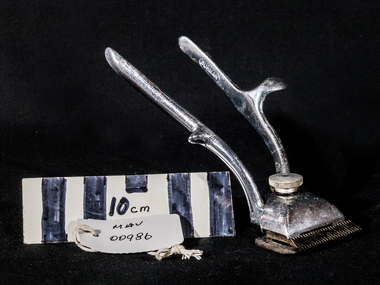 City of Moorabbin Historical Society (Operating the Box Cottage Museum)
Barbers' Equipment, hair clippers 'BURMAN", c1950
... S. F. Burman, M.B.E., Managing Director, Burman and Sons, Ltd 1955 Acquired by Vono Industrial Products. 1961 Manufacturers of motor and motorcycle accessories. 1,500 employees. 1968 Supplied rack and pinion steering units to Ford 1978 Adwest Group acquired Burman and Sons, the steering gear part of Duport. 1986 Major reduction in staffing at Burman due to fall in demand for its products and delivery problems. barbers, hairdressing, hair clippers, grooming, horse clippers, cars, motor cycles, gear boxes, rack and pinion , worm and ball, steering gears, steel manufacture, birmingham england, burman and sons ltd, moorabbin, bentleigh, ormond, cheltenham, market gardeners, On left arm ; BURMAN On right arm ; MADE IN ENGLAND A set of hand held barbers’ hair clippers with an adjustable screw, from Burman and Sons Ltd of Birmingham, England. ...Hair clippers are specialized implements used to cut human head hair. They work on the same principle as scissors, but are distinct from scissors and razors. :Hair clippers comprise a pair of sharpened comb-like blades in close contact one above the other which slide sideways relative to each other, a mechanism which may be manual or electrical to make the blades oscillate from side to side, and a handle. The clipper is moved so that hair is positioned between the teeth of the comb, and cut with a scissor action when one blade slides sideways relative to the other. Friction between the blades needs to be as low as possible, which is attained by choice of material and finish, and frequent lubrication. Hair clippers are operated by a pair of handles that are alternately squeezed together and released. Barbers used them to cut hair close and fast. The hair was picked up in locks and the head was rapidly depilated. Mid 20thC such haircuts became popular among boys, and young men in the military and in prisons. Burman & Sons Ltd, of Ryland Road, Birmingham, West Midlands, manufactured Burman-Douglas steering gear. Their recirculating worm and ball design of steering gear was fitted to pre-war vehicles such as the Ford Eight and the Ford Prefect, the Bedford CA, plus heavy trucks and off-road vehicles - both pre and post-war. In its day, Burman-Douglas steering-gear was regarded as.... a "quality" feature of a car chassis specification, but the worm and ball design was eventually surpassed by the cheaper rack and pinion design that dominates today. The company also manufactured motorcycle gearboxes, horse clippers and barbers’ clippers. 1871 Company founded. 1897 Private company. 1930s Gearbox for Ariel Square-four motorcycle. (Exhibit at Birmingham Thinktank museum) 1933 Burman and Sons Limited, manufacturers of horse and barbers' clippers, sheep shearers, motor cycle gear boxes and steering gears, Ryland road, Edgebaston 1953 S. F. Burman, M.B.E., Managing Director, Burman and Sons, Ltd 1955 Acquired by Vono Industrial Products. 1961 Manufacturers of motor and motorcycle accessories. 1,500 employees. 1968 Supplied rack and pinion steering units to Ford 1978 Adwest Group acquired Burman and Sons, the steering gear part of Duport. 1986 Major reduction in staffing at Burman due to fall in demand for its products and delivery problems. A set of hand held barbers’ hair clippers with an adjustable screw, from Burman and Sons Ltd of Birmingham, England. Chrome plated, in good condition, c1950. On left arm ; BURMAN On right arm ; MADE IN ENGLANDbarbers, hairdressing, hair clippers, grooming, horse clippers, cars, motor cycles, gear boxes, rack and pinion , worm and ball, steering gears, steel manufacture, birmingham england, burman and sons ltd, moorabbin, bentleigh, ormond, cheltenham, market gardeners, -
 City of Moorabbin Historical Society (Operating the Box Cottage Museum)
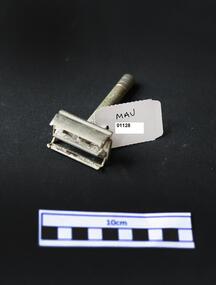
Personal Effects, mens' 'Gillette' safety razor, c1950
... grooming standards. The term was first used in a patent issued in 1880, for a razor in the basic contemporary configuration with a handle attached at right angles to a head in which a removable blade is placed (although this form predated the patent). 1847 William S. ...grooming standards. The term was first used in a patent issued in 1880, for a razor in the basic contemporary configuration with a handle attached at right angles to a head in which a removable blade is placed (although this form predated the patent). 1847 William S. ...A safety razor is a shaving implement with a protective device positioned between the edge of the blade and the skin. The initial purpose of these protective devices was to reduce the level of skill needed for injury-free shaving, thereby reducing the reliance on professional barbers for providing that service and raising grooming standards. The term was first used in a patent issued in 1880, for a razor in the basic contemporary configuration with a handle attached at right angles to a head in which a removable blade is placed (although this form predated the patent). 1847 William S. Henson. patented a "comb tooth guard or protector" which could be attached both to the hoe form and to a conventional straight razor. May 1880 by Fredrik and Otto Kampfe of Brooklyn, New York, improved the 'safety razor' and it differed from the Henson design in distancing the blade from the handle by interposing,, "a hollow metallic blade-holder having a preferably removable handle and a flat plate in front, to which the blade is attached by clips and a pivoted catch. 1900 King C. Gillette had the revolutionary idea of disposable blades so thin and so strong they were deemed impossible to forge by MIT-trained scientists. By 1901, he’d proven them wrong with his breakthrough innovation. The success of Gillette's invention was largely a result of his having been awarded a contract to supply the American troops in World War I with double-edge safety razors as part of their standard field kits (delivering a total of 3.5 million razors and 32 million blades for them). The returning soldiers were permitted to keep that part of their equipment and therefore easily retained their new shaving habits. The subsequent consumer demand for replacement blades put the shaving industry on course toward its present form with Gillette as a dominant force. Plastic disposable razors and razors with replaceable disposable blade attachments, often with one to three cutting edges (but sometimes with four and as of recently, five cutting edges), are in common use today. A steel 'Gillette' safety razor gillette co ltd, cheltenham, moorabbin, maynard dennis, sfety razors, safety razor blades -
 Learmonth and District Historical Society Inc.
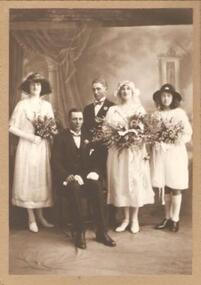
Photo / Wedding, "Thornton" Studios Ballarat, Wedding of Alexander Paterson & Effie Hilda Long -1924, Circa late 1924
... The groom is the son of James and Emma Paterson of Miners Rest, and the bride is the daughter of William and May Long of Ballarat.Their attendants were, groomsman- Albert Robert Mathews, bridesmaid -Ruby Sarah Long, the name of the flowergirl is unknown, Depicting people of the Ballarat Shire area in the 1920's paterson alexander long effie hilda Wedding of Alexander Paterson & Eddie Hilda Long.At the bottom right hand corner is the name "Thornton" Studios Ballarat. ...This photo is of the Wedding of Alexander Paterson to Effie Hilda Long. They were married at St Andrews Presbyterian Church Ballarat on the 30th August 1924, by the Rev. Robert Jones. The groom is the son of James and Emma Paterson of Miners Rest, and the bride is the daughter of William and May Long of Ballarat.Their attendants were, groomsman- Albert Robert Mathews, bridesmaid -Ruby Sarah Long, the name of the flowergirl is unknown,Depicting people of the Ballarat Shire area in the 1920'sPhoto is in dark brown wooden frame which has ornate carved decoration, mount is "kharkie" brown with dark sepia around photo. Photo is in sepia and depicts the Marriage of Alexander Paterson & Effie Hilda Long.in 1924.Wedding of Alexander Paterson & Eddie Hilda Long.At the bottom right hand corner is the name "Thornton" Studios Ballarat.paterson alexander, long effie hilda -
 Flagstaff Hill Maritime Museum and Village
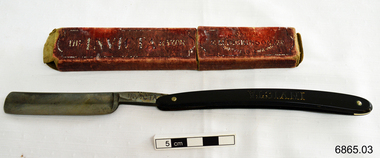
Razor, E.M. Dickinson, early 1900's
... Dickinson sheffield england personal effects 1900's grooming equipment 1900's Box embossed in silver "The Invicta Razor", "Manufactured by E.W. ...This cut-throat razor was donated to Flagstaff Hill Maritime Village by the family of Doctor William Roy Angus, Surgeon and Oculist. It is part of the “W.R. Angus Collection” , which includes historical medical equipment, surgical instruments and material once belonging to Dr Edward Ryan and Dr Thomas Francis Ryan, (both of Nhill, Victoria) as well as Dr Angus’ own belongings. The Collection’s history spans the medical practices of the two Doctors Ryan, from 1885-1926 plus that of Dr Angus, up until 1969. ABOUT THE “W.R.ANGUS COLLECTION” Doctor William Roy Angus M.B., B.S., Adel., 1923, F.R.C.S. Edin.,1928 (also known as Dr Roy Angus) was born in Murrumbeena, Victoria in 1901 and lived until 1970. He qualified as a doctor in 1923 at University of Adelaide, was Resident Medical Officer at the Royal Adelaide Hospital in 1924 and for a period was house surgeon to Sir (then Mr.) Henry Simpson Newland. Dr Angus was briefly an Assistant to Dr Riddell of Kapunda, then commenced private practice at Curramulka, Yorke Peninsula, SA, where he was physician, surgeon and chemist. In 1926, he was appointed as new Medical Assistant to Dr Thomas Francis Ryan (T.F. Ryan, or Tom), in Nhill, Victoria, where his experiences included radiology and pharmacy. In 1927 he was Acting House Surgeon in Dr Tom Ryan’s absence. Dr Angus had become engaged to Gladys Forsyth and they decided he further his studies overseas in the UK in 1927. He studied at London University College Hospital and at Edinburgh Royal Infirmary and in 1928, was awarded FRCS (Fellow from the Royal College of Surgeons), Edinburgh. He worked his passage back to Australia as a Ship’s Surgeon on the on the Australian Commonwealth Line’s T.S.S. Largs Bay. Dr Angus married Gladys in 1929, in Ballarat. (They went on to have one son (Graham 1932, born in SA) and two daughters (Helen (died 12/07/1996) and Berenice (Berry), both born at Mira, Nhill ) According to Berry, her mother Gladys made a lot of their clothes. She was very talented and did some lovely embroidery including lingerie for her trousseau and beautifully handmade baby clothes. Dr Angus was a ‘flying doctor’ for the A.I.M. (Australian Inland Ministry) Aerial Medical Service in 1928 . Its first station was in the remote town of Oodnadatta, where Dr Angus was stationed. He was locum tenens there on North-South Railway at 21 Mile Camp. He took up this ‘flying doctor’ position in response to a call from Dr John Flynn; the organisation was later known as the Flying Doctor Service, then the Royal Flying Doctor Service. A lot of his work during this time involved dental surgery also. Between 1928-1932 he was surgeon at the Curramulka Hospital, Yorke Peninsula, South Australia. In 1933 Dr Angus returned to Nhill and purchased a share of the Nelson Street practice and Mira hospital (a 2 bed ward at the Nelson Street Practice) from Dr Les Middleton one of the Middleton Brothers, the current owners of what previously once Dr Tom Ryan’s practice. Dr Tom and his brother had worked as surgeons included eye surgery. Dr Tom Ryan performed many of his operations in the Mira private hospital on his premises. He had been House Surgeon at the Nhill Hospital 1902-1926. Dr Tom Ryan had one of the only two pieces of radiology equipment in Victoria during his practicing years – The Royal Melbourne Hospital had the other one. Over the years Dr Tom Ryan had gradually set up what was effectively a training school for country general-practitioner-surgeons. Each patient was carefully examined, including using the X-ray machine, and any surgery was discussed and planned with Dr Ryan’s assistants several days in advance. Dr Angus gained experience in using the X-ray machine there during his time as assistant to Dr Ryan. When Dr Angus bought into the Nelson Street premises in Nhill he was also appointed as the Nhill Hospital’s Honorary House Surgeon 1933-1938. His practitioner’s plate from his Nhill surgery is now mounted on the doorway to the Port Medical Office at Flagstaff Hill Maritime Village, Warrnambool. When Dr Angus took up practice in the Dr Edward and Dr Tom Ryan’s old premises he obtained their extensive collection of historical medical equipment and materials spanning 1884-1926. A large part of this collection is now on display at the Port Medical Office at Flagstaff Hill Maritime Village in Warrnambool. In 1939 Dr Angus and his family moved to Warrnambool where he purchased “Birchwood,” the 1852 home and medical practice of Dr John Hunter Henderson, at 214 Koroit Street. (This property was sold in1965 to the State Government and is now the site of the Warrnambool Police Station. and an ALDI sore is on the land that was once their tennis court). The Angus family was able to afford gardeners, cooks and maids; their home was a popular place for visiting dignitaries to stay whilst visiting Warrnambool. Dr Angus had his own silk worm farm at home in a Mulberry tree. His young daughter used his centrifuge for spinning the silk. Dr Angus was appointed on a part-time basis as Port Medical Officer (Health Officer) in Warrnambool and held this position until the 1940’s when the government no longer required the service of a Port Medical Officer in Warrnambool; he was thus Warrnambool’s last serving Port Medical Officer. (Masters of immigrant ships arriving in port reported incidents of diseases, illness and death and the Port Medical Officer made a decision on whether the ship required Quarantine and for how long, in this way preventing contagious illness from spreading from new immigrants to the residents already in the colony.) Dr Angus was a member of the Australian Medical Association, for 35 years and surgeon at the Warrnambool Base Hospital 1939-1942, He served as a Surgeon Captain during WWII1942-45, in Ballarat, Victoria, and in Bonegilla, N.S.W., completing his service just before the end of the war due to suffering from a heart attack. During his convalescence he carved an intricate and ‘most artistic’ chess set from the material that dentures were made from. He then studied ophthalmology at the Royal Melbourne Eye and Ear Hospital and created cosmetically superior artificial eyes by pioneering using the intrascleral cartilage. Angus received accolades from the Ophthalmological Society of Australasia for this work. He returned to Warrnambool to commence practice as an ophthalmologist, pioneering in artificial eye improvements. He was Honorary Consultant Ophthalmologist to Warrnambool Base Hospital for 31 years. He made monthly visits to Portland as a visiting surgeon, to perform eye surgery. He represented the Victorian South-West subdivision of the Australian Medical Association as its secretary between 1949 and 1956 and as chairman from 1956 to 1958. In 1968 Dr Angus was elected member of Spain’s Barraquer Institute of Barcelona after his research work in Intrasclearal cartilage grafting, becoming one of the few Australian ophthalmologists to receive this honour, and in the following year presented his final paper on Living Intrasclearal Cartilage Implants at the Inaugural Meeting of the Australian College of Ophthalmologists in Melbourne In his personal life Dr Angus was a Presbyterian and treated Sunday as a Sabbath, a day of rest. He would visit 3 or 4 country patients on a Sunday, taking his children along ‘for the ride’ and to visit with him. Sunday evenings he would play the pianola and sing Scottish songs to his family. One of Dr Angus’ patients was Margaret MacKenzie, author of a book on local shipwrecks that she’d seen as an eye witness from the late 1880’s in Peterborough, Victoria. In the early 1950’s Dr Angus, painted a picture of a shipwreck for the cover jacket of Margaret’s book, Shipwrecks and More Shipwrecks. She was blind in later life and her daughter wrote the actual book for her. Dr Angus and his wife Gladys were very involved in Warrnambool’s society with a strong interest in civic affairs. He had an interest in people and the community They were both involved in the creation of Flagstaff Hill, including the layout of the gardens. After his death (28th March 1970) his family requested his practitioner’s plate, medical instruments and some personal belongings be displayed in the Port Medical Office surgery at Flagstaff Hill Maritime Village, and be called the “W. R. Angus Collection”. The W.R. Angus Collection is significant for still being located at the site it is connected with, Doctor Angus being the last Port Medical Officer in Warrnambool. The collection of medical instruments and other equipment is culturally significant, being an historical example of medicine from late 19th to mid-20th century. Dr Angus assisted Dr Tom Ryan, a pioneer in the use of X-rays and in ocular surgery. Cut-throat razor, part of the W.R. Angus Collection. ‘The Invicta’ model razor, in red cardboard box with silver embossed text, has black Bakelite handle with rounded end; blade swings inside the handle. Made by E.W. Dickinson in Sheffield, England in the early 1900’s. Box embossed in silver "The Invicta Razor", "Manufactured by E.W. DICKINSON LTD / SHEFFIELD ENGLAND" Embossed on handle "INVICTA". On blade "INVICTA" and "E.M. DICKINSON / SHEFFIELD ENGLAND"flagstaff hill, warrnambool, shipwrecked coast, flagstaff hill maritime museum, maritime museum, shipwreck coast, flagstaff hill maritime village, great ocean road, dr w r angus, dr ryan, cut-throat razor, e.w. dickinson sheffield england, personal effects 1900's, grooming equipment 1900's -
 Flagstaff Hill Maritime Museum and Village
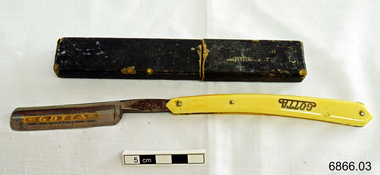
Domestic object - Razor, 1900's
... Flagstaff Hill Warrnambool Shipwrecked coast Flagstaff Hill Maritime Museum Maritime Museum Shipwreck coast Flagstaff Hill Maritime Village Great Ocean Road Dr W R Angus Dr Ryan cut-throat razor gotta razor german made razor personal effects 1900's grooming equipment 1900's Embossed on box "No. 42 / DES GERMAN MANUFACTURE", on handle "GOTTA", on blade "HAMBURG RING / REG. ...This cut-throat razor was donated to Flagstaff Hill Maritime Village by the family of Doctor William Roy Angus, Surgeon and Oculist. It is part of the “W.R. Angus Collection” includes historical medical equipment, surgical instruments and material once belonging to Dr Edward Ryan and Dr Thomas Francis Ryan, (both of Nhill, Victoria) as well as Dr Angus’ own belongings. The Collection’s history spans the medical practices of the two Doctors Ryan, from 1885-1926 plus that of Dr Angus, up until 1969. ABOUT THE “W.R.ANGUS COLLECTION” Doctor William Roy Angus M.B., B.S., Adel., 1923, F.R.C.S. Edin.,1928 (also known as Dr Roy Angus) was born in Murrumbeena, Victoria in 1901 and lived until 1970. He qualified as a doctor in 1923 at University of Adelaide, was Resident Medical Officer at the Royal Adelaide Hospital in 1924 and for a period was house surgeon to Sir (then Mr.) Henry Simpson Newland. Dr Angus was briefly an Assistant to Dr Riddell of Kapunda, then commenced private practice at Curramulka, Yorke Peninsula, SA, where he was physician, surgeon and chemist. In 1926, he was appointed as new Medical Assistant to Dr Thomas Francis Ryan (T.F. Ryan, or Tom), in Nhill, Victoria, where his experiences included radiology and pharmacy. In 1927 he was Acting House Surgeon in Dr Tom Ryan’s absence. Dr Angus had become engaged to Gladys Forsyth and they decided he further his studies overseas in the UK in 1927. He studied at London University College Hospital and at Edinburgh Royal Infirmary and in 1928, was awarded FRCS (Fellow from the Royal College of Surgeons), Edinburgh. He worked his passage back to Australia as a Ship’s Surgeon on the on the Australian Commonwealth Line’s T.S.S. Largs Bay. Dr Angus married Gladys in 1929, in Ballarat. (They went on to have one son (Graham 1932, born in SA) and two daughters (Helen (died 12/07/1996) and Berenice (Berry), both born at Mira, Nhill ) According to Berry, her mother Gladys made a lot of their clothes. She was very talented and did some lovely embroidery including lingerie for her trousseau and beautifully handmade baby clothes. Dr Angus was a ‘flying doctor’ for the A.I.M. (Australian Inland Ministry) Aerial Medical Service in 1928 . Its first station was in the remote town of Oodnadatta, where Dr Angus was stationed. He was locum tenens there on North-South Railway at 21 Mile Camp. He took up this ‘flying doctor’ position in response to a call from Dr John Flynn; the organisation was later known as the Flying Doctor Service, then the Royal Flying Doctor Service. A lot of his work during this time involved dental surgery also. Between 1928-1932 he was surgeon at the Curramulka Hospital, Yorke Peninsula, South Australia. In 1933 Dr Angus returned to Nhill and purchased a share of the Nelson Street practice and Mira hospital (a 2 bed ward at the Nelson Street Practice) from Dr Les Middleton one of the Middleton Brothers, the current owners of what previously once Dr Tom Ryan’s practice. Dr Tom and his brother had worked as surgeons included eye surgery. Dr Tom Ryan performed many of his operations in the Mira private hospital on his premises. He had been House Surgeon at the Nhill Hospital 1902-1926. Dr Tom Ryan had one of the only two pieces of radiology equipment in Victoria during his practicing years – The Royal Melbourne Hospital had the other one. Over the years Dr Tom Ryan had gradually set up what was effectively a training school for country general-practitioner-surgeons. Each patient was carefully examined, including using the X-ray machine, and any surgery was discussed and planned with Dr Ryan’s assistants several days in advance. Dr Angus gained experience in using the X-ray machine there during his time as assistant to Dr Ryan. When Dr Angus bought into the Nelson Street premises in Nhill he was also appointed as the Nhill Hospital’s Honorary House Surgeon 1933-1938. His practitioner’s plate from his Nhill surgery is now mounted on the doorway to the Port Medical Office at Flagstaff Hill Maritime Village, Warrnambool. When Dr Angus took up practice in the Dr Edward and Dr Tom Ryan’s old premises he obtained their extensive collection of historical medical equipment and materials spanning 1884-1926. A large part of this collection is now on display at the Port Medical Office at Flagstaff Hill Maritime Village in Warrnambool. In 1939 Dr Angus and his family moved to Warrnambool where he purchased “Birchwood,” the 1852 home and medical practice of Dr John Hunter Henderson, at 214 Koroit Street. (This property was sold in1965 to the State Government and is now the site of the Warrnambool Police Station. and an ALDI sore is on the land that was once their tennis court). The Angus family was able to afford gardeners, cooks and maids; their home was a popular place for visiting dignitaries to stay whilst visiting Warrnambool. Dr Angus had his own silk worm farm at home in a Mulberry tree. His young daughter used his centrifuge for spinning the silk. Dr Angus was appointed on a part-time basis as Port Medical Officer (Health Officer) in Warrnambool and held this position until the 1940’s when the government no longer required the service of a Port Medical Officer in Warrnambool; he was thus Warrnambool’s last serving Port Medical Officer. (Masters of immigrant ships arriving in port reported incidents of diseases, illness and death and the Port Medical Officer made a decision on whether the ship required Quarantine and for how long, in this way preventing contagious illness from spreading from new immigrants to the residents already in the colony.) Dr Angus was a member of the Australian Medical Association, for 35 years and surgeon at the Warrnambool Base Hospital 1939-1942, He served as a Surgeon Captain during WWII1942-45, in Ballarat, Victoria, and in Bonegilla, N.S.W., completing his service just before the end of the war due to suffering from a heart attack. During his convalescence he carved an intricate and ‘most artistic’ chess set from the material that dentures were made from. He then studied ophthalmology at the Royal Melbourne Eye and Ear Hospital and created cosmetically superior artificial eyes by pioneering using the intrascleral cartilage. Angus received accolades from the Ophthalmological Society of Australasia for this work. He returned to Warrnambool to commence practice as an ophthalmologist, pioneering in artificial eye improvements. He was Honorary Consultant Ophthalmologist to Warrnambool Base Hospital for 31 years. He made monthly visits to Portland as a visiting surgeon, to perform eye surgery. He represented the Victorian South-West subdivision of the Australian Medical Association as its secretary between 1949 and 1956 and as chairman from 1956 to 1958. In 1968 Dr Angus was elected member of Spain’s Barraquer Institute of Barcelona after his research work in Intrasclearal cartilage grafting, becoming one of the few Australian ophthalmologists to receive this honour, and in the following year presented his final paper on Living Intrasclearal Cartilage Implants at the Inaugural Meeting of the Australian College of Ophthalmologists in Melbourne In his personal life Dr Angus was a Presbyterian and treated Sunday as a Sabbath, a day of rest. He would visit 3 or 4 country patients on a Sunday, taking his children along ‘for the ride’ and to visit with him. Sunday evenings he would play the pianola and sing Scottish songs to his family. One of Dr Angus’ patients was Margaret MacKenzie, author of a book on local shipwrecks that she’d seen as an eye witness from the late 1880’s in Peterborough, Victoria. In the early 1950’s Dr Angus, painted a picture of a shipwreck for the cover jacket of Margaret’s book, Shipwrecks and More Shipwrecks. She was blind in later life and her daughter wrote the actual book for her. Dr Angus and his wife Gladys were very involved in Warrnambool’s society with a strong interest in civic affairs. He had an interest in people and the community They were both involved in the creation of Flagstaff Hill, including the layout of the gardens. After his death (28th March 1970) his family requested his practitioner’s plate, medical instruments and some personal belongings be displayed in the Port Medical Office surgery at Flagstaff Hill Maritime Village, and be called the “W. R. Angus Collection”. The W.R. Angus Collection is significant for still being located at the site it is connected with, Doctor Angus being the last Port Medical Officer in Warrnambool. The collection of medical instruments and other equipment is culturally significant, being an historical example of medicine from late 19th to mid-20th century. Dr Angus assisted Dr Tom Ryan, a pioneer in the use of X-rays and in ocular surgery. Cut-throat razor, part of the W.R. Angus Collection. Razor model No. 42, steel blade, in dark cardboard box, with bone handle, arrow shaped end; blade swings inside the handle. Razor made in Germany with blade made in Sheffield, England, in early 1900’s.Embossed on box "No. 42 / DES GERMAN MANUFACTURE", on handle "GOTTA", on blade "HAMBURG RING / REG. GOTTA REG. / SUPER FINE" and "FINEST SHEFFIELD STEEL / FORGED AND - - - HOLLOW / GROUND IN GERMANY" flagstaff hill, warrnambool, shipwrecked coast, flagstaff hill maritime museum, maritime museum, shipwreck coast, flagstaff hill maritime village, great ocean road, dr w r angus, dr ryan, cut-throat razor, gotta razor, german made razor, personal effects 1900's, grooming equipment 1900's -
 Flagstaff Hill Maritime Museum and Village
Container - Wooden Box, 1930s
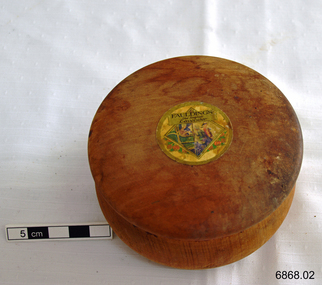
... Dr Angus assisted Dr Tom Ryan, a pioneer in the use of X-rays and in ocular surgery. flagstaff hill warrnambool shipwrecked coast flagstaff hill maritime museum maritime museum shipwreck coast flagstaff hill maritime village great ocean road dr w r angus gladys angus faulding's old english lavender personal effects 1900's grooming items1900's faulding's company australia Fauldings powder box Fauldings soap box Printed on decal “FAULDING'S OLD ENGLISH LAVENDER”. ...One pharmaceutical enterprise which put greater emphasis on the manufacturing side of its business and whose successors strengthened this emphasis was Faulding's. A pharmacist, Francis H. Faulding, started his shop in Adelaide in 1841 and formed a partnership with an English physician, L. Scammel, in 1861. From its beginnings the firm showed a flare for innovation. After Simpson's discovery of the anaesthetic properties of chloroform in 1847, Francis Faulding was the first to import chloroform; in 1858 he distributed cocaine preparations; in 1864 he produced the first olive oil from South Australian olives and, after J. Lister's reports in Lancet on the reduction of mortality after surgery with the use of phenol, Faulding began production of antiseptics ('Solyptol') in 1867. Faulding was also the first to utilize the medicinal and antiseptic properties of eucalyptus oil which was obtained from distilleries on Kangaroo Island The Second World War in Europe disrupted the supply of cod liver oil, an important source of Vitamin A. Faulding chemists found an alternative source in white schnapper shark, which sustained supplies in Australia as well as generated exports to the UK . When supplies of I.G. Farben's newly discovered sulpha drugs ran out, Faulding became involved in the national program organised by the Medical Equipment Control Committee (MECC) and, jointly with universities, synthesised sulphanilamide. Following the transfer of American knowhow. Faulding's was also the first private enterprise to produce yet another life saving drug of military importance, penicillin. After the war basic synthesis of antibiotics became difficult to sustain by private enterprise because of the gigantic scale advantages of competing US producers, and competition in the synthesis of new drugs demanded huge investment in R & D; Fauldings maintained their business by a combination of marketing, wholesaling and producing consumer and medical products. In the 1970s, however, Fauldings set a remarkable precedent in research strategy and achievement in the Australian pharmaceutical business. They decided to concentrate their research on drugs which had proven efficacy, but which also suffered from certain shortcomings restricting their clinical usefulness, and to seek advances overcoming these shortcomings. This was an imaginative new strategy, a way of grafting Australian knowhow on to major products, in keeping with local resources and yet offering opportunities for sophisticated skill. At the same time it promised to open international markets, since the major producers of the basic drugs could hardly ignore significant advances. https://www.samhs.org.au/Virtual%20Museum/Medicine/drugs_nonsurg/Fauldings_drug/Fauldings_drugs.html This decorative gift box once containing Faulding’s Old English Lavender soap or powder belonged to Dr. Angus’ wife Gladys. It was donated to Flagstaff Hill Maritime Village by the family of Doctor William Roy Angus, Surgeon and Oculist. It is part of the “W.R. Angus Collection” includes historical medical equipment, surgical instruments and material once belonging to Dr Edward Ryan and Dr Thomas Francis Ryan, (both of Nhill, Victoria) as well as Dr Angus’ own belongings. The Collection’s history spans the medical practices of the two Doctors Ryan, from 1885-1926 plus that of Dr Angus, up until 1969. Powder or soap in boxes such as this was perfumed and used as part of a women’s personal grooming in the early to mid 20th century. Faulding’s Company began in Adelaide, Australia, in 1845 and made a wide range of cosmetic and perfume products as well as pharmaceuticals. The company is still in operation today. ABOUT THE “W.R.ANGUS COLLECTION” Doctor William Roy Angus M.B., B.S., Adel., 1923, F.R.C.S. Edin.,1928 (also known as Dr Roy Angus) was born in Murrumbeena, Victoria in 1901 and lived until 1970. He qualified as a doctor in 1923 at University of Adelaide, was Resident Medical Officer at the Royal Adelaide Hospital in 1924 and for a period was house surgeon to Sir (then Mr.) Henry Simpson Newland. Dr Angus was briefly an Assistant to Dr Riddell of Kapunda, then commenced private practice at Curramulka, Yorke Peninsula, SA, where he was physician, surgeon and chemist. In 1926, he was appointed as new Medical Assistant to Dr Thomas Francis Ryan (T.F. Ryan, or Tom), in Nhill, Victoria, where his experiences included radiology and pharmacy. In 1927 he was Acting House Surgeon in Dr Tom Ryan’s absence. Dr Angus had become engaged to Gladys Forsyth and they decided he further his studies overseas in the UK in 1927. He studied at London University College Hospital and at Edinburgh Royal Infirmary and in 1928, was awarded FRCS (Fellow from the Royal College of Surgeons), Edinburgh. He worked his passage back to Australia as a Ship’s Surgeon on the on the Australian Commonwealth Line’s T.S.S. Largs Bay. Dr Angus married Gladys in 1929, in Ballarat. (They went on to have one son (Graham 1932, born in SA) and two daughters (Helen (died 12/07/1996) and Berenice (Berry), both born at Mira, Nhill ) According to Berry, her mother Gladys made a lot of their clothes. She was very talented and did some lovely embroidery including lingerie for her trousseau and beautifully handmade baby clothes. Dr Angus was a ‘flying doctor’ for the A.I.M. (Australian Inland Ministry) Aerial Medical Service in 1928 . Its first station was in the remote town of Oodnadatta, where Dr Angus was stationed. He was locum tenens there on North-South Railway at 21 Mile Camp. He took up this ‘flying doctor’ position in response to a call from Dr John Flynn; the organisation was later known as the Flying Doctor Service, then the Royal Flying Doctor Service. A lot of his work during this time involved dental surgery also. Between 1928-1932 he was surgeon at the Curramulka Hospital, Yorke Peninsula, South Australia. In 1933 Dr Angus returned to Nhill and purchased a share of the Nelson Street practice and Mira hospital (a 2 bed ward at the Nelson Street Practice) from Dr Les Middleton one of the Middleton Brothers, the current owners of what previously once Dr Tom Ryan’s practice. Dr Tom and his brother had worked as surgeons included eye surgery. Dr Tom Ryan performed many of his operations in the Mira private hospital on his premises. He had been House Surgeon at the Nhill Hospital 1902-1926. Dr Tom Ryan had one of the only two pieces of radiology equipment in Victoria during his practicing years – The Royal Melbourne Hospital had the other one. Over the years Dr Tom Ryan had gradually set up what was effectively a training school for country general-practitioner-surgeons. Each patient was carefully examined, including using the X-ray machine, and any surgery was discussed and planned with Dr Ryan’s assistants several days in advance. Dr Angus gained experience in using the X-ray machine there during his time as assistant to Dr Ryan. When Dr Angus bought into the Nelson Street premises in Nhill he was also appointed as the Nhill Hospital’s Honorary House Surgeon 1933-1938. His practitioner’s plate from his Nhill surgery is now mounted on the doorway to the Port Medical Office at Flagstaff Hill Maritime Village, Warrnambool. When Dr Angus took up practice in the Dr Edward and Dr Tom Ryan’s old premises he obtained their extensive collection of historical medical equipment and materials spanning 1884-1926. A large part of this collection is now on display at the Port Medical Office at Flagstaff Hill Maritime Village in Warrnambool. In 1939 Dr Angus and his family moved to Warrnambool where he purchased “Birchwood,” the 1852 home and medical practice of Dr John Hunter Henderson, at 214 Koroit Street. (This property was sold in1965 to the State Government and is now the site of the Warrnambool Police Station. and an ALDI sore is on the land that was once their tennis court). The Angus family was able to afford gardeners, cooks and maids; their home was a popular place for visiting dignitaries to stay whilst visiting Warrnambool. Dr Angus had his own silk worm farm at home in a Mulberry tree. His young daughter used his centrifuge for spinning the silk. Dr Angus was appointed on a part-time basis as Port Medical Officer (Health Officer) in Warrnambool and held this position until the 1940’s when the government no longer required the service of a Port Medical Officer in Warrnambool; he was thus Warrnambool’s last serving Port Medical Officer. (Masters of immigrant ships arriving in port reported incidents of diseases, illness and death and the Port Medical Officer made a decision on whether the ship required Quarantine and for how long, in this way preventing contagious illness from spreading from new immigrants to the residents already in the colony.) Dr Angus was a member of the Australian Medical Association, for 35 years and surgeon at the Warrnambool Base Hospital 1939-1942, He served as a Surgeon Captain during WWII1942-45, in Ballarat, Victoria, and in Bonegilla, N.S.W., completing his service just before the end of the war due to suffering from a heart attack. During his convalescence he carved an intricate and ‘most artistic’ chess set from the material that dentures were made from. He then studied ophthalmology at the Royal Melbourne Eye and Ear Hospital and created cosmetically superior artificial eyes by pioneering using the intrascleral cartilage. Angus received accolades from the Ophthalmological Society of Australasia for this work. He returned to Warrnambool to commence practice as an ophthalmologist, pioneering in artificial eye improvements. He was Honorary Consultant Ophthalmologist to Warrnambool Base Hospital for 31 years. He made monthly visits to Portland as a visiting surgeon, to perform eye surgery. He represented the Victorian South-West subdivision of the Australian Medical Association as its secretary between 1949 and 1956 and as chairman from 1956 to 1958. In 1968 Dr Angus was elected member of Spain’s Barraquer Institute of Barcelona after his research work in Intrasclearal cartilage grafting, becoming one of the few Australian ophthalmologists to receive this honour, and in the following year presented his final paper on Living Intrasclearal Cartilage Implants at the Inaugural Meeting of the Australian College of Ophthalmologists in Melbourne In his personal life Dr Angus was a Presbyterian and treated Sunday as a Sabbath, a day of rest. He would visit 3 or 4 country patients on a Sunday, taking his children along ‘for the ride’ and to visit with him. Sunday evenings he would play the pianola and sing Scottish songs to his family. One of Dr Angus’ patients was Margaret MacKenzie, author of a book on local shipwrecks that she’d seen as an eye witness from the late 1880’s in Peterborough, Victoria. In the early 1950’s Dr Angus, painted a picture of a shipwreck for the cover jacket of Margaret’s book, Shipwrecks and More Shipwrecks. She was blind in later life and her daughter wrote the actual book for her. Dr Angus and his wife Gladys were very involved in Warrnambool’s society with a strong interest in civic affairs. He had an interest in people and the community They were both involved in the creation of Flagstaff Hill, including the layout of the gardens. After his death (28th March 1970) his family requested his practitioner’s plate, medical instruments and some personal belongings be displayed in the Port Medical Office surgery at Flagstaff Hill Maritime Village, and be called the “W. R. Angus Collection”. Fauldings Company is a very historical Australian company, still in operating today. The powder box is an example of fashion and grooming in the 1930's in Australia. The W.R. Angus Collection is significant for still being located at the site it is connected with, Doctor Angus being the last Port Medical Officer in Warrnambool. The collection of medical instruments and other equipment is culturally significant, being an historical example of medicine from late 19th to mid-20th century. Dr Angus assisted Dr Tom Ryan, a pioneer in the use of X-rays and in ocular surgery. Container, wooden soap or powder box with separate lid. It is part of the W.R. Angus Collection. Round box is made from light coloured timber and was sold containing Faulding’s Old English Lavender soap or powder. The wooden bowl is light in colour and the lid has a decal with text and images of two ladies facing each other, a gentleman looking over his shoulder at them, and red roses.Printed on decal “FAULDING'S OLD ENGLISH LAVENDER”.flagstaff hill, warrnambool, shipwrecked coast, flagstaff hill maritime museum, maritime museum, shipwreck coast, flagstaff hill maritime village, great ocean road, dr w r angus, gladys angus, faulding's old english lavender, personal effects 1900's, grooming items1900's, faulding's company australia, fauldings powder box, fauldings soap box -
 Flagstaff Hill Maritime Museum and Village
Hair Clippers, Burman & Son Ltd, 1900's
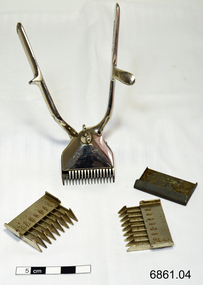
... Dr Angus assisted Dr Tom Ryan, a pioneer in the use of X-rays and in ocular surgery. flagstaff hill warrnambool shipwrecked coast flagstaff hill maritime museum maritime museum shipwreck coast flagstaff hill maritime village great ocean road dr w r angus hair clippers personal effects 1900's grooming equipment 1900's hair cutting equipment 1900's burman & son ltd "BURMAN & SON LTD", "MADE IN ENGLAND". ...This hair clipper set was part of Dr W.R. Angus' personal effects and was donated to Flagstaff Hill Maritime Village by the family of Doctor William Roy Angus, Surgeon and Oculist. It is part of the “W.R. Angus Collection” that includes historical medical equipment, surgical instruments and material once belonging to Dr Edward Ryan and Dr Thomas Francis Ryan, (both of Nhill, Victoria) as well as Dr Angus’ own belongings. The Collection’s history spans the medical practices of the two Doctors Ryan, from 1885-1926 plus that of Dr Angus, up until 1969. ABOUT THE “W.R.ANGUS COLLECTION” Doctor William Roy Angus M.B., B.S., Adel., 1923, F.R.C.S. Edin.,1928 (also known as Dr Roy Angus) was born in Murrumbeena, Victoria in 1901 and lived until 1970. He qualified as a doctor in 1923 at University of Adelaide, was Resident Medical Officer at the Royal Adelaide Hospital in 1924 and for a period was house surgeon to Sir (then Mr.) Henry Simpson Newland. Dr Angus was briefly an Assistant to Dr Riddell of Kapunda, then commenced private practice at Curramulka, Yorke Peninsula, SA, where he was physician, surgeon and chemist. In 1926, he was appointed as new Medical Assistant to Dr Thomas Francis Ryan (T.F. Ryan, or Tom), in Nhill, Victoria, where his experiences included radiology and pharmacy. In 1927 he was Acting House Surgeon in Dr Tom Ryan’s absence. Dr Angus had become engaged to Gladys Forsyth and they decided he further his studies overseas in the UK in 1927. He studied at London University College Hospital and at Edinburgh Royal Infirmary and in 1928, was awarded FRCS (Fellow from the Royal College of Surgeons), Edinburgh. He worked his passage back to Australia as a Ship’s Surgeon on the on the Australian Commonwealth Line’s T.S.S. Largs Bay. Dr Angus married Gladys in 1929, in Ballarat. (They went on to have one son (Graham 1932, born in SA) and two daughters (Helen (died 12/07/1996) and Berenice (Berry), both born at Mira, Nhill ) According to Berry, her mother Gladys made a lot of their clothes. She was very talented and did some lovely embroidery including lingerie for her trousseau and beautifully handmade baby clothes. Dr Angus was a ‘flying doctor’ for the A.I.M. (Australian Inland Ministry) Aerial Medical Service in 1928 . Its first station was in the remote town of Oodnadatta, where Dr Angus was stationed. He was locum tenens there on North-South Railway at 21 Mile Camp. He took up this ‘flying doctor’ position in response to a call from Dr John Flynn; the organisation was later known as the Flying Doctor Service, then the Royal Flying Doctor Service. A lot of his work during this time involved dental surgery also. Between 1928-1932 he was surgeon at the Curramulka Hospital, Yorke Peninsula, South Australia. In 1933 Dr Angus returned to Nhill and purchased a share of the Nelson Street practice and Mira hospital (a 2 bed ward at the Nelson Street Practice) from Dr Les Middleton one of the Middleton Brothers, the current owners of what previously once Dr Tom Ryan’s practice. Dr Tom and his brother had worked as surgeons included eye surgery. Dr Tom Ryan performed many of his operations in the Mira private hospital on his premises. He had been House Surgeon at the Nhill Hospital 1902-1926. Dr Tom Ryan had one of the only two pieces of radiology equipment in Victoria during his practicing years – The Royal Melbourne Hospital had the other one. Over the years Dr Tom Ryan had gradually set up what was effectively a training school for country general-practitioner-surgeons. Each patient was carefully examined, including using the X-ray machine, and any surgery was discussed and planned with Dr Ryan’s assistants several days in advance. Dr Angus gained experience in using the X-ray machine there during his time as assistant to Dr Ryan. When Dr Angus bought into the Nelson Street premises in Nhill he was also appointed as the Nhill Hospital’s Honorary House Surgeon 1933-1938. His practitioner’s plate from his Nhill surgery is now mounted on the doorway to the Port Medical Office at Flagstaff Hill Maritime Village, Warrnambool. When Dr Angus took up practice in the Dr Edward and Dr Tom Ryan’s old premises he obtained their extensive collection of historical medical equipment and materials spanning 1884-1926. A large part of this collection is now on display at the Port Medical Office at Flagstaff Hill Maritime Village in Warrnambool. In 1939 Dr Angus and his family moved to Warrnambool where he purchased “Birchwood,” the 1852 home and medical practice of Dr John Hunter Henderson, at 214 Koroit Street. (This property was sold in1965 to the State Government and is now the site of the Warrnambool Police Station. and an ALDI sore is on the land that was once their tennis court). The Angus family was able to afford gardeners, cooks and maids; their home was a popular place for visiting dignitaries to stay whilst visiting Warrnambool. Dr Angus had his own silk worm farm at home in a Mulberry tree. His young daughter used his centrifuge for spinning the silk. Dr Angus was appointed on a part-time basis as Port Medical Officer (Health Officer) in Warrnambool and held this position until the 1940’s when the government no longer required the service of a Port Medical Officer in Warrnambool; he was thus Warrnambool’s last serving Port Medical Officer. (Masters of immigrant ships arriving in port reported incidents of diseases, illness and death and the Port Medical Officer made a decision on whether the ship required Quarantine and for how long, in this way preventing contagious illness from spreading from new immigrants to the residents already in the colony.) Dr Angus was a member of the Australian Medical Association, for 35 years and surgeon at the Warrnambool Base Hospital 1939-1942, He served as a Surgeon Captain during WWII1942-45, in Ballarat, Victoria, and in Bonegilla, N.S.W., completing his service just before the end of the war due to suffering from a heart attack. During his convalescence he carved an intricate and ‘most artistic’ chess set from the material that dentures were made from. He then studied ophthalmology at the Royal Melbourne Eye and Ear Hospital and created cosmetically superior artificial eyes by pioneering using the intrascleral cartilage. Angus received accolades from the Ophthalmological Society of Australasia for this work. He returned to Warrnambool to commence practice as an ophthalmologist, pioneering in artificial eye improvements. He was Honorary Consultant Ophthalmologist to Warrnambool Base Hospital for 31 years. He made monthly visits to Portland as a visiting surgeon, to perform eye surgery. He represented the Victorian South-West subdivision of the Australian Medical Association as its secretary between 1949 and 1956 and as chairman from 1956 to 1958. In 1968 Dr Angus was elected member of Spain’s Barraquer Institute of Barcelona after his research work in Intrasclearal cartilage grafting, becoming one of the few Australian ophthalmologists to receive this honour, and in the following year presented his final paper on Living Intrasclearal Cartilage Implants at the Inaugural Meeting of the Australian College of Ophthalmologists in Melbourne In his personal life Dr Angus was a Presbyterian and treated Sunday as a Sabbath, a day of rest. He would visit 3 or 4 country patients on a Sunday, taking his children along ‘for the ride’ and to visit with him. Sunday evenings he would play the pianola and sing Scottish songs to his family. One of Dr Angus’ patients was Margaret MacKenzie, author of a book on local shipwrecks that she’d seen as an eye witness from the late 1880’s in Peterborough, Victoria. In the early 1950’s Dr Angus, painted a picture of a shipwreck for the cover jacket of Margaret’s book, Shipwrecks and More Shipwrecks. She was blind in later life and her daughter wrote the actual book for her. Dr Angus and his wife Gladys were very involved in Warrnambool’s society with a strong interest in civic affairs. He had an interest in people and the community They were both involved in the creation of Flagstaff Hill, including the layout of the gardens. After his death (28th March 1970) his family requested his practitioner’s plate, medical instruments and some personal belongings be displayed in the Port Medical Office surgery at Flagstaff Hill Maritime Village, and be called the “W. R. Angus Collection”. The W.R. Angus Collection is significant for still being located at the site it is connected with, Doctor Angus being the last Port Medical Officer in Warrnambool. The collection of medical instruments and other equipment is culturally significant, being an historical example of medicine from late 19th to mid-20th century. Dr Angus assisted Dr Tom Ryan, a pioneer in the use of X-rays and in ocular surgery. Hair clippers, part of the W.R. Angus Collection. Stainless steel, made in England by Burman & Son. Includes 2 extra blades of different cutting lengths. Blade width 4.5cm "BURMAN & SON LTD", "MADE IN ENGLAND". flagstaff hill, warrnambool, shipwrecked coast, flagstaff hill maritime museum, maritime museum, shipwreck coast, flagstaff hill maritime village, great ocean road, dr w r angus, hair clippers, personal effects 1900's, grooming equipment 1900's, hair cutting equipment 1900's, burman & son ltd -
 Flagstaff Hill Maritime Museum and Village
Hair Clippers, 1900's
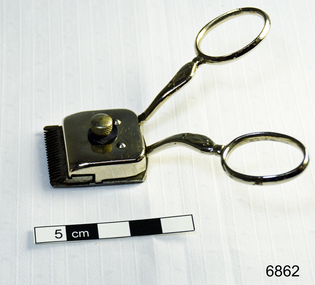
... Dr Angus assisted Dr Tom Ryan, a pioneer in the use of X-rays and in ocular surgery. flagstaff hill warrnambool shipwrecked coast flagstaff hill maritime museum maritime museum shipwreck coast flagstaff hill maritime village great ocean road dr w r angus hair clippers personal effects 1900's grooming equipment 1900's hair cutting equipment 1900's Hair clippers, part of the W.R. ...These hair clippers were part of Dr. W.R. Angus' personal effects and were donated to Flagstaff Hill Maritime Village by the family of Doctor William Roy Angus, Surgeon and Oculist. It is part of the “W.R. Angus Collection” that includes historical medical equipment, surgical instruments and material once belonging to Dr Edward Ryan and Dr Thomas Francis Ryan, (both of Nhill, Victoria) as well as Dr Angus’ own belongings. The Collection’s history spans the medical practices of the two Doctors Ryan, from 1885-1926 plus that of Dr Angus, up until 1969. ABOUT THE “W.R.ANGUS COLLECTION” Doctor William Roy Angus M.B., B.S., Adel., 1923, F.R.C.S. Edin.,1928 (also known as Dr Roy Angus) was born in Murrumbeena, Victoria in 1901 and lived until 1970. He qualified as a doctor in 1923 at University of Adelaide, was Resident Medical Officer at the Royal Adelaide Hospital in 1924 and for a period was house surgeon to Sir (then Mr.) Henry Simpson Newland. Dr Angus was briefly an Assistant to Dr Riddell of Kapunda, then commenced private practice at Curramulka, Yorke Peninsula, SA, where he was physician, surgeon and chemist. In 1926, he was appointed as new Medical Assistant to Dr Thomas Francis Ryan (T.F. Ryan, or Tom), in Nhill, Victoria, where his experiences included radiology and pharmacy. In 1927 he was Acting House Surgeon in Dr Tom Ryan’s absence. Dr Angus had become engaged to Gladys Forsyth and they decided he further his studies overseas in the UK in 1927. He studied at London University College Hospital and at Edinburgh Royal Infirmary and in 1928, was awarded FRCS (Fellow from the Royal College of Surgeons), Edinburgh. He worked his passage back to Australia as a Ship’s Surgeon on the on the Australian Commonwealth Line’s T.S.S. Largs Bay. Dr Angus married Gladys in 1929, in Ballarat. (They went on to have one son (Graham 1932, born in SA) and two daughters (Helen (died 12/07/1996) and Berenice (Berry), both born at Mira, Nhill ) According to Berry, her mother Gladys made a lot of their clothes. She was very talented and did some lovely embroidery including lingerie for her trousseau and beautifully handmade baby clothes. Dr Angus was a ‘flying doctor’ for the A.I.M. (Australian Inland Ministry) Aerial Medical Service in 1928 . Its first station was in the remote town of Oodnadatta, where Dr Angus was stationed. He was locum tenens there on North-South Railway at 21 Mile Camp. He took up this ‘flying doctor’ position in response to a call from Dr John Flynn; the organisation was later known as the Flying Doctor Service, then the Royal Flying Doctor Service. A lot of his work during this time involved dental surgery also. Between 1928-1932 he was surgeon at the Curramulka Hospital, Yorke Peninsula, South Australia. In 1933 Dr Angus returned to Nhill and purchased a share of the Nelson Street practice and Mira hospital (a 2 bed ward at the Nelson Street Practice) from Dr Les Middleton one of the Middleton Brothers, the current owners of what previously once Dr Tom Ryan’s practice. Dr Tom and his brother had worked as surgeons included eye surgery. Dr Tom Ryan performed many of his operations in the Mira private hospital on his premises. He had been House Surgeon at the Nhill Hospital 1902-1926. Dr Tom Ryan had one of the only two pieces of radiology equipment in Victoria during his practicing years – The Royal Melbourne Hospital had the other one. Over the years Dr Tom Ryan had gradually set up what was effectively a training school for country general-practitioner-surgeons. Each patient was carefully examined, including using the X-ray machine, and any surgery was discussed and planned with Dr Ryan’s assistants several days in advance. Dr Angus gained experience in using the X-ray machine there during his time as assistant to Dr Ryan. When Dr Angus bought into the Nelson Street premises in Nhill he was also appointed as the Nhill Hospital’s Honorary House Surgeon 1933-1938. His practitioner’s plate from his Nhill surgery is now mounted on the doorway to the Port Medical Office at Flagstaff Hill Maritime Village, Warrnambool. When Dr Angus took up practice in the Dr Edward and Dr Tom Ryan’s old premises he obtained their extensive collection of historical medical equipment and materials spanning 1884-1926. A large part of this collection is now on display at the Port Medical Office at Flagstaff Hill Maritime Village in Warrnambool. In 1939 Dr Angus and his family moved to Warrnambool where he purchased “Birchwood,” the 1852 home and medical practice of Dr John Hunter Henderson, at 214 Koroit Street. (This property was sold in1965 to the State Government and is now the site of the Warrnambool Police Station. and an ALDI sore is on the land that was once their tennis court). The Angus family was able to afford gardeners, cooks and maids; their home was a popular place for visiting dignitaries to stay whilst visiting Warrnambool. Dr Angus had his own silk worm farm at home in a Mulberry tree. His young daughter used his centrifuge for spinning the silk. Dr Angus was appointed on a part-time basis as Port Medical Officer (Health Officer) in Warrnambool and held this position until the 1940’s when the government no longer required the service of a Port Medical Officer in Warrnambool; he was thus Warrnambool’s last serving Port Medical Officer. (Masters of immigrant ships arriving in port reported incidents of diseases, illness and death and the Port Medical Officer made a decision on whether the ship required Quarantine and for how long, in this way preventing contagious illness from spreading from new immigrants to the residents already in the colony.) Dr Angus was a member of the Australian Medical Association, for 35 years and surgeon at the Warrnambool Base Hospital 1939-1942, He served as a Surgeon Captain during WWII1942-45, in Ballarat, Victoria, and in Bonegilla, N.S.W., completing his service just before the end of the war due to suffering from a heart attack. During his convalescence he carved an intricate and ‘most artistic’ chess set from the material that dentures were made from. He then studied ophthalmology at the Royal Melbourne Eye and Ear Hospital and created cosmetically superior artificial eyes by pioneering using the intrascleral cartilage. Angus received accolades from the Ophthalmological Society of Australasia for this work. He returned to Warrnambool to commence practice as an ophthalmologist, pioneering in artificial eye improvements. He was Honorary Consultant Ophthalmologist to Warrnambool Base Hospital for 31 years. He made monthly visits to Portland as a visiting surgeon, to perform eye surgery. He represented the Victorian South-West subdivision of the Australian Medical Association as its secretary between 1949 and 1956 and as chairman from 1956 to 1958. In 1968 Dr Angus was elected member of Spain’s Barraquer Institute of Barcelona after his research work in Intrasclearal cartilage grafting, becoming one of the few Australian ophthalmologists to receive this honour, and in the following year presented his final paper on Living Intrasclearal Cartilage Implants at the Inaugural Meeting of the Australian College of Ophthalmologists in Melbourne In his personal life Dr Angus was a Presbyterian and treated Sunday as a Sabbath, a day of rest. He would visit 3 or 4 country patients on a Sunday, taking his children along ‘for the ride’ and to visit with him. Sunday evenings he would play the pianola and sing Scottish songs to his family. One of Dr Angus’ patients was Margaret MacKenzie, author of a book on local shipwrecks that she’d seen as an eye witness from the late 1880’s in Peterborough, Victoria. In the early 1950’s Dr Angus, painted a picture of a shipwreck for the cover jacket of Margaret’s book, Shipwrecks and More Shipwrecks. She was blind in later life and her daughter wrote the actual book for her. Dr Angus and his wife Gladys were very involved in Warrnambool’s society with a strong interest in civic affairs. He had an interest in people and the community They were both involved in the creation of Flagstaff Hill, including the layout of the gardens. After his death (28th March 1970) his family requested his practitioner’s plate, medical instruments and some personal belongings be displayed in the Port Medical Office surgery at Flagstaff Hill Maritime Village, and be called the “W. R. Angus Collection”. The W.R. Angus Collection is significant for still being located at the site it is connected with, Doctor Angus being the last Port Medical Officer in Warrnambool. The collection of medical instruments and other equipment is culturally significant, being an historical example of medicine from late 19th to mid-20th century. Dr Angus assisted Dr Tom Ryan, a pioneer in the use of X-rays and in ocular surgery. Hair clippers, part of the W.R. Angus Collection. Stainless steel, narrow blade clippers with lozenge logo on both handles, top and bottom. Blade width 2.75cmflagstaff hill, warrnambool, shipwrecked coast, flagstaff hill maritime museum, maritime museum, shipwreck coast, flagstaff hill maritime village, great ocean road, dr w r angus, hair clippers, personal effects 1900's, grooming equipment 1900's, hair cutting equipment 1900's -
 Flagstaff Hill Maritime Museum and Village
Razor, Early 1900's
... Dr Angus assisted Dr Tom Ryan, a pioneer in the use of X-rays and in ocular surgery. flagstaff hill warrnambool shipwrecked coast flagstaff hill maritime museum maritime museum shipwreck coast flagstaff hill maritime village great ocean road dr w r angus william lawrence forsyth j and j maxfield sheffield cut-throat razor 1900's personal effects 1900's grooming equipment 1900's hair cutting equipment 1900's Written in pencil script on lid: "W. ...This cut-throat razor was originally owned by the father of Dr. W.R. Angus' wife Gladys. Her ,maternal father's name was William Lawrence Forsyth. The razor was inherited by Gladys and is now part of the W.R. Angus Collection, which was donated to Flagstaff Hill Maritime Village by the family of Doctor William Roy Angus, Surgeon and Oculist. The “W.R. Angus Collection” includes historical medical equipment, surgical instruments and material once belonging to Dr Edward Ryan and Dr Thomas Francis Ryan, (both of Nhill, Victoria) as well as Dr Angus’ own belongings. The Collection’s history spans the medical practices of the two Doctors Ryan, from 1885-1926 plus that of Dr Angus, up until 1969. ABOUT THE “W.R.ANGUS COLLECTION” Doctor William Roy Angus M.B., B.S., Adel., 1923, F.R.C.S. Edin.,1928 (also known as Dr Roy Angus) was born in Murrumbeena, Victoria in 1901 and lived until 1970. He qualified as a doctor in 1923 at University of Adelaide, was Resident Medical Officer at the Royal Adelaide Hospital in 1924 and for a period was house surgeon to Sir (then Mr.) Henry Simpson Newland. Dr Angus was briefly an Assistant to Dr Riddell of Kapunda, then commenced private practice at Curramulka, Yorke Peninsula, SA, where he was physician, surgeon and chemist. In 1926, he was appointed as new Medical Assistant to Dr Thomas Francis Ryan (T.F. Ryan, or Tom), in Nhill, Victoria, where his experiences included radiology and pharmacy. In 1927 he was Acting House Surgeon in Dr Tom Ryan’s absence. Dr Angus had become engaged to Gladys Forsyth and they decided he further his studies overseas in the UK in 1927. He studied at London University College Hospital and at Edinburgh Royal Infirmary and in 1928, was awarded FRCS (Fellow from the Royal College of Surgeons), Edinburgh. He worked his passage back to Australia as a Ship’s Surgeon on the on the Australian Commonwealth Line’s T.S.S. Largs Bay. Dr Angus married Gladys in 1929, in Ballarat. (They went on to have one son (Graham 1932, born in SA) and two daughters (Helen (died 12/07/1996) and Berenice (Berry), both born at Mira, Nhill ) According to Berry, her mother Gladys made a lot of their clothes. She was very talented and did some lovely embroidery including lingerie for her trousseau and beautifully handmade baby clothes. Dr Angus was a ‘flying doctor’ for the A.I.M. (Australian Inland Ministry) Aerial Medical Service in 1928 . Its first station was in the remote town of Oodnadatta, where Dr Angus was stationed. He was locum tenens there on North-South Railway at 21 Mile Camp. He took up this ‘flying doctor’ position in response to a call from Dr John Flynn; the organisation was later known as the Flying Doctor Service, then the Royal Flying Doctor Service. A lot of his work during this time involved dental surgery also. Between 1928-1932 he was surgeon at the Curramulka Hospital, Yorke Peninsula, South Australia. In 1933 Dr Angus returned to Nhill and purchased a share of the Nelson Street practice and Mira hospital (a 2 bed ward at the Nelson Street Practice) from Dr Les Middleton one of the Middleton Brothers, the current owners of what previously once Dr Tom Ryan’s practice. Dr Tom and his brother had worked as surgeons included eye surgery. Dr Tom Ryan performed many of his operations in the Mira private hospital on his premises. He had been House Surgeon at the Nhill Hospital 1902-1926. Dr Tom Ryan had one of the only two pieces of radiology equipment in Victoria during his practicing years – The Royal Melbourne Hospital had the other one. Over the years Dr Tom Ryan had gradually set up what was effectively a training school for country general-practitioner-surgeons. Each patient was carefully examined, including using the X-ray machine, and any surgery was discussed and planned with Dr Ryan’s assistants several days in advance. Dr Angus gained experience in using the X-ray machine there during his time as assistant to Dr Ryan. When Dr Angus bought into the Nelson Street premises in Nhill he was also appointed as the Nhill Hospital’s Honorary House Surgeon 1933-1938. His practitioner’s plate from his Nhill surgery is now mounted on the doorway to the Port Medical Office at Flagstaff Hill Maritime Village, Warrnambool. When Dr Angus took up practice in the Dr Edward and Dr Tom Ryan’s old premises he obtained their extensive collection of historical medical equipment and materials spanning 1884-1926. A large part of this collection is now on display at the Port Medical Office at Flagstaff Hill Maritime Village in Warrnambool. In 1939 Dr Angus and his family moved to Warrnambool where he purchased “Birchwood,” the 1852 home and medical practice of Dr John Hunter Henderson, at 214 Koroit Street. (This property was sold in1965 to the State Government and is now the site of the Warrnambool Police Station. and an ALDI sore is on the land that was once their tennis court). The Angus family was able to afford gardeners, cooks and maids; their home was a popular place for visiting dignitaries to stay whilst visiting Warrnambool. Dr Angus had his own silk worm farm at home in a Mulberry tree. His young daughter used his centrifuge for spinning the silk. Dr Angus was appointed on a part-time basis as Port Medical Officer (Health Officer) in Warrnambool and held this position until the 1940’s when the government no longer required the service of a Port Medical Officer in Warrnambool; he was thus Warrnambool’s last serving Port Medical Officer. (Masters of immigrant ships arriving in port reported incidents of diseases, illness and death and the Port Medical Officer made a decision on whether the ship required Quarantine and for how long, in this way preventing contagious illness from spreading from new immigrants to the residents already in the colony.) Dr Angus was a member of the Australian Medical Association, for 35 years and surgeon at the Warrnambool Base Hospital 1939-1942, He served as a Surgeon Captain during WWII1942-45, in Ballarat, Victoria, and in Bonegilla, N.S.W., completing his service just before the end of the war due to suffering from a heart attack. During his convalescence he carved an intricate and ‘most artistic’ chess set from the material that dentures were made from. He then studied ophthalmology at the Royal Melbourne Eye and Ear Hospital and created cosmetically superior artificial eyes by pioneering using the intrascleral cartilage. Angus received accolades from the Ophthalmological Society of Australasia for this work. He returned to Warrnambool to commence practice as an ophthalmologist, pioneering in artificial eye improvements. He was Honorary Consultant Ophthalmologist to Warrnambool Base Hospital for 31 years. He made monthly visits to Portland as a visiting surgeon, to perform eye surgery. He represented the Victorian South-West subdivision of the Australian Medical Association as its secretary between 1949 and 1956 and as chairman from 1956 to 1958. In 1968 Dr Angus was elected member of Spain’s Barraquer Institute of Barcelona after his research work in Intrasclearal cartilage grafting, becoming one of the few Australian ophthalmologists to receive this honour, and in the following year presented his final paper on Living Intrasclearal Cartilage Implants at the Inaugural Meeting of the Australian College of Ophthalmologists in Melbourne In his personal life Dr Angus was a Presbyterian and treated Sunday as a Sabbath, a day of rest. He would visit 3 or 4 country patients on a Sunday, taking his children along ‘for the ride’ and to visit with him. Sunday evenings he would play the pianola and sing Scottish songs to his family. One of Dr Angus’ patients was Margaret MacKenzie, author of a book on local shipwrecks that she’d seen as an eye witness from the late 1880’s in Peterborough, Victoria. In the early 1950’s Dr Angus, painted a picture of a shipwreck for the cover jacket of Margaret’s book, Shipwrecks and More Shipwrecks. She was blind in later life and her daughter wrote the actual book for her. Dr Angus and his wife Gladys were very involved in Warrnambool’s society with a strong interest in civic affairs. He had an interest in people and the community They were both involved in the creation of Flagstaff Hill, including the layout of the gardens. After his death (28th March 1970) his family requested his practitioner’s plate, medical instruments and some personal belongings be displayed in the Port Medical Office surgery at Flagstaff Hill Maritime Village, and be called the “W. R. Angus Collection”. The W.R. Angus Collection is significant for still being located at the site it is connected with, Doctor Angus being the last Port Medical Officer in Warrnambool. The collection of medical instruments and other equipment is culturally significant, being an historical example of medicine from late 19th to mid-20th century. Dr Angus assisted Dr Tom Ryan, a pioneer in the use of X-rays and in ocular surgery. Cut-throat razor, part of the W.R. Angus Collection. Razor in dark green cardboard box. Razor has bone handle with arrow-head shaped end; blade swings inside the handle. The razor is a design called The Abbott and was made by J & J Maxfield of Sheffield in the early 1900's. It once belonged to William Lawrence Forsyth. Written in pencil script on lid: "W. L. Forsyth". Stamped into box and on steel blade "The Abbott". Blade also inscribed "J & J MAXFIELD / SHEFFIELD" flagstaff hill, warrnambool, shipwrecked coast, flagstaff hill maritime museum, maritime museum, shipwreck coast, flagstaff hill maritime village, great ocean road, dr w r angus, william lawrence forsyth, j and j maxfield sheffield, cut-throat razor 1900's, personal effects 1900's, grooming equipment 1900's, hair cutting equipment 1900's -
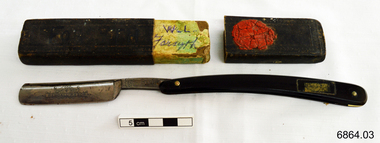 Flagstaff Hill Maritime Museum and Village
Razor, early 1900's
... Dr Angus assisted Dr Tom Ryan, a pioneer in the use of X-rays and in ocular surgery. flagstaff hill warrnambool shipwrecked coast flagstaff hill maritime museum maritime museum shipwreck coast flagstaff hill maritime village great ocean road dr w r angus william lawrence forsyth cadman and sons ltd sheffield cut-throat razor personal effects 1900's grooming equipment 1900's hair cutting equipment 1900's Written in pen on the lid: "W. ...This cut-throat razor was originally owned by the father of Dr. W.R. Angus' wife Gladys. Her maternal father's name was William Lawrence Forsyth. The razor was inherited by Gladys and is now part of the W.R. Angus Collection, which was donated to Flagstaff Hill Maritime Village by the family of Doctor William Roy Angus, Surgeon and Oculist. The “W.R. Angus Collection” includes historical medical equipment, surgical instruments and material once belonging to Dr Edward Ryan and Dr Thomas Francis Ryan, (both of Nhill, Victoria) as well as Dr Angus’ own belongings. The Collection’s history spans the medical practices of the two Doctors Ryan, from 1885-1926 plus that of Dr Angus, up until 1969. ABOUT THE “W.R.ANGUS COLLECTION” Doctor William Roy Angus M.B., B.S., Adel., 1923, F.R.C.S. Edin.,1928 (also known as Dr Roy Angus) was born in Murrumbeena, Victoria in 1901 and lived until 1970. He qualified as a doctor in 1923 at University of Adelaide, was Resident Medical Officer at the Royal Adelaide Hospital in 1924 and for a period was house surgeon to Sir (then Mr.) Henry Simpson Newland. Dr Angus was briefly an Assistant to Dr Riddell of Kapunda, then commenced private practice at Curramulka, Yorke Peninsula, SA, where he was physician, surgeon and chemist. In 1926, he was appointed as new Medical Assistant to Dr Thomas Francis Ryan (T.F. Ryan, or Tom), in Nhill, Victoria, where his experiences included radiology and pharmacy. In 1927 he was Acting House Surgeon in Dr Tom Ryan’s absence. Dr Angus had become engaged to Gladys Forsyth and they decided he further his studies overseas in the UK in 1927. He studied at London University College Hospital and at Edinburgh Royal Infirmary and in 1928, was awarded FRCS (Fellow from the Royal College of Surgeons), Edinburgh. He worked his passage back to Australia as a Ship’s Surgeon on the on the Australian Commonwealth Line’s T.S.S. Largs Bay. Dr Angus married Gladys in 1929, in Ballarat. (They went on to have one son (Graham 1932, born in SA) and two daughters (Helen (died 12/07/1996) and Berenice (Berry), both born at Mira, Nhill ) According to Berry, her mother Gladys made a lot of their clothes. She was very talented and did some lovely embroidery including lingerie for her trousseau and beautifully handmade baby clothes. Dr Angus was a ‘flying doctor’ for the A.I.M. (Australian Inland Ministry) Aerial Medical Service in 1928 . Its first station was in the remote town of Oodnadatta, where Dr Angus was stationed. He was locum tenens there on North-South Railway at 21 Mile Camp. He took up this ‘flying doctor’ position in response to a call from Dr John Flynn; the organisation was later known as the Flying Doctor Service, then the Royal Flying Doctor Service. A lot of his work during this time involved dental surgery also. Between 1928-1932 he was surgeon at the Curramulka Hospital, Yorke Peninsula, South Australia. In 1933 Dr Angus returned to Nhill and purchased a share of the Nelson Street practice and Mira hospital (a 2 bed ward at the Nelson Street Practice) from Dr Les Middleton one of the Middleton Brothers, the current owners of what previously once Dr Tom Ryan’s practice. Dr Tom and his brother had worked as surgeons included eye surgery. Dr Tom Ryan performed many of his operations in the Mira private hospital on his premises. He had been House Surgeon at the Nhill Hospital 1902-1926. Dr Tom Ryan had one of the only two pieces of radiology equipment in Victoria during his practicing years – The Royal Melbourne Hospital had the other one. Over the years Dr Tom Ryan had gradually set up what was effectively a training school for country general-practitioner-surgeons. Each patient was carefully examined, including using the X-ray machine, and any surgery was discussed and planned with Dr Ryan’s assistants several days in advance. Dr Angus gained experience in using the X-ray machine there during his time as assistant to Dr Ryan. When Dr Angus bought into the Nelson Street premises in Nhill he was also appointed as the Nhill Hospital’s Honorary House Surgeon 1933-1938. His practitioner’s plate from his Nhill surgery is now mounted on the doorway to the Port Medical Office at Flagstaff Hill Maritime Village, Warrnambool. When Dr Angus took up practice in the Dr Edward and Dr Tom Ryan’s old premises he obtained their extensive collection of historical medical equipment and materials spanning 1884-1926. A large part of this collection is now on display at the Port Medical Office at Flagstaff Hill Maritime Village in Warrnambool. In 1939 Dr Angus and his family moved to Warrnambool where he purchased “Birchwood,” the 1852 home and medical practice of Dr John Hunter Henderson, at 214 Koroit Street. (This property was sold in1965 to the State Government and is now the site of the Warrnambool Police Station. and an ALDI sore is on the land that was once their tennis court). The Angus family was able to afford gardeners, cooks and maids; their home was a popular place for visiting dignitaries to stay whilst visiting Warrnambool. Dr Angus had his own silk worm farm at home in a Mulberry tree. His young daughter used his centrifuge for spinning the silk. Dr Angus was appointed on a part-time basis as Port Medical Officer (Health Officer) in Warrnambool and held this position until the 1940’s when the government no longer required the service of a Port Medical Officer in Warrnambool; he was thus Warrnambool’s last serving Port Medical Officer. (Masters of immigrant ships arriving in port reported incidents of diseases, illness and death and the Port Medical Officer made a decision on whether the ship required Quarantine and for how long, in this way preventing contagious illness from spreading from new immigrants to the residents already in the colony.) Dr Angus was a member of the Australian Medical Association, for 35 years and surgeon at the Warrnambool Base Hospital 1939-1942, He served as a Surgeon Captain during WWII1942-45, in Ballarat, Victoria, and in Bonegilla, N.S.W., completing his service just before the end of the war due to suffering from a heart attack. During his convalescence he carved an intricate and ‘most artistic’ chess set from the material that dentures were made from. He then studied ophthalmology at the Royal Melbourne Eye and Ear Hospital and created cosmetically superior artificial eyes by pioneering using the intrascleral cartilage. Angus received accolades from the Ophthalmological Society of Australasia for this work. He returned to Warrnambool to commence practice as an ophthalmologist, pioneering in artificial eye improvements. He was Honorary Consultant Ophthalmologist to Warrnambool Base Hospital for 31 years. He made monthly visits to Portland as a visiting surgeon, to perform eye surgery. He represented the Victorian South-West subdivision of the Australian Medical Association as its secretary between 1949 and 1956 and as chairman from 1956 to 1958. In 1968 Dr Angus was elected member of Spain’s Barraquer Institute of Barcelona after his research work in Intrasclearal cartilage grafting, becoming one of the few Australian ophthalmologists to receive this honour, and in the following year presented his final paper on Living Intrasclearal Cartilage Implants at the Inaugural Meeting of the Australian College of Ophthalmologists in Melbourne In his personal life Dr Angus was a Presbyterian and treated Sunday as a Sabbath, a day of rest. He would visit 3 or 4 country patients on a Sunday, taking his children along ‘for the ride’ and to visit with him. Sunday evenings he would play the pianola and sing Scottish songs to his family. One of Dr Angus’ patients was Margaret MacKenzie, author of a book on local shipwrecks that she’d seen as an eye witness from the late 1880’s in Peterborough, Victoria. In the early 1950’s Dr Angus, painted a picture of a shipwreck for the cover jacket of Margaret’s book, Shipwrecks and More Shipwrecks. She was blind in later life and her daughter wrote the actual book for her. Dr Angus and his wife Gladys were very involved in Warrnambool’s society with a strong interest in civic affairs. He had an interest in people and the community They were both involved in the creation of Flagstaff Hill, including the layout of the gardens. After his death (28th March 1970) his family requested his practitioner’s plate, medical instruments and some personal belongings be displayed in the Port Medical Office surgery at Flagstaff Hill Maritime Village, and be called the “W. R. Angus Collection”. The W.R. Angus Collection is significant for still being located at the site it is connected with, Doctor Angus being the last Port Medical Officer in Warrnambool. The collection of medical instruments and other equipment is culturally significant, being an historical example of medicine from late 19th to mid-20th century. Dr Angus assisted Dr Tom Ryan, a pioneer in the use of X-rays and in ocular surgery. Cut-throat razor, part of the W.R. Angus Collection. Razor in dark coloured cardboard box, has dark brown Bakelite handle with rounded end; blade swings inside the handle. The razor is a Full Concave Bengal design, made by Cadman & Sons Ltd. of Sheffield in the early 1900's.Written in pen on the lid: "W. L. Forsyth", written along front of box and on tape on the handle 'FORSYTH". Impressed on steel blade "Full Concave / BENGALL RAZOR" and "CADMAN & SONS LTD. / SHEFFIELD"flagstaff hill, warrnambool, shipwrecked coast, flagstaff hill maritime museum, maritime museum, shipwreck coast, flagstaff hill maritime village, great ocean road, dr w r angus, william lawrence forsyth, cadman and sons ltd sheffield, cut-throat razor, personal effects 1900's, grooming equipment 1900's, hair cutting equipment 1900's -
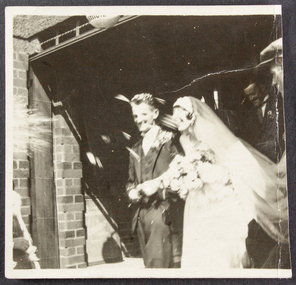 Mission to Seafarers Victoria
Photograph - Photograph, Sepia, Just married, Harry and Dora, 14 February 1928
... groom, and the wedding date as 14th of February 1928. The photograph uses the personal Harry and Dora, instead of the formal Harold and Amy. In the Register, Amy started signing her name as Dora. before correcting it. The photograph shows that weddings took place at the Chapel during the late 1920's...groom, and the wedding date as 14th of February 1928. The photograph uses the personal Harry and Dora, instead of the formal Harold and Amy. In the Register, Amy started signing her name as Dora. before correcting it. The photograph shows that weddings took place at the Chapel during the late 1920's ...The Marriage Register lists Harold Priestley Simpson and Amy Dora Walker as the bride and groom, and the wedding date as 14th of February 1928. The photograph uses the personal Harry and Dora, instead of the formal Harold and Amy. In the Register, Amy started signing her name as Dora. before correcting it. The photograph shows that weddings took place at the Chapel during the late 1920's, and the style of weddings at the time. This includes the type of outfits worn, such as the length of the veil and the type of bouquet carried. Dora's Bridesmaids are depicted in 2 other images in the MTSV collection also an image of the chapel decked with flowers for the occasion. The article in the Herald of the day describes the event: "WEDDING AT SEAMEN'S CHAPEL Reception at Hotel Windsor The pretty little chapel at the Sea men's Institute was packed with interested friends this afternoon, when Miss Dora Walker, one of the Mission's most enthusiastic and efficient voluntary helpers, chose it as the setting for her marriage with Mr H. P. Simpson, son of Mr and Mrs J. H. Simpson, of Mornington. A group of her fellow workers decorated the chapel with lovely pink and white gladioli, carnations and roses. The ceremony was performed by the Rev. J. R. Weller, chaplain of the Mission, and the bride was given away by her father, Mr A. W. Walker, of Manning road, East Malvern. She wore a lovely ivory georgette frock, the finely tucked skirt being fashioned with a deep transparent hem of Chantilly lace. Over it fell a beautiful Honiton lace veil mounted on tulle and arranged to give the ef fect of a train. Fragrant white roses composed her bouquet. Two attendants followed her down the aisle — her sister, Miss Molly Walker, and Miss Ella Kendall — both wearing dainty shrimp pink georgette frocks and large crinoline straw hats in the same shade with a dainty edging of tulle. They carried bouquets of pink cactus dahlias nnd delphiniums. Mr Louis Buscombe was best man, and Mr George Thompson grooms man. After the ceremony Mr and Mrs Walker entertained about 50 guests at the Hotel Windsor."The photograph shows St. Peter chapel was being used for weddings in 1928. The Anglican church has been used for weddings since being finished in 1917. The Marriage Register shows that these weddings were legal in the Commonwealth of Australia, and lists Church of England as the denomination for this wedding. Miss Amy Dora Simpson (nee Walker) had a long association with the Mission, first as a young Volunteer with the Ladies Harbour Light Guild circa WW1, and through to her wedding in early 1928 and beyond. Square sepia, glossy photograph of a bride and groom, taken as they leave a building. Guests are throwing rice at the newlywed. The groom is turned towards the camera, while the bride is looking ahead, carrying a bouquet. There is a white border around top, bottom and left edges, the photograph seems to have been cut in half along the right edge.On the reverse: handwritten in blue pen JUST MARRIED!/DORA & HARRY/28/2/28. 618 is stamped in blue ink . (date is incorrect as wedding took place on 14/2/28)bride, wedding, groom, 1928, dora simpson, dora walker, st peter chapel, harry simpson, lhlg, flinders street, harold priestley simpson, valentine's day, amy dora walker, ladies harbour lights guild, mr and mrs a.w. walker, malvern, manning road, reverend j.r weller, molly walker, ella kendall, david simpson -
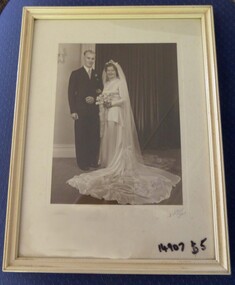 Warrnambool and District Historical Society Inc.
Photograph - Framed Wedding Photograph, Alex Wilkins, Circa 1940’s
... s. Alex Wilkins commenced his photographic career working for a local chemist and worked for some time from a studio at 151 Fairy Street Warrnambool and in 1938 purchased the studio of Arthur Jordan and moved to Liebig Street. The business was sold in 1961 and for some time after he operated in a small studio and worked shooting film for local TV channels. Alex died in 1972 after a short illness. warrnambool warrnambool wedding alex wilkins A.Wilkins, W’Bool. Sepia wedding photograph depicting bride and groom ...An unknown couple on their wedding day, photographed by Warrnambool photographer, Alex Wilkins. Alex was popular as a photographer and produced a large volume of work. This photograph was purchased by Les and Elizabeth O'Callaghan at a cost of $5. It is thought to be members of the Cassady family.The photo depicts styles of wedding dress popular in the 1940’s. Alex Wilkins commenced his photographic career working for a local chemist and worked for some time from a studio at 151 Fairy Street Warrnambool and in 1938 purchased the studio of Arthur Jordan and moved to Liebig Street. The business was sold in 1961 and for some time after he operated in a small studio and worked shooting film for local TV channels. Alex died in 1972 after a short illness. Sepia wedding photograph depicting bride and groom, in cream wooden frame with cream mount. A.Wilkins, W’Bool.warrnambool, warrnambool wedding, alex wilkins -
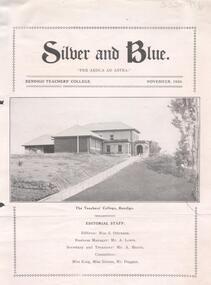 Bendigo Historical Society Inc.
Magazine - LA TROBE UNIVERSITY BENDIGO COLLECTION: SILVER AND BLUE
... S. Ottenson... Mr. A. Lewis... Mr. A. Harris... Miss King... Miss Groom...S. Ottenson. Business Manager: Mr. A. Lewis. Secretary and Treasurer: Mr. A. Harris. Committee: Miss King, Miss Groom, Mr. ...S. Ottenson Mr. A. Lewis Mr. A. Harris Miss King Miss Groom Mr. Duggan The front and second page of 'Silver and Blue' the Bendigo Teachers' College magazine. ...The front and second page of 'Silver and Blue' the Bendigo Teachers' College magazine. On the front page is a black and white photograph of The Teachers' College, Bendigo and a list of the Editorial Staff. Editress: Miss S. Ottenson. Business Manager: Mr. A. Lewis. Secretary and Treasurer: Mr. A. Harris. Committee: Miss King, Miss Groom, Mr. Duggan. The second page of silver and blue tells us it is vol. 1. No. 5 and the subscription for this magazine is 2/6 per copy. The editorial contains an illustration of a student with a clock and work mounting up. The message in the editorial is students are 'on the threshold of life.' Some students will be able to cope with difficulties better than others. The editorial continues to tell students keep 'striving to reach the stars' but keep their sense of humour despite life being a 'serious business'. November, 1930. See 3320.100bendigo, education, magazine, la trobe university bendigo collection, collection, bendigo, education, bendigo teachers' college, tertiary education, teacher training, magazine, magazines, building, courthouse, old courthouse, court house, old court house, buildings, miss j.c. burnett, mr. geoff. pryor, miss s. ottenson, mr. a. lewis, mr. a. harris, miss king, miss groom, mr. duggan -
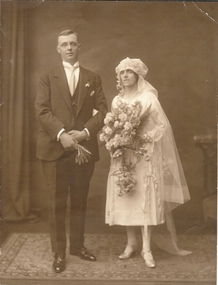 Bendigo Historical Society Inc.
Photograph - WEDDING PORTRAIT, approx. 1920's
... groom. Gentlemen in three piece dark suit. Lady in mid-calf length frock of 1920's style, large floral bouquet. ...groom. Gentlemen in three piece dark suit. Lady in mid-calf length frock of 1920's style, large floral bouquet. ...black and white photo: wedding photo of bride and groom. Gentlemen in three piece dark suit. Lady in mid-calf length frock of 1920's style, large floral bouquet. Cap with floor length veil.person, group, portrait -
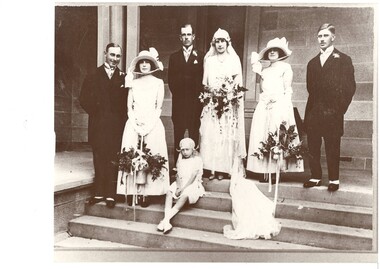 Buninyong & District Historical Society
Photograph - Photograph of wedding party for Mr. and Mrs. Archibald Fisken, 1934
... photo of photograph, Wedding party , 1930's clothing, standing on church steps. Three couples, bride and groom centre, groomsman and bridesmaid either side, flower girl in front. ...Early homestead." photo of photograph, Wedding party , 1930's clothing, standing on church steps. Three couples, bride and groom centre, groomsman and bridesmaid either side, flower girl in front. ...Peoplephoto of photograph, Wedding party , 1930's clothing, standing on church steps. Three couples, bride and groom centre, groomsman and bridesmaid either side, flower girl in front. Men in morning suits, bride in long white narrow profile gown, with lace veil and gown, holding large flower bouquet. Bridesmaids wear wider profile long sleeveless gowns, long gloves and bonnets with large bow, carrying bouquets in a basket. Flower girl in short white dress, a cap with "wings" and long socks.Pencil note on reverse: "Scotsburn. Land settled 1839 by Andrew Scott. Early homestead."scotsburn, scott family, fisken family -
 Uniting Church Archives - Synod of Victoria
Photograph, Parkville Presbyterian Church, Undated
... S. McEachran, J. Thomson, A. McDonald, R. J. Smith,Mr. P. McLennan and Mr. L. E. Groom, M.H.R. ...S. McEachran, J. Thomson, A. McDonald, R. J. Smith,Mr. P. McLennan and Mr. L. E. Groom, M.H.R. ...The College Church congregation initially worshipped in Ormond College in 1891. In 1895 they purchased the site of the present building. A committee set out certain specifications (including the crown tower), and a competition for the best design was won by architect RA Lawson. The building, constructed by Lang Brothers of Parkville at a cost of 2,170 pounds, was opened in 1898. College Church remained the only parish church in Parkville until 1934. The outstanding element is the crown tower, a choice of the first minister, the Reverend Alexander Yule. It is a copy, albeit on a reduced scale, of King's College Chapel, Aberdeen University, of which Reverend Yule was a former student. This crown tower is the only example in Victoria and is possibly unique in Australia. The church is constructed of red brick and Oamaru sandstone with a steeply pitched slate roof and parapeted gables. Windows are in the Gothic pointed arch style. The interior of the Church has a fine timber ceiling with arch braces. There are a number of quality stained glass windows, the two largest being dedicated to Mungo Scott and his wife, Scott having been a benefactor of the Church. The late nineteenth century pipe organ was built by George Fincham and Son (Richmond), with Professor Franklin Peterson as consultant, and was completed in November 1903. In the 1940s College Church was internally re-ordered and this work was designed by prominent church architect, Louis Williams. The church became part of the Uniting Church in Australia in 1977, and ownership subsequently passed to Mar Thoma Syrian Church in 2008. From The Argus, Friday 19 April 1907: Rev. Alexander Yule washeld in highest esteem in his ministerialbrethren and a large circle of friends was abundanrly evident by the expressions ofsorrowful regret at his death and of sympathy with his widow and her three sonsby those who attended the funeral servicesyesterday morning. To most of those present the announcement of Mr. Yule's death, made in "The Argus" on Wednesday, came as a painful surprise. It was known that at the time of his ministerial jubilee last January he shown symptoms of failing health, and that his illness had gradually become more serious, but few among the intimate friends of the family thought the end was so near. Although Mr. Yule suffered much physical weakness, his mental faculties were unimpaired, and he was able to carry on his ministerial work almost to the last. He even conducted the services at the College Church, Parkville, on Sunday, March 31. Testimony is borne that his ministry was appreciated most highly by the important congregations, both in Scotland and Victoria, under his charge; that in the church courts he was a safe and wise counsellor; and that he did excellent service on various committees, and as the convenor of the Theological-hall committee, on which he was appointed by the General Assembly. The esteem in which he was regarded by the Presbyterian Church as a whole was expressed in his election in 1891 to the Moderator's chair of the Victorian Church, and to that of the Federal Assembly in 1901. The funeral service was held at College Church, the scene of Mr. Yule's ministry since 1891. The building was filled to overflowing by a congregation that included most of the members of the metropolitan presbyteries, representatives from several of the provincial presbyterues, the students of the Theological-hall, members of the Parkville congregation, and the children of Miss Sutherland's Home. The pulpit and furniture were draped in black, and the plain oak coffin rested on the communion-table. The simple yet impressive service usual with the Presbyterian Church was conducted by Professor Rentoul, president of the Theological-hall Senatus, who was assisted by Professor Skene, Rev. W. Fraser (moderator of the Melbourne North Presbytery), Rev. D. S. McEacharn, and the Rev. John Thomson, a life-long friend of the departed minister. The Dead March in "Saul" was played on the organ as the coffin was borne to the hearse. The procession along Parkville-crescent to the cemetery gates was a notable one, and in the following order:—Theological-hall students; the hearse; the chief mourners—Dr. Yule, Rev. A. Yule, Mr. James Yule, and Mr. Groom, M.H.R., a relative of the family; the Theological-hall professors and committee; members of the presbyteries; and other friends, making a large and repre-sentative gathering. At the grave Professor Rentoul, Rev. Dr. Meiklejohn, Rev. D. Ross, and the Rev. Dr. Marshall officiated. The pall-bearers were Revs. D. S. McEachran, J. Thomson, A. McDonald, R. J. Smith,Mr. P. McLennan and Mr. L. E. Groom, M.H.R. The funeral arrangement were in the hands of Mr. Josiah Holdsworth.Portion of photocopy of the church and two of the portraits.college church, presbyterian church, yule, rev. alexander -
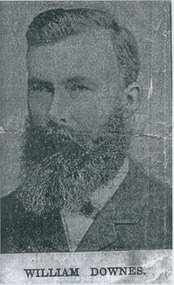 Uniting Church Archives - Synod of Victoria
Photograph, Parkville Presbyterian Church, Undated
... S. McEachran, J. Thomson, A. McDonald, R. J. Smith,Mr. P. McLennan and Mr. L. E. Groom, M.H.R. ...S. McEachran, J. Thomson, A. McDonald, R. J. Smith,Mr. P. McLennan and Mr. L. E. Groom, M.H.R. ...The College Church congregation initially worshipped in Ormond College in 1891. In 1895 they purchased the site of the present building. A committee set out certain specifications (including the crown tower), and a competition for the best design was won by architect RA Lawson. The building, constructed by Lang Brothers of Parkville at a cost of 2,170 pounds, was opened in 1898. College Church remained the only parish church in Parkville until 1934. The outstanding element is the crown tower, a choice of the first minister, the Reverend Alexander Yule. It is a copy, albeit on a reduced scale, of King's College Chapel, Aberdeen University, of which Reverend Yule was a former student. This crown tower is the only example in Victoria and is possibly unique in Australia. The church is constructed of red brick and Oamaru sandstone with a steeply pitched slate roof and parapeted gables. Windows are in the Gothic pointed arch style. The interior of the Church has a fine timber ceiling with arch braces. There are a number of quality stained glass windows, the two largest being dedicated to Mungo Scott and his wife, Scott having been a benefactor of the Church. The late nineteenth century pipe organ was built by George Fincham and Son (Richmond), with Professor Franklin Peterson as consultant, and was completed in November 1903. In the 1940s College Church was internally re-ordered and this work was designed by prominent church architect, Louis Williams. The church became part of the Uniting Church in Australia in 1977, and ownership subsequently passed to Mar Thoma Syrian Church in 2008. From The Argus, Friday 19 April 1907: Rev. Alexander Yule washeld in highest esteem in his ministerialbrethren and a large circle of friends was abundanrly evident by the expressions ofsorrowful regret at his death and of sympathy with his widow and her three sonsby those who attended the funeral servicesyesterday morning. To most of those present the announcement of Mr. Yule's death, made in "The Argus" on Wednesday, came as a painful surprise. It was known that at the time of his ministerial jubilee last January he shown symptoms of failing health, and that his illness had gradually become more serious, but few among the intimate friends of the family thought the end was so near. Although Mr. Yule suffered much physical weakness, his mental faculties were unimpaired, and he was able to carry on his ministerial work almost to the last. He even conducted the services at the College Church, Parkville, on Sunday, March 31. Testimony is borne that his ministry was appreciated most highly by the important congregations, both in Scotland and Victoria, under his charge; that in the church courts he was a safe and wise counsellor; and that he did excellent service on various committees, and as the convenor of the Theological-hall committee, on which he was appointed by the General Assembly. The esteem in which he was regarded by the Presbyterian Church as a whole was expressed in his election in 1891 to the Moderator's chair of the Victorian Church, and to that of the Federal Assembly in 1901. The funeral service was held at College Church, the scene of Mr. Yule's ministry since 1891. The building was filled to overflowing by a congregation that included most of the members of the metropolitan presbyteries, representatives from several of the provincial presbyterues, the students of the Theological-hall, members of the Parkville congregation, and the children of Miss Sutherland's Home. The pulpit and furniture were draped in black, and the plain oak coffin rested on the communion-table. The simple yet impressive service usual with the Presbyterian Church was conducted by Professor Rentoul, president of the Theological-hall Senatus, who was assisted by Professor Skene, Rev. W. Fraser (moderator of the Melbourne North Presbytery), Rev. D. S. McEacharn, and the Rev. John Thomson, a life-long friend of the departed minister. The Dead March in "Saul" was played on the organ as the coffin was borne to the hearse. The procession along Parkville-crescent to the cemetery gates was a notable one, and in the following order:—Theological-hall students; the hearse; the chief mourners—Dr. Yule, Rev. A. Yule, Mr. James Yule, and Mr. Groom, M.H.R., a relative of the family; the Theological-hall professors and committee; members of the presbyteries; and other friends, making a large and repre-sentative gathering. At the grave Professor Rentoul, Rev. Dr. Meiklejohn, Rev. D. Ross, and the Rev. Dr. Marshall officiated. The pall-bearers were Revs. D. S. McEachran, J. Thomson, A. McDonald, R. J. Smith,Mr. P. McLennan and Mr. L. E. Groom, M.H.R. The funeral arrangement were in the hands of Mr. Josiah Holdsworth.William Downes - one of the founders.college church, presbyterian church, yule, rev. alexander -
 Uniting Church Archives - Synod of Victoria
Photograph, Parkville Presbyterian Church, Undated
... S. McEachran, J. Thomson, A. McDonald, R. J. Smith,Mr. P. McLennan and Mr. L. E. Groom, M.H.R. ...S. McEachran, J. Thomson, A. McDonald, R. J. Smith,Mr. P. McLennan and Mr. L. E. Groom, M.H.R. ...The College Church congregation initially worshipped in Ormond College in 1891. In 1895 they purchased the site of the present building. A committee set out certain specifications (including the crown tower), and a competition for the best design was won by architect RA Lawson. The building, constructed by Lang Brothers of Parkville at a cost of 2,170 pounds, was opened in 1898. College Church remained the only parish church in Parkville until 1934. The outstanding element is the crown tower, a choice of the first minister, the Reverend Alexander Yule. It is a copy, albeit on a reduced scale, of King's College Chapel, Aberdeen University, of which Reverend Yule was a former student. This crown tower is the only example in Victoria and is possibly unique in Australia. The church is constructed of red brick and Oamaru sandstone with a steeply pitched slate roof and parapeted gables. Windows are in the Gothic pointed arch style. The interior of the Church has a fine timber ceiling with arch braces. There are a number of quality stained glass windows, the two largest being dedicated to Mungo Scott and his wife, Scott having been a benefactor of the Church. The late nineteenth century pipe organ was built by George Fincham and Son (Richmond), with Professor Franklin Peterson as consultant, and was completed in November 1903. In the 1940s College Church was internally re-ordered and this work was designed by prominent church architect, Louis Williams. The church became part of the Uniting Church in Australia in 1977, and ownership subsequently passed to Mar Thoma Syrian Church in 2008. From The Argus, Friday 19 April 1907: Rev. Alexander Yule washeld in highest esteem in his ministerialbrethren and a large circle of friends was abundanrly evident by the expressions ofsorrowful regret at his death and of sympathy with his widow and her three sonsby those who attended the funeral servicesyesterday morning. To most of those present the announcement of Mr. Yule's death, made in "The Argus" on Wednesday, came as a painful surprise. It was known that at the time of his ministerial jubilee last January he shown symptoms of failing health, and that his illness had gradually become more serious, but few among the intimate friends of the family thought the end was so near. Although Mr. Yule suffered much physical weakness, his mental faculties were unimpaired, and he was able to carry on his ministerial work almost to the last. He even conducted the services at the College Church, Parkville, on Sunday, March 31. Testimony is borne that his ministry was appreciated most highly by the important congregations, both in Scotland and Victoria, under his charge; that in the church courts he was a safe and wise counsellor; and that he did excellent service on various committees, and as the convenor of the Theological-hall committee, on which he was appointed by the General Assembly. The esteem in which he was regarded by the Presbyterian Church as a whole was expressed in his election in 1891 to the Moderator's chair of the Victorian Church, and to that of the Federal Assembly in 1901. The funeral service was held at College Church, the scene of Mr. Yule's ministry since 1891. The building was filled to overflowing by a congregation that included most of the members of the metropolitan presbyteries, representatives from several of the provincial presbyterues, the students of the Theological-hall, members of the Parkville congregation, and the children of Miss Sutherland's Home. The pulpit and furniture were draped in black, and the plain oak coffin rested on the communion-table. The simple yet impressive service usual with the Presbyterian Church was conducted by Professor Rentoul, president of the Theological-hall Senatus, who was assisted by Professor Skene, Rev. W. Fraser (moderator of the Melbourne North Presbytery), Rev. D. S. McEacharn, and the Rev. John Thomson, a life-long friend of the departed minister. The Dead March in "Saul" was played on the organ as the coffin was borne to the hearse. The procession along Parkville-crescent to the cemetery gates was a notable one, and in the following order:—Theological-hall students; the hearse; the chief mourners—Dr. Yule, Rev. A. Yule, Mr. James Yule, and Mr. Groom, M.H.R., a relative of the family; the Theological-hall professors and committee; members of the presbyteries; and other friends, making a large and repre-sentative gathering. At the grave Professor Rentoul, Rev. Dr. Meiklejohn, Rev. D. Ross, and the Rev. Dr. Marshall officiated. The pall-bearers were Revs. D. S. McEachran, J. Thomson, A. McDonald, R. J. Smith,Mr. P. McLennan and Mr. L. E. Groom, M.H.R. The funeral arrangement were in the hands of Mr. Josiah Holdsworth.G. H. Scott - Treasurer.college church, presbyterian church, yule, rev. alexander -
 Uniting Church Archives - Synod of Victoria
Photograph, Parkville Presbyterian Church, Undated
... S. McEachran, J. Thomson, A. McDonald, R. J. Smith,Mr. P. McLennan and Mr. L. E. Groom, M.H.R. ...S. McEachran, J. Thomson, A. McDonald, R. J. Smith,Mr. P. McLennan and Mr. L. E. Groom, M.H.R. ...The College Church congregation initially worshipped in Ormond College in 1891. In 1895 they purchased the site of the present building. A committee set out certain specifications (including the crown tower), and a competition for the best design was won by architect RA Lawson. The building, constructed by Lang Brothers of Parkville at a cost of 2,170 pounds, was opened in 1898. College Church remained the only parish church in Parkville until 1934. The outstanding element is the crown tower, a choice of the first minister, the Reverend Alexander Yule. It is a copy, albeit on a reduced scale, of King's College Chapel, Aberdeen University, of which Reverend Yule was a former student. This crown tower is the only example in Victoria and is possibly unique in Australia. The church is constructed of red brick and Oamaru sandstone with a steeply pitched slate roof and parapeted gables. Windows are in the Gothic pointed arch style. The interior of the Church has a fine timber ceiling with arch braces. There are a number of quality stained glass windows, the two largest being dedicated to Mungo Scott and his wife, Scott having been a benefactor of the Church. The late nineteenth century pipe organ was built by George Fincham and Son (Richmond), with Professor Franklin Peterson as consultant, and was completed in November 1903. In the 1940s College Church was internally re-ordered and this work was designed by prominent church architect, Louis Williams. The church became part of the Uniting Church in Australia in 1977, and ownership subsequently passed to Mar Thoma Syrian Church in 2008. From The Argus, Friday 19 April 1907: Rev. Alexander Yule washeld in highest esteem in his ministerialbrethren and a large circle of friends was abundanrly evident by the expressions ofsorrowful regret at his death and of sympathy with his widow and her three sonsby those who attended the funeral servicesyesterday morning. To most of those present the announcement of Mr. Yule's death, made in "The Argus" on Wednesday, came as a painful surprise. It was known that at the time of his ministerial jubilee last January he shown symptoms of failing health, and that his illness had gradually become more serious, but few among the intimate friends of the family thought the end was so near. Although Mr. Yule suffered much physical weakness, his mental faculties were unimpaired, and he was able to carry on his ministerial work almost to the last. He even conducted the services at the College Church, Parkville, on Sunday, March 31. Testimony is borne that his ministry was appreciated most highly by the important congregations, both in Scotland and Victoria, under his charge; that in the church courts he was a safe and wise counsellor; and that he did excellent service on various committees, and as the convenor of the Theological-hall committee, on which he was appointed by the General Assembly. The esteem in which he was regarded by the Presbyterian Church as a whole was expressed in his election in 1891 to the Moderator's chair of the Victorian Church, and to that of the Federal Assembly in 1901. The funeral service was held at College Church, the scene of Mr. Yule's ministry since 1891. The building was filled to overflowing by a congregation that included most of the members of the metropolitan presbyteries, representatives from several of the provincial presbyterues, the students of the Theological-hall, members of the Parkville congregation, and the children of Miss Sutherland's Home. The pulpit and furniture were draped in black, and the plain oak coffin rested on the communion-table. The simple yet impressive service usual with the Presbyterian Church was conducted by Professor Rentoul, president of the Theological-hall Senatus, who was assisted by Professor Skene, Rev. W. Fraser (moderator of the Melbourne North Presbytery), Rev. D. S. McEacharn, and the Rev. John Thomson, a life-long friend of the departed minister. The Dead March in "Saul" was played on the organ as the coffin was borne to the hearse. The procession along Parkville-crescent to the cemetery gates was a notable one, and in the following order:—Theological-hall students; the hearse; the chief mourners—Dr. Yule, Rev. A. Yule, Mr. James Yule, and Mr. Groom, M.H.R., a relative of the family; the Theological-hall professors and committee; members of the presbyteries; and other friends, making a large and repre-sentative gathering. At the grave Professor Rentoul, Rev. Dr. Meiklejohn, Rev. D. Ross, and the Rev. Dr. Marshall officiated. The pall-bearers were Revs. D. S. McEachran, J. Thomson, A. McDonald, R. J. Smith,Mr. P. McLennan and Mr. L. E. Groom, M.H.R. The funeral arrangement were in the hands of Mr. Josiah Holdsworth.G. H. Scott - Treasurer.college church, presbyterian church, yule, rev. alexander -
 Uniting Church Archives - Synod of Victoria
Photograph, Parkville Presbyterian Church, Undated
... S. McEachran, J. Thomson, A. McDonald, R. J. Smith,Mr. P. McLennan and Mr. L. E. Groom, M.H.R. ...S. McEachran, J. Thomson, A. McDonald, R. J. Smith,Mr. P. McLennan and Mr. L. E. Groom, M.H.R. ...The College Church congregation initially worshipped in Ormond College in 1891. In 1895 they purchased the site of the present building. A committee set out certain specifications (including the crown tower), and a competition for the best design was won by architect RA Lawson. The building, constructed by Lang Brothers of Parkville at a cost of 2,170 pounds, was opened in 1898. College Church remained the only parish church in Parkville until 1934. The outstanding element is the crown tower, a choice of the first minister, the Reverend Alexander Yule. It is a copy, albeit on a reduced scale, of King's College Chapel, Aberdeen University, of which Reverend Yule was a former student. This crown tower is the only example in Victoria and is possibly unique in Australia. The church is constructed of red brick and Oamaru sandstone with a steeply pitched slate roof and parapeted gables. Windows are in the Gothic pointed arch style. The interior of the Church has a fine timber ceiling with arch braces. There are a number of quality stained glass windows, the two largest being dedicated to Mungo Scott and his wife, Scott having been a benefactor of the Church. The late nineteenth century pipe organ was built by George Fincham and Son (Richmond), with Professor Franklin Peterson as consultant, and was completed in November 1903. In the 1940s College Church was internally re-ordered and this work was designed by prominent church architect, Louis Williams. The church became part of the Uniting Church in Australia in 1977, and ownership subsequently passed to Mar Thoma Syrian Church in 2008. From The Argus, Friday 19 April 1907: Rev. Alexander Yule washeld in highest esteem in his ministerialbrethren and a large circle of friends was abundanrly evident by the expressions ofsorrowful regret at his death and of sympathy with his widow and her three sonsby those who attended the funeral servicesyesterday morning. To most of those present the announcement of Mr. Yule's death, made in "The Argus" on Wednesday, came as a painful surprise. It was known that at the time of his ministerial jubilee last January he shown symptoms of failing health, and that his illness had gradually become more serious, but few among the intimate friends of the family thought the end was so near. Although Mr. Yule suffered much physical weakness, his mental faculties were unimpaired, and he was able to carry on his ministerial work almost to the last. He even conducted the services at the College Church, Parkville, on Sunday, March 31. Testimony is borne that his ministry was appreciated most highly by the important congregations, both in Scotland and Victoria, under his charge; that in the church courts he was a safe and wise counsellor; and that he did excellent service on various committees, and as the convenor of the Theological-hall committee, on which he was appointed by the General Assembly. The esteem in which he was regarded by the Presbyterian Church as a whole was expressed in his election in 1891 to the Moderator's chair of the Victorian Church, and to that of the Federal Assembly in 1901. The funeral service was held at College Church, the scene of Mr. Yule's ministry since 1891. The building was filled to overflowing by a congregation that included most of the members of the metropolitan presbyteries, representatives from several of the provincial presbyterues, the students of the Theological-hall, members of the Parkville congregation, and the children of Miss Sutherland's Home. The pulpit and furniture were draped in black, and the plain oak coffin rested on the communion-table. The simple yet impressive service usual with the Presbyterian Church was conducted by Professor Rentoul, president of the Theological-hall Senatus, who was assisted by Professor Skene, Rev. W. Fraser (moderator of the Melbourne North Presbytery), Rev. D. S. McEacharn, and the Rev. John Thomson, a life-long friend of the departed minister. The Dead March in "Saul" was played on the organ as the coffin was borne to the hearse. The procession along Parkville-crescent to the cemetery gates was a notable one, and in the following order:—Theological-hall students; the hearse; the chief mourners—Dr. Yule, Rev. A. Yule, Mr. James Yule, and Mr. Groom, M.H.R., a relative of the family; the Theological-hall professors and committee; members of the presbyteries; and other friends, making a large and repre-sentative gathering. At the grave Professor Rentoul, Rev. Dr. Meiklejohn, Rev. D. Ross, and the Rev. Dr. Marshall officiated. The pall-bearers were Revs. D. S. McEachran, J. Thomson, A. McDonald, R. J. Smith,Mr. P. McLennan and Mr. L. E. Groom, M.H.R. The funeral arrangement were in the hands of Mr. Josiah Holdsworth.Rev. Alexander Yule M.A.Born 1830 - 1907.college church, presbyterian church, yule, rev. alexander -
 Tatura Irrigation & Wartime Camps Museum
Photograph - original, Groom and Beckwith, Tatura, 1920's
... Original sepia photograph of broken roller ready to be repaired by Groom and Beckwith, Tatura. 1920's...Original sepia photograph of broken roller ready to be repaired by Groom and Beckwith, Tatura. 1920's Groom and Beckwith, Tatura Photograph - original ...Original photograph. Presented by Noreen Lenehan (nee Bradley)Original sepia photograph of broken roller ready to be repaired by Groom and Beckwith, Tatura. 1920'son back: broken roller (Shire of Rodney) as above.groom and beckwith -
Tatura Irrigation & Wartime Camps Museum
Photograph - original, Kodak, Groom and Beckwith, Tatura, 1920's
... Original sepia photograph of Shire of Rodney roller repaired by Groom and Beckwith, Tatura. 1920's...Original sepia photograph of Shire of Rodney roller repaired by Groom and Beckwith, Tatura. 1920's Groom and Beckwith, Tatura Photograph - original Kodak ...Original photograph. Presented by Noreen Lenehan (nee Bradley)Original sepia photograph of Shire of Rodney roller repaired by Groom and Beckwith, Tatura. 1920'son back: as above.groom and beckwith -
Tatura Irrigation & Wartime Camps Museum
Photograph - copy, D. Clark, Groom and Beckwith, Tatura, 1989 copy
... Copy of original sepia photograph of Shire of Rodney roller repaired by Groom and Beckwith, Tatura. 1920's. Roller made by Ruston Lincoln England....on back: Shire of Rodney repaired by Groom and Beckwith 1920's...Original also held. groom and beckwith on back: Shire of Rodney repaired by Groom and Beckwith 1920's Copy of original sepia photograph of Shire of Rodney roller repaired by Groom and Beckwith, Tatura. 1920's. ...Copy of original photograph of roller repaired by Groom and Beckwith. Original also held.Copy of original sepia photograph of Shire of Rodney roller repaired by Groom and Beckwith, Tatura. 1920's. Roller made by Ruston Lincoln England.on back: Shire of Rodney repaired by Groom and Beckwith 1920'sgroom and beckwith -
Tatura Irrigation & Wartime Camps Museum
Photograph - original, Kodak, Groom and Beckwith Garage, 1920's original
... Later Groom and Beckwith. c 1920's...on back: A midday gathering of Tatura workers, Groom and Beckwith Garage. Early 1920's....Original sepia photograph of six Tatura men resting outside the Railway garage early 1920's. Some had bicycles. Groom and Beckwith Garage Photograph - original Kodak ...Original photograph of group of men sitting in doorway of Railway Motor Garage, Tatura. Cars for hire. Phone 89. Also in sign. Later Groom and Beckwith. c 1920'sOriginal sepia photograph of six Tatura men resting outside the Railway garage early 1920's. Some had bicycles.on back: A midday gathering of Tatura workers, Groom and Beckwith Garage. Early 1920's. -
Tatura Irrigation & Wartime Camps Museum
Photograph - copy, Kodak, Groom and Beckwith Garage, 1920's original
... Later Groom and Beckwith. c 1920's...on back: A midday gathering of Tatura workers, Groom and Beckwith Garage. Early 1920's....Later Groom and Beckwith. c 1920's on back: A midday gathering of Tatura workers, Groom and Beckwith Garage. ...Copy of Original photograph of group of men sitting in doorway of Railway Motor Garage, Tatura. Cars for hire. Phone 89. Also in sign. Later Groom and Beckwith. c 1920'sCopy of Original sepia photograph of six Tatura men resting outside the Railway garage early 1920's. Some had bicycles. original L0333on back: A midday gathering of Tatura workers, Groom and Beckwith Garage. Early 1920's. -
Tatura Irrigation & Wartime Camps Museum
Photograph - original, Connor Sisters, 1920's original
... Groom M. Ransom H. Beckwith on back: Annie, May and Mary Original black and white photograph of three Connor sisters, Annie, May and Mary. c 1920's. ...Original photograph of Misses Annie, May and Mary Connors. Annie married W. Groom; May married M. Ransom and Mary married H. Beckwith.Original black and white photograph of three Connor sisters, Annie, May and Mary. c 1920's. Note hats and costumes.on back: Annie, May and Maryconnors family, may connors, annie connors, mary connors, w. groom, m. ransom, h. beckwith -
Tatura Irrigation & Wartime Camps Museum
Photograph - copy, D. Clark, Connor Sisters, 1920's original
... Beckwith. connors family may connors annie connors mary connors w. groom m. ransom h. beckwith on back: Annie, May and Mary Copy of Original black and white photograph of three Connor sisters, Annie, May and Mary. c 1920's. ...Copy of Original photograph of Misses Annie, May and Mary Connors. Annie married W. Groom; May married M. Ransom and Mary married H. Beckwith.Copy of Original black and white photograph of three Connor sisters, Annie, May and Mary. c 1920's. Note hats and costumes. Original L0347on back: Annie, May and Maryconnors family, may connors, annie connors, mary connors, w. groom, m. ransom, h. beckwith
