
Showing 87 items matching "sample books"
-
 National Wool Museum
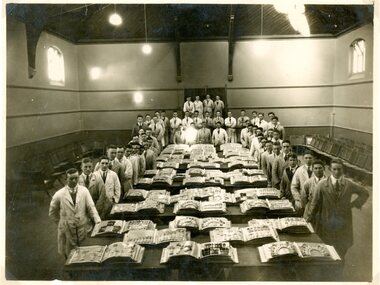
Photograph - Wool Classing Students, Gordon Technical College, The Gordon Institute, c.1920
... ...Sample Books...Depicts students of the Gordon Technical College wool classing course displaying their sample books, c.1920. ...There are rows of open books on the tables, all containing samples of wool. They are in a large, high roofed room with chairs in the background....Depicts students of the Gordon Technical College wool classing course displaying their sample books, c.1920. woolclassing gordon technical college - woolclassing department TAFE Gordon Institute of Technology Wool Classing Sample Books Students Agriculture Industry Study Learning Sepia photograph depicting lines of students on either side and at the back of a row of trestle tables. ...Depicts students of the Gordon Technical College wool classing course displaying their sample books, c.1920. Sepia photograph depicting lines of students on either side and at the back of a row of trestle tables. They are all wearing dustcoats. There are rows of open books on the tables, all containing samples of wool. They are in a large, high roofed room with chairs in the background.woolclassing, gordon technical college - woolclassing department, tafe, gordon institute of technology, wool classing, sample books, students, agriculture industry, study, learning -
 National Wool Museum
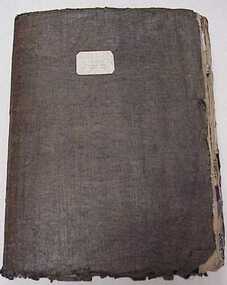
Book, Cloth Sample
... One of four tarpaper covered sample books. These samples were made up at mills (often R S & S) to Alexander Lau designs, they did not necessarily go into production.....One of four tarpaper covered sample books. These samples were made up at mills (often R S & S) to Alexander Lau designs, they did not necessarily go into production.. ...One of four tarpaper covered sample books. These samples were made up at mills (often R S & S) to Alexander Lau designs, they did not necessarily go into production..LADIES' MATERIALtextile design fashion textile industry - history, alexander lau pty ltd, lau, mr alexander - alexander lau pty ltd, textile design, fashion, textile industry - history -
 National Wool Museum
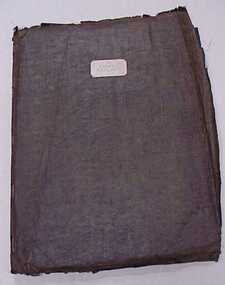
Book, Cloth Sample
... One of four tarpaper covered sample books. These samples were made up at mills (often R S & S) to Alexander Lau designs and specifications, they did not necessarily go into production.....One of four tarpaper covered sample books. These samples were made up at mills (often R S & S) to Alexander Lau designs and specifications, they did not necessarily go into production.. ...One of four tarpaper covered sample books. These samples were made up at mills (often R S & S) to Alexander Lau designs and specifications, they did not necessarily go into production..LADIES' MATERIALtextile design fashion textile industry - history, alexander lau pty ltd, lau, mr alexander - alexander lau pty ltd, textile design, fashion, textile industry - history -
 National Wool Museum
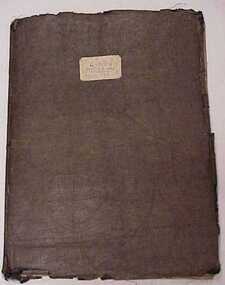
Book, Cloth Sample
... One of four tarpaper covered sample books. These samples were made up at mills (often R S & S) to Alexander Lau designs and specifications, they did not necessarily go into production.....One of four tarpaper covered sample books. These samples were made up at mills (often R S & S) to Alexander Lau designs and specifications, they did not necessarily go into production.. ...One of four tarpaper covered sample books. These samples were made up at mills (often R S & S) to Alexander Lau designs and specifications, they did not necessarily go into production..LADIES' MATERIAL/ Spring 57, Winter 57-58 Messres S G SAVIGEtextile design fashion textile industry - history, alexander lau pty ltd, lau, mr alexander - alexander lau pty ltd savige, s g - returned soldiers and sailors mill, textile design, fashion, textile industry - history -
 National Wool Museum
Book, Cloth Sample
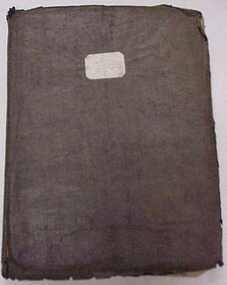
... One of five tarpaper covered sample books. These samples were made up at mills (often R S & S) to Alexander Lau designs and specifications, they did not necessarily go into production.....One of five tarpaper covered sample books. These samples were made up at mills (often R S & S) to Alexander Lau designs and specifications, they did not necessarily go into production.. ...One of five tarpaper covered sample books. These samples were made up at mills (often R S & S) to Alexander Lau designs and specifications, they did not necessarily go into production..LADIES' MATERIALtextile design fashion textile industry - history, alexander lau pty ltd, lau, mr alexander - alexander lau pty ltd, textile design, fashion, textile industry - history -
 National Wool Museum
Book, Cloth Sample
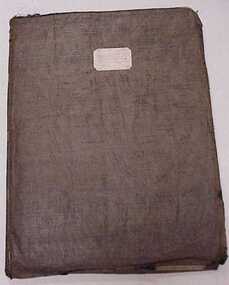
... One of five tarpaper covered sample books. These samples were made up at mills (often R S & S) to Alexander Lau designs and specifications, they did not necessarily go into production.....One of five tarpaper covered sample books. These samples were made up at mills (often R S & S) to Alexander Lau designs and specifications, they did not necessarily go into production.. ...One of five tarpaper covered sample books. These samples were made up at mills (often R S & S) to Alexander Lau designs and specifications, they did not necessarily go into production..LADIES' MATERIALtextile design fashion textile industry - history, alexander lau pty ltd, lau, mr alexander - alexander lau pty ltd, textile design, fashion, textile industry - history -
 National Wool Museum
Book - Fabric Sample Book, c.1920
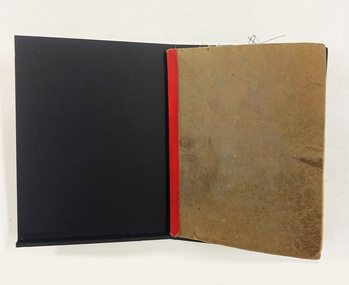
... The National Wool Museum has a large collection of Fabric Sample Books. They reveal the colour and daring designs produced by textile mills across various time periods. ...The National Wool Museum has a large collection of Fabric Sample Books. They reveal the colour and daring designs produced by textile mills across various time periods. ...A Textile Designer’s Fabric Sample Book is an important tool for keeping a record of past designs. This is useful in order to showcase a designer’s previous work; functioning like a portfolio or a résumé. They also serve as a source of inspiration, sometimes even providing a template to re-release iconic designs. The National Wool Museum has a large collection of Fabric Sample Books. They reveal the colour and daring designs produced by textile mills across various time periods. This Fabric Sample Book is from the 1920s and gives us insights into design trends that are now over a century old.The cover of this book has a brown/grey marble. It carries many marks and oils from the hands, after more than a century of use. A strip of red tape has been added to the spine of the book in order to give it integrity. The book internally has white pages that have turned a brown/cream with age. These pages have a faint blue line printed horizontally across them, to assist with handwriting. The contents of the pages are fabric samples which have been staple to them, as well as handwriting with a blue ink. The pages also include technical drawings, relating to the fabric samples and how such samples were woven together.textile design, textile manufacture -
 National Wool Museum
Book, Wool Sample, 1936-8
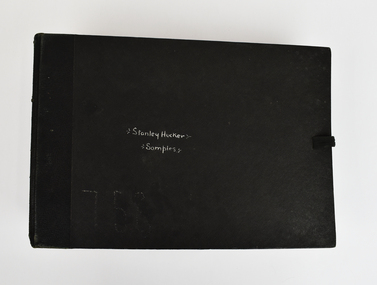
... The final two-pages relate to the anatomy of a sheep. Wool sample books were constructed by Wool Classing students at the Gordon Technical School as examples of what to look for when classing wool. ...The final two-pages relate to the anatomy of a sheep. Wool sample books were constructed by Wool Classing students at the Gordon Technical School as examples of what to look for when classing wool. ...The story of 90 years of wool classing between father & son begins in 1936, when a young boy by the name of Stanley James Hucker walked through the doors of the Gordon Technical School in Geelong. Born in 1921, Stanley was 15 years of age when he began his 3-year course in Wool Classing. 30 years later, Stanley’s second son Denis completed the same 3-year wool classing course. Beginning in 1966, Denis attended the same Gordon Technical School and walked the same halls as his father before him. Stanley finished his course in 1938. He went back to the family farm in Lake Bolac for a brief period before enrolling in the Second World War. At the completion of the war, Stanley returned home and married before gaining a soldier settler allotment, north of Willaura. This enabled Stan to use his wool classing knowledge. He ran between 1,500 and 2,000 sheep for many years, while his wool classer stencil also allowed him to go out and class at various sheds around the area. He held his stencil from 1938 until he retired at the age of 60 in 1981. On retirement, his second son Denis was working in the district, managing a local property while also leasing land himself. Upon his father’s retirement, Denis had the opportunity to lease his father’s farm, an opportunity he could not refuse. Denis had finished his wool classing course at the Gordon Technical School in 1968, graduating dux of his class. He began working with a local contractor and started classing wool in his team. Denis gained a great deal of experience working as part of this team in big sheds of up to 8 stands servicing between 10 & 20,000 sheep. It was not all smooth sailing for Denis however, and he soon learnt an important lesson. Class wool the way you’re taught, don’t listen to the owner standing over your shoulder. At a clip of Corriedales near Casterton, Denis was pushing too many fleeces into the line of fine wool. This resulted in a notice from the Australian Wool Exchange (AWEX) “mixing counts too much, submit three clips for inspection”. Denis was able to submit 3 clips with no further complaints, however, this proved a valuable lesson he would never forget over his long career classing wool. In the early 1980s, when Denis was leasing two properties including his father’s, things were going well until drought struck. February 1983 was the date of the Ash Wednesday bushfires, and saw Melbourne have three days over 40 °C for only the second time on record. This period saw Denis give away farming, turning towards contracting work instead. After the difficult times of the early 1980s, the next two decades were a good time for the sheep industry. 15 micron wool was selling for prices between 4 to 5,000 cents per kilo, double what you’d expect for the same wool in 2022. In 1995 a single bale of wool sold for a million dollars. This was a good time for Denis too. His contracting work saw him employing local shearers and shed staff. His team was involved with the shearing and classing of more than 130,000 sheep. After 20 years of contracting, it was time for Denis to transition into the next phase of his life. He gave up independent contracting, preferring instead to return to being a member of someone else’s team. In 2018, having completed 50 years of wool classing, it was time to call it a day and retire completely. At the annual Gordon Wool School Old Students Association dinner held in 2018, Denis was presented with his 50 years as a registered wool classer stencil awarded by the Australian Wool Exchange (AWEX). This is a rare honour achieved by few. As of February 2020, a total of 430 wool classers had achieved this 50-year milestone. For Denis however, his proudest achievement is achieving 90 years of wool classing with his father. The National Wool Museum is proud to share the collection of objects gained from 90 years in the wool classing industry by Stanley and Denis. This ranges from Stanley’s first stencil and Wool Sample book, started when he first attended the Gordon in 1936. The collection concludes 90 years later with Denis’ 50 years of wool classing Stencil. The collection contains many more objects, all telling the story of these 90 years, and the hard work invested by this dedicated father and son duo.Large black bound book with ribbon for fastening containing 12 double-sided blue pages. Pages have several samples of shorn wool mounted and annotated to include information such as specific breeding, shearing faults, and geographical area. The book concludes with four pages without wool samples. Two of these pages relate to plans for a shearing shed and other industry related structures. The final two-pages relate to the anatomy of a sheep. Wool sample books were constructed by Wool Classing students at the Gordon Technical School as examples of what to look for when classing wool. The students were tasked with constructing these books with samples they retrieved themselves from several different farms and animals. The book would serve as a reference point for the wool classers throughout their years in the field, it was always on hand to refresh knowledge. This book was constructed by Stanley Hucker over his schooling at the Gordon between 1936 and 1938Front Cover. Handwritten, White Ink "Stanley Hucker / Samples"90 years wool classing between father & son, wool classing, gordon technical school -
 National Wool Museum
Book - Wool Sample, 1961
... The final two-pages relate to the anatomy of a sheep. Wool sample books were constructed by Wool Classing students at the Gordon Technical School as examples of what to look for when classing wool. ...The final two-pages relate to the anatomy of a sheep. Wool sample books were constructed by Wool Classing students at the Gordon Technical School as examples of what to look for when classing wool. ...The donor, Brian Licence, assembled this Wool Sample Book while studying at the Gordon Institute from 1960-62. Brian studied Wool Classing and worked for a decade in this profession before moving to Melbourne which required him to change careers. The National Wool Museum accepted a donation from Brian in 2022 of several mementoes relating to his career in the wool industry. This wool sample book joins a collection of 8 others within the museum’s collection, with the oldest dating to 1870 at the time of writing in 2022. Large black bound book with ribbon for fastening containing 12 double-sided blue pages. Pages have several samples of shorn wool mounted and annotated to include information such as specific breeding, shearing faults, and geographical area. The book concludes with four pages without wool samples. Two of these pages relate to plans for a shearing shed and other industry related structures. The final two-pages relate to the anatomy of a sheep. Wool sample books were constructed by Wool Classing students at the Gordon Technical School as examples of what to look for when classing wool. The students were tasked with constructing these books with samples they retrieved themselves from several different farms and animals. The book would serve as a reference point for the wool classers throughout their years in the field, it was always on hand to refresh knowledge. This book was constructed by Brian Licence over his schooling at the Gordon between 1960 and 1962. Front Cover. Handwritten, White Ink "Wool Sample / Book. 1961”wool classing, gordon technical college, brian licence -
 National Wool Museum
Book, Moylan Woollens
... Short history of Fred Moylan and the Moylan Woollen Co. by the Textile Resource Centre at RMIT who holds the Moylan Collection of swatch books and samples....Short history of Fred Moylan and the Moylan Woollen Co. by the Textile Resource Centre at RMIT who holds the Moylan Collection of swatch books and samples. Woollen Mills - history Textile Design Textile Mills Moylan Woollens Company Returned Soldiers and Sailors Mill Moylan Mr Frederick Halcomb A.M. ..."Moylan Woollens" - Textile Resource Centre, RMIT, 1997. Short history of Fred Moylan and the Moylan Woollen Co. by the Textile Resource Centre at RMIT who holds the Moylan Collection of swatch books and samples.woollen mills - history textile design textile mills, moylan woollens company returned soldiers and sailors mill, moylan, mr frederick halcomb a.m. callander, mr john - returned soldiers and sailors mill mcgregor, mr james l. - returned soldiers and sailors mill, woollen mills - history, textile design, textile mills -
 National Wool Museum
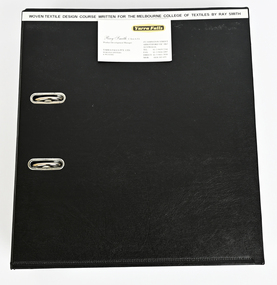
Document - Woven Textile Design Course for Melbourne College of Textiles, Ray Smith, 1996
... Part of a collection of books, fabric samples and documents from the working life of Ray Smith. ...Part of a collection of books, fabric samples and documents from the working life of Ray Smith. ...Part of a collection of books, fabric samples and documents from the working life of Ray Smith. Ray began his career at the age of 15, working at the Albion Woollen Mills in Geelong in 1953. Over the next five decades, Ray furthered his education in textile design, weaving design, knitting and later computer aided design, including qualifications from Gordon Textile College, City and Guilds of London Institute, The Textile Institute, Melbourne Institute of Textiles and Royal Melbourne Institute of Technology (RMIT). After ten years at Albion Woollen Mills, Ray went on to hold fabric design positions at Prestige Fabrics and Yarra Falls, working up to management roles in both the Weaving and Fabric Design Divisions, and then as Product Development Manager at Yarra Falls until 2000. Ray shares some career highlights below: In 1977 and 1978 I won the Wool Corporation’s Celsius 30 Awards as Yarra Falls Designer. (See photos attached.) These awards came with study trips to the major Textile Centres and Trade Fairs around the world. This was proven to be beneficial and Yarra Falls sent me overseas every year for the next 22 years. On stopovers in Hong Kong we appointed an agent and took part in Textile Trade Fairs at Interstoff Asia and exhibited designs in 1991, 92, 93, 94. I created a pattern book for a chain of shops called “Kwun KeeTailors” for their customers to select our fabrics to be made up into suits for the tourists. I also had several trips to New York to try to export to America with some success. I was commissioned by the Melbourne College of Textiles to write a Woven Textile Design Course to be taught under the outreach program. This was eventually translated into Spanish to be used by developing textile industries in South America.Black two armed binder folder with over one hundred pages of typed paper in plastic sleeves. Documents contain details of sixty eight topics for Woven Textile Design Course. The folder has a label attached across the top edge, and a business card attached with tape to the front.Front [printed label]: WOVEN TEXTILE DESIGN COURSE WRITTEN FOR THE MELBOURNE COLLEGE OF TEXTILES BY RAY SMITHray smith, yarra falls, mills, textile design, fabric design, product development, wool corporation, textile design course, coursework, melbourne college of textiles, study, students -
 National Wool Museum
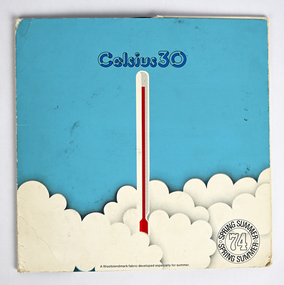
Booklet - Celsius 30, Spring Summer Fabric Samples, Australian Wool Corporation, 1974
... Part of a collection of books, fabric samples and documents from the working life of Ray Smith. ...Part of a collection of books, fabric samples and documents from the working life of Ray Smith. ...Part of a collection of books, fabric samples and documents from the working life of Ray Smith. Ray began his career at the age of 15, working at the Albion Woollen Mills in Geelong in 1953. Over the next five decades, Ray furthered his education in textile design, weaving design, knitting and later computer aided design, including qualifications from Gordon Textile College, City and Guilds of London Institute, The Textile Institute, Melbourne Institute of Textiles and Royal Melbourne Institute of Technology (RMIT). After ten years at Albion Woollen Mills, Ray went on to hold fabric design positions at Prestige Fabrics and Yarra Falls, working up to management roles in both the Weaving and Fabric Design Divisions, and then as Product Development Manager at Yarra Falls until 2000. Ray shares some career highlights below: In 1977 and 1978 I won the Wool Corporation’s Celsius 30 Awards as Yarra Falls Designer. (See photos attached.) These awards came with study trips to the major Textile Centres and Trade Fairs around the world. This was proven to be beneficial and Yarra Falls sent me overseas every year for the next 22 years. On stopovers in Hong Kong we appointed an agent and took part in Textile Trade Fairs at Interstoff Asia and exhibited designs in 1991, 92, 93, 94. I created a pattern book for a chain of shops called “Kwun KeeTailors” for their customers to select our fabrics to be made up into suits for the tourists. I also had several trips to New York to try to export to America with some success. I was commissioned by the Melbourne College of Textiles to write a Woven Textile Design Course to be taught under the outreach program. This was eventually translated into Spanish to be used by developing textile industries in South America.Card folder featuring pale blue and white clouds and sky motifs, with a thermometer on the cover. Folder holds eleven circular black cards, eight have wool fabric samples attached.Front [printed]: Celsius 30 / SPRING SUMMER / 74 / SPRING SUMMER / A Woolblendmark fabric developed especially for summer.ray smith, yarra falls, mills, textile design, fabric design, product development, wool corporation, fabric samples, 1970s fashion -
 National Wool Museum
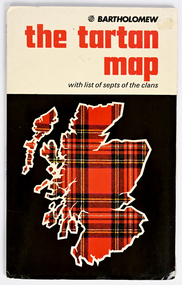
Map - The Tartan Map, John Bartholomew & Son Ltd, 1970s
... Part of a collection of books, fabric samples and documents from the working life of Ray Smith. ...Part of a collection of books, fabric samples and documents from the working life of Ray Smith. ...Part of a collection of books, fabric samples and documents from the working life of Ray Smith. Ray began his career at the age of 15, working at the Albion Woollen Mills in Geelong in 1953. Over the next five decades, Ray furthered his education in textile design, weaving design, knitting and later computer aided design, including qualifications from Gordon Textile College, City and Guilds of London Institute, The Textile Institute, Melbourne Institute of Textiles and Royal Melbourne Institute of Technology (RMIT). After ten years at Albion Woollen Mills, Ray went on to hold fabric design positions at Prestige Fabrics and Yarra Falls, working up to management roles in both the Weaving and Fabric Design Divisions, and then as Product Development Manager at Yarra Falls until 2000. Ray shares some career highlights below: In 1977 and 1978 I won the Wool Corporation’s Celsius 30 Awards as Yarra Falls Designer. (See photos attached.) These awards came with study trips to the major Textile Centres and Trade Fairs around the world. This was proven to be beneficial and Yarra Falls sent me overseas every year for the next 22 years. On stopovers in Hong Kong we appointed an agent and took part in Textile Trade Fairs at Interstoff Asia and exhibited designs in 1991, 92, 93, 94. I created a pattern book for a chain of shops called “Kwun KeeTailors” for their customers to select our fabrics to be made up into suits for the tourists. I also had several trips to New York to try to export to America with some success. I was commissioned by the Melbourne College of Textiles to write a Woven Textile Design Course to be taught under the outreach program. This was eventually translated into Spanish to be used by developing textile industries in South America.Folded map attached inside a card folder, featuring a map of Scotland with tartan design and red and black text on the cover.Front [printed]: BARTHOLOMEW / the tartan map / with list of septs of the clansray smith, yarra falls, mills, textile design, fabric design, product development, wool corporation, map, tartan, scotland -
 National Wool Museum
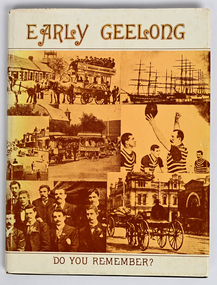
Book - Early Geelong, Do You Remember?, Solomons Pty Ltd, 1940s
... Part of a collection of books, fabric samples and documents from the working life of Ray Smith. ...Part of a collection of books, fabric samples and documents from the working life of Ray Smith. ...Part of a collection of books, fabric samples and documents from the working life of Ray Smith. Ray began his career at the age of 15, working at the Albion Woollen Mills in Geelong in 1953. Over the next five decades, Ray furthered his education in textile design, weaving design, knitting and later computer aided design, including qualifications from Gordon Textile College, City and Guilds of London Institute, The Textile Institute, Melbourne Institute of Textiles and Royal Melbourne Institute of Technology (RMIT). After ten years at Albion Woollen Mills, Ray went on to hold fabric design positions at Prestige Fabrics and Yarra Falls, working up to management roles in both the Weaving and Fabric Design Divisions, and then as Product Development Manager at Yarra Falls until 2000. Ray shares some career highlights below: In 1977 and 1978 I won the Wool Corporation’s Celsius 30 Awards as Yarra Falls Designer. (See photos attached.) These awards came with study trips to the major Textile Centres and Trade Fairs around the world. This was proven to be beneficial and Yarra Falls sent me overseas every year for the next 22 years. On stopovers in Hong Kong we appointed an agent and took part in Textile Trade Fairs at Interstoff Asia and exhibited designs in 1991, 92, 93, 94. I created a pattern book for a chain of shops called “Kwun KeeTailors” for their customers to select our fabrics to be made up into suits for the tourists. I also had several trips to New York to try to export to America with some success. I was commissioned by the Melbourne College of Textiles to write a Woven Textile Design Course to be taught under the outreach program. This was eventually translated into Spanish to be used by developing textile industries in South America.Fifty two page hard cover book featuring yellow and brown images and text on the front and back cover showing scenes from Geelong. The book features sepia toned printed photographs and brown text.Front [printed]: EARLY GEELONG / DO YOU REMEMBER?ray smith, yarra falls, mills, textile design, fabric design, geelong, geelong advertiser -
 National Wool Museum
Textile - Fabric Samples, Yarra Falls Ltd, 1970s
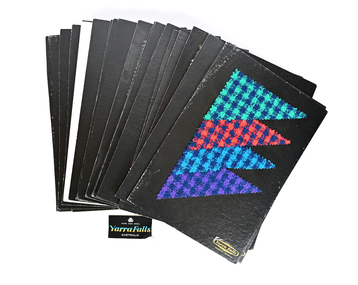
... Part of a collection of books, fabric samples and documents from the working life of Ray Smith. ...Part of a collection of books, fabric samples and documents from the working life of Ray Smith. ...Part of a collection of books, fabric samples and documents from the working life of Ray Smith. Ray began his career at the age of 15, working at the Albion Woollen Mills in Geelong in 1953. Over the next five decades, Ray furthered his education in textile design, weaving design, knitting and later computer aided design, including qualifications from Gordon Textile College, City and Guilds of London Institute, The Textile Institute, Melbourne Institute of Textiles and Royal Melbourne Institute of Technology (RMIT). After ten years at Albion Woollen Mills, Ray went on to hold fabric design positions at Prestige Fabrics and Yarra Falls, working up to management roles in both the Weaving and Fabric Design Divisions, and then as Product Development Manager at Yarra Falls until 2000. Ray shares some career highlights below: In 1977 and 1978 I won the Wool Corporation’s Celsius 30 Awards as Yarra Falls Designer. (See photos attached.) These awards came with study trips to the major Textile Centres and Trade Fairs around the world. This was proven to be beneficial and Yarra Falls sent me overseas every year for the next 22 years. On stopovers in Hong Kong we appointed an agent and took part in Textile Trade Fairs at Interstoff Asia and exhibited designs in 1991, 92, 93, 94. I created a pattern book for a chain of shops called “Kwun KeeTailors” for their customers to select our fabrics to be made up into suits for the tourists. I also had several trips to New York to try to export to America with some success. I was commissioned by the Melbourne College of Textiles to write a Woven Textile Design Course to be taught under the outreach program. This was eventually translated into Spanish to be used by developing textile industries in South America.A collection of fabric samples from Yarra Falls, including twenty three sets of woollen fabric samples on black backing card, three sets of woollen fabric samples on white backing card and one Yarra Falls fabric label.PURE NEW WOOL / Yarra Falls / MELBOURNE AUSTRALIAray smith, yarra falls, mills, textile design, fabric design, geelong, geelong advertiser, fabric samples -
 Federation University Historical Collection
Book, Mining Engineers Handbook Volume 1 & 2, 1941
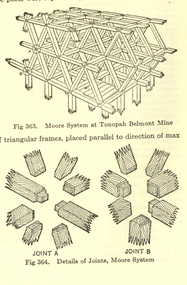
... Maroon hardcovered books. .1) Volume 1 - Chapters include Mineralogy, Geology and Mineral Deposits, Earth Excavation, Explosives, Rock Excavation, Tunneling, Shaft Sinking in Rock, Shaft sinking in Unstable and Waterbearing Ground, Boring, Underground Transport, Mine Ventilation. .2) Volume 2 - Chapers include Compressed Air Practice, Electric Power for mine Service, Surveying,Underground Surveying, Mine Geologic Maps and models, Cost of mining, Mining Laws, Ore sampling, Assaying, Aerial Tramways and Cableways, Gold Amalgamation and Cyanidation, etc....Robert Peele was Professor Emeritus of mining Engineering at the School of Mines, Columbia University. charles bacon mining engineering mining engineering university of nevada mackay school of mines explosives timbering Inside front cover "Charles Bacon" Maroon hardcovered books. .1) Volume 1 - Chapters include Mineralogy, Geology and Mineral Deposits, Earth Excavation, Explosives, Rock Excavation, Tunneling, Shaft Sinking in Rock, Shaft sinking in Unstable and Waterbearing Ground, Boring, Underground Transport, Mine Ventilation. .2) Volume 2 - Chapers include Compressed Air Practice, Electric Power for mine Service, Surveying,Underground Surveying, Mine Geologic Maps and models, Cost of mining, Mining Laws, Ore sampling, Assaying, Aerial Tramways and Cableways, Gold Amalgamation and Cyanidation, etc. ...The book was used by Charles Bacon who studied at the University of Nevada in the late 1930s/early 1940s. Bacon worked at Bunker Hill Mines and Kellogg Idaho, before arriving in Australian in 1951. He worked for CN Myers, a company involved with paper converting. CN Myers was a family business (on Charles Bacon's maternal line). Robert Peele was Professor Emeritus of mining Engineering at the School of Mines, Columbia University.Maroon hardcovered books. .1) Volume 1 - Chapters include Mineralogy, Geology and Mineral Deposits, Earth Excavation, Explosives, Rock Excavation, Tunneling, Shaft Sinking in Rock, Shaft sinking in Unstable and Waterbearing Ground, Boring, Underground Transport, Mine Ventilation. .2) Volume 2 - Chapers include Compressed Air Practice, Electric Power for mine Service, Surveying,Underground Surveying, Mine Geologic Maps and models, Cost of mining, Mining Laws, Ore sampling, Assaying, Aerial Tramways and Cableways, Gold Amalgamation and Cyanidation, etc.Inside front cover "Charles Bacon"charles bacon, mining engineering, mining, engineering, university of nevada, mackay school of mines, explosives, timbering -
 Federation University Historical Collection
Book, Touching the Full Redemption of Mankind by the Death and Blood of Christ Jesus (human skin cover), 1599
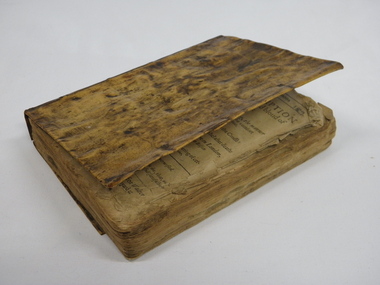
... books with inscriptions claiming them as anthropodermic. Peptide Mass Fingerprinting (PMF) testing has been found to be the most reliable way of confirming a leather bindings origin. This process involves the sampling...books with inscriptions claiming them as anthropodermic. Peptide Mass Fingerprinting (PMF) testing has been found to be the most reliable way of confirming a leather bindings origin. This process involves the sampling ...Anthropodermic Bibliopegy is the name given to the use of human leather to bind books. The name stems from the combination of the Greek root words, human (Anthropos), skin (derma), book (biblion), and fasten (pegia). The practice of creating anthropodermic books was popular throughout the 17th and 18th centuries. Most commonly, anthropodermic books are medical tomes, with the human leather taken from medical cadavers. Others were produced after criminal trials, with the criminal’s skin used to enclose the record of their own death sentences, creating a form of punishment that would surpass death. Other anthropodermic books contain poems or are religious texts. This book was written and printed in 1599 but most probably was rebound later when creation of anthropodermic books became more predominant. The book is a small tome of a religious nature containing the work of Bishop Thomas Bilson, who in a puritanical voice states that the primary argument articulated in this book is that “the metaphorical Calvinist interpretation of Hell as an exclusion from God was accurate then Christ's descent into hell after his crucifixion must refer to an actual existent hell as Christ was neither subject to sin nor able to be separated from the Divine.” The unusual cover of the book has led to many questions, the main being whether the book is covered with human skin. It was confirmed as such in 2014 with DNA testing undertaken by honours student Talanna Buckley at Federation University finding an 100% match to human DNA on the outside cover of the book. This is one of only two confirmed anthropodermic books in Australia, the other is housed at the National Library of Australia. Other forms of testing the leather of books have been found to be more accurate than DNA testing. For example, before DNA testing or PMF (Peptide Mass Fingerprinting) are undertaken many books have been identified as made from human skin through the close examination of the skins patterning. Hair follicles are the focus of the examination as certain patterns and sizes lend themselves to being human. However, many of these books have been proven to not be bound in human skin, the same can be said of books with inscriptions claiming them as anthropodermic. Peptide Mass Fingerprinting (PMF) testing has been found to be the most reliable way of confirming a leather bindings origin. This process involves the sampling of collagen-based materials, cutting the protein to gain specific amino acid combinations which form individual peptide sequences. Each mammal has an individual amino acid sequence in its collagen therefore its peptide mass combination is unique. This form of test can provide a more accurate outcome as collagen will be preserved for longer after the tanning process and will not be damaged in the same way DNA can be by the tanning process. DNA testing can also provide false positives as trace DNA from someone touching the book could be amplified and provide the reading instead of that of the leather itself. However, this book was tested with many controls as well as specific decontamination procedures in order to ensure that it was not trace DNA being tested. This book is historically and spiritually significant because it is a rare example of an early printed English Christian religious tract produced in Old English and Latin.. Its association with Thomas Bilson, who oversaw the final printing and publication of the King James Bible, is important. The covering of this book has been tested for human dna. Findings prove the book is covered with human skin, increasing the rarity of the object.420 page book with unusual leather cover. The book is written in Old English with passages in latin. There is a pressed petal between p.68 and 69. The covering of this book is made of human skin. The practice of binding books in human skin, also known as anthropodermic bibliopegy.Inside cover - James Hendy No 17 (Fu)gends Road Palmers Village Westminster. The gift of his mother Mrs Thomas Hendy. Some notes made through text eg p.112, and a passage written on the last page.religion, bible, edward lowe, edward lotos, thomas bilson, anthropodermic bibliopegy, james hendy, full redemption, religious, leather, wilson, winchester, jesus, puritanical, puritans, bungey, bilson, human skin, skin, human skin cover, human skin binding -
 Federation University Historical Collection
Book, Cyaniding for Gold, 1939, 1939
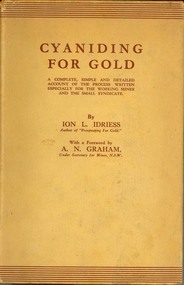
... books were printed, and many were used in the field, making good copies very rare. A simple but detailed account of the process written especially for the working miner and the small syndicate, the Quintessential Australian gold Mining book. mining gold cyanide cyaniding leaching smelting slimes Orange, hard, cloth covered b270 page book with brown dust jacket. Chapters include sampling ...500 of these books were printed, and many were used in the field, making good copies very rare. A simple but detailed account of the process written especially for the working miner and the small syndicate, the Quintessential Australian gold Mining book.Orange, hard, cloth covered b270 page book with brown dust jacket. Chapters include sampling sand and slime dumps; treating sand; aeration; treatment of slime; smelting; solution testing; cyanide solution; air- slaked lime; cyanding in Queensland; copper troubles; treatment of concentrates; amalgamations; assaying; floatation; chemistry; testing for minerals. Includes photographic reproductions of a cyanide plant for sand; aeration tower; mixer tank; Eleanora cyaniding plant; mining, gold, cyanide, cyaniding, leaching, smelting, slimes -
 Mission to Seafarers Victoria
Booklet - Pocket Size, New Testament, Early 20th Century
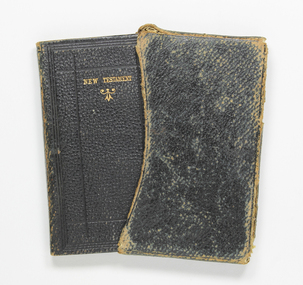
... This personal item is also significant as part of the gift of several items and papers belonging to this seafarer including sample ID photographs. bible religious books new testament pocket size arthur oswald dixon officers seafarers sailors seamen reading Hand written Annotations on several pages : Printed publisher details : published by OUP warehouse/ Henry Frowd Paternoster Row; New York, 42 Bleeker St. / Diamond 48's Cum Privilegia Very slim and compact, commercially printed New testament on very thin paper with seperate travel case black morrocco leather with gilded title New Testament Booklet Pocket Size ...This pocket size version of the New Testament published by Oxford University Press London has no specific publication date but would have been a very convenient size to carry at all times. Possibly produced at the turn of the 19th- 20th C. which parallels the ownership of Arthur Dixon while serving as a Mariner. A rare example of a small compact travel or pocket size Bible complete with the owner's inscriptions and annotations. Reflects the faith of this mariner still retained until his death in the mid 20th C. This personal item is also significant as part of the gift of several items and papers belonging to this seafarer including sample ID photographs. Very slim and compact, commercially printed New testament on very thin paper with seperate travel case black morrocco leather with gilded title Hand written Annotations on several pages : Printed publisher details : published by OUP warehouse/ Henry Frowd Paternoster Row; New York, 42 Bleeker St. / Diamond 48's Cum Privilegiabible, religious books, new testament, pocket size, arthur oswald dixon, officers, seafarers, sailors, seamen, reading -
 Greensborough Historical Society
Document - Book - Digital Image, Semco, Semco smocking instruction book: sample pages, 1950s
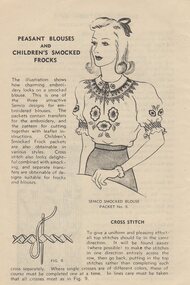
... Sample pages from "Semco smocking instruction book". An example of 1950s advertising through sewing and homemaker books. ...Sample pages from "Semco smocking instruction book". An example of 1950s advertising through sewing and homemaker books. ...Sample pages from "Semco smocking instruction book". An example of 1950s advertising through sewing and homemaker books. In this book, instructions are given for smocking of garments. Smocking is an embroidery technique used to gather fabric. An example of mid 20th century advertising through 'how-to' books.Digital copy of ample pages from a bookhistoric advertisements, smocking, embroidery, hand sewing, semco -
 Greensborough Historical Society
Book - Book - Digital Image, Paragon Art Needlecraft, Smocking Simplified: sample pages, 1940s
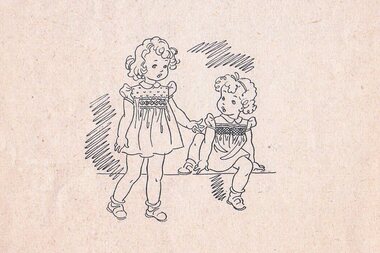
... Sample page from "Smocking Simplified", showing a line drawing of two small girls wearing smocked dresses. An example of 1940s advertising through sewing and homemaker books. ...Sample page from "Smocking Simplified", showing a line drawing of two small girls wearing smocked dresses. An example of 1940s advertising through sewing and homemaker books. ...Sample page from "Smocking Simplified", showing a line drawing of two small girls wearing smocked dresses. An example of 1940s advertising through sewing and homemaker books. In this book, instructions are given for smocking of garments. Smocking is an embroidery technique used to gather fabric. An example of mid 20th century advertising through 'how-to' books.Digital copy of sample page from a bookhistoric advertisements, smocking, embroidery, hand sewing, paragon art needlecraft -
 Greensborough Historical Society
Book - Book - Digital Image, Shell Company of Australia, Here's how for householders: Sample pages, 1948_
... Sample pages from "Here's how for householders". An example of 1940s advertising through sewing and homemaker books. ...Sample pages from "Here's how for householders". An example of 1940s advertising through sewing and homemaker books. ...Sample pages from "Here's how for householders". An example of 1940s advertising through sewing and homemaker books. In this book, instructions are given for many aspects of household management, interspersed with advertisements for useful items. Inside front and back covers are advertisements for Shell products, the company publishing this book.. There is also an advertisement for Pennant Kerosine (kerosene)An example of mid 20th century advertising through 'how-to' books.Digital copy of sample pages of a bookhistoric advertisements, domestic science, shell company of australia, household hints, pennant kerosine, kerosene -
 Greensborough Historical Society
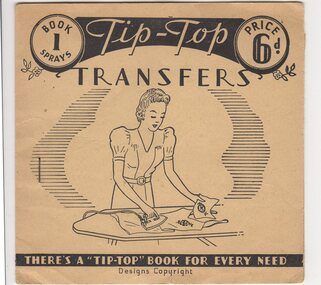
Booklet - Booklet - Digital Image, N Z Transfer Company, Tip-top Transfers, Book 1: Sprays, 1959_
... Front cover and sample page from "Tip-top Transfers, Book 1: Sprays". An example of mid century sewing and homemaker books. ...Front cover and sample page from "Tip-top Transfers, Book 1: Sprays". An example of mid century sewing and homemaker books. ...Front cover and sample page from "Tip-top Transfers, Book 1: Sprays". An example of mid century sewing and homemaker books. In this booklet, iron-on transfers are provided to be applied to garments or other fabric. The design can then be embroidered over the transfer. This edition contains flower designs, or sprays.An example of mid 20th century advertising through 'how-to' books.Digital copy of front cover and sample page of a booklethistoric advertisements, domestic science, tip top transfers, embroidery, sewing -
 Greensborough Historical Society
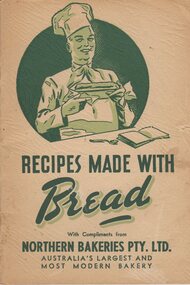
Book - Book - Digital Image, Northern Bakeries, Recipes made with bread, 1953_
... Covers and sample page from "Recipes made with bread". An example of 1950s advertising through cooking and homemaker books. ...Covers and sample page from "Recipes made with bread". An example of 1950s advertising through cooking and homemaker books. ...Covers and sample page from "Recipes made with bread". An example of 1950s advertising through cooking and homemaker books. In this book, instructions are given for recipes using bread, interspersed with advertisements for bakeries, including Tip Top Bakeries throughout Melbourne's suburbs.An example of mid 20th century advertising through 'how-to' books.Digital copy of front and back covers of a book with sample page.historic advertisements, recipes, bread, bakeries, tip top bakeries -
 Greensborough Historical Society
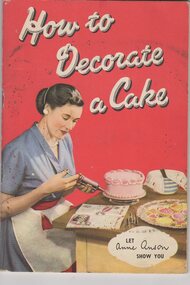
Book - Book - Digital Image, Taylor, Law et al, How to decorate a cake: by Anne Anson, 1954_
... Covers and sample page from "How to decorate a cake: by Anne Anson". An example of 1950s advertising through cooking and homemaker books. ...Covers and sample page from "How to decorate a cake: by Anne Anson". An example of 1950s advertising through cooking and homemaker books. ...Covers and sample page from "How to decorate a cake: by Anne Anson". An example of 1950s advertising through cooking and homemaker books. In this book, instructions are given for decorating cakes, including advertisements for decorating suppliest. The sample shows "Tala" brand decorating equipment.An example of mid 20th century advertising through 'how-to' books.Digital copy of front cover of a book with sample pages.historic advertisements, recipes, cake decorating, tala -
 Mission to Seafarers Victoria
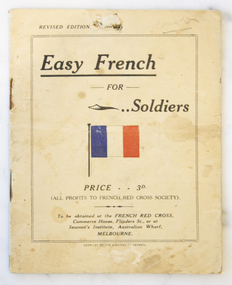
Photograph - Photograph, Digital, Easy French For Soldiers, 1916
... This sample, held at the Rare Books Collection at Monash University is only one of two known, the second one is held at the Australian War Museum. ...This sample, held at the Rare Books Collection at Monash University is only one of two known, the second one is held at the Australian War Museum. ...This manual was produced by the Mission to raise funds for the French Red Cross. A first edition was printed in 1915, and then a second and a third. 6000 were at least sold. This sample, held at the Rare Books Collection at Monash University is only one of two known, the second one is held at the Australian War Museum. It is mentioned in Minutes Meetings and in a few articles but the author is unknown. Miss Godfrey spoke French fluently and gave lessons at the YMCA along with Miss Weigall (probably Nancy, sister of Joan Lindsay). She also was friend with the French community having been invited to the Alliance Francaise (Frederica Godfrey was Secretary in 1902), to the Crivellis (Madame Crivelli created the French Red Cross), and probably with the Pignolet family, whose daughters had a French school and one of them had written a manual of French (also held at Monash for comparison maybe).The Ladies from the Guild were educated women and had travelled to even studied in Europe, like Miss Godfrey were able to speak French. In 1915 she and two other ladies gave French classes in the YMCA training camp. With her network Miss Godfrey knew Charlotte Crivelli, a French lady, who created a branch of the French Red Cross in Melbourne. French phrasebook with French flag Revised edition Price 3D (ALL PROFITS FOR FRENCH RED CROSS SOCIETY) To be obtained at the FRENCH RED CROSS / Commercial House, Flinders St. or at / Seamen's Institute, Australian Wharf / MELBOURNE Compiled by the Missions to Seamenfrench red cross, lhlg, ethel augusta godfrey, charlotte crivelli, monash university, rare books collection -
 Bendigo Historical Society Inc.
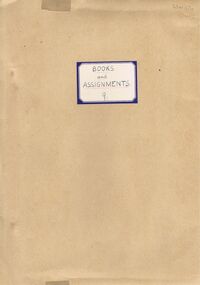
Document - LA TROBE UNIVERSITY BENDIGO COLLECTION: BOOKS AND ASSIGNMENTS 9
... Books and Assignments 9". From the files of Mr. L.J. Pryor. Former Principal of Bendigo Teachers' College. Donated to Education Resource Centre for archival use in 1992. A separate brown envelope sent to Mr. L.J. Pryor in 1945 contains a "Sample...Books and Assignments 9". From the files of Mr. L.J. Pryor. Former Principal of Bendigo Teachers' College. Donated to Education Resource Centre for archival use in 1992. A separate brown envelope sent to Mr. L.J. Pryor in 1945 contains a "Sample ...BHS CollectionA brown paper folder titled "Books and Assignments 9". From the files of Mr. L.J. Pryor. Former Principal of Bendigo Teachers' College. Donated to Education Resource Centre for archival use in 1992. A separate brown envelope sent to Mr. L.J. Pryor in 1945 contains a "Sample set of Assignments for a History Topic for Grades V-VI in the Rural School". The envelope also contains some hand made teaching cards containing lesson plans titled 'The New Learning. A separate envelope contains photos of historical figures to be used as teaching aids.bendigo, education, bendigo teachers' college, la trobe university bendigo collection, collection, bendigo, bendigo teachers' college, education, history - study and teaching, history, mr. l.j. pryor, person, male, individual, teaching, curriculum, education resource centre -
 Warrnambool and District Historical Society Inc.
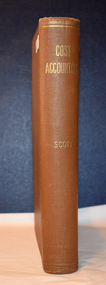
Book, Walter Scott, Australia, Cost Accounting, 1944
... Warrnambool Woollen Mill Antiquarian Text Books Cost accounting This accounting text book is from the collection of items relating to Warrnambool Woollen Mill. Onkaparinga Woollen Company Limited (stamp) This is a book of 787 pages. It contains printed text, diagrams, charts and sample ...This accounting text book is from the collection of items relating to Warrnambool Woollen Mill.This is a book of 787 pages. It contains printed text, diagrams, charts and sample accounting sheets. The cover is brown with gold printing on the spine. There are two loose sheets of typed material.non-fictionThis accounting text book is from the collection of items relating to Warrnambool Woollen Mill.warrnambool woollen mill, antiquarian text books, cost accounting -
 National Wool Museum
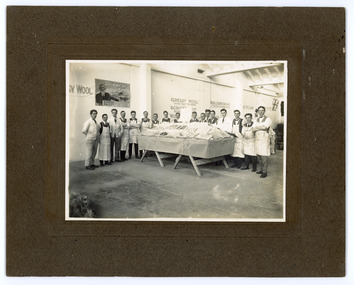
Photograph - Wool Classing Students, Gordon Technical College, Mr Geoffrey S. Wood, 1920
... They are standing behind a trestle table which is heavily laden with wool and open scrap books containing wool samples. The photo has been taken in a large, light room with signs on the walls and a Union Jack flag in the background....They are standing behind a trestle table which is heavily laden with wool and open scrap books containing wool samples. The photo has been taken in a large, light room with signs on the walls and a Union Jack flag in the background. ...Photo depicts a final year woolclassing class from the Gordon Institute in Geelong. They have prepared a display re: woolclassing for the visit of the Prince of Wales to Geelong in 1920. They are on the top floor of the Dennys Lascelles woolstore. The donor's father, Mr Cyril Cameron, can be seen in the photo at sixth from the right. Cyril Cameron (known as 'Cam') came from the family property 'Burnside' near Glenthompson in the Western District. He joined Strachan & Co. as an office boy in Aug. 1914 and then joined the 8th Battalion, 1st AIF in January 1915. He returned to Australia in early 1920 and started work at Strachan's again. He did the wool classing course (one year, evening?) at the Gordon in 1920-21. He became Head Wool Valuer at Strachan's in 1938 and retired in 1970. His office at Strachan's was on the top floor, directly overlooking what is now the entrance to the National Wool Museum (formerly Dennys Lascelles woolstore). He died in 1983. Interestingly, within the photo, can be seen a poster on the wall advertising the RSS or Diggers' Mill. The mill opened in 1922 but had been advertising for investors since the end of the war.Sepia photograph mounted on a dark brown mat. The photo depicts a group of 17 men in ties and shirtsleeves with white coats or aprons. They are standing behind a trestle table which is heavily laden with wool and open scrap books containing wool samples. The photo has been taken in a large, light room with signs on the walls and a Union Jack flag in the background.GEOFFREY S. WOOD, PHOTO, GEELONG Dennys Lascelles Show Floor 1920 / Visit of Prince of Waleswoolclassing royal visits, gordon technical college - woolclassing department, cameron, mr cyril, dennys lascelles wool store, woolclassing, royal visits -
Embroiderers Guild, Victoria
Book - Book of Embroidery Techniques
... Books Embroidery Collection of 14 samples of stitched chicken and hen designs using an assortment of techniques, stitches and threads. ...This book of Sampler Stitches was gifted to the Guild at the beginning of our Inauguration.Collection of 14 samples of stitched chicken and hen designs using an assortment of techniques, stitches and threads. Long and short stitch in blue and yellow on a green base fabric.books, embroidery
