
Showing 355 items matching "saturday services"
-
 Melbourne Tram Museum
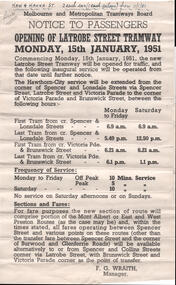
Document, Melbourne & Metropolitan Tramways Board (MMTB), "Opening of LaTrobe Street Tramway", Jan 1951
... ...Saturday services...Notices to Passengers about the LaTrobe St tram line opening in Jan. 1951 and the withdrawal of Saturday services in 1955. The first details the services, times and fares and is signed by the F G Wraith Manager and the second is signed by C E Hall as Acting Traffic Manager. ...Notices to Passengers about the LaTrobe St tram line opening in Jan. 1951 and the withdrawal of Saturday services in 1955. The first details the services, times and fares and is signed by the F G Wraith Manager and the second is signed by C E Hall as Acting Traffic Manager. ...Notices to Passengers about the LaTrobe St tram line opening in Jan. 1951 and the withdrawal of Saturday services in 1955. The first details the services, times and fares and is signed by the F G Wraith Manager and the second is signed by C E Hall as Acting Traffic Manager. The last Saturday was 25/6/1955.Yields information about the LaTrobe services during the 1950sNotice - printed on foolscap paper with a handwritten note on the top edge and one small sheet."Haw & Hanna St - 2 each car (1 each saloon) from 11/1/51" in ink and "Book". Small sheet has the name of Mr "Rigaldi" in pencil on the top edge.latrobe st, new tramways, timetables, fares, saturday services, notices -
 Melbourne Tram Museum
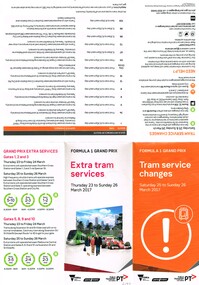
Pamphlet, Yarra Trams, "Formula 1 Grand Prix Tram Services Changes Saturday 25 to Sunday 26 March 2017", Feb. 2017
... "Formula 1 Grand Prix Tram Services Changes Saturday 25 to Sunday 26 March 2017"...Pamphlet - 6 fold DL from an A3 full colour sheet titled "Formula 1 Grand Prix Tram Services Changes Saturday 25 to Sunday 26 March 2017" printed for public distribution. ..."Formula 1 Grand Prix Tram Services Changes Saturday 25 to Sunday 26 March 2017" Pamphlet Yarra Trams ...Pamphlet - 6 fold DL from an A3 full colour sheet titled "Formula 1 Grand Prix Tram Services Changes Saturday 25 to Sunday 26 March 2017" printed for public distribution. Gives information on tram route changes, contact details, how to get to Albert Park, circuit map and service frequency. Produced by PTV, Yarra Trams and Victorian State Government - has their logos on the sheet.trams, tramways, yarra trams, grand prix, map, public transport -
 Ballarat Tramway Museum
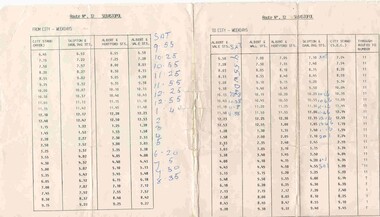
Ephemera - Timetable/s, Bus Route 12, 1971?
... Handwritten times have been added for some Saturday services for both inbound and outbound services in blue ink....Handwritten times have been added for some Saturday services for both inbound and outbound services in blue ink....Handwritten times have been added for some Saturday services for both inbound and outbound services in blue ink. ...Single A4 sheet, printed for Bus Route 12, that replaced the Sebastopol tram service. Undated, thought to be the replacement, but may be a later date. No details of operator. Gives details of services from the City on weekdays, from 6.45am to 9.15pm and to the City from 6.58am to 9.28pm on either side of the sheet. Shows for inbound services, which route number it is through routed to. Handwritten times have been added for some Saturday services for both inbound and outbound services in blue ink.Handwritten times have been added for some Saturday services for both inbound and outbound services in blue ink.timetables, buses, sebastopol -
 Puffing Billy Railway
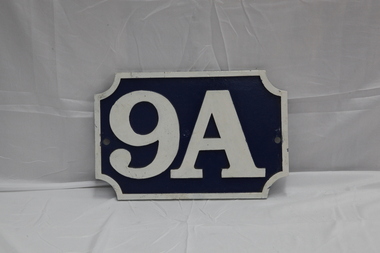
Number Plate - 9A, 2010
... Loco: 9A In service Saturday, 8th January 1910 Scrapped Thursday, 15th April 1954 Livery Black Owner VR Gauge 762 Status Scrapped...Loco: 9A In service Saturday, 8th January 1910 Scrapped Thursday, 15th April 1954 Livery Black Owner VR Gauge 762 Status Scrapped Historic - Replica Victorian Railways Locomotive Number Plate - Produced for the running of locomotive 7A, dressed as 9A on the Thomson to Walhalla portion of the Moe to Walhalla narrow gauge railway in 2010. puffing billy moe walhalla number plate 9a 9a Number Plate 9A made from aluminum. ...Produced for the running of locomotive 7A, dressed as 9A on the Thomson to Walhalla portion of the Moe to Walhalla narrow gauge railway in 2010. Loco: 9A In service Saturday, 8th January 1910 Scrapped Thursday, 15th April 1954 Livery Black Owner VR Gauge 762 Status ScrappedHistoric - Replica Victorian Railways Locomotive Number Plate - Produced for the running of locomotive 7A, dressed as 9A on the Thomson to Walhalla portion of the Moe to Walhalla narrow gauge railway in 2010.Number Plate 9A made from aluminum.9apuffing billy, moe, walhalla, number plate, 9a -
 Melbourne Tram Museum
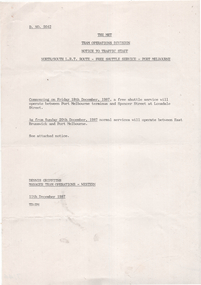
Document - Notice, The Met, "North/South LRT route - free shuttle Service - Port Melbourne", 11/12/1987
... Notice to crews about a free shuttle tram service between Port Melbourne and to Lonsdale St at Spencer St, following the opening of the Port Melbourne line. Applicable for Friday 18/12/1987 and Saturday 19/12. ...Notice to crews about a free shuttle tram service between Port Melbourne and to Lonsdale St at Spencer St, following the opening of the Port Melbourne line. Applicable for Friday 18/12/1987 and Saturday 19/12. ...Notice to crews about a free shuttle tram service between Port Melbourne and to Lonsdale St at Spencer St, following the opening of the Port Melbourne line. Applicable for Friday 18/12/1987 and Saturday 19/12. Services between East Brunswick and Port Melbourne commenced on Sunday 20/12/1987. Signed by Dennis Griffiths Manger tram operations western.Yields information about the opening of the Port Melbourne line in 1987.A4 sheet - Notice No. D 5042tramcars, tramways, port melbourne, opening, new tramway, free tram -
 Ballarat Tramway Museum
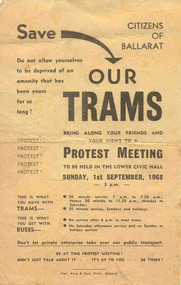
Poster, Alex King & Sons Pty Ltd, "Save Our Trams", Aug. 1968
... Titled "Save our Trams", with details of the protest meeting and the takeover of the trams by private enterprise, with no Saturday afternoon, Sunday services. Printed by Alex King and Sons of Ballarat on off - white paper. ...Titled "Save our Trams", with details of the protest meeting and the takeover of the trams by private enterprise, with no Saturday afternoon, Sunday services. Printed by Alex King and Sons of Ballarat on off - white paper. ...Small printed poster, advertising a protest meeting to save the trams, in the Lower Civic Hall in Ballarat on Sunday 1 September 1968. Titled "Save our Trams", with details of the protest meeting and the takeover of the trams by private enterprise, with no Saturday afternoon, Sunday services. Printed by Alex King and Sons of Ballarat on off - white paper. See also item 3328 - for a similar poster - presumed made by the same persons.trams, tramways, closure, ballarat, protest, meetings -
 Ringwood and District Historical Society
Papers, Minutes of various sub-committee meetings of Ringwood Council - 1960, 1960
... Various committee meetings discussing badges, traffic movement on the Proclamation Day Saturday 19-Mar-1960 in the town hall, Ringwood list of visitors, Councillors; and|one printed civic service on Sunday 20-Mar-1960 at St Pauls Church of England commemorating Proclamation attended by Sir Dallas Brooks...Bundle of 34 foolscap pages, printed, of the minutes of various sub-committee meetings of Ringwood Council;; one printed notice paper for the special meeting; and; one printed order of service for Saturday 19-Mar-1960 +Additional Keywords: Lavis, Albert George / Brooks, Reginald Alexander Dallas...Various committee meetings discussing badges, traffic movement on the Proclamation Day Saturday 19-Mar-1960 in the town hall, Ringwood list of visitors, Councillors; and|one printed civic service on Sunday 20-Mar-1960 at St Pauls Church of England commemorating Proclamation attended by Sir Dallas Brooks Bundle of 34 foolscap pages, printed, of the minutes of various sub-committee meetings of Ringwood Council;; one printed notice paper for the special meeting; and; one printed order of service for Saturday 19-Mar-1960 +Additional Keywords: Lavis, Albert George / Brooks, Reginald Alexander Dallas Minutes of various sub-committee meetings of Ringwood Council - 1960. ...Various committee meetings discussing badges, traffic movement on the Proclamation Day Saturday 19-Mar-1960 in the town hall, Ringwood list of visitors, Councillors; and|one printed civic service on Sunday 20-Mar-1960 at St Pauls Church of England commemorating Proclamation attended by Sir Dallas BrooksBundle of 34 foolscap pages, printed, of the minutes of various sub-committee meetings of Ringwood Council;; one printed notice paper for the special meeting; and; one printed order of service for Saturday 19-Mar-1960 +Additional Keywords: Lavis, Albert George / Brooks, Reginald Alexander Dallas -
 Melbourne Tram Museum
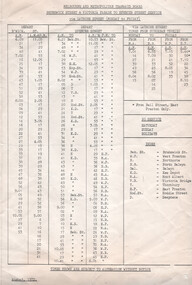
Ephemera - Timetable, Melbourne & Metropolitan Tramways Board (MMTB), "Brunswick St to Spencer St via La Trobe St", August 1972
... Dated August 1972. Notes no service on Saturdays, Sundays or public holidays....Dated August 1972. Notes no service on Saturdays, Sundays or public holidays. Yields information about La Trobe St tram services in 1972. ...Timetable - "Brunswick St & Victoria Parade to Spencer Street service via La Trobe Street (Monday to Friday)" - setting out the times trams departed Brunswick St (now St Vincent's plaza), or from each suburban terminius, and destination of the service. Dated August 1972. Notes no service on Saturdays, Sundays or public holidays.Yields information about La Trobe St tram services in 1972.Foolscap duplicated sheet.tramways, brunswick st, la trobe st, spencer st, timetables -
 Ballarat Tramway Museum
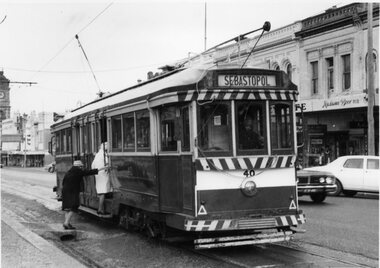
Photograph - Black & White Photograph/s - set of 2, The Courier Ballarat, 18/09/1971 12:00:00 AM
... Black and White copy photographs of a newspaper photograph taken by The Courier - photo taken 18/9/1971, one published 20/9/1971 of No. 40 picks up shoppers, Sturt & Dawson Sts corner, last Saturday of service. 3772.1 - Shows two ladies boarding the tram from a crossover over the gutter. 3772.2 - shows the tram just after it left the stop. ...Black and White copy photographs of a newspaper photograph taken by The Courier - photo taken 18/9/1971, one published 20/9/1971 of No. 40 picks up shoppers, Sturt & Dawson Sts corner, last Saturday of service. 3772.1 - Shows two ladies boarding the tram from a crossover over the gutter. 3772.2 - shows the tram just after it left the stop. ...Yields information about the nature of the day on the last full day of operation in Sturt St and how passengers boarded the tram from the median strip.Black and White copy photographs of a newspaper photograph taken by The Courier - photo taken 18/9/1971, one published 20/9/1971 of No. 40 picks up shoppers, Sturt & Dawson Sts corner, last Saturday of service. 3772.1 - Shows two ladies boarding the tram from a crossover over the gutter. 3772.2 - shows the tram just after it left the stop. Has the Ritzy Cafe in the background. Also has a "Cars Stop Here" and a "End of Section sign in the photograph, that looks back along Sturt St. Tram has the destination of Sebastopol. One photo used in the Courier Supplement following the closure of the tramways. Collected by Alan Bradley from the Ballarat Courier early 1980's. See Excel file "Record of Ballarat Courier Photos SEC era" (Archive Documents) for source of details.On rear of 4772.2 stamped "Copyright, The Ballarat Courier Proprietary Limited." and "100%" in black ink, and "92A Rpt" in felt pen.tramways, trams, sturt st, closure, dawson st, signs, tram 40 -
 Melbourne Tram Museum
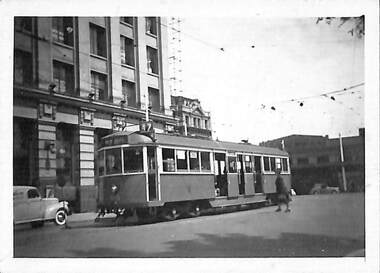
Photograph - Set of 2 Black & White Photograph/s, Lee A Ratten, late 1930s
... Tram 815 was one of 24 W5 class trams built by MMTB at Preston Workshops in 1937. Entered service Saturday 13 November 1937. In April 1984 converted to SW5. ...Tram 815 was one of 24 W5 class trams built by MMTB at Preston Workshops in 1937. Entered service Saturday 13 November 1937. In April 1984 converted to SW5. ...Set of two black and white photographs of tramcar 815 in Collins St at Spencer St. Tram 815 was one of 24 W5 class trams built by MMTB at Preston Workshops in 1937. Entered service Saturday 13 November 1937. In April 1984 converted to SW5. Currently stored at Newport Workshops. Was relocated to the site of the former Glenhuntly Post Office in Glenhuntly Road Feb. 2020. Photo shows tram at corner with Specer St station parcels building and VR building in background. Also shows building on corner which was used by State Saving Bank of Victoria. Destination shown as "Kew Depot" route number 47.trams, tramways, w5 class, collins st, spencer st, route 47, tram 815 -
 Melbourne Tram Museum
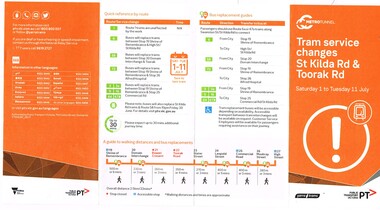
Pamphlet, Public Transport Victoria (PTV), "Tram service changes St Kilda Rd & Toorak Rd", Jun. 2017
... Has the logos of Metro Tunnel, Yarra Trams and PTV. .2 Pamphlet, printed and cut for use in trams around passenger hanging rails, titled "St Kilda Rd Tram and Bus service changes - Saturday 1 to Tuesday 11 July" - details bus replacement services and tram stops. ...Has the logos of Metro Tunnel, Yarra Trams and PTV. .2 Pamphlet, printed and cut for use in trams around passenger hanging rails, titled "St Kilda Rd Tram and Bus service changes - Saturday 1 to Tuesday 11 July" - details bus replacement services and tram stops. ....1 - Pamphlet - four fold - DL side four colour printed on off-white paper, titled "Tram service changes St Kilda Rd & Toorak Rd", advising intending passengers of the work between 1/7/2017 and 11/7/2017 to connect route 8 at Toorak Road West into St Kilda road the closure of the route via Park and Domain Road. Has a map, list of service changes, bus replacement guides and contact information. Has the logos of Metro Tunnel, Yarra Trams and PTV. .2 Pamphlet, printed and cut for use in trams around passenger hanging rails, titled "St Kilda Rd Tram and Bus service changes - Saturday 1 to Tuesday 11 July" - details bus replacement services and tram stops. Related to the main pamphlet - see image Set of five digital images taken at stop 25, Park St advising of the route diversion, replacement services and stop closure and two protest posters on fences nearby the stop about the Metro Tunnel project trucks using the local streets and the closure of the Park St / Domain Road tram line. .2 Pamphlet, printed and cut for use in trams around passenger hanging rails, titled "St Kilda Rd Tram and Bus service changes - Saturday 1 to Tuesday 11 July" - details bus replacement services and tram stops. Related to the main pamphlet.trams, tramways, park st, domain junction, metro tunnel, toorak rd, st kilda rd, tramway construction -
 Puffing Billy Railway
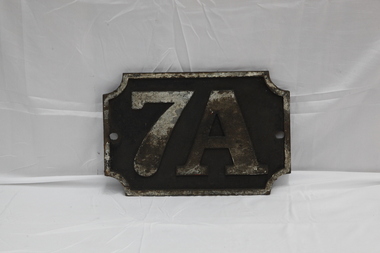
7A Number Plate
... Historic - Victorian Railways Locomotive Number Plate used on Steam Locomotive 7A Loco: 7A In service Saturday, 6th May 1905 Livery Maroon Owner Puffing Billy Gauge 762 Status Preserved - Operational 7A Built in 1905 and painted Canadian red & dark brown, this locomotive was issued to the Wangaratta to Whitfield line and saw service on all four lines with most of its service on the Upper Fern Tree Gully to Gembrook line. ...Historic - Victorian Railways Locomotive Number Plate used on Steam Locomotive 7A Loco: 7A In service Saturday, 6th May 1905 Livery Maroon Owner Puffing Billy Gauge 762 Status Preserved - Operational 7A Built in 1905 and painted Canadian red & dark brown, this locomotive was issued to the Wangaratta to Whitfield line and saw service on all four lines with most of its service on the Upper Fern Tree Gully to Gembrook line. ...Historic - Victorian Railways Locomotive Number Plate used on Steam Locomotive 7A Loco: 7A In service Saturday, 6th May 1905 Livery Maroon Owner Puffing Billy Gauge 762 Status Preserved - Operational 7A Built in 1905 and painted Canadian red & dark brown, this locomotive was issued to the Wangaratta to Whitfield line and saw service on all four lines with most of its service on the Upper Fern Tree Gully to Gembrook line. It was temporarily withdrawn from service in 1958 and returned to service at Belgrave in 1962 for the reopening of this line where it has seen almost continuous service since. 1979 saw the early two-tone green colour scheme applied to this loco as a trial even though it never historically carried it, but its physical configuration was not altered accordingly. It is now painted its original livery of Canadian Pacific red & dark brown and will eventually be returned, as far a possible, to its original condition with a low bunker, narrow ash-chute, etc.Historic - Victorian Railways Locomotive Number Plate used on Steam Locomotive 7ANumber Plate 7A Fabricated steel number board made by the Victorian Railways for locomotive 7A7apuffing billy, 7a, number plate, victorian railways -
 Puffing Billy Railway
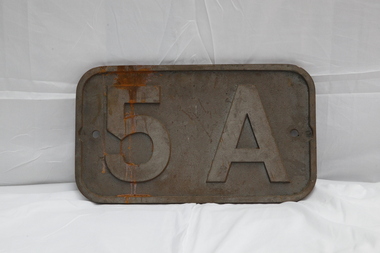
5A Number Plate
... Historic - Victorian Railways Locomotive Number Plate used on Steam Locomotive 5A Loco: 5A In service Saturday, 23rd March 1901 Scrapped Monday, 7th July 1958 Livery Black Owner VR Gauge 762 Status Scrapped Service History : Mar 1901 Colac - initial allocation of a new locomotive Mar 1901 - Feb 1902 Colac Dec 1902 - Oct 1908 UFTG. ...Historic - Victorian Railways Locomotive Number Plate used on Steam Locomotive 5A Loco: 5A In service Saturday, 23rd March 1901 Scrapped Monday, 7th July 1958 Livery Black Owner VR Gauge 762 Status Scrapped Service History : Mar 1901 Colac - initial allocation of a new locomotive Mar 1901 - Feb 1902 Colac Dec 1902 - Oct 1908 UFTG. ...Historic - Victorian Railways Locomotive Number Plate used on Steam Locomotive 5A Loco: 5A In service Saturday, 23rd March 1901 Scrapped Monday, 7th July 1958 Livery Black Owner VR Gauge 762 Status Scrapped Service History : Mar 1901 Colac - initial allocation of a new locomotive Mar 1901 - Feb 1902 Colac Dec 1902 - Oct 1908 UFTG. Nov 1908 - Oct 1912 Colac Nov 1912 - May 1913 Other Jun 1913 - Jun 1915 UFTG. Sep 1915 - Sep 1920 Moe Oct 1920 - Nov 1921 UFTG. Mar 1922 - Jan 1927 Colac Mar 1927 - Aug 1927 Moe Oct 1927 - Jan 1928 UFTG. Feb 1928 - Dec 1934 Colac Jan 1935 - Mar 1935 Moe Apr 1935 - Sep 1942 Colac Mar 1943 - Mar 1949 Moe Apr 1949 - Nov 1957 Colac Dec 1957 Colac - Stored. Feb 1958 - Jul 1958 Workshops - ScrappedHistoric - Victorian Railways Locomotive Number Plate used on Steam Locomotive 5AVictorian Railways produced 5a number plate. made of cast iron5a5a, puffing billy, victorian railways -
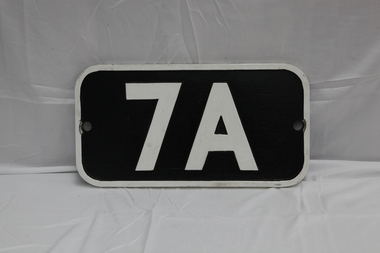 Puffing Billy Railway
7A Number Plate
... Loco: 7A In service Saturday, 6th May 1905 Livery Maroon Owner Puffing Billy Gauge 762 Status Preserved - Operational 7A Built in 1905 and painted Canadian red & dark brown, this locomotive was issued to the Wangaratta to Whitfield line and saw service on all four lines with most of its service on the Upper Fern Tree Gully to Gembrook line. ...Loco: 7A In service Saturday, 6th May 1905 Livery Maroon Owner Puffing Billy Gauge 762 Status Preserved - Operational 7A Built in 1905 and painted Canadian red & dark brown, this locomotive was issued to the Wangaratta to Whitfield line and saw service on all four lines with most of its service on the Upper Fern Tree Gully to Gembrook line. ...Replica of a Victorian Railways replacement number board that 7A carried in the later 40's and 50's. This plate was created for the preservation society's reenactment trains in 2012 for the 50 year celebration of reopening to Menzies Creek. Loco: 7A In service Saturday, 6th May 1905 Livery Maroon Owner Puffing Billy Gauge 762 Status Preserved - Operational 7A Built in 1905 and painted Canadian red & dark brown, this locomotive was issued to the Wangaratta to Whitfield line and saw service on all four lines with most of its service on the Upper Fern Tree Gully to Gembrook line. It was temporarily withdrawn from service in 1958 and returned to service at Belgrave in 1962 for the reopening of this line where it has seen almost continuous service since. 1979 saw the early two-tone green colour scheme applied to this loco as a trial even though it never historically carried it, but its physical configuration was not altered accordingly. It is now painted its original livery of Canadian red & dark brown and will eventually be returned, as far a possible, to its original condition with a low bunker, narrow ash-chute, etc.Historic - Replica Victorian Railways Locomotive Number Plate of the type used on Steam Locomotive 7A in the later 40's and 50's created for the preservation society's reenactment trains in 2012 for the 50 year celebration of reopening to Menzies Creek Number Plate 7A Rectangular black and white number plate. Cast aluminum replica number board.7Apuffing billy, 7a, number plate -
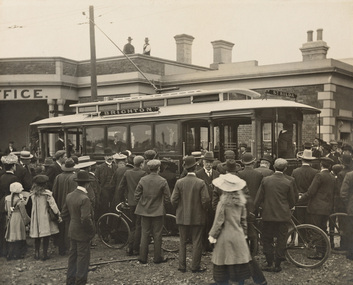 Bayside Gallery - Bayside City Council Art & Heritage Collection
Photograph - gelatin silver photograph, Official Opening, St Kilda - Brighton Electric Street Railway, 1906
... The line opened in early 1906 and was one of Melbourne's first electric tram services. On Saturday 5 May, 1906, Premier Thomas Bent performed the opening ceremony of the St Kilda to Brighton electric tramway at the Brighton Terminus, presided over by Cr. ...The line opened in early 1906 and was one of Melbourne's first electric tram services. On Saturday 5 May, 1906, Premier Thomas Bent performed the opening ceremony of the St Kilda to Brighton electric tramway at the Brighton Terminus, presided over by Cr. ...In 1904, at the initiative of Premier Thomas Bent, Victorian Railways was authorised to build an electric street railway from St Kilda to Brighton. The line opened in early 1906 and was one of Melbourne's first electric tram services. On Saturday 5 May, 1906, Premier Thomas Bent performed the opening ceremony of the St Kilda to Brighton electric tramway at the Brighton Terminus, presided over by Cr. Thomas Wilson, Mayor of Brighton, with refreshments following at the Brighton Yacht Club. About 60 representatives were in attendance including the Railway Commissioners and the mayor and councillors of St Kilda, Brighton and Caulfield. The newspapers of the day commented that the cars were the best yet seen in Australia, possessing a great advantage over the Sydney trams, in that they are easily entered, and the glass windbreak was another improvement in design. The tramway from St Kilda to Brighton terminus took 18 minutes, including stops. thomas bent, premier, cr. thomas wilson, mayor, electric railway, electric tram, st kilda, brighton, official opening, public transport -
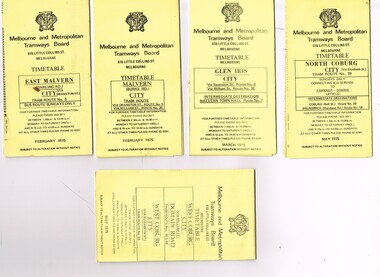 Melbourne Tram Museum
Ephemera - Timetable/s, Melbourne & Metropolitan Tramways Board (MMTB), "MMTB Tram Timetables", 1975
... All printed on yellow paper unless noted otherwise. .1 - Route 3 - East Malvern 3 - Bus Route Sundays Only, Feb. 1975 .2 - Route 5, 35 - Malvern - City .3 - Route 6, 7, 36 - Glen Iris - City .4 - Route 19, 18, 20 - North Coburg - City and Sundays only - Fawkner to Gowrie, Upfield - May 1975 .5 - Route 55, 56, 68 - West Coburg - City - Domain Road - May 1975 .6 - Route 57, 54, 60, 58 and 50 - West Maribyrnong - City - Feb. 1975 .7 - Route 64, 65, 62, 61 - East Brighton - City - June 1975 .8 - Route 66, 67 and 37 - Carnegie - City - June 1975 .9 - Route 82 - Footscray - Highpoint West - Moonee Ponds (Bus service Saturday afternoons and Sundays - November 1975. ...All printed on yellow paper unless noted otherwise. .1 - Route 3 - East Malvern 3 - Bus Route Sundays Only, Feb. 1975 .2 - Route 5, 35 - Malvern - City .3 - Route 6, 7, 36 - Glen Iris - City .4 - Route 19, 18, 20 - North Coburg - City and Sundays only - Fawkner to Gowrie, Upfield - May 1975 .5 - Route 55, 56, 68 - West Coburg - City - Domain Road - May 1975 .6 - Route 57, 54, 60, 58 and 50 - West Maribyrnong - City - Feb. 1975 .7 - Route 64, 65, 62, 61 - East Brighton - City - June 1975 .8 - Route 66, 67 and 37 - Carnegie - City - June 1975 .9 - Route 82 - Footscray - Highpoint West - Moonee Ponds (Bus service Saturday afternoons and Sundays - November 1975. ...Set of 9 MMTB Tram timetables, folded sheets, generally 10 sections, providing timetables for specific routes, day of week giving information on tram times at specific time points, route map, sections and fares and organisation address - 616 Little Collins St. Melbourne. All printed on yellow paper unless noted otherwise. .1 - Route 3 - East Malvern 3 - Bus Route Sundays Only, Feb. 1975 .2 - Route 5, 35 - Malvern - City .3 - Route 6, 7, 36 - Glen Iris - City .4 - Route 19, 18, 20 - North Coburg - City and Sundays only - Fawkner to Gowrie, Upfield - May 1975 .5 - Route 55, 56, 68 - West Coburg - City - Domain Road - May 1975 .6 - Route 57, 54, 60, 58 and 50 - West Maribyrnong - City - Feb. 1975 .7 - Route 64, 65, 62, 61 - East Brighton - City - June 1975 .8 - Route 66, 67 and 37 - Carnegie - City - June 1975 .9 - Route 82 - Footscray - Highpoint West - Moonee Ponds (Bus service Saturday afternoons and Sundays - November 1975. See Reg Item 2886 for a tramway check ticket for use on the Upfield line.trams, tramways, mmtb, timetables, melbourne, fares, upfield, bus replacement, route 3, route 5, route 6, route 7, route 18, route 19, route 20, route 35, route 36, route 37, route 50, route 54, route 55, route 56, route 57, route 58, route 60, route 61, route 62, route 64, route 65, route 66, route 67, route 68, route 82 -
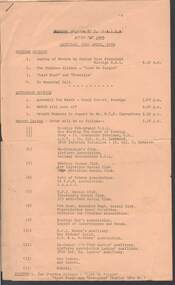 Bendigo Historical Society Inc.
Document - R.S.L. BENDIGO COLLECTION: ANZAC SERVICE 1959, 25th April, 1959
... Paper detailing the Morning and Afternoon Service, Wreath Laying, Order of March, Assembly Points and Movement for the Anzac Day Service on Saturday, 25th April, 1959. Mentioned are: Mr W E P Carruthers, Lt Commander Herniman RN, Col L J Lockwood, 38 Infantry Battalion, Lt Col D Scholes, Ex-Navalmen's Club, Airforce Association, Railway Sub-section R.S.L., Bendigo Legacy Club, 6th Battalion Social Club, 38th Battalion Social Club, Rats of Tobruk Association, Ex P.O.W. ...Bn Ladies' Auxiliary Sea Cadets Air Cadets Major T Martin Mr G Styles Court House Hotel Sound Shell G F Osborne Paper detailing the Morning and Afternoon Service, Wreath Laying, Order of March, Assembly Points and Movement for the Anzac Day Service on Saturday, 25th April, 1959. Mentioned are: Mr W E P Carruthers, Lt Commander Herniman RN, Col L J Lockwood, 38 Infantry Battalion, Lt Col D Scholes, Ex-Navalmen's Club, Airforce Association, Railway Sub-section R.S.L., Bendigo Legacy Club, 6th Battalion Social Club, 38th Battalion Social Club, Rats of Tobruk Association, Ex P.O.W. ...Paper detailing the Morning and Afternoon Service, Wreath Laying, Order of March, Assembly Points and Movement for the Anzac Day Service on Saturday, 25th April, 1959. Mentioned are: Mr W E P Carruthers, Lt Commander Herniman RN, Col L J Lockwood, 38 Infantry Battalion, Lt Col D Scholes, Ex-Navalmen's Club, Airforce Association, Railway Sub-section R.S.L., Bendigo Legacy Club, 6th Battalion Social Club, 38th Battalion Social Club, Rats of Tobruk Association, Ex P.O.W. Association, R.A.A.O.C., T.P.I. Social Club, Interunits Social Club, 105 Anti-Tank Social Club, 4th Aust. Armoured Regt. Social Club, Repatriation Local Committee, Catholic War Veterans Association, Bendigo Dad's Association, Legion of Exservicemen and Women, R.S.L. Women's Auxiliary, War Widows' Guild, S.S. & A. Mothers' Association, Ex-Navalmen's Club Ladies' Auxiliary, Airforce Association Ladies' Auxiliary, 38th Inf. Bn Ladies' Auxiliary, Sea Cadets, Air Cadets, Major T Martin, Mr G Styles, Court House Hotel, Sound Shell, and G F Osborne.event, official, anzac memorial service, r.s.l. bendigo collection - anzac service 1959, mr w e p carruthers, lt commander herniman rn, col l j lockwood, 38 infantry battalion, lt col d scholes, ex-navalmen's club, airforce association, railway sub-section r.s.l., bendigo legacy club, 6th battalion social club, 38th battalion social club, rats of tobruk association, ex p.o.w. association, r.a.a.o.c., t.p.i. social club, interunits social club, 105 anti-tank social club, 4th aust. armoured regt. social club, repatriation local committee, catholic war veterans association, bendigo dad's association, legion of exservicemen and women, r.s.l. women's auxiliary, war widows' guild, s.s. & a. mothers' association, ex-navalmen's club ladies' auxiliary, airforce association ladies' auxiliary, 38th inf. bn ladies' auxiliary, sea cadets, air cadets, major t martin, mr g styles, court house hotel, sound shell, g f osborne -
 Wodonga & District Historical Society Inc
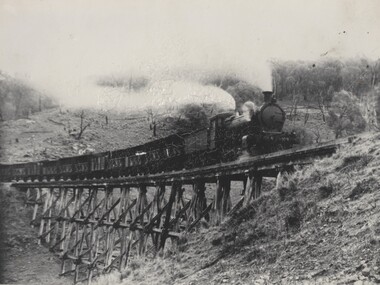
Photograph - Fred Rochow Railways Collection - Livestock Special, c1923 - 1940
... The K class was a branch line steam locomotive that ran on Victorian Railways in Australia from 1922 to 1979 Locomotive K190 entered service on Saturday, 30th June 1923. In 1940 it was renumbered as K149 The locomotive was eventually scrapped on Thursday, 12th October 1967....The K class was a branch line steam locomotive that ran on Victorian Railways in Australia from 1922 to 1979 Locomotive K190 entered service on Saturday, 30th June 1923. In 1940 it was renumbered as K149 The locomotive was eventually scrapped on Thursday, 12th October 1967. ...The Fred Rochow Railways Collection incorporates photos related to the operation of the Wodonga Railway Station including different types of trains and railways staff C. 1930 – 1990. It was donated to the Wodonga Historical Society by Fred Rochow, a railwayman who spent many years based in Wodonga. He joined the Victorian Railways on 17th June l947 and retired in 1988. For some time, he was a member of the Australian Federated Union of Locomotive Enginemen and served a term as a member of the Trades Hall Council. He had an extensive knowledge of the struggles that took place to achieve better conditions for railway workers. Fred worked for many years as a fireman and then worked his way up the ranks to driver, experiencing many changes from the days of steam locomotives through to diesel trains, locomotives and even the modern XPT train. He worked throughout Victoria at different stages of his career, with his final working years focused on the northeast of Victoria and the Albury to Melbourne line. After his retirement, Fred continued to share his love of steam miniature trains with the community.This collection has local and statewide significance as it captures images of trains, locomotives and personnel who operated the railway services in Wodonga and throughout Northeast Victoria. The railways played a critical role in opening up Victoria and connecting Australia for trade, business, social communication and transport.A livestock special being hauled by Locomotive K109 passing over a high trestle bridge between Bullion and Darbyshire on the Cudgewa Line. Cudgewa Line -The Cudgewa railway line opened in stages between 1889 and 1921. The first section from Wodonga to Huon opened on 10 September 1889. It was extended to Bolga on 18 July 1890, Tallangatta on 24 July 1891, Shelley on 13 June 1916 (the highest station in Victoria), Beetomba on 10 April 1919 and Cudgewa on 5 May 1921. The line had 1 in 30 grades and trestle bridges that have been heritage listed. In 1919, the line was used to carry materials for the construction of Hume Weir, and three years later a spur line connecting Ebden to the weir was opened. In the 1960s, Cudgewa became the railhead of materials for the Snowy Mountains Scheme. The last passenger service from Wodonga to Tallangatta ran on 30 September 1961 The turntable and passenger platform at Cudgewa were abolished in 1976. The K class was a branch line steam locomotive that ran on Victorian Railways in Australia from 1922 to 1979 Locomotive K190 entered service on Saturday, 30th June 1923. In 1940 it was renumbered as K149 The locomotive was eventually scrapped on Thursday, 12th October 1967.railways wodonga, fred rochow, wodonga railwaymen, cudgewa rail line, trestle bridges -
 Puffing Billy Railway
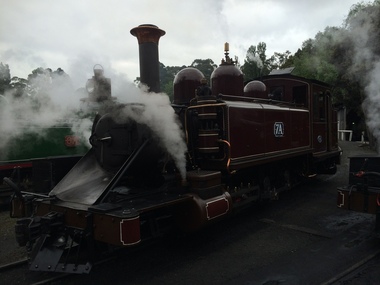
7A - Victorian Railways NA class steam locomotive, 1905
... Loco: 7A In service Saturday, 6th May 1905 Livery Canadian red & dark brown Owner Puffing Billy Gauge 762 / 2' 6" Status Preserved - Operational Service History : May 1905 Wangaratta - initial allocation of a new locomotive May 1905 - Apr 1906 Wangaratta Jul 1906 - Nov 1910 Colac Feb 1911 - Jul 1912 Moe Sep 1912 - Dec 1917 Colac Mar 1918 - Sep 1921 UFTG. ...Loco: 7A In service Saturday, 6th May 1905 Livery Canadian red & dark brown Owner Puffing Billy Gauge 762 / 2' 6" Status Preserved - Operational Service History : May 1905 Wangaratta - initial allocation of a new locomotive May 1905 - Apr 1906 Wangaratta Jul 1906 - Nov 1910 Colac Feb 1911 - Jul 1912 Moe Sep 1912 - Dec 1917 Colac Mar 1918 - Sep 1921 UFTG. ...7A Built in 1905 and painted Canadian red & dark brown, this locomotive was issued to the Wangaratta to Whitfield line and saw service on all four lines with most of its service on the Upper Fern Tree Gully to Gembrook line. It was temporarily withdrawn from service in 1958 and returned to service at Belgrave in 1962 for the reopening of this line where it has seen almost continuous service since. 1979 saw the early two-tone green colour scheme applied to this loco as a trial even though it never historically carried it, but its physical configuration was not altered accordingly. It is now painted its original livery of Canadian red & dark brown and will eventually be returned, as far a possible, to its original condition with a low bunker, narrow ash-chute, etc. Loco: 7A In service Saturday, 6th May 1905 Livery Canadian red & dark brown Owner Puffing Billy Gauge 762 / 2' 6" Status Preserved - Operational Service History : May 1905 Wangaratta - initial allocation of a new locomotive May 1905 - Apr 1906 Wangaratta Jul 1906 - Nov 1910 Colac Feb 1911 - Jul 1912 Moe Sep 1912 - Dec 1917 Colac Mar 1918 - Sep 1921 UFTG. Nov 1921 - Sep 1923 Colac Dec 1923 - May 1925 UFTG. Jun 1925 - Aug 1925 Workshops Sep 1925 - Aug 1927 UFTG. Aug 1927 - Feb 1928 Workshops Mar 1928 - May 1928 UFTG. Jul 1928 - Moe Sep 1928 - Mar 1930 UFTG. Apr 1930 - Sep 1930 Workshops Oct 1930 - Oct 1936 UFTG. Nov 1936 - Moe Dec 1936 - Aug 1945 UFTG. Dec 1946 - May 1953 Colac Sep 1953 - Oct 1954 Moe Dec 1954 - Jun 1955 Workshops Nov 1955 - Dec 1957 UFTG. - Stored Feb 1958 - Apr 1962 Workshops May 1962 - Belgrave - In active service at Puffing Billy Railway Belgrave Victorian Railways - Narrow Gauge NA class steam locomotive number 7A Dates that 7A worked on the Gembrook Line Mar-1918 to Nov-1921 Dec-1923 to Jun-1925 Sep-1925 to Aug-1927 May-1928 to Apr-1930 Oct-1930 to Nov-1936 Dec-1936 to Dec-1946 Nov-1955 to Feb-1958 May-1962 - Returned to Gembrook line Oct - 1977 - Transferred to ETRB ownership Steam Locomotive with wrought iron frame with cast iron cylinders7Apuffing billy, 7a, victorian railways, narrow gauge, steam locomotive -
 Flagstaff Hill Maritime Museum and Village
Oar, early 20th century
... His advertisement in Footscray’s ‘Independent’ newspaper of Saturday 11th May 1901 states he is “Principal and Skilled member (Naval Architect) to the Court of Marine Inquiry of Victoria and holds classes for naval architectural drawing and arithmetic.” The oar is significant for its association with the lifeboat WARRNAMBOOL, which is significant for its half century service to the local community as a lifesaving vessel. ...This oar is from the Lifeboat Warrnambool, which is on sit at Flagstaff Hill Maritime Village. The construction of the lifeboat ‘Warrnambool’ began 15th September 1909 and was completed almost 12 months later, 1st September 1910. It was built at the Government Dockyard in Williamstown, Victoria, along the lines designed by the Great Britain’s Royal Lifeboat Institution, and included whaleback decks fore and aft, mast and centreboard, and rudder and tiller hung from the sternpost. It could be propelled by both sail and oar. At that time Captain Ferguson was Chief Harbour Master and Mr Beagley was foreman boat builder. Mr Beagley built the lifeboat with his fellow workmen. The boat was described as “… a fine piece of workmanship and does credit to her builders and designers…” It had all the latest improvements in shape, disposition of weight and watertight compartments, and it had space for a large number of people in addition to the crew. It appears that 'H Meiers' whose signature was on the plaque that was found concealed in the hull, was involved with the building of the lifeboat. His signature and the dates of the start and finish of the boat’s construction are pencilled on the raw timber 'plaque' found in the hull in the early 1990’s when the lifeboat was being restored. It is interesting that the ‘Melbourne Directory’ of 1911, published by Sands and MacDougal, lists McAuley and Meiers, boat builders, Nelson Place foreshore, between Pasco and Parker Streets, Williamstown, (Victorian Heritage Database, ‘Contextual History, Maritime Facilities’), It is quite possibly the business of the person whose name is inscribed on the lifeboat plaque. Flagstaff Hill’s documentation also mentions that the keel was laid at ‘Harry Myers, boat builders, Williamstown, Melbourne’ – the name ‘Myers’ can also be spelled ‘Meiers’, which could be the same person as the Meiers in “McAuley and Meiers” (as mentioned in genealogy lines of Myers). The new lifeboat, to be named ‘Warrnambool’ was brought to town by train and launched at the breakwater on 1st March 1911 using the Titan crane (the old lifeboat built in 1858, was then returned to Melbourne in 1911). This new lifeboat was stationed at Warrnambool in a shed located at the base of the Breakwater, adjacent to the slipway. A winch was used to bring it in and out of the water. The lifeboat ‘Warrnambool’ was similar in size to the old lifeboat but far superior in design, build and sea-going qualities such as greater manoeuvrability. The ‘self-righting, self-draining’ design was “practically non-capsizeable” and even if the boat overturned it would right itself to an even keel and the water would drain away. The hull was built of New Zealand Kauri, using double diagonal planking, laid in two layers at right angles, with a layer of canvas and red lead paint between the timbers to help seal the planking. It has “… plenty of freeboard, high watertight spaces between the deck and bottom… through which pipes lead…” The backbone timbers were made of Jarrah. The lifeboat Warrnambool was one of several rescue boats used at Port Fairy and Warrnambool in early 1900's. In late 1914 the Warrnambool lifeboat and crew were used to help find what was left of the tragic wreckage of the Antares, and were able to discover the body of one of the crewmen, which they brought back to Warrnambool. Between 1951 and 1954 the lifeboat was manned under the guidance of Captain Carrington. He held lifeboat practice each month on a Sunday morning, to comply with the Ports and Harbour’s request that lifeboats be manned by a strong and competent crew, ready for action in case of emergency. In the early 1960’s it ended its service as a lifeboat and was used in Port Fairy as a barge to help dredge the Moyne River, bolted to the Port Fairy lifeboat. Flagstaff Hill obtained the Warrnambool in 1975. In 1984 it was on display at Flagstaff Hill Maritime Village, Warrnambool. On 23rd May 1990 she was lifted from the water and placed in a cradle for restoration. The name ‘WARRNAMBOOL could be seen faintly on the lifeboat before it was restored. It was during the restoration that Flagstaff Hill's boat builder discovered the 'plaque' inside the hull. A copy of the blueprint plans has the name “V.E.E. Gotch” printed on it. His advertisement in Footscray’s ‘Independent’ newspaper of Saturday 11th May 1901 states he is “Principal and Skilled member (Naval Architect) to the Court of Marine Inquiry of Victoria and holds classes for naval architectural drawing and arithmetic.” The oar is significant for its association with the lifeboat WARRNAMBOOL, which is significant for its half century service to the local community as a lifesaving vessel. She was also used to help retrieve the body of a shipwrecked crew member of the ANTARES. Large wooden oar, shaped two handgrip with tapering shaft to large flattened blade, (2) copper reinforcing strips on blade. Sweep oar is from the Lifeboat Warrnambool. flagstaff hill, warrnambool, shipwrecked-coast, flagstaff-hill, flagstaff-hill-maritime-museum, maritime-museum, shipwreck-coast, flagstaff-hill-maritime-village, oar, lifeboat warrnambool, sweep oar -
 Flagstaff Hill Maritime Museum and Village
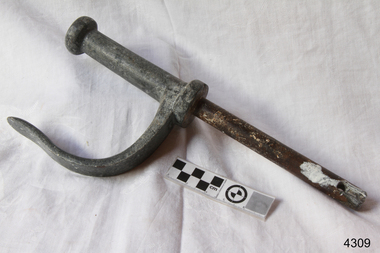
Functional object - Rowlock, early 20th century
... His advertisement in Footscray’s ‘Independent’ newspaper of Saturday 11th May 1901 states he is “Principal and Skilled member (Naval Architect) to the Court of Marine Inquiry of Victoria and holds classes for naval architectural drawing and arithmetic.” The subject row lock is significant due to its association the Warrnambool Lifeboat which was an integral part of an important service to the local community as a lifesaving vessel for a half-century. ...This row lock was fitted onto the Warrnambool Lifeboat, which is also on-site at Flagstaff Hill Maritime Village. The construction of the lifeboat 'Warrnambool' began 15th September 1909 and was completed almost 12 months later 1st September 1910. It was built at the Government Dockyard in Williamstown, Victoria, along the lines designed by Great Britain's Royal Lifeboat Institution, and included whale back decks fore and aft, mast and centre board, and rudder and tiller hung from the stern post. It could be propelled by both sail and oar. At that time Captain Ferguson was Chief Harbour Master and Mr Beagley was a foreman boat builder. Mr Beagley built the lifeboat with his fellow workmen. It had all the latest improvements in shape, disposition of weight with watertight compartments, and it had space for a large number of people in addition to the crew. It appears that 'H Meiers' whose signature was on the plaque that was found concealed in the hull, was involved with the building of the lifeboat. His signature and the dates of the start and finish of the boat's construction are penciled on the raw timber 'plaque' found in the hull in the early 1990s when the lifeboat was being restored. It is interesting that the 'Melbourne Directory' of 1911, published by Sands and MacDougal, lists McAuley and Meiers, boat builders, Nelson Place foreshore, between Pasco and Parker Streets, Williamstown, It is quite possibly the business of the person whose name is inscribed on the lifeboat plaque. Flagstaff Hill's documentation also mentions that the keel was laid at 'Harry Myers, boat builders, Williamstown, Melbourne the name 'Myers' can also be spelled 'Meiers', which could be the same person as the Meiers in "McAuley and Meiers" (as mentioned in genealogy lines of Myers). The new lifeboat, to be named 'Warrnambool' was brought to town by train and launched at the breakwater on 1st March 1911 using the Titan crane (the old lifeboat built-in 1858, was then returned to Melbourne in 1911). This new lifeboat was stationed at Warrnambool in a shed located at the base of the Breakwater, adjacent to the slipway. The lifeboat ‘Warrnambool’ was similar in size to the old lifeboat but far superior in design, with new sea-going qualities such as greater maneuverability. The ‘self-righting, self-draining’ design was made the vessel difficult to capsize and even if the boat overturned it would right itself to an even keel and the water would drain away. The hull was built of New Zealand Kauri, using double diagonal planking, laid in two layers at right angles, with a layer of canvas and red lead paint between the timbers to help seal the planking. It has plenty of free board. The backbone timbers were made of Jarrah. The Warrnambool lifeboat was one of several rescue boats used at Port Fairy and Warrnambool in the early 1900s. In late 1914 the Warrnambool lifeboat and crew were used to help find what was left of the tragic wreckage of the Antares and were able to discover the body of one of the crewmen. Between 1951 and 1954 the lifeboat was manned under the guidance of Captain Carrington. He held lifeboat practice each month on a Sunday morning, to comply with the Ports and Harbour’s request that lifeboats be ready for action in case of an emergency. In the early 1960’s it ended its service as a lifeboat and was used in Port Fairy as a barge to help dredge the Moyne River. Flagstaff Hill obtained the Warrnambool lifeboat in 1975. In 1984 it was on display at Flagstaff Hill Maritime Village, Warrnambool. On 23rd May 1990, she was lifted from the water and placed in a cradle for restoration. The name 'WARRNAMBOOL could be seen faintly on the lifeboat before it was restored. It was during the restoration that Flagstaff Hill's boat builder discovered the 'plaque' inside the hull. A copy of the blueprint plans has the name “V.E.E. Gotch” printed on it. His advertisement in Footscray’s ‘Independent’ newspaper of Saturday 11th May 1901 states he is “Principal and Skilled member (Naval Architect) to the Court of Marine Inquiry of Victoria and holds classes for naval architectural drawing and arithmetic.” The subject row lock is significant due to its association the Warrnambool Lifeboat which was an integral part of an important service to the local community as a lifesaving vessel for a half-century. One of the lifeboats many achievements was when it was used to help retrieve the body of a shipwrecked crew member of the ship Antares. Rowlock from the Warrnambool Lifeboat.Noneflagstaff hill, warrnambool, shipwrecked-coast, flagstaff-hill, flagstaff-hill-maritime-museum, maritime-museum, shipwreck-coast, flagstaff-hill-maritime-village, lifeboat warrnambool, life boat, life saving vessel, 1910 vessel, port fairy, boat builder plaque, rescue boat, beagley, government dockyard, williamstown, v.e.e. gotch, royal lifeboat institution, captain ferguson, non-capsizeable lifeboat, self-righting lifeboat, antares shipwreck, double diagonal planking, captain carrington, rowlock, lifeboat rowlock -
 Flagstaff Hill Maritime Museum and Village
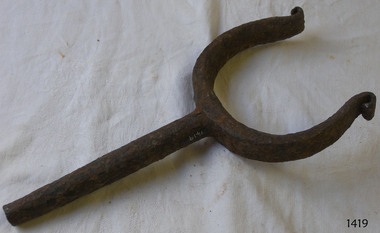
Rowlock, early 20th century
... His advertisement in Footscray’s ‘Independent’ newspaper of Saturday 11th May 1901 states he is “Principal and Skilled member (Naval Architect) to the Court of Marine Inquiry of Victoria and holds classes for naval architectural drawing and arithmetic.” The rowlock is significant for its association with the lifeboat WARRNAMBOOL, which is significant for its half century service to the local community as a lifesaving vessel. ...Rowlock from the Lifeboat Warrnambool, which is on site at Flagstaff Hill Maritime Village. The construction of the lifeboat ‘Warrnambool’ began 15th September 1909 and was completed almost 12 months later, 1st September 1910. It was built at the Government Dockyard in Williamstown, Victoria, along the lines designed by the Great Britain’s Royal Lifeboat Institution, and included whaleback decks fore and aft, mast and centreboard, and rudder and tiller hung from the sternpost. It could be propelled by both sail and oar. At that time Captain Ferguson was Chief Harbour Master and Mr Beagley was foreman boat builder. Mr Beagley built the lifeboat with his fellow workmen. The boat was described as “… a fine piece of workmanship and does credit to her builders and designers…” It had all the latest improvements in shape, disposition of weight and watertight compartments, and it had space for a large number of people in addition to the crew. It appears that 'H Meiers' whose signature was on the plaque that was found concealed in the hull, was involved with the building of the lifeboat. His signature and the dates of the start and finish of the boat’s construction are pencilled on the raw timber 'plaque' found in the hull in the early 1990’s when the lifeboat was being restored. It is interesting that the ‘Melbourne Directory’ of 1911, published by Sands and MacDougal, lists McAuley and Meiers, boat builders, Nelson Place foreshore, between Pasco and Parker Streets, Williamstown, (Victorian Heritage Database, ‘Contextual History, Maritime Facilities’), It is quite possibly the business of the person whose name is inscribed on the lifeboat plaque. Flagstaff Hill’s documentation also mentions that the keel was laid at ‘Harry Myers, boat builders, Williamstown, Melbourne’ – the name ‘Myers’ can also be spelled ‘Meiers’, which could be the same person as the Meiers in “McAuley and Meiers” (as mentioned in genealogy lines of Myers). The new lifeboat, to be named ‘Warrnambool’ was brought to town by train and launched at the breakwater on 1st March 1911 using the Titan crane (the old lifeboat built in 1858, was then returned to Melbourne in 1911). This new lifeboat was stationed at Warrnambool in a shed located at the base of the Breakwater, adjacent to the slipway. A winch was used to bring it in and out of the water. The lifeboat ‘Warrnambool’ was similar in size to the old lifeboat but far superior in design, build and sea-going qualities such as greater manoeuvrability. The ‘self-righting, self-draining’ design was “practically non-capsizeable” and even if the boat overturned it would right itself to an even keel and the water would drain away. The hull was built of New Zealand Kauri, using double diagonal planking, laid in two layers at right angles, with a layer of canvas and red lead paint between the timbers to help seal the planking. It has “… plenty of freeboard, high watertight spaces between the deck and bottom… through which pipes lead…” The backbone timbers were made of Jarrah. The lifeboat Warrnambool was one of several rescue boats used at Port Fairy and Warrnambool in early 1900's. In late 1914 the Warrnambool lifeboat and crew were used to help find what was left of the tragic wreckage of the Antares, and were able to discover the body of one of the crewmen, which they brought back to Warrnambool. Between 1951 and 1954 the lifeboat was manned under the guidance of Captain Carrington. He held lifeboat practice each month on a Sunday morning, to comply with the Ports and Harbour’s request that lifeboats be manned by a strong and competent crew, ready for action in case of emergency. In the early 1960’s it ended its service as a lifeboat and was used in Port Fairy as a barge to help dredge the Moyne River, bolted to the Port Fairy lifeboat. Flagstaff Hill obtained the Warrnambool in 1975. In 1984 it was on display at Flagstaff Hill Maritime Village, Warrnambool. On 23rd May 1990 she was lifted from the water and placed in a cradle for restoration. The name ‘WARRNAMBOOL could be seen faintly on the lifeboat before it was restored. It was during the restoration that Flagstaff Hill's boat builder discovered the 'plaque' inside the hull. A copy of the blueprint plans has the name “V.E.E. Gotch” printed on it. His advertisement in Footscray’s ‘Independent’ newspaper of Saturday 11th May 1901 states he is “Principal and Skilled member (Naval Architect) to the Court of Marine Inquiry of Victoria and holds classes for naval architectural drawing and arithmetic.” The rowlock is significant for its association with the lifeboat WARRNAMBOOL, which is significant for its half century service to the local community as a lifesaving vessel. She was also used to help retrieve the body of a shipwrecked crew member of the ANTARES. Rowlock, iron, upper ends scroll over, from the Lifeboat Warrnambool.flagstaff hill, warrnambool, shipwrecked-coast, flagstaff-hill, flagstaff-hill-maritime-museum, maritime-museum, shipwreck-coast, flagstaff-hill-maritime-village, life boat, life saving vessel, 1910 vessel, port fairy, boat builder plaque, rescue boat, beagley, government dockyard, williamstown, v.e.e. gotch, royal lifeboat institution, captain ferguson, non-capsizeable lifeboat, self-righting lifeboat, antares shipwreck, double diagonal planking, captain carrington, rowlock, lifeboat rowlock, lifeboat warrnambool -
 Flagstaff Hill Maritime Museum and Village
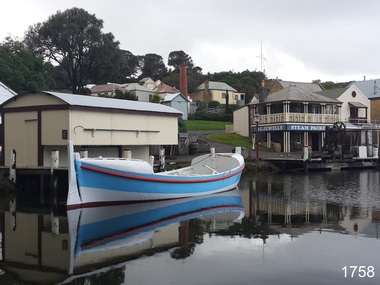
Vehicle - Vessel, Lifeboat Warrnambool, 01/09/1910
... His advertisement in Footscray’s ‘Independent’ newspaper of Saturday 11th May 1901 states he is “Principal and Skilled member (Naval Architect) to the Court of Marine Inquiry of Victoria and holds classes for naval architectural drawing and arithmetic.” The lifeboat WARRNAMBOOL is significant for its half century service ...The construction of the lifeboat ‘Warrnambool’ began 15th September 1909 and was completed almost 12 months later, 1st September 1910. It was built at the Government Dockyard in Williamstown, Victoria, along the lines designed by the Great Britain’s Royal Lifeboat Institution, and included whaleback decks fore and aft, mast and centreboard, and rudder and tiller hung from the sternpost. It could be propelled by both sail and oar. At that time Captain Ferguson was Chief Harbour Master and Mr Beagley was foreman boat builder when he and his fellow workmen built the boat. The boat was described as “… a fine piece of workmanship and does credit to her builders and designers…” It had all the latest improvements in shape, disposition of weight and watertight compartments, and it had space for a large number of people in addition to the crew. It appears that 'H Meiers' whose signature, along with building dates, is pencilled on a concealed timber 'plaque' in the hull, was involved with the building of the lifeboat. It is interesting that the ‘Melbourne Directory’ of 1911, published by Sands and MacDougal, lists McAuley and Meiers, boat builders, Nelson Place foreshore, between Pasco and Parker Streets, Williamstown, (Victorian Heritage Database, ‘Contextual History, Maritime Facilities’), It is probably the company of the person whose name is inscribed on the lifeboat plaque. Flagstaff Hill’s documentation also mentions that the keel was laid at ‘Harry Myers, boat builders, Williamstown, Melbourne’ – the name ‘Myers’ can also be spelled ‘Meiers’, which could be the same person as the Meiers in “McAuley and Meiers” (as mentioned in genealogy lines of Myers). The new lifeboat, to be named ‘Warrnambool’ was brought to town by train and launched at the breakwater on 1st March 1911 using the Titan crane (the old lifeboat built in 1858, was then returned to Melbourne in 1911). This new lifeboat was stationed at Warrnambool in a shed located at the base of the Breakwater, adjacent to the slipway. A winch was used to bring it in and out of the water. The lifeboat ‘Warrnambool’ was similar in size to the old lifeboat but far superior in design, build and sea-going qualities such as greater manoeuvrability. The ‘self-righting, self-draining’ design was “practically non-capsizeable” and even if the boat overturned it would right itself to an even keel and the water would drain away. The hull was built of New Zealand Kauri, using double diagonal planking, laid in two layers at right angles, with a layer of canvas and red lead paint between the timbers to help seal the planking. It has “… plenty of freeboard, high watertight spaces between the deck and bottom… through which pipes lead…” The backbone timbers were made of Jarrah. The lifeboat Warrnambool was one of several rescue boats used at Port Fairy and Warrnambool in early 1900's. In late 1914 the Warrnambool lifeboat and crew were used to help find what was left of the tragic wreckage of the Antares, and were able to discover the body of one of the crewmen, which they brought back to Warrnambool. Between 1951 and 1954 the lifeboat was manned under the guidance of Captain Carrington. He held lifeboat practice each month on a Sunday morning, to comply with the Ports and Harbour’s request that lifeboats be manned by a strong and competent crew, ready for action in case of emergency. In the early 1960’s it ended its service as a lifeboat and was used in Port Fairy as a barge to help dredge the Moyne River, bolted to the Port Fairy lifeboat. Flagstaff Hill obtained the Warrnambool in 1975. In 1984 it was on display at Flagstaff Hill Maritime Village, Warrnambool. On 23rd May 1990 she was lifted from the water and placed in a cradle for restoration. The name ‘WARRNAMBOOL could be seen faintly on the lifeboat before it was restored. It was during the restoration that Flagstaff Hill's boat builder discovered the 'plaque' inside the hull. A copy of the blueprint plans has the name “V.E.E. Gotch” printed on it. His advertisement in Footscray’s ‘Independent’ newspaper of Saturday 11th May 1901 states he is “Principal and Skilled member (Naval Architect) to the Court of Marine Inquiry of Victoria and holds classes for naval architectural drawing and arithmetic.”The lifeboat WARRNAMBOOL is significant for its half century service to the local community as a lifesaving vessel. She was also used to help retrieve the body of a shipwrecked crew member of the ANTARES. Lifeboat "Warrnambool", a wooden, clinker hull, 'self-righting, self-draining design, single mast, pivoting centreboard. Complete with sail and yardarm. A 'plaque' was found inside the hull of the lifeboat, made of untreated wood, disc-shaped with one straight edge (Diam 15.5cm), inscribed by one of the boat builders in pencil script "Life Boat Start building / 15/9/09 - complete 1/9/10 / (signature looks like H Meiers) / Boat Builder)."'Plaque' inside body of boat is inscribed in pencil, script writing "Life Boat Start building / 15/9/09 - complete 1/9/10 / (signature looks like H Meiels) / Boat Builder)." flagstaff hill, warrnambool, shipwrecked-coast, flagstaff-hill, flagstaff-hill-maritime-museum, maritime-museum, shipwreck-coast, flagstaff-hill-maritime-village, lifeboat, life boat, vessel, life saving, 1910 vessel, port fairy, boat builder plaque, rescue boat, beagley, williamstown, government dockyard, v.e.e. gotch, royal lifeboat institution, captain ferguson, meiers, nelson place, non-capsizeable, self-righting, titan crane, double diagonal planking, captain carrington, barge, antares, self righting, crew of twelve, capacity of 30 survivors -
 Flagstaff Hill Maritime Museum and Village
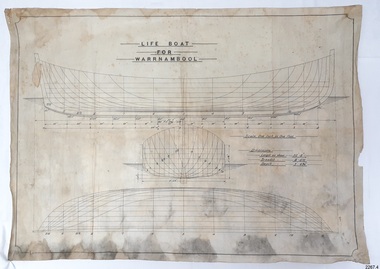
Plan - Vessel Line Drawing, Life Boat for Warrnambool, ca. 1900-1909
... Saturday 11th May 1901 states he is “Principal and Skilled member (Naval Architect) to the Court of Marine Inquiry of Victoria and holds classes for naval architectural drawing and arithmetic.” The line drawing is significant for its connection with the lifeboat WARRNAMBOOL. The lifeboat is very significant to local and state history for its use in the lifesaving rescues of seafarers, particularly in Lady Bay. It was part of the local rescue equipment. It gave a half-century of service ...The plans were used for the construction of the lifeboat ‘Warrnambool’, which began 15th September 1909 and was completed almost 12 months later 1st September 1910. It was built at the Government Dockyard in Williamstown, Victoria, along the lines designed by Great Britain’s Royal Lifeboat Institution, and included whaleback decks fore and aft, mast and centreboard, and rudder and tiller hung from the sternpost. It could be propelled by both sail and oar. At that time Captain Ferguson was Chief Harbour Master and Mr Beagley was the foreman boat builder. Mr Beagley built the lifeboat with his fellow workmen. The boat was described as “… a fine piece of workmanship and does credit to her builders and designers…” It had all the latest improvements in shape, disposition of weight and watertight compartments, and it had space for a large number of people in addition to the crew. It appears that 'H Meiers' whose signature was on the plaque that was found concealed in the hull, was involved with the building of the lifeboat. His signature and the dates of the start and finish of the boat’s construction are pencilled on the raw timber 'plaque' found in the hull in the early 1990s when the lifeboat was being restored. It is interesting that the ‘Melbourne Directory’ of 1911, published by Sands and MacDougal, lists McAuley and Meiers, boat builders, Nelson Place foreshore, between Pasco and Parker Streets, Williamstown, (Victorian Heritage Database, ‘Contextual History, Maritime Facilities’), It is quite possibly the business of the person whose name is inscribed on the lifeboat plaque. Flagstaff Hill’s documentation also mentions that the keel was laid at ‘Harry Myers, boat builders, Williamstown, Melbourne’ – the name ‘Myers’ can also be spelled ‘Meiers’, which could be the same person as the Meiers in “McAuley and Meiers” (as mentioned in genealogy lines of Myers). The new lifeboat, to be named ‘Warrnambool’ was brought to town by train and launched at the breakwater on 1st March 1911 using the Titan crane (the old lifeboat built in 1858, was then returned to Melbourne in 1911). This new lifeboat was stationed at Warrnambool in a shed located at the base of the Breakwater, adjacent to the slipway. A winch was used to bring it in and out of the water. The lifeboat ‘Warrnambool’ was similar in size to the old lifeboat but far superior in design, build and sea-going qualities such as greater manoeuvrability. The ‘self-righting, self-draining design was “practically non-capsizeable” and even if the boat overturned it would right itself to an even keel and the water would drain away. The hull was built of New Zealand Kauri, using double diagonal planking, laid in two layers at right angles, with a layer of canvas and red lead paint between the timbers to help seal the planking. It has “… plenty of freeboard area, high watertight spaces between the deck and bottom… through which pipes lead…” The backbone timbers were made of Jarrah. The lifeboat Warrnambool was one of several rescue boats used at Port Fairy and Warrnambool in the early 1900s. In late 1914 the Warrnambool lifeboat and crew were used to help find what was left of the tragic wreckage of the Antares and were able to discover the body of one of the crewmen, which they brought back to Warrnambool. Between 1951 and 1954 the lifeboat was manned under the guidance of Captain Carrington. He held lifeboat practice each month on a Sunday morning, to comply with the Ports and Harbour’s request that lifeboats be manned by a strong and competent crew, ready for action in case of emergency. In the early 1960’s it ended its service as a lifeboat and was used in Port Fairy as a barge to help dredge the Moyne River, bolted to the Port Fairy lifeboat. Flagstaff Hill obtained the Warrnambool in 1975. In 1984 it was on display at Flagstaff Hill Maritime Village, Warrnambool. On 23rd May 1990, she was lifted from the water and placed in a cradle for restoration. The name ‘WARRNAMBOOL could be seen faintly on the lifeboat before it was restored. It was during the restoration that Flagstaff Hill's boat builder discovered the 'plaque' inside the hull. A copy of the blueprint plans has the name “V.E.E. Gotch” printed on it. His advertisement in Footscray’s ‘Independent’ newspaper of Saturday 11th May 1901 states he is “Principal and Skilled member (Naval Architect) to the Court of Marine Inquiry of Victoria and holds classes for naval architectural drawing and arithmetic.” The line drawing is significant for its connection with the lifeboat WARRNAMBOOL. The lifeboat is very significant to local and state history for its use in the lifesaving rescues of seafarers, particularly in Lady Bay. It was part of the local rescue equipment. It gave a half-century of service to the local community as a lifesaving vessel, including its involvement in retrieving the body of a shipwrecked crew member of the ANTARES. Line drawing in black ink and pencil on rectangular parchment or waxed linen. Drawing has diagrams of three profiles of a vessel, with measurements and connecting pencil lines on the left quarter. The plan is for the lifeboat named “Warrnambool”, which was built in Melbourne and completed in 1910. Old blue copies of the Lifeboat plan are archived also.“LIFE BOAT / FOR / WARRNAMBOOL” “Scale, One Inch to One Foot” “ “Length as shown 30’ – 8” “ “Breadth “ “ 8’ – 6 ½ “ “ “Depth “ “ 3’ – 4 ¾” “flagstaff hill, warrnambool, shipwrecked-coast, flagstaff-hill, flagstaff-hill-maritime-museum, maritime-museum, shipwreck-coast, flagstaff-hill-maritime-village, lifeboat, warrnambool lifeboat, boat plans, lifeboat plans, boat construction, boat building, line drawing, plan for lifeboat, life boat, life boat 'warrnambool', clinker design, 1910 lifeboat, life saving equipment, shipbuilding -
 Mission to Seafarers Victoria
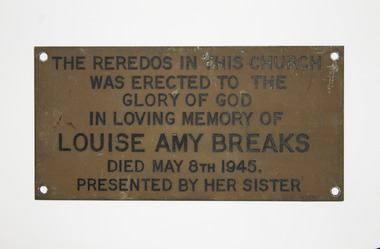
Plaque - Memorial Plaque, Louise Amy Breaks
... Saturday morning, after a brief Illness. Deceased was born .ocally and was the eldest daughter of the late Engineer Commander James L. Breaks, R.N., and Alice Breaks. Deceased was a very prominent member and worker of Holy Trinity Church and actively identified with every caritable movement in this City. She leaves a sister, Miss Maude Breaks, to mourn her loss. The funeral took place on Monday afternioon, leaving Holy Trinity Church after a service...Saturday morning, after a brief Illness. Deceased was born .ocally and was the eldest daughter of the late Engineer Commander James L. Breaks, R.N., and Alice Breaks. Deceased was a very prominent member and worker of Holy Trinity Church and actively identified with every caritable movement in this City. She leaves a sister, Miss Maude Breaks, to mourn her loss. The funeral took place on Monday afternioon, leaving Holy Trinity Church after a service ...Louise Amy Breaks, also known as Lulu, died on the 8 May 1943. An error on the plaque mentions 1945 which was likeky erected later. In her obituary published on the Williamstown Chronicle, Friday 14 May 1943, page 1: A well-known and very highly respected resident of this city, Miss Louise Amy (Lulu) Breaks, of 4 Jackson Court, Ferguson St., died on Saturday morning, after a brief Illness. Deceased was born .ocally and was the eldest daughter of the late Engineer Commander James L. Breaks, R.N., and Alice Breaks. Deceased was a very prominent member and worker of Holy Trinity Church and actively identified with every caritable movement in this City. She leaves a sister, Miss Maude Breaks, to mourn her loss. The funeral took place on Monday afternioon, leaving Holy Trinity Church after a service conducted by the Rev. J. H. Raverty, assisted by the Revs. S. P. H. Martin and Oliver. The large congregation in the Church, lengthy cortege, and very large number of floral tributes received testified to the esteem in which deceased was held. Ernest W. Jackson. had charge of the funeral arrangements, and the Rev. J. H: Raverty officiated at the cemetery.Louise Breaks and her family were active members of the Mission. Her father James Lennox Breaks, aged 22 years, sailed from England on the Cerberus on her maiden voyage, and was associated with the ship for 34 years until he retired. Commemorative Plaque for Louise Amy Breakswilliamstown, seamen's institute, seamen's mission, mission to seamen, nelson place, st nicholas chapel, james l. breaks, engineering commander, alice breaks, maude breaks, alice breaks nee jobson, hms cerberus, lhlg, lightkeepers' auxiliary -
 Mission to Seafarers Victoria
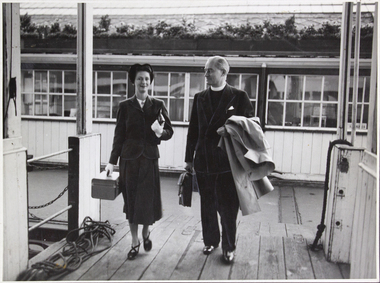
Photograph - Photograph, Black and white, Associated Photo Services, Reverend C.J Brown and his wife embarking at Liverpool for their Australian and Far East Tour, 1952
... Saturday next (22/11). This will be the first visit of the world chief of the Missions to Seamen in the nearby 100 years history of the Society in Melbourne/The photograph shows the visitors embarking at Liverpool when setting out on their tour. In pencil: Padre+wife/2 vol./Pg 5 One black ink stamp from Associated Photo Services...Saturday next (22/11). This will be the first visit of the world chief of the Missions to Seamen in the nearby 100 years history of the Society in Melbourne/The photograph shows the visitors embarking at Liverpool when setting out on their tour. In pencil: Padre+wife/2 vol./Pg 5 One black ink stamp from Associated Photo Services ...This photograph was probably sent to be used for advertising purposes to the mission. Here is the program of the tour published in the Age on Saturday 22 November 1952, page 16: "Australia's 15 stations of the world-famous Missions to Seamen are being visited by the general superintendent of the parent body in London, Rev. C. J. Brown, and. Mrs. Brown, who will arrive from Adelaide today. This is the first visit of the world head of the organisation to this country. Mr; Brown will attend the triennial Australasian chaplains' conference at the Central Club, Flinders-street Extension, next month. A full programme will include visits to the three clubs at Central. Port Melbourne and Williamstown, and to Geelong and Balla-rat, a tour of the Bay, an inspection of the work of a sister organisation, the British Sailors' Society, Geelong, and then on , to Geelong Grammar School. Mr. and Mrs. Brown will be the guests of the Governor and Lady Brooks at lunch at Government House tomorrow, and of the Lord Mayor at a reception on Tuesday. On Friday afternoon Archbishop and Mrs. Booth will hold a reception at Bishopscourt to enable the visitors to meet heads of the churches. Mr. Brown will preach at St. Paul's Cathedral tomorrow morning, and at St. Peter's Mariners' Church at 7 p.m. On December 7 he will preach, at Ballarat Cathedral, afterwards meeting workers of the Missions to. Seamen. He will address a Rotarians' luncheon on Wednesday. On Thursday evening he will meet the Company of Master Mariners. At a reception by the chairman of the Harbor Trust (Mr. A. D. Mackenzie) on December 8, Mr. Brown will meet the heads of Melbourne shipping firms."This was the first visit of the world head of the organisation to Australia since the beginning of the Missions to Seamen in this country.Black and white photograph depicting Reverend C.J Brown and his wife embarking at Liverpool for their Australian and Far East Tour.Written at the back in black ink: Missions to Seamen/Australasian and Far East Tour of General Superintendant (Rev. C.J. Brown, M.A. and Mrs Brown/Arriving in Melbourne by air from Adelaide on Saturday next (22/11). This will be the first visit of the world chief of the Missions to Seamen in the nearby 100 years history of the Society in Melbourne/The photograph shows the visitors embarking at Liverpool when setting out on their tour. In pencil: Padre+wife/2 vol./Pg 5 One black ink stamp from Associated Photo Services , 12A, Mount Pleasant, Liverpool 3 / one purple ink stamp emptyreverend c.j. brown, liverpool -
 Mission to Seafarers Victoria
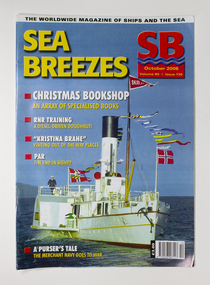
Magazine, Sea Breezes Publications Ltd, Sea Breezes, 2006
... Paper had become difficult to source and the editor at that time – Lieutenant- Commander J Francis Hall, RD, RNR – was on active service with the Royal Navy. However, it did continue during the war as a weekly (Saturday) column in the Journal of Commerce and Shipping Telegraph. ...Colour magazinenon-fictionmaritime journals, maritime magazines, ships -
 Marysville & District Historical Society
Ephemera (Item) - Newspaper advertisement, 1950s
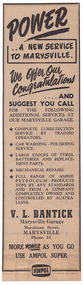
... services available at the Marysville Garage in Victoria. The garage was owned by V.L. Bantick. The garage, along with most of the buildings in town, was destroyed in the 2009 Black Saturday bushfires. ...A newspaper advertisement for services available at the Marysville Garage in Victoria.A newspaper advertisement for services available at the Marysville Garage in Victoria. The garage was owned by V.L. Bantick. The garage, along with most of the buildings in town, was destroyed in the 2009 Black Saturday bushfires. This advertisement was placed after Marysville was connected to the State electricity grid in December, 1955.marysville, victoria, marysville garage, v l bantick, ampol -
 Marysville & District Historical Society
Ephemera (Item) - Funeral Service Booklet, 1994
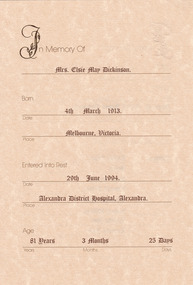
... 2009 black saturday bushfires...funeral service...service booklet for Elsie May Dickinson. Elsie May was the mother of the current owner of Marysville House, Peter Dickinson. marysville victoria australia marysville house arthur james dickinson grace dickinson arnold spooner eileen marie spooner eileen marie dickinson grace sweetland eric dowdle elsie may denton elsie may dickinson peter dickinson linda dickinson 2009 black saturday bushfires funeral service booklet A digital copy of the funeral service booklet for Elsie May Dickinson. ...A digital copy of the funeral service booklet for Elsie May Dickinson. Elsie May was the mother of the current owner of Marysville House, Peter Dickinson.A digital copy of the funeral service booklet for Elsie May Dickinson. Elsie May was the mother of the current owner of Marysville House, Peter Dickinson.marysville, victoria, australia, marysville house, arthur james dickinson, grace dickinson, arnold spooner, eileen marie spooner, eileen marie dickinson, grace sweetland, eric dowdle, elsie may denton, elsie may dickinson, peter dickinson, linda dickinson, 2009 black saturday bushfires, funeral service booklet -
Marysville & District Historical Society
THE TRIANGLE NEWS-VOL 40 NO 32-AUGUST 23 2013
... marysville victoria australia marysville recovery draws interest from neighbouring council yarra ranges shire council murrindindi shire council marysville villains to play in grand final what's on when in august intrepid triangle bushwalkers tag agm the committee of management of the gallipoli park precinct marysville community market creative triangle recovery projects connect communities frrr announces latest recipients of grants for resilience & wellness foundation for rural and regional renewal triangle community dinner church notices el kanah village marysville & district kindergarten assocn councillor comment mayor's chair advertisements mystic mountain tourism agm mops sale marysville community centre black saturday bushfires real estate vic male health gathering murrindindi shire council offices to temporarily close marysville australia day celebration 2014 marysville golf report general manager council position appointed customer services officer zumba buxton hall information requested for flood study of flowerdale murrindindi bushfire memorial update australian centre for grief & bereavement irwell street string band marysville cultural community community correctedness facilitator THE TRIANGLE NEWS-VOL 40 NO 32-AUGUST 23 2013 ...marysville, victoria, australia, marysville recovery draws interest from neighbouring council, yarra ranges shire council, murrindindi shire council, marysville villains to play in grand final, what's on when in august, intrepid triangle bushwalkers, tag agm, the committee of management of the gallipoli park precinct, marysville community market, creative triangle, recovery projects connect communities, frrr announces latest recipients of grants for resilience & wellness, foundation for rural and regional renewal, triangle community dinner, church notices, el kanah village, marysville & district kindergarten assocn, councillor comment, mayor's chair, advertisements, mystic mountain tourism agm, mops sale, marysville community centre, black saturday bushfires, real estate, vic male health gathering, murrindindi shire council offices to temporarily close, marysville australia day celebration 2014, marysville golf report, general manager council position appointed, customer services officer, zumba buxton hall, information requested for flood study of flowerdale, murrindindi bushfire memorial update, australian centre for grief & bereavement, irwell street string band, marysville cultural community, community correctedness facilitator
