
Showing 51 items matching "scientific dating"
-
 Flagstaff Hill Maritime Museum and Village
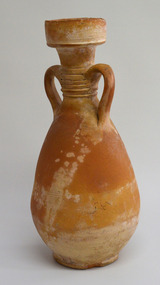
Ceramic - Amphora, mid-to-late 19th century
... ...scientific dating...Flagstaff Hill Maritime Museum and Village Warrnambool Great Ocean Road Shipwreck Coast amphora jug Mahogany ship ancient wreck Joe O'Keefe Duncan Thermoluminescence North Africa Levy Point pottery storage jar Flagstaff Hill Maritime Museum Maritime Village shipwreck artefact relic Shipwreck Museum pottery jar ancient jar Egyptian water pot Greek jar ceramic jar mystery exotic jar mystery antique historic jug 1934 Joe O’Keefe Marshall Duncan Port Fairy 1935 1985 Marshall McKenzie Duncan Mac Duncan Duncan family 1981 Dan Madden scientific investigation scientific analysis scientific dating North African origin mid-late 19th century Marram grass Levy’s Point Pinhole patterns: [3 holes above 3 holes] opposite [3 holes above 3 holes], 1 hole] [ 1 hole above 2 holes] Amphora or jug; earthenware, orange clay with areas of cream. ...This amphora or jug has a silhouette shaped like a woman with her hands on her hips, wearing a long, flared-out skirt. The design was used in ancient Greece for pottery storage jars, the neck being narrower than the body. According to reports, this amphora was discovered in 1934 by Joe O'Keeffe, in a sand blowout, or sand hummocks, west of Levy's Point, west of Warrnambool, while he was planting marram grass for Mr Duncan. An article in the Warrnambool Standard newspaper of December 21, 1985, states that the amphora may be linked to the wooden sailing ship called the Mahogany Ship (also called the Ancient Wreck). Thermoluminescence testing indicates the relic was made in the mid-to-late 19th century, and experts suggest it was of North African origin. The presence of the amphora in the dunes, and the amphora itself, is still a mystery. The amphora was donated to Flagstaff Hill on a long-term loan by the Duncan family and displayed to the public for the first time on December 21, 1985. The exhibition continued until February 2023, when the objects on display in the Assistant Lighthouse Keepers Cottage (Shipwreck Museum) were returned to storage to rest, and the redevelopment of the Cottage began. A search for members of the Duncan Family was undertaken by Flagstaff Hill and stakeholders to resolve the loan term, but the family at that time was unknown. As such, to properly care for the amphora, it has been registered until ownership can be determined. The amphora is currently on display in the Great Circle Gallery, where members of the Duncan family recognised it and have since made contact with the museum. The amphora's presence in the hummocks remains an intriguing and tantalising mystery, yet to be solved!The amphora is significant for the mystery it holds. Its origin and connection with the local area have led to local speculation since it was discovered in 1934. Amphora or jug; earthenware, orange clay with areas of cream. The vessel has a wide mouth, a deep lip, two opposing handles between the neck and shoulder, and a bulbous body. The curved handles have a design of six bands between them. There are three rings of small dots encircling the body. The underside has concentric circles in the clay, an uneven edge and pinhole markings. The amphora is kindly on loan from the Duncan family.Pinhole patterns: [3 holes above 3 holes] opposite [3 holes above 3 holes], 1 hole] [ 1 hole above 2 holes] flagstaff hill maritime museum and village, warrnambool, great ocean road, shipwreck coast, amphora, jug, mahogany ship, ancient wreck, joe o'keefe, duncan, thermoluminescence, north africa, levy point, pottery, storage jar, flagstaff hill, maritime museum, maritime village, shipwreck artefact, relic, shipwreck museum, pottery jar, ancient jar, egyptian water pot, greek jar, ceramic jar, mystery, exotic jar, mystery antique, historic jug, 1934, joe o’keefe, marshall duncan, port fairy, 1935, 1985, marshall mckenzie duncan, mac duncan, duncan family, 1981, dan madden, scientific investigation, scientific analysis, scientific dating, north african origin, mid-late 19th century, marram grass, levy’s point -
 Federation University Historical Collection
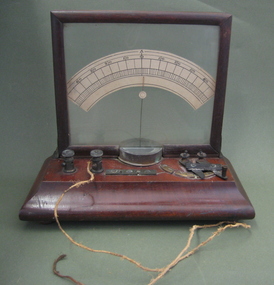
Ammeter, Henry Sutton (probably), Ammeter attributed to Henry Sutton, 1883 (estimated)
... scientific instrument that measures amps, with a timber base and frame. Terminal posts and sliders contacts are positioned on top of the base, with flex attached. Henry Sutton lectured at the Ballarat School of Mines (SMB) in Electricty and Magnestism between 1883 and 1886. In 1883 Sutton reported: ‘…The class has been unfortunately situated, by having to wait for instruments of precision ordered from England, but which have not come to hand. The delay has caused us to start constructing instruments, which it is hoped will bear favourable comparison with those of older date...scientific instrument that measures amps, with a timber base and frame. Terminal posts and sliders contacts are positioned on top of the base, with flex attached. Henry Sutton lectured at the Ballarat School of Mines (SMB) in Electricty and Magnestism between 1883 and 1886. In 1883 Sutton reported: ‘…The class has been unfortunately situated, by having to wait for instruments of precision ordered from England, but which have not come to hand. The delay has caused us to start constructing instruments, which it is hoped will bear favourable comparison with those of older date ...W.B Withers wrote of Sutton: "In the realm of science Ballarat has become of world-wide fame through the inventions by Mr Henry Sutton, a native of the place. His skill and acquirements in electricity, telegraphy, telephony, photography and also in astronomical and microscopal studies have won for him a high position as a practical scientist, and the credit is the greater as he is a self-taught student … Mr Sutton, before he was fourteen years old, had read every book on science to be found in the library of the Ballarat Mechanics' Institute." The Ballarat School of Mines (SMB) was fortunate to have this genius appointed as the lecturer-in-charge of the new Electricity and Magnetism department from 23 April 1883. Although Henry Sutton submitted his resignation to the Council of SMB in October 1884 it was resolved that he be asked to reconsider, and Mr Sutton continued to teach at SMB until the end of 1886. He was a prominent member of the Camera Club, and many of the other SMB clubs. Sutton had an active and fertile brain, and was known for his inventions, especially his work on the telephone, telephane and carbon lamps. Sutton presented a vacuum pump, worked by water jet, for use in SMB Chemistry classes. His report of 1883 states: ‘A telephonic circuit has been laid down between the [SMB] engine-house and workshops, to be used for experimental purposes.’ Henry Sutton spent much thought on artificial flight, and made some interesting experimental studies with flying birds. The storage of electricty also attracted his attention, and, after much work and thought evolved the Sutton Secondary Battery. A paper on this battery was presented to the Royal Society, London, and was afterwards printed in the 'Transactions'. Henry Sutton is listed on the Federation University Honour Roll at https://www.federation.edu.au/curator/honour-roll/honourroll_sutton.shtmlA crude scientific instrument that measures amps, with a timber base and frame. Terminal posts and sliders contacts are positioned on top of the base, with flex attached. Henry Sutton lectured at the Ballarat School of Mines (SMB) in Electricty and Magnestism between 1883 and 1886. In 1883 Sutton reported: ‘…The class has been unfortunately situated, by having to wait for instruments of precision ordered from England, but which have not come to hand. The delay has caused us to start constructing instruments, which it is hoped will bear favourable comparison with those of older date.'ammeter, henry sutton, electrical, inventor, electricity and magnetism, sutton, scientific instruments -
 Federation University Historical Collection
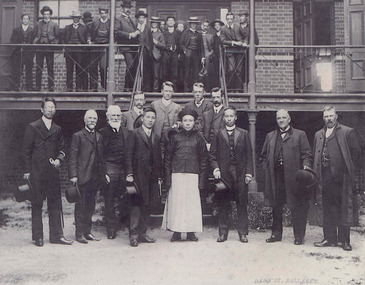
Photograph, Visit of the Chinese Commissioner to the Ballarat School of Mines, 13 November 1906, 23/11/1906 (exact)
... scientific and practical knowledge of those industries that he could. The toast of “The Commissioner” was proposed by Col. Williams who expressed pleasure at the visit of a gentleman of education and attainments to look into the condition of the scions of China in Australia. He hoped the commissioner would carry away a correct impression. In Australia they had nothing to conceal; they hoped to be understood. (Applause.) No intelligent man had the temerity to condescend to patronise China, one of the richest countries in the world, with a civilisation dating...scientific and practical knowledge of those industries that he could. The toast of “The Commissioner” was proposed by Col. Williams who expressed pleasure at the visit of a gentleman of education and attainments to look into the condition of the scions of China in Australia. He hoped the commissioner would carry away a correct impression. In Australia they had nothing to conceal; they hoped to be understood. (Applause.) No intelligent man had the temerity to condescend to patronise China, one of the richest countries in the world, with a civilisation dating ...The Chinese Imperial Commissioner, Hwang How Cheng, visited Australia at the request of the Chinese Emperor for the purpose of establishing Chinese consulates in the Commonwealth. He visited Ballarat at the request of Ballarat’s Chinese community. The newspaper reported that it was hoped the Commissioner would visit the Ballarat School of Mines “where the knowledge he would get would probably be of the utmost usefulness in the development of the great resources of China.” The Commissioner was accompanied by interpreter Ah Ket (Melbourne barrister and solicitor), and met by members of Ballarat’s Chinese community, including Dr Wong Chock Son. Apparently the Chinese Commissioner wanted to visit SMB because of its international fame relating to education in mining. From the SMB Letter book (Cat. No. 436) comes the following which suggests the Commissioner was based in Adelaide) '17th November 1906 His Excellency, Hwang How Cheng Chinese Commission Adelaide May it please your Excellency By this post I have the pleasure in forwarding for your Excellency's kind acceptance (and one for Mr. When) copies of the photograph taken of your recent visit to the School of Mines. I trust they will serve a pleasing memento of what, I hope, was a pleasant visit to our Golden City. Yours Faithfully Fredk Martell Director' The visit was reported in the Ballarat Star in 14 November 1906:- The Chinese Imperial Commissioner, Hwang Hon Cheng, who recently arrived in Victoria on behalf of the Chinese Government, paid a visit to Ballarat last evening, and was entertained by his fellow countrymen at a dinner at the Bow Leong rooms, Main street. The commissioner, who came up by the express, was accompanied by his secretary and Mr Ah Ket, the well-known Chinese barrister, of Melbourne; but some disappointment was expressed by the fact that he did not wear his official robes, being attired in the more sombre European dress. Mr W. D. M’Kee presided at the dinner, on the invitation of the Bow Leong Society, and in addition to representative Chinese residents, three were also present the mayor of the city (Cr. J. J. Brokenshire), Crs. R. Pearse, G. Crocker (City), J. R. Elsworth, A. Mackenzie, J. A. M’Neil, A. Levy, G. Bunting, F. Penhalluriack (Town), Col. Williams, Mr. J. Gent, Messrs. F. J. Martell (director of the School of Mines), A. W. Hager (president of the Orphan Asylum), A. Kenny (superintendent), R. G. Fitzgerald (clerk of courts at Ballarat East), J. Trethowan, A. A. Buley, Serg Dalton, and others. Apologies were received from the mayor of the town Revs. J. West Lau, Dr Cairns, Hon. J. Y. M’Donald, L. Lederman, C. C. Shoppee and others. The gathering was a very cordial one, and the hospitality of the Chinese was greatly appreciated. After the loyal toasts, “The King” and “The Emperor of China,” had been honoured, the chairman extended a hearty welcome on behalf of the society and others to the commissioner. Mr M’Kee said he was privileged to speak in behalf of the Chinese. There was a warm feeling of friendship between them and himself, and his services were always at their command. If he were in China he would desire that a similar compliment would be extended to him. They were all pleased the Emperor of China had sent the commissioner to establish consulates in Australia with a view of the empire understanding the feelings of Australasia better than they did at present. He hoped the commissioner would have opportunity of visiting some of their industries, as they desired him to gain all the scientific and practical knowledge of those industries that he could. The toast of “The Commissioner” was proposed by Col. Williams who expressed pleasure at the visit of a gentleman of education and attainments to look into the condition of the scions of China in Australia. He hoped the commissioner would carry away a correct impression. In Australia they had nothing to conceal; they hoped to be understood. (Applause.) No intelligent man had the temerity to condescend to patronise China, one of the richest countries in the world, with a civilisation dating back thousands of years. In the matter of population alone it was equal to one-third of the world. They heard a lot about the “awakening of China.” They hoped it would be humane, just, and considerate if it had power. He hoped the commissioner would be satisfied with what he saw. The law of filial relation to the children was strictly observed in China, and he did not know whether it would not be a good thing if they had a little more of that religion here. It would be a fair thing to tell the commissioner that while he might inquire into the labour laws, the basis of these laws was not a desire to oppress but to enable every man to obtain the same conditions they expected from their own people. If he gained that impression he felt they would be fairly treated. (Applause.) Mayor Brokenshire supported the toast. They had, he said, in the Chinese a most law-abiding people. Their behaviour was an example to the British citizens. They were quiet, inoffensive men, and they toiled hard, even on Sundays. (Laughter.) Mr Ah Ket; That is what the government does with the railway employees. (Laughter.) The Commissioner replied through Mr Ah Ket, who in a graceful speech acknowledged the toast. The commissioner had, he said been delighted with what he had seen of the country – he believed it to be one of the finest in the world – and he greatly appreciated the hospitality extended to him. (Applause.) The Chairman proposed the toast of “The health of Mr Ah Ket,” and paid a tribute to his ability. It was satisfactory to see that he had risen to such a position, and it might be that in the future he would be asked to occupy a position on the bench. (Applause.) Mr Ah Ket, in response, said he had not come prepared to make a speech. He had come to Ballarat to have a quiet evening with his friends, and as soon as he arrived he had been whirled away in a motor car to a place where he found an aggregation of East and West. He was pleased to see them commingled at the festive board. That suggested the idea that East and West could meet together without friction. Misunderstandings arose only because men were superficial. If they threw off outer garments they would know each other better. He looked forward to the time when nations would understand each other. It was by an interchange of visits that such things could be accomplished, and nations would then live at peace with each other. (Applause.) Other toasts were also honored. Twelve men pose for a photograph on the stairs of a building at the Ballarat School of Mines. Back row left to right: A.D. Gilchrist (Prof. of Engineering), B. Whittington (Mathematics, Physics), Thomas S. Hart (Prof. of Geology and Mining), J.M. Sutherland (Electrical Engineering) Front row left to right: Dr Wong Chock Son (Ballarat), Fred. J. Martell, Alfred Mica Smith, Ah Ket esq (Melbourne Barrister), His Excellency Hwang How Cheng (Chinese Commissioner), Wen Esq (Secretary), Alderman Grase (mayor of Brisbane), Grase Esq (Ballarat).ballarat school of mines, alfred mica smith, fred martell, j m sutherland, a d gilchrist, b whittington, thomas hart, wong chock son, ah ket, hwang how cheng, chinese, chinese commissioner, international, new classrooms, administration building, a building -
 Federation University Historical Collection
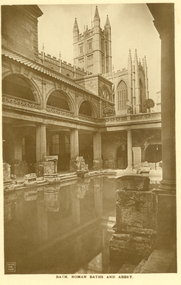
Postcard - Postcard - Sepia, Bath, Roman Baths and Abbey
... date from the 19th century. bath, roman baths, roman, archeaology .3) Bath. Roman Baths and Abbey. Within the distance of a few yards are the Roman Baths, built about A. D. 55 ; the Abbey, erected in 1499 : the King's Bath of 17th and 18th century construction, and the modern Bathing establishment containing the latest scientific appliances for the administration of the radio-active waters for the cure and relief of many complaints. ...The Roman Baths complex is a site of historical interest in the English city of Bath. The house is a well-preserved Roman site for public bathing. The Roman Baths themselves are below the modern street level. There are four main features: the Sacred Spring, the Roman Temple, the Roman Bath House and the Museum, holding finds from Roman Bath. The buildings above street level date from the 19th century. Three sepia postcards with a photographic impressions of the Roman Baths, Abbey, and Grand Pump Room, Bath. All postcards unwritten..3) Bath. Roman Baths and Abbey. Within the distance of a few yards are the Roman Baths, built about A. D. 55 ; the Abbey, erected in 1499 : the King's Bath of 17th and 18th century construction, and the modern Bathing establishment containing the latest scientific appliances for the administration of the radio-active waters for the cure and relief of many complaints.bath, roman baths, roman, archeaology -
 Flagstaff Hill Maritime Museum and Village
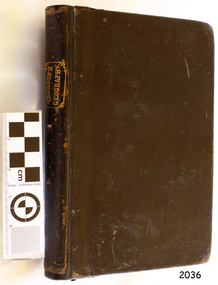
Book - Textbook, Introduction to Modern Geography
... This mid-19th century scientific reference book, Introduction to Modern Geography, explains geography and astronomy using the globe of the world as a teaching aid. The inscription connects this book to the Bobinawarrah Public Library but research to date has found no further details about the library. ...This mid-19th century scientific reference book, Introduction to Modern Geography, explains geography and astronomy using the globe of the world as a teaching aid. The inscription connects this book to the Bobinawarrah Public Library but research to date has found no further details about the library. ...This mid-19th century scientific reference book, Introduction to Modern Geography, explains geography and astronomy using the globe of the world as a teaching aid. The inscription connects this book to the Bobinawarrah Public Library but research to date has found no further details about the library. The rural area was settled in 1859, but in 2016 its population was only 87. It is situated about 21 kilometres south of the City of Wangaratta, in Northeast Victoria. In 2024 the local community received a grant for preservation of its almost 100-year-old Bobinawarrah Memorial Hall which displays an honour board of the Pioneers of Bobinawarrah 1859-1959. The donor of the book lived in Warrnambool. ABOUT THE AUTHOR, James Thomson (1786-1849): - James Thomson was a British Irish mathematician. He became Professor of Mathematics at the University of Glasgow. He wrote many school textbooks and reference books, one of which was Introduction to Modern Geography, first published in Belfast in 1827, and revised and published in over 20 more editions. Thomson tutored two of his several children at home. His older son James Thomson (1822-1892) became an engineer and physicist. His younger son William Thomson (1824-1907) became Professor of Natural Philosophy from 1846-1899 at the University of Glasgow, and later the 1st Baron of Kelvin, famous for his designs of nautical instruments such as the navigational compass and sounding equipment used in the transatlantic installation of sea cable. William was part of the firm that became famous as Kelvin & Hughes Ltd., suppliers of radar and echo sounders to the Ministry of Transport and the Ministry of Defence. The name continued on as Kelvin & Hughes. James Thomson (1786-1849) was a renowned British Irish mathematician and Professor of Mathematics at the University of Glasgow. He was a respected author of many important school books and textbooks that were widely used to provide understanding of arithmetic and geography. Thomson encouraged practical education and held extra classes for young ladies to learn mathematics and geography, which were a novelty at that time. Many of his works were known and used worldwide. This work was published in many editions. It is now considered as culturally significant as a basis for knowledge about our civilisation and has been made publicly available in overseas countries, and republished and reproduced in a readable format, including its diagrams and maps. Book; scientific textbook. The book has a black leather cover. The front cover is blank, but the spine has an embossed gold vertical title within a rectangular border boasting fancy corners. The fly page has a detailed title. The author is James Thomson. It is the Eighteenth edition, published in Simms & McIntyre of London and Belfast in 1845. An inscription connects it to the Bobinawarrah Public Library in Victoria.Spine within a gold border: "THOMSON'S GEOGRAPHY" Fly Page: "AN INTRODUCTION TO MODERN GEOGRAPHY, WITH AN APPENDIX, CONTAINING AN OUTLINE OF ASTRONOMY, AND THE USE OF THE GLOBES. BY JAMES THOMSON, LL.D., PROFESSOR OF MATHEMATICS IN THE UNIVERSITY OF GLASGOW." "Eighteenth Edition" "LONDON: SIMMS AND McINTYRE, ALDINE CHAMBERS, PATERSOSTER ROW; AND DONEGALL -STREET, BELFAST.""1845"flagstaff hill, flagstaff hill maritime museum and village, warrnambool, maritime museum, maritime village, great ocean road, shipwreck coast, introduction to geography, james thomson, reference book, professor thomson's introduction to modern geography, bobinawarrah public library, james thomson mathematician, james thomson engineer, 19th century irish mathematician, irish presbyterian, william thomson 1st baron of kelvin, professor of mathematics, glasgow university, william thomson professor of natural philosophy, introduction to modern geography, outline of astronomy, use of the globes, james thomson ll.d., simms and mcintyre, 1843, scientific book, school book, lord kelvin, baron kelvin of langs, nautical instruments, marine instruments, transatlantic cable, kelvin & hughes, thomson’s geography, astronomy, geography, world globe, cartography, pioneers of bobinawarrah, textbook -
 Federation University Historical Collection
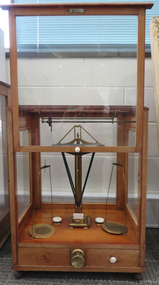
Instrument - Scientific Instrument, Selby Two Beam Balance, 27/05/2004
... Used at the Ballarat School of Mines balance scientific instrument oertling On the base of a drawer is the maker and date - possible John Wright 27/5/20. ...Used at the Ballarat School of MinesTwo beam balance with a 17cm arm, in a timber and glass case. The balance is made by Oertling specially for H.B. Selby and Co. Ltd. On the base of a drawer is the maker and date - possible John Wright 27/5/20. He was their most prolific maker. Serial number 16903 on left side of base. balance, scientific instrument, oertling -
 Federation University Historical Collection
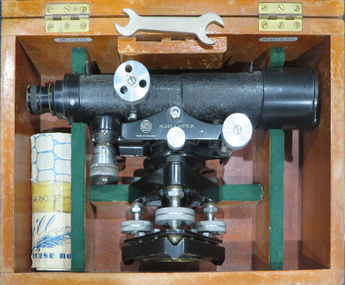
Instrument - Scientific Instrument, Dumpy Level, 05/1950
... Used for surveying classes at the Ballarat School of Mines. dumpy level surveying scientific instrument e.r. watts & son ltd ballarat school of mines Serial number 67543 On box lid in white paing "L 6". In yellow paing "59". Inside box lid - Manufacturers label; grades table label, calibration label reading "instrument No 67 543, date 13.5.50" (ink faded) constant: +0.19 ft" Telescope with cross hairs and stoidia wites. ...Used for surveying classes at the Ballarat School of Mines.Telescope with cross hairs and stoidia wites. Internal focussing. Vertical tilt adjusted with vernier mocrometer screw mirror lid longitudinal bubble level. Pea bubble level on plate. Housed in wooden storage carry box. Fits tripod cat. no. 4118Serial number 67543 On box lid in white paing "L 6". In yellow paing "59". Inside box lid - Manufacturers label; grades table label, calibration label reading "instrument No 67 543, date 13.5.50" (ink faded) constant: +0.19 ft"dumpy, level, surveying, scientific instrument, e.r. watts & son ltd, ballarat school of mines -
 Flagstaff Hill Maritime Museum and Village
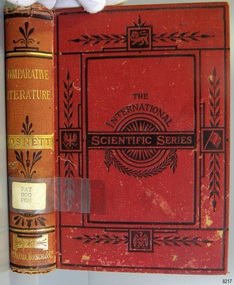
Book, The International Scientific Series Vol 55
... The International Scientific Series Vol 55 Author: Hutcheson Macaulay Posnett Publisher: Kegan, Paul Trench & Co Date: 1886 Further Information: Comparative Literature...The Warrnambool Mechanics' Institute’s publication collection is of both local and state significance. flagstaff hill warrnambool shipwrecked coast flagstaff hill maritime museum maritime museum shipwreck coast flagstaff hill maritime village great ocean road book pattison collection warrnambool library warrnambool mechanics’ institute ralph eric pattison corangamite regional library service warrnambool city librarian mechanics’ institute library victorian library board warrnambool books and records warrnambool children’s library The International Scientific Series Vol 55 Hutcgeson Macaulay Posnett The label on spine cover with typed text PAT 800 POS Pastedown front endpaper has a sticker from Warrnambool Mechanics Institute and Free Library Front loose endpaper has a sticker from Corangamite Regional Library Service The International Scientific Series Vol 55 Author: Hutcheson Macaulay Posnett Publisher: Kegan, Paul Trench & Co Date: 1886 Further Information: Comparative Literature The International Scientific Series Vol 55 Book ...This book was part of a large group of books referred to as the Pattison Collection, which belonged to the Warrnambool Public Library, part of the Warrnambool Mechanics’ Institute. About RALPH ERIC PATTISON and the ‘PATTISON COLLECTION’ The ‘Pattison Collection’ is a collection of books and records that was originally owned by the Warrnambool Mechanics’ Institute, founded in Warrnambool in 1853. By 1886 the Warrnambool Mechanics’ Institute (WMI) had grown to have a Library, Museum and Fine Arts Gallery, with a collection of “… choice productions of art and valuable specimens in almost every branch and many wonderful national curiosities are now to be seen there, including historic relics of the town and district.” It later included a School of Design. Although it was very well patronised, the WMI was led to ask the City Council to take it over in 1911 due to lack of financial support. In 1935 Ralph Pattison was appointed as City Librarian to establish and organise the Warrnambool Public Library as it was then called. Ralph Eric Pattison was born in Rockhampton, Queensland, in 1891. He married Maude Swan from Warrnambool in 1920 and they set up home in Warrnambool. In 1935 when Pattison accepted the position as City Librarian for the Warrnambool City Council his huge challenge was to make a functional library within two rooms of the Mechanics’ Institute. He tirelessly cleaned, cleared and sorted a disarrayed collection of old books, jars of preserved specimens and other items reserved for exhibition in the city’s museum. He developed and updated the library with a wide variety of books for all tastes, including reference books for students; a difficult task to fulfil during the years following the Depression. He converted all of the lower areas of the building into a library, reference room and reading room for members and the public. The books were sorted and stored using a cataloguing and card index system that he had developed himself. He also prepared the upper floor of the building and established the Art Gallery and later the Museum, a place to exhibit the many old relics that had been stored for years for this purpose. One of the treasures he found was a beautiful ancient clock, which he repaired, restored and enjoyed using in his office during the years of his service there. Ralph Pattison was described as “a meticulous gentleman whose punctuality, floorless courtesy and distinctive neat dress were hallmarks of his character, and ‘his’ clock controlled his daily routine and his opening and closing of the library’s large heavy doors to the minute.” Pattison took leave from 1942 to 1945 to serve in the Royal Australian Navy, Volunteer Reserve as Lieutenant. A few years later he converted one of the Museum’s rooms into a Children’s Library, stocking it with suitable books for the younger generation. This was an instant success. In the 1950’s he had the honour of being appointed to the Victorian Library Board and received more inspiration from the monthly conferences in Melbourne. He was sadly retired in 1959 after over 23 years of service, due to the fact that he had gone over the working age of council officers. However, he continued to take a very keen interest in the continual development of the Library until his death in 1969. THE NEW WARRNAMBOOL LIBRARY When the WMI building was pulled down in 1963 a new civic building was erected on the site and the new Warrnambool Library, on behalf of the City Council, took over all the holdings of the WMI. At this time some of the items were separated and identified as the ‘Pattison Collection’, named after Pattison. Eventually, the components of the WMI were distributed from the Warrnambool Library to various places, including the Art Gallery, Historical Society and Flagstaff Hill. Later some were even distributed to other regional branches of Corangamite Regional Library and passed to and fro. It is difficult now to trace just where all of the items have ended up. The books at Flagstaff Hill Maritime Village generally display stamps and markings from Pattison as well as a variety of other institutions including the Mechanics’ Institute itself. WARRNAMBOOL MECHANICS’ INSTITUTE Warrnambool's Mechanics' Institute (or Institution as it was sometimes called) was one of the earliest in Victoria. On 17th October 1853, a meeting was held where it was resolved to request the Lieutenant Governor of the Colony to grant land for the erection of a Mechanics' Institutes building. A committee was formed at the meeting and Richard Osburne chaired the first meeting of this committee. The land on the North West corner of Banyan and Merri Streets was granted but there were no funds to erect the building. The Formal Rights of the Warrnambool Mechanics' Institute's encompassed its aims and these were officially adopted in1859; "This Institution has for its object the diffusion of literary, scientific, and other useful knowledge amongst its members, excluding all controversial subjects, religious or political. These objects are sought to be obtained by means of a circulating library, a reading room, the establishment of classes, debates, and the occasional delivery of lectures on natural and experimental philosophy, mechanics, astronomy, chemistry, natural history, literature, and the useful and ornamental arts, particularly those which have a more immediate reference to the colony." The Warrnambool Mechanics' Institute opened its first reading room in November 1884 in the National School building at the corner of Banyan and Timor Streets. The Institute was funded by member subscription, payable on a quarterly, half-yearly or yearly basis. Samuel Hannaford, the Manager of the Warrnambool Bank of Australasia, was the first Honorary Secretary of the Mechanics' Institutes, and an early President and Vice-President. He also gave several of the early lectures in the Reading Room. Another early Secretary, Librarian and lecturer was Marmaduke Fisher, the teacher at the National School. Lecture topics included The Poets and Poetry of Ireland', 'The Birth and Development of the Earth', 'The Vertebrae - with Remarks on the pleasures resulting from the study of Natural History' and 'Architecture'. In 1856 the Reading Room was moved to James Hider's shop in Timor Street, and by 1864 it was located in the bookshop of Davies and Read. In the 1860's the Mechanics' Institute struggled as membership waned but in 1866, after a series of fundraising efforts, the committee was able to purchase land in Liebig Street, on a site then called Market Square, between the weighbridge and the fire station. A Mechanics' Institute building was opened at this site in August 1871. The following year four more rooms were added to the main Reading Room and in 1873 the Artisan School of Design was incorporated into the Institute. The same year Joseph Archibald established a Museum; however, it deteriorated when he was transferred to Bendigo in 1877. In 1880, with Archibald's return to Warrnambool, the Museum was re-established, and in 1885 a new building was built at the back of the Institute to accommodate the re-created School of Design, the Art Gallery and the Museum. In 1887 the Museum section was moved to the former courthouse in Timor Street (for some time the walls of the building formed part of the TAFE cafeteria but all is now demolished)). In 1911 the Museum was transferred back to the original building and the management of the Mechanics' Institute was handed over to the Warrnambool City Council. The Museum and Art Gallery became one and housed many fine works of art, and the Library continued to grow. The building was well patronised, with records showing that at the beginning of the 20th century there were between 500 and 800 visitors. During World War One the monthly figures were in the thousands, with 3,400 people visiting in January 1915. The Museum was a much-loved Institution in Warrnambool until the contents of the Museum and Art Gallery were removed to make room for the Warrnambool City Council Engineers' Department. The contents were stored but many of the items were scattered or lost. When the original building was demolished the site became occupied by the Civic Centre, which included the new City Library. (The library was temporarily located in the old Palais building in Koroit Street.) In the process of reorganisation the Collection was distributed amongst the community groups: -The new City Library took some of the historical books and some important documents, historic photographs and newspapers. -The Art Gallery kept the 19th Century art collection and some of the artefacts from the museum. -The Historical Society has some items -The State Museum has some items -Some items were destroyed -Flagstaff Hill Maritime Village has old newspapers, Government Gazettes, most of the Mechanics' Institute Library, ledgers and documents connected to the Mechanics' Institute Library, some framed and unframed artworks and some photographs. The Warrnambool Mechanics' Institute Library book collection is deemed to be of great importance because it is one of the few collections in an almost intact state, and many of the books are now very rare and of great value. The Pattison Collection, along with other items at Flagstaff Hill Maritime Village, was originally part of the Warrnambool Mechanics' Institute’s collection. The Warrnambool Mechanics’ Institute Collection is primarily significant in its totality, rather than for the individual objects it contains. Its contents are highly representative of the development of Mechanics' Institute libraries across Australia, particularly Victoria. A diversity of publications and themes has been amassed, and these provide clues to our understanding of the nature of and changes in the reading habits of Victorians from the 1850s to the middle of the 20th century. The collection also highlights the Warrnambool community’s commitment to the Mechanics’ Institute, reading, literacy and learning in the regions, and proves that access to knowledge was not impeded by distance. These items help to provide a more complete picture of our community’s ideals and aspirations. The Warrnambool Mechanics Institute book collection has historical and social significance for its strong association with the Mechanics Institute movement and the important role it played in the intellectual, cultural and social development of people throughout the latter part of the nineteenth century and the early twentieth century. The collection of books is a rare example of an early lending library and its significance is enhanced by the survival of an original collection of many volumes. The Warrnambool Mechanics' Institute’s publication collection is of both local and state significance. The International Scientific Series Vol 55 Author: Hutcheson Macaulay Posnett Publisher: Kegan, Paul Trench & Co Date: 1886 Further Information: Comparative LiteratureThe label on spine cover with typed text PAT 800 POS Pastedown front endpaper has a sticker from Warrnambool Mechanics Institute and Free Library Front loose endpaper has a sticker from Corangamite Regional Library Service flagstaff hill, warrnambool, shipwrecked coast, flagstaff hill maritime museum, maritime museum, shipwreck coast, flagstaff hill maritime village, great ocean road, book, pattison collection, warrnambool library, warrnambool mechanics’ institute, ralph eric pattison, corangamite regional library service, warrnambool city librarian, mechanics’ institute library, victorian library board, warrnambool books and records, warrnambool children’s library, the international scientific series vol 55, hutcgeson macaulay posnett -
 Flagstaff Hill Maritime Museum and Village
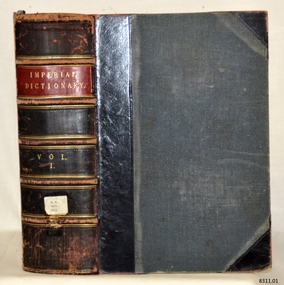
Book - Reference Dictionary/Scientific/Technological, John Ogilvie, The Imperial Dictionary English Technological and Scientific Vol 1, 1861
... The Imperial Dictionary English Technological and Scientific Vol 1 Author: John Ogilvie Publisher: Blackie & Son Ltd Date: 1861 Further Information: Black cloth hardcover with a brown leather spine, title lettering in gold. ...The label on spine cover with typed text RH 423 OGI The Imperial Dictionary English Technological and Scientific Vol 1 Author: John Ogilvie Publisher: Blackie & Son Ltd Date: 1861 Further Information: Black cloth hardcover with a brown leather spine, title lettering in gold. ...The Imperial Dictionary was a massive, progressive undertaking designed to be a bridge between a traditional language dictionary and a comprehensive technical encyclopedia. John Ogilvie built the text upon the foundation of Noah Webster’s famous American Dictionary. However, Ogilvie dramatically expanded it to include thousands of new terms born from the Industrial Revolution. It heavily prioritized the vocabulary of engineering, medicine, manufacturing, chemistry, and the arts, alongside a vast array of distinct Scottish and provincial British terms that Webster had omitted.The Imperial Dictionary English Technological and Scientific Vol 1 Author: John Ogilvie Publisher: Blackie & Son Ltd Date: 1861 Further Information: Black cloth hardcover with a brown leather spine, title lettering in gold. The spine has a Library label with an inscription.non-fictionThe Imperial Dictionary was a massive, progressive undertaking designed to be a bridge between a traditional language dictionary and a comprehensive technical encyclopedia. John Ogilvie built the text upon the foundation of Noah Webster’s famous American Dictionary. However, Ogilvie dramatically expanded it to include thousands of new terms born from the Industrial Revolution. It heavily prioritized the vocabulary of engineering, medicine, manufacturing, chemistry, and the arts, alongside a vast array of distinct Scottish and provincial British terms that Webster had omitted.flagstaff hill, warrnambool, shipwrecked coast, flagstaff hill maritime museum, maritime museum, shipwreck coast, flagstaff hill maritime village, great ocean road, book, pattison collection, warrnambool library, warrnambool mechanics’ institute, ralph eric pattison, corangamite regional library service, warrnambool city librarian, mechanics’ institute library, victorian library board, warrnambool books and records, warrnambool children’s library -
 Flagstaff Hill Maritime Museum and Village
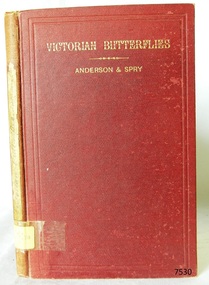
Book - Reference Book/Biology/Scientific, Field Naturalist Club of Victoria, Victorian Butterflies and How to Collect Them, 1893
... Field Naturalists' Club of Victoria Publisher: H Hearne & Co Printers: H Hearne & Co, Paragon Printing Works, 208-210 Little Lonsdale Street, Melbourne Date: 1893 Victorian Butterflies and How to Collect Them Book Reference Book/Biology/Scientific Field Naturalist Club of Victoria H Hearne & Co, Paragon Printing Works ...A reference book for butterflies in the Australian State of VictoriaRed hardcover book with imprinted lined borders and embossed gold titles. A white label is attached to the spine. Title: Victorian Butterflies and How to Collect Them Authors: Ernest Anderson and Frank Palmer Spry. Field Naturalists' Club of Victoria Publisher: H Hearne & Co Printers: H Hearne & Co, Paragon Printing Works, 208-210 Little Lonsdale Street, Melbourne Date: 1893non-fictionA reference book for butterflies in the Australian State of Victoriabook, warrnambool mechanics’ institute, victorian butterflies, ernest anderson, frank palmer spry, shipwrecked-coast, flagstaff-hill, warrnambool, flagstaff-hill-maritime-museum, maritime-museum, shipwreck-coast, flagstaff-hill-maritime-village, shipwrecked-artefact, warrnambool library, warrnambool city librarian, mechanics’ institute library, victorian library board, warrnambool books and records, warrnambool children’s library, great ocean road, warrnambool public museum, butterfly collectors, botanists, hobbies, naturia -
 Flagstaff Hill Maritime Museum and Village
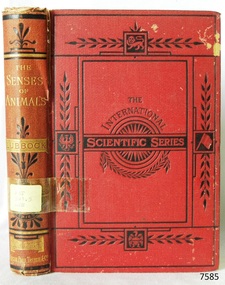
Book, The International Scientific Series Vol 65
... The International Scientific Series Vol 65 On The Senses, Instincts, and Intellegence of Animals. With special reference to Insects. Author: Sir John Lubbock Publisher: Keegan Paul Trench & Co Date: 1888...Warrnambool Shipwrecked-coast Flagstaff-Hill Flagstaff-Hill-Maritime-Museum Maritime-Museum Shipwreck-coast Flagstaff-Hill-Maritime-Village Shipwrecked-artefact Book Warrnambool Mechanics’ Institute Pattison Collection Warrnambool Library Ralph Eric Pattison Corangamite Regional Library Service Warrnambool City Librarian Mechanics’ Institute Library Victorian Library Board Warrnambool books and records Warrnambool Children’s Library The International Scientific Series Vol 65 Sir John Lubbock Label on spine cover with typed text PAT 591.5 LUB Pastedown front endpaper has sticker from Warrnambool Mechanics Institute and Free Library covered by a sticker from Corangamite Regional Library Service Inside front loose endpaper has a stamp from Corangamite Regional Library Service The International Scientific Series Vol 65 On The Senses, Instincts, and Intellegence of Animals. With special reference to Insects. Author: Sir John Lubbock Publisher: Keegan Paul Trench & Co Date: 1888 The International Scientific Series Vol 65 Book ...This item is from the ‘Pattison Collection’, a collection of books and records that was originally owned by the Warrnambool Mechanics’ Institute, which was founded in Warrnambool in 1853. By 1886 the Warrnambool Mechanics’ Institute (WMI) had grown to have a Library, Museum and Fine Arts Gallery, with a collection of “… choice productions of art, and valuable specimens in almost every branch and many wonderful national curiosities are now to be seen there, including historic relics of the town and district.” It later included a School of Design. Although it was very well patronised, the lack of financial support led the WMI in 1911 to ask the City Council to take it over. In 1935 Ralph Pattison was appointed as City Librarian to establish and organise the Warrnambool Library as it was then called. When the WMI building was pulled down in 1963 a new civic building was erected on the site and the new Warrnambool Library, on behalf of the City Council, took over all the holdings of the WMI. At this time some of the items were separated and identified as the ‘Pattison Collection’, named after Ralph Pattison. Eventually the components of the WMI were distributed from the Warrnambool Library to various places, including the Art Gallery, Historical Society and Flagstaff Hill. Later some were even distributed to other regional branches of Corangamite Regional Library and passed to and fro. It is difficult now to trace just where all of the items have ended up. The books at Flagstaff Hill Maritime Village generally display stamps and markings from Pattison as well as a variety of other institutions including the Mechanics’ Institute itself. RALPH ERIC PATTISON Ralph Eric Pattison was born in Rockhampton, Queensland, in 1891. He married Maude Swan from Warrnambool in 1920 and they set up home in Warrnambool. In 1935 Pattison accepted a position as City Librarian for the Warrnambool City Council. His huge challenge was to make a functional library within two rooms of the Mechanics’ Institute. He tirelessly cleaned, cleared and sorted a disarrayed collection of old books, jars of preserved specimens and other items reserved for exhibition in the city’s museum. He developed and updated the library with a wide variety of books for all tastes, including reference books for students; a difficult task to fulfil during the years following the Depression. He converted all of the lower area of the building into a library, reference room and reading room for members and the public. The books were sorted and stored using a cataloguing and card index system that he had developed himself. He also prepared the upper floor of the building and established the Art Gallery and later the Museum, a place to exhibit the many old relics that had been stored for years for this purpose. One of the treasures he found was a beautiful ancient clock, which he repaired, restored and enjoyed using in his office during the years of his service there. Ralph Pattison was described as “a meticulous gentleman whose punctuality, floorless courtesy and distinctive neat dress were hallmarks of his character, and ‘his’ clock controlled his daily routine, and his opening and closing of the library’s large heavy doors to the minute.” Pattison took leave during 1942 to 1942 to serve in the Royal Australian Navy, Volunteer Reserve as Lieutenant. A few years later he converted one of the Museum’s rooms into a Children’s Library, stocking it with suitable books for the younger generation. This was an instant success. In the 1950’s he had the honour of being appointed to the Victorian Library Board and received more inspiration from the monthly conferences in Melbourne. He was sadly retired in 1959 after over 23 years of service, due to the fact that he had gone over the working age of council officers. However he continued to take a very keen interest in the continual development of the Library until his death in 1969. The Pattison Collection, along with other items at Flagstaff Hill Maritime Village, was originally part of the Warrnambool Mechanics' Institute’s collection. The Warrnambool Mechanics’ Institute Collection is primarily significant in its totality, rather than for the individual objects it contains. Its contents are highly representative of the development of Mechanics' Institute libraries across Australia, particularly Victoria. A diversity of publications and themes has been amassed, and these provide clues to our understanding of the nature of and changes in the reading habits of Victorians from the 1850s to the middle of the 20th century. The collection also highlights the Warrnambool community’s commitment to the Mechanics’ Institute, reading, literacy and learning in the regions, and proves that access to knowledge was not impeded by distance. These items help to provide a more complete picture of our community’s ideals and aspirations. The Warrnambool Mechanics Institute book collection has historical and social significance for its strong association with the Mechanics Institute movement and the important role it played in the intellectual, cultural and social development of people throughout the latter part of the nineteenth century and the early twentieth century. The collection of books is a rare example of an early lending library and its significance is enhanced by the survival of an original collection of many volumes. The Warrnambool Mechanics' Institute’s publication collection is of both local and state significance. The International Scientific Series Vol 65 On The Senses, Instincts, and Intellegence of Animals. With special reference to Insects. Author: Sir John Lubbock Publisher: Keegan Paul Trench & Co Date: 1888Label on spine cover with typed text PAT 591.5 LUB Pastedown front endpaper has sticker from Warrnambool Mechanics Institute and Free Library covered by a sticker from Corangamite Regional Library Service Inside front loose endpaper has a stamp from Corangamite Regional Library Servicewarrnambool, shipwrecked-coast, flagstaff-hill, flagstaff-hill-maritime-museum, maritime-museum, shipwreck-coast, flagstaff-hill-maritime-village, shipwrecked-artefact, book, warrnambool mechanics’ institute, pattison collection, warrnambool library, ralph eric pattison, corangamite regional library service, warrnambool city librarian, mechanics’ institute library, victorian library board, warrnambool books and records, warrnambool children’s library, the international scientific series vol 65, sir john lubbock -
 Flagstaff Hill Maritime Museum and Village
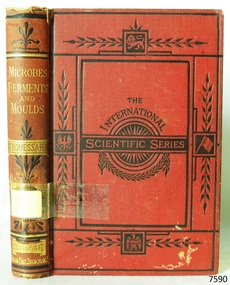
Book, The International Scientific Series Vol 52
... The International Scientific Series Vol 52 Microbes, Ferments and Moulds Author: E L Trouessart Publisher: Keegan Paul Trench & Co Date: 1886...Warrnambool Shipwrecked-coast Flagstaff-Hill Flagstaff-Hill-Maritime-Museum Maritime-Museum Shipwreck-coast Flagstaff-Hill-Maritime-Village Shipwrecked-artefact Book Warrnambool Mechanics’ Institute Pattison Collection Warrnambool Library Ralph Eric Pattison Corangamite Regional Library Service Warrnambool City Librarian Mechanics’ Institute Library Victorian Library Board Warrnambool books and records The International Scientific Series Vol 52 Microbes, Ferments and Moulds E L Trouessart Label on spine cover with typed text PAT 589 TRO Pastedown front endpaper has sticker from Warrnambool Mechanics Institute and Free Library covered by a sticker from Corangamite Regional Library Service The International Scientific Series Vol 52 Microbes, Ferments and Moulds Author: E L Trouessart Publisher: Keegan Paul Trench & Co Date: 1886 The International Scientific Series Vol 52 Book ...This item is from the ‘Pattison Collection’, a collection of books and records that was originally owned by the Warrnambool Mechanics’ Institute, which was founded in Warrnambool in 1853. By 1886 the Warrnambool Mechanics’ Institute (WMI) had grown to have a Library, Museum and Fine Arts Gallery, with a collection of “… choice productions of art, and valuable specimens in almost every branch and many wonderful national curiosities are now to be seen there, including historic relics of the town and district.” It later included a School of Design. Although it was very well patronised, the lack of financial support led the WMI in 1911 to ask the City Council to take it over. In 1935 Ralph Pattison was appointed as City Librarian to establish and organise the Warrnambool Library as it was then called. When the WMI building was pulled down in 1963 a new civic building was erected on the site and the new Warrnambool Library, on behalf of the City Council, took over all the holdings of the WMI. At this time some of the items were separated and identified as the ‘Pattison Collection’, named after Ralph Pattison. Eventually the components of the WMI were distributed from the Warrnambool Library to various places, including the Art Gallery, Historical Society and Flagstaff Hill. Later some were even distributed to other regional branches of Corangamite Regional Library and passed to and fro. It is difficult now to trace just where all of the items have ended up. The books at Flagstaff Hill Maritime Village generally display stamps and markings from Pattison as well as a variety of other institutions including the Mechanics’ Institute itself. RALPH ERIC PATTISON Ralph Eric Pattison was born in Rockhampton, Queensland, in 1891. He married Maude Swan from Warrnambool in 1920 and they set up home in Warrnambool. In 1935 Pattison accepted a position as City Librarian for the Warrnambool City Council. His huge challenge was to make a functional library within two rooms of the Mechanics’ Institute. He tirelessly cleaned, cleared and sorted a disarrayed collection of old books, jars of preserved specimens and other items reserved for exhibition in the city’s museum. He developed and updated the library with a wide variety of books for all tastes, including reference books for students; a difficult task to fulfil during the years following the Depression. He converted all of the lower area of the building into a library, reference room and reading room for members and the public. The books were sorted and stored using a cataloguing and card index system that he had developed himself. He also prepared the upper floor of the building and established the Art Gallery and later the Museum, a place to exhibit the many old relics that had been stored for years for this purpose. One of the treasures he found was a beautiful ancient clock, which he repaired, restored and enjoyed using in his office during the years of his service there. Ralph Pattison was described as “a meticulous gentleman whose punctuality, floorless courtesy and distinctive neat dress were hallmarks of his character, and ‘his’ clock controlled his daily routine, and his opening and closing of the library’s large heavy doors to the minute.” Pattison took leave during 1942 to 1942 to serve in the Royal Australian Navy, Volunteer Reserve as Lieutenant. A few years later he converted one of the Museum’s rooms into a Children’s Library, stocking it with suitable books for the younger generation. This was an instant success. In the 1950’s he had the honour of being appointed to the Victorian Library Board and received more inspiration from the monthly conferences in Melbourne. He was sadly retired in 1959 after over 23 years of service, due to the fact that he had gone over the working age of council officers. However he continued to take a very keen interest in the continual development of the Library until his death in 1969. The Pattison Collection, along with other items at Flagstaff Hill Maritime Village, was originally part of the Warrnambool Mechanics' Institute’s collection. The Warrnambool Mechanics’ Institute Collection is primarily significant in its totality, rather than for the individual objects it contains. Its contents are highly representative of the development of Mechanics' Institute libraries across Australia, particularly Victoria. A diversity of publications and themes has been amassed, and these provide clues to our understanding of the nature of and changes in the reading habits of Victorians from the 1850s to the middle of the 20th century. The collection also highlights the Warrnambool community’s commitment to the Mechanics’ Institute, reading, literacy and learning in the regions, and proves that access to knowledge was not impeded by distance. These items help to provide a more complete picture of our community’s ideals and aspirations. The Warrnambool Mechanics Institute book collection has historical and social significance for its strong association with the Mechanics Institute movement and the important role it played in the intellectual, cultural and social development of people throughout the latter part of the nineteenth century and the early twentieth century. The collection of books is a rare example of an early lending library and its significance is enhanced by the survival of an original collection of many volumes. The Warrnambool Mechanics' Institute’s publication collection is of both local and state significance. The International Scientific Series Vol 52 Microbes, Ferments and Moulds Author: E L Trouessart Publisher: Keegan Paul Trench & Co Date: 1886Label on spine cover with typed text PAT 589 TRO Pastedown front endpaper has sticker from Warrnambool Mechanics Institute and Free Library covered by a sticker from Corangamite Regional Library Service warrnambool, shipwrecked-coast, flagstaff-hill, flagstaff-hill-maritime-museum, maritime-museum, shipwreck-coast, flagstaff-hill-maritime-village, shipwrecked-artefact, book, warrnambool mechanics’ institute, pattison collection, warrnambool library, ralph eric pattison, corangamite regional library service, warrnambool city librarian, mechanics’ institute library, victorian library board, warrnambool books and records, the international scientific series vol 52, microbes, ferments and moulds, e l trouessart -
 Flagstaff Hill Maritime Museum and Village
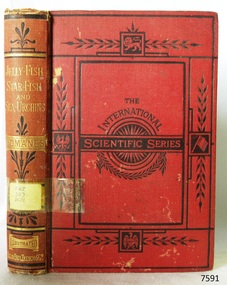
Book, The International Scientific Series Vol 50
... The International Scientific Series Vol 50 Sea-Urchins -- being a Research of Primitive Nervous Systems Author: G. J. Romanes Publisher: Keegan Paul Trench & Co Date: 1885...Romanes Label on spine cover with typed text PAT 593 ROM Pastedown front endpaper has sticker from Warrnambool Mechanics Institute and Free Library covered by a sticker from Corangamite Regional Library Service The International Scientific Series Vol 50 Sea-Urchins -- being a Research of Primitive Nervous Systems Author: G. J. Romanes Publisher: Keegan Paul Trench & Co Date: 1885 The International Scientific Series Vol 50 Book ...This item is from the ‘Pattison Collection’, a collection of books and records that was originally owned by the Warrnambool Mechanics’ Institute, which was founded in Warrnambool in 1853. By 1886 the Warrnambool Mechanics’ Institute (WMI) had grown to have a Library, Museum and Fine Arts Gallery, with a collection of “… choice productions of art, and valuable specimens in almost every branch and many wonderful national curiosities are now to be seen there, including historic relics of the town and district.” It later included a School of Design. Although it was very well patronised, the lack of financial support led the WMI in 1911 to ask the City Council to take it over. In 1935 Ralph Pattison was appointed as City Librarian to establish and organise the Warrnambool Library as it was then called. When the WMI building was pulled down in 1963 a new civic building was erected on the site and the new Warrnambool Library, on behalf of the City Council, took over all the holdings of the WMI. At this time some of the items were separated and identified as the ‘Pattison Collection’, named after Ralph Pattison. Eventually the components of the WMI were distributed from the Warrnambool Library to various places, including the Art Gallery, Historical Society and Flagstaff Hill. Later some were even distributed to other regional branches of Corangamite Regional Library and passed to and fro. It is difficult now to trace just where all of the items have ended up. The books at Flagstaff Hill Maritime Village generally display stamps and markings from Pattison as well as a variety of other institutions including the Mechanics’ Institute itself. RALPH ERIC PATTISON Ralph Eric Pattison was born in Rockhampton, Queensland, in 1891. He married Maude Swan from Warrnambool in 1920 and they set up home in Warrnambool. In 1935 Pattison accepted a position as City Librarian for the Warrnambool City Council. His huge challenge was to make a functional library within two rooms of the Mechanics’ Institute. He tirelessly cleaned, cleared and sorted a disarrayed collection of old books, jars of preserved specimens and other items reserved for exhibition in the city’s museum. He developed and updated the library with a wide variety of books for all tastes, including reference books for students; a difficult task to fulfil during the years following the Depression. He converted all of the lower area of the building into a library, reference room and reading room for members and the public. The books were sorted and stored using a cataloguing and card index system that he had developed himself. He also prepared the upper floor of the building and established the Art Gallery and later the Museum, a place to exhibit the many old relics that had been stored for years for this purpose. One of the treasures he found was a beautiful ancient clock, which he repaired, restored and enjoyed using in his office during the years of his service there. Ralph Pattison was described as “a meticulous gentleman whose punctuality, floorless courtesy and distinctive neat dress were hallmarks of his character, and ‘his’ clock controlled his daily routine, and his opening and closing of the library’s large heavy doors to the minute.” Pattison took leave during 1942 to 1942 to serve in the Royal Australian Navy, Volunteer Reserve as Lieutenant. A few years later he converted one of the Museum’s rooms into a Children’s Library, stocking it with suitable books for the younger generation. This was an instant success. In the 1950’s he had the honour of being appointed to the Victorian Library Board and received more inspiration from the monthly conferences in Melbourne. He was sadly retired in 1959 after over 23 years of service, due to the fact that he had gone over the working age of council officers. However he continued to take a very keen interest in the continual development of the Library until his death in 1969. The Pattison Collection, along with other items at Flagstaff Hill Maritime Village, was originally part of the Warrnambool Mechanics' Institute’s collection. The Warrnambool Mechanics’ Institute Collection is primarily significant in its totality, rather than for the individual objects it contains. Its contents are highly representative of the development of Mechanics' Institute libraries across Australia, particularly Victoria. A diversity of publications and themes has been amassed, and these provide clues to our understanding of the nature of and changes in the reading habits of Victorians from the 1850s to the middle of the 20th century. The collection also highlights the Warrnambool community’s commitment to the Mechanics’ Institute, reading, literacy and learning in the regions, and proves that access to knowledge was not impeded by distance. These items help to provide a more complete picture of our community’s ideals and aspirations. The Warrnambool Mechanics Institute book collection has historical and social significance for its strong association with the Mechanics Institute movement and the important role it played in the intellectual, cultural and social development of people throughout the latter part of the nineteenth century and the early twentieth century. The collection of books is a rare example of an early lending library and its significance is enhanced by the survival of an original collection of many volumes. The Warrnambool Mechanics' Institute’s publication collection is of both local and state significance. The International Scientific Series Vol 50 Sea-Urchins -- being a Research of Primitive Nervous Systems Author: G. J. Romanes Publisher: Keegan Paul Trench & Co Date: 1885Label on spine cover with typed text PAT 593 ROM Pastedown front endpaper has sticker from Warrnambool Mechanics Institute and Free Library covered by a sticker from Corangamite Regional Library Service warrnambool, shipwrecked-coast, flagstaff-hill, flagstaff-hill-maritime-museum, maritime-museum, shipwreck-coast, flagstaff-hill-maritime-village, shipwrecked-artefact, book, warrnambool mechanics’ institute, pattison collection, warrnambool library, ralph eric pattison, corangamite regional library service, warrnambool city librarian, mechanics’ institute library, victorian library board, warrnambool books and records, the international scientific series vol 50, sea-urchins, primitive nervous systems, g. j. romanes -
 Flagstaff Hill Maritime Museum and Village
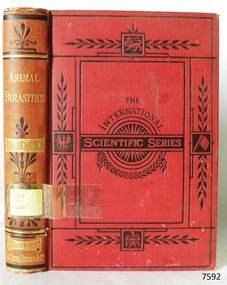
Book, The International Scientific Series Vol 19
... The International Scientific Series Vol 19 Animal Parasites and Messmates. Author: P J Van Benden Publisher: Keegan Paul Trench & Co Date: 1889 ...The Warrnambool Mechanics' Institute’s publication collection is of both local and state significance. warrnambool shipwrecked-coast flagstaff-hill flagstaff-hill-maritime-museum maritime-museum shipwreck-coast flagstaff-hill-maritime-village shipwrecked-artefact book warrnambool mechanics’ institute pattison collection warrnambool library ralph eric pattison corangamite regional library service warrnambool city librarian mechanics’ institute library victorian library board warrnambool books and records the international scientific series vol 19 animal parasites and messmates. p j van benden Label on spine cover with typed text PAT 590 VAN Pastedown front endpaper has sticker from Warrnambool Mechanics Institute and Free Library covered by a sticker from Corangamite Regional Library Service Fly page has a stamp from the Warrnambool Public Museum The International Scientific Series Vol 19 Animal Parasites and Messmates. Author: P J Van Benden Publisher: Keegan Paul Trench & Co Date: 1889 The International Scientific Series Vol 19 Book ...This item is from the ‘Pattison Collection’, a collection of books and records that was originally owned by the Warrnambool Mechanics’ Institute, which was founded in Warrnambool in 1853. By 1886 the Warrnambool Mechanics’ Institute (WMI) had grown to have a Library, Museum and Fine Arts Gallery, with a collection of “… choice productions of art, and valuable specimens in almost every branch and many wonderful national curiosities are now to be seen there, including historic relics of the town and district.” It later included a School of Design. Although it was very well patronised, the lack of financial support led the WMI in 1911 to ask the City Council to take it over. In 1935 Ralph Pattison was appointed as City Librarian to establish and organise the Warrnambool Library as it was then called. When the WMI building was pulled down in 1963 a new civic building was erected on the site and the new Warrnambool Library, on behalf of the City Council, took over all the holdings of the WMI. At this time some of the items were separated and identified as the ‘Pattison Collection’, named after Ralph Pattison. Eventually the components of the WMI were distributed from the Warrnambool Library to various places, including the Art Gallery, Historical Society and Flagstaff Hill. Later some were even distributed to other regional branches of Corangamite Regional Library and passed to and fro. It is difficult now to trace just where all of the items have ended up. The books at Flagstaff Hill Maritime Village generally display stamps and markings from Pattison as well as a variety of other institutions including the Mechanics’ Institute itself. RALPH ERIC PATTISON Ralph Eric Pattison was born in Rockhampton, Queensland, in 1891. He married Maude Swan from Warrnambool in 1920 and they set up home in Warrnambool. In 1935 Pattison accepted a position as City Librarian for the Warrnambool City Council. His huge challenge was to make a functional library within two rooms of the Mechanics’ Institute. He tirelessly cleaned, cleared and sorted a disarrayed collection of old books, jars of preserved specimens and other items reserved for exhibition in the city’s museum. He developed and updated the library with a wide variety of books for all tastes, including reference books for students; a difficult task to fulfil during the years following the Depression. He converted all of the lower area of the building into a library, reference room and reading room for members and the public. The books were sorted and stored using a cataloguing and card index system that he had developed himself. He also prepared the upper floor of the building and established the Art Gallery and later the Museum, a place to exhibit the many old relics that had been stored for years for this purpose. One of the treasures he found was a beautiful ancient clock, which he repaired, restored and enjoyed using in his office during the years of his service there. Ralph Pattison was described as “a meticulous gentleman whose punctuality, floorless courtesy and distinctive neat dress were hallmarks of his character, and ‘his’ clock controlled his daily routine, and his opening and closing of the library’s large heavy doors to the minute.” Pattison took leave during 1942 to 1942 to serve in the Royal Australian Navy, Volunteer Reserve as Lieutenant. A few years later he converted one of the Museum’s rooms into a Children’s Library, stocking it with suitable books for the younger generation. This was an instant success. In the 1950’s he had the honour of being appointed to the Victorian Library Board and received more inspiration from the monthly conferences in Melbourne. He was sadly retired in 1959 after over 23 years of service, due to the fact that he had gone over the working age of council officers. However he continued to take a very keen interest in the continual development of the Library until his death in 1969. The Pattison Collection, along with other items at Flagstaff Hill Maritime Village, was originally part of the Warrnambool Mechanics' Institute’s collection. The Warrnambool Mechanics’ Institute Collection is primarily significant in its totality, rather than for the individual objects it contains. Its contents are highly representative of the development of Mechanics' Institute libraries across Australia, particularly Victoria. A diversity of publications and themes has been amassed, and these provide clues to our understanding of the nature of and changes in the reading habits of Victorians from the 1850s to the middle of the 20th century. The collection also highlights the Warrnambool community’s commitment to the Mechanics’ Institute, reading, literacy and learning in the regions, and proves that access to knowledge was not impeded by distance. These items help to provide a more complete picture of our community’s ideals and aspirations. The Warrnambool Mechanics Institute book collection has historical and social significance for its strong association with the Mechanics Institute movement and the important role it played in the intellectual, cultural and social development of people throughout the latter part of the nineteenth century and the early twentieth century. The collection of books is a rare example of an early lending library and its significance is enhanced by the survival of an original collection of many volumes. The Warrnambool Mechanics' Institute’s publication collection is of both local and state significance. The International Scientific Series Vol 19 Animal Parasites and Messmates. Author: P J Van Benden Publisher: Keegan Paul Trench & Co Date: 1889 Label on spine cover with typed text PAT 590 VAN Pastedown front endpaper has sticker from Warrnambool Mechanics Institute and Free Library covered by a sticker from Corangamite Regional Library Service Fly page has a stamp from the Warrnambool Public Museum warrnambool, shipwrecked-coast, flagstaff-hill, flagstaff-hill-maritime-museum, maritime-museum, shipwreck-coast, flagstaff-hill-maritime-village, shipwrecked-artefact, book, warrnambool mechanics’ institute, pattison collection, warrnambool library, ralph eric pattison, corangamite regional library service, warrnambool city librarian, mechanics’ institute library, victorian library board, warrnambool books and records, the international scientific series vol 19, animal parasites and messmates., p j van benden -
 Flagstaff Hill Maritime Museum and Village
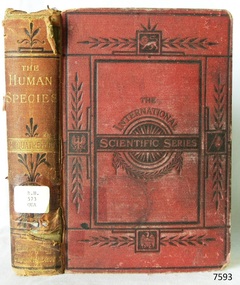
Book, The International Scientific Series Vol 26
... The International Scientific Series Vol 26 The Human Species Author: A De Quatrefages Publisher: Keegan Paul Trench & Co Date: 1879...Warrnambool Shipwrecked-coast Flagstaff-Hill Flagstaff-Hill-Maritime-Museum Maritime-Museum Shipwreck-coast Flagstaff-Hill-Maritime-Village Shipwrecked-artefact Book Warrnambool Mechanics’ Institute Pattison Collection Warrnambool Library Ralph Eric Pattison Corangamite Regional Library Service Warrnambool City Librarian Mechanics’ Institute Library Victorian Library Board Warrnambool books and records The International Scientific Series Vol 26 A De Quatrefages Label on spine cover with typed text R.H.573 QUA Pastedown front endpaper has sticker from Warrnambool Mechanics Institute and Free Library covered by a sticker from Corangamite Regional Library Service The International Scientific Series Vol 26 The Human Species Author: A De Quatrefages Publisher: Keegan Paul Trench & Co Date: 1879 The International Scientific Series Vol 26 Book ...This item is from the ‘Pattison Collection’, a collection of books and records that was originally owned by the Warrnambool Mechanics’ Institute, which was founded in Warrnambool in 1853. By 1886 the Warrnambool Mechanics’ Institute (WMI) had grown to have a Library, Museum and Fine Arts Gallery, with a collection of “… choice productions of art, and valuable specimens in almost every branch and many wonderful national curiosities are now to be seen there, including historic relics of the town and district.” It later included a School of Design. Although it was very well patronised, the lack of financial support led the WMI in 1911 to ask the City Council to take it over. In 1935 Ralph Pattison was appointed as City Librarian to establish and organise the Warrnambool Library as it was then called. When the WMI building was pulled down in 1963 a new civic building was erected on the site and the new Warrnambool Library, on behalf of the City Council, took over all the holdings of the WMI. At this time some of the items were separated and identified as the ‘Pattison Collection’, named after Ralph Pattison. Eventually the components of the WMI were distributed from the Warrnambool Library to various places, including the Art Gallery, Historical Society and Flagstaff Hill. Later some were even distributed to other regional branches of Corangamite Regional Library and passed to and fro. It is difficult now to trace just where all of the items have ended up. The books at Flagstaff Hill Maritime Village generally display stamps and markings from Pattison as well as a variety of other institutions including the Mechanics’ Institute itself. RALPH ERIC PATTISON Ralph Eric Pattison was born in Rockhampton, Queensland, in 1891. He married Maude Swan from Warrnambool in 1920 and they set up home in Warrnambool. In 1935 Pattison accepted a position as City Librarian for the Warrnambool City Council. His huge challenge was to make a functional library within two rooms of the Mechanics’ Institute. He tirelessly cleaned, cleared and sorted a disarrayed collection of old books, jars of preserved specimens and other items reserved for exhibition in the city’s museum. He developed and updated the library with a wide variety of books for all tastes, including reference books for students; a difficult task to fulfil during the years following the Depression. He converted all of the lower area of the building into a library, reference room and reading room for members and the public. The books were sorted and stored using a cataloguing and card index system that he had developed himself. He also prepared the upper floor of the building and established the Art Gallery and later the Museum, a place to exhibit the many old relics that had been stored for years for this purpose. One of the treasures he found was a beautiful ancient clock, which he repaired, restored and enjoyed using in his office during the years of his service there. Ralph Pattison was described as “a meticulous gentleman whose punctuality, floorless courtesy and distinctive neat dress were hallmarks of his character, and ‘his’ clock controlled his daily routine, and his opening and closing of the library’s large heavy doors to the minute.” Pattison took leave during 1942 to 1942 to serve in the Royal Australian Navy, Volunteer Reserve as Lieutenant. A few years later he converted one of the Museum’s rooms into a Children’s Library, stocking it with suitable books for the younger generation. This was an instant success. In the 1950’s he had the honour of being appointed to the Victorian Library Board and received more inspiration from the monthly conferences in Melbourne. He was sadly retired in 1959 after over 23 years of service, due to the fact that he had gone over the working age of council officers. However he continued to take a very keen interest in the continual development of the Library until his death in 1969. The Pattison Collection, along with other items at Flagstaff Hill Maritime Village, was originally part of the Warrnambool Mechanics' Institute’s collection. The Warrnambool Mechanics’ Institute Collection is primarily significant in its totality, rather than for the individual objects it contains. Its contents are highly representative of the development of Mechanics' Institute libraries across Australia, particularly Victoria. A diversity of publications and themes has been amassed, and these provide clues to our understanding of the nature of and changes in the reading habits of Victorians from the 1850s to the middle of the 20th century. The collection also highlights the Warrnambool community’s commitment to the Mechanics’ Institute, reading, literacy and learning in the regions, and proves that access to knowledge was not impeded by distance. These items help to provide a more complete picture of our community’s ideals and aspirations. The Warrnambool Mechanics Institute book collection has historical and social significance for its strong association with the Mechanics Institute movement and the important role it played in the intellectual, cultural and social development of people throughout the latter part of the nineteenth century and the early twentieth century. The collection of books is a rare example of an early lending library and its significance is enhanced by the survival of an original collection of many volumes. The Warrnambool Mechanics' Institute’s publication collection is of both local and state significance. The International Scientific Series Vol 26 The Human Species Author: A De Quatrefages Publisher: Keegan Paul Trench & Co Date: 1879Label on spine cover with typed text R.H.573 QUA Pastedown front endpaper has sticker from Warrnambool Mechanics Institute and Free Library covered by a sticker from Corangamite Regional Library Service warrnambool, shipwrecked-coast, flagstaff-hill, flagstaff-hill-maritime-museum, maritime-museum, shipwreck-coast, flagstaff-hill-maritime-village, shipwrecked-artefact, book, warrnambool mechanics’ institute, pattison collection, warrnambool library, ralph eric pattison, corangamite regional library service, warrnambool city librarian, mechanics’ institute library, victorian library board, warrnambool books and records, the international scientific series vol 26, a de quatrefages -
 Flagstaff Hill Maritime Museum and Village
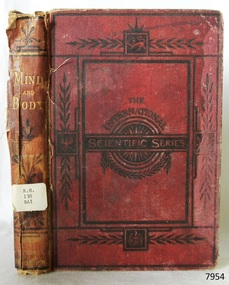
Book, The International Scientific Series Vol 4
... The International Scientific Series Vol 4 Mind and Body - The Theories of the Relation. Author: Alexander Bain Publisher: Henry S King & Co Date: 1876...Warrnambool Shipwrecked-coast Flagstaff-Hill Flagstaff-Hill-Maritime-Museum Maritime-Museum Shipwreck-coast Flagstaff-Hill-Maritime-Village Shipwrecked-artefact Book Warrnambool Mechanics’ Institute Pattison Collection Warrnambool Library Ralph Eric Pattison Corangamite Regional Library Service Warrnambool City Librarian Mechanics’ Institute Library Victorian Library Board Warrnambool books and records The International Scientific Series Vol 4 Alexander Bain Label on spine cover with typed text R.H.130 BAI Pastedown front endpaper has sticker from Warrnambool Mechanics Institute and Free Library covered by a sticker from Corangamite Regional Library Service The International Scientific Series Vol 4 Mind and Body - The Theories of the Relation. Author: Alexander Bain Publisher: Henry S King & Co Date: 1876 The International Scientific Series Vol 4 Book ...This item is from the ‘Pattison Collection’, a collection of books and records that was originally owned by the Warrnambool Mechanics’ Institute, which was founded in Warrnambool in 1853. By 1886 the Warrnambool Mechanics’ Institute (WMI) had grown to have a Library, Museum and Fine Arts Gallery, with a collection of “… choice productions of art, and valuable specimens in almost every branch and many wonderful national curiosities are now to be seen there, including historic relics of the town and district.” It later included a School of Design. Although it was very well patronised, the lack of financial support led the WMI in 1911 to ask the City Council to take it over. In 1935 Ralph Pattison was appointed as City Librarian to establish and organise the Warrnambool Library as it was then called. When the WMI building was pulled down in 1963 a new civic building was erected on the site and the new Warrnambool Library, on behalf of the City Council, took over all the holdings of the WMI. At this time some of the items were separated and identified as the ‘Pattison Collection’, named after Ralph Pattison. Eventually the components of the WMI were distributed from the Warrnambool Library to various places, including the Art Gallery, Historical Society and Flagstaff Hill. Later some were even distributed to other regional branches of Corangamite Regional Library and passed to and fro. It is difficult now to trace just where all of the items have ended up. The books at Flagstaff Hill Maritime Village generally display stamps and markings from Pattison as well as a variety of other institutions including the Mechanics’ Institute itself. RALPH ERIC PATTISON Ralph Eric Pattison was born in Rockhampton, Queensland, in 1891. He married Maude Swan from Warrnambool in 1920 and they set up home in Warrnambool. In 1935 Pattison accepted a position as City Librarian for the Warrnambool City Council. His huge challenge was to make a functional library within two rooms of the Mechanics’ Institute. He tirelessly cleaned, cleared and sorted a disarrayed collection of old books, jars of preserved specimens and other items reserved for exhibition in the city’s museum. He developed and updated the library with a wide variety of books for all tastes, including reference books for students; a difficult task to fulfil during the years following the Depression. He converted all of the lower area of the building into a library, reference room and reading room for members and the public. The books were sorted and stored using a cataloguing and card index system that he had developed himself. He also prepared the upper floor of the building and established the Art Gallery and later the Museum, a place to exhibit the many old relics that had been stored for years for this purpose. One of the treasures he found was a beautiful ancient clock, which he repaired, restored and enjoyed using in his office during the years of his service there. Ralph Pattison was described as “a meticulous gentleman whose punctuality, floorless courtesy and distinctive neat dress were hallmarks of his character, and ‘his’ clock controlled his daily routine, and his opening and closing of the library’s large heavy doors to the minute.” Pattison took leave during 1942 to 1942 to serve in the Royal Australian Navy, Volunteer Reserve as Lieutenant. A few years later he converted one of the Museum’s rooms into a Children’s Library, stocking it with suitable books for the younger generation. This was an instant success. In the 1950’s he had the honour of being appointed to the Victorian Library Board and received more inspiration from the monthly conferences in Melbourne. He was sadly retired in 1959 after over 23 years of service, due to the fact that he had gone over the working age of council officers. However he continued to take a very keen interest in the continual development of the Library until his death in 1969. The Pattison Collection, along with other items at Flagstaff Hill Maritime Village, was originally part of the Warrnambool Mechanics' Institute’s collection. The Warrnambool Mechanics’ Institute Collection is primarily significant in its totality, rather than for the individual objects it contains. Its contents are highly representative of the development of Mechanics' Institute libraries across Australia, particularly Victoria. A diversity of publications and themes has been amassed, and these provide clues to our understanding of the nature of and changes in the reading habits of Victorians from the 1850s to the middle of the 20th century. The collection also highlights the Warrnambool community’s commitment to the Mechanics’ Institute, reading, literacy and learning in the regions, and proves that access to knowledge was not impeded by distance. These items help to provide a more complete picture of our community’s ideals and aspirations. The Warrnambool Mechanics Institute book collection has historical and social significance for its strong association with the Mechanics Institute movement and the important role it played in the intellectual, cultural and social development of people throughout the latter part of the nineteenth century and the early twentieth century. The collection of books is a rare example of an early lending library and its significance is enhanced by the survival of an original collection of many volumes. The Warrnambool Mechanics' Institute’s publication collection is of both local and state significance. The International Scientific Series Vol 4 Mind and Body - The Theories of the Relation. Author: Alexander Bain Publisher: Henry S King & Co Date: 1876Label on spine cover with typed text R.H.130 BAI Pastedown front endpaper has sticker from Warrnambool Mechanics Institute and Free Library covered by a sticker from Corangamite Regional Library Service warrnambool, shipwrecked-coast, flagstaff-hill, flagstaff-hill-maritime-museum, maritime-museum, shipwreck-coast, flagstaff-hill-maritime-village, shipwrecked-artefact, book, warrnambool mechanics’ institute, pattison collection, warrnambool library, ralph eric pattison, corangamite regional library service, warrnambool city librarian, mechanics’ institute library, victorian library board, warrnambool books and records, the international scientific series vol 4, alexander bain -
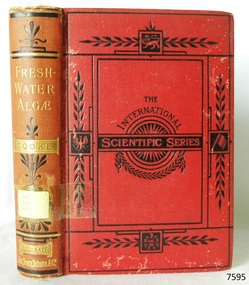 Flagstaff Hill Maritime Museum and Village
Book, The International Scientific Series Vol 69
... The International Scientific Series Vol 69 Introduction to Fresh-Water Algae with an Enumeration of all the British Species Author: M C Cooke Publisher: Keegan Paul Trench & Co Date: 1890...Warrnambool Shipwrecked-coast Flagstaff-Hill Flagstaff-Hill-Maritime-Museum Maritime-Museum Shipwreck-coast Flagstaff-Hill-Maritime-Village Shipwrecked-artefact Book Warrnambool Mechanics’ Institute Pattison Collection Warrnambool Library Ralph Eric Pattison Corangamite Regional Library Service Warrnambool City Librarian Mechanics’ Institute Library Victorian Library Board Warrnambool books and records The International Scientific Series Vol 69 M C Cooke Label on spine cover with typed text PAT 589 COO Pastedown front endpaper has sticker from Warrnambool Mechanics Institute and Free Library covered by a sticker from Corangamite Regional Library Service The International Scientific Series Vol 69 Introduction to Fresh-Water Algae with an Enumeration of all the British Species Author: M C Cooke Publisher: Keegan Paul Trench & Co Date: 1890 The International Scientific Series Vol 69 Book ...This item is from the ‘Pattison Collection’, a collection of books and records that was originally owned by the Warrnambool Mechanics’ Institute, which was founded in Warrnambool in 1853. By 1886 the Warrnambool Mechanics’ Institute (WMI) had grown to have a Library, Museum and Fine Arts Gallery, with a collection of “… choice productions of art, and valuable specimens in almost every branch and many wonderful national curiosities are now to be seen there, including historic relics of the town and district.” It later included a School of Design. Although it was very well patronised, the lack of financial support led the WMI in 1911 to ask the City Council to take it over. In 1935 Ralph Pattison was appointed as City Librarian to establish and organise the Warrnambool Library as it was then called. When the WMI building was pulled down in 1963 a new civic building was erected on the site and the new Warrnambool Library, on behalf of the City Council, took over all the holdings of the WMI. At this time some of the items were separated and identified as the ‘Pattison Collection’, named after Ralph Pattison. Eventually the components of the WMI were distributed from the Warrnambool Library to various places, including the Art Gallery, Historical Society and Flagstaff Hill. Later some were even distributed to other regional branches of Corangamite Regional Library and passed to and fro. It is difficult now to trace just where all of the items have ended up. The books at Flagstaff Hill Maritime Village generally display stamps and markings from Pattison as well as a variety of other institutions including the Mechanics’ Institute itself. RALPH ERIC PATTISON Ralph Eric Pattison was born in Rockhampton, Queensland, in 1891. He married Maude Swan from Warrnambool in 1920 and they set up home in Warrnambool. In 1935 Pattison accepted a position as City Librarian for the Warrnambool City Council. His huge challenge was to make a functional library within two rooms of the Mechanics’ Institute. He tirelessly cleaned, cleared and sorted a disarrayed collection of old books, jars of preserved specimens and other items reserved for exhibition in the city’s museum. He developed and updated the library with a wide variety of books for all tastes, including reference books for students; a difficult task to fulfil during the years following the Depression. He converted all of the lower area of the building into a library, reference room and reading room for members and the public. The books were sorted and stored using a cataloguing and card index system that he had developed himself. He also prepared the upper floor of the building and established the Art Gallery and later the Museum, a place to exhibit the many old relics that had been stored for years for this purpose. One of the treasures he found was a beautiful ancient clock, which he repaired, restored and enjoyed using in his office during the years of his service there. Ralph Pattison was described as “a meticulous gentleman whose punctuality, floorless courtesy and distinctive neat dress were hallmarks of his character, and ‘his’ clock controlled his daily routine, and his opening and closing of the library’s large heavy doors to the minute.” Pattison took leave during 1942 to 1942 to serve in the Royal Australian Navy, Volunteer Reserve as Lieutenant. A few years later he converted one of the Museum’s rooms into a Children’s Library, stocking it with suitable books for the younger generation. This was an instant success. In the 1950’s he had the honour of being appointed to the Victorian Library Board and received more inspiration from the monthly conferences in Melbourne. He was sadly retired in 1959 after over 23 years of service, due to the fact that he had gone over the working age of council officers. However he continued to take a very keen interest in the continual development of the Library until his death in 1969. The Pattison Collection, along with other items at Flagstaff Hill Maritime Village, was originally part of the Warrnambool Mechanics' Institute’s collection. The Warrnambool Mechanics’ Institute Collection is primarily significant in its totality, rather than for the individual objects it contains. Its contents are highly representative of the development of Mechanics' Institute libraries across Australia, particularly Victoria. A diversity of publications and themes has been amassed, and these provide clues to our understanding of the nature of and changes in the reading habits of Victorians from the 1850s to the middle of the 20th century. The collection also highlights the Warrnambool community’s commitment to the Mechanics’ Institute, reading, literacy and learning in the regions, and proves that access to knowledge was not impeded by distance. These items help to provide a more complete picture of our community’s ideals and aspirations. The Warrnambool Mechanics Institute book collection has historical and social significance for its strong association with the Mechanics Institute movement and the important role it played in the intellectual, cultural and social development of people throughout the latter part of the nineteenth century and the early twentieth century. The collection of books is a rare example of an early lending library and its significance is enhanced by the survival of an original collection of many volumes. The Warrnambool Mechanics' Institute’s publication collection is of both local and state significance. The International Scientific Series Vol 69 Introduction to Fresh-Water Algae with an Enumeration of all the British Species Author: M C Cooke Publisher: Keegan Paul Trench & Co Date: 1890Label on spine cover with typed text PAT 589 COO Pastedown front endpaper has sticker from Warrnambool Mechanics Institute and Free Library covered by a sticker from Corangamite Regional Library Service warrnambool, shipwrecked-coast, flagstaff-hill, flagstaff-hill-maritime-museum, maritime-museum, shipwreck-coast, flagstaff-hill-maritime-village, shipwrecked-artefact, book, warrnambool mechanics’ institute, pattison collection, warrnambool library, ralph eric pattison, corangamite regional library service, warrnambool city librarian, mechanics’ institute library, victorian library board, warrnambool books and records, the international scientific series vol 69, m c cooke -
 Flagstaff Hill Maritime Museum and Village
Book, The International Scientific Series Vol 40
... The International Scientific Series Vol 40 Ants, Bees and Wasps Author: Lord Avebury Publisher: Keegan Paul Trench & Co Date: 1906...Warrnambool Shipwrecked-coast Flagstaff-Hill Flagstaff-Hill-Maritime-Museum Maritime-Museum Shipwreck-coast Flagstaff-Hill-Maritime-Village Shipwrecked-artefact Book Warrnambool Mechanics’ Institute Pattison Collection Warrnambool Library Ralph Eric Pattison Corangamite Regional Library Service Warrnambool City Librarian Mechanics’ Institute Library Victorian Library Board Warrnambool books and records The International Scientific Series Vol 40 Ants, Bees and Wasps Lord Avebury Label on spine cover with typed text PAT 595.7 AVE Pastedown front endpaper has sticker from Warrnambool Mechanics Institute and Free Library covered by a sticker from Corangamite Regional Library Service The International Scientific Series Vol 40 Ants, Bees and Wasps Author: Lord Avebury Publisher: Keegan Paul Trench & Co Date: 1906 The International Scientific Series Vol 40 Book ...This item is from the ‘Pattison Collection’, a collection of books and records that was originally owned by the Warrnambool Mechanics’ Institute, which was founded in Warrnambool in 1853. By 1886 the Warrnambool Mechanics’ Institute (WMI) had grown to have a Library, Museum and Fine Arts Gallery, with a collection of “… choice productions of art, and valuable specimens in almost every branch and many wonderful national curiosities are now to be seen there, including historic relics of the town and district.” It later included a School of Design. Although it was very well patronised, the lack of financial support led the WMI in 1911 to ask the City Council to take it over. In 1935 Ralph Pattison was appointed as City Librarian to establish and organise the Warrnambool Library as it was then called. When the WMI building was pulled down in 1963 a new civic building was erected on the site and the new Warrnambool Library, on behalf of the City Council, took over all the holdings of the WMI. At this time some of the items were separated and identified as the ‘Pattison Collection’, named after Ralph Pattison. Eventually the components of the WMI were distributed from the Warrnambool Library to various places, including the Art Gallery, Historical Society and Flagstaff Hill. Later some were even distributed to other regional branches of Corangamite Regional Library and passed to and fro. It is difficult now to trace just where all of the items have ended up. The books at Flagstaff Hill Maritime Village generally display stamps and markings from Pattison as well as a variety of other institutions including the Mechanics’ Institute itself. RALPH ERIC PATTISON Ralph Eric Pattison was born in Rockhampton, Queensland, in 1891. He married Maude Swan from Warrnambool in 1920 and they set up home in Warrnambool. In 1935 Pattison accepted a position as City Librarian for the Warrnambool City Council. His huge challenge was to make a functional library within two rooms of the Mechanics’ Institute. He tirelessly cleaned, cleared and sorted a disarrayed collection of old books, jars of preserved specimens and other items reserved for exhibition in the city’s museum. He developed and updated the library with a wide variety of books for all tastes, including reference books for students; a difficult task to fulfil during the years following the Depression. He converted all of the lower area of the building into a library, reference room and reading room for members and the public. The books were sorted and stored using a cataloguing and card index system that he had developed himself. He also prepared the upper floor of the building and established the Art Gallery and later the Museum, a place to exhibit the many old relics that had been stored for years for this purpose. One of the treasures he found was a beautiful ancient clock, which he repaired, restored and enjoyed using in his office during the years of his service there. Ralph Pattison was described as “a meticulous gentleman whose punctuality, floorless courtesy and distinctive neat dress were hallmarks of his character, and ‘his’ clock controlled his daily routine, and his opening and closing of the library’s large heavy doors to the minute.” Pattison took leave during 1942 to 1942 to serve in the Royal Australian Navy, Volunteer Reserve as Lieutenant. A few years later he converted one of the Museum’s rooms into a Children’s Library, stocking it with suitable books for the younger generation. This was an instant success. In the 1950’s he had the honour of being appointed to the Victorian Library Board and received more inspiration from the monthly conferences in Melbourne. He was sadly retired in 1959 after over 23 years of service, due to the fact that he had gone over the working age of council officers. However he continued to take a very keen interest in the continual development of the Library until his death in 1969. The Pattison Collection, along with other items at Flagstaff Hill Maritime Village, was originally part of the Warrnambool Mechanics' Institute’s collection. The Warrnambool Mechanics’ Institute Collection is primarily significant in its totality, rather than for the individual objects it contains. Its contents are highly representative of the development of Mechanics' Institute libraries across Australia, particularly Victoria. A diversity of publications and themes has been amassed, and these provide clues to our understanding of the nature of and changes in the reading habits of Victorians from the 1850s to the middle of the 20th century. The collection also highlights the Warrnambool community’s commitment to the Mechanics’ Institute, reading, literacy and learning in the regions, and proves that access to knowledge was not impeded by distance. These items help to provide a more complete picture of our community’s ideals and aspirations. The Warrnambool Mechanics Institute book collection has historical and social significance for its strong association with the Mechanics Institute movement and the important role it played in the intellectual, cultural and social development of people throughout the latter part of the nineteenth century and the early twentieth century. The collection of books is a rare example of an early lending library and its significance is enhanced by the survival of an original collection of many volumes. The Warrnambool Mechanics' Institute’s publication collection is of both local and state significance. The International Scientific Series Vol 40 Ants, Bees and Wasps Author: Lord Avebury Publisher: Keegan Paul Trench & Co Date: 1906Label on spine cover with typed text PAT 595.7 AVE Pastedown front endpaper has sticker from Warrnambool Mechanics Institute and Free Library covered by a sticker from Corangamite Regional Library Service warrnambool, shipwrecked-coast, flagstaff-hill, flagstaff-hill-maritime-museum, maritime-museum, shipwreck-coast, flagstaff-hill-maritime-village, shipwrecked-artefact, book, warrnambool mechanics’ institute, pattison collection, warrnambool library, ralph eric pattison, corangamite regional library service, warrnambool city librarian, mechanics’ institute library, victorian library board, warrnambool books and records, the international scientific series vol 40, ants, bees and wasps, lord avebury -
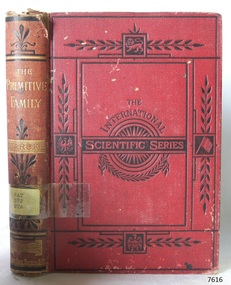 Flagstaff Hill Maritime Museum and Village
Book, The International Scientific Series Vol 66
... The International Scientific Series Vol 66 The Primitive Family in its Origin and Development Author: C N Starcke Publisher: Keegan Paul Trench & Co Date: 1889...Warrnambool Shipwrecked-coast Flagstaff-Hill Flagstaff-Hill-Maritime-Museum Maritime-Museum Shipwreck-coast Flagstaff-Hill-Maritime-Village Shipwrecked-artefact Book Pattison Collection Warrnambool Library Warrnambool Mechanics’ Institute Ralph Eric Pattison Corangamite Regional Library Service Warrnambool City Librarian Mechanics’ Institute Library Victorian Library Board Warrnambool books and records Warrnambool Children’s Library Great Ocean Road The International Scientific Series Vol 66 C N Starcke Label on spine cover with typed text PAT 572 STA Pastedown front endpaper has sticker from Warrnambool Mechanics Institute and Free Library covered by a sticker from Corangamite Regional Library Service The International Scientific Series Vol 66 The Primitive Family in its Origin and Development Author: C N Starcke Publisher: Keegan Paul Trench & Co Date: 1889 The International Scientific Series Vol 66 Book ...This item is from the ‘Pattison Collection’, a collection of books and records that was originally owned by the Warrnambool Mechanics’ Institute, which was founded in Warrnambool in 1853. By 1886 the Warrnambool Mechanics’ Institute (WMI) had grown to have a Library, Museum and Fine Arts Gallery, with a collection of “… choice productions of art, and valuable specimens in almost every branch and many wonderful national curiosities are now to be seen there, including historic relics of the town and district.” It later included a School of Design. Although it was very well patronised, the lack of financial support led the WMI in 1911 to ask the City Council to take it over. In 1935 Ralph Pattison was appointed as City Librarian to establish and organise the Warrnambool Library as it was then called. When the WMI building was pulled down in 1963 a new civic building was erected on the site and the new Warrnambool Library, on behalf of the City Council, took over all the holdings of the WMI. At this time some of the items were separated and identified as the ‘Pattison Collection’, named after Ralph Pattison. Eventually the components of the WMI were distributed from the Warrnambool Library to various places, including the Art Gallery, Historical Society and Flagstaff Hill. Later some were even distributed to other regional branches of Corangamite Regional Library and passed to and fro. It is difficult now to trace just where all of the items have ended up. The books at Flagstaff Hill Maritime Village generally display stamps and markings from Pattison as well as a variety of other institutions including the Mechanics’ Institute itself. RALPH ERIC PATTISON Ralph Eric Pattison was born in Rockhampton, Queensland, in 1891. He married Maude Swan from Warrnambool in 1920 and they set up home in Warrnambool. In 1935 Pattison accepted a position as City Librarian for the Warrnambool City Council. His huge challenge was to make a functional library within two rooms of the Mechanics’ Institute. He tirelessly cleaned, cleared and sorted a disarrayed collection of old books, jars of preserved specimens and other items reserved for exhibition in the city’s museum. He developed and updated the library with a wide variety of books for all tastes, including reference books for students; a difficult task to fulfil during the years following the Depression. He converted all of the lower area of the building into a library, reference room and reading room for members and the public. The books were sorted and stored using a cataloguing and card index system that he had developed himself. He also prepared the upper floor of the building and established the Art Gallery and later the Museum, a place to exhibit the many old relics that had been stored for years for this purpose. One of the treasures he found was a beautiful ancient clock, which he repaired, restored and enjoyed using in his office during the years of his service there. Ralph Pattison was described as “a meticulous gentleman whose punctuality, floorless courtesy and distinctive neat dress were hallmarks of his character, and ‘his’ clock controlled his daily routine, and his opening and closing of the library’s large heavy doors to the minute.” Pattison took leave during 1942 to 1945 to serve in the Royal Australian Navy, Volunteer Reserve as Lieutenant. A few years later he converted one of the Museum’s rooms into a Children’s Library, stocking it with suitable books for the younger generation. This was an instant success. In the 1950’s he had the honour of being appointed to the Victorian Library Board and received more inspiration from the monthly conferences in Melbourne. He was sadly retired in 1959 after over 23 years of service, due to the fact that he had gone over the working age of council officers. However he continued to take a very keen interest in the continual development of the Library until his death in 1969. The Pattison Collection, along with other items at Flagstaff Hill Maritime Village, was originally part of the Warrnambool Mechanics' Institute’s collection. The Warrnambool Mechanics’ Institute Collection is primarily significant in its totality, rather than for the individual objects it contains. Its contents are highly representative of the development of Mechanics' Institute libraries across Australia, particularly Victoria. A diversity of publications and themes has been amassed, and these provide clues to our understanding of the nature of and changes in the reading habits of Victorians from the 1850s to the middle of the 20th century. The collection also highlights the Warrnambool community’s commitment to the Mechanics’ Institute, reading, literacy and learning in the regions, and proves that access to knowledge was not impeded by distance. These items help to provide a more complete picture of our community’s ideals and aspirations. The Warrnambool Mechanics Institute book collection has historical and social significance for its strong association with the Mechanics Institute movement and the important role it played in the intellectual, cultural and social development of people throughout the latter part of the nineteenth century and the early twentieth century. The collection of books is a rare example of an early lending library and its significance is enhanced by the survival of an original collection of many volumes. The Warrnambool Mechanics' Institute’s publication collection is of both local and state significance. The International Scientific Series Vol 66 The Primitive Family in its Origin and Development Author: C N Starcke Publisher: Keegan Paul Trench & Co Date: 1889Label on spine cover with typed text PAT 572 STA Pastedown front endpaper has sticker from Warrnambool Mechanics Institute and Free Library covered by a sticker from Corangamite Regional Library Service warrnambool, shipwrecked-coast, flagstaff-hill, flagstaff-hill-maritime-museum, maritime-museum, shipwreck-coast, flagstaff-hill-maritime-village, shipwrecked-artefact, book, pattison collection, warrnambool library, warrnambool mechanics’ institute, ralph eric pattison, corangamite regional library service, warrnambool city librarian, mechanics’ institute library, victorian library board, warrnambool books and records, warrnambool children’s library, great ocean road, the international scientific series vol 66, c n starcke -
 Flagstaff Hill Maritime Museum and Village
Book - Reference Book Victorian Flora, Ferdinand Mueller, The Plants Indigenous To The Colony of Victoria Vol 2, 1864-1865
... scientific floristic study, and its purpose was to identify, classify and describe plants found in Victoria, reflecting Mueller’s broader project of documenting Australian botany. Volume 1 of The Plants Indigenous to the Colony of Victoria is a meticulously detailed taxonomic study focusing entirely on the Thalamiflorae, a historical botanical subclass of dicotyledonous flowering plants (which includes families like Ranunculaceae, Dilleniaceae, and Cruciferae). Mueller catalogued, named, and provided comprehensive Latin and English descriptions of these native Victorian plants. While the text volume of Volume 1 was completed earlier (around 1860–1862), the publication date...scientific floristic study, and its purpose was to identify, classify and describe plants found in Victoria, reflecting Mueller’s broader project of documenting Australian botany. Volume 1 of The Plants Indigenous to the Colony of Victoria is a meticulously detailed taxonomic study focusing entirely on the Thalamiflorae, a historical botanical subclass of dicotyledonous flowering plants (which includes families like Ranunculaceae, Dilleniaceae, and Cruciferae). Mueller catalogued, named, and provided comprehensive Latin and English descriptions of these native Victorian plants. While the text volume of Volume 1 was completed earlier (around 1860–1862), the publication date ...The Plants Indigenous to the Colony of Victoria is a landmark botanical work by Australia’s prominent colonial botanist, Baron Ferdinand von Mueller. However, there is a common point of confusion in Australian botanical bibliography regarding the "volumes" of this specific work. To understand what Volume 1 and the other three volumes are about, and how they differ from each other in the four-book set, it helps to look at exactly how Mueller’s project was published. Volume 1 represents Mueller's highly detailed, beautifully illustrated standalone success covering the Thalamiflorae. It differs from the subsequent "volumes" because Volume 2 was abandoned as a rare, 40-page unfinished fragment, and Volumes 3 and 4 were never written, as Mueller pivoted to assist with the broader Flora Australiensis.The Plants Indigenous To The Colony of Victoria Vol 2 Author: Ferdinand Mueller Publisher: John Ferres Government Printer Melbourne Date: 1864-1865 Further Information: Blue patterned front cover and spine with gilt lettering to spine and Library labels non-fictionThe Plants Indigenous to the Colony of Victoria is a landmark botanical work by Australia’s prominent colonial botanist, Baron Ferdinand von Mueller. However, there is a common point of confusion in Australian botanical bibliography regarding the "volumes" of this specific work. To understand what Volume 1 and the other three volumes are about, and how they differ from each other in the four-book set, it helps to look at exactly how Mueller’s project was published. Volume 1 represents Mueller's highly detailed, beautifully illustrated standalone success covering the Thalamiflorae. It differs from the subsequent "volumes" because Volume 2 was abandoned as a rare, 40-page unfinished fragment, and Volumes 3 and 4 were never written, as Mueller pivoted to assist with the broader Flora Australiensis.flagstaff hill, warrnambool, shipwrecked coast, flagstaff hill maritime museum, maritime museum, shipwreck coast, flagstaff hill maritime village, great ocean road, book, pattison collection, warrnambool library, warrnambool mechanics’ institute, ralph eric pattison, corangamite regional library service, warrnambool city librarian, mechanics’ institute library, victorian library board, warrnambool books and records, warrnambool children’s library -
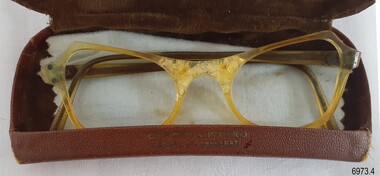 Flagstaff Hill Maritime Museum and Village
Functional object - Spectacles and Case, Carter & Foord, 1902-1930s
... scientific instruments and were sole agents for the gramophone, demonstrating its advantages whenever there was an opportunity. In 1902 the business was located at 46 Lydiard Street, Ballarat. The staff in the ophthalmic department, under the care of Harold Foord, specialised in sight testing using up-to-date equipment and this service was free of charge. ...scientific instruments and were sole agents for the gramophone, demonstrating its advantages whenever there was an opportunity. In 1902 the business was located at 46 Lydiard Street, Ballarat. The staff in the ophthalmic department, under the care of Harold Foord, specialised in sight testing using up-to-date equipment and this service was free of charge. ...The spectacles and case are an example of eyewear from the early 20th century. The case was made by Carter & Foord of Ballarat. According to the tag inside, the spectacles frame cost three pounds, three shillings and sixpence (£3.3.6). Carter & Foord was established in 1902. The firm advertised as opticians, oculists, watchmakers and jewellers. The staff repaired scientific instruments and were sole agents for the gramophone, demonstrating its advantages whenever there was an opportunity. In 1902 the business was located at 46 Lydiard Street, Ballarat. The staff in the ophthalmic department, under the care of Harold Foord, specialised in sight testing using up-to-date equipment and this service was free of charge. Customers were promised that they would be fitted with glasses guaranteed to correct the most complex sight. Mr F M Clacius performed the grinding of specific lenses. Julia Carter, Harold Foord and Clacius were all formerly from the business Carter & Warner, which had been sold to Frederick Clark around 1903 after Mr Carder passed away. Carter & Foord operated a few doors away from the former business. In 1912 advertisements in the Geelong Advertiser invited the community to visit Harold Foord, of Carter & Foord, to have their eyes examined at no charge. These spectacles are similar to others in the W.R. Angus collection, donated by the family of Dr W R Angus, surgeon and oculist. The W.R. Angus Collection spans the years 1885 to the mid-1900s and includes historical medical and surgical equipment and instruments from the doctors Edward and Thomas Ryan of Nhill, Victoria, with whom Dr Angus worked for several years. Dr Tom and his brother had worked as surgeons including in eye surgery. Dr Tom Ryan performed many of his operations in the Mira private hospital on his premises. When Dr Angus bought into the Nelson Street premises in Nhill he was also appointed as the Nhill Hospital’s Honorary House Surgeon 1933-1938. Dr Angus married Gladys in 1927 at Ballarat, the nearest big city to Nhill where he began as a Medical Assistant and had been Acting House surgeon at the Nhill hospital where their two daughters were born. Dr Angus and his family moved to Warrnambool in 1939, where Dr Angus operated his own medical practice. He later took on the part-time role of Port Medical Officer and was the last person appointed to that position. After convalescing from injury resulting from his service during WWII, Dr Angus studied ophthalmology at the Royal Melbourne Eye and Ear Hospital. He created cosmetically superior artificial eyes by pioneering the use of intrascleral cartilage. Angus received accolades from the Ophthalmological Society of Australasia for this work. He returned to Warrnambool to commence practice as an ophthalmologist, pioneering artificial eye improvements. He had been an Honorary Consultant Ophthalmologist at Warrnambool Base Hospital for 31 years. He made monthly visits to Portland as a visiting surgeon, to perform eye surgery. Both Dr Angus and his wife were very involved in the local community, including the planning stages of the new Flagstaff Hill and the layout of the gardens there. Dr Angus passed away in March 1970.The Carter &O Foord spectacles are significant as an example of early 20th-century eyewear and fashion. They are connected to the history of regional Victoria, being made in Ballarat and purchased for local use. The spectacles are significant for being connected to the W.R. Angus Collection, which is important for still being located at the site connected to Doctor Angus, Warrnambool’s last Port Medical Officer. Dr Angus and his wife brought their young family to Warrnambool in 1938 and he remained a resident until his death in 1970. Early in his profession in the town of Nhill, Dr Angus assisted Dr Tom Ryan in his pioneering use of X-rays and in ocular surgery, and Dr Angus later inherited these items. The W.R. Angus Collection includes these medical instruments and other related equipment and is culturally and historically significant as an example of the medical practice of the late 19th to the mid-20th century. Other items in the collection relate to Dr Angus’ service in the Flying Doctor Service and the Army.Spectacles in a hard brown textured case with rounded corners and a hinged lid. The case is lined with brown velvet. The opaque yellow oval frames, raised at the outer top corners, are decorated with sparkling jewell decorations on the bridge. The arms are reinforced with metal inside. Also in the case is a pale blue cleaning cloth and a cardboard price tag with handwritten text. An inscription in gold lettering is stamped inside the case. The case was made by Carter & Foord of Ballarat. The design of the frames is called ‘ewell These spectacles are part of the W.R. Angus Collection.Stamped: “CARTER & FOORD / STURT ST BALLARAT” Handwritten label: “JEWELL / £3.3.6”flagstaff hill, warrnambool, maritime village, maritime museum, shipwreck coast, great ocean road, dr w r angus, dr roy angus, dr ryan, warrnambool oculist, port medical officer, nhill base hospital, mira hospital nhill, oculist, spectacles, eyewear, glasses, carter & foord, ballarat oculist, w.r. angus collection, ophthalmology, royal melbourne eye and ear hospital., artificial eyes, intrascleral cartilage, eye surgery -
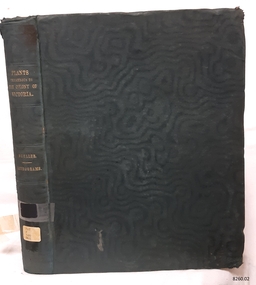 Flagstaff Hill Maritime Museum and Village
Book - Reference Book Victorian Flora, Ferdinand Mueller, The Plants Indigenous To The Colony of Victoria Vol 1, 1864-1865
... While the text volume of Volume 1 was completed earlier (around 1860–1862), the publication date of the subject volumes (1864–1865) specifically refers to the companion volume of "Lithograms" (highly detailed botanical illustration plates) printed by John Ferres to accompany and visually document the Thalamiflorae text. Unlike multi-volume scientific...While the text volume of Volume 1 was completed earlier (around 1860–1862), the publication date of the subject volumes (1864–1865) specifically refers to the companion volume of "Lithograms" (highly detailed botanical illustration plates) printed by John Ferres to accompany and visually document the Thalamiflorae text. Unlike multi-volume scientific ...The Plants Indigenous to the Colony of Victoria is a landmark botanical work by Australia’s prominent colonial botanist, Baron Ferdinand von Mueller. However, there is a common point of confusion in Australian botanical bibliography regarding the "volumes" of this specific work. To understand what Volume 1 and the other three volumes are about, and how they differ from each other in the four-book set, it helps to look at exactly how Mueller’s project was published. Volume 1 represents Mueller's highly detailed, beautifully illustrated standalone success covering the Thalamiflorae. It differs from the subsequent "volumes" because Volume 2 was abandoned as a rare, 40-page unfinished fragment, and Volumes 3 and 4 were never written, as Mueller pivoted to assist with the broader Flora Australiensis.The Plants Indigenous To The Colony of Victoria Vol 1 Author: Ferdinand Mueller Publisher: John Ferres Government Printer Melbourne Date: 1864-1865 Further Information: Blue patterned front cover and spine with gilt lettering to spine and Library labels non-fictionThe Plants Indigenous to the Colony of Victoria is a landmark botanical work by Australia’s prominent colonial botanist, Baron Ferdinand von Mueller. However, there is a common point of confusion in Australian botanical bibliography regarding the "volumes" of this specific work. To understand what Volume 1 and the other three volumes are about, and how they differ from each other in the four-book set, it helps to look at exactly how Mueller’s project was published. Volume 1 represents Mueller's highly detailed, beautifully illustrated standalone success covering the Thalamiflorae. It differs from the subsequent "volumes" because Volume 2 was abandoned as a rare, 40-page unfinished fragment, and Volumes 3 and 4 were never written, as Mueller pivoted to assist with the broader Flora Australiensis.flagstaff hill, warrnambool, shipwrecked coast, flagstaff hill maritime museum, maritime museum, shipwreck coast, flagstaff hill maritime village, great ocean road, book, pattison collection, warrnambool library, warrnambool mechanics’ institute, ralph eric pattison, corangamite regional library service, warrnambool city librarian, mechanics’ institute library, victorian library board, warrnambool books and records, warrnambool children’s library -
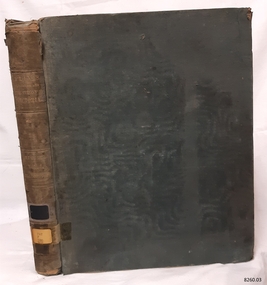 Flagstaff Hill Maritime Museum and Village
Book - Reference Book Victorian Flora, Ferdinand Mueller, The Plants Indigenous To The Colony of Victoria Vol 3, 1864-1865
... While the text volume of Volume 1 was completed earlier (around 1860–1862), the publication date of the subject volumes (1864–1865) specifically refers to the companion volume of "Lithograms" (highly detailed botanical illustration plates) printed by John Ferres to accompany and visually document the Thalamiflorae text. Unlike multi-volume scientific...While the text volume of Volume 1 was completed earlier (around 1860–1862), the publication date of the subject volumes (1864–1865) specifically refers to the companion volume of "Lithograms" (highly detailed botanical illustration plates) printed by John Ferres to accompany and visually document the Thalamiflorae text. Unlike multi-volume scientific ...The Plants Indigenous to the Colony of Victoria is a landmark botanical work by Australia’s prominent colonial botanist, Baron Ferdinand von Mueller. However, there is a common point of confusion in Australian botanical bibliography regarding the "volumes" of this specific work. To understand what Volume 1 and the other three volumes are about, and how they differ from each other in the four-book set, it helps to look at exactly how Mueller’s project was published. Volume 1 represents Mueller's highly detailed, beautifully illustrated standalone success covering the Thalamiflorae. It differs from the subsequent "volumes" because Volume 2 was abandoned as a rare, 40-page unfinished fragment, and Volumes 3 and 4 were never written, as Mueller pivoted to assist with the broader Flora Australiensis.The Plants Indigenous To The Colony of Victoria Vol 1 Author: Ferdinand Mueller Publisher: John Ferres Government Printer Melbourne Date: 1864-1865 Further Information: Blue patterned front cover and spine with gilt lettering to spine and Library labels non-fictionThe Plants Indigenous to the Colony of Victoria is a landmark botanical work by Australia’s prominent colonial botanist, Baron Ferdinand von Mueller. However, there is a common point of confusion in Australian botanical bibliography regarding the "volumes" of this specific work. To understand what Volume 1 and the other three volumes are about, and how they differ from each other in the four-book set, it helps to look at exactly how Mueller’s project was published. Volume 1 represents Mueller's highly detailed, beautifully illustrated standalone success covering the Thalamiflorae. It differs from the subsequent "volumes" because Volume 2 was abandoned as a rare, 40-page unfinished fragment, and Volumes 3 and 4 were never written, as Mueller pivoted to assist with the broader Flora Australiensis.flagstaff hill, warrnambool, shipwrecked coast, flagstaff hill maritime museum, maritime museum, shipwreck coast, flagstaff hill maritime village, great ocean road, book, pattison collection, warrnambool library, warrnambool mechanics’ institute, ralph eric pattison, corangamite regional library service, warrnambool city librarian, mechanics’ institute library, victorian library board, warrnambool books and records, warrnambool children’s library -
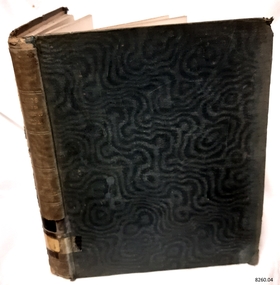 Flagstaff Hill Maritime Museum and Village
Book - Reference Book Victorian Flora, Ferdinand Mueller, The Plants Indigenous To The Colony of Victoria Vol 4, 1864-1865
... While the text volume of Volume 1 was completed earlier (around 1860–1862), the publication date of the subject volumes (1864–1865) specifically refers to the companion volume of "Lithograms" (highly detailed botanical illustration plates) printed by John Ferres to accompany and visually document the Thalamiflorae text. Unlike multi-volume scientific...While the text volume of Volume 1 was completed earlier (around 1860–1862), the publication date of the subject volumes (1864–1865) specifically refers to the companion volume of "Lithograms" (highly detailed botanical illustration plates) printed by John Ferres to accompany and visually document the Thalamiflorae text. Unlike multi-volume scientific ...The Plants Indigenous to the Colony of Victoria is a landmark botanical work by Australia’s prominent colonial botanist, Baron Ferdinand von Mueller. However, there is a common point of confusion in Australian botanical bibliography regarding the "volumes" of this specific work. To understand what Volume 1 and the other three volumes are about, and how they differ from each other in the four-book set, it helps to look at exactly how Mueller’s project was published. Volume 1 represents Mueller's highly detailed, beautifully illustrated standalone success covering the Thalamiflorae. It differs from the subsequent "volumes" because Volume 2 was abandoned as a rare, 40-page unfinished fragment, and Volumes 3 and 4 were never written, as Mueller pivoted to assist with the broader Flora Australiensis.The Plants Indigenous To The Colony of Victoria Vol 1 Author: Ferdinand Mueller Publisher: John Ferres Government Printer Melbourne Date: 1864-1865 Further Information: Blue patterned front cover and spine with gilt lettering to spine and Library labels non-fictionThe Plants Indigenous to the Colony of Victoria is a landmark botanical work by Australia’s prominent colonial botanist, Baron Ferdinand von Mueller. However, there is a common point of confusion in Australian botanical bibliography regarding the "volumes" of this specific work. To understand what Volume 1 and the other three volumes are about, and how they differ from each other in the four-book set, it helps to look at exactly how Mueller’s project was published. Volume 1 represents Mueller's highly detailed, beautifully illustrated standalone success covering the Thalamiflorae. It differs from the subsequent "volumes" because Volume 2 was abandoned as a rare, 40-page unfinished fragment, and Volumes 3 and 4 were never written, as Mueller pivoted to assist with the broader Flora Australiensis.flagstaff hill, warrnambool, shipwrecked coast, flagstaff hill maritime museum, maritime museum, shipwreck coast, flagstaff hill maritime village, great ocean road, book, pattison collection, warrnambool library, warrnambool mechanics’ institute, ralph eric pattison, corangamite regional library service, warrnambool city librarian, mechanics’ institute library, victorian library board, warrnambool books and records, warrnambool children’s library -
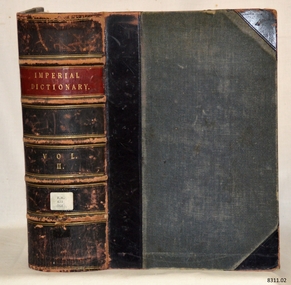 Flagstaff Hill Maritime Museum and Village
Book - Reference Dictionary/Scientific/Technological, John Ogilvie, The Imperial Dictionary English Technological and Scientific Vol 2, 1861
... The Imperial Dictionary English Technological and Scientific Vol 2 Author: John Ogilvie Publisher: Blackie & Son Ltd Date: 1861 Further Information: Black cloth hardcover with a brown leather spine, title lettering in gold. ...The label on spine cover with typed text RH 423 OGI The Imperial Dictionary English Technological and Scientific Vol 2 Author: John Ogilvie Publisher: Blackie & Son Ltd Date: 1861 Further Information: Black cloth hardcover with a brown leather spine, title lettering in gold. ...The Imperial Dictionary was a massive, progressive undertaking designed to be a bridge between a traditional language dictionary and a comprehensive technical encyclopedia. John Ogilvie built the text upon the foundation of Noah Webster’s famous American Dictionary. However, Ogilvie dramatically expanded it to include thousands of new terms born from the Industrial Revolution. It heavily prioritized the vocabulary of engineering, medicine, manufacturing, chemistry, and the arts, alongside a vast array of distinct Scottish and provincial British terms that Webster had omitted.The Imperial Dictionary English Technological and Scientific Vol 2 Author: John Ogilvie Publisher: Blackie & Son Ltd Date: 1861 Further Information: Black cloth hardcover with a brown leather spine, title lettering in gold. The spine has a Library label with an inscription.non-fictionThe Imperial Dictionary was a massive, progressive undertaking designed to be a bridge between a traditional language dictionary and a comprehensive technical encyclopedia. John Ogilvie built the text upon the foundation of Noah Webster’s famous American Dictionary. However, Ogilvie dramatically expanded it to include thousands of new terms born from the Industrial Revolution. It heavily prioritized the vocabulary of engineering, medicine, manufacturing, chemistry, and the arts, alongside a vast array of distinct Scottish and provincial British terms that Webster had omitted.flagstaff hill, warrnambool, shipwrecked coast, flagstaff hill maritime museum, maritime museum, shipwreck coast, flagstaff hill maritime village, great ocean road, book, pattison collection, warrnambool library, warrnambool mechanics’ institute, ralph eric pattison, corangamite regional library service, warrnambool city librarian, mechanics’ institute library, victorian library board, warrnambool books and records, warrnambool children’s library -
 Orbost & District Historical Society
school text book, Thomas Nelson & Sons, Royal Readers No V1, 1895
... However, during the 1890s and especially the early 1900s, governments came under increasing pressure to change the reading books again because these books did not reflect the rapid scientific advances in the 1890s. Royal Readers date quickly when a new syllabus was introduced in 1905. ...However, during the 1890s and especially the early 1900s, governments came under increasing pressure to change the reading books again because these books did not reflect the rapid scientific advances in the 1890s. Royal Readers date quickly when a new syllabus was introduced in 1905. ...The Royal Readers had been prepared especially for Victorian schools and featured some Australian content. The authors made great use of the natural world as well as incidents and common daily events to attract children to the stories. Teachers were encouraged to teach children not only the 'art of reading' but also a 'love of reading'. Illustrations were used effectively to attract children 'through the eye' to the stories and to help them understand same. They were used extensively in Victorian schools as well as in other states. However, during the 1890s and especially the early 1900s, governments came under increasing pressure to change the reading books again because these books did not reflect the rapid scientific advances in the 1890s. Royal Readers date quickly when a new syllabus was introduced in 1905. Education materials were to be relevant to children's daily lives with a demand for greater local content. (info. from http://education.qld.gov.au)This book as an example of school work in the early 20th century. It reflects the the way reading was taught, to young children in Victoria. It reflects the changes in education in East Gippsland and is a useful comparison tool for literacy teaching. A small book with a blue fabric cover. It is titled Royal Readers No V1 and is a part of a series of Royal Readers.inside cover - E.A. Stephenson, Longford.education-texts schools-reading royal-readers -
 Flagstaff Hill Maritime Museum and Village
Book, Scotts Last Expedition Vol 2
... Scientific work undertaken by Dr. E. A. Wilson and the surviving members of the Expedition Arranged by Leonard Huxley Publisher: Smith Elder & Co Date: 1913...Scientific work undertaken by Dr. E. A. Wilson and the surviving members of the Expedition Arranged by Leonard Huxley Publisher: Smith Elder & Co Date: 1913 Scotts Last Expedition Vol 2 Book ...Scotts Last Expedition Vol 2 Being the reports of the Journeys & The Scientific work undertaken by Dr. E. A. Wilson and the surviving members of the Expedition Arranged by Leonard Huxley Publisher: Smith Elder & Co Date: 1913Label on spine cover with typed text RA 923.9 SCO Front loose endpaper has sticker from Warrnambool Public Librarywarrnambool, shipwrecked-coast, flagstaff-hill, flagstaff-hill-maritime-museum, maritime-museum, shipwreck-coast, flagstaff-hill-maritime-village, shipwrecked-artefact, great ocean road, book, warrnambool library, warrnambool mechanics’ institute, mechanics’ institute library, victorian library board, warrnambool books and records, warrnambool children’s library, warrnambool public library, scotts last expedition vol 2, scotts last expedition, leonard huxley -
 Flagstaff Hill Maritime Museum and Village
Book, Scotts Last Expedition Vol 1
... Scientific work undertaken by Dr E.A. Wilson and the surviving members of the Expedition Author: R F Scott arranged by Leonard Huxley Publisher: MacMillan and Co Date: 1913...Scientific work undertaken by Dr E.A. Wilson and the surviving members of the Expedition Author: R F Scott arranged by Leonard Huxley Publisher: MacMillan and Co Date: 1913 Scotts Last Expedition Vol 1 Book ...This item is from the ‘Pattison Collection’, a collection of books and records that was originally owned by the Warrnambool Mechanics’ Institute, which was founded in Warrnambool in 1853. By 1886 the Warrnambool Mechanics’ Institute (WMI) had grown to have a Library, Museum and Fine Arts Gallery, with a collection of “… choice productions of art, and valuable specimens in almost every branch and many wonderful national curiosities are now to be seen there, including historic relics of the town and district.” It later included a School of Design. Although it was very well patronised, the lack of financial support led the WMI in 1911 to ask the City Council to take it over. In 1935 Ralph Pattison was appointed as City Librarian to establish and organise the Warrnambool Library as it was then called. When the WMI building was pulled down in 1963 a new civic building was erected on the site and the new Warrnambool Library, on behalf of the City Council, took over all the holdings of the WMI. At this time some of the items were separated and identified as the ‘Pattison Collection’, named after Ralph Pattison. Eventually the components of the WMI were distributed from the Warrnambool Library to various places, including the Art Gallery, Historical Society and Flagstaff Hill. Later some were even distributed to other regional branches of Corangamite Regional Library and passed to and fro. It is difficult now to trace just where all of the items have ended up. The books at Flagstaff Hill Maritime Village generally display stamps and markings from Pattison as well as a variety of other institutions including the Mechanics’ Institute itself. RALPH ERIC PATTISON Ralph Eric Pattison was born in Rockhampton, Queensland, in 1891. He married Maude Swan from Warrnambool in 1920 and they set up home in Warrnambool. In 1935 Pattison accepted a position as City Librarian for the Warrnambool City Council. His huge challenge was to make a functional library within two rooms of the Mechanics’ Institute. He tirelessly cleaned, cleared and sorted a disarrayed collection of old books, jars of preserved specimens and other items reserved for exhibition in the city’s museum. He developed and updated the library with a wide variety of books for all tastes, including reference books for students; a difficult task to fulfil during the years following the Depression. He converted all of the lower area of the building into a library, reference room and reading room for members and the public. The books were sorted and stored using a cataloguing and card index system that he had developed himself. He also prepared the upper floor of the building and established the Art Gallery and later the Museum, a place to exhibit the many old relics that had been stored for years for this purpose. One of the treasures he found was a beautiful ancient clock, which he repaired, restored and enjoyed using in his office during the years of his service there. Ralph Pattison was described as “a meticulous gentleman whose punctuality, floorless courtesy and distinctive neat dress were hallmarks of his character, and ‘his’ clock controlled his daily routine, and his opening and closing of the library’s large heavy doors to the minute.” Pattison took leave during 1942 to 1945 to serve in the Royal Australian Navy, Volunteer Reserve as Lieutenant. A few years later he converted one of the Museum’s rooms into a Children’s Library, stocking it with suitable books for the younger generation. This was an instant success. In the 1950’s he had the honour of being appointed to the Victorian Library Board and received more inspiration from the monthly conferences in Melbourne. He was sadly retired in 1959 after over 23 years of service, due to the fact that he had gone over the working age of council officers. However he continued to take a very keen interest in the continual development of the Library until his death in 1969. The Pattison Collection, along with other items at Flagstaff Hill Maritime Village, was originally part of the Warrnambool Mechanics' Institute’s collection. The Warrnambool Mechanics’ Institute Collection is primarily significant in its totality, rather than for the individual objects it contains. Its contents are highly representative of the development of Mechanics' Institute libraries across Australia, particularly Victoria. A diversity of publications and themes has been amassed, and these provide clues to our understanding of the nature of and changes in the reading habits of Victorians from the 1850s to the middle of the 20th century. The collection also highlights the Warrnambool community’s commitment to the Mechanics’ Institute, reading, literacy and learning in the regions, and proves that access to knowledge was not impeded by distance. These items help to provide a more complete picture of our community’s ideals and aspirations. The Warrnambool Mechanics Institute book collection has historical and social significance for its strong association with the Mechanics Institute movement and the important role it played in the intellectual, cultural and social development of people throughout the latter part of the nineteenth century and the early twentieth century. The collection of books is a rare example of an early lending library and its significance is enhanced by the survival of an original collection of many volumes. The Warrnambool Mechanics' Institute’s publication collection is of both local and state significance. Scotts Last Expedition Vol 1 Vol 1 Being the Journals of Captain R.F. Scott, R.N., C.V.O. Vol 2 Being the Reports of the Journals and The Scientific work undertaken by Dr E.A. Wilson and the surviving members of the Expedition Author: R F Scott arranged by Leonard Huxley Publisher: MacMillan and Co Date: 1913Label on spine cover with typed text 919.9 SCO Pastedown front endpaper has sticker from Warrnambool Public Library Front loose endpaper has the name W A Grant in hand writting Front loose endpaper has a sticker from Corangamite Regional Library Service Front loose endpaper has a stamp from Corangamite Regional Library Service warrnambool, shipwrecked-coast, flagstaff-hill, flagstaff-hill-maritime-museum, maritime-museum, shipwreck-coast, flagstaff-hill-maritime-village, shipwrecked-artefact, book, pattison collection, warrnambool library, warrnambool mechanics’ institute, ralph eric pattison, corangamite regional library service, warrnambool city librarian, mechanics’ institute library, victorian library board, warrnambool books and records, warrnambool children’s library, great ocean road, scotts last expedition vol 1, r f scott, leonard huxley -
 Flagstaff Hill Maritime Museum and Village
Book, Scotts Last Expedition Vol 2
... Scientific work undertaken by Dr E.A. Wilson and the surviving members of the Expedition Author: R F Scott arranged by Leonard Huxley Publisher: MacMillan and Co Date: 1913...Scientific work undertaken by Dr E.A. Wilson and the surviving members of the Expedition Author: R F Scott arranged by Leonard Huxley Publisher: MacMillan and Co Date: 1913 Scotts Last Expedition Vol 2 Book ...This item is from the ‘Pattison Collection’, a collection of books and records that was originally owned by the Warrnambool Mechanics’ Institute, which was founded in Warrnambool in 1853. By 1886 the Warrnambool Mechanics’ Institute (WMI) had grown to have a Library, Museum and Fine Arts Gallery, with a collection of “… choice productions of art, and valuable specimens in almost every branch and many wonderful national curiosities are now to be seen there, including historic relics of the town and district.” It later included a School of Design. Although it was very well patronised, the lack of financial support led the WMI in 1911 to ask the City Council to take it over. In 1935 Ralph Pattison was appointed as City Librarian to establish and organise the Warrnambool Library as it was then called. When the WMI building was pulled down in 1963 a new civic building was erected on the site and the new Warrnambool Library, on behalf of the City Council, took over all the holdings of the WMI. At this time some of the items were separated and identified as the ‘Pattison Collection’, named after Ralph Pattison. Eventually the components of the WMI were distributed from the Warrnambool Library to various places, including the Art Gallery, Historical Society and Flagstaff Hill. Later some were even distributed to other regional branches of Corangamite Regional Library and passed to and fro. It is difficult now to trace just where all of the items have ended up. The books at Flagstaff Hill Maritime Village generally display stamps and markings from Pattison as well as a variety of other institutions including the Mechanics’ Institute itself. RALPH ERIC PATTISON Ralph Eric Pattison was born in Rockhampton, Queensland, in 1891. He married Maude Swan from Warrnambool in 1920 and they set up home in Warrnambool. In 1935 Pattison accepted a position as City Librarian for the Warrnambool City Council. His huge challenge was to make a functional library within two rooms of the Mechanics’ Institute. He tirelessly cleaned, cleared and sorted a disarrayed collection of old books, jars of preserved specimens and other items reserved for exhibition in the city’s museum. He developed and updated the library with a wide variety of books for all tastes, including reference books for students; a difficult task to fulfil during the years following the Depression. He converted all of the lower area of the building into a library, reference room and reading room for members and the public. The books were sorted and stored using a cataloguing and card index system that he had developed himself. He also prepared the upper floor of the building and established the Art Gallery and later the Museum, a place to exhibit the many old relics that had been stored for years for this purpose. One of the treasures he found was a beautiful ancient clock, which he repaired, restored and enjoyed using in his office during the years of his service there. Ralph Pattison was described as “a meticulous gentleman whose punctuality, floorless courtesy and distinctive neat dress were hallmarks of his character, and ‘his’ clock controlled his daily routine, and his opening and closing of the library’s large heavy doors to the minute.” Pattison took leave during 1942 to 1945 to serve in the Royal Australian Navy, Volunteer Reserve as Lieutenant. A few years later he converted one of the Museum’s rooms into a Children’s Library, stocking it with suitable books for the younger generation. This was an instant success. In the 1950’s he had the honour of being appointed to the Victorian Library Board and received more inspiration from the monthly conferences in Melbourne. He was sadly retired in 1959 after over 23 years of service, due to the fact that he had gone over the working age of council officers. However he continued to take a very keen interest in the continual development of the Library until his death in 1969. The Pattison Collection, along with other items at Flagstaff Hill Maritime Village, was originally part of the Warrnambool Mechanics' Institute’s collection. The Warrnambool Mechanics’ Institute Collection is primarily significant in its totality, rather than for the individual objects it contains. Its contents are highly representative of the development of Mechanics' Institute libraries across Australia, particularly Victoria. A diversity of publications and themes has been amassed, and these provide clues to our understanding of the nature of and changes in the reading habits of Victorians from the 1850s to the middle of the 20th century. The collection also highlights the Warrnambool community’s commitment to the Mechanics’ Institute, reading, literacy and learning in the regions, and proves that access to knowledge was not impeded by distance. These items help to provide a more complete picture of our community’s ideals and aspirations. The Warrnambool Mechanics Institute book collection has historical and social significance for its strong association with the Mechanics Institute movement and the important role it played in the intellectual, cultural and social development of people throughout the latter part of the nineteenth century and the early twentieth century. The collection of books is a rare example of an early lending library and its significance is enhanced by the survival of an original collection of many volumes. The Warrnambool Mechanics' Institute’s publication collection is of both local and state significance. Scotts Last Expedition Vol 2 Vol 1 Being the Journals of Captain R.F. Scott, R.N., C.V.O. Vol 2 Being the Reports of the Journals and The Scientific work undertaken by Dr E.A. Wilson and the surviving members of the Expedition Author: R F Scott arranged by Leonard Huxley Publisher: MacMillan and Co Date: 1913Label on spine cover with typed text 919.9 SCO Pastedown front endpaper has sticker from Warrnambool Public Library Front loose endpaper has the name W A Grant, hand written Front loose endpaper has a sticker from Corangamite Regional Library Service Front loose endpaper has a stamp from Corangamite Regional Library Service warrnambool, shipwrecked-coast, flagstaff-hill, flagstaff-hill-maritime-museum, maritime-museum, shipwreck-coast, flagstaff-hill-maritime-village, shipwrecked-artefact, book, pattison collection, warrnambool library, warrnambool mechanics’ institute, ralph eric pattison, corangamite regional library service, warrnambool city librarian, mechanics’ institute library, victorian library board, warrnambool books and records, warrnambool children’s library, great ocean road, scotts last expedition vol 2, r f scott, leonard huxley -
 Flagstaff Hill Maritime Museum and Village
Book - Technical Reference, Georges M Ville (George M Ville), Artificial Manures, 1909
... Artificial Manures: their chemical selection and scientific application to agriculture Author: Georges M Ville Publisher: Longmans Green & Co. Date...London Artificial Manures chemical selection of artificial manures scientific selection of artificial manures Georges M Ville George Ville French Agriculturalist Agriculture Sir William Crookes John Percival 1909 1882 1910 fertilizers farming farm improvement Label on spine: "PAT 631.8 VIL" Sticker on front endpaper: "Warrnambool Mechanics Institute and Free Library" Sticker on endpaper: "Corangamite Regional Library Service" Stamp: "Corangamite Regional Library Service" Stamp on Fly: "from Warrnambool Public Museum" Handwriting on fly: "Purchased Govt Subsidy 10th May 1910" "Received May 24th 1910" "[signature] Artificial Manures: their chemical selection and scientific application to agriculture Author: Georges M Ville Publisher: Longmans Green & Co. Date ...The author, Georges M. Ville (or George M Ville) was a French agriculturalist and botanist who lived from 1824-1897. His career began as a pharmacist and he is known for his research and experiments on the effects of nitrogen and chemical fertilisers on plants, mostly on his experimental farm, He wrote several books in his field of work. The book is part of Flagstaff Hill's Pattison Collection, a large group of books and records, some of which are rare and valuable. The collection was owned by the Warrnambool Mechanics' Institute, founded in 1853, and is named after Warrnambool's Public Librarian, Ralph Pattison. The handwritten comment on the fly page infers that the book was purchased by a Government subsidy in May 1910 and received in that same month. The book's publisher, Longman, Green & Co. was originally established by Thomas Longman founded his publishing firm in 1724 in London by the name Longman. In August of that year, he bought the two shops and goods of William Taylor and set up his publishing house there at 39 Paternoster Row. The shops were called Black Swan and Ship, and it is said that the 'ship' sign was the inspiration for Longman's Logo. After many changes of name and management, the firm was incorporated in 1926 as Longmans, Green & Co. Pty Ltd. The firm was acquired by Pearson in 1968 and was known as Pearson Longman or Pearson PLC. The Pattison Collection, along with other items at Flagstaff Hill Maritime Village, was originally part of the Warrnambool Mechanics' Institute’s collection. The Warrnambool Mechanics’ Institute Collection is primarily significant in its totality, rather than for the individual objects it contains. Its contents are highly representative of the development of Mechanics' Institute libraries across Australia, particularly Victoria. A diversity of publications and themes has been amassed, and these provide clues to our understanding of the nature of and changes in the reading habits of Victorians from the 1850s to the middle of the 20th century. The collection also highlights the Warrnambool community’s commitment to the Mechanics’ Institute, reading, literacy and learning in the regions, and proves that access to knowledge was not impeded by distance. These items help to provide a more complete picture of our community’s ideals and aspirations. The Warrnambool Mechanics Institute book collection has historical and social significance for its strong association with the Mechanics Institute movement and the important role it played in the intellectual, cultural and social development of people throughout the latter part of the nineteenth century and the early twentieth century. The collection of books is a rare example of an early lending library and its significance is enhanced by the survival of an original collection of many volumes. The Warrnambool Mechanics' Institute’s publication collection is of both local and state significance. Artificial Manures: their chemical selection and scientific application to agriculture Author: Georges M Ville Publisher: Longmans Green & Co. Date: 1909 (first published in 1882) Translated [from French] and edited by Sir William Crookes, D. Scl., F.R.S. New edition revised by Sir William Crookes, D. Sc., F.R.S. and John Percival, M.A. Director of the Department of Agriculture, University College, Reading The blue cloth hardcover book with embossed gold text and lines on the spine contains illustrations and tables. It is part of the Pattison Collection. Inscriptions include a label, stamp, stickers and handwriting.Label on spine: "PAT 631.8 VIL" Sticker on front endpaper: "Warrnambool Mechanics Institute and Free Library" Sticker on endpaper: "Corangamite Regional Library Service" Stamp: "Corangamite Regional Library Service" Stamp on Fly: "from Warrnambool Public Museum" Handwriting on fly: "Purchased Govt Subsidy 10th May 1910" "Received May 24th 1910" "[signature]flagstaff hill, flagstaff hill maritime museum and village, warrnambool, maritime museum, maritime village, great ocean road, shipwreck coast, pattison collection, ralph eric pattison, warrnambool mechanics’ institute, mechanics’ institute library, warrnambool library, free library, corangamite regional library service, longmans green and co. london, artificial manures, chemical selection of artificial manures, scientific selection of artificial manures, georges m ville, george ville, french, agriculturalist, agriculture, sir william crookes, john percival, 1909, 1882, 1910, fertilizers, farming, farm improvement
