
Showing 6 items matching "second world war medical personnel"
-
 Returned Nurses RSL Sub-branch
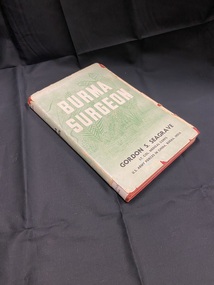
Book - Hardcover book, Dymock's Book Arcade, Burma Surgeon, 1944
... World War Two...medicine - Burma...Gordon S Seagrave...medical missionary - Burma...Second World War medical personnel...WW2 WWII World War Two medicine - Burma Gordon S Seagrave medical missionary - Burma Second World War medical personnel World War Two - medical care Gordon S. ...Gordon S. Seagrave's 'Burma Surgeon' is a compelling memoir detailing his experiences as a medical missionary and surgeon in Burma during World War II. The book is divided into three parts, capturing Seagrave's journey from building a hospital in Burma, his experiences on the Burma Road, to his role in the Battle of Burma. Seagrave, a Lieutenant Colonel and medical officer, recounts the challenges faced by his medical team, the construction of medical facilities, and the provision of care under dire conditions. He provides vivid descriptions of the terrain, the hardships of war, and the resilience of the Burmese people. The book also highlights his interactions with the American Volunteer Group and the logistical struggles of wartime medicine. Aimed at readers interested in military history and medicine, the memoir serves as both a historical account and a tribute to the courage and dedication of medical personnel during the war. [taken from Trove]Red hard cover book with a very faded and torn green dust jacket. The spine label and front cover have a green hand drawn image of jungle plants in the background with the title printed in large white letters across the front. Author is printed in black at the bottom. Title printed in black on the spine and a spine label is taped to the base.non-fictionGordon S. Seagrave's 'Burma Surgeon' is a compelling memoir detailing his experiences as a medical missionary and surgeon in Burma during World War II. The book is divided into three parts, capturing Seagrave's journey from building a hospital in Burma, his experiences on the Burma Road, to his role in the Battle of Burma. Seagrave, a Lieutenant Colonel and medical officer, recounts the challenges faced by his medical team, the construction of medical facilities, and the provision of care under dire conditions. He provides vivid descriptions of the terrain, the hardships of war, and the resilience of the Burmese people. The book also highlights his interactions with the American Volunteer Group and the logistical struggles of wartime medicine. Aimed at readers interested in military history and medicine, the memoir serves as both a historical account and a tribute to the courage and dedication of medical personnel during the war. [taken from Trove]ww2, wwii, world war two, medicine - burma, gordon s seagrave, medical missionary - burma, second world war medical personnel, world war two - medical care -
 Lara RSL Sub Branch
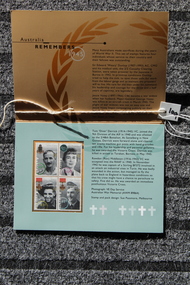
Australian Stamp Pack - Australia Remembers, Stamp Pack 4 x 45c, 1995
... Second page Australia Remembers 1945 with details of stamps light brown back ground Third page 4 stamps with details of personnel light blue background. Last page small advertisements Orange back ground. Australia Post 4 x 45c Stamp Pack issued 1995 Contents are a collection of 4 stamps showing people who made a valuable contribution and service. This pack includes : Sir Edward " Weary" Dunlop (1907-1993) AC, CMG, mentioned for Medical Treatment rendered to World War ...Australia Post 4 x 45c Stamp Pack issued 1995 Contents are a collection of 4 stamps showing people who made a valuable contribution and service. This pack includes : Sir Edward " Weary" Dunlop (1907-1993) AC, CMG, mentioned for Medical Treatment rendered to World War 2 prisoners of War. Jessie Vasey (1897-1966) CBE awarded for founding and service to The War Widows Guild. John "Diver" Derrick (1914-1945) VC, mentioned for his being awarded the Victoria Cross for bravery in New Guinea during World War 2. Rawdon "RON" Middleton (1916-1942) VC mentioned for his service during World War 2 RAAF The Stamp Pack consists of 4 pages : front page Australia Remembers 1945 with picture of V.C.Mostly black and White with Orange and Red. Second page Australia Remembers 1945 with details of stamps light brown back ground Third page 4 stamps with details of personnel light blue background. Last page small advertisements Orange back ground.australia post 4 x 45 cent stamp pack "australia remembers" 1994 -
 Flagstaff Hill Maritime Museum and Village
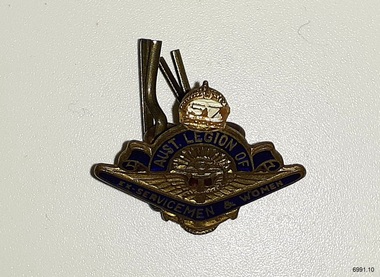
Badge - Australian Legion of Ex-Servicemen and Women, Stokes, Membership badge, 1957
... medical objects that date back to the late 1800s. Flagstaff Hill Warrnambool Maritime Museum Maritime Village Great Ocean Road Shipwreck Coast W.R. Angus badge Ladies’ Badge military service Stokes Melbourne Australian Legion of Ex-Servicemen and Women membership badge 1957 membership badge Ex=service personnel heraldry World War II Second World War Tri-Services symbol Badge of Unity rising sun anchor pair of wings FRONT; “AUST. ...The badge was issued by the Victorian branch (indicated by the 'V' on the reverse) of the Australian Legion of Ex-Servicemen and Women and is referred to as The Badge of Unity or Tri-Services badge, uniting the armed services of Australia; the Army (rising sun), the Navy (anchor) and the Air Force (pair of wings). The number '57' on the crown represents the year of paid membership; 1957. The badge belonged to Dr W R Angus, who served in the Australian Army as a military doctor during WWII. It was made in Melbourne by Stokes in 1957, around 100 years after the firm was established by Thomas Stokes in Mincing Lane, Melbourne. The firm was operating from Caledonian Lane/Post Office Place in the 1950s. The badge is one of a set of badges collected by Dr W R Angus from the organisations in which he was involved. They are now part of Flagstaff Hill’s comprehensive W.R. Angus Collection, donated by the family of Dr W R Angus, surgeon and oculist. Australian Legion of Ex-Servicemen and Women was formed in 1944 to "entourage fellowship and assist those who have served". The organisation is open to members from Australia, British Commonwealth and Allied ex-service personnel. The W.R. Angus Collection: - The W.R. Angus Collection includes historical medical equipment, surgical instruments and material once belonging to Dr Edward Ryan and Dr Thomas Francis Ryan, (both of Nhill, Victoria) as well as Dr Angus’ own belongings. The Collection’s history spans the medical practices of the two Doctors Ryan, from 1885-1926 plus that of Dr Angus, up until 1969. It includes historical medical and surgical equipment and instruments from the doctors Edward and Thomas Ryan of Nhill, Victoria. Dr Angus married Gladys in 1927 at Ballarat, the nearest big city to Nhill where he began as a Medical Assistant. He was also Acting House surgeon at the Nhill hospital where their two daughters were born. During World War II He served as a Military Doctor in the Australian Defence Force. Dr Angus and his family moved to Warrnambool in 1939, where Dr Angus operated his own medical practice. He later added the responsibility of part-time Port Medical Officer and was the last person appointed to that position. Both Dr Angus and his wife were very involved in the local community, including the planning stages of the new Flagstaff Hill and the layout of the gardens there. Dr Angus passed away in March 1970.This Badge of Unity, or Tri-Service badge, is significant for connecting Doctor Angus with organisations that support men and women who performed military service for Australia. The badge was for membership with the organisation, which supports ex-servicemen and women of the three military forces; Army, Navy and Air Force. The W.R. Angus Collection is significant for still being located at the site it is connected with, Doctor Angus being the last Port Medical Officer in Warrnambool. The Collection includes historical medical objects that date back to the late 1800s.Badge; a gold-coloured metal and enamel badge. The blue boomerang-shaped band is below an arch of blue, below a crown with a number and coloured red, white and blue. There are symbols in the centre; a rising sun, above a pair of wings, with an anchor in the centre of both. There is red and blue scrollwork behind the symbols. Inscriptions are on the front and back of the badge. There are two loops and pins on the back of the badge. It is a membership badge of the Victorian branch of the Australian Legion of Ex-Servicemen and Women and was made by Stokes in 1957. The badge has a Serial Number. This badge is part of a set of badges collected by Dr Angus and is part of the W.R. Angus Collection.FRONT; “AUST. LEGION OF / EX-SERVICEMEN & WOMEN” On crown “57” REVERSE; “V” “13156" "STOKES” flagstaff hill, warrnambool, maritime museum, maritime village, great ocean road, shipwreck coast, w.r. angus, badge, ladies’ badge, military service, stokes, melbourne, australian legion of ex-servicemen and women, membership badge, 1957 membership badge, ex=service personnel, heraldry, world war ii, second world war, tri-services symbol, badge of unity, rising sun, anchor, pair of wings -
 Flagstaff Hill Maritime Museum and Village
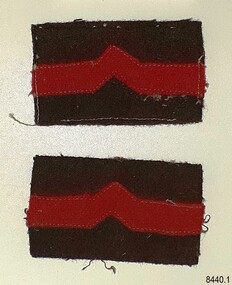
Badge - Australian Military cloth patch, Army Medical Corps, Non-Divisional Units, 1925 - 1942
... World War and into the early Second World War era. During peacetime training, the "brown with a cherry-red crossbar" badge was initially used for the 8th Field Ambulance, 2nd Military District Medical and Veterinary Stores. The colour patch was approved for wear by full-time duty personnel...World War and into the early Second World War era. During peacetime training, the "brown with a cherry-red crossbar" badge was initially used for the 8th Field Ambulance, 2nd Military District Medical and Veterinary Stores. The colour patch was approved for wear by full-time duty personnel ...The cloth insignia badges date to 1925-1940, after the First World War and into the early Second World War era. During peacetime training, the "brown with a cherry-red crossbar" badge was initially used for the 8th Field Ambulance, 2nd Military District Medical and Veterinary Stores. The colour patch was approved for wear by full-time duty personnel of all medical units apart from the Infantry and Cavalry. In 1942 these patches were replaced by the new scheme of colour patches introduced by the Australian Army Medical Corps. Dr W R Angus was a Surgeon Captain for the Australian Defence Forces, Army Medical Corps, stationed in Ballarat, Victoria, and in Bonegilla, N.S.W. He completed his service just before the end of the war due to suffering from a heart attack. The badges are now part of Flagstaff Hill’s comprehensive W.R. Angus Collection, donated by the family of Dr W R Angus (1901-1970), surgeon and oculist. The W.R. Angus Collection: - The W.R. Angus Collection includes historical medical equipment, surgical instruments and material belonging to Dr Edward Ryan and Dr Thomas Francis Ryan, (both of Nhill, Victoria) and Dr Angus’ own belongings. The Collection’s history spans the medical practices of the two Doctors Ryan, from 1885-1926 plus that of Dr Angus, up until 1969. It includes historical medical and surgical equipment and instruments from the doctors Edward and Thomas Ryan of Nhill, Victoria. Dr Angus married Gladys in 1927 at Ballarat, the nearest big city to Nhill where he began as a Medical Assistant. He was also Acting House surgeon at the Nhill hospital where their two daughters were born. During World War II He served as a Military Doctor in the Australian Defence Forces. Dr Angus and his family moved to Warrnambool in 1939, where Dr Angus operated his own medical practice. He later added the part-time Port Medical Officer responsibility and was the last person appointed to that position. Both Dr Angus and his wife were very involved in the local community, including the planning stages of the new Flagstaff Hill and the layout of the gardens there. Dr Angus passed away in March 1970.These colour insignia patches represent the history between the First and Second World Wars and the evolution of Australian Army Medical Corps patches. They Dr W R Angus (1901-1970), surgeon and oculist, collected a range of military objects including those he personally used during his time as Surgeon Captain in the Australian Defence Forces in World War II. The item allows insight into military life in the early-to-mid 20th century. The W.R. Angus Collection is significant for still being located at the site it is connected with, Doctor Angus being the last Port Medical Officer in Warrnambool. The Collection includes historical medical objects that date back to the late 1800s.Badge, cloth insignia patch. Pair of two Insignia colour patches.Red stripe with an inverted 'V' shape on brown fabric. Insignia of the Australian Army Medical Corps, Non-Divisional Units. One badge has light-coloured stitches around the perimeter. The cloth patches belonged to Dr W R Angus and are now part of the W. R. Angus Collection.flagstaff hill, warrnambool, maritime village, maritime museum, shipwreck coast, great ocean road, flagstaff hill maritime museum and village, dr w r angus, w.r. angus collection, australian army, surgeon captain, ballarat, bonegilla, badge, insignia, badge collection, world war 2, second world war, australian defence forces, army medical corps, military uniform, cloth patch, insignia patch, australian army medical corp (militia), ww 2, ww ii, 1925-1940, military badge, non-divisional unit, aamc, 1940-1942, 8th field ambulance, peacetime training, insignia history -
 Flagstaff Hill Maritime Museum and Village
Badge - Australian Military cloth patch, Army Medical Corps, Non-Divisional Units, 1925 - 1942
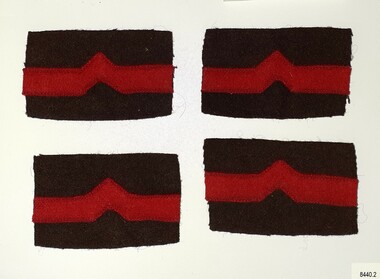
... World War and into the early Second World War era. During peacetime training, the "brown with a cherry-red crossbar" badge was initially used for the 8th Field Ambulance, 2nd Military District Medical and Veterinary Stores. The colour patch was approved for wear by full-time duty personnel...World War and into the early Second World War era. During peacetime training, the "brown with a cherry-red crossbar" badge was initially used for the 8th Field Ambulance, 2nd Military District Medical and Veterinary Stores. The colour patch was approved for wear by full-time duty personnel ...The cloth insignia badges date to 1925-1940, after the First World War and into the early Second World War era. During peacetime training, the "brown with a cherry-red crossbar" badge was initially used for the 8th Field Ambulance, 2nd Military District Medical and Veterinary Stores. The colour patch was approved for wear by full-time duty personnel of all medical units apart from the Infantry and Cavalry. In 1942 these patches were replaced by the new scheme of colour patches introduced by the Australian Army Medical Corps. Dr W R Angus was a Surgeon Captain for the Australian Defence Forces, Army Medical Corps, stationed in Ballarat, Victoria, and in Bonegilla, N.S.W. He completed his service just before the end of the war due to suffering from a heart attack. The badges are now part of Flagstaff Hill’s comprehensive W.R. Angus Collection, donated by the family of Dr W R Angus (1901-1970), surgeon and oculist. The W.R. Angus Collection: - The W.R. Angus Collection includes historical medical equipment, surgical instruments and material belonging to Dr Edward Ryan and Dr Thomas Francis Ryan, (both of Nhill, Victoria) and Dr Angus’ own belongings. The Collection’s history spans the medical practices of the two Doctors Ryan, from 1885-1926 plus that of Dr Angus, up until 1969. It includes historical medical and surgical equipment and instruments from the doctors Edward and Thomas Ryan of Nhill, Victoria. Dr Angus married Gladys in 1927 at Ballarat, the nearest big city to Nhill where he began as a Medical Assistant. He was also Acting House surgeon at the Nhill hospital where their two daughters were born. During World War II He served as a Military Doctor in the Australian Defence Forces. Dr Angus and his family moved to Warrnambool in 1939, where Dr Angus operated his own medical practice. He later added the part-time Port Medical Officer responsibility and was the last person appointed to that position. Both Dr Angus and his wife were very involved in the local community, including the planning stages of the new Flagstaff Hill and the layout of the gardens there. Dr Angus passed away in March 1970.These colour insignia patches represent the history between the First and Second World Wars and the evolution of Australian Army Medical Corps patches. Dr W R Angus (1901-1970), surgeon and oculist, collected a range of military objects including those he personally used during his time as Surgeon Captain in the Australian Defence Forces in World War II. The item allows insight into military life in the early-to-mid 20th century. The W.R. Angus Collection is significant for still being located at the site it is connected with, Doctor Angus being the last Port Medical Officer in Warrnambool. The Collection includes historical medical objects that date back to the late 1800s.Badge, cloth insignia patch. Set of four Insignia colour patches.Red stripe with an inverted 'V' shape on brown fabric. Insignia of the Australian Army Medical Corps, Non-Divisional Units. The cloth patches belonged to Dr W R Angus and are now part of the W. R. Angus Collection.flagstaff hill, warrnambool, maritime village, maritime museum, shipwreck coast, great ocean road, flagstaff hill maritime museum and village, dr w r angus, w.r. angus collection, australian army, surgeon captain, ballarat, bonegilla, badge, insignia, badge collection, world war 2, second world war, australian defence forces, army medical corps, military uniform, cloth patch, insignia patch, australian army medical corp (militia), ww 2, ww ii, 1925-1940, military badge, non-divisional unit, aamc, 1940-1942, 8th field ambulance, peacetime training, insignia history -
 Warrnambool and District Historical Society Inc.
Document - Charles Geary Collection, 1915-1922
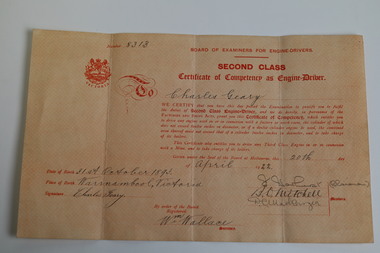
... second class engine driver.. This collection gives examples of references and certificates of leave required to join the A.I.F. in 1916. The discharge certificate is a good example of what was given to military personnel after their services were no longer required. The llicense and certificate of competency show some of Charles' post war endeavours. Charles is listed on the Warrnambool Fire Brigade World War 1 Honour Roll as an active member. Charles Geary Australian Army Medical ...This collection of six documents (1915-1922) belonged to Charles Geary who was born in Warrnambool, the son of Thomas and Martha Ellen Geary in 1893. The collection documents his joining the Australian Imperial Expeditionary Force A.A.M.C. Dental Reserve, his subsequent discharge and post military employment in the Town of Warrnambool as a Hackney Carriage Driver and later as a second class engine driver.. This collection gives examples of references and certificates of leave required to join the A.I.F. in 1916. The discharge certificate is a good example of what was given to military personnel after their services were no longer required. The llicense and certificate of competency show some of Charles' post war endeavours. Charles is listed on the Warrnambool Fire Brigade World War 1 Honour Roll as an active member. (.1) Typewritten refence on Robinson's Motor Pty. Ltd. green and navy printed letterhead with a purple ink stamp and black written signature and embossed company seal. (.2) Reference, handwritten in black ink on blue 8mm lined white paper with a 38mm printed margin. (.3) Black print on a cream certificate completed in black ink. (.4) Cotton woven paper certificate completed in blue, black and red ink with black ink thumb prints. (.5) Black printed Certificate number 1069 on cream paper completed in black ink. (.6) Peach coloured certificate with red printing on heavy weight paper completed in black ink and numbered 8313charles geary, australian army medical corps dental reserve, a.a.m.c., robinson's motor proprietary limited, geo powell, country fire brigades board of victoria, hackney carriage driver's license, second class engine driver, dental mechanic
