
Showing 20 items matching "selwyn map"
-
 Bendigo Historical Society Inc.
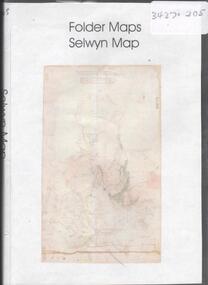
Map - SELWYN MAP
... SELWYN MAP...Selwyn map...DVD. Selwyn Map....Selwyn map Maps Bendigo DVD. Selwyn Map. Map SELWYN MAP ...DVD. Selwyn Map.selwyn map, maps, bendigo -
 Federation University Historical Collection
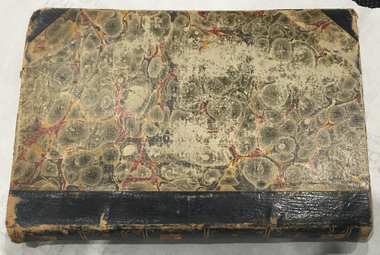
Book, Selection of Geological Publications, 09/1866
... Maps. This book has seven reports that Krause had bound together for his own use. treatment auriferous lead silver ores nuggetty reef maldon victoria internal communication roads for victoria mining mineral statistics geography geology mineralogy ulrich amsinck selwyn ferdinand krause macredie Leather component is black with gold bands on spine with "Silver Ores etc" written on spine. ...This book was owned and used by Professor Ferdinand M. Krause of the Ballarat School of Mines.Ferdinand Krause was a renowned teacher at the Ballarat School of Mines. He also produced many important Geological Maps. This book has seven reports that Krause had bound together for his own use. Half black leather bound book with hand marbled paper cover. Marbling on cover is grey, maroon and darker grey with gold bands on black leather spine. The book contains 7 papers on various subjects associated with ores. The book includes: 1. Auriferous, Leads, & Silver Ores at Upper Hungary - G.H.F. Ulrich, 1868 2. Nuggetty Reef, Maldon, Victoria - G.H.F. Ulrich, 1866 3. Internal Communication - Lieut. Amsinck, 1856 4. Roads for Victoria - William Macredie, 1856 5. Mining & Mineral Statistics of Victoria - Robert Brough Smyth, 1866 6. Physical Geography & Geology of Victoria - R.C. Selwyn, 1866 7. Mineralogy of Victoria - G.H.F. Ulrich, 1866 Leather component is black with gold bands on spine with "Silver Ores etc" written on spine. 'G" on square cream paper at top of spine; "2" on square cream paper on middle of spine; and "3" on square cream paper on bottom of spine. Inside front cover on red paper rectangle near spine "bound by W. PAUL 17 Lydiard St BALLARAT" "Ferdinand M Krause C E" handwritten in black ink on title page of first paper (right hand side)treatment, auriferous, lead, silver ores, nuggetty reef, maldon, victoria, internal communication, roads for victoria, mining, mineral statistics, geography, geology, mineralogy, ulrich, amsinck, selwyn, ferdinand krause, macredie -
 Federation University Historical Collection
Map - Map - Geological, Geological Survey of Victoria - Ballarat, 09/1858
... ballarat ballaarat geology goldfield phillips j. phillips mining alfred Selwyn Ferguson and Mitchell Coloured Geological Map of Ballarat, edged with masking tape. ...Coloured Geological Map of Ballarat, edged with masking tape. The map show alluvial silt, gold drift, geological orders, volcanic, and gold workings. Scale is 8 chains to an inch. WGS 84 Centroid: 37 degrees 33 feet 33 inches south 143 degrees 52 feet 02 inches east W.E. extent: 5km NS extent: 3 kmballarat, ballaarat, geology, goldfield, phillips, j. phillips, mining, alfred selwyn, ferguson and mitchell -
 The Beechworth Burke Museum
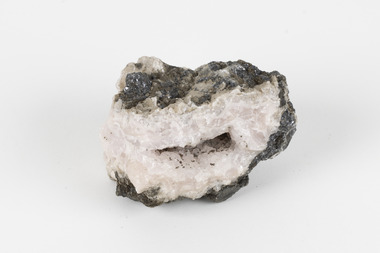
Geological specimen - Dolomite
... map the geology of Victoria. Collecting geological specimens was an important part of mapping and understanding the scientific makeup of the earth. Many of these specimens were sent to research and collecting organisations across Australia, including the Burke Museum, to educate and encourage further study. Geological Specimen geology Geology Collection Burke Museum Beechworth dolomite mineralogy geological survey alfred selwyn ...Dolomite is a mineral, calcium magnesium carbonate, with the chemical formula CaMg(CO3)2. It is a principle component of various rock types sometimes also referred to as dolomite, including dolostone, dolomitic marble and dolomitic limestone (according to the composition of each type). Dolomite rock is found in sedimentary basins throughout the world, comprising approximately 2% of the Earth's crust. It is formed when lime mud or limestone encounters groundwater containing magnesium. Dolomite can contain elements such as lead, zinc and copper. Dolomite and limestone are used in various construction, landscaping and agricultural processes. This specimen was donated to the Burke Museum in 1868 by Alfred Selwyn as part of the Geological Survey of Victoria. It was donated to the Museum in 1868. Victoria and other regions of Australia were surveyed for sites of potential mineral wealth throughout the 19th Century. The identification of sites containing valuable commodities such as gold, iron ore and gemstones in a locality had the potential to shape the development and history of communities and industries in the area. The discovery of gold in Victoria, for instance, had a significant influence on the development of the area now known as 'the goldfields', including Beechworth; the city of Melbourne and Victoria as a whole. Dolomite and limestone are mined at several locations in Victoria, including sites in the North-East of the state in Bindi and Limestone Creek. There are notable dolomite deposits in most Australian states. The dolomitised form of the mineral tends to come from older limestone deposits, formed during the palaeozoic era in marine settings, so this specimen may have come from a deposit located along a coastline in Victoria or another state. The specimen is significant as an example of surveying activity undertaken to assess and direct the development of the mineral resource industries in Victoria and Australia, as well as the movement to expand human knowledge of earth sciences such as mineralogy and geology in the nineteenth century. This specimen is part of a larger collection of geological and mineral specimens collected from around Australia (and some parts of the world) and donated to the Burke Museum between 1868-1880. A large percentage of these specimens were collected in Victoria as part of the Geological Survey of Victoria that begun in 1852 (in response to the Gold Rush) to study and map the geology of Victoria. Collecting geological specimens was an important part of mapping and understanding the scientific makeup of the earth. Many of these specimens were sent to research and collecting organisations across Australia, including the Burke Museum, to educate and encourage further study.Hand-sized piece of pale pink dolomite (calcium magnesium carbonate) with dark grey rim and hollowed centre. geological specimen, geology, geology collection, burke museum, beechworth, dolomite, mineralogy, geological survey, alfred selwyn, limestone, calcium magnesium carbonate -
 The Beechworth Burke Museum
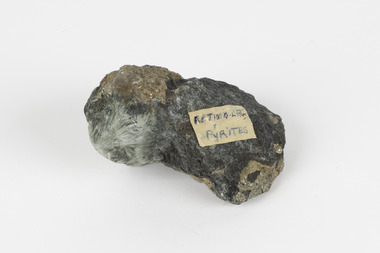
Geological specimen - Actionlite and Pyrite
... map the geology of Victoria. Collecting geological specimens was an important part of mapping and understanding the scientific makeup of the earth. Many of these specimens were sent to research and collecting organisations across Australia, including the Burke Museum, to educate and encourage further study. Geological Specimen geology Geology Collection Burke Museum Beechworth indigo shire geological mineralogy pyrite actinolite victoria Sewyln Alfred Selwyn ...Actinolite is usually found in metamorphic rocks, such as contact aureoles surrounding cooled intrusive igneous rocks. It also occurs as a product of the metamorphism of magnesium-rich limestones. Pyrite is usually found with other sulfides or oxides in quartz veins, sedimentary rock, and metamorphic rock, as well coal beds, and as a replacement mineral in fossils. Actinolite is an amphibole silicate mineral. It is named after the Greek word "aktinos" meaning “ray” in allusion to the mineral's fibrous nature. Fibrous actinolite is a type of asbestos and was once mined along Jones Creek at Gundagai, New South Wales. Pyrite or "Fool's Gold" is the most common sulfide mineral. It is named after the Greek "pyr" meaning "fire" because it can be used to create sparks needed for a fire if struck against metal or a hard surface. Due to its gold colour, pyrite can be mistaken for gold and often forms alongside it, causing small amounts of gold to be present in rocks containing pyrite. Most importantly, pyrite is an ore of gold. Pyrite is sometimes used as a gemstone but is not great for jewellery as it easily tarnishes. In some fossils of ammonites – shelled cephalopods that died ~66 million years ago – pyrite also replaces the shell. This specimen is part of a larger collection of geological and mineral specimens collected from around Australia (and some parts of the world) and donated to the Burke Museum between 1868-1880. A large percentage of these specimens were collected in Victoria as part of the Geological Survey of Victoria that begun in 1852 (in response to the Gold Rush) to study and map the geology of Victoria. Collecting geological specimens was an important part of mapping and understanding the scientific makeup of the earth. Many of these specimens were sent to research and collecting organisations across Australia, including the Burke Museum, to educate and encourage further study. A small-medium-sized solid specimen with the minerals actinolite (dark green fibrous) and pyrite (brassy) with shades of brown, black/grey, and white. Actinolite is an amphibole mineral in the tremolite-actinolite series of calcium, magnesium, and iron silicates. Pyrite is an iron disulfide mineral.geological specimen, geology, geology collection, burke museum, beechworth, indigo shire, geological, mineralogy, pyrite, actinolite, victoria, sewyln, alfred selwyn -
 The Beechworth Burke Museum
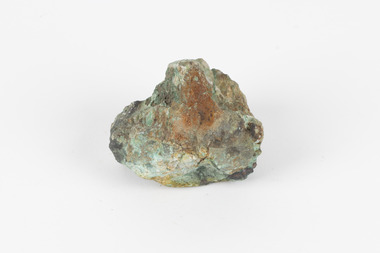
Geological specimen - Malachite, unknown
... map the geology of Victoria. Collecting geological specimens was an important part of mapping and understanding the scientific makeup of the earth. Many of these specimens were sent to research and collecting organisations across Australia, including the Burke Museum, to educate and encourage further study. Geological Specimen geology Geology Collection Burke Museum Beechworth malachite copper water soluble cobar cobar mines cobar mining cobar NSW NSW New South Wales mining belts ore copper ore malachite green dye green dye industry textile industry desposits canbelego girilambone alfred selwyn A solid hand-sized mineral with shades of brown , white and light green throughout. ...Malachite is a water soluble, crystalline, triphenyl methylene chloride salt. It has a close relationship to copper because it is common for Malachite and copper to come from the same ore. Malachite often has shades of green, making it also known as Malachite Green. As a result of it's colour, it is known for being a dye and has been used in the dye industry, the textile industry and in medical fields. Cobar in New South Wales is well known for it's mining. This is because of the number of important deposits present in the area and include three important mining belts where most of the materials are found. These are the 'Cobar belt', the 'Canbelego belt' and the 'Girilambone belt'. The 'Cobar belt' runs underneath the main town. Copper was first discovered in Cobar in 1869 and since then, many deposits of other materials have been found, including Malachite.This specimen is significant because it comes from Cobar, NSW and represents the many deposits of materials found there. Cobar has a long history of mining and is a source of Australia's copper minerals. Malachite is often found in copper deposits meaning that it is representative of Cobar's copper production. Malachite is known for it's vivid green colour and as a result, has many uses, such as meaning used as a dye. This makes it a valuable material and highly significant. This specimen is part of a larger collection of geological and mineral specimens collected from around Australia (and some parts of the world) and donated to the Burke Museum between 1868-1880. A large percentage of these specimens were collected in Victoria as part of the Geological Survey of Victoria that begun in 1852 (in response to the Gold Rush) to study and map the geology of Victoria. Collecting geological specimens was an important part of mapping and understanding the scientific makeup of the earth. Many of these specimens were sent to research and collecting organisations across Australia, including the Burke Museum, to educate and encourage further study.A solid hand-sized mineral with shades of brown , white and light green throughout.geological specimen, geology, geology collection, burke museum, beechworth, malachite, copper, water soluble, cobar, cobar mines, cobar mining, cobar nsw, nsw, new south wales, mining belts, ore, copper ore, malachite green, dye, green, dye industry, textile industry, desposits, canbelego, girilambone, alfred selwyn -
 The Beechworth Burke Museum
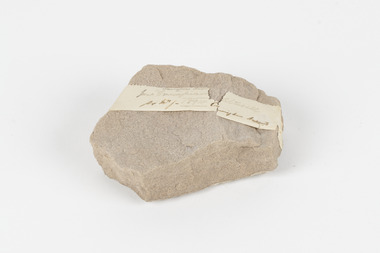
Geological specimen - Slice Dendrites on Sandstone, Unknown
... map of the state. It was headed by British geologist, Alfred Richard Cecil Selwyn (1824-1902), who was responsible for issuing over 60 geological maps during his 17 years as director. ...Dendrites are deposits of black minerals, typically manganese oxides that precipitated from water seeping through fractures in fine-grain rocks like a sandstone or limestone. Dendrites are much less regular than plant fossils and lacks vein structures. The manganese cryztallizes through the process called 'supercooling'. Some samples of dendrites occur in volcanic rocks in the Lilydale district, east of Melbourne. Sandstones are made of tiny sand grains that may have been deposited in the sea and later formed together. Most sandstones are made of quartz which are chemically-resistant minerals. This particular specimen was donated by Alfred Selwyn in 1868 as part of the Geological Survey of Victoria. It is connected to the original 1875 catalogue on Geological Specimen with number 189 'Quartz Crystals_Quartz Crystals (two are polished)'Dendrites on sandstones This specimen is an important contribution to the geological history of Victoria, as well as its links to the 1868 Geological Survey of Victoria. This specimen is part of larger collection of significant geological specimens in the Burke Museum that was collected from around the world between 1868-1880. A large percentage of these specimens were collection as part of the Geological Survey of Victoria 1852-1974. The Geological Survey of Victoria was an organisation founded in response to the Victorian gold rush to explore the geological and mineral resources and to record a detailed map of the state. It was headed by British geologist, Alfred Richard Cecil Selwyn (1824-1902), who was responsible for issuing over 60 geological maps during his 17 years as director. These maps were all hand-drawn and coloured and became the benchmark for accuracy for geological mapping. Collecting geological specimens was an important part of mapping and understanding the scientific makeup of the earth. Many of these specimens were sent to research and collecting organisations across Australia, including the Burke Museum, to educate and encourage further study. A hand-sized slice of light brown sandstone with dendrites formed from crystallized manganese oxide.Existing label: Not sure what / 'Slica dondrites' / means. / Sample is sandstone and original label / identifies it as from / the Grampians near Stawell. / C. Willman / 15/4/21 Other label: [illegible] / stone [ illegible] / from Grampians Stawell / 1894 /geological specimen, geology, geology collection, burke museum, beechworth, dendrites, sandstones, quartz, lilydale district, geological survey of victoria, grampians, victoria rocks, minerals, rocks, manganese oxides, alfred selwyn -
 The Beechworth Burke Museum
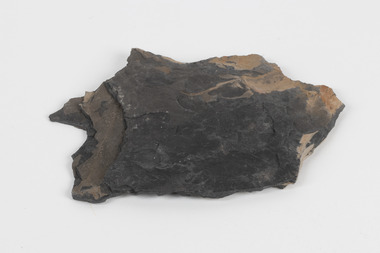
Geological specimen - Oil shale
... map the geology of Victoria. Collecting geological specimens was an important part of mapping and understanding the scientific makeup of the earth. Many of these specimens were sent to research and collecting organisations across Australia, including the Burke Museum, to educate and encourage further study. Geological Specimen geology Geology Collection Burke Museum Beechworth oil shale shale fossil fuels Alfred Selwyn ...This particular specimen is found in Wolgan Valley, New South Wales. It could be linked to the abandoned oil shale mining sites in Wolgan Valley such as Newnes. Newnes was an industrial complex operational in the early 20th century is now partly surrounded by Wollemi National Park. It produced motor spirit, kerosene, and gas oil. Newnes's Torbanite oil shale rock contained around 350 litres of oil shale per tonne. The Torbanite was mined by the Commonwealth Oil Corporation Ltd. Oil shale is a sedimentary rock and also a form of fossil fuel. It is often formed millions of years ago and usually contain fossilised remains of plants and/or animals. Oil shale is rich in kerogen that releases hydrocarbon when heated. These hydrocarbon can be used as an alternative petroleum or natural gas. The oil-shale rock was converted into oil by "destructive distillation"; the rock being heated until it broke down to form an oily vapour and an ash residue. Oil bearing shale is one of Australia's national assets. There are many oil companies established in Australia. It reflects Australia's rich natural resources as well as connection to the Australia's engineering and oil industry. The booming oil shale extraction businesses can be traced as far back as 1920s. This specimen is part of a larger collection of geological and mineral specimens collected from around Australia (and some parts of the world) and donated to the Burke Museum between 1868-1880. A large percentage of these specimens were collected in Victoria as part of the Geological Survey of Victoria that begun in 1852 (in response to the Gold Rush) to study and map the geology of Victoria. Collecting geological specimens was an important part of mapping and understanding the scientific makeup of the earth. Many of these specimens were sent to research and collecting organisations across Australia, including the Burke Museum, to educate and encourage further study.Piece of dark gray oil bearing shale with shades of light brown and fossilised leavesExisting label: OIL BEARING SHALE with / FOSSILISED LEAVES / Locality: Wongan Valley, NSW / Donor: Miss M. Cambell geological specimen, geology, geology collection, burke museum, beechworth, oil shale, shale, fossil fuels, alfred selwyn, wolgen valley, 1868 geological survey of victoria, rocks, sedimentary rocks, newnes, torbanite, commonwealth oil corporation ltd -
 The Beechworth Burke Museum
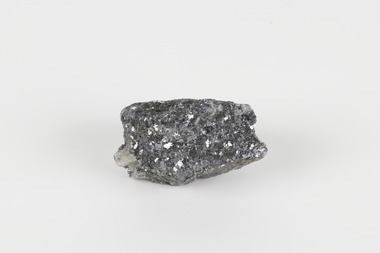
Geological specimen - Galena (lead sulphide), Unknown
... map the geology of Victoria. Collecting geological specimens was an important part of mapping and understanding the scientific makeup of the earth. Many of these specimens were sent to research and collecting organisations across Australia, including the Burke Museum, to educate and encourage further study. Geological Specimen geology Geology Collection Burke Museum Beechworth galena lead sulphide Alfred Selwyn ...Galena occurs in a range of deposit contexts, often in metalliferous veins, such as Broken Hill, Australia; Coeur d’Alene, Idaho, United States.; Clausthal Zellerfeld, Germany; and Cornwall, England. Large deposits also replace limestone, dolomite, or occasionally organic matter, or have a contact-metamorphic origin. Galena is additionally found in cavities, brecciated (fractured) zones in limestone and chert, and in coal beds. This specimen was recovered from Broken Hill NSW and is 60% lead with 8-12 oz/silver to the ton.Galena or 'lead glance' is a grey lead sulfide and the chief ore mineral of lead. It forms isometric crystals in which the ionic lattice is similar to sodium chloride. Galena is brittle and easily weathers to secondary lead minerals, with the upper part of mineral deposits often containing cerussite, anglesite, and pyromorphite. It usually contains silver, which is mined along with its lead content. Other commercially important minerals that form in close association with galena are antimony, copper, and zinc. This specimen is part of a larger collection of geological and mineral specimens collected from around Australia (and some parts of the world) and donated to the Burke Museum between 1868-1880. A large percentage of these specimens were collected in Victoria as part of the Geological Survey of Victoria that begun in 1852 (in response to the Gold Rush) to study and map the geology of Victoria. Collecting geological specimens was an important part of mapping and understanding the scientific makeup of the earth. Many of these specimens were sent to research and collecting organisations across Australia, including the Burke Museum, to educate and encourage further study.A small-sized solid specimen containing one mineral with a sparkly silver metallic lustre exterior and pastel-grey interior.geological specimen, geology, geology collection, burke museum, beechworth, galena, lead sulphide, alfred selwyn, broken hill -
 The Beechworth Burke Museum
Geological specimen - Anthracite crystal, Unknown
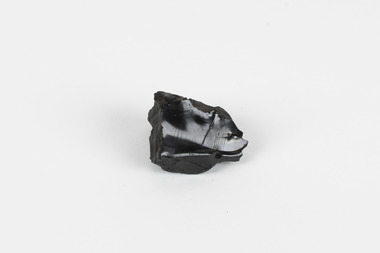
... map the geology of Victoria. Collecting geological specimens was an important part of mapping and understanding the scientific makeup of the earth. Many of these specimens were sent to research and collecting organisations across Australia, including the Burke Museum, to educate and encourage further study. Geological Specimen geology Geology Collection Burke Museum Beechworth indigo shire geological mineralogy victoria Alfred Selwyn ...Anthracite typically occurs in geologically deformed areas due to extreme heating – with temperatures ranging from 170 to 250 °C – caused by igneous intrusions or high geothermal gradients. It is most commonly found in northeastern Pennsylvania in the United States; however, smaller amounts are also found in Australia, China, eastern Ukraine, South Africa, western Canada, and other countries. This specimen was recovered from Tasmania and is 85-95% carbon.Anthracite is the mineral name for hard coal and is the least plentiful of all coal types. It is clean to the touch and, when polished, is used for decorative purposes. Before natural gas and electricity, anthracite was used for domestic heating as it produces little dust, burns slowly, and gives off a minor amount of smoke. However, it is also limited in abundance and expensive. This specimen is part of a larger collection of geological and mineral specimens collected from around Australia (and some parts of the world) and donated to the Burke Museum between 1868-1880. A large percentage of these specimens were collected in Victoria as part of the Geological Survey of Victoria that begun in 1852 (in response to the Gold Rush) to study and map the geology of Victoria. Collecting geological specimens was an important part of mapping and understanding the scientific makeup of the earth. Many of these specimens were sent to research and collecting organisations across Australia, including the Burke Museum, to educate and encourage further study.A hand-sized highly metamorphosed coal mineral with a black/steel-grey shiny metallic lustre.geological specimen, geology, geology collection, burke museum, beechworth, indigo shire, geological, mineralogy, victoria, alfred selwyn, anthracite -
 The Beechworth Burke Museum
Geological specimen - Cassiterite
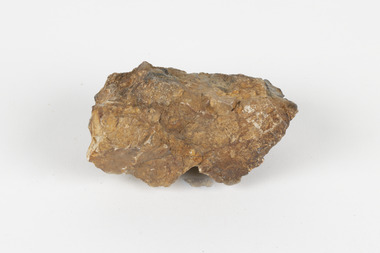
... map the geology of Victoria. Collecting geological specimens was an important part of mapping and understanding the scientific makeup of the earth. Many of these specimens were sent to research and collecting organisations across Australia, including the Burke Museum, to educate and encourage further study. The Geological Survey of Victoria was headed by British geologist, Alfred Richard Cecil Selwyn ...This specimen is Cassiterite in Quartz. Cassiterite is a tin oxide metal that forms in thin crystals which can have a beautiful lustre. Quartz is made of silicon dioxide, also known as silica, and is one of the most common minerals on earth. Cassiterite has been a fundamental source of tin ore for humans throughout history, including today. Tin is an important metal that has a wide variety of human uses in different areas, from dying fabric, to making mirrors, and their most well-known use ‘tin’ cans. Tin cans are primarily made of steel and are coated with tin in order to take advantage of tin’s property of being non-corroding. This is a massive step in the history of food preservation. Tinned food first reached Australia in 1815 with early settlers, and it began to be manufactured here in the 1840s. It was incredibly popular, and was a highly exported product, which would be a contributing factor to the ‘tin mining boom’ of the early 1880s. This specimen was collected at Jingellic, New South Wales, in about 1852. Although the Goldfields of the 1800s are much more well-known, tin mines existed alongside the gold mines which began in the mid 19th century and extended almost one hundred years, to the mid 20th century. Specimens like this would have been used as evidence to justify tin mining operations in the region as an investment. This specimen is part of a larger collection of geological and mineral specimens collected from around Australia (and some parts of the world) and donated to the Burke Museum between 1868-1880. A large percentage of these specimens were collected in Victoria as part of the Geological Survey of Victoria that begun in 1852 (in response to the Gold Rush) to study and map the geology of Victoria. Collecting geological specimens was an important part of mapping and understanding the scientific makeup of the earth. Many of these specimens were sent to research and collecting organisations across Australia, including the Burke Museum, to educate and encourage further study. The Geological Survey of Victoria was headed by British geologist, Alfred Richard Cecil Selwyn (1824-1902), who was responsible for issuing over 60 geological maps during his 17 years as director. These maps were all hand-drawn and coloured and became the benchmark for accuracy for geological mapping. Collecting geological specimens was an important part of mapping and understanding the scientific makeup of the earth. Many of these specimens were sent to research and collecting organisations across Australia, including the Burke Museum, to educate and encourage further study. A fist-sized solid geological specimen made on one half of tin oxide, which is dark grey, and on the other side of silica, which is brown and cream.burke museum, beechworth, geological, geological specimen -
 The Beechworth Burke Museum
Geological specimen - Chalcopyrite
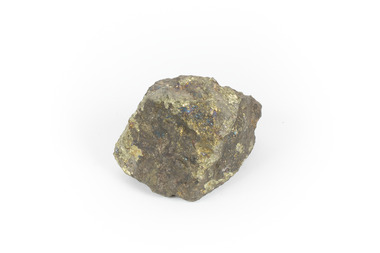
... map the geology of Victoria. Collecting geological specimens was an important part of mapping and understanding the scientific makeup of the earth. Many of these specimens were sent to research and collecting organisations across Australia, including the Burke Museum, to educate and encourage further study. burke museum beechworth indigo shire beechworth museum geology geological specimen chalcopyrite copper pyrites copper mining tasmanian geology mount lyell mount lyell mines fools gold mohs scale crystals minerals historical geological collection victorian geological survey a.r.c selwyn gold rush van diemans land This hand sized solid mineral specimen has shades of brass-yellow with spots of iridescent green-black tarnish. ...This specimen originated from Mount Lyell on the west coast of Tasmania, where a large group of open cut and underground copper-silver-gold mines began operating in 1883. Between 1893-1994, the Mt Lyell Mining and Railway Company were responsible for operations. The Mt Lyell copper-gold mines produce some excellent crystallised specimens of chalcopyrite and other minerals. The deposits are generally considered to be of Cambrian volcanic origin, but there are indications of Devonian granitic influence on the ores, plus local remobilisation during Devonian deformation. Over 120 million tonnes of ore was produced from several workings, including the main Prince Lyell mine and the North Lyell mine, which was also of great importance. The Mount Lyell mines have a long history of human and environmental disasters, including the 1912 North Lyell fire that killed 42 miners, and two separate incidents in 2013 in which three people lost their lives. The environmental impacts from this complex of mines are extensive, with waste tailings and heavy metal contamination flowing directly into the King and Queen River catchments. In 1954, the eminent Australian historian, Geoffrey Blainey, published 'The Peaks of Lyell' which delves into the history of the 1912 North Mount Lyell Disaster.Chalcopyrite does not contain the most copper in its structure relative to other minerals, but it is the most important copper ore since it can be found in many localities and occurs in a variety of ore types. The brassy-yellow colours in Chalcopyrite mean it is often confused with pyrites and gold, leading to use of the term, "fool's gold." Chalcopyrite has been the primary ore of copper since smelting began five thousand years ago. This specimen is part of a larger collection of geological and mineral specimens collected from around Australia (and some parts of the world) and donated to the Burke Museum between 1868-1880. A large percentage of these specimens were collected in Victoria as part of the Geological Survey of Victoria that begun in 1852 (in response to the Gold Rush) to study and map the geology of Victoria. Collecting geological specimens was an important part of mapping and understanding the scientific makeup of the earth. Many of these specimens were sent to research and collecting organisations across Australia, including the Burke Museum, to educate and encourage further study.This hand sized solid mineral specimen has shades of brass-yellow with spots of iridescent green-black tarnish. Chalcopyrite is a copper iron sulphide mineral and a major ore of copper common in sulphide veins and disseminated in igneous rocks. Chalcopyrite has a hardness of 3.5-4 on the Mohs Scale. It is a member of the tetragonal crystal system and has metallic lustre and opaque transparency.burke museum, beechworth, indigo shire, beechworth museum, geology, geological specimen, chalcopyrite, copper pyrites, copper mining, tasmanian geology, mount lyell, mount lyell mines, fools gold, mohs scale, crystals, minerals, historical geological collection, victorian geological survey, a.r.c selwyn, gold rush, van diemans land -
 The Beechworth Burke Museum
Geological specimen - Basalt (igneous-volcanic) containing Olivine, unknown
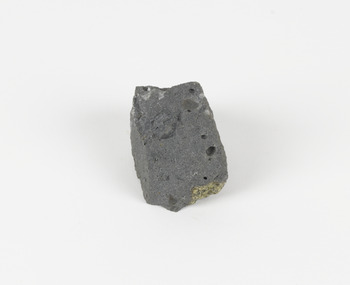
... In 1853-69 the Geological Survey issued under Selwyn's direction sixty-one geological maps and numerous reports; they were of such high standard that a writer in the Quarterly Journal of the Geological Society of London bracketed the survey with that of the United States of America as the best in the world. ...In 1853-69 the Geological Survey issued under Selwyn's direction sixty-one geological maps and numerous reports; they were of such high standard that a writer in the Quarterly Journal of the Geological Society of London bracketed the survey with that of the United States of America as the best in the world. ...This particular geological specimen was found in Mount Franklin or Lalgambook in Djadjawurrung, located between Daylesford and Newstead, approximately ninety minutes drive from Melbourne. The mountain is an example of a breached scoria cone (a steep conical hill of loose pyroclastic fragments) which was created by a volcanic eruption about 470,000 years ago, a date which may indicate the age of this geological specimen. The volcanic eruptions of Mount Franklin were most likely witnessed by members of the Dja Dja Wurrung Aboriginal tribe, who referred to this country as the 'smoking grounds'. Mount Franklin and the surrounding area appears to have been a place of considerable religious significance to Aboriginal people, there is evidence which indicates that frequent large ceremonial gatherings took place in the area. Basalt is the most common rock on Earth’s surface, more than 90% of all volcanic rock on Earth is basalt. Basalt is an aphanitic extrusive igneous rock formed from the rapid cooling of low-viscosity lava exposed at or very near the surface of a rocky planet or moon. Specimens are black in colour and weather to dark green or brown. Basalt is rich in iron and magnesium and is mainly composed of olivine, pyroxene, and plagioclase. Olivine is the name of a group of rock-forming silicate minerals with compositions ranging between Mg2SiO4 and Fe2SiO4. Unlike other minerals, Olivine has a very high crystallisation temperature which makes it the first of the minerals to crystallise from magma. As magma cools, the crystals begin to form and settle on the bottom of the lava and form basalts that are abnormally enriched in olivine in the lower part of lava flows. According to H. M. King (on geology.com) "Olivine is thought to be an important mineral in Earth's mantle. Its presence as a mantle mineral has been inferred by a change in the behaviour of seismic waves as they cross the boundary between Earth's crust and mantle". Lava from Mount Franklin and other volcanoes in the area filled valleys and buried the gold bearing streams that became the renowned ‘deep leads’ of the gold mining era. In 1852, as part of the Victorian gold rush, gold was discovered in the immediate area, this gold was created by lava flows during the Newer Volcanic period, which were mined intensively during the nineteenth century. Around 1865 the presence of a deep lead in Mount Franklin was established. Deep lead mining was initially unsuccessful, and it was not until the late 1870s that the Franklinford Gold Mining Company mined at Mount Franklin on a significant scale. A few years later the Mount Franklin Estate Gold Mining Company also struck gold, followed by the Shakespeare and Great Western companies in the mid-1880s. By the late 1880s, however, deep lead mining had ceased in the area. Soon after gold was discovered in 1851, Victoria’s Governor La Trobe wrote to the Colonial Office in London, urging ‘the propriety of selecting and appointing as Mineral Surveyor for this Colony a gentleman possessed of the requisite qualifications and acquaintance with geological science and phenomena’. Alfred Selwyn was appointed geological surveyor in Australia in 1852 which began the Geological Survey of Victoria. In 1853-69 the Geological Survey issued under Selwyn's direction sixty-one geological maps and numerous reports; they were of such high standard that a writer in the Quarterly Journal of the Geological Society of London bracketed the survey with that of the United States of America as the best in the world. During his years spent in Australia, Selwyn collected numerous significant geological specimens, examples of which are held in collections such as the Burke Museum.This geological specimen is an example of basalt and olivine which shows the volcanic lava activity and geographical specific nature of Mt Franklin as a significant volcanic site. According to Agriculture Victoria 'The crater is one of the deepest in the Central Highlands area. It is a major megacryst site with some of the largest known Victorian examples of megacrysts of augite and an orthoclase. The small parasitic mound of Lady Franklin on the western flanks adds to the geological interest of the site'. This specimen also highlights the locality as a significant place for both indigenous activity and Victorian gold rush era mining practices. This specimen is part of a larger collection of geological and mineral specimens collected from around Australia (and some parts of the world) and donated to the Burke Museum between 1868-1880. A large percentage of these specimens were collected in Victoria as part of the Geological Survey of Victoria that begun in 1852 (in response to the Gold Rush) to study and map the geology of Victoria. Collecting geological specimens was an important part of mapping and understanding the scientific makeup of the earth. Many of these specimens were sent to research and collecting organisations across Australia, including the Burke Museum, to educate and encourage further study.An angular, solid hand-sized piece of grey volcanic Basalt with green/brown Olivine phenocrysts along one flat edge.Olivine in basalt / - label is probably / correct. / C. Willman / 15/4/21burke museum, beechworth, indigo shire, beechworth museum, geological, geological specimen, mineralogy, basalt, igneous rock, igneous-volcanic, volcanic geology, volcanic, olivine, olivine specimen, basaltoid -
 The Beechworth Burke Museum
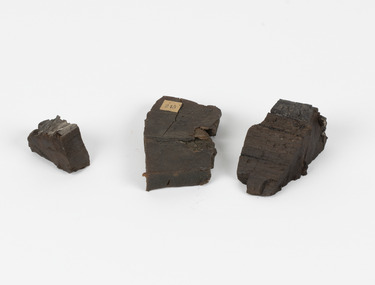
Geological specimen - Coorongite
... In 1853-69 the Geological Survey issued under Selwyn's direction sixty-one geological maps and numerous reports; they were of such high standard that a writer in the Quarterly Journal of the Geological Society of London bracketed the survey with that of the United States of America as the best in the world. ...In 1853-69 the Geological Survey issued under Selwyn's direction sixty-one geological maps and numerous reports; they were of such high standard that a writer in the Quarterly Journal of the Geological Society of London bracketed the survey with that of the United States of America as the best in the world. ...Coorongite is a dark, rubber-like, highly resilient structureless algal deposit. In the Coorong district of South Australia it occurs in moderate quantities associated with the coastal swamps and sand dunes which extend for a considerable distance east of the mouth of the Murray. This particular specimen was recovered from the south of the Coorong River, South Australia. A type of sediment rich in organic matter, Coorongite is the unlithified end-member of the sapropelic coal series. The members of the sapropelic coal series can be ranked in order as sapropel (the unlithified form), sapropelic-lignite, and sapropelic-coal (the lithified forms) based on increasing carbon content and decreasing volatile content. Sapropel (Coorongite) is an unlithified dark, pulpy, fine organic mud containing concentrations of algae and miospores that are more or less identifiable. Coorongite is typically found as an algae like substance, that can be found in irregular size pieces. Coorongite was believed to be dried up oil due to its rubber-like texture. The Coorongite is also soft to the point where it can be cut into with a knife or it can be broken and torn by hand. Otherwise known as 'Kurangk', the Coorong River is home to the Ngarrindjeri people, which acts as both a place for gathering food and a spiritual place. In 1852 the first sight of Coorongite was found along the Coorong River. The finders mistook the Coorongite for dried up oil, which lead to the belief that there were oil reserves under the Coorong River. Between the 1860s and the 1930s the Coorong River became a place where mining oil and Coorongite became precedent. Nowadays, the local council and the South Australian Government are working together with the Ngarrindjeri people to sustain and preserve the Coorong River and the culture that is with it. Soon after gold was discovered in 1851, Victoria’s Governor La Trobe wrote to the Colonial Office in London, urging ‘the propriety of selecting and appointing as Mineral Surveyor for this Colony a gentleman possessed of the requisite qualifications and acquaintance with geological science and phenomena’. Alfred Selwyn was appointed geological surveyor in Australia in 1852 which began the Geological Survey of Victoria. Selwyn went on to collect geological samples and catalogue thousands of specimens around Australia. In 1853-69 the Geological Survey issued under Selwyn's direction sixty-one geological maps and numerous reports; they were of such high standard that a writer in the Quarterly Journal of the Geological Society of London bracketed the survey with that of the United States of America as the best in the world. During his years spent in Australia, Selwyn collected numerous significant geological specimens, examples of which are held in collections such as the Burke Museum.Coorongite is considered to be a mineral with a unique texture, where it can be both hard and soft. Coorongite can also be considered to be a rare mineral, as it is only located along the Coorong River and due to the mining of it, has left very few sources. It was believed at one point that Coorongite could be used to replace oil. This specimen is part of a larger collection of geological and mineral specimens collected from around Australia (and some parts of the world) and donated to the Burke Museum between 1868-1880. A large percentage of these specimens were collected in Victoria as part of the Geological Survey of Victoria that begun in 1852 (in response to the Gold Rush) to study and map the geology of Victoria. Collecting geological specimens was an important part of mapping and understanding the scientific makeup of the earth. Many of these specimens were sent to research and collecting organisations across Australia, including the Burke Museum, to educate and encourage further study.Three solid varyingly hand-sized pieces of wooden appearing organic matter derived from the river in the Coorong District in South Australia. A rubber-like, highly resilient structureless algal deposit.Specimen 245 page 69 / in Descriptive Register / "Elcestic Bitumen, / Coorangite" South of / Coorung River, South Australia . / C. WIllman / 15/4/21burke museum, beechwoth, indigo shire, beechworth museum, geological, geological specimen, mineraology, coorong, coorong river, kurangk, ngarrindjeri, south australia, coorongite, coorongite specimen -
 The Beechworth Burke Museum
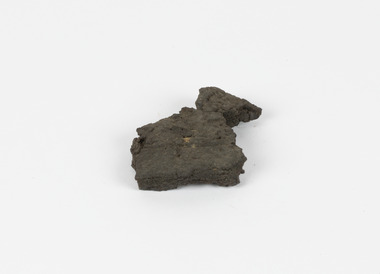
Geological specimen - Brown Coal
... In 1853-69 the Geological Survey issued under Selwyn's direction sixty-one geological maps and numerous reports; they were of such high standard that a writer in the Quarterly Journal of the Geological Society of London bracketed the survey with that of the United States of America as the best in the world. ...In 1853-69 the Geological Survey issued under Selwyn's direction sixty-one geological maps and numerous reports; they were of such high standard that a writer in the Quarterly Journal of the Geological Society of London bracketed the survey with that of the United States of America as the best in the world. ...Brown Coal is typically found as rocks. During formation the Brown Coal starts as peats, which is an acidic brown deposit resembling soil, and over time when subjected to pressure and heat these peats form the Coal. Brown Coal is the lowest rank of coal as it has a low carbon (energy) content, and a high moisture content. This high moisture content makes Brown Coal unsuitable for overseas exports. This particular specimen was recovered from the Yallourn Mine in Latrobe Valley, Victoria as part of the geological survey of Victoria being carried out by Alfred Selwyn. Otherwise known as the 'Yallourn Power Station', the Yallourn Mine is Australia's second largest mine. Yallourn Mine was first built in 1920, and since then it has been providing over 1 billion tonnes of Brown Coal to Australia every year. The Yallourn Mine is responsible for 22% of Victoria's electricity and 8% of Australia's electricity. As of 2021 the mine employs around 500 people. Due to ongoing maintenance issues and Australia's move to cleaner energy, the Yallourn Mine intends to shut down permanently as of 2028. Soon after gold was discovered in 1851, Victoria’s Governor La Trobe wrote to the Colonial Office in London, urging ‘the propriety of selecting and appointing as Mineral Surveyor for this Colony a gentleman possessed of the requisite qualifications and acquaintance with geological science and phenomena’. Alfred Selwyn was appointed geological surveyor in Australia in 1852 which began the Geological Survey of Victoria. In 1853-69 the Geological Survey issued under Selwyn's direction sixty-one geological maps and numerous reports; they were of such high standard that a writer in the Quarterly Journal of the Geological Society of London bracketed the survey with that of the United States of America as the best in the world. During his years spent in Australia, Selwyn collected numerous significant geological specimens, examples of which are held in collections such as the Burke Museum.Brown coal is considered to be an essential rock to Australia's energy consumption. Although plentiful in sources, Brown Coal is not able to be exported overseas due to its high moisture content. As Australia moves towards cleaner energy, Brown Coal is going become less used. This specimen is part of a larger collection of geological and mineral specimens collected from around Australia (and some parts of the world) and donated to the Burke Museum between 1868-1880. A large percentage of these specimens were collected in Victoria as part of the Geological Survey of Victoria that begun in 1852 (in response to the Gold Rush) to study and map the geology of Victoria. Collecting geological specimens was an important part of mapping and understanding the scientific makeup of the earth. Many of these specimens were sent to research and collecting organisations across Australia, including the Burke Museum, to educate and encourage further study.A solid hand-sized sedimentary rock that is a dark shade of brown.13 / BROWN COAL / Showing Woody structure / Locality: Yallourn, Vic. | Label probably / correct but / can't find reference / no. 13 to match in / registers. / C Willman / 15/4/21burke museum, beechworth, indigo shire, beechworth museum, geological, geological specimen, mineralogy, yallourn, yallourn mine, victoria, coal, brown coal, brown coal specimen, alfred selwyn, geological survey of victoria, geological survey, yallourn power station -
 Ballarat Tramway Museum
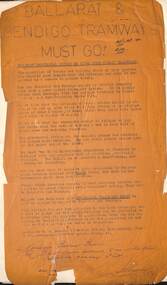
Pamphlet, R J Nowell, "Ballarat and Bendigo Tramways Must Go", 1961 or 1967
... Selwyn St Elsternwick in the interest of better public transport. Seeks better transport in both cities, gives his reasons for such a move, the loss incurred by the SEC. Even suggests horse trams would be cheaper to operate. Undated - has a hand written note regarding it being received at a SEC office on Monday 4/9. Monday 4/9 occurred during 1961 and 1967. Note the Melbourne Tram Museum has a Melbourne tram map...Selwyn St Elsternwick in the interest of better public transport. Seeks better transport in both cities, gives his reasons for such a move, the loss incurred by the SEC. Even suggests horse trams would be cheaper to operate. Undated - has a hand written note regarding it being received at a SEC office on Monday 4/9. Monday 4/9 occurred during 1961 and 1967. Note the Melbourne Tram Museum has a Melbourne tram map ...Has a strong association with the person who created the document and his viewpointsPamphlet - photocopied onto fragile heat sensitive paper - now brown - foolscap sheet, titled "Ballarat and Bendigo Tramways Must Go" Issued by R J Nowell of 15 Selwyn St Elsternwick in the interest of better public transport. Seeks better transport in both cities, gives his reasons for such a move, the loss incurred by the SEC. Even suggests horse trams would be cheaper to operate. Undated - has a hand written note regarding it being received at a SEC office on Monday 4/9. Monday 4/9 occurred during 1961 and 1967. Note the Melbourne Tram Museum has a Melbourne tram map prepared by the same person at Selwyn St Elsternwick - see their Reg Item 1381. trams, tramways, closure, pamphlets, ballarat, bendigo, costs, safety -
Kew Historical Society Inc
Book, Frederick Howard, Kent Hughes: a biography of Colonel The Hon. Sir Wilfred Kent Hughes, 1972
... maps, fashion and artefacts. Reference books have entered the collection through donation, presentation, collection and purchase. Kent Hughes W.S. (Wilfrid Selwyn ...Limited edition of 500 copies. Available from Ramsay, Ware Publishing Pty Ltd, 552 Victoria Road, North Melbourne, Vic. 3051.South Melbourne : Macmillan for the Kent Hughes Memorial Committee, 1972 ix,255p. : plates ; 23cm. non-fictionLimited edition of 500 copies. Available from Ramsay, Ware Publishing Pty Ltd, 552 Victoria Road, North Melbourne, Vic. 3051.kent hughes w.s. (wilfrid selwyn) 1895-1970, australia -- politics 1927-1970, sir wilfrid selwyn kent- hughes 1895-1970, biographies -- australia -- politics and government -- 20th century -
 Sunshine and District Historical Society Incorporated
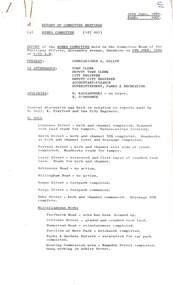
Administrative record - City of Sunshine - Commissioner Mr Alexander Alex George Gillon Collection 1976 - 1982 - Report of committee meetings 9th June 1980, City of Sunshine, 10th June 1980
... map prepared. Approximately 1500 trees planted Newstead Street it is necessary to remove some Ash Trees from this area. Every second tree to be removed Parsons Reserve & Nursery water services are being upgraded Sassella Park topsoil has been delivered Parsons reserve a request for an athletic meeting in February 1981 has been received. A further report in relation to establishment of a 440yard track is being prepared Report of the City Engineer Aycliffe Avenue Pre-School & Infant Welfare Centre to be completed within two weeks Tennis Pavilion Selwyn...map prepared. Approximately 1500 trees planted Newstead Street it is necessary to remove some Ash Trees from this area. Every second tree to be removed Parsons Reserve & Nursery water services are being upgraded Sassella Park topsoil has been delivered Parsons reserve a request for an athletic meeting in February 1981 has been received. A further report in relation to establishment of a 440yard track is being prepared Report of the City Engineer Aycliffe Avenue Pre-School & Infant Welfare Centre to be completed within two weeks Tennis Pavilion Selwyn ...Report of Committee Meetings 9th June 1980 Report of Works Committee Meeting Kerb & Channel Lindenow Steet completed. Crush rock laid ready for tamper. Nature strips levelled Kerb & Channel Smith Street 50% complete. Road works at kerb & channel level and drainage completed Kerb & Channel Forrest Street West of Kororoit Creek completed. Roadworks ready for tamper Kerb & Channel excavated and first layer of crush rock laid. Ready for kerb & channel Kerb & Channel Robinsons Road no action Kerb & Channel Billingham Road no action Kerb & Channel Numan Street footpath completed Kerb & Channel Norge Street footpath completed Kerb & Channel Duke Street commenced. Drainage 90% complete Fairbairn Road area has been cleaned up Collenso Street graded and crush rock laid Hampstead Road reinstatement completed Pavilion at More Prak brickwork completed Parks & Gardens Nursery excavation for car park completed Housing commission area Hampden Street completed. Gang working in Ashley Street Tree Maintenance 27.6% complete Tree Planting map prepared. Approximately 1500 trees planted Newstead Street it is necessary to remove some Ash Trees from this area. Every second tree to be removed Parsons Reserve & Nursery water services are being upgraded Sassella Park topsoil has been delivered Parsons reserve a request for an athletic meeting in February 1981 has been received. A further report in relation to establishment of a 440yard track is being prepared Report of the City Engineer Aycliffe Avenue Pre-School & Infant Welfare Centre to be completed within two weeks Tennis Pavilion Selwyn Park 50% complete, six weeks to remain Municipal Offices tender close 10th June 1980 Pennell Reserve Pavilion tenders for construction to be advertised shortly Lions House follow up design of alterations to building Report of Finance Committee Meeting Report of the Town Clerk Variation and Consolidation of Municipal Employees (City of Sunshine) Award Meals on Wheels Service Public Holidays Rates, Sanitary & Interest Adjustments / Abandonments Estimates Review 1979/80 Review of Council Charges Auditor's Report Report of the City Engineer Missing Concrete Mixer Plant No 172 Report of Forward Planning Committee Meeting Dutch Community Centre Shopping Centre Traffic Robert Barrett Reserve Sewer South Road Housing Estate Cultural Centre Sunshine West Sewer Diamond Reserve Area -
 Sunshine and District Historical Society Incorporated
Administrative record - City of Sunshine - Commissioner Mr Alexander Alex George Gillon Collection 1976 - 1982 - Minutes of the ordinary meeting of council held on 16th September 1980, City of Sunshine, 16th September 1980
... Albans Proposed Discontinuance of Right of Way Orana Court Sunshine West Proposed Discontinuance of Right of Way Adjacent to 16 Centre Street Sunshine Formal Allotment of Street Number Municipality Grid Map Ref K04 Formal Allotment of Street Number Municipality Grid Map Ref K05 Formal Allotment of Street Number Municipality Grid Map Ref K05 Funding From Volunteer Learning Groups The Community Arts Conference 19th - 22nd July 1980 Victoria Hotel Melbourne Report of the Co-Ordinator of Welfare Services Western Region Committee of the Ageing Regularisation of Status Programme (ROSP) Community Youth Support Scheme Albion Community House Selwyn Park Albion Tennis Club to move to new Pavilion Report of the Chief Health Surveyor Australia Institute of Health Surveyors 7th National Conference Brisbane 13th - 17th October 1980 Infant Welfare Service Maternal & Infant Welfare in Service Training Course 1st September 1980 to 31st October 1980 Health Act Registrations Application for Transfer of Proprietorship of Premises Under the Health Act Prosecution Proceedings Sunshine Magistrates Couty Offensive Trade Area Werribee Report of the Medical Officer of Health Report of the Superintendent of Traffic & By-Laws Joint Advisory Committee on Pets in Society (Jacopis) Seminar Essendon Civic Centre 3rd September 1980 Report Report of the City Librarian Technilib Board of Directors Library Association of Australia & New Zealand Library Association Combined Conference 1981 Change of Hours at Corio Street Library Report of the Municipal Recreation Offices Allocation of Reserves for 1980/81 Summer Season Report of the City Engineer & Planner Planning Permit Application Basketball Stadium Robert Barrett Reserve Planning Permit Application Factory Douglas Street Sunshine North Planning Permit Two Factories and Caretaker's Residence Lots 40 & 41 Butler Street Braybrook Planning Permit Application Warehouse and Industrial Sales (Tiles) Lots 20, 29 & 30 McIntyre Road Sunshine North Planning Permit Application Office Extension 169 Rosamond Road Maribyrnong Planning Permit Application Retail Plant Nursery South West Corner of Raleigh Road and Burton Crescent Maribyrnong Planning Permit Application Take Away Food Premises and Restaurant Shop 103B Deer Park Shopping Centre Neale Road Deer Park Planning Permit Application Pole Sign Lot 19 Geelong Road North East Corner Francis Street Brooklyn Planning Permit Application Additon of Equipment Shed and Players Bench Sunshine Baseball Club Barclay Reserve Albion Planning Permit Alterations to Deer Park Shopping Centre Neale Road Deer Park Planning Permit Used Car Sales Yard, Motor Repair Station and Junk Yard (Car Wrecking) 594 Ballarat Road Ardeer Planning Permit Application Hot Bread Kitchen Light Industry 119 South Road and Lawton Street Braybrook Planning Permit Application Car Sales Yard Ballarat Road Braybrook Planning Permit Dental and Medical Consulting Room (Both Sole Practices Only) Lots 192 & 1973 Fairbairn Road Sunshine West Planning Permit Three Flats Lots 23 & 25 Madden Street Maidstone Planning Permit Application Extension to Existing Educational Establishment St. ...Albans Proposed Discontinuance of Right of Way Orana Court Sunshine West Proposed Discontinuance of Right of Way Adjacent to 16 Centre Street Sunshine Formal Allotment of Street Number Municipality Grid Map Ref K04 Formal Allotment of Street Number Municipality Grid Map Ref K05 Formal Allotment of Street Number Municipality Grid Map Ref K05 Funding From Volunteer Learning Groups The Community Arts Conference 19th - 22nd July 1980 Victoria Hotel Melbourne Report of the Co-Ordinator of Welfare Services Western Region Committee of the Ageing Regularisation of Status Programme (ROSP) Community Youth Support Scheme Albion Community House Selwyn Park Albion Tennis Club to move to new Pavilion Report of the Chief Health Surveyor Australia Institute of Health Surveyors 7th National Conference Brisbane 13th - 17th October 1980 Infant Welfare Service Maternal & Infant Welfare in Service Training Course 1st September 1980 to 31st October 1980 Health Act Registrations Application for Transfer of Proprietorship of Premises Under the Health Act Prosecution Proceedings Sunshine Magistrates Couty Offensive Trade Area Werribee Report of the Medical Officer of Health Report of the Superintendent of Traffic & By-Laws Joint Advisory Committee on Pets in Society (Jacopis) Seminar Essendon Civic Centre 3rd September 1980 Report Report of the City Librarian Technilib Board of Directors Library Association of Australia & New Zealand Library Association Combined Conference 1981 Change of Hours at Corio Street Library Report of the Municipal Recreation Offices Allocation of Reserves for 1980/81 Summer Season Report of the City Engineer & Planner Planning Permit Application Basketball Stadium Robert Barrett Reserve Planning Permit Application Factory Douglas Street Sunshine North Planning Permit Two Factories and Caretaker's Residence Lots 40 & 41 Butler Street Braybrook Planning Permit Application Warehouse and Industrial Sales (Tiles) Lots 20, 29 & 30 McIntyre Road Sunshine North Planning Permit Application Office Extension 169 Rosamond Road Maribyrnong Planning Permit Application Retail Plant Nursery South West Corner of Raleigh Road and Burton Crescent Maribyrnong Planning Permit Application Take Away Food Premises and Restaurant Shop 103B Deer Park Shopping Centre Neale Road Deer Park Planning Permit Application Pole Sign Lot 19 Geelong Road North East Corner Francis Street Brooklyn Planning Permit Application Additon of Equipment Shed and Players Bench Sunshine Baseball Club Barclay Reserve Albion Planning Permit Alterations to Deer Park Shopping Centre Neale Road Deer Park Planning Permit Used Car Sales Yard, Motor Repair Station and Junk Yard (Car Wrecking) 594 Ballarat Road Ardeer Planning Permit Application Hot Bread Kitchen Light Industry 119 South Road and Lawton Street Braybrook Planning Permit Application Car Sales Yard Ballarat Road Braybrook Planning Permit Dental and Medical Consulting Room (Both Sole Practices Only) Lots 192 & 1973 Fairbairn Road Sunshine West Planning Permit Three Flats Lots 23 & 25 Madden Street Maidstone Planning Permit Application Extension to Existing Educational Establishment St. ...Minutes of the Ordinary Meeting of Council held on 16th September 1980 Report of the Town Clerk's Department Report of the Town Clerk Melbourne Metropolitan Board of Works Representation Training of Swimming Pool Attendants The Hunt Club Hotel Offer From Owners to Sell it to the Council for $10,000 Barclay Reserve Extensions by Sunshine Baseball Club Melbourne and Metropolitan Board of Works Open Space Agreement Land Bounded by Duffy Street, Van Ness Avenue and Burton Crescent Maribyrnong Child Care Project Cherry Crescent Loan from Housing Commission Walkway Adjacent to Southwold Street Pre-School Centre Extending to Orford Street St. Albans Proposed Discontinuance of Right of Way Orana Court Sunshine West Proposed Discontinuance of Right of Way Adjacent to 16 Centre Street Sunshine Formal Allotment of Street Number Municipality Grid Map Ref K04 Formal Allotment of Street Number Municipality Grid Map Ref K05 Formal Allotment of Street Number Municipality Grid Map Ref K05 Funding From Volunteer Learning Groups The Community Arts Conference 19th - 22nd July 1980 Victoria Hotel Melbourne Report of the Co-Ordinator of Welfare Services Western Region Committee of the Ageing Regularisation of Status Programme (ROSP) Community Youth Support Scheme Albion Community House Selwyn Park Albion Tennis Club to move to new Pavilion Report of the Chief Health Surveyor Australia Institute of Health Surveyors 7th National Conference Brisbane 13th - 17th October 1980 Infant Welfare Service Maternal & Infant Welfare in Service Training Course 1st September 1980 to 31st October 1980 Health Act Registrations Application for Transfer of Proprietorship of Premises Under the Health Act Prosecution Proceedings Sunshine Magistrates Couty Offensive Trade Area Werribee Report of the Medical Officer of Health Report of the Superintendent of Traffic & By-Laws Joint Advisory Committee on Pets in Society (Jacopis) Seminar Essendon Civic Centre 3rd September 1980 Report Report of the City Librarian Technilib Board of Directors Library Association of Australia & New Zealand Library Association Combined Conference 1981 Change of Hours at Corio Street Library Report of the Municipal Recreation Offices Allocation of Reserves for 1980/81 Summer Season Report of the City Engineer & Planner Planning Permit Application Basketball Stadium Robert Barrett Reserve Planning Permit Application Factory Douglas Street Sunshine North Planning Permit Two Factories and Caretaker's Residence Lots 40 & 41 Butler Street Braybrook Planning Permit Application Warehouse and Industrial Sales (Tiles) Lots 20, 29 & 30 McIntyre Road Sunshine North Planning Permit Application Office Extension 169 Rosamond Road Maribyrnong Planning Permit Application Retail Plant Nursery South West Corner of Raleigh Road and Burton Crescent Maribyrnong Planning Permit Application Take Away Food Premises and Restaurant Shop 103B Deer Park Shopping Centre Neale Road Deer Park Planning Permit Application Pole Sign Lot 19 Geelong Road North East Corner Francis Street Brooklyn Planning Permit Application Additon of Equipment Shed and Players Bench Sunshine Baseball Club Barclay Reserve Albion Planning Permit Alterations to Deer Park Shopping Centre Neale Road Deer Park Planning Permit Used Car Sales Yard, Motor Repair Station and Junk Yard (Car Wrecking) 594 Ballarat Road Ardeer Planning Permit Application Hot Bread Kitchen Light Industry 119 South Road and Lawton Street Braybrook Planning Permit Application Car Sales Yard Ballarat Road Braybrook Planning Permit Dental and Medical Consulting Room (Both Sole Practices Only) Lots 192 & 1973 Fairbairn Road Sunshine West Planning Permit Three Flats Lots 23 & 25 Madden Street Maidstone Planning Permit Application Extension to Existing Educational Establishment St. Johns College Land Bounded by Churchill Avenue, Dobson Crescent and Darnley Street Braybrook Planning Permit Application New 7 Used Car Sales and Service Dealership 209 Ballarat Road Maidstone Proposed Rezoning of Land Situated in Metherall Street Sunshine North Planning Permit Flats Lots 4, 5, 6, 7, & 8 Metherall Street Sunshine North Planning Permit Application Access to Ballarat Road Sunshine Planning Permit Application Warehouse and Workshop Lot 279 Arvona Avenue Sunshine North Planning Permit Transport Depot 1 Duke Street Braybrook Planning Permit Application Factory Lots 14, 15 & 16 McIntyre Road Sunshine North Planning Permit Application Additon of Milk Carton Mixer Plant to Existing S.C.I. Meat & Paper Pty Ltd Industrial Complex Somerville Road Tottenham Planning Permit Application Car Sales Yard 205 - 207 Ballarat Road Maidstone Central and Western Area Commission Technical Advisory Groups Plan of Transfer and Consolidation Wright Street Sunshine City Council and M.Y.M. Building Supplies Consolidation of Title Thorpe Street Sunshine Plan of Subdivision Hook Street and Vule Street St. Albans Consolidation of Title ETA Ballarat Road and Lacy Street Braybrook Plan of Subdivison Ballarat Road Sunshine Plan of Transfer Lot 2 Anderson Road Sunshine Stony Creek Tenders for Annual Supplies Lawrence Street Bridge Ardeer Half Cost Fencing Policy Proposed Pavilion Pennell Reserve Braybrook Report of the Building Surveyor Building Over Easement 18 Lovell Drive St. Albans Building Over Easement 191 Hall Street Ardeer Building Over Easement 2 Concord Circuit Albanvale Schedule for Authorising of Affixing the Common Seal of the Municipality to Documents Orders of the Day Accounts Submitted for Payment as at 15th September 1980 Proposal to Close Part of Showers Street and Rochester Street Braybrook Under the Provisions of Section 528 of the Local Government Act 1958sunshine baseball club, barclay reserve, king edward avenue, albion, duffy street, burton crescent, maribyrnong, cherry crescent, braybrook, southwold street, st. albans, orana court, sunshine west, centre street, sunshine, the hunt club hotel, ballarat road, deer park, van ness avenue, cherry crescent child care centre, southwold street pre-school centre, robert barrett reserve, rosamond road, douglas street, sunshine north, butler street, mcintyre road, raleigh road, deer park shopping centre, neale road, geelong road, francis street, brooklyn, ardeer, south road, lawton street, fairbairn road, madden street, maidstone, st. johns college, churchill avenue, dobson crescent, darnley street, metherall street, arvona avenue, duke street, s.c.i. meat & paper pty ltd, somerville road, tottenham, wright street, thorpe street, hook street, vule street, eta, anderson road, stony creek, lawrence street bridge, lawrence street, lovell drive, hall street, concord circuit, albanvale, rochester street, showers street -
 Sunshine and District Historical Society Incorporated
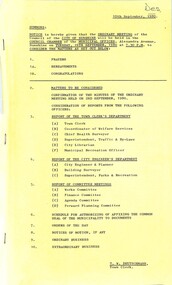
Administrative record - City of Sunshine - Commissioner Mr Alexander Alex George Gillon Collection 1976 - 1982 - Notice of ordinary meeting of the council 16th September 1980, City of Sunshine, 10th September 1980
... Albans Proposed Discontinuance of Right of Way Orana Court Sunshine West Proposed Discontinuance of Right of Way Adjacent to 16 Centre Street Sunshine Formal Allotment of Street Number Municipality Grid Map Ref K04 Formal Allotment of Street Number Municipality Grid Map Ref K05 Formal Allotment of Street Number Municipality Grid Map Ref K05 Funding From Volunteer Learning Groups The Community Arts Conference 19th - 22nd July 1980 Victoria Hotel Melbourne Report of the Co-Ordinator of Welfare Services Western Region Committee of the Ageing Regularisation of Status Programme (ROSP) Community Youth Support Scheme Albion Community House Selwyn Park Albion Tennis Club to move to new Pavilion Report of the Chief Health Surveyor Australia Institute of Health Surveyors 7th National Conference Brisbane 13th - 17th October 1980 Infant Welfare Service Maternal & Infant Welfare in Service Training Course 1st September 1980 to 31st October 1980 Health Act Registrations Application for Transfer of Proprietorship of Premises Under the Health Act Prosecution Proceedings Sunshine Magistrates Couty Offensive Trade Area Werribee Report of the Medical Officer of Health Report of the Superintendent of Traffic & By-Laws Joint Advisory Committee on Pets in Society (Jacopis) Seminar Essendon Civic Centre 3rd September 1980 Report Report of the City Librarian Technilib Board of Directors Library Association of Australia & New Zealand Library Association Combined Conference 1981 Change of Hours at Corio Street Library Report of the Municipal Recreation Offices Allocation of Reserves for 1980/81 Summer Season Report of the City Engineer & Planner Planning Permit Application Basketball Stadium Robert Barrett Reserve Planning Permit Application Factory Douglas Street Sunshine North Planning Permit Two Factories and Caretaker's Residence Lots 40 & 41 Butler Street Braybrook Planning Permit Application Warehouse and Industrial Sales (Tiles) Lots 20, 29 & 30 McIntyre Road Sunshine North Planning Permit Application Office Extension 169 Rosamond Road Maribyrnong Planning Permit Application Retail Plant Nursery South West Corner of Raleigh Road and Burton Crescent Maribyrnong Planning Permit Application Take Away Food Premises and Restaurant Shop 103B Deer Park Shopping Centre Neale Road Deer Park Planning Permit Application Pole Sign Lot 19 Geelong Road North East Corner Francis Street Brooklyn Planning Permit Application Additon of Equipment Shed and Players Bench Sunshine Baseball Club Barclay Reserve Albion Planning Permit Alterations to Deer Park Shopping Centre Neale Road Deer Park Planning Permit Used Car Sales Yard, Motor Repair Station and Junk Yard (Car Wrecking) 594 Ballarat Road Ardeer Planning Permit Application Hot Bread Kitchen Light Industry 119 South Road and Lawton Street Braybrook Planning Permit Application Car Sales Yard Ballarat Road Braybrook Planning Permit Dental and Medical Consulting Room (Both Sole Practices Only) Lots 192 & 1973 Fairbairn Road Sunshine West Planning Permit Three Flats Lots 23 & 25 Madden Street Maidstone Planning Permit Application Extension to Existing Educational Establishment St. ...Albans Proposed Discontinuance of Right of Way Orana Court Sunshine West Proposed Discontinuance of Right of Way Adjacent to 16 Centre Street Sunshine Formal Allotment of Street Number Municipality Grid Map Ref K04 Formal Allotment of Street Number Municipality Grid Map Ref K05 Formal Allotment of Street Number Municipality Grid Map Ref K05 Funding From Volunteer Learning Groups The Community Arts Conference 19th - 22nd July 1980 Victoria Hotel Melbourne Report of the Co-Ordinator of Welfare Services Western Region Committee of the Ageing Regularisation of Status Programme (ROSP) Community Youth Support Scheme Albion Community House Selwyn Park Albion Tennis Club to move to new Pavilion Report of the Chief Health Surveyor Australia Institute of Health Surveyors 7th National Conference Brisbane 13th - 17th October 1980 Infant Welfare Service Maternal & Infant Welfare in Service Training Course 1st September 1980 to 31st October 1980 Health Act Registrations Application for Transfer of Proprietorship of Premises Under the Health Act Prosecution Proceedings Sunshine Magistrates Couty Offensive Trade Area Werribee Report of the Medical Officer of Health Report of the Superintendent of Traffic & By-Laws Joint Advisory Committee on Pets in Society (Jacopis) Seminar Essendon Civic Centre 3rd September 1980 Report Report of the City Librarian Technilib Board of Directors Library Association of Australia & New Zealand Library Association Combined Conference 1981 Change of Hours at Corio Street Library Report of the Municipal Recreation Offices Allocation of Reserves for 1980/81 Summer Season Report of the City Engineer & Planner Planning Permit Application Basketball Stadium Robert Barrett Reserve Planning Permit Application Factory Douglas Street Sunshine North Planning Permit Two Factories and Caretaker's Residence Lots 40 & 41 Butler Street Braybrook Planning Permit Application Warehouse and Industrial Sales (Tiles) Lots 20, 29 & 30 McIntyre Road Sunshine North Planning Permit Application Office Extension 169 Rosamond Road Maribyrnong Planning Permit Application Retail Plant Nursery South West Corner of Raleigh Road and Burton Crescent Maribyrnong Planning Permit Application Take Away Food Premises and Restaurant Shop 103B Deer Park Shopping Centre Neale Road Deer Park Planning Permit Application Pole Sign Lot 19 Geelong Road North East Corner Francis Street Brooklyn Planning Permit Application Additon of Equipment Shed and Players Bench Sunshine Baseball Club Barclay Reserve Albion Planning Permit Alterations to Deer Park Shopping Centre Neale Road Deer Park Planning Permit Used Car Sales Yard, Motor Repair Station and Junk Yard (Car Wrecking) 594 Ballarat Road Ardeer Planning Permit Application Hot Bread Kitchen Light Industry 119 South Road and Lawton Street Braybrook Planning Permit Application Car Sales Yard Ballarat Road Braybrook Planning Permit Dental and Medical Consulting Room (Both Sole Practices Only) Lots 192 & 1973 Fairbairn Road Sunshine West Planning Permit Three Flats Lots 23 & 25 Madden Street Maidstone Planning Permit Application Extension to Existing Educational Establishment St. ...Notice of Ordinary Meeting of the Council 16th September 1980 Report of the Town Clerk's Department Report of the Town Clerk Melbourne Metropolitan Board of Works Representation Training of Swimming Pool Attendants The Hunt Club Hotel Offer From Owners to Sell it to the Council for $10,000 Barclay Reserve Extensions by Sunshine Baseball Club Melbourne and Metropolitan Board of Works Open Space Agreement Land Bounded by Duffy Street, Van Ness Avenue and Burton Crescent Maribyrnong Child Care Project Cherry Crescent Loan from Housing Commission Walkway Adjacent to Southwold Street Pre-School Centre Extending to Orford Street St. Albans Proposed Discontinuance of Right of Way Orana Court Sunshine West Proposed Discontinuance of Right of Way Adjacent to 16 Centre Street Sunshine Formal Allotment of Street Number Municipality Grid Map Ref K04 Formal Allotment of Street Number Municipality Grid Map Ref K05 Formal Allotment of Street Number Municipality Grid Map Ref K05 Funding From Volunteer Learning Groups The Community Arts Conference 19th - 22nd July 1980 Victoria Hotel Melbourne Report of the Co-Ordinator of Welfare Services Western Region Committee of the Ageing Regularisation of Status Programme (ROSP) Community Youth Support Scheme Albion Community House Selwyn Park Albion Tennis Club to move to new Pavilion Report of the Chief Health Surveyor Australia Institute of Health Surveyors 7th National Conference Brisbane 13th - 17th October 1980 Infant Welfare Service Maternal & Infant Welfare in Service Training Course 1st September 1980 to 31st October 1980 Health Act Registrations Application for Transfer of Proprietorship of Premises Under the Health Act Prosecution Proceedings Sunshine Magistrates Couty Offensive Trade Area Werribee Report of the Medical Officer of Health Report of the Superintendent of Traffic & By-Laws Joint Advisory Committee on Pets in Society (Jacopis) Seminar Essendon Civic Centre 3rd September 1980 Report Report of the City Librarian Technilib Board of Directors Library Association of Australia & New Zealand Library Association Combined Conference 1981 Change of Hours at Corio Street Library Report of the Municipal Recreation Offices Allocation of Reserves for 1980/81 Summer Season Report of the City Engineer & Planner Planning Permit Application Basketball Stadium Robert Barrett Reserve Planning Permit Application Factory Douglas Street Sunshine North Planning Permit Two Factories and Caretaker's Residence Lots 40 & 41 Butler Street Braybrook Planning Permit Application Warehouse and Industrial Sales (Tiles) Lots 20, 29 & 30 McIntyre Road Sunshine North Planning Permit Application Office Extension 169 Rosamond Road Maribyrnong Planning Permit Application Retail Plant Nursery South West Corner of Raleigh Road and Burton Crescent Maribyrnong Planning Permit Application Take Away Food Premises and Restaurant Shop 103B Deer Park Shopping Centre Neale Road Deer Park Planning Permit Application Pole Sign Lot 19 Geelong Road North East Corner Francis Street Brooklyn Planning Permit Application Additon of Equipment Shed and Players Bench Sunshine Baseball Club Barclay Reserve Albion Planning Permit Alterations to Deer Park Shopping Centre Neale Road Deer Park Planning Permit Used Car Sales Yard, Motor Repair Station and Junk Yard (Car Wrecking) 594 Ballarat Road Ardeer Planning Permit Application Hot Bread Kitchen Light Industry 119 South Road and Lawton Street Braybrook Planning Permit Application Car Sales Yard Ballarat Road Braybrook Planning Permit Dental and Medical Consulting Room (Both Sole Practices Only) Lots 192 & 1973 Fairbairn Road Sunshine West Planning Permit Three Flats Lots 23 & 25 Madden Street Maidstone Planning Permit Application Extension to Existing Educational Establishment St. Johns College Land Bounded by Churchill Avenue, Dobson Crescent and Darnley Street Braybrook Planning Permit Application New 7 Used Car Sales and Service Dealership 209 Ballarat Road Maidstone Proposed Rezoning of Land Situated in Metherall Street Sunshine North Planning Permit Flats Lots 4, 5, 6, 7, & 8 Metherall Street Sunshine North Planning Permit Application Access to Ballarat Road Sunshine Planning Permit Application Warehouse and Workshop Lot 279 Arvona Avenue Sunshine North Planning Permit Transport Depot 1 Duke Street Braybrook Planning Permit Application Factory Lots 14, 15 & 16 McIntyre Road Sunshine North Planning Permit Application Additon of Milk Carton Mixer Plant to Existing S.C.I. Meat & Paper Pty Ltd Industrial Complex Somerville Road Tottenham Planning Permit Application Car Sales Yard 205 - 207 Ballarat Road Maidstone Central and Western Area Commission Technical Advisory Groups Plan of Transfer and Consolidation Wright Street Sunshine City Council and M.Y.M. Building Supplies Consolidation of Title Thorpe Street Sunshine Plan of Subdivision Hook Street and Vule Street St. Albans Consolidation of Title ETA Ballarat Road and Lacy Street Braybrook Plan of Subdivison Ballarat Road Sunshine Plan of Transfer Lot 2 Anderson Road Sunshine Stony Creek Tenders for Annual Supplies Lawrence Street Bridge Ardeer Half Cost Fencing Policy Proposed Pavilion Pennell Reserve Braybrook Report of the Building Surveyor Building Over Easement 18 Lovell Drive St. Albans Building Over Easement 191 Hall Street Ardeer Building Over Easement 2 Concord Circuit Albanvale Schedule for Authorising of Affixing the Common Seal of the Municipality to Documents Orders of the Day Accounts Submitted for Payment as at 15th September 1980 Proposal to Close Part of Showers Street and Rochester Street Braybrook Under the Provisions of Section 528 of the Local Government Act 1958sunshine baseball club, barclay reserve, king edward avenue, albion, duffy street, burton crescent, maribyrnong, cherry crescent, braybrook, southwold street, st. albans, orana court, sunshine west, centre street, sunshine, the hunt club hotel, ballarat road, deer park, van ness avenue, cherry crescent child care centre, southwold street pre-school centre, robert barrett reserve, rosamond road, douglas street, sunshine north, butler street, mcintyre road, raleigh road, deer park shopping centre, neale road, geelong road, francis street, brooklyn, ardeer, south road, lawton street, fairbairn road, madden street, maidstone, st. johns college, churchill avenue, dobson crescent, darnley street, metherall street, arvona avenue, duke street, s.c.i. meat & paper pty ltd, somerville road, tottenham, wright street, thorpe street, hook street, vule street, eta, anderson road, stony creek, lawrence street bridge, lawrence street, lovell drive, hall street, concord circuit, albanvale, rochester street, showers street
