Showing 6 items matching "sericulture"
-
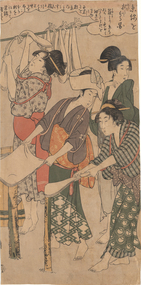
Latrobe Regional GalleryPrint, UTAMARO, Kitagawa, No. 10 from the series Women Engaged in the Sericulture Industry (Joshoku kaiko tewaza-gusa), 1798-1800
... No. 10 from the series Women Engaged in the Sericulture Industry (Joshoku kaiko tewaza-gusa)...Latrobe Regional Gallery 138 Commercial Road Morwell gippsland Edo Period silk manufacturing Coloured woodblock print No. 10 from the series Women Engaged in the Sericulture Industry (Joshoku kaiko tewaza-gusa) Print UTAMARO, Kitagawa ...Edo PeriodColoured woodblock printsilk, manufacturing -
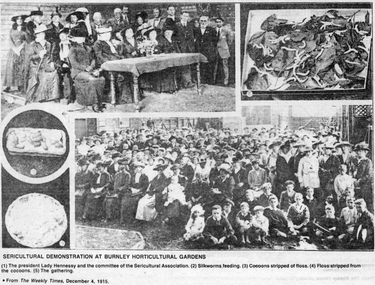
University of Melbourne, Burnley Campus ArchivesNewspaper - Newspaper Cutting, The Weekly Times, 120 Years-a Celebration, 1915-1989
... ...sericulture...Full page of photographs in "The Weekly Times" September 20, 1989 "From "The Weekly Times" December 4, 1915." 6 photographs of Dookie and Longerenong Agricultural Colleges and 5 photographs of a "Sericultural Demonstration at Burnley Horticultural Gardens." ...University of Melbourne, Burnley Campus Archives 500 Yarra Boulevard Richmond melbourne the weekly times dookie agricultural college longerenong agricultural college burnley horticultural gardens sericulture silk worms sericultural association council of victorian sericulture association lady hennessy Full page of photographs in "The Weekly Times" September 20, 1989 "From "The Weekly Times" December 4, 1915." 6 photographs of Dookie and Longerenong Agricultural Colleges and 5 photographs of a "Sericultural Demonstration at Burnley Horticultural Gardens." 120 Years-a Celebration Newspaper Newspaper Cutting The Weekly Times ...Full page of photographs in "The Weekly Times" September 20, 1989 "From "The Weekly Times" December 4, 1915." 6 photographs of Dookie and Longerenong Agricultural Colleges and 5 photographs of a "Sericultural Demonstration at Burnley Horticultural Gardens." the weekly times, dookie agricultural college, longerenong agricultural college, burnley horticultural gardens, sericulture, silk worms, sericultural association, council of victorian sericulture association, lady hennessy -
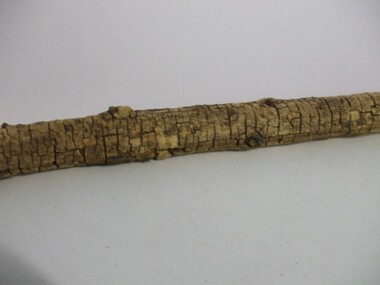
Harcourt Valley Heritage & Tourist CentreMulberry Tree Branch, 1874
... A dead branch from a mulberry tree grown at Sericulture Farm, Mt Alexander, in the early 1870s. ...Typed: "Part of a limb of a mulberry tree from the Sericulture Farm on Mt Alexander which was started by Mrs Bladen-Neill in early 1870s, finally closing in 1878. ...Typed: "Part of a limb of a mulberry tree from the Sericulture Farm on Mt Alexander which was started by Mrs Bladen-Neill in early 1870s, finally closing in 1878. ...An unsuccessful attempt was made to set up a silkworm industry at Mt Alexander, to be an occupation for ladies of the district as well as to introduce the silk industry to Victoria. An attempt by women to enter the business world was beaten by difficulties: (1). Road access to the property (2). Heavy frost damage to mulberry plants. (3). Disease of silkworms. (4). Lack of quantity of leaves. (5) drought and rabbits. Experiments proved silk harvested and woven was superior to overseas products, but the venture was defeated by the climate and the surviving trees were relocated to Corowa NSWA relic of the far-sighted venture by the Victorian Ladies Sericulture Co, promoted by the charismatic Mrs Bladen Neill , who was anxious to generate employment opportunities for women..A dead branch from a mulberry tree grown at Sericulture Farm, Mt Alexander, in the early 1870s. This long limb's bark has cracked with age, forming a pattern of brown cracks. Remnants of smaller branch axilla are clearly visible. An inscription on paper is pasted around the branch L 74 x W 14 x D 3.5Typed: "Part of a limb of a mulberry tree from the Sericulture Farm on Mt Alexander which was started by Mrs Bladen-Neill in early 1870s, finally closing in 1878. Mrs Bladen-Neill died in September 1884 at the residence of Dr Barker, Melbourne" "Courtesy of Keith Henderson, Harcourt" -

Bendigo Historical Society Inc.Map - HARCOURT : COUNTY OF BENDIGO, 23-3-10
... Three areas reserved for Sericulture (Silkworms). Photo-Lithographed at the Dept. of Lands and Survey, Melbourne by T.F. ...Three areas reserved for Sericulture (Silkworms). Photo-Lithographed at the Dept. of Lands and Survey, Melbourne by T.F. ...Map. County of Bendigo, County of Talbot, Sutton Grange, Ravenswood, Walmer, Faraday, Castlemaine, Axe Creek, Barkers Creek, Melbourne to Echuca Railway, Victorian Water Supply in Connection with Barkers Creek Reservoir. Victorian Water Supply Reserve, Mt. Alexander State Forest. Three areas reserved for Sericulture (Silkworms). Photo-Lithographed at the Dept. of Lands and Survey, Melbourne by T.F. McGauran 23-3-10. Price 1/-. (number 101 in map cupboard 1)T.F. McGauranmap, bendigo, harcourt -
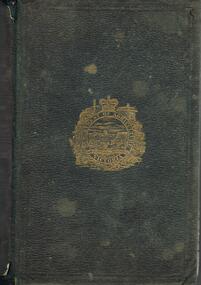
Bendigo Historical Society Inc.Book - DEPARTMENT OF AGRICULTURE SECOND ANNUAL REPORT 1874
... Smith, Strathfieldsaye' Includes information on agricultural education, Australian grasses, diseases among stock, orange culture, wood boring beetles, apples meteorology of Victoria, worm diseased in sheep, sericulture, white eyebrowed woodswallow, flax, vines and wine industry, fencing and impounding. ...Smith, Strathfieldsaye' Includes information on agricultural education, Australian grasses, diseases among stock, orange culture, wood boring beetles, apples meteorology of Victoria, worm diseased in sheep, sericulture, white eyebrowed woodswallow, flax, vines and wine industry, fencing and impounding. ...Dark green cover, embossed on front 'Department of Agriculture Victoria' enclosed in circular design. Report to the Minister of Lands and Agriculture, 1874 on the proceedings of the Department, 363 pages. Written on front page in black ink "Mr. H.P. Smith, Strathfieldsaye' Includes information on agricultural education, Australian grasses, diseases among stock, orange culture, wood boring beetles, apples meteorology of Victoria, worm diseased in sheep, sericulture, white eyebrowed woodswallow, flax, vines and wine industry, fencing and impounding. Contains information about Strathfieldsaye vigneron Messrs Bruhn and T Strachan of Axedale. Extensive meteorological data for 1873 included; Sandhurst data described in depth.Mr. H. P. Smith Strathfieldsaye in pen on the first three pagesgovernment, state, department of agriculture -
Bendigo Historical Society Inc.Postcard - Elliot Postcard Collection: Japan, 1895 - 1914
... The Japanese translates as “Bank of Japan, Tokyo.” 11731.039 This black-and-white card shows traditional school buildings surrounded by trees and gardens: On the card is printed “THE SERICULTURAL SCHOOL AT ST. KODAMA, MUSA-HI. The Japanese translates as “Kyōshinsha Sericultural School, Kodama Town, Musashi (No. 1).” ...The Japanese translates as “Bank of Japan, Tokyo.” 11731.039 This black-and-white card shows traditional school buildings surrounded by trees and gardens: On the card is printed “THE SERICULTURAL SCHOOL AT ST. KODAMA, MUSA-HI. The Japanese translates as “Kyōshinsha Sericultural School, Kodama Town, Musashi (No. 1).” ...Thought to have originated in Austria in 1869, postcards first gained popularity in Australia in the 1890s.They were used to send short messages to friends and family. This collection was generated by Mary Emma Elliot of Talgarno. Talgarno is a rural locality in Victoria, Australia, situated on the southern shoreline of Lake Hume, about 23 km east of Albury-Wodonga. The collection contains postcards from across the world. Mary Emma Sibley was born in Ironbark, Bendigo in 1859. She married James Elliot in 1893 and they settled at “Kelso”, Talgarno. They had two children – Mona and Sibley. Mary Emma Elliot died in Melbourne in 1944, aged 84 years. This item contains the following: Twenty Japanese postcards collected by Mrs James Elliot between 1898 and 1915. 11731.021 This coloured card shows people gathered beneath flowering cherry trees in a park: On the card is printed “Cherry blossoms in Maruyama park Kyoto translation is “Cherry blossoms in Maruyama Park—one of Kyoto’s hundred famous views.” 11731.022 This coloured card shows an ornate Japanese shrine building beside a flowering plum tree: On the card is printed “Tenmangu Shrine, Dazaifu, Fukuoka-kan The Japanese translates approximately as: “Dazaifu Tenmangū, Fukuoka Prefecture. It is a middle-ranking Imperial Government Shrine dedicated to Sugawara no Michizane and was founded in the eighth month of Engi 5. Turn left several dozen paces from the great bronze torii and enter through the second torii, where there is a large pond. Beyond two arched bridges stands the tower gate. The picture shows the main shrine within, simple and dignified and possessing a sacred tranquillity. In front of the shrine is the famous Flying Plum tree.” The references to Sugawara no Michizane, the bridges and the plum trees accord with present-day official descriptions of the shrine. 11731.023 This coloured card shows an ornate Japanese shrine gate and surrounding buildings in a snowy setting: On the card is printed “Yomei gate at Toshogu, Nikko. The Japanese translation is “Yōmeimon Gate at Nikkō Tōshōgū Shrine.” 11731.024 This coloured card shows a Japanese shrine building surrounded by pine trees and stone lanterns: On the card is printed “Hitomaru Jinsha at Akashi. The Japanese translates as “Hitomaru Shrine at Akashi.” 11731.025 This coloured card shows a natural rock arch topped with pine trees beside a sailing boat: On the card is printed “Matsushima (3.views of Japan.) The Japanese translates as “Udegasaki, Matsushima—one of the Three Scenic Views of Japan.” 11731.026 This coloured card shows a rocky stream flowing beside a small wooden building in a wooded valley: On the card is printed “(E43) Current of Kiga, Hakone. The Japanese itranslates as “The stream at Kiga, Hakone.” 11731.027 This black-and-white card shows a garden with large trees, dense flowering plants and a small shelter: On the card is printed “SHAKWA GARDEN MUKOJIMA, TOKYO. (NO. 2) The Japanese iranslates as “Mukojima Hyakkaen Garden, Tokyo.” 11731.028 This coloured card shows a large seated Buddha statue surrounded by trees and visitors: On the card is printed “Daibutsu at Kamakura The Japanese translates as “The Great Buddha of Kamakura.” 11731.029 This coloured card shows traditional Japanese shrine buildings with a tower and rows of lanterns: On the card is printed “THE KASUGA SHRINE AT NARA The Japanese translates as “Kasuga Shrine, Nara.” 11731.030 This coloured card shows a temple gate beside a road with a tram and pedestrians: On the card is printed “Shiba Park Tokyo" The Japanese translates as “Zōjōji Temple in Shiba Park—a famous place in Tokyo.” 11731.031 This coloured card shows a landscaped garden lake with pavilions, trees and distant hills: On the card is printed “THE GARDEN GORAKUEN, BIZEN. The Japanese translates as “Kōrakuen Garden, Okayama, Bizen—a famous place in Japan.” 11731.032 This coloured card shows a rocky shoreline with a wooded headland: On the card is printed “(D35) Inamuragasaki at Kamakura. The Japanese translates as “Inamuragasaki, Kamakura.” 11731.033 This black-and-white card shows a stone arched bridge across a moat with palace buildings in the background: On the card is printed “301 Imperial Palace, Tokyo.” 11731.034 This black-and-white card shows a large hotel complex and landscaped garden beside a pond: On the card is printed “NIKKO HOTEL, NIKKO JAPAN.” 11731.035 This coloured card shows railway tracks beside the shoreline with Mount Fuji in the distance: On the card is printed “Okitsu Sea Shore. The Japanese translates as “Scenery of Okitsu — the tunnel at Satta Pass.” 11731.036 This black-and-white card shows a traditional mosque building with a tiered pavilion roof: On the card is printed “CHINCHENZU TEMPLE, FENGHUANGCHENG. The Chinese characters are read from right to left as 鳳凰城回回教清真寺, meaning “Muslim Mosque, Fenghuangcheng.” 11731.037 This black-and-white card shows an industrial loading crane beside railway tracks at a port: On the card is printed “A crane belongs to Mitsui Miike Port. The Japanese translates as “Ship-loading crane at Mitsui Miike Port.” 11731.038 This coloured card shows a large bank building beside a street with a tram: On the card is printed “Nippon Ginko, Tokyo. The Japanese translates as “Bank of Japan, Tokyo.” 11731.039 This black-and-white card shows traditional school buildings surrounded by trees and gardens: On the card is printed “THE SERICULTURAL SCHOOL AT ST. KODAMA, MUSA-HI. The Japanese translates as “Kyōshinsha Sericultural School, Kodama Town, Musashi (No. 1).” The smaller wording 戸塚堂發行 means “Published by Totsukadō.” 11731.040 This coloured card shows snow-covered Mount Fuji viewed across a lake: On the card is printed “(富14) View of the Mt. Fuji from the Lake side of Seiho. The Japanese translates as “Mount Fuji from the shore of Lake Sai—one of the Fifteen Views of Mount Fuji.”postcards, collecting, collections