
Showing 44 items matching "serum"
-
 National Wool Museum
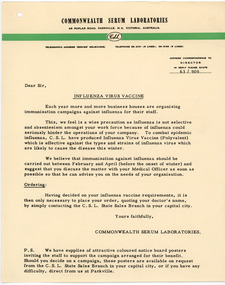
Letter, Commonwealth Serum Laboratories, 1963
... Typewritten letter in black ink on cream paper with green and black letterhead of ‘Commonwealth Serum Laboratories’, marketing influenza vaccines to businesses for their employees....COMMONWEALTH SERUM LABORATORIES 45 POPLAR ROAD, PARKVILLE, N.2. ......Commonwealth Serum Laboratories...Letter Letter Kathryn Knitwear Commonwealth Serum Laboratories ...Kathryn Knitwear, founded by Robert Blake, manufactured high quality children’s knitwear in Melbourne from the 1940s – 1980s. Robert Blake began manufacturing children’s knitwear in his bedroom in Strathmore using a hand powered machine in the late 1940s. The operation moved to Ascot Vale and Essendon, before eventually establishing a factory in Moonee Ponds in the early 1950s. The business continued to expand, necessitating a move to a new factory in Broadmeadows. By 1962, the Broadmeadows factory was producing an average of 20,000 garments per month, which increased to 24,000 by 1964. Robert Blake’s Son, Brendan recalls that “The Kathryn brand was famous around Australia, anywhere children needed to keep warm and dress smartly. It also won a number of wool fashion awards”, including the 1969 Wool Awards, which was held by the Australian Wool Bureau and published in Women’s Weekly. The Kathryn range was designed for durability, comfort and care, without sacrificing style. They used patterning techniques that increase stretchiness, comfort and fit, as well as integrating decorative elements into the fabric to prevent them from being bulky, uncomfortable or tight. Making longevity of style a priority, Brendan Blake remembers that “there was one particular garment that was in the range for at least thirty years”. He also recalls “In the past, when women have found out that I was associated with Kathryn Knitwear, they would often relate to me the story of a garment they had purchased or received as a gift and, when their child had grown out of it, they would hand it on to another child. Several ladies have told me of purchasing garments for their daughters’ glory box, or saving a particular garment after their daughter had grown out of it. Brendan Blake: “At the peak of their operation they employed approximately two hundred people, mainly women and girls. A family would often seek to send their daughter to work in this company because they knew they would be looked after and safe. One lady wrote to me telling me that working at the Moonee Ponds Factory prior to getting married was the happiest time of her life.” In 1963, workers at the Kathryn factory earned £13 per week, which was 8 shillings and 8 pence higher than the minimum weekly wage for female workers in the textile manufacturing industry (£12 11s 4d). By 1970, the Kathryn Knitwear brand expanded from children’s knitwear into womenswear under the brand name ‘Lady Kathryn’, and for boys and men under ‘Robert Blake’. Continuing to diversify their distribution, they also began exporting ‘Kathryn’ garments to New Zealand, the Pacific Islands, and Japan. ‘Kathryn Knitwear’ was well-known for their early adoption of modern materials and techniques that had broad appeal to their customer base. This is shown in their early use of the acrylic fibre ‘Orlon’ in the 50s and 60s and ‘Superwash’ wool in the 1970s. Many of Kathryn Knitwear’s styles, particularly those that were long running staples of the brand, were available in both wool and Orlon to suit the consumer’s preference. Far from the humble origins of one man in his bedroom with a hand-cranked machine; at its closure in 1980, the Broadmeadows factory of ‘Kathryn’ housed more than 100 machines, including 53 sewing machines and 45 knitting machines. Robert Blake was “a passionate advocate for wool and Australian Made” throughout his whole life. A strong thread that ties through the lifespan of Robert Blake and Kathryn Knitwear is a balance between adopting new innovations without sacrificing the core values of durability, comfort, care and style that had made the brand so well known. Their legacy forms an integral part of both Australian social and manufacturing history.Typewritten letter in black ink on cream paper with green and black letterhead of ‘Commonwealth Serum Laboratories’, marketing influenza vaccines to businesses for their employees.COMMONWEALTH SERUM LABORATORIES 45 POPLAR ROAD, PARKVILLE, N.2. VICTORIA, AUSTRALIA TELEGRAPHIC ADDRESS ‘SERUMS’ MELBOURNE / TELEPHONE 38-2101 (5 LINES), 38-5136 (5 LINES) ADDRESS CORRESPONDENCE TO DIRECTOR IN REPLY PLEASE QUOTE 63/909 Dear Sir, INFLUENZA VIRUS VACCINE Each year more and more business houses are organising immunisation campaigns against influenza for their staff. This, we feel is a wise precaution as influenza is not selective and absenteeism amongst your work force because of influenza could seriously hinder the operations of your company. To combat epidemic influenza, C.S.L. have produced Influenza Virus Vaccine (Polyvalent) which is effective against the types and strains of influenza virus which are likely to cause the disease this winter. We believe that immunization against influenza should be carried out between February and April (before the onset of winter) and suggest that you discuss the matter with your Medical Officer as soon as possible so that he can advise you on the needs of your organization. Ordering: Having decided on your influenza vaccine requirements, it is then only necessary to place your order, quoting your doctor’s name, by simply contacting the C.S.L. State Sales Branch in your capital city. Yours faithfully, COMMONWEALTH SERUM LABORATORIES. P.S. We have supplies of attractive coloured notice board posters inviting the staff to support the campaign arranged for their benefit. Should you decide on a campaign, these posters are available on request from the C.S.L. State Sales Branch in your capital city, or if you have any difficulty, direct from us at Parkville.business, business history, manufacturing, knitting machine, fashion textile production, business archives, manufacturing documents, vaccination, flu vaccination, public health, public health history, epidemiology, influenza, vaccination history -
 Royal Australian and New Zealand College of Obstetricians & Gynaecologists (RANZCOG)
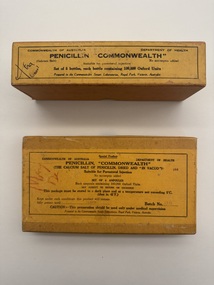
Two penicillin boxes, Commonwealth Serum Laboratories, c. 1940s
... Below this in bold print says, 'Set of 5 bottles, each bottle containing 100,000 Oxford Units/Prepared in the Commonwealth Serum Laboratories Royal Park, Victoria, Australia'. ...Commonwealth Serum Laboratories ...The best before date is stamped onto the lid '11 September '46' Two penicillin boxes Commonwealth Serum Laboratories ...Two penicillin boxes, orange in colour. One box consists of a lid and base, and the second box only contains a lid. The first box in small bold font says, 'COMMONWEALTH OF AUSTRALIA' with a large space in between 'DEPARTMENT OF HEALTH', then below this in large bold font says, 'PENICILLIN COMMONWEALTH"'. Below this in fine print says '(Calcium Salt)', 'Suitable for parenteral injection', 'No antiseptic added'. Below this in bold print says, 'Set of 5 bottles, each bottle containing 100,000 Oxford Units/Prepared in the Commonwealth Serum Laboratories Royal Park, Victoria, Australia'. The second box which is only a lid includes writing which says 'Special Product'/COMMONWEALTH OF AUSTRALIA DEPARTMENT OF HEALTH' and below this in bold writing says 'PENICILLIN, "COMMONWEALTH"/(THE CALCIUM SALT OF PENCILLIN, DRIED AND "IN VACUO")'. In smaller font the lid says, 'Suitable for Parenteral Injection/No antiseptic added'. Lid is also printed with list of contents, storage instructions, and a caution. The best before date is stamped onto the lid '11 September '46' On the first box, there is handwriting which says 'Xtra Good'. There is also a sticker on the back of the first box which says, 'THIS ARTICLE HAS BEEN REFRIDGERATOR STORED BY THE VICTORIA DRUG CO.' and has 'PTY. LTD' crossed out. On the second box, there is handwriting on the edge of the box which says 'Pearson-W6'. drugs -
 University of Melbourne, Burnley Campus Archives
Document, Tetanus Toxoid B.P, 1962
... ...serum...Notice from Commonwealth Serum Laboratories re tetanus immunisation...tetanus immunisation serum commonwealth Notice from Commonwealth Serum Laboratories re tetanus immunisation Tetanus Toxoid B.P. ...Notice from Commonwealth Serum Laboratories re tetanus immunisationtetanus, immunisation, serum, commonwealth -
 Alfred Hospital Nurses League - Nursing History Collection
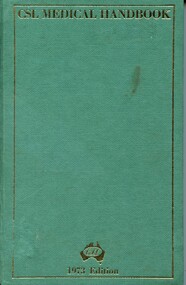
Book - Illustrated textbook, J C Trinca et al, CSL Medical handbook, 1973
... ...Commonwealth Serum Laborotories...CSL Medical handbook Book Illustrated textbook J C Trinca B J Feery P Forsell J Gulasekharam P Schiff S K Sutherland Commonwealth Serum Laborotories Renown Press (Aust) Pty Ltd ...A comprehensive medical reference, it contains detailed information on vaccinations, therapeutics and treatments available at the time of publication (1973)Illustrated book with green binding.Front cover has a gilt border and print detaling title and edition above edition is a small gilt map of Australia with a green oval on which 'CSL' is printed. The same information is on the spine.non-fictionA comprehensive medical reference, it contains detailed information on vaccinations, therapeutics and treatments available at the time of publication (1973)immunizations, vaccinations, human blood products, hormones, antibiotics, antivenenes, allergens -
 Orbost & District Historical Society
bottle, 1930's
... Wheaton Company--a glassware manufacturer most well-known for their medicine bottles. this small bottle may have contained serum used for animal medication on a local farm....Wheaton Company--a glassware manufacturer most well-known for their medicine bottles. this small bottle may have contained serum used for animal medication on a local farm. ...T. C. W. CO. is a trademark belonging to the T. C. Wheaton Company--a glassware manufacturer most well-known for their medicine bottles. this small bottle may have contained serum used for animal medication on a local farm.This small bottle is an early example of a glass container used to hold veterinary medicine.A small clear glass bottle with a seal -possibly cork with a metal top.on base - TCW Co 5?0 USAbottle t.c.wheaton container -
 Mortlake and District Historical Society
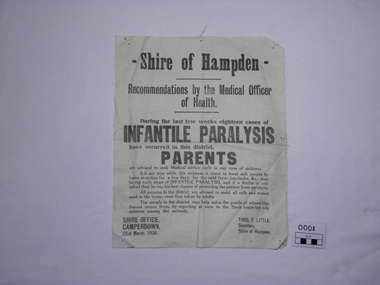
Poster - Infantile Paralysis Notice, Shire of Hampden, Cases Notified of Infantile Paralysis, 22/03/1935
... There was little chance of protecting children against contracting the disease as the Salk vaccine was not available until 1955, although medical research into the development of preventative serum was well advanced in the 1940's. Treatment of the disease was primitive and a cure not possible....There was little chance of protecting children against contracting the disease as the Salk vaccine was not available until 1955, although medical research into the development of preventative serum was well advanced in the 1940's. Treatment of the disease was primitive and a cure not possible. ...This public notice of 1935 warns of the dangers of Infantile Paralysis. It advises scalding dairy products and reporting stock illness, even though the disease was viral (discovered by U.S. researchers in 1908), not bacterial. There was little chance of protecting children against contracting the disease as the Salk vaccine was not available until 1955, although medical research into the development of preventative serum was well advanced in the 1940's. Treatment of the disease was primitive and a cure not possible.Infantile paralysis was a fearful disease increasingly prevalent in the early 20th Century. Children under 3 were especially susceptible. It could be said to be forever associated with this part of the Western District as a result of the celebrated author, Alan Marshall (1902-1984) suffering its effects. He immortalised his childhood, which was profoundly affected by his paralysis, in the autobiograhical novel 'I can jump puddles'. Public notice printed on Calico rectangle off white colour"Shire of Hampden. Recommendations by the Medical Officer of Health. During the last few weeks eighteen cases of INFANTILE PARALYSIS have occurred in this district. PARENTS are advised to seek Medical advice early in any case of sickness. It is not wise while this sickness is about to treat sick people by home remedies for a few days, for the mild fever-headache, &c., may be the early stage of INFANTILE PARALYSIS, and if a doctor is consulted then he has his best chance of protecting the patient from paralysis. All persons in the district are advised to scald all milk and cream used in the home, even that taken by adults. The people in the district may help solve the puzzle of where this disease comes from, by reporting at once to the Stock Inspector any sickness among the animals. SHIRE OFFICE, CAMPERDOWN, 22nd March, 1935. THOS.F.LITTLE, Secretary, Shire of Hampden." disease, infantile paralysis, poliomyelitis, shire of hampden, public health, childhood -
Flagstaff Hill Maritime Museum and Village
Book - General Medical Reference Annuals, Various Medical Contributors, The Medical Annual and Practitioners Index 1890, 1890
... The volume contains reviews of therapeutic progress achieved and new remedies for medical conditions, including detailed summaries of new drugs, synthetic chemicals, serums, and pharmacological advances introduced during 1889–1890. ...The 1890 volume is the 8th annual edition (8th year of issue) in the continuous annual series. The Medical Annual and Practitioners’ Index was one of the premier late-Victorian medical reference works. Starting in 1883/1884, the publication served as an essential year-end review digest for medical practitioners across Great Britain and the British colonies. The volume contains reviews of therapeutic progress achieved and new remedies for medical conditions, including detailed summaries of new drugs, synthetic chemicals, serums, and pharmacological advances introduced during 1889–1890. There is also a dictionary of new treatments, as well as summaries of clinical practices and breakthroughs in antiseptic surgery, gynaecology, neurology, and infectious diseases. These were written by leading specialists and practitioners, and include useful reference tables listing new medical publications, official health reports, asylum statistics, instruments, and pharmaceutical suppliers.Hard cover book. The Medical Annual and Practitioners Index for 1890 Author: Various Contributors Editor: Dr. Percy Roberts Wilde Publisher: John Wright & Co. Bristol. (Simpkin Marshall, Hamilton, Kent & Co Ltd. For London) Date: 1890 Further Information: Further Information: Blue cloth hard cover brown spine. Spine bands and panel edges somewhat rubbed and dust-toned as with age. Embossed patterning with lettering to Spine in Gilt, Publishers logo to front cover with Volume title.non-fictionThe 1890 volume is the 8th annual edition (8th year of issue) in the continuous annual series. The Medical Annual and Practitioners’ Index was one of the premier late-Victorian medical reference works. Starting in 1883/1884, the publication served as an essential year-end review digest for medical practitioners across Great Britain and the British colonies. The volume contains reviews of therapeutic progress achieved and new remedies for medical conditions, including detailed summaries of new drugs, synthetic chemicals, serums, and pharmacological advances introduced during 1889–1890. There is also a dictionary of new treatments, as well as summaries of clinical practices and breakthroughs in antiseptic surgery, gynaecology, neurology, and infectious diseases. These were written by leading specialists and practitioners, and include useful reference tables listing new medical publications, official health reports, asylum statistics, instruments, and pharmaceutical suppliers.flagstaff hill, warrnambool, shipwrecked-coast, flagstaff-hill, flagstaff-hill-maritime-museum, maritime-museum, shipwreck-coast, flagstaff-hill-maritime-village, the medical annual and practitioners index 1890, book, medical reference books, medical annual -
 Flagstaff Hill Maritime Museum and Village
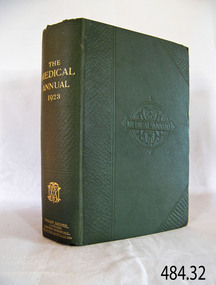
Book - General Medical Reference Annuals, Various Medical Contributors, The Medical Annual and Practitioners Index 1923, 1923
... The volume contains reviews of therapeutic progress achieved and new remedies for medical conditions, including detailed summaries of new drugs, synthetic chemicals, serums, and pharmacological advances introduced during 1889–1890. ...The 1923volume is the Fort First annual edition (41 years of issue) in the continuous annual series. The Medical Annual and Practitioners’ Index was one of the premier late-Victorian medical reference works. Starting in 1883/1884, the publication served as an essential year-end review digest for medical practitioners across Great Britain and the British colonies. The volume contains reviews of therapeutic progress achieved and new remedies for medical conditions, including detailed summaries of new drugs, synthetic chemicals, serums, and pharmacological advances introduced during 1889–1890. There is also a dictionary of new treatments, as well as summaries of clinical practices and breakthroughs in antiseptic surgery, gynaecology, neurology, and infectious diseases. These were written by leading specialists and practitioners, and include useful reference tables listing new medical publications, official health reports, asylum statistics, instruments, and pharmaceutical suppliers.Hard cover book. The Medical Annual and Practitioners Index for 1923 Author: Various Contributors Editor: Dr. Percy Roberts Wilde Publisher: John Wright & Co. Bristol. (Simpkin Marshall, Hamilton, Kent & Co Ltd. For London) Date: 1923 Further Information: Further Information: Blue cloth hard cover brown spine. Spine bands and panel edges somewhat rubbed and dust-toned as with age. Embossed patterning with lettering to Spine in Gilt, Publishers logo to front cover with Volume title.non-fictionThe 1923volume is the Fort First annual edition (41 years of issue) in the continuous annual series. The Medical Annual and Practitioners’ Index was one of the premier late-Victorian medical reference works. Starting in 1883/1884, the publication served as an essential year-end review digest for medical practitioners across Great Britain and the British colonies. The volume contains reviews of therapeutic progress achieved and new remedies for medical conditions, including detailed summaries of new drugs, synthetic chemicals, serums, and pharmacological advances introduced during 1889–1890. There is also a dictionary of new treatments, as well as summaries of clinical practices and breakthroughs in antiseptic surgery, gynaecology, neurology, and infectious diseases. These were written by leading specialists and practitioners, and include useful reference tables listing new medical publications, official health reports, asylum statistics, instruments, and pharmaceutical suppliers.flagstaff hill, warrnambool, shipwrecked-coast, flagstaff-hill, flagstaff-hill-maritime-museum, maritime-museum, shipwreck-coast, flagstaff-hill-maritime-village, the medical annual and practitioners index 1890, book, medical reference books, medical annual -
 Flagstaff Hill Maritime Museum and Village
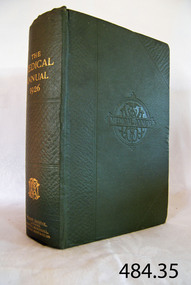
Book - General Medical Reference Annuals, Various Medical Contributors, The Medical Annual and Practitioners Index 1926, 1926
... The volume contains reviews of therapeutic progress achieved and new remedies for medical conditions, including detailed summaries of new drugs, synthetic chemicals, serums, and pharmacological advances introduced during 1889–1890. ...The 1926 volume is the forty fourth annual edition (44 years of issue) in the continuous annual series. The Medical Annual and Practitioners’ Index was one of the premier late-Victorian medical reference works. Starting in 1883/1884, the publication served as an essential year-end review digest for medical practitioners across Great Britain and the British colonies. The volume contains reviews of therapeutic progress achieved and new remedies for medical conditions, including detailed summaries of new drugs, synthetic chemicals, serums, and pharmacological advances introduced during 1889–1890. There is also a dictionary of new treatments, as well as summaries of clinical practices and breakthroughs in antiseptic surgery, gynaecology, neurology, and infectious diseases. These were written by leading specialists and practitioners, and include useful reference tables listing new medical publications, official health reports, asylum statistics, instruments, and pharmaceutical suppliers.Hard cover book. The Medical Annual and Practitioners Index for 1926 Author: Various Contributors Editor: Dr. Percy Roberts Wilde Publisher: John Wright & Co. Bristol. (Simpkin Marshall, Hamilton, Kent & Co Ltd. For London) Date: 1926 Further Information: Further Information: Blue cloth hard cover brown spine. Spine bands and panel edges somewhat rubbed and dust-toned as with age. Embossed patterning with lettering to Spine in Gilt, Publishers logo to front cover with Volume title.non-fictionThe 1926 volume is the forty fourth annual edition (44 years of issue) in the continuous annual series. The Medical Annual and Practitioners’ Index was one of the premier late-Victorian medical reference works. Starting in 1883/1884, the publication served as an essential year-end review digest for medical practitioners across Great Britain and the British colonies. The volume contains reviews of therapeutic progress achieved and new remedies for medical conditions, including detailed summaries of new drugs, synthetic chemicals, serums, and pharmacological advances introduced during 1889–1890. There is also a dictionary of new treatments, as well as summaries of clinical practices and breakthroughs in antiseptic surgery, gynaecology, neurology, and infectious diseases. These were written by leading specialists and practitioners, and include useful reference tables listing new medical publications, official health reports, asylum statistics, instruments, and pharmaceutical suppliers.flagstaff hill, warrnambool, shipwrecked-coast, flagstaff-hill, flagstaff-hill-maritime-museum, maritime-museum, shipwreck-coast, flagstaff-hill-maritime-village, the medical annual and practitioners index 1890, book, medical reference books, medical annual -
 Flagstaff Hill Maritime Museum and Village
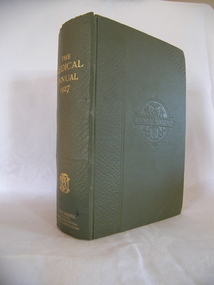
Book - General Medical Reference Annuals, Various Medical Contributors, The Medical Annual and Practitioners Index 1927, 1927
... The volume contains reviews of therapeutic progress achieved and new remedies for medical conditions, including detailed summaries of new drugs, synthetic chemicals, serums, and pharmacological advances introduced during 1889–1890. ...The 1927 volume is the forty fifth annual edition (45 years of issue) in the continuous annual series. The Medical Annual and Practitioners’ Index was one of the premier late-Victorian medical reference works. Starting in 1883/1884, the publication served as an essential year-end review digest for medical practitioners across Great Britain and the British colonies. The volume contains reviews of therapeutic progress achieved and new remedies for medical conditions, including detailed summaries of new drugs, synthetic chemicals, serums, and pharmacological advances introduced during 1889–1890. There is also a dictionary of new treatments, as well as summaries of clinical practices and breakthroughs in antiseptic surgery, gynaecology, neurology, and infectious diseases. These were written by leading specialists and practitioners, and include useful reference tables listing new medical publications, official health reports, asylum statistics, instruments, and pharmaceutical suppliers.Hard cover book. The Medical Annual and Practitioners Index for 1927 Author: Various Contributors Editor: Dr. Percy Roberts Wilde Publisher: John Wright & Co. Bristol. (Simpkin Marshall, Hamilton, Kent & Co Ltd. For London) Date: 1927 Further Information: Further Information: Blue cloth hard cover brown spine. Spine bands and panel edges somewhat rubbed and dust-toned as with age. Embossed patterning with lettering to Spine in Gilt, Publishers logo to front cover with Volume title.non-fictionThe 1927 volume is the forty fifth annual edition (45 years of issue) in the continuous annual series. The Medical Annual and Practitioners’ Index was one of the premier late-Victorian medical reference works. Starting in 1883/1884, the publication served as an essential year-end review digest for medical practitioners across Great Britain and the British colonies. The volume contains reviews of therapeutic progress achieved and new remedies for medical conditions, including detailed summaries of new drugs, synthetic chemicals, serums, and pharmacological advances introduced during 1889–1890. There is also a dictionary of new treatments, as well as summaries of clinical practices and breakthroughs in antiseptic surgery, gynaecology, neurology, and infectious diseases. These were written by leading specialists and practitioners, and include useful reference tables listing new medical publications, official health reports, asylum statistics, instruments, and pharmaceutical suppliers.flagstaff hill, warrnambool, shipwrecked-coast, flagstaff-hill, flagstaff-hill-maritime-museum, maritime-museum, shipwreck-coast, flagstaff-hill-maritime-village, the medical annual and practitioners index 1890, book, medical reference books, medical annual -
 Flagstaff Hill Maritime Museum and Village
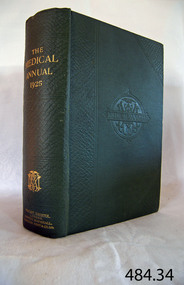
Book - General Medical Reference Annuals, Various Medical Contributors, The Medical Annual and Practitioners Index 1925, 1925
... The volume contains reviews of therapeutic progress achieved and new remedies for medical conditions, including detailed summaries of new drugs, synthetic chemicals, serums, and pharmacological advances introduced during 1889–1890. ...The 1925 volume is the forty third annual edition (43 years of issue) in the continuous annual series. The Medical Annual and Practitioners’ Index was one of the premier late-Victorian medical reference works. Starting in 1883/1884, the publication served as an essential year-end review digest for medical practitioners across Great Britain and the British colonies. The volume contains reviews of therapeutic progress achieved and new remedies for medical conditions, including detailed summaries of new drugs, synthetic chemicals, serums, and pharmacological advances introduced during 1889–1890. There is also a dictionary of new treatments, as well as summaries of clinical practices and breakthroughs in antiseptic surgery, gynaecology, neurology, and infectious diseases. These were written by leading specialists and practitioners, and include useful reference tables listing new medical publications, official health reports, asylum statistics, instruments, and pharmaceutical suppliers.Hard cover book. The Medical Annual and Practitioners Index for 1925 Author: Various Contributors Editor: Dr. Percy Roberts Wilde Publisher: John Wright & Co. Bristol. (Simpkin Marshall, Hamilton, Kent & Co Ltd. For London) Date: 1925 Further Information: Further Information: Blue cloth hard cover brown spine. Spine bands and panel edges somewhat rubbed and dust-toned as with age. Embossed patterning with lettering to Spine in Gilt, Publishers logo to front cover with Volume title.non-fictionThe 1925 volume is the forty third annual edition (43 years of issue) in the continuous annual series. The Medical Annual and Practitioners’ Index was one of the premier late-Victorian medical reference works. Starting in 1883/1884, the publication served as an essential year-end review digest for medical practitioners across Great Britain and the British colonies. The volume contains reviews of therapeutic progress achieved and new remedies for medical conditions, including detailed summaries of new drugs, synthetic chemicals, serums, and pharmacological advances introduced during 1889–1890. There is also a dictionary of new treatments, as well as summaries of clinical practices and breakthroughs in antiseptic surgery, gynaecology, neurology, and infectious diseases. These were written by leading specialists and practitioners, and include useful reference tables listing new medical publications, official health reports, asylum statistics, instruments, and pharmaceutical suppliers.flagstaff hill, warrnambool, shipwrecked-coast, flagstaff-hill, flagstaff-hill-maritime-museum, maritime-museum, shipwreck-coast, flagstaff-hill-maritime-village, the medical annual and practitioners index 1890, book, medical reference books, medical annual -
 Flagstaff Hill Maritime Museum and Village
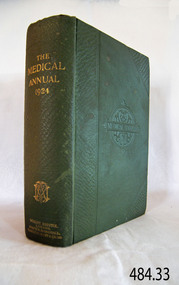
Book - General Medical Reference Annuals, Various Medical Contributors, The Medical Annual and Practitioners Index 1924, 1924
... The volume contains reviews of therapeutic progress achieved and new remedies for medical conditions, including detailed summaries of new drugs, synthetic chemicals, serums, and pharmacological advances introduced during 1889–1890. ...The 1924 volume is the forty second annual edition (42 years of issue) in the continuous annual series. The Medical Annual and Practitioners’ Index was one of the premier late-Victorian medical reference works. Starting in 1883/1884, the publication served as an essential year-end review digest for medical practitioners across Great Britain and the British colonies. The volume contains reviews of therapeutic progress achieved and new remedies for medical conditions, including detailed summaries of new drugs, synthetic chemicals, serums, and pharmacological advances introduced during 1889–1890. There is also a dictionary of new treatments, as well as summaries of clinical practices and breakthroughs in antiseptic surgery, gynaecology, neurology, and infectious diseases. These were written by leading specialists and practitioners, and include useful reference tables listing new medical publications, official health reports, asylum statistics, instruments, and pharmaceutical suppliers.Hard cover book. The Medical Annual and Practitioners Index for 1924 Author: Various Contributors Editor: Dr. Percy Roberts Wilde Publisher: John Wright & Co. Bristol. (Simpkin Marshall, Hamilton, Kent & Co Ltd. For London) Date: 1924 Further Information: Further Information: Blue cloth hard cover brown spine. Spine bands and panel edges somewhat rubbed and dust-toned as with age. Embossed patterning with lettering to Spine in Gilt, Publishers logo to front cover with Volume title.non-fictionThe 1924 volume is the forty second annual edition (42 years of issue) in the continuous annual series. The Medical Annual and Practitioners’ Index was one of the premier late-Victorian medical reference works. Starting in 1883/1884, the publication served as an essential year-end review digest for medical practitioners across Great Britain and the British colonies. The volume contains reviews of therapeutic progress achieved and new remedies for medical conditions, including detailed summaries of new drugs, synthetic chemicals, serums, and pharmacological advances introduced during 1889–1890. There is also a dictionary of new treatments, as well as summaries of clinical practices and breakthroughs in antiseptic surgery, gynaecology, neurology, and infectious diseases. These were written by leading specialists and practitioners, and include useful reference tables listing new medical publications, official health reports, asylum statistics, instruments, and pharmaceutical suppliers.flagstaff hill, warrnambool, shipwrecked-coast, flagstaff-hill, flagstaff-hill-maritime-museum, maritime-museum, shipwreck-coast, flagstaff-hill-maritime-village, the medical annual and practitioners index 1890, book, medical reference books, medical annual -
 Flagstaff Hill Maritime Museum and Village
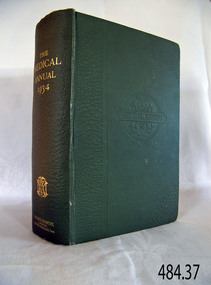
Book - General Medical Reference Annuals, Various Medical Contributors, The Medical Annual and Practitioners Index 1934, 1934
... The volume contains reviews of therapeutic progress achieved and new remedies for medical conditions, including detailed summaries of new drugs, synthetic chemicals, serums, and pharmacological advances introduced during 1889–1890. ...The 1934 volume is the fifty second annual edition (52 years of issue) in the continuous annual series. The Medical Annual and Practitioners’ Index was one of the premier late-Victorian medical reference works. Starting in 1883/1884, the publication served as an essential year-end review digest for medical practitioners across Great Britain and the British colonies. The volume contains reviews of therapeutic progress achieved and new remedies for medical conditions, including detailed summaries of new drugs, synthetic chemicals, serums, and pharmacological advances introduced during 1889–1890. There is also a dictionary of new treatments, as well as summaries of clinical practices and breakthroughs in antiseptic surgery, gynaecology, neurology, and infectious diseases. These were written by leading specialists and practitioners, and include useful reference tables listing new medical publications, official health reports, asylum statistics, instruments, and pharmaceutical suppliers.Hard cover book. The Medical Annual and Practitioners Index for 1934 Author: Various Contributors Editor: Dr. Percy Roberts Wilde Publisher: John Wright & Co. Bristol. (Simpkin Marshall, Hamilton, Kent & Co Ltd. For London) Date: 1934 Further Information: Further Information: Blue cloth hard cover brown spine. Spine bands and panel edges somewhat rubbed and dust-toned as with age. Embossed patterning with lettering to Spine in Gilt, Publishers logo to front cover with Volume title.non-fictionThe 1934 volume is the fifty second annual edition (52 years of issue) in the continuous annual series. The Medical Annual and Practitioners’ Index was one of the premier late-Victorian medical reference works. Starting in 1883/1884, the publication served as an essential year-end review digest for medical practitioners across Great Britain and the British colonies. The volume contains reviews of therapeutic progress achieved and new remedies for medical conditions, including detailed summaries of new drugs, synthetic chemicals, serums, and pharmacological advances introduced during 1889–1890. There is also a dictionary of new treatments, as well as summaries of clinical practices and breakthroughs in antiseptic surgery, gynaecology, neurology, and infectious diseases. These were written by leading specialists and practitioners, and include useful reference tables listing new medical publications, official health reports, asylum statistics, instruments, and pharmaceutical suppliers.flagstaff hill, warrnambool, shipwrecked-coast, flagstaff-hill, flagstaff-hill-maritime-museum, maritime-museum, shipwreck-coast, flagstaff-hill-maritime-village, the medical annual and practitioners index 1890, book, medical reference books, medical annual -
 Flagstaff Hill Maritime Museum and Village
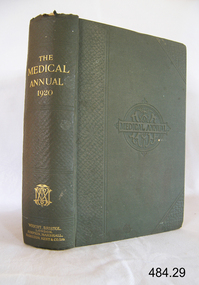
Book - General Medical Reference Annuals, Various Medical Contributors, The Medical Annual and Practitioners Index 1920, 1920
... The volume contains reviews of therapeutic progress achieved and new remedies for medical conditions, including detailed summaries of new drugs, synthetic chemicals, serums, and pharmacological advances introduced during 1889–1890. ...The 1920 volume is the thirty eighth annual edition (38 years of issue) in the continuous annual series. The Medical Annual and Practitioners’ Index was one of the premier late-Victorian medical reference works. Starting in 1883/1884, the publication served as an essential year-end review digest for medical practitioners across Great Britain and the British colonies. The volume contains reviews of therapeutic progress achieved and new remedies for medical conditions, including detailed summaries of new drugs, synthetic chemicals, serums, and pharmacological advances introduced during 1889–1890. There is also a dictionary of new treatments, as well as summaries of clinical practices and breakthroughs in antiseptic surgery, gynaecology, neurology, and infectious diseases. These were written by leading specialists and practitioners, and include useful reference tables listing new medical publications, official health reports, asylum statistics, instruments, and pharmaceutical suppliers.Hard cover book. The Medical Annual and Practitioners Index for 1920 Author: Various Contributors Editor: Dr. Percy Roberts Wilde Publisher: John Wright & Co. Bristol. (Simpkin Marshall, Hamilton, Kent & Co Ltd. For London) Date: 1920 Further Information: Further Information: Blue cloth hard cover brown spine. Spine bands and panel edges somewhat rubbed and dust-toned as with age. Embossed patterning with lettering to Spine in Gilt, Publishers logo to front cover with Volume title.non-fictionThe 1920 volume is the thirty eighth annual edition (38 years of issue) in the continuous annual series. The Medical Annual and Practitioners’ Index was one of the premier late-Victorian medical reference works. Starting in 1883/1884, the publication served as an essential year-end review digest for medical practitioners across Great Britain and the British colonies. The volume contains reviews of therapeutic progress achieved and new remedies for medical conditions, including detailed summaries of new drugs, synthetic chemicals, serums, and pharmacological advances introduced during 1889–1890. There is also a dictionary of new treatments, as well as summaries of clinical practices and breakthroughs in antiseptic surgery, gynaecology, neurology, and infectious diseases. These were written by leading specialists and practitioners, and include useful reference tables listing new medical publications, official health reports, asylum statistics, instruments, and pharmaceutical suppliers.flagstaff hill, warrnambool, shipwrecked-coast, flagstaff-hill, flagstaff-hill-maritime-museum, maritime-museum, shipwreck-coast, flagstaff-hill-maritime-village, the medical annual and practitioners index 1890, book, medical reference books, medical annual -
 Flagstaff Hill Maritime Museum and Village
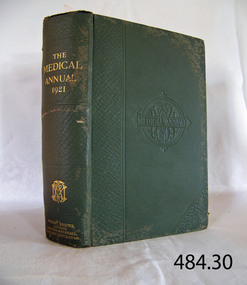
Book - General Medical Reference Annuals, Various Medical Contributors, The Medical Annual and Practitioners Index 1921, 1921
... The volume contains reviews of therapeutic progress achieved and new remedies for medical conditions, including detailed summaries of new drugs, synthetic chemicals, serums, and pharmacological advances introduced during 1889–1890. ...The 1921 volume is the thirty ninth annual edition (39 years of issue) in the continuous annual series. The Medical Annual and Practitioners’ Index was one of the premier late-Victorian medical reference works. Starting in 1883/1884, the publication served as an essential year-end review digest for medical practitioners across Great Britain and the British colonies. The volume contains reviews of therapeutic progress achieved and new remedies for medical conditions, including detailed summaries of new drugs, synthetic chemicals, serums, and pharmacological advances introduced during 1889–1890. There is also a dictionary of new treatments, as well as summaries of clinical practices and breakthroughs in antiseptic surgery, gynaecology, neurology, and infectious diseases. These were written by leading specialists and practitioners, and include useful reference tables listing new medical publications, official health reports, asylum statistics, instruments, and pharmaceutical suppliers.Hard cover book. The Medical Annual and Practitioners Index for 1921 Author: Various Contributors Editor: Dr. Percy Roberts Wilde Publisher: John Wright & Co. Bristol. (Simpkin Marshall, Hamilton, Kent & Co Ltd. For London) Date: 1921 Further Information: Further Information: Blue cloth hard cover brown spine. Spine bands and panel edges somewhat rubbed and dust-toned as with age. Embossed patterning with lettering to Spine in Gilt, Publishers logo to front cover with Volume title.non-fictionThe 1921 volume is the thirty ninth annual edition (39 years of issue) in the continuous annual series. The Medical Annual and Practitioners’ Index was one of the premier late-Victorian medical reference works. Starting in 1883/1884, the publication served as an essential year-end review digest for medical practitioners across Great Britain and the British colonies. The volume contains reviews of therapeutic progress achieved and new remedies for medical conditions, including detailed summaries of new drugs, synthetic chemicals, serums, and pharmacological advances introduced during 1889–1890. There is also a dictionary of new treatments, as well as summaries of clinical practices and breakthroughs in antiseptic surgery, gynaecology, neurology, and infectious diseases. These were written by leading specialists and practitioners, and include useful reference tables listing new medical publications, official health reports, asylum statistics, instruments, and pharmaceutical suppliers.flagstaff hill, warrnambool, shipwrecked-coast, flagstaff-hill, flagstaff-hill-maritime-museum, maritime-museum, shipwreck-coast, flagstaff-hill-maritime-village, the medical annual and practitioners index 1890, book, medical reference books, medical annual -
 Flagstaff Hill Maritime Museum and Village
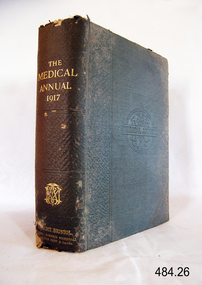
Book - General Medical Reference Annuals, Various Medical Contributors, The Medical Annual and Practitioners Index 1917, 1917
... The volume contains reviews of therapeutic progress achieved and new remedies for medical conditions, including detailed summaries of new drugs, synthetic chemicals, serums, and pharmacological advances introduced during 1889–1890. ...The 1917 volume is the thirty fifth annual edition (35 years of issue) in the continuous annual series. The Medical Annual and Practitioners’ Index was one of the premier late-Victorian medical reference works. Starting in 1883/1884, the publication served as an essential year-end review digest for medical practitioners across Great Britain and the British colonies. The volume contains reviews of therapeutic progress achieved and new remedies for medical conditions, including detailed summaries of new drugs, synthetic chemicals, serums, and pharmacological advances introduced during 1889–1890. There is also a dictionary of new treatments, as well as summaries of clinical practices and breakthroughs in antiseptic surgery, gynaecology, neurology, and infectious diseases. These were written by leading specialists and practitioners, and include useful reference tables listing new medical publications, official health reports, asylum statistics, instruments, and pharmaceutical suppliers.Hard cover book. The Medical Annual and Practitioners Index for 1917 Author: Various Contributors Editor: Dr. Percy Roberts Wilde Publisher: John Wright & Co. Bristol. (Simpkin Marshall, Hamilton, Kent & Co Ltd. For London) Date: 1917 Further Information: Further Information: Blue cloth hard cover brown spine. Spine bands and panel edges somewhat rubbed and dust-toned as with age. Embossed patterning with lettering to Spine in Gilt, Publishers logo to front cover with Volume title.non-fictionThe 1917 volume is the thirty fifth annual edition (35 years of issue) in the continuous annual series. The Medical Annual and Practitioners’ Index was one of the premier late-Victorian medical reference works. Starting in 1883/1884, the publication served as an essential year-end review digest for medical practitioners across Great Britain and the British colonies. The volume contains reviews of therapeutic progress achieved and new remedies for medical conditions, including detailed summaries of new drugs, synthetic chemicals, serums, and pharmacological advances introduced during 1889–1890. There is also a dictionary of new treatments, as well as summaries of clinical practices and breakthroughs in antiseptic surgery, gynaecology, neurology, and infectious diseases. These were written by leading specialists and practitioners, and include useful reference tables listing new medical publications, official health reports, asylum statistics, instruments, and pharmaceutical suppliers.flagstaff hill, warrnambool, shipwrecked-coast, flagstaff-hill, flagstaff-hill-maritime-museum, maritime-museum, shipwreck-coast, flagstaff-hill-maritime-village, the medical annual and practitioners index 1890, book, medical reference books, medical annual -
 Flagstaff Hill Maritime Museum and Village
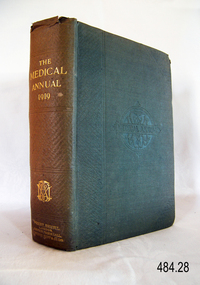
Book - General Medical Reference Annuals, Various Medical Contributors, The Medical Annual and Practitioners Index 1919, 1919
... The volume contains reviews of therapeutic progress achieved and new remedies for medical conditions, including detailed summaries of new drugs, synthetic chemicals, serums, and pharmacological advances introduced during 1889–1890. ...The 1919 volume is the thirty seventh annual edition (37 years of issue) in the continuous annual series. The Medical Annual and Practitioners’ Index was one of the premier late-Victorian medical reference works. Starting in 1883/1884, the publication served as an essential year-end review digest for medical practitioners across Great Britain and the British colonies. The volume contains reviews of therapeutic progress achieved and new remedies for medical conditions, including detailed summaries of new drugs, synthetic chemicals, serums, and pharmacological advances introduced during 1889–1890. There is also a dictionary of new treatments, as well as summaries of clinical practices and breakthroughs in antiseptic surgery, gynaecology, neurology, and infectious diseases. These were written by leading specialists and practitioners, and include useful reference tables listing new medical publications, official health reports, asylum statistics, instruments, and pharmaceutical suppliers.Hard cover book. The Medical Annual and Practitioners Index for 1919 Author: Various Contributors Editor: Dr. Percy Roberts Wilde Publisher: John Wright & Co. Bristol. (Simpkin Marshall, Hamilton, Kent & Co Ltd. For London) Date: 1919 Further Information: Further Information: Blue cloth hard cover brown spine. Spine bands and panel edges somewhat rubbed and dust-toned as with age. Embossed patterning with lettering to Spine in Gilt, Publishers logo to front cover with Volume title.non-fictionThe 1919 volume is the thirty seventh annual edition (37 years of issue) in the continuous annual series. The Medical Annual and Practitioners’ Index was one of the premier late-Victorian medical reference works. Starting in 1883/1884, the publication served as an essential year-end review digest for medical practitioners across Great Britain and the British colonies. The volume contains reviews of therapeutic progress achieved and new remedies for medical conditions, including detailed summaries of new drugs, synthetic chemicals, serums, and pharmacological advances introduced during 1889–1890. There is also a dictionary of new treatments, as well as summaries of clinical practices and breakthroughs in antiseptic surgery, gynaecology, neurology, and infectious diseases. These were written by leading specialists and practitioners, and include useful reference tables listing new medical publications, official health reports, asylum statistics, instruments, and pharmaceutical suppliers.flagstaff hill, warrnambool, shipwrecked-coast, flagstaff-hill, flagstaff-hill-maritime-museum, maritime-museum, shipwreck-coast, flagstaff-hill-maritime-village, the medical annual and practitioners index 1890, book, medical reference books, medical annual -
 Flagstaff Hill Maritime Museum and Village
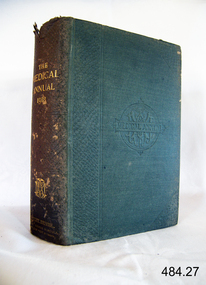
Book - General Medical Reference Annuals, Various Medical Contributors, The Medical Annual and Practitioners Index 1918, 1918
... The volume contains reviews of therapeutic progress achieved and new remedies for medical conditions, including detailed summaries of new drugs, synthetic chemicals, serums, and pharmacological advances introduced during 1889–1890. ...The 1918 volume is the thirty sixth annual edition (36 years of issue) in the continuous annual series. The Medical Annual and Practitioners’ Index was one of the premier late-Victorian medical reference works. Starting in 1883/1884, the publication served as an essential year-end review digest for medical practitioners across Great Britain and the British colonies. The volume contains reviews of therapeutic progress achieved and new remedies for medical conditions, including detailed summaries of new drugs, synthetic chemicals, serums, and pharmacological advances introduced during 1889–1890. There is also a dictionary of new treatments, as well as summaries of clinical practices and breakthroughs in antiseptic surgery, gynaecology, neurology, and infectious diseases. These were written by leading specialists and practitioners, and include useful reference tables listing new medical publications, official health reports, asylum statistics, instruments, and pharmaceutical suppliers.Hard cover book. The Medical Annual and Practitioners Index for 1918 Author: Various Contributors Editor: Dr. Percy Roberts Wilde Publisher: John Wright & Co. Bristol. (Simpkin Marshall, Hamilton, Kent & Co Ltd. For London) Date: 1918 Further Information: Further Information: Blue cloth hard cover brown spine. Spine bands and panel edges somewhat rubbed and dust-toned as with age. Embossed patterning with lettering to Spine in Gilt, Publishers logo to front cover with Volume title.non-fictionThe 1918 volume is the thirty sixth annual edition (36 years of issue) in the continuous annual series. The Medical Annual and Practitioners’ Index was one of the premier late-Victorian medical reference works. Starting in 1883/1884, the publication served as an essential year-end review digest for medical practitioners across Great Britain and the British colonies. The volume contains reviews of therapeutic progress achieved and new remedies for medical conditions, including detailed summaries of new drugs, synthetic chemicals, serums, and pharmacological advances introduced during 1889–1890. There is also a dictionary of new treatments, as well as summaries of clinical practices and breakthroughs in antiseptic surgery, gynaecology, neurology, and infectious diseases. These were written by leading specialists and practitioners, and include useful reference tables listing new medical publications, official health reports, asylum statistics, instruments, and pharmaceutical suppliers.flagstaff hill, warrnambool, shipwrecked-coast, flagstaff-hill, flagstaff-hill-maritime-museum, maritime-museum, shipwreck-coast, flagstaff-hill-maritime-village, the medical annual and practitioners index 1890, book, medical reference books, medical annual -
 Flagstaff Hill Maritime Museum and Village
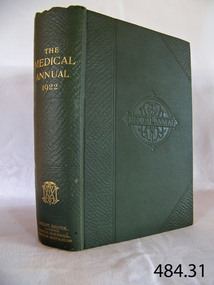
Book - General Medical Reference Annuals, Various Medical Contributors, The Medical Annual and Practitioners Index 1922, 1922
... The volume contains reviews of therapeutic progress achieved and new remedies for medical conditions, including detailed summaries of new drugs, synthetic chemicals, serums, and pharmacological advances introduced during 1889–1890. ...The 1922 volume is the Fortieth annual edition (40 years of issue) in the continuous annual series. The Medical Annual and Practitioners’ Index was one of the premier late-Victorian medical reference works. Starting in 1883/1884, the publication served as an essential year-end review digest for medical practitioners across Great Britain and the British colonies. The volume contains reviews of therapeutic progress achieved and new remedies for medical conditions, including detailed summaries of new drugs, synthetic chemicals, serums, and pharmacological advances introduced during 1889–1890. There is also a dictionary of new treatments, as well as summaries of clinical practices and breakthroughs in antiseptic surgery, gynaecology, neurology, and infectious diseases. These were written by leading specialists and practitioners, and include useful reference tables listing new medical publications, official health reports, asylum statistics, instruments, and pharmaceutical suppliers.Hard cover book. The Medical Annual and Practitioners Index for 1922 Author: Various Contributors Editor: Dr. Percy Roberts Wilde Publisher: John Wright & Co. Bristol. (Simpkin Marshall, Hamilton, Kent & Co Ltd. For London) Date: 1922 Further Information: Further Information: Blue cloth hard cover brown spine. Spine bands and panel edges somewhat rubbed and dust-toned as with age. Embossed patterning with lettering to Spine in Gilt, Publishers logo to front cover with Volume title.non-fictionThe 1922 volume is the Fortieth annual edition (40 years of issue) in the continuous annual series. The Medical Annual and Practitioners’ Index was one of the premier late-Victorian medical reference works. Starting in 1883/1884, the publication served as an essential year-end review digest for medical practitioners across Great Britain and the British colonies. The volume contains reviews of therapeutic progress achieved and new remedies for medical conditions, including detailed summaries of new drugs, synthetic chemicals, serums, and pharmacological advances introduced during 1889–1890. There is also a dictionary of new treatments, as well as summaries of clinical practices and breakthroughs in antiseptic surgery, gynaecology, neurology, and infectious diseases. These were written by leading specialists and practitioners, and include useful reference tables listing new medical publications, official health reports, asylum statistics, instruments, and pharmaceutical suppliers.flagstaff hill, warrnambool, shipwrecked-coast, flagstaff-hill, flagstaff-hill-maritime-museum, maritime-museum, shipwreck-coast, flagstaff-hill-maritime-village, the medical annual and practitioners index 1890, book, medical reference books, medical annual -
 Flagstaff Hill Maritime Museum and Village
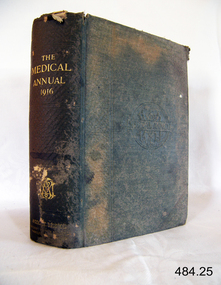
Book - General Medical Reference Annuals, Various Medical Contributors, The Medical Annual and Practitioners Index 1916, 1916
... The volume contains reviews of therapeutic progress achieved and new remedies for medical conditions, including detailed summaries of new drugs, synthetic chemicals, serums, and pharmacological advances introduced during 1889–1890. ...The 1916 volume is the thirty fourth annual edition (34 years of issue) in the continuous annual series. The Medical Annual and Practitioners’ Index was one of the premier late-Victorian medical reference works. Starting in 1883/1884, the publication served as an essential year-end review digest for medical practitioners across Great Britain and the British colonies. The volume contains reviews of therapeutic progress achieved and new remedies for medical conditions, including detailed summaries of new drugs, synthetic chemicals, serums, and pharmacological advances introduced during 1889–1890. There is also a dictionary of new treatments, as well as summaries of clinical practices and breakthroughs in antiseptic surgery, gynaecology, neurology, and infectious diseases. These were written by leading specialists and practitioners, and include useful reference tables listing new medical publications, official health reports, asylum statistics, instruments, and pharmaceutical suppliers.Hard cover book. The Medical Annual and Practitioners Index for 1916 Author: Various Contributors Editor: Dr. Percy Roberts Wilde Publisher: John Wright & Co. Bristol. (Simpkin Marshall, Hamilton, Kent & Co Ltd. For London) Date: 1916 Further Information: Further Information: Blue cloth hard cover brown spine. Spine bands and panel edges somewhat rubbed and dust-toned as with age. Embossed patterning with lettering to Spine in Gilt, Publishers logo to front cover with Volume title.non-fictionThe 1916 volume is the thirty fourth annual edition (34 years of issue) in the continuous annual series. The Medical Annual and Practitioners’ Index was one of the premier late-Victorian medical reference works. Starting in 1883/1884, the publication served as an essential year-end review digest for medical practitioners across Great Britain and the British colonies. The volume contains reviews of therapeutic progress achieved and new remedies for medical conditions, including detailed summaries of new drugs, synthetic chemicals, serums, and pharmacological advances introduced during 1889–1890. There is also a dictionary of new treatments, as well as summaries of clinical practices and breakthroughs in antiseptic surgery, gynaecology, neurology, and infectious diseases. These were written by leading specialists and practitioners, and include useful reference tables listing new medical publications, official health reports, asylum statistics, instruments, and pharmaceutical suppliers.flagstaff hill, warrnambool, shipwrecked-coast, flagstaff-hill, flagstaff-hill-maritime-museum, maritime-museum, shipwreck-coast, flagstaff-hill-maritime-village, the medical annual and practitioners index 1890, book, medical reference books, medical annual -
 Flagstaff Hill Maritime Museum and Village
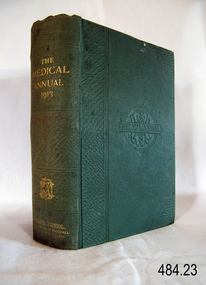
Book - General Medical Reference Annuals, Various Medical Contributors, The Medical Annual and Practitioners Index 1913, 1913
... The volume contains reviews of therapeutic progress achieved and new remedies for medical conditions, including detailed summaries of new drugs, synthetic chemicals, serums, and pharmacological advances introduced during 1889–1890. ...The 1913 volume is the thirty first annual edition (31 years of issue) in the continuous annual series. The Medical Annual and Practitioners’ Index was one of the premier late-Victorian medical reference works. Starting in 1883/1884, the publication served as an essential year-end review digest for medical practitioners across Great Britain and the British colonies. The volume contains reviews of therapeutic progress achieved and new remedies for medical conditions, including detailed summaries of new drugs, synthetic chemicals, serums, and pharmacological advances introduced during 1889–1890. There is also a dictionary of new treatments, as well as summaries of clinical practices and breakthroughs in antiseptic surgery, gynaecology, neurology, and infectious diseases. These were written by leading specialists and practitioners, and include useful reference tables listing new medical publications, official health reports, asylum statistics, instruments, and pharmaceutical suppliers.Hard cover book. The Medical Annual and Practitioners Index for 1913 Author: Various Contributors Editor: Dr. Percy Roberts Wilde Publisher: John Wright & Co. Bristol. (Simpkin Marshall, Hamilton, Kent & Co Ltd. For London) Date: 1913 Further Information: Further Information: Blue cloth hard cover brown spine. Spine bands and panel edges somewhat rubbed and dust-toned as with age. Embossed patterning with lettering to Spine in Gilt, Publishers logo to front cover with Volume title.non-fictionThe 1913 volume is the thirty first annual edition (31 years of issue) in the continuous annual series. The Medical Annual and Practitioners’ Index was one of the premier late-Victorian medical reference works. Starting in 1883/1884, the publication served as an essential year-end review digest for medical practitioners across Great Britain and the British colonies. The volume contains reviews of therapeutic progress achieved and new remedies for medical conditions, including detailed summaries of new drugs, synthetic chemicals, serums, and pharmacological advances introduced during 1889–1890. There is also a dictionary of new treatments, as well as summaries of clinical practices and breakthroughs in antiseptic surgery, gynaecology, neurology, and infectious diseases. These were written by leading specialists and practitioners, and include useful reference tables listing new medical publications, official health reports, asylum statistics, instruments, and pharmaceutical suppliers.flagstaff hill, warrnambool, shipwrecked-coast, flagstaff-hill, flagstaff-hill-maritime-museum, maritime-museum, shipwreck-coast, flagstaff-hill-maritime-village, the medical annual and practitioners index 1890, book, medical reference books, medical annual -
 Flagstaff Hill Maritime Museum and Village
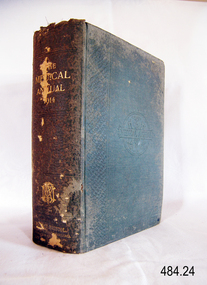
Book - General Medical Reference Annuals, Various Medical Contributors, The Medical Annual and Practitioners Index 1914, 1914
... The volume contains reviews of therapeutic progress achieved and new remedies for medical conditions, including detailed summaries of new drugs, synthetic chemicals, serums, and pharmacological advances introduced during 1889–1890. ...The 1914 volume is the thirty second annual edition (32 years of issue) in the continuous annual series. The Medical Annual and Practitioners’ Index was one of the premier late-Victorian medical reference works. Starting in 1883/1884, the publication served as an essential year-end review digest for medical practitioners across Great Britain and the British colonies. The volume contains reviews of therapeutic progress achieved and new remedies for medical conditions, including detailed summaries of new drugs, synthetic chemicals, serums, and pharmacological advances introduced during 1889–1890. There is also a dictionary of new treatments, as well as summaries of clinical practices and breakthroughs in antiseptic surgery, gynaecology, neurology, and infectious diseases. These were written by leading specialists and practitioners, and include useful reference tables listing new medical publications, official health reports, asylum statistics, instruments, and pharmaceutical suppliers.Hard cover book. The Medical Annual and Practitioners Index for 1914 Author: Various Contributors Editor: Dr. Percy Roberts Wilde Publisher: John Wright & Co. Bristol. (Simpkin Marshall, Hamilton, Kent & Co Ltd. For London) Date: 1914 Further Information: Further Information: Blue cloth hard cover brown spine. Spine bands and panel edges somewhat rubbed and dust-toned as with age. Embossed patterning with lettering to Spine in Gilt, Publishers logo to front cover with Volume title.non-fictionThe 1914 volume is the thirty second annual edition (32 years of issue) in the continuous annual series. The Medical Annual and Practitioners’ Index was one of the premier late-Victorian medical reference works. Starting in 1883/1884, the publication served as an essential year-end review digest for medical practitioners across Great Britain and the British colonies. The volume contains reviews of therapeutic progress achieved and new remedies for medical conditions, including detailed summaries of new drugs, synthetic chemicals, serums, and pharmacological advances introduced during 1889–1890. There is also a dictionary of new treatments, as well as summaries of clinical practices and breakthroughs in antiseptic surgery, gynaecology, neurology, and infectious diseases. These were written by leading specialists and practitioners, and include useful reference tables listing new medical publications, official health reports, asylum statistics, instruments, and pharmaceutical suppliers.flagstaff hill, warrnambool, shipwrecked-coast, flagstaff-hill, flagstaff-hill-maritime-museum, maritime-museum, shipwreck-coast, flagstaff-hill-maritime-village, the medical annual and practitioners index 1890, book, medical reference books, medical annual -
 Flagstaff Hill Maritime Museum and Village
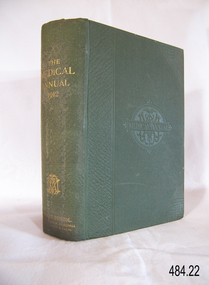
Book - General Medical Reference Annuals, Various Medical Contributors, The Medical Annual and Practitioners Index 1912, 1912
... The volume contains reviews of therapeutic progress achieved and new remedies for medical conditions, including detailed summaries of new drugs, synthetic chemicals, serums, and pharmacological advances introduced during 1889–1890. ...The 1912 volume is the 13th annual edition (13th year of issue) in the continuous annual series. The Medical Annual and Practitioners’ Index was one of the premier late-Victorian medical reference works. Starting in 1883/1884, the publication served as an essential year-end review digest for medical practitioners across Great Britain and the British colonies. The volume contains reviews of therapeutic progress achieved and new remedies for medical conditions, including detailed summaries of new drugs, synthetic chemicals, serums, and pharmacological advances introduced during 1889–1890. There is also a dictionary of new treatments, as well as summaries of clinical practices and breakthroughs in antiseptic surgery, gynaecology, neurology, and infectious diseases. These were written by leading specialists and practitioners, and include useful reference tables listing new medical publications, official health reports, asylum statistics, instruments, and pharmaceutical suppliers.Hard cover book. The Medical Annual and Practitioners Index for 1912 Author: Various Contributors Editor: Dr. Percy Roberts Wilde Publisher: John Wright & Co. Bristol. (Simpkin Marshall, Hamilton, Kent & Co Ltd. For London) Date: 1912 Further Information: Further Information: Blue cloth hard cover brown spine. Spine bands and panel edges somewhat rubbed and dust-toned as with age. Embossed patterning with lettering to Spine in Gilt, Publishers logo to front cover with Volume title.non-fictionThe 1912 volume is the 13th annual edition (13th year of issue) in the continuous annual series. The Medical Annual and Practitioners’ Index was one of the premier late-Victorian medical reference works. Starting in 1883/1884, the publication served as an essential year-end review digest for medical practitioners across Great Britain and the British colonies. The volume contains reviews of therapeutic progress achieved and new remedies for medical conditions, including detailed summaries of new drugs, synthetic chemicals, serums, and pharmacological advances introduced during 1889–1890. There is also a dictionary of new treatments, as well as summaries of clinical practices and breakthroughs in antiseptic surgery, gynaecology, neurology, and infectious diseases. These were written by leading specialists and practitioners, and include useful reference tables listing new medical publications, official health reports, asylum statistics, instruments, and pharmaceutical suppliers.flagstaff hill, warrnambool, shipwrecked-coast, flagstaff-hill, flagstaff-hill-maritime-museum, maritime-museum, shipwreck-coast, flagstaff-hill-maritime-village, the medical annual and practitioners index 1890, book, medical reference books, medical annual -
 Flagstaff Hill Maritime Museum and Village
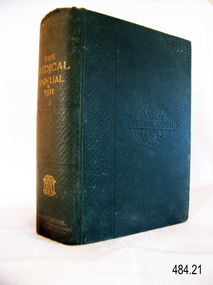
Book - General Medical Reference Annuals, Various Medical Contributors, The Medical Annual and Practitioners Index 1911, 1911
... The volume contains reviews of therapeutic progress achieved and new remedies for medical conditions, including detailed summaries of new drugs, synthetic chemicals, serums, and pharmacological advances introduced during 1889–1890. ...The 1911 volume is the 29th annual edition (29th year of issue) in the continuous annual series. The Medical Annual and Practitioners’ Index was one of the premier late-Victorian medical reference works. Starting in 1883/1884, the publication served as an essential year-end review digest for medical practitioners across Great Britain and the British colonies. The volume contains reviews of therapeutic progress achieved and new remedies for medical conditions, including detailed summaries of new drugs, synthetic chemicals, serums, and pharmacological advances introduced during 1889–1890. There is also a dictionary of new treatments, as well as summaries of clinical practices and breakthroughs in antiseptic surgery, gynaecology, neurology, and infectious diseases. These were written by leading specialists and practitioners, and include useful reference tables listing new medical publications, official health reports, asylum statistics, instruments, and pharmaceutical suppliers.Hard cover book. The Medical Annual and Practitioners Index for 1911 Author: Various Contributors Editor: Dr. Percy Roberts Wilde Publisher: John Wright & Co. Bristol. (Simpkin Marshall, Hamilton, Kent & Co Ltd. For London) Date: 1911 Further Information: Further Information: Blue cloth hard cover brown spine. Spine bands and panel edges somewhat rubbed and dust-toned as with age. Embossed patterning with lettering to Spine in Gilt, Publishers logo to front cover with Volume title.non-fictionThe 1911 volume is the 29th annual edition (29th year of issue) in the continuous annual series. The Medical Annual and Practitioners’ Index was one of the premier late-Victorian medical reference works. Starting in 1883/1884, the publication served as an essential year-end review digest for medical practitioners across Great Britain and the British colonies. The volume contains reviews of therapeutic progress achieved and new remedies for medical conditions, including detailed summaries of new drugs, synthetic chemicals, serums, and pharmacological advances introduced during 1889–1890. There is also a dictionary of new treatments, as well as summaries of clinical practices and breakthroughs in antiseptic surgery, gynaecology, neurology, and infectious diseases. These were written by leading specialists and practitioners, and include useful reference tables listing new medical publications, official health reports, asylum statistics, instruments, and pharmaceutical suppliers.flagstaff hill, warrnambool, shipwrecked-coast, flagstaff-hill, flagstaff-hill-maritime-museum, maritime-museum, shipwreck-coast, flagstaff-hill-maritime-village, the medical annual and practitioners index 1890, book, medical reference books, medical annual -
 Flagstaff Hill Maritime Museum and Village
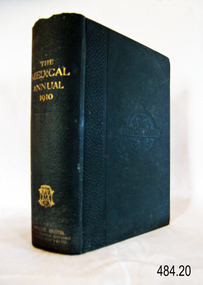
Book - General Medical Reference Annuals, Various Medical Contributors, The Medical Annual and Practitioners Index 1910, 1910
... The volume contains reviews of therapeutic progress achieved and new remedies for medical conditions, including detailed summaries of new drugs, synthetic chemicals, serums, and pharmacological advances introduced during 1889–1890. ...The 1910 volume is the 28th annual edition (28th year of issue) in the continuous annual series. The Medical Annual and Practitioners’ Index was one of the premier late-Victorian medical reference works. Starting in 1883/1884, the publication served as an essential year-end review digest for medical practitioners across Great Britain and the British colonies. The volume contains reviews of therapeutic progress achieved and new remedies for medical conditions, including detailed summaries of new drugs, synthetic chemicals, serums, and pharmacological advances introduced during 1889–1890. There is also a dictionary of new treatments, as well as summaries of clinical practices and breakthroughs in antiseptic surgery, gynaecology, neurology, and infectious diseases. These were written by leading specialists and practitioners, and include useful reference tables listing new medical publications, official health reports, asylum statistics, instruments, and pharmaceutical suppliers.Hard cover book. The Medical Annual and Practitioners Index for 1910 Author: Various Contributors Editor: Dr. Percy Roberts Wilde Publisher: John Wright & Co. Bristol. (Simpkin Marshall, Hamilton, Kent & Co Ltd. For London) Date: 1910 Further Information: Further Information: Blue cloth hard cover brown spine. Spine bands and panel edges somewhat rubbed and dust-toned as with age. Embossed patterning with lettering to Spine in Gilt, Publishers logo to front cover with Volume title.non-fictionThe 1910 volume is the 28th annual edition (28th year of issue) in the continuous annual series. The Medical Annual and Practitioners’ Index was one of the premier late-Victorian medical reference works. Starting in 1883/1884, the publication served as an essential year-end review digest for medical practitioners across Great Britain and the British colonies. The volume contains reviews of therapeutic progress achieved and new remedies for medical conditions, including detailed summaries of new drugs, synthetic chemicals, serums, and pharmacological advances introduced during 1889–1890. There is also a dictionary of new treatments, as well as summaries of clinical practices and breakthroughs in antiseptic surgery, gynaecology, neurology, and infectious diseases. These were written by leading specialists and practitioners, and include useful reference tables listing new medical publications, official health reports, asylum statistics, instruments, and pharmaceutical suppliers.flagstaff hill, warrnambool, shipwrecked-coast, flagstaff-hill, flagstaff-hill-maritime-museum, maritime-museum, shipwreck-coast, flagstaff-hill-maritime-village, the medical annual and practitioners index 1890, book, medical reference books, medical annual -
 Flagstaff Hill Maritime Museum and Village
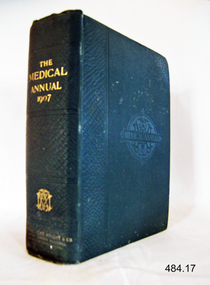
Book - General Medical Reference Annuals, Various Medical Contributors, The Medical Annual and Practitioners Index 1907, 1907
... The volume contains reviews of therapeutic progress achieved and new remedies for medical conditions, including detailed summaries of new drugs, synthetic chemicals, serums, and pharmacological advances introduced during 1889–1890. ...The 1907volume is the 25th annual edition (25th year of issue) in the continuous annual series. The Medical Annual and Practitioners’ Index was one of the premier late-Victorian medical reference works. Starting in 1883/1884, the publication served as an essential year-end review digest for medical practitioners across Great Britain and the British colonies. The volume contains reviews of therapeutic progress achieved and new remedies for medical conditions, including detailed summaries of new drugs, synthetic chemicals, serums, and pharmacological advances introduced during 1889–1890. There is also a dictionary of new treatments, as well as summaries of clinical practices and breakthroughs in antiseptic surgery, gynaecology, neurology, and infectious diseases. These were written by leading specialists and practitioners, and include useful reference tables listing new medical publications, official health reports, asylum statistics, instruments, and pharmaceutical suppliers.Hard cover book. The Medical Annual and Practitioners Index for 1907 Author: Various Contributors Editor: Dr. Percy Roberts Wilde Publisher: John Wright & Co. Bristol. (Simpkin Marshall, Hamilton, Kent & Co Ltd. For London) Date: 1907 Further Information: Further Information: Blue cloth hard cover brown spine. Spine bands and panel edges somewhat rubbed and dust-toned as with age. Embossed patterning with lettering to Spine in Gilt, Publishers logo to front cover with Volume title.non-fictionThe 1907volume is the 25th annual edition (25th year of issue) in the continuous annual series. The Medical Annual and Practitioners’ Index was one of the premier late-Victorian medical reference works. Starting in 1883/1884, the publication served as an essential year-end review digest for medical practitioners across Great Britain and the British colonies. The volume contains reviews of therapeutic progress achieved and new remedies for medical conditions, including detailed summaries of new drugs, synthetic chemicals, serums, and pharmacological advances introduced during 1889–1890. There is also a dictionary of new treatments, as well as summaries of clinical practices and breakthroughs in antiseptic surgery, gynaecology, neurology, and infectious diseases. These were written by leading specialists and practitioners, and include useful reference tables listing new medical publications, official health reports, asylum statistics, instruments, and pharmaceutical suppliers.flagstaff hill, warrnambool, shipwrecked-coast, flagstaff-hill, flagstaff-hill-maritime-museum, maritime-museum, shipwreck-coast, flagstaff-hill-maritime-village, the medical annual and practitioners index 1890, book, medical reference books, medical annual -
 Flagstaff Hill Maritime Museum and Village
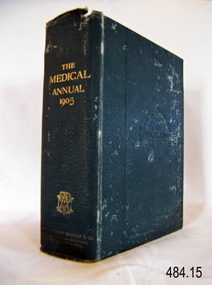
Book - General Medical Reference Annuals, Various Medical Contributors, The Medical Annual and Practitioners Index 1905, 1905
... The volume contains reviews of therapeutic progress achieved and new remedies for medical conditions, including detailed summaries of new drugs, synthetic chemicals, serums, and pharmacological advances introduced during 1889–1890. ...The 1905 volume is the 23rd annual edition (23rd year of issue) in the continuous annual series. The Medical Annual and Practitioners’ Index was one of the premier late-Victorian medical reference works. Starting in 1883/1884, the publication served as an essential year-end review digest for medical practitioners across Great Britain and the British colonies. The volume contains reviews of therapeutic progress achieved and new remedies for medical conditions, including detailed summaries of new drugs, synthetic chemicals, serums, and pharmacological advances introduced during 1889–1890. There is also a dictionary of new treatments, as well as summaries of clinical practices and breakthroughs in antiseptic surgery, gynaecology, neurology, and infectious diseases. These were written by leading specialists and practitioners, and include useful reference tables listing new medical publications, official health reports, asylum statistics, instruments, and pharmaceutical suppliers.Hard cover book. The Medical Annual and Practitioners Index for 1905 Author: Various Contributors Editor: Dr. Percy Roberts Wilde Publisher: John Wright & Co. Bristol. (Simpkin Marshall, Hamilton, Kent & Co Ltd. For London) Date: 1905 Further Information: Further Information: Blue cloth hard cover brown spine. Spine bands and panel edges somewhat rubbed and dust-toned as with age. Embossed patterning with lettering to Spine in Gilt, Publishers logo to front cover with Volume title.non-fictionThe 1905 volume is the 23rd annual edition (23rd year of issue) in the continuous annual series. The Medical Annual and Practitioners’ Index was one of the premier late-Victorian medical reference works. Starting in 1883/1884, the publication served as an essential year-end review digest for medical practitioners across Great Britain and the British colonies. The volume contains reviews of therapeutic progress achieved and new remedies for medical conditions, including detailed summaries of new drugs, synthetic chemicals, serums, and pharmacological advances introduced during 1889–1890. There is also a dictionary of new treatments, as well as summaries of clinical practices and breakthroughs in antiseptic surgery, gynaecology, neurology, and infectious diseases. These were written by leading specialists and practitioners, and include useful reference tables listing new medical publications, official health reports, asylum statistics, instruments, and pharmaceutical suppliers.flagstaff hill, warrnambool, shipwrecked-coast, flagstaff-hill, flagstaff-hill-maritime-museum, maritime-museum, shipwreck-coast, flagstaff-hill-maritime-village, the medical annual and practitioners index 1890, book, medical reference books, medical annual -
 Flagstaff Hill Maritime Museum and Village
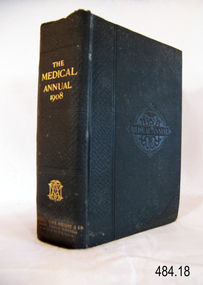
Book - General Medical Reference Annuals, Various Medical Contributors, The Medical Annual and Practitioners Index 1908, 1908
... The volume contains reviews of therapeutic progress achieved and new remedies for medical conditions, including detailed summaries of new drugs, synthetic chemicals, serums, and pharmacological advances introduced during 1889–1890. ...The 1908 volume is the 26th annual edition (26th year of issue) in the continuous annual series. The Medical Annual and Practitioners’ Index was one of the premier late-Victorian medical reference works. Starting in 1883/1884, the publication served as an essential year-end review digest for medical practitioners across Great Britain and the British colonies. The volume contains reviews of therapeutic progress achieved and new remedies for medical conditions, including detailed summaries of new drugs, synthetic chemicals, serums, and pharmacological advances introduced during 1889–1890. There is also a dictionary of new treatments, as well as summaries of clinical practices and breakthroughs in antiseptic surgery, gynaecology, neurology, and infectious diseases. These were written by leading specialists and practitioners, and include useful reference tables listing new medical publications, official health reports, asylum statistics, instruments, and pharmaceutical suppliers.Hard cover book. The Medical Annual and Practitioners Index for 1908 Author: Various Contributors Editor: Dr. Percy Roberts Wilde Publisher: John Wright & Co. Bristol. (Simpkin Marshall, Hamilton, Kent & Co Ltd. For London) Date: 1908 Further Information: Further Information: Blue cloth hard cover brown spine. Spine bands and panel edges somewhat rubbed and dust-toned as with age. Embossed patterning with lettering to Spine in Gilt, Publishers logo to front cover with Volume title.non-fictionThe 1908 volume is the 26th annual edition (26th year of issue) in the continuous annual series. The Medical Annual and Practitioners’ Index was one of the premier late-Victorian medical reference works. Starting in 1883/1884, the publication served as an essential year-end review digest for medical practitioners across Great Britain and the British colonies. The volume contains reviews of therapeutic progress achieved and new remedies for medical conditions, including detailed summaries of new drugs, synthetic chemicals, serums, and pharmacological advances introduced during 1889–1890. There is also a dictionary of new treatments, as well as summaries of clinical practices and breakthroughs in antiseptic surgery, gynaecology, neurology, and infectious diseases. These were written by leading specialists and practitioners, and include useful reference tables listing new medical publications, official health reports, asylum statistics, instruments, and pharmaceutical suppliers.flagstaff hill, warrnambool, shipwrecked-coast, flagstaff-hill, flagstaff-hill-maritime-museum, maritime-museum, shipwreck-coast, flagstaff-hill-maritime-village, the medical annual and practitioners index 1890, book, medical reference books, medical annual -
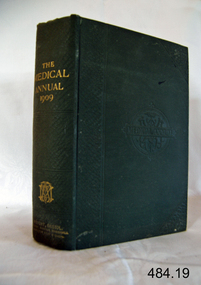 Flagstaff Hill Maritime Museum and Village
Book - General Medical Reference Annuals, Various Medical Contributors, The Medical Annual and Practitioners Index 1909, 1909
... The volume contains reviews of therapeutic progress achieved and new remedies for medical conditions, including detailed summaries of new drugs, synthetic chemicals, serums, and pharmacological advances introduced during 1889–1890. ...The 1909 volume is the 27th annual edition (27th year of issue) in the continuous annual series. The Medical Annual and Practitioners’ Index was one of the premier late-Victorian medical reference works. Starting in 1883/1884, the publication served as an essential year-end review digest for medical practitioners across Great Britain and the British colonies. The volume contains reviews of therapeutic progress achieved and new remedies for medical conditions, including detailed summaries of new drugs, synthetic chemicals, serums, and pharmacological advances introduced during 1889–1890. There is also a dictionary of new treatments, as well as summaries of clinical practices and breakthroughs in antiseptic surgery, gynaecology, neurology, and infectious diseases. These were written by leading specialists and practitioners, and include useful reference tables listing new medical publications, official health reports, asylum statistics, instruments, and pharmaceutical suppliers.Hard cover book. The Medical Annual and Practitioners Index for 1909 Author: Various Contributors Editor: Dr. Percy Roberts Wilde Publisher: John Wright & Co. Bristol. (Simpkin Marshall, Hamilton, Kent & Co Ltd. For London) Date: 1909 Further Information: Further Information: Blue cloth hard cover brown spine. Spine bands and panel edges somewhat rubbed and dust-toned as with age. Embossed patterning with lettering to Spine in Gilt, Publishers logo to front cover with Volume title.non-fictionThe 1909 volume is the 27th annual edition (27th year of issue) in the continuous annual series. The Medical Annual and Practitioners’ Index was one of the premier late-Victorian medical reference works. Starting in 1883/1884, the publication served as an essential year-end review digest for medical practitioners across Great Britain and the British colonies. The volume contains reviews of therapeutic progress achieved and new remedies for medical conditions, including detailed summaries of new drugs, synthetic chemicals, serums, and pharmacological advances introduced during 1889–1890. There is also a dictionary of new treatments, as well as summaries of clinical practices and breakthroughs in antiseptic surgery, gynaecology, neurology, and infectious diseases. These were written by leading specialists and practitioners, and include useful reference tables listing new medical publications, official health reports, asylum statistics, instruments, and pharmaceutical suppliers.flagstaff hill, warrnambool, shipwrecked-coast, flagstaff-hill, flagstaff-hill-maritime-museum, maritime-museum, shipwreck-coast, flagstaff-hill-maritime-village, the medical annual and practitioners index 1890, book, medical reference books, medical annual -
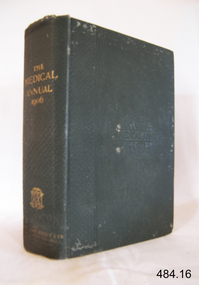 Flagstaff Hill Maritime Museum and Village
Book - General Medical Reference Annuals, Various Medical Contributors, The Medical Annual and Practitioners Index 1906, 1906
... The volume contains reviews of therapeutic progress achieved and new remedies for medical conditions, including detailed summaries of new drugs, synthetic chemicals, serums, and pharmacological advances introduced during 1889–1890. ...The 1906 volume is the 24th annual edition (24th year of issue) in the continuous annual series. The Medical Annual and Practitioners’ Index was one of the premier late-Victorian medical reference works. Starting in 1883/1884, the publication served as an essential year-end review digest for medical practitioners across Great Britain and the British colonies. The volume contains reviews of therapeutic progress achieved and new remedies for medical conditions, including detailed summaries of new drugs, synthetic chemicals, serums, and pharmacological advances introduced during 1889–1890. There is also a dictionary of new treatments, as well as summaries of clinical practices and breakthroughs in antiseptic surgery, gynaecology, neurology, and infectious diseases. These were written by leading specialists and practitioners, and include useful reference tables listing new medical publications, official health reports, asylum statistics, instruments, and pharmaceutical suppliers.Hard cover book. The Medical Annual and Practitioners Index for 1906 Author: Various Contributors Editor: Dr. Percy Roberts Wilde Publisher: John Wright & Co. Bristol. (Simpkin Marshall, Hamilton, Kent & Co Ltd. For London) Date: 1906 Further Information: Further Information: Blue cloth hard cover brown spine. Spine bands and panel edges somewhat rubbed and dust-toned as with age. Embossed patterning with lettering to Spine in Gilt, Publishers logo to front cover with Volume title.non-fictionThe 1906 volume is the 24th annual edition (24th year of issue) in the continuous annual series. The Medical Annual and Practitioners’ Index was one of the premier late-Victorian medical reference works. Starting in 1883/1884, the publication served as an essential year-end review digest for medical practitioners across Great Britain and the British colonies. The volume contains reviews of therapeutic progress achieved and new remedies for medical conditions, including detailed summaries of new drugs, synthetic chemicals, serums, and pharmacological advances introduced during 1889–1890. There is also a dictionary of new treatments, as well as summaries of clinical practices and breakthroughs in antiseptic surgery, gynaecology, neurology, and infectious diseases. These were written by leading specialists and practitioners, and include useful reference tables listing new medical publications, official health reports, asylum statistics, instruments, and pharmaceutical suppliers.flagstaff hill, warrnambool, shipwrecked-coast, flagstaff-hill, flagstaff-hill-maritime-museum, maritime-museum, shipwreck-coast, flagstaff-hill-maritime-village, the medical annual and practitioners index 1890, book, medical reference books, medical annual
