
Showing 34 items matching "service clubs wodonga"
-
 Wodonga & District Historical Society Inc
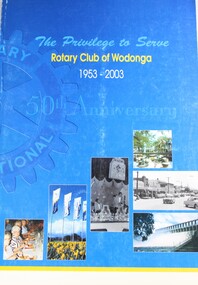
Book - The Privilege to Serve Rotary Club of Wodonga 1953 - 2003, Ron Lutton et al, 2003
... rotary club wodonga...service...rotary club wodonga service clubs wodonga community service A detailed history of the Wodonga Rotary Club, formed in 1953. ...A detailed history of the Wodonga Rotary Club, formed in 1953. Includes information on its formation, key participants and the valuable role it has played in the community.non-fictionA detailed history of the Wodonga Rotary Club, formed in 1953. Includes information on its formation, key participants and the valuable role it has played in the community.rotary club wodonga, service clubs wodonga, community service -
 Bendigo Historical Society Inc.
Document - The Victorian Country Volleyball Council (VCVC) Correspondence and Country Championship Reports, 1977
... This item contains Correspondence of the Council in 1977 and reports on the Country Championships for that year; it includes the following documents: 11171.6a Letter from the Broken Hill YMCA Volleyball Association re tournament 11171.6b Letter from VAVA re State Coaches costs 11171.6c Circular of Fund Raising Proposals 11171.6d Letter from VAVA re Broken Hill Tournament 11171.6e Letter re amendments to the VAVA constitution 11171.6f Letter from Albury Wodonga wishing to enter the Country Championships 11171.6g Letter from Geelong Volleyball registration for Country Championships 11171.6h Circular - Sale of Rule Books 11171.6i Letter from VAVA re Rothmans Coaches Tour 11171.6j Letter from VAVA Secretary re championships, coaching and etc. 11171.6k VCVC Notice of AGM 11171.6l Letter from Latrobe Valley Volleyball with proposals for running the Country Championships 11171.6m Letters from Swan Hill and Ballarat re country Championships 11171.6n Letter from Goulburn Valley Volleyball 11171.6o Quotation from Waterwheel Press Shepparton 11171.6p Letters from VAVA to VCVC 11171.6q VCVC President's Report 1976-1977 11171.6r Letter from the Goulburn Valley Amateur Volleyball Association 11171.6s Letter from the Ararat and District YMCA Youth Clubs 11171.6t Letter from VAVA re Swan Hill Volleyball Association 11171.6u Letter to VAVA re Horsham and Warracknabeal Volleyball 11171.6v Letter to VCVC from Swan Hill Volleyball 11171.6w Letter from Wanganui Park High School 11171.6x Letter from the Ballarat Association 11171.6y Letter from Goulburn Valley Volleyball re coaching assistance 11171.6z Letter from Mrs Lozenicins re her son Arijs death 11171.6aa Letter from Ballarat Volleyball re Thomas Santamaria Coaching 11171.6ab Letter from Bob Kenter Latrobe Valley Volleyball Association (contact the BHS for details) 11171.6ac Letter from the Australian Volleyball Federation to VCVC President - news 11171.6ad Letter from VAVA to VCVC 11171.6ae Letter from VCVC President re coaching calendar for the year 11171.6af Letter from Wallabies Volleyball Club re Morwell tournament Grand Final 11171.6ag Letter from Goulburn Valley re Under 17 Country Championships 11171.6ah Letter from Warrnambool Association re services of Thomas Santamaria 11171.6ai Wallabies Volleyball Club re Russell Newman elected as Secretary 11171.6aj Letter from the Hamilton Memorial Stadium re their competition 11171.6ak Letter from Bendigo re rules of the Country Chamionships (Contact BHS for details) 11171.6al Letter to albury Wodonga Association re VCVC office bearers 11171.6am Letter from Murray Mansfield accepting his nomination for the VCVC Executive 11171.6an Letter to Tom Stevens Bendigo - thanks for his eork on the VCVC Constitution 11171.6ao Country Chamionships Entry and Registration forms 11171.6ap Procedure and Report on the VCVC 1977 Country Championships 11171.6aq Men's and Women's Volleyball Draw...In 2023, the Commission handed the organisation of the Championships back to VVI, who with paid staff, were better equipped to manage the event. victorian country volleyball council vcvc victorian amateur volleyball association volleyball victoria This item contains Correspondence of the Council in 1977 and reports on the Country Championships for that year; it includes the following documents: 11171.6a Letter from the Broken Hill YMCA Volleyball Association re tournament 11171.6b Letter from VAVA re State Coaches costs 11171.6c Circular of Fund Raising Proposals 11171.6d Letter from VAVA re Broken Hill Tournament 11171.6e Letter re amendments to the VAVA constitution 11171.6f Letter from Albury Wodonga wishing to enter the Country Championships 11171.6g Letter from Geelong Volleyball registration for Country Championships 11171.6h Circular - Sale of Rule Books 11171.6i Letter from VAVA re Rothmans Coaches Tour 11171.6j Letter from VAVA Secretary re championships, coaching and etc. 11171.6k VCVC Notice of AGM 11171.6l Letter from Latrobe Valley Volleyball with proposals for running the Country Championships 11171.6m Letters from Swan Hill and Ballarat re country Championships 11171.6n Letter from Goulburn Valley Volleyball 11171.6o Quotation from Waterwheel Press Shepparton 11171.6p Letters from VAVA to VCVC 11171.6q VCVC President's Report 1976-1977 11171.6r Letter from the Goulburn Valley Amateur Volleyball Association 11171.6s Letter from the Ararat and District YMCA Youth Clubs 11171.6t Letter from VAVA re Swan Hill Volleyball Association 11171.6u Letter to VAVA re Horsham and Warracknabeal Volleyball 11171.6v Letter to VCVC from Swan Hill Volleyball 11171.6w Letter from Wanganui Park High School 11171.6x Letter from the Ballarat Association 11171.6y Letter from Goulburn Valley Volleyball re coaching assistance 11171.6z Letter from Mrs Lozenicins re her son Arijs death 11171.6aa Letter from Ballarat Volleyball re Thomas Santamaria Coaching 11171.6ab Letter from Bob Kenter Latrobe Valley Volleyball Association (contact the BHS for details) 11171.6ac Letter from the Australian Volleyball Federation to VCVC President - news 11171.6ad Letter from VAVA to VCVC 11171.6ae Letter from VCVC President re coaching calendar for the year 11171.6af Letter from Wallabies Volleyball Club re Morwell tournament Grand Final 11171.6ag Letter from Goulburn Valley re Under 17 Country Championships 11171.6ah Letter from Warrnambool Association re services of Thomas Santamaria 11171.6ai Wallabies Volleyball Club re Russell Newman elected as Secretary 11171.6aj Letter from the Hamilton Memorial Stadium re their competition 11171.6ak Letter from Bendigo re rules of the Country Chamionships (Contact BHS for details) 11171.6al Letter to albury Wodonga Association re VCVC office bearers 11171.6am Letter from Murray Mansfield accepting his nomination for the VCVC Executive 11171.6an Letter to Tom Stevens Bendigo - thanks for his eork on the VCVC Constitution 11171.6ao Country Chamionships Entry and Registration forms 11171.6ap Procedure and Report on the VCVC 1977 Country Championships 11171.6aq Men's and Women's Volleyball Draw Document The Victorian Country Volleyball Council (VCVC) Correspondence and Country Championship Reports. ...Volleyball has been played in regional Victoria since the early-1960’s. During those early days, most competitions, like the founders of our great sport, were run by, or in conjunction with, the YMCA. Competitions were running at the Ballarat School of Mines and the YMCA’s of Bendigo, Geelong and Warrnambool. In August 1966, an invitation was extended by the Victorian Amateur Volleyball Association to play in the first State-wide event at Monash University. Geelong and Bendigo accepted the invitation with Melbourne represented by Sisu. For Bendigo players at least, this was the first exposure to ‘international rules’, which prevented upward scoops with open hands, introduced an action called a ‘dig’ and seemed to penalise most overhead actions using the fingers as ‘double hits’! Over the next few years, the sport expanded through the YMCA movement with weekly competitions starting up in Ararat, Warrnambool and Latrobe Valley. The Victorian Regional Council of YMCA’s proposed the first Victorian YMCA Championship in Warrnambool on 30th March 1968 with an entry fee of $4.00 per team. The sport continued to grow with additional regional associations affiliating with the Victorian Amateur Volleyball Association (now VVI) who provided the coaching and refereeing assistance needed to raise the standard of play. In 1970, the YMCA Championships started to give way to the Victorian Country Championships with the first ever event held in Bendigo. In 1973, a re-organisation of the VAVA saw the proposal to create separate Victorian Country and Metropolitan Volleyball Councils. The VCVC was established in 1974 and took over the organisation of the Victorian Country Championships. For the next 10-12 years, the Country Championships grew in stature with the inclusion of two divisions for open men and women and junior divisions for boys and girls. Representative teams successfully contested Australian Country Championships between Victoria, South Australia and New South Wales on several occasions. In October 1985, the VCVC voluntarily wound up the Council and handed the responsibility for the Country Championships back to Volleyball Victoria, who by that time had full-time State Executive and Coaching Directors. Since that time, the Long Weekend in June has continued to be the date of the major annual volleyball event for most regional associations, even though in 1986 the Junior Country Championships were wound up in favour of state and national schools events. A number of regional associations have ceased to exist, as have a number of regional tournaments. Regional leagues were created in both the Gippsland and Central, North-West regions, with Gippsland the only one to survive. Some associations have successfully competed in the State League competitions at various times. Following the experience gained by a number of regional administrators working on the Sydney Olympic Games, a proposal to revamp the Victorian Country Championship was put to VVI in early 2002. Later that year, the Volleyball Victoria Country Championships Commission was formed to implement the recommendations of the review and take control of the event into the future. These championships now provide regional players and officials an opportunity to participate in a consistently well-managed event, using many international protocols and a high standard of presentation. Without doubt, this event now ranks as one of the best volleyball events in Australia. Source: 2022 Country Championship regulations The management of the Country Championships by the Victorian Country Championship Commission certainly achieved the objective of raising the standard of presentation, and delivering a consistently high quality event. However, the demands on Host Associations began to take their toll, with several Associations declining the opportunity to host the event due to the high workload. Similarly, the workload of the volunteer Commissioners also took its toll, with the Commission unable to fill casual vacancies. In 2023, the Commission handed the organisation of the Championships back to VVI, who with paid staff, were better equipped to manage the event.This item contains Correspondence of the Council in 1977 and reports on the Country Championships for that year; it includes the following documents: 11171.6a Letter from the Broken Hill YMCA Volleyball Association re tournament 11171.6b Letter from VAVA re State Coaches costs 11171.6c Circular of Fund Raising Proposals 11171.6d Letter from VAVA re Broken Hill Tournament 11171.6e Letter re amendments to the VAVA constitution 11171.6f Letter from Albury Wodonga wishing to enter the Country Championships 11171.6g Letter from Geelong Volleyball registration for Country Championships 11171.6h Circular - Sale of Rule Books 11171.6i Letter from VAVA re Rothmans Coaches Tour 11171.6j Letter from VAVA Secretary re championships, coaching and etc. 11171.6k VCVC Notice of AGM 11171.6l Letter from Latrobe Valley Volleyball with proposals for running the Country Championships 11171.6m Letters from Swan Hill and Ballarat re country Championships 11171.6n Letter from Goulburn Valley Volleyball 11171.6o Quotation from Waterwheel Press Shepparton 11171.6p Letters from VAVA to VCVC 11171.6q VCVC President's Report 1976-1977 11171.6r Letter from the Goulburn Valley Amateur Volleyball Association 11171.6s Letter from the Ararat and District YMCA Youth Clubs 11171.6t Letter from VAVA re Swan Hill Volleyball Association 11171.6u Letter to VAVA re Horsham and Warracknabeal Volleyball 11171.6v Letter to VCVC from Swan Hill Volleyball 11171.6w Letter from Wanganui Park High School 11171.6x Letter from the Ballarat Association 11171.6y Letter from Goulburn Valley Volleyball re coaching assistance 11171.6z Letter from Mrs Lozenicins re her son Arijs death 11171.6aa Letter from Ballarat Volleyball re Thomas Santamaria Coaching 11171.6ab Letter from Bob Kenter Latrobe Valley Volleyball Association (contact the BHS for details) 11171.6ac Letter from the Australian Volleyball Federation to VCVC President - news 11171.6ad Letter from VAVA to VCVC 11171.6ae Letter from VCVC President re coaching calendar for the year 11171.6af Letter from Wallabies Volleyball Club re Morwell tournament Grand Final 11171.6ag Letter from Goulburn Valley re Under 17 Country Championships 11171.6ah Letter from Warrnambool Association re services of Thomas Santamaria 11171.6ai Wallabies Volleyball Club re Russell Newman elected as Secretary 11171.6aj Letter from the Hamilton Memorial Stadium re their competition 11171.6ak Letter from Bendigo re rules of the Country Chamionships (Contact BHS for details) 11171.6al Letter to albury Wodonga Association re VCVC office bearers 11171.6am Letter from Murray Mansfield accepting his nomination for the VCVC Executive 11171.6an Letter to Tom Stevens Bendigo - thanks for his eork on the VCVC Constitution 11171.6ao Country Chamionships Entry and Registration forms 11171.6ap Procedure and Report on the VCVC 1977 Country Championships 11171.6aq Men's and Women's Volleyball Drawvictorian country volleyball council, vcvc, victorian amateur volleyball association, volleyball victoria -
Tatura Irrigation & Wartime Camps Museum
President's Collar
... Collar naming all Zone 7 Presidents from 1953-1990 presidents' collar apex club tatura service clubs civic momentos regalia numismatics badges 1953-54 David Munro Albury|1954-55 Jack Chisholm Ballarat|1955-56 Trevor Kimball Benalla|1956-57 Keith Whitwood Kerang|1957-58 Ray McPherson Benalla|1958-59 Jack McKendrick Mildura|1959-60 Bob Crosby Wodonga|1960-61 Bill Elgin Euroa|1961-62 Ken Billing Yarrawonga|1962-63 Geoff Anderson Seymour|1963-64 Edgar Charlesworth Wangaratta|1964-65 Worral Jones Alexandra|1965-66 Fred Ellis Maryborough|1966-67 John Gerrard Shepparton|1967-68 Clive Coventry Kyabram|1968-69 Richie Trevaskis Tatura|1969-70 Graeme Elvey Bendigo|1970-71 Peter Slade Tongala|1971-72 Mac Spring Echuca|1972-73 Anthony Smith Urana|1973-74 Geoff Johnston Merriwa Wangaratta|1974-75 Bruce Tuhan Tongala|1975-76 Bob Osborne Maryborough|1976-77 Ken Slatter Boort|1977-78 Garry Leget Broadford|1978-79 Brian Paatsch North Albury|1979-80 Richard Guy Bendigo|1980-81 Kevin Moon Dragon City|1981-82 Geoff Long Kerang|1982-83 Ian (Kippy) McIntosh Cobram-Barooga|1983-84 Howard Pascoe Swan Hill|1984-85 Richard Trigg Kerang|1985-86 Terry Hudson Albury|1986-87 Harry Boerkamp Stanhope|1987-88 John Walker Sherbourne, Shepparton|1988-89 Greg Wilder Mansfield|1989-90 Gary Whyte Tatura Blue velvet collar with 38 oblong badges (with a pin and clasp on the back) of all Presidents' names and year of Presidency of Zone 7 of Apex. ...Collar naming all Zone 7 Presidents from 1953-1990Blue velvet collar with 38 oblong badges (with a pin and clasp on the back) of all Presidents' names and year of Presidency of Zone 7 of Apex. Brass bar inscribed "Zone 7 Presidents collar presented 2-10-76 by B Tuhan on behalf of Past Presidents". On the back of the Triangular Apex Logo badge which is attached to point of collar by a small ring "Added to Presidents collar by Bob Osborne 1977.1953-54 David Munro Albury|1954-55 Jack Chisholm Ballarat|1955-56 Trevor Kimball Benalla|1956-57 Keith Whitwood Kerang|1957-58 Ray McPherson Benalla|1958-59 Jack McKendrick Mildura|1959-60 Bob Crosby Wodonga|1960-61 Bill Elgin Euroa|1961-62 Ken Billing Yarrawonga|1962-63 Geoff Anderson Seymour|1963-64 Edgar Charlesworth Wangaratta|1964-65 Worral Jones Alexandra|1965-66 Fred Ellis Maryborough|1966-67 John Gerrard Shepparton|1967-68 Clive Coventry Kyabram|1968-69 Richie Trevaskis Tatura|1969-70 Graeme Elvey Bendigo|1970-71 Peter Slade Tongala|1971-72 Mac Spring Echuca|1972-73 Anthony Smith Urana|1973-74 Geoff Johnston Merriwa Wangaratta|1974-75 Bruce Tuhan Tongala|1975-76 Bob Osborne Maryborough|1976-77 Ken Slatter Boort|1977-78 Garry Leget Broadford|1978-79 Brian Paatsch North Albury|1979-80 Richard Guy Bendigo|1980-81 Kevin Moon Dragon City|1981-82 Geoff Long Kerang|1982-83 Ian (Kippy) McIntosh Cobram-Barooga|1983-84 Howard Pascoe Swan Hill|1984-85 Richard Trigg Kerang|1985-86 Terry Hudson Albury|1986-87 Harry Boerkamp Stanhope|1987-88 John Walker Sherbourne, Shepparton|1988-89 Greg Wilder Mansfield|1989-90 Gary Whyte Taturapresidents' collar, apex club, tatura, service clubs, civic, momentos, regalia, numismatics, badges -
 Wodonga & District Historical Society Inc
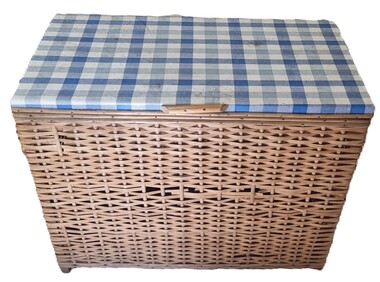
Domestic object - Cane Laundry Basket, 1959
... service as a Councillor of the Wodonga Shire Council. He held a Council seat continuously for 32 years, including eight terms as President. He also served two terms as Chairman of the Wodonga District Hospital Board 1961-62, having been a member of the board since 1954. He held a seat on the Victorian Country Fire Authority for many years until his death in 1970, having been a member of Wodonga Urban Fire Brigade since 1940. Jack played football with Wodonga for 14 years and coached the team to premiership honours in the Chiltern and District League in 1926. He was club...service as a Councillor of the Wodonga Shire Council. He held a Council seat continuously for 32 years, including eight terms as President. He also served two terms as Chairman of the Wodonga District Hospital Board 1961-62, having been a member of the board since 1954. He held a seat on the Victorian Country Fire Authority for many years until his death in 1970, having been a member of Wodonga Urban Fire Brigade since 1940. Jack played football with Wodonga for 14 years and coached the team to premiership honours in the Chiltern and District League in 1926. He was club ...This laundry basket was made by Mr Walter Bullock helped by his son John at his workshop behind his house at No 35 High Street, Wodonga. This business was known as "Cantetex" and was given as a wedding present to Colin and Jennifer Hore in 1959. Mr Bullock passed away in Wodonga on 20 November 1973. Colin Hore is the son of Jack Hore, a very prominent member of the Wodonga Community. Jack Hore was awarded the Order of the British Empire, MBE in January 1962 for service as a Councillor of the Wodonga Shire Council. He held a Council seat continuously for 32 years, including eight terms as President. He also served two terms as Chairman of the Wodonga District Hospital Board 1961-62, having been a member of the board since 1954. He held a seat on the Victorian Country Fire Authority for many years until his death in 1970, having been a member of Wodonga Urban Fire Brigade since 1940. Jack played football with Wodonga for 14 years and coached the team to premiership honours in the Chiltern and District League in 1926. He was club treasurer from 1926 to 1940. Jack was also a Foundation member of Wodonga Show Society.This item is significant because it belonged to a member of a prominent Wodonga family and was manufactured in Wodonga.A laundry basket made from rattan cane work. The lid is cover in blue and white textile.walter bullock, cane furniiture, jack hore mbe -
 Wodonga & District Historical Society Inc
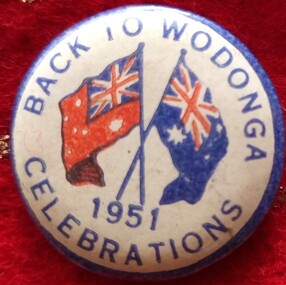
Badge - Back to Wodonga Celebrations 1951
... Wodonga" was held from Friday 9th to Saturday 7th November 1951. Friday: Children’s Sport and Children’s Concert. Saturday: Welcome to Visitors, Official Luncheon, Gymkhana, Official Opening and Barbecue. Sunday: Church services, various denominations. Monday: Ladies’ Day (Bowls, Tennis, Croquet etc.) Afternoon Garden Parties, Boxing Tournament. Tuesday: Procession, Basket Lunch, Apex Sports Carnival, 50-50 Dance. Wednesday: Tour of district and visit to factories. Re-unions of various organisations. Thursday: All-day Street Fair and Carnival. Friday: Back to School (Higher Elementary School), Wodonga Hospital Ball. Saturday: Bonegilla Race Club...Wodonga" was held from Friday 9th to Saturday 7th November 1951. Friday: Children’s Sport and Children’s Concert. Saturday: Welcome to Visitors, Official Luncheon, Gymkhana, Official Opening and Barbecue. Sunday: Church services, various denominations. Monday: Ladies’ Day (Bowls, Tennis, Croquet etc.) Afternoon Garden Parties, Boxing Tournament. Tuesday: Procession, Basket Lunch, Apex Sports Carnival, 50-50 Dance. Wednesday: Tour of district and visit to factories. Re-unions of various organisations. Thursday: All-day Street Fair and Carnival. Friday: Back to School (Higher Elementary School), Wodonga Hospital Ball. Saturday: Bonegilla Race Club ...1951 was a year of celebration in Victoria. 9th May 1951 marked the 50th anniversary of the opening of the Australian Federal Parliament in 1901, which at that time met in Melbourne, Victoria. 13th November marked the Centenary of the opening of the first Victorian Parliament. Cities and towns held activities and celebrations to recognise the occasion. A "Back to Wodonga" was held from Friday 9th to Saturday 7th November 1951. Friday: Children’s Sport and Children’s Concert. Saturday: Welcome to Visitors, Official Luncheon, Gymkhana, Official Opening and Barbecue. Sunday: Church services, various denominations. Monday: Ladies’ Day (Bowls, Tennis, Croquet etc.) Afternoon Garden Parties, Boxing Tournament. Tuesday: Procession, Basket Lunch, Apex Sports Carnival, 50-50 Dance. Wednesday: Tour of district and visit to factories. Re-unions of various organisations. Thursday: All-day Street Fair and Carnival. Friday: Back to School (Higher Elementary School), Wodonga Hospital Ball. Saturday: Bonegilla Race Club meeting, Competition Sports, (Cricket, Bowls, Tennis, etc.) Farewell Parties by various organisations.This Badge is significant because it is a memento of an important community celebration in Wodonga.A small enamel badge featuring both the blue and red Australian ensigns in the centre on a white background surrounded by blue text.Around the edge; BACK TO WODONGA CELEBRATIONS 1951back to wodonga 1951, opening victorian parliament, australian federal parliament opening -
 Wodonga & District Historical Society Inc
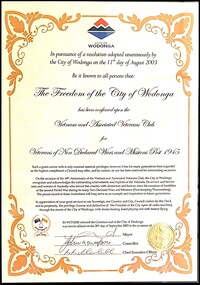
Certificate - Freedom of the City of Wodonga, August 2003
... Wodonga on the occasion of the 10th Anniversary of the Vietnam and Associated Veterans Club which was accompanied by a military parade on 11th August 2003. This Certificate is significant because it recognises the relationship between the City of Wodonga and the military forces which have served in the district. Freedom of the City Wodonga Military Wodonga A framed certificate declaring the granting of Freedom of the City of Wodonga to Veterans, Ex-service ...The Right, Title, Privilege, Honour and Distinction of marching through the streets of a city on all ceremonial occasions with bayonets fixed, drums beating, bands playing and colours flying is one of the most interesting of the Military Traditions. The tradition of Freedom of Entry to a city stems from a custom observed by British Regiments in marching through the city of London. The fathers of the city of London claimed that they had the right to forbid bodies of Armed Forces from marching through the city precincts with bayonets fixed, colours flying and music playing, basing this claim on 'Ancient Privileges' which appear to have originated shortly after Charles Il became King in 1660. Military units were then only allowed to enter the city by invitation. The custom has been adopted by many Australian cities and shires. The privilege is usually only extended to Units which have a close association with the city and provides a means of honouring an Army Corps. The Freedom of the City of Wodonga has been conferred on different units based at Bandiana on several occasions. This Certificate commemorates the granting of Freedom of the City of Wodonga on the occasion of the 10th Anniversary of the Vietnam and Associated Veterans Club which was accompanied by a military parade on 11th August 2003. This Certificate is significant because it recognises the relationship between the City of Wodonga and the military forces which have served in the district.A framed certificate declaring the granting of Freedom of the City of Wodonga to Veterans, Ex-service and Service men and women of Australia who served Australia since the cessation of hostilities of the second World War. It bears the common seal of the City of Wodonga and was signed by Mayor Lisa Mahood, Councillor John Watson and Chief Executive Officer Peter Marshall.freedom of the city wodonga, military wodonga -
 Wodonga & District Historical Society Inc
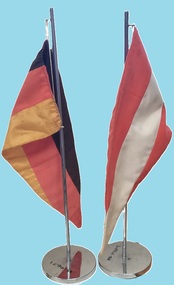
Memorabilia - German and Austrian miniature flags, Unknown
... Wodonga. The first brick was laid on the Club's land in May 1980, and the double-storey brick building was completed within 12 months voluntarily by Club members. At the same time members supported other organisations and charities in the Wodonga and wider community. The first Oktoberfest in Wodonga was held in 1975, drawing 4,000 attendees. The event was organized to promote German culture, and the profits from the first year were donated to the Wodonga District Hospital, raising $20,000. In 2001 the German Austrian Club was presented with the Certificate of Meritorious Service...Wodonga. The first brick was laid on the Club's land in May 1980, and the double-storey brick building was completed within 12 months voluntarily by Club members. At the same time members supported other organisations and charities in the Wodonga and wider community. The first Oktoberfest in Wodonga was held in 1975, drawing 4,000 attendees. The event was organized to promote German culture, and the profits from the first year were donated to the Wodonga District Hospital, raising $20,000. In 2001 the German Austrian Club was presented with the Certificate of Meritorious Service ...Thousands of German migrants started a new life at Bonegilla, Victoria in the 1950s. Among them were five men who met each other in Wodonga, became friends and decided to form a German Austrian Club, where they could enjoy the company of likeminded individuals. They were Kurt Mueller, Willi Klimt, Toni Krischa and Erwin Klein from Germany and Manfred Teissl from Austria. On the 16th July 1960, after advertising in the Border Morning Mail, the German Austrian Club in Wodonga was born. Office bearers were Paul Peters as President. Gerhard Ziermann as Secretary and Günter Schmehl as Treasurer. Their aim was "To promote the upkeep of the German language in written and spoken form and to promote good German fellowship, while enjoying functions of a cultural and entertaining nature". By 1963 the Club boasted 40 members, holding meetings at the RSL Clubrooms and other suitable locations before they found a house in Hovell Street, Wodonga. It was used for meetings, Skat meetings, film nights and "Sonnabendschule” or Saturday school where children of members could continue to learn German. The Committee organised a wide range of activities and functions in their small rooms but dreamed of having a bigger home. This became reality in July 1979, when the Committee purchased land from the Albury Wodonga Development Corporation at 5 McFarland Road, Wodonga. The first brick was laid on the Club's land in May 1980, and the double-storey brick building was completed within 12 months voluntarily by Club members. At the same time members supported other organisations and charities in the Wodonga and wider community. The first Oktoberfest in Wodonga was held in 1975, drawing 4,000 attendees. The event was organized to promote German culture, and the profits from the first year were donated to the Wodonga District Hospital, raising $20,000. In 2001 the German Austrian Club was presented with the Certificate of Meritorious Service by the Government of Victoria for Community Works in Wodonga and district. The Club raised $23,000 for the Wodonga Hospital, had numerous fundraisers to assist in bushfires and drought situations and was involved in the Red Cross Calling campaign for many years. After much fundraising, hard work and making their way through extensive government red tape, the Club moved to its new premises in McFarland Road on 1st August 1981. The members continued to make necessary internal adjustments and sought an alcohol licence. The building was officially opened in May 1983. The Club prospered and had 300 members, making it necessary for new applicants to be put on a waiting list to be accepted as members. Interest groups consisted of Competition Air Rifle Shooting Group, a Skat (German Card game) Group, Folk Dancing Group, Ladies Group, Table Tennis Group, Darts Group, Chess Group and the Billiard Group. In later years, as so many Australians became members, the Club’s name was changed to the German Austrian Australian Club. Over recent years patronage and interest in the Club and its activities changed. Children of the original members had become “real Aussies” and did not always want to carry on traditions. Aging membership and lack of volunteers forced the Club to disband in 2025. The Club building has been gifted to the Albury Wodonga Theatre Company.These items are significant because they are representative of an important cultural organisation which operated in Wodonga for over 60 years.Two small flags of Germany and Austria attached to metal stands with string. Each stand has a metal circular base. "Lufthansa" is inscribed on the base.On base: Lufthansagerman austrian australian club, german austrian club -
 Wodonga & District Historical Society Inc
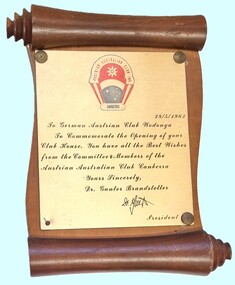
Plaque - German-Austrian Club Wodonga Opening, 1983
... Wodonga. The first brick was laid on the Club's land in May 1980, and the double-story brick building was completed within 12 months voluntarily by Club members. At the same time members supported other organisations and charities in the Wodonga and wider community. The first Oktoberfest in Wodonga was held in 1975, drawing 4,000 attendees. The event was organized to promote German culture, and the profits from the first year were donated to the Wodonga District Hospital, raising $20,000. In 2001 the German Austrian Club was presented with the Certificate of Meritorious Service...Wodonga. The first brick was laid on the Club's land in May 1980, and the double-story brick building was completed within 12 months voluntarily by Club members. At the same time members supported other organisations and charities in the Wodonga and wider community. The first Oktoberfest in Wodonga was held in 1975, drawing 4,000 attendees. The event was organized to promote German culture, and the profits from the first year were donated to the Wodonga District Hospital, raising $20,000. In 2001 the German Austrian Club was presented with the Certificate of Meritorious Service ...Thousands of German migrants started a new life at Bonegilla, Victoria in the 1950s. Among them were five men who met each other in Wodonga, became friends and decided to form a German Austrian Club, where they could enjoy the company of likeminded individuals. They were Kurt Mueller, Willi Klimt, Toni Krischa and Erwin Klein from Germany and Manfred Teissl from Austria. On the 16th July 1960, after advertising in the Border Morning Mail the German Austrian Club in Wodonga was born. Office bearers were Paul Peters as President. Gerhard Ziermann as Secretary and Günter Schmehl as Treasurer. Their aim was "To promote the upkeep of the German language in written and spoken form and to promote good German fellowship, while enjoying functions of a cultural and entertaining nature". By 1963 the Club boasted 40 members, holding meetings at the RSL Clubrooms and other suitable locations before they found a house in Hovell Street, Wodonga. It was used for meetings, Skat meetings, film nights and Sonnabendschule” or Saturday school where children of members could continue to learn German. The Committee organised a wide range of activities and functions in their small rooms but dreamed of having a bigger home. This became reality in July 1979, when the Committee purchased land from the Albury Wodonga Development Corporation at 5 McFarland Road, Wodonga. The first brick was laid on the Club's land in May 1980, and the double-story brick building was completed within 12 months voluntarily by Club members. At the same time members supported other organisations and charities in the Wodonga and wider community. The first Oktoberfest in Wodonga was held in 1975, drawing 4,000 attendees. The event was organized to promote German culture, and the profits from the first year were donated to the Wodonga District Hospital, raising $20,000. In 2001 the German Austrian Club was presented with the Certificate of Meritorious Service by the Government of Victoria for Community Works in Wodonga and district. The Club raised $23,000 for the Wodonga Hospital, had numerous fundraisers to assist in bushfires and drought situations and was involved in the Red Cross Calling campaign for many years. After much fundraising, hard work and making their way through extensive government red tape, the Club moved to its new premises in McFarland Road on 1st August 1981. The members continued to make necessary internal adjustments and sought an alcohol licence. The building was officially opened in May 1983. The Club prospered and had 300 members, making it necessary for new applicants to be put on a waiting list to be accepted as members. Interest groups formed consisted of Competition Air Rifle Shooting Group, a Skat (German Card game) Group, Folk Dancing Group, Ladies Group, Table Tennis Group, Darts Group, Chess Group and the Billiard Group. In later years, as so many Australians became members, the Club’s name was changed to the German Austrian Australian Club. Over recent years patronage and interest in the Club and its activities changed. Children of the original members had become “real Aussies” and did not always want to carry on traditions. Aging membership and lack of volunteers forced the Club to disband in 2025. The Club building has been gifted to the Albury Wodonga Theatre Company. These items are significant because they are representative of an important cultural organisation which operated in Wodonga for over 60 years.A metal plaque attached to a wooden backing shaped like a scroll. The text is in the form of a letter.Emblem of the Austrian - Australian Clubs Inc. Canberra 28/5/1983 To German Austrian Club Wodonga To Commemorate the Opening of your Club House. You have all the Best Wishes from the Committee & Members of the Austrian Australian Club Canberra Yours Sincerely, Dr. Gunter Brandstetter Presidentgerman austrian australian club, german migrants wodonga -
 Wodonga & District Historical Society Inc
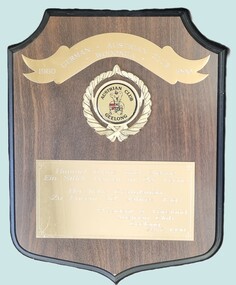
Plaque - German-Austrian Club Wodonga 30th Anniversary, 1990
... Wodonga. The first brick was laid on the Club's land in May 1980, and the double-story brick building was completed within 12 months voluntarily by Club members. At the same time members supported other organisations and charities in the Wodonga and wider community. The first Oktoberfest in Wodonga was held in 1975, drawing 4,000 attendees. The event was organized to promote German culture, and the profits from the first year were donated to the Wodonga District Hospital, raising $20,000. In 2001 the German Austrian Club was presented with the Certificate of Meritorious Service...Wodonga. The first brick was laid on the Club's land in May 1980, and the double-story brick building was completed within 12 months voluntarily by Club members. At the same time members supported other organisations and charities in the Wodonga and wider community. The first Oktoberfest in Wodonga was held in 1975, drawing 4,000 attendees. The event was organized to promote German culture, and the profits from the first year were donated to the Wodonga District Hospital, raising $20,000. In 2001 the German Austrian Club was presented with the Certificate of Meritorious Service ...Thousands of German migrants started a new life at Bonegilla, Victoria in the 1950s. Among them were five men who met each other in Wodonga, became friends and decided to form a German Austrian Club, where they could enjoy the company of likeminded individuals. They were Kurt Mueller, Willi Klimt, Toni Krischa and Erwin Klein from Germany and Manfred Teissl from Austria. On the 16th July 1960, after advertising in the Border Morning Mail the German Austrian Club in Wodonga was born. Office bearers were Paul Peters as President. Gerhard Ziermann as Secretary and Günter Schmehl as Treasurer. Their aim was "To promote the upkeep of the German language in written and spoken form and to promote good German fellowship, while enjoying functions of a cultural and entertaining nature". By 1963 the Club boasted 40 members, holding meetings at the RSL Clubrooms and other suitable locations before they found a house in Hovell Street, Wodonga. It was used for meetings, Skat meetings, film nights and Sonnabendschule” or Saturday school where children of members could continue to learn German. The Committee organised a wide range of activities and functions in their small rooms but dreamed of having a bigger home. This became reality in July 1979, when the Committee purchased land from the Albury Wodonga Development Corporation at 5 McFarland Road, Wodonga. The first brick was laid on the Club's land in May 1980, and the double-story brick building was completed within 12 months voluntarily by Club members. At the same time members supported other organisations and charities in the Wodonga and wider community. The first Oktoberfest in Wodonga was held in 1975, drawing 4,000 attendees. The event was organized to promote German culture, and the profits from the first year were donated to the Wodonga District Hospital, raising $20,000. In 2001 the German Austrian Club was presented with the Certificate of Meritorious Service by the Government of Victoria for Community Works in Wodonga and district. The Club raised $23,000 for the Wodonga Hospital, had numerous fundraisers to assist in bushfires and drought situations and was involved in the Red Cross Calling campaign for many years. After much fundraising, hard work and making their way through extensive government red tape, the Club moved to its new premises in McFarland Road on 1st August 1981. The members continued to make necessary internal adjustments and sought an alcohol licence. The building was officially opened in May 1983. The Club prospered and had 300 members, making it necessary for new applicants to be put on a waiting list to be accepted as members. Interest groups formed consisted of Competition Air Rifle Shooting Group, a Skat (German Card game) Group, Folk Dancing Group, Ladies Group, Table Tennis Group, Darts Group, Chess Group and the Billiard Group. In later years, as so many Australians became members, the Club’s name was changed to the German Austrian Australian Club. Over recent years patronage and interest in the Club and its activities changed. Children of the original members had become “real Aussies” and did not always want to carry on traditions. Aging membership and lack of volunteers forced the Club to disband in 2025. The Club building has been gifted to the Albury Wodonga Theatre Company.This item is significant because it is representative of an important cultural organisation which operated in Wodonga for over 60 years.A wooden plaque with metal insignia and a plate with text in German. This plaque was presented by the German Austrian Club of Geelong on the occasion of the 30th Anniversary of the Wodonga Club and bears its insignia.Himmel Glanz und Sterne Ein Stuck Heimat in Der Fern Herzliche Gratulation Zu Eurem 30 Jahres Tag President and Vorstand Translation Sky, splendour and stars A piece of home away from home Congratulations On your 30th anniversary President and Board of Directorsgerman austrian australian club, german migrants wodonga -
 Wodonga & District Historical Society Inc
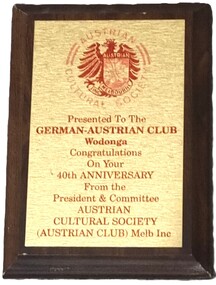
Plaque - German-Austrian Club Wodonga 40th Anniversary, 2000
... Wodonga. The first brick was laid on the Club's land in May 1980, and the double-story brick building was completed within 12 months voluntarily by Club members. At the same time members supported other organisations and charities in the Wodonga and wider community. The first Oktoberfest in Wodonga was held in 1975, drawing 4,000 attendees. The event was organized to promote German culture, and the profits from the first year were donated to the Wodonga District Hospital, raising $20,000. In 2001 the German Austrian Club was presented with the Certificate of Meritorious Service...Wodonga. The first brick was laid on the Club's land in May 1980, and the double-story brick building was completed within 12 months voluntarily by Club members. At the same time members supported other organisations and charities in the Wodonga and wider community. The first Oktoberfest in Wodonga was held in 1975, drawing 4,000 attendees. The event was organized to promote German culture, and the profits from the first year were donated to the Wodonga District Hospital, raising $20,000. In 2001 the German Austrian Club was presented with the Certificate of Meritorious Service ...Thousands of German migrants started a new life at Bonegilla, Victoria in the 1950s. Among them were five men who met each other in Wodonga, became friends and decided to form a German Austrian Club, where they could enjoy the company of likeminded individuals. They were Kurt Mueller, Willi Klimt, Toni Krischa and Erwin Klein from Germany and Manfred Teissl from Austria. On the 16th July 1960, after advertising in the Border Morning Mail the German Austrian Club in Wodonga was born. Office bearers were Paul Peters as President. Gerhard Ziermann as Secretary and Günter Schmehl as Treasurer. Their aim was "To promote the upkeep of the German language in written and spoken form and to promote good German fellowship, while enjoying functions of a cultural and entertaining nature". By 1963 the Club boasted 40 members, holding meetings at the RSL Clubrooms and other suitable locations before they found a house in Hovell Street, Wodonga. It was used for meetings, Skat meetings, film nights and Sonnabendschule” or Saturday school where children of members could continue to learn German. The Committee organised a wide range of activities and functions in their small rooms but dreamed of having a bigger home. This became reality in July 1979, when the Committee purchased land from the Albury Wodonga Development Corporation at 5 McFarland Road, Wodonga. The first brick was laid on the Club's land in May 1980, and the double-story brick building was completed within 12 months voluntarily by Club members. At the same time members supported other organisations and charities in the Wodonga and wider community. The first Oktoberfest in Wodonga was held in 1975, drawing 4,000 attendees. The event was organized to promote German culture, and the profits from the first year were donated to the Wodonga District Hospital, raising $20,000. In 2001 the German Austrian Club was presented with the Certificate of Meritorious Service by the Government of Victoria for Community Works in Wodonga and district. The Club raised $23,000 for the Wodonga Hospital, had numerous fundraisers to assist in bushfires and drought situations and was involved in the Red Cross Calling campaign for many years. After much fundraising, hard work and making their way through extensive government red tape, the Club moved to its new premises in McFarland Road on 1st August 1981. The members continued to make necessary internal adjustments and sought an alcohol licence. The building was officially opened in May 1983. The Club prospered and had 300 members, making it necessary for new applicants to be put on a waiting list to be accepted as members. Interest groups formed consisted of Competition Air Rifle Shooting Group, a Skat (German Card game) Group, Folk Dancing Group, Ladies Group, Table Tennis Group, Darts Group, Chess Group and the Billiard Group. In later years, as so many Australians became members, the Club’s name was changed to the German Austrian Australian Club. Over recent years patronage and interest in the Club and its activities changed. Children of the original members had become “real Aussies” and did not always want to carry on traditions. Aging membership and lack of volunteers forced the Club to disband in 2025. The Club building has been gifted to the Albury Wodonga Theatre Company.This item is significant because it is representative of an important cultural organisation which operated in Wodonga for over 60 years.A small metal plaque on a wooden backing with red text. It includes the insignia of the Austrian Cultural Society of Melbourne.Presented To The GERMAN-AUSTRIAN CLUB Wodonga Congratulations On Your 40th ANNIVERSARY From the President & Committee AUSTRIAN CULTURAL SOCIETY (AUSTRIAN CLUB) Melb Incgerman austrian australian club, german migrants wodonga -
 Wodonga & District Historical Society Inc
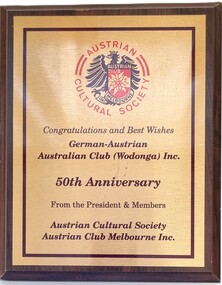
Plaque - German-Austrian Club Wodonga 50th Anniversary, 2010
... Wodonga. The first brick was laid on the Club's land in May 1980, and the double-story brick building was completed within 12 months voluntarily by Club members. At the same time members supported other organisations and charities in the Wodonga and wider community. The first Oktoberfest in Wodonga was held in 1975, drawing 4,000 attendees. The event was organized to promote German culture, and the profits from the first year were donated to the Wodonga District Hospital, raising $20,000. In 2001 the German Austrian Club was presented with the Certificate of Meritorious Service...Wodonga. The first brick was laid on the Club's land in May 1980, and the double-story brick building was completed within 12 months voluntarily by Club members. At the same time members supported other organisations and charities in the Wodonga and wider community. The first Oktoberfest in Wodonga was held in 1975, drawing 4,000 attendees. The event was organized to promote German culture, and the profits from the first year were donated to the Wodonga District Hospital, raising $20,000. In 2001 the German Austrian Club was presented with the Certificate of Meritorious Service ...Thousands of German migrants started a new life at Bonegilla, Victoria in the 1950s. Among them were five men who met each other in Wodonga, became friends and decided to form a German Austrian Club, where they could enjoy the company of likeminded individuals. They were Kurt Mueller, Willi Klimt, Toni Krischa and Erwin Klein from Germany and Manfred Teissl from Austria. On the 16th July 1960, after advertising in the Border Morning Mail the German Austrian Club in Wodonga was born. Office bearers were Paul Peters as President. Gerhard Ziermann as Secretary and Günter Schmehl as Treasurer. Their aim was "To promote the upkeep of the German language in written and spoken form and to promote good German fellowship, while enjoying functions of a cultural and entertaining nature". By 1963 the Club boasted 40 members, holding meetings at the RSL Clubrooms and other suitable locations before they found a house in Hovell Street, Wodonga. It was used for meetings, Skat meetings, film nights and Sonnabendschule” or Saturday school where children of members could continue to learn German. The Committee organised a wide range of activities and functions in their small rooms but dreamed of having a bigger home. This became reality in July 1979, when the Committee purchased land from the Albury Wodonga Development Corporation at 5 McFarland Road, Wodonga. The first brick was laid on the Club's land in May 1980, and the double-story brick building was completed within 12 months voluntarily by Club members. At the same time members supported other organisations and charities in the Wodonga and wider community. The first Oktoberfest in Wodonga was held in 1975, drawing 4,000 attendees. The event was organized to promote German culture, and the profits from the first year were donated to the Wodonga District Hospital, raising $20,000. In 2001 the German Austrian Club was presented with the Certificate of Meritorious Service by the Government of Victoria for Community Works in Wodonga and district. The Club raised $23,000 for the Wodonga Hospital, had numerous fundraisers to assist in bushfires and drought situations and was involved in the Red Cross Calling campaign for many years. After much fundraising, hard work and making their way through extensive government red tape, the Club moved to its new premises in McFarland Road on 1st August 1981. The members continued to make necessary internal adjustments and sought an alcohol licence. The building was officially opened in May 1983. The Club prospered and had 300 members, making it necessary for new applicants to be put on a waiting list to be accepted as members. Interest groups formed consisted of Competition Air Rifle Shooting Group, a Skat (German Card game) Group, Folk Dancing Group, Ladies Group, Table Tennis Group, Darts Group, Chess Group and the Billiard Group. In later years, as so many Australians became members, the Club’s name was changed to the German Austrian Australian Club. Over recent years patronage and interest in the Club and its activities changed. Children of the original members had become “real Aussies” and did not always want to carry on traditions. Aging membership and lack of volunteers forced the Club to disband in 2025. The Club building has been gifted to the Albury Wodonga Theatre Company.This item is significant because it is representative of an important cultural organisation which operated in Wodonga for over 60 years.A small metal plaque on a wooden backing with red text. It includes the insignia of the Austrian Cultural Society of Melbourne.Congratulations and Best Wishes German-Austrian Australian Club (Wodonga) Inc. 50th Anniversary From the President & Members Austrian Cultural Society Austrian Club Melbourne Inc.german austrian australian club, german migrants wodonga -
 Wodonga & District Historical Society Inc
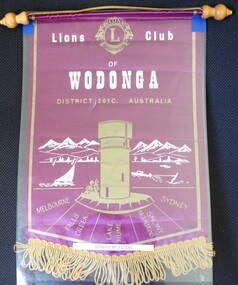
Banner - Lions Club of Wodonga
... Wodonga Lions Club. He also joined the Civil Defence which was a predecessor off the SES. He became the Communications Officer and trained other members. Les became the first Controller of the Wodonga Branch of the State Emergency Service, a position he held for 17 years. ...Wodonga until the age of 103 in 2023, when he moved to Melbourne to be closer to his children. He passed away on 12 December 2023. The Lions Club of Wodonga was chartered in 1965 with 18 Founding Members including Les Cole. Lions Australia was first formed in Lismore, NSW in September and has grown to be Australia’s largest service ...Leslie William Cole was born on 31 January 1920 in Albury, the first child of William James Cole and Gwendoline Fair. Les spent most of his childhood living with his grandparents in Bethanga, Victoria. In 1934 when he finished school, Les moved into Wodonga. His first job was at Mates Timber Yard. He later worked for Mylons of Wodonga driving taxis and buses. In 1939 after completing militia training, Les applied to enlist with the RAAF and eventually trained as an Aircraft Mechanic. He was posted to the 6th Squadron, serving in Port Moresby, Milne Bay and Goodenough Island before returning to the RAAF base in Sale, Victoria. On discharge. Les returned to Wodonga and resumed working with Mylons. After a range of jobs, Les and his wife Lorna operated a shop in Ariel Street, Wodonga. In the community, Les was a founding member of Wodonga Lions Club. He also joined the Civil Defence which was a predecessor off the SES. He became the Communications Officer and trained other members. Les became the first Controller of the Wodonga Branch of the State Emergency Service, a position he held for 17 years. The new SES headquarters was named in his honour. In retirement he also worked as a Volunteer Community Driver. Les was also named Wodonga Citizen of the Year in 1984 Les continued living in Wodonga until the age of 103 in 2023, when he moved to Melbourne to be closer to his children. He passed away on 12 December 2023. The Lions Club of Wodonga was chartered in 1965 with 18 Founding Members including Les Cole. Lions Australia was first formed in Lismore, NSW in September and has grown to be Australia’s largest service club organisation.A small purple and gold fringed banner with the emblem of Wodonga Lions ClubAt the top centre: The logo of Lions International Across the centre of banner: Lions Club of Wodonga / District 201C Australia In semi-circle below Water Tower: Melbourne/ Falls Creek/Lake Hume/ Snowy Mountains/ Sydneyles cole, wodonga lions club, lions international -
 Wodonga & District Historical Society Inc
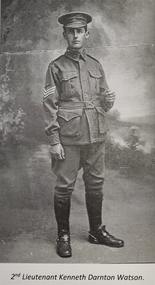
Photograph - Kenneth Darnton Watson - Community Leader
... Club, Wodonga RSL, and Wodonga Turf Club including terms as President on several of these organisations. Kenneth was also a Warden of St. Luke's Church of England, Wodonga. Kenneth served as Wodonga Shire President from 1929 to 1931, and was again elected to Council from 1943 to 1945. A most respected and valued member of the local community, Kenneth Darnton Watson died on the 4th of October 1951, aged 58. Lenore Watson lived at de Kerilleau until her death on 15th June 1984. Both are buried in Wodonga. These images are significant because they record the service ...Kenneth Darnton Watson was born at Bendigo on 24 May 1893 to George Darnton Watson and Adelaide Nora Holmes. He was educated at Melbourne Church of England Grammar School, being selected as School Captain in 1913 and a member of the Head of the River rowing team. After finishing school, he worked as a jackaroo on Wanganella Station and later at Mt. Widderin, Skipton, Victoria. When WW1 was declared, Kenneth enlisted and after initial training at Maribyrnong, Victoria he left Australia as 2nd Lieutenant with 7th Australian Field Artillery Brigade, to disembark at Plymouth on July 10, 1916. He took part in the Battles of Messines, Menin Road, Polygon Wood and Passchendaele Ridge in 1917. For his efforts in Passchendaele Ridge on 17th December he was awarded the Military Cross "for conspicuous gallantry and devotion to duty." In 1918 he took part in the Battles of Villers-Bretonneux, Hamel and Amiens. He returned to Australia in November 1919 and was discharged on 20th January 1920. In 1922, Kenneth Darnton Watson came to Wodonga where he purchased de Kerilleau, consisting of 2,500 acres, from Mr George Gordon. The two storey brick homestead had been built by William Huon in 1870. On 30th May 1924, he married Phyllis Emily Lenore Austin and they had four children, Ian Darnton 1925, Robert Darnton 1926 Rosemary McPherson 1929 and Faith Holmes 1931. On the land he worked hard, building fences, cattle, sheep and horse yards, and farmed Corriedale sheep, Shorthorn cattle and horses. Mr Watson was an innovative farmer, introducing modern methods of top dressing at de Kerilleau by means of an aircraft. He was also a dedicated community man. He was a member of both Albury and Wodonga Show Committees, Murray Valley Development League, No.1 Region, Graziers' Association of Southern Riverina, Albury Legacy Club, Wodonga RSL, and Wodonga Turf Club including terms as President on several of these organisations. Kenneth was also a Warden of St. Luke's Church of England, Wodonga. Kenneth served as Wodonga Shire President from 1929 to 1931, and was again elected to Council from 1943 to 1945. A most respected and valued member of the local community, Kenneth Darnton Watson died on the 4th of October 1951, aged 58. Lenore Watson lived at de Kerilleau until her death on 15th June 1984. Both are buried in Wodonga.These images are significant because they record the service of a prominent member of the Wodonga community.A collection of black of white images of Kenneth Darnton Watson of Wodonga.kenneth darnton watson, watson family wodonga, wodonga community members -
 Wodonga & District Historical Society Inc
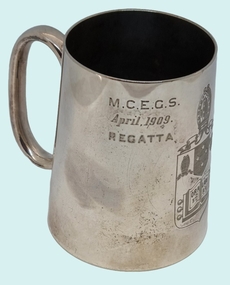
Functional object - Silver Mug - K. D. Watson, Wodonga
... Club, Wodonga RSL, and Wodonga Turf Club including terms as President on several of these organisations. Kenneth was also a Warden of St. Luke's Church of England, Wodonga. Kenneth served as Wodonga Shire President from 1929 to 1931, and was again elected to Council from 1943 to 1945. A most respected and valued member of the local community, Kenneth Darnton Watson died on the 4th of October 1951, aged 58. Lenore Watson lived at de Kerilleau until her death on 15th June 1984. Both are buried in Wodonga. These images are significant because they record the service ...This cup was awarded to Kenneth Darnton Watson when he was a boarder and competitive rower whilst completing his secondary education. Kenneth Darnton Watson was born at Bendigo on 24 May 1893 to George Darnton Watson and Adelaide Nora Holmes. He was educated at Melbourne Church of England Grammar School, being selected as School Captain in 1913 and a member of the Head of the River rowing team. After finishing school, he worked as a jackaroo on Wanganella Station and later at Mt. Widderin, Skipton, Victoria. When WW1 was declared, Kenneth enlisted and after initial training at Maribyrnong, Victoria he left Australia as 2nd Lieutenant with 7th Australian Field Artillery Brigade, to disembark at Plymouth on July 10, 1916. He took part in the Battles of Messines, Menin Road, Polygon Wood and Passchendaele Ridge in 1917. For his efforts in Passchendaele Ridge on 17th December he was awarded the Military Cross "for conspicuous gallantry and devotion to duty." In 1918 he took part in the Battles of Villers-Bretonneux, Hamel and Amiens. He returned to Australia in November 1919 and was discharged on 20th January 1920. In 1922, Kenneth Darnton Watson came to Wodonga where he purchased de Kerilleau Homestead, consisting of 2,500 acres, from Mr George Gordon. The two storey brick homestead had been built by William Huon in 1870. On 30th May 1924, he married Phyllis Emily Lenore Austin and they had four children, Ian Darnton 1925, Robert Darnton 1926 Rosemary McPherson 1929 and Faith Holmes 1931. On the land Kenneth worked hard, building fences, cattle, sheep and horse yards, and farmed Corriedale sheep, Shorthorn cattle and horses. he was an innovative farmer, introducing modern methods of top dressing at de Kerilleau by means of an aircraft. He was also a dedicated community man. He was a member of both Albury and Wodonga Show Committees, Murray Valley Development League, No.1 Region, Graziers' Association of Southern Riverina, Albury Legacy Club, Wodonga RSL, and Wodonga Turf Club including terms as President on several of these organisations. Kenneth was also a Warden of St. Luke's Church of England, Wodonga. Kenneth served as Wodonga Shire President from 1929 to 1931, and was again elected to Council from 1943 to 1945. A most respected and valued member of the local community, Kenneth Darnton Watson died on the 4th of October 1951, aged 58. Lenore Watson lived at de Kerilleau until her death on 15th June 1984. Both are buried in Wodonga.These images are significant because they record the service of a prominent member of the Wodonga community.A silver mug awarded to K D Watson as a rowing trophy in April 1909. It features the shield of Melbourne Church of England Grammar School (M.C.E.G.S.), as well as his name and the event for which it was awarded.View 1: M.C.E.G.S. April 1909 Regatta View 2: Crest of MECEGS featuring motto "Ora et Labora" View 3: BOARDERS FOUR K. D. WATSON 3kenneth darnton watson, watson family wodonga, wodonga community members -
 Wodonga & District Historical Society Inc
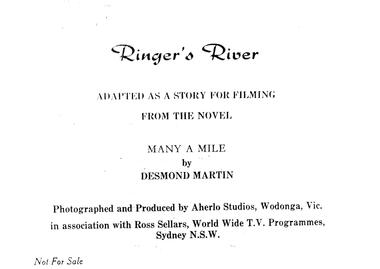
Album - Ringer's River by Des Martin - Cast, Credits & Introduction
... Wodonga, except for his years of service during World War Two. He was raised on the family property Aherlo in the Huon Creek Valley. In 1937 he joined the 8th Light Horse Regiment but in May 1940 led his Wodonga Troop into the 2/2nd Australian Pioneer Battalion, which saw service in Syria, Java, New Guinea and Borneo. After the war, Des returned to Aherlo and his horses. He was granted permission by the Victorian Racing Club...Wodonga, except for his years of service during World War Two. He was raised on the family property Aherlo in the Huon Creek Valley. In 1937 he joined the 8th Light Horse Regiment but in May 1940 led his Wodonga Troop into the 2/2nd Australian Pioneer Battalion, which saw service in Syria, Java, New Guinea and Borneo. After the war, Des returned to Aherlo and his horses. He was granted permission by the Victorian Racing Club ...Des Martin lived all his life in Wodonga, except for his years of service during World War Two. He was raised on the family property Aherlo in the Huon Creek Valley. In 1937 he joined the 8th Light Horse Regiment but in May 1940 led his Wodonga Troop into the 2/2nd Australian Pioneer Battalion, which saw service in Syria, Java, New Guinea and Borneo. After the war, Des returned to Aherlo and his horses. He was granted permission by the Victorian Racing Club to participate as an amateur “gentleman” rider. He was a founder of the Victorian Amateur Riders Association and also the Murray Valley Hunt Club, for which he was Master for 21 years. He was a prolific writer, cartoonist, photographer and poet, contributing to The Border Morning Mail, The Age, and the Herald and Weekly Times amongst other publications. Des Martin’s other literary works included Australia Astride (1959), A Tale of Twin Cities, Part One (1981) and Backing up the Boys (1998). In 1976, Des wrote an historical novel, “Many a Mile”, based on a fictional region which highly resembled the Albury-Wodonga and Upper Murray area of Victoria. It was set in the last 10 years leading up to Federation. Throughout this period tensions (caused by fluctuating border duties, including an infamous impost on cattle and horses) occasioned the intermittent posting of heavily armed police detachments along the River Murray. Des also wrote eight 50-minute scripts from “Many a Mile” as a television series and were presented to Michael Pate, one of Australia’s leading actors and producers. Also, funding was sought through the Australian Broadcasting Commission ... unfortunately the series never came to fruition. This album is a pictorial precis, including photos and scene descriptions, created to promote the concept of the series and have it produced locally in North Eastern Victoria featuring local settings, skilled horsemen and actors. It was to be called “Ringer’s River” ... Ringer being the title accorded to either a top cattle hand, or the fastest shearer in the wool shed. Des Martin died on 12th April 1995.These albums and images are significant because they document literature written by a prominent member of the Wodonga community. The presentation of this precis was supported by several significant district families and individuals.Documents written to introduce the concept of "Ringer's River" to gain interest for the development of a television seriesdes martin, many a mile, ringer's river, northeast victoria stories -
 Wodonga & District Historical Society Inc
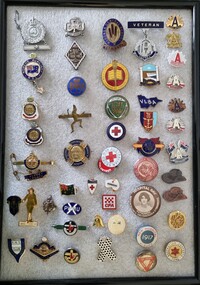
Badge - Badge Collection
... Wodonga High School and local sporting clubs including the Wodonga Football Club and the Wodonga Bowling Club. National organisations like Red Cross, the Returned Soldiers' League, Legacy and the CWA are also represented. This collection commemorates a range of local and national organisations supported by community members throughout the 20th century. Commemorative badges Memorabilia Service ...This is a collection ranging in dates from 1917 to the 1980s. It reflects a range of local and national organisations supported by people in the community. These include local schools such as the Wodonga Central School and Wodonga High School and local sporting clubs including the Wodonga Football Club and the Wodonga Bowling Club. National organisations like Red Cross, the Returned Soldiers' League, Legacy and the CWA are also represented.This collection commemorates a range of local and national organisations supported by community members throughout the 20th century.A collection of 50 different badges to commemorate a range of organisations and events. Included are several ANZAC Day and Legacy badges. Also in the collection are badges for Girl Guides, several sports clubs, Red Cross, Red Triangle Day 1917, the CFA and some church groups.commemorative badges, memorabilia, service organisations -
 Wodonga & District Historical Society Inc
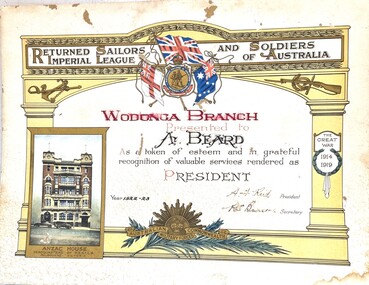
Certificate - Wodonga RSSILA Certificate of Appreciation
... service to the committee of the Returned Sailors' and Soldiers' Imperial League of Australia Wodonga branch. At various times he served as President and secretary. He was on the committee when the branch was lobbying for the construction of a Soldiers' Memorial and also a Soldiers' Memorial Hall for Wodonga. Arthur also participated in groups and community activities, including the Wodonga Boys’ Club...service to the committee of the Returned Sailors' and Soldiers' Imperial League of Australia Wodonga branch. At various times he served as President and secretary. He was on the committee when the branch was lobbying for the construction of a Soldiers' Memorial and also a Soldiers' Memorial Hall for Wodonga. Arthur also participated in groups and community activities, including the Wodonga Boys’ Club ...The Returned Sailors' and Soldiers' Imperial League of Australia was formed in 1916 to support servicemen returning from World War 1. In 1940 its name was changed to Returned Sailors', Soldiers' and Airmen's Imperial League of Australia and again in 1966 to Returned Services League of Australia. Arthur Ernest Beard enlisted in the 10th Battalion in 1914 and was discharged as medically unfit in 1918. His service included three years and 115 days of overseas service. He was gassed during his war service, resulting in ongoing health issues. Beard received an incapacity pension. Despite his ill health, Arthur dedicated many years of service to the committee of the Returned Sailors' and Soldiers' Imperial League of Australia Wodonga branch. At various times he served as President and secretary. He was on the committee when the branch was lobbying for the construction of a Soldiers' Memorial and also a Soldiers' Memorial Hall for Wodonga. Arthur also participated in groups and community activities, including the Wodonga Boys’ Club, Wodonga Public Library Committee and the Wodonga and District Progress Association. Arthur died on 29 Jun 1940 in Wodonga, Victoria, aged 46 years. This certificate is significant as it recognises service to the Wodonga Branch of the RSSILAA coloured certificate on heavy card presented by the Wodonga Branch of the Returned Sailor and Soldiers Imperial League of Australia. It features an archway imprinted with the name of the RSSIL with the League emblem surrounded by the flags of England, Australia and the Royal Australian Navy. It is adorned with an anchor and rifle and the words "Great War 1914 - 1919. An image of Anzac House, the headquarters of the R.S.S.I.L.A. in Melbourne is on the lower left hand side. The words of appreciation are printed in the centre of the archway. The insignia of the Australian Commonwealth Military Forces is in the centre at the bottom. WODONGA BRANCH / Presented to A. BEARD As a token of esteem and in grateful recognition of valuable services rendered as PRESIDENT Year 1922 - 23 A. A. Reid President R. S. Benson Secretaryreturned sailors & soldiers imperial league, wodonga rssila -
 Wodonga & District Historical Society Inc
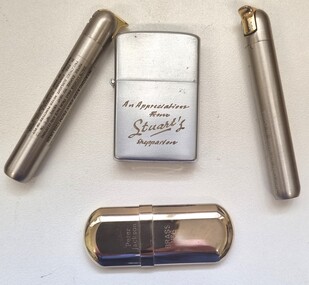
Functional object - Various Cigarette Lighters
... Wodonga Lions Club. He also joined the Civil Defence which was a predecessor off the SES. He became the Communications Officer and trained other members. Les became the first Controller of the Wodonga Branch of the State Emergency Service, a position he held for 17 years. ...Wodonga Lions Club. He also joined the Civil Defence which was a predecessor off the SES. He became the Communications Officer and trained other members. Les became the first Controller of the Wodonga Branch of the State Emergency Service, a position he held for 17 years. ...Leslie William Cole was born on 31 January 1920 in Albury, the first child of William James Cole and Gwendoline Fair. Les spent most of his childhood living with his grandparents in Bethanga, Victoria. In 1934 when he finished school, Les moved into Wodonga. His first job was at Mates Timber Yard. He later worked for Mylons of Wodonga driving taxis and buses. In 1939 after completing militia training, Les applied to enlist with the RAAF and eventually trained as an Aircraft Mechanic. He was posted to the 6th Squadron, serving in Port Moresby, Milne Bay and Goodenough Island before returning to the RAAF base in Sale, Victoria. On discharge. Les returned to Wodonga and resumed working with Mylons. After a range of jobs, Les and his wife Lorna operated a shop in Ariel Street, Wodonga. In the community, Les was a founding member of Wodonga Lions Club. He also joined the Civil Defence which was a predecessor off the SES. He became the Communications Officer and trained other members. Les became the first Controller of the Wodonga Branch of the State Emergency Service, a position he held for 17 years. The new SES headquarters was named in his honour. In retirement he also worked as a Volunteer Community Driver. Les was also named Wodonga Citizen of the Year in 1984 Les continued living in Wodonga until the age of 103 in 2023, when he moved to Melbourne to be closer to his children. He passed away on 12 December 2023. These lighters are part of his collection of memorabilia and artefacts.These items belonged to a respected member of the Wodonga community.A collection of 4 different cigarette lighters made from metal alloys. The brass lighter has a black cloth pouch.On long cylindrical lighters: Unicorn INT Made in China and Safety Instructions On silver lighter: An Appreciations from Stuart's Shepparton On brass lighter: Peter Jackson Brass No/ 6cigarette lighters, les cole -
 Wodonga & District Historical Society Inc
Functional object - State Emergency Service Cloth badges
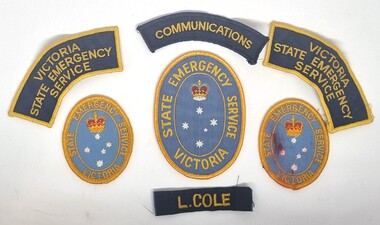
... Wodonga Lions Club. He also joined the Civil Defence which was a predecessor off the SES. He became the Communications Officer and trained other members. Les became the first Controller of the Wodonga Branch of the State Emergency Service, a position he held for 17 years. ...Wodonga Lions Club. He also joined the Civil Defence which was a predecessor off the SES. He became the Communications Officer and trained other members. Les became the first Controller of the Wodonga Branch of the State Emergency Service, a position he held for 17 years. ...Leslie William Cole was born on 31 January 1920 in Albury, the first child of William James Cole and Gwendoline Fair. Les spent most of his childhood living with his grandparents in Bethanga, Victoria. In 1934 when he finished school, Les moved into Wodonga. His first job was at Mates Timber Yard. He later worked for Mylons of Wodonga driving taxis and buses. In 1939 after completing militia training, Les applied to enlist with the RAAF and eventually trained as an Aircraft Mechanic. He was posted to the 6th Squadron, serving in Port Moresby, Milne Bay and Goodenough Island before returning to the RAAF base in Sale, Victoria. On discharge. Les returned to Wodonga and resumed working with Mylons. After a range of jobs, Les and his wife Lorna operated a shop in Ariel Street, Wodonga. In the community, Les was a founding member of Wodonga Lions Club. He also joined the Civil Defence which was a predecessor off the SES. He became the Communications Officer and trained other members. Les became the first Controller of the Wodonga Branch of the State Emergency Service, a position he held for 17 years. The new SES headquarters was named in his honour. In retirement he also worked as a Volunteer Community Driver. Les was also named Wodonga Citizen of the Year in 1984 Les continued living in Wodonga until the age of 103 in 2023, when he moved to Melbourne to be closer to his children. He passed away on 12 December 2023.These patches belonged to a local Wodonga resident who was instrumental in establishing the Wodonga SES.A collection of cloth and embroidery uniform patches worn on the uniform of Leslie Cole who was a founding and long-term member of the Wodonga State Emergency Service. Oval badges all bear the Southern Cross and a crownAround oval badges: VICTORIA STATE EMERGENCY SERVICE On epaulettes: COMMUNICATIONS / L. COLEstate emergency service, wodonga ses -
 Wodonga & District Historical Society Inc
Functional object - RAAF Cloth Badge and Pass Out Dinner Card
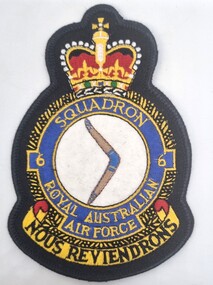
... Wodonga Lions Club. He also joined the Civil Defence which was a predecessor off the SES. He became the Communications Officer and trained other members. Les became the first controller of the Wodonga Branch of the State Emergency Service, a position he held for 17 years. ...Wodonga Lions Club. He also joined the Civil Defence which was a predecessor off the SES. He became the Communications Officer and trained other members. Les became the first controller of the Wodonga Branch of the State Emergency Service, a position he held for 17 years. ...Leslie William Cole was born in January 1920 in Albury, the first child of William James Cole and Gwendoline Fair. Les spent most of his childhood living with his grandparents in Bethanga, Victoria. In 1934 when he finished school, Les moved into Wodonga. His first job was at Mates Timber Yard. He later worked for Mylons of Wodonga driving taxis and buses. In 1939 after completing militia training, Les applied to enlist with the RAAF and eventually trained as an aircraft mechanic. He was posted to the 6th Squadron, serving in Port Moresby, Milne Bay and Goodenough Island before returning to the RAAF base in Sale, Victoria. On discharge. Les returned to Wodonga and resumed working with Mylons. After a range of jobs, Les and his wife Lorna operated a shop in Ariel Street, Wodonga. In the community, Les was a founding member of Wodonga Lions Club. He also joined the Civil Defence which was a predecessor off the SES. He became the Communications Officer and trained other members. Les became the first controller of the Wodonga Branch of the State Emergency Service, a position he held for 17 years. The new SES headquarters was named in his honor. In retirement he also worked as a volunteer community driver. Les was also named Wodonga Citizen of the Year in 1984 Les continued living in Wodonga until the age of 103 in 2023, when he moved to Melbourne to be closer to his children. This item represents Mr. Cole's service during World War 11.This item is significant as it represents the service of a respected Wodonga resident during World War 11.This item includes a cloth patch of the crest of the 6th Squadron RAAF as well as a printed menu from the Passing out dinner for fitters held at the Federal Hotel Melbourne. It has been autographed by the attendees acknowledged at this function.On the Insignia 6 SQUADRON ROYAL AUSTRALIAN AIR FORCE / NOUS REVIENDRONS (WE WILL RETURN) 6th squadron raaf, military service ww11 -
 Wodonga & District Historical Society Inc
Memorabilia - Small Torch in Tin, Returned Services League of Australia, after 1990
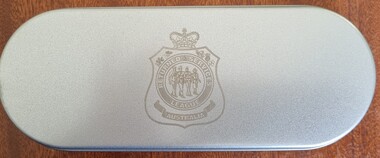
... Wodonga Lions Club. He also joined the Civil Defence which was a predecessor off the SES. He became the Communications Officer and trained other members. Les became the first Controller of the Wodonga Branch of the State Emergency Service, a position he held for 17 years. ...Wodonga Lions Club. He also joined the Civil Defence which was a predecessor off the SES. He became the Communications Officer and trained other members. Les became the first Controller of the Wodonga Branch of the State Emergency Service, a position he held for 17 years. ...Leslie William Cole was born on 31 January 1920 in Albury, the first child of William James Cole and Gwendoline Fair. Les spent most of his childhood living with his grandparents in Bethanga, Victoria. In 1934 when he finished school, Les moved into Wodonga. His first job was at Mates Timber Yard. He later worked for Mylons of Wodonga driving taxis and buses. In 1939 after completing militia training, Les applied to enlist with the RAAF and eventually trained as an Aircraft Mechanic. He was posted to the 6th Squadron, serving in Port Moresby, Milne Bay and Goodenough Island before returning to the RAAF base in Sale, Victoria. On discharge. Les returned to Wodonga and resumed working with Mylons. After a range of jobs, Les and his wife Lorna operated a shop in Ariel Street, Wodonga. In the community, Les was a founding member of Wodonga Lions Club. He also joined the Civil Defence which was a predecessor off the SES. He became the Communications Officer and trained other members. Les became the first Controller of the Wodonga Branch of the State Emergency Service, a position he held for 17 years. The new SES headquarters was named in his honour. In retirement he also worked as a Volunteer Community Driver. Les was also named Wodonga Citizen of the Year in 1984. Les continued living in Wodonga until the age of 103 in 2023, when he moved to Melbourne to be closer to his children. He passed away on 12 December 2023. This torch was part of a collection of items donated to Wodonga Historical Society by Les Cole. The RSL emblem on this item was first introduced in 1990.A small tin containing an aluminium torch and 2 batteries in foam packing. The emblem of the Australian Returned Services League is etched on the lid. On side of torch: RETURNED & SERVICES LEAGUE AUSTRALIArsl australia, memorabilia -
 Wodonga & District Historical Society Inc
Functional object - Clock - Around 'D' Clock Cleaning Services
... Wodonga. The business employed up to 25 full and part-time workers with a turn over close to a million dollars annually. In addition to cleaning, Mr De Guara sold carpet cleaning machines and vacuum cleaners to individuals as well as businesses, hospitals and clubs. Due to changed family circumstances, the business closed in the late 1980s. Mr. De Guara moved to the Mornington Peninsula district, where he passed away on 30 June 2022 This item has a clear connection to a former Wodonga business. wodonga business Charles DeGuara Cleaning Services ...This business was the first Cleaning Service operating in Wodonga, later branching out into cleaning supplies. The business was owned by Charles De Guara who had migrated to Australia from Malta at the age of 16. After various jobs in Melbourne, marriage to Latvian migrant Maija and three children, he and his family moved to Wodonga in 1971. He initially worked at the Wodonga Meat Works and soon became the union delegate, initiating strike action related to inaccurate practices in recording slaughtered animals which affected workers’ payments. This action successfully secured back pay for the workers. Mr De Guara started his cleaning enterprise in 1981 while still at the meatworks and then became full-time with cleaning in 1983. He set up his showrooms in the former Wodonga Library building in Hugh Street, Wodonga. The business employed up to 25 full and part-time workers with a turn over close to a million dollars annually. In addition to cleaning, Mr De Guara sold carpet cleaning machines and vacuum cleaners to individuals as well as businesses, hospitals and clubs. Due to changed family circumstances, the business closed in the late 1980s. Mr. De Guara moved to the Mornington Peninsula district, where he passed away on 30 June 2022This item has a clear connection to a former Wodonga business.A square clock advertising the "Around 'D Clock Cleaning service. Battery powered with plastic frame and face.In Circle around face: AROUND 'D CLOCK CLEANING SERVICE" In Centre: CARPET CLEANING LOUNGE SUITES & GENERAL CLEANING LICENSED OPERATOR SCOTCHGUARD FABRIC & CARPET Protector PHONE 24 3344wodonga business, charles deguara, cleaning services wodonga -
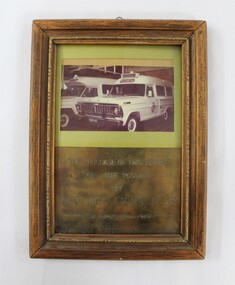 Wodonga & District Historical Society Inc
Plaque - Wodonga Lions Club Plaque for the Purchase of an Ambulance, August 1971
... service...wodonga lions club...Wodonga Lions Club in 1971. The type of ambulance is shown in the photograph above the plaque in the wooden frame. The framed plaque commemorating the purchase of an ambulance in 1971 has local significance due to its association with the Wodonga Lions Club as well as the Wodonga Ambulance Service. ...The metal-brass plaque commemorates the purchase of an ambulance in Wodonga with the assistance of th Wodonga Lions Club in 1971. The type of ambulance is shown in the photograph above the plaque in the wooden frame.The framed plaque commemorating the purchase of an ambulance in 1971 has local significance due to its association with the Wodonga Lions Club as well as the Wodonga Ambulance Service. It also has historical significance as the photograph included in the frame shows the type of ambulances in use in the 1970s.Framed metal-brass plaque commemorating the purchase of an ambulance made possible by the Wodonga Lions Club in August 1971. Photograph of two ambulances included in the frame above the metal plaque. "THE PURCHASE OF THIS VEHICLE / WAS MADE POSSIBLE / BY / WODONGA LIONS CLUB / AUGUST 1971" engraved on the the metal-brass plaque.wodonga ambulance service, wodonga lions club, ambualances, wodonga -
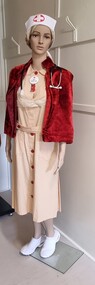 Wodonga & District Historical Society Inc
Uniform - Hamilton-Smith Collection - Red Cross Uniform
... Wodonga Rotary Club. Grace was an active member of several organisations including the CWA, Red Cross, the Wodonga Show Ladies' Auxiliary and the Victorian Agricultural Societies Association. This uniform was owned by Grace Hamilton-Smith. She achieved recognition for more 20 years of service...Wodonga Rotary Club. Grace was an active member of several organisations including the CWA, Red Cross, the Wodonga Show Ladies' Auxiliary and the Victorian Agricultural Societies Association. This uniform was owned by Grace Hamilton-Smith. She achieved recognition for more 20 years of service ...The Hamilton-Smith collection was donated by the children of Grace Mary Hamilton-Smith nee Ellwood (1911-2004) and John Hamilton-Smith (1909-1984) who settled in Wodonga in the 1940s. The Ellwood family had lived in north-east Victoria since the late 1800s. Grace’s mother, Rosina Ellwood nee Smale, was the first teacher at Baranduda in 1888, and a foundation member of the C.W.A. Rosina and her husband Mark retired to Wodonga in 1934. The collection contains significant items which reflect the local history of Wodonga, including handmade needlework, books, photographs, a wedding dress, maps, and material relating to the world wars. Grace and John married at St. David’s Church, Albury in 1941. John was a grazier, and actively involved in Agricultural Societies and the Belvoir Wodonga Rotary Club. Grace was an active member of several organisations including the CWA, Red Cross, the Wodonga Show Ladies' Auxiliary and the Victorian Agricultural Societies Association. This uniform was owned by Grace Hamilton-Smith. She achieved recognition for more 20 years of service to the Red Cross.This item has well documented provenance and a known owner. It is part of a significant collection from the Hamilton-Smith family of Wodonga and reflects important aspects of social history including the roles of women and their contribution to the community. A tan coloured Red Cross uniform and badges worn C1940sred cross australia, hamilton-smith collection, wodonga red cross -
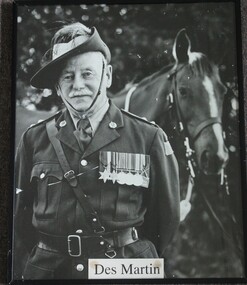 Wodonga & District Historical Society Inc
Photograph - Des Martin and his horse
... Wodonga, except for his years of service during World War Two. He was raised on the family property Aherlo in the Huon Creek Valley. In 1937 he joined the 8th Light Horse Regiment but in May 1940 led his Wodonga Troop into the 2/2nd Australian Pioneer Battalion. This Battalion saw service in Syria, Java, New Guinea and Borneo. After the war, Des returned to Aherlo and his horses. He was granted permission by the Victorian Racing Club...Wodonga, except for his years of service during World War Two. He was raised on the family property Aherlo in the Huon Creek Valley. In 1937 he joined the 8th Light Horse Regiment but in May 1940 led his Wodonga Troop into the 2/2nd Australian Pioneer Battalion. This Battalion saw service in Syria, Java, New Guinea and Borneo. After the war, Des returned to Aherlo and his horses. He was granted permission by the Victorian Racing Club ...This image is one from a series of portraits taken by Rob Elliott to record the character of the Border District through the faces if its identities. Des Martin lived all his life in Wodonga, except for his years of service during World War Two. He was raised on the family property Aherlo in the Huon Creek Valley. In 1937 he joined the 8th Light Horse Regiment but in May 1940 led his Wodonga Troop into the 2/2nd Australian Pioneer Battalion. This Battalion saw service in Syria, Java, New Guinea and Borneo. After the war, Des returned to Aherlo and his horses. He was granted permission by the Victorian Racing Club to participate as an amateur “gentleman” rider. He became the first president of the Victorian Amateur Riders Association and founded the Murray Valley Hunt Club. Des also played a major role in Australia entering an equestrian team in the Melbourne Olympics in 1956 and served as a steward at that event. Des also wrote several publications including “Australia Astride” in 1959, a history of the Albury Racing Club – a Century of Racing, and an historical novel “Many a Mile”. He collaborated with R. M. Williams to develop “Hoofs and Horns” to become a national publication. From 1969 to 1973, Des Martin also wrote a column for the Border Mail newspaper. He was also a member of the RSL for almost 50 years and held several committee positions during that time. Des Martin died on 12 April 1995.This is a portrait of a significant member of the Wodonga community who made an outstanding contribution as a farmer, soldier, horseman, author and member of the RSL and other community organisations.A black and white photograph of Des Martin in military uniform with his horse. The photo has been mounted in a metal frame.des martin, murray valley hunt club, 2/2nd australian pioneer battalion, albury racing club -
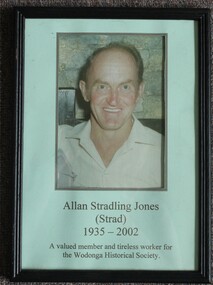 Wodonga & District Historical Society Inc
Photograph - Portrait - Allan Stradling Jones
... Wodonga "Bulldogs" senior team from the age of 17 years. Allan initially played as full forward, then the centre and wing positions. He suffered a serious injury playing football whilst completing National Service at Puckapunyal and was hospitalised for 5 months. Mr. Jones returned to play for Wodonga and also coached Kergunyah and junior football teams in the 1960s. He also managed the Wodonga Little Athletics Club...Wodonga "Bulldogs" senior team from the age of 17 years. Allan initially played as full forward, then the centre and wing positions. He suffered a serious injury playing football whilst completing National Service at Puckapunyal and was hospitalised for 5 months. Mr. Jones returned to play for Wodonga and also coached Kergunyah and junior football teams in the 1960s. He also managed the Wodonga Little Athletics Club ...Allan "Strad" Jones was born in Stawell but lived in Wodonga from the age of two years old. He worked with several companies before establishing Strad Jones Smash Repairs in Mulqueeney Street, Wodonga. He was a courageous football player and played for the Wodonga "Bulldogs" senior team from the age of 17 years. Allan initially played as full forward, then the centre and wing positions. He suffered a serious injury playing football whilst completing National Service at Puckapunyal and was hospitalised for 5 months. Mr. Jones returned to play for Wodonga and also coached Kergunyah and junior football teams in the 1960s. He also managed the Wodonga Little Athletics Club in the 1970s. Mr. Jones was an active member of the Wodonga Historical Society until his death in 2002. He worked not only to collect historical items but to ensure they were properly preserved and displayed. Two of his interests came together when he researched the history of Australian Rules football in the Ovens & Murray League and surrounding districts from its formative years through the 1940s. This publication was titled "Football - Glory Days Gone By". Mr. Jones died in Albury on 13 July 2002.This image is dedicated to a respected member of the Wodonga community and the Wodonga Historical Society.A framed photo of Allan Jones (1935 - 2002)Beneath the image: "Allan Stradling Jones/(Strad)/1935 - 2002)/ A valued member and tireless worker for the Wodonga Historical Society"allan "strad" jones, wodonga community members, wodonga football club -
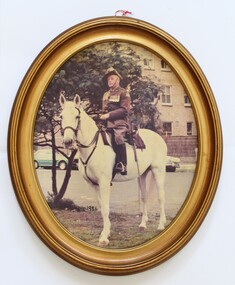 Wodonga & District Historical Society Inc
Photograph - Des Martin mounted on his horse, 1986
... Wodonga, except for his years of service during World War Two. He was raised on the family property Aherlo in the Huon Creek Valley. In 1937 he joined the 8th Light Horse Regiment but in May 1940 led his Wodonga Troop into the 2/2nd Australian Pioneer Battalion. This Battalion saw service in Syria, Java, New Guinea and Borneo. After the war, Des returned to Aherlo and his horses. He was granted permission by the Victorian Racing Club...Wodonga, except for his years of service during World War Two. He was raised on the family property Aherlo in the Huon Creek Valley. In 1937 he joined the 8th Light Horse Regiment but in May 1940 led his Wodonga Troop into the 2/2nd Australian Pioneer Battalion. This Battalion saw service in Syria, Java, New Guinea and Borneo. After the war, Des returned to Aherlo and his horses. He was granted permission by the Victorian Racing Club ...This image was taken in Melbourne on Anzac Day 1986 where Des had taken place in the annual parade. The photo itself has had a long journey. It was donated to the Star Hotel in Yackandandah, Victoria by Des Martin in 1994. The hotel changed hands so many times that the custodian "Pip" Beatty felt it was best placed at the Light Horse Museum at Bandiana, Victoria. Its journey was complete when the photo was returned to the Wodonga Historical Society. Des Martin lived all his life in Wodonga, except for his years of service during World War Two. He was raised on the family property Aherlo in the Huon Creek Valley. In 1937 he joined the 8th Light Horse Regiment but in May 1940 led his Wodonga Troop into the 2/2nd Australian Pioneer Battalion. This Battalion saw service in Syria, Java, New Guinea and Borneo. After the war, Des returned to Aherlo and his horses. He was granted permission by the Victorian Racing Club to participate as an amateur “gentleman” rider. He became the first president of the Victorian Amateur Riders Association and founded the Murray Valley Hunt Club. Des also played a major role in Australia entering an equestrian team in the Melbourne Olympics in 1956 and served as a steward at that event. Des also wrote several publications including “Australia Astride” in 1959, a history of the Albury Racing Club – a Century of Racing, and an historical novel “Many a Mile”. He collaborated with R. M. Williams to develop “Hoofs and Horns” to become a national publication. From 1969 to 1973, Des Martin also wrote a column for the Border Mail newspaper. He was also a member of the RSL for almost 50 years and held several committee positions during that time. Des Martin died on 12 April 1995.This is a portrait of a significant member of the Wodonga community who made an outstanding contribution as a farmer, soldier, horseman, author and member of the RSL and other community organisations.A coloured photograph of Des Martin in full military uniform mounted on his horse. The photo has been mounted in an oval wooden frame.des martin, murray valley hunt club, 2/2nd australian pioneer battalion, albury racing club -
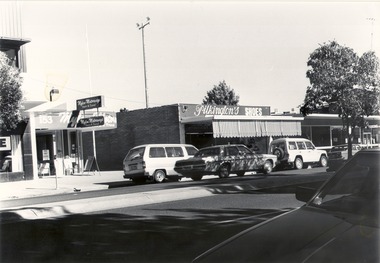 Wodonga & District Historical Society Inc
Photograph - Codling Collection 01 - Wodonga, High Street West - Mylons, Pilkington's, S.E.C, 1980s
... Wodonga Camera Club and the Wodonga Lapidary Club. This photo collection is significant as it documents how the businesses and buildings in Wodonga have evolved and contributed to community throughout the 20th century. Wodonga businesses High St Wodonga Pilkingtons Shoes Mylon Motorways On building facades on left "153 Mylon Motorways/Tours and Travel" On building on the right "Pilkington's SHOES" Wodonga, High Street West Businesses include Mylon Motorways and Pilkington shoes. 153 High Street, Wodonga in 2021is now the location of Gateway Health and other allied Health Services. ...Miss Olive Codling was a Foundation Member and a Life Member of the Wodonga Historical Society. Many of her prize-winning photos are held in the Society Collection. She also held a range of roles and committee positions in a wide range of Wodonga community organisations. These included the Horticultural Society, the Wodonga Arts Council, the Wodonga Camera Club and the Wodonga Lapidary Club. This photo collection is significant as it documents how the businesses and buildings in Wodonga have evolved and contributed to community throughout the 20th century.Wodonga, High Street West Businesses include Mylon Motorways and Pilkington shoes. 153 High Street, Wodonga in 2021is now the location of Gateway Health and other allied Health Services. In 1906 Patrick Mylon started a passenger transport service in the Albury-Wodonga border area with horses and cabs. His son Jack went into business in the late 1920s, and his grandson Bernie joined the firm early in 1970. When Patrick started with the horses and cabs, each cab carried eight passengers and he always had two horses per cab. As the business expanded, Mylons used a range of buses and coaches including Reo, Chev and Bedford vehicles. During more than 100 years if service to the Wodonga region and beyond, Mylon Motorways received many awards for Excellence and tourism. On July 2, 2008 the company, including its 31 buses and 45 staff members were transferred to the Dyson Group. On building facades on left "153 Mylon Motorways/Tours and Travel" On building on the right "Pilkington's SHOES"wodonga businesses, high st wodonga, pilkingtons shoes, mylon motorways -
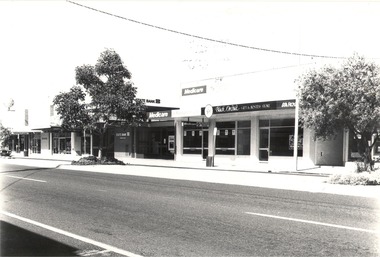 Wodonga & District Historical Society Inc
Photograph - Codling Collection 01 - Wodonga, High Street West - Gas company, State Bank, Medicare and Black Orchid, 1980s
... Wodonga Camera Club and the Wodonga Lapidary Club. This photo collection is significant as it documents how the businesses and buildings in Wodonga have evolved and contributed to community throughout the 20th century. Wodonga businesses High St Wodonga State Bank Medicare Wodonga Royal Bank Wodonga, High Street West Businesses including Gas company, ESANDA, State Bank of Victoria, Toyworld, Medicare, Black Orchid Gift and Hostess Store, and the Royal Bank. The State Bank of Victoria was taken over by the Commonwealth Bank in 1990. The Medicare service ...Miss Olive Codling was a Foundation Member and a Life Member of the Wodonga Historical Society. Many of her prize-winning photos are held in the Society Collection. She also held a range of roles and committee positions in a wide range of Wodonga community organisations. These included the Horticultural Society, the Wodonga Arts Council, the Wodonga Camera Club and the Wodonga Lapidary Club. This photo collection is significant as it documents how the businesses and buildings in Wodonga have evolved and contributed to community throughout the 20th century.Wodonga, High Street West Businesses including Gas company, ESANDA, State Bank of Victoria, Toyworld, Medicare, Black Orchid Gift and Hostess Store, and the Royal Bank. The State Bank of Victoria was taken over by the Commonwealth Bank in 1990. The Medicare service was removed from Wodonga in 2015 and amalgamated with the Albury Service Centre. The Royal Bank (National Mutual Royal Bank) later merged with ANZ. wodonga businesses, high st wodonga, state bank, medicare wodonga, royal bank -
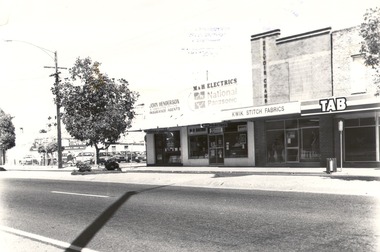 Wodonga & District Historical Society Inc
Photograph - Codling Collection 01 - Wodonga, High Street West - Holloways Motors, John Henderson & Associates, M & H Electrics, Kwik Stitch, T.A.B, 1980s
... Wodonga Camera Club and the Wodonga Lapidary Club. This photo collection is significant as it documents how the businesses and buildings in Wodonga have evolved and contributed to community throughout the 20th century. Wodonga businesses High St Wodonga Holloways Motors John Henderson & Associates Wodonga, High Street West Businesses including Holloways Motors, John Henderson & Associates, M & H Electrics, Kwik Stitch Fabrics and T.A.B. Holloways Motors property has now been incorporate Prd into Junction Place. In 2021 the other premises are occupied by J & M Clothing, Elna Sales and Service ...Miss Olive Codling was a Foundation Member and a Life Member of the Wodonga Historical Society. Many of her prize-winning photos are held in the Society Collection. She also held a range of roles and committee positions in a wide range of Wodonga community organisations. These included the Horticultural Society, the Wodonga Arts Council, the Wodonga Camera Club and the Wodonga Lapidary Club. This photo collection is significant as it documents how the businesses and buildings in Wodonga have evolved and contributed to community throughout the 20th century.Wodonga, High Street West Businesses including Holloways Motors, John Henderson & Associates, M & H Electrics, Kwik Stitch Fabrics and T.A.B. Holloways Motors property has now been incorporate Prd into Junction Place. In 2021 the other premises are occupied by J & M Clothing, Elna Sales and Service, Sargeants Property Conveyancing and a Chiropractic centre.wodonga businesses, high st wodonga, holloways motors, john henderson & associates
